
Cinematic Afterlives of the Persianate



In 2017, the Iranian filmmaker Majīd Majīdī released his first Indian film, Beyond the Clouds. Majīdī is a prominent director of art films, including Children of Heaven (Bachchah’hā-yi Āsimān, 1997). This acclaimed film was part of Iran’s post-revolutionary cinematic wave of realist and humanist films about children. Children of Heaven concerns impoverished residents of Tehran, focusing on a young sister and brother whose touching relationship sustains them through hardship. Beyond the Clouds (2017) is a broad reimagining of this story, centering young adults and set entirely in Mumbai, featuring Indian actors and shot in Hindi. Majīdī made use of India’s more liberal film production policies (though they are not without censorship) to construct a tale about illicit activities such as drug dealing and forced sex work, escalating beyond Children of Heaven’s tamer tale of lost shoes. Majīdī’s 2017 film was keenly anticipated in India, where Iranian art-house films command respect. On his promotional tour for the film, Majīdī spoke at length about why he chose India for his first foreign-set film, pointing to shared culture and heritage between the two nations.1Namrata Joshi, “Iranian Director Majid Majīdī on Why He Set Beyond the Clouds in Mumbai,” The Hindu, April 14, 2018, https://www.thehindu.com/entertainment/movies/iranian-director-majid-majidi-on-why-he-set-beyond-the-clouds-in-mumbai/article23529025.ece While it was Majīdī’s first time working abroad, Beyond the Clouds marked his second collaboration with famed Indian composer A. R. Rahman, who had previously scored Majīdī’s controversial epic depicting the life of the Prophet, Muhammad: Messenger of God (Muhammad Rasūl-Allāh, 2015).
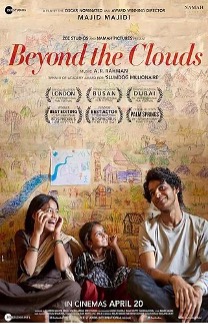
Figure 1: Film poster for Beyond the Clouds, directed by Majīd Majīdī, 2017. Source: IMDb.
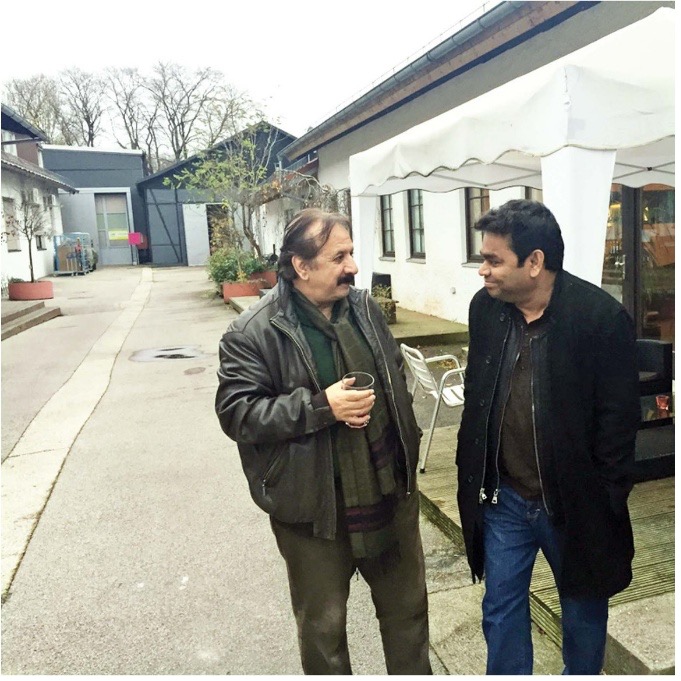
Figure 2: Majīd Majīdī and A. R. Rahman, 2015. Source: Deccan Chronicle.
In the same year as Majīdī’s much-awaited Hindi cinema debut, the diasporic Indian filmmaker Anup Singh released The Song of Scorpions, another international Hindi-language production filmed and set in India. Singh cast the expatriate Iranian actor Gulshīftah Farahānī in the lead role. The folkloric melodrama, shot in the Rajasthani desert, has resonances with the popular film traditions of both India and Iran, though Singh has said that his story was motivated by the specific social context of violence against women in contemporary India, particularly the 2012 Nirbhaya case.2Anuj Kumar, “In Search of an Antidote,” The Hindu, September 5, 2017, https://www.thehindu.com/entertainment/movies/in-search-of-an-antidote/article19624269.ece Neither Beyond the Clouds nor The Song of Scorpions was an equal co-production between Iran and India. Rather, they reflect a contemporary global art-film economy that sources funding from a combination of public grants and private producers, bringing in talent from a variety of national backgrounds. However, their casts, locations, and formal modes situate them in a lineage of Indo-Iranian film connections. They also mark a revival of interest in Indo-Iranian cinematic exchange that had last reached a high-water mark in the early 1970s, when fīlmfārsī still flourished in Iran.
How can we make sense of the cinematic histories of Indians in Iran, and Iranians in India? The two regions (including what is now Pakistan, and Afghanistan) have a centuries-long cultural relationship that produced celebrated Persian-language poetry. Recently, scholars have adapted frameworks from literary history to examine film production between India and Iran within broader histories of film circulation in South Asia, the Middle East, North Africa, and the former Soviet Union. Here, I map these frameworks alongside a survey of film production between India and Iran over the past century, encompassing co-productions, films with cast and crew from both countries, and films whose basis derives from shared literary and cultural touchstones. I focus on theories of Islamicate and Persianate modernity to contextualize this transnational film production, while also incorporating a political economic lens to examine continued relations and exchanges between the Indian and Iranian nation-states in the postcolonial and post-revolutionary period. I argue that mediawork emerges as a useful lens to analyze Indian and Iranian cinematic relations as they develop from the 1970s to the present.
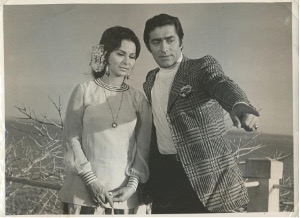
Subah-o-Sham, known in Persian as Humā-yi saʿādat (Bird of Happiness, 1972), was a co-production shot simultaneously in Hindi and Persian, and featured a mixed cast that included some of the most prominent stars of each national cinema – India’s Waheeda Rehman, alongside the Iranian Muhammad ‛Alī Fardīn and the Indian Sanjeev Kumar, the latter two playing brothers. However, despite an Indian director and composer duo, this film also situated itself in a national context, taking place entirely in Tehran. Rehman played a troubled Indian dancer, drawing on the tawaif trope that was popular in both countries’ mainstream cinemas and their longer literary and cultural histories. Interestingly, Rehman also appears in The Song of Scorpions, as Gulshīftah Farahānī’s mother. The casting of Kumar, Rehman, and Farahānī in these films also speaks to the salience of racial fluidity or passing between Iranians and North Indians for transnational visual cultures, which I discuss further in this article.
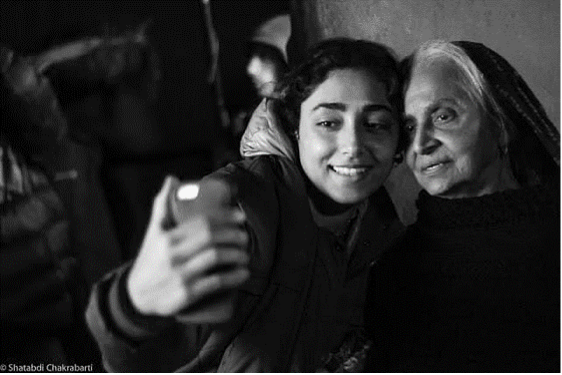
Figure 3: Gulshīftah Farahānī and Waheeda Rehman on the set of The Song of Scorpions. Courtesy of National Herald, photo by Shatabdi Chakrabarti, 2023.
Both Beyond the Clouds and The Song of Scorpions were released in India and at international festivals to mixed reviews and unsatisfactory box office results. Several critics registered tonal imbalances – especially in The Song of Scorpions – which they argued derived from the incompatible styles of a non-resident Indian director, a Paris-based Iranian actress, an Italian editor, and so on.3See Rahul Desai, “The Song of Scorpions Movie Review: Irrfan Khan’s Swansong Is a Hypnotic Mix of Myth and Matter,” Film Companion, April 28, 2023, https://www.filmcompanion.in/reviews/the-song-of-scorpions-movie-review-irrfan-khans-swansong-is-a-hypnotic-mix-of-myth-and-matter-anup-singh-golshifteh-farahani-waheeda-rehman-shashank-arora The Indian film critic Nandini Ramnath opened her review of Beyond the Clouds with the line, “Majid Majidi’s first Indian production is a Hindi movie with an English title – and that is only the first sign of a mismatch.”4Nandini Ramnath, “‘Beyond the Clouds’ Film Review: A Tale of Hope and Redemption That Stays Firmly out of Grasp,” Scroll.in, April 20, 2018, https://scroll.in/article/876218/beyond-the-clouds-film-review-a-tale-of-hope-and-redemption-that-stays-firmly-out-of-grasp Reviews from British and American publications invoked the term “Bollywood” to characterize Beyond the Clouds’ use of melodrama and departure from realist aesthetics.5See Peter Bradshaw, “Beyond the Clouds Review – Brash Bollywood in the Mumbai Underworld,” The Guardian, April 20, 2018, https://www.theguardian.com/film/2018/apr/20/beyond-the-clouds-review-bollywood-majid-majidi. This unknowingly echoed an Iranian critique of 1960s fīlmfārsī films. Similarly, critiques of The Song of Scorpions centered on its romanticized presentation of Orientalist tropes. The expectation, or barometer, for both films was a form of realism more often seen in Iranian New Wave films of the 1990s.
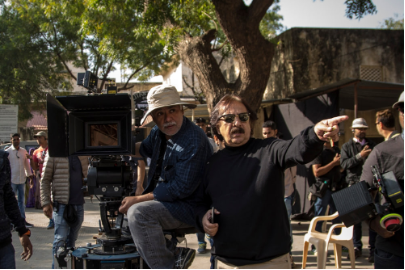
Figure 4: Majīd Majīdī filming in India, 2017 (Zee Studios)
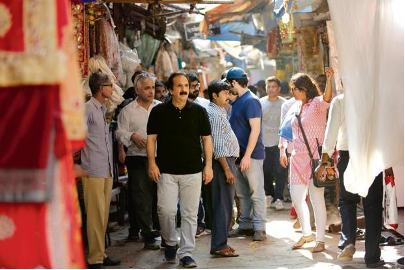
Figure 5: Majīd Majīdī in India, 2018 (Mint India)
Yet both these international productions had more interest in the qualities of popular Indian cinemas. Both were set in India, featured Indian characters, and adhered to the common melodramatic themes of Hindi cinema; each was anchored by musical sequences characteristic of popular cinemas made in the Bombay film industry. In their tightrope act between representing and bolstering national identity and culture on the one hand, and appealing to Indian, Iranian, and other Southwest Asian audiences more broadly on the other, they are aligned with a long tradition of cinematic co-production and circulation between India and Iran.
Persianate Modernity and (Trans)National Cinemas
Scholars have considered the relationship between Indian and Iranian cinemas through several frameworks, though no comprehensive studies focus exclusively on these two countries.6My dissertation, “Ministries of Light: Modernism and Modernity in Indian and Iranian State-Sponsored Documentaries, 1960s-1980s” (PhD diss., 2021), is a comparative study of state-sponsored documentary film production in India and Iran, but it does not focus on co-production. Hamid Naficy’s A Social History of Iranian Cinema places the origins of Iranian cinema in Mumbai (then Bombay) and establishes the roots of early Iranian cinema as mobile, multi-ethnic, and cosmopolitan.7Hamid Naficy, A Social History of Iranian Cinema, Volume 1: The Artisanal Era, 1897–1941, 1st ed. (Durham: Duke University Press, 2011). Richard Allen and Ira Bhaskar’s Islamicate Cultures of Bombay Cinema, published in 2009, maps “Islamicate genres and idioms” in Bombay-based film production from the 1930s to the present.8Ira Bhaskar and Richard Allen, Islamicate Cultures of Bombay Cinema (New Delhi: Tulika Books, 2009). A more recent edited volume, Bombay Cinema’s Islamicate Histories, identifies Islamicate cultural tropes and influences in several modes of Bombay cinema. Drawing on historian Marshall Hodgson’s term, Allen and Bhaskar specify that “Islamicate” refers to the broadly Muslim aesthetic and cultural world, which also encompasses non-Muslim peoples. They also include Persianate and Arabesque elements within the Islamicate.9Ira Bhaskar and Richard Allen, Bombay Cinema’s Islamicate Histories (Bristol: Intellect Limited, 2022). The Persianate world refers to geographical regions and communities that were linked through the influence of Persian language and culture, and Arabesque here refers to culture and aesthetic traditions that originate in Arab regions. I elaborate on the Persianate below. Other scholars, such as Pedram Partovi and Sunil Sharma, isolate India, Iran, and Turkey as modern nation-states within Persianate cinematic legacy, while Anupama Prabhala Kapse argues that the Arabesque functions as a “spatial and cultural imaginary” deriving from shared cultures of South Asia and the Middle East.10Pedram Partovi, “Constituting Love in Persianate Cinemas,” Journal of Persianate Studies 10, no. 2 (2017): 186–217; Sunil Sharma, “The Persian Masnavi Tradition and Bombay Cinema,” in Bombay Cinema’s Islamicate Histories, ed. Ira Bhaskar and Richard Allen (Bristol: Intellect Limited, 2022), 64–82; Anupama Prabhala Kapse, “Afterword: The Long Arabesque: Economies of Affect between South Asia and the Middle East,” Film History (New York, N.Y.) 32, no. 3 (2020): 241–54.
In his A Social History of Iranian Cinema: The Artisanal Era, Naficy traces Indo-Iranian film production back to the 1920s, when the first Persian-language talkie was produced in Bombay. This film, Dukhtar-i Lur or The Lor Girl(1932), was directed by the Iranian émigré ‛Abdalhusayn Sipantā, who worked with Parsi film producer Ardashīr Īrānī.11Parsis are an Indian religious community descended from Iranian emigrants. Sipantā went on make four more films in India: Firdawsī (1935), Shīrīn va Farhād (1935), Chashm’hā-yi Siyāh(1935), and Laylī va Majnūn (1936). Each of these films had Persianate themes, which I discuss in more detail below.
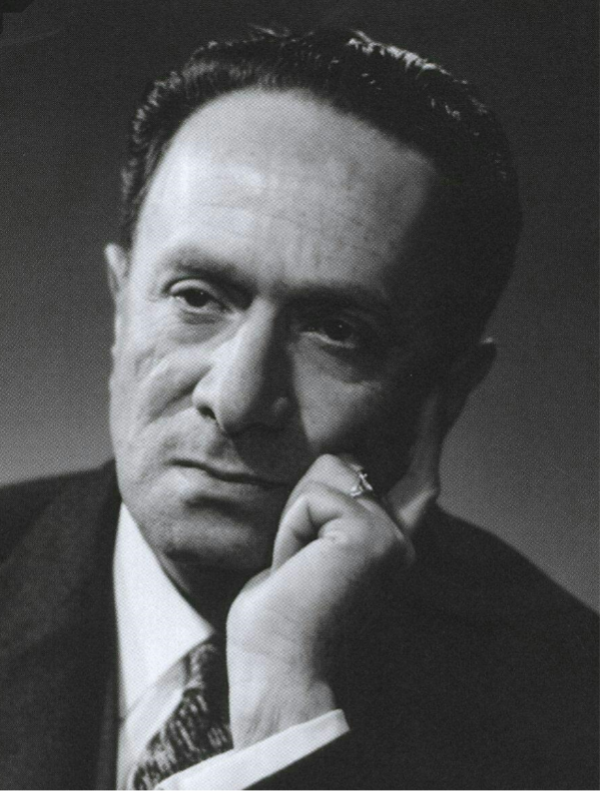
Figure 6. ‛Abdalhusayn Sipantā (undated). Source: Wikipedia.
Naficy’s comprehensive history of Iranian cinema establishes the national cinema’s roots as transnational and diasporic. His research on early Iranian cinema demonstrates the role not only of Bombay-based Iranians and Parsis but also of Armenian Iranians, Qājār court photographers abroad, Western missionaries, and many others in the formation of Iranian national cinema. While he recognizes the centrality of national identity for Iranian modernity (and therefore Iranian cinema), he has consistently problematized the lens of national cinema in relation to Iranian film and media.12Hamid Naficy, A Social History of Iranian Cinema, vol. 1, The Artisanal Era, 1897–1941 (Durham, NC: Duke University Press, 2011), 8. In A Social History, he writes that scholars and readers should be sensitive to the “heterogeneity and constructedness of the two concepts of Iranian nation and Iranian national cinema.” Naficy also notes that, just as the spatial understanding of Iranian cinema and nation is unfixed, so too is its temporality. As such, Iranian and other modernities should also be understood as “asynchronous, asymmetrical, and partial.”
Research on ‛Abdalhusayn Sipantā, Ardashīr Īrānī, and the Imperial Film Company of Bombay has been the genesis of inquiry into further Indo-Iranian co-productions, and more broadly, cinematic linkages between South Asia and the Middle East. These co-productions are largely popular films that capitalize on regional star power, and more recently, on auteurist caché. India’s Islamicate film industries and Iran’s film industry continue to exchange transnational casts and crews in “national” productions. Contemporary films from both countries feature linguistic and musical intersections, and many still adapt communal narratives. The production and circulation of all these films rely on an existing shared audience in South to West Asia. For this reason, I focus on these cinemas as afterlives, echoes, or threads of the Persianate.
How did South-South transnationalisms and development ideologies impact cultural production and postcolonial national identity in India, Iran, and neighboring states? To what extent did East-West relations disrupt Oriental circuits? Taken together with instances of popular film co-production initiated by The Lor Girl, which have recurred every few decades, this history provides us with an opening to think about an alternate or adjacent history of trade, mobility, migration, and circulation.
The Persianate refers to the geographical and imagined sphere consisting of regions that shared “literary, ethical, and aesthetic sensibilities,”13Mana Kia, “Indian Friends, Iranian Selves, Persianate Modern,” Comparative Studies of South Asia, Africa, and the Middle East 36, no. 3 (2016): 400. which derives from their governmental, educational, and literary use of Persian. This provides a genealogy for Indo-Iranian cinema separate from contemporary borders and national cinema frameworks, intervening against histories that argue colonialism disrupted the Persianate sphere. As Mana Kia writes, “It is assumed that colonial rule changed the fate of South Asia into something distinct from places like Iran. But if we look past the state and consider continuing trade networks and the social links that accompanied these transactions, we see that the circulation of people, texts, and ideas between the two lands continued. More than this, Iran was subject to political and economic pressures that spurred some of the same discussions around reform…” While Kia argues that this extends into the early twentieth century, it is clear that vestiges remain through the medium of cinema, not just literary and theatrical work. For example, beyond co-productions, romantic epics such as that of Leila and Majnun, or Shirin Farhad (also known as Khosrow and Shirin) have been repeated subjects of films in both countries. Indeed, a recent Indian film adaptation of the Shīrīn-Farhād story was remade as a contemporary comedy entitled Shirin Farhad Ki Toh Nikal Padiin 2012. These stories originate in the Persian epics the The Book of Kings (Shāhnāmah), from the 10th century, and Nizāmī Ganjavī’s 12th-century Khusraw and Shīrīn.
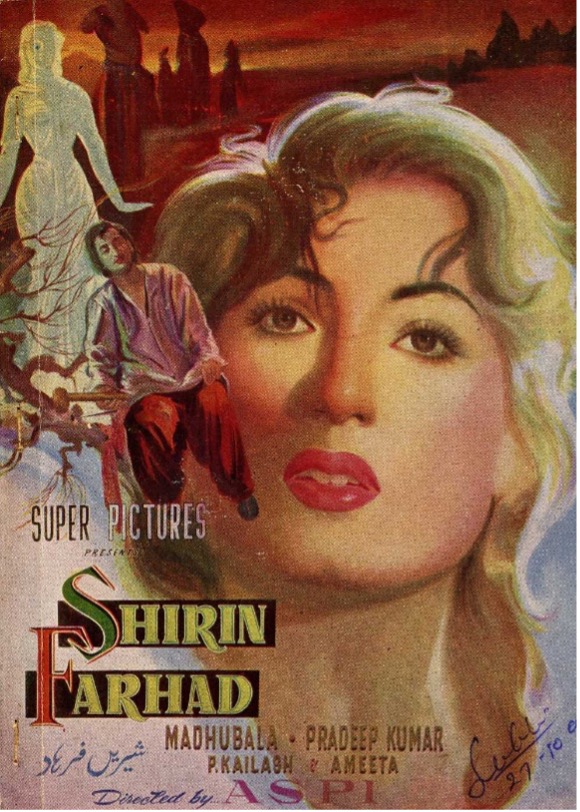
Figure 7: Film poster for Shirin Farhad (1956). Source: IMDb.
One essential link between Persianate cultures and cinema is their influence on the constitution of modernity in both India and Iran. The emergence of cosmopolitan cultures included the increasing mobility of Indians, Iranians, and other Asians in Europe, South Asia, and the Middle East, and the expansion of modes of communication, particularly in the nineteenth century.14Nile Green, “Spacetime and the Muslim Journey West: Industrial Communications in the Making of the ‘Muslim World,’” The American Historical Review 118, no. 2 (2013): 401–429. Kia describes the presence of the “Indian friend” in late nineteenth-century Persian modernist writings, stating, “His [the friend’s] presence demands a reconsideration of modern national selfhood at the turn of the twentieth century and of the ways in which enduring forms of belonging shaped modes of self-understanding as something that happened in the first person plural, as ‘we’ became modern together.” She writes that the two societies had a shared heritage in ideas of moral refinement, adding that, in the late colonial period in India, “older Persianate ethical norms could still function as a common lexicon between Iran and India. These continuities, and the social and political ties that they enabled, demand a reconsideration of Iranian and Indian modernity as interrelated.”15Mana Kia, “Indian Friends, Iranian Selves, Persianate Modern,” Comparative Studies of South Asia, Africa, and the Middle East 36, no. 3 (2016): 398–417. Thus, I extend the idea of the cinematic Persianate further to argue that these extensive transregional relations did have relevance not only for modernity but also for the formation of modern nation-states. Indeed, since India’s decolonization, the two nations have actively sought to foster a political and economic relationship. However, cinematic exchange has largely been characterized by representations of, or references to, pre-modern Persianate history (such as Laylā-Majnūn), or else privileged by only one of the two modern nation-states in narrative, language, and location.
The two major exceptions to this are Subah-o-Sham or Humā-yi saʿādat (1971) and Salaam Mumbai! (Salām Bamba’ī,2016). Both are true co-productions, and their themes address romance and culture between Indians and Iranians. They are set in the contemporary period, rather than drawing on shared mythology or historical pasts. Humā-yi saʿādat was co-produced by Shree Ganesh Prasad Movies, a production company based in Madras (now Chennai), and by Ariana Studios in Tehran. It was directed by Tapi Chanakya, an established Bombay filmmaker, and the cast notably included top stars from both countries: India’s Waheeda Rehman and Sanjeev Kumar, and Iran’s Muhammad ‛Alī Fardīn. Rehman plays Shīrīn, an Indian dancer living in Tehran. Fardīn and Kumar play brothers Ārām and Nāsir, who belong to a wealthy Tehran family. Humā-yi saʿādat is filmed and set in Tehran, with an opening title that announces, “First Hindi film shot in Iran.” A Farsi version was shot simultaneously, with some new or varied scenes tailored to the Iranian audience. (The presentation of female characters is more conservative in the Indian release.)
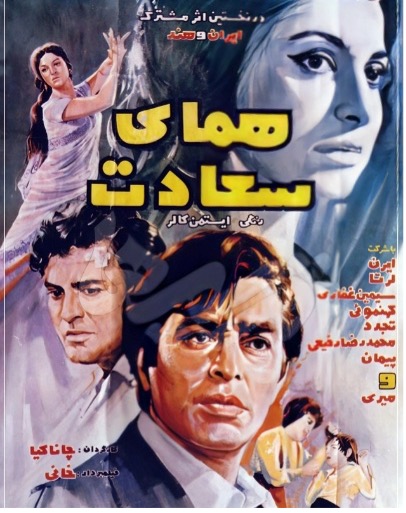
Figure 8: Film poster for Humā-yi saʿādat, directed by Tapi Chanakya, 1971, Source: IMDb.
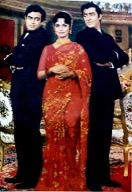
Figure 9: Subah-o-Sham (1971), image of Waheeda Rehman, Sanjeev Kumar, and Muhammad ‛Alī Fardīn. Source: IMDb.
The film centers on a love story between Shīrīn and Ārām. It is typical of both Bollywood and fīlmfārsī films of the time in that Ārām must overcome internal and familial prejudices about Shīrīn’s unsavory career and class position for their love to flourish. Less typical of both countries’ popular film narratives is the fact that Shīrīn is Indian and Ārām is Iranian. However, the film makes it clear that class is the ultimate barrier.
Samhita Sunya’s chapter “Foreign Exchanges: Transregional Trafficking through Subah-o-Sham (1972)” is the most comprehensive study of the film. Sunya reads an allegory for the informal circulation of Indian films in the Global South through the story of Shīrīn, writing that Shīrīn’s character “becomes metonymic for the trafficked object of the Indian song-dance film.”16Samhita Sunya, “Foreign Exchanges: Transregional Trafficking through Subah-O-Sham (1972),” in Sirens of Modernity (Berkeley: University of California Press, 2022), 171–172. Sunya maps a history of exchange in which B (and C, and D) movies from India were distributed in Iran through unregulated networks. Indian B movies were a comparable trade good to a cheap celluloid byproduct: plastic bangles. As Sunya writes, Indian “statist concerns over both film contraband and unauthorized channels of celluloid import-export sought to exert control over a range of ostensible excesses.”17Samhita Sunya, “Foreign Exchanges: Transregional Trafficking through Subah-O-Sham (1972),” in Sirens of Modernity (Berkeley: University of California Press, 2022), 175–176. The trade of both bangles and B-films was also gendered, with both considered garish commodities of feminine display.
Trade and cultural exchange are brought to the forefront in several instances. Shīrīn’s performances draw on Indian classical dances, and she dances to Hindi songs by famous playback singer Lata Mangeshkar. (The Persian release also includes songs by Iranian pop star Gūgūsh.) As Sunya notes, the film explicitly engages the widespread appeal of Indian song-and-dance sequences by having characters discuss dance as a tool of universal communication. Additionally, while the film takes place in Tehran, it features a sequence of shots showcasing tourist destinations in both Iran and India. A selection of significant Iranian monuments is shown, beginning with the Shah Mosque in Isfahan, where Shīrīn and Ārām listen to the call to prayer. Other sights include Gulistān Palace in Tehran, and the Caspian shore. In India, the film presents a brief montage of erotic temple sculptures. Taken together, these sequences indicate the consummation of a cross-cultural relationship, which later results in the birth of a child.
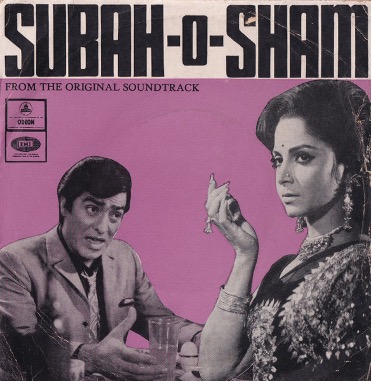
Figure 10: Subah-o-Sham album cover (1972). Source: Discogs.
Shīrīn and Ārām hope to marry, but Ārām’s mother disapproves of the relationship due to Shīrīn’s profession. Ārām’s brother Nāsir convinces their mother that, in fact, Shīrīn is from a royal Indian family. He approaches various local vendors around the city, paying them to act as a veritable royal Mughal court at a party for the couple. The costuming and mise-en-scène in this scene is reflexively Orientalist, with men dressed in gilded turbans and Rajput-style angarkhas, each variously holding feather fans, swords, and a colorful hookah. In Bombay Cinema’s Islamicate Histories, Rosie Thomas writes of the Oriental genre in Indian cinema, which combined Western Orientalist tropes of the Arab and Persian worlds with pre-cinematic Indian representations of the Arabian Nights and other Islamicate stories.18Rosie Thomas, “Alibaba’s Open Sesame: Unravelling the Islamicate in Oriental Fantasy Films,” in Bombay Cinema’s Islamicate Histories, ed. Ira Bhaskar and Richard Allen (Bristol: Intellect Limited, 2022), 203–28. Similarly, Humā-yi saʿādat adapts mid-century Hollywood images of wealthy maharajas, played for comedy to a knowing audience. This imagery is recognizably Indian while remaining within an Islamicate lexicon.
Figure 11: A production still from Subah-O-Sham (1971), Courtesy of National Film Archive of India.
Humā-yi saʿādat’s treatment of race stands out from other Iranian media and cultural representations of Indians and South Asians. Alexander Jabbari writes that modern Iran’s most popular texts, such as the novel Savūshūn (1969) by Sīmīn Dānishvar, and the novel (1973, Īraj Pizishkzād) and television adaptation My Uncle Napoleon (Dā’ī jān Nāpil’un, 1976), present Indian characters as belonging to a shared but antiquated Persianate past—now less civilized in their sexuality and culture than Iranians. Indians are “enemies of progress” in a modernizing nationalist Iran.19Alexander Jabbari, “Race against Time: Racial Temporality and Sexuality in Modern Iran,” Journal of Middle East Women’s Studies 20, no. 3 (2024): 279.
In 1969, Muhammad Rizā Pahlavī made a much-publicized trip to New Delhi to establish the Indo-Iran Joint Commission for Economic, Trade, and Technical Co-operation. This was one of several strategic endeavors which aimed to repair fissures caused by separate Cold War allegiances and regional conflicts with neighboring nation-states. Thus, while Savūshūn, published in 1969, posits an Indian dancer as a threat to Iranian masculine nationalism, Humā-yi saʿādat, released a few years later, presents a recuperative study of the sexualized Indian dancer and her place in Indo-Iranian relations. Of course, as a joint production, the film hoped to appeal to both national audiences, and possibly broader West Asian and North African audiences as well, who consumed popular Indian films. As a commercial product, Humā-yi saʿādat’s audio-visual elements are a postmodern mélange, in which any Persianate or Islamicate citations are filtered through newer South Asian, West Asian, and Western cinematic references.
Mediawork and Mobile Signifiers
Salaam Mumbai! similarly presents shared cultural heritage through the prism of popular cinema. Set in the present day, the story focuses on a romance between two medical students, an Indian woman and an Iranian man, who is in Mumbai for his medical education. These characters, Karishma and ‛Alī, are played by Dia Mirza and Muhammad Rizā Gulzār, both well-known stars in their respective countries. Indeed, the Indian press referred to Gulzār as the “Indian SRK,” or Shah Rukh Khan, referencing India’s megastar actor.20Namrata Joshi, “Love beyond boundaries,” The Hindu, March 15, 2016, https://www.thehindu.com/news/cities/mumbai/entertainment/love-beyond-boundaries/article8348137.ece Salaam Mumbai! was directed by Iranian filmmaker Qurbān Muhammadpūr, filmed in Tehran and Mumbai—though most of the film takes place in India—and features Persian, Hindi, and English dialogues, as well as Hindustani songs scored by the Indian composer Dilshaad Shabbir Shaikh. Lastly, the executive producers of the film included prominent film producers from both India and Iran. Salaam Mumbai! gestures to continuities and shared heritage between the two countries in its story—for example, the romantic leads bond over their love of the poet Hāfiz. ‛Alī and his friend Ahmad, also an Iranian medical student who desires an Indian woman, deepen their homosocial intimacy by watching the celebrated song sequence “Yeh Dosti Hum Nahi Todenge” (“we will not break this friendship”) from Sholay (1975). Salaam Mumbai! constructs its plot around less publicized but contemporary forms of exchange, such as the presence of Iranian students in India for higher education.
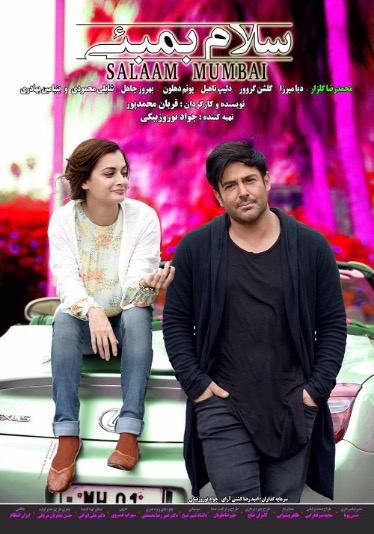
Figure 12: Film poster for Salaam Mumbai (Salām Bamba’ī), directed by Qurbān Muhammadpūr, 2016. Source: IMDb.
Much of the dialogue between the two leads is in English and the primary release of the film was not dubbed. Salaam Mumbai! released in theaters in Iran before going to India and other international markets. It was extremely popular in Iran—as widely reported, it set an opening-weekend box office record, surpassing Asghar Farhādī’s The Salesman (Furūshandah, 2016). It was also the only one of a set of post-revolutionary films discussed here to have a general release in Iran, having conformed to some, though not all, local film production codes (such as no physical contact between male and female actors, and no dances). Instead of touch or other gestures of physical intimacy, the lead couple, Karishma and ‛Alī, develop their relationship by learning each other’s language, reading and writing about love on paper, classroom whiteboards, and digital screens. As such, the film feels contemporary in its transnational production, narrative, and cinematic codes, including musical sequences.
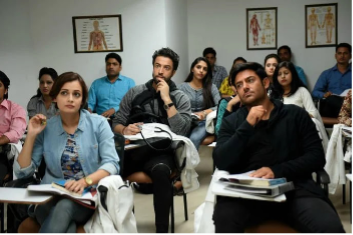
Figure 13: Dia Mirza and Muhammad Rizā Gulzār in a film still from Salaam Mumbai (Salām Bamba’ī), directed by Qurbān Muhammadpūr, 2016. Source: DesiBlitz.
Naficy’s film history research and methodology provide an avenue to understand these texts together. First, he puts forward different modes of national cinema: sociopolitical, industrial, cultural, ideological, spectatorial, textual, and authorial. In their mobility and multiplicity, these modes intervene against the category of national cinema while simultaneously helping to understand its construction. This provides avenues to think about Indo-Iranian cinema in relation to the imagined community of the Persianate. These include the sociopolitical context of trade and exchange relations, the linguistic development between the two regions, and the cultural traditions and references, such as the sensuous iterations of Mughal courtly entertainment that informed the mode of both national cinemas.
Scholars such as Pedram Partovi have made more extensive arguments about the relationship of Persianate customs to popular Indian and Iranian film forms, building on Naficy’s work.21Pedram Partovi, “Constituting Love in Persianate Cinemas,” Journal of Persianate Studies 10, no. 2 (2017): 186–217. However, in examining the trajectory of Indo-Iranian relations in the context of economic liberalization and globalization, I adapt his theory of mediawork to contend that not only pre-modern cultural histories, but also contemporary relations have seeped into Indo-Iranian cinematic exchange. This theory of mediawork argues for the role of ongoing South-South relations in shaping consciousness and public opinion in relation to film production and spectatorship. Contemporary mediawork between India and Iran has slowly shifted from modernist concerns with modernity, nationalism, and heritage to postmodernism’s pliable identities, borders, and cultural touchstones. Accordingly, vestiges of Indo-Iranian history appear as fragments, such as the version of the Iranian song “Jamal Kudu” that achieved viral popularity in India after being featured in the Bollywood film Animal (2023). Another example is the Indian streaming series Made in Heaven (2019-present), in which Iranian-origin, Mumbai-based actor Ilnāz Nawrūzī has a metatextual role as an Iranian-origin actor in Indian film industries.
Formal trade and exchange between India and Iran also continue despite fluctuating relations with the U.S., as was the case in the 1970s. Salaam Mumbai!, Beyond the Clouds, and The Song of Scorpions each released between 2016 and 2017. These productions followed a historic Indo-Iranian trade agreement in which India committed $500 million to help construct the Chabahar Port in Iran, facilitating trade and movement between the two countries. In 2016, India’s Prime Minister Narendra Modi made a state visit to Iran to sign the deal, the first Indian leader to do so since the 1980s. The Chabahar Port is Iran’s first and only deep water oceanic port, located on the Gulf of Oman. The port project was initiated in the early 1970s by Muhammad Rizā Pahlavī, then Shah of Iran, who mobilized several large-scale development projects during his reign. However, his plans were curtailed first by the Arab oil embargo in 1973, followed by his removal from leadership during the Iranian Revolution of 1979.
The Islamic Republic maintained interest in building the port, as did India, despite its strong diplomatic relations with both Israel and the United States. (Indeed, Modi, who is known for his facilitation of Islamophobic violence and Hindu nationalism, pushed the project forward after inaction from previous leaders.) For India, the Chabahar Port presented an opportunity to create a South and West Asian power bloc that conveniently circumvents Pakistan, helping advance its interests against China. Iran, crushed under the weight of Western sanctions, similarly perceives Chabahar Port as a route for new economic and political solidarity based on diplomatic ties that, despite intervening political crises, have not been severed. Notably, modern political relations between the two countries are often framed in terms of the historical Persianate relationship by leaders such as Nehru and the Shah. In recent years, the port has facilitated an increase in humanitarian aid from India to Afghanistan and Iran during the COVID-19 pandemic and created a channel through which goods such as tea and Basmati rice can be transported between these nations and their neighbors (such as Sri Lanka).
As Naficy writes, contemporary mediawork is “motivated by the libidinal, political, public diplomacy, and commercial economies of collectivities, such as nations.”22Hamid Naficy, A Social History of Iranian Cinema, Volume 4: The Globalizing Era, 1984–2010, 1st ed. (Durham: Duke University Press, 2012), 273. Beyond exercises of soft power, it encompasses the latent desires and perceptions produced by globalized media. The film and media production that strives to sustain and reconfigure the relationship between these two nation-states should be considered not only an afterlife of longer cultural histories and forms, but also as mediawork that speaks to the re-centering and reorganization of political and economic power along new strategic routes.
New films continue to provide opportunities to examine Indian and Iranian perspectives on their own relationship and the two countries’ position in regional and global contexts. For example, what to make of the recent Netflix streaming film Tehran (2025)? The Indian production aims to distance India not only from Iran but also from Palestine and the wider Islamic world, while underlining Indo-Iranian trade relations as crucial to Indian economic growth. Tehran avoids any reference to the longstanding history between the two nations, but its lead actor and producer John Abraham told Variety magazine that he was drawn to star in the film because his grandfather was from Iran.23Naman Ramachandran, “John Abraham on Mining His Iranian Roots for Zee5 Global Thriller ‘Tehran’ amid Real-World Conflict: ‘You Realize the Reach When You Get the Response,’” Variety, August 18, 2025, https://variety.com/2025/tv/news/john-abraham-iranian-roots-tehran-tensions-1236490284/ Such examples, alongside television and other popular texts, demand multifaceted approaches to this transnational media. Scholarly perspectives on Indian and Iranian films’ mobile and contradictory representations of the other’s race, ethnicity, and sexuality will be invaluable to this research. Examining Indian and Iranian cinema histories together deconstructs national cinema orthodoxies and can reveal existing and new solidarities.24For other recent perspectives along these lines, see Kaveh Askari, “Configurations of Expertise: Sardar Sager in Tehran’s Film Studios,” in Cinema Iranica (Encyclopaedia Iranica Foundation, 2025); Claire Cooley, “Soundscape of a National Cinema Industry: Filmfarsi and Its Sonic Connections with Egyptian and Indian Cinemas, 1940s–1960s,” Film History 32, no. 3 (2020): 43–74; and the essay films of Sanaz Sohrabi.
Cite this article

This article examines the historical and contemporary connections between Indian and Iranian cinema through the lens of Persianate modernity and transnational mediawork. Beginning with recent films such as Beyond the Clouds (2017) by Majid Majidi and The Song of Scorpions by Anup Singh, the study situates contemporary Indo-Iranian collaborations within a longer history of cinematic exchange that dates back to early Persian-language productions in Bombay, including The Lor Girl. Drawing on scholarship on Islamicate and Persianate cultural worlds, the article argues that these films reflect enduring cultural linkages between South and West Asia while also revealing the influence of modern political economies, migration, and global art-film production networks. Through case studies of co-productions and transnational films such as Subah-o-Sham and Salaam Mumbai, the article demonstrates how cinematic collaborations negotiate national identity, shared cultural heritage, and global market pressures. Ultimately, it proposes mediawork as a framework for understanding how contemporary Indo-Iranian film production reactivates Persianate cultural histories while reflecting shifting geopolitical and economic relations between the two nations from the 1970s to the present.