

When Hay Entangled with Mud and Oil: Time, Materiality, and the Countryside of the Iranian New Wave Cinema



Marcos Grigorian. Untitled. 1963. Part of Earthworks Series.
Soil, Cement, and Oil on Canvas1The renowned Iranian-Armenian artist Marcos Grigorian has been known for using dried mud, sometimes mixed with hay, in his Earthworkspaintings. I am grateful to MoMA’s Lily Goldberg (Senior Collection Specialist, Department of Painting and Sculpture) and Dr. Artur Neves (David Booth Fellow in Conservation Science) for responding to my inquiry about the above painting and conducting a highly complex examination of a microsample extracted from it. The detailed elemental analyses produced by the MoMA team confirmed my hypothesis that Grigorian most likely had infused the soil with an “inorganic phase,” most probably cement, and an “oil-based material.” In the words of the report, “these spectral features support the interpretation that an oil medium was mixed with the inorganic phase.”
And the result is known to you: strange cities, extraordinary countrysides, worlds twisted, crushed, torn apart, the cosmos given back to chaos, order given back to disorder, being given over to becoming, everywhere the absurd, everywhere the incoherent, the demential.
―Aimé Césaire, “Poetry and Knowledge,” 1944-452Aimé Césaire, “Poetry and Knowledge,” in Lyric and Dramatic Poetry, 1946-82, trans. by Clayton Eshleman and Annette Smith (Charlottesville: University Press of Virginia, 1990), liv.
The walls in the villages are made of mud; city walls are made of brick and cement.
―Jalāl Āl-i Ahmad, Occidentosis, 19623Jalāl Āl-i Ahmad, Occidentosis: A Plague from the West, trans. R. Campbell, ed. Hamid Algar (Berkeley: Mizan, 1984), 68.
From the early 1990s onward, as the films from post-revolutionary Iran found more visibility on the global stage, with the festival circuit as the main venue for this presence, a number of presuppositions about this “new national cinema” became prevalent. The foremost among these was that Iranian film plots mostly take place in rural areas, that for the most part they are played by non-professional actors, and that the films are neo-realistic. These perceptions were produced and disseminated mostly, but not only, by journalistic film criticism. For some others, however, those with access to more information on the state of the Iranian cinema of the time, this was a distortion of reality primarily based on an assessment of limited data, the small number of films reaching international festivals; they argued, justifiably of course, that these artful depictions of the rustic life of the country represented only a fraction of the large output of the Iranian film industry (producing about ninety features annually by the end of the 1990s). What was absent in this debate though, if there was one, was that the fascination of the Iranian art cinema with the countryside, as it was the case with many of its counterparts around the world (Brazil’s Cinema Novo and its relation with Bahia for instance) was fashioned long ago, in its formative years.
My writings on the ethnographic documentaries of the 1960s and 1970s should be seen as a corresponding discussion to this essay’s focus, the New Wave’s countryside. Both groupings are entangled with a particular discourse of time, a belief in multiple temporalities built into and between cinematic texts (also shared with their contemporary historical, literary, ethnographic, and administrative modes of meaning production).4 For more see the chapter entitled “Ethnographic Documentaries” in Farbod Honarpisheh’s doctoral dissertation, “Fragmented Allegories of National Authenticity: Art and Politics of the Iranian New Wave Cinema of the 1960s and 1970s,” published by Columbia University in 2016. The rural is believed to be a place that belongs to another time, a strange territory ridden with the residues of the past and the authentic. Both the ethnographic documentaries and these feature-length fictions of the rural deal with vanishing ways of being, vanishing worlds really. In the case of the country more specifically, as Raymond Williams so persistently observed in The Country and the City, the idea of the rural always appeared caught in a play of contrasts with that of the metropolis.5 Of course, this divided arrangement of temporality was already in place, before Williams captured its literary variation in his analytical prose, before the New Wave had its name. To map out its historical origin(s), or its global horizon, will be an impossible task in one monograph, let alone an essay. A most recognizable cinematic rendition of it is F.W. Murnau’s 1927 Sunrise: A Song of Two Humans. Within the Iranian context, the village films of Majīd Muhsinī, both those he directed and those he acted in, provide a relevant and fascinating ground for future study. One of the films Muhsinī played in, The Shepherd’s Daughter (aka The Shepherd Girl [Dukhtar-i Chūpān], Muʿizidīvān Fikrī, 1953), provides an exceptionally telling example of the perceived city-country divide, in its narrative and its aesthetics. Particularly noteworthy in The Shepherd’s Daughter is the extended montage sequence made of shots of some of Tehran’s famous streets and landmarks, striking the film’s protagonist (played by Shahlā Riyāhī, the first female director in Iranian cinema) right after she arrives from her village. Filmed from inside a moving car, these shots visualize the speed and magnetism of the modern city experience. Decades later, these images and the accompanying song found their way into Muhsin Makhmalbāf’s 1992 homage to a century of filmmaking in Iran, Once Upon a Time, Cinema (Nāsir al-Dīn Shāh, Āktur-i Sīnimā), as the new film’s found footage title sequence. As I see it, this dynamic relationship can also be found in the case of the New Wave (and within modern Persian literature). It was staged in diverse ways, once as a form of the country blocking out the city for example (as in Mihrjūyī’s 1969 The Cow [Gāv]), once as the latter destructively infringing upon the former (as in Mihrjūyī’s The Postman [Postchī, 1971], and Marva Nabili’s The Sealed Soil [Khāk-i sar bih muhr, 1977]). Looking back from the privileged position of a contemporary reader, I will argue that the relationship of the city and the rural in the “country films” of the New Wave now comes across as frozen, more of a general perspective than one based on experience.
But the desire for the real sets down its marks still, particularly on celluloid. That is a kind of relationship, a relationship with the materiality of the world if you like, that does not completely diminish no matter how sophisticated our critical distance might be. As Jane Gaines convincingly argues, the appeal to the real, whether as a “strategic rhetorical move” functioning as a form of social positioning, or as a specifically filmic/interpretive foregrounding of the “more real” (to be distinguished from a critically naïve faith in empirical reality), still makes a difference, on the larger social sphere, on the screen, and on the reception side (bodies of viewers). In step with Gaines’s reworking of Siegfried Kracauer’s statement “what the camera captures is more real than reality itself,” I will use interpretive strategies that put emphasis on the “more real” in the filmic image.6Jane Gaines, “Introduction: ‘The Real Returns,’” in Collecting Visible Evidence, eds. Jane Gaines and Michael Renov (Minneapolis: University of Minnesota Press, 1999), 4. This task of underlining the photographic register’s iconicity will therefore be undertaken whether I agree with a film’s characterization as (neo)realist or not. In the case of Mihrjūyī’s The Cow, then, for instance, it is the close-ups of the faces belonging to the “non-actors of the film” (nā-bāzīgarān-i fīlm), their sunburnt wrinkled skins filling the screen, shaping its surface, that still stand for the film’s claim to reality and authenticity.
Among the basic matters explored here are the poetics and politics of the long take, a stylistic preference for many of these “country films,” and one often associated with the post-revolutionary Iranian cinema. This is a stylistic choice that is far from arbitrary of course. To start with, films mostly composed of long takes create a slower rhythm. The slower rhythm of a film is also suggestive of a “slower world” associated often not only with rural life but also with “tradition,” and ultimately with the past. Also, a shot with longer duration, when uninterrupted by such cinematic means as optical manipulation, advances the spectator’s ability to see and feel the “materiality of the world” filmed. The discussion of long take aesthetics here, then, is about the photographic image’s tactility as well as its iconicity. This study of a cinematic corpus is from the start opened up to other mediums of cultural production, most important among them, literary works, ethnographic writings, modernist paintings, popular visual culture, and the political treatises written by Iranian intellectuals during the three decades leading to the Revolution. Texts from two leading intellectuals of the time, Jalāl Āl-i Ahmad and Dāryūsh Shāyigān, will emerge as particularly important.
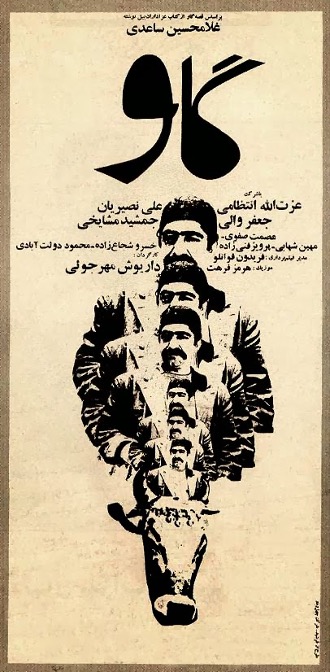
Figure 1: Farshīd Misqālī’s poster for The Cow (Gāv), directed by Dāryūsh Mihrjūyī, 1969.
The Cow (Gāv, Dāryūsh Mihrjūyī, 1969)
There were two or three reasons [for me to choose this particular story]: First, I really wanted to make a film about the villages of Iran; real villages, not the ones that were being seen in Fīlmfārsī. The story had this quality, it was possible to create a dramatic rural event in silvery black and white, in a dreamlike and hallucinatory [vahm’angīz] atmosphere. Secondly, its psychological and poetic dimension was a challenge for me. I had to show the trajectory of the metamorphosis [digar’dīsī] of a human being from the state of reason to madness, and how this trajectory should be pursued that the viewer would share in this change of essence too, and that the incidents won’t seem unreasonable and hilarious. The third issue was the realness and authenticity [isālat] of the people and situations, and to have a central theme.
―Dāryūsh Mihrjūyī, interview published in 20187Ahmad Tālibīnizhād, Kitāb-i Mawj-i Naw: Yā sīnimā-yi Īrān chigūnah digar’gūn shud [The Book of the New Wave: Or How Iranian Cinema Transformed], (Tehran: Nashr-i Chishmah, 1397/2018), 41-42. All translations from Persian to English in this essay are by Farbod Honarpisheh, except those from Occidentosis (translated by R. Campbell).
Dāryūsh Mihrjūyī’s The Cow, arguably the most celebrated film of the Iranian New Wave, is the ideal film to start the discussion on the relationship between the New Wave and the countryside. A film with subtle links to ethnographic material, a shorter version of the story had already been made into a televised theatrical play with almost the same actors as those who later performed in Mihrjūyī’s film.8Ahmad Tālibīnizhād, Kitāb-i Mawj-i Naw: Yā sīnimā-yi Īrān chigūnah digar’gūn shud [The Book of the New Wave: Or How Iranian Cinema Transformed], (Tehran: Nashr-i Chishmah, 1397/2018), 41. The script was based on narrative elements drawn from the 1964 collection of (interrelated) short stories The Mourners of Bayal (ʿAzādārān-i Bayal) written by Ghulām-Husayn Sāʿidī, a well-known leftist author of fiction and stage plays. He was also one of the intellectuals who had become enthusiastic producers of folklore studies and ethnographies. The claim for The Cow’s realism and more specifically the claim made for its alleged ethnographic, meant as objective, depiction of rural poverty has been made by many commentators. As I see it, this key film of the New Wave might hold an ethnographic register, but even in that it is not a realist text.
The Cow has a minimalist narrative. It is a story of a village, unnamed and unlocated, a man living in that village called Mashhadī Hasan, and his cow. It is a poor community and the cow is the only one of the village. The people seem to be driven by a spirit of camaraderie, for the most part. They are haunted by fears of a group of outsiders, whose name, the Buluries, is the only thing we learn about them with certainty. One night, when Mashhadī Hasan is away in the city nearby, his cow dies. Burying the cow’s dead body, the villagers first try to hide the sad news from him. That does not work, and Mashhadī Hasan’s reaction is heart-wrenching, and by the end, frightening. Images of rituals to cast off the evil eye, and nightly rituals of mourning. The most unexpected takes place: Mashhadī Hasan metamorphoses into something new and begins to think that he is his dead cow. When all fails, the villagers decide to take him to the city, but he dies on the way.
The Cow opens with a title sequence composed of overexposed black and white negative imagery. The place of light and blackness is reversed, the image blurry and abstract. These shots show the contours of a human figure, an animal, and the soil they stand on, against a blackened sky. Everything is reduced to a bare minimum. In line with this elementality, the letters of the credits appear as the coarse handwriting of a child. The music, played with a combination of Iranian (santūr and tār) and western instruments (flute), is classical Persian but with an unconventional, some would say modern, composition and arrangement.9The music was composed by Hurmuz Farhat, a composer and ethnomusicologist who had worked as an academic in the United States before returning to Iran in 1969. Mihrjūyī himself played the santūr of the film’s score. The title sequence is followed by a series of faces, mostly close-ups, looking towards the camera. These frontal portraits belong to non-professional actors, old men, old women in chadors, and children. The faces mostly are sunburnt and wrinkled.
The title sequence and the opening scene establish a number of features that shape the film to the end. First, there is the will to discard. Both in its narrative and its visuality, The Cow shows a disposition for shedding away the “non-essential” to the point that what remains is only the determining outlines of the image or story, nearly bare-bone. This bareness starts with the name of the film and continues from there. Instead of resulting in simplicity, however, the film’s fascination for austere structures produces its own form of stylization. These austere sets, especially those in the exterior shots of the village, contribute greatly to the film’s hard-to-forget look.10The title sequence credits Ismāʿīl Arhām Sadr for the film’s “décor.” Largely due to demands from the film’s producer, the Ministry of Culture and Arts, certain alterations were carried out in the village. Years later, Mihrjūyī remembered the more important changes in an interview: “We reconstructed some of the walls, like in the coffee shop, Mash Islām’s home, and the rest. There was a big pit in the middle of the village that we turned into a pool.” See Ahmad Tālibīnizhād, Kitāb-i Mawj-i Naw: Yā sīnimā-yi Īrān chigūnah digar’gūn shud [The Book of the New Wave: Or How Iranian Cinema Transformed], (Tehran: Nashr-i Chishmah, 1397/2018), 43.
The walls, the houses, and the alleys they create, are made of mud-bricks covered with a coating of mud plaster. The adobe is formed into smooth curvaceous surfaces. As dust, as dry or wet soil, it is also everywhere on the ground. The adobe soil is of course a very common element used in buildings in Iran (and around the world), old and new. Until not long ago, in rural Iran particularly, unbaked soil mixed with dry hay, called kāh’gil, was the basic building matter. In their earth-like tone and texture, and in their association with the homes of “the down-to-earth people,” these materials of construction stand for authenticity, in architecture and in culture. In many of the films shot in the countryside, mud-bricks and mud plaster are part of the scenery inevitably; in that, Mihrjūyī’s The Cow is an exception only because of the rather overwhelming degree of this visibility of earth, mud, and dust.
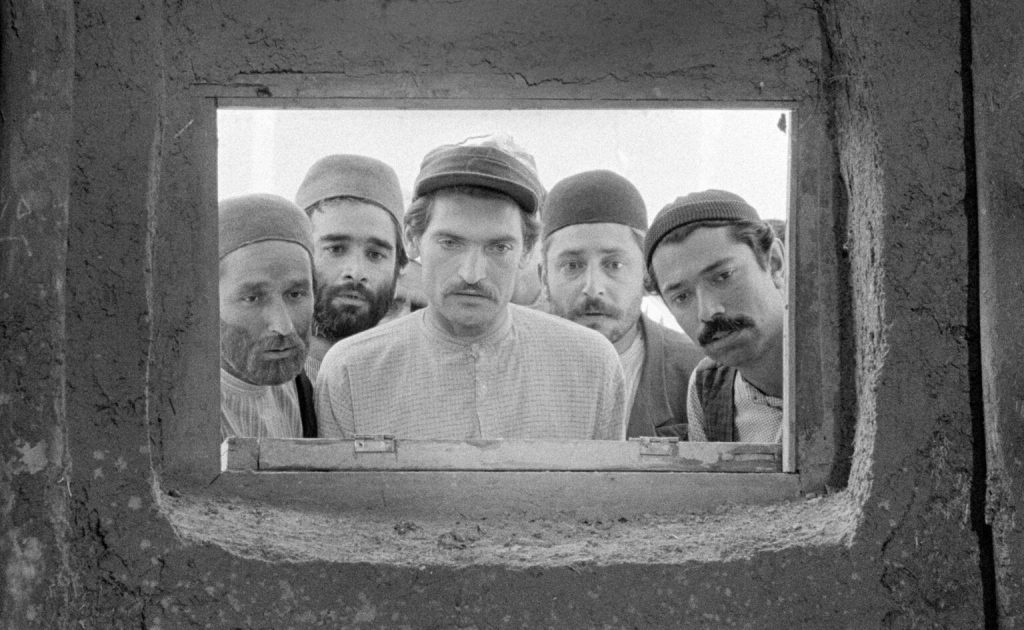
Figure 2: A still from The Cow (Gāv), directed by Dāryūsh Mihrjūyī, 1969.
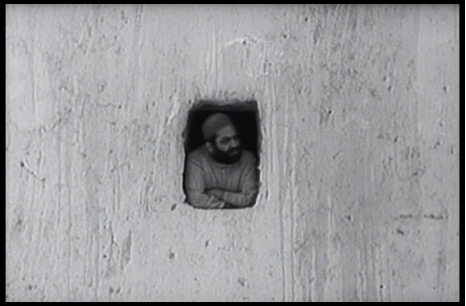
Figure 3: A still from The Cow (Gāv), directed by Dāryūsh Mihrjūyī, 1969.
Even before Mihrjūyī made his classic New Wave film though, the adobe earth had already entered, discursively as well as in its very physicality, the world of Iranian visual modernism. Marcos Grigorian provides us with the most celebrated case of the use of adobe earth in the arts. A graduate of Rome’s Accademia di Belle Arti, Grigorian returned to Iran in 1954 and immediately became an influential player as an artist, academic, curator and gallery owner.11Grigorian was born in Russia in 1925 into a family of Armenian refugees from Kars in Eastern Anatolia. Soon after, his family settled in Iran where he received his early education while experiencing life in a number of cities. In 1950, Grigorian went to Italy for more education in the arts. Immediately after his return to Iran from his studies in Italy, the now prolific artist and mentor founded Galerie Esthétique in Tehran, one of the capital city’s first galleries contributing to the emergent culture of visual modernism. Among the students of the gallery’s classes in painting was a young Kamrān Shīrdil, soon to depart for Italy to study architecture and cinema. He was also instrumental in organizing the First Tehran Biennial of 1958, designing its now iconic poster. Grigorian was among the earliest proponents of “traditional” and “naïve” creative forms like the local popular genre known as ghahvah’khānah or Coffeehouse Paintings, which characteristically depicted themes and motifs from Persian literature and mythology as well as Shia hagiology. Fereshteh Daftari writes this about the use of elemental materials such as soil, and their expanding significance, in Grigorian’s work:
Grigorian’s own trajectory reflects that search for an expression that is modern but not borrowed. By 1960 the intense expressionism he had imported into his own work from his years in Italy, exemplified in his twelve-panel painting Gate of Auschwitz (1950-60), was dissolving in favor of the very stuff of the Iranian desert: parched earth and mud. (Emphasis added.)12Fereshteh Daftari, “Another Modernism: An Iranian Perspective,” in Picturing Iran: Art, Society, and Revolution, eds. Shiva Balaghi, and Lynn Gumpert (London: I.B. Tauris, 2002), 65.
“The very stuff of the Iranian desert” Daftari refers to here, in which were dissolved the “expressionism” of Grigorian’s early years in Italy, became increasingly important in his milieu from the early 1960s onward, the time span that also saw the emergence of the New Wave. This creative use of Iran’s “parched earth and mud” by Grigorian can be seen in works like Kharg Island (1963), Spiral (1967), and Desert (1972), eventually culminating in a series entitled Earthworks. Made mostly out of adobe soil, at times mixed with that other old-fashioned non-industrial building material, dry hay (kāh in Persian), the Earthworks pieces are distinguished by a minimalism that allows the texture of the adobe, cracked and rustic, to come to the fore. At the same time, the compositional sparseness takes in simple rectangular or curved shapes. Rectangles framing other rectangles and circles. The colors of these pieces, exhibited first on the walls of the art galleries of Tehran and later around the world, were of the earthy shades of the surfaces of Iranian soil and Iranian homes. Daftari explains the larger significance: “If critics were condemning the rise of an abstraction lacking local roots, Grigorian’s abstraction was born out of the Iranian land—a medium speaking for a culture.”13Fereshteh Daftari, “Another Modernism: An Iranian Perspective,” in Picturing Iran: Art, Society, and Revolution, eds. Shiva Balaghi, and Lynn Gumpert (London: I.B. Tauris, 2002), 65.
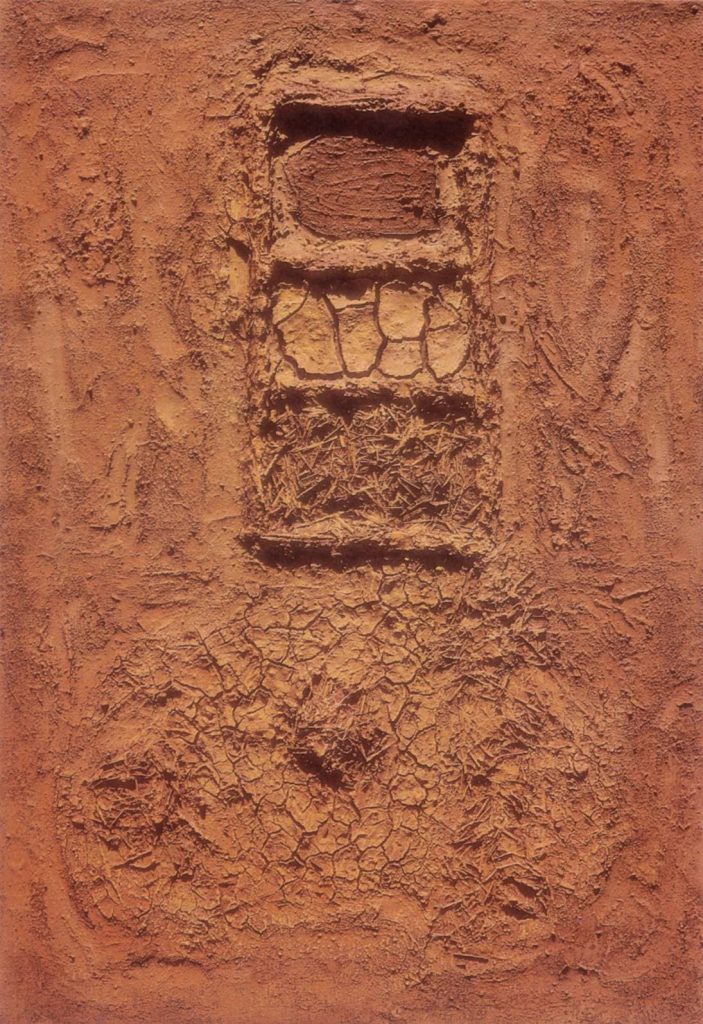
Figure 4: Marcos Grigorian, Kharg Island. 1963. Part of Earthworks Series. Adobe Soil and Dry Hay, 40 × 60 cm.
When observed together, the physical settings of The Cow, so fundamental to the film’s makeup, its look and its story, reveal striking similarities to Grigorian’s creations. The sunbaked walls and rooftops of the “décor” in Mihrjūyī’s film have a pronounced presence in most of the scenes, curvaceous and symmetrical at the same time. The characters of the story, the villagers, are filmed against them, more often in frontal tableaux-like shots. The façades of the humble homes crafted out of these adobe walls and roofs are also symmetrical, complicated by the curves of the windows and arches. The outward simplicity of the surface and design is only punctured by doorframes and small windows. Even on their own, before the intercession of the camera, these rectangular-shaped openings and the walls framing them resemble Grigorian’s Earthworks. The resemblance is in the texture and colors of the materials used, adobe and dried hay, as well as in the compositional character of the two groups of structures. Time after time though, through cinematography and lighting the surfaces of the buildings are framed in such a manner as to close them off from their surroundings, a strategy that creates a most geometrically basic graphics. In one instance, a highly lit building at night comes across as a cube standing against the background of the dark night.
There are of course also differences that need to be mentioned. The rectangular and circular layouts of Grigorian’s paintings/installations only slightly undermine the overall two-dimensionality of the pieces, by raising the surface only by a few inches, and by being only suggestive of openings behind the outward surfaces. In The Cow, however, those orifices constantly slip into the film’s narrative as openings into other spaces. Repeated references therefore are made to the existence of other spaces behind the two-dimensional exteriority of the walls’ surfaces. The most recurrent of these references are when those windows, in one case that is more of a hole in the ground, are shown with a man looking out and constantly pestering the passersby about the happenings in the village.
By 1969, then, the adobe bricks and coating of the walls of the village in The Cow were already linked to homes across the country, particularly to those in the countryside, as well as to the art displays on the walls of the galleries of the capital.14In the immediate future, the earthen material will find its way back into walls of buildings designed by imaginative architects. Nader Khalili, a visionary architect and educator working between Iran and the United States in the early 1970s, will emerge from his travels crisscrossing rural Iran, to commit his life to theorizing and constructing earth-sourced architecture. Influenced by the material and curvaceous designs of old Iran, Khalili used adobe soil as the basis for building affordable private and communal structures in different parts of the world. In 1984, Khalili presented his idea for what later became known as “Superadobe” at the NASA symposium, “Lunar Bases and Space Activities of the 21st Century,” and in 1991, founded the California Institute of Earth Art and Architecture (Cal-Earth). Khalili’s utopianism promised speedy affordable housing for rural communities in urgent need and development of future communities beyond the planet earth. Whether on celluloid, on the walls of actual homes, or as art, this quotidian building material was intertwined with an already-existing literary-illuminated ethnographic prose. However, Grigorian’s well-known road to the rural material can be stretched further back in time, showing a trajectory with a significance beyond an artist’s biographical journey or a fine art’s history. There is a painting from 1958, made out of oil paint on canvas like most of his constructions until then, that stands out, and it is called The Village (Rusta). It stands out because it is different from his earlier paintings, which are more boldly internationalist in subject matter and Cubo-Futurist in style (a style that is believed to have died in the 1910s in Russia just before Grigorian was born in Russia as a refugee), with titles like Specchio Roto / Broken Mirror (1950), Cityscape (1952), The Time Machine(1954, possibly referring to the post-apocalyptic science fiction novella of the same title by H. G. Wells published in 1895), Impostazione / Setting (1955-1956), and Machine World (1956).
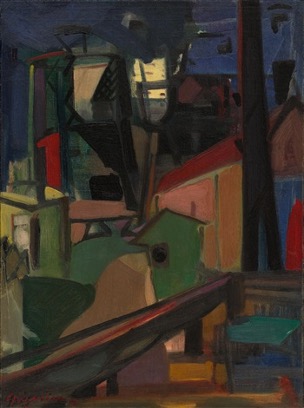
These strange, somewhat untimely, paintings from Grigorian’s early “Cubist phase,” before his Earthworks, just as his interest in Coffeehouse Paintings was emerging, bring the future into the now of the Iran of the 1950s. What is visible in Cityscape, to take one for example, are sections of rising buildings with sharp-angled contours, intertwisted into each other, covering the sky. The colors are in darker chromas, blue, green, red, and more blue. It is dark overall, with a hint of a ray of light in the top center, the source of which is impossible to perceive. There are multiple layers of ambiguity. One cannot tell where it all is, a view from a balcony, a rooftop, through a window, or from street level. Nor is it evident which part of the world the depicted city is part of. If there is not the expected dynamism of movement supporting the label Futurist, there is certainly a rhythm, and a very dense one at that. What comes forward from this packet of broken lines and shapes is best captured by the word that gives the image its title: cityscape. With The Village Grigorian opens up to curvaceous lines and open skies. Even more significantly, compared to his own immediate past, he allows for “new” colors, lighter and earthy, to spread from one end of the canvas to another. With the metallic blues and magentas of his earlier paintings set aside (almost for good), The Village is for the most part through a spectrum of beige. I say “for the most part” because there are still some mysterious black lines dividing/forming the painting’s otherwise monochromatic setting. One of the darker bands of beige running horizontally at the lower part of the painting gives a spectral impression of a row of buildings in adobe color, like the bricks or soil that are the material the village homes are made of. But, in the painting’s indefiniteness of depth and scale, the arches can also be of a mountain range in the distance; the indistinctness of the basic material, the soil, forming rural homes and the hills and mountains surrounding them, we should remember, are the same. The air is one of age-old tranquility, with a tinge of tension just below the skin.
Reading The Village in comparison with Grigorian’s other paintings from around the same time, particularly those depicting a world away, the modern city, has its benefits. On one level, it exposes a dramatic change in a great modernist’s trajectory. Grigorian arrived on his famous adobe soil of his Earthworks in the 1960s by way of his interest in ethnography and folk art, but also by way of The Village, Cityscape, and The Time Machine. It also shows that the constantly appearing relationship between the city and the country can be both an analytical framing as well as one with relevance to poetics and politics.
 |
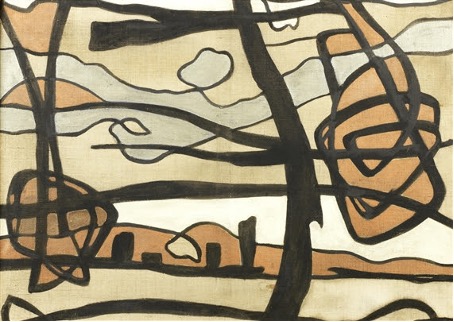 |
Figure 5 (left): Marcos Grigorian. Cityscape. 1952. Oil on Canvas, 76.25 × 55. 88 cm.
Figure 6 (right): Marcos Grigorian. The Village (Rusta). 1958. Oil on Canvas, 56 × 77 cm.
At the forefront of the proliferation in ethnographic writing was Āl-i Ahmad, the essayist and writer of short stories, future translator of Jean-Paul Sartre and of Eugène Ionesco, soon to become the foremost public intellectual of the land. Starting from the early 1950s, Āl-i Ahmad produced a series of ethnographic pieces on various villages located in different regions of the country, from villages and cities in Iran to destinations beyond the borders of the nation (including the USSR, Europe, US, Canada, and Israel/Palestine). In his ethnographic writings, which he described as “sketches of rustic life,” he details the local folklore, languages, architectural norms, handicrafts, religious beliefs, rivers and winds, irrigation and farming practices, mourning and wedding ceremonies, cuisine and attire, distance from the ways of the big cities, class and gender relations, and societal conflicts. They were compiled in a form closer to an informal travelogue than to a disciplinary academic study, a genre he saw as “inevitably based on Western criteria.” Reflecting back, he wrote in 1967 in “Masalan Sharh-i Ahvālāt” [“An Autobiography of Sorts”] that his purpose in producing such literature was “to know the self anew [az no shenākhtan-i khish] and to re-evaluate the native environment based on criteria of the self.”15Jalāl Āl-i Ahmad, Yak Chāh u Du Chālah va Masalan Sharh-i Ahvālāt [One Well and Two Pits and An Autobiography of Sorts] (Tehran: Ravāgh, First Edition, 1343/1964 or 1346/1968), 51-52. In “An Autobiography of Sorts,” Āl-i Ahmad reveals that he stopped producing ethnographic literature for the academic center, the Institute of Social Studies and Research (after only five volumes which included editing works by other authors), because in his words, “I saw that they want to turn those monographs into a commodity to be presented to the Westerner (farangi), which inevitably had to be based on his criteria.” It is interesting to note Āl-i Ahmad’s fears of being co-opted by the coloniality of academia, of being turned into a “native informant” of sorts. Those fears never left Iranian intellectuals. Putting it more specifically, a few years earlier, he had written in 1958 in Jazīrah-yi Khārg: Durr-i Yatīm-i Khalīj-i Fārs [Kharg Island: The Orphaned Pearl of the Persian Gulf]that his intention was to “draw a sketch of the inept struggles of two or three economic and cultural units, meaning villages, of this soil and water [āb u khāk], in the face of the invasion by the machine and machine civilization.”16Jalāl Āl-i Ahmad, Jazīrah-yi Khārg: Durr-i Yatīm-i Khalīj-i Fārs [Kharg Island: The Orphaned Pearl of the Persian Gulf] (Tehran: Majid, 1386/2007), 12-13. In the beginning of the book, Āl-i Ahmad thanks Ibrāhīm Gulistān for being instrumental in securing him the invitation to visit the island from the international consortium in charge of the Iranian oil industry. He persistently and passionately asked his contemporaries to do the same, and many heeded the call.
In one of his earliest ethnographic monographs, a relatively short piece entitled Awrāzān, Āl-i Ahmad wrote on the rural Tāliqān, a typical mountainous region for him, and where his not-too-distant ancestors came from.17Jalāl Āl-i Ahmad, Awrāzān: Vazʿ-i Mahall, Ādāb va Rusūm, Fulklur, Lahjah [Awrāzān: Its Locality, Manners and Customs, Folklore, and Dialect] (Tehran: Dānish, 1335/1956). The earliest date of publication I have seen. mentioned for Awrāzān is April 1954/Urdībihisht 1333. This is how in The Tat People of Block Zahra from 1958 he describes the villages, and the environment from which they arose:
The major difference between the properly built environment that is villages and towns (ābādānī) and the parched environment (khushkī) in this country is that the latter is covered with dried soil (khāk)—that is a dried soil that once was mud—or (in other words) it was turned into mud because of rain at some point, and now it has cracked from thirst and has remained so, waiting. But wherever there is a built settlement (ābādī), the surfaces of life and buildings are also covered in plaster made of hay and mud (kāh’gil). So perhaps the built settlement can be defined as the “hay entangled with mud!”18Jalāl Āl-i Ahmad, Tāt’nishīn’hā-yi Bulūk-i Zahrā [The Tat People of Block Zahra] (Tehran, 1337 /1958), 64. Almost ten years after publishing The Tat People, only two years before his untimely death, Āl-i Ahmad composed another rendition of the elemental village of his ethnography, this time in full fiction. In the first paragraph of his 1967 novella, Nifrīn-i Zamīn [The Curse of the Land], one comes across these lines: “Its name? … Hasan-Ābād or Husayn-Ābād or ʿAlī-Ābād. Obviously. The name is of course not important. A village like all villages. A beehive made out of mud, to the height of human beings. Next to a small creek or a spring or a pond or a qanat… signifying a settlement (ābādī).” See Jalāl Āl-i Ahmad, Nifrīn-i Zamīn [The Curse of the Land] (Tehran: Ravāq, 1346/1967), 10.
While starting from a dichotomy of “builtedness” (ābādānī)19It is almost impossible to translate the Persian word ābādānī into English. It can mean “well-constructedness,” “builtedness,” development, flourishing, and prosperity. and “dryness,” he immediately turns to dryness as a poetic image. The material for his lyricism is fully drawn from the material and temporal forces on the ground, so to speak; as true as any observational claim from fieldwork can be, he acknowledges the “dried soil that was once mud” and that at some point in time (ambiguous temporality) turned into mud from being exposed to rainwater; and now the rather worn-out image of fields of cracked soil he picks up, seeing it, lyrically, as an incarnation of an old thirst for a water that vanished a long time ago. And in all these leaps and bounds of empirical observation and poetic conceptualization he surely, without stating it, keeps a silent gaze on the etymology of the words ābādī and ābādānī, both of which contain in them the word āb, or water.
For Āl-i Ahmad the surface of the country’s buildings and their surroundings display continuity; the first is covered in a seemingly all-pervasive dried plaster of hay and mud, and the latter is a parched environment of dried soil. This reflection on their shared quality echoes a certain aspect of Georg Simmel’s assertion on ruins, while at the same time, showing divergences from it. We should remember that for Simmel one of the most significant characteristics of the ruin, particularly if from antiquity, was that through the passage of time it would reach a state of peace with its surrounding environment. Simmel spoke of this phenomenon as a form of long-awaited, but inevitable, “returning home”; the forces of nature reclaimed the upper hand, their rightful place, against the creative agency of human activity or the spirit:
When we speak of “returning home,” we must characterize the peace whose mood surrounds the ruin. And we must characterize something else: our sense that the striving upward and the sinking downward—are working serenely together, as we envisage in their working a picture of purely natural existence. Expressing this peace for us, the ruin orders itself into the surrounding landscape without a break, growing together with it like tree and stone-whereas a palace, a villa, even a peasant house, even where they fit perfectly into the mood of their landscape, always stem from another order of things and blend with that of nature only as if in afterthought.[emphasis added] Very old buildings in open country, and particularly ruins, often show a peculiar similarity of color to the tones of the soil around them. The cause of this must be somehow analogous to that which constitutes the charm of old fabrics, too: however heterogeneous their colors may have been when new, the long common destinies, dryness and moisture, heat and cold, outer wear and inner disintegration, which they have encountered through the centuries produce a unity of tint, a reduction to the same common denominator of color which no new fabric can imitate. In a similar way, the influences of rain and sunshine, the incursion of vegetation, heat, and cold must have assimilated the building abandoned to them to the color tone of the ground which has been abandoned to the same destinies. They have sunk its once conspicuous contrast into the peaceful unity of belonging.20Georg Simmel, “The Ruin,” in Essays on Sociology, Philosophy and Aesthetics, trans. David Kettler, ed. Kurt H. Wolff (New York: Harper and Row, 1965), 383.
Using material borrowed from nature, then defamiliarized through human labor, subjected to a more authentic aesthetic process of decay, then finally, “returning home” to a new unity. Setting the palace and the villa aside for now, it is revealing to note that Simmel takes up the peasant house—as a construction that like the ruin fits “perfectly into the mood of their landscape,” one whose unique importance he acknowledges by preceding and following it with the word “even” (“even a peasant house, even where they fit perfectly into the mood of their landscape”)—only to argue for the radical particularity of the ruin. In the case of the peasant house though, he argues, this merger with the surrounding nature comes across “only as if in afterthought.” What is even more revealing is that the great theoretician of the ruin—and its aesthetic effect emerging across epochs—feels the need to interrupt his discourse on the decayed “remnants of the past in the present time” to address the question of the “peasant house.” The mention of the peasant house, with its similarity to the ruin, however fleeting, is a symptom of a tension that remains unresolved.21For my use of Simmel in reading Iranian films depicting historical ruins, see Farbod Honarpisheh, “Ethnographic Documentaries,” in “Fragmented Allegories of National Authenticity: Art and Politics of the Iranian New Wave Cinema of the 1960s and 1970s” (PhD diss., Columbia University, 2016), 89–91.
Āl-i Ahmad perceived of the village home as a matter for ethnography, literary musings, and photography.22He included photographs, drawings, and hand-drawn maps in some of his ethnographic texts. The Tat People, for instance, includes fascinating photographs taken by his brother, Shams Āl-i Ahmad. In the more than usually convoluted section quoted earlier, he noted a continuity between the façades of the buildings and the parched environment framing them. This continuity though was not, as it was for the ruins explored by Simmel, a matter that would come with the passage of considerable time; it was there because the plaster covering the built settlements and the “dried soil” of the neighboring hills and fields shared in materiality. The two surfaces it seemed have been living side by side from when “hay entangled with mud,” he wrote. And he wrote at a time when that earthy material seemed to be losing ground, if not vanishing. For Āl-i Ahmad of The Tat People, there was no “returning home,” as the harmony between spirit and nature existed from the very beginning when “hay entangled with mud.”
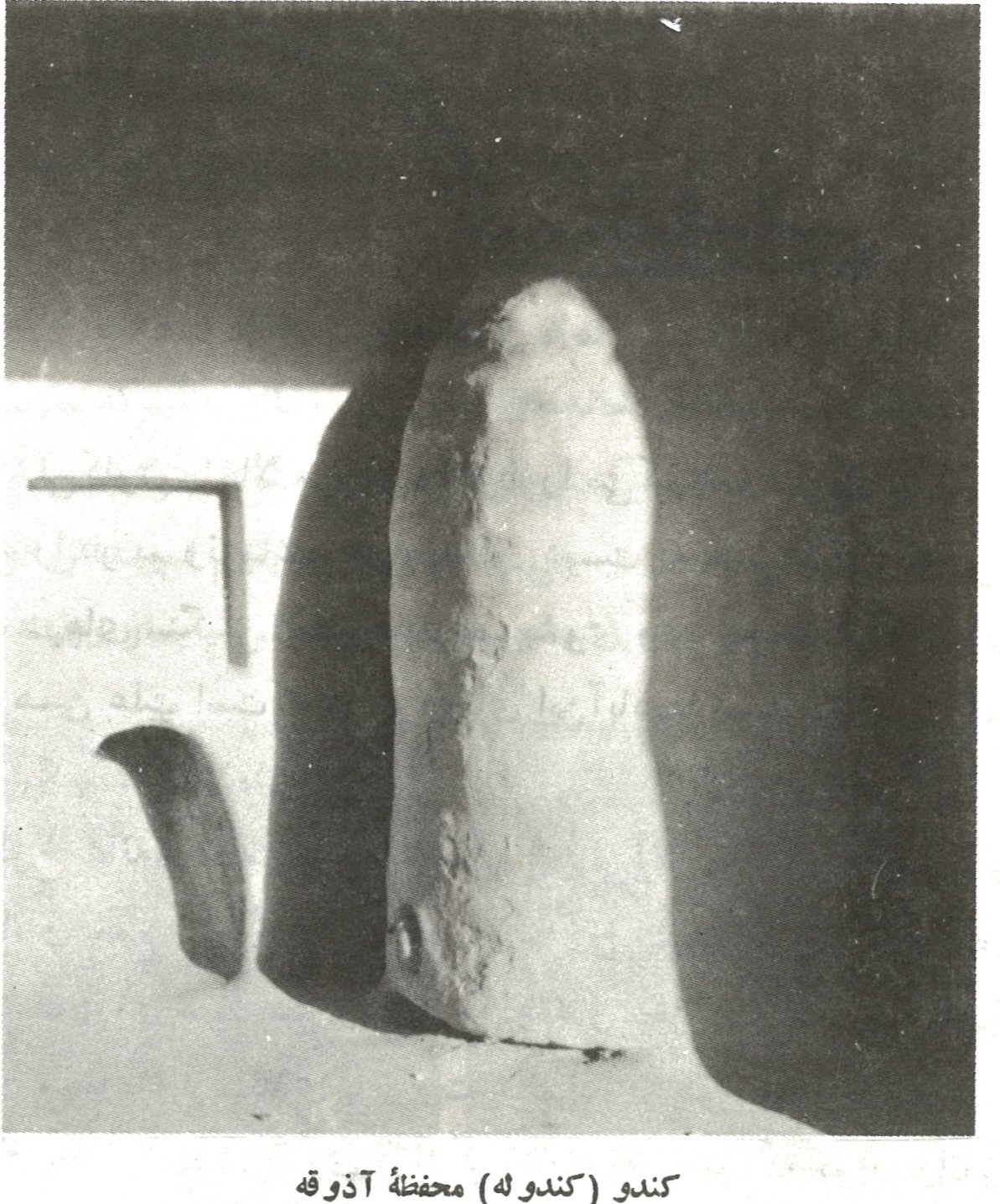
Figure 7: Image from Jalāl Āl-i Ahmad’s Tāt’nishīn’hā-yi Bulūk-i Zahrā (The Tat People of Block Zahra). Photo by Shams Āl-i Ahmad.23Jalāl Āl-i Ahmad, Tāt’nishīn’hā-yi Bulūk-i Zahrā [The Tat People of Block Zahra] (Tehran, 1337 /1958), 68.
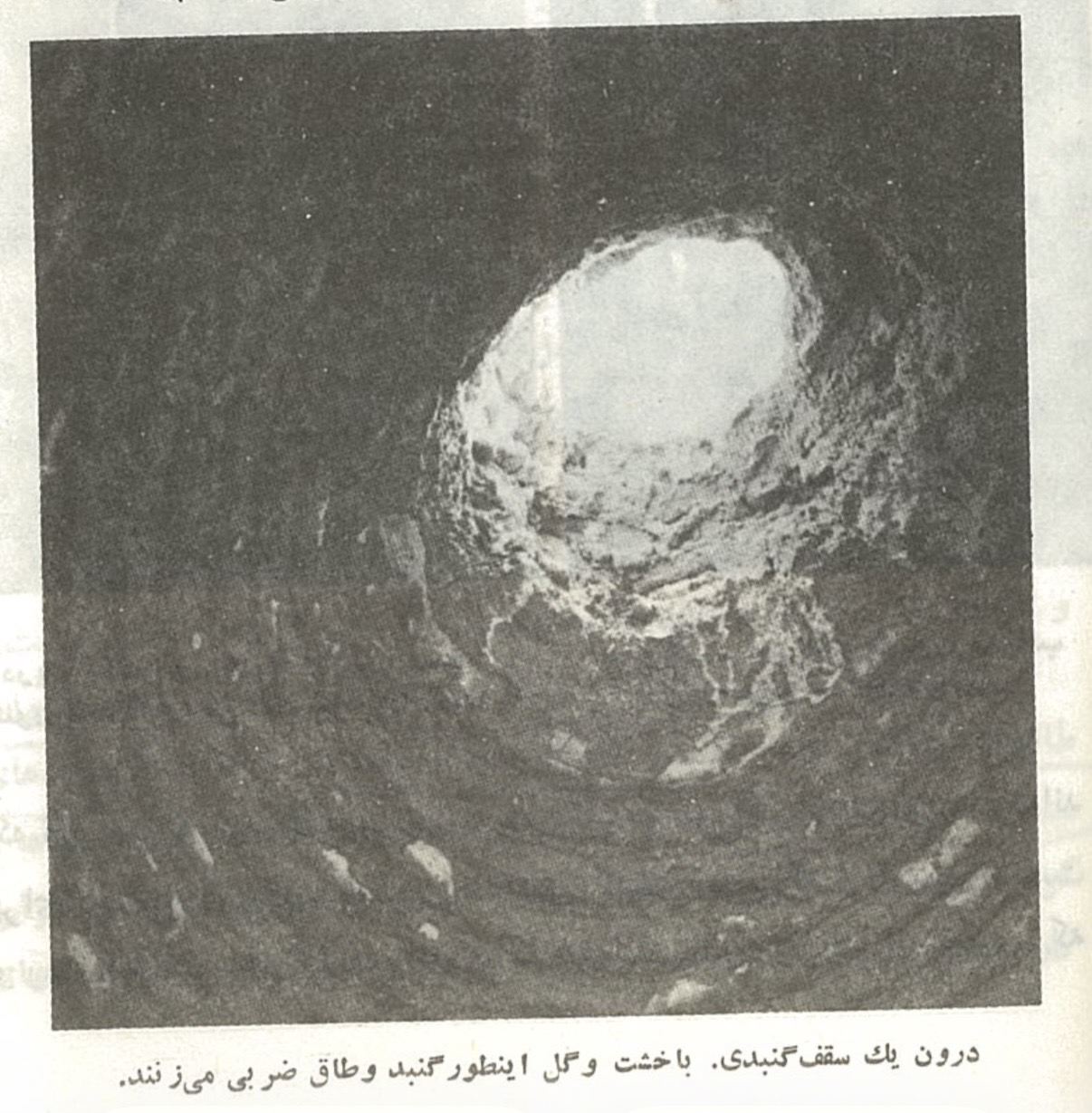
Figure 8: Image from Jalāl Āl-i Ahmad’s Tāt’nishīn’hā-yi Bulūk-i Zahrā (The Tat People of Block Zahra). Photo by Shams Āl-i Ahmad.24Jalāl Āl-i Ahmad, Tāt’nishīn’hā-yi Bulūk-i Zahrā [The Tat People of Block Zahra] (Tehran, 1337 /1958), 66.
Mihrjūyī’s The Cow though had also a direct link with the ethnographic scene in the persona of Sāʿidī who co-authored with Mihrjūyī the film’s script based on one of his own collection of stories, The Mourners of Bayal. A close friend of Āl-i Ahmad, Sāʿidī was one of the strongest voices in the surge in the literature of travelogues, ethnologies, and folklore studies in Iran of the 1960s. In 1968, Sāʿidī published Tars u Larz (Fear and Trembling), a novel of six interrelated stories set in a rural area on the seashore of the Persian Gulf. Neither the locality of Fear, the South of Iran, nor the staging of the strange beliefs and folk practices of the people depicted (possession and exorcism) was by then new to Sāʿidī’s repertoire. Two years earlier, in 1966, he had published his most recent ethnographic book, called Ahl-i Havā (The People of Hava, also known as, The People of the Winds), a study of the people and nature of the villages, small ports, and islands of the South (in today’s Bushehr and Hormozgan provinces).25Ghulām-Husayn Sāʿidī, Ahl-i Havā [The People of the Winds] (Tehran: Mu’assisah-yi Mutaliʿāt-i Ijtimāʿī, no. 36, 1345/1966). “The people of Hava” the reader might recall is exactly the name given by the voiceover to the community engaged in the ritual of possession/exorcism in Taqvā’ī’s lyrical ethnographic documentary from 1969, Bād-i Jinn(The Wind of Jinn), a film I have discussed in detail in my earlier writings.26See the chapter called “Ethnographic Documentaries” in Farbod Honarpisheh, “Fragmented Allegories of National Authenticity: Art and Politics of the Iranian New Wave Cinema of the 1960s and 1970s” (PhD diss., Columbia University, 2016). In line with Sāʿidī (whose book includes a subchapter called “The Wind of Jinn”), the commentary in Taqvā’ī’s film also portrayed the South, represented by its “Southern Blacks,” as a land familiar with hunger, a land besieged by mysterious maladies brought by the winds and jinn. In Taqvā’ī’s documentary though, the People of Hava knew how to “expel the jinn from the body.” And that is what the people in Mihrjūyī and Sāʿidī’s The Cow seem to have forgotten.
The transmutation that the grieving Mashhadī Hasan goes through is of the most radical form, affecting him both from within and outside. It is a source of unimaginable agony for him and the people around him, and it places the film’s narrative on a new, unexpected, course. When he is told of his cow’s death, Mashhadī Hasan refuses to accept the reality and begins to change. He becomes the dead animal. Is this a story of a spirit possession, or one of a metamorphosis? Part of the strangeness of the film I believe comes exactly from this tension between these two different modes of alterity-becoming, that it is both of those. To draw out the components that would position Mashhadī Hasan’s dramatic change as one of possession one can look as near as Sāʿidī’s long-standing interest in ethnographic writing and folk studies; in this regard The People of Hava provides the closest link. Or, at somewhat of a distance, one can consider the broader discursive terrain produced by the proliferation of other films and literary texts built around the dual phenomena of possession and trance, like The Wind of Jinn a film made also the same time as The Cow.
Like in possession/trance films, Mashhadī Hasan’s condition finds its primary medium in the body. Although the catastrophic changes have taken place somewhere “inside” him, within his soul, or in his psyche, it is only through his outward actions, his performance, that the viewer can become aware of his turbulent existence. Following the narrative, what appears to lie underneath his agonies is a transgression of his inner self, breaking its claims to wholeness and independence. He is not himself anymore. “I am not Mashhadī Hasan!”, are the words repeatedly cried out by him, followed by “I am Mashhadī Hasan’s cow,” indicating the completion of his transition. Performed by one of the most respected actors of stage and screen in Iran, Izzatallāh Intizāmī, this implausible protagonist takes on a path of excess from this moment on. An inventory of bodily excess is put on display, rolling eyes, crying aloud, head hitting against walls, eating cattle feed, howling. Both acting and cinematography assist in the creation of the anguished man-cow appearance. If mimesis in possession rituals is a performance/dance of empowerment over an alterity (à la Michael Taussig), in The Cow it leads to the horrors of alienation.
The radical change endured is also a metamorphosis, in Sāʿidī and Mihrjūyī’s account of a man in mourning believing he has become a cow. This understanding of the transmutation of the anguished villager as a reworking of one of the most well-known parables of modernism, comes to the foreground when the story is explored in juxtaposition against the larger world of its context, which should be understood both as its socio-cultural context and as its multi-directional intertextual links. Narratives of speedy, disastrous mutations of the “self” were recurrently resurfacing in a country, and in a world, constantly on guard against what used to be called alienation. I say “in a country and in a world” because I perceive the persistent appearance of high literary tropes of metamorphosis at the time, in the two or three decades following World War II, as yet another sign of the coevalness of a world haunted by images of collapse (visionary and real). For a person who in his typically imaginative way captured this trend in the depictions of metamorphosis, individual and on a mass scale, we can once again turn to Āl-i Ahmad.
In 1966 Āl-i Ahmad published his Persian translation of Eugène Ionesco’s 1959 play Rhinoceros, adding to it a short introductory essay or “The Surplus Introduction” (“Muqaddamah-yi Ziyādī” ) as he entitled it. In this opening piece, which bears the hallmarks of his condensed style in writing and in humor, he discusses an array of subjects, by way of bringing them up in relation to different intellectual personas: Martin Heidegger and powerlessness of man vis-à-vis industry, Franz Kafka and metamorphosis, Frantz Fanon and the end of Europe (as a model), Oswald Spengler and his book The Decline of the West (Der Untergang des Abendlandes, or literally The Downfall of the Occident, 1918), and Ionesco and his life and the place of the absurd (which he translates as mazhakah) in his work, etc. Āl-i Ahmad sees a future besieged by the horrors of metamorphosis. He sees the alarming signs of this collective fate in the literature of the twentieth century, in plays, novels, essays, and monographs. His introduction to Rhinoceros begins with a quote from “His Holiness Heidegger” (Hazrat-i Heidegger) on how men of the nuclear age have become the “slaves without knowing” of “industrial objects,” swiftly adding: “And this essentially means ‘metamorphosis’ in the form that Kafka saw it even before His Holinesses the Philosophers.”27Jalāl Āl-i Ahmad, “Muqaddamah-yi Ziyādī” [“The Surplus Introduction”], in Kargadan [Rhinoceros] (Tehran: Majīd, 1384/2005), 7-8. (First published posthumously by Dunyā-yi Kitāb in 1971.) The humor in referring to Heidegger as “His Holiness” is as much targeted at Āl-i Ahmad himself, known for his use of folksy language and for his championing of religiously inspired ideas and practices, as at the German philosopher known for his attachment to the Black Forest. This is classic Āl-i Ahmad. After dubbing Ionesco’s Rhinoceros as his “humorous proposal” on the matter, he follows by enlisting a whole array of earlier, lowbrow manifestations of metamorphosis as “übermensch” (mard-i bartar): Ionesco’s “humorous proposal” Rhinoceros, and, before that, “the soldiers of the [French] Foreign Legion,” “the gangster,” James Bond, “the ranger,” and the “Stakhanovite worker.”28Jalāl Āl-i Ahmad, “Muqaddamah-yi Ziyādī” [“The Surplus Introduction”], in Kargadan [Rhinoceros] (Tehran: Majīd, 1384/2005), 9. While the metamorphosis portrayed by Kafka was a source of sorrow, the “new metamorphosis” as represented by Ionesco, with groups of human beings regressing into massive, thick-skinned, “armed” animals is terror incarnate. He places both The Metamorphosis and Rhinoceros within a long trajectory in literature: “Although before the [arrival of] metamorphosis = diminution [kāhish], we heard the earlier alarm sirens in the form of contagious diseases.”29Āl-i Ahmad gives examples of works of fiction and poetry that in their literary renditions of “contagious diseases” or “disaster” (balā) yielded early indications of the forthcoming catastrophe—the present-day epidemic of metamorphosis: Albert Camus’s The Plague (1947), Aldous Huxley’s Brave New World (1932), T. S. Eliot’s “The Waste Land” (1922), Fyodor Dostoyevsky’s The Possessed (Demons, 1872), and Joseph Conrad’s Typhoon (1902). Jalāl Āl-i Ahmad, “Muqaddamah-yi Ziyādī” [“The Surplus Introduction”], in Kargadan [Rhinoceros] (Tehran: Majīd, 1384/2005), 10. For Āl-i Ahmad what befalls the inhabitants of Rhinoceros’s small French town is also a disease, one that “Ionesco says has come from the colonies,” he notes.30Jalāl Āl-i Ahmad, “Muqaddamah-yi Ziyādī” [“The Surplus Introduction”], in Kargadan [Rhinoceros] (Tehran: Majīd, 1384/2005), 12. Ionesco might come at the end of the line of those writers, from Marx onward, who foretold of the collapse of European spiritual supremacy (Urūpā’ī kih dīgar farmāyish’ash vahy-i munzal nīst, or “a Europe whose command is not the divine revelation anymore”), but he is not the only one:
This giving the news of the Western apocalypse now has turned into artistic production. Especially in the work of this His Holiness [Ionesco] and [Samuel] Beckett. Who are two main pillars of the contemporary theater, which I don’t know why it has been called the theatre of the absurd… and why not apocalyptic plays?31Jalāl Āl-i Ahmad, “Muqaddamah-yi Ziyādī” [“The Surplus Introduction”], in Kargadan [Rhinoceros] (Tehran: Majīd, 1384/2005), 14. For the Theatre of the Absurd Āl-i Ahmad here uses two Persian equivalences of “ti’atr-i pūchī” and “ti’atr-i bīhūdigī,” which can be translated (back) as “emptiness” and “purposelessness” respectively. This interest in the apocalypse and apocalyptic literature on the part of Āl-i Ahmad is certainly worthy of note as it sheds light on some of his other writings, for instance, the ending of Occidentosis, the end of Chapter 11 entitled “The Hour Draws Nigh.”
Āl-i Ahmad abruptly ends his “Surplus Introduction” to Rhinoceros by noting the play’s “impact” on “young European playwrights.” In this category he mentions three names from three countries, Alain Robbe-Grillet, Edward Albee, and Harold Pinter, and, then and there, he ends the piece with a fragment of a sentence: “And here upon Sāʿidī and [Bahman] Fursī.”32Jalāl Āl-i Ahmad, “Muqaddamah-yi Ziyādī” [“The Surplus Introduction”], in Kargadan [Rhinoceros] (Tehran: Majīd, 1384/2005), 15. Aside from this sweeping, and astonishingly brief, claim there is one other passage in the text that can be seen as a reference to Sāʿidī’s story in The Mourners of Bayal and The Cow. It comes at the beginning of the second paragraph, where Āl-i Ahmad is discussing the play itself: “Mr. Boeuf (Boeuf = Cow) is the first person who becomes a rhinoceros, because there is not much from cow-ness to rhinoceros-ness.”33Jalāl Āl-i Ahmad, “Muqaddamah-yi Ziyādī” [“The Surplus Introduction”], in Kargadan [Rhinoceros] (Tehran: Majīd, 1384/2005), 13. On a different note, the word “Boeuf,” or بف in Persian to be more exact, had already appeared mysteriously in a poem that opens Fursī’s 1964 collection of short stories Zīr-i Dandān-i Sag (Under the Dog’s Teeth). The word pops, in larger and different font (the more stylized Nastaʿlīq), at the end of the poem after the sentence “Who is the stranger.” (Bīgānah kīst.).34Bahman Fursī, Zīr-i Dandān-i Sag [Under the Dog’s Teeth] (Tehran: Bahman, 1343/1964). The intellectual arena that was receptive of these narratives of metamorphosis and possession, and of which Āl-i Ahmad, Fursī, Sāʿidī and Mihrjūyī were members of, was keenly aware of their global currency. Simultaneously, however, these stories of radical, self-shattering transmutation were produced and interpreted as ones with local relevance and coloring.
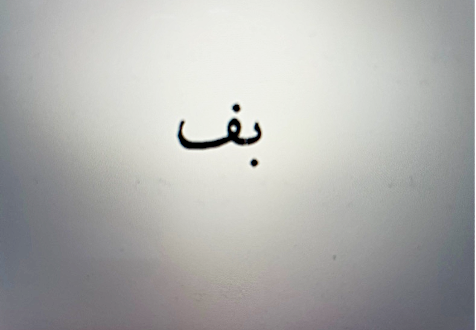
Figure 9: “Boeuf” in Bahman Fursī’s Zīr-i Dandān-i Sag (Under the Dog’s Teeth), 1964.
The “theater of the absurd” as a literary and artistic current and the concept of the “absurd” as a larger cultural condition were in fact among the most intensely debated topics of the time. Not surprisingly, some of the public intellectuals engaged in what we call the “discourse of authenticity” were among the most ardent contributors to these debates. Dāryūsh Shāyigān, for instance, in his influential book Āsiyā dar barābar-i Gharb (Asia Facing the West) sets aside a chapter entitled “Appearance of the ‘Absurd’” in which he expands on the phenomenon both as “a concept in thought and the arts” and as “one of the manifest aspects of the historical destiny of the West” (Vujūh-i bāriz-i taqdīr-i tārīkhī-yi Gharb).35Dāryūsh Shāyigān, Āsiyā dar barābar-i Gharb [Asia Facing the West] (Tehran: Amīr Kabīr, 2536/1977), 123. The list of the authors discussed by him here is very similar to the one by Āl-i Ahmad: Franz Kafka (The Trial), Albert Camus (The Myth of Sisyphus), Samuel Beckett (Waiting for Godot), and Ionesco (The Lesson). Shāyigān has praise for only one Iranian literary figure, one who in his words “lived absurd and died absurd,” Sādeq Hidāyat, the author of Būf-i Kūr (The Blind Owl).36Dāryūsh Shāyigān, Āsiyā dar barābar-i Gharb [Asia Facing the West] (Tehran: Amīr Kabīr, 2536/1977), 126. Even though his is a more philosophical and multifaceted analysis, Shāyigān like Āl-i Ahmad conceives of absurdist literature as primarily a reflection of a reality that precedes it, or, to put it differently, a context that frames it. A reality that is all-encompassing, inescapable, and frightening:
In a world where one’s home is ruined, empathy (hamdilī) becomes an exchange of information, just as humanity is separated from the familiar home and stricken by the horror of exile. In such a situation, there is no more connection and everybody is waiting for Godot, though they do not know who or what he is. Godot, however, is an absolute absence in a world devoid of any presence. The overdevelopment of mass communication, because of the leveling power it has, flattens entire intellectual elevations, ethnic characteristics, specificities of vision (deed), all of which are shelters of thought and refuges of imagination creating a colorful world, are made homogenous (hamvār u hamsan) leading to the ruination of humanity’s home—which to some degree has relied on these shelters, these islands of silence in the desert of homogeny—and there is no corner of the world left safe from the invasion of advertisement and the suffocating pressures of one-dimensional ruminations of commercialism.37Dāryūsh Shāyigān, Āsiyā dar barābar-i Gharb [Asia Facing the West] (Tehran: Amīr Kabīr, 2536/1977), 127-128.
At times Shāyigān’s recount of post-Enlightenment history reads like a retelling of a story of epistemic violence, of how it appeared on the scene, world-shattering. But things are more convoluted and lyrical for him, particularly when it comes to the non-Western parts of the history. Continuing with a subchapter called “In Our Societies the Absurd Is Brought by the Clash of Different Cultural and Historical Planes,” Shāyigān asserts that in the West the absurd is the culmination of an “internal development and direct experience of Nihilism” and as such it is a form of detached awareness, albeit a bitter one.38Dāryūsh Shāyigān, Āsiyā dar barābar-i Gharb [Asia Facing the West] (Tehran: Amīr Kabīr, 2536/1977), 129. In the non-Western societies of Africa, Asia, and Latin America, on the other hand, the process has not been completed and the archetypes of mythical and allegorical thought still live within us. The non-Western manifestations of the absurd and of Nihilism are fated to be interrupted, disjunctive, and “mutant” (a term he uses several times, along with the analogy to Frankenstein):
In this fashion our absurd mannerisms, along with having a tint of the Western absurd (since still the absurd is the zeitgeist in this age of dormancy and transition [dawrah-yi fitrat]), also gain a particular tint and a special state. The absurd in Asian and African societies is an abnormal and disagreeable (na’hanjār) state that is brought about by clashes of different cultural and historical layers. The Asian and African civilizations have different layers with different cultural and historical conditions. [Emphasis in the original text]39Dāryūsh Shāyigān, Āsiyā dar barābar-i Gharb [Asia Facing the West] (Tehran: Amīr Kabīr, 2536/1977), 133.
Underneath the “mutant” of Shāyigān’s discourse, the painful co-existence of distinctive “cultural and historical layers (qishr’hā) and planes (sutūh),” is an observation on temporalities. These planes are different because they belong to different times. Shāyigān tellingly ends the subchapter “In Our Societies” by discussing Tehran as an example of the absurd. Paying particular attention to its “hellish” traffic he describes the capital city as an “insane asylum.” The big city, grown inorganically “unlike our cities of the past,” is a site of aggression and exile. He asks: “Why the Iranian, who in friendship is so committed to civility and politeness (adab) and etiquette (taʿāruf), suddenly behind a wheel, i.e., an environment of strangeness and exile, has such violent behavior?”40Dāryūsh Shāyigān, Āsiyā dar barābar-i Gharb [Asia Facing the West] (Tehran: Amīr Kabīr, 2536/1977), 135. For Shāyigān the “reification” and “abstraction” of life in the big city, either in the East or the West, makes strangers of its inhabitants.
With Mihrjūyī’s The Cow, even the story of its run-in with censorship, is a matter of temporality. It is well known that after its completion the film was denied a screening permit by the Ministry of Culture and Arts (MCA), the same government body that had produced it. The ban was lifted only after a disclaimer in the form of a written caption was added to the beginning of the film stating that the film’s plot belonged to older times, to the decades before the launch of the Pahlavi state’s large-scale rural modernization drive.41This written statement is absent from the English subtitled version of the film distributed internationally. For more details see Hamid Naficy, A Social History of Iranian Cinema Volume 2: The Industrializing Years, 1941-1978 (Durham and London: Duke University Press, 2011), 346. The words of that caption do not solve the question of time in The Cow at the end, possibly even making it more protracted. There are several factors preventing the viewer from deciding with certainty what historical period the film is referring to. This is largely achieved through a series of absences. Things, whether objects or information or connections, are left out of what ordinarily constitute a sensible world. Most strikingly, in the unnamed village of the film (unlike its literary counterpart in Sāʿidī’s book, the village of Bayal) there is not a single trace of the technological devices and mass-produced commodities associated with the twentieth century. There is not a car or a train on the distant horizon, those two emblems used so many a time in the history of cinema to suggest the intrusion of the new, and/or the urban, on the countryside. Not a transistor radio or a plastic cup in sight. The clothing of the inhabitants of the village, in their conventionality and coded communicability, one can also say in their stereotypical currency, is surely suggestive of country life. In this quality the clothing is congruent with the film’s sets, standing for a particular form of “Iranianness” in the public imagination.42In response to an interviewer’s observation that the actors’ attires look “fake” and represent a form of “typical rural attire” Mihrjūyī agrees that is the case with one of the main characters, Mash Islām, who became to some extent like a “type” (tīp), with clothes “just like the clothing designs in a design book.” He insists though that as a whole the wardrobes chosen for his actors were based on what he saw at the village “as there were villagers who still dressed that way.” See Ahmad Tālibīnizhād, Kitāb-i Mawj-i Naw: Yā sīnimā-yi Īrān chigūnah digar’gūn shud [The Book of the New Wave: Or How Iranian Cinema Transformed], (Tehran: Nashr-i Chishmah, 1397/2018), 43.
In the film’s last sequence, Mashhadī Hasan is taken by a small band of his fellow villagers to the nearby city, in the hope that a remedy for his mysterious illness can be found there. But they never reach the city. He takes his last breath, his body soaked under heavy rain, his head buried in a hole of water and mud. His death brings the plot to an end, but the film’s enigmas remain unsolved. Indeed, the ambiguities become progressively more tortuous as the story moves forward. It is as though the meaning was always withering away, just as you thought it might finally be grasped. Interestingly though, there is a symbiotic relationship between the construction of the film’s ambiguities, particularly those of time and space, and its construction of the archetypal, the authentic; they reinforce each other. Time and space are rendered “remote” along with the village, distanced from the contemporary time of 1960s Pahlavi Iran. What remains in this estrangement of reality, is the materiality of the peeling and wrinkled walls made of mud-brick and adobe plaster, and the lined faces of the non-actors in front of the camera.
The Postman (Postchī, Dāryūsh Mihrjūyī, 1971)
Only a few years after the release of The Cow, in 1971 Mihrjūyī made The Postman (Postchī) based on Georg Büchner’s stage play Woyzeck.43Büchner’s play, considered a seminal work in the history of German modern drama, was still unfinished by the time of his death in 1837. What he left behind as a compilation of fragments was in the decades to come completed by other authors. Woyzeck’s first appearance in print was in 1879. Its first cinematic adaptation in Germany was Werner Herzog’s well-known 1979 film of the same title. The story of The Postman takes place in the countryside, unfolding along the country-city schema. This is the dynamics that is also at play within the two other features directed by Mihrjūyī before the victory of the Revolution, Āqā-yi Hālū (Mr. Simpleton, 1970) and Dāyirah-yi Mīnā (The Mina Cycle, 1976).44The Postman was produced by the Mīsāqiyah Studio. Mr. Simpleton and The Mina Cycle, too, were produced by the private sector. In all these films made after The Cow, a major part of the tragedy, the modern horrors afflicting the characters’ lives, comes not just from the opposition between the country and the city, but, more exactly, from the predestined victory of the latter over the former.
The Postman starts with a long take of a man sitting against a pale wall in a small room. The soundtrack is a combination of jarring tunes (by Hurmuz Farhat, also the music composer for The Cow), extradiegetic noise of men shouting, and a rising male voice reciting numbers. The postman of the plot, called Taqī, is consumed by his desire to hit it big with a winning lottery ticket one day. He lives with his beautiful young wife Munīr in a lone small building by a country road. There is also the old local landowning family in whose decaying mansion Taqī and his wife work as domestics. Taqī is impotent and in this he is being assisted by the town’s veterinary physician, a truly colorful figure who is prescribing him a diet of herbs, leaves from wild bushes, and cannabis seeds as treatment.45The role of the “Doctor” is played by Bahman Fursī, a writer of modernist plays and short stories. The reader might recall that Fursī is the playwright whose name, along with Sāʿidī, is mentioned by Āl-i Ahmad in his “Surplus Introduction” to Rhinoceros; they are noted by him as the examples of Iranian authors whose writings bear the impact of Ionesco’s theatre of the absurd. A nephew of the landowner they are working for returns from his studies in the West, with an engineering degree and a white woman.46The engineer is played by Ahmadrizā Ahmadī, a celebrated modernist poet, writer of fiction, plays and screenplays in the future decades who was at the time mainly associated with the New Wave Poetry group. Meanwhile, the sheep in the area are dying one by one as a result of a mysterious disease. The turn of events suggests that the veterinarian is an impostor; he not only is without a permit to work as a doctor but might even be a madman on the run. The engineer seduces the sexually frustrated Munīr. Taqī’s life and mental order disintegrate. In complete breakdown, he stabs his wife to death at the end of the film.
Mihrjūyī, now on his way to being recognized as one of the original auteurs of the Iranian cinema, offers his audiences continuity by placing in The Postman signposts that lead to his masterwork from a few years before, The Cow. The elements pointing to the older film can be direct, or subtle and diffused. Like in The Cow, The Postman creates a world that is both familiar and strange, with the second quality taking over as the narrative progresses. Though unlike in The Cow, wherein the realism of the text is constantly strained by the uncanniness of the space (the impossible isolation of the village, the ambiguity of the location, the sets), The Postman presents a world deformed by everyday senselessness. It is as though when all seems ordinary about the place, a small green town somewhere in northern Iran, pastoral and tranquil as it appears, there is an undercurrent of sinister forces that trouble the surface.
The task of making the collective madness visible in The Postman is carried out primarily by its assortment of colorful characters. To start with, there is the head of the landowning family, a patriarch with a decadent, paternalistic, often brutish, and, at the same time, disorderly and confused demeanor. His role is played by Izzatallāh Intizāmī, the actor who performed Mashhadī Hasan in The Cow. At first glance he appears familiar, as what one expects from a member of the “decadent landed gentry,” a type well known because of its many renditions in the history of modern literature and cinema.47The decline of the landed gentry and the rise of capitalism, the main theme, at least as a subtext runs through many novels, novellas and fiction films set in diverse cultural and historical backgrounds. Even with a cursory review of some of this literary and cinematic corpus, one can notice the reappearance of a certain type of character who stands for the “indolence of the gentry.” The history of the novel and fiction film is packed with stories of ill-fated men of noble lineage who lack a capacity for action and a sense of the practical: Ilya Ilyich in Ivan Goncharov’s novel Oblomov (1859), Robert in Jean Renoir’s The Rules of the Game (1939), for the most part, the patriarch of the Anjo family in Kōzaburō Yoshimura’s The Ball at the Anjo House (1947), the not-so-wealthy arbāb (feudal landlord) of Nāsir Taqvā’ī’s Nifrīn (The Curse, 1973), Prince Ehtejab in Bahman Farmānārā’s film Shāzdah Ihtijāb (Prince Ehtejab, 1974), the sons of the Chaudhari family in Abrar Alvi and Guru Dutt’s Sahib Bibi aur Ghulam (1962), the wealthy zamindar Biswambhar Roy in Satyajit Ray’s Jalsaghar (1958), and Wajid Ali Shah and the nawabs of Ray’s Shatranj-ke-Khilari (1977). He worries about his future and the future of the family’s property, concerns that only grow as his engineer nephew reveals his plans for the “modernization” of the old estate. This development in the story, of the old nobleman feeling threatened by the encroaching forces of the new economic order, is of course well within the narrative model of the decadent gentry, whether in the cinema or in literature. The reactions of the patriarch of the old family in The Postman though are out of the ordinary. He acquiesces easily to the new plans, which consist of the demolition of all there is and the building of a pig farm in their place. Meanwhile,shocked to see the last flock of sheep dying one by one, he himself progressively acquires animal-like qualities. He is ever more portrayed in ways that, whether through cinematography or body language or clothing, link him with the animal world. He begins to wear a sheepskin.
In several scenes in The Postman though, the references made are to another animal, the cow. In this other animal analogy, again constructed mostly out of the figure of the aging patriarch, both Mihrjūyī and the actor playing the role, Intizāmī, make full use of the fact that he also performed the character of Mashhadī Hasan in The Cow. First there are a number of shots in which both the cinematography and Intizāmī’s masterful performance evoke the scenes in the older film when the character he played was taken over by the spirit of the dead animal. Then, when he visits the country veterinarian Dr. Shafīqī seeking help for his mysterious symptoms, all possible uncertainties about his links to the earlier film and to the figure of Mashhadī Hasan disappear. He looks for the “Doctor,” who is from time to time accused of being responsible for the deaths of animals in the village and at times for Taqī’s impotency and tracks him down sitting behind a square-shaped hole in a wall. What follows in the dark space behind those mud-brick walls of that hut, cattle shed, is a scene interspersed with references to The Cow in cinematography, dialogue, action, and acting. Dr. Shafīqī, himself an excessive personality whose actions and performance constantly verge on the absurd, moves from one cow to another, injecting them with a large needle. His speech is a mixture of scientific verbiage, authoritarian demands, fantasy, and utter poppycock. “An animal is an animal, cows, calves, goats, camels…they’re all the same!” the Doctor shouts at the apprehensive patriarch.
Despite all the references to The Cow and the death of the sheep, it is the fear of another animal, the pig, that brings the man of the landowning family to the Doctor. He is haunted by the idea of his engineer nephew’s plans to convert their estate into a pig farm. He informs the Doctor that the Engineer wants to destroy it all “and in its place build a pig empire.” The tale of the mysterious epidemic that has been killing the region’s farm animals and the prospect of the dystopian advent of a “pig empire” can be seen as a form of dispersed, collective, metamorphosis; this would be a reading in line with Āl-i Ahmad who saw in the narratives of epidemics, as in Ionesco’s Rhinoceros, alarming signs of the mass metamorphosis submerging humanity. In the same vein, to the deadly epidemic afflicting the animal world in The Postman one can add the increasing signs of mental breakdown descending on many in the film and read them together as a trope of collective mutation, mass metamorphosis.
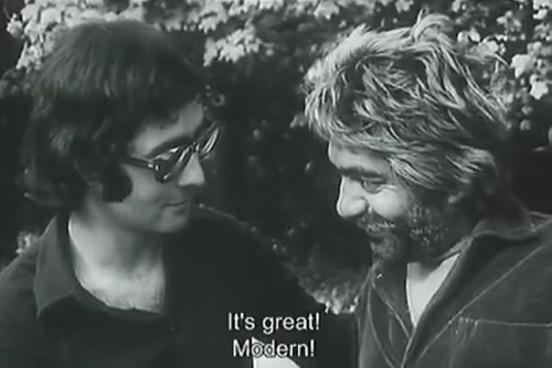
Figure 10: A still from Postchī (The Postman), directed by Dāryūsh Mihrjūyī, 1971.
The Postman differs from the examples from literature and cinema I noted earlier as texts built on the theme of the “decline of the landed gentry.” Unlike in Goncharov’s Oblomov or in Ray’s Jalsaghar, in Mihrjūyī’s film the past is not a pre-modern past that could be idealized, at least by some, as noble and beautiful. The only allusion to that kind of memory comes with a scene in which the old patriarch puts on a sword and attire resembling that of the Qajar-era aristocracy and performs for himself in front of a mirror (comparable to a scene in Jalsaghar); this scene however is very brief and isolated, with the illusion evaporating as soon as he discovers that Taqī is looking at him through a window. Unlike most of the other versions of the trope of the decadent landed gentry, wherein feudalism decays and capitalism rises, in The Postman capitalism seems to have been already well-entrenched for quite some time. The representative of the old family sets aside his concerns and joins the Engineer in his project of development. In one scene we see them both presiding over the workers and bulldozers tearing down the walls of old homes. If there is anything organic in this new world, any trace of a past worth saving, it is being wiped out by the epidemic that is destroying the bodies of the animals from within. The deadly contagious disease killing the sheep is introduced early, setting the tone for the things to come, a dystopian mood that is only heightened by the coming to the fore of endemic madness. All this comes to its end with the killing of the postman’s wife, Munīr.
The Postman is different, especially in its style, its brash modernism, from the majority of the New Wave films representing rural life, the films I call here “country films.” However, both in narrative and theme it provides images and patterns that can be taken up as starting points when this study moves on to other films that fall within that mold. The recurrent, and often intersecting, narrative components are the opposition between the country and the city, the encroachment of the latter over the former, and the vanishing of a way of life (not dissimilar to the category I have discussed elsewhere, the ethnographic documentaries of the New Wave).
Still Life (Tabīʿat-i Bījān, Suhrāb Shahīd Sālis, 1974)
Still Life opens with a fade-in to a stationary shot of a country railway track. An old man wearing a cap and a worn-out uniform is the sole human figure in sight. He is slowly lowering the metal safety barrier on a small dirt road crossing the single rail track. He is the watchman at this outpost. A train passes by. The old man retreats to the solitary cabin near the crossroad, takes off his cap and sits for a while. Outside, a flock of sheep passes by. Almost all this is filmed in wide shots for the landscape and medium shots for the man. The sound is diegetic for this scene and will remain so for the rest of the film. The setting and performances are shockingly bare.
The story, too, in Still Life is elemental. The opening scene ends with a brief visit to the old man’s outpost by three men, two civil servants and a guard from the rail company. They ask a few questions and leave. The film continues with a series of long scenes during which very little is happening, nothing furthering or expanding the narrative. There are the routine acts of the everyday, the man and his old wife at home, her weaving a carpet, a visit from their out-of-town son, familial meals, a scarcity of words uttered. The only knot introduced into the plot, one that initially comes like a simple event but brings about a weighty consequence, is the arrival of a letter. It notifies the old man of his impending retirement, which also means losing the home the company has provided him. He makes one attempt to stop the bureaucratic process and fails. In the last scene we see him and his wife packing their few belongings and leaving their home. The very last shot is a long take of him looking at his face in a small mirror, taking the mirror down, revealing the cracks and faded colors of the wall behind it.
A great part of Still Life’s cinematic distinction, its textual richness, comes from its cinematography and rhythm. These two elements come together with the film’s austere narrative, each furthering the significance of the others. The cinematography is calculated, unbroken, and steady. It is unbroken because throughout the film there is a universal consistency in not hampering the visibility of what is being filmed. There is therefore no fragmentation, no blurriness of the image, no oblique angles, no extreme close-ups, and no loss of focus. For the most part Still Life is photographed in frontal medium shots, with the close-ups of the few characters as the only significant exceptions. Even more constant is the steadiness of the camera. This excessive adherence to lack of camera movement in all its variations—absence of pans, tilts and traveling shots—places Still Life within the very small number of its kind in the history of cinema; even the legendary Yasujirō Ozu uses more camera movement, so as hard as it might be, perhaps here one needs to think of Sergei Parajanov’s 1969 The Color of Pomegranates. The shots are overwhelmingly composed in a frontal fashion, with the human figures placed and framed by symmetrical backgrounds like the interior of a room. Furthermore, the camera’s position is persistently at shoulder level for the exterior shots, and roughly at the height of the seated person for the interior shots. The film is composed of long takes and long sequences. It moves chronologically forward with no temporal getaways, and it does so with a tempo that remains constant from the beginning to the end. If the film’s slow pace is a reflection of reality, it is at times painstakingly so. The editing, understood as juxtaposition of shots, is of course highly crucial to the construction of the rhythm in Still Life, a film consisting of many long takes of similar length and only a few takes of medium length. Editing as the assemblage of shots, however, is not the only contributing factor to the film’s excessive slowness as there is also the montage and rhythm taking place within each of the shots. And they too are of the minimal. A universal sense of stillness permeates all the shots, a condition mostly built by the austereness of the setting, actions, and performances. Even nature, melancholic and cloudy without cessation, seems to have been recruited to this end.
Still Life and Shahīd Sālis’s cinema in its totality have historically been construed as exemplars of Iranian cinematic realism. This is an understanding that is difficult to argue against as it enjoins a line of reasoning that has a number of points lined up for it, some already mentioned, like the film’s non-professional cast, real locale, lifelike cinematography, long takes, and depiction of everyday events. Despite all, it is still critically illuminating, for the sake of that moment in history as well as for now, to recollect the film’s “excesses” in style. The words “still life,” or “lifeless nature” to take the literal translation of the film’s title in Persian (Tabīʿat-i Bījān), comprises a term that in Persian has no application, in fact no history, except from the historiography of the fine arts. Considering these words’ particular links to the history of painting, their adoption for the film’s title points to a hyperconsciousness of style and the painting-like qualities of cinema in Shahīd Sālis’s film. This was an awareness of style on the part of the makers of the film for sure, and most likely one that was hoped to be extended to the viewers of Still Life. Even more crucially, this “stillness” of the world portrayed is a quality that the film mobilizes nearly all the technological and stylistic means at its disposal to construct and sustain. It is in this light, that the slowness of movement on the part of the main characters (father, mother, and their son), their prolonged and repetitious bodily composures and silences, emerge not only as performances, but, more importantly, as a form of excess.48This is an aspect of Still Life acknowledged, decades later, by the scenes referencing the film in Makhmalbāf’s 1992 Once Upon a Time, Cinema. In Makhmalbāf’s film, an imaginary 19th Century audience (from the Qajar Era) are perplexed by the experience of watching Still Life, eventually turning restless by its slowness, repetitive acts and settings, and overall lack of drama.
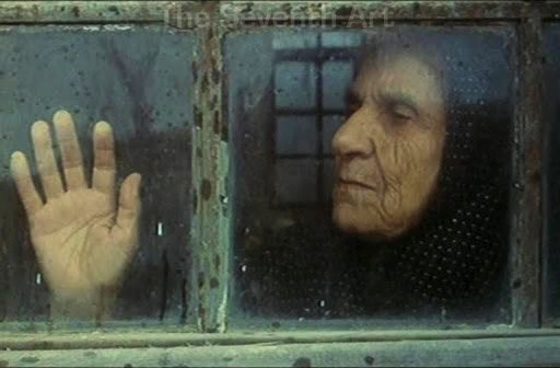
Figure 11: A still from Tabīʿat-i Bījān (Still Life), directed by Suhrāb Shahīd Sālis, 1974.
A more rewarding analysis of Still Life turns its attention to the film’s exceptional ability to record the materiality of the world it depicts, as Kracauer would have it. This would be a critical repositioning, akin to the tradition that comprehends this now canonic film squarely within a linear trajectory for Iranian realism, but not quite one with it. As a critical method, this approach aims for the underlining of the photographic register’s iconicity, instead of the liberal attachment to the real. The many stylistic strategies taken up by Still Life, particularly its unhindered cinematography and extremely slow rhythm (editing between and within shots), facilitate the inherent bond between the photographic image and the material world. The stains and cracks in the walls of the old man’s home come to view, a visibility that because of the long takes and “uneventfulness” of the scenes the viewer can explore even beyond the ordinary. Analogously, a major part of the visual landscape within Still Life is made of the faces, and sometimes hands, of the main characters. The opening scene starts with a medium shot of the old man, like in The Postman, and the very last shot, long and silent, is of his face framed in a small mirror on a wall in his now emptied home. His gaze is tired and uncomprehending, his skin wrinkled and with stubble, just like the faces of the “non-actors,” the locals, in the opening of The Cow.
While certainly it is the old man and his “remote” and rustic surroundings that the camera is mostly interested in, Still Life still contains references, brief but very crucial to the narrative, to those that stand as a threat to him and his quiet life. Interestingly, it is not the trains and tracks that exemplify the societal forces threatening his world, as it is the case in many well-known films in the history of cinema—but the bureaucratic structure behind them, the National Rail Company and its “people of the office desk” (“jamāʿat-i pusht-i mīz nishīn”).49Examples of films in which trains and railroads are emblematic of change, the coming of modernity to rural societies, include La Roue (Abel Gance, 1923), The Iron Horse (John Ford, 1924), Turksib (Viktor Turin, 1929), Pather Panchali (Satyajit Ray, 1955), and with a twist, The Rhythm (Manūchihr Tayyāb, 1964). In Still Life, the old man comes face to face with the representatives of the Company’s administration and each of these encounters is a theater of contrasts, wherein the social determinants of class and the city/country divide are pushed to the fore. The first time the company representatives make an appearance is in the beginning of the film, just at the end of the opening scene. They arrive on a single railcar, stopping at a noticeable distance from where the old attendant is waiting for them. Two civil servants in neat suits and ties and a third man dressed like a guard step down from the railcar and start walking along the tracks. The guard keeps a respectful distance, at times holding a military salute. The long takes, the stationary camera, a wide-angle lens that further stretches the distance, and their unhurried steps turn the scene into a drawn-out act. The old man’s face, filmed in a medium close-up, slightly shows signs of unease. They ask him how long he has been working at his post and he says for thirty-three years. Soon after, the old man receives the letter from the railroad company informing him of his retirement. After suffering much sorrow and anxiety, for the most part in silence, he gathers his strength and makes a trip to the city to make a plea to the company. When he finally finds the company office, he comes once again face to face with two suit-wearing employees. They are aloof and nonresponsive.
In this representation of the salaried civil servants Still Life is congruent with many of the New Wave films, and the writings of the critical intellectuals of the time.50By saying “salaried civil servants” I am here invoking Kracauer’s critique of the new white-collar culture as put forward in his 1930 book The Salaried Masses. The site of Kracauer’s “ethnological investigation” (terms used by Inka Mülder-Bach, the author of the introduction to the 1968 English edition of the book) as urban and as modern as it could get, Berlin, “where links to roots and the soil are so reduced that weekend outings can become the height of fashion, may the reality of salaried employees be grasped.” (Kracauer’s words quoted by Benjamin in “An Outsider Attracts Attention: On The Salaried Masses by S. Kracauer,” his 1930 review of the book). See Siegfried Kracauer, The Salaried Masses: Duty and Distraction in Weimar Germany, (trans.) Quintin Hoare (London: Verso, 1998), 32, 111. Above all, the members of the country’s bureaucratic and technocratic personnel, by then a large mass, are portrayed as alienated, on the personal level and collectively.51ʿAbbās Kiyārustamī’s 1977 Guzārish (The Report) offers a most nuanced portrayal of the servicemen of the country’s bureaucratic machinery, while remaining highly critical of many aspects of their lives. The civil servants of Kiyārustamī’s first feature (and his first made outside the Institute for the Intellectual Development of Children and Young Adults) are consumed by the numbing life of the big city, the joys and troubles of getting hold of commodities (like cars), dreams of social mobility through land/property speculation, and speedy gratification. The conformist school principal of Bahrām Bayzā’ī’s 1972 Ragbār (Downpour), if not the entire coterie of teachers and office workers he leads, can be seen as another representative of the class of salaried employees, a stratum that has expanded incredibly fast in Iran during the last hundred years. Ceaselessly portrayed in a satirical fashion throughout the film, the principal’s character radiates with everyday banality and crude opportunism, qualities that afflict the entire bureaucratic infrastructure and its handlers it seems. A ruinous environment, but not one without intrusions of hope, things like the possibility of togetherness, mutiny by children, love, and a walk under a rainstorm. For the public intellectuals, the criticism of this “alienated class” could vary from a liberal position to a radical one. While Āl-i Ahmad reserved the greater part of his criticism for those Occidentosists (Gharbzadigān) at higher positions of the bureaucracy, he also warned of the spread of their ways throughout a society subdued by the “culture of the machine.” He saw the danger of conformity at all levels, particularly “conformity in the workplace.” While in line with his contemporaries in the critique of the dominant mode of technological advancement and in an anti-conformist discourse, Āl-i Ahmad’s words at times foreshadowed the debates on governmentality and body politics:
To conform before the machine, to be regimented in the workplace, to come and go right on the dot, and to do one kind of wearisome work throughout one’s lifetime becomes second nature to all who are involved with machines. To be active in the party and union, which requires a single dress, manner, greeting and mode of thought, becomes in time a sort of third nature.52Jalāl Āl-i Ahmad, Occidentosis: A Plague from the West, trans. R. Campbell, ed. Hamid Algar (Berkeley: Mizan, 1984), 124.
For Āl-i Ahmad, those recruited into the apparatus of the state in contemporary Iran served an alienated and alienating logic that was not only responsible for the destruction of the nation’s understanding of its “self” but also affected the “Occidentotic” (Gharbzadah) person’s life, his way of being in the world. In his description of the Occidentotic as a type, Āl-i Ahmad navigates between what could pass as critical sociology, ethnographic reporting, and literary reflections. In the seventh chapter, entitled “Asses in Lions’ Skins, or Lions on the Flag” he writes:
An occidentotic who is a member of the nation’s leadership is standing on thin air; he is like a particle of dust suspended in the void, or a shaving floating on the water. He has severed his ties with the depths of society, culture, and tradition. He is no link between antiquity and modernity, nor even a dividing line between old and new. He is a thing with no ties to the past and no perception of the future. He is not a point on a line, he is rather a hypothetical point on a plane or even in space, just like that suspended particle.53Jalāl Āl-i Ahmad, Occidentosis: A Plague from the West, trans. R. Campbell, ed. Hamid Algar (Berkeley: Mizan, 1984), 92.
In this passage Āl-i Ahmad abandons the long-established mainly time-based trope of the “modernizer as link between old and new” in favor of a more abstract graphic, and still modernist, demonstration of the Occidentotic person’s societal place in relation to the people around him. The relationship is illustrated in spatial terms, not temporal ones. It is interesting to note that this instance of distancing from the all-too-prevalent story of the modernizer leading towards a future comes at a moment when Āl-i Ahmad is unabashedly suspending his social science posturing and letting his literary ruminations loose.
At the heart of the New Wave’s country films is the issue of temporality, or to be more exact, how they are molded in time (in rhythm as well as in historical time). This is shown even in Still Life, a film built around subtleties and as such perhaps the most difficult film in its class to use as an example to illustrate that claim. Like Still Life, these films tend to have longer takes, a stylistic choice that creates a slower rhythm. The clearest examples within the sub-grouping I want to establish in this essay, the country films with slow rhythm, are the films produced by the Institute for the Intellectual Development of Children and Young Adults (Kānūn-i Parvarish-i Fikrī-i Kūdakān va Nawjavānān), the organization that, not coincidently, produced Shahīd Sālis’s first feature film in 1973, Yak Ittifāq-i Sādah (A Simple Event). Not surprisingly, some of the Institute’s “classics,” films that have reached a canonical status within Iran and that have certain thematic and formal qualities that make them recognized as exemplary, were filmed in the countryside. Some of the most important among them are Nāsir Taqvā’ī’s Rahā’ī (Release,1971), Hasan Tihrānī’s Qissah-yi Dirakht-i Hulū (The Story of the Peach Tree, 1971), a free interpretation of the story “Yak Hulū, Hizār Hulū” (“ One Peach, A Thousand Peaches” ) by Samad Bihrangī, Amīr Nādirī’s Sāz Dahanī (Harmonica, 1974), Arsalān Sāsānī’s Parchīn (Bamboo Fence, 1976), Shāpūr Gharīb’s Sih Māh Taʿtīlī (Summer Vacation, 1977), and, Masʿūd Kīmiyā’ī’s Asb (The Horse, 1976). Three of these titles, Shahīd Sālis’s Simple Event, Sāsānī’s Bamboo Fence, and Gharīb’s Summer Vacation, display thematic concerns and aesthetic strategies comparable to Still Life, and comparable to the traits Iranian cinema came to be associated with later on, like naturalistic photography, long takes, a slow rhythm, and austere narratives.
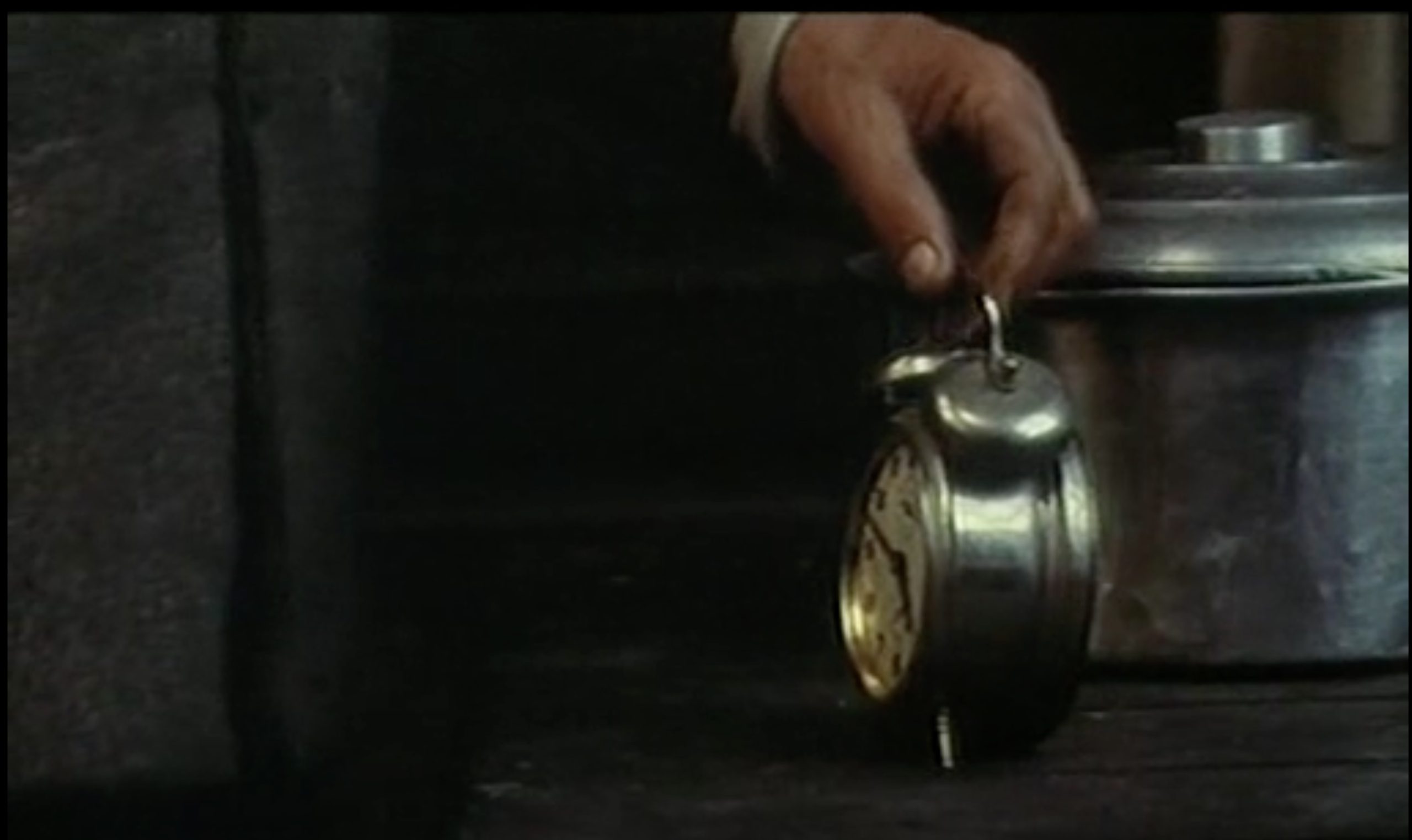
Figure 12: A still from Tabīʿat-i Bījān (Still Life), directed by Suhrāb Shahīd Sālis, 1974.
Bamboo Fence tells a simple story. A young boy befriends a dog, follows her, takes away one of her pups, hides the little dog in the family farmhouse, plays with it secretly for a few days, loses it one day, then finds the puppy back with its mother. The film is divided into vignettes, with scenes corresponding to the clauses of the sentence just laid out. There is almost no dialogue and the takes are mostly long. Despite sharing these characteristics with Still Life though, Bamboo Fence is a very different film. Neither the performances nor the camera positions draw attention to themselves, as was the case with the “excessive minimalism” of Still Life. The style here can be designated as realism with much more ease. The tempo is steady for the most part, but still slightly rises and falls according to the action. Nature is exceptionally crucial in Bamboo Fence, and it is far from being “lifeless” (the art-related term “still life” is translated to Persian as “lifeless [or “soulless”] nature” we should recall), even though the locations in both films are chosen from the more verdant Northern regions of Iran. In comparison to Still Life, the natural world in Bamboo Fence is distinguishable as being life-affirming. The life-giving quality given to nature—to be understood as encompassing plants, animals, and humans—shapes both the film’s imagery and narrative. In addition to the omnipresence of greenery (starting with the hard-to-explain title of the film), the story is driven by the effortless affinity of a disabled child and a family of vagabond dogs.
The Soil (Khāk, Masʿūd Kīmiyā’ī, 1973)
The name of Masʿūd Kīmiyā’ī’s film Khāk is more commonly put as “The Soil” in English, but the word could have been just as correctly translated as “The Dust,” “The Dirt” or “The Land.” Loosely based on a story by Mahmūd Dawlatābādī,54The Soil was based on Mahmūd Dawlatābādī’s 1968 novel Awsanah-yi Bābā Subhān (The Legend of Baba Sobhan). An emerging author known for his realist style and masterful portrayal of rural life, he was also one of the actors in The Cow, one of several in the film with a background in theatre. Dawlatābādī publicly disassociated himself from The Soil as soon as learning about Kīmiyā’ī’s plans for the film’s female landlord. But more on that later. the entire plot unfolds in an unnamed and unlocated village, its subject a peasant family made up of two brothers, their old father, and the family’s pregnant daughter-in-law. The film can be seen as the family and the antagonists’ total entanglement, in labor and death, with soil/land. They toil the land, as the generations before them, for the material and symbolic sustenance of their life. The first scene is of a wedding procession passing through a rustic passageway. It is a night scene entirely taking place in an alleyway formed by lit-up mud-brick structures, through which a crowd of happy villagers march. A fight soon interrupts the happy gathering. The fight, between the two brothers on one side, and a local thug (of an illegitimate birth perhaps, a lumpenproletariat for sure), appears to be about past grievances, including a claim and a counterclaim over the family’s young bride. As the narrative progresses, the animosity between them spirals out of control into more violent matters, becoming a larger-than-life conflict over justice, social respectability, and blood. The deepest element of contention builds up over the family’s source of livelihood, the land they have been farming on. The ownership of the land has changed recently, from the village’s old landlord (arbāb) to his foreign widowed wife, a woman of European background whose exercise of power is increasingly aggressive and disruptive. This adjustment of the political and economic order, now epitomized by a Western/European disregard for fairness and consensus, leads to complete destruction and death.
The conflict is staged within a setting of soil, dust, and mud. The adobe passageways return again and again, sometimes dustier or muddier than other times. In place of the subtlety, detachment, and ambiguity of some of the other films of the New Wave, the narrative in The Soil is built on sharply drawn lines. There is a multiplication of affect, often breaking into emotional and corporeal excess. The extremeness of the drama is accompanied by the high degree of emotions showed by the actors and actresses. Although still filmed in a (somewhat) frontal fashion, the film foregoes the flatness and compositional minimalism of the mud-brick wall imagery of the more self-consciously modernist New Wave films like Mihrjūyī’s The Cow, Shahīd Sālis’s Still Life, and Arby Ovanessian’s Chishmah (The Spring, 1972). Since there is depth of field, and (a semblance of) a spatial opening in the middle of the image in the form of a passageway or square, human and animal figures move within those spaces, as individuals or en masse. There is also the farming land, where the family makes a stand, rebelling against the will to uproot them, where one of the brothers is buried up to his neck by the landlord’s thugs, and where another brother is killed with a pickaxe. Physically, the village square is not unlike its counterpart in The Cow (for which Mihrjūyī built a small pool, you might remember). But instead of being a place of community building, it is a dystopian site. The square is where earlier in the film we see an animal’s flesh cut into pieces and distributed by the chief antagonist (on the orders of the foreign landlord), where later his own body is dragged and repeatedly stabbed with a metal stick. The bodies in anguish, human or animal, are not only covered in dust and mud, but also buried under them, with the camera and editing dwelling on pain and corporeality.
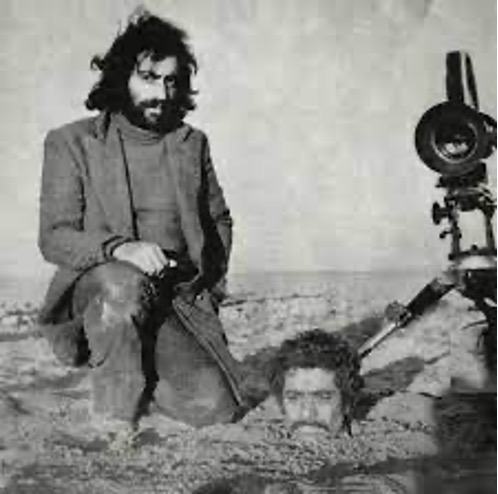
Figure 13: Masʿūd Kīmiyā’ī shooting Khāk (The Soil), 1973.
The Soil’s rough emblematic storyline, along with the violent fate of its inhabitants, are both representative attributes of a new drift in the New Wave. Within this trend, so apparent if we compare the films made in the 1960s with those from the early 1970s onward, things are said more straightforwardly. The political became simultaneously more didactic, easier to decipher, more radical, more affective. Characters, classes, spaces, and tropes were linked with concepts more directly. Within that larger picture, The Soil also underlines the solidification of a subgenre with the emergence of a sizable number of films with narratives built around acts of rebellion, or “ʿusyān.”55Meaning rebellion or disobedience, this word is frequently evoked (along with “loneliness”) for Kīmiyā’ī’s cinema in Persian-language film criticism, often revealing a proclivity for heroes and romanticism. Kīmiyā’ī himself has used it as well. With Kīmiyā’ī’s own 1969 Qaysar as a forerunner, these “rebels against injustice” were charismatic, linked to the working class (urban or rural), uncompromising, deeply ethical, and almost always tragic. In parallel, the visualization of corporeal violence, and corporeality in general, entered a new phase—a development that first appeared on the screen with the “city films” of the New Wave.56To say that Qaysar is a film that intersects the two categories of art and commercial cinemas is not just to point to its success at the box-office at the time of its release and its popularity ever since, both of which it did remarkably. Qaysar also displays a persistent and conscious proclivity for appropriating certain thematic and stylistic elements from Fīlmfārsī, for instance the character of the tough guy, their clothes, the centrality of the female body in the narrative, and the woman-on-stage dance scenes (in Kīmiyā’ī’s film played by a veteran of popular Lālahzār stage and Fīlmfārsī, Kubrā Saʿīdī, better known as Shahrzād). Other examples showing this kind of engagement with popular content and strategies are Jalāl Muqaddam’s Panjarah (The Window, 1970) ʿAlī Hātamī’s Tawqī (The Ring-necked Dove, 1970), Kāmrān Shīrdil’s Subh-i Rūz-i Chahārum (The Morning of the Fourth Day, 1972), Rizā Mīrlawhī’s Tupulī (Chubby, 1972), Amīr Nādirī’s Tangsīr (Tight Spot, 1973), and Farīdūn Gulah’s Kandū (The Beehive, 1975). Kīmiyā’ī stayed in this category and led, with films like Rizā Muturī (Reza the Motorcyclist, 1970), Balūch (1972), and Gāvazn’hā (The Deer, 1974).
The Soil, like Mihrjūyī’s The Postman before it, alludes to a foreign connection for injustice. The present owner of the land, the foreign wife of the previous feudal lord, is a Westerner (from an unnamed country) whose greed knows no boundaries. With a style apparently unlike that of her deceased husband, her exercise of power will dispossess and uproot the peasant family at the center of the film. The possibility of this disaster is communicated to her by the family’s older son, but having no patience for such dialogue, she continues to demand for the takeover of their land, the source of their livelihood. It seems that the feudal system of old, instead of disappearing, is finding an afterlife for itself by connecting to the global forces of capital. With very little of its past revolutionary drive (for enlightenment, rule of law, development, progress, liberal democracy, etc.), the bourgeoisie’s sovereignty is now simply dystopian, particularly in the “periphery.” If in Postchī, the transmutations of the new era were portrayed at once as comical, absurd and deadly, in The Soil the new level of greed leads to death and destruction.
Kīmiyā’ī’s representation of the local landowning class’s linkage with the foreign implant was the main reason for the rift between him and Dawlatābādī, the author of the story the film was based on. Dawlatābādī published two texts in 1973 that laid out his criticism of The Soil, one a short newspaper article called “Bābā Subhān dar Khāk” (“Baba Sobhan in the Soil,” which could also be translated as “Baba Sobhan Fallen”), and an extensive essay published as a book, Zamīmah-yi Fīlm-i Khāk (The Appendix to the Film The Soil). Fascinatingly, Dawlatābādī articulates a series of sophisticated arguments that intersect in content with a number of the themes I have been examining: Iranian intellectual history, realism, allegorism/symbolism, the temporality of the rural, the village versus the city, feudalism (or its residues to be exact) versus capitalism, and imperial domination. In the longer text, The Appendix, he writes of his initial happiness with Kīmiyā’ī’s choice of title for the film, The Soil, as he thought that this new name for his story meant an “expanded concept.” The breakdown of their relationship came as soon as he found out that Kīmiyā’ī is turning the character of the female landlord into a foreigner, carrying out a “racial change” (taqyīr-i nizhādī). For Dawlatābādī this crucial change destroys the nuance and accuracy of his novel, producing a misrepresentation of the contemporary reality:
And in general, what substance is presented in this film? Soil. Land. And relations that revolve around the axis of land and farming. So, the viewer tries to adjust the presence of a foreign element with farming, and colonialist relations with his social life. But he does not find a relevance and concludes the film and its story are based on the past. My story is not about the past. Even though as I said before, even in the past no Englishman ever directly ruled over our farmers.… I am one of those who want the presence of the foreign elements in our country to be pointed out and discussed in different forms, in different arts. At least our people should know that there are such persons in this land and as a minimum they should ask: Why are they here? But this is not a simple matter, and in the arts it is twice as complicated and should not be regarded as homogenous and simple. This presence of foreign forces is not only one of the fundamental issues of our social life, but is also one of the most fundamental life issues of our time and of the history of our world: Misters, what are you doing in our home?57Mahmūd Dawlatābādī, Zamīmah-yi Fīlm-i Khāk [The Appendix to the Film The Soil], (Tehran, 1352/1973), 10-11.
For Dawlatābādī, The Soil goes too far and in the wrong direction. He is not against showing the imperialist “infiltration” of Iran, not even against showing it in the arts and literature, but he believes that kind of intervention has to be multi-dimensional and based on solid ground. Even politicized artistic creation should not defy “sociological,” even “scientific” (a word he apologizes for using) observations of the contemporary situation, a quality already inherent in the realist representation: “From the moment that the door of the school of realism was opened, the realist artist willingly or not accepted the scientific principles [tan bih mabānī-ye ʿilmī dād, or “gave the body to the scientific principles,” as it is so beautifully put in Persian] and found an orientation for a more exact understanding of existence.”58Mahmūd Dawlatābādī, Zamīmah-yi Fīlm-i Khāk [The Appendix to the Film The Soil], (Tehran, 1352/1973), 15. The Soil violates the logic of sound observation on multiple fronts, in its excessive violence, its disregard for actually existing rural mores, its depiction of temporal patterns of nature (the cycle of seasons for instance), its landlord-peasant relations, and its misrepresentation of the fall of feudalism. He describes the film’s location as an “expansive nameless desert land devoid of any identity or individual trait” where no one would want to live.59Mahmūd Dawlatābādī, Zamīmah-yi Fīlm-i Khāk [The Appendix to the Film The Soil], (Tehran, 1352/1973), 35. Dawlatābādī identifies the unchecked power of intertextually, above all the weight of Fīlmfārsī and its subgenre of “village films” (film’hā-yi dahātī), for The Soil’s infiltration by certain motifs and personas, like the villagers’ stereotypical attire and the thugs’ behavior.60Their clothing is in fact reminiscent of the attire worn by some of the actors in The Cow, one of whom was, ironically, Dawlatābādī.
For Dawlatābādī, the soundness and tangibility of the female “semi-landlord” of his story, called Adeleh, was not built only by giving her an Iranian name (her foreign counterpart in the film remains nameless to the end), it was also about her living in a city. Having placed her in a city, where she faced economic difficulties, meant a clear understanding of contemporary Iran, a place where feudalism was in its twilight, where members of the landowning class exist as residues of a bygone era. “History has expelled this social class from the villages” Dawlatābādī asserts.61Mahmūd Dawlatābādī, Zamīmah-yi Fīlm-i Khāk [The Appendix to the Film The Soil], (Tehran, 1352/1973), 13. They are now in search of a place for themselves and their sons and daughters in the “urban economy, [also] known as the dependent bourgeois economy” where the “foreign forces” should also be located.62Mahmūd Dawlatābādī, Zamīmah-yi Fīlm-i Khāk [The Appendix to the Film The Soil], (Tehran, 1352/1973), 10, 13. Dawlatābādī explains many of the important issues in his novel, and their abandonment or distorted transfiguration in Kīmiyā’ī’s film, through the city-country axis. For instance, the film’s incongruous and unconvincing fighting scenes are described as “beatings in hybrid American-Urban fashion.”63Mahmūd Dawlatābādī, Zamīmah-yi Fīlm-i Khāk [The Appendix to the Film The Soil], (Tehran, 1352/1973), 38. Dawlatābādī takes issue with the centrality of the coffee shop, both in the film’s plot and in being placed in the center of the village, seeing it as a convention fabricated by the “imagination of the urban youth who wanted to write village stories or make village films and needed a place for gathering crowds.”64Mahmūd Dawlatābādī, Zamīmah-yi Fīlm-i Khāk [The Appendix to the Film The Soil], (Tehran, 1352/1973), 33. In comparison to the film’s purposeless lumpens, he sees his own leading antagonist, Gholam, as a “human being” with complexities in psychology and motives, a man who does a lot of what he does because he is ultimately a “vagabond, with a foot in the city and another in the village.”65Mahmūd Dawlatābādī, Zamīmah-yi Fīlm-i Khāk [The Appendix to the Film The Soil], (Tehran, 1352/1973), 13, 24.
Dawlatābādī repeatedly reminds the readers of The Appendix that he is not against an author infusing literature or cinema with political thought. Nor is he openly against allegories. Even though he does use words that can be interpreted as allegory (words like sambulīk, kināyah, or tamsīl), he does not discuss allegory directly as a mode of representation, as an interpretive method, nor acknowledge its fundamentally different variations. His explanations of the fictional personas navigating a world conditioned by the city-country axis are themselves cues for reading them as allegorical figures. I believe a great part of his exacting criticism of The Soil is a reaction to some of the qualities I distinguished earlier as the film’s“rough emblematic storyline,” qualities that I added, align with a larger turn toward a more “didactic, easier to decipher, more radical, more affective” leaning within the New Wave in the 1970s. The case of assigning a foreign, that is Western, connection to the character of the female landlord should be seen within this emerging tendency. Dawlatābādī implicitly acknowledges this larger intellectual context when he refers to the introduction of the allegorical and the anti-colonial, as more often than not a form of “generalization informed by the culture of intellectual circles disconnected from life and society.”66Mahmūd Dawlatābādī, Zamīmah-yi Fīlm-i Khāk [The Appendix to the Film The Soil], (Tehran, 1352/1973), 12. And then, more specifically:
And here I say that in this film Masʿūd Kīmiyā’ī pays the price for the sickly and symbolic imagination of pseudo-intellectual circles in higher places; since it is only in such circles that through passionate, but hollow, debates the issue of colonialism is presented in such a ridiculous and cheesy [Pufakī] fashion. Otherwise, a topic as important as this could have found its place in a work more suitable to it.67Mahmūd Dawlatābādī, Zamīmah-yi Fīlm-i Khāk [The Appendix to the Film The Soil], (Tehran, 1352/1973), 41.
Dawlatābādī’s words are a proof of an ascendant critical outlook, but also a proof that even during one of that discourse’s more powerful moments in the history of Iran, there were some who were positioning themselves against it in the name of reality, nuance, and/or artistic creativity.
Comparing Āl-i Ahmad’s earlier writings to his later works, also shows a change of discourse on how the relationship between landlords and tenant farmers is outlined and decoded. In his two key ethnographic monographs written in the 1950s, Awrāzān and The Tat People, he allocates substance and detail to the presumably age-old relationship between the two classes.68See for instance the chapter in The Tat People called “Water and Owned Land” (“Āb u Milk”), 33-48. Beyond that, Āl-i Ahmad intermittently addresses the topic of landlord-farmer relationships, particularly as it concerned the rules and conventions of ownership and profit sharing, in multiple texts. Nifrīn-i Zamīn (The Curse of the Land, 1967) is an example of how he followed that theme in fiction. Although taking note of the contest over resources, the picture that emerges in these two early Āl-i Ahmad texts is not one of open class antagonism and violence, but rather one that is based on convention, consensus, and competition. It seems that the major landowners, the landless farmers, and the villagers with jobs other than farming (like artisans, headmen, water mill workers, machine mill workers, elders, teachers, and clerics) had well-defined shares of ownership, labor, and wealth. Also well-defined, but not equal, was how they divided the sources of material wealth, above all land, springs, wells, qanats (underground water channels), and animals. Āl-i Ahmad of these texts repeatedly makes references to what he regards as the two main reasons behind the retreat, or disappearance, of the villagers’ older ways of living: the city and the machine. However, almost a decade later, he discusses imperialism as the main force cementing the scheme together. With Occidentosis, then, there is a radical turn towards a more upfront Third-Worldist position. A result of this significant repositioning, at least by connotation, is that the call to action is not limited to an invitation to write and record the ways of a vanishing rustic life, but a call to resist the encroaching destruction produced by the Western connection. In his novella published in 1967, The Curse of the Land, he suggests that both the “city folk” and the “village folk” have now, in the era of the “one-product economy,” lost control and sovereignty, as the power is in the hands of the “company representative and his translator.”69Jalāl Āl-i Ahmad, Nifrīn-i Zamīn [The Curse of the Land] (Tehran: Ravāq, 1356/1967), 80. The material base of that “one-product economy,” increasingly consequential in its impact, was oil.
OK Mister (Parvīz Kīmiyāvī, 1978)
A rooster was singing in the village, and a cow’s cry from nearby, suddenly filled the dark. You could even hear the sound of the rest of the herd’s hooves, coming down like a downpour, from the back alleys of the village. Everything was calm. And you could never imagine that under such rural calmness an anxiety is buried too.
—Jalāl Āl-i Ahmad, The Curse of the Land, 196770Jalāl Āl-i Ahmad, Nifrīn-i Zamīn [The Curse of the Land] (Tehran: Ravāq, 1346/1967), 25.
A rooster crowing, framed by an expanding yellow letter O from the film’s title, as though in an iris shot from the primordial dawn of cinema. Behind the rooster, a village of mud-brick walls and domes, like the village in Mihrjūyī’s The Cow, a little like the one in Ovanessian’s The Spring, with the colors and arches like the colors and curves of Khalili’s architecture of the future, like many paintings before and after it, like many paintings by Parvīz Kalāntarī.71Parvīz Kalāntarī was a prolific contemporary artist, illustrator, and author known for his paintings of mud-brick, mostly rural, architecture, and earth-based collages. Kalāntarī, like Grigorian before him, often used kāh’gil or similar material in his work. Ghulām-Husayn Nāmī, a veteran modernist painter still active, uses mud and soil in minimalist and abstract compositions. This is how Parvīz Kīmiyāvī’s OK Mister, made in 1978 at the same time the mass demonstrations of the Revolution were beginning, opens. “Once upon a time, in a remote corner of an ancient country called the land of roses and nightingales, a small remote village awakens to the demands of another day’s work.” These are words from the voiceover, not so dissimilar to the commentaries of many newsreels and documentaries, made by Iranians or non-Iranians, that portrayed a romantic picture of Iran in the decades after World War II. The accompanying images are snapshots of idyllic rural life, ordinary to the point of self-reflexivity, assisted by the playfulness of the music. Intended or not, the film continues to be a whirlwind of quotations, as stories, motifs, characters, visual and material formations from various mediums, times, and geographies are hauled out and brought together.
Figure 14: OK Mister, directed by Parvīz Kīmiyāvī, 1978.
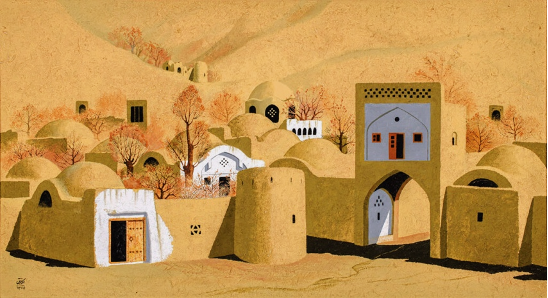
Figure 15: Parvīz Kalāntarī, Untitled, oil and straw on canvas, 1997.
The rooster of the first shot is not without its textual anteriority, motioning the film’s extraordinary openness to other narratives, (speech) genres, mediums, and temporal and geographic contexts. At times, these “quotations” come as interrelated expressions, and at other times, in need of certain creative framings. The rooster of OK Mister conjures up associations with a world of images both famous and forgotten. To begin with, there is a well-known icon of French cinema history, the red rooster that represented the leading film company, Société Pathé Frères. Launched by four brothers in the mid-1890s, the company moved first into the business of audio records and phonograph players production, and then, film production and distribution, manufacture of cinema equipment, and ownership of hundreds of movie theaters worldwide. They are credited for creating history’s first newsreel series in 1908. Often standing gallantly inside or next to a circular shape, staring or crowing into the horizon, the red rooster accompanied the company’s industrialization of the craft of filmmaking and its stunning expansion on the national and international fronts. Although standing for the newness of the industry and machinery it represented, the masculinist animal of Pathé’s trademark was hardly a new symbol as the Gallic Rooster (Coq Gaulois) had already stood as the emblem of the French nation for quite some time.72For more on Pathé and their logo see Jan Olsson, “Rooster Play: Pathé Frères and the Beginnings of In-Frame Trademarks,” The Moving Image, vol. 18, no. 2 (2018): 1–47. The crowing of the rooster, then, can be interpreted as a call to awakening, for the collectivity that is the nation, and for the agility of its vanguard (media) industry. A great part of the logo’s proliferation (constant remodeling) and significance was a consequence of the company’s tension-ridden success in the United States, where their exports had to persistently fight plagiarism and barriers to free and fair competition. In an effort to lay a more solid claim to their possessions, Pathé resorted to artful trickery, inserting in-frame markers of the rooster of its logo into the films it was producing and/or distributing. The multiplication and rise of the logo created a bond between the company, its products, and their audiences unseen in the world of cinema until then but already fully developed with other trademarks and consumers.73In his 1999 book, The Red Rooster Scare: Making Cinema American, 1900–1910, Richard Abel writes: “The red rooster gave the French company a singular, fixed identity, distinguishing it from most other companies; and it circulated as a recurring symbol of goodwill that, in guaranteeing the quality of its products’ performance on any stage or screen, incited increasing consumer demand.” For him the result of constituting Pathé as an “alien body” and the successful strategies used by the company’s competitors (including the development of early westerns) who did not share its global reach, amounted to a process of “Americanization.” Abel argues that this corpus of foreign films, numerous and remarkably popular in the first decade of the century, was subjected to an “amnesia,” a forgetfulness that should be conceived as the “structuring absence” around which the anxiety-ridden identity of the early American film was built. Richard Abel, The Red Rooster Scare: Making Cinema American, 1900– 1910 (Berkeley: University of California Press, 1999), xi, 19.
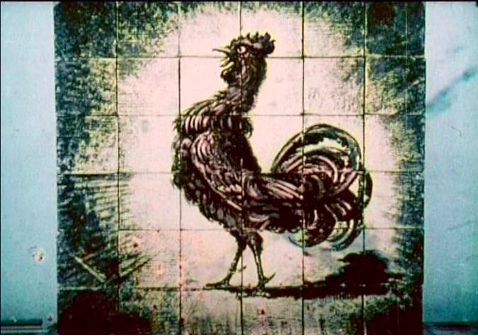
Figure 16: Japonaiseries (Japanese Varieties), Gaston Velle, 1904.
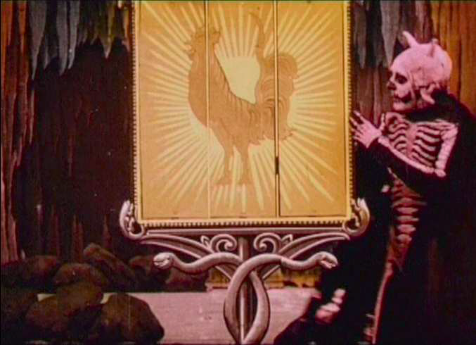
Figure 17: Le Spectre rouge (The Red Specter), Segundo de Chomón and Ferdinand Zecca, 1907.
Kīmiyāvī starts OK Mister with the old bird, a reference to a French icon of early cinema whose meaning and history are lost to most audiences but still is legible as an inference since the figure of the rooster and what it stands for are widespread. Many would view this opening as a playful alternative to the roaring lion of Metro-Goldwyn-Mayer;74“Leo the Lion” of MGM was inspired by the official mascot of the athletic teams of Columbia University, the Lions, and their slogan of “Roar, Lion, Roar.” It is well known that the lion was part of the logo of Goldwyn Pictures since 1916 (since it was designed by a Columbia alumnus), before the merger that created the powerful Hollywood studio in 1924. What is harder to trace, conceive, and theorize are the relationships one can productively establish between the lion of MGM and the crowing red rooster of Pathé. Then, the analysis once again enters the highly contested space where the concrete and earthly are infused with the ethereal. there are advantages in that reading, above all, in its meshing of Western iconography (British, French, and American) it allows for a critique of a hegemonic collectivity that was, and is, real and relevant. Kīmiyāvī had already reflected on that domineering force in his 1973 feature Mughul’hā (The Mongols). At the time of The Mongols and OK Mister that historical collectivity was more often than not called by the name imperialism (a term less in use since the 1980s, particularly within academia). On another level, narratively and conceptually, the rooster’s act is justified as a wake-up call and the beginning of a new day. Calls of awakening, individual and collective, have a long history as a primary aspiration for producers of many political inclinations and many mediums (writing, preaching, social activism, pamphleteering, literature, etc.). As a trope championed by believers in progress, they are contingent on a presumed preceding timespan of stagnation and decay. Always in tune with the world, reformists and revolutionaries of the Middle East promoted awakenings and resurrections (ba’ath in Arabic and rastākhīz in Persian), as passionately as they criticized decline and decay. This was the concern as much in political and administrative spheres as it was in cultural and artistic matters. As in many other places in the world, winged figures calling for collective (re)awakenings have an illustrious history in the Persianate world. While their stories stretch back to such distances in time that they get lost, they have kept their presence felt in modern times, making particularly memorable appearances during revolutionary moments (including for bourgeois revolutionary movements). They have appeared in poems, songs, and journals, for example. The early dawn crowing of the rooster as a harbinger of resurrecting nations is perhaps as old as the idea of the tribe itself. What is astonishing is how early the cry was rendered, at least potentially and with a touch of poetry, as a traveling call. One can find it in early Marx. Thus, he abruptly ends the Introduction to Critique of Hegel’s ‘Philosophy of Right,’ the 1844 text known for “the opium of the people,” “the heart of a heartless world,” and “the spirit of a world without spirit” (Foucault in 1979) utterances, with these words: “When all the inner conditions are met, the day of the German resurrection will be heralded by the crowing of the cock of Gaul.”75Karl Marx, Critique of Hegel’s ‘Philosophy of Right’, ed. Joseph O’Malley, trans. Annette Jolin and Joseph O’Malley (Cambridge: University Press, 1970), 142. The Gallic rooster was capable of resurrecting the industrial working class across borders, when the time was right.
Its first issue published in 1907, just as the Iranian Constitutional Revolution (1905-1911) was unfolding, the journal Sūr-i Isrāfīl (The Trumpet of Isrāfīl), captured the imagination of a sympathetic modernist readership. The image on the journal’s first page was of a winged young male, an angel, holding a trumpet. The winged figure was Archangel Isrāfīl, the Islamic counterpart of Raphael, who will climb over Jerusalem on the Day of Judgement, blowing his trumpet, summoning the dead to rise. Comprised of three words, there was a slogan written on the banner wrapped around the angel’s body on the journal’s cover: “Hurriyyat, Musāvāt, Ukhuvvat” or “Liberté, Égalité, Fraternité.” So deeply shaped from the outset by the idea of individual and national awakening, the Constitutional Revolution continued to recruit other winged figures. Written in the early 1920s, the celebrated song, “Murgh-i Sahar” (“The Bird of Dawn”), interweaves romance, anti-despotism, and a cry for renewal in its multifaceted lyrics:
O Bird of Dawn, cry out!
Renew my pain and sorrow
With a spark-ridden sigh,
This cage, break and topple
O wings-tied nightingale, emerge from the corner of the cage
Sing the freedom song of humankind,
And with your breath
Set the mass of this soil, ablaze
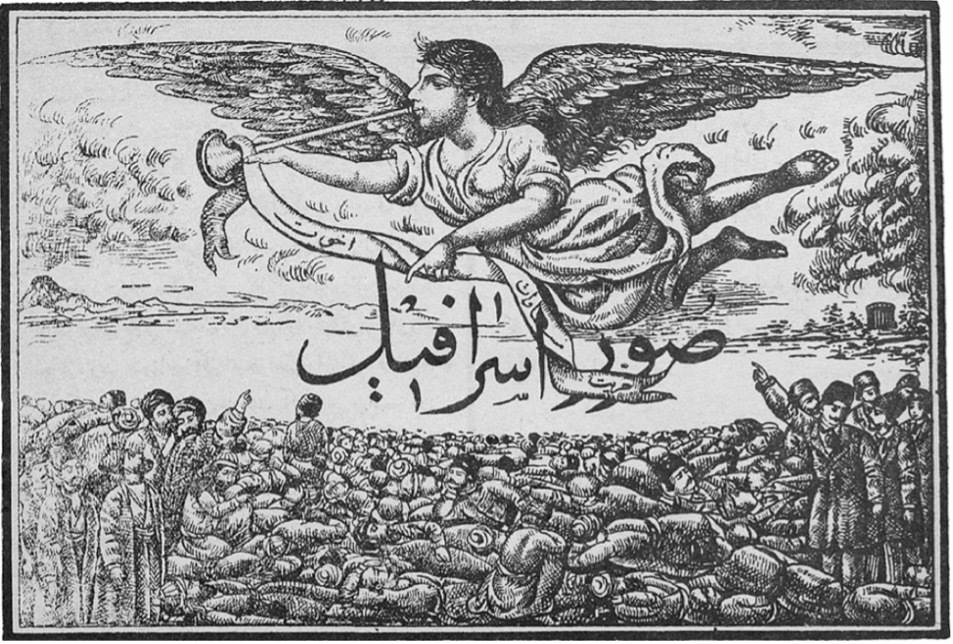
Figure 18: Sūr-i Isrāfīl (The Trumpet of Isrāfīl), modernist Persian-language journal, first issue published in 1907.
Iran’s first organized band of avant-gardists, formed in 1948 by a number of Tehran-based artists and writers, called itself Anjuman-i Khurūs-i Jangī (the Fighting Rooster Association). Publishing a journal, also called Khurūs-i Jangī (Fighting Rooster), they advocated radical renewal in the arts, literature, theater, and music. In 1951 they put out their manifesto, “The Nightingale’s Slayer” (“Sallākh-i Bolbol”). In the document, uncompromising and utopian as the more well-known avant-gardist manifestos of the century, they called for the victory of the new over the old: “The new art that sees sincerity with the inner layer of the self (darūn) as the passageway to artistic creativity (āfarīnish-i hunarī), holds all the flurry and vibrancy of life and is inseparable from it.”76From the Manifesto on behalf of the Fighting Rooster Association, signed by Īrānī, Gharīb, and Shīrvānī, printed in Fighting Rooster Journal 1, no. 2 (Urdībihisht 1330/April 1951). The first core members of the group consisted of Jalīl Ziyāpūr (painter associated with Cubism, with a lifelong interest in folkloric and rural subjects), Ghulām-Husayn Gharīb (author, poet, musician), Hasan Shīrvānī (theater and music, a future head of the Tehran Opera Bureau), Hūshang Īrānī (Surrealist poet, critic, painter), and Murtazā Hannānah (prominent composer, including for a number of New Wave films later on). Two of the future pioneers of the New Wave cinema, Farrukh Ghaffārī and Ibrāhīm Gulistān, participated in their activities. The “fighting rooster” of the group’s name, also appeared as a logo designed by Ziyāpūr, a bold design that was a “combative, aggressive image, marching forward.”77I am borrowing these words from Aida Foroutan’s description of the Fighting Rooster’s logo written in her well-researched essay “Why the Fighting Cock? The Significance of the Imagery of the Khurūs Jangī and its Manifesto ‘The Slaughterer of the Nightingale,’” Iran Namag 1, no. 1 (Spring 2016): XXVIII–XLIX. Foroutan also provides a comparative reading of Ziyāpūr’s representation of the intrepid animal with older examples of image-making, from Zoroastrian and Islamic eras, and with examples from Pablo Picasso’s rooster series from 1938.
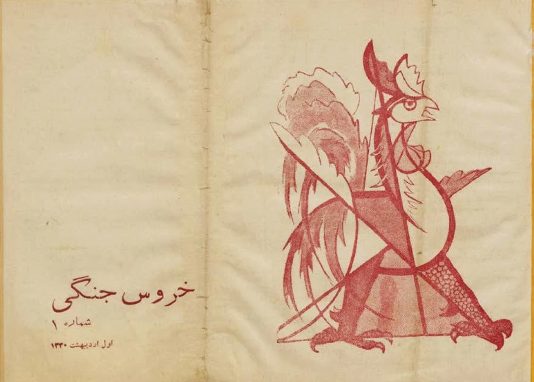
Figure 19: Khurūs-i Jangī (Fighting Rooster) journal, issue 1, vol. 2, April 1951.
The figure of the rooster also had its specifically literary precedents, in the Persianate world of the past and in modern Iran of the recent past. But this study allows only for a brief mention of a few, the more relevant few. The most relevant example is from a poem that was printed in the second issue of the Fighting Rooster journal in 1949. Called “Shahr-i Sobh” (“The City of Morning”), the poem was written by the most influential voice in modernist Persian poetry, Nīmā Yūshīj.78Nīmā Yūshīj, born ʿAlī Isfandiyārī, is often referred to as the “father of modern Persian poetry.” For the purpose of this essay, I adopt the terms used by Āl-i Aḥmad to describe Nīmā’s poetry, “revolutionary” and “symbolic” (sambulīk). See J. Āl-i Ahmad, “Difāʿ az Nīmā” [“In Defense of Nima”], Īrān-i mā [Our Iran], no. 26 (1329/1950): 4. This is how Nīmā’s free, still rhythmic, image- and sound-conscious verse sets out:
Cock-a-doodle-doo, sings the rooster
from inside the hidden quiet of the village
from the slope of a road like a dry vein
injects in the veins of the dead, blood
entangling with the cold surface of the dawn
spilling onto every corner of the plain.
With the call of him, the road has become full
brings promises to the ears free
shows the road to the built settlement (ābādān)
the caravan in this ruin of settlement (kharāb’ābād).
This is a vision of rooster whose genealogy spills into multiple semantic and experiential planes, most of all, the modernist/avant-gardist and Islamicate/Persianate traditions. One can begin with the distant past. One can go as far as the time of the ancient Zoroastrians and encounter the idea of rooster as a sacred bird. He is taken up by the Avesta (including by the Gathas attributed to the poet-prophet Zoroaster) and Middle Persian Pahlavi texts time and again and in various forms. According to legend, it was King Tahmuras who first taught the rooster to crow, a cry that invites a new dawn and wards off idleness. While a force that dispels demons, his untimely crowing was a sign of evil omens. Most importantly, there was the association (in celestial stories for sure, in etymology most likely) between the rooster and Sraosha (Surūsh in contemporary Persian), the deity who guarded and mediated the relationship between the Supreme Being Ahura Mazda and the believer, acting the part of a messenger. “Zoroaster asks: ‘Who is it that follows the dictates of Sraosha?’ Ahura Mazda replies that it is the cock, which, on the appearance of the dawn, crows as follows: ‘O men! Arise!’”79From Zend Avesta, the 18th Chapter of the Vendidad (XVIII. 14 to 16) as quoted in Jivanji Jamshedji Modi, “The Cock as a Sacred Bird in Ancient Iran” in Anthropological Papers: Papers (The paper is based on a lecture read by Modi before the Anthropological Society of Bombay on 28th March 1900), Bd. 1 (Bombay: The British India Press, 1911), 105. See also Frantz Grenet and Michele Minardi’s “The Image of the Zoroastrian God Srōsh,” Ancient Civilizations from Scythia to Siberia 27, no. 1 (2022): 154-173.
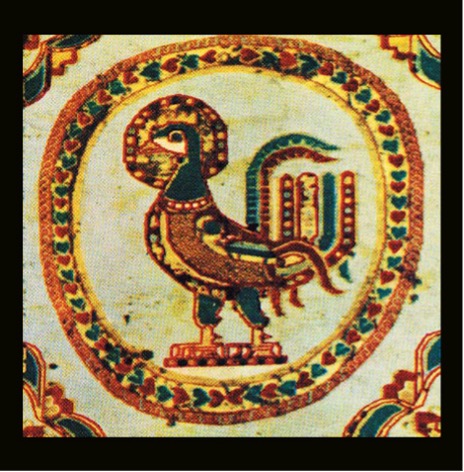
Figure 20: Nimbed Rooster Framed by a Circle, Sasanian-era textile, 6th–7th centuries A.D.
One can also go as far as Prophet Muhammad’s Night of Ascent, Mi‛rāj, when he encountered the Celestial Rooster in the first heaven. The giant bird, like Gabriel accompanying Muhammad on the journey, and like Isrāfīl, is one of God’s supreme angels. His feet on the ground and head raised as high as the second heaven, this rooster too is given the task of awakening collectivities. When he sings, the roosters of the earthly world echo his call from the east to the west, inviting all the living beings to leave the night behind and rise.80For more on the angel rooster and its literary and visual iterations, particularly in Mi‛rāj-nāmahs, see Christiane Gruber, The Ilkhanid Book of Ascension: A Persian-Sunni Devotional Tale (London: I.B. Tauris, 2010), 14, 28, 46. There is a difference though. The last day of the world, when the ultimate resurrection is suddenly about to materialize, when the dead are awakening, is the day that the heavenly rooster stops crying. On that day, it is the roosters’ collective silence that summons all, all who have ever been alive. If in Critique Marx envisioned a day when the Gallic Rooster’s call for resurrection travels from one (European) country to another, the angel rooster of Islam gives rise to awakenings in between celestial and terrestrial worlds, with his call or with silence.
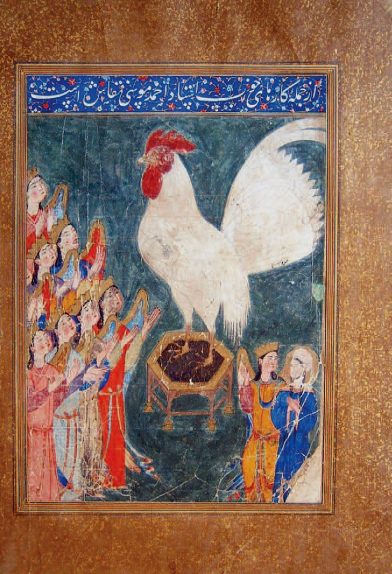
Figure 21: Prophet Muhammad encounters the Celestial Rooster (ca. 1317–1335)
No doubt, another possible constellation of intertexts for the rooster as a bird of the dawn, as an awakener, as a harbinger of rupture, can be posited within the “Western” tradition. That schema, never an outsider to the Islamicate/Persianate texts or visual culture, can be drawn from the modern era through the genesis of Christianity to antiquity (of no matter what origin). The rooster breaks through William Shakespeare’s settings time after time. “The cock, that is the trumpet to the morn,” in fact haunts the very opening of Hamlet. In Act 1, Scene 1, it is perhaps “his lofty and shrill-sounding throat” that makes the specter of the murdered king depart as abruptly as “it” appeared, before coming to words. This thought is voiced by the ones who first sighted the ghostlike figure, who knew of the tradition that the rooster’s crowing makes “awake the god of day.” They also knew that on the night before “our Savior’s birth,” the repeated screams of the bird warn the darkness, its witches and demons. In the mournful story of Hamlet though, within the play’s very first scene of sustained dialogue, the cry of “the bird of dawning” (named just like our celebrated Persian revolutionary song) does not lead to clarity and equilibrium but to more existential uncertainty and political anxiety on the constitution of the ghost and his timing.
Another literary entrance of a flamboyant rooster was in a Gulistān story. Called Rooster, it is a novella written by Gulistān in 1969-1970, making its first appearance in print almost ten years later, at around the same time that Kīmiyāvī was making OK Mister.81The first version of Rooster, “a bit more than a draft, but less than the final shape (shikl)” in Gulistān’s own words, was published in a journal called Lawh (Tablet) in the late 1970s, with the acknowledgment that the story has not found its final form. See Ibrāhīm Gulistān, Khurūs [Rooster], (Rawzan Publishing: New Jersey USA & London UK, August 1995), 7-8,15. Like in Nima’s poem, the rooster of Gulistān’s unsettling story also arrives at the very beginning, at the very first paragraph:
When we knocked on the door, it was as though the rooster on top of the home’s entrance barked. Surely this was not a call to prayer, even if not a bark exactly. Or maybe a call to prayer should always be like this, jolting. In any case, we jumped.82Ibrāhīm Gulistān, Khurūs [Rooster], (Rawzan Publishing: New Jersey USA & London UK, August 1995), 17.
In the story, unfolding in a remote unnamed settlement on the shores of the Persian Gulf, the reader can notice a few of the qualities of the rooster as the agent of awakening. However, this time, the signs are displaced, anguished, and troubling. If the rooster’s singing is a wake-up call to sleepers, a harbinger of a new day, beautiful like the call to prayer, here the otherwise familiar sound is out of the ordinary, metamorphosed into the sound of another species. The impact on the listeners (including the narrator), jolting. The time for the “cock-a-doodle-doo” is out of place too, as the reader learns that it is not happening at the day’s beginning but at high noon. The owner of the rooster, referred to as Hājī, speaks of how the rude animal screams throughout the day and night, disturbing him and the neighbors. Moreover, in an ironic twist, the producer of the untimely cock-a-doodle-doos hatched his egg and came into this world in a cuckoo clock, since Hājī once hid an egg in the clock and then forgot about it. The cuckoo clock, a guardian of linear time and all that it stands for, is also represented by a bird whose voice is a wake-up call. That kind of temporality is born monstrous now. In Gulistān’s travelogue-like storyline and prose, punctuated with modernist élan, the alterations to the figure of the rooster will continue, at times to the point of absurdity, at times to outright grotesquery. One of the rooster’s favorite theatrics is to defecate on a statue made out of a dead goat’s head and a plaster body and placed above the entrance of the house. The rooster, already reproached for having caused the goat’s death, is eventually blamed for beheading the statue. Before long, he meets his own death by decapitation, and becomes the avenger who haunts the future.
This violent outcome is a far cry from at least one of the earlier incarnations of the rooster in Gulistān’s oeuvre. The final section of his lyrical documentary from 1963, Tappah’hā-yi Mārlīk (The Hills of Marlik), the section in which the possibility of hope and renewal is offered in the strongest terms, begins with the sound of a rooster’s song accompanied with images of green plains and a village (presumably) waking up. Starting after eleven minutes into the film, this scene is preceded with an announcement by the voiceover of a final death, preceded by a “thousand-years-long” era of destruction and loss: “… and the carcass became the lot of vultures. And the flying falcon of an era fell” (va shahbāz-i par’gushūdah-yi yak dawrān uftād). On the visual trail, this section begins with images of peaceful green hills, village homes, mud-brick walls, windows with wooden frames, human skulls and skeletons entangled in soil (related to the excavation site depicted earlier in the film), children staring. Suddenly, this pastoral serenity is interrupted by a pulsing orchestral tune (composed by Hannānah, a former member of the Fighting Rooster Association) and a montage sequence: images of plowing, ancient statuettes with erect penises, another in a museum as though in a state of shock, as though in a scream, a field of buds, medium shots of kids looking at the camera, and more human remains enmeshed in soil, more excavated artifacts.
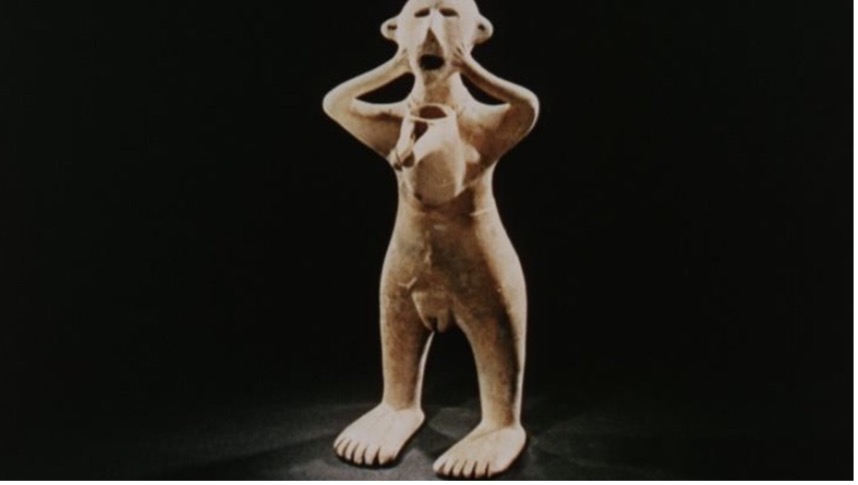
Figure 22: A still from Tappahʾhā-yi Mārlīk (The Hills of Marlik), directed by Ibrāhīm Gulistān, 1963.
The Hills of Marlik, ends as a poetic discourse on the promises of the life-giving forces of creativity and awareness that can emerge, across the boundary of time, in the ancient country: “But vision-made-flesh is alive and will remain alive. May the ancient roots blossom again! May the god of seed salute the valley! May the eyes see! And seeing becomes life anew.”83For details on The Hills of Marlik see my close analysis of the film in the chapter called Ethnographic Documentaries in my dissertation “Fragmented Allegories of National Authenticity: Art and Politics of the Iranian New Wave Cinema of the 1960s and 1970s” (PhD diss., Columbia University, 2016), 82-87.
It is only a few years from the sound of a rooster’s cry as a harbinger of awakening and rebirth in Gulistān’s The Hills of Marlik in 1963 to the nightmarish bird of his story Rooster written at the very end of the 1960s. In 1979 though, the fleeting rooster of the opening of Kīmiyāvī’s OK Mister is even more complicated, with layer upon layer of undertones and undercurrents. The cock-a-doodle-doo of the film’s beginning does deliver its long-established function, calling the people to arise. The words of the voiceover join the scene:
Once upon a time
in a remote corner of an ancient country called
The Land of Roses and Nightingales
a small traditional village awakens to the demands of another day’s work….
The images lending support to the voiceover are of a village of mud-brick structures, children running, women spinning wheels, and farmers toiling on the land.84Whether the images of women with spinning wheels in OK Mister is a reference to The Weavers, the short silent “documentary” filmed in 1905 in the “remote” Ottoman village of Avdella (now in Northern Greece), remains a mystery, as it is the case with much in cinema and history. The Weavers is known as the first film made by the ethnic Aromanian adventurer-entrepreneurs Yanaki and Milton Manaki, and the first film made in the Balkans. Only one minute long, the film depicts the Manaki brothers’ 114-year-old grandmother, Baba Despina, spinning and weaving, sometimes with other women, sometimes alone. Born in 1791, she is arguably the person with the earliest date of birth ever filmed. Made on the threshold of the blurred boundaries of Europe and the East, The Weavers should be viewed as an early ethnographic film, and at that, as a primordial instance of “ethnofiction” and “shared ciné-anthropology” five decades before they were born, before Jean Rouch. The words and tone of the voiceover are reminiscent of the countless newsreels and documentaries made about Iran, particularly those made about rural Iran, during the rule of the second Pahlavi monarch. This picture-perfect image, the viewer will soon learn, is threatened however. The ambivalence and anxiety are there from the beginning, from the rooster’s head framed in the yellow circle of the film’s name. Not as merciless and unruly as the rooster of Gulistān’s story, not as hopeful and enlightened as the ones standing for the Fighting Rooster collective and Nima’s poem for them, the rooster that launches OK Mister demands more risqué associations.
Juxtaposing this awakener (oddness intended) to others, that might at first seem only graphically matching, will lead to more contemporary, more urgent, targets. It should be remembered that post-WWII Iran had already famous imaginings of birds in circular frames, and the most iconic among them was that of a rooster. Printing its first newspaper advertisement in 1954, Rooster-Brand, or Khurūs-nishān, represented the country’s most successful chewing gum company and trademark for years to come. The company had already existed for almost two decades, but under a different name, and instead of industrial style chewing gum it was making products made out of saqqiz, a form of natural resin harvested from wild pistachio trees and popular in the Middle East and beyond from ancient times. Soon after, the freshly renamed enterprise captured the largest share of the market, becoming known for its mass, forceful, forever-inventive, advertisement strategies. The new company’s logo was a simple drawing of a rooster’s head, chest, and oversized “crown” and wattles, all framed by a circle edged with leaves. Rural animal and plant life, minimalist and authentic, in service of industrial newness. There was an intertextual positioning at work with the branding of Rooster-Brand too, as both the rooster and the “halo” around its head referenced two other, already existing, logos of companies engaged in producing chewing gums, Peacock-Brand (Tāvūs-nishān) and Parrot-Brand (Tūtī-nishān).85It is interesting to note that both of the other birds of the Iranian chewing gum industry, peacock and parrot, have long been associated with India. This probably was not a coincidence, as the emergent transnational connections benefitted from the already existing networks of material and symbolic exchange, the one shared with India being among the oldest and strongest. It was a referencing that involved both content (a bird) and graphics (use of a circular form). Rooster-Brand expanded its advertisement from the print media to radio and movie theaters (in the form of commercials screened before feature films) and to the “new media” of street billboards and television. It meshed the claim of representing the new, repeatedly insisted on through the company’s slogans, with the masculinist energy of its graphic bird. As legend has it, it was because of the aggressive, at times unethical, publicity blitz and marketing practices of the rooster that the other two birds were driven out of business.86Among other practices, it is believed that Rooster-Brand (founded by Mīrzā Āghā Mahbūbī and Parvīz Bahrimand) engaged in one of the first instances of “predatory pricing” in modern Iran against Parrot-Brand (founded by Mūsā Kūhān-Zādah in 1941). Two of their famous slogans include, “The Rooster-Brand Gum is the Joy of Life” and “I Want a Rooster.” After years of dominating the market, competition arose from a new brand called Chic (by Minoo conglomerate). In 1978, the company was in the news for its support of the national soccer team competing at the FIFA World Cup in Argentina. After the Revolution, Rooster-Brand was confiscated by the new government.
Figure 23 (right): Rooster-Brand Gum Package
Figure 24 (left): Reportedly the First Newspaper Advertisement for Rooster-Brand Gum
Figure 25: Advertisement for Parrot-Brand Gum
Figure 26: Magazine Advertisements for Rooster-Brand Gum
Reading this icon from the dawn of the golden era of Iranian capitalism alongside the rooster at the start of OK Mister brings to light other trajectories of meaning and feeling. The hope to keep alive along the way, to go beyond the analytical evaluations that remain within the borders of one nation-state, and beyond falling for the Modernists’ romantic claims of forever alterity (above all to the classical, to the mainstream, to an ideology, to an imagined “aesthetic regime,” to an omnipresent state, etc.). Right next to the “red rooster” of Pathé, the crowing bird of Kīmiyāvī’s film evokes the vanguardism of awakening, carrying within it memories of other ones—like those of the logos of the Fighting Rooster Association and the Rooster-Brand company, and instances from Persian poetry and prose, classic or modern. The result of these echoes is a concoction of irony and impending disaster. What is more, it is an extraordinarily productive entryway to a more theoretical reflection given its potential as a reminder of the continued dialogue—at times of borrowing, at times disowning—between modernist texts and the lowbrow material of cultural production. On the borrowing side of it, it of course is a two-way street. The better known direction in the borrowing side of the exchange was always the movement from the popular to the modernist: like “cut-ups” of one kind or another for various avant-garde productions; like the impact of commercial photography and mass-produced postcards on the emergence of photomontage enacted by the Berlin Dada; like the found footage films of Bruce Conner, Santiago Álvarez and Craig Baldwin; like Iranian “folk art,” Coffeehouse Paintings and Shia “iconography” for the artists of the Saqqā’khānah [Saqqa-khaneh] movement in Iran of the 1960s and 1970s. What is less talked about, even when their persistence is visible for all to see, is how modernist aesthetic innovations, particularly of the visual category, can be consumed (back) by the world of commodities. Consequently, the once radical anti-illusionist techniques of the era of New Wave cinemas, like the returning of the gaze, like jump cuts and freeze-frames, became the everyday practices of stylization in the music videos of the 1980s and onward. This assessment of the relationship might see the reappropriation of modernist aesthetics by capitalism as a form of homecoming: Modernist strategies arise from advertisement and return to it. Looking like a cut-up of one of the country’s most recognizable brands, the rooster opening OK Mister, a film highly conscious of the rise of consumer culture in a (semi)colonial setting, may sound an awakening call, but it also warns of the things that went wrong in the past, and of the things to come. As the once-upon-a-time of history settles in, the viewer learns more of the state of the village, which turns out to be more of a country than a village. The film unfolds in vignettes, stories of arrivals, of colonialism, of resource extraction, of archeology and anthropology, of capitalism, of consumerism, alienation, revolution.
After the first sequence, showing the villagers going about their daily activities, the next segment begins with aerial shots of what appear to be serialized holes in the body of a desert landscape. These are the surface apertures of the subterranean water canal system known as qanat, imagery of which had been persistently used in a number of documentaries as a proof of Iranian ingenuity, from ancient times to not long ago.87Another film that showcased aerial footage of qanats was the highly anticipated Iranian-produced documentary Bād-i Sabā, or The Lovers’ Wind, which was released in 1978. The original director, French filmmaker Albert Lamorisse, had died in Iran in a helicopter crash while flying over a massive water dam and reservoir in 1970. Lamorisse had already used aerial cinematography for his earlier films, for instance for his 1960 Stowaway in the Sky (Le Voyage en ballon). The voiceover continues with the story:
Once upon a time
in the vicinity of this village
there were also numerous holes.
In one of these holes, a strange face
a persistent character makes his home
and scurries through the tunnels
and explores the hidden recesses of this country
one after another
This strange character’s name is… D’Arcy.
Once a testimony to the industriousness of the “premodern Iranians,” in OK Mister they become the haunt of a man associated with another famous form of digging into the earth. That “strange character” is William Knox D’Arcy, British-Australian businessman, former miner, and the first to explore and industrially exploit oil in Iran, and in fact in the entire Middle East. Arising from a hole in the ground like a genie from a lamp, dressed as one would expect of a colonizer, the character of D’Arcy is played by Farrukh Ghaffārī, one of the first filmmakers of the New Wave. He becomes the first figure of the diegetic world to speak: “But William Knox D’Arcy is not just anybody! Beyond my incredible ability to make money, I also happen to possess an adventurous and progressive spirit, which drives me on to new horizons. And it is that which has brought me here. Come with me and I’ll tell you the background!” He quotes from the historic energy concession granted to him, for a term of sixty years, by the imperial Iranian state in Tehran in 1901. He uses the underground tunnel system to move around, suddenly emerging in different locations, frightening the men and women of the village engaged in their “traditional” labor. Men gathered around the year’s harvest, happy women with flowery scarfs gathered around a clay oven, images that could have been included into a few ethnographic documentaries and art films, if it were not for D’Arcy’s insertion. As the khaki-clad businessman-turned-explorer pops out of the oven in the ground, the women run away in horror, screaming “Jinn! Jinn!”88It was the word and the Koranic idea of Jinn that became the Genie of the Lamp in some European stories. Looking at D’Arcy as the “Jinn of the Oven,” if you will, is yet another take on an old fairytale from the Orient. The drive for reworking other material often overlaps with Kīmiyāvī’s ability to mobilize humor and irony in almost all his films, in formal as well as narrative matters, and even at the oddest moments. Admitting to his persistent attachment to playfulness, he has been recorded identifying it as a form of “naughtiness with the image” or “sheytanat bā tasvīr.” See Hūshang Hunarkār and Humāyūn Imāmī, “Musāhabah bā Parvīz Kīmiyāvī” [Conversation with Parvīz Kīmiyāvī], Naqd-i Sīnimā, no. 8 (1375/1997): 199. Except one who freezes against the wall, her hands put to the sides of her wrinkled face, her eyes wide open in shock and awe, her shot held for a long time.
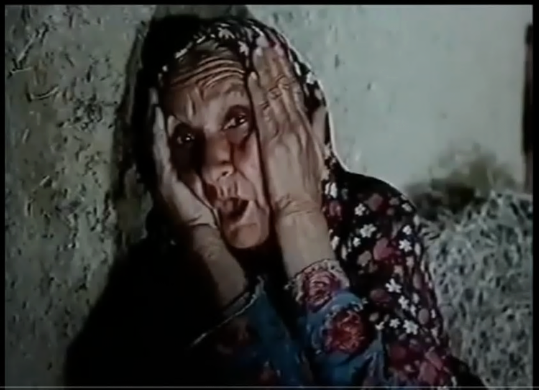
Figure 27: A still from OK Mister, directed by Parvīz Kīmiyāvī, 1978.
Figure 28: Edvard Munch, The Scream, 1893. Oil, tempera, and pastel on cardboard; 91 × 73.5 cm.
The uncanny resemblance of this shot to Edvard Munch’s famous painting from 1893, The Scream, cannot be accidental. The wake-up call of the film’s opening now comes full circle, not just to an awakening, not even to a typical “first contact” (with its rich history in visual culture, literature, and anthropology, critical or not), but to a paralyzing shock. Although sharing a fascination with digging and unearthing with archeologists of archaic material and psychoanalysts, OK Mister does not invite analytical explorations of one’s psyche and instead frames itself as an archeology (of experiences and ideas) of what had gone wrong for the imagined collective. If we were right to read the rooster in the yellow halo of the title sequence alongside the iconography of the post-WWII industrial leap and its consumer culture, now the plot plunges into an earlier time, to an earlier era of colonialism, to the moment of the emergence of the oil industry in the Middle East (West Asia) in the early years of the twentieth century. Iran, then still called Persia by most outside the country, had an especial place in the global conversion from one type of fossil fuel to another, from coal to petroleum. Of unparalleled importance to the world of extractive capitalism was the impact of the material from the surveyed, mapped, and commodified underground of the interlinked regions of the Middle East, the Caucasus (the oil fields of Azerbaijan and the Caspian Sea), and North Africa. The tectonic ripples of that “discovery” came, and continue to come, to us in wave after wave: the conversion to oil in the early years of the twentieth century altered the constitution and reach of the imperial armies, their navies, and commercial fleet; even at the height of decolonization, from the late 1940s to the late 1960s, interventionist strategies were pursued to support friendly states and polities and overthrow or contain anti-status quo states; in the post-WWII decades, oil drove the rapid expansion of state apparatuses, industrialization and urbanization of postcolonial states across the Middle East and North Africa, with Iran playing the role of a success story; simultaneously, the global rise of mass culture was led by the West, itself led by the United States; the rise of mass-produced commodities affected the lives of millions, with the ascent of plastic being particularly consequential―its liberatory magic captured in ʿAbbās Kiyārustamī’s short film Rang’hā (The Colors, 1976); within the context of the Cold War, competition over access to oil impacted the form and intensity of strategic rivalries; the rearrangement of wealth and power in a world shaken by the “oil boom” (or the “oil crisis” of the American media) of the early 1970s, allowed for a relative transfer of self-confidence and influence to states like Algeria, Iran, Iraq, Saudi Arabia, and Kuwait; collectivities were mobilized on the streets of cities and refineries (some so large, like the one in Abadan, that they were regarded as “cities unto themselves”) in the name of nations and/or working classes demanding sovereignty over resources and machinery; some still remember that in 1978-79, it was the general strike led by the Iranian oil industry workers that became the most effective strategy of the revolutionaries; what is nearly forgotten is the repeated suppression of other oil workers’ protest movements, like the Iran-inspired demonstrations in Saudi Arabia in 1979 (the Qatif Uprising); the shock and awe of end of time wars, time and again; and, closer to today, when once again some see the end, of history, of old national economies, of troubling regions and doctrines, or of an oil-infused medium or two. The film gestures towards those historical groundswells, ebbs and flows really, while constantly keeping an eye on the present.
In Iran, the dream of oil nationalization was so transformative—including in its collective-building countenance—that Gulistān, that grand poet of oil, celluloid and prose, described it in Encounters in the Time of Collision as “that important, far-reaching, and unique happening that built a future different from the past for Iran and the people of Iran and their neighbors, and for the entire political arrangement and social lineup of the world.”89Ibrāhīm Gulistān, Barkhurd’hā dar zamānih-i barkhurd [Encounters in the Time of Collision] (Tehran: Bāztāb Nigar, 1400/2021), 7. The title of this book, depending on what meaning one chooses for the word barkhurd, can be alternatively translated as Encounters in the Time of Encounter or Collisions in the Time of Collision. He writes these words in the very first paragraph of the introduction to the story, a story unfolding in the oil city of Abadan. In the same paragraph, written at the time of the book’s first publication in 2021, he also recalls the “event” (rūydād) of oil nationalization that for him started in 1950 and the power of the “unprecedented harmony (hamāhangī) that the unification (yikī shudan) of the Iranian people’s demands had seemingly brought about.” He ends the paragraph with this sentence: “And this unity of the desires and deliberations of a nation had appeared practically, powerfully, and with much consequence, and it had become in a way enduring too, finding a place in the collective (jamʿ) endeavor for creating another world order.”90Ibrāhīm Gulistān, Barkhurd’hā dar zamānih-i barkhurd [Encounters in the Time of Collision] (Tehran: Bāztāb Nigar, 1400/2021), 7. One of the more astonishing moments in this passage comes when one encounters the term “another world order.” Is Gulistān rescuing, after seventy years, a terminology and an idea from a bygone era, the height of the anticolonial moment after World War II? Is he, who once was a member of the influential collectivist party named Party of the Masses (Tūdah), who once worked as an editor and translator for socialist publications, remembering the idea’s anti-capitalist history and future? Or, fully aware of the ascendant imperial currency in the post-Cold War era, when the West was discovering (often in the Middle East and mass destruction in recent times) another birth of a “new world order” every now and then (like H. G. Wells, Franklin Roosevelt, George Bushes, father and son, Francis Fukuyama, Václav Havel, and Condoleezza Rice), is he consciously (or unconsciously) giving the now tired and complicit language a twist? And these are only a few outcomes of the temporal layering of this opening paragraph. In a handwritten note in the beginning of Encounters in the Time of Collision, Gulistān explains that the material he is publishing for the first time in 2021 is in fact made out of “a number of reports” (guzārish) he had written fifty years earlier, in the beginning of the 1970s. Once again, fiction is created out of encounters and firsthand “field reports” from another time and another place. Oil, for Gulistān, seems to be the embodiment of some narratives and the disrupter to others. Long before Benedict Anderson and his wisdom from the heart of the 1980s, he portrays the “magical movement” for seizing sovereignty over the land’s most desired matter as a medium, one through which an otherwise “scattered people” came together as an anti-colonial force:
A country with tens of accents, languages, habits, environments, and traditions saw itself as unique and sealed in the face of a foreign barrier, simultaneously finding unity (vahdat) and self-respect. Oil, like Shāhnāmah, became a point of reference in this unity (yakī būdan), with the difference that in comparison to the epic of legends this was more present, more real, and consequently for this day and age more effective—an epic in the state of becoming. Abadan became the focal point of a nation’s simple and hurried desire, and the stage for the fears of a stunned and disbelieving empire, still arrogant because of its disbelief and in disbelief because of its arrogance.91Ibrāhīm Gulistān, Barkhurd’hā dar zamānih-i barkhurd [Encounters in the Time of Collision] (Tehran: Bāztāb Nigar, 1400/2021), 44.
Somewhat uncharacteristically, Gulistān proceeds by momentarily casting all ambiguity aside, underlining the central(izing) role played by Dr. Muhammad Musaddiq, the popular leader of the oil nationalization movement. To the amazement of the reader however, Gulistān suddenly uses the words pīr (elderly sage) and murshid (guide) for the veteran liberal politician, terms conventionally used for mystical guides such as heads of Sufi orders. These representations are more about the state of expectations and desires of the (emergent, perhaps transient) collective, “the people,” than about any inherent characteristics emanating from the charismatic leader.92Ibrāhīm Gulistān, Barkhurd’hā dar zamānih-i barkhurd [Encounters in the Time of Collision] (Tehran: Bāztāb Nigar, 1400/2021), 44-45.
D’Arcy, still living in the subterranean strata, and still with no success in establishing communication with the natives who call him a jinn, calls on his friends from the metropole to come to Persia. Staring at the camera he states: “They have promised to send the latest and most efficient means of penetration.” The friends are an archeologist (Sir Henry), a trendy journalist (Stanley), and a nerdy blond called Cinderella, aboard a large air balloon.93It is interesting to note that Pathé produced and/or distributed a number of films based on the old fairy tale (for instance, Cendrillon ou la pantoufle merveilleuse (Cinderella or the Marvellous Slipper, Albert Capellani, 1907). In 1912, Pathé made Cendrillon ou la pantoufle merveilleuse in collaboration with Georges Méliès (who had already directed and produced Cendrillon in 1899 through his own production company, Star Film). Looking very much like characters out of Jules Verne’s Voyages Extraordinaires, particularly the protagonists of Around the World in Eighty Days (1872), they are at a loss as to where they are.94D’Arcy’s movement in the subterranean level too reminds one of some of Jules Verne’s novels, particularly Journey to the Center of the Earth (1864) and The Mysterious Island (1875). Verne has been a well-liked author in Iran for a very long time, benefitting from the extensive availability of Persian translations of his work and the popularity of the Hollywood films based on his books. They complain about not having maps, traveling through terra incognita in other words. They do however have a large cuckoo clock with a bird named Coucou, but looking more like a parrot, that helps them navigate the time by shouting “Teatime!” and the location by shouting “Persepolis!” The band of friends here represent the cultural-ideological wing of European colonialism, producing knowledge and power from a distance and close by. Sir Henry, the archeologist, refers to the famous ruins of the Achaemenian Empire, the footage of which is presented from the view of their balloon, as “My Persepolis!”95I have written in other places on the extraordinary place of ruins, excavation sites, and museums in the Iranian New Wave as a whole, and their constant reappearance in Kīmiyāvī’s cinema. Although not as central as is the case with The Hills of Qaytariyah [Tappah’hā-yi Qaytariyah 1969], P Like Pelican (1972), and The Mongols (1973), they appear in OK Mister too. Additionally, Kīmiyāvī has filmed the ancient ruins of Persepolis before in Shirāz 70 (Shiraz 70), a short documentary he made on the 4th Shiraz Festival of the Arts in 1970. Suffice to say here, Sir Henry and Persepolis provide a link to a rather large cinematic corpus. After their balloon lands in the middle of the village, D’Arcy presents Cinderella with a plastic bottle of DARCY OIL as perfume.
The Europeans set out to first explore and then remodel the place. For their first activity, somewhere between aristocratic diversion and science, they begin to hunt with butterfly nets for the natives. We should recall, not unlike the development of modern cartography and the museum, the science of collecting plants and animal species, zoology (“the study of life”) was from very early on conjoined to the colonial imagination and expansion, inspiring some of its most storied endeavors. D’Arcy and his associates, it seemed, were as much interested in cultural matters as the economic ones. Sir Henry focuses on his expertise, searching for ancient sites and artifacts, leading excavations in hills and ruins. Cinderella, who increasingly acts as though she is also Snow White, surrounding herself with doves and dwarfs, sets up English language classes for the natives: “Oil is good for you! Plastic is good for you!”96In a direct reference to Disney’s 1937 feature-length animation, Snow White and the Seven Dwarfs, the song “Heigh-Ho” accompanies a scene in which D’Arcy rides a carriage along with three of his workers and his journalist friend. In Disney’s film, the dwarfs sing this song while digging for diamonds in an underground mine:
“We dig up diamonds by the score
A thousand rubies, sometimes more
But we don’t know what we dig ’em for
We dig dig dig a-dig dig”
It was Pathé that produced La petite Blanche-Neige, the oldest version of “Snow White,” in 1910. She asks locals to paint over the khaki color of the mud-brick walls of their village. Gradually, she also goes through a sexual revolution of her own. Fond of “Oriental men” (her words) and enamored of the beauty of classical Persian singing she “goes native,” causing distress among her European peers and Coca-Cola-drinking Iranian minions.
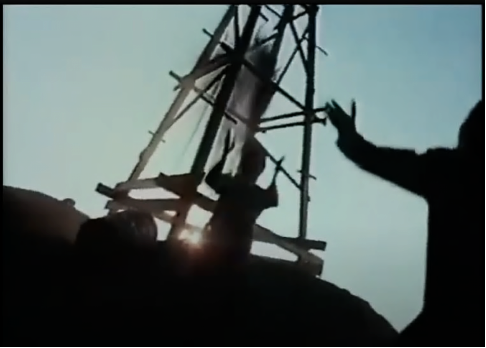
Figure 29: A still from OK Mister, directed by Parvīz Kīmiyāvī, 1978.
If with The Mongols in 1973 Kīmiyāvī reflected on the encounters and cohabitation of old media (written text, pardah’khānī, and, yes, cinema) and new media (cinema and television), with OK Mister he brings together old oil (early twentieth century, at the founding moment of the Anglo-Persian Oil Company) and new oil (the plastics-based commodity culture of the 1970s). And so, a mischievous coevalness is constructed as the discovery of Persian oil, achieved during the first decade of the twentieth century, and the takeover of the village by plastic products become simultaneous. When the oil from one of D’Arcy’s first wells, presumably the ur-site of industrial oil extraction in the Middle East, gushes into the sky as he shouts in frenzy: “Petrochemicals, plastic, a new civilization, a new world, new markets!” The villagers are mobilized to contribute en masse. We see them carry items like toy guns and toy Concorde supersonic airplanes, plastic balls, garbage bins, houseware, and television antennas (also an emblem of the new media in Kīmiyāvī’s The Mongols) to the fellow villagers’ humble mud-brick homes, and take away in exchange ancient artifacts, handicrafts, “folk art” (Coffeehouse Paintings), wooden window frames, and handmade carpets. The standard creators of these handicrafts, a group of female carpet weavers wearing large plastic glasses, sit in a cage-like frame surrounded by visitors, as though figurines in an ethnographic museum, as though representatives of a vanishing world. By now a large segment of the local population seems to be addicted to that most recognizable, most globally criticized, trademark exported from the United States in the aftermath of WWII, Coca-Cola. A few scenes satirize this new habit of the natives and the irony of the exchange of one dark liquid, Coca-Cola, for another, oil.97Critical use of satire and irony in framing Coca-Cola as an emblem of American-led global capitalism is not particular to OK Mister. Godard does that in Pierrot le Fou in 1965, and Dušan Makavejev in The Coca-Cola Kid in 1985. Far from being left-leaning or anti-imperialist, the South African comedy The Gods Must Be Crazy (Jamie Uys, 1980) tells the story of a Coca-Cola glass bottle becoming a god-sent object, initiating change, awakening the film’s naive natives. Before long, D’Arcy’s wish for a new world of petrochemicals and plastics comes true and the town and its surroundings are covered under layers of polymer litter. A form of critical untimeliness underpins this juxtaposition as plastics were not central to the pioneers of the oil industry, but in time it became a material outgrowth of their early vision.
On the side of critical writing too, we had already seen this wasteland of colonial exploitation, mass consumption, alienation, and loss of power, personal and collective. Close to two decades before the making of OK Mister, Āl-i Ahmad had written in Occidentosis: “What [postcolonial national] border or domain can stand up to the influence of Pepsi Cola, or to the comings and goings of the oil brokers, or to Brigitte Bardot’s films, to heroin smugglers, or to the dubious orientalists who are the official go-betweens for imperialism?”98Jalāl Āl-i Ahmad, Occidentosis: A Plague from the West, trans. R. Campbell, ed. Hamid Algar (Berkeley: Mizan, 1984), 75. As much as I would like to read these words as prophetic, I have to admit that by 1978-79 they are also simply reflective of an immediate context. By the time OK Mister was made, the ideas of the Third-Worldist discourse had gained a considerable degree of popularity. While my reading of the text of OK Mister attests to that immediate familiarity, the trajectory of that discourse, its ascendancy, can be deciphered in the length of this essay. If in my earlier work, the productive juxtaposition of excerpts from Iranian intellectuals (like Āl-i Ahmad and Shāyigān) with textual analyses of New Wave films was meant to push to the foreground the modernism and anti-colonialism of the two corpora, with OK Mister the correspondence it seems has always been already there; the act of creating a dialogue seemed less in need of a creative intervention, with the connections between the two mediums evidently reflective and direct, even at the biographical/authorial level. The change that had taken place should be regarded as an indicator of the trajectory that Iranian intellectual production had taken. Certainly, from the second half of the 1960s onward, many readers in Iran were increasingly reading the anti-imperialist and leftist literature in circulation. And cineastes were not an exception to that.
Figure 30: A still from OK Mister, directed by Parvīz Kīmiyāvī, 1978.
The voiceover, long gone from the soundtrack, almost forgotten, returns: “Their happiness was so great that some of them became strangers in their own village.” The rooster makes a return too, this time not as a bird of dawn, but as an off-the-wall mutant. Appearing in a full iris shot (and not a semblance of it as in the film’s opening), this time the rooster is sporting a black hat and smoking a cigarette. His headwear is something between a British high hat and a “velvet hat” (kulāh’makhmalī) of the tough guys of Fīlmfārsī. And he is a polyglot now: “Ghoo ghoo ghooe, goodmorning!” Even though sharing a cigarette with the Marlboro Man of the advertisement world, instead of the positive masculinist boldness expected as an omen of the new, such as in the haloed bird of Rooster-Brand gum, he comes across jaded and disheveled. Right behind the rooster, the village again, but this time the walls are painted and the Europeans’ balloon stands out in the background. The voiceover delivers the same introduction from the film’s beginning:
Yeehaw!
Once upon a time
in a remote corner of an ancient country called
The Land of Roses and Nightingales
a small traditional village awakens to the demands of another day’s work…
Go Baby go! Yeehaw!
Although the words are almost the same, the swagger in the tone and yeehaw turn the utterance into something else. It works like an announcement for the motorcycle race that ensues right outside the walls of the village.
The collective alienation of the natives is not total, the hegemony over them constantly on the verge of breakdown. Certain things and spaces fall outside the alliance of oil and mass culture. One comes in the form of sound, fragments of minimalist songs to be exact, echoing through the alleys now and then. The words are of Persian poetry, of longing and love, delivered solely through the human voice (no musical instruments used). Much like the musical genre ghazal’khānī they belong to, the lyrics of these mysterious songs are built on the internal scales and rhythms of Iranian music (or is it the other way around?), while keeping an improvisational quality throughout.99The songs and chants are delivered by the “classically” trained singer Noureddīn Razavī Sarvestānī. I put the word classical in quotation marks as classical in Persian music is not exactly what it is in European languages. In OK Mister, people are struck as soon as they hear the sound, stunned into stillness. It is as if recognition too, when emotionally powerful, works like a shock. Cinderella falls for the songs and chants, and so do others. That this music triggers deep affect is a good description of its portrayal in the film. This affective impact is underlined by its marked place within the plot and further foregrounded through the film’s aural and visual tracks. However, there is even more aura involved, the power of unearthing a memory, the life-changing experience of a recognition.
Once again here I would like to draw support from a text of the time, this time Shāyigān’s 1977 But’hā-yi zihnī va khātirah-yi azalī [Idols of the Mind and Perennial Memory], to make better sense of what the power of music in OK Mister could mean. Very much a successor to his earlier work and published only a year before the making of OK Mister, the book offers a comparative study of the world’s great faiths and their modern condition in a world dominated by Europe. In addition to a wealth of sources from various parts of the continent of Asia, the most consequential theoretical threads in Shāyigān’s book are formed out of his responses to Francis Bacon’s concept of “idols of the mind” and Carl Jung’s ideas on archetypes. For Shāyigān, Buddhism, Hinduism, Judaism, Christianity (even in its “Hellenized” form), and Islam once shared in the experiential structures that underlaid their metaphysics, sustaining their similar epistemological systems. Now, after centuries of aggressive dominance by the industrialized West, the “deep congruity” (tajānus-i zharf) that allowed for communication and growth is ruptured. “Now” is the time when only “here and there” one can find traces of “our traditional arts,” when what is left is only a bit more than a “folkloric shell.”100Dāryūsh Shāyigān, But’hā-yi zihnī va khātirah-yi azalī [Idols of the Mind and Perennial Memory: Essays on Comparative Philosophy], 4thed. (Tehran: Amīr Kabīr Publications, 1380/2002), 16, 30. In the face of the modern amnesia afflicting the peoples of the West and the East, and against collective “dememorization” (khātirah’zudā’ī) and “memorylessness” (bī’khātiragī), Shāyigān proposes remembering (zikr). As follows, the adverse category Bacon established as the “idols of the mind” is in fact a rare archive of memory, the site of “primordial memory” for the “thinkers of the East” against rootlessness and alienation.101Dāryūsh Shāyigān, But’hā-yi zihnī va khātirah-yi azalī [Idols of the Mind and Perennial Memory: Essays on Comparative Philosophy], 4thed. (Tehran: Amīr Kabīr Publications, 1380/2002), 38. For more on Shāyigān’s views on “Primordial memory” and “tradition” see 53-54. Unlike many of the intellectual discourses in progressive thought, including some built around the idea of unevenness (in temporality and in development), and particularly those constantly on guard against the romanticism of nostalgia, Shāyigān’s Idols embraced archetypes lost in mythical history. If there is hope, it is going to be found in the remains and residues emerging from the depths. Shāyigān writes:
And whether we want it or not, that which determines the humanity of humans in the minds of Muslims, Hindus, or Japanese who are the most westernized among the peoples of Asia, will remain in the depth of our mind (zihn-i’mān). These remains often emerge from the depths, show themselves, inform our reactions, influence our thoughts and direct our stream of emotions, and it is exactly in this emotional territory that we are what we have been (hamān hastīm kih būd’īm). Between what we think we believe and what we feel, such a rupture has opened that not only [it] does not lead us to a new synthesis (tarkīb) or to a birth (zāyish) of new and creative powers, but instead fashions a ‘schizophrenic’ (skitzofernik) psyche in us, and this state that becomes apparent in our artistic manifestations, endeavors and literary works too, more and more is proof of the transition phase we are passing through….102Dāryūsh Shāyigān, But’hā-yi zihnī va khātirah-yi azalī [Idols of the Mind and Perennial Memory: Essays on Comparative Philosophy], 4thed. (Tehran: Amīr Kabīr Publications, 1380/2002), 25.
Establishing the romantic and essentialist tendencies of Shāyigān’s thoughts is not difficult, but that is not where my concern is at this point. What is of interest, in general, is how this discourse corresponds with the narratives and cinematic representations of the New Wave, when the two are brought together in critical analysis. My immediate purpose at this point in the essay is to establish that critical reading by exploring the place of what I earlier called “traditional Iranian music” within OK Mister. Questions of media specificity aside (questions that always arise when our inquiry moves from one medium to another), both Kīmiyāvī’s films and Shāyigān’s words, each with their own proclivities for lyricism and aesthetics, exhibit a commitment to the transformative power of that which is submerged, that which is truthful and authentic. Shāyigān explains the currency of archetypes simultaneously through Jungian terms and the centuries-old philosophical reflections on the intermediary realm called the Imaginal World (ʿĀlam-i misāl) as laid out in the Persian/Islamic school of Illuminationism (Hikmat-i Ishrāqī). Shāyigān’s criticism of the modern world, the world in which there exists a “rupture between what we think we believe and what we feel,” one in which the psyche is “schizophrenic,” repeatedly comes across as a critique of a history of epistemic violence and, in the same vein, a longing for a new epistemology. Although Shāyigān’s archetypal forms, created in distant times, make for a grouping larger than the practices produced within one medium (such as music, poetry, preaching, or architecture) it is the promise of rebirth they hold that parallels the role given to the (classical Iranian) music in OK Mister. In both Shāyigān’s thesis and Kīmiyāvī’s film, aesthetic forms (re)emerge from buried life, interrupt the narrativity of a schizophrenic present time, and make lyrical creativity and experience possible once again, whether in love or in collective making.
The second space in OK Mister not to come under the spell of the mass society of oil and plastics is occupied by a person. A bearded old man, solitary, eccentric and funny, he is part village idiot and part Sufi mystic. Standing on the sidelines, he observes the community, once ostensibly wholesome and green, go through its negative transformation. When he moves into action, he is dismissed. One of D’Arcy’s stewards describes him as such in the group’s hybrid English-Persian: “Mister! Dangerous nīst! It is dīvūnah!” (“Mister! He is not dangerous! He is crazy!”) His persona and appearance bring to mind other eccentric characters from Kīmiyāvī’s earlier films, namely, Āqā Sayyid ʿAlī Mīrzā of P misl-i Pilīkān (P Like Pelican, 1972) and Darvish of The Mongols, and Darvish Khan of Bāgh-i Sangī (The Stone Garden, 1976), strangers from another time, interrupters of the present time, interrupters of hegemonic languages and communication lines. The old man in OK Mister tries to help others to unlearn their colonized mimetic knowledge and expertise, particularly their broken English. His attempts to intervene on a personal level are met with limited success. Then, the old man comes up with a slogan: “Khāk, Gul, Gandum!” or “Soil, Flower, Wheat!” The three words connote rural life, rootedness, creativity, and with a stretch of the imagination, even justice. Their power is in their simplicity and lyricism, with reverberations in the Iranian cinematic past and future: like the four words uttered by a child in Furūgh Farrukhzād’s Khānah siyāh ast (The House Is Black, 1962), “Māh, Khurshīd, Gul, Bāzī” (“Moon, Sun, Flower, Play”); like the title of Gulistān’s Mawj, Marjān, Khārā (Wave, Coral, Rock, 1962); like Gulistān’s documentary Kharman u Bazr (Harvest and Seed, 1965); like P Like Pelican, a fragment uttered by a kid that gave Kīmiyāvī’s 1972 film its name; like the title of Muhsin Makhmalbāf‘s 1996 film Nūn u Guldūn (Bread and Flower Pot), distributed internationally as A Moment of Innocence. A call for remembrance, the three word slogan-cum-poem is positioned against the logic of the machines that rip open the earth, and against their next of kin, those that produce the plastic that covers the soil (or in the cities, “the ascent of steel,” “miʿrāj-i pūlād,” as Suhrāb Sipihrī would have it in his poem “Bih bāgh-i hamsafarān” [“To the Garden of Fellow Travelers”] from 1965). There is however another set of intertexts that can be instituted for the film’s tripartite revolutionary chant, in distant echoes from less-remembered territories; the publications produced by the Marxist parties and organizations (from the pro-Soviet Tūdah Party and Fadā’īs-Majority Organization to Fadā’īs-Minority to the anti-Soviet Paykār or Tūfān), particularly immediately before and after the Revolution, often printed slogans on the top or bottom of their pages, some composed of words aimed at specific social demands. “Kār, Maskan, Āzādī!” “Work, Housing, Freedom!” “Nān, Kār, Āzādī!” “Bread, Work, Freedom!” These slogans themselves recall earlier ones, particularly the slogans written and chanted during the October Revolution; one of the most popular battle cries of the Bolsheviks was “Peace, Land, and Bread!” The power of the three-word constellations can be recruited for completely opposite political causes as the case of one of the celebrated slogans of the Pahlavi state, at times written in massive letters on mountaintops, shows: “Khudā, Shah, Mīhan” or “God, King, Motherland.” Iranian art cinema continued to put on display its own variants. If Gulistān’s Wave, Coral, Rock enclosed in itself a delicate core of hope in technological advancement, in Amīr Nādirī’s 1986 Water, Wind, Dust (Āb, Bād, Khāk) even the title forewarns of the ruinous role of elements, in a “nowhere land” (nākujā-ābād) where hope is rapture, miraculous and mythical.103The history of film studies has its own examples of how the minimalism of three-word constellations can be marshaled into an effective end, particularly when the aim is to exhibit a sharp political turn. The first example is Jean-Louis Comolli and Jean Narboni’s influential “Cinema/Ideology/Criticism” published as an editorial in the October 1969 issue of Cahiers du Cinéma. Another example should be “Ideology, Genre, Auteur” by Robin Wood, first delivered as a lecture, and then published by Film Comment in their January/February issue in 1977.
There was yet another three-word constellation in circulation when OK Mister was being made, one that was born with a titillating fame on the western avant-garde scene, soon to gain an everlasting notoriety in Iran. Squat Theatre was a Hungarian experimental performance collective that was formed in Budapest (under the original name Kassák Haz Studió) and had relocated to Paris in 1977. In the same year they came to Iran as guests of the high-profile annual event, the Shiraz-Persepolis Festival of Arts. The name of their play in Shiraz, already performed in the streets of a small number of Western European cities, was Pig/Child/Fire! or Khūk/Bachah/Ātash! Their expressed aim, established during their early years in Budapest, was to overthrow boundaries, boundaries between the audience and the players, between the stationary viewers and the accidental urban pedestrians, between improvisation and script, between interiors and exteriors. In Shiraz, the action was staged around a shop not far from the city center, with the performers moving in and out. For the audience seated inside, the storefront window and the city street and its human figures were the background to the actors’ performance, and, for the crowd gathered outside and the passersby, the glass window was a frame one could gaze through. The notoriety of the play, provoked by accounts of the performance of (simulated) sexual intercourse on the streets, was ensured by countless public speeches, articles, and sensationalized rumors for years to come. The cause of the affair in Shiraz was taken up by a large array of people associated with very different political currents, from the clergy to leftist and liberal commentators for whom it exemplified the social isolation, cultural subservience, and economic wastefulness of the Pahlavi elite.104Even after all these years, the details of what took place on Firdawsī Street in Shiraz in the summer of 1977 remain unclear. For a rare essay on Squat Theatre’s productions, that includes a description of the scene they revived for the Festival in Iran from a play they had originally staged in Budapest in 1975 called The Assassin of Children in Bethlehem (renamed “… and Slew the Children of Bethlehem” for Shiraz), see Jim O’Quinn, “Squat Theatre Underground, 1972-1976,” The Drama Review: TDR 23, no. 4 (1979): 7–26. It is hard to believe that in 1978 the team behind OK Mister did not have the affair in Shiraz still fresh in their memory, particularly considering at least two from the crew, Kīmiyāvī and Ghaffārī, had a long history of working with the Shiraz Festival. Ghaffārī, who was in fact a high-ranking organizer of the Festival from its beginnings, has discussed the affair and the rumors surrounding it both in its immediate aftermath and years later during his exile in Paris.105See for instance his interview with Parviz Jahed in Az Sīnimātik-i Pārīs tā Kānūn-i Fīlm-i Tihrān [From Paris Cinémathéque to Tehran Film Society: Face to Face with Farrukh Ghaffārī] (Tehran: Nashr-i Māhrīs, 1401/2022), 92-94. Looking at the two arrangements of broken-up words together, it will not be difficult to imagine the slogan shouted by the people in OK Mister, “Soil, Flower, Wheat!” as a response, albeit non-individualized and unconscious, to the Hungarian avant-gardist group and their play around a glass window in Shiraz. Such reflections do take place in halls of mirrors.
Figure 31: Announcement from 1978 for Squat Theatre’s Pig/Child/Fire!
The awakening, called for by the rooster before the story even began, does finally arrive but with much delay and displacement. The population rises up, near the end. A riot takes place at an excavation site and before long they come out into the streets, amid the ruins, as masses. With the old man in the lead of their demonstrations, they shout “Soil, Flower, Wheat!” Before the uprising, the three words are disseminated, broadcast really, by a cell of now renegade villagers who are running an underground radio station. It is then not just their collective past and the slogans of today that bring the “people” together as masses, a more important factor is the underlying ability of the mass media to (re)produce them as such. In this detail lies much of the beauty and wisdom of the filmic text at hand. In addition to recognizing the potential of the media for sensory and political numbing or for political awakening, herein is the critical insight that acknowledges the significance of “mass” in mass media, seeing how the two constituents inform each other. Astonishingly, the only other moment in OK Mister when we see the “villagers” (really a substitute for the country by this time) as the “people-in-the-streets,” that is before the near-the-end protest scene, is during the scene in which they march en masse from house to house carrying mostly plastic commodities, exchanging them with historical artifacts and local handicrafts. Once again, there emerges the relationship between the commodity, the media’s ability to produce collectivities, and modernist aesthetics. The transformation of the ill-defined crowds into the modern masses, according to the insight offered here and elsewhere, is a byproduct of the interlinked conditions of mass consumption and mass media, for good or for bad.106It could as legitimately be argued that faith-inspired mass ceremonies that brought together large numbers of people, from as far back as early modern times, are of the same nature. They are the ur-form of the modern masses flowing through the streets of large towns and cities in general, and of the purposeful photogenic demonstrations of the last two hundred years.
Figure 32: A still from OK Mister, directed by Parvīz Kīmiyāvī, 1978.
D’Arcy’s male friends, the archeologist and the journalist, vanish from the scene almost as fast as their first appearance. Cinderella stays because she finds love in Persia. D’Arcy is lifted into the air by a sudden gush of oil out of a hole in the earth, his body suspended in pain. But, more importantly, the awakening turns out to be transitory. Resonant with the ambiguous and solemn ending of The Mongols, there is a haunting suggestion that things have gone wrong so deeply that there will not be any deliverance from the state of dependency anytime soon. In the scene before the last, a man wearing white swimming goggles and a fake cowboy hat pushes a cart through piles of discarded plastic, repeatedly shouting “Naftiyah! Naftiyah!” (“It’s the oil peddler! It’s the oil peddler!”). A few others, wearing plastic hats and snorkels, plunge and roll through the debris. To say that D’Arcy’s progressive dream has now turned into a nightmare is not a wordplay; the dream has been with its (sub)terrestrial, some would say structural, manifestations for quite some time. Dependence on oil and plastic continues and is meant to continue, even after the popular uprising.107It is not a coincidence that I evoke the words “structure” and “dependency” here. It is above all to bring back the critical relevance and currency that these terms, and the ideas behind them, had at that moment in history.
OK Mister reaches its closing credits with a sad image, a freeze-frame; the petrified shot is a close-up of the “oil vendor” with his mouth open in the middle of a scream. The village rooster’s ambivalent cry of a new dawn, the glossy future envisioned by D’Arcy’s oil, and the plenty-for-all ideal of the mass society, have failed to deliver on their promises. By the late 1970s, in both cinema and in written texts, it was not rare anymore to perceive criticism of Eurocentric history (and its models of development) unabashedly intersecting a critique of “cultural and spiritual alienation.” And once again, in Idols, Shāyigān warns of the structural near-inevitability of the situation:
Such [schizophrenic] psyche not only makes us anxious, it also paralyzes our creative forces. It paralyzes because, against this contemporary confrontationism (mubarizah’jūyī), we are not armed with any counter-weapon. And in the face of this confrontationism we do not even have an option, as it is the only path and nothing more; so we have to take this path without being able to return, as we fear to fall behind others and completely fall off the platform of history’s movement (bastar-i junbish-i tarīkhī).108Dāryūsh Shāyigān, But’hā-yi zihnī va khātirah-yi azalī [Idols of the Mind and Perennial Memory: Essays on Comparative Philosophy], 4thed. (Tehran: Amīr Kabīr Publications, 1380/2002), 25.
The fateful need to stay on the “platform of history’s movement,” which I read as progress, is behind the doom of the post-uprising, post-colonial moment in OK Mister. That this transient moment—beginning with the departure of the colonialists, but with no end in sight—is facing a life-and-death question in the flow of the film and of history crystallizes into the freeze-frame of the near end, the final image of the “oil peddler.”
Figure 33: A still from OK Mister, directed by Parvīz Kīmiyāvī, 1978.
Approaching this treasure of an image, with both the film’s narrative and history’s progressivism at a standstill, one wonders how this perfect overlap of modernist playfulness and critical wisdom came about (a claim forever made by modernists and alternative-seekers of various kinds, and yet actually hard to come by). One explanation is that by 1978, the year that the Revolution took off, the year that Edward Said’s Orientalism was published, the Third-Worldist and leftist critical (not just oppositional) intellectual productions were disseminated so widely and deeply that noticing instances of their direct impact is not that extraordinary, whether in Iran or globally.109It was also a historical moment marking the near end of the time frame of the Consortium Agreement, the concession given in 1954 to companies from the United Kingdom, the United States, the Netherlands, and France. This meant that Iran was to have full, internationally recognized, formal control of its oil industry for the first time by 1979. Relying on this perspective allows for drawing biographical connections more convincingly. Discovering such biographical, read auteurist, relations is particularly easy when it comes to a filmmaker like Kīmiyāvī, adventurous, well-schooled, and well-traveled. From at least as early as 1973, when he directed The Mongols, Kīmiyāvī had shown an interest in the debates on modernity, cultural imperialism, Eurocentrism/Gharbzadigī, mass media, and collective and personal alienation.
After the last image, another image. The “final image” is however hardly finalized, stopping the motion on some tracks, while launching it on others. The freeze-frame brings a film about a material constellation extracted from beneath the layers of earth, only to mutate into the synthetic materials (plastics and dye) that cover a village presumably made out of earth, to a momentary halt; the final shot also carries the accumulated weight of representation as it stands still at the end of a narrative built on layers of cinematic and non-cinematic quotations. After the freeze-frame, unexpectedly, motion returns to the final sequence of the film. As the letters of the final credits come and go, we see a succession of aerial shots of large fires burning amidst tall mountains. These flames, symptoms of around-the-clock burning of surplus natural gas from oil wells, are well known as many other films, from before and after 1978, have featured them. Documentaries particularly, recognized and not-so-recognized, had an eye for these “eternal flames.” They appear in Farrukh Ghaffārī’s 1963 documentary on the oil industry, Zindagī-i Naft (The Life of Oil), the voiceover of which compares them to the fires of the Zoroastrian “temples of flame-worshipers” (āzar’parastān), seeing them as the representative of an early stage in the process of disciplining oil’s “spleenful” (tund’khū) nature. The flames are also in Gulistān’s 1962 Wave, Coral, Rock. And they are represented in Lamorisse’s The Lovers’ Wind, finished and released in 1978, with aerial imagery filmed and edited in a fashion comparable to OK Mister’s final segment. In Mustafā Farzānah’s 1966 Jazīrah-yi Khārk (Kharg Island) the fires are not a passing attraction, they are pushed to the beginnings of time, to the beginnings of mythmaking, creation, and creativity, to the origins of Iranian modernity, when it was another attempt at a better future:
Their life was so tranquil that it seemed plant-like.
The days were at times long and at times short.
And nights always long.
A few years ago, when a flame rose from the nearby island,
the Woman and Man found an undefined world in front of themselves.
And with hesitation, they entered.
But this flame that was rising from Kharg was a sign of hope.
It was a flame that was burning day and night
and it was a sign of human effort (kūshish).
◼◼◼◼◼
Gil, Naft, Ātash! Mud, Oil, Fire!
“In The Cow I moved a little more daring and fearless. In The Cow I was even able to create metaphysical and surreal ambiences, or the ambience of meaningful silences…”
―Dāryūsh Mihrjūyī110Ismāʿīl Mīhan‑Dūst, Jahān‑i naw, sīnimā‑yi naw: Guftugū bā kārgardānān‑i sīnimā‑yi Īrān [New World, New Cinema: Dialogues with Directors from Iranian Cinema] (Tehran: Nashr-i Chishmah, 1387/2008), 16.
To conceive of a theoretical frame for analyzing the large number of films portraying the countryside, that would be at the same time productive and honest, is not an easy task. It is, however, as I hoped this extended essay would show an illuminating pathway through which many critical readings and writerly (Barthes) reflections can be reached. I believe that this critical framework can prove itself workable with the addition of more films, either from Iran or abroad. The profundity and excitement still lie with the moment when the village and the city are analyzed in relation to each other, when the discursive fissures open up to possibilities of reading and insight that seem inexhaustible even after all these years since the moment of the making of those texts. This “method” is of course an old trick of dialectics designed for studies of modernity and Modernism, played most relevantly, in one way or another, by Raymond Williams, Georg Simmel, Siegfried Kracauer, Walter Benjamin, Marshall Berman, Ernst Bloch, and Fredric Jameson.111Simmel’s essay from 1903, “The Metropolis and Mental Life,” can be established as the opening chapter of this cluster of critical thought; an astonishingly contemporary-like text it repeatedly refers to the small town and the rural—with their older, more organic, ways—as a temporal configuration, evoked in comparison to the essay’s focus, the (mental) life in the big city. For a comparative examination of the above-mentioned thinkers’ ideas on uneven development, modernism, and the temporalities of the city-country divide, see Farbod Honarpisheh, “Fragmented Allegories of National Authenticity: Art and Politics of the Iranian New Wave Cinema of the 1960s and 1970s” (PhD diss., Columbia University, 2016), 5-24. But extractions from the depository of the twentieth-century Iranian intellectual output show a comparable attitude towards this grandest of modernist divides. This intellectual kinship hardly shows any indications of direct influence—not always incorrect but still an overused and reductive concept—or even a more distant collective line of descent. Juxtaposing their texts together in analysis foregrounds a shared focus on the relationship between the city and the village, or, more specifically, on the presumed temporal divide between the two. Aware of the power of this discourse of unevenness, cutting through it by reproducing its own delineations in extreme sharpness aims to become another negation of a negation, like cinema itself. This was the logic behind creating a category for the “country films of the Iranian New Wave” here in this essay, and before it in the composition of two chapters in my dissertation, one for the country and one for the city, facing each other as though in a distorting mirror.

Figure 34: A still from Gāv (The Cow), directed by Dāryūsh Mihrjūyī, 1969.
A big part of the gap between the city and the village was about the materials they were built from. In Āl-i Ahmad, one finds the most relentless and deterministic emphasis on the contrast. “The walls in the villages are made of mud; city walls are made of brick and cement.” Then, the mud and the cement reverberated in the works of many. The relationship, it was always reminded, was one of the latter encroaching on the former. The withering away of the “organic,” the indigenous, made it attractive for literary and visual refashioning, for the ones “more modern than any modern man.”112Pier Paolo Pasolini, “Worldly Poems” [“Poesie mondane”] (June 1962) in The Selected Poetry of Pier Paolo Pasolini, ed. and trans. by Stephen Sartarelli (Chicago: University of Chicago Press, 2014), 310-313. However, this was not an ordinary relationality (so vital to the commodified romantic criticism of these days) as the organic and its opposite were entangled, in materiality and in discourse, at home and abroad. There has always been something of the abroad at home and vice versa, and as for the cultural producers, it was always a tale of two (or more) cities, as I once put it. Grigorian’s painting from 1963 opening this essay, Untitled, comes to the rescue here. The analyses carried out by MoMA’s team of experts (mentioned in the first footnote of this paper) concluded that the famous artwork is above all a “cement–oil composite,” while at the same time, indicating that the discovery of these two industrial constituents does not “fully exclude the possible presence of natural soil or earthen material.” This disorienting find should function as a reminder of how a most well-known instance of the organic, a composition by an artist known for his use of native soil, can turn out to be a construct of modernism (in both senses of the word). This time too, the “unearthing” proved to be messier than expected, even though subjected to a methodic scientific process executed by cutting-edge machinery. Perhaps ironically, now we have to believe in our old knowledge that it was Grigorian who brought the dried mud and hay (kāh’gil) to the gallery room and the museum vitrine, and the significance of that move, more than ever. In this yet another symbiosis of the organic and the in-organic, the two emerge as “spectral” (a word used more than once in MoMA’s analysis), in scientific analysis and art history-writing respectively. The entanglement of mud, cement, and oil is used to traveling far and wide, emerging and submerging on the horizon in winding ways still in want of reflection.
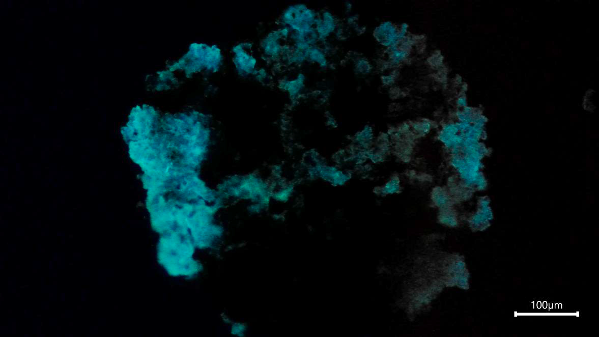
Figure 35: Marcos Grigorian, Untitled, 1963, from the Earthworks Series. Fluorescence microscopy, UV excitation λₑₓc = 365 nm. MoMA analysis, November 2025.
Perhaps the urge and the urgency were seen by Gulistān, when he rediscovered oil in the early 1970s, composing his prose out of encounters from the beginning of the 1950s, just as the movement for oil nationalization was taking off: “I was listening, and I was seeing. The night was over the plain and the plain was not hidden by the night, and what there was or was remembered, whether from the stench or the air or the steel or humankind, all, were with the presence and in the presence of oil and its products.”113Ibrāhīm Gulistān, Barkhurd’hā dar zamānih-i barkhurd [Encounters in the Time of Collision] (Tehran: Bāztāb Nigar, 1400/2021), 44. These are the words of the first-person narrator in Gulistān’s Encounters. Presumed to stand for the author, whose life story famously included working for the Anglo-Iranian Oil Company, the narrator describes what he sees, regularly and at that very moment, outside his office on the outskirts of the oil city. The towers of the giant refinery burning on the horizon, the high-intensity mercury lamps, the flying cockroaches, the bloated bodies of storage tanks, the oil sludge from the bottom of the tanks dumped on the desert soil, women from the nearby shanties taking away the sludge to use as fuel, the Company’s workers setting the oil-saturated mud on fire every now and then, the wind blowing sand over the burnt soil. The narrator, phone in hand, is describing these “snapshots” while covertly listening in on the phone conversation between two high-ranking British men (one of them the head of the information and press bureau and a cousin of Peter Ustinov and Sergei Diaghilev by the name of Julius Edwards, and the other, Eric Drake, the General Manager of AIOC) discussing Musaddiq’s political maneuverings and the prospect of compromises and new deals, the possibility of agreements between American-owned Aramco and Saudi Arabia, and between Britain and Iran. More urgently, they talk about suppressing the news of the relatively more just agreement reached over the Saudi oil, even if for a few days, out of fear of trouble in an already restive Abadan.114Since the Aramco deal was signed in 1950, we can decipher that this section of Encounters is taking place in that year with certainty. Negotiations between Britain and Iran did not succeed, leading to the rather hurried departure of Drake and the non-Iranian employees of AIOC, imposition of economic sanctions, a naval blockade in the Persian Gulf, and the removal of Musaddiq’s government from power. Earlier, the narrator had already told us, “It was a blistering age. The biggest news in the world was the story of Iran and Iran’s oil.”115Ibrāhīm Gulistān, Barkhurd’hā dar zamānih-i barkhurd [Encounters in the Time of Collision] (Tehran: Bāztāb Nigar, 1400/2021), 42-45.
If at the heart of the New Wave were the rhythms of a disjointed temporality, there was also the affection for the honest textures and touches of what was placed in front of the camera. The photographic image was well placed for the task as it knew how to redeem the tactility of skins, faces, and gestures. After all, with the Pahlavis’ breakneck modernization in full swing, the world was on the brink of losing its authentic practices and relations. As observed under other skies, this was a time of the fall of language and meaning. Albeit in a state of half ruin, there were still bodies, buildings, stories, and creative practices that were holding out against the ascending poverty of experience (Benjamin). Faces, sunbaked skins, walls made of mud-bricks, alleyways made by way of walls, anguished bodies, talismans and door locks, saintly forms raised on sticks, paintings free of the rules of perspective, garden lanes (kūchah’bāgh), small creeks, plaster made out of “hay entangled with mud” (Āl-i Ahmad)! These were the materials the cinematic modern of the countryside was made of, rarely put together in a quick succession of attractions as in the previous (non)sentence, but rather in the slow rhythm of long takes. Next to the long takes, there were other formal strategies that came to help with the rhythm and composition, for instance minimal movements and minimalist spatial arrangements, frontal camera positions facing flat surfaces (strengthening a sense of flatness and two-dimensionality), pans across open spaces (hills touching the sky, winding roads and straight railways, all dividing the landscape into planes), desolate sounds of winds or animals, and “meaningful silences,” as Mihrjūyī once put it in regard to The Cow.
The countryside was a strange country from the start. It was remote not only in geography, but also in time. An originary site of development, modernization, and governmentality, it was a place humans shared with plants, animals, jinns, and everything in between. The strangeness of the celluloid village set the stage for dementia, mass metamorphosis, and the absurd. From one decade to another, that is from the 1960s to the 1970s, the plots became more overtly politicized, allegorical, even rebellious. As more and more people left the villages for the cities in search of better jobs and services, the bloodied bodies and hand-held cameras of the city films “migrated” to the countryside seeking revenge and justice.116One can detect this “movement” of knives and bloodied bodies (chāqū’kishī if you will) from the city streets to the countryside after Qaysar rather easily. We can come up with a list, even if we stay with the film’s director and star, Kīmiyā’ī and Vusūqī respectively: from Qaysar in 1969, to The Soil (1973), to Balūch (1972), to The Curse (Nāsir Taqvā’ī, 1973), to Ghazal (Kīmiyā’ī, 1976), and to Safar-i Sang (Kīmiyā’ī, Journey of the Stone, 1978). The centrality of the local feudal landlord, a remnant of another era for many, was replaced with that of the foreign overlord. In some films, humour (at times bordering on the carnivalesque) and a heightened sense of allegory (at times bordering on crudeness) allowed for a harsher critique of the oil economy and oil imperialism. The aura of modernization, once the solid prop of the cinematic countryside, was vanishing in modernist representation, in one film after another.