
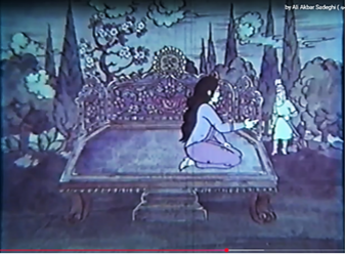
From Stone to Celluloid Reinterpreting Illustrated Lithography and Coffeehouse Painting in ‛Alī-Akbar Sādiqī’s Animated Trilogy



Introduction
During the Qājār period, illustrated lithography and coffeehouse painting emerged as prominent forms of Iranian art, enjoying widespread popularity. Their expansion reflected political and social transformations and the gradual democratization of art beyond the court. Drawing on classical Persian literature, they depicted religious, mythological, epic, and sometimes romantic themes, playing a central role in shaping Iranian visual language and reflecting popular culture and collective memory.
In the 1350s/1970s, animation emerged in Iran as a recognised art form, concurrent with broader cultural movements that sought to reconnect with indigenous artistic roots and explore independent artistic languages. As a pioneer of Iranian animation, ʿAlī-Akbar Sādiqī created works that integrated traditional Iranian art with the modern techniques and language of animation. His works occupy an intermediate position between image and classical literature. In these animations, narrative is conveyed through elements of traditional illustration, with the image itself serving as the narrator and minimal reliance on spoken text or dialogue. Within this distinctive narrative structure, Sādiqī—an accomplished visual storyteller—employs visual capacities and signs to convey meaning, a method comparable to the visual conventions found in illustrated lithography and coffeehouse painting. By blending ancient Iranian culture with Western surrealist perspectives, his works achieve aesthetic appeal while conveying multiple layers of social, mythological, and cultural significance.
Although this historical connection is significant, no comprehensive study has examined how traditional visual language is conveyed in Sādiqī’s animations—through narrative structure, visual conventions, and shared thematic elements with illustrated lithography and coffeehouse painting. Only a few sources have briefly mentioned his borrowings from traditional illustration and classical Persian literature. Addressing this research gap and identifying the shared themes and visual elements across these three artistic domains not only highlights the cultural and artistic authenticity of Sādiqī’s animations but also helps us better understand how innovation and re-creation function within Iranian artistic traditions.
A review of the literature shows that, although many studies have focused on Qājār illustrated lithography, coffeehouse painting, and the works and style of ʿAlī-Akbar Sādiqī, they have generally treated each area separately. The existing gap, therefore, is the lack of research that examines all three together within a unified framework, focusing on how visual traditions are transmitted and re-created in Iranian animation—an issue this study aims to address.
Scholarly research on Qājār-period illustrated lithography and coffeehouse painting (late 12th–early 14th century AH / late 18th–early 20th century) has extensively addressed their visual features, religious, mythological, and epic themes, and their role in reflecting and shaping popular culture.1ʿAbdalmajīd Husaynī-Rād and Zahrā Khān-Sālār, “Barrasī-i Kutub-i Chāp-i Sangī-i Musavvar-i Dawrah-yi Qājār” [A Study of Illustrated Lithographed Books of the Qājār Period], Hunarhā-yi Zībā, year 7, no. 23 (1384/2005): 77–86. Sayyid Tāhir Mūsavī and Muhammad Khazāʾī, Farīshtah va Dīv dar Āsār-i Chāp-i Sangī-i Qājārī [Angel and Demon in Qājār Lithographed Works], Kitāb Māh-i Hunar, no. 139 (Farvardīn 1389/April 2010): 40–43. Mahdī Murādī-Shūrchah, “Taʾsīr-i Tasāvīr-i Chāp-i Sangī bar Naqqāshī-i Muʿāsir-i Īrān: Dāstān’hā-yi ʿĀmiyānah va Hamāsī” [The Influence of Lithographed Images on Contemporary Iranian Painting: Folk and Epic Tales], (Master’s thesis, Shāhed University, Tehran, 1386/2007). Mahīn Suhrābī and ʿIffat Āqābābāyān, “Mutāliʿah-yi Tatbīqī-i Mazāmīn va Qarārdād’hā-yi Tasvīrī-i Chāp-i Sangī-i Musavvar va Naqqāshī-i Qahvah’khānahʾī-i Dawrah-yi Qājār” [A Comparative Study of Themes and Visual Conventions in Illustrated Lithography and Coffeehouse Painting of the Qājār Period], Pajuhesh-e Honar [Art Research Journal, University of Art, Isfahan], Spring–Summer 1394/2015, Year 5, No. 9, 1–14 (Scientific-ISC/Promotional).
Similarly, numerous sources on ʿAlī-Akbar Sādiqī have analyzed his works and artistic style; some provide general overviews of his oeuvre across different periods, while others examine his position within contemporary Iranian art.2Nādir Ibrāhīmī, Tahlīl-i Falsafī-i Panjāh Āsār az ʿAlī-Akbar Sādiqī [A Philosophical Analysis of Fifty Works by ʿAlī-Akbar Sādiqī] (Tehran: Amīr Kabīr, 1403/1991). Jāvād Mujābī and Nūr al-Dīn Zarrīn-Kilk, ed. Majmūʿah-yi Āsār-i ʿAlī-Akbar Sādiqī [Collected Works of ʿAlī-Akbar Sādiqī] (Tehrān, Nāshir, 1377/1998). Jāvād Mujābī, Navad Sāl Nuʾāvarī dar Hunar-i Tajassumī-yi Īrān [Ninety Years of Innovation in Iranian Visual Arts] (Tehran, Paykarah, 1395/2016).
In academic research, various university theses have examined topics such as adaptations from classical literature, visual semiotics, the relationship between Iranian animation and miniature painting, and analyses of Sādiqī’s animated works. While these studies provide valuable insights into the narrative, mythological, psychological, and visual dimensions of his works, they generally lack a comparative approach that situates his animations alongside premodern visual traditions, including illustrated lithography and coffeehouse painting.3Saharnāz Nīl-Furūshān, “Barrasī-yi Iqtibās-i Fīlmnāmah az Adabiyyāt-i Kuhan, bi’vīzhah Dāstān’hā-yi Ustūrahʾī dar Anīmayshin-i Īrān: Nimūnah-yi Mawridī-i Āsār-i ʿAlī-Akbar Sādiqī” [A Study of Screenplay Adaptation from Classical Literature, Especially Mythical Tales, in Iranian Animation: A Case Study of ʿAlī-Akbar Sādiqī’s Works] (Master’s thesis, University of Art, Tehran, Faculty of Cinema and Theater, under Ministry of Science, Research and Technology, 1395/2016.Farzānah Lutfī, “Nishānah-Maʿnāshināsī-i Tasvīrī dar Muntakhab-i Āsār-i Hunarmandān-i Muʿāsir: Nūr al-Dīn Zarrīn-Kilk, Farshīd Misqālī va ʿAlī-Akbar Sādiqī” [Semiotic Analysis of Selected Works of Contemporary Artists: Nūr al-Dīn Zarrīn-Kilk, Farshīd Misqālī, and ʿAlī-Akbar Sādiqī] (Master’s thesis, Azad University, Central Tehran Branch, Faculty of Art and Architecture,.,1395/2016).Mahīn Javāhiriyān, “Tahlīlī bar Āsār-i Anīmayshin-i ʿAlī-Akbar Sādiqī” [An Analysis of ʿAlī-Akbar Sādiqī’s Animation Works] (Master’s thesis, Tarbiyyat-i Mudarris University, Tehran, 1378/1999).Maʿsūmah Turkī-Harchigānī, “Barrasī-i Tatbīqī-i Anīmayshin-i Īrānī bā Naqqāshī bā Rūykard-i Bīnish-i Tasvīrī: Mutāliʿah-yi Mawridī-i Āsār-i ʿAlī-Akbar Sādiqī” [A Comparative Study of Iranian Animation and Painting with a Visual-Perceptual Approach: Case Study of ʿAlī-Akbar Sādiqī’s Works] (Master’s thesis, IRIB University, Tehran, 1386/2007).
Several scholarly articles have also examined individual works by ʿAlī-Akbar Sādiqī, focusing on themes such as narrative structure, symbolic imagery, modern myths, and psychological elements within his animations. These studies have generally focused on a single work or a particular theoretical approach and, despite their analytical contributions, have not examined the process by which traditional visual language is transmitted and translated into animation within a comparative framework.4Muhammad-ʿAlī Safūrā, Hasan Ẕūlfaqārī, and Samad Sāmāniyān, “Barrasī-i Sākhtar-i Sīnimāʾī va Adabī-i Anīmayshin-i Malik Khurshīd” [A Study of the Cinematic and Literary Structure of the Animation “Malik Khurshīd], Mutāliʿāt-i Adabiyāt-i Kūdak (1390/2011): 116–143. Bahārah Khiradmand and Maryam Khiradmand, “Tahlīl-i Nishānah-yi Insān dar Āsār-i Muntakhab-i ʿAlī-Akbar Sādiqī bar Pāyah-yi Rāvanshināsī-i Tahlīlī-i Yūng” [Analysis of the Symbol of the Human in Selected Works of ʿAlī-Akbar Sādiqī, based on Jungian Analytical Psychology], Mutāliʿāt-i Hunar va Rasānah, no. 5 (Spring-Summer 1400/2021): 101–122. Zuhrah Shāyistahfar and Asghar Kafshchiyān-Muqaddam, “Pazhūhishī Tatbīqī Pīrāmūn-i Muʾallafah’hā-yi Rāvanshinākhī-i Āsār-i Hunarmandān-i Naqqāsh: Nīkzād Nujūmī va ʿAlī-Akbar Sādiqī. Mawrid-i Pazhūhish: 5 Āsār az Jadīdtarīn Namāyishgāh-i Hunarmandān” [A Comparative Study of Psychological Elements in the Works of Painter Artists: Nīkzād Nujūmī and ʿAlī-Akbar Sādiqī. Case Study: Five Works from the Most Recent Artists’ Exhibition], Mutāliʿāt-i Hunar-i Islāmī 17, no. 40 (1399/2020): 209–230. Mahdiyah Qurbān-Nizhād Ẕavārdahī and Sayyid Rizā Husaynī, “Tahlīl-i Kārkard-i Ustūrah’hā-yi Nuvīn dar Naqqāshī-i Muʿāsir-i Īrān: Mutāliʿah-yi Mawridī-i Āsār-i Bahman Muhassis, ʿAlī-Akbar Sādiqī, Mahmūd Sabzī, Mihrān Sābir” [Analysis of the Function of Modern Myths in Contemporary Iranian Painting: A Case Study of the Works of Bahman Muhassis, ʿAlī-Akbar Sādiqī, Mahmūd Sabzī, and Mihrān Sābir], Rahpūyah-yi Hunar / Hunar-i Tajassumī, series 5, no. 3 (Fall 1401/2022): 5–18. Rawyā Imrān, “Zindagī va Āsār-i ʿAlī-Akbar Sādiqī” [The Life and Works of ʿAlī-Akbar Sādiqī], Rushd-i Āmūzish-i Hunar, no 7 (1385/2006): 48–51.
Theoretical Framework and Analytical Method
This qualitative study adopts a descriptive–analytical and comparative approach to examine the process by which premodern visual traditions are re-created and translated into modern Iranian animation. Premodern works—namely illustrated lithography and coffeehouse painting—together with ʿAlī-Akbar Sādiqī’s animated trilogy, are analyzed within a comparative framework based on three principal components: themes, motifs and structure, and function. This approach seeks to identify both the similarities and differences between premodern visual traditions and their re-creation in animation, thereby clarifying the process of transmission and adaptation of visual elements from premodern heritage into Sādiqī’s works. In doing so, the position of these animations within the genealogy of Iranian animation, and their connection to Qājār art, are fully examined.
The theoretical framework of this study is primarily grounded in Visual Narrative Theory and synthesizes three principal perspectives:5[1] Visual narrative theory examines how images or sequences of images convey meaning and tell stories without text. It is related to narratology, the study of narrative structures, but focuses on visual media such as comics, illustration, and film. Through composition, sequencing, and visual signs, viewers can infer narrative elements such as time, action, character, and space.Scott McCloud’s theory of visual narrative and image sequencing, Gérard Genette’s classical narratology, and Mieke Bal’s intermedial and cultural narratology.6The three principal theoretical approaches, their key indices, and their applications in this study are as follows: structural—based on Scott McCloud (sequence, composition, movement, framing); narrative—based on Gérard Genette (time, order, mode of narration, focalization); and functional—based on Mieke Bal (cultural, social, and semantic function). Scott McCloud, through the concept of “sequential art,” provides a framework for analyzing narrative in successive images, transitions between frames, visual temporality, and the viewer’s cognitive perception of movement—concepts that are particularly useful for examining narrative in multi-scene illustrated lithographs, as well as the construction of narrative in the animations of ʿAlī-Akbar Sādiqī. From another perspective, the narratological theory of Gérard Genette, with its emphasis on elements such as narrative order, temporal continuity and disruption, frequency, duration, and focalization, provides essential tools for analyzing temporality and the organization of narrative discourse across all three visual contexts. Finally, Mieke Bal extends narratology into the domains of visual and cultural analysis, enabling the examination of narrative within its cultural context, the inter-visuality of images, and the role of the audience in the production of meaning. See NEED CITATION. The three study are as follows: structural—based on Scott McCloud (sequence, composition, movement, framing; Scott McCloud, Understanding Comics: The Invisible Art [New York: HarperPerennial, 1993]); narrative—based on Gérard Genette (time, order, mode of narration, focalization; Gérard Genette, Narrative Discourse: An Essay in Method, trans. Jane E. Lewin [Ithaca, NY: Cornell University Press, 1980]); and functional—based on Mieke Bal (cultural, social, and semantic function; Mieke Bal, Narratology: Introduction to the Theory of Narrative, 2nd ed., trans. Christine van Boheemen [Toronto: University of Toronto Press, 1997]). Scott McCloud, through the concept of “sequential art,” provides a framework for analyzing narrative in successive images, transitions between frames, visual temporality, and the viewer’s cognitive perception of movement—concepts that are particularly useful for examining narrative in multi-scene illustrated lithographs, as well as the construction of narrative in the animations of ʿAlī-Akbar Sādiqī. From another perspective, the narratological theory of Gérard Genette, with its emphasis on elements such as narrative order, temporal continuity and disruption, frequency, duration, and focalization, provides essential tools for analyzing temporality and the organization of narrative discourse across all three visual contexts. Finally, Mieke Bal extends narratology into the domains of visual and cultural analysis, enabling the examination of narrative within its cultural context, the inter-visuality of images, and the role of the audience in the production of meaning (McCloud, 1993; Genette, 1980; Bal, 1997).
While analyzing ʿAlī-Akbar Sādiqī’s animations, Visual Narrative Theory is employed to systematically examine movement sequences, non-linear temporality, and the structure of actions. In contrast, since coffeehouse painting and illustrated lithography are traditional forms and static images, their analysis focuses on composition, color, and traditional Iranian visual signs. Semiotics and stylistic analysis are employed as complementary tools to investigate the visual and structural characteristics of these works.7Semiotics, as a discipline concerned with the study of signs and processes of meaning-making, plays a fundamental role in the analysis of artworks. It examines visual signs and languages, enabling the interpretation of latent meanings and multiple layers of signification within artistic works. Roland Barthes argues that every image carries a set of signs that convey numerous messages and meanings beyond its apparent form. This approach holds particular significance in traditional Iranian visual arts, such as coffeehouse painting and illustrated lithography. See CITE Roland Barthes Semiotics, as a discipline concerned with the study of signs and processes of meaning-making, plays a fundamental role in the analysis of artworks. It examines visual signs and languages, enabling the interpretation of latent meanings and multiple layers of signification within artistic works. Roland Barthes argues that every image carries a set of signs that convey numerous messages and meanings beyond its apparent form (Roland Barthes, Elements of Semiology, trans. Annette Lavers and Colin Smith [London: Jonathan Cape, 1964]). This approach holds particular significance in traditional Iranian visual arts, such as coffeehouse painting and illustrated lithography. Stylistics and visual language provide analytical tools for examining the visual, technical, and structural characteristics of artworks. In the works of ʿAlī-Akbar Sādiqī, bold outlines, flat colors, dense compositions, and the use of symmetry are among the defining elements of his personal style, all of which draw upon traditional Iranian visual language.
The analysis is organized around three axes: narrative structure, visual signs and symbols, and methods of translating visual tradition into the language of modern animation. Using these axes, the main features of the three visual domains—theme, structure, and function—are identified and then compared with the narrative and visual structures of ʿAlī-Akbar Sādiqī’s selected animations.
Data Collection and Selected Visual Media
Data for this study were collected through library research, the examination of visual documents, and direct observation of artworks. To enhance validity and minimize bias, triangulation (tatbīq-i chandgānah) was employed.8Triangulation in this study consists of three components: the examination of written sources, direct observation and analysis of visual artworks and animations, and a review of previous—albeit limited—analyses by scholars and critics. Through this approach, the validity of the analysis is ensured not only by carefully selecting sources and samples, but also by critically reassessing and comparing the data across multiple layers.The study focused on specific examples chosen on purpose. The research population included: Coffeehouse paintings, drawn from the book Naqqāshī’hā-yi Qahvah’khānahʾī;9Hādī Sayf, Naqqāshī’hā-yi Qahvah’khānahʾī [Coffehouse Paintings], 1st ed. (Tehran: Mīrās-i Farhangī, Mūzah-yi Riẕā ʿAbbāsī, 1369/1990).Illustrated lithographs based on Mirza ʿAlī-Qulī Khūʾī’s illustrations of Firdawsī’s Shāhnāmah, held in the National Library of Tehran;10Mirza ʿAlī-Qulī Khūʾī (1264–1282 AH / 1847–1865) was one of the most prolific illustrators of printed books during the Qājār period. Īraj Afshār described him as a “master of courtly illustration,” while Muhammad-ʿAlī Karīmzādah Tabrīzī called him a “skilled and straightforward painter.” Willem Floor regarded him as a pioneer among artists who devoted their efforts entirely to printed books of the early Qājār period. According to Ulrich Marzolf, many of the lions and suns on the frontispieces of the Vaqāyiʿ-i Ittifāqiyah newspaper in its early years resemble the lion-and-sun motif depicted in the first volume of Rawzat al-Safāʾ, printed in 1270–1274 AH / 1853–1857, which was illustrated by Mirza ʿAlī-Qulī Khūʾī. Although he was not the only book illustrator of his time, he was the most productive and exerted significant influence on his contemporaries, including Mirza Hādī Khānsārī and Mirza Sayfallāh Khānsārī. See Hājar Samadī and Niʿmat Lālahʾī, Tasāvīr-i Shāhnāmah-yi Firdawsī bih ravāyat-i Mirza ʿAlī-Qulī Khūʾī [Illustrations of the Shāhnāmah of Firdawsī as narrated by Mirza ʿAlī-Qulī Khūʾī] (Tehran: Farhangistān-i Hunar, 1388/2009).and Sādiqī’s animated trilogy: Haft Shahr (1350/1971), Man Ānam Kih… (1352/1973), and Malik Khurshīd (1354/1975).11Haft Shahr (https://www.youtube.com/watch?v=nDGk6SlbW5Q), Man Ānam Kih… (https://www.youtube.com/watch?v=f4yYgeYUxWg), and Malik Khurshīd (https://www.youtube.com/watch?v=8opB-hYezCA). It should be noted that the versions viewed were accessed via YouTube; however, the primary source of these works is the Kānūn-i Parvarish-i Fikrī-i Kūdakān va Nawjavānān (Institute for the Intellectual Development of Children and Young Adults). The illustrative features of these works, especially their formal similarities with coffeehouse painting and illustrated lithography, made them suitable for comparison and for inclusion in this study. The selected visual media in this study are not intended as a historical review; rather, they highlight the roots and structural continuity of premodern visual narratives. These works are analyzed as ‘visual pre-texts’ that shaped the visual logic of the animations under study.
Iranian Painting
Iranian painting, as the foundation of traditional visual art in Iran, established one of the most important systems of premodern visual narrative.12The significance of this tradition within the framework of the present study lies not only in its historical antiquity, but also in its establishment of enduring patterns of narrative, composition, and visual expression that later enabled the translation of traditional visual language into subsequent media, including animation.This art form has long been closely linked to Persian literature, drawing its content primarily from three main genres: martial (razmī), courtly or festive (bazmī), and religious (mazhabī). In this tradition, the harmony between text and image was central, with images serving as a means for the visual translation of literary narratives. This feature endowed images with an independent narrative function, allowing them to convey meanings beyond literal representation through symbolism, metaphor, and non-linear composition. Iranian painters highlighted imagination and inner visions instead of realistic portrayals of the external world. Nevertheless, this approach remained connected to the social and cultural realities of the period. This approach, along with a focus on its epistemological and aesthetic foundations, created a visual language in which movement is not shown physically but suggested within the image to convey action or the flow of the story. The totality of these characteristics is reflected in the animations of ʿAlī-Akbar Sādiqī.
With the decline of courtly bookmaking at the end of the Safavid period, the tradition of illustrating manuscripts gradually gave way to single-sheet paintings, and imagery moved from the private sphere of the court into broader social contexts. During this period, the introduction of European engravings and the emergence of the Westernizing trend (farangī’sāzī) played a significant role in transforming the visual language of Iranian art. Farangī’sāzī can be understood as a process through which Iranian art, while retaining its indigenous identity, adapted in response to global currents; this process produced new experiences in design, composition, lighting, and detailing, without fully abandoning the narrative logic and fundamental structure of traditional painting. These innovations, while preserving structural continuity, mark a historical point where a form of indigenous modernity in imagery began to emerge, leaving a legacy for contemporary Iranian art (Figure 1).
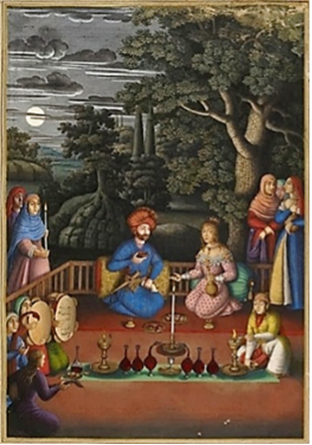
Figure 1: Example of Westernized Style (farangī’sāzī)
From this perspective, Iranian painting can be seen as the starting point of a chain in which premodern visual traditions gradually transformed over time, moving toward new modes of visual expression. This structural and conceptual continuity provides a foundation for understanding the transition to media such as illustrated lithography, coffeehouse painting, and eventually animation as a sequential rather than a discontinuous process. This continuity is evident in the works of ʿAlī-Akbar Sādiqī, where the principles of premodern narrative are manifested, endowing his animations with a distinctly national character.
Illustrated Persian Lithography
Lithography enabled illustrators to utilize new tools and introduce fresh structural values in book imagery.13The first illustrated printed book using lithography was Laylī va Majnūn by Maktabī Shīrāzī, published in 1259 AH / 1843, containing four illustrations. The famous lithographed edition of Nizāmī’s Khamsah was published in 1264 AH / 1848, produced by Muhammad Rizā and calligraphed by ʿAlī Tafreshī, and contains over thirty illustrated scenes. The illustrations were executed by Mirza ʿAlī-Qulī Khūʾī. See ʿAlī Būzarī, “Nīgāhī bih Tarrāhī-i Sarlawh dar Kutub-i Chāpī-i Dawrah-i Qājār” [A Study of Frontispiece Design in Printed Books of the Qājār Period], Kitāb-i Māh-i Kulliyāt, year 9, no. 103-105 (1385/2006): 40–45, 76. The illustrated lithographed edition of Rustam Nāmah, measuring 17.5 × 5 cm, was written by Sādiq al-Gulpāygānī in 1279 AH / 1862, in Nasta‛līq script, with a modern hardcover binding and without page numbering. The epic poem Hamlah-yi Haydarī also belongs to the earliest examples of illustrated lithographed books.Its introduction during the reign of Fath-ʿAlī Shah Qājār marked the beginning of a broader dissemination of Iranian visual traditions to wider audiences. The art form reached its peak in the 1280s–1290s AH / 1870s–1880s, when illustrations in Iranian books featuring martial, courtly, and religious themes flourished.14For approximately seventy years, lithography (Chāp-i sangī) was the sole printing method in Iran, and until the late Qājār period, virtually all printed works were produced using this technique. Although letterpress printing (Chāp-i surbī) had been introduced to Iran earlier, it failed to gain widespread acceptance. This was largely due to the Iranian public’s deep appreciation of calligraphy, which was integral to manuscript production, as well as to the use of images and illustration in lithographed books. By contrast, letterpress printing often produced numerous typographical errors, and the machines themselves were prone to malfunction and difficult to repair, further hindering their adoption. The inclusion of illustrations in lithographed books was another factor that ensured the popularity and longevity of this printing method. The golden age of lithographed book printing in Iran occurred during the 1870s–1880s and extended into the first decade of the twentieth century, a period during which nearly all publications were lithographed. From the beginning of the second decade of the twentieth century, lithography gradually declined, and the quality of book illustrations deteriorated. This decline was driven by political upheavals and the growing dominance of letterpress printing. See Olimpiada Pavlovna Shcheglova, Tārīkh‑i chāp‑i sangī dar Īrān [The History of Lithography in Iran], trans. Parvīn Munzavī (Tehran: Muʿīn, 1388/2009–2010) In addition to reproducing earlier forms and visual values, lithography became a crucial medium for replicating and disseminating images, thereby preserving and extending Iranian visual culture. While maintaining structural and aesthetic principles, it reinforced the continuity of traditional visual narratives.
The integration of court artists into society allowed the principles of traditional painting to be incorporated into illustrated lithographs, creating a bridge between courtly and popular art. Early lithographers, with access to court libraries and manuscript collections, emulated the styles of manuscript painters and reproduced established visual conventions. Although they may not have fully captured the spiritual depth or allegorical nuances of the original manuscripts, they nevertheless preserved the essential visual principles and transmitted the tradition to a wider audience. Unlike contemporary Western practices, these works emphasized symbolic and conceptual representation over naturalistic depiction.15Mahīn Suhrābī and ʿIffat Āqābābāyān, “Barrasī-i Mazāmīn va Fazā-yi Tasvīrī-i Chāp-i Sangī-i Musavvar va Naqqāshī-i Qahvah’khānahʾī dar Dawrah-yi Qājār,” Pazhūhish-i Hunar-i, year 5, no. 9 (Spring–Summer 1394/ 2015).
Illustrated lithographic works generally follow the decorative traditions of earlier manuscripts, but they were produced in a more unified and coherent form. The making of lithographic images was like manuscript production, involving a team of a painter, a woodcarver, and a scribe who worked at different stages.16Olimpiada P. Shcheglova and Ulrich Marzolph, “Lithography,” Encyclopaedia Iranica Online, accessed March 25, 2026, https://www.iranicaonline.org/articles/lithography/.The artistic quality of the decoration in these books depended on the social class for which they were made.17The artistic value of luxury books was higher than that of books intended for the lower strata of society. In publications aimed at broader audiences, there was a general tendency to expand illustrated content, which often led to the decline of traditional miniature painting. See Olimpiada Pavlovna Shcheglova, Tārīkh‑i chāp‑i sangī dar Īrān [The History of Lithography in Iran], trans. Parvīn Munzavī (Tehran: Muʿīn, 1388/2009–2010)Lithographic editions usually included a decorative heading, a title, and lined borders (Figure 2).18In these editions, the publication date and bibliographic information were provided at the end of the book. The illustrations were uncolored, with even any illumination rendered in simple black lines. In some copies, borders or titles were added by hand in red ink. See Mahnāz Shāyistahfar, “Jāygāh-i Imām ʿAlī dar Nuskhah-yi Khattī-i Hamlah-yi Haydarī” [The Position of Imam ʿAlī in the Manuscript of Hamlah-yi Haydarī], Mutāliʿāt-i Hunar-i Islāmī 5, no. 8 (1387/2008): 7–24.
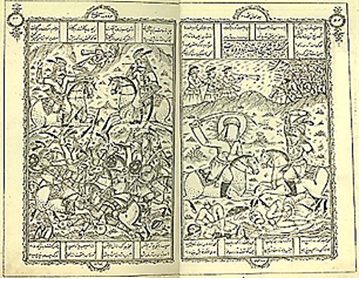
Figure 2: A sample of lithographic illustration
In summary, illustrated lithography has a hybrid visual language that continues both literary heritage and traditional miniature painting while also taking advantage of modern printing technologies.19Olimpiada P. Shcheglova and Ulrich Marzolph, “Lithography,” Encyclopaedia Iranica Online, accessed March 25, 2026, https://www.iranicaonline.org/articles/lithography/. Lithographic images later helped shape the style of coffeehouse painting, creating a coherent and enduring visual current that enabled the transmission of traditions and prepared the ground for the emergence of new media. The key visual characteristics of this art include:
- Clear and precise lines that convey details and forms, enhancing the readability of the image.
- Defined composition, with a simple and coherent structure that clarifies meaning and narrative, like traditional Iranian page layout and framing.20The images are usually simple and orderly, ensuring that the message and narrative are clear. The layout of lithographed pages closely resembles traditional Iranian book design, with features such as marginal frames, defined image borders, and rows and columns arranged within a geometric structure. See ʿAbdalmajīd Husaynī-Rād and Zahrā Khān-Sālār, “Barrasī-i Kutub-i Chāp-i Sangī-i Musavvar-i Dawrah-yi Qājār” [A Study of Illustrated Lithographed Books of the Qājār Period], Hunarhā-yi Zībā, year 7, no. 23 (1384/2005): 77–86.
- A small set of colors that looks visually strong and effective, allowing mass production while maintaining quality with using limited colors; it also features flat colors and free-form designs influenced by folk art.21Using a limited palette allowed images to be mass-produced while keeping colors symbolic and striking. Illustrated lithography often featured simple lines and flat colors, influenced by folk art, with vibrant, free-flowing designs reminiscent of traditional festive and fantasy illustrations. See ʿAbdalmajīd Husaynī-Rād and Zahrā Khān-Sālār, “Barrasī-i Kutub-i Chāp-i Sangī-i Musavvar-i Dawrah-yi Qājār” [A Study of Illustrated Lithographed Books of the Qājār Period], Hunarhā-yi Zībā, year 7, no. 23 (1384/2005): 77–86.
- Continuation of traditional visual conventions, where, despite the modern technique, common miniature painting forms, motifs, and patterns are still used, such as framing, borders, and sequential narrative compositions.
Common themes in this art include:
- Mythological and epic themes, often depicting stories from the Shāhnāmah and heroic tales.22Books such as Rustam’nāmah and other tales of heroes.
- Religious themes, illustrating events such as the Battle of Karbala and stories of the Ahl al-Bayt.23Books such as Hamlah-yi Haydariyah by Mullā Bāmān-‘Alī, Asrār al-Shahādah by Sarbāz Burūjirdī, and Tūfān-i Bikā by Javāhirī.
- Romantic and popular themes, portraying classical love stories and folk narratives.24Love stories (such as Laylī and Majnūn) and popular romantic novels or folk tales (such as Dilāvarmard and Hurmuzd and Gul, drawn from the tradition of popular storytelling) held a special place in lithographic illustration. See Olimpiada P. Shcheglova and Ulrich Marzolph, “Lithography,” Encyclopaedia Iranica Online, accessed March 25, 2026, https://www.iranicaonline.org/articles/lithography/.
- Educational and didactic themes in instructional texts, modern science, and translations of European works, intended to make knowledge more accessible.25Educational books and works on the new sciences (such as Ta’dīb al-Atfāl, 1307 AH) and even translations of European and Arabic fictional works (such as Alf Nahār, Decameron, and The Count of Monte Cristo) were often adorned with lithographic illustrations. These images reflected the tastes and needs of Qājār society for epic and religious stories combined with instructive elements. See Olimpiada P. Shcheglova and Ulrich Marzolph, “Lithography,” Encyclopaedia Iranica Online, accessed March 25, 2026, https://www.iranicaonline.org/articles/lithography/; Mahīn Suhrābī and ʿIffat Āqābābāyān, “Barrasī-i Mazāmīn va Fazā-yi Tasvīrī-i Chāp-i Sangī-i Musavvar va Naqqāshī-i Qahvah’khānahʾī dar Dawrah-yi Qājār,” Pazhūhish-i Hunar-i, year 5, no. 9 (Spring–Summer 1394/ 2015).
In terms of social and cultural function, in addition to its educational role, illustrated lithography contributed to the emergence of new social themes. New illustrated accounts and books focused on ordinary people and everyday events, thereby helping to shift artists away from the exclusive court setting.26Fātīmah Nazīfī and Shīvā ‛Abbāsī, “Ta’sīr-i Kutub‑i Sangī dar Tasvīrsāzī‑i Hālāt‑i ‘Āmiyānah va Kitāb‑Ārā’ī‑i Dawrān‑i Qājār” [The Influence of Stone Books on Popular Visual Illustration and Book Decoration in the Qājār Period], in Proceedings of the 6th International Conference and the 7th National Conference on Civil Engineering, Architecture, Art and Urban Design (Tabriz, 1403/2024), accessed March 25, 2026, https://civilica.com/doc/2042938.As a result, illustrated lithography not only represented elements of popular culture and religious beliefs, but also became a source of inspiration for folk painters in coffeehouses and traditional workshops.27Mahīn Suhrābī and ʿIffat Āqābābāyān, “Barrasī-i Mazāmīn va Fazā-yi Tasvīrī-i Chāp-i Sangī-i Musavvar va Naqqāshī-i Qahvah’khānahʾī dar Dawrah-yi Qājār,” Pazhūhish-i Hunar-i, year 5, no. 9 (Spring–Summer 1394/ 2015).
Persian Coffeehouse Painting
Coffeehouse painting emerged in the late Qājār period, concurrent with the Constitutional Movement, at a time when classical Persian literature was experiencing a perceived decline in richness, diversity, and depth. It sought to reconnect text and image once again. In the politically tense atmosphere of the late Qājār era, the “national-religious” aesthetic and content of coffeehouse painting gained increased attention. The promotion of religious ceremonies—such as taʿziyah and mourning rituals for Imam Husayn—also indirectly created a context for the expansion of this art form.
The presence of these works in cultural and social settings, alongside ta‛ziyah, naqqālī (the recitation of the Shāhnāmah), and religious ceremonies, strengthened the connection between religious and national narratives within the visual structure of the works.28Coffeehouse painting is not a purely autonomous artistic form; rather, it emerged in interaction with the oral storytelling traditions of Naqqālī and the performative Taʿziyah. This painting style developed in connection with these narrative traditions, aiming to complement oral storytelling while visually reinforcing religious and national messages. See Rahīm Rahīmī Nijāt, “Coffeehouse Painting: Art, Faith, and Society,” in Proceedings Bali Bhuwana Waskita: Global Art and Creativity Conference 2024, vol. 4 (Bali, Indonesia, 2024): 159–169, https://eproceeding.isibali.ac.id. “Coffeehouse artists” highlighted the imaginative and non-conventional character of their work in order to distinguish it from courtly realist painting.29Husayn Qullar-Āghāsī was the main mentor and leading figure among coffeehouse painters, and he played a key role in establishing the coffeehouse painting school. Muhammad Mudabbir was another prominent artist and a respected figure of this art form. Among the artists who studied and followed this tradition were ‘Abbās Bulūkīfar, Husayn Ismā‘īlzādah, Fath-Allāh Qullār, Husayn Hamadānī, and Amīr Husayn Qā’immaqāmī. See Hādī Sayf, Naqqāshī’hā-yi Qahvah’khānahʾī [Coffehouse Paintings], 1st ed. (Tehran: Mīrās-i Farhangī, Mūzah-yi Riẕā ʿAbbāsī, 1369/1990), 23, 43, 61-65. Many coffeehouse painters, often without formal training, created works based on imagination and personal vision, rather than academic rules of anatomy and perspective. This made their style distinct from official and courtly painting. See Mas‛ūd Suhaylī, “Coffee Shop Painting and Painters in Iran,” Caroun Art Gallery (North Vancouver, Canada, 2010), accessed March 25, 2026, https://caroun.com/Research/Art/CoffeeShopPainting/CoffeeHouse.html. This approach is known in Iranian art literature as “fantasy-based representation” (khiyāl’sāzī).30The main distinction of coffeehouse painting lies not in its narrative subjects, but in its approach to realism. Many artists in this field, often without formal training, deliberately moved away from the rules of anatomy and classical perspective, relying instead on imagination, exaggeration, and symbolic expression. This approach was even referred to as “khiyāl’sāzī.” This designation was not merely a stylistic description, but also a stance in opposition to academic and courtly realist painting. See Rahīm Rahīmī Nijāt, “Coffeehouse Painting: Art, Faith, and Society,” in Proceedings Bali Bhuwana Waskita: Global Art and Creativity Conference 2024, vol. 4 (Bali, Indonesia, 2024): 159–169, https://eproceeding.isibali.ac.id. Master artists called their work “khiyāl’sāzī,” as they painted from personal imagination and interpretations of stories. Since storytelling and painting both took place in coffeehouses, this style later became known as “coffeehouse painting.”
This pre-modern pictorial tradition combines elements of miniature painting, visual narration, and the artist’s personal creativity, while showing little concern for precise anatomy and the perspective conventions of Western classical art. It is closely connected to popular culture and the oral storytelling traditions of society. These paintings are not only visual representations of events and myths, but also function as a visual language and a form of cultural identity, enabling the transmission of values and cultural heritage to later generations (Figure 3).
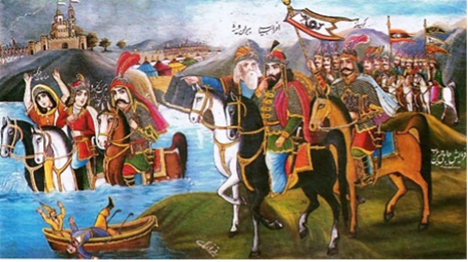
Figure 3: A sample of coffeehouse painting
Coffeehouse painting shares themes and visual elements with illustrated lithography, a connection that developed partly because lithographed books were widely accessible and their images served as models for coffeehouse painters. Compared to other folk-art forms, this style developed relatively later, with its main subjects including the events of Karbala, Quranic narratives, Firdawsī’s Shāhnāmah, Nizāmī’s Khamsah, and various popular stories. This tradition also influenced Iranian modernist artists, including ‛Alī-Akbar Sādiqī, whose animations clearly reflect shared thematic elements drawn from this body of classical literature.
This form of “narrative painting,” executed in oil on canvas, emerged under the influence of naturalistic painting and the Qājār-era farangī’sāzī style, developed by artists lacking formal academic training. Coffeehouse painting evolved into an independent art form due to its narrative-driven approach and its emphasis on emotion and symbolism, becoming a distinctly popular form of expression. Its painters, regardless of differing styles and tendencies, drew on popular ideals and myths from history and reinterpreted them on canvas—an approach that Sādiqī also sought to reflect in his animated works.31A coffeehouse painter, often emerging from artisan or guild backgrounds, usually had another profession such as tilework, plasterwork, or decorative painting. Motivated by faith and personal interest, he learned the techniques of oil scroll painting through practical experience and applied common stylistic conventions and tools according to his own taste and unique method. See Rūʾīn Pākbāz, Dāyirat al-Maʿārif-i Hunar [Encyclopaedia of Art] (Tehran: Farhang-i Muʿāsir, 1378/1999).
In these paintings, what matters most is the artist’s personal and intimate interpretation of the social environment. This produces a form of “primitivism”32An artistic movement in modern Western art that draws inspiration from indigenous and non-Western art, emphasizing simplicity, authenticity, and emotional immediacy. This movement flourished in the late 19th and early 20th centuries, with European artists such as Paul Gauguin and Pablo Picasso incorporating elements from Polynesian, African, and other non-Western artistic traditions. Primitivism reflected a Western search for perceived purity and directness in contrast to academic conventions, rather than a literal return to natural or instinctive human sources. characterizing their work, shaped by shared intellectual conventions and the public’s collective understanding. Thus, the tradition embodies both national and social dimensions, marked by distinctly Iranian features. Consequently, artists pursuing the “localization of art” later adopted this style as a model for creative reinterpretation.
‘Alī-Akbar Sādiqī was one of those artists and a devoted practitioner of this approach, frequently recalling his childhood experiences of watching naqqālī and pardah’khānī performances in coffeehouses. He noted that these visual encounters formed the foundation of his artistic sensibilities. In his animations, narratives of “love and war”—a recurring theme in his work—along with epic and mythological subjects, are depicted in a highly imaginative manner consistent with the Iranian visual tradition.
Among the visual features of coffeehouse painting is its “scroll-like, sequential composition,” where dynamic, heroic scenes and narrative episodes are organized in continuous panels, frequently used in ta‘ziyah and pardah’khānī performances. “Symbolic forms and colors” are employed to engage viewers and make narratives accessible to the public, often featuring bright hues—such as vivid red to represent blood and sacrifice—in alignment with the subject matter.33Mīnā Husaynī, “Tahlīl-i Lāyah’hā-yi Basarī va Mazmūnī-i Bazmnigārī dar Naqqāshī-i Qahvahkhānahʾī (Mutāliʿah-yi Mawridī: Naqqāshī-i Bārgāh-i Kay Khusraw va Shab-i Chillah)” [Analysis of Visual and Thematic Layers of Banquet Imagery in Coffeehouse Painting (Case Study: The Paintings of Kay Khusraw’s Court and Yalda Night)], Rahpūyah-yi Hunar’hā-yi Sanāʿī, vol. 3, no. 8 (Summer 1402/2023): 7–20.
“The transmission of popular narratives,” encompasses themes that reflect the ideals, religious beliefs, and cultural ethos of the urban middle strata in Iran. Stories from Firdawsī’s Shāhnāmah, Nizāmī’s Khamsah, the events of Karbala, Quranic narratives, and folk tales were among the most prominent subjects, depicted according to accounts heard from the naqqāls, ta‘ziyah performers, and eulogists, in keeping with traditions rooted in everyday popular culture.34Suhaylā Najm, Hunar-i Naqqālī dar Īrān [The Art of Naqqālī in Iran] (Tehran: Farhangistān-i Hunar, 1390/2011).
Coffeehouse owners were also among the main patrons of these works.35Karīm Zāriʾi et al., “Tabyīn-i Naqsh-i Taʾsīrguzār-i Qahvahkhānah dar Shiklgīrī-i Naqqāshī-i Qahvahkhānahʾī,” Bāstānshināsī-i Pārsah, no. 5 (1397/2018): 143–159. Although the paintings are static, they create a sense of movement: the positioning and scaling of figures convey narrative flow and the passage of time, engaging the audience’s visual experience.
In terms of composition and perspective, this style often uses a “hierarchical perspective,” where scenes are shown from the front and slightly from above to suggest depth. There is little use of complex light and shadow, and scenes are presented in a simple, open manner.36Mīnā Husaynī, “Tahlīl-i Lāyah’hā-yi Basarī va Mazmūnī-i Bazmnigārī dar Naqqāshī-i Qahvahkhānahʾī (Mutāliʿah-yi Mawridī: Naqqāshī-i Bārgāh-i Kay Khusraw va Shab-i Chillah)” [Analysis of Visual and Thematic Layers of Banquet Imagery in Coffeehouse Painting (Case Study: The Paintings of Kay Khusraw’s Court and Yalda Night)], Rahpūyah-yi Hunar’hā-yi Sanāʿī, vol. 3, no. 8 (Summer 1402/2023): 7–20. Sādiqī applied this same approach in his animations Malik Khurshīd and Haft Shahr
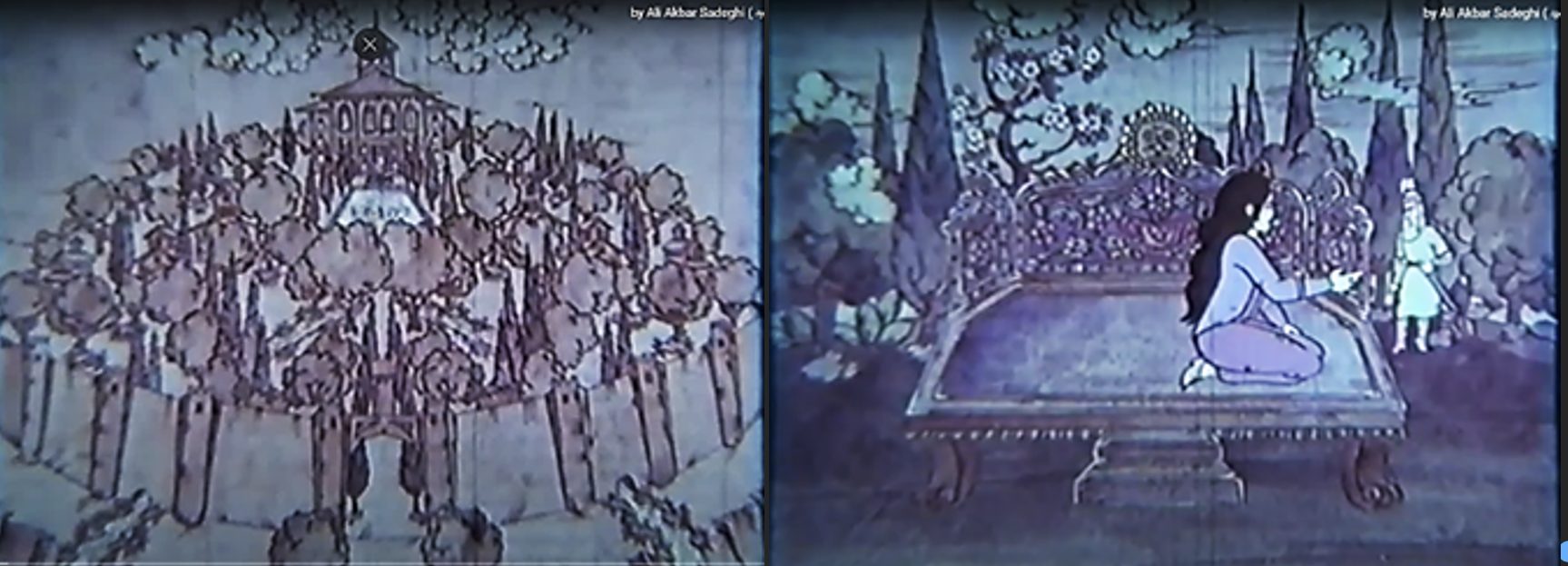
Figure 4: Composition and hierarchical perspective in the animations of ‘Alī-Akbar Sādiqī
In this style, character depiction is such that the protagonist (main hero) is usually drawn larger than the others to highlight their importance. The names of the characters are sometimes written next to them so that viewers can easily identify them. The faces of the main characters are idealized and beautiful, whereas those of negative characters are often depicted as unattractive or harsh.37Rahīm Rahīmī Nijāt, “Coffeehouse Painting: Art, Faith, and Society,” in Proceedings Bali Bhuwana Waskita: Global Art and Creativity Conference 2024, vol. 4 (Bali, Indonesia, 2024), 159–169, https://eproceeding.isibali.ac.id. Costumes and makeup are deliberately designed to reflect the Qājār period, reinforcing cultural authenticity.38Mīnā Husaynī, “Tahlīl-i Lāyah’hā-yi Basarī va Mazmūnī-i Bazmnigārī dar Naqqāshī-i Qahvahkhānahʾī (Mutāliʿah-yi Mawridī: Naqqāshī-i Bārgāh-i Kay Khusraw va Shab-i Chillah)” [Analysis of Visual and Thematic Layers of Banquet Imagery in Coffeehouse Painting (Case Study: The Paintings of Kay Khusraw’s Court and Yalda Night)], Rahpūyah-yi Hunar’hā-yi Sanāʿī, vol. 3, no. 8 (Summer 1402/2023): 7–20. In these paintings, lighting is uniform, with shadows largely omitted, which helps clarify the narrative. Scenes are rich in detail—such as musicians or banners at gatherings—and there is very little empty space. Overall, coffeehouse paintings emphasize narrative clarity and the symbolic expression of emotions.Rahīm Rahīmī Nijāt, “Coffeehouse Painting: Art, Faith, and Society,” in Proceedings Bali Bhuwana Waskita: Global Art and Creativity Conference 2024, vol. 4 (Bali, Indonesia, 2024), 159–169, https://eproceeding.isibali.ac.id.
Much of Sādiqī’s three-part animation style reflects an adaptation of these premodern visual patterns. In addition, Sādiqī assumes a narrator-like role—similar to a naqqāl—subtly positioning his cinematic “screen” as analogous to the storytelling panels of this tradition.
As noted earlier, the predominant themes of these paintings are religious—particularly Āshūrā-related—with the most prominent subject being the events of Karbala and its central figures (Imam Husayn and his companions). Coffeehouse paintings draw upon oral Āshūrā narratives and the accounts of naqqāls, presenting these stories to viewers through a vivid visual language. Epic tales from the Shāhnāmah and other national epics—such as Rustam and Suhrāb, Rustam’s battle with Ashkbūs, or the legend of Kay Khusraw and the Twelve Faces—are also among the most frequently depicted subjects in this style.39“Coffeehouse,” Encyclopaedia Iranica Online, accessed March 25, 2026, http://www.iranicaonline.org/articles/coffeehouse.Particularly during the Constitutional period, these themes were employed40“Naqqāshī-i Qahvahkhānahʾī,” Wikipedia, accessed March 25, 2026, https://fa.wikipedia.org/wiki/نقاشی_قهوهخانهای to foster national pride and inspire the public’s spirit of resistance against colonial powers.41Mīnā Husaynī, “Tahlīl-i Lāyah’hā-yi Basarī va Mazmūnī-i Bazmnigārī dar Naqqāshī-i Qahvahkhānahʾī (Mutāliʿah-yi Mawridī: Naqqāshī-i Bārgāh-i Kay Khusraw va Shab-i Chillah)” [Analysis of Visual and Thematic Layers of Banquet Imagery in Coffeehouse Painting (Case Study: The Paintings of Kay Khusraw’s Court and Yalda Night)], Rahpūyah-yi Hunar’hā-yi Sanāʿī, vol. 3, no. 8 (Summer 1402/2023): 7–20. In addition to these religious and epic narratives, scenes of popular festivities and social gatherings were also depicted—such as heroic assemblies or royal weddings described in the Shāhnāmah. These gatherings were generally intended for entertainment or to symbolize the triumph of good over evil within popular culture.Among Sādiqī’s three-part animations, Malik Khurshīd is the work most closely related to these subjects, especially in the sequences depicting the prince’s wedding.
The most notable aspect of coffeehouse paintings lies in their social and cultural significance. Displayed on large visual panels, these works served as tools for oral storytelling in coffeehouses and husayniyah halls, where naqqāls and eulogists would use them to recount the stories of Āshūrā or the Shāhnāmah. The combination of oral narrative and visual imagery allowed audiences—particularly those with limited literacy—to gain a deeper understanding of religious and epic content. In this way, the art engaged the ordinary people with Islamic and heroic themes while reinforcing a sense of social cohesion.
Coffeehouse painting thus functioned as a popular medium for transmitting traditional cultural values—such as self-sacrifice, justice, and faith—to new generations. Its collective impact in shaping “popular culture” and linking art with everyday life is particularly noteworthy. From this perspective, the social and cultural functions of cinema and animation can be considered comparable. Sādiqī’s three-part animations, drawing on these premodern visual patterns, employ a symbolic and accessible visual language that conveys his critical ideas effectively to diverse audiences, maintaining a strong connection between art and everyday life.
Animation as a Medium for Translating Visual Narratives
Animation, far more than a branch of modern art, functions as a medium for reconfiguring and translating premodern visual narratives, offering a unique means of representing artistic heritage and conveying cultural values. Through its use of fantasy and abstract imagery, animation facilitates dialogue across generations and diverse cultural groups, transforming the stillness and permanence of past artistic traditions into a vivid, dynamic experience.
The dynamic nature of animation aligns with the lived experiences of new generations, a generation that largely learns culture through digital media and moving images. From this perspective, animation as a “universal visual language” makes it possible to connect local cultural experiences with a global audience and provides the capacity to convey complex cultural and artistic concepts on a broad scale beyond local limitations.
Based on the theory of “indigenous modernity,”42Indigenous (or Vernacular) Modernity refers to the idea that modernity is not a singular Western phenomenon, but can take diverse forms shaped by local cultural, historical, and social contexts. It emphasizes the reinterpretation and adaptation of modern forms through indigenous traditions, rather than their wholesale adoption, allowing societies to pursue modernity in ways that are locally meaningful. animation can reinterpret and reimagine traditional forms, symbols, myths, and imaginative landscapes of Iranian culture within a contemporary and dynamic context. This feature turns animation into a tool for sustaining visual culture and rethinking cultural identity. From the perspective of cultural studies, animation can be considered a medium for “cultural translation” and the creative reproduction of artistic heritage. This process connects the cultural experience of the audience with Iranian historical and artistic concepts. This coexistence of past and present is not merely a representation of tradition, but a form of “creative re-creation” that contributes to the dynamism of Iran’s visual culture.
These capacities manifest across several key dimensions. The hybrid nature of animation enables the integration of image, narrative, movement, and music within a unified structure, allowing it to draw simultaneously on visual traditions and contemporary technologies. Its flexibility frees it from the constraints of physical reality and realism, making it possible to creatively reimagine myths, symbols, and imaginative spaces. The symbolic capacity of animation enhances its ability to represent abstract and symbolic concepts, positioning it as a particularly effective medium for conveying the mystical and mythological themes of Iranian culture. In addition, the universality of visual language, which requires less linguistic translation, facilitates connections between local cultural experience and transnational audiences and enables the broad communication of Iranian cultural and artistic concepts. Finally, the innovative potential of animation, together with its digital and technological structure, creates the conditions for the creative integration of artistic traditions with contemporary methods and makes possible the “recreation of tradition within a modern context.”
Thus, animation is not only a medium for representing artistic heritage, but also a platform for the continuation, reinterpretation, and creative renewal of Iran’s visual culture from tradition to the contemporary.
In light of these capacities, the works of ‛Alī-Akbar Sādiqī can be seen as examples of the reconfiguration of premodern visual narratives within contemporary animation. Drawing on influences from miniature painting, illustrated lithography, and coffeehouse painting, his works simultaneously integrate Iranian tradition with the modern language of animation and can be understood as representing a form of “national animation” within the framework of indigenous modernity. Examining his animation trilogy provides insight into this process.
The Animations of ‛Alī-Akbar Sādiqī
Before becoming an animator, ‛Alī-Akbar Sādiqī was primarily a neoclassical painter and storyteller, well-versed in Iranian and global classical painting, particularly miniature traditions. His work is distinguished by a fresh, imaginative approach to literature, myths, and visual narratives. He represents feasts, gardens, and legends not only aesthetically or historically, but with creative and often unexpected interpretations.
Sādiqī’s art bridges tradition and modernity. His paintings and animations combine Iran’s visual heritage with surreal compositions and imaginative freedom. Bold lines, flat colors, dense compositions, and symmetry reflect the influence of miniature painting, while narrative focus, heroic scenes, and vivid colors echo coffeehouse painting. Yet he transcends conventional narrative logic by introducing unreal elements and transformed figures, creating a surreal, dreamlike world that blends the unconscious with cultural memory.
The connection between his works and illustrated lithographic prints is also evident: the delicate linework, the repetition of ornamental motifs, and the framing devices reminiscent of lithographic editions can all be seen in his art. In this way, Sādiqī, drawing on a fantastical visual language, abstract imagery, and a surrealist outlook, has created distinctive works in which the traces of miniature painting, lithography, and coffeehouse painting are clearly visible.
With the advent of digital media and motion techniques, animation offered an unprecedented opportunity to reinterpret traditions and fuse them with modernity. Modern Iranian animation began to take shape in the 1960s, during the golden era of the Institute for the Intellectual Development of Children and Young Adults (Kānūn). Sādiqī made exceptional use of this opportunity and, as one of its pioneers, produced remarkable animations by blending ancient Iranian culture with Western surrealist perspectives.
Through symbolism and visual elements derived from coffeehouse painting and Persian miniature traditions, he crafted scenes that evoke the character of authentic coffeehouse canvases. His works are not only visually striking but also carry social and mythological messages. Through merging tradition with the modern language of media, Sādiqī has offered a fresh and engaging experience for new generations. These works illustrate how traditional forms can continue to thrive within new media, while expressing Iranian culture, identity, and artistic experience in the contemporary world.
Sādiqī himself has stated that he never formally learned the principles of animation but arrived at them through “intuition and discovery.” This innate creativity enabled him to develop a distinctive style in the history of Iranian animation. In his works, figures such as epic heroes from the Shāhnāmah frequently appear with features resembling the artist himself, as if he maintains a symbolic presence within the world of his own imagination.
In critical studies and analyses, Sādiqī’s works have been regarded as an extension of Iran’s visual traditions, while being shaped by a modern, surrealist approach.43Kāzim Hāfiziyān Razavī, “Nigāhī bih Naqqāshī’hā-yi ‛Alī-Akbar Sādiqī barāyi Kitāb’hā-yi Kūdakān va Nawjavānān” [A Look at ‛Alī-Akbar Sādiqī’s Paintings for Children’s and Young Adults’ Books], Civilica, 1373/1994, https://civilica.com/doc/1462884Accordingly, several scholars and critics have characterized his style as approximating the concept of “national animation”—a form that emerges within a framework of indigenous modernity. This form of modernity does not stand in opposition to tradition; rather, it is realized through the creative rearticulation of tradition within a contemporary medium.
Sādiqī’s works, in portraying Iranian identity and reimagining visual traditions, are full of mythological and heroic themes. The theme of the “hero” or “champion” recurs throughout his work, with narratives often revolving around battles and the exploits of heroic figures. At the same time, these works reflect the tension between tradition and modernity, engaging with contemporary social and cultural issues. The question of Iranian identity in the face of a rapidly changing world emerges as a central theme. Some critics have observed that by adopting a heroic or chivalric outlook at a time when “modernity has overtaken tradition,” Sādiqī’s work aims to preserve and rethink Iran’s visual heritage rather than abandon it.44NEEDS CITATION Kāzim Hāfiziyān Razavī, “Nigāhī bih Naqqāshī’hā-yi ‛Alī-Akbar Sādiqī barāyi Kitāb’hā-yi Kūdakān va Nawjavānān,” Civilica, 1373/1994, https://civilica.com/doc/1462884 (accessed April 8, 2026).
When compared with traditional coffeehouse painting and lithographic prints, Sādiqī’s animations reveal striking similarities in both structure and visual language. Structurally, both are narrative-driven and present multiple moments within a single frame. In his compositions, characters and motifs are arranged in a single horizontal row, reflecting the storytelling conventions of coffeehouse painting. Structurally and visually, the narratives are typically linear and epic, centered on a hero undertaking a defined journey or quest.
In appearance, Sādiqī’s works closely resemble coffeehouse paintings, with legendary heroes and warriors grouped tightly in dynamic arrangements that convey a strong sense of movement and energy. The use of rich primary colors, bold outlines, and stylized, symbolic settings is also common to both coffeehouse painting and Sādiqī’s works. He explicitly acknowledges this artistic heritage, stating: “My art is a combination of miniature painting, lithography, and coffeehouse painting.”45Kāzim Hāfiziyān Razavī, “Nigāhī bih Naqqāshī’hā-yi ‛Alī-Akbar Sādiqī barāyi Kitāb’hā-yi Kūdakān va Nawjavānān” [A Look at ‛Alī-Akbar Sādiqī’s Paintings for Children’s and Young Adults’ Books], Civilica, 1373/1994, https://civilica.com/doc/1462884.
ʿAlī-Akbar Sādiqī’s Animation Trilogy
- Haft Shahr
The 15-minute animation Haft Shahr (Seven Cities) draws both structurally and conceptually on the mystical–allegorical poem “Haft Shahr-i Ishq” (The Seven Cities of Love) by ʻAttār,46In ʻAttār’s Mantiq al-Tayr (The Conference of the Birds), the “Haft Shahr-i Ishq” (Seven Cities of Love) is a mystical poem in which love is not just a poetic theme but a stage of spiritual growth and a force for overcoming reason and the ego. It is called “lyrical” because of its passionate, metaphorical language, not because of its genre or meaning. In his animation Haft Shahr, Sādiqī does not depict this mystical pattern directly; instead, he uses the seven-stage structure as a framework for a philosophical and critical reflection on modern human life, with the lyrical tone drawn more from Hāfiz’s poetry—read by Shāmlū—than from ʻAttār’s text.presenting the most prominent exploration of the theme of love in Sādiqī’s trilogy with a lyricalexpression. The title clearly borrows from ʻAttār’s poem, but Sādiqī interprets the mystical journey not as a depiction of individual spiritual ascent, but as a symbolic framework for exploring the condition of contemporary humans.
In this reimagining, the lyrical expression does not come directly from ʻAttār’s poem. Instead, it is introduced through a ghazal-like poetic element drawn from Hāfiz’s poetry—read by Ahmad Shāmlū—adding a separate, modern layer to the story that fits well with the animation’s visual style (Figure 5).
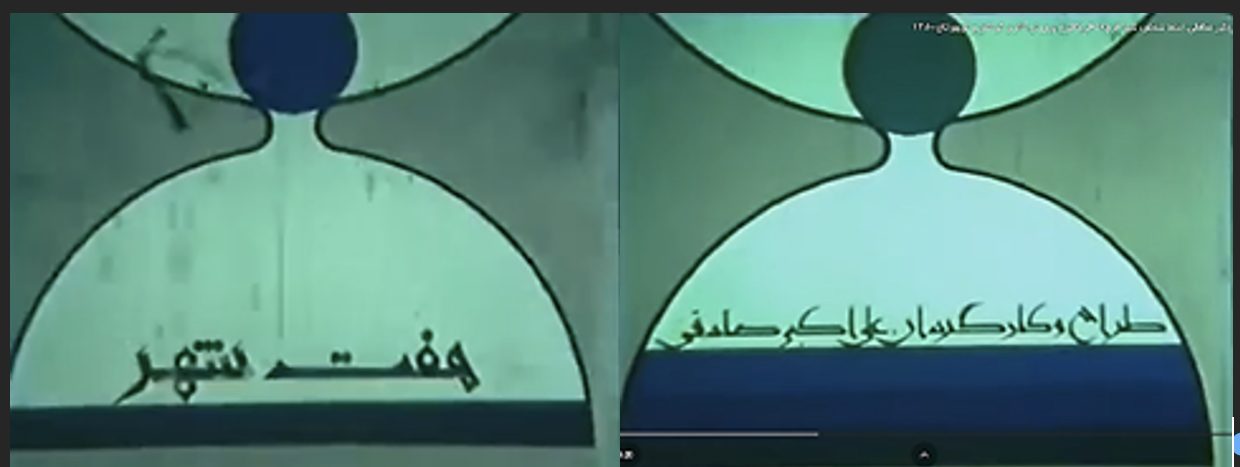
Figure 5: Title sequence of the animation Haft Shahr (Seven Cities).
Thematic Analysis of the Animation
The animation is thematically rich and closely connected to the motifs of traditional Iranian visual arts, such as lithography and coffeehouse painting. However, Sādiqī reshapes the mystical journey of classical literature into a critique of modern failed utopias, reinterpreting traditional themes in a contemporary visual style.
The story, symbolic and allegorical, focuses on spiritual ideas and uses a minimal visual language to trace humanity’s journey from a primitive stage to mechanization, offering a mystical and existential perspective. At points where the story shifts to the present and depicts modern life, the hero understands that achieving his original quest or destination is impossible highlighting the contrast between idealized journeys of the past and the challenges of the contemporary world.
Sādiqī condemns war as a modern cultural myth and critiques the destructive impact of weapons, machines, and the increasing mechanization of life. Yet, the film concludes on a hopeful note, affirming human dignity with the statement “Man is human, not a machine,” and offering a vision of a future guided by human values.
Structural and Narrative Analysis of the Animation
The dialogue in the animation, written in a style similar to a ghazal (a Persian poetic form), is presented as if the hero himself is speaking, while Ahmad Shāmlū’s voice functions as the narrator rather than as a purely internal monologue. This hybrid approach creates a “hero-narrator” mode—a technique reminiscent of traditional coffeehouse storytelling (pardah’khānī), in which the storyteller simultaneously embodies the voice of the hero and that of the omniscient narrator.
Thus, the narrative operates on two levels:
- Thematic/Narrative meaning: the use of ghazal-like text, its ties to the lyrical tradition, and the evocation of utopian imagery.
- Narrative technique/Visual language: oral storytelling style, the hero-narrator mode (like coffeehouse painting performances), the specific role of voice in narration, and a different approach to storytelling.
In this way, Haft Shahr, with its spiritual and philosophical focus, engages abstract and symbolic concepts, creating a calm, metaphysical space through soft colors and smooth, rotational movements. Visually, the animation draws on Iranian miniatures and mystical lithographs, while its narrative approach shows clear affinity with coffeehouse painting traditions. Its minimal, flat-yet-fluid visual language combines tradition and modernity, providing a distinctive artistic expression and innovation within tradition.
This animation is a notable example of integrating modern animation’s visual language with premodern artistic traditions, making its themes accessible to both children and adults. A closer analysis of the narrative structure, vocal elements, visual features, and other components reveals the animation’s semantic and visual coherence.
Narrative Structure:
The animation features a multilayered and flexible narrative structure. The story begins with the hero entering the seventh city and, upon encountering failure, returns to the past to revisit the six preceding stages. From this perspective, the narrative is retrospective and memory-driven.47Retrospective/Reflective Sequential Narrative: This type of narrative does not follow a strictly linear timeline. The story often begins at a point in the present or future and then returns to the past to depict earlier events or stages. In other words, the main narrative unfolds in the present, while past events are recounted to provide context, deepen understanding, or support conclusions drawn by the protagonist. Key Features: Starting at a pivotal moment: The narrative does not progress directly from beginning to end. The audience enters the story at a key moment, often in the present or near the conclusion. Return to the past (Flashback / Retrospection): Past events—such as memories, experiences, or completed stages—are presented either independently or semi-independently. These segments may take on an episodic form but remain connected to the protagonist’s experience and perspective. Cohesion through the character’s experience or viewpoint: Narrative unity is maintained not through linear cause-and-effect, but through the protagonist’s reflections on the journey. Each past episode or scene contributes to the character’s overall understanding or insight. Philosophical, critical, or reflective meaning: Retrospective narratives typically convey life experiences, ethical or philosophical messages, or critical reflections on past events. Conceptually and philosophically, it is linear-conceptual, though neither fully linear nor purely episodic, as strict cause-and-effect relationships are absent and abrupt shifts between tradition and modernity occur.48This depicts the human journey from primitiveness, through reason and civilization, to the collapse of values and the mechanized realities of modern life. Each past-stage episode, however, functions as a relatively self-contained segment, presenting distinct spaces and visual elements, including church ceremonies, local rituals, and modern life. In this respect, the work demonstrates affinities with coffeehouse painting. The cohesion of the animation emerges from the interplay of these layers and the hero’s experience, while its flexible narrative lets viewers see the story from different perspectives. Rather than presenting a strictly linear story, the animation constructs a mental and metaphysical space.
Sound and Auditory System:
The role of sound in the animation is fundamentally distinctive, becoming one of the primary elements conveying its meaning. The most significant auditory element is Ahmad Shāmlū’s narrator-like recitation, which, as a recurring motif, guides the hero’s spiritual and mystical journey. At the beginning of the film, Shāmlū recites Hāfiz’s poetry in a philosophical and mystical tone, which later contrasts with the harsh, mechanical sounds of the modern world. This juxtaposition highlights the film’s central theme—the tension between spiritual practice and the chaos of contemporary life—and serves as its primary auditory motif.
In this animation, the narrator’s voice conveys a mystical and guiding presence, fulfilling the role of a pīr-i tarīqat (master of the spiritual path) similar to figures in traditional storytelling. It serves as the structural pillar of the narrative and the connective element that unifies meaning within the work. This is one of the clearest examples of Sādiqī’s adaptation of traditional pardah’khānī techniques.
The animation’s soundscape consists of multiple layers, each fulfilling a distinct thematic and semantic role. Music and sound do more than accompany the visuals; they operate as part of a semiotic system that reinforces the hero’s journey, transformation, and passage through different realms. Sādiqī creates a sense of disorientation as the hero moves through different realms, with the soundscape rendering these transitions both perceptible and semantically meaningful.
Key auditory elements include: the music and drums of primitive societies, evoking ancient roots, early rituals, and foundational ceremonies, which generate a prehistoric atmosphere in harmony with the film’s abstract, journey-like world; mechanical and modern sounds—horns, vehicles, crowds, radios, televisions, sirens, missiles, machinery, and gears—whose repetition evokes a “modern labyrinth” and, in scenes such as Hitler’s cries, recalls the representation of evil in premodern illustration. Ritual sounds, including bells, church chants, and choral music reminiscent of Western sacred music, mark thresholds or signal entry into new stages of the hero’s journey. Human sounds—heavy breathing, groans, whispers, footsteps, and body movements—enhance the emotional intensity of the scenes. Although primarily auditory, these elements function analogously to facial expressions in coffeehouse painting, conveying meaning through sound.
Visual and Formal Features
The animation’s structure can be divided into sequences featuring traditional and modern imagery, with contrast serving as a key organizing principle. This is particularly evident in dichotomies such as authentic/artificial, traditional/mechanical, and positive/negative.
Forms are largely geometric, colors are warm and muted, and compositions are inventive, lacking linear perspective. Soft lines and predominantly abstract, symbolic shapes create a flat, shallow space. Yet smooth, continuous character movements, contrasted with the rapid, rigid motions of battle sequences and mechanized worlds, make the images appear flowing, dynamic, and active, conveying spiritual depth. This interplay between flatness and movement visually recalls lithographic prints, while the work’s mythic and symbolic structure draws on the visual language of coffeehouse painting. Hero-centered sequences, employing a “Rustam-like pattern,”49A robust physique, with a mustache and helmet, mounted on a horse in a warrior-like posture. reflect premodern illustration; however, in this animation, the hero’s movements are largely symbolic and rhythmically calm, emphasizing spirituality and inner development over martial action (Figure 6).
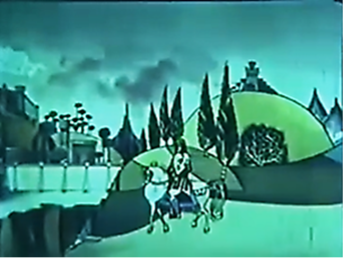
Figure 6: A Rustam-like figure, Representing Premodern Illustration.
Human characters include a Rustam-like hero, church monks, individuals from both primitive and modern civilizations, a depiction of Adolph Hitler,50A reference to a contemporary myth of war and chaos.and ordinary people of varying ages and genders. Faces are generally simple, flat, and minimally detailed. Characters representing modern life are designed with contemporary forms and appearance, yet the traditional visual style is still maintained (Figure 7).
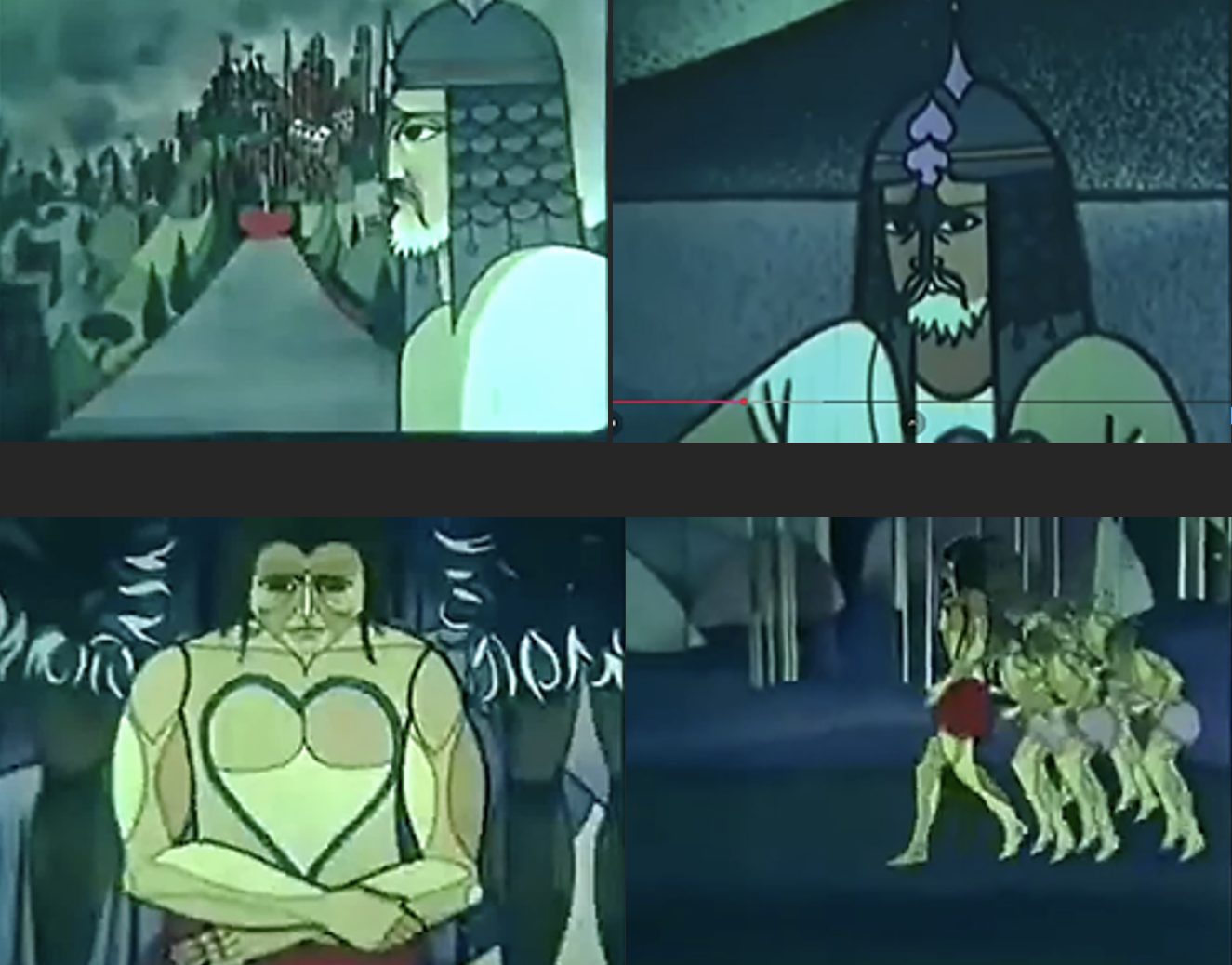
Figure 7: Diversity in Character Depiction
The hero is depicted according to traditional Iranian artistic conventions.51] The hero is depicted with large eyes, arched eyebrows, a stylized, simplified nose, an elongated body, and a calm expression. Although his costume clearly refers to Rustam in illustrated versions of the Shāhnāmah, his slow and repetitive movements suggest spirituality and an inner journey, rather than the usual image of Rustam as a warrior and hero. Even this Rustam-like figure, in scenes where he moves through empty streets with pedestrian crossings or symbolically passes through different cities alongside images of world wars, evokes poetic reinterpretations of classical literary motifs, such as the “trial of Siyāvash by fire.”
It is worth noting that in this animation—based on ethical teachings, spiritual journey, and the search for love and humanity—Sādiqī subtly draws on the idea of “the righteous and the wicked,” a theme commonly found in coffeehouse painting and lithographic illustration. This is particularly evident in the war sequences and in the representation of Hitler as a figure of wickedness, contrasted with scenes depicting oppressed individuals in the age of machines and modernity. Another element associated with wickedness in this work is sound—an implicit yet important aspect of Sādiqī’s approach to this moral dualism.
Another aspect of this opposition appears in the design of space and visual elements. Modern, realistic settings are juxtaposed with symbolic and guiding figures within “supernatural” spaces, bringing together both modern and traditional forms. Elements such as cars, airplanes, missiles, and motorcycles are contrasted with horses and traditional objects. Features of traditional cities—such as moats, towers, ramparts, and churches—are set against contemporary houses, streets, alleys, and pedestrian markings. Similarly, the night sky and galaxy, along with mountains, forests, plains, and abstract natural landscapes, appear beside symbolic suns and mythological animals such as lions and dragons. Within this contrast between the righteous and the wicked, music and distinctive lighting also play an important role in creating a ritual and spiritual atmosphere. Animal and symbolic motifs—such as the horse, elephant, bird, dragon, lion, monkey, and hybrid imaginary creatures—also appear in an allegorical manner, directly continuing the tradition of illustrated lithography and coffeehouse painting, a tradition that Sādiqī reinterprets in a dynamic and symbolic form (Figure 8).
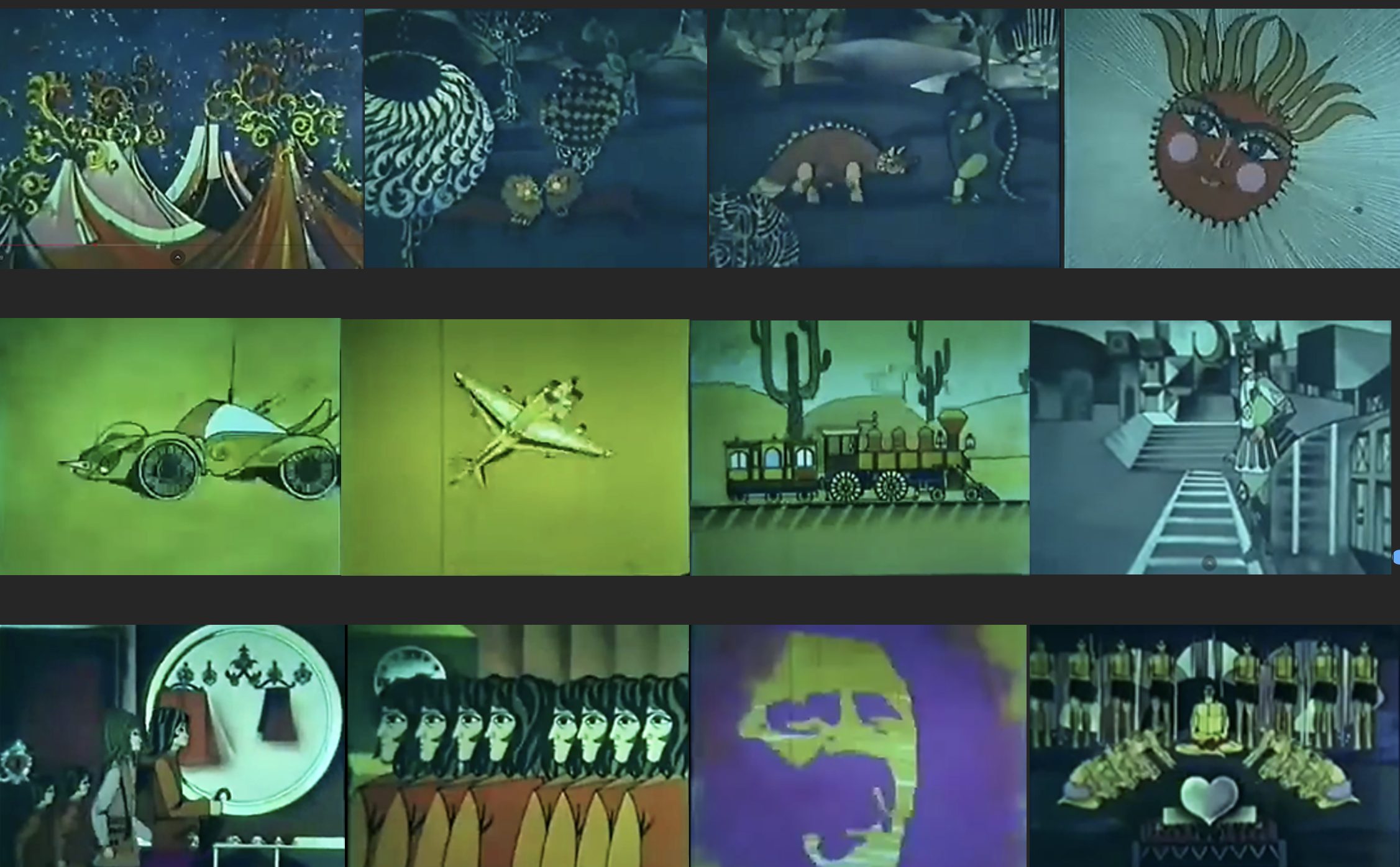
Figure 8: Design of space and symbolic visual elements
Another way Sādiqī’s work connects to traditional illustration is through its religious-epic themes, though presented from a modern perspective. In the middle scenes, the animation depicts indigenous ritual ceremonies, including altars, devotional movements, and motifs of sacred music. Through these scenes, Sādiqī illustrates the spiritual development of humans, from early rituals to modern practices. In the church scenes, representing Western modernity, Christian symbols—such as church architecture, crosses, and the rituals of priests and monks—are combined with bell sounds and choral singing to create a ritual atmosphere. Structurally, these sequences resemble ta‛ziyah performance panels, but instead of depicting the tragedy of Āshūrā and the martyrdom of Imam Husayn and his companions, they present the funeral of the “human heart” as a symbol of human existence (Figures 9).

Figure 9: Representation of religious epics in ʿAlī-Akbar Sādiqī’s style.
- Man Ānam Kih…
The animation Man Ānam Kih… (Man Anam Kih..), with a duration of approximately 8 minutes and 49 seconds, was produced in 1352/1973. It received the Gandhi Peace Prize from the SIDALC Organization at the 24th Berlin International Film Festival, Germany, in 1974, and a Bronze Medal from SIDALC at the organization’s annual global assembly in Paris, France, the same year. Thematically, the animation focuses on the conflict between two groups of warriors and humorously depicts heroic battles inspired by the epic narratives of the Shāhnāmah (Figures 10).
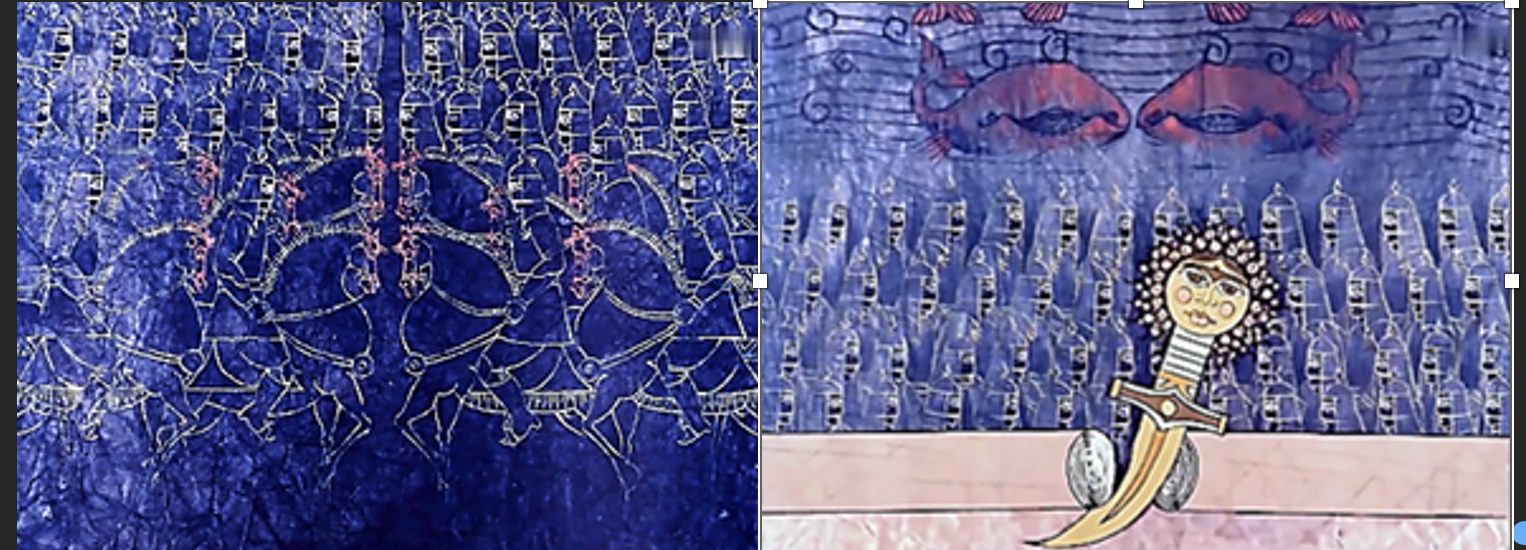
Figure 10: Introductory sequence of the animation Man Ānam Kih… (I Am the One Who…), reflecting premodern illustration and Shāhnāmah-inspired composition.
Sādiqī described this work as having a folkloric atmosphere and as his first surrealist experiment. The animation is a notable example of blending the visual language of modern animation with Iranian pictorial traditions. It reconsiders the concept of traditional heroism in a philosophical and metaphorical manner, yet presents it in a comic and critical form, making it accessible to both children and adults.
The central theme of the animation is conflict, rivalry, and opposition between groups and characters—a theme that symbolically reflects the “struggle between good and evil,” similar to some premodern examples. The story does not aim to recount a specific historical event or retell a classical epic; rather, it functions as a social-artistic satire. Thus, the audience is invited not to celebrate heroes, but to critique “exaggeration, bragging, and legendary violence.”
Sādiqī uses the visual language of Persian miniature painting, combined with elements similar to coffeehouse painting and illustrated lithographs, to challenge established premodern heroic themes. By exaggerating figures and movements, he creates a surface-level sense of epic drama—but this epic feeling quickly collapses in meaning. In this work, the figures are flat, symbolic, and typified. Unlike the highly detailed and emotionally intense heroes of coffeehouse painting, each figure here represents a general, universal “self.” The characters have no individuality or personal story; instead, each stands for a particular action, behavior, or social condition.
At first glance, it looks like an epic story, but it actually shows a series of contrasts—like war and peace, life and death, building and destruction, greatness and humiliation, and ultimately, culture versus nature. Through its exaggerated and ironic tone, the work arrives at a moral and critical message. As the soldiers fall one by one, it shows power and violence as pointless. The destruction of mythical heroes suggests there is no real heroic victory. The survival of two soldiers and their final agreement shifts the focus away from military triumph toward human interaction, compromise, and the moderating role of reason. In this way, myth is reworked not to praise war, but to reject it, and peace is elevated as a lasting, alternative mythic value.
From a thematic perspective, the work can be seen as a purposeful reinterpretation of premodern visual traditions—one that uses traditional Iranian imagery to express modern ideas, pointing to a form of modernity rooted in local cultural context.
Narrative and visual structure
The narrative, framed as “Man Anam Kih…,” is metaphorical and symbolic, with an episodic structure. Its coherence does not come from a classic cause-and-effect sequence, but from shared meaning and a unified conceptual thread. Each scene functions as a relatively self-contained narrative-visual unit, representing a specific event, action, or condition. Within this combined narrative structure, the central message—the futility of struggle and war—provides coherence, linking the scenes and shaping them into a continuous, linear narrative.
One important narrative device is the division of the frame into two parallel levels: the main level of battle, and a secondary level that depicts boasting, fantasies, and the consequences of futile rivalries (Figure 11).
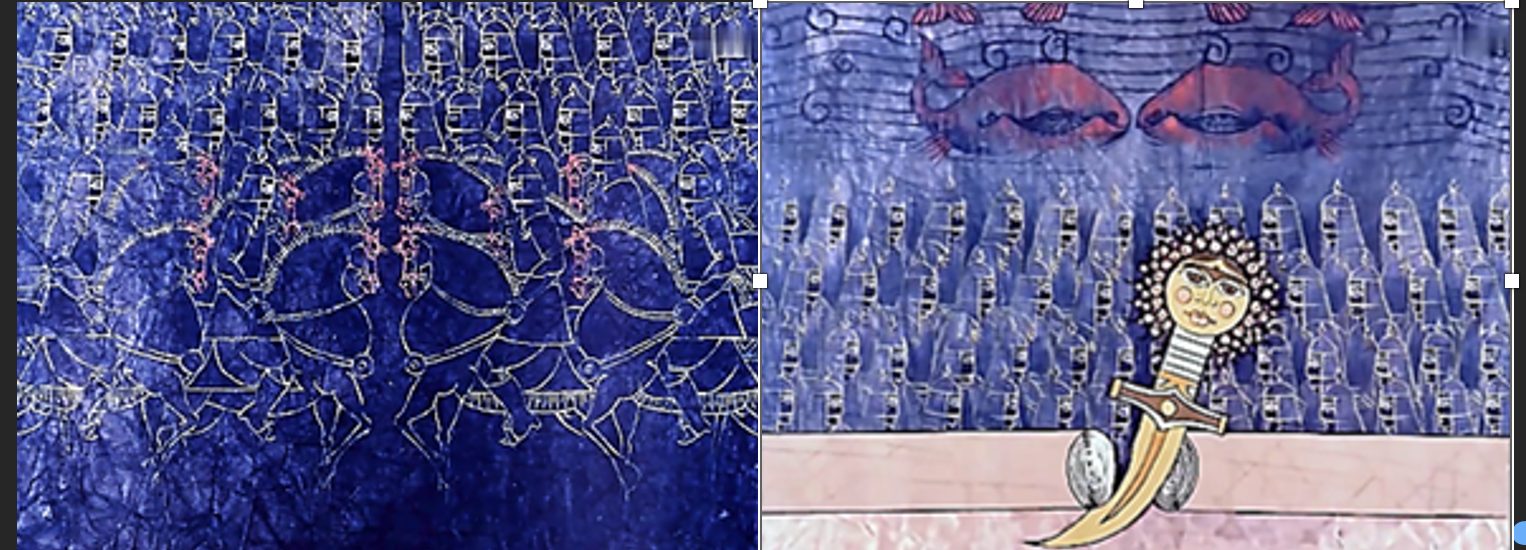
Figure 11: Animated scene inspired by coffeehouse painting and taʿziyah, using narration-based storytelling.
This two-level structure recalls the storytelling logic and ceremonial staging of taʿziyah, where characters’ entrances and exits and shifts in the narrative create a unique dramatic rhythm. Sādiqī conveys the characters’ thoughts and heroic claims without dialogue, using visual montage and contrasts between frames—a method that resonates both with illustrated lithographs and coffeehouse paintings, where the storyteller plays a central role.
As the narrative unfolds, the grandeur of traditional heroic symbols—horses, elephants, demons, fortresses, and moats—gradually collapses, turning them into trivial, absurd, and empty figures. Beneath its epic surface, the story explores fundamental opposites: war and peace, life and death, creation and destruction, greatness and humiliation, and ultimately, culture versus nature. In this way, the animation does not glorify war but critiques the myth of violence. The outcome highlights a return to friendship and humanity, presenting “peace” as a lasting, mythic value—mirroring the final message in Sādiqī’s animation Haft Shahr.52Mahdīyah Qurbānnizhād Zavārdahī and Sayyid Rizā Husaynī, “Tahlīl-i Kārkard-i Ustūrah’hā-yi Nawīn dar Naqqāshī-i Muʿāsir-i Īrān: Mutāliʿah-yi Mawridī-i Āsār-i Bahman Muhassis, ʿAlī-Akbar Sādiqī, Mahmūd Sabzī, Mihrān Sābir” [Analysis of the Function of Modern Myths in Contemporary Iranian Painting: Case Study of the Works of Bahman Muhassis, ʿAlī-Akbar Sādiqī, Mahmūd Sabzī, and Mihrān Sābir], Rahpūyah-yi Hunar, Hunar’hā-yi Tajassumī, vol. 5, no. 3 (Fall 1401/2022): 5–18.
Visual and formal features
The visual elements of the work, supporting the above analysis, feature sequences reminiscent of duels and heroic exploits—such as the battle between Rustam and Isfandiyār and other Shāhnāmah heroes. Yet these references are minimized and satirized, producing an anti-heroic effect. The absence of a central hero, the interchangeability of soldiers rendering the depiction of war repetitive and meaningless, the tossing of bodies like lifeless objects, disordered formations, and the erasure of individual identity all reinforce this approach (Figure 12).
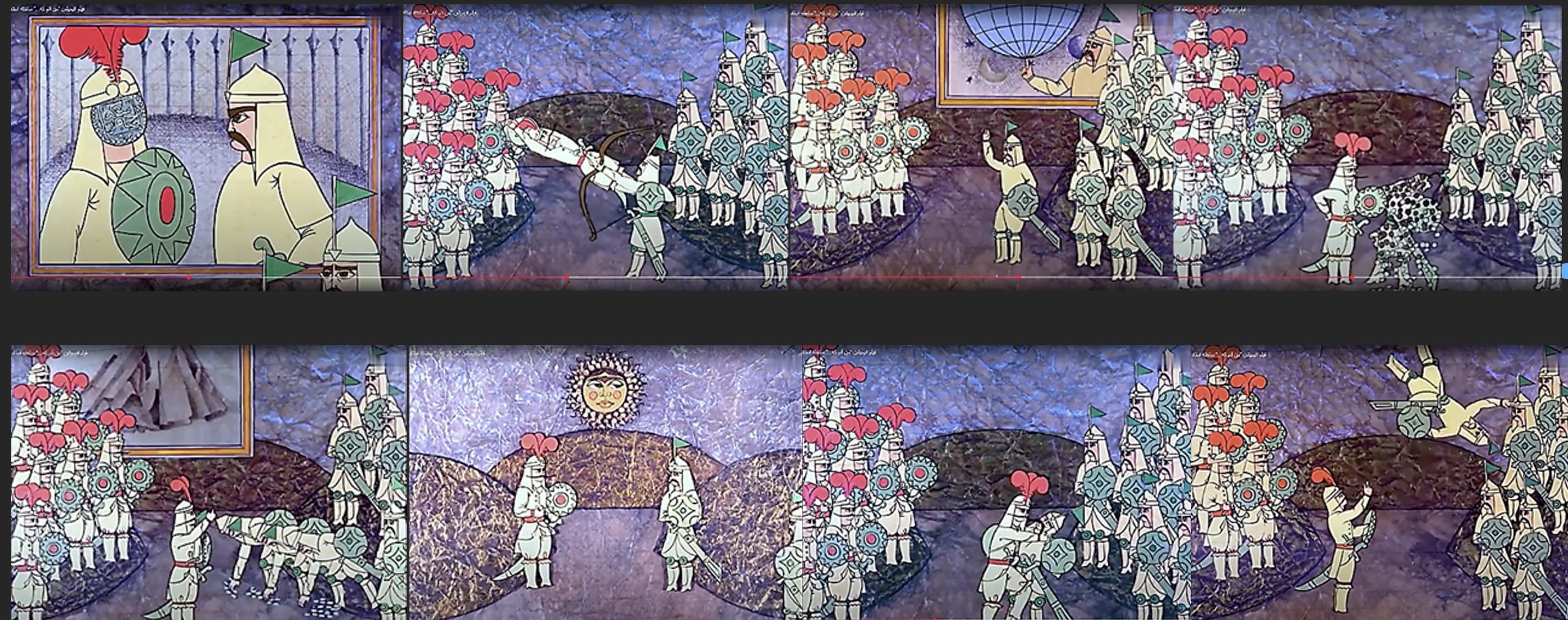
Figure 12: Representation of Rustam and Isfandiyār’s battle in an anti-heroic interpretation.
Humor and exaggeration play a central role in reimagining myth: the demon with a pacifier, his tasselled costume, the hero’s dismemberment, and the elephant reduced to a weak symbol of power are clear examples of this approach (Figure 13).
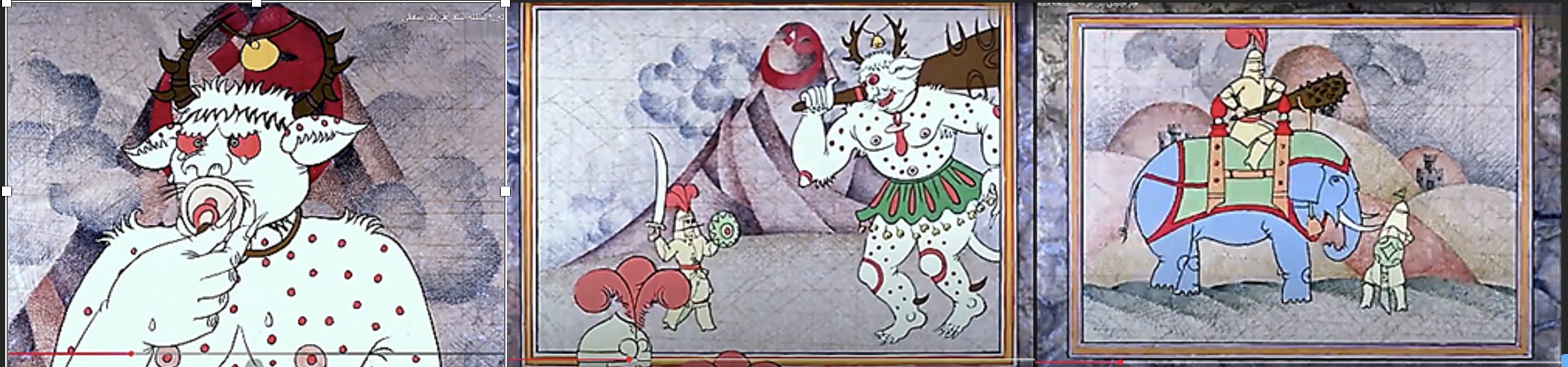
Figure 13: Reinterpretation of myth through humor, exaggeration, and critical commentary.
The sequence of the hero, “betrayed for a handful of coins,” represents the height of social satire, alluding to moral corruption, mercenariness, and the triumph of money over valor. Additionally, mythic motifs such as Mount Qāf and Ārash the Archer are depicted as simple, comic soldiers (Figure 14).
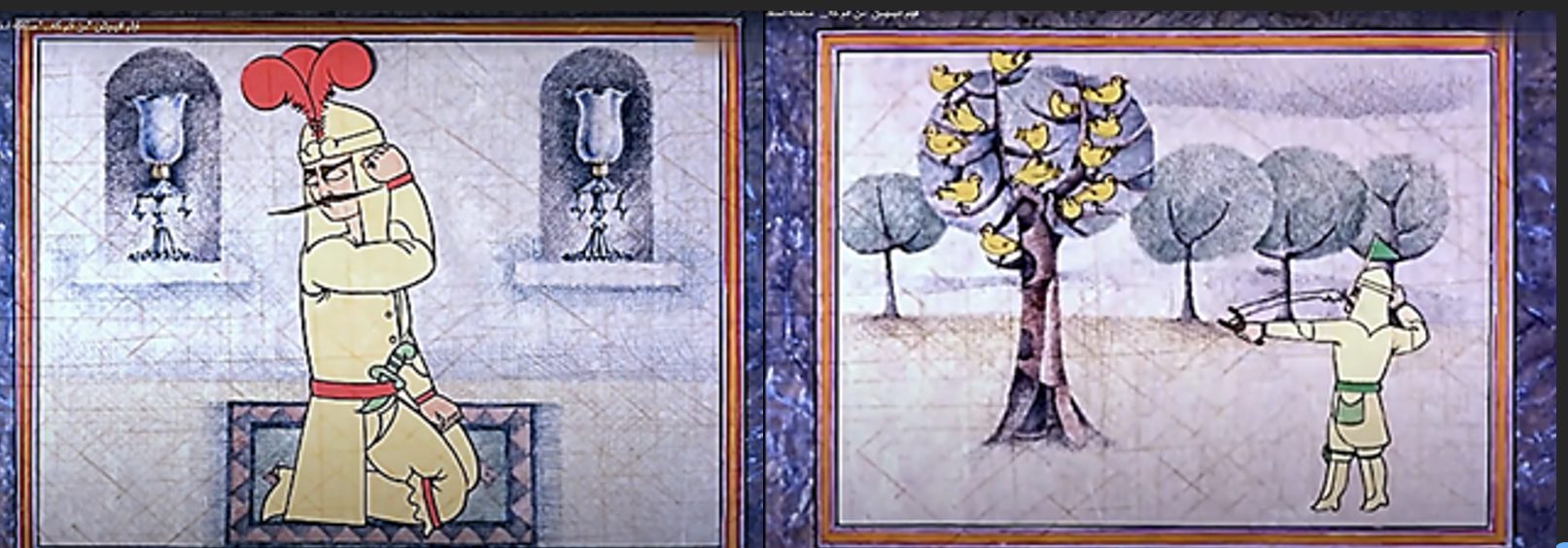
Figure 14: Comic-symbolic depiction of heroism and myth with satirical references to popular culture.
The composition, framing, and visual rhythm in this work are built on direct contrasts. The elimination of perspective and the use of flat, pure colors create a static space which, combined with simple and symbolic backgrounds and a book-like narrative, aligns closely with the visual logic of illustrated lithographs. The visual rhythm, based on rapid, sudden, and exaggerated character movements, resembles scenes from coffeehouse paintings. Limited color variation, the use of cool, warm, and earthy tones, and minimalist design contribute to a surreal and abstract atmosphere.
Characterization and typification in this animation draw on the techniques of Iranian miniature painting, while facial representation follows the conventions of coffeehouse and Qājār painting. The soldiers are uniformly dressed and faceless, with only subtle differences in color, weaponry, and appearance, highlighting the interchangeability of individuals within the machinery of war.
The motifs and narrative symbolism resemble elements common in premodern traditional painting. The first example of this symbolism can be seen in the evolution of the “Lady Sun” motif in the film’s credits, which transforms from a dagger—a symbol of killing—into a switchblade, and finally into a celestial sun overseeing the scene. In this way, Sādiqī creates a narrative identity from this element (Figure 15).

Figure 15: Traditional sun motif and ʿAlī-Akbar Sādiqī’s narrative symbolism.
Another motif that marks the beginning of the story is the scroll, which is split in two to represent two separate lands or fronts, labeled East and West; this is also a reference to Tūrān and Iran in the Shāhnāmah. The symbolic division of a mountain into two sides reinforces this concept as well. Additionally, the use of traditional elements such as dragons, lions, bows and arrows, carpets, and architectural features strengthens the mythic structure and reflects premodern illustrative practices. In other sequences, the use of written words in the image (such as “Mashriq” and “Maghrib”) evokes the style of illustrated lithographs (Figure 16).
In this animation, the sound design integrates traditional Iranian music—particularly zūrkhānah music—with environmental effects such as drum rhythms, water and wave sounds, accordion, wind, footsteps, thunder, buzzing insects, clashing swords, and flapping wings, shaping the emotions and mental states of the characters. Sound replaces verbal dialogue, facilitating the interpretation of meaning on both a sensory and symbolic level.
The use of colloquial language and connections to oral culture—through common metaphors such as “burning out” (dūd shudan va bih havā raftan), “having egg on one’s face” (sikkah-y yak pūl shudan), “having someone in the palm of your hand” (sar angusht charkhāndan), or “beyond reach” (nuk-i qullah-yi Qāf būdan)—further anchors the work in folk tales and oral tradition.
Overall, Man Ānam Kih… is a highly expressive animation: a symbolic and psychological work rooted in coffeehouse painting that focuses on the meaning of the image rather than realistic representation, using bold colors, strong lines, static framing, and flat spaces. Exaggerated forms, symbolic movements, and the replacement of dialogue with music and physical action depict concepts of identity, transformation, and the collapse of traditional heroism.
Compared to coffeehouse painting, this work shares features such as heroes and anti-heroes, battle scenes, and epic exaggeration. However, by distancing itself from detailed, dramatic storytelling, it adopts a philosophical, metaphorical, humorous, and critical tone, reimagining myth in a comic and satirical manner. Similarly, although it draws on illustrated lithographs through linear compositions, textual elements, and recurring motifs, it employs a symbolic, modern structure rather than a linear, text-driven narrative. By emphasizing humor and social critique—diminishing heroism, satirizing war, and highlighting the primacy of money over valor—the animation distinctly differentiates itself from classical epics. Through this inventive use of premodern structural and thematic elements, Man Ānam Kih… attains a modern symbolic language and exemplifies Sādiqī’s distinctive personal style.
- Malik Khurshīd
This animation, created in 1354/1975, freely draws on the mood, narrative style, and central themes of the Shāhnāmah and Persian romantic folklore.53This work received an honorary diploma in 1977 from the Festival International de Court Métrage pour la Jeunesse in Paris.Across its 16-minute runtime, the film depicts a prince’s journey in search of love—a journey that depends less on the literal depiction of events and more on evoking the narrative and visual memory of folk tales (Figure 17).

Figure 17: Animation credits in the style of books.
Narrative Structure
At first glance, this animation appears linear, with a clear beginning, middle, and end, deliberately aiming to remain close to the storytelling style of traditional oral and written narratives. The plot is simple, and cause-and-effect relationships do not play a determining role; events unfold episodically along a symbolic journey. Yet, in the middle and toward the end, the narrative incorporates reflective, memory-driven moments. For instance, in a scene where the hero recounts his journey to a companion as though flipping through the pages of a book, or in the final sequence where the entire adventure is revealed as an imagined vision—concluding with the line “the tale continues”—the narrative is lifted beyond temporal certainty into the realms of memory, imagination, and the unconscious. In this way, the linear structure is disrupted; through the creation of a narrative cycle, the story enters a space of repetition, memory, and mythic continuity.
One of the film’s most significant formal strategies is the placement of the narrative within a “book-like” framework. The images appear on pages entirely covered with faint nastaʿlīq script. Sādiqī notes that he used the pages of a lithographed book as the foundation for the film, painting directly onto them. This thoughtful choice reinforces the work’s connection to illustrated lithographs, creating a cinematic space that unfolds like the pages of a book before the viewer’s eyes.54In the writing of older manuscripts, it was customary to select a particular style of script depending on whether the text was religious, narrative, scientific, or otherwise; among these, the nastaʿlīq script was used in lithographic printing for non-religious texts and stories. Unlike a book to be read, however, it is meant to be seen. The slow, linear camera movements evoke the motion of the eye moving across lines of text, positioning the film as a “visual written narrative” rather than merely a cinematic display (Figure 18).
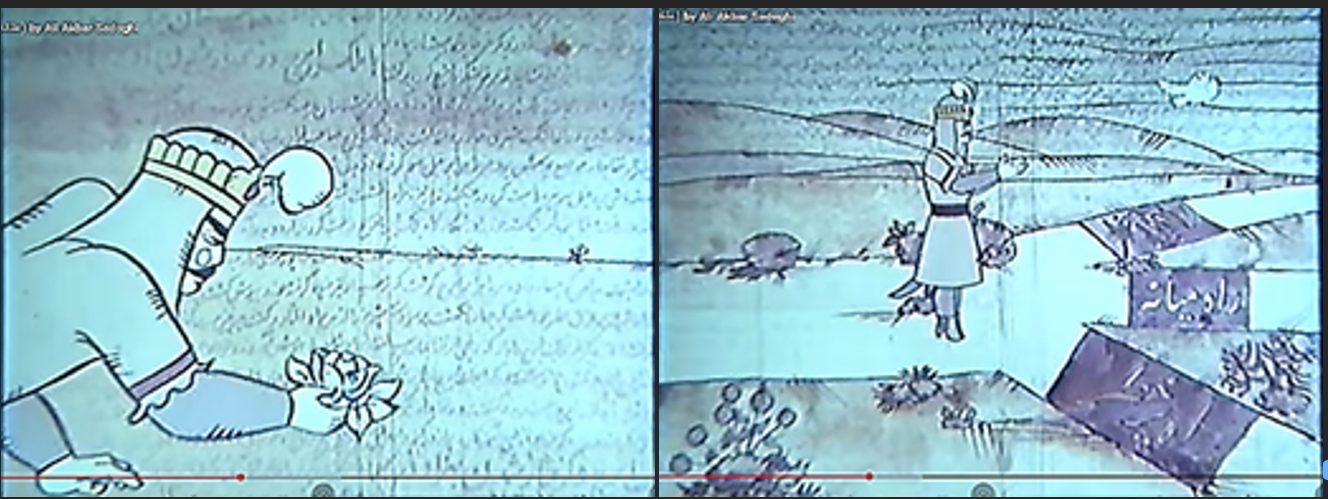
Figure 18: The animation’s narrative space, conveyed through backgrounds resembling book pages.
This visual strategy aligns seamlessly with the film’s wordless narrative. In the role of a silent storyteller, Sādiqī conveys the unfolding story through images, movement, intertitles, and written signs. The written narrator acts as an invisible presence of “knowledge,” guiding the tale of Malik and creating a bridge between the textual and imaginative worlds—an approach that clearly echoes the storytelling traditions of coffeehouse painting.
Thematically, love—a central motif in Sādiqī’s work—drives not only the narrative but also the hero’s journey, trials, and transformation. Malik Khurshīd freely adapts Persian romantic folklore and literary tales, yet it does not draw directly from any specific source.55In classical Persian literature, there are several romantic narrative poems in which Khurshīd (the sun) appears as one of the protagonists: Jamshīd va Khurshīd by Salmān Sāvajī; Khurshīdāfarīn va Falaknāz; Khurshīd Shāh va Chandā (Bahr-i Visāl) by Nasībī Kirmānshāhī; Khurshīd va Mahpārah (Gul va Ra‘nā) by Hakīm Qummī; and Malik Khurshīd va Dukhtar-i Shāh-i Banāras. In popular tales, Khurshīd Shah is one of the principal heroes: for example, in Samak-i ‘Ayyār, Khurshīd Shah, the son of Marzbān Shah, falls in love with a Chinese princess, and embarks on a quest to reach her. He receives crucial help from a group of ʿayyārān, including Samak, who serves him loyally throughout his journey and adventures. While the story structure draws on elements such as the tale of Amīr Arsalān Nāmdār,56Certain sections of the film’s narrative allude to Amīr Arsalān Nāmdār; however, Malik Khurshīd, while engaging with the tale of Amīr Arsalān Nāmdār, presents a more inventive and original interpretation. See Muhammad-‘Alī Safūrā, “Qissah’hā va Afsānah’hā-yi Īrānī dar Anīmayshin-i Īrān [Iranian Tales and Legends in Iranian Animation],” Ittilāʿrasānī va Naqd-u-Barrasī-i Kitāb, no. 103 (1386/2007): 95–104. along with intermediary figures and the hero’s sequence of trials, Sādiqī creatively reinterprets these components, weaving them into a cohesive and innovative whole.
A significant portion of this animation is grounded in the allegories and archetypal motifs of classical tales—allegories employed not through direct narration but through visual and cinematic re-creation. The love story begins, following the tradition of narrative and poeti legends, through the act of “seeing.”57In Islamic societies, the lover traditionally could not see the beloved. Therefore, in the tales, the lover either sees them in a dream or through an image (a motif that also existed in pre-Islamic literature). Accordingly, in epic romantic legends, the beginning of the “love incident” usually occurs through seeing or hearing. Māhru is first seen in a photograph, reflecting the basic logic of love in classical tales. Although the hero’s strong emotions are shown through tears falling into a bowl and staying awake until morning, they still follow the conventions of classical storytelling.58The allegories or references that Sādiqī drew from ancient tales include moments such as hearing Shīrīn’s voice and Farhād fainting and falling in love, or the princess of Shāh-i Zābul falling in love upon seeing the image of Jamshīd.
The path to the beloved, as in folk tales, is never direct or easy.59Heroes in folk tales have traditionally had guides and helpers. Sādiqī, following the model of helpers, introduces a network of narrative guides: flowers and birds, a wise old man, a rolling ball of thread, guiding words and multiple paths, and, most importantly, the girl’s transformation into a winged horse—an element that not only advances the story but also allows movement through space and the shift from the material world into the realm of imagination within the language of animation (Figure 19).

Figure 19: Free interpretations of folk tales and popular narratives.
The test spaces are drawn from the mythic geography of the tales. The “well,” as the dwelling of fairies and demons, is not merely a place but a threshold into a world of danger and transformation.60For example, in the story Sām-Nāmah by Khājū-yi Kirmānī. Sādiqī drew inspiration from Sām Nāmah, demonstrating both his interest in and his deep familiarity with folkloric literature. In this context, the character of the “dīv” appears with all the familiar folkloric traits: an exaggerated form with horns, a large body, a spotted skin, and thrashing movements. Sādiqī, however, transforms this figure from a purely terrifying image into a dual and critical presence by combining traditional gymnastic movements, visual humor, and exaggerated, rhythmical, dance-like gestures.
The hero’s act of seeking help from God, a central element in epic and folk tales, is retained in the animation.61This alludes to the prayers of mythic heroes during live combat, such as Rustam’s prayer in his second battle with Suhrāb. In the legends, the hero is always mindful of God.The moment of the hero’s fall and rise is not only a dramatic action but also reflects the tradition of prayer and the mythic hero’s reliance on a power beyond physical strength. Themes of combat, such as “lion-slaying and dragon-slaying,” are similarly represented within this tradition. Sādiqī, however, adds the inventive element of “riding the lion,” transforming the heroic act into a poetic and symbolic image, and integrating the lion into the network of narrative intermediaries (Figure 20).

Figure 20: Representation of traditions reinterpreted in the style of coffeehouse painting.
Ultimately, the hero’s journey through trials of merit and combat—illustrated in the scene where the girl is offered to the dragon, recalling the Zahhāk tale—completes the test-based structure of classical stories. Sādiqī maintains this narrative framework, but with a visual, humorous, and cinematic approach, transforming the tale from a straightforward retelling into a reinterpretation, in which the myth is not simply reproduced but freshly reimagined.
The final motif shared with earlier folkloric traditions is the “Iranian wedding ritual.” In the concluding scenes, Sādiqī presents it directly and faithfully, preserving both its traditional form and meaning (Figure 21).

Figure 21: A reinterpretation of folktales through images inspired by premodern illustration.
In general, although some themes and symbols may look similar to those in old tales, this reinterpretation draws on premodern traditions mainly through shared motifs, rather than by directly repeating earlier stories or character actions.
Visual style and narrative–audio system
In this animation, the visual design and storytelling are structured in a way that draws the viewer, from the very beginning, into the realm of a “tale,” rather than just a conventional cinematic narrative. The film opens with its title written on a scroll, set against a background that looks like the pages of old lithographed books. This choice is not merely decorative; it deliberately refers to the tradition of storytelling in Iranian visual and literary culture. The scroll, as a symbol of fate and a predetermined story, makes it feel like you are opening a book—one whose path and ending are already decided. This idea is reinforced through intertitles and captions that divide the film into chapters, strengthening the link between visual storytelling and Iran’s traditions of writing and storytelling. In this way, Sādiqī signals from the very beginning that the story unfolds deliberately in a realm of imagination and love, rather than within the realist logic of classical cinema.
Using formulaic expressions in the narration is both creative and deeply rooted in Iranian storytelling traditions, and it helps unify the film’s visual and narrative space. Instead of relying on common cinematic transitions like cuts or dissolves, Sādiqī uses familiar phrases from oral storytelling forms such as naqqālī and pardah-khānī, as well as from classical narrative texts. Words like “vālā,” “maqām,” “khazānah,” “jalāl,” and “nā’farmān” appear suddenly on screen in a lithographic style and then fade away—much like the headings in traditional storytelling performances that announce a new section of the tale. Phrases such as “and so the storytellers of this tale, like a garden in bloom, told that when the day broke…” or “in short” (al-qissah) not only connect different parts of the narrative, but also function as localized equivalents of cinematic devices for indicating the passage of time and narrative progression. The phrase al-qissah, for instance, works much like a dissolve, suggesting continuity and a passage of time without breaking the film’s connection to oral and written storytelling traditions. Likewise, expressions like “the tale still continues,” with their open-ended quality, extend the narrative beyond the present moment and suggest the possibility of repetition and continuation in the future—an idea that aligns with the cyclical sense of time in traditional Iranian stories (Figure 22).
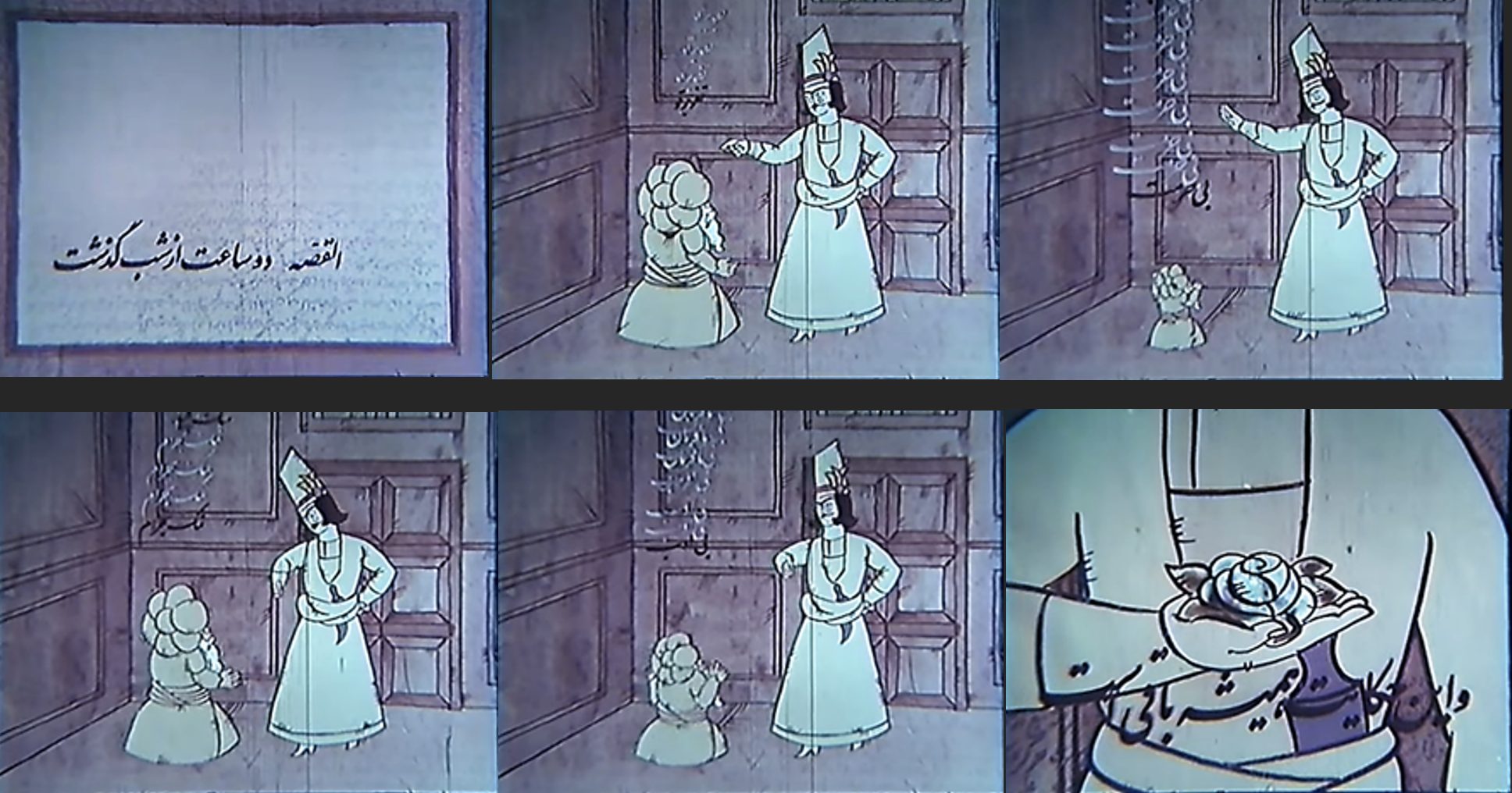
Figure 22: Use of familiar formulaic expressions from pardah’khānī and narrative texts as substitutes for cuts and dissolves.
Without spoken dialogue, the film relies on a network of text, image, movement, gesture, and sound, working together to carry the story. Understanding the narrative comes not from dialogue but from the deliberate combination of visual and auditory elements. This allows both Iranian viewers—drawing on cultural memory—and non-Iranian audiences—through clear actions and cues—to follow the story.
The characters’ poses and overall forms are inspired by Iranian miniature painting, while their faces and details are drawn from coffeehouse painting and Qājār-era art. Costumes, settings, and objects follow the visual logic of miniature painting, but unlike most premodern illustrations, characters’ bodies have realistic proportions, and the clothing is designed to fit the body rather than shape it (Figure 23).62The characters’ sitting or lying poses on a bed resemble the single-figure miniatures of Rizā ʿAbbāsī from the Isfahan School. However, unlike the human figures in that school, where curves hide the body’s structure, the characters in this animation show realistic human anatomy.

Figure 23: Illustration influenced by premodern styles—drawing on miniature painting in scene composition
One of the most unique visual features of Malik Khurshīd characters—specific to Sādiqī’s animations—is using visual elements to show emotions and ideas. For example, the prince’s eyebrows change with his feelings: they knit together in anger and form a heart when he falls in love, reflecting the expressive style seen in Awliyā’ va Ashqiyā from coffeehouse painting (Figure 24).

Figure 24: Images inspired by coffeehouse painting, using visual elements to express verbal ideas.
The characters of the “White and Black Demon,” drawing on Shāhnāmah illustrations and coffeehouse paintings, demonstrate a mix of humor and menace.63[1] Visually, the “White and Black Demon” (dīv-i sipīd-u-siyāh) is similar to characters from Shāhnāmah illustrations, especially from the Herat and Isfahan schools, and coffeehouse-style paintings like Qullarāqāsī’s works. But the demon’s humor makes it a unique type of villain in Iranian animation. See Muhammad-ʿAlī Safūrā, “Qissah’hā va Afsānah’hā-yi Īrānī dar Anīmayshin-i Īrān [Iranian Tales and Legends in Iranian Animation],” Ittilāʿrasānī va Naqd-u-Barrasī-i Kitāb, no. 103 (1386/2007): 95–104. In contrast, the “Moon-faced Girl,” inspired by depictions of women in Qājār paintings, combines traditional features with expressive, modern forms, distinguishing her from the passive female figures of classical miniatures.64The face of the “Moon-faced Girl,” (dukhtar-i māh’rū) with joined eyebrows, large eyes outlined with thick lines, and hair strands falling on her cheeks, resembles the depiction of women in Iranian miniature painting in terms of execution. See Muhammad-ʿAlī Safūrā, “Qissah’hā va Afsānah’hā-yi Īrānī dar Anīmayshin-i Īrān [Iranian Tales and Legends in Iranian Animation],” Ittilāʿrasānī va Naqd-u-Barrasī-i Kitāb, no. 103 (1386/2007): 95–104.
The animation also incorporates symbolic subjects and premodern architectural and spatial elements, including an Iranian garden with regular geometry and a bird’s-eye perspective reminiscent of traditional miniatures, pools and fountains, a traditional palace with columns and a veranda, the palace treasury, and halls with ursī doors and colored glass windows, echoing Safavid and Qājār architecture. Sādiqī applies “hierarchical perspective” from coffeehouse painting in designing these spaces (Figure 25).

Figure 25: Symbolic subjects derived from premodern visual elements.
Additional symbolic and imaginative elements include a lock (representing secrets and the hidden mind) and a traditional key (signifying the start of trials and discovery), a spinning wheel and woven fabric (symbolizing fate), scissors, the demons’ tent, water channels and pearls resembling tears, a winged horse moving across a background adorned with lithographic miniature motifs, while dragons rest along the river path. Together, these elements create imaginative, visually rich spaces that evoke folk tales and traditional painting.
The storytelling is simple and unpretentious, with humor providing both moments of relief and critical commentary. It also allows for creative reinterpretation of heroic and epic motifs—for example, unlocking a lock as if it were a knitted object, the demon dancing, or—drawing on coffeehouse painting—splitting a demon as if it were a cucumber (Figure 26).65According to Sādiqī in an interview, this scene is inspired by the story of Hazrat-i Abalfazl splitting Shimr in two like a cucumber in Taʿziyah, and it is adapted from coffeehouse paintings. He also used this subject in the animation Man Ānam Kih…. ʿAlī-Akbar Sādiqī, گفتگو با علی اکبر صادقی، قسمت اول: از کودکی تا دانشگاه [Interview with ʿAlī-Akbar Sādiqī, Episode 1: From Childhood to University], Iran Contemporary Art and Culture: Oral and Visual History, Artebox Institute, YouTube video, n.d., https://www.youtube.com/watch?v=RtHQjrRk1cM (accessed April 8, 2026).

Figure 26: Use of humor to critique epic and heroic archetypes and creatively reinterpret folklore.
The animation’s simple, symbolic storytelling works across cultures and connects with international audiences. For example, the rose—a universal symbol of love and friendship—is used clearly to convey a meaning easily understood worldwide (Figure 27).
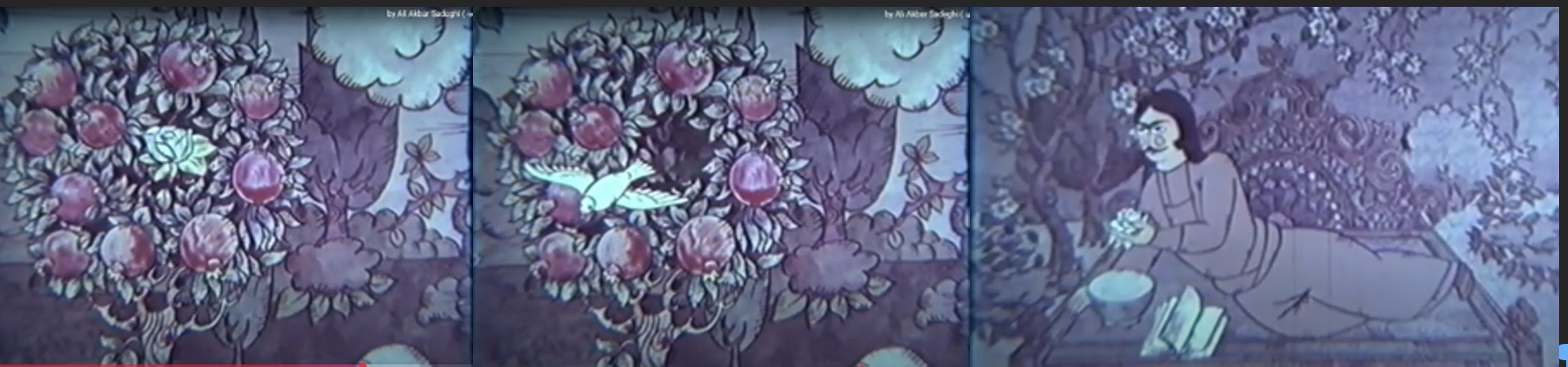
Figure 27: Use of shared cultural symbols to enhance audience reception and engagement.
The film’s color scheme serves its visual and narrative logic. Dominated by earthy and ochre tones, it creates an ancient, mythic, and timeless atmosphere, clearly separate from contemporary reality. Bright or contrasting colors—like a blue rose symbolizing love—stand out against the background, acting as meaningful visual cues that guide the audience’s attention. The use of varied black lines recalls the linear quality of illustrated lithographs, while the timing of movements—from tears falling into a cup to the flight of a winged horse—intentionally departs from classical animation principles, aligning instead with the rhythm of traditional visual storytelling.
Sound Design and Auditory Logic
Sound and music in this animation go beyond merely accompanying the visuals; they function as thematic and structural elements that support the story and the aesthetic of the film. Musical arrangements and sound effects are designed so that sound actively helps shape the story world and makes the spaces and characters feel real—a method rooted in premodern oral and ritual storytelling traditions.
The use of natural sounds, such as flowing water, wind, and environmental noises, alongside human, animal, and fantastical character sounds, reinforces the internal logic of the film’s world. Sounds like the demon’s roar and laughter, the dragon’s growl and anger, or the cooing of the guiding pigeon do more than describe action—they serve as auditory markers, defining the identity and place of each being within the mythic narrative. This approach to character through sound recalls premodern performance traditions—from ta‛ziyah and naqqālī to pardah’khānī—where voice, tone, and acoustic effects played a decisive role in distinguishing characters and conveying meaning.
The soundtrack is carefully tailored to the film’s dramatic structure. Early scenes emphasize emotional and romantic music to support the love story, while the music evolves with the narrative, heightening tension, conflict, and suspense. This gradual, context-driven approach—rather than following classical film scoring—closely resembles premodern, story-focused, ritual music, where music is part of the narrative itself instead of just a background.
The film also incorporates motifs from traditional Iranian music—including references to zūrkhānah music and familiar dastgāh modes—strengthening its link to folk tales and the audience’s collective auditory memory. The notable use of the song Shab-i Murād in the final scene and Malik Khurshīd’s wedding carries additional significance: its nostalgic and familiar tone anchors the romantic conclusion in a cultural context and recalls the role of songs and melodies in premodern rituals of joy and union.
Beyond the soundtrack, “affective music” plays a meaningful, independent role in the sound design. In some scenes, sound works directly with visual movement—for example, music accompanying a moving thread or the live playing of Iranian instruments within the story—making sound a “visual-auditory” element. This combination of sound, movement, and image recalls the unity of premodern arts, where seeing and hearing were inseparable, and storytelling was a fully multisensory experience.
In Malik Khurshīd, sound is not an add-on but an integral part of the narrative mechanism, rooted in oral storytelling, ritual performance, and popular culture. Alongside visuals and text, the film’s sound design helps recreate a world of imagination and love, offering a multisensory experience that connects contemporary audiences with the familiar narrative logic of Iranian culture.
In Malik Khurshīd, Sādiqī rarely disrupts the myth itself; instead, he translates the “mechanics of traditional storytelling” into the language of animation. The film is a deliberate fusion of book-like and lithographic miniature elements with the exaggeration, dynamism, and heroic depictions of coffeehouse painting. This combination elevates the work beyond a simple visual narrative, transforming it into a “recreation of Iran’s visual heritage” in cinema and animation—where tradition is neither reproduced nor rejected, but creatively reinterpreted into a contemporary language.
To compare Sādiqī’s three animations and highlight the continuity of his analytical approach, the table below presents the main elements of each work in relation to premodern traditions, modes of expression, and the role of the animation medium. It shows that in all three films, Sādiqī preserves premodern elements while applying different approaches—ranging from critique and satire to story reinvention—using animation creatively to serve the narrative and represent traditional concepts and patterns (Table 1).
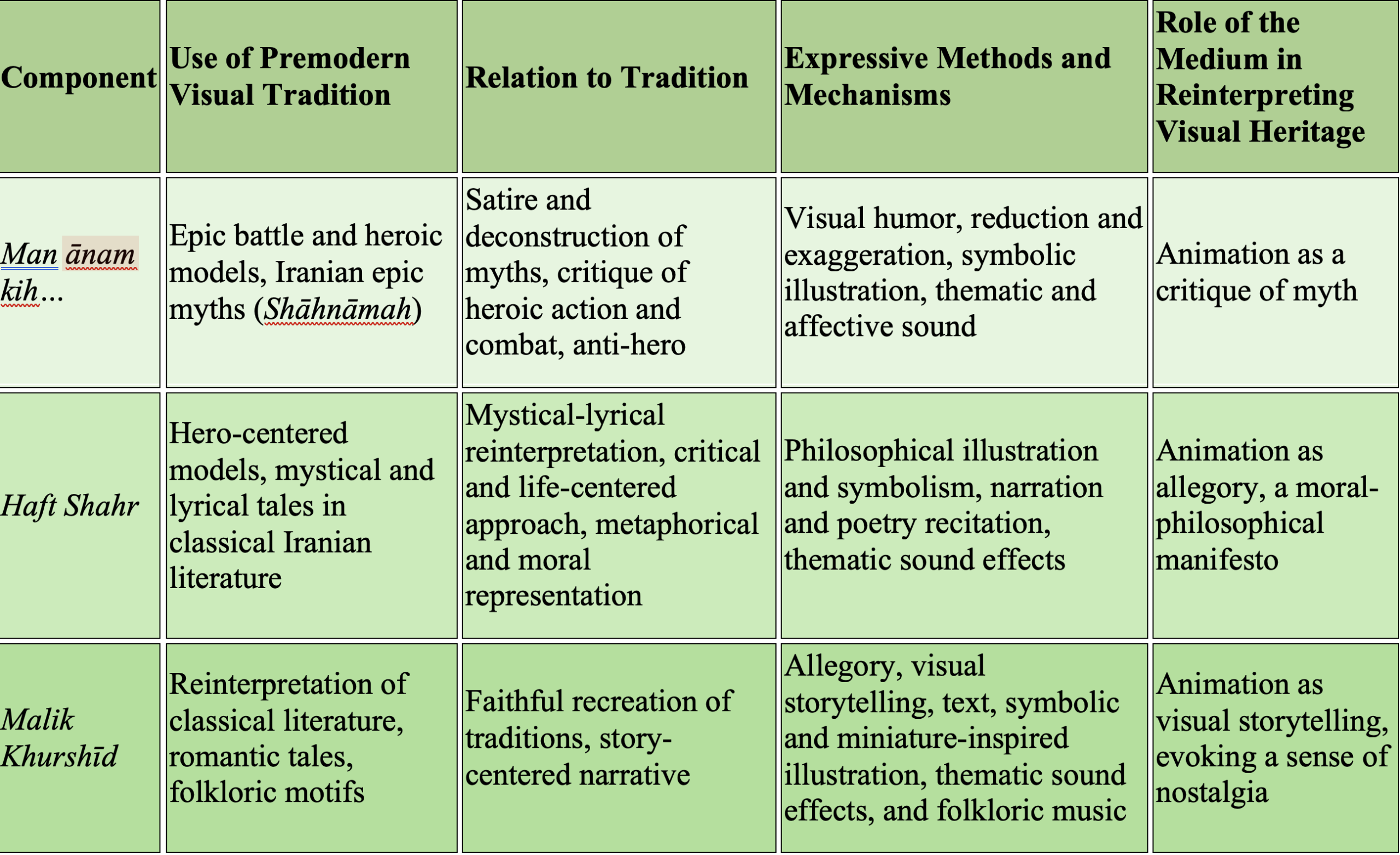 Table 1: Comparative Approaches to Premodern Tradition in ‛Alī-Akbar Sādiqī’s Animation Trilogy.
Comparative Analysis of Iranian Visual Tradition in ‛Alī-Akbar Sādiqī’s Animations
In examining ‛Alī-Akbar Sādiqī’s animations, what stands out is not just the reference to Iranian visual traditions, but how these traditions are translated and reinterpreted in a contemporary, motion-based medium. Lithographed books and coffeehouse painting, as two significant forms of visual storytelling in the history of Iranian art, offer frameworks for composition, narrative, iconography, and social functions. In Sādiqī’s animated trilogy (Malik Khurshīd, Man Ānam Kih…, and Haft Shahr), these elements do not appear as direct reproductions, but rather in transformed and critical forms. The films preserve traditional visual logic—such as scroll-like narratives, simultaneous scenes, exaggeration in form, and symbolic character depictions—while integrating cinematic elements like movement, rhythm, editing, and music. In doing so, they translate Iranian visual tradition into a contemporary language.
From this perspective, and within the analytical framework mentioned earlier, comparing prominent examples of lithographed books, coffeehouse painting, and Sādiqī’s trilogy aims not to identify formal similarities, but to understand the mechanisms of continuity, rupture, and reinterpretation of tradition in contemporary animation.66In this section, the comparative materials on lithographed illustrated books and coffeehouse painting are drawn from the author’s previous article, along with the corresponding section in the attached tables. See Mahīn Suhrābī and ʿIffat Āqābābāyān, “Barrasī-i Mazāmīn va Fazā-yi Tasvīrī-i Chāp-i Sangī-i Musavvar va Naqqāshī-i Qahvah’khānahʾī dar Dawrah-yi Qājār,” Pazhūhish-i Hunar-i, year 5, no. 9 (Spring–Summer 1394/ 2015). Examining the themes of these three visual forms highlights their role in representing cultural and social values, and their transformation from traditional visual arts into a modernized Iranian animation style.
The illustration of lithographed books and coffeehouse paintings are descendants of Iranian miniature painting. These forms, linked with Persian literature and the harmony between text and image, encompass three main categories: martial, courtly, and religious. The thematic diversity in lithographed illustrated books reflects societal needs, covering a wide range of topics, including classic and popular literature, educational books, travelogues, and more.
In coffeehouse paintings, the main subjects are drawn from classical literature, particularly the Shāhnāmah and Khamsah of Nizāmī, as well as events from Karbala, Quranic stories, and popular tales. The Shāhnāmah was printed more than any other illustrated book in Iran, with around 30 different lithographed editions, all featuring the same illustrated themes. This includes four editions published after the ʿAlī-Qulī Khū’ī manuscript, which share these themes with the original Shāhnāmah. This demonstrates that, through adaptation, lithographed books selected stories and key moments for illustration based on visual patterns from miniature paintings. This process provides an analytical basis for examining how these narrative and visual patterns have been continued and reinterpreted in contemporary animation.
In this context, coffeehouse painting can be seen as an intermediary link between premodern visual traditions and contemporary forms of visual expression. It is a medium that, while preserving epic, religious, and popular themes, moves away from the court-centered and book-oriented structures of miniature painting, transferring the narrative to the realm of collective, oral societal experience. The painter often selected subjects based on stories heard from storytellers, naqqāls, ta‛ziyah performers, praise singers, and mourners, visually representing them according to the perceptions of the society. As a result, the themes are shaped by collective ideals, following traditional culture, and addressing the needs of the masses, while preserving the behavioral patterns and religious-ideological systems of traditional society.
This shift from written text to performative narrative, and from fixed images to storytelling visuals, creates a mechanism in which exaggeration, movement, repetition of scenes, and emphasis on heroic actions become essential components of representation. This same narrative and visual logic is reinterpreted in Sādiqī’s animations in a contemporary, cinematic form, where epic and mythological narratives are not merely reproduced, but extended as a dynamic system of action, movement, and confrontation, set within the temporal frame of animation. From this perspective, Sādiqī’s trilogy can be seen as a continuation of the visual tradition that evolved from miniature painting to lithographed books and coffeehouse painting, now translated into a contemporary language through the addition of cinematic elements such as movement, rhythm, editing, and music.
In all his works, Sādiqī expresses his contemporary emotions, philosophical thoughts, and human perspectives through historical stories, often critiquing and rethinking traditional, established narratives. He combines diverse sources from the Persian language, and his primary themes often stem from myths, epic stories, and religious-national tales. In these works, characters such as the heroes of the Shāhnāmah are depicted in traditional poses or martial movements. The inclusion of cultural elements, collective scenes, battles, heroic displays, and the evocation of epic and mythical spaces clearly marks this creative reimagination.
Sādiqī’s favored themes often revolve around love and war, and in this trilogy, the “hero” becomes central to the narrative. The main themes of “good vs. evil” or “war and peace” are explored. Historical themes are presented in a contemporary way, and creative innovations bridge the connection between modern Iranian culture and ancient texts, making the traces of traditional visual representation clearly visible.
Epic Themes
National and religious epic themes are prevalent in premodern visual traditions, but Sādiqī approaches them differently. National epics, largely inspired by Firdawsī’s Shāhnāmah, often depict one-on-one battles between warriors or heroes, as well as larger confrontations between armies, military campaigns, and formations—such as the killing of Dīv-i Sipīd and Suhrāb by Rustam, the battle between Rustam and Ashkbūs, or Rustam’s return to battle to defeat Afrāsiyāb, as seen in lithographed books and coffeehouse paintings.
This narrative-driven, glorifying portrayal of historical and mythical heroes is reimagined in Sādiqī’s animated works with a modern, critical perspective. For example, in Man Ānam Kih…, he presents the same one-on-one combat and heroic displays found in Persian epic narratives (from Shāhnāmah stories to coffeehouse paintings), but the aim is not to affirm or glorify heroism. Instead, he reflects on the futility of violence, demystifies the hero, and emphasizes the need for awareness and coexistence. In this animation, Sādiqī presents the epic narrative in two main yet parallel parts: the first scene depicts the battle formations and confrontations in a Shāhnāmah style, while the second (subsequent) scene depicts the exploits and one-on-one duels of the heroes, without any direct dialogue.
In the epic-themed sequences throughout his works, Sādiqī draws upon heroic motifs and national epic themes, but with a critical distance and a modern perspective. These include: the formation of armies; archery; the metaphor of Ārash the Archer’s shot; burning castles and fortifications in parallel scenes; dividing the land into East and West; splitting mountains and breaking castle doors; the slicing of a hero like a cucumber (inspired by ta‛ziyah traditions); and the use of symbols and tools of heroism such as elephants, lions, dragons, and maces, along with the display of traditional gymnastic movements and the sound motif of the zūrkhānah drum.
Sādiqī’s playful and humorous approach to these subjects—such as the demon dancing with bells on its attire or the pacifier in its mouth, or the hero being slapped and humiliated—brings life and dynamism to the scenes, while also offering a critique of traditional heroism. In the final scenes, the modern perspective and deviation from the traditional heroic narrative reach their climax as two soldiers are rescued from the battlefield by floating on a wooden board, paddling with swords in the water. This conveys a message of coexistence, empathy, and wisdom.
In fact, Sādiqī reinterprets the one-on-one combat between heroes in Man Ānam Kih… in a way that aligns with the contemporary Iranian idiom, ‘man ānam kih Rustam buvad pahlavān’ (Man Anam Kih claims Rustam is a hero), which critiques the empty claims of heroism. Thus, he uses epic literature as a tool to critique shallow, contemporary heroic claims. This is a key conceptual difference from traditional illustrations.
In addition to Man Ānam Kih…, there are scenes in Malik Khurshīd where, despite the primary theme being romantic and mystical, the hero’s battles with mythical creatures are depicted with heroic figures and gymnastic movements—reminiscent of coffeehouse painting—accompanied by the zūrkhānah drum sound motif, in a humorous style. Notably, in the scenes depicting the hero’s battle with demons, the humor and use of traditional visual and literary symbols are effectively executed. This includes the demon dancing, its flirtatious movements, splitting the demon like a cucumber, the hero riding a lion after defeating it, and the pose of the dragon.
These examples illustrate the multi-layered and flexible presence of epic-mythical themes in Sādiqī’s visual world. In Haft Shahr, this approach is presented differently. The hero is designed with a figure resembling Rustam, but his behavior aligns more with the character of the “Wise Elder” from traditional lithographed books and coffeehouse painting narratives, with no traces of national epic elements. Despite the theme of war, it is portrayed in a modern rather than a traditional epic style, with no images resembling the heroic battle scenes found in traditional illustrations. In this work, Sādiqī retains only the traditional theme of epic-making.
In conclusion, it can be said that the theme of “war and epic” is a common motif in both lithographed illustrated books, coffeehouse paintings, and Sādiqī’s animated trilogy. The distinction lies in Sādiqī’s approach, where he does not merely reproduce this heritage, but instead reinterprets and critically engages with it. By incorporating traditional visual elements and distancing himself critically from tradition, he transforms the hero-centered narrative of epic and myth into a cultural critique and a rethinking of societal values.
In his religious epic themes, which are mainly inspired by events, Sādiqī connects more with the story of Āshūrā and ta‛ziyah performances, particularly in coffeehouse painting, where the religious narrative, such as the events of Karbala and the martyrdom of ‛Abbās, takes center stage. This includes stories such as the Hamlah-yi Haydarī (Haydarī Attack) and the killing of Mārid ibn Sadīf by Hazrat-i ‛Abbās. Moral and ritualistic themes are also discussed in coffeehouse painting and lithographed illustrated books.
In Sādiqī’s animated trilogy, although there is no explicit focus on religious themes such as Āshūrā, the structure and moral teachings akin to the religious epic traditions are still observed. These include depictions of the struggle between good and evil, ethical lessons, and symbols of justice. Particularly in Haft Shahr, which is fundamentally built on ethical teachings, the journey of love, and the quest for humanity, there are sequences that are distinctly ritualistic and symbolic, closely resembling traditional religious epics in lithographed books and coffeehouse painting but reinterpreted with Sādiqī’s modern language and perspective. Simultaneously, Sādiqī reimagines indigenous rituals with altars and music, while his ecclesiastical scenes incorporate Christian symbols and rituals. He utilizes these elements to critique Western modernity, portraying humanity’s spiritual evolution from primitive rites to modernity.
In a small yet meaningful scene from Malik Khurshīd, a religious theme subtly emerges. In the scene where the hero first battles the demon, after being struck, the word “God” appears in his hands, revitalizing him. He rises, resumes the fight, and ultimately triumphs with divine help. This scene draws on traditional chivalric motifs, particularly those found in Iranian religious epics, such as the ta‛ziyah and coffeehouse paintings. Although the animation differs in style and narrative approach, it preserves thematic and symbolic connections to these visual storytelling traditions.
It is worth noting that in both works, Sādiqī employs a clever narrative technique by using internationally recognized symbols to deliver his social critique, while respecting the religious values of his Iranian audience. He conveys this critique through universally understood religious metaphors, blending symbols from both Iranian tradition and Western modernity.
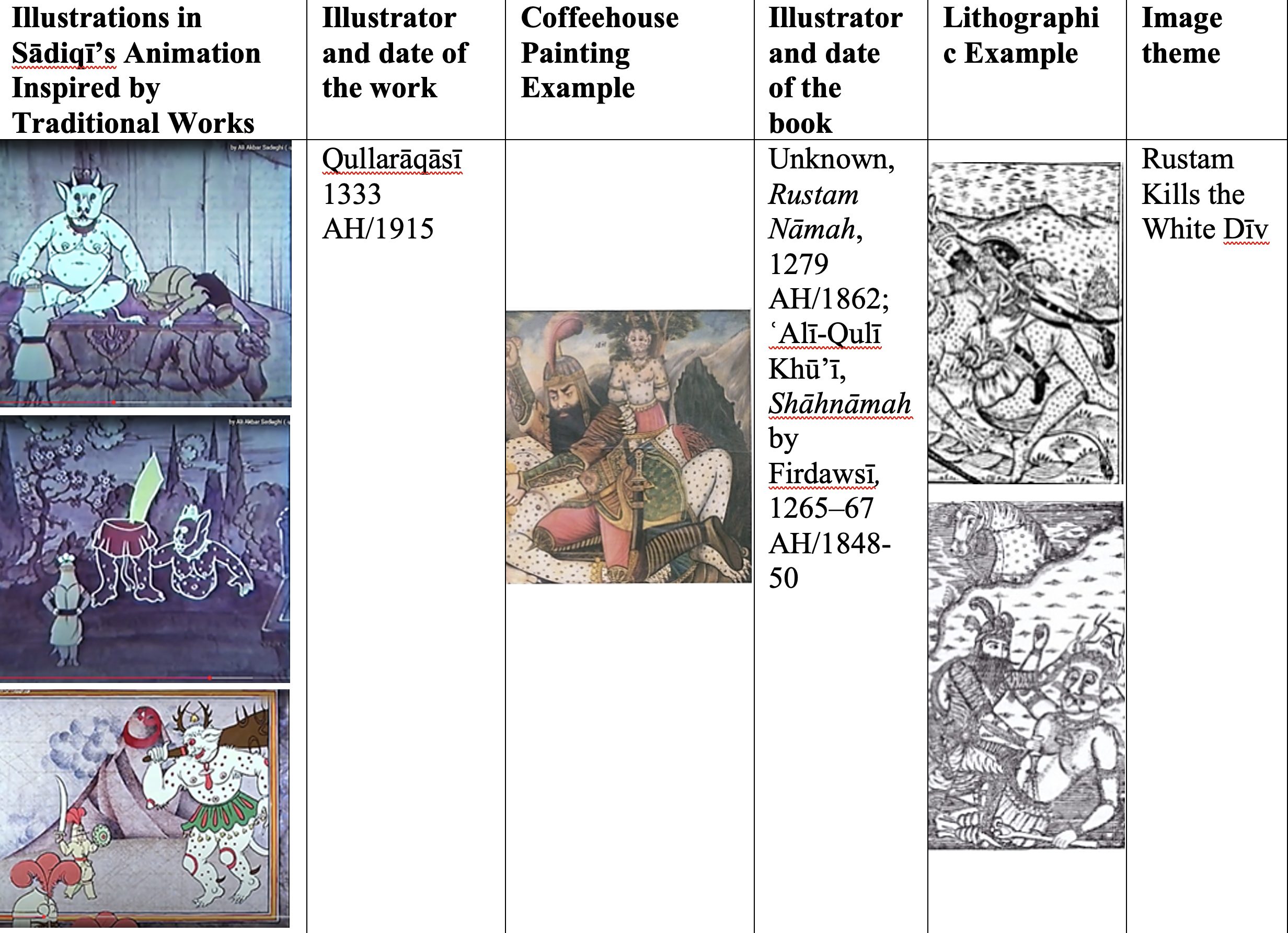
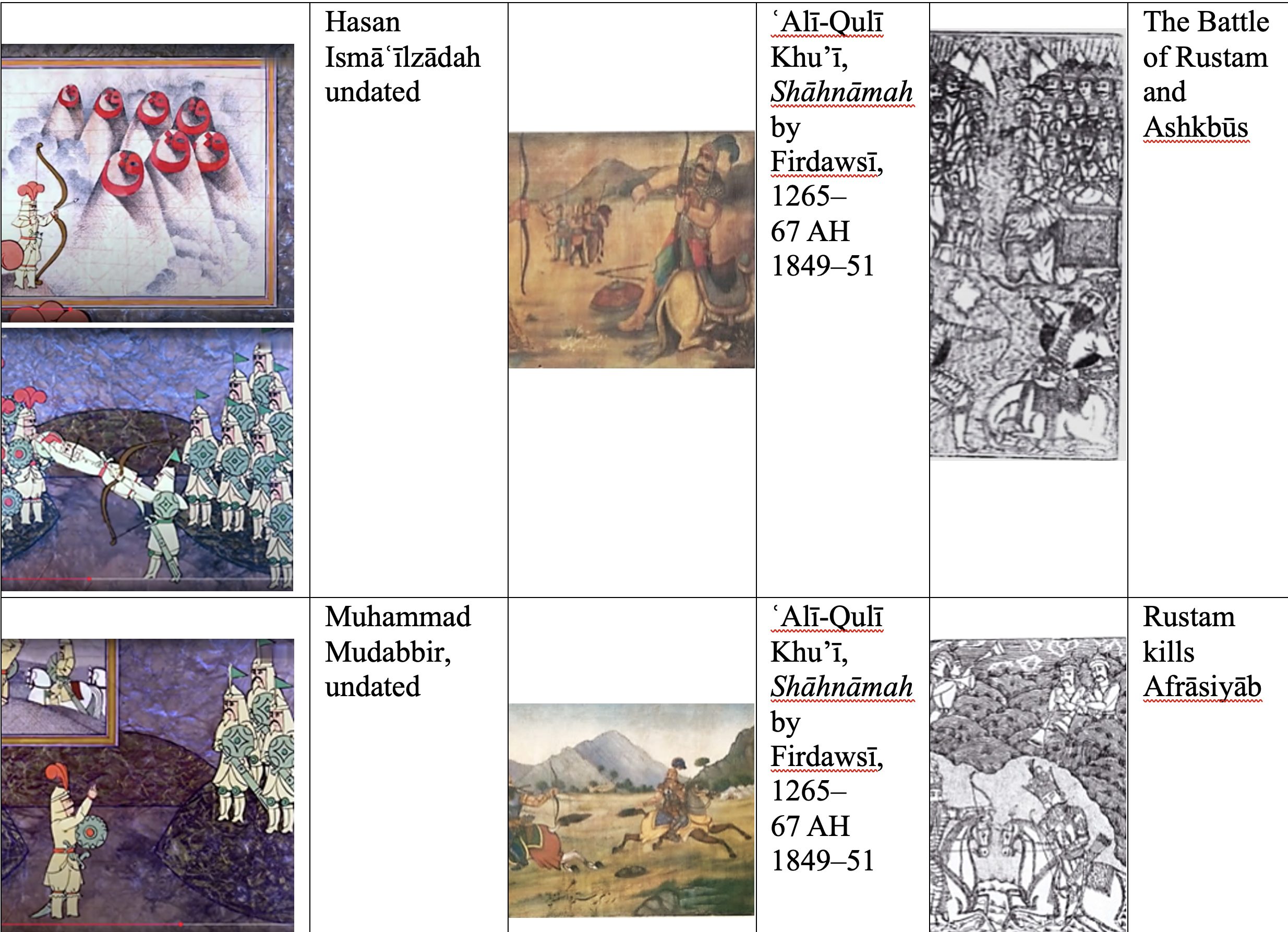
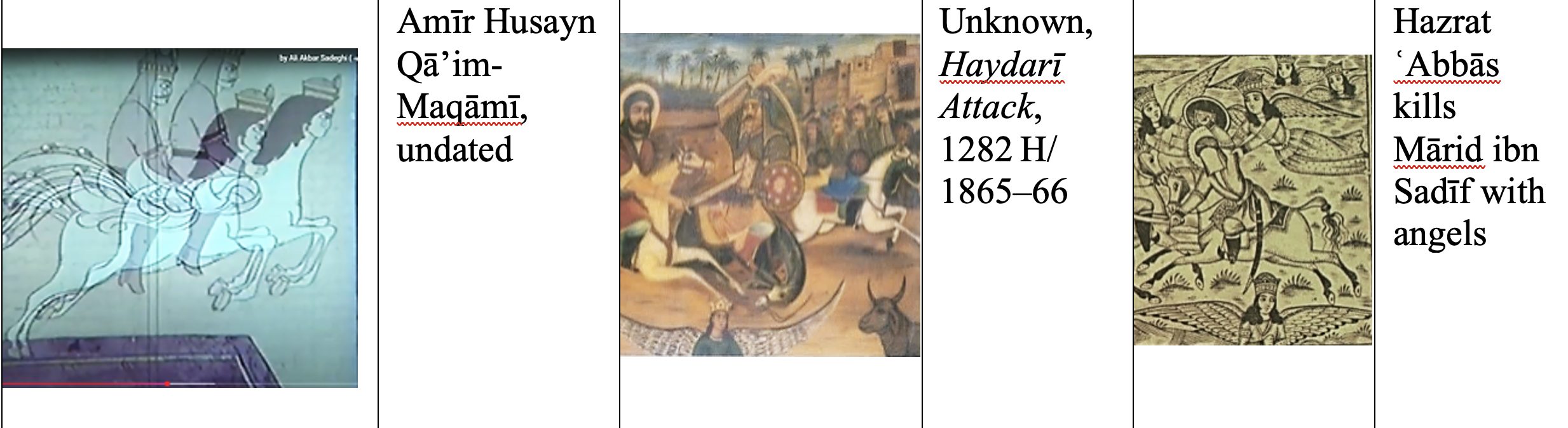
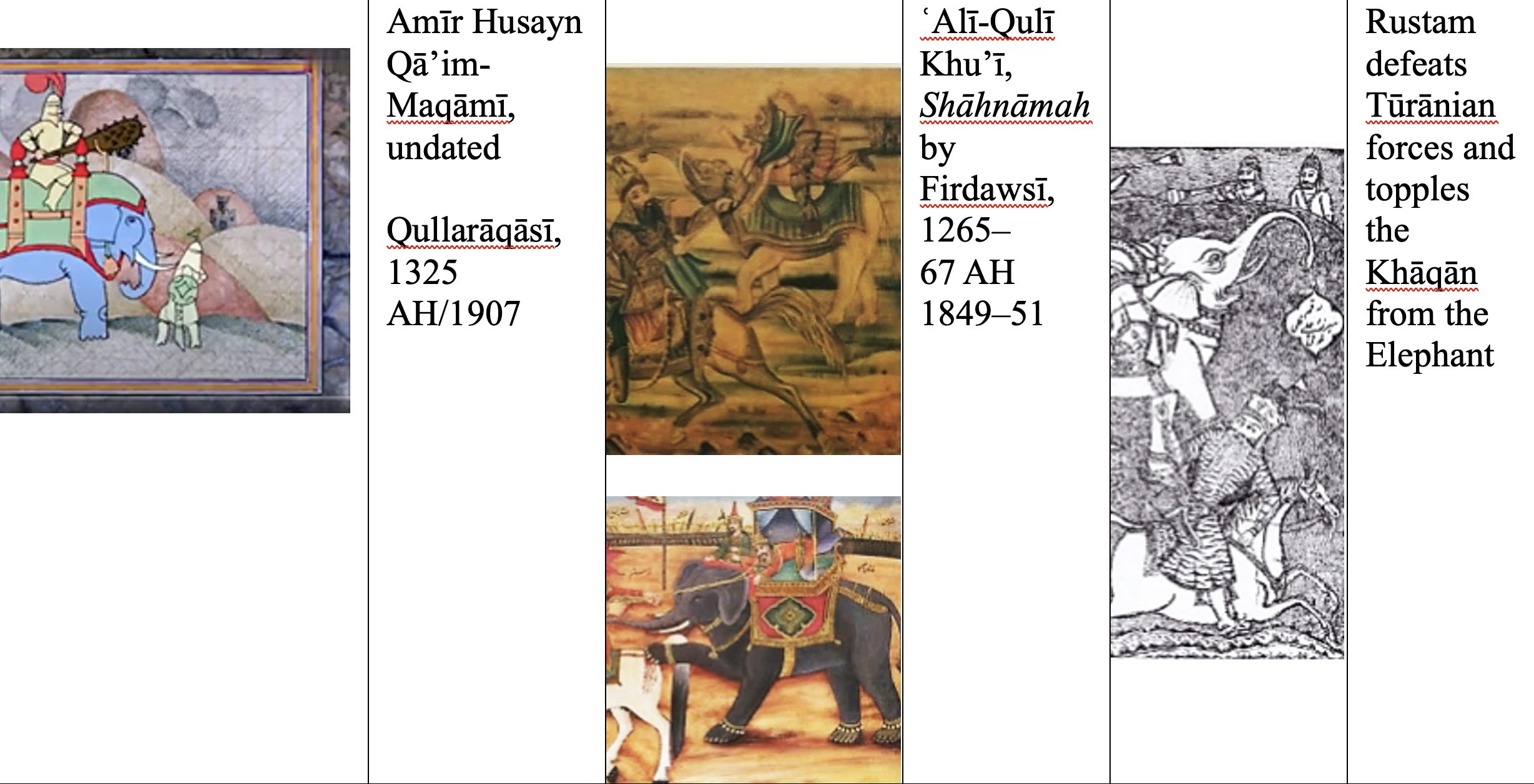 Table 2: Comparative analysis of illustrations with epic themes in lithographic editions, coffeehouse painting, and Sādiqī’s animated trilogy.67Adapted from Mahīn Suhrābī and ʿIffat Āqābābāyān, “Barrasī-i Mazāmīn va Fazā-yi Tasvīrī-i Chāp-i Sangī-i Musavvar va Naqqāshī-i Qahvah’khānahʾī dar Dawrah-yi Qājār,” Pazhūhish-i Hunar-i, year 5, no. 9 (Spring–Summer 1394/ 2015): pages 4-5-6
Romantic Themes
Romantic themes are another shared element in ‛Alī-Akbar Sādiqī’s three animated works and Iranian illustration traditions. While this theme is present in all three, it evolves in terms of visual language and representation. In Sādiqī’s animations, the romantic theme is reinterpreted using modern cinematic techniques, though its meaning and role in the story remain the same.
Romantic themes are central to classical Iranian literature, seen in works like Firdawsī’s Shāhnāmah, with stories like Bīzhan and Manīzhah, Rustam and Tahmīnah, as well as in Nizāmī’s Khamsah, including Laylā and Majnūn, Bahrām Gūr and Āzādah, and Bahrām and Gulandām. The widespread presence of romantic themes has helped spread these subjects into Iranian visual traditions. In coffeehouse paintings and lithographed illustrations, romantic scenes and love stories emphasize the human and emotional sides of characters through visual movements and symbols, creating a romantic and moralistic atmosphere.
Among Sādiqī’s trilogy, Haft Shahr stands out as the most prominent example of the romantic theme. The title “Haft Shahr” evokes the story of Haft Shahr-i Ishq (The Seven Cities of Love) from ‛Attār’s Mantiq al-Tayr (The Conference of the Birds), a work that uses romantic expression in a mystical narrative. Sādiqī has selected ‛Attār’s tale as the base of his story and reimagined it with modern interpretations. A lyrical text in the style of Hāfiz, read by Ahmad Shāmlū, deepens the romantic theme. This choice offers a contemporary twist on classical Iranian literature, adapted to the language of animation. Haft Shahr thus merges two interpretations of romance, blending traditional Iranian visual storytelling seen in lithographs and coffeehouse paintings with a modern narrative. However, Sādiqī shifts a mystical idealistic journey into a critical reflection on the failed utopia of the modern world, reinterpreting romantic themes within a modern visual framework.
The narrative structure of this animation is such that it integrates both thematic (lyrical text) and narrative/form (oral storytelling style and the storyteller’s tone) dimensions. The dialogue in the lyrical style, which seems to come from the hero’s thoughts or emotions, also carries Shāmlū’s voice as the narrator, making it more than just an internal monologue. This creates a duality between the storyteller and the hero’s voice—an interplay between the omniscient narrator and the hero’s perspective. Aesthetically, this technique recalls the oral storytelling traditions of coffeehouse paintings, where the storyteller embodies both the hero’s voice and the authority of the narrative.
Additionally, the portrayal of the hero’s emotional state—embodied in Rustam’s heroic stature—during moments of prayer, alongside his “deep, personal exchange with the flower, where his sorrow and hope shape and affect its being,” adds another layer of romanticism to the work. Scenes such as his passing through deserted streets, marked by pedestrian lines, or his metaphorical crossing through a war-torn city, echo the story of Siyāvash crossing the fire. These sequences indicate that Sādiqī formulates the romantic theme not in terms of pure love representation but in the connection between personal experience, historical memory, and contemporary global crises.
The Malik Khurshīd also explores romantic themes, especially through its love story. Key scenes include the prince shedding tears into a cup, the flood of pearls as tears from the captured maiden in the demon’s grasp, the hero collapsing in the desert from exhaustion—echoing Majnūn in Nizāmī’s Khamsah—and the romantic encounters between lovers, like Bahrām and Gulandām in the Shāhnāmah.
Among Sādiqī’s trilogy, Man Ānam Kih… features the least romantic themes, as it focuses more on narrative events and pseudo-epic aspects. However, in the final scenes, where the message of peace, friendship, and unity is shown, the characters’ emotions and inner feelings are revealed. These scenes express a romantic quality by conveying emotions and human values.
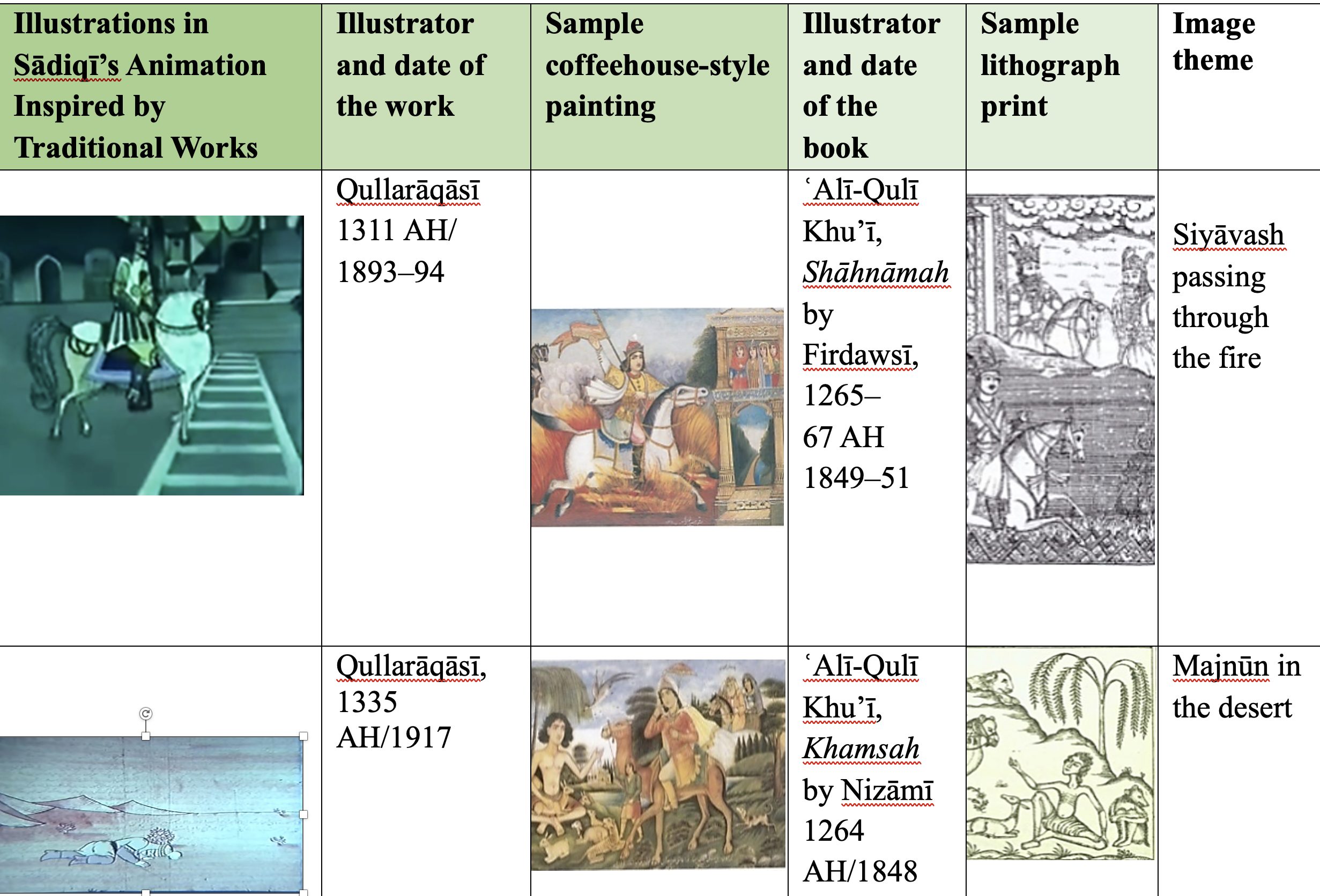
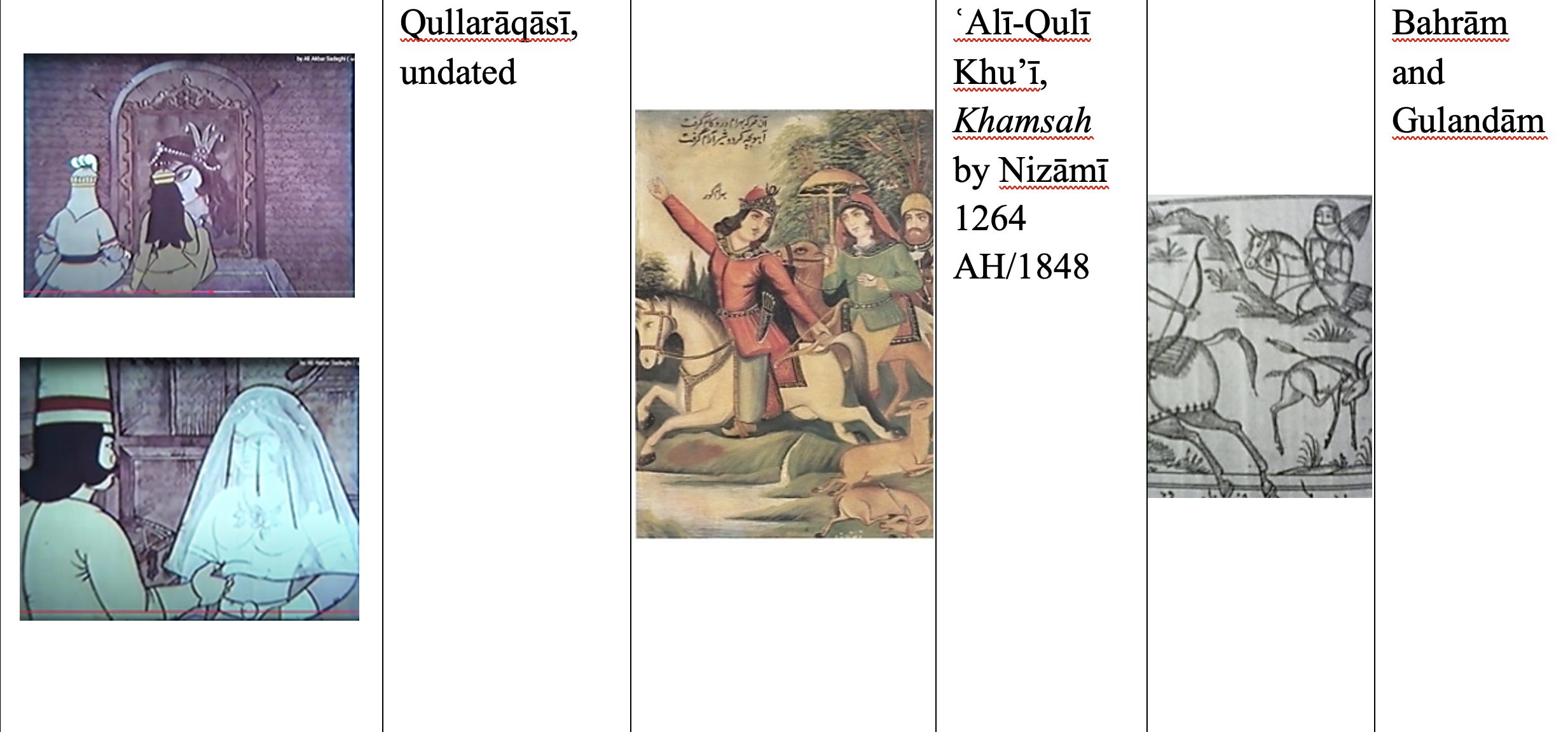 Table 3: Comparative analysis of illustration with lyrical themes in lithographic editions, coffeehouse painting, and Sādiqī’s animated trilogy.
Folk Tales
Sādiqī has also drawn from popular tales and beliefs, offering a contemporary and modern interpretation. In Iranian visual traditions, especially in lithographed prints and coffeehouse paintings, many works focus on folk tales and beliefs. In some of these works, a character like Rustam is depicted on a throne in the court of Solomon, which exemplifies the fusion of sacred history, national myth, and popular belief in visual imagery, reflecting the influence of folk beliefs on lithographed printmaking and coffeehouse painting. Another example from folk tales is the “love between a prince and a beggar” or “the captive lover in the demon’s grasp.” The presence of characters in mythological or legendary contexts, often intertwined with popular beliefs, demonstrates that folk tales and beliefs appear not only in narrative form but also in the visual composition and atmospheric settings of the work.
In Sādiqī’s trilogy, especially in Malik Khurshīd, there is a return to a classic Iranian folk tale, which has been narrated in multiple versions through oral storytelling, coffeehouse tales, and popular literature. The structure of this work clearly incorporates elements of folk tales, such as: the prince, his love for the girl captured by demons and dragons, overcoming difficult stages, battling demons, lions, and dragons, and the victorious return of the hero. Sādiqī draws on the classic narrative style of Persian prose, such as the tone of Sa‛dī’s Gulistān, to recreate the atmosphere of ancient tales, exemplified by the phrase like “And the storytellers of this tale, like in Gulistān, narrate it as follows: ‘When day broke…’” He begins the story with the folk tale of a young prince’s imagined love for a girl held captive by demons, then reinterprets it through scenes that follow the same narrative. These scenes move through stages of danger, with battles against demons, lions, and dragons, ultimately leading to the prince winning the beloved.
These motifs—like a flower or dove accompanying the hero, the land at the bottom of a well, a flying horse, the metaphor of the savior rider, the hero battling a demon with divine help (the appearance of the word “God” in the hero’s hands), the tears becoming pearls, the wise old guide, battling the lion and taming it, or the battle with the dragon (which also carries mythological meaning)—closely resemble the story of Zahhak in the Shāhnāmah, and culminate in the traditional Iranian wedding ceremony—the exchange of the bride and groom, and the joyful celebration, accompanied by the nostalgic sound of traditional Iranian wedding music.
The density of these motifs shows that Sādiqī uses the folk tale not as a singular source, but as a composite narrative-visual system, in which mythological, folk, and moral elements exist simultaneously and fluidly. While reinterpreting these motifs, Sādiqī also challenges traditional models—especially the hero battling a demon—and provides a critical and satirical twist. In the end, the story is portrayed as a mere fantasy in the prince’s mind, leading the audience to continue imagining with the phrase, “The tale still remains.”
The other two animations by Sādiqī also incorporate folk themes. For example, in Man Ānam Kih…, the title and opening credits draw from the common expression, “Man Anam Kih claims Rustam is a hero,” which is used by people to refer to exaggerated or inadequate claims of ability. Other folk-based concepts illustrated include “having egg on one’s face,” “betrayed for a handful of coins,” or “cutting you in half,” among others.
In Haft Shahr, however, folk themes are less prominent and are overshadowed by the philosophical nature of the work, which instead reflects more modern life issues. The most significant folk motif used is “the heart,” symbolizing emotion and humanity, which appears in everyday scenes, such as on hotel room key cards or administrative punch cards, creating a contemporary semi-folk narrative. Thus, we can say that in this work, Sādiqī draws on folk themes from Iranian visual traditions but reinterprets them within his personal approach through modern animation.
An analysis of Sādiqī’s animated trilogy reveals that the representation of folk tales and beliefs varies in each work, shaped by the internal logic of the narrative and the visual language. This presence manifests on multiple levels: in the narrative structure, character development, spatial organization, and visual motifs. This analysis further demonstrates that folk tales and beliefs, as both cultural and thematic elements, are present not only in Iranian visual traditions but also in Sādiqī’s modern animated works, reinforcing the cultural and historical link between tradition and contemporary reinterpretation.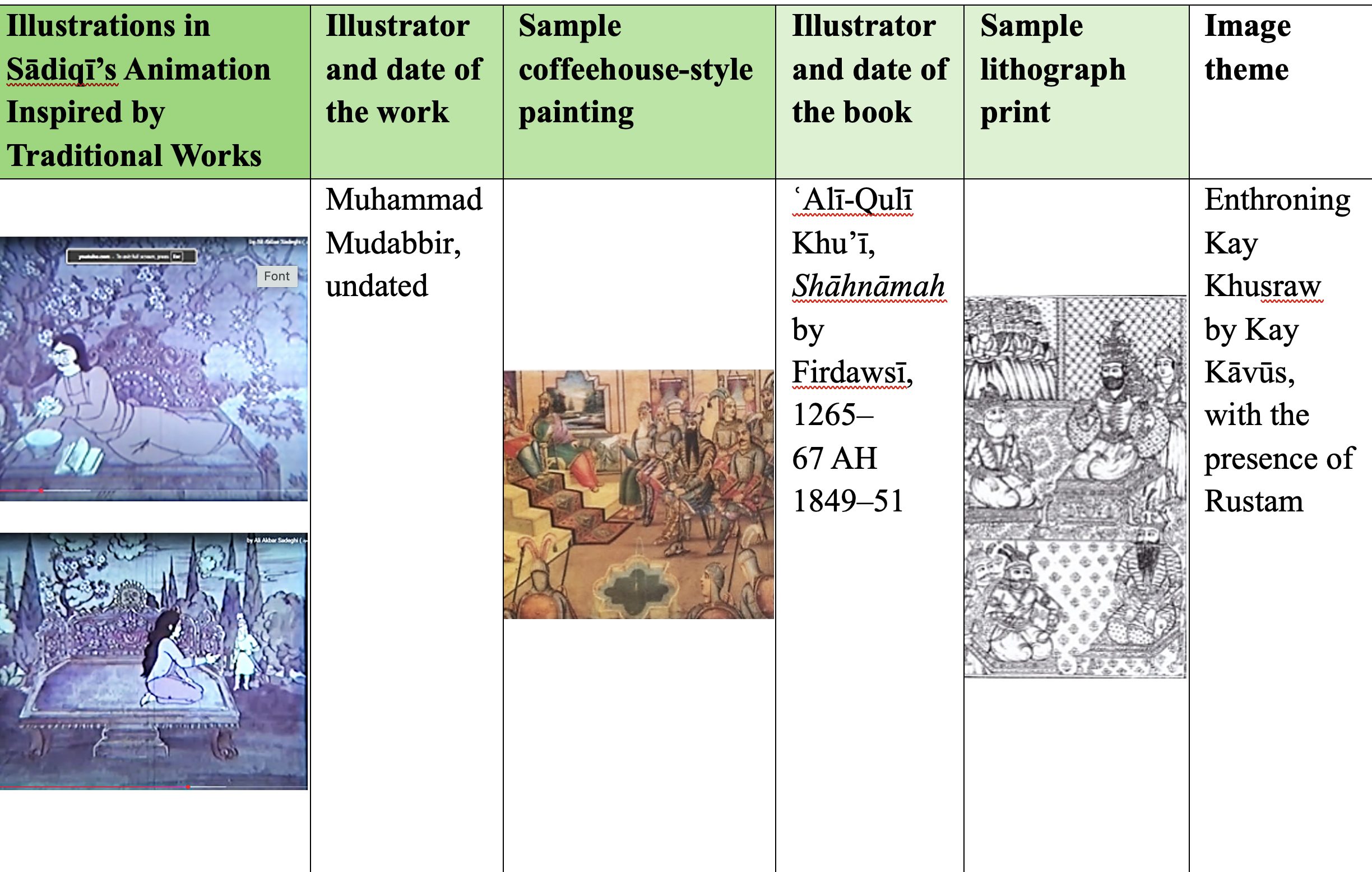
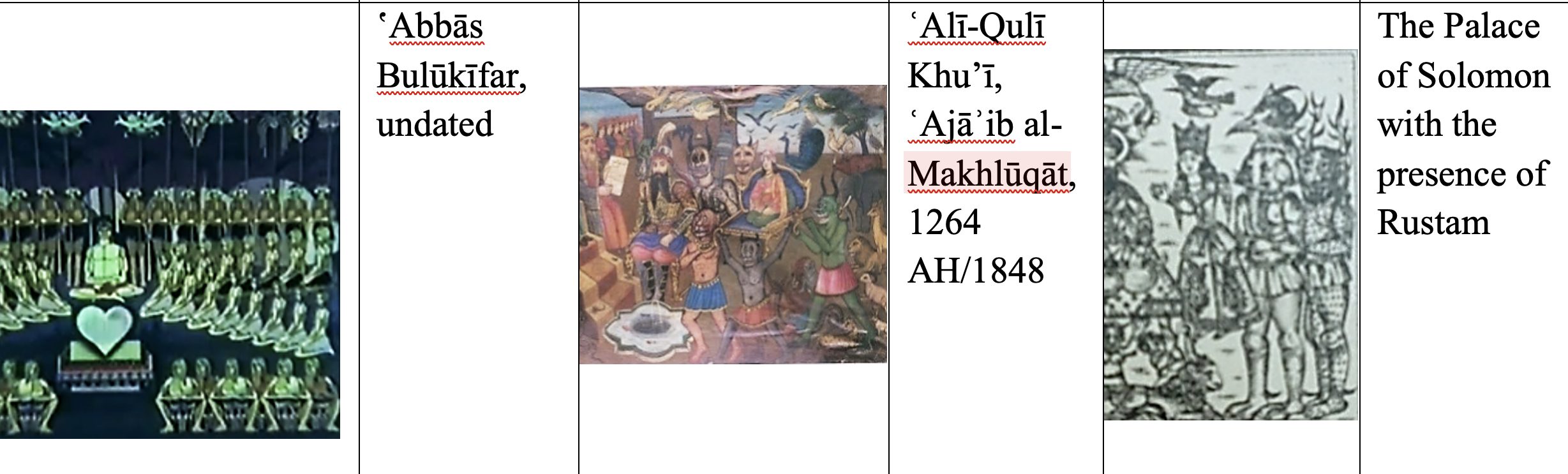 Table 4: Comparative analysis of illustration with folk themes in lithographic editions, coffeehouse painting, and Sādiqī’s animated trilogy.
Symbols, Patterns, Motifs, and Narrative/Visual structure
It is worth noting that Sādiqī primarily demonstrates thematic continuity across his works through the repeated use of familiar symbols, patterns, and motifs. His animations are grounded in the traditional visual elements of Iranian art, particularly lithographic printing, and coffeehouse painting. However, these motifs are not used as direct repetitions; instead, they are innovatively reinterpreted and adapted to the language of animation. By transferring “images of imagination” drawn from epic, lyrical, and popular literature into the moving medium, Sādiqī reconfigures these motifs through movement, rhythm, symbolic repetition, and visual transformation, giving them a contemporary function.
The most prominent motifs include mythical and legendary creatures—such as demons, dragons, hybrid beings, and animals—which, through exaggerated body parts, flat lines, and limited coloring, clearly recall the traditions of lithographic printing and coffeehouse painting. Yet, within the contexts of movement, humor, and rhythmic repetition, these motifs acquire a critical and modern interpretation. Additionally, in his depiction of the human figure and the portrayal of faces, he uses simple, symbolic, and minimal features to identify the characters. The character identity is primarily communicated through elements such as attire, bodily movement, and the sequencing of actions rather than through facial expressions, thereby reflecting the persistence of traditional Iranian illustrative conventions within the medium of animation or moving images.
The heroic model of Rustam and the moral dualism in Sādiqī’s works also reflect the patterns found in traditional ta‛ziyah and coffeehouse painting, where the theme of good versus evil is central. However, this model has shifted away from its religious context and has been reinterpreted symbolically, mythologically, and at times philosophically. Furthermore, animal motifs, spatial elements, and objects—including horses, lions, birds, and other symbolic animals, as well as architectural forms, flat landscapes, and traditional objects—connect the visual structure of the works to the aesthetics of the Qājār period. These motifs, along with their compositional arrangements and formal simplification, correspond with the modern expressive language of animation.
In this trilogy, sonic motifs play a crucial role in the semiotic system of the works. The use of ritualistic, epic, and popular music, along with rhythmic or narrative-driven sound structures and their integration with movement and imagery, reinforces the mythological-symbolic world of these animations, extending Iran’s auditory traditions into the realm of animation. Overall, these motifs and themes provide the conceptual basis for the thematic analysis, offering a framework to examine the structural and functional features of Sādiqī’s animations. This approach preserves the visual documentation while simultaneously emphasizing the thematic exploration and the cultural continuity between tradition and modern reinterpretation.
Continuing the thematic discussion, examining the structural features of lithographic illustrations, coffeehouse painting, and Sādiqī’s animated trilogy illuminates both formal differences and the distinct logics of visual narrative organization in relation to audience perception. Each of these media, in addressing the shared task of storytelling and conveying meaning to a collective audience, employs distinct structural approaches that are reinterpreted in the modern medium, thus creating a dialogue between tradition and modernity.
In lithographic illustrations, images are generally small and black-and-white, with their structure emphasizing a flattened, two-dimensional surface rather than naturalistic depth. The narrative is conveyed not through the depiction of a specific moment of action but by expressing the story’s “essential theme.” Spatial organization is arranged on either continuous plane, where elements flow across the image, or discontinuous plane, where figures, objects, and natural elements are separated or scattered, with no dominant focal point and no conventional distinction between foreground and background.
The predominant visual element is the line—both the written (calligraphic) line and the graphic line, and in some cases, dots.68Islamic literature was written in Naskh, secular literature in Nastaʿlīq, and educational texts in Shikastah.Variations in line density, thickness, and rhythm, combined with dot patterns, generate a sense of visual movement within an otherwise static space, effectively replacing the role of natural light and shadow. Time in these images is frozen, and the narrative is structured like a majlis (a gathering), with elements presented simultaneously. Heroism, exaggerated proportions, and the centrality of the main character take the place of conventional chronological time. Although some European elements and techniques—particularly in clothing and objects—are visible, the lithographic painter, as in earlier traditions, constructs imagery through simplification, repetition, symmetry, proportion alteration, and visual exaggeration. A clear example of this can be seen in ʿAlī-Qulī’s Shāhnāmah.69Mahīn Suhrābī and ʿIffat Āqābābāyān, “Barrasī-i Mazāmīn va Fazā-yi Tasvīrī-i Chāp-i Sangī-i Musavvar va Naqqāshī-i Qahvah’khānahʾī dar Dawrah-yi Qājār,” Pazhūhish-i Hunar-i, year 5, no. 9 (Spring–Summer 1394/ 2015):page 7
In Sādiqī’s animated trilogy, this structural logic can still be traced, though with media transformations. Notable examples include the deliberate use of the written line in the animation Malik Khurshīd and Man Ānam Kih… Emphasis on heroism and the centrality of the main character, along with the organization of the narrative resembling a majlis (a gathering), in which multiple elements or events are presented simultaneously—particularly in Man Ānam Kih…—remains evident. Sādiqī achieves visual movement and a sense of temporality in animation not by abandoning his static, adapted structure—i.e., the illustration’s reliance on dominant visual elements such as line and dot—but by energizing this structure through movement, rhythm, and cinematic editing. In doing so, the inherent stillness of pre-modern imagery becomes a source of dynamism within the animated medium, rather than a limitation.
In contrast, coffeehouse painting exhibits a clearly narrative-driven, subject-centered, and display-focused structure. These features are not reproduced formally in Sādiqī’s three animations but are instead adapted at the level of narrative logic and the organization of the visual story. This visual tradition, which developed in public and popular spaces, is intrinsically linked to naqqālī and pardah’khānī, and is rooted in the depiction of religious and epic tales. Consequently, its structural logic does not rely on capturing a single moment of action but on conveying the narrative as an “oral matter” intended for a collective audience.
The visual structure of coffeehouse painting is often multi-part and dispersed, with multiple scenes arranged side by side within a single frame, without adhering to the classical unity of time and space. This method of organizing images is guided by the main plot and subplots, allowing the narrative to present multiple levels of the story simultaneously. Such structural dispersion does not indicate a lack of order or an inability to depict realistically; rather, it reflects the logic of oral storytelling and narration—a narrative that unfolds episodically, non-linearly, and relies on the collective memory of the audience. This narrative logic, particularly in the animation Man Ānam Kih …, with its composite, staged, and allegorical structure, shares a clear structural kinship with coffeehouse painting.
In coffeehouse painting, color is the predominant element and carries a symbolic function; it is through color that light, shadow, and emphasis are conveyed, while the graphic line and contouring serve primarily to differentiate and accentuate. Compositions are generally centered: the main characters are placed at the center and depicted on a larger scale, while events and secondary figures are arranged around them. Exaggeration of body proportions, enlargement of faces, and the use of specific visual conventions to distinguish good from evil all enhance narrative clarity and directly engage the collective audience. In this regard, the inclusion of character names alongside their images also functions as a device for guiding the audience and stabilizing the narrative. Sādiqī’s adaptation of this feature is particularly evident in the animation Malik Khūrshīd, more so than in his other works. However, its use has gone beyond the simple labeling of characters, evolving into the employment of words as a complement to—or substitute for—audio dialogue. In this way, writing in Sādiqī’s animation is not merely an informative element but becomes an integral part of the work’s semiotic system and narrative rhythm.
Coffeehouse painting represents a synthesis of familiar elements from traditional illustration, ranging from two-dimensional painting and miniature art to imaginative rendering, allegorical representation, and a form of mystical expressionism; in some instances, traces of surrealism can also be discerned.70Mahīn Suhrābī and ʿIffat Āqābābāyān, “Barrasī-i Mazāmīn va Fazā-yi Tasvīrī-i Chāp-i Sangī-i Musavvar va Naqqāshī-i Qahvah’khānahʾī dar Dawrah-yi Qājār,” Pazhūhish-i Hunar-i, year 5, no. 9 (Spring–Summer 1394/ 2015):page 8 Renowned coffeehouse painters, often referred to as khiyālī’sāz (imaginative creators),71Coffeehouse painters considered naturalistic representation a flaw and, for this reason, called themselves imaginative creators. pursued storytelling, imagination, and allegorical depiction simultaneously, while a form of “realism” is also present in their works. This realism stems from the raw and adaptive use of certain Western techniques, although these methods—in perspective, color application, and spatial construction—do not fully conform to Western traditions. Sādiqī engages with these approaches in his trilogy; yet, for him, realism is not a goal but serves as a framework for the expansion of allegory and imagination.72 ʿAlī-Akbar Sādiqī, گفتگو با علی اکبر صادقی [Interview with ʿAlī-Akbar Sādiqī, Episode 1,2,3, Iran Contemporary Art and Culture: Oral and Visual History, ArteBbox Institute, YouTube video, n.d., https://www.youtube.com/watch?v=RtHQjrRk1cM (accessed April 8, 2026). And ….
Among Sādiqī’s animated trilogy, Haft Shahr exhibits the closest alignment with this logic of imagination interwoven with realism. The philosophical and social critique in this work is realized precisely through its narrative framework. Haft Shahr, which fundamentally embodies an imaginative narrative, aligns closely with miniature and Qājār gul-u-murgh paintings—both rooted in imaginative creation—whereas Man Ānam Kih… consistently employs allegorical representation as its primary storytelling mechanism.
Ultimately, the structure of coffeehouse painting can be described as “theatrical-performative,” episodic, and interaction-oriented. This characteristic derives from the naqqālī tradition, in which narratives were performed for largely illiterate audiences using gestures, tone, voice, and sometimes poetry; images alone, without the oral narration of the naqqāl, could not convey their full meaning or function. This performative and narrative-driven logic is creatively adapted in the animation Haft Shahr, although the presence of a narrator—albeit less explicit—can also be detected in the other two works. In Malik Khurshīd, this narrative dimension is even more pronounced than in Man Ānam Kih…, reinforcing storytelling as a structural means of conveying meaning. Thus, in Sādiqī’s works, the narrative is not merely visual but represents an extension of a spoken-performative tradition, reconfigured within the medium of animation into a temporally structured, multilayered, and contemporary form.
In Sādiqī’s animated trilogy, the recreation of Iranian epic and mystical stories is realized through a “contemporary visual language”—a language that, while maintaining continuity with premodern visual traditions, undergoes structural transformation through animation. Sādiqī does not merely reproduce traditional visual patterns; instead, he takes the underlying rules and structures of traditional storytelling and imagery (narrative and visual logics) and uses them in a way that is active, complex, layered, and organized over time. Consequently, his visual and narrative innovations should be understood in terms of structural redefinition rather than solely in terms of style or subject matter.
The style of these animations combines visual storytelling, free imagination, and symbolic fantasy, with the narrative conveyed primarily through image, movement, and music rather than dialogue. Although the narratives retain a linear and allegorical structure, simultaneous scene arrangements and layered movement enrich this linearity, preventing it from being simplistic or unidirectional. Consequently, the audience’s experience is shaped not by sequential events alone but by the gradual perception of space, meaning, and the interplay between visual layers. Across the trilogy, a hybrid structure—combining exaggerated forms, symbolic gestures, color, spiritual lighting, book-like spatial composition, and traditional music—enables the audience to gradually apprehend the story’s epic and spiritual dimensions.
From a visual and structural perspective, Sādiqī’s animations rely on minimalist and surreal design, abstract forms, and symbolic spaces—elements rooted in Iranian miniature and coffeehouse painting yet employed with greater imaginative freedom and flexibility. Colors are not merely aesthetic; they form part of the narrative’s semantic system and are chosen according to the story’s atmosphere: warm and earthy tones evoke epic and mystical spaces, cool and soft hues signify surreal or mental realms, and contrasting or bright colors highlight critical moments or spiritual climaxes.
Compositions are often flat, decorative, and organized around pictorial planes, with backgrounds occasionally incorporating decorative lines and geometric patterns reminiscent of manuscript or scroll design. Scenes are frequently decentralized; characters are distributed across multiple visual planes, and movement and staging unfold from several points. This organization recalls the logic of coffeehouse painting and pardah’khānī while enabling the simultaneous presentation of multiple events and layers of meaning—a capacity specific to animation, though latent in premodern visual traditions.
Character design relies on geometric, symbolic, and minimalist forms. Emotional and spiritual states are expressed not through facial detail but through posture, body orientation, scale, and movement within space. While this approach aligns with miniature and coffeehouse painting conventions, it acquires new vitality in animation, where motion and temporal progression sustain a sense of the passage of time even in apparently static scenes.
Music and sound play structural and thematic roles, often substituting for dialogue. Traditional Iranian music, zūrkhānah rhythms, environmental sounds, human vocalizations, and modern sound effects—ranging from rockets and vehicles to contemporary instruments—create atmosphere, convey meaning, and advance the narrative. Examples include thematic music guiding the hero in Malik Khurshīd, bird calls as narrative cues, breathing and vocal sounds in Haft Shahr, and varied sound motifs such as zūrkhānah rhythms and whistles in Man Ānam Kih… Sound thus becomes a narrative layer that, together with image and movement, forms a multisensory network of meaning.
Structurally, Sādiqī’s trilogy exhibits a hybrid narrative pattern. All three animations maintain an overarching linear structure with a beginning, middle, and end; yet within this framework, the narrative is episodic and multilayered—a method reminiscent of Iranian storytelling and manuscript traditions but enhanced by the simultaneity unique to animation. Scenes and events sometimes unfold concurrently, and certain sequences adopt cyclical, memory-based, or symbolic structures, as evident in Haft Shahr and Malik Khurshīd. In Man Ānam Kih…, the hybrid, staged, and allegorical narrative allows meaning to progress through conceptual and symbolic transitions rather than linear action.
In contrast to illustrated lithographs, whose narratives rely on simultaneous frames and the majlis structure—emphasizing stillness and frozen time—and coffeehouse painting, which employs theatrical, episodic, and audience-interactive storytelling, Sādiqī’s animations synthesize these logics within a temporally dynamic medium. Hero-centered, performative, and episodic storytelling is common across all three visual traditions; however, in animation, these features are reimagined as moving, multilayered, and parallel structures. Accordingly, Sādiqī’s adaptations sometimes approach the majlis-style, simultaneous presentation, while at other times they depart from performative storytelling logic to exploit the unique capacities of animation.
Functional Characteristics
From a structural perspective, the features of Sādiqī’s animated trilogy can be understood as the result of a convergence between premodern visual traditions and the narrative and visual logics of animation—a convergence that does not eliminate their distinctions but rather redefines them at the structural level. Previous analyses have provided a foundation for understanding how these visual traditions connect to the emergence of a modern forms in animation. However, to explain how each tradition, in interaction with its society and audience, contributed to the continuation of patterns, the transmission of values, and the reproduction of aesthetic dimensions, it is necessary to examine their functional characteristics—an inquiry that also enables understanding of the transition from static, text-centered imagery to performative images, and ultimately to moving images.
Examining the functional characteristics of these three visual traditions—which also reflect their existential logic and social roles—demonstrates that “function” is not a fixed property but is contingent upon the medium, mode of presentation, and type of audience engagement. Each tradition, shaped by its historical and social context, fulfilled a distinct role in conveying meaning, consolidating collective memory, and shaping aesthetic experience.
From the late Qājār period, illustrated lithography enabled the publication of picture books, ensuring the continuation of the Iranian illustration tradition and expanding its reach beyond private and courtly contexts. As such, it held significant social and educational functions. The functional characteristics of illustrated lithography can be considered across four main areas. First, accessibility and education: the widespread publication of lithographic books allowed even individuals with limited literacy to understand literary and religious texts through images, engaging directly with their content. Second, cultural awareness and societal development: by reaching broader audiences, illustrated images enhanced understanding of classical texts and elevated general cultural knowledge, indirectly influencing social developments, including the Constitutional Revolution (1905–1911). Third, artistic innovation and transformation: while adhering to tradition, lithography provided opportunities for new visual experimentation, including innovations in composition, line design, character depiction, and storytelling—ensuring both the continuation of Iranian illustration traditions and their transmission to new generations. Fourth, consolidation and dissemination of Iranian iconographic patterns: lithographs reproduced traditional symbols, types, and facial representations, embedding these patterns more widely in the public consciousness and preserving collective visual memory, while transmitting Iranian visual styles to subsequent generations. Particularly because these works were simple and popular in both form and content—like public tilework or plaster reliefs—they played a crucial role in familiarizing the society with iconographic patterns and facilitating direct engagement with content.
Overall, illustrated lithography functioned not only as an artistic medium but also as an educational and cultural tool, playing a key role in enhancing understanding of literary and religious texts, continuing the Iranian illustration tradition, and strengthening the connection between audience and content.
In coffeehouse painting, the function of the image shifts from mediating textual comprehension to becoming an integral component of performance. Paintings on scrolls achieve their full meaning and impact only within the context of the narrator’s oral storytelling, with image and sound interacting reciprocally—effectively theatricalizing the art of traditional illustration. Accordingly, the main function of this tradition is to create a collective, emotional, and ritual experience that actively involves the audience in the narrative. The mobility of the scrolls, their display in public spaces, and their direct connection to everyday life transform coffeehouse painting into a social and participatory medium, where the transmission of religious, epic, and moral values occurs not through direct instruction but through visual-performative experience. Although painted narrative scrolls used in both dervish (Sufi) and coffeehouse contexts were often displayed in leisure settings and public spaces—particularly coffeehouses—their function extended beyond mere entertainment, encompassing indirect ritualistic, identity-forming, and educational roles.73These painted scrolls were often installed above the entrances or on the walls of husayniyyahs, tikāyā, bazaars, saqqā’khānahs, zūrkhānahs, and even bathhouses, with their placement depending on both the narrative content and the intended performance setting. Although the coffeehouse cannot be definitively identified as the origin of coffeehouse painting, there is no doubt that it served as a fertile ground for its development.
Thus, the functional characteristics of coffeehouse painting include the following: presenting religious and moral stories in public spaces; accessibility to the general public and engagement with the audience’s leisure time—particularly in urban settings; enhancing understanding of religious and cultural concepts through images and oral narration; creating a collective and social viewing experience; and, ultimately, preserving and perpetuating visual and cultural traditions in a popular and public form.
Regarding the functional characteristics of Sādiqī’s animated trilogy, the assumption is that animation, as a dynamic visual medium, can convey complex concepts in a simple, tangible, and impactful way. Within this framework, images, movement, and music replace direct language, making the narrative visually accessible to a wide range of audiences—including both children and adults. The flexibility of this medium allows for the creation of imaginative, symbolic, and transcendent worlds, presenting emotional, moral, cultural, and mythological narratives in an engaging format.
Relying on these possibilities, Sādiqī has created his trilogy as a modern, cinematic medium while simultaneously linking its social and cultural function to Iranian visual traditions, such as lithography and coffeehouse painting. These works are designed for a general audience, aiming to communicate epic, mystical, and cultural stories in an accessible and appealing manner. Through color, movement, lighting, and traditional music, Sādiqī creates a spiritual and epic experience, and his works are made widely accessible via television, cinema, and digital media.
The specific functional characteristics of Sādiqī’s animated trilogy are as follows:
- Conveying epic, mystical, and mythological narratives in a modern visual form: Iranian narratives are transformed from textual and traditional paintings into a dynamic, contemporary form, presenting epic and mystical themes in an engaging way.
- Continuation and revival of Iranian visual traditions in a contemporary medium: Through the use of traditional miniature aesthetics, flat compositions, symbolic colors, and exaggerated forms, the trilogy brings Iranian visual traditions into a modern medium.
- Indirect transmission of moral and spiritual concepts: Dialogue plays little role; instead, image, movement, and music serve as the primary vehicles for conveying meaning.
- Strengthening visual memory and emotional experience for the audience: Symbolic forms, meaningful colors, and rhythmic movements imprint key scenes and moments in the viewer’s mind, creating a lasting emotional experience.
- Recreating multilayered and scroll-like narrative structures: Continuous movements, parallel scenes, and scroll-like visual organization bridge traditional narrative methods (pardah’khānī and coffeehouse painting) with animation.
- Using music as a narrative element: Traditional music and environmental sounds serve a narrative function, replacing spoken language while enhancing the emotional and spiritual expression of the story.
- Making Iranian narratives appealing to a global audience: Through minimalist design, abstract forms, and symbolic imagery, Sādiqī’s works are made comprehensible and engaging to non-Iranian viewers, facilitating the global introduction of Iranian culture.
Thus, Sādiqī’s animated trilogy sustains Iranian visual traditions in a contemporary medium and, by employing the functional interplay of image, movement, and music, communicates effectively with a broad spectrum of viewers.
|
Name of the Work |
Type of Narrative / Narrative Structure |
Content, Themes, and Motifs |
Visual and Structural Features |
Cultural and Social Function |
|
Illustrated lithograph from the Qājār period |
Space-/Time-based–Traditional, static; spatially fixed; time frozen in the image; uses simultaneous frames; organized around “majlis”; hero-centered. |
Text-based; visual genres: martial, festive, religious; concepts: heroism, ethics, mysticism; motifs: human heroes, demons, saints/villains, animals and hybrid creatures, nature, traditional architecture. |
Decentralized composition: main characters emphasized; decorative lines and patterns; line/dot techniques for light and shadow; limited symbolic colors; no perspective. |
Art beyond the court; collective visual experience; connecting written and visual culture; teaching of religious, ethical, heroic, and cultural concepts; preserving Iranian visual tradition. |
|
Coffeehouse painting from the Qājār period |
Space-/Time-based–Dramatic, static narrative; limited sequence and episodes; collective and dramatic composition; audience-interactive; theatrical; hero-centered. |
Religious, heroic, ethical; mostly religious stories; motifs like lithographs but more detailed; human and heroic figures; collective experience; narrated by a naqqāl for emotional, accessible storytelling. |
Decentralized, collective, dramatic composition; multi-layered space; main characters emphasized; color and form contrast to convey morals and identity; no perspective. |
Popularizing art; linking with daily life and culture; social interaction; public display; teaching religious and ethical concepts; entertainment; preserving and extending Iranian visual traditions. |
|
Haft Shahr (1971) |
Hybrid symbolic–allegorical; episodic–linear + retrospective/symbolic; semi-independent episodes in a coherent conceptual path; hero-centered; visual modernism. |
Social, philosophical, historical critique; literary and folkloric sources; re-creation of Iranian tradition; semi-heroic/religious; traditional + modern visuals; industrial objects; animals/mythical creatures; declamation (Shāmlū: hero/naqqāl); narrative music; thematic/affective sound. |
Multi-layered, decentralized; symbolic/non-realistic; dark/bright colors; symbolic contrasts; rhythmic movement; character-focused; cohesive geometric-symbolic layout; motion and sound for dynamism; modern-traditional dual structure; no perspective. |
Modernizing Iranian visual traditions; multi-dimensional collective experience; conveying culture and art; entertainment; universal language; bridging generations, tradition, and modernity; creating a national animation. |
|
Man Anam Kih..… (1973) |
Composite, episodic-symbolic narrative; two parallel frames per scene; coherent conceptual-linear path; hero-centered; visual modernism. |
Humor; social, philosophical, historical critique; semi-heroic Shāhnāmah battles; Iranian folklore; critique of heroic myths; symbolic motifs, words/letters; narrative and traditional music; affective/thematic sound. |
Similar to book illustrations; parallel visual frames with detailed scenes; symbolic rhythm; combination of image, music, and meaning; varied and vivid colors; affective/thematic sound/music instead of dialogue; no perspective. |
Reinterpreting classical Iranian visual traditions; interactive experience; conveys cultural/human concepts; constructive critique; entertainment; simple local + universal language; bridges generations, tradition, modernity; national animation. |
|
Malik Khurshīd (1975) |
Non-classical, linear-symbolic narrative; retrospective/fantastical (in middle and final scenes); semi-independent episodes; coherent conceptual-linear path; hero-centered; visual modernism. |
Imaginative, fantastical; romantic/heroic; folkloric/traditional motifs; Rustam-like hero, humans, mythical creatures; miniature-style nature elements; Persian text; Nastaʿlīq calligraphy; traditional music (Shab-i Murād song); Zūrkhānah rhythm; affective/thematic sound. |
Based on book illustrations; book-page design; Nastaʿlīq text background; geometric-symbolic composition; book-like layout; modern motifs/symbols; affective/thematic sound/music instead of dialogue; no perspective. |
Reinterpreting Iranian visual tradition; multi-sensory, interactive; education and entertainment; preserving cultural values; simple local + universal language; bridges generations, tradition, modernity; national animation. |
Table 5: Comparative Analysis of Premodern Works and Sādiqī’s Animation Trilogy.
Conclusion: Re-reading Iranian Visual Tradition in Sādiqī’s Animation
The analysis of ‛Alī-Akbar Sādiqī’s animated trilogy demonstrates that these works emerge in continuity with Iranian visual traditions—particularly illustrated lithography and coffeehouse painting—while simultaneously reinterpreting them. A comparative examination of thematic, visual, structural, and narrative elements reveals that this connection is established through shared features such as epic, mystical, and mythological narratives, folkloric elements, episodic and multilayered structures, manuscript-like and scroll-based compositions, symbolic and exaggerated characterization, non-naturalistic imagery, decorative and ritual backgrounds, and the predominance of visual expression in the absence of dialogue.
Despite differences in medium, illustrated lithography, coffeehouse painting, and animation can all be understood within a trajectory of “indigenous modernity,” each offering a distinct visual and cultural experience shaped by its historical context. By incorporating movement, temporality, editing, and music, Sādiqī translates Qājār visual traditions into the cinematic language of animation, moving beyond static representation. Elements that existed in earlier traditions in limited or fixed forms—such as episodic narration, symbolic movement, and performative structure—are reconfigured in his works as dynamic and multimedia processes.
Crucially, this engagement with tradition is not nostalgic but critically transformative. While earlier traditions often relied on linear, hero-centered narratives, Sādiqī’s trilogy departs from this model by presenting a fragmented and often ironic conception of the hero. Across Man Ānam Kih…, Haft Shahr, and Malik Khurshīd, the heroic figure is redefined as fragile, unresolved, and at times passive, reflecting cycles of failure, repetition, and disillusionment. This shift places his work within the framework of “Iranian visual modernism,”74In 1950s–1970s Iranian art, visual modernism refers to a movement that departs from classical mythic and epic narratives, favoring critical reinterpretation over idealized heroes. Traditional forms—such as coffeehouse painting, Persian miniature, lithography, ta‘ziyah, and mythic motifs—are deconstructed, fragmented, and rendered anti-heroic. Artists like Zhāzah Tabātabā’ī, Parvīz Tanāvulī, and Jalīl Ziyāpūr exemplify this approach, transforming the mythic hero into a symbol, fractured figure, or humorous character, signaling a shift from archetypal heroism to a contemporary, critically engaged visual language. and a broader post-heroic discourse.75In narrative theory and cultural studies, post-heroism denotes the collapse of the traditional, victorious hero and its replacement with a weary, defeated, or even anti-heroic figure. The narrative shifts focus from triumph to repetition, dead ends, failure, or death, relocating the hero from a mythic status to a human, vulnerable, and earthly condition.
Sādiqī’s practice thus represents a conscious and selective reinterpretation of tradition. Rather than reproducing inherited forms, he reactivates their visual and narrative logics within a contemporary, time-based medium. In doing so, he creates a dynamic interplay between tradition and modernity, positioning himself as a creative interpreter rather than a mere transmitter.
From a functional perspective, his animated trilogy brings together the social accessibility of lithography, the performative and collective experience of coffeehouse painting, and the expressive capacities of animation. Through the interplay of image, movement, and music, these works communicate complex cultural, ethical, and spiritual concepts to diverse audiences, both local and global.
Ultimately, Sādiqī’s animations exemplify a form of “national animation” grounded in critical reinterpretation rather than replication. They align Qājār visual heritage with present-day audience experience, demonstrating that Iranian visual traditions can take on a dynamic, analytical, and globally meaningful form.
Cite this article

This article uses an analytical–comparative approach to examine how visual traditions from illustrated lithographic prints and Iranian coffeehouse painting are adapted in ʿAlī-Akbar Sādiqī’s animations. It aims to clarify the position of these animations within the genealogy of Iranian animation and their connection to Qājār art. The article focuses on three selected animations: Haft Shahr (Seven Cities), Man Ānam Kih… (Man Anam Kih…), and Malik Khurshīd (The Sun King). In these animations, Sādiqī acts not as a reproducer or destroyer of visual traditions, but as an interpreter who critically and creatively transforms them into contemporary expression. Through a process of engaging with, distancing from, and reworking tradition, he translates it into a contemporary language that facilitates dialogue with global audiences.
The imagery of this animated trilogy is compared with selected illustrated lithographs from editions of the Shāhnāmah and coffeehouse paintings. Their thematic, structural, and functional characteristics are analyzed using visual narrative and semiotic approaches. The findings indicate that illustrated lithography functioned as a mediating bridge between Persian miniature painting and coffeehouse painting, facilitating the transmission of visual traditions, while coffeehouse painting further disseminated these traditions through popular and oral culture. Sādiqī’s animations extend this process within a modern medium, contributing to the reinterpretation and popularization of Iranian visual culture.
Drawing on a deep engagement with artistic heritage, Sādiqī develops a visual language that combines episodic narration with linear–allegorical structures. By adapting epic and folkloric themes while preserving symbolic motifs, he creates a multisensory experience that is both rooted in tradition and distinctly modern. His work reinterprets rather than reproduces tradition, integrating image and movement, narrative and music, and tradition and modernity into a unified, dynamic framework. This approach contributes to the formation of a “national animation” by extending Iran’s visual culture into a modern medium and offering a model of indigenous modernity.
[1] ʿAlī-Akbar Sādiqī (b. 1947, Tehran) is one of Iran’s most prominent contemporary painters. He studied at the Faculty of Fine Arts, University of Tehran. His work draws on myths, epic stories, and religious narratives, often reflecting Zoroastrian and Manichean dualities of good and evil, light and darkness. His figurative paintings show affinities with traditional miniatures but are more accessible to general audiences. Combining Iranian artistic traditions with surrealist techniques, Sādiqī creates striking compositions of color and form. He describes his work as “a fusion of Western surrealism with Eastern mysticism and imagination, resulting in a miniature world. An artist should develop a recognizable style so that even unsigned works are familiar to the viewer. I attempt to preserve the Eastern spirit as a symbol in my art” (Kayhān-i Farhangī, 1368/1989: 73). He frequently draws on Shāhnāmah myths and symbols for visual storytelling. His “Iranian Surrealism” builds on traditional and coffeehouse painting. His early works emphasize distinctly Iranian identity through color, style, and references to miniature painting, Qājār-era art, and coffeehouse painting, while later works adopt larger, more universal scales. Key features of his work include: the reinterpretation of popular culture, Iranian myths, coffeehouse painting, and narrative traditions; self-portraiture within heroic Shāhnāmah figures; preservation of the national and popular spirit of coffeehouse painting alongside Western innovations such as surrealism and expressionism; and exploration of conceptual, visual patterns like inversion, sequence, roots, violence, and repetition. Career highlights: Animation: Films include Malik Khurshīd, Rukh, Haft Shahr, Zāl va Sīmurgh, Man Ānam Kih…, and Gulbārān. Graphics: First Prize at the Leipzig Festival (Germany); multiple awards for children’s graphic art in Asia and Iran. Illustration: Illustrated 15 works for the Institute for the Intellectual Development of Children and Young Adults (Kānūn), Tehran. Stained Glass (Vitrail): Developed a distinctive Iranian style. Painting: Produced an extensive body of work, particularly in the style of Iranian Surrealism. See Zuhrah Shāyistahfar and Asghar Kafshchiyān-Muqaddam, “Pazhūhishī Tatbīqī Pīrāmūn-i Muʾallafah’hā-yi Rāvanshinākhī-i Āsār-i Hunarmandān-i Naqqāsh: Nīkzād Nujūmī va ʿAlī-Akbar Sādiqī. Mawrid-i Pazhūhish: 5 Āsār az Jadīdtarīn Namāyishgāh-i Hunarmandān” [A Comparative Study of Psychological Elements in the Works of Painter Artists: Nīkzād Nujūmī and ʿAlī-Akbar Sādiqī. Case Study: Five Works from the Most Recent Artists’ Exhibition], Mutāliʿāt-i Hunar-i Islāmī 17, no. 40 (1399/2020): 209–230.