

© Cinema Iranica. ISSN: 3064-9617

Figure 1: A still from the film Radiograph of a Family (Rādīyugrāphī-i yak khānavādah), directed by Fīrūzah Khusruvānī, 2020.
Introduction
Who gets access to which spaces, and why, remains a globally contentious issue. How does gender facilitate or hinder freedom of movement in both public and private spheres? In Iran, where spatial patriarchy is shaped by religious, legal, and social structures, access to space is constantly negotiated—expanding for some while contracting for others. Cinema has long served as a critical lens through which to examine both the enforcement and defiance of gendered boundaries. Through an analysis of Iranian films, this article explores how spatial restrictions are defined, maintained, and transgressed, offering insight into gender-based limitations on movement and the role of visual culture in challenging these boundaries.
Discussions of freedom of movement inherently reference boundaries—physical, ideological, social, and psychological—which structure systems of privilege and oppression, often disadvantaging women.1Judith M. Gerson and Kathy Peiss, “Boundaries, Negotiation, Consciousness: Reconceptualizing Gender Relations,” Social Problems 32, no. 4 (1985): 317–31. https://doi.org/10.1525/sp.1985.32.4.03a00020. In Iran, a complex interplay of religious, political, and legal frameworks further restricts gendered mobility. While direct challenges to these structures are often penalized, cinema provides an alternative space for critical engagement with these limitations, exposing their contradictions and the ways in which individuals navigate them.
The construction of gendered and homosocial spaces frequently shrinks women’s experiences of the world, restricting their movement even within permitted boundaries. While women in Iran have always been allowed to drive cars, they have faced prohibitions on riding bicycles and motorbikes in unsegregated public spaces since the establishment of the Islamic Republic following the 1979 Iranian Revolution. These restrictions, enforced through religious fatwas, local bans, and social pressures, reveal the ambiguous nature of freedom of movement. The distinction between legally enforced prohibitions and socially upheld restrictions further complicates the issue, as women must navigate not only formal laws but also deeply ingrained cultural expectations that regulate their mobility.
Access to public and private spaces is controlled not only through legal mechanisms but also through societal boundaries that shape and renegotiate acceptable behavior. As scholars Lamont and Molnár argue, moral codes structure society by categorizing objects, spaces, people, and practices.2Michèle Lamont and Virág Molnár, “The Study of Boundaries in the Social Sciences,” Annual Review of Sociology 28, no. 1 (2002): 167–95, https://doi.org/10.1146/annurev.soc.28.110601.141107. These boundaries often reinforce traditional gender roles, associating private space with women and public space with men as a key manifestation of masculine domination. However, in the Islamic Republic of Iran, these boundaries are not always rigidly defined. While public segregation exists, a complex and often implicit system of gendered spatial norms operates within both private and public spheres, continually shaping and renegotiating women’s access and movement. This fluidity creates unpredictable enforcement, reinforcing the precarious nature of women’s freedom in public spaces.
By analyzing seven films—five of which were directed by women—this study investigates how both state mechanisms and societal boundary-work construct, define, and maintain gender-based restrictions, shaping opportunities for men and women. It examines the role of patriarchy, religion, and legal structures in regulating gendered movement, access to space, and participation in public life. Additionally, the study explores how women themselves contribute to enforcing these restrictions, identifying which groups play a role and how such limitations are implemented.
Beyond analyzing constraints, the article considers acts of transgression and resistance against established gendered borders. It explores the subversive methods used in cultural production to both expose and challenge these boundaries, examining how visible and invisible spatial restrictions are defied and how such acts are framed as violations of conventional femininity and masculinity. Where violence is used to regulate gendered movement, the study identifies the perpetrators and interrogates the justifications and methods through which such violence is enacted.
Finally, this article examines instances where the Islamic Republic has, at times, created unexpected opportunities for women to engage in public life. It considers how the regime’s ideological framework has mobilized certain groups of women, paradoxically expanding their access to various spaces. By engaging with these questions, the article contributes to broader discussions on gender, space, and power within contemporary Iran.
The article is structured into four thematic sections, each analyzing how gendered access to space is constructed, contested, and occasionally expanded in Iranian cinema. The first section examines how legal and religious codes formally regulate movement, analyzing The Day I Became a Woman (Rūzī ki zan shudam, 2000), Offside (Āfsāyd, 2006), and Permission (‛Araq-i Sard, 2018). The second analyzes the influence of tradition and patriarchy, using Nāhīd (2015) and Son-Mother (Pisar, mādar, 2019) to explore how informal power structures and domestic expectations limit women’s movement. The third section turns to acts of transgression and resistance, analyzing how African Violet (Banafshah-yi Afrīqā’ī, 2019) portrays subtle defiance of gendered norms within private spaces. The final section investigates how the Islamic Republic has paradoxically enabled certain women’s participation in public life, using Radiograph of a Family (Rādīyugrāphī-i yak khānavādah, 2020) to explore these contradictions. Together, these case studies illuminate the complex and often contradictory ways gender, space, and power interact in contemporary Iran.
1. Religious and Legal Codes
“Every morning, you get up, play football, and come back in the evening like a corpse. This football has ruined our lives. Aren’t you a woman? Don’t you have a life? Don’t you need to make babies? Don’t you have a husband? Am I not important to you?”
Yāsir to Afrūz, (Permission, Suhayl Bayraqī, 2018)
The Day I Became a Woman (Marziyah Mishkīnī, 2000) offers a poignant exploration of freedom of movement and the gendered boundaries that restrict it in Iran. Mishkīnī’s film masterfully depicts how religious interpretations and social norms impose limitations on women’s mobility, revealing the intersections of patriarchal control, cultural traditions, and personal resistance. Structured in three segments, each centered on a female character at a different stage of life, the film illustrates how ideological and societal boundaries shape women’s autonomy. The first story follows Havā, a young girl about to turn nine, marking the moment when she must begin adhering to Islamic Sharia rules that dictate female dress and behavior. The second story follows Āhū, a young woman competing in a women’s cycling race, facing mounting pressure from the men in her life who attempt to stop her—symbolizing the struggle for autonomy. The final story follows Hūrā, an elderly woman in a wheelchair who, after a lifetime of restrictions, finally gains financial independence and travels from Tehran to Kish to buy everything she was once denied. The Day I Became a Woman captures pivotal moments in a woman’s life, illustrating both the societal pressures they endure and the acts of resistance they face when challenging societal norms. It reveals how gendered boundaries are created, reinforced, and ultimately contested by those seeking freedom.

Figure 2: Havā, from the first story, watches the shadow cast by the stick she planted in the ground. A still from the film The Day I Became a Woman (Rūzī ki zan shudam), directed by Marziyah Mishkīnī, 2000. Accessed via https://www.youtube.com/watch?v=TWGbmQKN8-I (00:15:20).
Havā’s transition into adulthood at nine signifies the abrupt end of her childhood freedoms, as she is forced to conform to religious and social codes. Under the Islamic Republic’s interpretation of Sharia, girls are considered to reach adulthood at the age of nine, at which point religious duties become obligatory.3Azam Torab, Performing Islam: Gender and Ritual in Iran. (Leiden: Brill, 2007), 169. Accordingly, Havā’s birthday marks her transition into adulthood, bringing with it restrictions on her behavior, appearance, and movement through public spaces. She is compelled to veil, terminate her friendship with Hasan, and abide by the spatial divisions imposed on her. Mishkīnī’s cinematography effectively captures the confinement and claustrophobia of womanhood. The dry stick given to Havā to measure time serves as a powerful analogy for Sharia’s rigidity, emphasizing how religious and social norms contract women’s spaces. Her last hour of childhood, symbolized by the shrinking shadow of the stick, is visually juxtaposed with the boys playing freely on the beach, highlighting the stark gendered disparity in access to space.
Āhū’s story offers a compelling portrayal of a woman’s struggle for autonomy against the backdrop of patriarchal tradition as she participates in a cycling competition, defying her husband and family’s expectations. Unlike Havā, Āhū refuses to yield to the metaphorical shadow of the stick by choosing to ride a bicycle—a symbol of movement, agency, and freedom. However, her act of defiance is met with relentless pursuit. Her husband, along with religious authorities and male relatives, chase her on horseback, commanding her to stop. This pursuit vividly illustrates how patriarchal guardianship operates to restrict women’s mobility, reinforcing the belief that women’s presence in public spaces must be supervised and controlled.
The initial image of Āhū cycling along a vast, open road by the sea evokes a sense of boundless freedom. However, this sense of liberation is quickly disrupted by the arrival of her husband and other male figures, who seek to reinstate patriarchal order. His sarcastic remarks to other cyclists reveal the entrenched perception that women’s mobility is a transgression that must be corrected. The horses, in contrast to the fragile but persistent movement of Āhū’s bicycle, serve as powerful symbols of patriarchal tradition and dominance. The stark contrast between Āhū, fully covered and struggling to maintain her pace, and the bare-chested men on horseback further emphasizes the unequal burden placed on women. Despite her determination, the surrounding male figures remain a constant reminder of the societal boundaries she cannot escape.

Figure 3: Āhū, from the second story, cycling in defiance of her family’s wishes. A still from the film The Day I Became a Woman (Rūzī ki zan shudam), directed by Marziyah Mishkīnī, 2000. Accessed via https://www.youtube.com/watch?v=TWGbmQKN8-I (00:27:27).
Āhū’s defiance intensifies as she pedals faster, refusing to submit to her husband’s demands. The societal and religious constraints on women’s freedom become even more pronounced when a cleric intervenes, likening the bicycle to an instrument of Satan. Despite these escalating pressures, Āhū’s silent resolve remains unbroken, demonstrating her unwavering resistance. However, as her family members encircle her, their horses reinforcing the omnipresence of patriarchal control, her fate becomes ambiguous. The story’s conclusion contemplates the precariousness of women’s autonomy within a deeply patriarchal society. Mishkīnī’s use of symbolism and striking visual contrasts underscores the ongoing struggle for women’s independence and the formidable barriers they must overcome.
Hūrā’s story reflects the enduring impact of gender-based restrictions throughout a woman’s life. As an elderly woman with newfound financial independence, she seeks to reclaim the experiences she was denied. However, her continued reliance on young boys for mobility suggests that patriarchal constraints persist even when direct control fades. Hūrā’s hesitation over a transparent glass teapot, calling it “shameless” for being naked, reveals how deeply ingrained societal expectations continue to shape her perception of modesty. Despite being free from familial control, she remains bound by internalized norms that dictate what is appropriate. Her departure on a raft, laden with the possessions she never had, becomes a surreal image of delayed freedom—one that raises questions about whether material autonomy can ever truly compensate for a lifetime of restrictions.

Figure 4: Havā and her mother watch Hūrā sail away—an image that quietly foreshadows Havā’s own future. A still from the film The Day I Became a Woman (Rūzī ki zan shudam), directed by Marziyah Mishkīnī, 2000. Accessed via https://www.youtube.com/watch?v=TWGbmQKN8-I (00:10:17).
While veiling is a prominent theme illustrating women’s regulation within society, The Day I Became a Woman is not solely about veiling. Instead, it examines the evolving forms of oppression and restriction that shape women’s lives at different stages. These constraints are not only imposed by the state but also reinforced by family and loved ones. In childhood, female relatives, such as mothers and grandmothers, often act as enforcers of patriarchal rules, ensuring that girls adhere to societal expectations. In adolescence and young adulthood, male family members take on this role, enforcing control through surveillance and, when necessary, violence to uphold family honor. By old age, these restrictions are no longer externally imposed but are deeply internalized, shaping the way women perceive and engage with the world. The power of tradition often proves more compelling than legal enforcement, and any challenge to entrenched norms is met with resistance, sometimes even hostility.
Other filmmakers have explored public spaces that are entirely inaccessible to women, such as sports stadiums. In Offside (2006), Ja‛far Panāhī highlights the challenges faced by female football fans who disguise themselves as men to infiltrate the forbidden space of the stadium. The film follows a group of young women caught attempting to enter and detained outside its walls while the real-time Iran-Bahrain World Cup qualifying match unfolds inside. By centering the narrative on those forcibly excluded rather than those inside the stadium, Panāhī highlights the absurdity of their exclusion and the frustration of being so physically close yet entirely cut off from the experience. The film’s documentary-style realism and real-time unfolding of events intensify the sense of injustice, making the audience share in the women’s imposed confinement.

Figure 5: A still from the film Offside, directed by Ja‛far Panāhī, 2006.
Referring to the prohibition on women attending football matches, Panāhī distinguishes this restriction from the attitudes of Iranian men, arguing that it reflects an “official mentality” rather than widespread male opposition. He suggests that most Iranian men do not oppose women being present at matches, and that the restriction stems from state ideology rather than cultural consensus.4Maryam Maruf, “Offside Rules: An Interview with Jafar Panahi,” openDemocracy, June 6, 2006, https://www.opendemocracy.net/en/offside_3620jsp/. Criticizing the fact that women must resort to cross-dressing to enter stadiums, he describes this necessity as humiliating.5Maryam Maruf, “Offside Rules: An Interview with Jafar Panahi,” openDemocracy, June 6, 2006, https://www.opendemocracy.net/en/offside_3620jsp/. The women in Offside are not just denied access to the match but are also subjected to surveillance and containment, illustrating how their mere presence in male-dominated spaces is perceived as disruptive.
Although no formal law explicitly bans female fans from entering stadiums, enforcement occurs through an unwritten rule implemented by security forces. In Offside, the soldiers responsible for detaining the women are depicted as merely following orders rather than personally invested in upholding the ban. Their reluctance to enforce the restriction reflects the disconnect between the official stance and broader societal attitudes. This portrayal subtly critiques the arbitrariness of such regulations, which, while lacking legal codification, are upheld through the state’s control over public space.
Despite their exclusion, the women’s spirit is not entirely broken. Within the confined space where they are held, one woman reimagines the stadium, positioning the six captives as Iranian football players and acting out the match taking place beyond the stadium walls. By creating an imagined version of what they are denied, she transforms the space of confinement into one of resistance. This theme of imagining and reconstructing inaccessible spaces echoes Panāhī’s later work, This Is Not a Film (Īn fīlm nīst, 2011) in which, after being sentenced to a 20-year ban on filmmaking, he reenacts scenes from one of his scripts within his living room while under house arrest. Like the women in Offside, Panāhī delineates the boundaries of an imagined space he longs to inhabit, reenacting how his characters would have navigated restrictions placed upon them.
While Offside focuses on women’s exclusion from public sporting spaces, Suhayl Bayraqī’s Permission (2018), also known as Cold Sweat, shifts attention to female athletes themselves, illustrating how legal codes restrict their mobility. Although the film begins with a disclaimer stating that it is not based on real events, its similarity to the real-life case of a female athlete barred from leaving Iran by her husband is unmistakable.6In 2015, Nīlūfar Ardalān, captain of the Iranian women’s national futsal team, was prevented from leaving the country for the AFC Women’s Futsal Championship in Malaysia after her husband exercised his legal right to ban her travel. The incident sparked national and international controversy, leading to a special permit from the Attorney General, allowing her to compete in the 2015 Women’s World Futsal Championship in Guatemala. Her husband, Mahdī Tūtūnchī, was a presenter on IRIB’s sports entertainment program The Pleasure of Football (Lazzat-i Fūtbāl), mirroring the dynamic in Permission. Similarly, in 2021, Samīrā Zargarī, head coach of the Iranian Alpine Ski Team, was barred from traveling to the World Championship in Italy after her husband invoked the same law, preventing her from accompanying her team. Afrūz Ardistānī, the captain of Iran’s national futsal team, is prevented from traveling to an international match when her estranged husband, Yāsir Shāhhusaynī, exercises his legal right to forbid her from leaving the country. After eleven years of dedication to the sport, Afrūz is stopped at airport security and informed that she cannot join her team for the AFC Women’s Futsal Championship in Malaysia. Her desperate attempts to challenge the decision over the following days are futile, as the legal system grants husbands unchecked authority over their wives’ mobility. As her lawyer explains, “The rule is very clear: a man can ban a woman from leaving the country without any reason. It is legal.”

Figure 6: Afrūz learns at airport passport control that she is not permitted to leave the country. A still from Permission (‛Araq-i Sard), directed by Suhayl Bayraqī, 2018. Accessed via https://www.youtube.com/watch?v=u2XCLJHzR1Q (00:09:44).
Afrūz adheres to the Islamic dress code in public, and the spaces where she competes are fully segregated and controlled in accordance with theocratic mandates. Yet, her compliance with these regulations does not exempt her from systemic restrictions. The control over women’s bodies extends beyond modesty laws to encompass their aspirations and pursuit of opportunities. The legal system offers Afrūz no recourse, despite the judge’s recognition of the injustice she faces. As she and her lawyer appeal to the court, Yāsir revels in his unchecked power, refusing to justify his decision beyond stating, “I don’t need a reason. I don’t want her to leave. The law gives me this right, and I intend to exercise it.” When pressed further, he frames his actions as a matter of national integrity, accusing Afrūz of wanting to remove her hijab once abroad, defect to a European country, and even engaging in behaviors he suggests would be “shameful” to the Islamic Republic. His vague insinuations, including a suggestion of homosexuality, reinforce how patriarchal control over women’s mobility is often justified through moral anxieties about preserving the state’s values.

Figure 7: Afrūz and Yāsir at the registry office, where she forfeits her marriage portion in exchange for permission to leave the country. A still from the film Permission (‛Araq-i Sard), directed by Suhayl Bayraqī, 2018. Accessed via https://www.youtube.com/watch?v=u2XCLJHzR1Q (00:39:17).
Yāsir further exploits his legal power by removing Afrūz from the national team and orchestrating her dismissal. He claims that she has transgressed the societal boundaries that define acceptable female behavior and presents himself as a guardian of morality, reinforcing the role of the state, tradition, and religion in policing women’s actions. Although Permission is framed around women’s sports, its central theme extends beyond athletics, exposing the broader restrictions imposed on women in all aspects of public life.
Yāsir’s power extends beyond legal restrictions, as he weaponizes Afrūz’s desperation to force her into submission. He demands that she renounce her marriage portion and endure a humiliating relationship in exchange for his permission to leave. Not content with stripping her of her professional career, he has her fired from the federation and evicted from her home, leaving her with no financial security. As Afrūz’s world closes in, she is forced to live in her car and work as a driver to survive. Meanwhile, Yāsir, despite his cruelty, remains a respected public figure, free to move as he pleases. When Afrūz confronts him, he taunts her with his impunity: “If I lose my job, I will go abroad. What about you? You can’t do anything. You’ll be stuck here because I want you to be.” His words reveal the deeply embedded gendered hierarchies that enable men to control women’s lives with impunity.

Figure 8: Afrūz stands at the entrance of her flat, evicted by Yāsir. Still from the film Permission (‛Araq-i Sard), directed by Suhayl Bayraqī, 2018. Accessed via https://www.youtube.com/watch?v=u2XCLJHzR1Q (00:51:52).
While the power struggles between a vindictive husband and his wife are not unique to Iranian patriarchy, what sets this case apart is the legal framework that legitimizes and reinforces Yāsir’s control. The fusion of patriarchal norms and state-enforced authority intensifies the injustice, leaving women with no legal avenues to contest such restrictions. The law does not merely reflect cultural attitudes but actively constructs and perpetuates inequality, safeguarding male dominance under the guise of religious and legal legitimacy. Despite Afrūz’s relentless attempts to escape her confinement, she remains trapped within a system that not only genders space but also dictates the boundaries of permitted movement according to male authority.
The film further reveals how patriarchal control is not exclusively upheld by men but is often enforced by women who benefit from the system. In The Day I Became a Woman, male family members regulate a young woman’s aspirations. In Permission, however, the figure imposing restrictions is Mihrānah Nūrī, the team supervisor responsible for enforcing modesty rules. Despite having no expertise in the sport, Mihrānah holds significant power over the players and actively sabotages Afrūz’s chances of attending the match. Her enforcement of patriarchal values is not driven solely by ideology but by her own vested interest in maintaining her privileged position. Unlike Afrūz, she enjoys certain freedoms—owning luxury items, traveling abroad, and navigating Iranian society with ease—privileges she secures by aligning with the system that oppresses others.
Even though Permission ends with Afrūz having lost much, it does not portray her as entirely defeated. The film echoes the sentiment of her lawyer, who, after exhausting all legal options, tells her, “There’s nothing we can do. If we stay quiet, they take away your rights; if we make noise, they take away your rights. It’s a lose-lose game. We do this hoping that one day it might finally make a difference to someone else.” This statement encapsulates the broader theme of resistance, emphasizing that even if change is not immediate, challenging injustice remains crucial. Afrūz’s struggle serves as a testament to the ongoing fight against systemic oppression, highlighting the resilience of women who continue to push against legal and social barriers despite overwhelming odds. Permission also reflects on its own impact, suggesting that even if it does not bring immediate change, it might still play a subtle role in shaping conversations and perspectives that could contribute to social change over time.
The films analyzed in this section—The Day I Became a Woman, Offside, and Permission—each reveal how religious, legal, and social structures intersect to regulate women’s mobility, yet they do so through different narrative and stylistic approaches. The Day I Became a Woman presents a life-cycle perspective, illustrating how gendered restrictions evolve across a woman’s life, from childhood to old age. Through its tripartite structure, the film highlights the cumulative nature of these restrictions—what begins as a forced veil and spatial segregation in childhood escalates into relentless social and familial control in adulthood and internalized constraints in old age.
While Mishkīnī’s film explores how restrictions are embedded in social norms and religious mandates, Offside and Permission focus on legal structures and their enforcement by state mechanisms. In Offside, Panāhī critiques the arbitrary, unwritten rules that bar women from public sporting spaces, showing how these regulations are inconsistently enforced and lack widespread social consensus. The soldiers detaining the female football fans express discomfort with their orders, revealing the disjuncture between state ideology and societal attitudes. In contrast, Permission tackles a formalized legal constraint, demonstrating how male guardianship laws grant husbands unchecked authority over their wives’ mobility. While Offside depicts resistance through satire and collective defiance, Permission presents a more harrowing reality, exposing the ways legal systems codify patriarchal control, stripping women of both physical and economic autonomy.
Despite their differences in tone and approach, all three films illustrate how women’s freedom of movement in Iran is precariously situated between legal mandates, religious interpretations, and deeply entrenched social expectations. Whether through symbolic imagery, documentary-style realism, or legal drama, these films foreground the struggles of women who navigate, challenge, and at times succumb to these restrictions. In doing so, they not only reflect lived realities but also serve as sites of critique and resistance, offering alternative narratives that expose and interrogate the mechanisms of gendered control.
2. Tradition and Patriarchal Dictates
“I gave up my dowry in exchange for custody of my son during the divorce. If I remarry, I’ll lose him.”
— Nāhīd explaining to her boyfriend why she refuses his marriage proposal in Nāhīd (Āydā Panāhandah, 2015)

Figure 9: Nāhīd heartbroken as she turns down the marriage proposal of the man she loves. A still from the film Nāhīd, directed by Āydā Panāhandah, 2015. Accessed via https://www.youtube.com/watch?v=GI8_PN9J1oo (00:10:34).
The two films analyzed as case studies in this section, Nāhīd and Son-Mother, explore the intersection of tradition, social class, and patriarchy—and how these factors limit women’s movement and access to space. Women’s sexuality is central to these discussions, as the films examine the complexity of tradition through the lens of temporary marriage and remarriage. Though legally and religiously sanctioned, these practices are often condemned by societal norms, reinforcing the contradictions between religious law and traditional values.
While Islamic law permits and even encourages remarriage, traditional values frequently cast judgment on women who choose this path, framing them within rigid moral boundaries. In Nāhīd, the protagonist longs to marry the man she loves but fears losing custody of her son if she remarries. Conversely, in Son-Mother, the protagonist is compelled to enter a marriage that risks separating her from her son in order to secure a better future for her daughter—facing a heart-wrenching choice akin to a modern-day “Sophie’s choice.” Both films highlight the contradictory demands placed on women by religious law and societal tradition. Temporary marriages, though legally permissible, remain socially stigmatized, illustrating how patriarchal dictates restrict women’s autonomy and mobility within both private and public spheres.7On temporary marriages in Iran see Shahla Haeri., Law of Desire: Temporary Marriage in Shiʿi Iran. (Syracuse, NY: Syracuse University Press, 1989), and Claudia Yaghoobi, Temporary Marriage in Iran: Gender and Body Politics in Modern Iranian Film and Literature (Cambridge: Cambridge University Press, 2020).
Āydā Panāhandah’s Nāhīd (2015) examines a woman’s desire for autonomy within Iran’s social and legal restrictions around divorce, custody, parenthood, love, and honor. As a divorced single mother, Nāhīd works tirelessly in a low-paying job to fund her son’s private education and extracurricular activities despite her own financial struggles. Her economic hardship is symbolically reinforced by the river that separates her marginalized neighborhood from the city, accessible only by a hired boat. This physical divide mirrors the social and economic barriers that restrict Nāhīd’s aspirations for upward mobility.
Nāhīd’s efforts to “gentrify” her parenting, borrowing from Sharon Hays’ concept, highlight the emotionally exhausting, labor-intensive, and financially demanding aspects of motherhood.8Sharon Hays, The Cultural Contradictions of Motherhood (New Haven, Conn.: Yale University Press, 1996). Drawing on Leslie Kern’s analysis of maternal scholarship, Nāhīd’s challenges resonate with the Western notion of a “new mystique of motherhood,” which emerged as a backlash against women’s social, sexual, and economic independence in the 1970s and 1980s.9Leslie Kern, Feminist City: Claiming Space in a Man-Made World (London: Verso, 2020), 40. In the Iranian context, women’s increased social presence and economic independence have coincided with intensifying pressures tied to the “mystique of motherhood.” This shift has led to the “gentrification of parenting,” often defined by the products, brands, styles, and activities associated with middle- and upper-class urban households. However, as Kern argues, “the amount of time, money, and emotional labor required to do this parenting work is simply not available to most families and mothers in particular.”10Leslie Kern, Feminist City: Claiming Space in a Man-Made World (London: Verso, 2020), 40.
At the same time, Nāhīd’s aspirations for her son clash with his indifference toward the educational opportunities she sacrifices so much to provide. Her struggle for independence is thus shaped not only by her gender but also by her socio-economic status and habitus. Moreover, in a society where traditional childcare networks are giving way to nuclear family aspirations and rising single-parent households, the dependence on paid childcare poses severe challenges, especially for lower-income families, as seen in both the films discussed here. Nāhīd’s attempt to simulate a gentrified life is evident not only in her parenting but also in her transformation of private spaces. Her insistence on purchasing a red sofa she cannot afford symbolizes this effort. The sofa, ill-suited to both her modest surroundings and the narrow stairways of her apartment building, stands as a striking metaphor for the dissonance between her aspirations and her socio-economic reality.

Figure 10: Nāhīd’s son in their modest, rented flat. A still from the film Nāhīd, directed by Āydā Panāhandah, 2015. Accessed via https://www.youtube.com/watch?v=GI8_PN9J1oo (00:54:56).
Nāhīd’s fragile independence is abruptly curtailed when her ex-husband discovers her romantic involvement. Although legally in a temporary marriage, she faces severe consequences due to the intersection of legal constraints, social stigma, and male control over female sexuality. Her ex-husband granted her custody of their son on the condition that she remain unmarried, forcing her to keep her relationship secret. While temporary marriages are legally sanctioned, they remain socially frowned upon, compelling Nāhīd to conceal her union from both her family and the broader community. Her autonomy is conditional—permitted only so long as she remains sexually unavailable to other men.
Once her relationship becomes known, male guardianship swiftly reasserts itself. Her ex-husband exploits his legal authority to revoke custody, acting out of jealousy rather than genuine concern. Her brother, assuming the role of patriarch, views her actions as a grave dishonor and forcibly returns her to the parental home, where she is stripped of autonomy. By controlling her access to work, mobility, and even personal relationships, both men assert dominance over her body and choices. Confined to the house and forbidden from working, she is rendered dependent and unwelcome, particularly by her overburdened sister-in-law. Her displacement underscores how male control over female sexuality operates not only through law but also through familial and societal enforcement. While Nāhīd outwardly appears independent, her habitus—shaped by deeply ingrained gendered norms—ultimately constrains her.

Figure 11: Nāhīd’s ex-husband confronts her after discovering she is in a relationship with another man. A still from the film Nāhīd, directed by Āydā Panāhandah, 2015. Accessed via https://www.youtube.com/watch?v=GI8_PN9J1oo (01:06:45).
Nāhīd’s predicament highlights the contradictory demands placed on women by religious laws, tradition, and modernity. While legally entitled to remarry, she faces the harsh reality that doing so would cost her custody of her son. Even though her ex-husband is an unsuitable parent due to addiction, unemployment, and lack of housing, the state prioritizes patriarchal authority over parental suitability, deeming Nāhīd’s remarriage a greater threat to her custody rights than his circumstances. This legally enforced patriarchy extends male control over her sexuality beyond marriage, dictating her post-divorce choices. Simultaneously, she must navigate the social stigma attached to temporary marriages, illustrating the complex intersections of legal, cultural, and traditional constraints that continue to shape women’s lives.
All instances of violence against women in the film unfold within private spaces, highlighting the hidden nature of domestic oppression. Unlike men, who face violence in public or liminal spaces, Nāhīd’s primary threats stem from domestic settings, where male domination is most pervasive. This dynamic underscores how private spaces can become arenas of control, violence, and subjugation for women. Nāhīd’s fear intensifies within these confined spaces, contrasting with the relative freedom she finds in public. Public spaces offer her brief moments of autonomy, such as when she changes from a dark, conservative veil to a brighter, looser scarf in alleyways before meeting her boyfriend.
This contrast between private and public spaces also shapes Nāhīd’s struggle for independence. While the law and family impose rigid boundaries around her personal choices, she momentarily reclaims agency in the city’s public spaces, where surveillance is less immediate. However, this autonomy remains fragile, as her mobility is still dictated by social expectations and familial control, reinforcing how women’s freedom of movement is both spatially and socially constructed.

Figure 12: Laylā and her two children. A still from the film Son-Mother (Pisar, Mādar), directed by Mahnāz Muhammadī, 2019.
The social stigma of being a single mother and the challenges of navigating social and private spaces are explored again in Mahnāz Muhammadī’s Son-Mother (2019). In this film, the loss of reputation further restricts the protagonist’s movement, even more so than in Nāhīd. Laylā, a young widow and mother of two, lives in a disadvantaged Tehran neighborhood, far from her family in the village. Each day, she commutes between her modest rented home and a factory on the city’s outskirts, a reversal of Nāhīd’s situation. The company shuttle is the most affordable transportation, but the unwanted attention of Kāzim, the driver, intensifies Laylā’s vulnerability, pushing her further into desperation. As the factory faces mass redundancies, jobs are prioritized for sole breadwinners like Laylā. However, when she refuses to join the strikes, her colleagues retaliate by falsely claiming she is married to Kāzim. This accusation jeopardizes her employment, as only sole breadwinners are protected from layoffs.
The claustrophobic space of the minibus, with Kāzim’s piercing gaze and the watchful eyes of her male colleagues, transforms this liminal space into a public stage where Laylā is simultaneously desired, scrutinized, and punished for a fabricated relationship. As a result, she loses not only her job but also her ability to support her children. The ensuing destitution and social stigma paralyze her, leaving her with no choice but to accept Kāzim’s marriage proposal—one she had previously rejected due to its harsh terms. Kāzim agrees to let Laylā bring her toddler daughter into the new marital home but forbids her adolescent son from living with them, claiming that his presence would threaten the family’s honor. He argues that it would be inappropriate for his adolescent daughter from a previous marriage to share a home with an unrelated adolescent boy, reflecting his deep-seated concern for reputation and patriarchal codes of honor.
Both mother and son become prisoners to Kāzim’s rigid moral dictates. However, Kāzim is not portrayed as a cruel or unfeeling character but rather as a man entrenched in traditional values he perceives as beyond his control. His defense of female honor, often referred to as ghayrat and closely tied to masculinity and manhood, defines the boundaries within which both female and male family members must maneuver. While Laylā’s movement is restricted due to gender, her son’s exclusion from the household demonstrates how patriarchal codes dictate who belongs within the family unit and who must be cast out. Kāzim’s privileged role as the male head of the household allows him to decide who is included and excluded, reinforcing how tradition and patriarchal authority structure familial space.

Figure 13: Kāzim and Amīr come face to face for the first time near the end of the film. A still from the film Son-Mother (Pisar, Mādar), directed by Mahnāz Muhammadī, 2019. Accessed via https://www.youtube.com/watch?v=4f_CLoiT5iM (01:23:41).
Son-Mother also highlights the blurred boundaries between public and private spaces. For Kāzim, the son’s presence would transform the home into a public space in the eyes of the community, subjecting it to external scrutiny and judgment. As Gómez Reus and Usandizaga argue in the context of Western spaces, the concepts of public and private are fluid and require a nuanced understanding beyond simple dichotomies.11Introduction to Inside Out: Women Negotiating, Subverting, Appropriating Public and Private Space, eds. Teresa Gómez Reus and Aránzazu Usandizaga (Leiden: Brill, 2008), 20. Kāzim’s refusal to let the boy live in his home reflects not only a concern about gendered interactions but also a deep fear of social perception and honor-based shame. Even though Laylā is present to uphold patriarchal guardianship in Kāzim’s absence, her son remains unwelcome, reinforcing how patriarchy dictates movement and access not only for women but also for men.

Figure 14: Bībī Serving food at the boarding school for deaf boys. A still from the film Son-Mother (Pisar, Mādar), directed by Mahnāz Muhammadī, 2019. Accessed via https://www.youtube.com/watch?v=4f_CLoiT5iM (01:00:22).
With no alternatives and her resources depleted, Laylā is ultimately forced to accept Bībī’s offer—a janitor at a school for the deaf—who orchestrates a plan for her son to assume a false identity as deaf and mute in order to live in a boarding school for deaf boys. While both mother and son view this as a temporary sacrifice, the film hints that their separation will be indefinite. The film underscores the cruelty of tradition that victimizes all, regardless of gender. In this instance, the son’s gender works against him, demonstrating how patriarchal honor codes not only restrict women but also punish men who pose a threat to the patriarchal structure itself. Though intended to uphold honor, these rigid expectations ultimately fracture the very family unit they claim to protect.
Divided into two sections— “Son” from the mother’s perspective and “Mother” from the son’s perspective—the film masterfully explores patriarchal oppression from both angles. Inspired by the real-life separation of Muhammadī’s father from his mother, Son-Mother examines how patriarchal dictates not only shape women’s lives but also restrict male agency, particularly when tradition deems their presence inappropriate. Laylā’s son is excluded from the most fundamental space for a child—the family—not for anything he has done, but simply because of his gender. His displacement exposes how honor-based systems police not only women’s mobility but also dictate which men are permitted within the family unit, reinforcing an oppressive cycle that ultimately harms all involved.
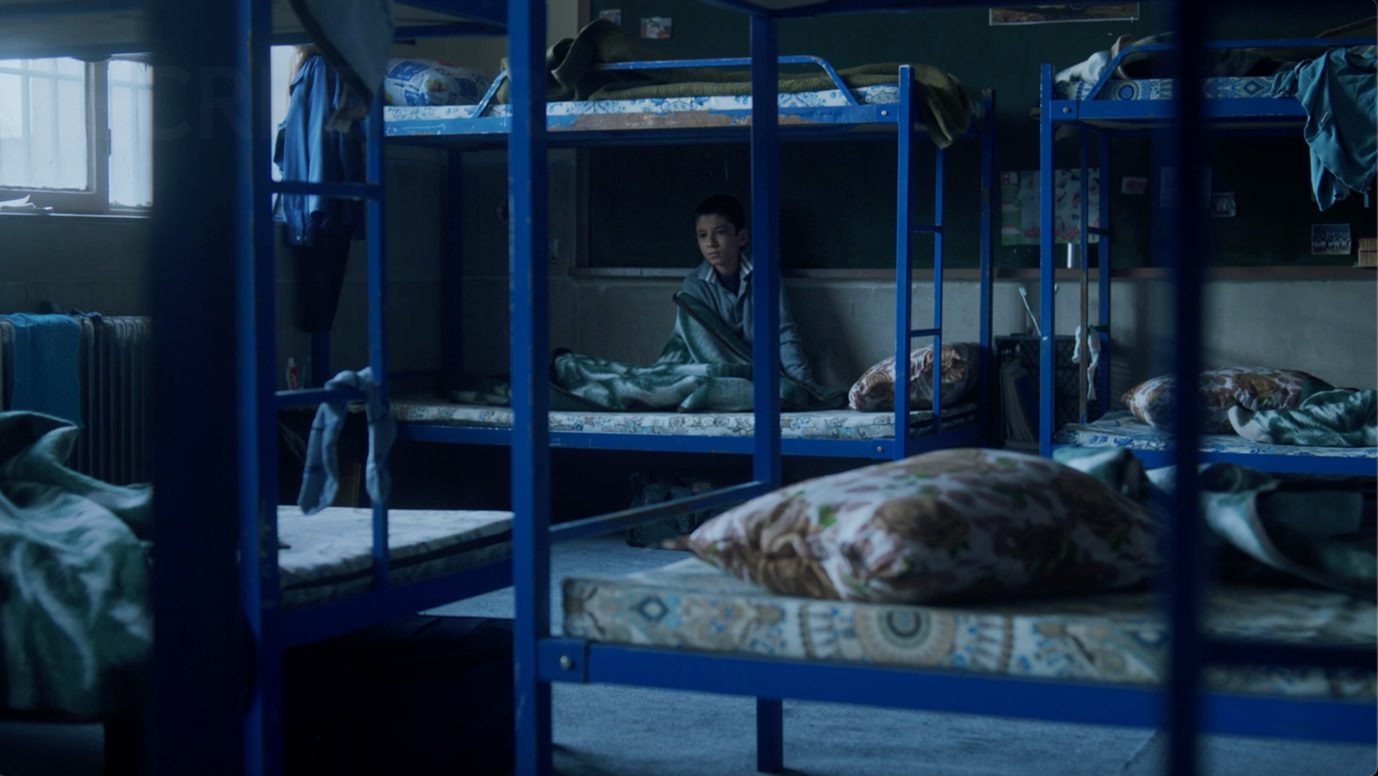
Figure 15: Amīr at the boarding school for deaf boys. A still from the film Son-Mother (Pisar, Mādar), directed by Mahnāz Muhammadī, 2019. Accessed via https://www.youtube.com/watch?v=4f_CLoiT5iM (01:07:00).
The two films analyzed in this section highlight how women’s personal lives are tightly controlled by tradition. Neither Nāhīd nor Laylā transgresses religious or legal stipulations, yet their ambitions for independence as single mothers are restricted by societal notions of right and wrong, public and private. In Nāhīd, her ex-husband and brother enforce tradition’s demands, using legal mechanisms like custody laws to control her. In Son-Mother, the absence of male family members does not protect Laylā from patriarchal constraints, as her male colleagues undermine her reputation, sever her access to her late husband’s pension, and force her out of employment. This underscores how patriarchal surveillance extends beyond the family unit, with societal structures collectively enforcing gendered norms. Reputation and honor, rather than merely personal or familial concerns, operate as mechanisms of social regulation, ensuring women’s compliance with established expectations.

Figure 16: Amīr and a group of boys are called to the principal’s office after a fight in the lunch hall. A still from the film Son-Mother (Pisar, Mādar), directed by Mahnāz Muhammadī, 2019. Accessed via https://www.youtube.com/watch?v=4f_CLoiT5iM (01:12:17).
Both Nāhīd and Son-Mother depict the devastating consequences of patriarchal control, yet they also highlight differences in how class and social background shape women’s options. Nāhīd, an urban woman familiar with the city’s complexities and supported by a small network of friends, ultimately returns to her husband despite her family’s objections. Laylā, from a rural background and isolated in a large metropolitan city, faces fewer opportunities for work and lacks any family or social support. Her only form of assistance comes from Bibi, whose exploitative role profits from separating children from desperate mothers. Both women struggle to maintain their fragile independence, with the separation from their sons serving as the ultimate price for survival. Their stories underscore how class, education, and social capital shape access to autonomy and survival within patriarchal constraints, illustrating that gendered restrictions are deeply intertwined with socio-economic realities.
3. Transgression and Resistance
“Men are like brothers—we’ve all messed up sometimes in our lives. What matters is that our women don’t find out about them. We’ll get in trouble if they do.”
—Rizā to Farīdūn, when trying to help him after he wet his bed, African Violet (Munā Zandī Haqīqī, 2019)

Figure 17: A still from the film African Violet (Banafshah-yi Āfrīqā’ī), directed by Munā Zandī Haqīqī, 2019.
While it is crucial to examine the restrictions imposed on women through legal, religious, and traditional structures in Iranian society, it is equally important to avoid reducing women to stereotypes of victimhood. Women’s experiences in Iran are diverse, and while many films highlight the challenges they face, they also depict acts of defiance and instances where the Islamic Republic has, unexpectedly, led to the expansion of spaces for certain groups, particularly those aligned with its ideology. In reality, the spaces available to women have both contracted and expanded since the revolution, though the cases of expansion remain limited to specific demographics.
Some films have explored the different ways women successfully defy both visible and invisible spatial boundaries imposed upon them. These are not necessarily acts of organized activism or overt resistance but rather everyday forms of defiance that subtly challenge imposed restrictions. African Violet (Munā Zandī Haqīqī, 2019) is one such example, illustrating how women push against patriarchal norms by redefining the boundaries that confine them. The film portrays spatial and social transgressions as acts of empowerment, demonstrating how women navigate and reshape the spaces imposed upon them.
Inspired by real events from the director’s own family, African Violet tells the story of Shukūh, a married, middle-aged woman living in a small town in northern Iran, who is shocked to discover that her adult children from her first marriage have abandoned their father, Farīdūn, in a nursing home. Defying societal expectations, and after convincing her second husband, Shukūh brings Farīdūn into their marital home to care for him. She sees her children’s actions as an act of ingratitude and finds it unacceptable that they have placed their father in an institution.

Figure 18: Shukūh allows her ex-husband back into her home. A still from the film African Violet (Banafshah-yi Āfrīqā’ī), directed by Munā Zandī Haqīqī, 2019. Accessed via https://www.youtube.com/watch?v=vNNypscPMPc (00:05:37).
Unburdened by grudges or social taboos, Shukūh is guided by compassion rather than convention. Despite their acrimonious divorce and Farīdūn’s past decision to estrange the children from their mother for two decades, she steps in where she feels they have failed. Her defiance is not a singular act but an ongoing resistance against prevailing social expectations and gendered norms. By bringing both her current and ex-husband under the same roof, she disrupts societal perceptions of propriety. Yet, rather than seeking external validation, she remains steadfast in her own principles, prioritizing integrity over imposed notions of respectability.
The film’s tension emerges as both men struggle with their sense of ghayrat, usually defined as protection of sexual honor. Farīdūn must reconcile his dependence on his ex-wife and her husband, while Rizā grapples with the threat to his reputation for sharing his household with his wife’s former partner. However, the film reconfigures the concept of honor, shifting it from male-centered notions of control to moral integrity and responsibility. For Shukūh, honor is not dictated by social judgment but by ethical commitment. Through her quiet defiance, the household dynamic is redefined, demonstrating how women’s resistance can transcend restrictive spatial boundaries and reshape entrenched norms.

Figure 19: Shukūh sits at the centre of the table, with her husband and ex-husband on either side, sharing lunch in her family home. A still from the film African Violet (Banafshah-yi Āfrīqā’ī), directed by Munā Zandī Haqīqī, 2019. Accessed via https://www.youtube.com/watch?v=vNNypscPMPc (00:16:13).
As Shukūh asserts her own definition of honor, the men’s perception of sharm (disgrace) begins to shift. No longer centered on policing a woman’s actions, their shame becomes tied to their own vulnerabilities. Over time, a reluctant sense of mutual compassion develops between them. Rizā discreetly helps Farīdūn maintain his dignity by covering up his incontinence, shielding him from embarrassment. In turn, Farīdūn, upon learning of Rizā’s financial struggles, offers assistance in a way that preserves his pride. In challenging traditional notions of honor, the film ultimately fosters a more complex and humanized sense of dignity, detached from patriarchal expectations.
Another critical aspect of Shukūh’s story is how Farīdūn exerted control over her relationship with their children after their divorce. By denying her contact with them because she remarried, he enforces patriarchal authority that punishes women for exercising autonomy. This theme of male control over mother-child relationships is a recurring motif, as previously explored in Nāhīd and Son-Mother. In each of these films, male figures restrict women’s access to their children as a means of reinforcing their authority and preserving patriarchal norms. Farīdūn’s actions reflect this pattern, reinforcing the idea that a mother’s relationship with her children is conditional upon her adherence to traditional gender roles.

Figure 20: Rizā helps Farīdūn change his clothes after an accident. A still from the film African Violet (Banafshah-yi Āfrīqā’ī), directed by Munā Zandī Haqīqī, 2019. Accessed via https://www.youtube.com/watch?v=vNNypscPMPc (00:22:13).
These restrictions highlight how patriarchal structures in Iranian society limit women’s freedom—not only physically but also emotionally and socially. This control operates through legal, societal, and familial mechanisms, shaping how women navigate their relationships and spaces. In African Violet, Shukūh’s decision to care for Farīdūn despite his past efforts to sever her connection with their children serves as an act of defiance, reclaiming both her agency and moral authority within a system designed to undermine her independence. Her choice to care for him on her own terms, rather than under patriarchal dictates, is not just an act of compassion but a continuation of her ongoing reclamation of agency—one that must be repeatedly asserted as societal expectations continue to dictate a woman’s role and relationships post-divorce.
African Violet also subverts traditional norms of male and female freedom of movement, centering on a woman who navigates and redefines gendered spaces and social expectations. As the main breadwinner and entrepreneur, Shukūh runs a modest hand-dyed yarn business from home and moves fluidly between public and private spaces, challenging assumptions about women’s restricted mobility. In an inversion of traditional roles, her income supports Rizā, her second husband, allowing him to pursue his creative interests in carpentry and wood art, despite their limited financial returns. The pickup truck Shukūh drives—used for both her business and personal travel—symbolizes her independence, contrasting sharply with Farīdūn’s restricted mobility, as he is confined to a wheelchair and dependent on others. This reversal of conventional gender roles underscores Shukūh’s autonomy within a system that seeks to constrain her.

Figure 21: Shukūh at work in her home-based workshop, hand-dyeing yarn. A still from the film African Violet (Banafshah-yi Āfrīqā’ī), directed by Munā Zandī Haqīqī, 2019. Accessed via https://www.youtube.com/watch?v=vNNypscPMPc (00:47:41).
Moreover, Shukūh moves through her world with confidence and ease, unconstrained by the limitations typically imposed on women. As Rizā points out to Farīdūn, Shukūh knows everyone in their town—men and women, young and old—while Farīdūn, once the patriarch of his family, is now isolated and reliant on the children who dictate his fate. His physical confinement mirrors his psychological entrapment, shaped by resentment and a lifetime of rigid gender expectations. Ironically, it is his loss of patriarchal control due to illness and aging that ultimately enables him to appreciate the simple pleasures of life.
African Violet is a powerful narrative of female resistance and the redefinition of gendered access to space. Shukūh subverts societal norms that dictate women’s movement and interactions, refusing to conform to imposed patriarchal boundaries. Instead, she allows her own values of compassion, dignity, and integrity to guide her choices. Her financial independence, the presence of a supportive husband who does not obstruct her quiet resistance, and her unwavering refusal to adhere to norms that contradict her principles enable her to transcend societal conventions. The film highlights how acts of defiance do not always take the form of direct confrontation but can emerge through everyday choices that challenge deeply entrenched structures, demonstrating the fluid and evolving nature of resistance.
4. Expansion of Spaces
“One day the albums were filled with Father’s memories. Now they were emptied of Father. They were filled with photos of Mother and her new friends. Mother’s world was now larger.” —Narrator, Radiograph of a Family

Figure 22: A still from the film Radiograph of a Family (Rādīyugrāphī-i yak khānavādah), directed by Fīrūzah Khusruvānī, 2020. Accessed via https://www.youtube.com/watch?v=wCdfxBnC8_o (00:00:32).
Fīrūzah Khusruvānī’s award-winning documentary Radiograph of a Family (2020) offers a nuanced exploration of how the Islamic Republic has, in some cases, paradoxically expanded opportunities for certain women in Iran. Blending personal memories with archival materials, Khusruvānī weaves her family’s story into the broader narrative of Iranian society during the revolution and the eight-year Iran-Iraq war. Her father, a secular man, fell in love with her deeply religious mother, and they began their life together in Switzerland, where he worked as a radiologist before the revolution. As Khusruvānī poignantly observes, the revolution did not unfold only in the streets of Iran—it also metaphorically took place within their home.12Film at Lincoln Center, “Radiograph of a Family Q&A with Firouzeh Khosrovani,” YouTube, posted May 5, 2021, https://www.youtube.com/watch?v=8QR_fv1m8x4.
The idea for the film emerged from Khusruvānī’s memory of witnessing her mother tear up her pre-revolutionary photos, in which she was unveiled. As the narrator reflects, “One day, with revolutionary decisiveness, my mother tore up all her unveiled photos to cleanse herself of her past.” This act of erasure—her mother’s rejection of her pre-revolutionary life—became something Khusruvānī sought to reconstruct through the film, intertwining personal and national histories. Radiograph of a Family artfully contrasts her parents’ backgrounds through a blend of family photographs, Super 8 films, and fictionalized dialogues, music, and sound. Khusruvānī incorporates both official and non-official archives, drawing from Swiss state records, Iranian television broadcasts, and personal materials such as home videos and photographs. Though the dialogues are staged, they are based on what she calls “possible memories” of her parents. She suggests that, at times, imagination can feel more real than memory.13MOOOV, “Q&A Firouzeh Khosrovani – ‘Radiograph of a Family’,” YouTube, posted May 23, 2022, https://www.youtube.com/watch?v=Wmxhc5Ftn9k.
The house in the film is not the real family home but was built specifically for the project. Designed with long, wide interior spaces, it serves as a microcosm of Iranian society, reflecting the transformations occurring outside its walls. Metaphorically, the film conducts an X-ray of the house, exposing its evolution over time and, in turn, revealing the deeper shifts within the country.14American Film Institute, “Radiograph of a Family Q&A | AFI DOCS,” YouTube, posted June 28, 2021, https://www.youtube.com/watch?v=K7baq7HQuBg. Structurally, the revolution serves as the film’s midpoint, dividing the narrative into two halves: pre-revolutionary and post-revolutionary Iran. As the revolution unfolds, gradual yet significant changes become apparent in the home’s interior. Wine and music are banned. A Western classical painting of a nude woman—reflecting the father’s interest in visual arts—disappears. Some transformations are subtle, such as the trolley that once held alcoholic drinks now carrying a flowerpot. Others are more drastic; the disappearance of furniture and a grand piano suggests their removal due to their association with Western luxury, which conflicted with the revolutionary ideals of simplicity and the austerity measures imposed during the war.
Khusruvānī conveys these shifts not only visually but also through sound. In one scene, the house is filled with loud classical music, which is abruptly silenced when the mother tells the father to turn it down. This transformation is reinforced by sound design: the classical music is suddenly cut off, followed by the narrator’s reflection:
Maybe Father wanted to say, “You can’t turn down classical music; you won’t hear some parts of it.” But instead, he simply said, “Sure, I’ll turn it down.” The muffled sound of headphones replaced the loud music. Father no longer had the strength to argue. Now, an entire government stood behind Mother!
Through this deeply personal story, the film challenges the perception of Iranian women as mere victims and disrupts the notion of a singular, homogeneous experience for all women under the Islamic Republic. Despite state restrictions, gender boundaries do not always limit women’s opportunities; in some cases, they can even expand them more than for men. In this context, Shahrokni challenges the widely held belief that gender segregation is always restrictive, arguing that such policies can create enabling environments that offer women security and new opportunities.15Nazanin Shahrokni, Women in Place: The Politics of Gender Segregation in Iran (Oakland, CA: University of California Press, 2020), 14-15. The retelling of Khusruvānī’s parents’ story demonstrates how Islamized public spaces empowered her mother, facilitating her access to and participation in public life.

Figure 23: A still from the film Radiograph of a Family (Rādīyugrāphī-i yak khānavādah), directed by Fīrūzah Khusruvānī, 2020. Accessed via https://www.youtube.com/watch?v=wCdfxBnC8_o (00:02:30).
Cathleen Hamann, in her study of Victorian philanthropists, shows how upper- and middle-class women moved beyond the idleness of their private lives through travel and philanthropy, adopting new roles in the public sphere.16Cathleen J. Hamann, “Ladies on the Tramp: The Philanthropic Flâneuse and Appropriations of Victorian London’s Impoverished Domesticity,” in Inside Out: Women Negotiating, Subverting, Appropriating Public and Private Space, eds. Teresa Gómez Reus and Aránzazu Usandizaga (Leiden: Brill, 2008), 65-83. Similarly, in the Islamic Republic, religious devotion and work have enabled some women to assume roles traditionally seen as masculine, granting them mobility and opportunities they might not have otherwise had. Radiograph of a Family illustrates this shift as Khusruvānī’s mother, who had previously been absent from public life, suddenly finds purpose in meaningful work, a voice in politics, and a role in social reform. Her transformation even prepares her to navigate spaces typically reserved for men, including the traditionally masculine domain of war.17For Iranian women’s contribution to the Iran-Iraq war, see Mateo Mohammad Farzaneh, Iranian Women and Gender in the Iran-Iraq War (Syracuse, New York: Syracuse University Press, 2021).

Figure 24: A still from the film Radiograph of a Family (Rādīyugrāphī-i yak khānavādah), directed by Fīrūzah Khusruvānī, 2020. Accessed via https://www.youtube.com/watch?v=wCdfxBnC8_o (00:01:10).
In her interviews, Khusruvānī expands on this idea, arguing that the revolution was actually a path-opener for many women. She explains that her mother was always strong-willed—more influential than easily influenced. Her rebellious nature was evident even before the revolution, as she had the courage to marry a man vastly different from her and attempt to adapt to life in Switzerland, a process that required bravery. However, she never fully felt at home there.18MOOOV, “Q&A Firouzeh Khosrovani – ‘Radiograph of a Family’,” YouTube, posted May 23, 2022, https://www.youtube.com/watch?v=Wmxhc5Ftn9k. Upon returning to Iran, she found empowerment through the Islamic system, which allowed her to fulfill her aspirations and granted her both a social and professional identity. While the common narrative suggests that the revolution confined all women to the home, for some, it provided a newfound sense of security and confidence, enabling them to engage in public life in ways they never had before.

Figure 25: Khusruvānī’s mother as school principal A still from the film Radiograph of a Family (Rādīyugrāphī-i yak khānavādah), directed by Fīrūzah Khusruvānī, 2020. Accessed via https://www.youtube.com/watch?v=wCdfxBnC8_o (00:03:49).
Contrary to the perception that the revolution entirely restricted women’s social and professional participation, it granted a significant role to religious and traditionalist women. Many found a space within public institutions and felt more comfortable in these environments due to the Islamization of public life. Educated and actively engaged in the workforce, they helped shape the new social order.
In contrast, the revolution increasingly constrained Khusruvānī’s father’s freedom, role, and identity. As she narrates in the film, her father could no longer protest, as an entire government was behind her mother. As the revolution progresses, images of the father become increasingly scarce in the film, while the mother’s presence dominates—mirroring both the transformation of the family album and the diminishing of the father’s social role. The narrator reflects:
Mother’s world was now larger. In this new world, she had friends just like her—sharing the same passion, the same words, the same way of dressing. She had become a full revolutionary Muslim. Soon, my mother replaced a teacher who had been dismissed by the revolutionaries. She was so committed and loyal that she became the school principal. The school became her main home.

Figure 26: Khusruvānī’s mother, seated at the center, with her friends during one of their outings. A still from the film Radiograph of a Family (Rādīyugrāphī-i yak khānavādah), directed by Fīrūzah Khusruvānī, 2020. Accessed via https://www.youtube.com/watch?v=wCdfxBnC8_o (00:03:01).
The juxtaposition of the father’s concern over the mother’s absence with images of her active engagement in public life underscores a profound shift in gender roles and power structures within post-revolutionary Iran. While the father’s diminishing presence reflects the broader marginalization of secular men within the newly established Islamic order, the mother’s increasing visibility signals the empowerment of religious women who aligned themselves with the revolution’s ideological framework. Her participation in work, public speeches, and travel with colleagues is not merely a personal transformation but a reflection of the broader social restructuring that granted some women unprecedented mobility and influence—albeit within the parameters of the state’s religious and political agenda.
The sequence reaches its most striking moment in the military camp, where women pass bullets to one another, preparing for combat. This imagery challenges conventional perceptions of female roles within the Islamic Republic, complicating the notion that the revolution solely confined women to the domestic sphere. Instead, it reveals how certain women gained access to militarized and politicized spaces, reinforcing the idea that the revolution did not affect all women uniformly. The father’s dismissive remark, “She has gone on a trip,” about her military training is laden with irony. His attempt to minimize the gravity of her absence masks a deeper reality: while he is relegated to the private sphere, his wife is actively shaping the new ideological landscape. Women clad in black fire rifles against a backdrop of gunfire, demonstrating how the mother’s role—and by extension, the role of revolutionary women—was redefined. The state’s ideological framework allowed women to transgress traditional spatial boundaries, but only in ways that served the broader goals of the revolution and war effort.
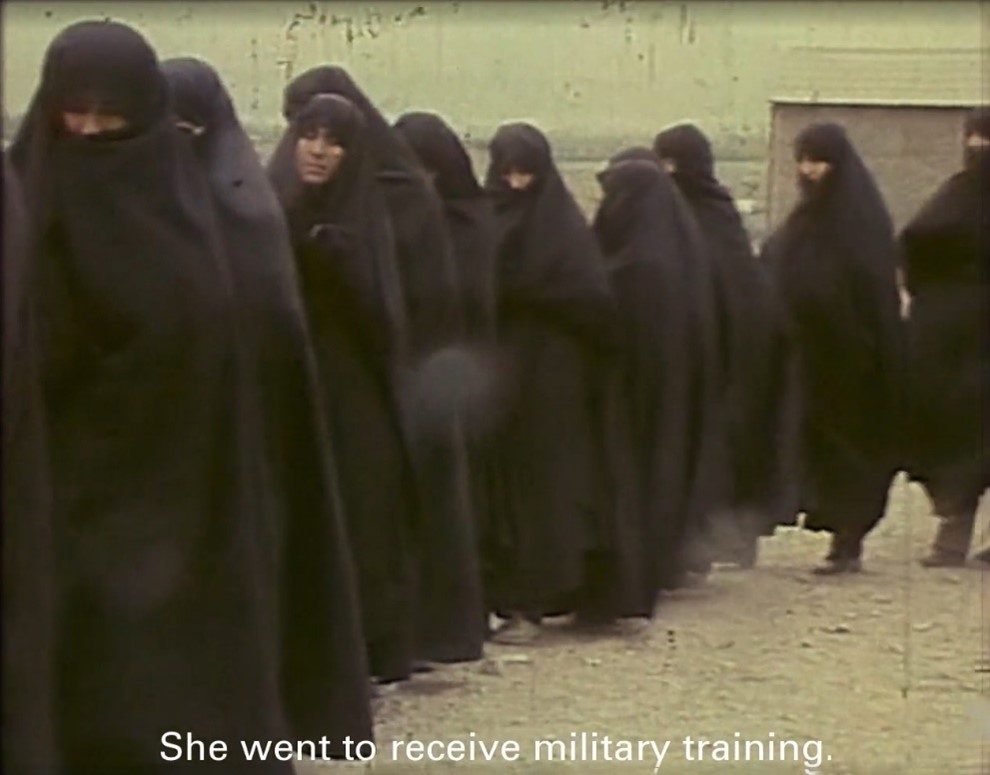
Figure 27: Women at a military training camp during the Iran–Iraq War. A still from the film Radiograph of a Family (Rādīyugrāphī-i yak khānavādah), directed by Fīrūzah Khusruvānī, 2020. Accessed via https://www.youtube.com/watch?v=wCdfxBnC8_o (00:01:21).
A soft piano rendition of one of the most famous Iran-Iraq war songs plays over this scene. Although the lyrics are absent, the melody alone conveys its original message, invoking themes of martyrdom and duty by referring to Iranians as the army of the Imam of the Time and calling them to prepare for relentless battle. This moment exemplifies the film’s creative use of sound, layering the narrative with an auditory effect that heightens the emotional intensity of the wartime imagery. For those who lived through or grew up during the war, the melody serves as a deeply evocative and haunting reminder of that era, reinforcing the film’s ability to connect personal memory with national history.19To view the original war mourning song ‘O Army of the Lord of the Time, Be Prepared,’ performed by Sādiq Āhangarān and juxtaposed with images from the battlefield, see Montazareen e khatam ul aaemeha.a.s, “Āhangarān, Ay lashkar-i sāhib zamān,” YouTube, posted October 02, 2016, https://www.youtube.com/watch?v=km0pwWI4l7U&list=RDkm0pwWI4l7U&start_radio=1.
However, the film does not offer a simplified depiction of ideological opposition between the mother and father. Khusruvānī criticizes Western interpretations that attempt to frame them as symbols of secular modernity versus religious fundamentalism. She argues that such reductionist analyses lead to polarization.20MOOOV, “Q&A Firouzeh Khosrovani – ‘Radiograph of a Family’,” YouTube, posted May 23, 2022, https://www.youtube.com/watch?v=Wmxhc5Ftn9k. Instead, she portrays her parents as individuals shaped by their times. Her father’s embrace of secularism, art, and parties was not just personal preference but a reflection of the broader social climate of his era before the Revolution. Similarly, her mother’s revolutionary fervor gained legitimacy through the Islamic framework that came to dominate post-revolutionary Iran.
Through its masterful use of sound, imagery, and juxtaposition, Radiograph of a Family not only reconstructs a deeply personal history but also reflects the broader transformations that shaped post-revolutionary Iran. By layering individual memory with collective experience, the film challenges simplistic narratives of victimhood and resistance, illustrating the complex ways in which ideological shifts redefined gender roles and social structures. In doing so, it highlights how the revolution simultaneously expanded and constrained opportunities, creating new forms of agency for some women while marginalizing others. Ultimately, the film invites viewers to consider how political upheavals do not just reshape nations—they also fracture and redefine the most intimate spaces of family and home.
Conclusion
While legal, religious, and cultural forces shape women’s freedom of movement in Iran, these constraints are neither uniform nor absolute. This article has demonstrated how Iranian cinema captures the negotiation of space as a contested process, revealing both the barriers imposed on women’s mobility and the ways they navigate and resist them. These films challenge rigid spatial binaries—public versus private, male versus female—by illustrating the fluid, lived realities of space and the ongoing struggle to define and redefine it.
Some restrictions, such as male guardianship laws, directly curtail women’s ability to travel and access opportunities, while others are more paradoxical, as Islamized public spaces have created new avenues for social and professional participation. The contradictions of gendered mobility in Iran reveal that space is not merely restricted but also reconfigured, expanding for some while narrowing for others based on class, religious adherence, and social status.
While cases like Radiograph of a Family demonstrate moments when gender hierarchies are reversed, these remain exceptions. Legal and informal controls on women’s transgression of space remain deeply entrenched, reinforcing patriarchal norms that dictate access to mobility. However, Iranian women continue to resist, whether through legal advocacy, personal defiance, or the simple act of moving in spaces they are expected to avoid.
Yet, not all forms of restriction come from legal mandates—social norms and invisible boundaries often exert the most effective control. Challenging these norms requires more than legislative change; it requires reshaping the cultural narratives that sustain them. This is where cinema plays a transformative role—not only reflecting lived experiences but actively shaping how mobility, gender, and space are imagined. These struggles are evolving in contemporary Iranian cinema and digital spaces, where new forms of resistance, negotiation, and visibility are emerging.
Prologue
By the time Muhammad Rasūluf’s film The Seed of the Sacred Fig (2024), after making its way through multiple festivals and a few public screenings, arrived at the small, independent, and well-supported Lüneburg’s SCALA, I had assumed there would be very little left in the film to surprise me. Considering the number of interviews with Rasūluf and his cast I had watched and read, I had naively assumed we should know a lot about the film by now. This was proved otherwise. Even more was revealed to me five months later, in the summer of 2025, during a brief conversation I had with Muhammad Rasūluf in Berlin. That was when I realised that, the thought processes behind his mode of seeing is indeed the apparent reason for the ‘simple complexity’ of his storytelling. Meeting with Sitārah Malikī (Sanā – younger daughter), Mahsā Rustamī (Rizvān – older daughter), and Niyūshā Akhshī (Sadaf – classmate) also revealed the secret behind their dedication to make this impossible film possible. I wish I could interview Mīsāq Zārah (Īmān – the father and the Investigating Judge) and Suhaylā Gulistānī (Najmah – the mother) to ask about their embodiment of the dilemma of being human in the entanglement that Rasūluf’s screen foregrounds. Alas, at the time of this writing, they still remained under the scrutiny of the Islamic Republic regime. Those conversations and the analysis of audience participation, therefore shaped the structure of the present research. As they complemented the aesthetic and structural exploration of the film. Therefore, this essay aims to provide a wholesome approach towards the type of independent and underground cinema that Iranian filmmakers like Rasūluf are its pioneers.
In his unadulterated honesty, apparent in the script, the selfless acting he gets from Sitārah Malikī, Mahsā Rustamī, Mīsāq Zārah, and Suhaylā Gulistānī, the impeccable cinematography, witty and symbolic location scouting, piercing close-ups, immaculate framing, and arresting mouvement – apparent in both camera and editing, especially the final scene—Rasūluf makes the ordinary extraordinary in The Seed of the Sacred Fig. Artistic choices made by Rasūluf and his cast and crew alike—Andrew Bird (editor) and Karzan Mahmoud (composer), for example—allow for a composition that entices spectator’s curiosity, excitement, thrill, sympathy, and fear all at once. Lighting, defined by the imposed production limits –due to “illegal” shooting—next to the peeping camera that captures chilling frames while bypassing security measures, hand in hand with the well-thought-out mise-en-scène, bring the surveilled outside inside. These are as much artistic choices as they are cunning solutions to the state-imposed restrictions that Rasūluf had to resort to.
Audience Reception of the Sacred
The Seed of the Sacred Fig is a Gestalt that could easily entertain the spectator who may simply watch it for the thrill, with a touch of humanity. Yet it opens a goldmine of palimpsests of meanings and secrets to a mesmerized lover of this magic lantern, risen from the dust of a land that once was ours, with a breath of fresh air.
In December 2024, in a restored medieval building in the well-preserved medieval city of Lüneburg, a glimmer of hope emerged once again for Iranian cinema. A cinema that not only entertains but can so innately and honestly be Iranian, unapologetically ancient and contemporary at once, so near, and yet out of reach. A new chapter of Iranian cinema was being written on the silver screen. “Rasūluf has arrived”, I thought.
Both screenings I attended entertained spectators—barring four on the second night—who were entirely non-Iranian. For the 167-minute runtime, they remained engaged and impressed. The film succeeded in communicating with its foreign audience. These were spectators who had never lived under circumstances portrayed by the gripping storytelling of The Seed of the Sacred Fig. The impact was so intense that the person seated next to me on the second night experienced an involuntary seizure following the sequence of IRGC1National Counterterrorism Center (NCTC) gives the following definition of the Islamic Revolutionary Guard Corps (IRGC); “The IRGC is the Iranian state’s armed force charged with defending Iran’s regime [It is separate from Iran’s conventional military force] … The IRGC-QF is one of the Iranian regime’s primary organizations responsible for conducting covert lethal activities outside Iran, including asymmetric and terrorist operations…,” see “Islamic Revolutionary Guard Corps (IRGC),” Counterterrorism Guide, accessed October 29, 2025, https://www.dni.gov/nctc/terrorist_groups/irgc.html. attacks against peaceful protestors during the early days of Mahsā Jīnā Amīnī’s Woman, Life, Freedom movement in 2022.2On 16 September 2022, 22-year-old Iranian Kurdish woman Mahsā Jīnā Amīnī died in the custody of the Morality Police in Tehran, sparking a nationwide uprising that was immediately named after the Kurdish-origin slogan “Woman, Life, Freedom” (Jen, Jian, Azadi). SCALA paused the film. The patient was revived and taken to a medical facility. The pause created an opportunity to engage with the audience, revealing how deeply they had connected with the film up to that point. The screening resumed with the scene in which Sadaf, a university student and friend of Rizvān, the older daughter of the family, was revived by Najmah, the mother, who was removing lead pellets out of her blood-covered face.3These are pellets from the use of shotgun shells. Evidence of birdshot was present in the victims of attacks by IRGC during the Woman, Life, Freedom uprising. For further information, see Mahsa Alami Fariman and Ahmadreza Hakiminejad, “Woman, Life, Freedom: Revolting Space Invaders in Iran,” European Journal of Cultural Studies 27, no. 4 (August 14, 2024), https://doi.org/10.1177/13675494241268101. Sadaf, however, unlike the German spectator, was not taken to a medical facility. Later in the film, it is revealed that she was arrested by plainclothes agents. By witnessing an incident commonly experienced by Iranians, the German audience appeared visibly affected—stressed, albeit compassionately. Their sympathy was deeply moving to a Persian viewer them watching them watching the film. This moment recalled the emotional charge carried by those who have actually lived (and are still living) that story. This film is proving to be gripping in the honesty of its storytelling.
Unraveling the Gestalt: Rasūluf’s Sacred Dream
Rasūluf’s gaze onto the life of a lawyer and his family turns a deceptively ordinary domestic life into an extraordinary political power struggle between genders, mythologies, and desires, with patriarchy and tyranny at the heart of it. Īmān, the protagonist played by Mīsāq Zārah,4This is not Mīsāq’s first collaboration with Muhammad Rasūluf. He has previously appeared in Rasūluf’s films, as listed on IMDB. https://www.imdb.com/name/nm3885117, accessed September 18, 2025 is a judge at the service of the Islamic Republic penal court, assigned to death penalty cases. He is introduced in the opening sequence when leaving work and driving past a series of tall concrete walls. There is a striking similarity between this sequence and one previously seen in Rasūluf’s There Is No Evil (Shaytān vujūd nadārad, 2020).5A Golden Bear at the 70th Berlin International Film Festival in February 2020 and Sydney Film Prize at the Sydney Film Festival in November 2021. Either Īmān (who signs the execution order) is connected to Hishamt (who presses the execution button), or he is an extension of him—an evolved version of Hishmat. Either way, Rasūluf’s camera treats them in similar ways.
Īmān continues to meander through the city until he enters a valley in the dead of night. The close-up of his face while driving reveals a pair of kind eyes. When his car stops at the bottom of the valley, behind him looms the shadow of an ancient bridge that connects two sides of the landscape, overwhelming the dimly lit frame. On one side stands the magnificent ruins of an ancient city called Kharanaq Old Castle (also known as the City of the Sun),6
For more information, see Mojgan Aghaeimeybodi and Elham Andaroodi, “Cultural Landscape and Typology of the Khranaq Village in Iran,” Space and Form 47 (2021): 204, https://yadda.icm.edu.pl/baztech/element/bwmeta1.element.baztech-6b9c7b34-fc42-4208-bc19-a295e2bfaa96/c/DOI10_21005_pif_2021_47_E-01_Aghaeimeybodi_Andaroodi.pdf.
“Kharanaq village is located about 79 km. northeast of Yazd city, in a mountainous area at the edge of the desert […]. The primary core of this village-castle rarely has no separate governmental facilities and structures. The body of the castle which was constructed around a central core based on a coherent plan has been occupied by people for over 1,000 years. According to historical texts, this village was built in pre-Islamic periods and was first inhabited by Zoroastrians (Shahzadi,1995, 15). The existence of Chak Chak fire temple, which is one of the most famous Zoroastrian temples of Iran near Kharanaq is the evidence for this claim. The archaeological researches and findings have also proved the Sassanid foundations of Kharanaq village-castle between 2nd to 6th centuries AD.”
Kawarnaq (also spelled Xawarnagh) is the name of a Sassanid-era palace near Hira, built during the reign of Yazdigird I (399–420 CE) by the famed Byzantine architect Senemar for King Numan (403–431 CE). Beyond legends, little is known about Kawarnaq. Encyclopedia Iranica provides several references such as: “King Yazdegerd I, instructs Noʿmān to host and educate his son, Bahrām, in Ḥira. Bahrām mainly distinguishes himself in hunting. Two of his hunting exploits are painted in the hall of Ḵawarnaq at the instigation of Noʿmān’s son, Monḏer (Ṯaʿālebi, pp. 543-44).” Elsewhere in the same entry it is stated that “F. C. Andreas reconstructed old Iranian huvarna or χuvarna and interpreted it as a compound in the literal sense of ‘giving good refuge’ or ‘having a beautiful roof.” Phonetically closest to ḵawarnaq is Avestan xᵛarənah ‘glory’.” See Renate Würsch, “Ḵawarnaq,” in Encyclopedia Iranica online, accessed 29 December 2024, https://www.iranicaonline.org/articles/kawarnaq/.
The significance of the location is not just being a ruin. The palimpsest of history, environment, and identity this location offers is the key point to the Gestalt that I argue is at the core of Rasūluf’s aesthetics.
which dates back to the Sassanid Empire. It serves as a reminder of the pre-Islamic Zoroastrian culture of Yazd province, where the city is located. Īmān appears insignificant in the vastness of the valley.
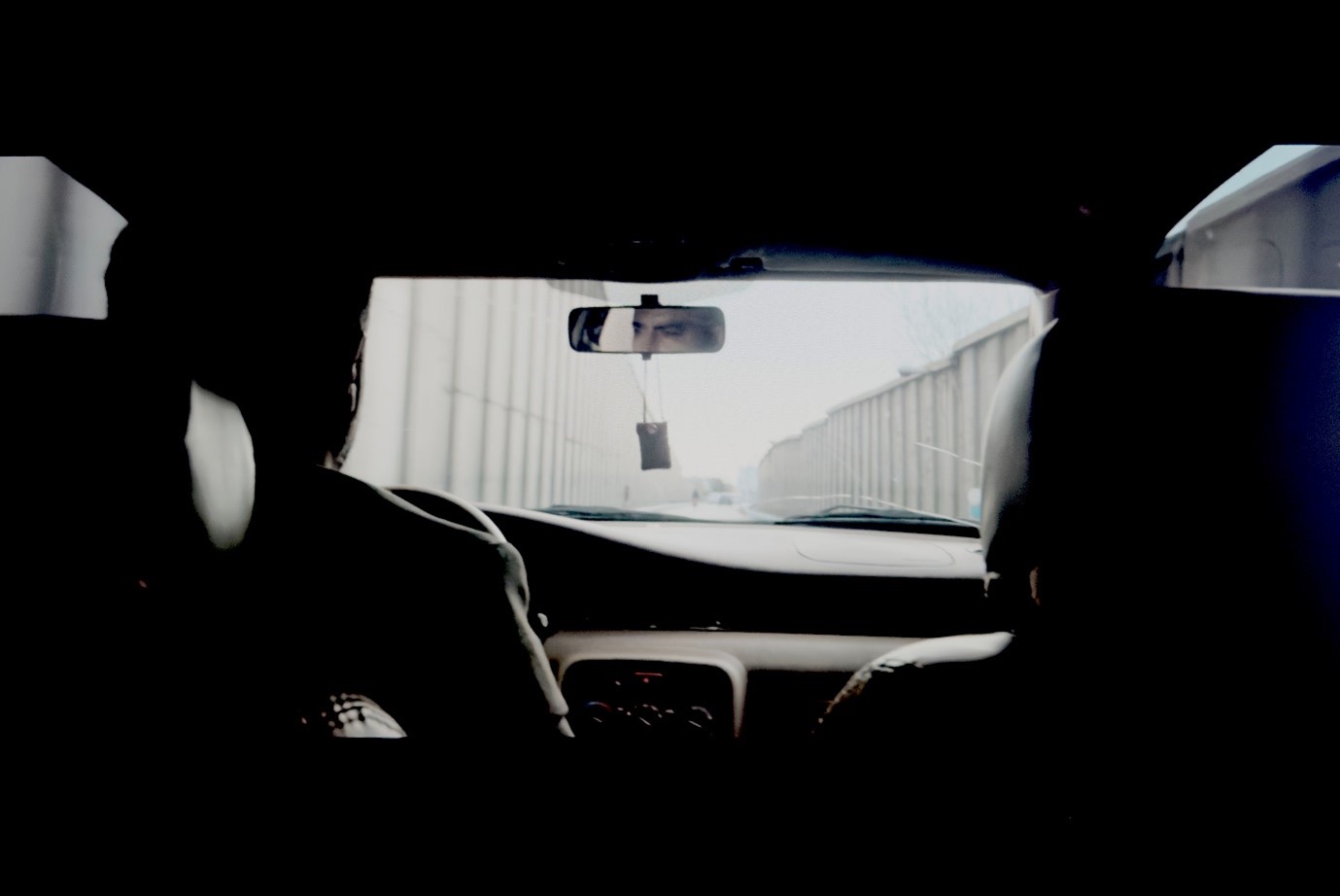
Figure 1: Īmān drives by prison walls. Still from The Seed of the Sacred Fig (Dānah-yi Anjīr-i Ma‘ābid), directed by Muhammad Rasūluf, 2024. 00:02:10
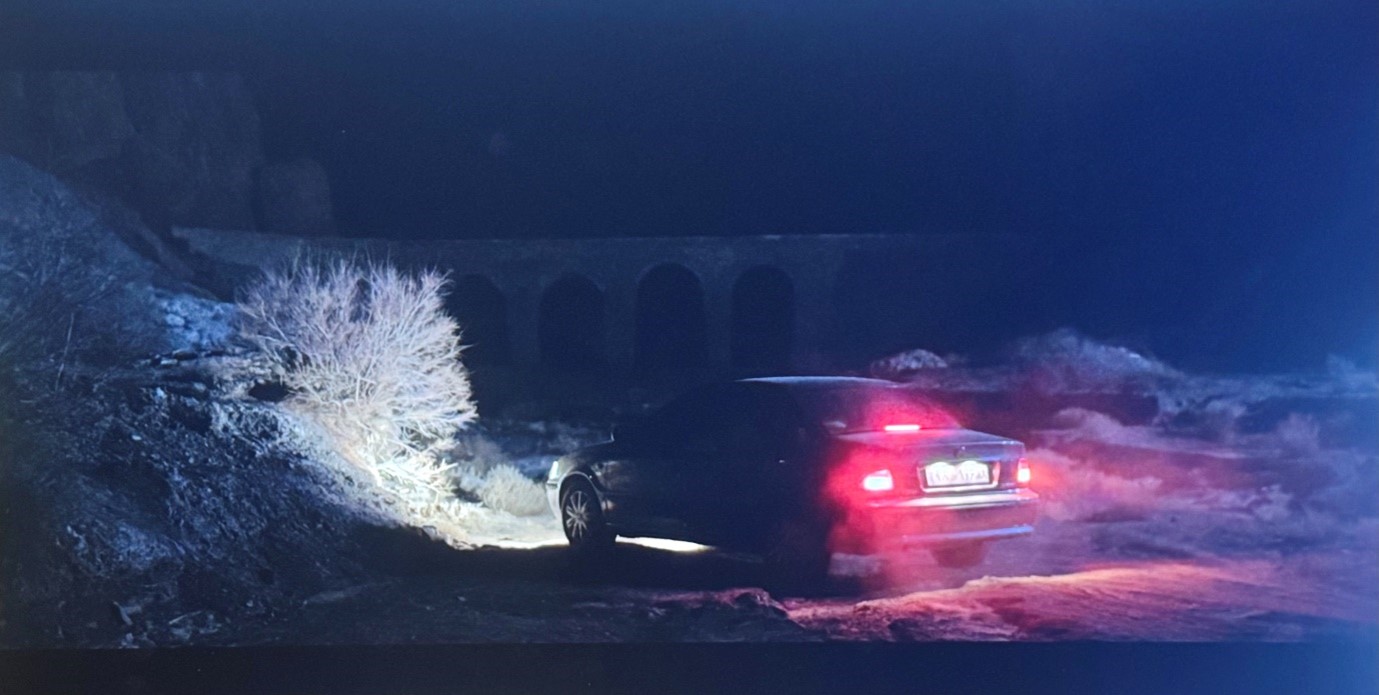
Figure 2: Īmān stops at the Kharanaq aqueduct bridge. Still from The Seed of the Sacred Fig (Dānah-yi Anjīr-i Ma‘ābid), directed by Muhammad Rasūluf, 2024. 00:03:18
Figure 3: Īmān backs to Kharanaq facing the mausoleum. Still from The Seed of the Sacred Fig (Dānah-yi Anjīr-i Ma‘ābid), directed by Muhammad Rasūluf, 2024. 00:03:35
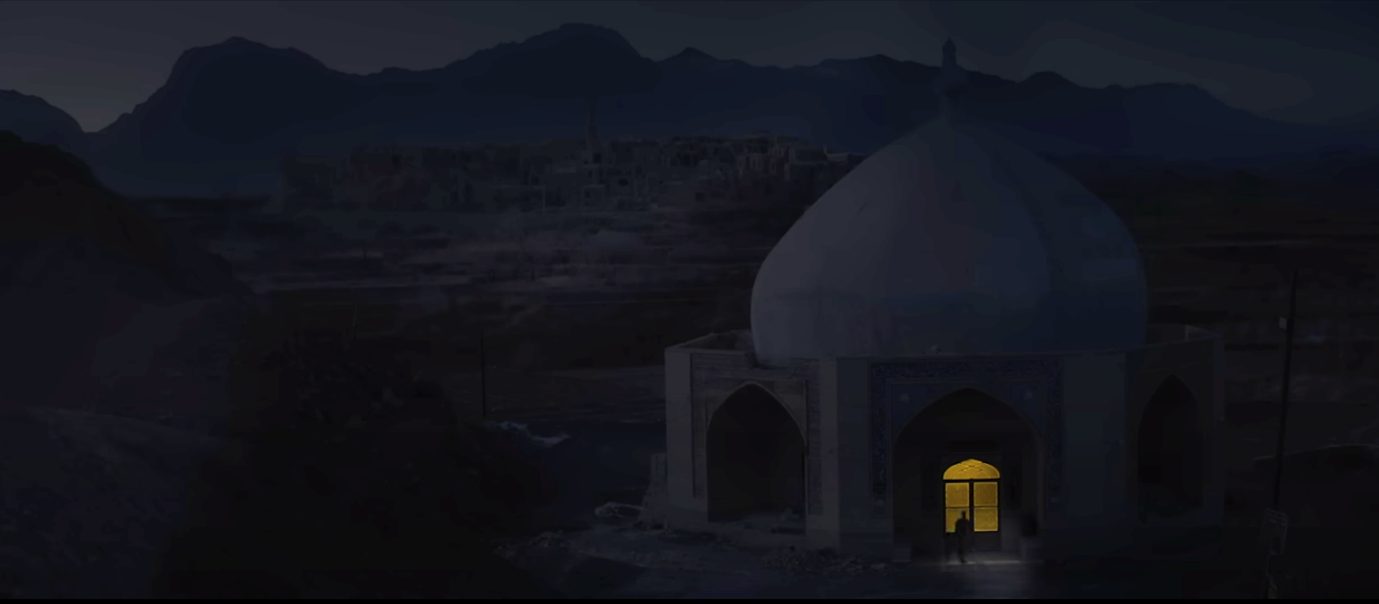
Figure 4: Īmān enters the mausoleum of Imāmzādah Sayyid Muhammad. Still from The Seed of the Sacred Fig (Dānah-yi Anjīr-i Ma‘ābid), directed by Muhammad Rasūluf, 2024. 00:03:44
The next long shot shows the lit windows of a newly built mosque flickering on the dark canvas of night, directly opposite the City of the Sun. The contrast is stark. A close-up of Īmān’s face holds Kharanaq in the background, as if he is standing against the ancient identity, looking only toward the new faith. Is he turning his back on what he is? The frame becomes a narrative in its own right. The following sequence shows Īmān in prayer inside the mausoleum. This valley is revisited later in the film, by which point Rasūluf’s sharp editorial choices have already cut through the palimpsest of this family, their story, and shared history.
Meandering through seemingly mundane day-to-day life of a family, the film invites spectators into a domestic life that Iranian cinema has not been able to portray since the establishment of the Islamic Republic and the formation of the Ministry of Culture and Islamic Guidance (CIG).7
Since its establishment in 1980, CIG, according to its official website (www.farhang.gov.ir), has been responsible for enforcing a range of regulations that have effectively granted the state broad authority to impose various restrictions, surveillance, bans, and limitations on filmmaking activities. Under these regulations, any production requires a permit issued by the CIG; otherwise, it is deemed illegal. According to the official mandate:
“introducing the basis, manifestations and ideal of the Islamic revolution to world community through art, audio/visual means, books, publications, arranging of cultural gatherings and other possible activities within the country and abroad with collaboration of ministry of foreign affairs and other concerned authorities [emphasized added]… Issuing license of banning the activities of cultural, press, news, art, cinema [emphasized added], audio-visual, publications and propagation institutions in the country… Leading and supporting film making centers, script writing, movie theaters, film screening centers,… issuing licenses and withdrawing them for such institutions and foreseeing their activities. Foreseeing the cultural, art, propagation activities of expatriates residing in Iran through cooperation of other concerned authorities.” See, www.farhang.gov.ir, accessed December 29, 2024.
Throughout the film, the audience is made aware that this is a devout family, adhering not only to Islamic practices, but also to the laws instituted by the Islamic regime. Yet, for the first time, spectators see the three women (the mother and two daughters) at home without headscarves. We see them as they are, within the privacy of their home. We see the daughters doing their nails, listening to music, hanging out with their friend, like any other teenagers.
Figure 5: Breakfast. Still from The Seed of the Sacred Fig (Dānah-yi Anjīr-i Ma‘ābid), directed by Muhammad Rasūluf, 2024. 00:08:35

Figure 6: Mother, daughters and their friend, doing their nails and eyebrows. Still from The Seed of the Sacred Fig (Dānah-yi Anjīr-i Ma‘ābid), directed by Muhammad Rasūluf, 2024. 00:20:14
The spectator lives with them as they go through their ordinary day-to-day lives. Their public appearance in full Islamic hijab is contrasted with how they live in private, a lived dichotomy. This image in itself, other aspects of the filmmaking aside, is a breath of fresh air. This truth on the Iranian screen has not been seen for the past forty-five years. Simply for this, and for showing what is real; the embedded contrast in the ordinary, this honest domestic scene, Rasūluf and his crew took life-threatening risks. This is an aspect entirely strange and intangible to non-Iranian viewers and filmmakers who are not familiar with the duality of this profession. Domestic honesty had rarely found a suitable cinematic frame in Iranian cinema. Even in Hamoun (Hāmūn, 1989), Mihrjūyī had to resort to showing Bītā Farrahī, playing Mahshīd with her head covered by a large white bath towel—implying she had just washed her hair. Working with such limiting regulation that is imposed on Iranian filmmakers, Kiyārustamī famously stated that he prefers to avoid domestic private scenes because he refuses to let his camera lie.8Ali Akbar Mahdi, “In Dialogue with Kiarostami,” The Iranian, August 25, 1998, accessed December 29, 2004, https://www.iranian.com/Arts/Aug98/Kiarostami/; See also, Geoff Andrew, interview with Kiarostami, “Abbas Kiarostami,” The Guardian, April 28, 2005, accessed December 29, 2024, https://www.theguardian.com/film/2005/apr/28/hayfilmfestival2005.guardianhayfestival.
Rasūluf does not stop there. He did not seek official CIG permission for shooting the film. Within the first thirty minutes, it becomes apparent to the spectator that this group of brave artists—cast and crew included—decided to take serious risks for their collective artistic endeavour.
In a video released soon after leaving Iran, Rasūluf briefly explained his decision and the future he had envisioned for the film. In a series of subsequent interviews, he provided more details about the process of making this “underground” film and the conscious decisions he and his cast and crew made, fully aware of the potential consequences. On May 13, The Hollywood Reporter published a report with a full statement by Muhammad Rasūluf:
…actors and agents of the film are still in Iran and the intelligence system is pressuring them. They have been put through lengthy interrogations. The families of some of them were summoned and threatened. Due to their appearance in this movie, court cases were filed against them, and they were banned from leaving the country. They raided the office of the cinematographer, and all his work equipment was taken away. They also prevented the film’s sound engineer from traveling to Canada. During the interrogations of the film crew, the intelligence forces asked them to pressure me to withdraw the film from the Cannes Festival. They were trying to convince the film crew that they were not aware of the film’s story and that they had been manipulated into participating in the project.9Maya Galuppo, “Dissident Iranian Filmmaker Rasoulof Flees Country: ‘With a Heavy Heart, I Chose Exile’,” The Hollywood Reporter, May 13, 2024, accessed December 29, 2024, https://www.hollywoodreporter.com/news/general-news/mohammad-Rasoulof-flees-iran-cannes-1235897525/.
It is not merely the decision to forgo the official permission that makes Rasūluf’s decision noteworthy. The Seed of the Sacred Fig is also uncensored. Rasūluf, in addition to bypassing the constraints of mandatory hijab, exercised the freedom to tell his story as he envisioned it, as he intended it, and as he wished it to be seen. The film joins a select few pioneer in Iranian cinema, where women can finally see the light of the projector without a head cover or the blade of censorship. Films produced with official approval and under the supervision of a representative from CIG are subject to state censorship and, consequently, are inevitably altered. This is a topic that warrants its own dedicated space beyond the scope of the present study. Nonetheless, the film is filled with symbolic and lyrical notions, this time serving the storytelling rather than functioning solely as a means of circumventing state-imposed regulations.
Upon Īmān’s arrival home, the camera follows his wife into their bedroom as she brings him a tray of bread and cheese, prepares morsels for him, and feeds him while sitting together on the bed, in a medium shot of a tightly arranged mise-en-scène. As they talk about Īmān’s promotion to Revolutionary Court Investigating Judge, he reveals a handgun assigned to him for protection. Najmah expresses discomfort with it. Īmān places the gun in the drawer of the bedside table. There is love and affection in their look, emphasised by the warm lighting of the mise-en-scène. The spectator learns learn about their dreams of moving into a three-bedroom apartment, where the two daughters could each have their own room. The desire for that which could be had signals a lack. That lack represents something that Īmān had to work hard to get closer to. The tenderness in Najmah’s acting foregrounds the notion of desire slightly stronger.10There are numerous tightly-designed frames that show them in very intimate settings, including a shower scene that shows her hands on his face and hair, supposedly trimming his hair and beard. Besides the symbolically sensual nature of these frames, their appearance on the screen of an Iranian film, written, directed, acted and shot by Iranian artists, make them even more significant. Suhaylā Gulistānī and Mīsāq Zārah delicately portray this loving couple, at this intimate moment, with an acting that is as “true” as Najmah’s uncovered hair, when she is sitting next to Īmān, tending to him.
Figure 7: Najmah puts Īmān to bed. Still from The Seed of the Sacred Fig (Dānah-yi Anjīr-i Ma‘ābid), directed by Muhammad Rasūluf, 2024. 00:07:48
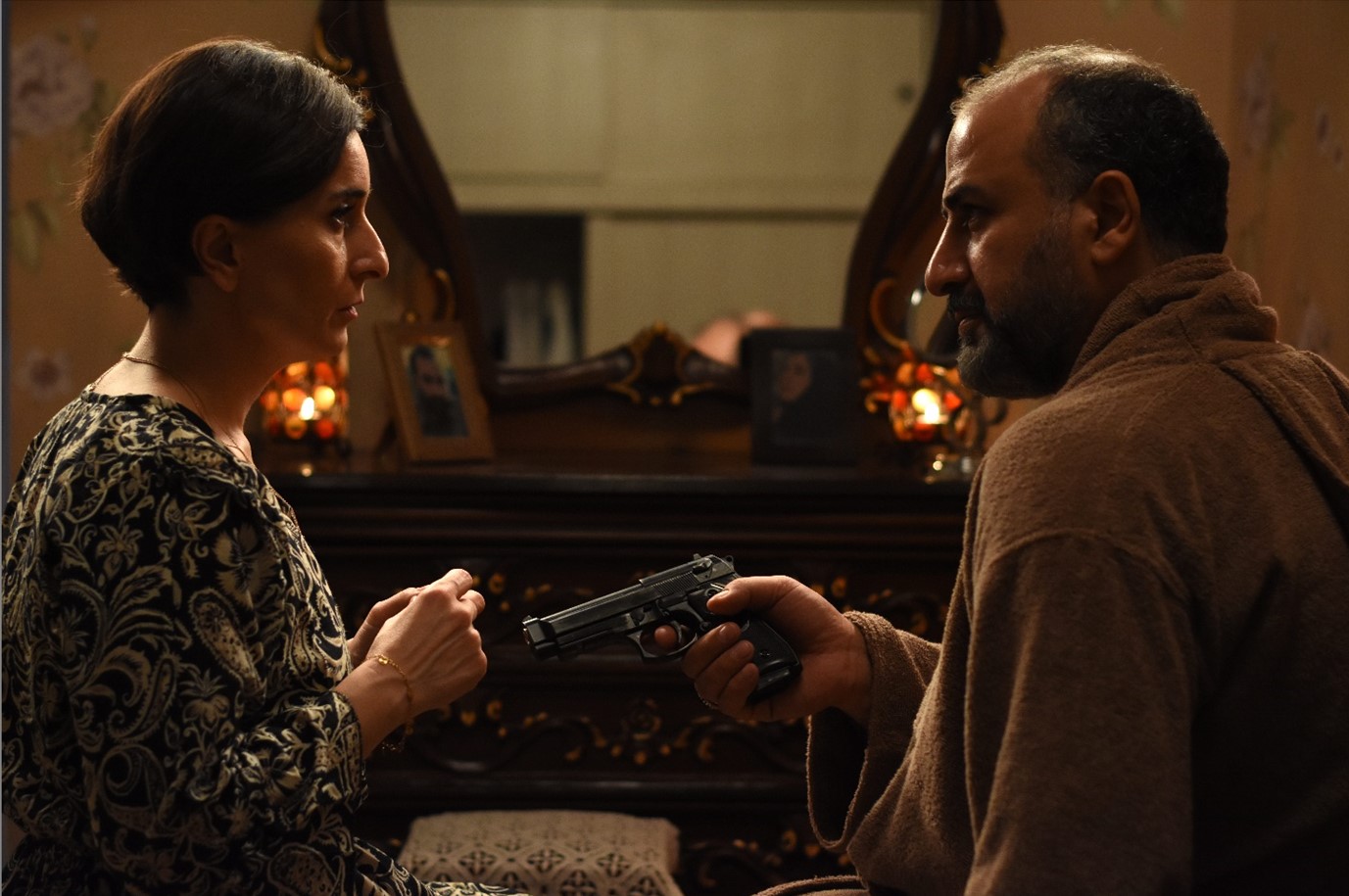
Figure 8: Gun in bedroom, between Najmah and Īmān. Still from The Seed of the Sacred Fig (Dānah-yi Anjīr-i Ma‘ābid), directed by Muhammad Rasūluf, 2024. 00:06:30

Figure 9: Close-up of the Gun. Still from The Seed of the Sacred Fig (Dānah-yi Anjīr-i Ma‘ābid), directed by Muhammad Rasūluf, 2024. 00:06:38
Yet there is a gun in their privy. Rasūluf leads the audience through dialogues he has written for Najmah and Mīsāq to realize that the gun is necessary for their protection. This notion of “protection” keeps coming back in upcoming dialogues. Īmān’s colleagues, too, remind the spectator of this a few more times through the film. Nonetheless, cutting between Najmah’s worry face and the close-up of the gun turns it into a third person in their bedroom. The Desire that has always been allegorically and symbolically shown in a rather cloak-and-dagger storytelling style, is now unapologetically seen on the screen of Rasūluf. He, Suhaylā, and Mīsāq have dared, and dared openly.
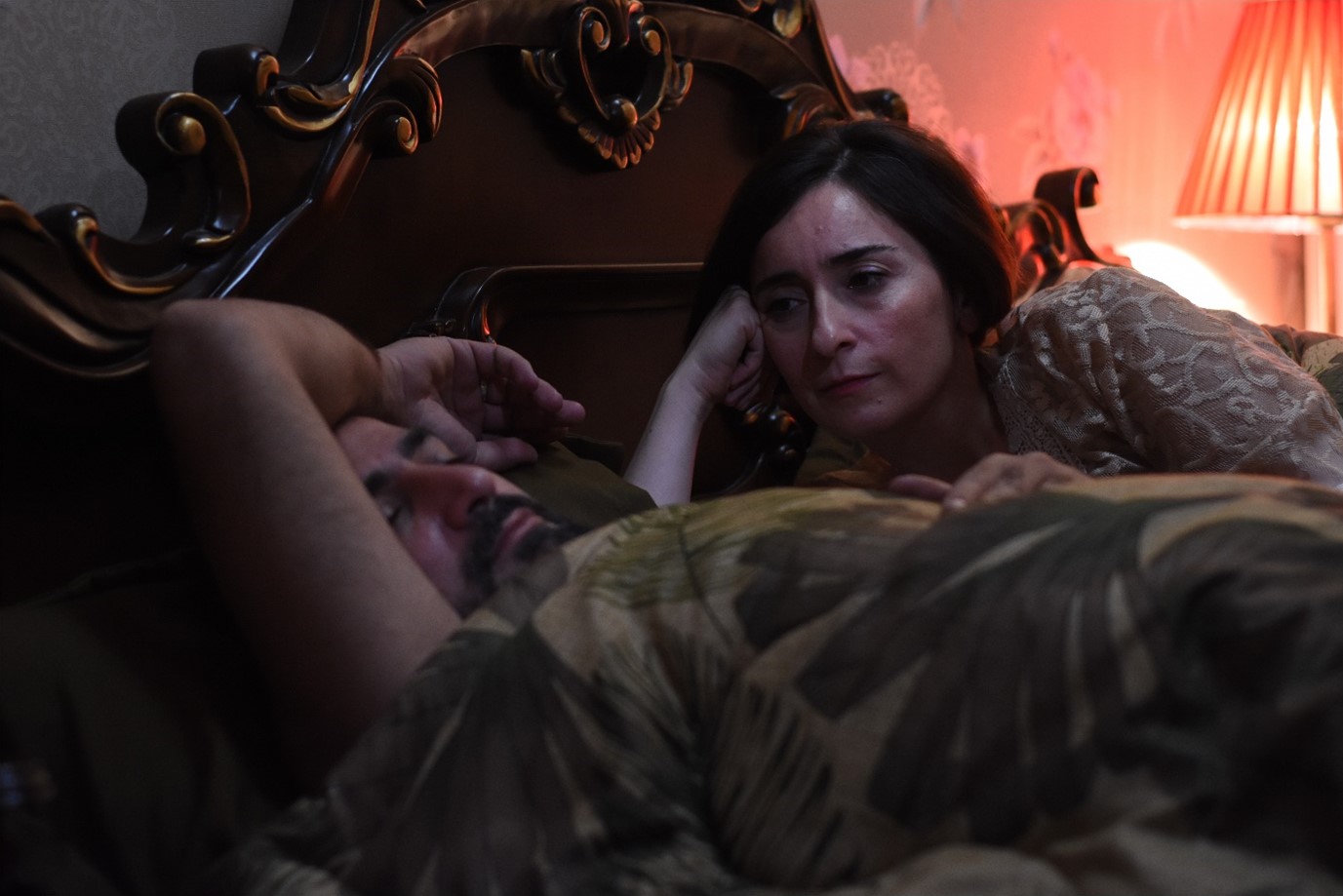
Figure 10: Najmah and Īmān in bed planning their future. Still from The Seed of the Sacred Fig (Dānah-yi Anjīr-i Ma‘ābid), directed by Muhammad Rasūluf, 2024. 00:37:16

Figure 10-a: Najmah washes Īmān. Still from The Seed of the Sacred Fig (Dānah-yi Anjīr-i Ma‘ābid), directed by Muhammad Rasūluf, 2024. 00:57:50
Dialogues written for Īmān and Najmah are meant to reveal the trust they have in each other, foregrounding their close relationship. Their comfortable acting captured in a series of medium close-up frames, shot in a bedroom set, lit with a warm color composition and always with an alarming red bedside lamp, complement Rasūluf’s layered symbolic storytelling. The audience learns about their secrets and lies, hopes and ambitions, as well as their internal conflicts, through sequences shot in that same bedroom. Īmān, as previously seen at work in the courthouse, is going through a personal conflict, struggling between his ethical convictions and what is asked of him as a Revolutionary Court Investigating Judge. His predecessor lost his job due to some such similar conflicts. He discusses this with Najmah. She wants that three-bedroom flat. The theme of desire claims a presence in most bedroom scenes. The “desire” always justifies their moral conflict.
Evil Has Arrived
Īmān is compelled to sign an execution order hastily, without reviewing the convict’s file. This dilemma is shared with his superior—a friend, apparently—across a series of sequences: Īmān walks through a prison corridor lined with life-size cardboard cutouts of Qāsim Sulaymānī on both sides,11Qāsim Sulaymānī was killed on January 3, 2020, at Baghdad International Airport. Alongside him, the Popular Mobilization Forces (PMF) deputy commander, ‘Abū Mahdī al-Muhandis, and five others were also killed when a U.S. launched missiles at their convoy. Sulaymānī was an Iranian major general and commander of the Quds Force (1997/98–2020), a branch of the Islamic Revolutionary Guard Corps (IRGC) responsible for IRGC foreign operations. while a line of prisoners in blue-striped uniforms passes behind him. Upon entering the office of his colleague Qādirī and protesting the legality of the order, Rizā Akhlāqīrād is introduced, seated against a wall covered with images of Khāmanah’ī12‘Alī Khāmanah’ī, the current leader of the Islamic Republic. and other figures of the Islamic Republic, all shown in a tightly framed medium shot. A close-up of their engaged faces cuts to an extreme close-up of a table calendar on which Qādirī writes: “bugged”.13The Seed of the Sacred Fig, directed by Muhammad Rasūluf (France, Germany, Iran, 2024), 00:12:05. This leads into a sequence of reverse medium shots of Qādirī and Īmān, presumably in the prison canteen, where Qādirī informs Īmān that refusal to sign would cost him his position, as it did his predecessor. Īmān is framed within lines of rods and the blurred forms of barred doors and windows behind him.
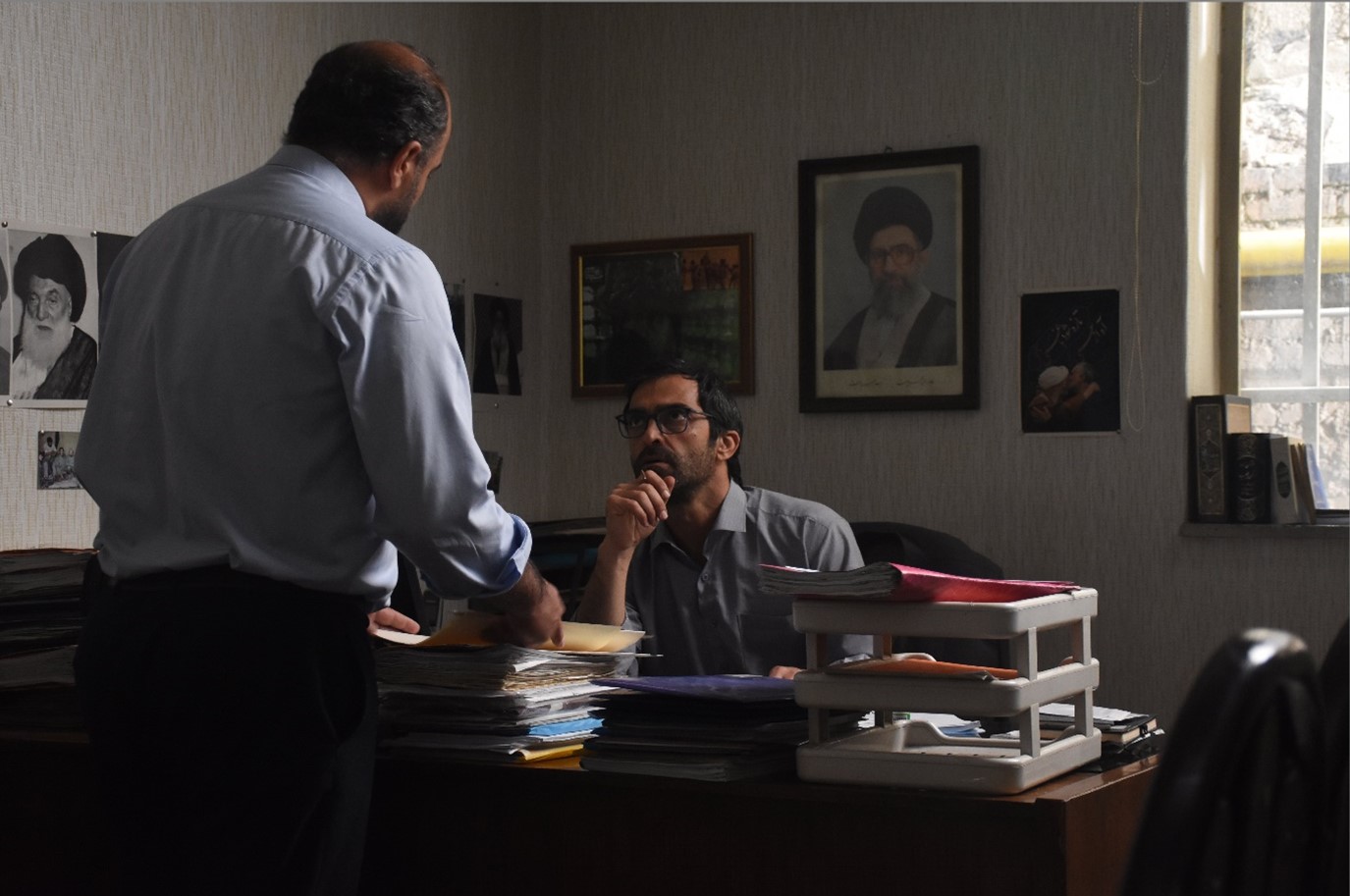
Figure 11: Īmān at Qādirī’s office. Still from The Seed of the Sacred Fig (Dānah-yi Anjīr-i Ma‘ābid), directed by Muhammad Rasūluf, 2024. 00:11:25
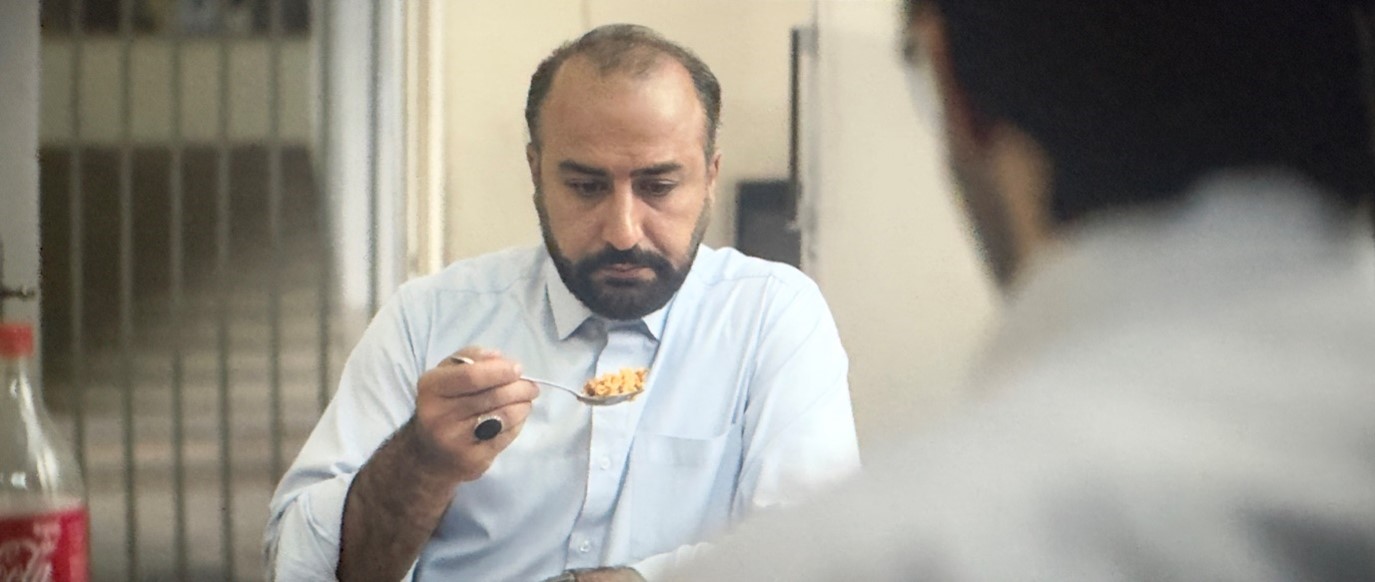
Figure 12: Īmān at the canteen. Still from The Seed of the Sacred Fig (Dānah-yi Anjīr-i Ma‘ābid), directed by Muhammad Rasūluf, 2024. 00:13:09
The shot is powerfully symbolic, particularly when juxtaposed with intimate conversations between Najmah and Īmān about the three-bedroom government housing or the dishwasher that Najmah requests so innocently. “Desire begins to take shape in the margin in which demand rips away from need.”14Jacques Lacan, “The Subversion of the Subject and the Dialectic of Desire in the Freudian Unconscious,” in Écrits, trans. Bruce Fink (New York: W. W. Norton, 2006), 689. Lacan calls this object objet petit a that is the unattainable object-cause of desire. In other words, the leftover of the real that cannot be symbolized. This “margin”, both literally—as in the bedside drawer—and theoretically, is the one, the presence, that demands something, by opening up “the guise of the possible gap need may give rise to.”15Jacques Lacan, “The Subversion of the Subject and the Dialectic of Desire in the Freudian Unconscious,” in Écrits, trans. Bruce Fink (New York: W. W. Norton, 2006), 689. Dialectically, the gun—its location, its disappearance, and the pseudo-need to justifying its presence—foreshadows the crack that shall eventually become the hole swallowing Īmān at the end.
That twenty-year-old man’s death sentence is signed. Īmān suffers under the weight of his moral dilemma. Observing the German audience at the Lüneburg’s Scala, unfolded a moment of unsettling complexity. Against the power of skilful filmmaking, it becomes possible for the execrator to feel a degree of sympathy for this troubled judge. But only just. He is not yet fully evil. Najmah too, in her absolute trust, belief, and support, justifies his decision. She reminds him of the promised three-bedroom apartment. They must now be more vigilant, given the importance of protecting his position. She becomes his minion in exerting control over their daughters at home. The desire reigns.
Īmān’s character bears an uncanny resemblance to the protagonist in the first episode of Rasūluf’s There Is No Evil. In thirty-three minutes, Hishmat is portrayed as a caring husband, father, and son, a good neighbor, and someone who is attuned to gender-based social injustices (as illustrated in his conversations with his wife in the car). He even dyes his wife’s hair in preparation her for an upcoming wedding.16Najmah does this in The Seed of the Sacred Fig in a minimalist and deeply sensual sequence that suggestively stands in for a love-making scene. The fact that his wife and daughter wear their head coverings loosely also signals that he is a seemingly ordinary man, free from any religious prejudice. The spectator perceives him as kind. Yet he, too, emerges from depths of an underground parking garage to navigate the city during the day, only to return to that Hades, where it is revealed that he is, in fact, an executioner—a chilling revelation for the spectator. Like Īmān, he drives past imposing concrete prison walls, while traffic and streetlights reflect on his face. Hishmat, unlike Īmān, stares at flickering green and red lights of a pharmacy or traffic light near the prison, on his way to work at the crack of dawn. He appears numb, lifeless, and dissociated. Īmān though, turns his back to any alarming signs: his ancient identity, or the warnings of his conscience, surrounded by bars, door frames, and closed windows at his work. Rasūluf arranges his mise-en-scène meticulously, to show how Īmān has become an evolved version of his former protagonist. Evil has arrived.
Īmān’s Lacanian tragic fall is justified through the Aristotelian arc of Rasūluf’s character building, that transforms from a paranoid government judge to a detached father, from a loving husband with full trust in his wife to a monster who becomes the prosecutor and prison guard of his own family, to become a creature who is consumed from within by the desire—symbolized by the gun and its disappearance—which informs his fear and mistrust. His downfall is thus justified.
The gun in The Seed of the Sacred Fig becomes Īmān’s objet petit a—it is the symbolic authority and paternal protection. The missing gun destabilizes Īmān’s authority His position fractures. Īmān’s obsessive interrogation of his family—searching their phones, turning them against one another, coercing confessions—reveals his identification with the regime, now displaced onto the domestic space. He invokes the symbolic order of the state power through patriarchal policing. What is out there is in here now. The boundary has collapsed, as Lacan points to the symbolic failure of order, and how what was assumed “real” or true, slides into psychosis. “The Lacanian object a” [the gun] is “that which causes [the notion of] desire… it is the pure semblance, the empty place which designates the structural lack.”17Slavoj Žižek, “How Did Marx Invent the Symptom?” in The Sublime Object of Ideology (London: Verso, 1989), 87–93. The fear that informs Īmān’s erratic behaviour—resorting to his colleague’s interrogation of mother and daughters—as the signifier of lack of power, is defined by the missing gun (objet petit-a / the object cause of desire).18Jacques Lacan, “The Subversion of the Subject and the Dialectic of Desire in the Freudian Unconscious,” in Écrits, trans. Bruce Fink (New York: W. W. Norton, 2006), 689.
The chorus of the three women leading to Īmān’s downfall also functions symbolically, representing three generations and their respective relationships to the ideologue, the patriarch, the oppressor into which Īmān has transformed. His ultimate undoing, however, comes at the hands of the youngest, the one who steals the object that embodies desire, the symbol of what is lacking, the power that is drifting away. “The objet a is, so to speak, the embodiment of the lack, the positivization of a void around which desire turns.”19See above Slavoj Žižek, “How Did Marx Invent the Symptom?” in The Sublime Object of Ideology (London: Verso, 1989). This is a film with a strong script which needed other elements of filmmaking to come together to turn the magic lantern on. Hence the necessity of making it without any interference from CIG.
So far, Rasūluf’s film has proved to fit the golden parameters of Aristotelian tragedy in its plot, characters, and thoughts/psychology that lead the plot to the fall and, the climax of the story. What is left to unravel is rhythm, what the Greeks called music, and I call the mouvement–in both camera and editing. It is often said that those in the performing arts are resourceful, and so too are Rasūluf and his cinematographer, Pūyān Āqābābā’ī, whose work would determine the challenges that Andrew Bird, the editor, could expect on the editing table. “They move from the very confined space of the apartment in Tehran to the outside world,” Andrew recalls, “but it’s ultimately an equally confined space in this garden, in this house, and even in the ruins where they end up at the end of the film.”20Jillian Chilingerian, “The Seed of the Sacred Fig–Interview with Editor Andrew Bird,” Offscreen Central, January 3, 2025, accessed March 30, 2025, https://offscreencentral.com/2025/01/03/the-seed-of-the-sacred-fig-interview-with-editor-andrew-bird/. The Seed of the Sacred Fig Tree was not the first time he collaborated with Rasūluf. Speaking on the conditions of editing the film in secret he commends and testifies that what held this film together was the immense sense of trust existing in the entire group. The exact lack of which brought the downfall of Īmān. “I was constantly amazed at the thought of how trust works between people,” Andrew comments.
How to Shoot a Sacred Film?
This is not Rasūluf’s first “underground” film. He is also banned from any filmmaking activities based on previous sentences he had received.21“Before being forced into exile, I was already banned from working,” Rasūluf said in an interview with Deadline. Zac Ntim, “Mohammad Rasoulof on His “Anguishing” 28-Day Journey to Escape Iran,” Deadline, May 23, 2024, accessed March 15, 2025, https://deadline.com/2024/05/mohammad-rasoulof-the-seed-of-the-sacred-fig-cannes-iran-germany-1235928308/. Therefore, the traditional route of working with a producer, open auditions and the like does not apply here. Between the interior, exterior, and car sequences, shooting involves varying degrees of complexity, knowing this is an “underground” production. “Whenever the location allowed, I would come on set. It really depended on the location. But I directed often from a certain distance, without being physically present,” Rasūluf tells The Interview Magazine.22Daniel Schindel, “How Director Mohammad Rasoulof Made One of the Year’s Defining Films in Secret,” Interview Magazine, December 3, 2024, accessed March 30, 2025, https://www.interviewmagazine.com/film/how-director-mohammad-rasoulof-made-one-of-the-years-defining-films-in-secret. Car rides are nuanced by sparingly used location shots of the streets of Tehran-a cunning move to bypass surveilling eyes of the authorities. Rasūluf has proven a formidable storyteller with car rides. Agnès Varda occasionally uses the car as a platform for looking outward, not inward. For example, in Les Glaneurs et la Glaneuse (2000), she films roadside scenes from inside the car, using it as a mobile frame for personal reflection. For both Varda and Rasūluf, the car becomes a cinematic lens on the world, viewed by the protagonist (Hishmat staring at the flickering pharmacy sign. Īmān’s paranoia of the motorcyclist following him). He stages conversations there to which he draws his viewer’s attention (revealing intimate, warm and kind family relations, as oppose to Najmah’s with Fātimah in a car that eventually leads to their interrogation at an IRGC’s safe house). What distinguishes Rasūluf as a remarkable filmmaker is the condition under which he creates his film. “There was another problem with making the film in a clandestine way; you have to make everything very quickly or you get exposed” he adds.23Daniel Schindel, “How Director Mohammad Rasoulof Made One of the Year’s Defining Films in Secret,” Interview Magazine, December 3, 2024, accessed March 30, 2025, https://www.interviewmagazine.com/film/how-director-mohammad-rasoulof-made-one-of-the-years-defining-films-in-secret. Yet the precision he is after (and often manages to produce) speaks to well-rehearsed scenes and well-thought-out mise-en-scène. We can see this in the frame compositions of Rasūluf’s films.
The composition of frames makes the viewer an accomplice in this covert operation, especially in some of the well-thought-out interior sequences. One of the best examples is at the beginning of the rising tension of the film when the spectator, as dose the camera, peeps through a narrow opening of a window half-covered by a curtain, watching Sadaf being led to cross the street by Rizvān. Quick-witted Sanā fakes menstrual pain to send her mother on a fool’s errand to fetch some pads from the pharmacy. In a series of well-edited sequences, along with Sanā, we/camera secretly look through the railings, the bars and half-open windows to sneak in the girls. We, the crew, and Rasūluf avoid being caught by the authorities. This is a palimpsest of vison and feeling, collapsed through time, cinematography, and the realities of underground filmmaking in precarious times. The secretly placed camera leads us into the vision-world of Rasūluf’s dream. ‘Secretly looking’ creeps into the imaginary of the viewer.
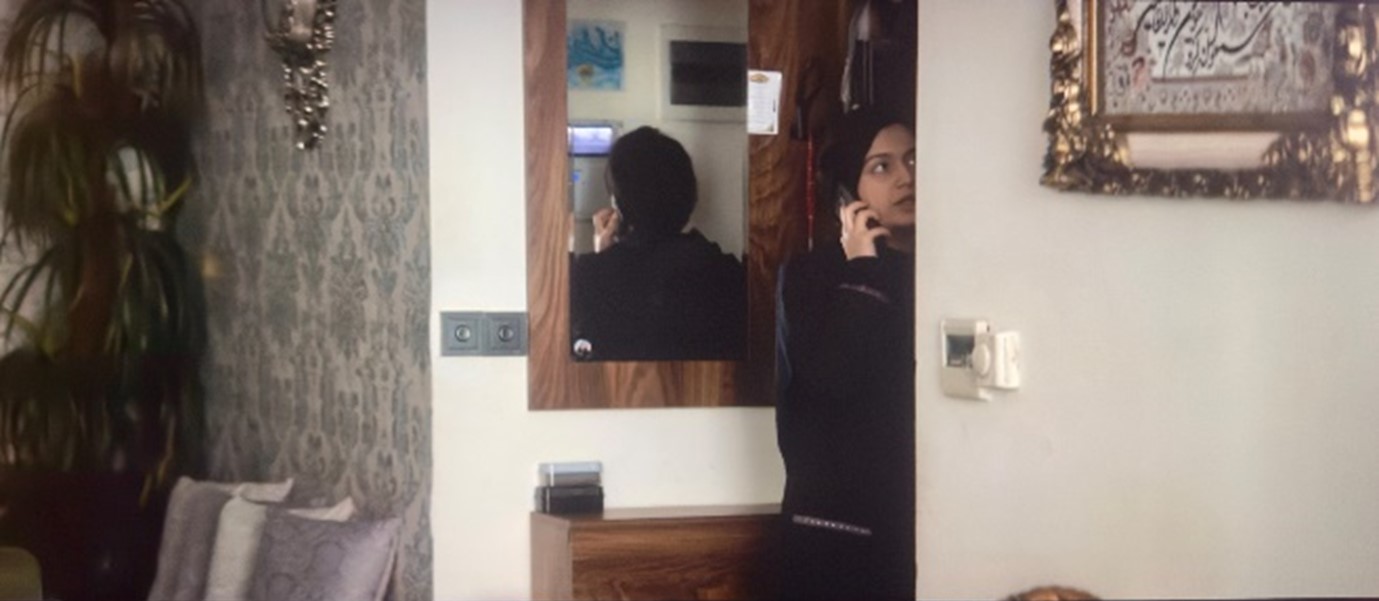
Figure 13: Sanā spying on her mother. Still from The Seed of the Sacred Fig (Dānah-yi Anjīr-i Ma‘ābid), directed by Muhammad Rasūluf, 2024. 00:45:43
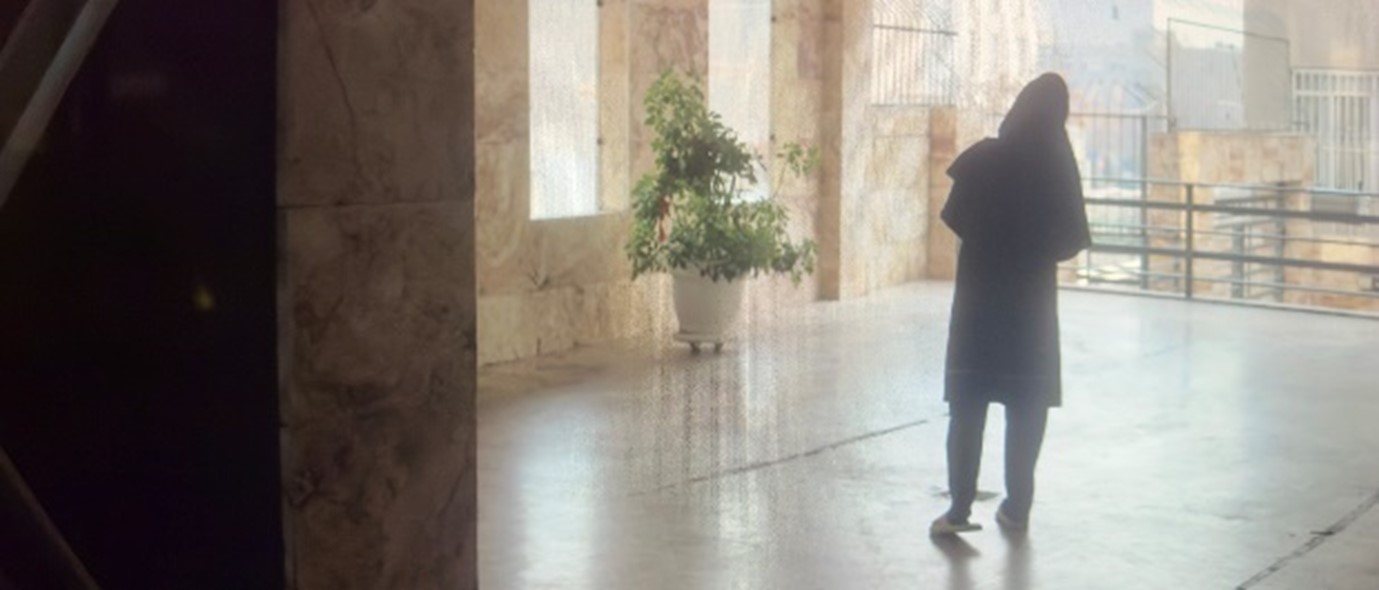
Figure 14: Sanā keeping an eye on Sitārah and Rizvān. Still from The Seed of the Sacred Fig (Dānah-yi Anjīr-i Ma‘ābid), directed by Muhammad Rasūluf, 2024. 00:46:01
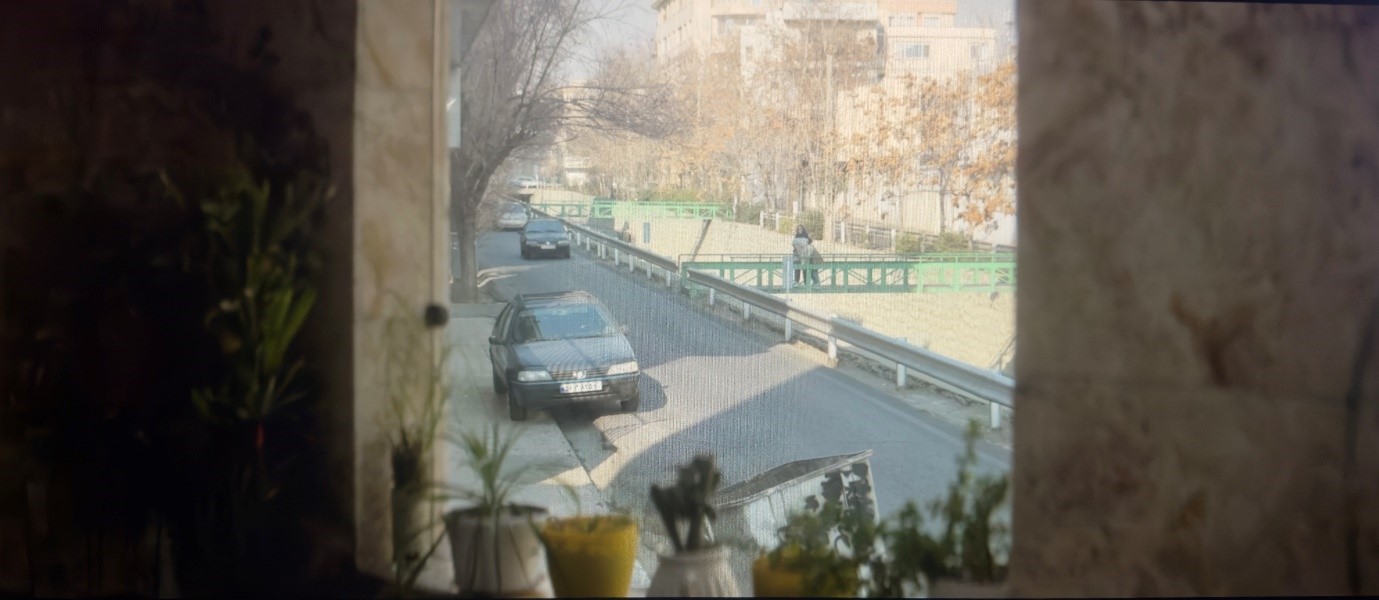
Figure 15: Sadaf and Sanā through the opening of the stairway. Still from The Seed of the Sacred Fig (Dānah-yi Anjīr-i Ma‘ābid), directed by Muhammad Rasūluf, 2024. 00:46:26
Eventually, the mother has to be let in, and what follows is a series of medium to extreme close-up shots of her hands treating Sadaf’s wound. An extreme close-up of her hand holding a tweezer—the same hand that earlier was plucking her daughter’s eyebrows with the same tweezer—now removes bloodied pellets out of Sadaf’s face. The music score is a Kurdish tune. Mahsā Jīnā Amīnī was a Kurdish girl. It is not revealed whether Sadaf is from Kurdistan or not. We cannot tell. Like Mahsā, she is not from Tehran and now cannot go back to the dormitory, for she might be abducted by the plainclothes agents. Najmah, in fear of the threat Sadaf’s involvement in protests may cause to their security, does not agree to her stay. Previously in the film, when Sadaf first came to their house, Najmah had reluctantly agreed to let her stay for the night, but hidden in the girls’ already small bedroom, when Īmān comes back home. By then secrets had already begun to grow, and so had the divide between the girls, their mother, and Īmān. Abandoning Safad seems to have widen the gaping hole of chaos that would eventually engulf them. The threat of the outside is now inside their domestic space. The sense of house arrest creeps in. As the divide expands, Rasūluf’s Aristotelian ascend towards the climax begins.

Figure 16: Pellets. Still from The Seed of the Sacred Fig (Dānah-yi Anjīr-i Ma‘ābid), directed by Muhammad Rasūluf, 2024. 00:51:29
Amidst all these secrecies, one morning Īmān cannot find the gun. His mental anguish plays out through a series of sequences that follow. Editing of the sequences that show his searches and interrogations of his own flesh and blood allow a visible change to the mouvement of the film and with it the psychology of it too.
At the 77th Cannes Film Festival press conference,24Festival de Cannes, “The Seed of the Sacred Fig by Mohammad Rasoulof – Press Conference,” Festival de Cannes, May 25, 2024, accessed March 25, 2025, https://www.festival-cannes.com/en/medialibrary/the-seed-of-the-sacred-fig-by-mohammad-Rasoulof-press-conference/. Mahsā, who plays Rizvān, the older sister, speaks about the tension they would experience during the few months of intense shooting. She recalls a day, when they were warned the regime agents might be nearby and they needed to strike the set. Her immediate worry was not for her own safety, but rather for the completion of the film project. For, she too has been amongst many brave women participating in the Woman Life Freedom uprising who, as a result have been attacked and were injured. That is the fierce energy she brings into her acting when interrogated by her own father in their ancestral rural house near Kharanaq. Sitārah, who plays Sanā, the younger sister, stated in the same press conference that when she was offered a role in a clandestine project, with no knowledge of the director or other details, she accepted without question. In a conversation held in Berlin, she shared with me that she had already decided not to accept roles that would force her to lie in front of the camera by submitting to an imposed head covering. Both women embody courage rarely seen before Woman Life Freedom movement. When Rasūluf directs them undercover, from a distance, often not on location, what he directs is a convergence of immense energy, will, enthusiasm, and might, made possible by a single force: trust. The trust in each other, in the art, in the project, in the future of Iranian cinema, and in their director, made the impossible possible. This stands in stark contrast to the world of Īmān and what he represents, a universe governed by mistrust and fear.
In the cinema hall in Lüneburg, the spectators around me sat at the edge of their seats, while I frantically took notes in the dark. Rasūluf had kept them in constant anticipation; he is a classic filmmaker, I told myself, while listening to the Kurdish music moving the scene forward. Karzan Mahmood’s sensitive choice of music has already earned him a nomination for “Best Original Score – Independent Film (Foreign Language)” by the 15th Hollywood Music in Media Awards.25He lost it to A.R. Rahman, an extremely formidable contender. Losing to him is an honour in its own right. In a conversation we had, Mahmood explained the meticulous process of composing the sound for the film, in addition to selecting the music.26Based on a personal conversation with Karzan Mahmood, conducted by the author in Berlin, June 2025. He too had to work in relative secrecy over a few weeks, communicating with Rasūluf or his team by virtual means. He also spoke of the trust and mutual understanding that had already been established between them.
In tightly composed frames, two sisters are shown watching the events of Mahsā’s movement unravelling on the streets of Iran on their phones. The light from the screen of their mobile phone illuminates the close-up of their faces. They are watching in secret, at home, in their bedroom, away from the prying eyes of Najmah and Īmān. As protests escalate, Rizvān and Sanā consume protest footage via social media—immersing themselves in the Real that Īmān cannot integrate.
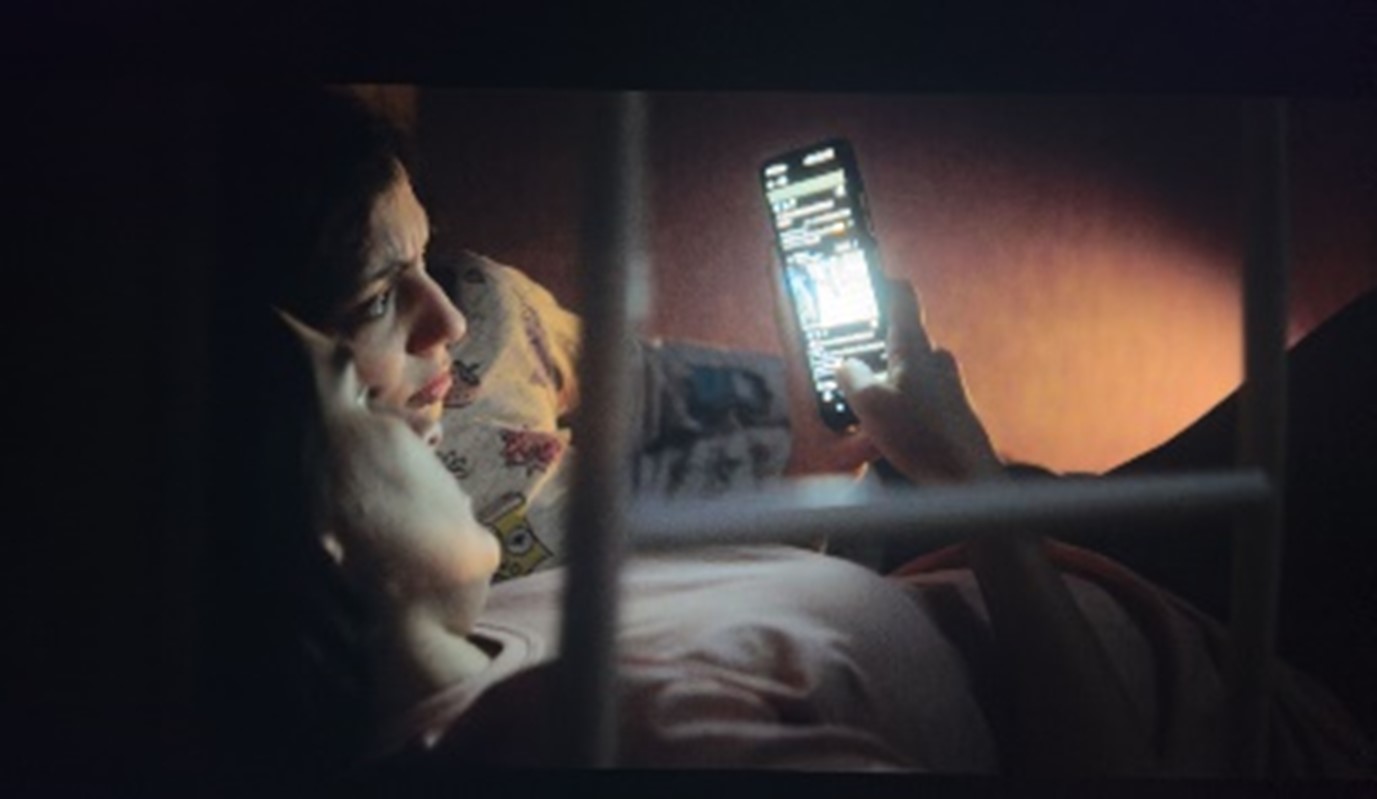
Figure 17: Sisters watching protest footage on a mobile phone. Still from The Seed of the Sacred Fig (Dānah-yi Anjīr-i Ma‘ābid), directed by Muhammad Rasūluf, 2024. 01:01:16
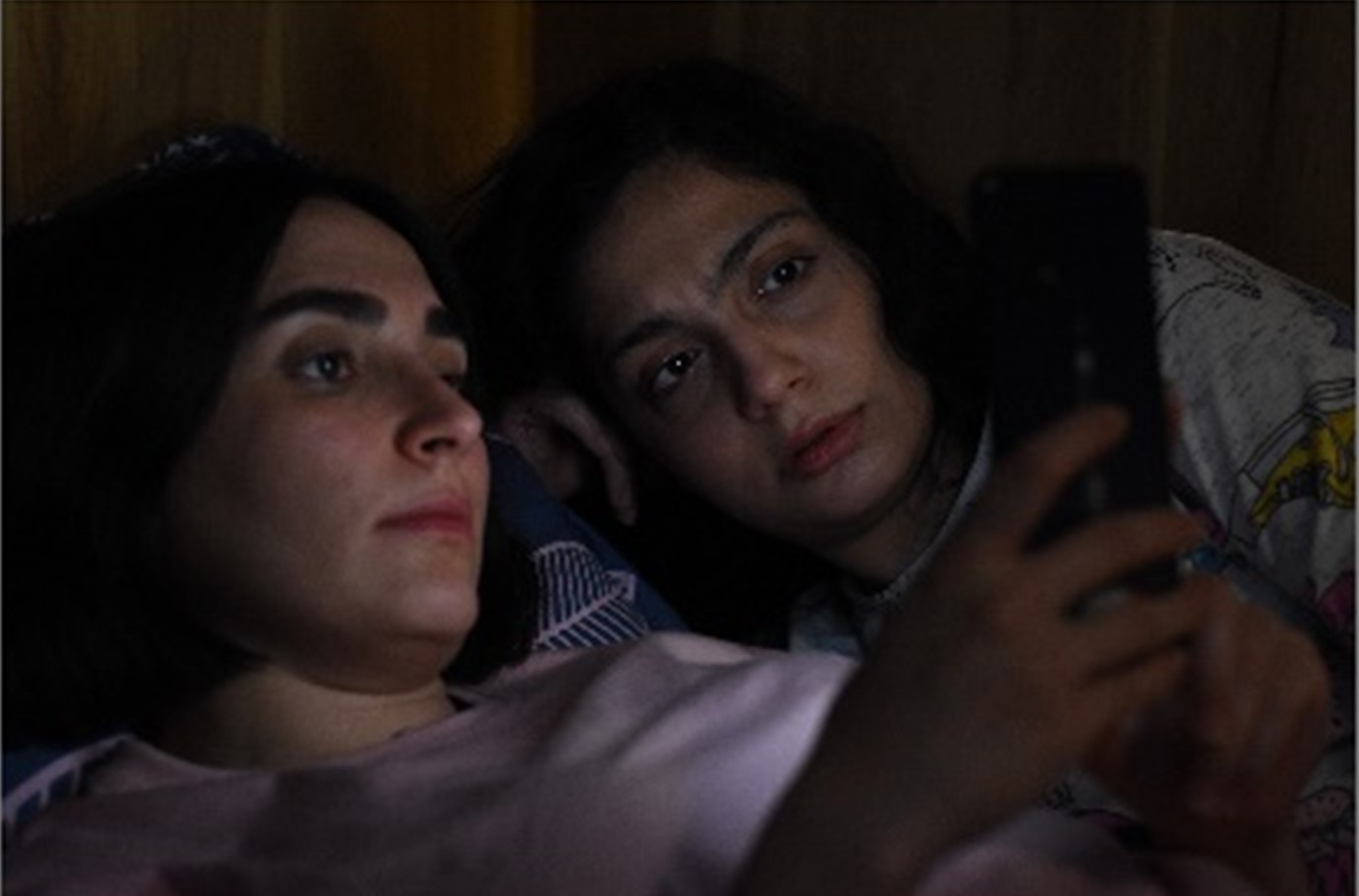
Figure 18: Sisters watching protest footage on a mobile phone. Still from The Seed of the Sacred Fig (Dānah-yi Anjīr-i Ma‘ābid), directed by Muhammad Rasūluf, 2024. 01:01:22
Īmān projects imagined enemies onto his daughters: he envisions them complicit with protestors, even picturing his eldest daughter driving a car with her hair uncovered,27Roxana Hadadi, “Review: ‘The Seed of the Sacred Fig’ Wants You to Be Furious,” Vulture, November 27, 2024, accessed October 29, 2025, https://www.vulture.com/article/review-the-seed-of-the-sacred-fig-wants-you-to-be-furious.html. makeup, and tattoos—symbols of defiance. These projections fracture the imaginary unity of the patriarchal family, rendering the daughters as uncanny doubles. Alongside the girls, spectators watch actual footage of the uprising. Andrew Bird’s navigation through 400 different clips seems to have led to a decisive choice made on behalf of non-Iranian viewers: “We didn’t want [the film] to feel like a film that was shot under the circumstances it was being shot in, and I proposed using these [clips] when the girls are in the room and they’re looking at their cell phones using that as a kind of springboard to moving into the original footage that they were watching.”28Jillian Chilingerian, “The Seed of the Sacred Fig–Interview with Editor Andrew Bird,” Offscreen Central, January 3, 2025, accessed March 30, 2025, https://offscreencentral.com/2025/01/03/the-seed-of-the-sacred-fig-interview-with-editor-andrew-bird/?utm_source=chatgpt.com.
In a series of conversations I held with Rasūluf on the topic, he explained the meticulous care he took to direct Bird for this part of the film.
The idea of using documentary footage came to me while I was writing the screenplay. I was telling the story of a family whose life had been disrupted by public protests. But the question was: how could I, while making an underground film, go out into the streets and recreate scenes of those protests the way I wanted? That was impossible. So, I thought of using real documentary videos instead.
I told Andrew that we already had this footage; we could include it during editing, and if the result didn’t feel right, we would remove it. At first, I thought the limitations of underground filmmaking were reason enough to use documentary footage. But later I realized that the power of reality in these images is something that simply cannot be recreated—and that turned out to be the more important point.29From personal conversations with Muhammad Rasūluf (messaging, email and interview), 2025.
This seems to have allowed Andrew Bird “to choose elements from those clips that maybe have a more universal feeling to them…an awareness”30Jillian Chilingerian, “The Seed of the Sacred Fig–Interview with Editor Andrew Bird,” Offscreen Central, January 3, 2025, accessed March 30, 2025, https://offscreencentral.com/2025/01/03/the-seed-of-the-sacred-fig-interview-with-editor-andrew-bird/?utm_source=chatgpt.com. that he claims to have brought into the editing process as a viewer from the West who may not be fully familiar with the background culture.
Exterior shots are limited in the first two-thirds of the film. Besides the car sequences with Najmah, navigating tight and congested city streets and alleyways, when the camera is installed in the interior of the car, capturing reverse shot of the passengers against the backdrop of the streets, there are only a handful of scenes in which the camera, and along with it the spectator, looks out onto the streets. Going through a randomly normal day of their life, the camera follows the girls walking down the street after getting fitted for their school uniforms at the local tailor, chatting with the woman about the chest measurements. When Sanā, Rizvān, and her classmate Sadaf next appear on the streets in a long shot—not quite a crane shot—we can still hear their chatter continuously, observing them losing themselves in a crowd of passers-by and cars. And I wonder where the cameraman was hiding to shoot the scene, safely, without the risk of giving away the cover of an underground film. The transition in the sequence is seamless, which says a lot about the critical work of the sound department.
Moving from urban to suburban, from the contemporary to antiquity, from modern interiors to rustic rural locations, juxtaposes the accidental discovery of the garden shed. That is when after Sanā runs away from the dungeon of this newly risen domestic menace, the dictator-patriarch, Īmān, she finds old cassette tapes of Marziyah31Marziyah (née Khadījah Ashraf al-Sādāt Murtazā’ī), a famous and popular Iranian traditional singer, 22 March 1924 – 13 October 2010. and Qamar32“Qamar’s first formal performance as a vocalist took place at Tehran’s Grand Hotel in 1924. The first public appearance of a Persian female vocalist without the obligatory veil (ḥejāb) signalled an immensely significant development in Persian music. It was an event that set a precedent and affected the musical life of future generations of Persian female vocalists prior to the Revolution of 1979 and eventual establishment of the Islamic Republic of Iran.” See Erik Nakjavani, “QAMAR-AL-MOLUK VAZIRI,” Encyclopaedia Iranica online, accessed February 3, 2025, www.iranicaonline.org/articles/qamar-vaziri/. next to Ta‘ziyah props, all belonging to her grandfather. She designs a sound trap filled with memories of the past. It is the editing and the work of the sound department that turns this garden sequence into a chilling pivotal scene. In There Is No Evil, the spectator must travel to the underground to uncover the truth about Hishmat. In The Seed of the Sacred Fig, Rasūluf takes us to the past, to the pre-Islamic, to antiquity, to Kharanaq of the Sassanids, to our past, to where it all began. The tension is the same and Rasūluf’s aesthetic choices attest to it. Andrew Bird’s editing is as layered as the palimpsest of history at the location where the film ends. With Īmān’s fall, women inhabit Kharanaq, once again.
At the climax, Sanā raises the gun at her father but shoots the ground beneath his feet. This hesitation captures Lacan’s idea that jouissance risks the destruction of the symbolic father, yet dilemmas emerge when that symbolic rupture threatens the symbolic order entirely.33Jacques Lacan, “The Subversion of the Subject and the Dialectic of Desire in the Freudian Unconscious,” in Écrits, trans. Bruce Fink (New York: W. W. Norton, 2006), 689–728. Her action collapses the fig metaphor. Rasūluf notes that filming in the ruins was one of the most challenging parts of the shoot. The crew’s extended presence at the site was beginning to attract attention from locals, increasing the risk of discovery. Mindful of the sanctity of the site and to avoid any damage to the ruins, he decided to build a fake roof for the final scene. Rasūluf tells me that since they had no stunt actor, Mīsāq chose to perform the stunt himself. This meant that the scene could only be shot once, and it had to work perfectly, so that the crew could wrap and leave immediately.
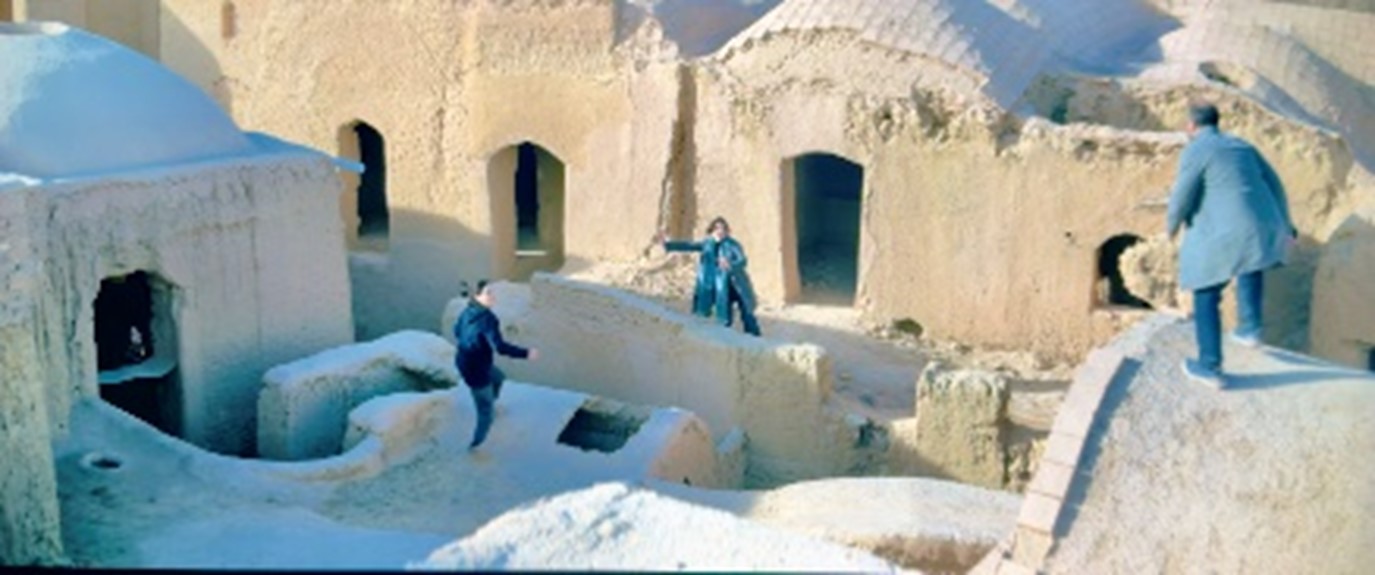
Figure 19: Īmān chases his family at the ancient ruins of Kharanaq. Still from The Seed of the Sacred Fig (Dānah-yi Anjīr-i Ma‘ābid), directed by Muhammad Rasūluf, 2024. 02:39:04
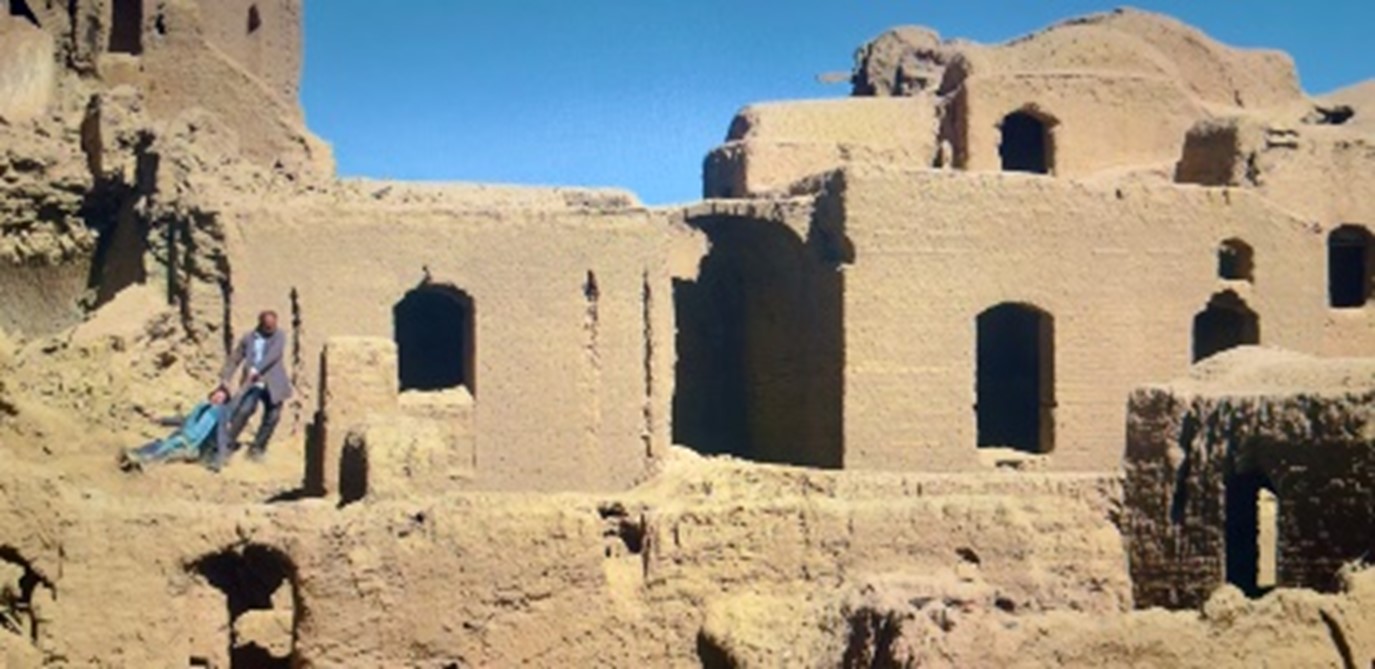
Figure 20: Īmān drags Najmah over the ruins. Still from The Seed of the Sacred Fig (Dānah-yi Anjīr-i Ma‘ābid), directed by Muhammad Rasūluf, 2024. 02:40:11
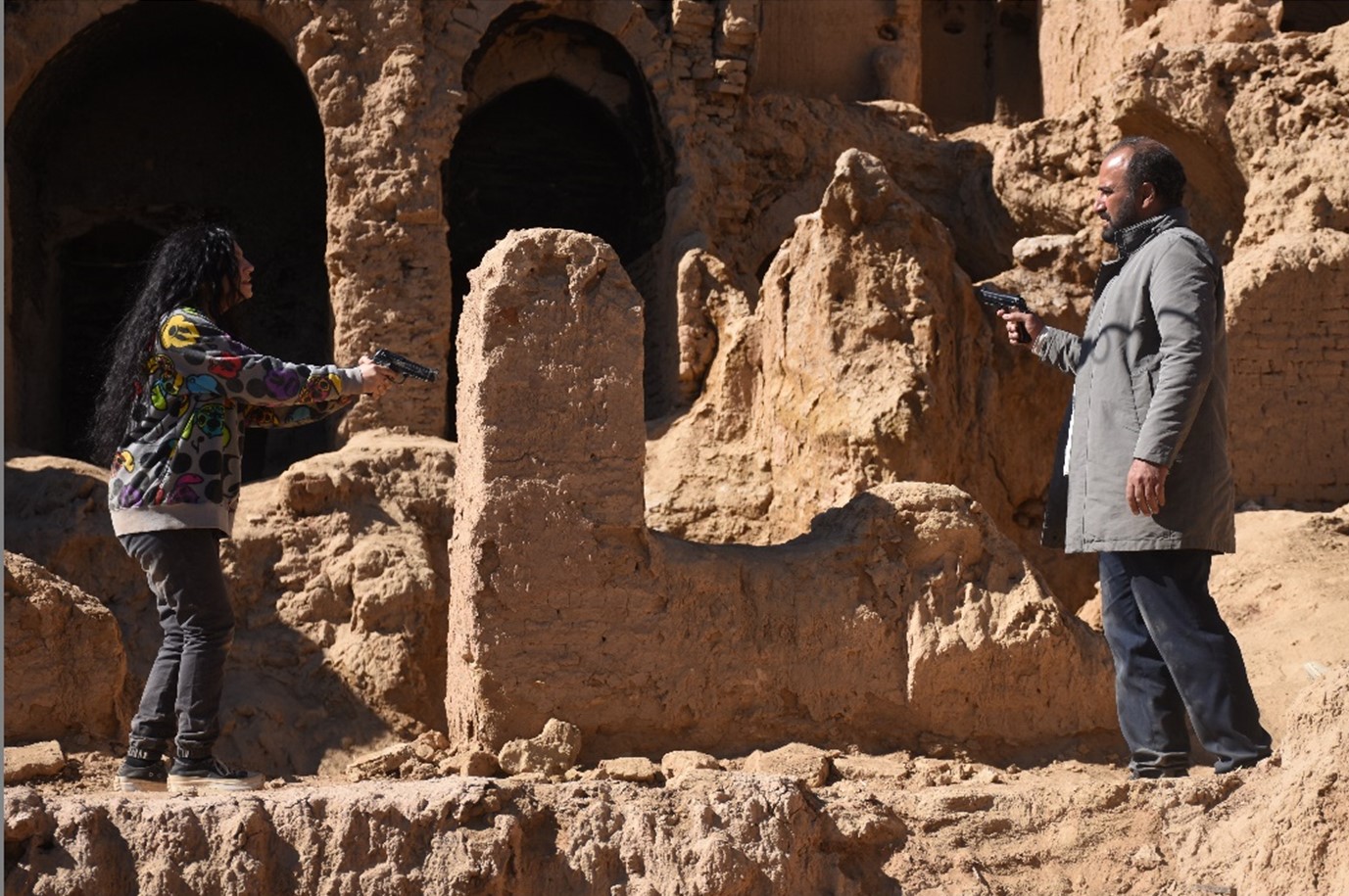
Figure 21: Sanā aims at Īmān. Still from The Seed of the Sacred Fig (Dānah-yi Anjīr-i Ma‘ābid), directed by Muhammad Rasūluf, 2024. 02:40:49
Rasūluf’s film choreographs the collapse of the symbolic through patriarchal paranoia, trauma, and female jouissance. The missing gun operates as objet petit-a; protest footage invokes the traumatic Real; the daughters’ rebellion challenges patriarchal authority. The film is both cinematic text and political catalyst. It articulates how trauma—individual, familial, social—resists symbolic containment, and how resistance emerges from the very site of rupture.
Epilogue; a personal note one year later
Muhammad Rasūluf and I meet one year later in Berlin, after the second night of his debut play at the Haus der Berliner Festspiele. He is gracious, kind, welcoming, and calm. We sit on a bench at the back of the festspielhouse, near the stage door, next to a construction site and a large truck. Although not a comfortable setting, he agrees to be interviewed and permits to be recorded. His familiar and relaxed mannerism makes one forget the awkwardness of the situation. Listening to him I realize that I am at the presence of a storyteller. It is easy to listen to him. He has a lot to tell. While the years spent in the Islamic Republic’s prison may be behind him, he is not finished with that experience. Much of the breath of his storytelling swells from that not-too-far past. It is easy to lose track of time listening to him, but I wish not to pry. Walking back to Savignyplatz, I think, he has just started telling stories about what he has lately discovered. Something he did not know he had. Something that began with daring to make an underground film. And that is “not being home”!
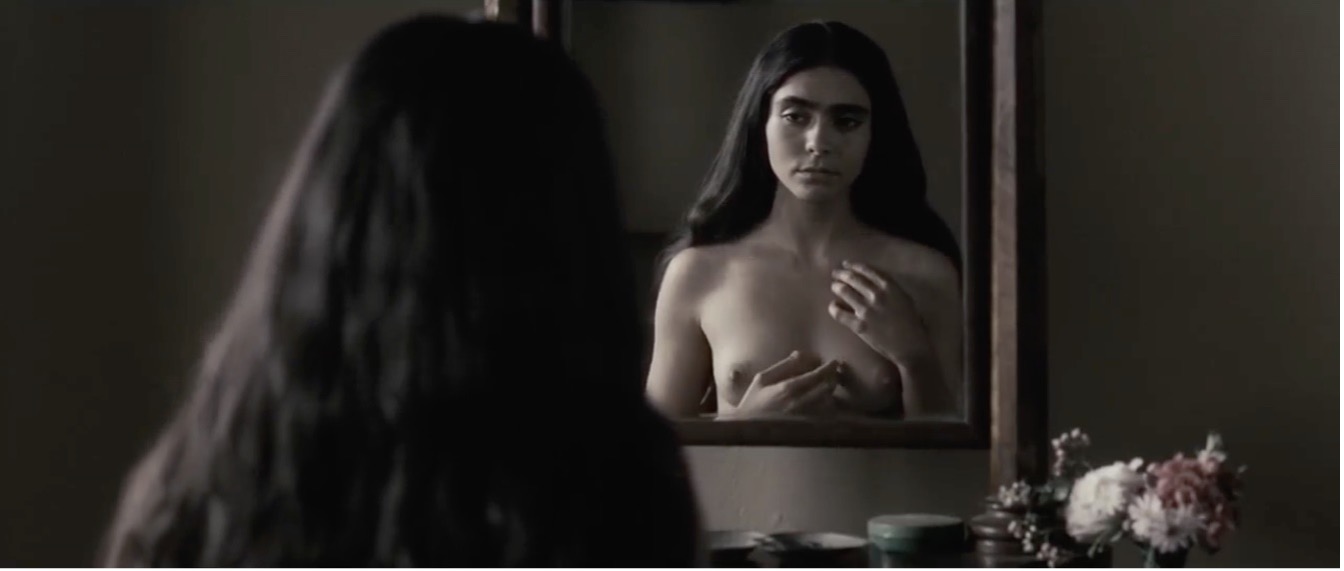
How might we imagine a utopian space in a past saturated by political trauma without assuming it can be fully recuperated? The question takes on particular urgency when we confront moments like the 1953 CIA-engineered coup in Iran—an event so thoroughly marked by imperial violence that any attempt to envision alternative possibilities appears foreclosed by the sheer weight of this historical impasse. Against the sense of foreclosure, Walter Benjamin insists otherwise: traumatic histories are not to be discarded as irredeemably spent but engaged as contemporary concerns, their unrealized potentials rescued from oblivion. Not all past is past. It is that image of the past, “not recognized by the present as one of its own concerns,” Benjamin writes, “that threatens to disappear irretrievably.”1Walter Benjamin, “Theses on the Philosophy of History,” in Illuminations: Essays and Reflections, ed. Hannah Arendt, trans. Harry Zohn (New York: Schocken Books, 1968), 255. Even if resurrecting the utopian imaginaries buried by catastrophe is neither viable nor politically generative, and risks regression, what should stop us from threading into that history moments of utopian imagination? These are moments that, had they taken hold, could have bent our future (this present?) otherwise, flickering as possibility before the trauma of the conjuncture reasserted itself, closing them down and leaving us suspended between the thin satisfactions of reform and the seeming impossibility of structural change. What I argue in this essay is that Shirin Neshat’s film Women Without Men (2009), in its deliberate departures from Shahrnūsh Pārsīpūr’s novella, threads a utopian interval into the history of 1953. Rather than a sovereign rewrite of national history, the film routes counterfactual pressure through intimate intervals—looks, touch, shared dwelling—at the scale of bodies and bonds. In doing so, it reimagines (and reimages) 1953 so that a trauma-laden past can be reinscribed as possibility rather than foreclosure.
The armature for Shirin Neshat’s cinematic adaptation is Shahrnūsh Pārsīpūr’s 1989 novella Women Without Men (Zanān bidūn-i mardān), a parabolic text in which a garden in Karaj, a city on the outskirts of Tehran, figures as a homosocial refuge, bringing together the lives of five women who move toward that shared space during the summer of 1953 (figure 1). Translating Pārsīpūr’s parable to the screen, Neshat braids the coup’s public tumult with quietly magic-realist intervals of intimacy, staging a provisional refuge that tests the heteronormative order. Seen in comparative relation to its literary source, which was composed in the turbulent post-revolutionary decade that intensified patriarchal structures, Neshat’s film points to the urgency of imagining a space for “women without men.” Despite shared motifs, the works diverge sharply in Neshat’s regimentation of historical evidence and her foregrounding of referential detail. Such signals of historical specificity are largely absent, or only legible between the lines, in Pārsīpūr’s novella, particularly for readers outside the Persian-language context. At the same time, Neshat presses beyond Pārsīpūr’s heteronormative reproductive logic, reconfiguring desire and kinship, another decisive point of contrast.
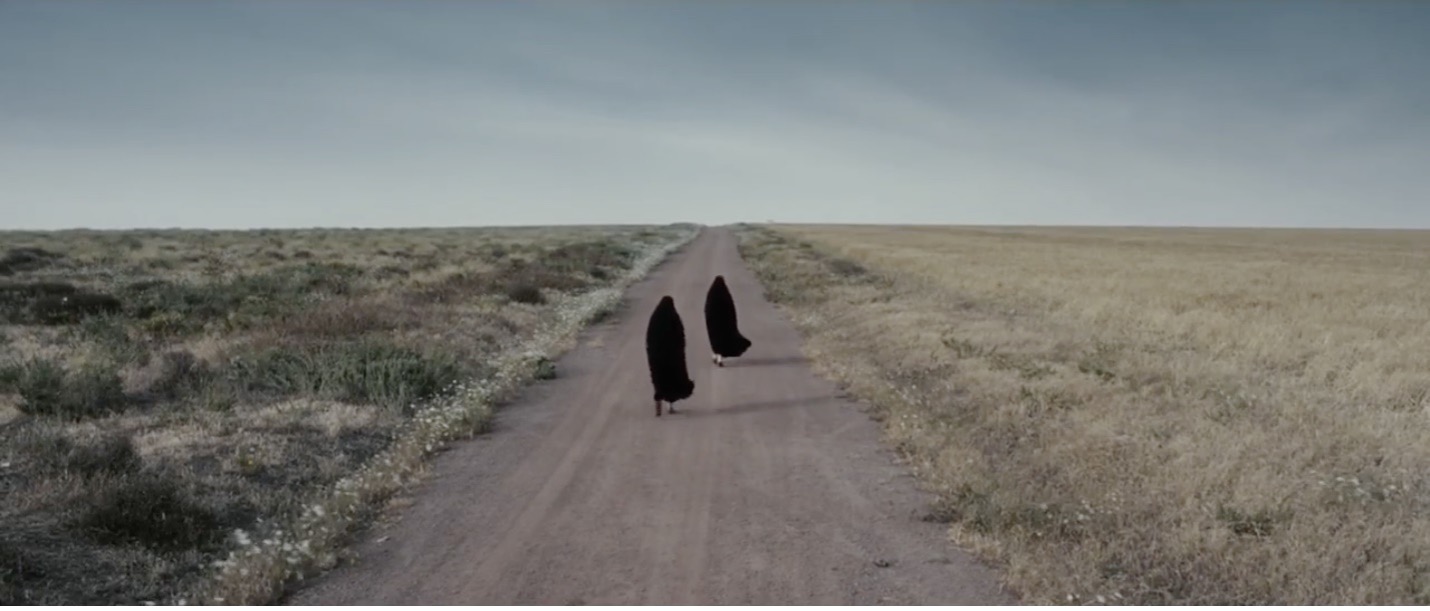
Figure 1: Two women on the road to the Karaj garden. Still from Women Without Men, directed by Shirin Neshat, 2009.
Women Without Men recounts the lives of five single women. Women who are not single—such as Farrukhlaqā Sadr-al-dīvān Gulchihrah, married to an army general—but singular in their collective search for a space of togetherness outside the heteronormative calculus that opposes “single” only to “married.” As Gayatri Spivak asks in a brief and touching memoir: “When, and indeed how, are women not single? Do we need a special analytic category for female collectivities? For lesbian couples? For single lesbians? Is the antonym of single—double? Multiple? Or always–married?”2Gayatri Chakravorty Spivak, “If Only,” The Scholar and Feminist Online 4, no. 2 (Spring 2006) https://sfonline.barnard.edu/if-only/(accessed: October 1, 2025). Spivak’s question brings into focus what I mean by the singularity that binds Pārsīpūr’s women. It allows us to understand their apparently utopian space as entangled with a politics of singularity, in which reproductive heteronormativity appears not as the governing norm but as only one case among many, “like a stopped clock giving the correct time twice a day, rather than a norm that we persistently legitimize by reversal.”3Gayatri Chakravorty Spivak, “If Only,” The Scholar and Feminist Online 4, no. 2 (Spring 2006) https://sfonline.barnard.edu/if-only/(accessed: October 1, 2025). The garden in Karaj where Pārsīpūr’s women ultimately gather, envisions a space in which heteronormative logic no longer constitutes the dominant mode of being, so that other forms of singularity may emerge and take shape.
Pārsīpūr’s women set out for the garden in Karaj not to dismantle patriarchy wholesale but to negotiate alternative ways of being—“to reap the benefits of [their] toil and get rid of the men who control [them],” as Fā’izah puts it in the novel.4Shahrnush Parsipur, Women Without Men, trans. Kamran Talattof and Jocelyn Sharlet (New York: Feminist Press, 2009), 78. While Neshat’s vision of the garden resonates with the political and conceptual energies of the novel, her intervention shifts the space from an imaginary homosocial enclave to a marginal refuge, historically removed from Tehran’s tumult during the 1953 coup d’état, and imbues it with homoerotic dimensions that move beyond the politics of “women without men” toward a space where women desire one another.
Pārsīpūr’s bāgh-i Farrukhlaqā (Farrukhlaqā’s garden) mirrors many of the internal dynamics of a harem, with one crucial difference: the women choose to inhabit this homosocial space on their own terms. Even the gardener, whose absence of libidinal interest recalls the figure of the eunuch in orientalist depictions, underscores the structural echo of the harem. This may be read as a literary prefiguration of a more progressive conception of homosocial space, a conception Leila Ahmed began to theorize in the early 1980s in her writings on the harem:
The very word “harem” is a variant of the word “harem” which means “forbidden” (and also “holy”), which suggests to me that it was women who were doing the forbidding, excluding men from their society, and that it was therefore women who developed the model of strict segregation in the first place. Here, women share living time and living space, exchange experience and information, and critically analyze—often through jokes, stories, or plays—the world of men.5Leila Ahmed, “Western Ethnocentrism and Perceptions of the Harem,” Feminist Studies 8, no. 3 (Autumn 1982): 529.
Ahmed’s claim challenges the dominant myth of the harem as a space of female isolation and victimhood, calling instead for a more nuanced, historically situated reading. Yet her theorization leaves unexplored the complexities of sexual and homoerotic desire that may circulate within homosocial space.
Teresa de Lauretis’s critique of feminism’s tendency to collapse homosexual desire into homosociality is particularly salient here. In “When Lesbians Were Not Women,” de Lauretis outlines an alternative mode of subject formation, an “eccentric subject” that does not “center itself in the institution of heterosexuality,” a structure she argues has also shaped key feminist frameworks, including Ahmed’s reading of the harem and Kaja Silverman’s theorization of homosexual maternal fantasy.6Teresa de Lauretis, “When Lesbians Were not Women,” Labrys, Études Féministes (September 2003)https://www.labrys.net.br/special/special/delauretis.htm (accessed Oct 1, 2025). For Silverman’s writing on homosexual maternal fantasy see Kaja Silverman, The Acoustic Mirror: The Female Voice in Psychoanalysis and Cinema (Bloomington: Indiana University Press, 1988). For de Lauretis, the notion of “woman-identified female bonding” evacuates the question of desire between women and, in doing so, fails to disrupt the hold of heteronormativity, leaving no real space for the emergence of a new mode of subjectivity.7Teresa de Lauretis, The Practice of Love: Lesbian Sexuality and Perverse Desire (Bloomington: Indiana University Press, 1994), 120. It is precisely in the absence of homosexual desire—in moments such as Mūnis’s transformation into a beast who haunts the other women in the garden, or Zarrīn’s final heterosexual pairing with the gardener, culminating in pregnancy—that Pārsīpūr’s text remains bound to the logic of heteronormativity. And it is, again, through her reworking of the story, by foregrounding a homoerotic charge, that Neshat moves beyond homosociality and opens the garden into a space of homoerotic desire. I turn to two instances in Neshat’s rendering of bāgh-i Farrukhlaqā that can be read as gestures toward homoerotic desire.
Figure 2: Fā’izah stands before a mirror and gazes at her own body. Still from Women Without Men, directed by Shirin Neshat, 2009.
The eroticism becomes most apparent, beyond the sexual charge that shades even the women’s ordinary dialogue in the garden, when Fā’izah, anxious about her sexuality and virginity, stands before a mirror and gazes with intense curiosity at her own naked body (figure 2). In this moment, Fā’izah turns her body into both the object of desire and the site of libidinal anxiety, refusing the position of passive object before the camera’s lens and redirecting the gaze into something averted, creating space for a homoerotic (or perhaps autoerotic) reading. A second, more explicitly homoerotic moment comes in the scene of Zarrīn’s death: Farrukhlaqā, in mourning, rests her head upon Zarrīn’s torso and remains in that intimate pose through the night until sunrise (figures 3–4). This tender, sexually charged image, more photographic than cinematic in its stillness, lingers for several seconds and evokes art-historical precedents of mourning and same-sex desire. Its semantic weight recalls Nan Goldin’s Gotscho Kissing Gilles (deceased) (1993), a portrait of erotic intimacy and grief (figure 5). Formally, however, the image perhaps most closely aligned with Neshat’s scene is Jean-André Rixens’s The Death of Cleopatra (1874), whose composition and lighting resonate with the tableau of Zarrīn’s death (figure 6).
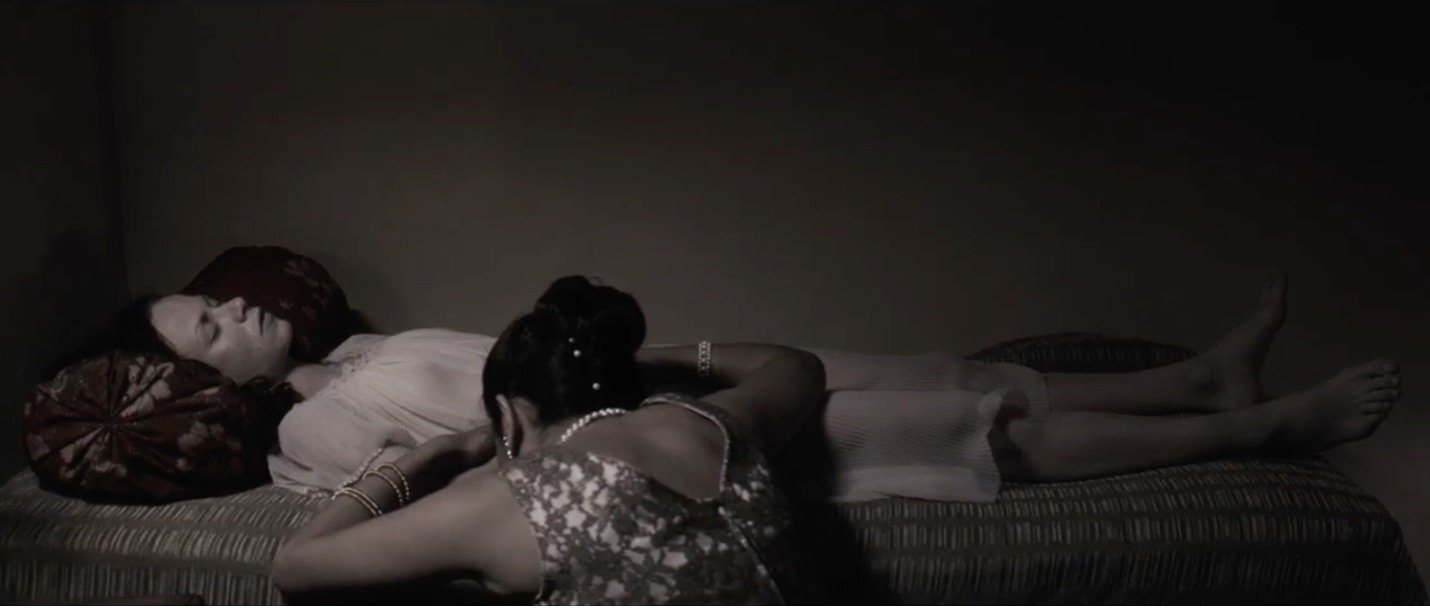
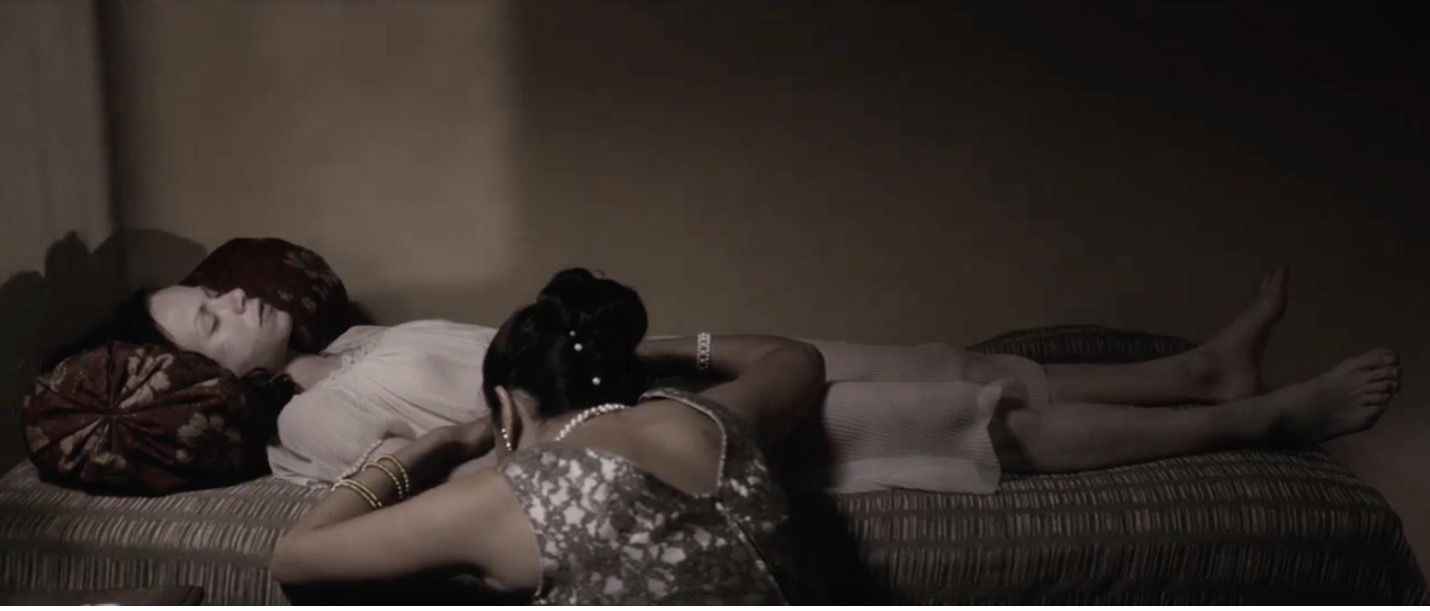
Figures 3-4: Farrukhlaqā rests her head upon Zarrīn’s torso in mourning. Stills from Women Without Men, directed by Shirin Neshat, 2009.
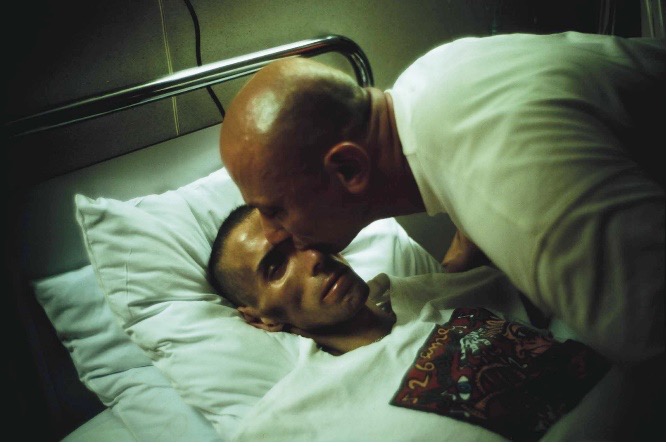
Figure 5: Gotscho kissing Gilles in a hospital bed. Nan Goldin, Gotscho Kissing Gilles, Paris, 1993, dye-bleach print, 68.6 × 101.6 cm.
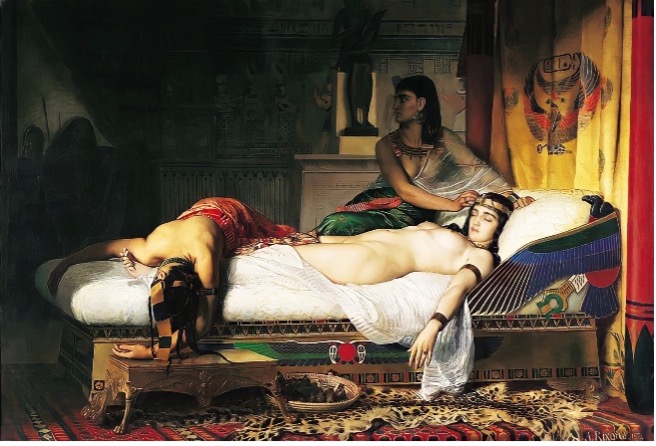
Figure 6: Composition and lighting echoing the tableau of Zarrīn’s death. Jean-André Rixens, The Death of Cleopatra, 1874, oil on canvas, 199 × 290 cm, Musée des Augustins, Toulouse.
If we take these cinematic moments to mark Neshat’s departure from a space of homosociality toward a garden shaped by homoerotic charge, where even the gardener, in contrast to the novella, is stripped of his reproductive function, then we must ask what keeps this attention to female desire from slipping into the aesthetic circuits of trend, marketability, or commodified “global queer.” What protects Women Without Men from being absorbed into the broader cultural economy that capitalizes on the visibility of same sex desire while neutralizing its political force? Or does Neshat’s film, as de Lauretis warns, become an accomplice to a postmodern culture in which lesbian visibility is heightened at the risk of blurring lesbian specificity, turning lesbian desire into a desire like any other—a move that reduces it to the “incidental, private, and thus […] politically inconsequential”?8Anat Pick, “New Queer Cinema and Lesbian Films,” in New Queen Cinema: A Critical Reader, ed. Michele Aaron (Edinburgh: Edinburgh University Press, 2004), 109-110. Any answer may lie less in the film’s title, or in its investment in a politics of singular women alone, than in its formal strategies—in the ways its visual construction and narrative architecture work together.
Fredric Jameson’s formulation of magic realism proves especially instructive, not just because Pārsīpūr’s writing and Neshat’s film have been linked to the genre,9See the afterword of Women Without Men written by Persis Karim, or Asghar Ma‘sūmbaygī’s review of the book published in 2001. but because his account clarifies how form negotiates the tension between political rupture and aesthetic absorption. For Jameson, magic realism provides “a possible alternative to the narrative of contemporary postmodernism.”10Fredric Jameson, “On Magic Realism in Film,” Critical Inquiry 12, no. 2 (Winter, 1986): 302. The latter, he suggests, is exemplified by the nostalgia film, which seeks to “generate images and simulacra of the past […] producing something like a pseudopast for consumption as a compensation and a substitute for, but also a displacement of, that different kind of past which has (along with active visions of the future) been a necessary component for groups of people in other situations in the projection of their praxis and the energizing of their collective project.”11Fredric Jameson, “On Magic Realism in Film,” Critical Inquiry 12, no. 2 (Winter, 1986): 310. Where nostalgia film encourages surface-level engagement and aesthetic consumption, magic realism—whether in Pārsīpūr’s prose or in Neshat’s visual grammar—disrupts narrative expectation and resists turning the past into commodity form.
Neshat’s use of magic realism enacts what Jameson calls a “visual spell”: an image-world that captivates without flattening, anchoring viewers in the sensory present of the frame while withholding the interpretive closure typical of mainstream narrative cinema.12Fredric Jameson, “On Magic Realism in Film,” Critical Inquiry 12, no. 2 (Winter, 1986): 303. This spell first takes hold in the film’s opening sequence, when Mūnis, filmed in slow motion, leaps from the rooftop and descends not with the blunt finality of death but with the suspended grace of dance. The moment delivers what Jameson might call a “shock of entry,” staging what he elsewhere describes as “the body’s tentative immersion in an unfamiliar element.”13Fredric Jameson, “On Magic Realism in Film,” Critical Inquiry 12, no. 2 (Winter, 1986): 304. It is a scene that resists linear progression, rendering the trauma of historical rupture as an immersive visual event that refuses the narrative protocols of beginning, development, and resolution (figures 7–8). This refusal of narrative resolution recalls what de Lauretis describes as a challenge to “lawful narrative genre”—dominant structures such as the romance which regulate identification and development through heteronormative logics.14Teresa de Lauretis, The Practice of Love: Lesbian Sexuality and Perverse Desire (Bloomington: Indiana University Press, 1994), 122. Women Without Men unsettles these generic expectations, not only through its disruption of narrative progression but also through its resistance to systems of identification that collapse homoerotic possibilities, or other modes of alternative female subjectivity, into the inconsequentiality of the apolitical.
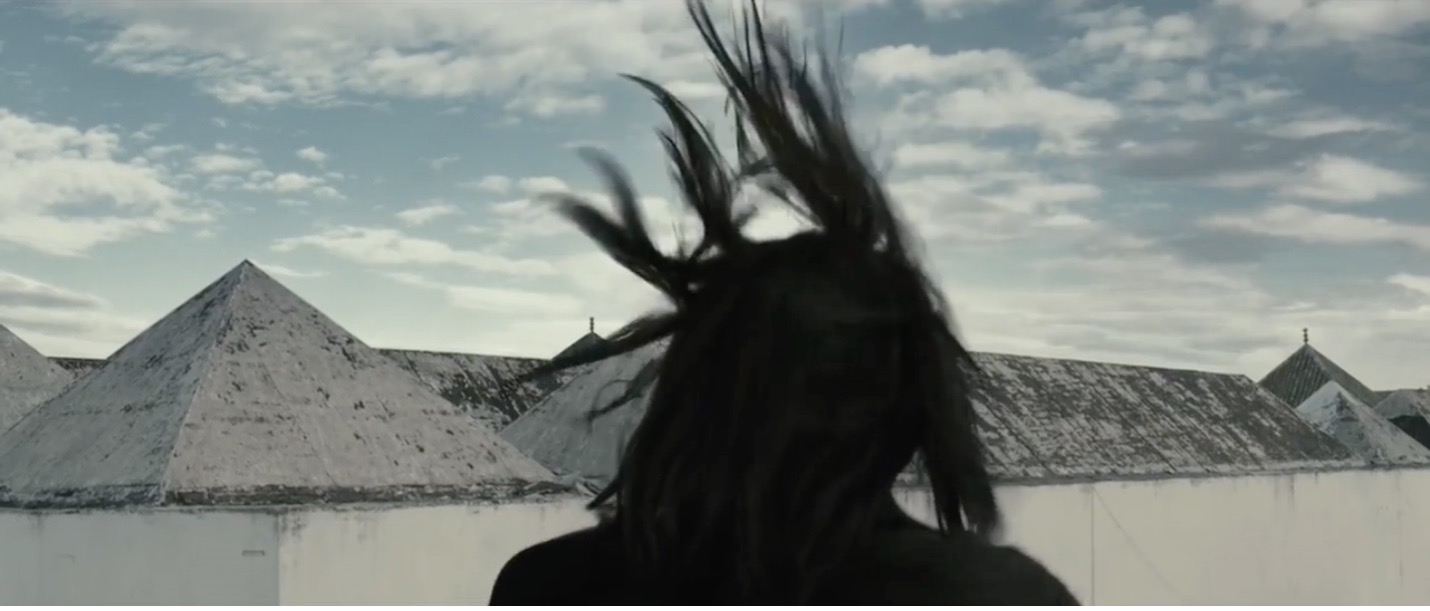
Figure 7: Mūnis leaps from the rooftop in the film’s opening sequence—a “shock of entry” that stages the body’s tentative immersion in an unfamiliar element. Still from Women Without Men, directed by Shirin Neshat, 2009.
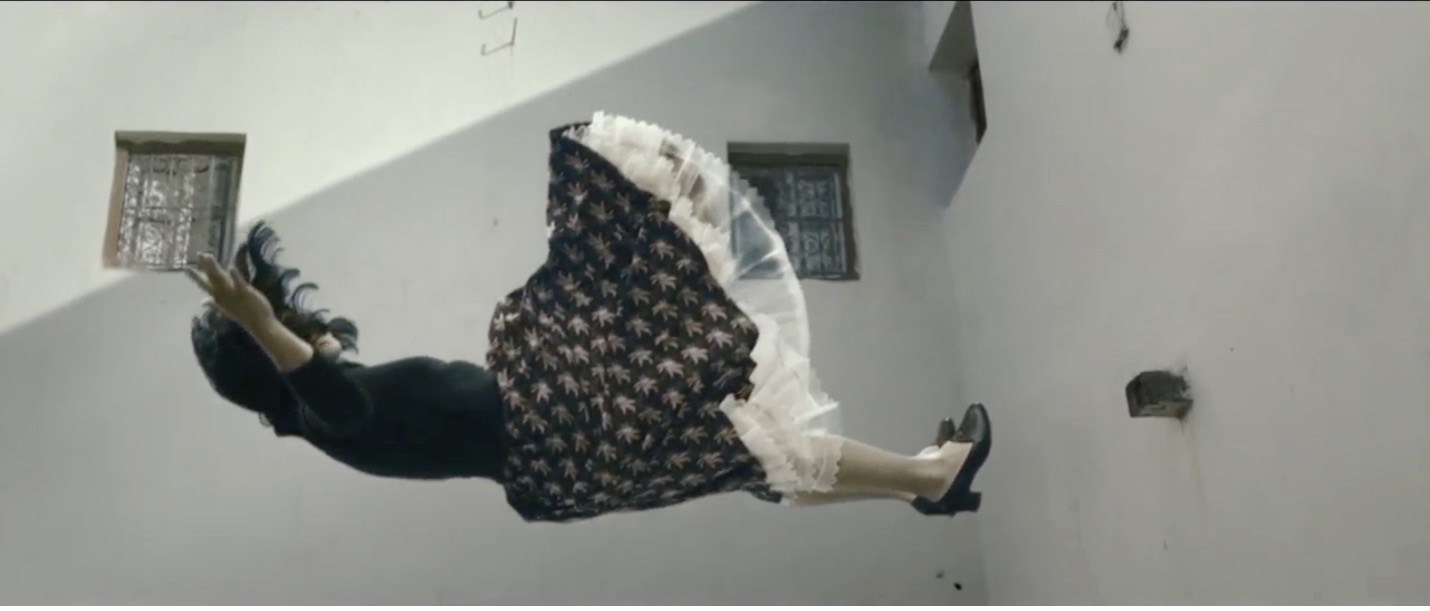
Figure 8. Mūnis’s suspended fall, returning in the film’s closing sequence. Still from Women Without Men, directed by Shirin Neshat, 2009.
What at first might seem a narrative flaw in Neshat’s film, illustrated by the stark disjunction between the events unfolding in Tehran and the sudden, unmotivated convergence of the women in the Karaj garden, produces a rupture in linearity that serves as a defamiliarizing force. It unsettles the conventions of heterosexual cinematic narrative, most clearly codified in genres such as the romance or the Western, and enables another mode of spectatorship to emerge. By disrupting the linear unfolding of events, Neshat loosens the film from the authoritative cadence of History, capital H, as a structuring narrative force. In so doing, she resists the allegorical framing often imposed on “Third World Cinema,” unsettling the phallic logic of narrative progression that rests on beginnings, developments, and resolutions. This is not to suggest, however, that Women Without Men abandons historical narrative altogether; on the contrary, the film sustains a deliberate engagement with history. I will return to this point later.
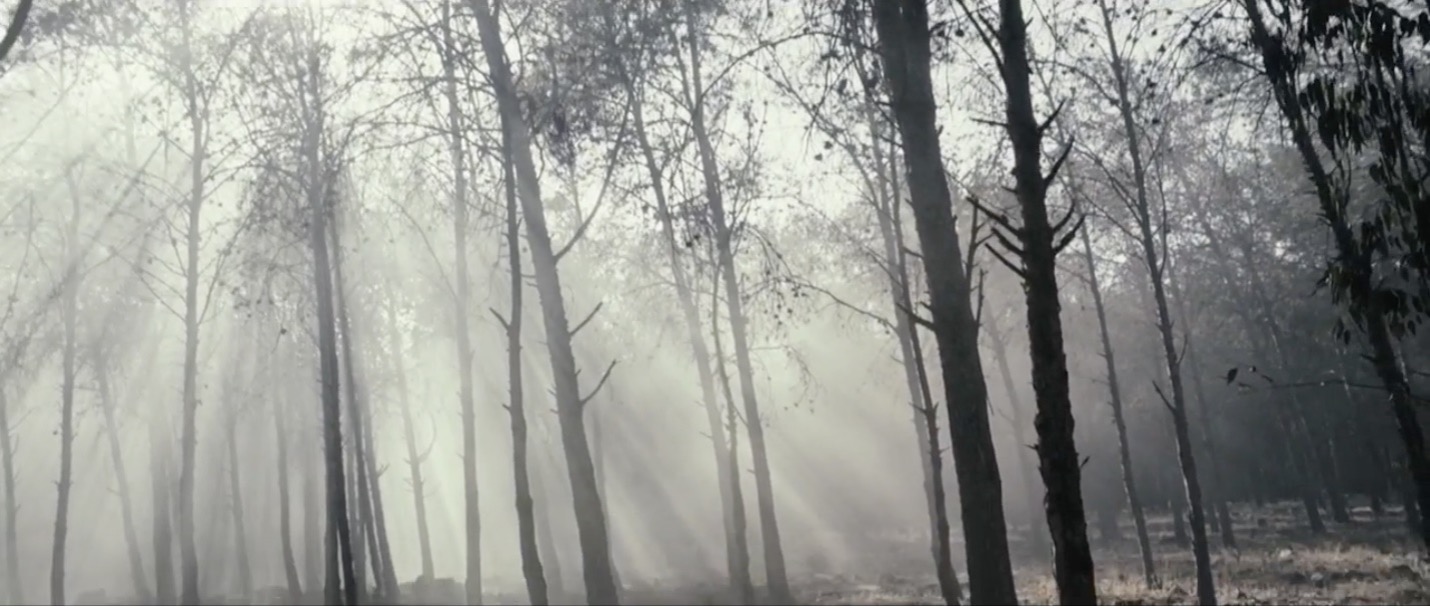
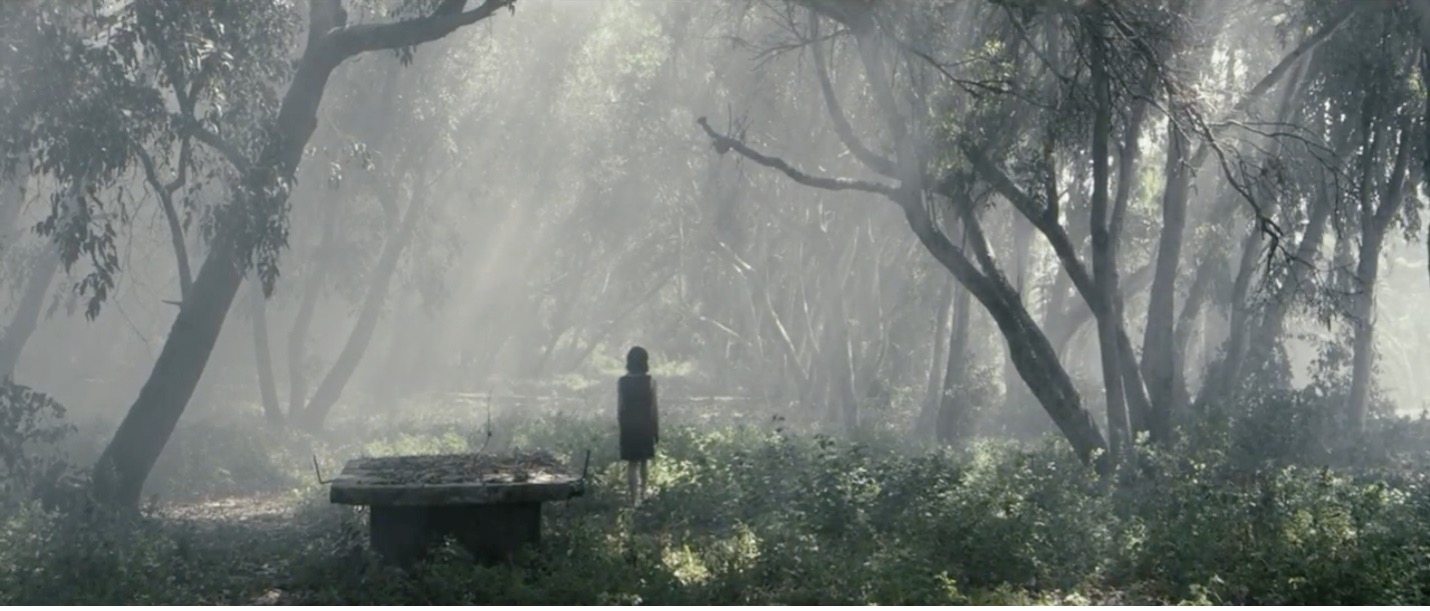
Figures 9–10: Exterior scene saturated with light. Stills from Women Without Men, directed by Shirin Neshat, 2009.
The question of narrative surfaces here in its uneasy relation to the visual register. Rather than abandoned or subverted, narrative is, in Jameson’s phrase, “effectively neutralized”15Fredric Jameson, “On Magic Realism in Film,” Critical Inquiry 12, no. 2 (Winter, 1986): 321. by the intensity of the visual: shadow-drenched interiors and overexposed exteriors (figures 9–10), the stark chromatic separation of Mūnis from the street protests (figure 11), the painterly and photographic inflections of Neshat’s framing (figure 12), and the raw, stylized violence of sequences such as the army’s intrusion into the Karaj garden or Zarrīn’s ritualistic bathing scene. This visual override, in turn, opens onto what Jameson describes as “a seeing or a looking in the filmic present,” a mode of durational attention unbound from the demands of narrative causality.16Fredric Jameson, “On Magic Realism in Film,” Critical Inquiry 12, no. 2 (Winter, 1986): 321.
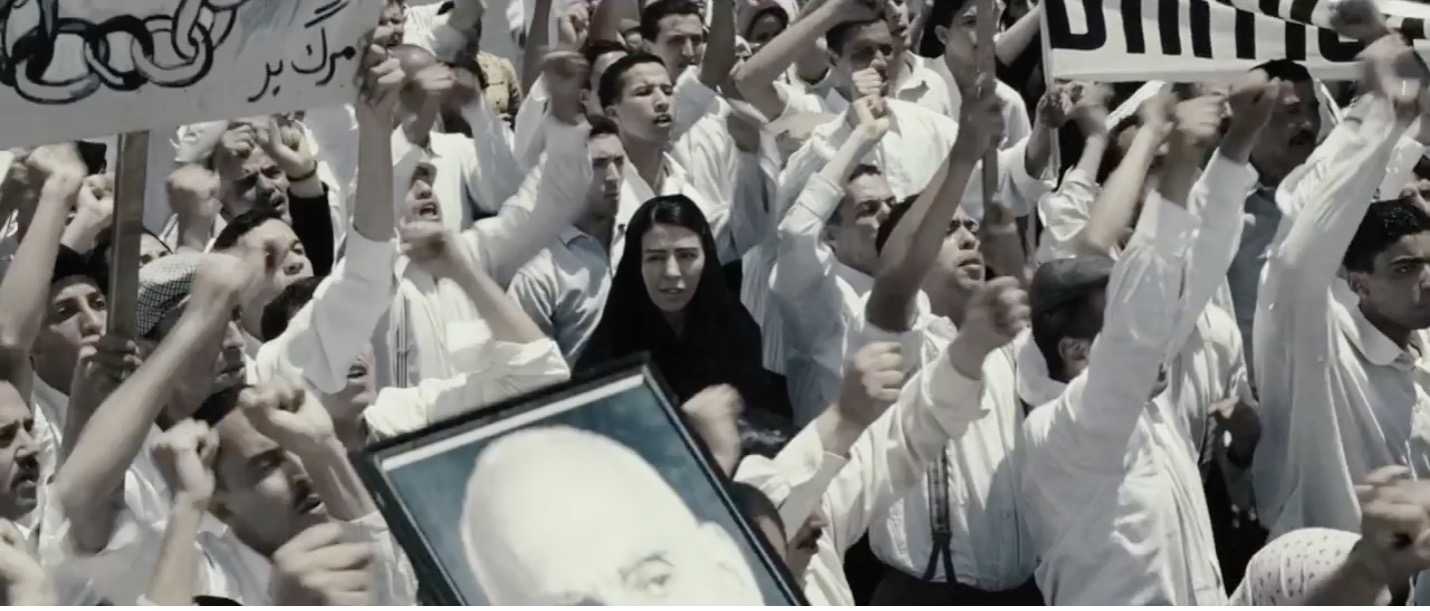
Figure 11: The stark chromatic separation of Mūnis from the street protests. Still from Women Without Men, directed by Shirin Neshat, 2009.
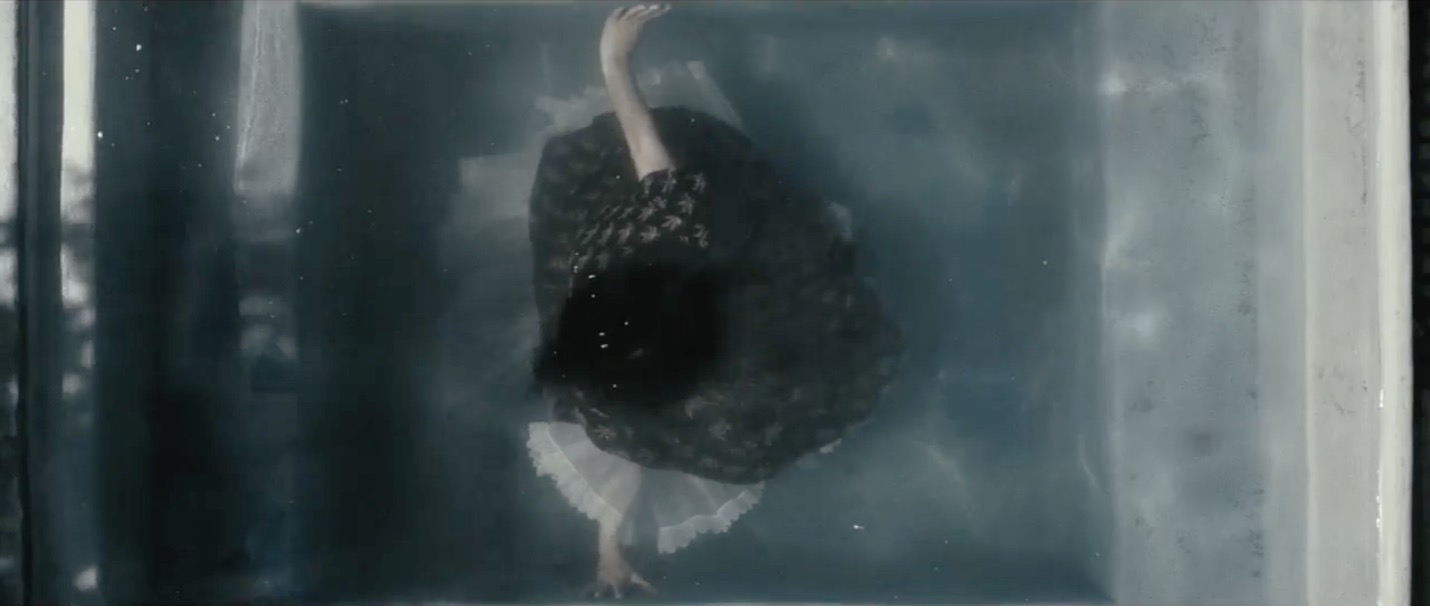
Figure 12: Painterly and photographic inflections of Neshat’s framing. Still from Women Without Men, directed by Shirin Neshat, 2009.
Echoing Jameson’s readings of A Man of Principle (1984, dir. Francisco Norden) and Fever (1981, dir. Agnieszka Holland), Women Without Men displaces “a whole range of narrative interest and attention, which classical film laboriously acquired and adapted from earlier developments in the novel,” leaving behind only skeletal traces of plot held together by the sustained intensity of a visual spell and stylized violence.17Fredric Jameson, “On Magic Realism in Film,” Critical Inquiry 12, no. 2 (Winter, 1986): 320. As if triggered by a psychological rupture, Zarrīn, an emaciated sex worker, begins to perceive her clients as faceless figures. This uncanny vision first appears in the brothel, where the gardener, not yet disclosed as such, presents himself as a faceless client (figure 13). This sequence culminates in a moment of purification (pāk’shudan barāyi namāz) and salvation for Zarrīn, as she escapes the brothel and enters a public bath whose atmosphere recalls orientalist depictions of harem baths. The phantasmagoric bath is almost immediately unsettled, both by the camera’s altered perspective and by the grotesque violence of Zarrīn’s obsessive scraping of her skin, which draws blood from her every pore and displaces any libidinal fantasy with visceral discomfort (figure 14). The image’s surface becomes strikingly inconsumable, resisting commodification. It offers neither visual pleasure nor narrative coherence. Instead, it stages an aesthetic of rupture, resisting consumption and unsettling the spectatorial gaze.
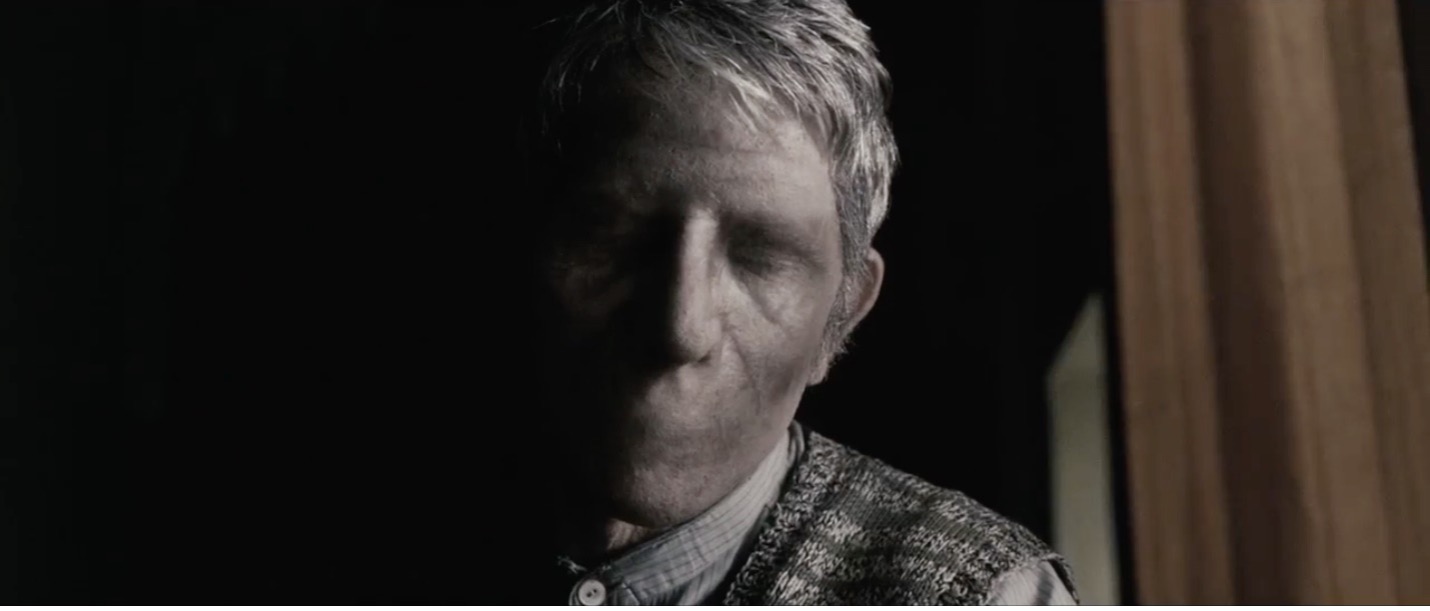
Figure 13: The gardener appears as a faceless client in Zarrīn’s vision. Still from Women Without Men, directed by Shirin Neshat, 2009.
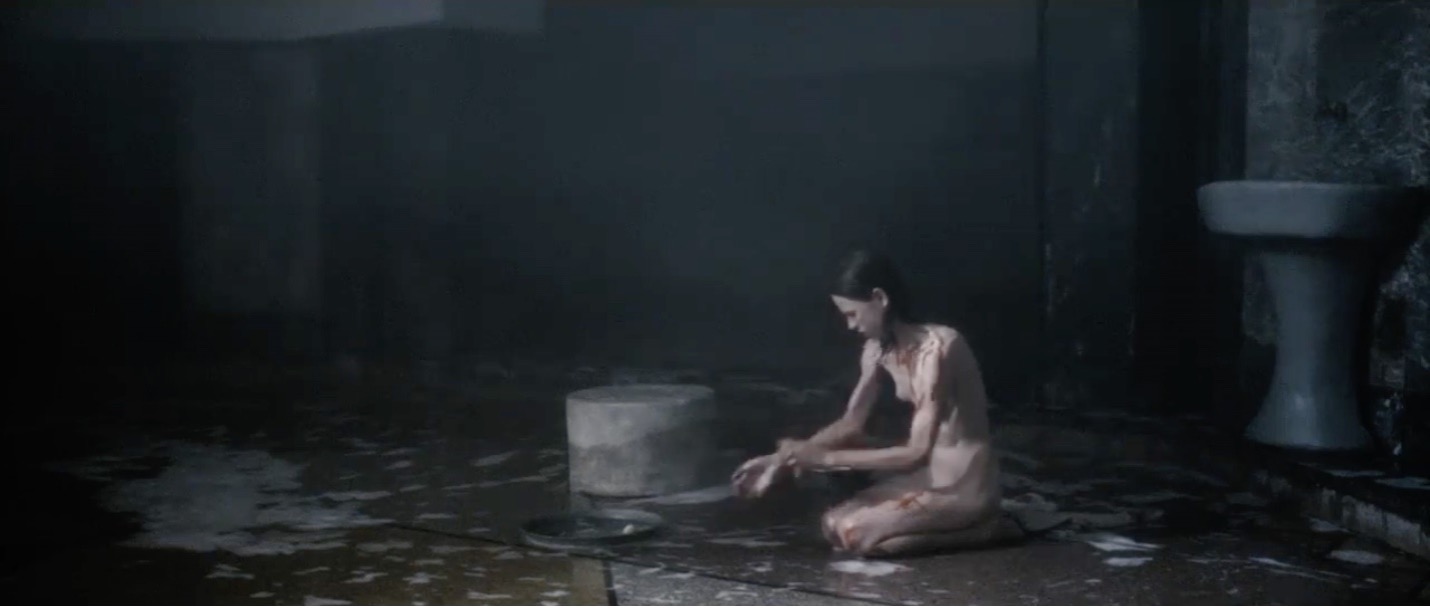
Figure 14: Zarrīn’s obsessive scraping draws blood from her every pore, displacing visual pleasure with visceral discomfort. Still from Women Without Men, directed by Shirin Neshat, 2009.
The visual intensity of Neshat’s film introduces another generative layer of meaning. It makes room for history-telling in the pauses, when the image withdraws just enough to allow historical consciousness to surface. If the opening of the film privileges visual intensity as a mode of utopian imagination, then this moment stages a reversal: history returns not as a distant backdrop but as an active interlocutor. Here, historical accounts are interwoven with the visual rhythm of utopia, not to neutralize the brutality of imperial violence but to sustain a dialogue between what is remembered and what is imagined. Women Without Men is, then, also an imagining of “us without them”: a vision of a nation resisting Western patriarchy and placing its utopian garden within a shared anti-colonial horizon. Neshat’s juxtaposition of this perforated history with the utopian imagination of “women without men” unfolds not as a pastiche tailored for consumption but as a deliberate formal permutation that insists on the political urgency of aesthetic form.
Where Pārsīpūr’s novel makes only a fleeting reference to the political upheaval of 1953, Neshat’s Women Without Menis deeply invested in staging the political and historical specificity of that moment. By reanimating the desires of a nation within the narrative frame, Neshat foregrounds the urgency of attending to the nation as a site of resistance, not least because the democratic polity emerging under Musaddiq was crushed by the coup. As Timothy Brennan has aptly noted:
There is only one way to express internationalism: by defending the popular sovereignty of existing and emergent third-world polities. And part of that defense is to preserve an ideological space where they can exist in the face of futurist prognoses that they have ceased existing. Crippled, vexed by the dangers of excess and exclusion, smothered by the weight of ethereal images from afar, the nation is a precious site for negotiating rights and for salvaging communal traditions. Nationalism of this type took centuries to forge and its resilience in the face of the universalizing myths of U.S. benevolence is hopeful.18Timothy Brennan, At Home in the World: Cosmopolitanism Now (Cambridge, MA and London: Harvard University Press, 1997), 316.
It is in this light, understanding the nation as a possible force against the homogenizing logics of imperial domination, that Neshat’s effort to re-center the nation within her utopian vision gains its critical urgency and should be read as a deliberate political gesture.
Yet even as Women Without Men foregrounds the nation as a site of anti-colonial resistance, it remains complicit in reproducing entrenched orientalist stereotypes of Iran, especially when the film turns to narrate the nation. Neshat’s broader oeuvre has long been entangled with the politics of national representation, most visibly in her Women of Allahseries, which helped establish her international reputation. Women Without Men risks reproducing the same iconography of exoticism, violence, and female oppression readily absorbed by the global art world’s appetite for legible signs of Middle Eastern alterity. Despite its compelling portrayal of a nation resisting colonial forces, the film fails to address the very people whose stories it recounts, relying instead on static, stereotypical images of Iranian women that circulate easily within dominant visual economies. This dynamic suggests that Neshat’s primary interlocutor remains the West, which may account for the absence of locally grounded cultural references and the presence of stylized distortions of “tradition.”
By contrast, Pārsīpūr’s Women Without Men draws its power from a richly contextualized narrative that gradually envelops the Persian-speaking reader in the world the novel constructs. Her novella is at once rooted in a local context and open to broader international resonances, yet many of its cultural and historical references are lost in translation, which flattens the specificity of the original. For instance, in the story of Māhdukht, who plants herself in the garden and gradually transforms into a tree, Pārsīpūr writes that the music emanating from the tree immersed the entire garden in a “vahm-i sabz.” The term evokes Furūgh Farrukhzād, one of the pioneers of Iranian feminist poetry, and her poem of the same title, but in translation it becomes “green illusion,” stripping away its intertextual resonance. In the original Persian, Pārsīpūr sets the term in quotation marks, underscoring its specificity and signaling a deliberate invocation of Farrukhzād’s poem, which resonates thematically with Māhdukht’s act of planting herself in the garden.
Neshat’s Women Without Men constructs a cinematic utopia that unsettles heteronormative desire and complicates the contours of political subjectivity. Yet while it employs elements of magic realism to craft a generative cinematic space for critically examining desire, it also relies at times on reductive, readily legible orientalist imagery to secure its legibility and legitimacy within the global art market. In this way, Neshat’s film both challenges and reinforces narrow representations of the Iranian nation. Even so, embedded within its aesthetic and narrative structure are moments of imaginative divergence—fleeting scenes of refuge, care, or collectivity—that unsettle the broader political impasse the film depicts. These micro-utopian moments, dispersed across the film’s visual and spatial register, can be read through Deleuze and Guattari’s concept of micropolitics, where desire functions not merely as personal or psychological but as a political force operating in the smallest units of social life.19For a discussion of desire as a micropolitical force, see Gilles Deleuze and Félix Guattari, Anti-Oedipus: Capitalism and Schizophrenia, trans. Robert Hurley, Mark Seem, and Helen R. Lane (London: Continuum, 2004), 35, 288, 373; and A Thousand Plateaus: Capitalism and Schizophrenia, trans. Brian Massumi (Minneapolis: University of Minnesota Press, 1987), chap. 9, “1933: Micropolitics and Segmentarity.” See also Christian Gilliam, Immanence and Micropolitics: Sartre, Merleau-Ponty, Foucault and Deleuze (Edinburgh: Edinburgh University Press,2017), chap. 4. The garden in Karaj, for example, is not only metaphorical but a micropolitical zone where women imagine modes of life outside the phallocentric state and colonial violence. In this way, Women Without Men inserts a utopian impulse into history, not as its suspension but as a quiet refusal of its foreclosure.
If, as Fredric Jameson writes, the concept of utopia is “indistinguishable from its reality,” its ontology coinciding with its representation, then the work of Women Without Men resides in the images themselves: where form enacts refusal.20Fredric Jameson, “The Politics of Utopia,” New Left Review 25 (January–February 2004), 35. The garden scenes, rather than offering escape from history, stage a loosening of its grip, even as the film persistently returns to the named violences and street textures of the 1953 coup. While Jameson famously locates the utopian moment in the “suspension of the political,” Neshat complicates this by suturing micro-utopian intervals into a landscape saturated with political trauma.21Fredric Jameson, “The Politics of Utopia,” New Left Review 25 (January–February 2004), 43. Her cinematic retelling shifts Pārsīpūr’s homosocial refuge toward homoerotic potential, allowing desire, rather than institutional decree, to become the medium of historical negation. This is not merely an adaptation but a radical elaboration: a micropolitics of utopian imagination that unsettles heteronormative paradigms and intervenes in history without disavowing it. Utopia, here, is not retrospective but insurgent, a visual and affective proposition against the foreclosure of political possibility.
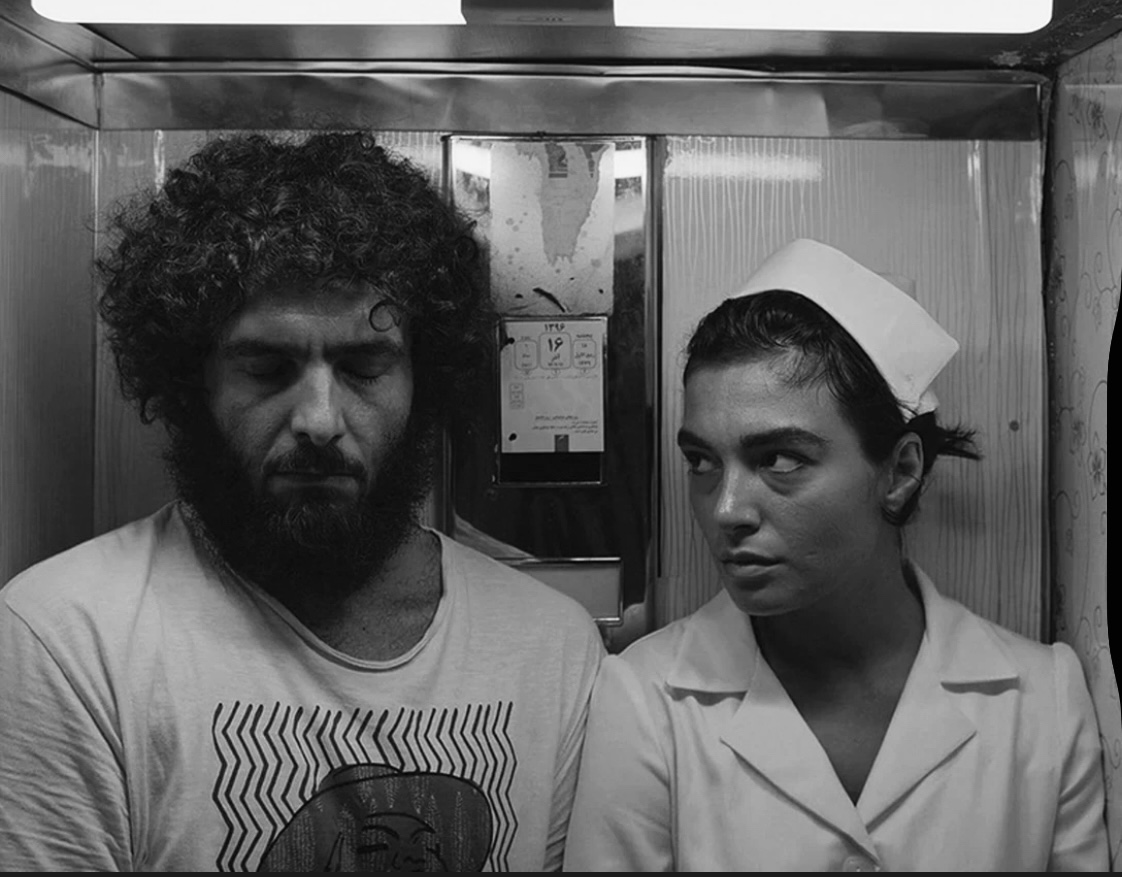
Figure 1: A still from the film Critical Zone (Mantaqah-yi Buhrānī), directed by ‛Alī Ahmadzādah, 2023.
Since the 1979 Islamic Revolution, the term “underground art” in Iran has been widely used but is sometimes misapplied. As I explain in Alternative Iran: Contemporary Art and Critical Spatial Practice (2022), some projects commonly labeled as “underground” were actually produced with official approval from the Ministry of Culture and Islamic Guidance and/or other state agencies. This was particularly common during certain political periods, such as parts of President Muhammad Khātamī’s term (1997–2005), the early years of Mahmūd Ahmadīnizhād’s presidency (2005–2013), and much of Hasan Rūhānī’s administration (2013–2021), when cultural restrictions were inconsistently enforced. In fields ranging from theater and music to visual and performance art, artists often used informal venues to avoid state oversight; but these actions were usually negotiated rather than openly defiant.
Nonetheless, cinema occupies a distinct and considerably more precarious cultural terrain in Iran. Because films circulate widely both within the country and across international borders, they have long been subjected to some of the most punitive forms of censorship imposed by the Islamic Republic, far more so than ephemeral or site-specific practices such as experimental theater or performance art. Unauthorized filmmaking in Iran (defined by its refusal to align with state-sanctioned cultural and political narratives) has long operated outside official licensing and funding, often at significant personal risk. It is therefore best understood as underground cinema, a term that denotes not just hidden venues or lack of permits, but a mode of production that shapes oppositional style, narrative form, circulation, and archiving. As Parviz Jahed notes in “Iranian Underground Cinema” (2014), this practice is less a countercultural phenomenon than a political act of civil disobedience.1Parviz Jahed, “Underground Cinema in Iran,” Film International 12, no. 3 (Sept. 2014): 106–111. It is produced entirely outside the state’s systems of licensing and support, often under precarious conditions, and typically addresses taboo subjects such as gender nonconformity or state violence.2Parviz Jahed, “Underground Cinema in Iran,” Film International 12, no. 3 (Sept. 2014): 106–111. Due to their sensitive content, these films follow unconventional archival and distribution paths. They rarely circulate through official channels in Iran and instead reach audiences internationally through film festivals, pirated DVDs, USB drives, or encrypted online platforms.3Parviz Jahed, “Underground Cinema in Iran,” Film International 12, no. 3 (Sept. 2014): 106–111.
Since the 1980s, the act of viewing banned films has itself given rise to a clandestine spectatorship that has become foundational to what we now recognize as Iranian underground cinema. As Blake Atwood details in Underground: The Secret Life of Videocassettes in Iran (2021), bootleg video circulation emerged during this period as a quiet yet widespread form of civil disobedience. Through the everyday acts of copying, distributing, and privately screening banned films, often Hollywood or arthouse titles, Iranians cultivated alternative cinematic imaginaries and created a vibrant, informal media ecology. These practices laid the groundwork for new viewing publics and future filmmakers, revealing how spectatorship itself could become a subversive force in a tightly controlled cultural environment.
This underground viewing culture was paralleled by equally subversive efforts in archiving. Ehsan Khoshbakht’s article “Celluloid Counter-Revolution: A Salute to the Underground Film Lovers of Iran” (The Guardian, 2023) offers a striking example in the figure of Ahmad Jurqāniyān.4Ehsan Khoshbakht, “Celluloid Counter-Revolution: A Salute to the Underground Film Lovers of Iran,” The Guardian, October 4, 2023, https://www.theguardian.com/film/2023/oct/04/celluloid-counter-revolution-a-salute-to-the-underground-film-lovers-of-iran. A pre-revolutionary cinephile turned film preservationist, Jurqāniyān risked arrest and torture to salvage thousands of 35mm prints destined for destruction by the Islamic Republic.5Ehsan Khoshbakht, “Celluloid Counter-Revolution: A Salute to the Underground Film Lovers of Iran,” The Guardian, October 4, 2023, https://www.theguardian.com/film/2023/oct/04/celluloid-counter-revolution-a-salute-to-the-underground-film-lovers-of-iran. Operating secret vaults in the basements of Tehran, he smuggled, stored, and eventually loaned out banned films to private gatherings.6Ehsan Khoshbakht, “Celluloid Counter-Revolution: A Salute to the Underground Film Lovers of Iran,” The Guardian, October 4, 2023, https://www.theguardian.com/film/2023/oct/04/celluloid-counter-revolution-a-salute-to-the-underground-film-lovers-of-iran. His personal archive became a site of cultural resistance, sustaining a lineage of cinematic memory that the state sought to erase.7Ehsan Khoshbakht, “Celluloid Counter-Revolution: A Salute to the Underground Film Lovers of Iran,” The Guardian, October 4, 2023, https://www.theguardian.com/film/2023/oct/04/celluloid-counter-revolution-a-salute-to-the-underground-film-lovers-of-iran. These acts of preservation were not merely about saving film stock; they were about safeguarding access to alternative worlds and histories.
Underground filmmaking is defined not only by its covert circulation but by a cinematic mode that compels viewers to confront what is not meant to be seen. This dynamic, however, is not limited to unapproved films; as many scholars note, the Islamic Republic’s restrictions on public behavior have shaped all genres of Iranian cinema since 1979. Censorship in post-revolutionary Iran has not simply restricted filmmakers but shaped distinctive aesthetic and narrative strategies.8Negar Mottahedeh, Displaced Allegories: Post–Revolutionary Iranian Cinema (Durham & London, Duke University Press, 2008). Negar Mottahedeh argues that modesty codes, such as the requirement for women to be veiled and the prohibition of the desiring gaze, forced filmmakers to reinvent cinematic language through allegory, indirection, and visual restraint.9Negar Mottahedeh, Displaced Allegories: Post–Revolutionary Iranian Cinema (Durham & London, Duke University Press, 2008). According to Hamid Naficy, post-revolutionary Iranian cinema renders even the most private spaces (such as bedrooms and bathrooms) subject to public scrutiny, placing them under the same moral surveillance as public places. This heightened visibility enforces strict limits on depictions of intimacy, structured by what Naficy calls the “Islamicate gaze,” a visual regime that presumes a male spectator from whom women must remain modestly concealed, both physically and symbolically.10Hamid Naficy, A Social History of Iranian Cinema, Volume 3: The Islamicate Period, 1978–1984 (Durham: Duke University Press, 2011), 115-188. Hamid Dabashi, on the other hand, describes the result as cinema populated by “body-less faces” and the systematic “abstracting [of] women,” highlighting the disembodiment that characterizes representations of femininity under such constraints.11Hamid Dabashi, “Body‐Less Faces: Mutilating Modernity and Abstracting Women in an “Islamic Cinema,” Visual Anthropology 10, nos. 2-4 (1998): 361–380. Together, these and similar theories highlight how state-imposed restrictions have fostered distinctive aesthetic strategies unique to authorized Iranian cinema.12These include, among others, the work and contributions of Michelle Langford. See, Michelle Langford, Allegory in Iranian Cinema: The Aesthetics of Poetry and Resistance (London Borough: Bloomsbury Publishing, 2019).
***
Building on the work of these film scholars, this essay examines how a different set of constraints has shaped the aesthetics of underground filmmaking in Iran. Consider the work of Muhammad Rasūluf, a renowned Iranian filmmaker who has long been persecuted for his politically charged cinema. In May 2024, after his film The Seed of the Sacred Fig (Dānah-yi Anjīr-i Ma‛ābid) was selected for competition at Cannes, Rasūluf was sentenced by Iranian authorities to eight years in prison, along with flogging, a fine, and the confiscation of his assets.13Scott Roxborough, “How Mohammad Rasoulof Escaped Iran and Why He Will Continue Fighting,” The Hollywood Reporter, May 24, 2024. Accessed May 25, 2024. https://www.hollywoodreporter.com/movies/movie-news/mohammad-rasoulof-iran-cannes2024-seed-of-the-sacred-fig-1235907934/ Refusing to comply with demands to withdraw the film, he fled Iran clandestinely by crossing mountainous terrain to reach Europe, where he now lives in exile.14Scott Roxborough, “How Mohammad Rasoulof Escaped Iran and Why He Will Continue Fighting,” The Hollywood Reporter, May 24, 2024. Accessed May 25, 2024. https://www.hollywoodreporter.com/movies/movie-news/mohammad-rasoulof-iran-cannes2024-seed-of-the-sacred-fig-1235907934/
The Seed of the Sacred Fig, Rasūluf’s tenth directorial work, was shot covertly in Tehran and its surrounding regions.15Michael Rosser, “Mohammad Rasoulof Talks Fleeing Iran and Making Cannes Competition Title The Seed of the Sacred Fig,” Screen Daily, May 23, 2024. https://www.screendaily.com/features/mohammad-rasoulof-talks-fleeing-iran-and-making-cannes-competition-title-the-seed-of-the-sacred-fig/5193960.article. Filming lasted approximately seventy days, from late December 2023 to March 2024, though production was frequently interrupted; Rasūluf could only shoot for a few days at a time before being forced to pause for safety.16Michael Rosser, “Mohammad Rasoulof Talks Fleeing Iran and Making Cannes Competition Title The Seed of the Sacred Fig,” Screen Daily, May 23, 2024. https://www.screendaily.com/features/mohammad-rasoulof-talks-fleeing-iran-and-making-cannes-competition-title-the-seed-of-the-sacred-fig/5193960.article. What’s more, the film blurs the boundary between fiction and documentary; it follows a fictional family while incorporating real footage from the 2022 Woman, Life, Freedom protests to powerful effect.
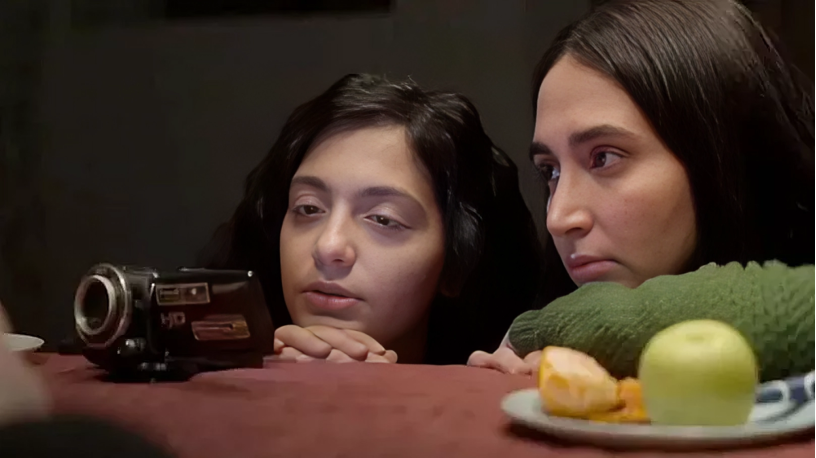
Figure 2: A still from the film The Seed of the Sacred Fig (Dānah-yi Anjīr-i Ma‛ābid), directed by Muhammad Rasūluf, 2024.
The film’s aesthetics are shaped by its constraints: Limited casts and restricted settings, often confined to the interiors of homes, cars, abandoned buildings, or other enclosed or uninhibited spaces, create an intimate visual language. These are, indeed, critical zones: vital for safeguarding cast and crew and central to the aesthetic language and spatial politics of underground films. The camera often uses close-up shots, emphasizing facial expressions, objects, and textures to convey emotion and advance the story (Figure 2). These details become crucial devices through which the underground filmmakers convey meaning and evoke feeling.
***
Beyond widely known figures, such as Rasūluf, a younger generation of directors has emerged, producing films entirely without permits, budgets, or institutional protection. Their work, shaped by scarcity and improvisation, embraces small casts, intimate spaces, raw sound, and non-linear plots. These constraints do not diminish the cinematic experience; instead, they give rise to an aesthetic of urgency, fragmentation, and defiance. Striking in the work of Iran’s younger underground filmmakers is their focus on taboo subjects rooted in their generation’s daily life. These themes often fall afoul of both the Islamic Republic’s strict moral codes and sometimes even the expectations of global audiences, making them doubly marginalized and underexamined. ‛Alī Ahmadzādah (whose films I discuss below) told me that many international critics initially dismissed Critical Zone (Mantaqah-yi Buhrānī, 2023) for its depictions of drug use among Iranian youth. After the Woman, Life, Freedom uprising, however, the film drew renewed attention amid global focus on youth-led resistance in Iran. Ahmadzādah’s work reveals not only the critical zones of underground filmmaking but also the hidden tensions within youth cultures, often visible yet overlooked. Though seemingly freer from institutional control, underground films remain bound by their own risks, which shape their narrative and visual styles, particularly in depictions of middle- and upper-class youth in contemporary Tehran.
When I refer to “youth culture” in the context of Iranian underground cinema, I am speaking broadly, encompassing not just teenagers and high school students, but also individuals in their twenties and even early to mid-thirties. This might seem surprising to readers unfamiliar with the Iranian context, particularly those accustomed to Western portrayals of youth in classic films like Rebel Without a Cause (1955), where the protagonists are mainly depicted as being in their late teens. In Iran, however, due to prolonged economic hardship and social constraints, the phase of youth is often extended. Many individuals remain financially dependent on their families well into adulthood, unable to marry, purchase homes, or establish independent lives. This is especially true for those in professions with unstable incomes and for individuals who have the support of their families. As a result, the experience of youth (marked by bachelor apartments, dependence on family support, late-night parties, and long drives to northern resorts with friends) often stretches into one’s thirties. In the (underground) films of Iranian director ‛Alī Ahmadzādah (b. 1986), which I examine in the following sections, both the characters and the actors portraying them are often in their late twenties or thirties. This reflects a social reality in Iran, where youth is not just a matter of age, but a prolonged condition shaped by economic stagnation, delayed life transitions, and at times even psychological malaise and substance use.
Working with minimal resources and under constant threat of surveillance, underground films with a focus on “youth culture,” adopt fragmented structures, spatial and temporal dislocation, and confined settings to construct visual and narrative languages attuned to the fractured realities of life under authoritarian rule. In particular, these films highlight the emotional aspects of youth experience (boredom, anxiety, disorientation, and short-lived moments of joy), while depicting the social realities of life on the margins. In this way, Iranian underground cinema develops a formal language in which aesthetic and narrative choices are shaped by, and respond to, the constraints of everyday life.
***
Some scholars have recently criticized what they see as an overemphasis on censorship, and on resistance to it (even in purely aesthetic form), in analyses of Iranian cinema. For example, emerging scholar Hamed Taheri, argues that many discussions, across media, festivals, reviews, and academia, tend to frame Iranian films too narrowly through the lens of resistance to censorship.17Hamed Taheri, “Compliance and Resistance in Iranian Cinema’s Censorship Landscape: A New Approach to Analyzing Iranian Films,” Quarterly Review of Film and Video (2024): 1–19. While acknowledging the valuable work of scholars who have addressed this theme, he cautions that such interpretations “do not explain how filmmakers could have performed their perceived resistance or circumvented censorship in different phases.”18Hamed Taheri, “Compliance and Resistance in Iranian Cinema’s Censorship Landscape: A New Approach to Analyzing Iranian Films,” Quarterly Review of Film and Video (2024): 1–19. These readings, according to Taheri, risk oversimplifying the complex processes of filmmaking, distribution, and audience reception by reducing them to isolated acts of resistance.19Hamed Taheri, “Compliance and Resistance in Iranian Cinema’s Censorship Landscape: A New Approach to Analyzing Iranian Films,” Quarterly Review of Film and Video (2024): 1–19. He terms this tendency the “fetishization of resistance” and calls instead for a more nuanced, contextual approach, one that accounts for both acts of resistance and the ways in which the Islamic Republic actually injects its ideology into cinema through mechanisms of control and regulation.20Hamed Taheri, “Compliance and Resistance in Iranian Cinema’s Censorship Landscape: A New Approach to Analyzing Iranian Films,” Quarterly Review of Film and Video (2024): 1–19. However, I argue that many Iran-based filmmakers are, in fact, influenced by how scholars, particularly in mainstream Western books and media, have theorized their work and that of their peers. This is especially true for filmmakers in recent decades, who have had ample access to such forms of writing and scholarship. Indeed, the relationship is more than a one-way street; it is reciprocal. Regardless of this detail, I share Taheri’s concerns and acknowledge that in my earlier work on Iranian alternative and underground art, I have been careful not to “romanticize” resistance or rely on visual clichés or superficial observations without first verifying them with the artist or others involved in the project. I have focused on the specific conditions under which creative works are produced and shown: whether they have state approval, whether they are intended to be explicitly political, whether they deliberately navigate or bypass state censorship, and whether the creator faced repercussions for that particular work. To avoid generalizations, I often speak directly with the creators. In this case, I have interviewed Ahmadzādah extensively, especially about Critical Zone and its production. Ahmadzādah, however, has a distinctly liberal disposition. Like many artists, he believes that explanations need not come directly from him; instead, he is genuinely curious about what viewers discover and prefers to leave interpretation open. In our interview, he often withheld elaboration, his expression at times suggested: What do you think? This openness allowed me to project my own interpretations: I argue that the narrative and visual strategies shaped by underground constraints in Ahmadzādah’s work carry into his sanctioned films, reflecting not merely subversion but a practice honed through years of permitless filmmaking as well as Tehran’s culture of ambiguity, uncertainty, and coded youth expression.
Although Ahmadzādah has lived and worked both inside and outside Iran since 2023, this discussion centers on the three feature-length films he directed while based in the country: works that trace the contours of a generation aging into delayed adulthood under the shadow of surveillance and sanctioned social norms. Two of his earlier features –Kami’s Party (Mihmūnī-i Kāmī, 2013) and Atomic Heart (Mādar-i Qalb-i Atumī, 2015)– rely on a shared visual and narrative grammar shaped by endless driving and the intimate architecture of cars. Faces are captured in shallow focus, illuminated by the dim light filtering through car windows or the glow of dashboard fluorescence during nighttime driving scenes. Conversations drift. The camera lingers on confined car interiors, dead-end allies, roadsides, backrooms, lavatory counters: spaces where desire, paranoia, and boredom blend (Figure 3).
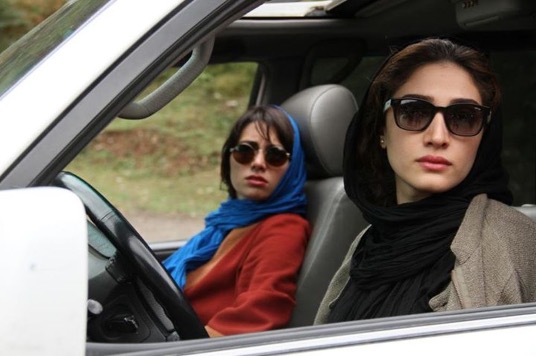
Figure 3: A still from the film Kami’s Party (Mihmūnī-i Kāmī), directed by ‛Alī Ahmadzādah, 2013.
Ahmadzādah’s films diverge from other examples of Iranian (underground) youth cinema, such as My Tehran for Sale (2009), directed by Grānāz Mūssavī, which centers on joyful gatherings and moments of transgressive celebration. Mūssavī’s approach came with real-world consequences: While she returned to Australia after shooting the film, Iranian actress Marziyah Vafāmihr was arrested in 2011 for her role, reportedly due to appearing without proper hijab and participating in scenes deemed inappropriate by authorities. She was initially sentenced to one year in prison and 90 lashes, though the sentence was later reduced.21Tim Kenneally, “Iranian Actress Freed from Prison on Reduced Sentence,” Reuters, October 28, 2011. https://www.reuters.com/article/lifestyle/iranian-actress-freed-from-prison-on-reduced-sentence-idUSTRE79R6JM/.
In Ahmadzādah’s portrayal of youth leisure (something even implied by the title Kami’s Party), what we encounter is far from parties, celebrations, or carefree singing and dancing. There is often the hope of reaching a fun destination or simply returning home from a gathering, but the journey becomes increasingly fraught. The characters face constant disruptions, from reckless drivers speeding toward them on narrow roads to encounters with police and morality patrols. The focus is less on moments of relaxation or enjoyment and more on the obstacles that interrupt and ultimately define everyday life. Even drug use, while probably legible to most viewers, is rarely shown directly. It comes across less as an act of pleasure than as something driven by boredom, desperation, habit, or accident. The characters’ incessant laughter leaves us unsure whether it stems from intoxication or from the stress of the moment, tinged with the recognition of its absurdity. This absence of “fun” is likely not just a tactical avoidance of censorship but a deliberate aesthetic choice. Rather than portraying youth as rebellious through spectacle, Ahmadzādah emphasizes the emotional and existential uncertainty that defines their lives under constant constraint. Specifically, Kami’s Party draws attention not to the moments when youth break free, but to the conditions that prevent them from ever fully doing so.
Kami’s Party was produced entirely underground and never screened in Iran.22Interview with Ahmadzādah, July 2025. Atomic Heart, by contrast, followed a more complex path in both production and release. Although it was filmed with partial authorization from cultural authorities, it was not approved for screening in Iran until four years after its completion, and even then, it was pulled from theaters after just two weeks due to shifting regulations and official backlash.23Interview with Ahmadzādah, July 2025. For these reasons, I consider Atomic Heart, alongside Ahmadzādah’s other underground films, Kami’s Party and Critical Zone (discussed at the end of this essay), as part of a continuum of Iranian underground cinema, one shaped by shared constraints in cinematography, location, and production, regardless of official permissions.
***
In Kami’s Party, a group of young, middle- and upper-class Iranians shuttle between the northern shores of the Caspian Sea and the exclusive villa enclave of Lavāsān near Tehran. The film’s narrative, seemingly simple, follows Nigīn (Mīnā Sādātī) and her friend Farnāz (Pigāh Āhangarānī) as they drive inland to attend a party hosted by an enigmatic man named Kāmī, after losing touch with Nigīn’s boyfriend Umīd. But the journey becomes psychologically fraught, and ultimately tragic. Shot mostly over the course of a single, extended day (perhaps a Friday, the day of rest and leisure in Iran) the film unfolds slowly and subtly. The cinematography relies on tight interior shots and low lighting, with occasional wider frames set in roadside cafés or wooded areas. These outdoor scenes, often obscured by northern Iran’s heavy fog, create a subdued and unsettling atmosphere (Figure 4). These unclear and shifting spaces are central to underground filmmaking, where small crews work quietly, often filming in public or semi-public areas while avoiding attention.
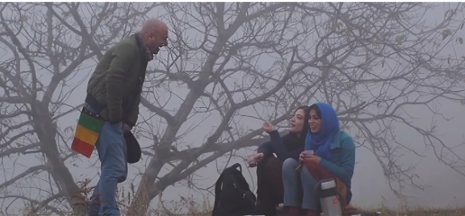
Figure 4: A still from the film Kami’s Party (Mihmūnī-i Kāmī), directed by ‛Alī Ahmadzādah, 2013.
What initially appears to be a weekend escape turns inward, unraveling hidden tensions between friends and lovers. The film’s climax unfolds with the discovery of Umīd’s corpse, apparently dead of an overdose and hidden in the trunk of Nigīn’s car. This revelation is immediately followed by a sudden accident, as another partygoer, groggy and half-asleep at the wheel, unknowingly runs over the very friend who had earlier joined Nigīn and Farnāz on their way to Kāmī’s party in Lavāsān, and who unexpectedly uncovered Umīd’s body in the trunk. This final, elliptical moment occurs with no warning or resolution. The secret remains unspoken, reabsorbed into the flow of traffic and time.
Ahmadzādah himself has described Kami’s Party as a portrait of Iran’s affluent youth, deliberately free from overt judgment or ideology.24“Kami’s Party.” Iranian Film Festival, Cologne, https://www.iranian-filmfestival.com/en/kamis-party/. Instead, the film speaks through its form: long takes, silent exchanges, cars moving endlessly between private enclaves. The road movie, in Ahmadzādah’s hands, becomes not a journey of discovery but of concealment, an aesthetic strategy suited to a context where the unsaid often carries more weight than what can be openly acknowledged.25“Kami’s Party.” Iranian Film Festival, Cologne, https://www.iranian-filmfestival.com/en/kamis-party/.
Atomic Heart, also known as Atom Heart Mother, was produced in Iran with permission from the authorities in 2013 and screened at the 65th Berlin International Film Festival in 2015. It went on to be nominated at the Buenos Aires International Festival of Independent Cinema, the LA Film Festival, the Odesa International Film Festival, and screened at both the San Diego Asian Film Festival and the Zurich Film Festival.26“‘Atomic Heart’ on Screen After 4-Year Delay,” Financial Tribune, May 29, 2017, http://elearning.khzceo.ir/articles/art-and-culture/65474/atomic-heart-on-screen-after-4-year-delay; “Atomic Heart Mother (2015) – Awards.” IMDb, https://www.imdb.com/title/tt3719158/awards/. Although filmed with official permission, the film was not approved for public screening in Iran until 2017, after the Ministry of Culture and Islamic Guidance required certain edits.27Interview with Ahmadzādah, July 2025. According to Ahmadzādah, however, even then the film was screened in Iran for only two weeks before being pulled due to new regulations and mounting accusations.28Interview with Ahmadzādah, July 2025. The title references a Pink Floyd song that is banned yet widely popular in Iran. The film is also grounded in the political climate of the early 2010s, particularly during the rollout of Mahmūd Ahmadīnizhād’s “Subsidy Reform Plan” and the intensification of Iran’s atomic energy program.29Associated Press editorial, “Iran Doubles the Price of Bread with Subsidy Cut: Bread Prices Double in Iran as Government Slashes Subsidies with Economic ‘Surgery’ Plan,” Yahoo! Finance, December 20, 2010, https://web.archive.org/web/20101224163603/http://finance.yahoo.com/news/Iran-doubles-the-price-of-apf-1408949862.html?x=0. Set over the course of a single night, it follows two friends, Ārīnah and Nubahār, as they drift through Tehran’s streets after midnight, encountering a series of increasingly surreal and ominous events.
As they navigate the city by night, Ārīnah and Nubahār are drawn into a surreal odyssey after a car accident leads to the unexpected arrival of a mysterious man named Tūfān. What follows is an oneiric sequence of events that seems to hover between dream and hallucination. The cinematography becomes increasingly stylized (teal-tinged city lights, claustrophobic framing, tracking shots that blur into abstraction) mirroring the characters’ growing disorientation. Here, too, the car remains the central site of narrative and aesthetic focus: a mobile bubble of freedom and fear, desire and dread. The streets of Tehran are glimpsed in passing but never truly inhabited; the protagonists remain in motion, yet their ride leads nowhere. One exception arises when they detour to a church in Tehran, an ambiguous refuge linked to Ārīnah’s Armenian identity and her access to the space, ostensibly to play the piano and use its facilities, but also to momentarily escape the unwelcome presence of Tūfān, who appears to be stalking them. In this scene, the church becomes more than just a sanctuary (Figure 5); it gestures toward a broader phenomenon in Tehran, where spaces belonging to minority communities (halls and spaces adjacent to churches, synagogues, and Zoroastrian community centers) have long been informally appropriated by Muslim youth as safe zones for underground cultural activity, especially the often-banned Rock music.30Pamela Karimi, Alternative Iran: Contemporary Art and Critical Spatial Practice (Stanford University Press, 2022), 46-52. The film’s subtle invocation of this practice underscores these spaces as hidden sanctuaries for creative expression while simultaneously situating them as another “critical zone” within both Tehran’s underground culture and the aesthetics of underground filmmaking.
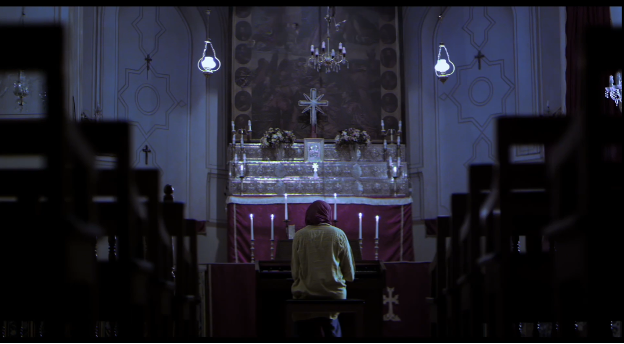
Figure 5: A still from the film Atomic Heart (Mādar-i Qalb-i Atumī), directed by ‛Alī Ahmadzādah, 2015.
As the night progresses, the girls’ encounters with figures of state authority: police officers, seemingly intelligence agents, and even an Arabic-speaking man who bears a startling resemblance to Saddam Hussein, become increasingly surreal and ominous. At one point, when a morality officer engages with the girls, a casual remark about having watched the Hollywood film Argo (which dramatizes a CIA rescue mission during the 1979 Iran hostage crisis), quickly escalates into an intense interrogation. Even something as trivial as a pair of sunglasses worn at night by their friend Kāmī, who briefly joins them on the roadside, arouses suspicion. But even in moments of calm or fleeting happiness, when no one interrupts or interrogates, the trio is still shown against a backdrop of anxiety. Their casual conversations about life abroad and a spontaneous sing-along to the 1985 charity single “We Are the World” take place against a backdrop of flashing motorcycle lights, which suggest they might be being followed. As “We Are the World” reaches its climax, the scene abruptly cuts to a car crash at an intersection, ending the brief moment of enjoyment (Figure 6).
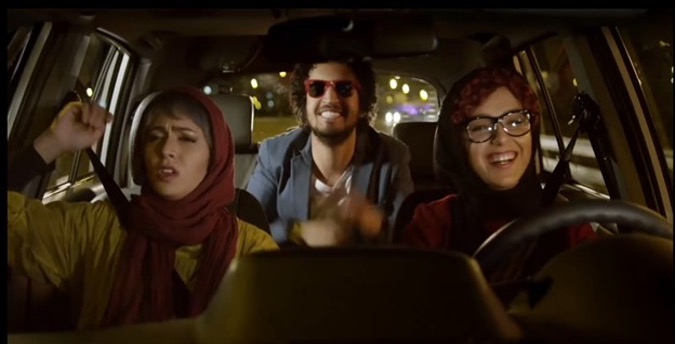
Figure 6: A still from the film Atomic Heart (Mādar-i Qalb-i Atumī), directed by ‛Alī Ahmadzādah, 2015.
The film features masterful performances by some of Iran’s most prominent mainstream actors (Tarānah ‛Alīdūstī, Pigāh Āhangarānī, and Muhammad Rizā Gulzār) whose collaboration on this unconventional project is surprising, yet not entirely unexpected. Their performances convincingly capture the everyday absurdities of life under authoritarianism, where even mundane aspects of daily life are subject to suspicion. The film takes a surreal turn at the end when Tūfān (a character who is possibly coded as an undercover agent) dies in what appears to be a suicide, following a bizarre bet with Ārīnah about who will jump off a rooftop in Tehran. This moment leaves the narrative unresolved. Like Kami’s Party, Atomic Heart offers no conclusion: only a glimpse into a life looped in repetition.
***
Both Kami’s Party and Atomic Heart end without catharsis. Yet in their inconclusiveness, they gesture to something enduring: the persistence of youth as a temporality beyond state scripting. These are lives lived in stasis, but not without movement: forever in cars, en route to parties, chasing moments of autonomy however fleeting. Ahmadzādah’s characters seek refuge from the traditional family structures that demand conformity through marriage, reproduction, and respectable employment. Instead, they linger in an extended adolescence: social smoking, listening to Western music, drifting from one night to the next. These may be small acts of defiance, but within the Islamic Republic’s legal and moral framework, they carry important weight.
Ahmadzādah’s work offers a portrait of post-revolutionary Iranian youth, particularly the generation shaped by the long tail of the Green Movement and the crushing effects of international sanctions. This is a generation whose desires (for leisure, companionship, and privacy) are modest yet continually deferred. It is also the same generation that has had to grapple with the implications of Iran’s nuclear policy, particularly since the onset of Mahmūd Ahmadīnizhād’s presidency. In Atomic Heart, references to atomic bombs and other instruments of mass destruction surface intermittently, often woven into descriptions of melancholic dreams and fragmented exchanges between Ārīnah, Nubahār, and Kāmī. The aesthetic choices in these films (the tight confines of car interiors, the ambient glow of night driving, the absence of narrative resolution) mirror the social impasse that defines their lives. There is no outside, no escape, only motion without arrival.
Figure 7: A still from the film Atomic Heart (Mādar-i Qalb-i Atumī), directed by ‛Alī Ahmadzādah, 2015.
And yet, this suspended world begins to crack in Ahmadzādah’s third long film, produced amid the rising tide of protests led by Iranian youth. If Kami’s Party and Atomic Heart capture the eerie stillness of repression, his most recent cinematic turn gestures toward the possibility that this generational loop might at last be breaking.
Filmed clandestinely in Tehran in 2019 and completed only in 2023 through international postproduction efforts involving collaborators in Germany and Portugal, Ahmadzādah’s Critical Zone (2023), is a guerrilla-style tour de force that, in my view, captures the aesthetic and political power of Iran’s underground cinema at its best. Shot covertly on the streets of Tehran and completed without state approval, Critical Zone captures both the risks and the radical imagination that define this cinematic movement. Critical Zone exemplifies the best of underground cinema in Iran, defined by its clandestine production and its voicing of marginalized experiences absent from both state and independent films.31The majority of the content presented here related to the film, Critical Zone, is a paraphrased and revised adaptation of a section originally published in my book, Women, Art, Freedom: Artists and Street Politics in Iran (Leuven University Press/Cornell University Press, 2024). For the original content, please refer to pages 242–246. The discussions of this film took shape following extensive interviews with ‛Alī Ahmadzādah in November 2023 in Mannheim, Germany, after a screening of his film. I am grateful to him for generously sharing insights into his filmmaking process and the details of Critical Zone with me. Premiering at the 76th Locarno Film Festival early in 2023, Critical Zone won the prestigious Golden Leopard, though Ahmadzādah was prohibited from leaving Iran and attending the screening.
***
Like many others on social media, I first encountered Critical Zone through a viral GIF that became iconic during the 2022–2023 protests. The clip shows a woman standing through the sunroof of a moving car on a Tehran highway, her hair swept by the wind as she defiantly shouts “F… You” into the night (Figure 8). Widely mistaken for spontaneous protest footage, the scene circulated as a symbol of the Woman, Life, Freedom uprising. Only later did I realize that this striking moment was not documentary but a carefully staged scene from ‛Alī Ahmadzādah’s Critical Zone, which he had posted on Instagram ahead of the film’s release.32Interview with Ahmadzādah, November 2023. That pre-release circulation drew the attention, and condemnation, of Iranian authorities.

Figure 8: A still from the film Critical Zone (Mantaqah-yi Buhrānī), directed by ‛Alī Ahmadzādah, 2023.
Ahmadzādah, long officially barred from filmmaking by the Islamic Republic, took on nearly every production role himself: direction, editing, sound design, and even acting in several scenes. Working with a skeletal crew of close friends he converted his own apartment into both a production hub and the film’s principal set. With no permits, the film relied heavily on concealed cameras and a mobile shooting strategy that mirrored its protagonist’s elusive movements through Tehran’s layered urban geography. In addition to directing the film, Ahmadzādah personally handled the original sound design, montage, and editing. He even appeared on screen, playing roles in scenes where anonymous gangs pursue the drug-dealing protagonist. The cast was made up entirely of nonprofessional actors who participated out of friendship with the director, and the filmmaking crew was equally minimal: limited to a cameraman, a close friend of Ahmadzādah, and a sound technician. This small, close-knit team was instrumental in carrying out the shoot within Iran.
The film’s narrative follows Amīr, a solitary drug dealer navigating Tehran’s underbelly in a beat-up taxi, guided by a disembodied GPS voice. Along his route, Amīr encounters a cross-section of Iranian society: an elderly resident in a nursing home, a young nurse whose body language is suggestive, queer sex workers near Karīmkhān Bridge, a melancholic flight attendant, and a female dancer struggling for recognition (Figures 1 and 9). Each exchange Amīr makes, apparently transactional, is laden with emotional weight, unfolding as quiet acts of care, mutual recognition, and resistance against social and psychological confinement.
Figure 9: A still from the film Critical Zone (Mantaqah-yi Buhrānī), directed by ‛Alī Ahmadzādah, 2023.
Ahmadzādah’s background in architectural studies is evident in the film’s emphasis on spatial sensibilities.33Interview with Ahmadzādah, November 2023. Tehran is not just a backdrop but an oppressive force: its towers, cramped elevators, dark rooftops, concrete tunnels, highways, bridges, and narrow alleys form liminal zones where legality, identity, and morality blur (Figures 1 and 10). In the film’s opening sequence, a camera tracks an ambulance descending into a tunnel, only to reveal that it carries not patients, but what seem to be drugs and dealers, all suggesting the complicity of official actors in the very criminality they claim to suppress. The scene hints at the deeper metaphorical thrust of the film: Tehran as a city of surfaces and shadows, where truth circulates not through official narratives, but through whispered exchanges and passing gestures.
Figure 10: A still from the film Critical Zone (Mantaqah-yi Buhrānī), directed by ‛Alī Ahmadzādah, 2023.
Sound design plays a crucial role in the film’s affective resonance. Ahmadzādah recorded ambient noises (e.g., street fights, the murmur of stray cats, the tired groans of friends) and repurposed them across different scenes, crafting a soundscape that amplifies the psychological dissonance of urban life. A particularly poignant moment features Amīr distributing hash brownies to elderly residents in a nursing home, assisted by a flirtatious nurse; the scene, marked by a mix of surreal humor and melancholy, contrasts Iran’s aging, forgotten generation, those possibly responsible for the Islamic Revolution, with its disillusioned youth.
What emerges is a portrait of a society grappling with a deep existential fatigue. Ahmadzādah has remarked on the number of highly educated, creative young Iranians he knows who spend their days lying on sofas, numbed by a sense of hopelessness.34Interview with Ahmadzādah, November 2023. While Critical Zone may exaggerate the ubiquity of drug use, its underlying message is clear: a generation’s aspirations are being stifled by systemic neglect and authoritarian control. This sense of emotional and social stagnation, which is largely absent from both state-sponsored and officially sanctioned oppositional portrayals of Iranian life, is vividly expressed through the visual and auditory textures of Critical Zone.
The film offers a nuanced exploration of gender, as Ahmadzādah (who identifies as a feminist) depicts the Woman, Life, Freedom movement not as a sudden rupture but as the product of a long, arduous struggle, underscoring its ongoing rather than completed nature. As he notes, women have “often persisted where men have often faltered.”35Interview with Ahmadzādah, November 2023. In Critical Zone, while male protagonists are often quiet or appear passive, the female protagonists are portrayed as more outspoken and agentive. Moreover, the protagonist, Amīr, challenges conventional representations of masculinity. Portrayed as emotionally attuned and ambiguously gendered, he shares moments of gentle solidarity with queer and ostensibly transgender sex workers, gifting them marijuana and receiving their gratitude through quiet, tender gestures. These interactions challenge the strict binaries of gender and sexuality enforced by the Islamic regime, pointing instead to an ethics of care rooted in empathy rather than control or conformity.
The motif of the car, central to all Ahmadzādah’s films, is reimagined here not as a stage for offhand remarks, casual conversations among friends, or extended formal dialogue, as in the films of ‛Abbās Kiyārustamī (Ten, 2002) or Ja‛far Panāhī (Taxi; also known as Taxi Tehran, 2015), but as a mobile zone of quiet observation. Amīr listens more than he speaks. His silence, far from passive, serves as a counterpoint to the noise of ideological conformity and cultural censorship. Through this stillness, Critical Zone articulates what earlier generations of filmmakers often left unsaid (topics such as addiction, romantic urges, isolation, and despair) owing to both state censorship and prevailing social taboos.
***
Returning to the now-iconic image of the woman shouting through the car’s sunroof (Figure 8), it becomes clear that Critical Zone anticipated the revolutionary energies of the Woman, Life, Freedom uprising even before they erupted onto the global stage. The delay in the film’s release, due to production challenges, renders it what scholar Lisa Baraitser calls a deferred act of political becoming. It is precisely this deferral: its anticipation of a future uprising, that imbues the film with its radical temporal force. Critical Zone, like the other critical zones in Ahmadzādah’s films (and in much of Iranian underground cinema) captures a city in crisis while mapping the terrains of collective desire and creative resistance that persist, and at times even flourish, beneath repression.36Lisa Baraitser, Enduring Time (London: Bloomsbury Academic, 2017), 93.
Figure 1: St. Petersburg, awaiting the arrival of Muzaffar al-Dīn Shah in 1902.
In addition to the films of Mirza Ibrāhīm Khan ‛Akkāsbāshī, created before the Constitutional Revolution of 1905, and Georges Ismā‛īluf’s news report from the final days of the Qājār period in October 1925—each representing distinct cinematic functions—there exists a significant body of work by foreign filmmakers. These films collectively document key moments in Iran’s cultural, historical, and political life.1The ethnographical film, Grass: A Nation’s Battle for Life, directed by Merian C. Cooper and Ernest B. Schoedsack (1925) also belongs to the end of this period. The films under study are film rushes or stock shots whose nature is not obscure, complex or difficult; however, their real time might have been lost in the vortex of time and the discovery of some of their characteristics might require deeper research. Not surprisingly, some of them have been edited, dubbed and interpreted by unreliable narrators in the recent years. It is the contention of the researcher that by searching through the remaining films, omitting the attachments and manipulations, and finding some of the missing timeframes, we can help in organizing the visual memory of the Iranian contemporary history and experience the past by wandering through them. But the question is how reality is represented in these films.
Theoretical Framework
Although one cannot interrogate the picture, one can decode its mysteries by referring to the metatext as well as paying attention to the elements inside the frame.2With an eye to Neo-formalism and rejecting too much reliance on symbolism In other words, the film clips are explainable by index relationships and representation theory.3As Bill Nichols in Introduction to Documentary (Indiana University Press, 2001) argues, “we will see the world we share as filtered through a particular perception of it” (xiv). Therefore, this can be considered a qualitative study which points toward the registration and the construction of reality in representations in an interpretative paradigm. In other words, the aim is to introduce the living and meaningful social behavior (inside the frame, the form of the film and the producer organization) in its specific time and place.
Review of Literature
While making the film Sinimā-yi Irān: az Mashrūtīyyat tā Sipantā (Iranian Cinema: From Constitutionalism to Sepanta, 1970) with filmic documents found in every corner of the city, and also the film Yādī az Duktur Fātimī (Dr. Hossein Fatemi, 1980) with film clips hidden for years inside a house, and studying film compilations and discovering tens of film reports and documentaries in a gunny sack in Zahedan for archiving, I was encountered during my youth with the real condition of news reports, documentaries, stock films and film rushes or unedited footages. This also guided me toward a definition of historical authenticity of filmic documents (film as representation). In August 1993, I published an article entitled “Sāl-hā-yi Farāmūsh Shudah-yi Sīnimā dar Irān: Sīnimā va Afkār-i ʿUmūmī-sāzī dar Sāl-hā-yi 1316 tā 1327” (Forgotten Years of Cinema in Iran: Cinema and Generalizing Thoughts in the Years 1937 to 1948), in the summer special edition of Sīnimā weekly magazine. An expanded version of the article was published in Fārābī Quarterly in winter 2001. The main purpose of the article was to explain some moments of Iranian contemporary history through cinema and with the help of these film clips from the eyes of the others. My researches were organized with the research on “Visual Remaking of Tehran” which was published by Iranian National Cinematheque. Later on, an expanded article entitled “Yaksad Sāl Tasvīr-i Shahr [Tihrān]” (A Hundred Years of the Picture of the City [of Tehran]) was published in Andīshah-yi Īrānshahr Quarterly (nos. 4-5, summer and fall 2005). I then concentrated on two types of films, film rushes and stock shots in 2004 following my three contracts with Iranian National Cinematheque for “identifying five thousand unknown Iranian film reels [in addition to a collection of film rushes] and preparing review sheets and finding information about them.” Film Rushes, unedited shots and stock shots (which in this article are called film clips) are shots or scenes extracted from edited films which are sold separately. Some of these film clips were kept as “Khiradmand Films,”4Hāshim Khiradmand was one of the three senior members of Iranian National Cinematheque. The other two were Hākūpīyān and Farrukh Ghaffārī. since 1970s and because of this name, their origin was unknown. In August 2004, at the bottom of a film box, I found a printed and signed paper with the logo of David Paradine Films company which showed that the copyright for these film clips was purchased from this company by the Iranian Film Archive. Thrilled by finding this document, I was persuaded to search for the history of that institute.
Khusraw Mu‛tazid told me that in the beginning of the 1970s he went to England and Germany to select and purchase films. There was no success in England, but he managed to select and purchase 300 film clips from Chronos Films in West Germany. From this collection, whose list is published in the introduction to his book, Īrān dar Āstānah-yi Qarn-i Bīstum (Iran at the Threshold of the Twentieth Century),5Mītrā Mu‛tazid, Īrān dar Āstānah-yi Qarn-i Bīstum: Safarnāmah-yi Hay’at-i Nivīsandigān va Muhaqqiqīn-i Māhnāmah-yi National Geographic az Īrān dar Sāl-i 1300 (Iran at the Threshold of the 20th Century: Travel Writings on Iran by the Writers of National Geographic Monthly), with an introduction by Khusraw Mu‛tazid, (Tehran: Alburz, 1997). he mentions two unseen films, Muzaffar-al-Dīn Shah in Saint Petersburg and Sattārkhān. Hamid Naficy also mentions some of these films, including Ahmad Shah Qājār’s Journey to England, in his Iran Media Index (1984). Shāhrukh Gulistān gained access to some stock films in Europe, too, and purchased them for the television. The collection expanded gradually. The most recent films are the film rushes that are taken by the videographers of Pate institute as well as Tsarist Russia from Iran.
Figure 2: Official ceremony for the Shah’s farewell in front of the Persian Embassy in St. Petersburg.
Figure 3: A picture of official welcoming ceremony of Muzaffar al-Dīn Shah in Saint Petersburg.
Marc Ferro points out an important argument which is helpful in understanding the film clips from Iran: “the cinema can become an even more active agent of social or cultural awareness,”6Marc Ferro, Cinema and History, transl. Naomi Greene (Wayne State University Prees, 1988), 16. while every nation understands cinema as a contingent of its own culture. By mentioning a number of instances, Ferro delineates how a film has motivated the audiences’ emotion to take action. But the films discussed in this article do not belong to us and are not made by Iranians. Therefore, in such representations, the picture reveals a different meaning, too.
Muhammad ‛Alī Shah and the Time of the Event
Figure 4: A portrait of Muhammad ‛Alī Shah Qājār in formal attire on the cover of a Russian newspaper.
Years ago, I heard from Hūshang Kāvūsī that there was a film about Muhammad ‛Alī Shah Qājār in the archives of Russia and perhaps France. Later on, he insisted that,
In addition to Lumière filmmakers who took films from Iran on their way to China, the Russian filmmakers have also recorded an 11-minute-long film of Muhammad ‛Alī Shah in the year 1909 when he took refuge in Russia, in Odessa port, when Russian soldiers were marching in front of them. I have come across this information in a catalogue in France. Years ago, I asked the Russian cinema representative in Iran to bring a copy of the film to Iran, but my request was not answered.
I made the same request about films from Qajar period from Sergei Miroshnichenko, the president of Russian Documentary Filmmakers Association, during the Documentary Film Week of Iran and the World in Tehran. He promised to look for them and if he found them, we would make a film jointly. After a while, he sent a message via Muhammad ‛Alī Qāsimī, the documentary filmmaker who had gone to Russia to participate in a festival, saying that he has not found any film about the Qajar period in Iran in the governmental archives accessible to him.
But there is a footage of Muhammad ‛Alī Shah which seems to be taken by a military cameraman. The king is sitting on a chair in a porch, wearing a royal jiqqah [a decorative item on the hat or the crown] on his hat, holding with his two hands a sword whose blade is touching the ground. A number of people are standing in absolute reverence in a yard whose walls are covered with flowery curtains. A guard officer, wearing the woolen hat of the royal guard, is standing in front of the king, his back to the camera, and is most likely giving him a report. In the second shot, Russian Cossacks come forward and salute the king. It is obvious that the camera has tilted a little to the left because the king is not in the frame but the angle has not changed. Colonel Liakhov (the commander of the Cossack Brigade) wearing a short beard, is in the first line accompanied by a small boy and the Cossacks are behind them. A photography camera is by the wall. A few Iranians are standing at the door and another group of Iranian Cossacks enter. Now the Iranian photographer is standing between the two groups of Cossacks. But who is the small boy standing to the right of Colonel Liakhov in front of the king? What time does the film belong to? I suggest that these pictures belong to June 1998, the period known as Minor Tyranny in Iran.7This short scene and three shots of 1 minute and 55 seconds long are used in a film by Chronos Films in West Germany with the subtitle “The Heirs of Cyrus the Great”. We find the picture of the same boy with the same outfit next to Colonel Liakhov in Ahmad Kasravī’s Tārīkh-i Mashrūtah-yi Īrān (The History of Iranian Constitutional Revolution)8Ahmad Kasravī, Tārīkh-i Mashrūtah-yi Īrān (Tehran: Amīr Kabīr, 1968), 579. too. Kasravī writes, “he seems to be Muhammad Hasan Mirza, one of Muhammad ‛Alī Mirza’s sons.” Although Kasravī makes no reference to the geography of the picture, it is published on the same page where the subject of “Mohammad ‛Alī Mirza’s going out of Tehran” and his trip to Bāgh-i-Shāh is narrated: “Shah wanted to leave the city and think about his battle strategies in Bāgh-i-Shāh and fight with Constitutionalists in the comfort of his garden. In the afternoon, a written note was issued by Shah saying: “Dear Sir, Mr. Mushīr-al-Dawlah, since the weather of Tehran is hot and unbearable to us, we decided to leave.’ (Thursday, [June 1908], Bāgh-i-Shāh Palace)”; and this is only a few days before the bombardment of the parliament.
The Caravan of the Camels
Some footages entitled “A native man leads a large herd of camels loaded with material past ancient Persia”9We cannot say for sure that this is the original title of the film. The main film does not have any title. are published by Critical Past film archive and is dated 1908. The archive explains its project is these words: “Valuable footages in this video are uploaded for research purposes and presented without editing.” However, it seems that this rare and very important film is edited in order to suggest the presence of camels in Persepolis. In explaining the date of this film, which cannot be called a film clip because of its being edited, it is mentioned that it is produced by the oil drilling group in Iran under the supervision of Geroge B. Reynolds who was working for an English company managed by William Knox D’Arcy.
“Iran’s ancient buildings and monuments in ruins. There are statutes and king engravings, horses and half flying horse half man figures on building walls. Place: Iran. Date: 1908.”
Wandering in the Pictures of the City of Tehran
Figure 5: Fath-i Tihrān (The Conquest of Tehran) Painting: The parliament and the national commanders are in the center.[mfn]The oil painting of Fath-i Tihrān (The Conquest of Tehran), Sāhibqarānīyyah Palace.[/mfn]
Recently, a very short clip (32 seconds) goes from hand to hand by the title Old Pictures of the Conquest of Tehran, with the intention of time-framing the most direct historical documents, i.e. the film footages and unedited rushes. But these days very few people believe it to be a true picture of the conquest of Tehran because it actually belongs to five years later. However, I personally was amazed by these historical pictures for a long time and was looking for other historical evidence to understand its timeframe. The first shot of this film (the cavalry entering the city through the gate) is similar to the Conquest of Tehran painting; and its final shot of Bakhtīyārī chieftains is meant to suggest that we are witnessing the conquest of Tehran and the moment of Bakhtīyārī chieftains’ entering into the city. The people who found the original film and selected some parts of it were so exited that they added some signs to it, too; including the very title which at first was “The Conquest of Tehran” but then the phrase “by Bakhtīyārīs” was added to it with a different typeset.
Figure 6: A very short 32-second clip titled Fīlm-i qadīmī az fatḥ-i Tihrān (Old Footage of the Conquest of Tehran).
In the second scene (11 seconds) the camera is low and fixed. Obviously, there is a celebration going on, which I assume to be on Friday afternoon, July 16th, 1909, in Bahāristān courtyard, which is the same day that Muhammad ‛Alī Shah Qājār was deposed and he took refuge in the Russian embassy in Zargandah. I assume that the people walking in the courtyard with white hats and swords must be the guards of the parliament.
These silent frames are edited with Bakhtīyārī Tushmāl music by an unknown person, with vocals by another person, and then animated by zooming several times on the picture with the rapid rhythm of Lurī music by yet another person.
In another version, before the scene of the cavalry entering through the gate of Tehran, a clip of Bakhtīyārī horse-riders is inserted. This clip is taken out of a documentary titled Women of Persia: The Lure of the East, which is 3 minutes and 21 seconds long, belonging to Pathé company (1931). The camera goes among the nomads’ black tents of Bāsirī tribe located three miles outside of Shiraz and produces a rather ethnographical work. Women are baking bread or weaving rugs. In the last shot, after emphasizing the burnt faces of the armed men of the tribe, tens of them ride on horses from right side of the frame to the left and the camera skillfully travels with them. This shot from Bāsirī tribe is anachronistically added to the two shots of the film The Conquest of Tehran in order to make “an edited package.”10In the original film, Parvīz Khan Zarghāmī Bāsirī, the sheriff of the tribe (Muhammad Khan’s father) is also seen with a gun.
Original Films
Further research revealed to me that the edited package of The Conquest of Tehran is made up of a few seconds of other rushes (unedited footages) with 29 shots entitled “Coronation of Sultan Ahmad Shah Qajar – 1914.”11It is January 1914, a few days before the beginning of the First World War: “On Friday, Ramadan 7th, January 31st, 1914, and Asad 8th, 1333 Hijri, the Austrian heir presumptive to the throne (Archduke Franz Ferdinand) who had gone to Sarajevo in Bosnia was murdered,” see ‛Ayn al-Saltanah, Rūznāmah-yi Khātirāt-i ‛Ayn al-Saltanah, ed. Mas‛ūd Sālūr and Īraj Afshār (Tehran: Asātīr, 1999), 4162. There is no sign of an official archive in it. However, by superimposing the TC (Time Code) at the bottom of the frame, I found out that the time is 9 minutes and 17 seconds and each second is divided into 24 frames. Although a few shots extracted from this silent film, without the Time Code and with excellent quality, are seen in Iran from a long time ago, the video version of these films are highly important from a quantitative aspect. We have no information about how many cameras were used for shooting and how and by whom these pictures were edited. There are a number of other versions of these films, too, which are different in their lengths and the type of music and labels attached to every corner of the film.
A Historical Survey of the Picture of the City
These unedited footages provide the opportunity to observe the environment and the relations and behaviors of the people of Tehran. Visual anthropology presents a double method for the historical study of these important documents about the urban life and culture:12Marcus Banks, “Visual Research Methods,” Surrey University. 1995, accessed 22/12/2024, https://sru.soc.surrey.ac.uk/SRU11/SRU11.html on the one hand, they are representations of the city-scape, of people with various clothes and behavior during a cultural shift, public and private places in the city, the need for observing personal and physical distances (Proxemics), and on the whole, part of a collective representation for doing a single day performance and clear documents on the signs and manifestations of the presence of the political power in the city. On the other hand, due to the lack of information about the organization responsible for the production of the picture, the content dominates over the production conditions and the motivations of the producers makes many of its aspects hidden from us.
In all these films, although we are dealing with a filmic history which is coming out of the dark room of the time, we have to compensate for the lack of historical information in the unedited silent film with library research as much as possible.
According to the article 39 of the amendment to the constitution, no king was allowed to sit on the throne unless he stood in the parliament before his coronation, took an oath on God and the Holy Quran; and this was predicated on holding elections and forming the parliament.13This was the third parliament; however, the third national parliament was officially inaugurated after a three-year gap in December 1914. Therefore, it can be said that the shooting essentially starts with the inauguration (oath-taking) ceremony in the national parliament. It means that in the opening shots, Ahmad Shah is taken from the court to the parliament for the inauguration.
In Rūznāmah-yi Khātirāt-i ‛Ayn al-Saltanah (‛Ayn al-Saltanah Diary) we read: “The king taking the oath: 27th of Sha‛bān; Today the king goes to the parliament. It is a pity I am not in Tehran. They have formed a parliament with former and ineligible representatives to at least keep countenance”.14‛Ayn al-Saltanah, Rūznāmah-yi Khātirāt-i ‛Ayn al-Saltanah, 4154.
The king is coronated and takes the oath. The newspapers rejoiced in this from three months ago as an end to this national crisis. They make a thousand promises to the oppressed people of Iran that His Majesty, with the help of the parliament, would put everything in order. They will get rid of Nāsir al-Mulk, too, and we will no longer hear these statements from Nāyib al-Saltanah, ‘I am not responsible’ and ‘the law does not allow me’ which are the highest achievements of that Hamedani man.
On page 16 of the introduction to the same 6th volume, we see a photo with the caption: “Sultan Ahmad Shah Qājār exiting the national parliament after the inauguration (the author has cut this picture from a foreign magazine and attached it to his notebook).”
Figure 7: Ahmad Shah Qājār leaving the National Consultative Assembly after the oath ceremony (Rūznāmah-yi Khātirāt-i ‛Ayn al-Saltanah, vol. 6, 16).
This photo is a very important document that makes the frames 18 and 29 meaningful and makes it clear that we are seeing the two ceremonies of “inauguration and coronation”.
It should be noted in the beginning that Tehran had two sets of gates, the gates surrounding the city and the gates inside the city. George N. Curzon, Viceroy of India (1899–1905), writes in Persia and the Persian Question, “these consist of lofty archways, adorned with pinnacles and towers, and presenting from a distance a showy appearance, which has caused to some incoming travellers paroxysms of delight”.15George Curzon, Persia and the Persian Question, vol. 1 (Frank Cass & Co. Ltd., 1966), 306. However, Curzon mistakenly uses the photo of an inside wall (the Arch of Almasieh street) instead of a gate surrounding the city.
The characteristics of these black and white and silent films, which are divided into 29 shots in this article, are as follows:
- It begins with a general shot of a city gate in distance. It is my assumption that what we see in the film is Dawlat gate with its pinnacles.16There is a picture of “Dawlat Gate” which is introduced as one of the four gates of Tūpkhānah Square, see Curzon, Persia and the Persian Question, 409. This building was one of the gates inside the city which is called in other sources as The Arch of Tūpkhānah Square and The Arch of Almāsīyyah Street and Tūpkhānah Square”, too. It was located opposite Humāyūn Gate and the Arch of ‛Ala-al-Dawlah Street. The cavalry comes forward. It seems to be early morning because the shadows are long. It is obvious that there is no military discipline in appearance but an inner order determines the distance with the king. The camera is located high, overlooking the vast opening in front of the gate. The street is decorated with colorful (?) small papers. The ceremonial carriage with eight horses (carrying the 18-year-old Ahmad Shah) comes forward between the two rows of the cavalry. The sign of the presence of Shah in the carriage is the person with a banner that rides behind the carriage. Three footmen are running on the two sides of the carriage. The carriage goes by, and hundreds of horsemen get behind the carriage. The camera tilts down slowly. The cavalry pass from beneath the camera. This shot is taken in two shoots with a short interval and from the same angle.
- (min. 1, sec. 4) in several frames, the cavalry is seen from behind.
- Public demonstration (without women?) on a holiday: (min. 1, sec. 5) A closer frame. Somewhere like a shop. The walls are decorated and the colorful papers are sewn with a thread and installed above. Men and young boys are standing on the two sides of a full-length mirror and a candlestick and lighted lamps facing the camera. The first person on the left is holding a bowl. It seems that a man with a big drum is standing on the right. We do not know how the recording of the event is made possible but we can assume that it has been with the help of the police.
- (min. 1, sec. 17, long shot, about 1 second) Under an awning in the street, there is another decorated shop.17There is an article on the anniversary of this event, titled “Pāytakht – Jashn-i Tājguzārī [The Capital – The Coronation Ceremony]”: “Because Friday night was the night before the coronation, all the governmental offices made magnificent decorations and welcomed the guests lavishly with beverages and sweets. Most of the streets and bazars were also decorated magnificently […] Yesterday, two hours before noon, salute ceremony was performed in Saltanatabad Palace.” See in Rūznāmah-yi Sitārah-yi Īrān 9 (January 11, 1915): 2.
- (min. 1, sec. 18; to min. 1, sec. 34) the camera is placed high. The cavalry is going behind the carriage. People are watching, standing on the left of the street. The right side of the street is filled with military men.
- (about 1 second) A few people wearing ties are standing around a closed door. There is something happening in the left side of the frame but it is not visible because the picture is blurred (the beginning of frame number 11). Notably, there are one or two men in ties in the streets among people of the city.
- (min. 1, sec. 36; to min. 1, sec. 48) The two-floor building of Royal Bank. On the top of the gate of this building, there are two flags of Iran and Britain. This is the bank that printed bank notes for Iran and from which Nāsir al-Mulk got a loan of one hundred thousand pounds to cover the expenses of that day.
- (min. 1, sec. 49) The picture is taken from below. Ahmad Shah Qājār, holding a sword, is sitting on Marmar throne in Gulistān Palace (until min. 2, sec. 1).
- (until min. 2, sec. 40) A corner of the street. The carriage is in front of the door. Ahmad Shah comes out. The picture is suddenly cut (it is related to shot 15 and the same place. Obviously, it is taken out of that shot because it has created a jump in shot 15).
- (min. 2, sec. 5; to min. 2, sec. 42) Six Qājār noblemen, in the national parliament courtyard, are exchanging newspapers or writings beside the pool. The picture is distorted. It is obvious that this shot is designed for a cinematic project but the details are not remembered (so far).
- (blurry picture, continuation of scene 6). Ahmad Shah comes out of a room into a lighted place where a few men in suits are standing on the left of the frame. The camera is in the end of the room. One man approaches to welcome the king. On the right side, we can see a round circle which seems to be a doll (or a dwarf) which is moved by someone from above (I hope in clearer versions or by referring to other sources, the details of this scene would be recognized more.)
- The continuation of the scene 4, the streets and shops and clothes.
- (min. 2, sec. 59; to min. 3, sec. 27) in Gulistān Palace (medium shot). Ahmad Shah comes up two steps on the stairs. A wide white baldric passes from right to left through the epaulette of his long, collared coat. Holding a sword, he sits on the throne known as Soleimani and salutes with his right hand. A tassel is attached on the end of his white baldric. In this scene, we see Ahmad Shah “sitting on the throne” but we do not see the moment he takes off his Hashtarkhānī hat and puts the crown on. There is a picture of Fath-‛Alī Shah wearing the crown. Similar pictures exist of Nāser-al-Dīn Shah, Mufazzar al-Dīn Shah and Muhammad ‛Alī Shah. But the question is why in all the photos taken from Ahmad Shah, he is not wearing the crown. Even the stamps issued by Iran government’s post for this day only show the crown or some pictures of Persepolis.18The description of this stamp (dated 1914/1332) in Asār-i ‛Ajam [History of the Persians] by Fursat al-Dawlah (1896) (no. 23 following pages 178 and 179): “A king is sitting on the chair, with a cane in one hand and a flower in the other hand, and a small stool is under his feet and a fly-net is held over his head.”

Figure 8: Stamps issued by the “Post of the Exalted Government (Dawlat-i ‛Allīyyah) of Iran,” featuring the crown and images of Persepolis.
Ahmad Shah’s picture is not recorded most probably because of the lighting situation and the low sensitivity of negative films in that age which necessitated the use of artificial light and wiring. However, the fact that there is no photo of this ceremony is probably due to the circumstances in Audience Hall (Tālār-i Salām) at the time of coronation. Hasan Arfa‛, who claims to have been working in “the throne-room,” describes the ceremony in this way:
The audience consisted of the Cabinet Ministers, the heads of missions, a few Olema, a few generals and the top foreign advisers, altogether not more than some 120 persons. I was on duty in the throne-room and saw the ceremony which was far from sumptuous. When all the persons present had taken their places, the Shah appeared and after acknowledging the greetings of the audience, he who bowed, went straight to the throne and sat down on it. The military band which was in the garden played the National Anthem. Then two religious dignitaries approached, one from each side, and a Court official tendered to them the Imperial Crown on a velvet cushion. The Qajar crown was rather high, entirely covered with pearls and surmounted by a diamond aigrette. The two Olema took the crown together and put it on the Shah’s head after he had removed his black astrakhan cap with the big diamond in front and a more modest aigrette, and had handed it to a Court dignitary. The crown was heavy, and when the Olema removed their hands it nearly fell off, the Shah being obliged to seize it and to hold it for a few minutes until protocol allowed him to remove it and give it back to the courtier. After that he again put on his black cap and listened to speeches and poems recited by Court dignitaries, the cannon firing 101 shots. The whole ceremony lasted about forty minutes, after which the Shah came down from his throne and disappeared through the small door, while the military band played again the National Anthem.19Hassan Arfa, Under Five Shahs (London: John Murray, 1964), 55-56.
Figure 9: A still from Ahmad Shah Qājār’s coronation at Gulistān Palace.
- (min. 3, sec. 27) The carriage passes under the triumphal arch in a decorated street which is crowded with the cavalry and the police.
- (min. 4, sec. 44) The camera is in a high position and the carriage enters from below. The horsemen who are riding the horses on the left, turn the horses and the carriage in a way that it stops right in front of the door. As we have seen in ‛Alī Hātamī’s film, Kumītah-yi Mujāzāt (Punishment Committee), the carriages have cushions and seats for the driver to sit, and it is clear in this shot (min. 3, sec. 56) that eight horses are dragging the carriage in four rows and four horsemen are riding the horses on the left. A chandelier and colorful papers are hanging above the door. Before Ahmad Shah exits the narrow gate of the palace, the soldiers exit. A man holding the royal white flag goes to the other side of the carriage and holds the flag leaning down. A horseman holding a white flag and other soldiers have the situation under control. There are two armed men beside the door. Ahmad Shah comes through the door from among the military men and even the farthest helmeted ceremonial officer visible in the picture bows down. Ahmad Shah goes toward the carriage and as soon as he gets on it, the film cuts off (min. 4, sec. 12). Probably this is the exit from the [oldest] door of the national parliament to go to the Gulistān Palace.
- In a decorated street, two curious boys stop in front of the camera and then pass on. Here I want to point out the significant difference between this film in the city and the films of Mirza Ibrāhīm Khan ‛Akkāsbāshī. Mirza’s films are in three categories: Films in the courtyard of the palace, films outside the palace, and the film on the roof (which is fully organized and features a clear mise-en-scène). In films in the courtyard, the camera is completely free and works among court officials and gets close to them. But the films outside the court are always taken from above and with a distance from people. The camera never goes into the street. While in the film about Ahamd Shah’s coronation, the cameraman and the production group have taken a measure to go into the city. The idea is to use guards, and one can feel it in every moment of the film.
- Another street. A triumphal arch is built in the distance. It is extremely hot in the summer of Tehran and some of the young men have not fastened shāl [a traditional wide belt] on their qabā [a traditional long coat], and most of the qabās are open; however, all men are wearing namadī hats [traditional wool hats] and I did not see anyone without qabā except a few kids and a poor man. A man is throwing water in the street with a bucket. A carriage approaches. A woman, wearing a white veil over a black chador, enters the frame from the right. In the beginning it is obvious that she has pushed the veil aside to see the filming crew. Then she drops the veil and walks away quickly (to min. 4, sec. 42).
- (min. 4, sec. 43) After the inauguration [oath-taking] ceremony: In national parliament courtyard. The scene begins with the picture of a few Cossacks with fourragères (military awards) in heavy clothes and large white hats who are waiting for someone to enter. Three footmen in suits, wearing ties over their white collared shirts and a wide ribbon on their jackets, over which they are wearing sardārī [long overcoats] without buttons, carrying something like long, narrow and ceremonial spears (with an ivory head) come toward the camera. Behind them, we can see Ahmad Shah wearing a hat and a baldric on his right and a sword on his left side. Behind him, Muhammad Hasan Mirza (heir presumptive) and military men can be seen (min. 5, sec. 13). Ahmad Shah passes in front of the camera without noticing it, contrary to Muzaffar al-Dīn Shah (in Mirza Ibrāhīm Khan ‛Akkāsbāshī). The shot number 29 (the last shot) with the building in the background and its atmosphere, exactly belongs to this place. Considering the logical process of filming, and according to the document in ‛Ayn al-Saltanah Diary, and also considering the angle of the sun, these shots are taken in the morning.
- (min. 5, sec. 15; to min. 5, sec. 30) A fixed picture of a full-length mirror and several candlesticks arranged on a long table and 10 young men, wearing new shāl and qabā, standing on both sides. One of them has thrown a scarf over his left shoulder, has a white shirt on, has his namadī hat on, fastened a shāl over his qabā and poses in front of the camera. Another man is wearing his shāl under his qabā. The man wearing a moustache, a white neat suit and collared shirt and standing near the table must be the manager. They are aware of the presence of the camera and each one of them are trying to be seen without blocking the others.
- (min. 5, sec. 31; to min. 6) A crowded square on the corner of which a triumphal arch is built. Colorful papers in the shape of triangles and rectangles are hanging in a corner of the square. In the middle of the street, everything gets in order: an officer, not very far from the camera, puts his feet together and stands aptly. Suddenly, the passers-by get in a line on his right. In other words, they take military order in front of the camera. After the officer leaves, the people disperse. One or two of them come near the camera, but they are obviously rejected by an officer. On the right side of the square, a large rug is hung from a building roof as decoration, and on the left, lighted candlesticks can be seen. The presence of the camera and the European cameraman has clearly created a spectacle, too. The curious young boys and men in namadī hats looking at the camera and at each other is remarkable in this scene.
- (min. 6 to min. 6, sec. 45) A general and deep shot: the courtyard of Gulistān Palace is filmed from the south to the north in a general shot. The shadows of the trees and the people on the right which are cast in the pool reveal that it is still before noon. Above the stand there is a flag of Iran whose white part in the middle, with the sun and lion symbols, is wider than the two other parts of green and red. The camera pans to correct its frame. Various military groups have formed lines with a distance from each other on the two sides of the fountain pool facing Takht-i Marmar. At the end of this shot, the military groups leave the courtyard. The ceremony is over.
- (min. 6, sec. 43) Ceremony for exiting and getting in the carriage. Ahmad Shah comes forward, answers the greetings of the welcomers, climbs up the carriage steps and gets in. The footman hastily closes the stairs and the carriage door. The welcomers take a bow when the carriage starts to move. From the right side of the frame, a European woman wearing a white wide-brimmed hat and standing in the first line, enters the frame. She looks at the camera (it seems that she is about to be informed if she has entered the frame or not), then she turns her head. The carriage and the cavalry start moving. The lady in white hat makes a curtesy in the European fashion. The flag-bearer runs behind the carriage.
- (min 7, sec. 5; to min. 7, sec 11) the same shot from another angle. The lady in white hat is not seen.
- (general view) The ceremonial carriage with the throng of cavalry and the same white flag goes toward a decorated triumphal arch and the camera tilts up slowly. On the right side of the street, military men are standing and join the cavalry behind the carriage. It seems that a black curtain is drawn between the pavement and the street, so that the spectators would stand behind it. It is obvious that extreme security measures are taken in the street (until min. 7, sec. 44).
- Under a dark shelter, a man is sitting with his back to the camera, and a chandelier is lighted above his head. The sun is shining directly and considering the short shadows, it must be noon. The table is set. What is going on? It is a poor neighborhood. A man in ragged clothes, with bare feet and a child in his arms, his hair cut in front, comes forward carefully and stands in the line on the left. A poor and bare-footed boy wants to enter, but is hindered by a man holding a kerchief, probably because of the camera. Another man sends him in. It seems that they are receiving something and exiting from the right.
- (min. 8, sec. 2) Five men in new clothes, wearing ties and vests and looking modern, are standing in a group, their backs to the light. Their faces are not seen clearly. Some people are looking at them or at the camera from a distance. It seems that the second person from the left is ‛Alī Qulī Khan Ansārī (Mushāvir al-Mamālik).
- (min. 8, sec. 5) Obviously it is filmed in the afternoon because the eastern part of Tūpkhānah square is light. Two-horse carriages pass by quickly. Two large flags of Iran and England are installed over the two-floor building of the Royal Bank. An Iranian family, the mother wearing a veil and the father wearing qabā with their young adult son, go across the square. Then, the same European lady with the white hat and white and short-sleeved blouse, accompanied with a man in a white shirt, go across the street. They are returning from the ceremony (!). This lady is most likely the English ambassador’s wife because she is filmed standing under the flag of England and looking at the camera. On the right of the frame, the arch of Chirāgh-Gāz street can be seen.
- (until min. 8, sec. 27) Again, the two large flags over the Royal Bank in a closer shot. (min. 8, sec. 28) In a surrealist scene, a man carrying a white umbrella and a woman wearing a mask pass in front of the camera. This is the third time the flag of England is emphasized, which strengthens the possibility that the cameraman and the producer are English.
- (min. 8, sec. 30) It is my assumption that the shot number 29 is only placed in the final part but belongs to the inauguration ceremony and is the continuation of the shot number 18 because the shadows have the same shape as this scene. In other words, in a collection of footages which are apparently not without edit, a scene is cut and divided into two parts. But why? Perhaps to create social distance. In this shot, a few important political and military figures, such as Lieutenant General ‛Alī Qulī Khan Sardār As‛ad, are seen in the parliament courtyard (and going toward the exit?)
Editing, slow-motion and music: The editing of this scene (in an unknown date) has probably taken place for political or social reasons; however, turning it into slow-motion and repeating the scene for three times is certainly carried out in the digital age because it is done after time-coding and the second counter is repeated on 8th minute and 59th second. In other words, the footage is edited, manipulated and covered with music in order to add a new meaning to it.
In addition, one can note that the cameraman or the news cameramen were fully supported for working in the city and inside the palaces as well as for approaching figures. We have no information about how the film was used primarily outside of Iran.
Russian/English Film Footages
The films Qamah-Zanī (Shākhisī-Vākhisī), Qatār-i Tabriz Julfa (Tabriz-Julfa Railway), Qarār-dād-i 1921, (Treaty of 1921), Mardum-i shahr-i Hamadān (People of the City of Hamadan) and the film footage Taymūrtāsh and deleted or extra shots–which Iranian editors call outi (dispensable)–from the film Kishvar-i Shīr u Khurshīd (The Land of Lion and Sun, 1935), an old Russian documentary about Iran, directed by Vladimir Alekseevich Erofeev. I introduced these films for the first time in Iran on April 21, 2016, at the Iran National Museum during the Fajr Film Festival. A few years earlier, during a conference on the Qājār period at the University of St. Andrews, ‛Alīrizā Qāsimkhān had obtained them from an English Ph.D. student in history, Alexander Fisher. These films are known as the F version. What I presented in that session were mainly the findings of my studies on this F version. All the footages had Russian intertitles. My methodology in that research was understanding the context by trying to read the titles and identifying historical figures, and then referring to written documents and information and metatextual analyses. Finally, each film was placed in its historical context.
The Inauguration of Tabriz-Julfa Railway (1916)
The film is produced by a news filming company, Skobelev Committee,20This filming company had a military department. in Petrograd, 1916, one year before the October Revolution and two years after Ahmad Shah Qajar’s coronation. The agreement for building the railway was signed by Vusūq al-Dawlah, the minister of foreign affairs, on 25th of February 1913. “This railroad was made by a contract with the Russian Loan Bank with a 75-year concession. The right for discovery and exploring of mines on the two sides of the railroad up to 40 kilometers was also granted to the concessioner and the government of Iran received half of the net interest income of the railway. With this agreement, the two railroads of Tabriz-Julfa and Sūfīyān-Sharafkhānah were quickly built and were used by the Russians during the First World War to transfer troops and military equipment.”21“Sarnivisht-i Tārīkhī-i Rāh-āhan-i Julfā–Tabrīz,” Tīn-News, September 23, 2014. accessed 22/12/2024, https://shorturl.at/zxxsW.
The train started its journey from the border city of Julfa,22Now, it is a border city in Nakhchivan Autonomous Republic, part of the Republic of Azerbaijan. received a military welcome at its stations along the way in the USSR, passed the Aras River (the border between Iran and Russia), and continued toward Tabriz. On its way and on the iron bridges over Aras, colorful papers and the flags of Iran and Russian Empire were installed.23The date is mentioned as May 6, 1916, see the official website of Shanb-i Ghāzān: http://www.shanbeghazan.ir/ The train passes over rivers and through the plains and reaches Shanb-i Ghāzān in Tabriz and is received warmly by people and the heads of Qājār government. The engineers of the train and the representatives of the Tsarist Russian government are welcomed with horse-riding shows.
Hamadan and the Cannon Facing the City
The title of the film is written in Russian as “General View of Hamadan” and starts with a cannon on a hill facing the city.
Figure 10: (Left): A frame of the film The Cannon Aimed at the City.
Figure 11 (Right): The film clip is titled in Russian: A View of Hamadan.
In Views of the City24Достопри мѣчитель ности города. (40th second), after a high stone wall, we see some kids standing over the castle and waving to the camera. A man is sitting in front of a soil-colored mosque whose gate is whitened with plaster only. A few people enter the frame with their donkeys. The camera pans over the city. A river is flowing down below. (min. 1, sec. 50): A few women wearing veils are coming forward in a narrow alley. Only two of them approach the camera and say hello by nodding their heads. (min. 2, sec. 10) A woman in chador (without veil) is walking in a square. She shows her face a little, bows in front of the camera and exits the frame quickly.
(min. 2, sec. 45) Close by, an officer who is standing in front of a few people starts walking toward the camera and waves to others to get moving. His pith helmet and clothes show that his is English. Therefore, I assume that the Russian intertitles are not proofs that the film is also a Russian film. The cannon facing the city can be a sign that the film most likely belongs to the period of the occupation of Hamedan by English forces in the First World War. (sec. 10) After seeing a man smoking a water pipe or qalyān [a traditional smoking device], we see a 10- to 12-year-old boy wrestling with a bear cub in the square.
Signing the Treaty of 1921 and the Trade Agreement of 1927
In F version, I came across an unedited film which was placed after the film The Land of Lion and Sun. We deal with two events in it, whose main parts take place in the Russian ministry of foreign affairs and Iranian Consulate in Moscow. I assume that the film that is placed first belongs to 1927 and the trade agreement; and the next film belongs to the treaty of 1921. In the film showing the trade agreement, the Russian minister of foreign affairs and Lev Karakhan are both older; Karakhan has white hair and the minister has a cane in his hands. In the second collection, Minister Georgy Chicherin does not have a cane and Karakhan is very young. The agreement papers and the staff who seal them are not the same, either. A metatextual research showed that we are dealing with two films showing two historical meetings in Moscow:
Signing the Treaty of 1921: This is a visual document of an important historical moment. ‛Alī Qulī Khan Mas‛ūd Ansārī is sent to Russia by Ahmad Shah three years after the October Revolution to discuss the issues between the two countries with the officials of the new government. ‛Alī Qulī Khan Mas‛ūd Ansārī’s diplomatic trip to Russia took place in 1920 and lasted for more than five months. The film Signing the Treaty is very thorough and very close. In the first scene, we see the Iranian embassy in Russia. A map of Iran is on the wall. Mushāvir al-Mamālik is sitting behind his desk and reading some papers or conversing with the staff. The film gives a complete picture of the working place environment of the Iranians. The Iranian representative is taken to the ministry of foreign affairs by car. “The two great parties” agreed on mutual commitments in 26 articles. By Treaty of 1921, the imperialistic treaty of 1907 was annulled.

Figure 12: Mushāvir al-Mamālik signing the Treaty of 1921 (a frame of the film).
In a scene of the film, Chicherin and ‛Alī Qulī Khan both give a speech while sitting at a table and then the treaty is signed by Karakhan, ‛Alī Qulī Khan Mas‛ūd Ansārī and then Russian minister of foreign affairs on February 26th, 1921, five days after the 1921 coup d’etat in Moscow. We can clearly see that the two copies of the signed treaty are sealed with a lighted candle by the staff. The Treaty of 1921 was endorsed by Ahamd Shah on January 24, 1922. The important point in this film is that Mushāvir al-Mamālik was accompanied by a team whose names are never mentioned anywhere.25Two other film footages, Qamah-zanī [with no evident date] and Signing the Trade Agreement of 1927 in 8 articles, are also seen in this collection, which belong to the first years of Pahlavi government.
The First News Report
The nitrate film entitled Georges Ismaloff & Cie Tehran (Perse) is the last moving picture of the Qājār period and represents the transition to a new age of news-reporting and news films by Iranians. Before this, there is no internal report on officials visiting governmental and military institutions. Only Tabriz Newspaper on April 8, 1925, announces the screening of the likeness of Ra’īs al-Vuzarā in Tabriz cinemas with the permission of the screening committee. The meaning of “likeness” is not clear, but I personally have seen this oldest news film by George Ismā‛īluf frame by frame. It has three intertitles: a) the graduation ceremony of the third year of the School for Civil Service Officials and the allocation of offices on October 12, 1925; b) Brigadier General Muhammad Khan Nakhjavān visiting the students of Military School;26Brigadier General Nakhjavān (Amīr Muvassaq) was the principal of Nizām School at that time. c) entrance of his excellency Mr. Pahlavi, the prime minister, into the school. The film ends with this intertitle: “This is the first time a film is made in Iran and developed in Iran.” Khānbābā Mu‛tazidī also ended his oldest experimental film with a similar remark.27Mohammad Tahaminejad, dir., Sinimā-yi Irān: az Mashrūtīyyat tā Sipantā (documentary, Iran, 1970). Obviously, both of them were unaware of the development of Mirza Ibrāhīm Khan ‛Akkāsbāshī’s films and Mubārakah photo studio in Gulistān Palace. It is likely that George Ismāʼīluf showed his first news report in his own cinemas.

Figure 1: Poster for Tomorrow is Bright (Fardā Rushan Ast), directed by Sardar Sager, 1960.
Sardar Sager’s filmmaking career in Iran is the best kind of anomaly. He was the most prominent film professional to move from India during Iran’s early studio period, and yet he hovers in the background of many better researched filmmakers working in Iran in the 1950s-70s. His work was intertwined with the emergent Tehran film studios and musical stars from this period, but as an immigrant with experience in Bombay cinema he does not fit conveniently within national frameworks of preservation and canonization. At some moments, critics have expressed optimism for Sager’s pioneering work in Iranian cinema, and during others they have treated the same films with suspicion. Each of these incongruencies of his work and its reception presents opportunities for researchers interested in the history of West- and South-Asia film circuits. A filmmaker who has been difficult to place can help to challenge habits of categorization in Iranian cinema history.
Sager’s career arc was a transnational one during a time when film audiences and critics did not know what to make of such exchanges across borders. It predates, by decades, the more familiar periods of art-film coproduction and accelerated global distribution that have helped to make Iranian cinema famous around the world. The early growth of organized studio filmmaking in Iran after the Second World War is a period before formalized film training became commonplace, and as such, expertise was conceptualized in ways that differ markedly from later generations of filmmakers. Following Sager’s career offers a means of exploring regional configurations of expertise during a time when the film industry, and its associated trade press, were grappling with the task of defining what constituted expertise, professional competence, and an organized workplace. This was a period when the profession, its people and its institutions, needed to be defined, defended, and financially supported.
What stands out in this environment is the way elements of Sager’s career were employed by the Iranian film press as a symptom. Sager stood in for a phenomenon of an industry that was seeking to position itself in relation to several regional production centers during what we might call an era of transnational golden ages. Like films in other golden-age cinemas, Sager’s work centered on film-song, folkloric performance traditions, regional comedy, and the interactions between rural and urban life. These elements, combined with his use of regional accents and broad humor, resulted in films that packed cinemas and provoked strong reactions. He was either a pioneering expert or a corrupting force depending on the critic and the year. It is this elastic critical reception of his expertise that I want to address directly. Rather than repeating a narrative of obscurity and rediscovery centered on an individual creator, Sager’s career can offer insights into vacillating conceptions of expertise via Bombay in the transnational golden ages of midcentury cinema.
National cinema, golden ages, and transregional networks
One might wonder if it is wise, or if it even makes sense, to speak of global or transnational golden ages. Cinema’s golden ages tend to be cut to fit the frame of the nation. The term and its variants, as they have been used around the world, delimit classic cinema formations of even relatively small studio systems. Sometimes more fantasy than reality, the term denotes a time of profitable calm between the uncertainties of experimentation and crisis in an industry. This calm arises after the first flush of organized studio production, at the point when production norms, star systems, professional specialization, and stylistic conventions stabilize. When labor roles coalesce, when crises in the industry remain at a relative minimum, production can hit its stride. Fans and critics have been eager to define these ages as “golden” partly to delimit a period of good business, but mainly as a way to suffuse this box office reliability with nostalgia for a national commercial culture that often hinges on mass-market versions of folkloric traditions. As a result, more often than other periods, these periods tended to have been assessed by their film critics with weighty judgement as to their social or aesthetic value. They have been discussed either affirmatively in terms of local development or negatively in terms of derivation from a global dominant cinema (i.e. not national cinema). To speak of global golden ages or a transregional golden age, in this frame, can strike a dissonant chord.
One way to deemphasize that nostalgia is to look outside of periods of classical stability. The field of cinema and media studies continues to be energized by studies of transnational cinemas, many of which, for good reason, sidestep classical periods. Consider a few examples. In the study of twenty-first century transnational film co-productions, an environment of “posts” rather than of classicism, the analysis of cross-border connections is a matter of course. Given today’s dependence on foreign box office and the myriad sources of funding required to get projects off the ground, it is difficult to write about contemporary cinema without discussing the transnational dimension. Spend time in a film festival reception area and be ready to hear someone comment about the tangle of institutional logos seen in the credits of most of the festival films. Scholarship on these twenty-first-century films cannot help but account for the multi-sited origins of these logos. For scholars of the mid-twentieth century, sustained attention to cross-border formations can be found in the work of those who study runaway productions or regional coordinates of the long 1960s.1On runaway productions see Daniel Gomez Steinhart, Runaway Hollywood: Internationalizing Postwar Production and Location Shooting(Oakland: University of California Press, 2019). On configurations of world cinema in the long 1960s see Samhita Sunya, Sirens of Modernity: World Cinema Via Bombay (Oakland: University of California Press, 2022). It is no stranger to the study of cinematic new waves either, especially after recent theorizations of global art cinema have updated the foundational cinema studies texts on art cinemas.2See James Tweedie, The Age of New Waves: Art Cinema and the Staging of Globalization (London: Oxford University Press, 2014); Mark Betz, Beyond the Subtitle: Remapping European Art Cinema (Minneapolis: University of Minnesota Press, 2009); and Rosalind Galt and Karl Schoonover, eds., Global Art Cinema: New Theories and Histories (Oxford: Oxford University Press, 2010). Early or emergent cinema histories likewise have considered regional flows of workers, films, and intellectual hustle in periods before certain kinds of studio infrastructure.3On transnational cross-media performers in early cinema see Victoria Duckett, Transnational Trailblazers of Early Cinema: Sarah Bernhardt, Gabrielle Réjane, Mistinguett (Oakland: University of California Press, 2023). On the talkies as emergent see Debashree Mukherjee, Bombay Hustle: Making Movies in a Colonial City (New York: Columbia University Press, 2020). A common thread among many of these efforts is the effort to expand away from, and a rightful suspicion of, periods to which the national narratives of cinema history have tended to gravitate.
What to do, then, with filmmakers, such as Sager, who made films in conversation with this midcentury flourishing of golden ages while also being anomalous in the industry? My own interest in global golden ages comes out of this question. When film historians speak of cinematic golden ages, especially when discussing small industries, we frequently precede the term with a qualifier: “the so-called golden age of ….” Such a qualification does not discard the term, but it treats golden nostalgia as a historical artifact alongside it historical crosscurrents. In other words, as a way to avoid the saccharine harmony of imagined history, like a major chord (think the contemporary sonic branding accompanying the HBO logo in its bid to evoke the golden age of cable TV programming), one might consider some of the discordant and odd resonances of the term: the work of the fantasies of a film industry to come, or retrospective lamentation about an industry lost to a financial crisis or to a revolution.
Figure 2: Figures of Sardar Sager and Nusratallāh Vahdat
One could also take some time to appreciate how the term was historically deployed in the local trade press. Iran did not really have a typical a golden age of popular cinema, but its film industry in the early 1960s was in conversation with many industries that did. The idea of a golden age, from critics’ musings to wishful company names like ‛Asr-i Talāyī-i Fīlm (Golden Age Film Studio), did circulate at this time in all of its fascinating atypicality. Addressing some of these fantasies can open onto the transregional and multiethnic dimensions of small studio formation. In this way, transnational discussions of golden age cinemas, even presented as unrealistic dreams, form part of the history of the industry itself.
The history of the way Sager’s films have been constructed in the press is in part a history of defining what creative labor counts golden expertise and what counts as mess. Or, as Claire Cooley describes in her assessment of the soundscape of Iranian cinema, what gets constructed as worthy of attention and what gets constructed as mere noise. The press and the films themselves, Cooley argues, often constructed elements of cinema from the subcontinent as noise: the noise of accents satirized in films, celebrity noise around Hindi film stars, and musical traditions from Hindi film-song.4Claire Cooley, “Soundscape of a National Film Industry: Filmfarsi and its Sonic Connections with Egyptian and Indian Cinemas: 1930s-1960s,” Film History: An International Journal 32, no. 3 (Fall 2020): 43-74. Sager’s films’ elastic expansions and contractions in popularity and critical reception in Iran make better sense when considered alongside these efforts to define mess or noise in the early years of organized institutions of film making and film publishing.
The way we approach this critical history ultimately makes a difference for our ability to access quality preservations of films from this period. Genre films and filmmakers that do not align with narratives of a national industry’s high achievements struggle to find spots among preservation priorities, and in the world of film preservation it is difficult enough to secure the funding to preserve and program just the top priorities. For these reasons this essay on Sager written for Cinema Iranica, which has already made important strides in providing digital access to rare films including Sager’s, is also a call to continue to support the archival preservation of films at risk of exclusion.
Early enthusiasm in the trade press and Murād
The discussion of Sardar Sager in the press traces the uneven and fluctuating attitudes toward commercial film production in Iran. Full-text searchable articles from Iranian film magazines and newspapers, made accessible through ongoing partnerships including those with the Media History Digital Library, reveal some patterns in the publicity surrounding Sager’s work and career.5See the ACLS-funded digitization project, Globalizing and Enhancing the Media History Digital Library, by Eric Hoyt and Kelley Conway including the edited volume to emerge from these efforts. Eric Hoyt and Kelley Conway, eds. Global Movie Magazine Networks (Oakland: University of California Press, 2025). These sources indicate an initial burst of media attention during the early years of his career, followed by a period of relative silence with a few notable negative reactions to his work, despite his continued activity as a filmmaker until his death in 1973. After this point, which coincided with the emergence of the Tehran International Film Festival, the mood in the press shifted from critical silence to posthumous reverence, with recuperative narratives emerging in prestigious publications and film festival reports.
Despite regularly featuring his émigré status, the press in Iran gave scant attention to who Sager was before migrating to Iran from India. While there is little material on his background before he began to make films in Iran, some articles offer some clues. In portraits in Iranian magazines, he always appeared in a turban, which suggests that he was Punjabi and possibly Sikh. One article lists his previous credits in India as Vazīfah/Duty and Khānah-yi Āshiq/House of the Beloved.6“Istūdiyu-yi Diyānā Fīlm: Mujahhaztarīn istūdiyu-ī kih hanūz yak fīlm-i khūb natavānastah ast tahīyyah kunad (Studio Diana Film: The Best-equipped Studio Has Yet to Produce a Good Film),” Sitārah-yi Sīnimā 3 (26 Bahman, 1332/February 15, 1954): 20-21. The best match for this information among film workers in Bombay during the 1940s is an obscure music director named K.S. Sagar, who is credited with the music for two films that appear to match, Farz/Duty (1947) and Sajan ka Ghar/House of the Beloved (1948).7I am grateful to the exacting work of Samhita Sunya, Rutuja Deshmukh, and Farzaneh Ebrahimzadeh Holasu for this identification. ‛Abbās Bahārlū indicates that he moved to Iran in 1948 and sold automobile parts for several years before returning return to his filmmaking career.8Hamīd Shu‛ā‛ī, Farhang-i Sīnimā-yi Īrān, (Tehran: Shirkat-i Ta‛āvunī-i Tahiyyah va Tawzī‛-i Nashirān va Kitābfurūshān, 1354/1975), 329. This gap in filmmaking between Sajan ka Ghar and his work with Studio Diana Film in mid-1950s Tehran suggest that his move, shortly after partition, may not have been motivated by an immediate opportunity for film work in Iran. Nevertheless, he was able to successfully self-promote (a gendered privilege among film workers who moved between India and Iran in the early years of feature filmmaking) and leverage his experience into opportunities to direct his own films.9For a discussion of the gendered challenges faced by women who migrated between Iran and India to work in early feature productions, see Farzaneh Milani “Through Her Eyes: An Interview with Fakhri Fay Vaziri,” Film History 32, no. 3 (Fall 2020): 170-183. His status was solidified by the late 1950s as a popular director and a star-maker. He became a leading director at Studio Caravan Film and co-founder of Studio Kūh-i Nūr Fīlm. This status permeated the trade press to the degree that it could be reflexively adopted by critics and even by Sager himself in his films.
Figure 3: A magazine spread featuring an image and introduction of Sardar Sager.
An initial wave of optimism accompanied Sager’s career in the cluster of articles from the early years, particularly surrounding his debut film Murād and the subsequent successes that marked his collaboration with emerging film companies. One such article, featured in the third issue of Setare-ye Cinema, covered the opening of the Diana Film Studio. It offered a prescient overview of filmmakers who would become key figures involved in the early Iranian film industry.10“Istūdiyu-yi Diyānā Fīlm: Mujahhaztarīn istūdiyu-ī kih hanūz yak fīlm-i khūb natavānastah ast tahīyyah kunad (Studio Diana Film: The Best-equipped Studio Has Yet to Produce a Good Film),” Sitārah-yi Sīnimā 3 (26 Bahman, 1332/February 15, 1954): 20-21. The report discussed the debut films of Sāmūʾīl Khāchīkiyān, Hūshang Kāvūsī, and Sardar Sager, each framed within a professional context that emphasizes the ethnic diversity and transnational education of the studio’s first recruits. Khāchīkiyān’s background in Armenian-Iranian theater, Kāvūsī’s education in France, and Sager’s experience in Bombay’s film industry were all highlighted, with Sager receiving the most extensive discussion. His recent immigration to Iran and his contract with Diana Film to direct Murād were key points, and the article noted that Murād was selected as a prime Nawrūz holiday premiere, underscoring its potential to draw a crowd.
Figure 4: Poster for the film Murād, directed by Sardar Sager, 1954.
Murād established Sager’s reputation in Iran. With this first feature, Sager made use of those hallmarks of nineteenth-century social melodrama that had become staples in popular cinemas in Bombay and around the world. The film follows a tragedy of rural lovers’ miscommunication: a young woman moves on without her beloved because she mistakenly believes him to be dead, she is unaware that her young beloved poet has reinvented his fortune after being forced into a new life in the city, a rakish villain exploits this misinformation to tragic end. The musical numbers in Murād speak to the skill of a director who had previously worked as a music director in Bombay, but they incorporate a variety of film music styles. The film nods to popular music from Tehran and Bombay but also to forms, such as the global phenomenon of the Argentine tango, which tapped into wider networks of music circulation. Visually, the film makes dynamic use of canted angles, swinging camera movements, and stylized dissolves. Its style is exuberant, even playful, which suggests a degree of risk tolerance at the fledgling studio.
Sunshine days for the professionally made social melodrama
The successful experiment with Murād led to a deal with Studio Caravan Film and, eventually, to Sager’s own company, Kūh-i Nūr Fīlm. From this period of increasing success, three of Sager’s films generated the main share of the press. Articles about these productions and the organizations that created them, positioned them as the vanguard of a new cinematic movement. These articles often framed Sager’s and his collaborators’ films as emblematic of specific genre conventions: song-heavy social melodramas, comedic disguise plots, and dramatic reversals of fortune often hinging on migration between rural and urban spaces.
The coverage of this period before 1960 was infused with a playful gossip and sense of aspiration. Three patterns in the topics of discussion are particularly worthy of note here: studio organization, stardom, and style. The Caravan and Kūh-i Nūr studios were portrayed as effective engines of creative production. When a correspondent for Sitārah-yi Sīnimāmagazine toured Caravan Film studio for one of the publication’s regular features on studio visits, he commented to studio head, ‛Azīz Rafī‛ī, about the lack of ostentatious signage and “this calm and silent environment (other than the sound of boiling water in the samovar)” as he ascended the stairs to Caravan’s workspace. To which Rafī‛ī suggested that the studio need not be noisy as “people will know us by our work.”11“Khurshīd Mīdirakhshad: Mājarā-hā-yi Khandahʾāvar (va āh-i ānān girīyah’āvar) -i yak dihātī kih vārid-i Tihrān mīshavad va bā havādis-i mutanavviʿ va jalibī rūbirū mīgardad …/The Sun is Shining: Tales that will Make You Laugh (and May Also Make You Cry), A Villager Comes to Tehran and Has a Variety of Interesting Adventures,” Sitārah-yi Sīnimā 64 (30 Urdībihisht, 1335/May 20, 1956): 11-12. The message in the public relations outreach of the studio and the director was clear. In contrast to the noise of incompetent film companies, their quiet confidence should assure fans and critics that they knew what they were doing in the field of professional commercial entertainment.
Figure 5: Nusratallāh Vahdat in a scene from the film The Sun Shines (Khurshīd Mīdirakhshad), directed by Sardar Sager, 1956.
The coverage at this time highlighted the ways these companies could boost the careers of singers including Vīgin, Mahvash, and Dilkash, and they noted the establishment of the career of the fast-talking Nusratallāh Vahdat, one of the Sager’s favorite actors who was on his way to becoming a household name.12For a discussion of Vahdat and Shahīn’s performances and star power as competitive with Egyptian, Turkish and Indian productions, see the review of “Khurshīd Mīdirakhshad/The Sun is Shining,” Sitārah-yi Sīnimā 70 (10 Tīr, 1335/July 1, 1956): 16-17. The teaser-trailers for the films, a relatively new form of advertising for local productions, helped to bolster this star system with a heavy emphasis on the radio stars that fans could would see singing in Sager’s films. Finally, the articles addressed common themes and stylistic elements in the films. They highlighted his incorporation of Iranian folkloric elements and his play with regional dialects (helped by Vahdat’s Isfahānī accent) and manners. Sager’s style stood out for its dynamism, which was already evident in Murād: the loose movements of the camera, canted and otherwise exaggerated camera angles, and effective staging of actors in multiple planes.13For a discussion of Sager’s rapid camera, canted angles and staging of actors see the review of “Khurshīd Mīdirakhshad/The Sun is Shining,” Sitārah-yi Sīnimā 70 (10 Tīr, 1335/July 1, 1956): 17. These elements of his late 1950s cycle of films were discussed as evidence of vitality and offered a counterbalance to some of the familiar criticisms of fīlmfārsī. Sager’s films fold social critique into their comedic tracks, their songs, and even in didactic messages delivered during cameo performances. In Khurshīd Mīdirakhshad/The Sun is Shining (1956), a dual-role comedy of mistaken identity, Vahdat plays twins separated at birth, one rich and one poor. In the mix-up, the child of privilege winds up in an asylum where he encounters a group of artists and intellectuals who lecture and recite extended monologues and poems about social injustice to him. In Rawzanah-yi Umīd/ Glimmer of Hope (1958) Vahdat’s character Muhsin loses his winning lottery ticket on his way to the city and is forced to hustle as a laborer and seller of songbooks. This role is not unlike the characters played by Dev Anand in Hindi social melodramas the late 1950s about work in the informal economy. In Fardā Rushan Ast/Tomorrow is Bright (1960) Vīdā Ghahramānī took advantage of another dual role to branch out from the innocent types that established her career in films with Sāmūʾīl Khāchīkiyān. Her character uses a nightclub-savvy disguise to attract and reconnect with her naïve beloved. The explicit social messages in these films are perhaps most evident in this early period, but these messages did continue into his late career. Consider the factory song in Gurbah-yi Kūr/The Blind Cat (1970). The film starts out poolside at the Tehran Hilton, but its plot elements include labor unrest in a factory and a song that combines spiritual themes with a presentation of factory work that resembles Soviet films.
Figure 6 (left): Poster for the film Rawzanah-yi Umīd (Glimmer of Hope), directed by Sardar Sager, 1958.
Figure 7 (right): Poster for the film Fardā Rushan Ast (Tomorrow is Bright), directed by Sardar Sager, 1960.
Figure 8: Poster for the film Gurbah-yi Kūr (Blind Cat), directed by Sardar Sager, 1970.
The evocation of the sacred in these melodramatic structures suggest another linkage to regional influences from India and Egypt. The films engage with global traditions of social melodrama to be sure, but regional iterations of the melodramatic mode were also establishing their own patterns. As Anupama Prabhala argues in relation to the social melodramas of Indian silent cinema, these films waver from the Europe-centered conception of the origins of melodrama, traced famously by Peter Brooks, as rooted in the collapse of traditional hierarchies of the sacred.14 Anupama Prabhala, “Melodrama as Method,” Framework: The Journal of Cinema and Media 54, no. 2 (Fall, 2013): 146-151. Instead of hinging on a distinction between classical and modern, as melodrama does for Brooks, Sager’s films walk in close step with those of Iran’s regional neighbors, where tensions around contemporary social divisions, adaptations to urban life, and confrontation with modern institutions were often interlaced with forms of re-sanctification. This characteristic described by Prabhala helps to make sense of Sager’s melodrama’s institutional interludes, their doubled characters, their centrality of village elders, or their song-and-dance composition that somehow seems both Soviet and devotional at the same time.
In addition to their similarities in production, plot, music, and visual style, the films under consideration exhibit significant intertextual linkages. These connections are sometimes manifest in playful, self-referential moments that engage with cinematic history and stardom. A particularly noteworthy instance of this occurs in Rawzanah-yi Umīd, where Muhsin (played by Vahdat) enters his boarding house room and momentarily pauses to observe the movie pin-ups adorning the wall. Among these images is a poster for Khurshīd Mīdirakhshad/The Sun is Shining, directed by Sager two years before Rawzanah-yi Umīd. While this reference may not constitute a widely recognized gag, its origins can be traced back to silent-era comedies, such as Buster Keaton’s iconic moment in Sherlock Jr. (1924), where Keaton’s character, while sweeping the floor of a movie theater, examines a Scaramouche (1923) poster. In both instances, the reference functions not only as an allusion to a specific filmmaker’s work or to past genre films but also as a playful commentary on the actor’s own celebrity persona.
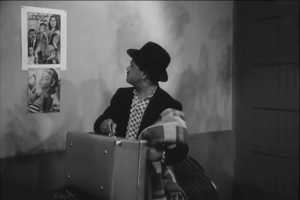
Figure 9: A moment in Rawzanah-yi Umīd, where Muhsin (portrayed by Vahdat) pauses upon entering his boarding house room to observe the movie pin-ups on the wall.
In the case of Vahdat’s character, the poster he observes features an image of Vahdat himself in another role. The character’s reaction—a double-take followed by a confused inspection of the poster—sets up the following gag in which he inadvertently sits on one of his new roommates who is sleeping beneath the poster. This moment serves as a brief comment on Vahdat’s own stardom, blurring the line between the diegetic world of the film and the real-world identity of the actor. Such moments of self-reflection and playful engagement with the idea of celebrity are particularly effective within a film industry where comedic characters, Mansūr Sipihrniyā for example (usually dubbed, in another layer of referentiality, by the Iranian voice of Jerry Lewis), frequently appear in multiple films in cameo roles. This type of cross-film reference is of course not exclusive to Iranian cinema; it was a common trope in productions around the world with comedic tracks. Such tracks proliferate in the the porous diegetic worlds of genre film production long before the cinematic “universes” created by the consolidation and exploitation global intellectual property. The playful blending of actor and character across films in these earlier cases becomes a driver for audience recognition of emergent actors and directors.
Figure 10: Poster for the film Khurshīd Mīdirakhshad (The Sun is Shining), directed by Sardar Sager, 1956.
Ambivalence, skepticism, and silence in the press
Despite the sunshine days of Sager’s popular productions, some of the intellectual critique of these films took a decidedly negative turn. For a stretch in the 1960s, it is a challenge to find these films discussed at all by serious critics. Digitization of the history of film criticism in Iran is ongoing, but on the Media History Digital Library platform Sager’s name currently gets more than a dozen hits in publications before 1960, almost that many after his death in 1973, and almost none in the intervening decade. Some critics became comfortable disparaging the very qualities that had originally marked Sager’s work as a quietly confident professional. We can see a seed of this negative reception in Hūshang Kāvūsī’s 1958 negative review in Firdawsī, not of one of Sager’s films, but Farrukh Ghaffārī’s South of the City (Junūb-i Shahr). The sarcastic title of this takedown is “A Thousand Blessings to Sardar Sager.”15Hūshang Kāvūsī, “Junūb-i Shahr: Hizār Rahmat bih Sardār Sāgir/South of the City: A Thousand Blessings to Sardar Sager,” Firdawsī (4 Āzar 1337/ November 25, 1958): 43. Thanks to Farzaneh Ebrahimzadeh Holasu for sharing this article with me. In this review, Sager stands in as the posterchild for the type of film Kāvūsī worked to negatively define and target: fīlmfārsī.
The sarcastic comparison between the two filmmakers signaled the growing divide in which the institutions of locally produced commercial cinema and the institutions of film criticism were drawn into an antagonistic pattern. But these tensions were not just about aesthetic distinction. More than a simple instance of intellectual culture confronting vulgar popular cinema, there was a dynamic interplay between these two domains. Critics and filmmakers (many of whom occupied both roles) were almost expected to participate in a contentious process of making value-laden distinctions between different types of cinema. This ongoing discourse shaped the construction of a national professional golden age, with industry trends circulating within the press serving as a key point of reference. There was an irony in the criticisms leveled by Kāvūsī who had adapted his own film, 17 Days to Execution (Hifdah rūz bih iʿdām) from Phantom Lady, a popular novel by Cornell Woolrich (1942) and film by Robert Siodmak (1944). Featuring cabaret numbers and following the model of American film noir, Kāvūsī’s work engaged with some of the very genre formulas he dismissed in Sager’s films. These parallels underscore the complex interconnections between local and international film influences and the fluid definitions of cinematic expertise during this formative period in Iranian cinema.

Figure 11: Poster of the film Junūb-i Shahr (South of the City), directed by Farrukh Ghaffārī, 1958.
The cabaret dance sequence that received such targeted criticism, as a local symptom of what ailed the commercial cinema in Iran, was in fact part of a network of regional iterations. What’s more, the similarities in the iterations of cabaret-scenes did not find their primary coordinates in Hollywood. Ghaffārī’s South of the City itself was inspired by an alternative golden-age circuit: a Mexican cabaret and underworld melodrama, Victimas del Pecado/Victims of Sin. This cabaretera had been popular in France while Kāvūsī and Ghaffārī were living in Paris as Quartier Interdit, a title closer than the original Spanish title to Ghaffārī’s neighborhood-focused title. The rumba performances by the film’s lead, the Cuban-Mexican star Ninón Sevilla, were famous across Latin America and were taken seriously by critics in France including Francois Truffaut in Cahiers du Cinema.16Nicknamed “The Golden Venus,” Sevilla gained international popularity. In 1954, the young François Truffaut wrote in Cahiers du Cinema (under the pseudonym Robert Lacheney): “From now on we must take note of Ninón Sevllla, no matter how little we may be concerned with feminine gestures on the screen or elsewhere. From her inflamed look to her fiery mouth, everything is heightened in Ninón (her forehead, her lashes, her noses, her upper lip, her throat, her voice).” See Robert Lachenay, “Notes sur d’autres films,” Cahiers du Cinema32 (February, 1954). As Joanne Hershfield has argued, rumba performers like Sevilla countered some of the conservative nationalist norms of other golden-age Mexican melodrama heroines. Some dance-hall performances seem to fit better into a history of global golden ages than others.17For a discussion of dance hall as part of a global history of rapid circulation of dance hall LP’s recorded in port cities around the world, see Michael Denning, Noise Uprising: The Audiopolitics of a World Musical Revolution(London: Verso, 2015). The cinema of social melodrama and the crime thriller, themselves rapidly circulating forms, created additional space for these transformations in the recording industry to find new audiences. Even as some industries and critics pushed to define national cinema against the noise of film traffic, cabaret performances and the underworld social melodramas that centered them proved adaptable for repackaging. They traveled well across national golden ages. The unpredictable ways in which these traditions were received by critics and remade by filmmakers suggest how elastic their aesthetic register could be in their transnational lives.
Figure 12: A still from the film Junūb-i Shahr (South of the City), directed by Farrukh Ghaffārī, 1958.
Elastic expertise at the conclusion of a career
The wide swings in the press’s treatment of Sager’s work from the 1950s through the early 1970s present an active site to examine the history of expertise, not as an innate attribute of an arts worker, but as a public construction. Here is a filmmaker who went from selling car parts to running his own studio and directing some of the top-grossing Iranian features of his time. His remarkable self-fashioning traces a process of interaction with the uncertain and volatile institutions of expertise that were themselves emerging. Sager’s expertise was constructed by the workplace bureaucracy of new film studios and by the editorial policies of new film magazines, even as he and his colleagues helped in turn to shape those institutions.
When Sager passed away in 1972, the magazine Fīlm va Hunar/Film and Art published an obituary titled “Sardar Sager, The Indian Filmmaker who Loved Iran, has Died.”18“Sardar Sager, “Kārgardān-i Hindī kih Īrān rā dūst dāsht, dar-guzasht,” Fīlm va Hunar 387 (25, Khurdād 1351/June 15, 1972): 5. This return to an odd kind of national nostalgia marked end to journalism about his work in the active memory of filmgoers in Iran. It communicated respect while retaining some of the ambivalence found in the various forms of enthusiasm and skepticism that accompanied this filmmaker who had lived in Iran for most of his adult life. It offers a coda to the story of the public construction of Sager’s expertise, and serves as a reminder that this is partly a story of the kinds of lessons that filmmakers and film intellectuals believed Bombay cinema should or should not teach. The critical archive around his films offers a record of the labor to parse this relationship to an eminent neighboring film industry.
Figure 13: Obituary titled “Sardar Sager, the Indian Filmmaker Who Loved Iran, has Died.”
To return to the point of Cooley’s metaphor, ultimately this work is about whose labor is recognized and whose is sectioned off as noise in the gendered and racialized networks of exchange that defined midcentury film production in the region.19These dynamics are explored in detail in Claire Cooley, Sonic Infrastructures: The Emergence of National Cinemas in the Soundscape of al-Hind (forthcoming; University of California Press). The institutions of the film press, and the films themselves, both stage dramas of noisiness in the way they process global trends. Sager’s films created a kind of feedback loop which highlighted aspects of his films’ music, choreography, disguise plots, moving camera, and canted angles as evidence of expertise gained through a connection to Bombay studios and schools. Taking these dramas as an object of analysis can offer, beyond the goal of resolving a career from the background static of cinema history, a step toward seeing golden ages in relational rather than static and siloed terms.

Figure 1: A still from the film Shāzdah Ihtijāb (Prince Ihtijāb), directed by Bahman Farmānārā, 1974.
Imagine living in the 18th or 19th century, before the advent of cinema and the introduction of movies into our lives. What was it like to be a reader, or a writer? How were stories told, listened to, and written? Stories were created in the imagination of writers and for the most part told in a linear or chronological form. In other words, the events that were envisioned as occurring first were presented first, and they were followed in the same order by other events, more or less in chronological order. This order was also what the listener or reader expected. Of course there are exceptions.
With the advent of motion pictures, and once the potential for storytelling of this new medium was understood, filmmakers’ attention was largely focused on the work of fiction writers (and, of course, playwrights); many novels and short stories were adapted to films. In its early years, cinema was dependent on the printed word. Early Iranian filmmakers, perhaps emulating their Western counterparts, were no exception to this rule. ‛Abdalhusayn Sipantā’s pioneering efforts in Iranian cinema began in conversation with classical Persian literature in his film about Firdawsī, in which he uses segments of the Shāhnāmah (1934), followed by his adaptations of Nizāmī’s Shīrīn and Farhād (1934) and Laylī and Majnūn (1936).1For a history of Iranian cinema, see: Mohammad Ali Issari, Cinema in Iran, 1900-1979 (Metuchen and London: Scarecrow, 1989); Also see: Hamid Naficy, A Social History of Iranian Cinema, vols. 1-4 (Durham and London: Duke University Press, 2011-2012). Not only was the adaptation of literary works an inevitable practice but it was also deemed desirable and was advocated by critics. Even as late as 1949, the cinema correspondent of Kayhān newspaper stated that a “film must be the adaptation of a great book by a famous writer.”2Kayhān, no. 1503, 15 Farvardīn 1327 [3 April 1948], 2, cited in Shahnāz Murādī, Iqtibās-i Adabī dar Sīnimā-yi Īrān (Tehran: Intishārāt-i Āgāh, 1368/1989), 21-22. In the same vein, Parvīz Khatībī’s 1951 film, Parīchihr, was an adaptation of Muhammad Hijāzī’s popular 1929 novel by the same name.3For a brief discussion of the popularity of Hijāzī’s novel and similar works, see: Hasan ‛Abidīnī, Sad Sal Dāstān’nivīsī dar Īrān, vol. 1, 2nd ed. (Tehran: Nashr-i Tandar, 1368/1989), 33-45. Also see: Hassan Kamshad, Modern Persian Prose Literature (Cambridge: Cambridge University Press, 1966), 73-84.

Figures 2-5 (from left to right): book cover of ‛Azādārān-i Biyal (The Mourners of Biyal), written by Ghulāmhusayn Sā‛idī; book cover of Āshghāldūnī, written by Ghulāmhusayn Sā‛idī; book cover of Shawhar-i Āhū Khānum (Āhū Khānum’s Husband), written by ‛Alī Muhammad Afghānī; book cover of Shāzdah Ihtijāb (Prince Ihtijāb), written by Hūshang Gulshīrī.
While a pioneer of Iranian cinema such as Sipantā could be described as a self- taught amateur filmmaker during the early decades of the 20th century, in the second half of that century, among an increasing number of filmmakers who were professionally trained and produced popular movies that appealed to general audiences, a smaller number of them started to look at cinema not merely as a commercial craft but as a distinct art form—albeit, similar to Persian literature at the time, an art form at the service of social and political criticism. A larger number of films continued to be made by talented directors, many of which were adaptations of literary works.4On the social and political aspects of modernist Persian literature, see: M. R. Ghanoonparvar, From Prophets of Doom to Chroniclers of Gloom (Costa Mesa, CA: Mazda Publishers, 2021), and Kamran Talattof, The Politics of Writing in Iran: A History of Modern Persian Literature (Syracuse: Syracuse University Press, 2000). Among them, Dāvūd Mullāpūr’s 1968 adaptation of ‛Alī Muhammad Afghānī’s popular novel, Shawhar-i Āhū Khānum (Āhū Khānum’s Husband);5Shawhar-i Āhū Khānum, published in 1961, won a royal prize, which contributed to its popularity. The novel is discussed by M. A. Jamālzādah in Yadname-ye Jan Rypka (The Hague, Paris: Mouton, 1967), 178, and also by Ghanoonparvar in From Prophets of Doom to Chroniclers of Gloom (Mazda, 2021), 120-121 (see Note 4 above). Dāryūsh Mihrjū’ī’s 1969 film, Gāv (The Cow), based on Ghulāmhusayn Sā‛idī’s book, ‛Azādārān-i Biyal (The Mourners of Biyal), with a script co-written by Sā‛idī and Mihrjū’ī, the first Iranian film to attract international attention;6For a translation of the screenplay of Sā‛idī’s The Cow, see: The Cow: A Screenplay, translated by Mohsen Ghadessy, Iranian Studies 18 (1985):257-323. Mihrjū’ī’s Dāyirah-yi Mīnā (The Cycle), based on Sā‛idī’s short story Āshghāldūnī;7Āshghāldūnī has been translated into English as “The Trash Heap” by Robert Campbell, Hasan Javadi, and Julie Scott Meisami in Dandil: Stories from Iranian Life (New York: Random House, 1981). For reviews of the film, see: Nāsir Zirā‛atī, ed., Majmū‛ah-yi Maqālāt dar Naqd va Mu‛arrifī-i Āsār-i Dāryūsh Mihrjū’ī (Tehran: Intishārāt-i Nāhīd, 1375/1996), 308-355. Nāsir Taqvā’ī’s 1970 adaptation of Sā‛idī’s story, Ārāmish dar Huzūr-i Dīgarān (Calm in the Presence of Others);8This story appears in: Ghulāmhusayn Sā‛idī, Vāhamah-hā-yi Bīnām va Nishān (Tehran: Intishārāt-i Nīl, 2535/1976), 137-236. Mas‛ūd Kīmiyā’ī’s 1971 film, based on Sādiq Hidāyat’s well-known short story Dāsh Ākul;9The translation of Dāsh Ākul by Richard Arndt and Mansur Ekhtiar appears in Sadeq Hedayat: An Anthology (Boulder, CO: Westview Press, 1979), 41-52. For an enlightening discussion of the differences between Hidāyat’s short story and Kīmiyā’ī’s film, see: Hamid Naficy, “Iranian Writers, Iranian Cinema, and the Case of Dash Akol” in Iranian Studies 28, nos. 2-4 (Spring, Fall 1985):231-251. Amīr Nādirī’s 1973 film Tangsīr, based on Sādiq Chūbak’s novel of the same title;10Tangsīr was translated by Marzieh Sami‛i and F. R. C. Bagley as “One Man and His Gun” in F. R. C. Bagley, ed. Sadeq Chubak: An Anthology (Delmar, NY: Caravan Books, 1982), 13-181. For an interesting discussion of the novel, see: Muhammad Mahdī Khurramī, “Tangsīr: Bāzsāzī-i ustūrah’gūnah-yi dāstānī vāqi‛ī,” in Yād-i Sādiq Chūbak, ed. ‛Alī Dihbāshī (Tehran: Nashr-i Sālis, 1380/2001), 127-136. Mas‛ūd Kīmiyā’ī’s 1973 Khāk, based on Mahmūd Dawlatābādī’s Awsanah-yi Bābā Subhān (The Legend of Bābā Subhān);11See Mahmūd Dawlatābādī, “Bābā Subhān dar Khāk,” in Majmū‛ah-yi Maqālāt dar Naqd va Mu‛arrifī-i Āsār-i Mas‛ūd Kīmiyā’ī, ed. Zāvin Qūkāsiyān (Tehran: Intishārāt-i Āgāh, 1369/1990), 278-318. and Bahman Farmānārā’s 1974 adaptation of Hūshang Gulshīrī’s Shāzdah Ihtijāb (Prince Ihtijāb) and his 1978 film Sāyah’hā-yi Buland-i Bād (The Long Shadows of the Wind), an adaptation of another story by Gulshīrī,12For a discussion of the adaptation of these two stories, see: Hamid Dabashi, Close Up: Iranian Cinema, Past, Present and Future (London, New York: Verso, 2001), 112-155. are a few examples.13Some of these adaptations have been discussed in Shahnāz Murādī, Iqtibās-i Adabī dar Sīnimā-yi Īrān (Tehran: Intishārāt-i Āgāh, 1368/1989). To this partial list, three adaptations of the best internationally known modern Persian novel, Sādiq Hidāyat’s Būf-i Kūr (The Blind Owl), should also be added. These films are by Kiyūmars Dirambakhsh (1974), Buzurgmihr Rafī‛ā (1973), and Rizā ‛Abduh (1992).14The standard translation of Būf-i Kūr is D. P. Costello, trans., The Blind Owl (New York: Evergreen, 1969).

Figures 6-9 (from left to right): Poster of the film Gāv (The Cow), directed by Dāryūsh Mihrjū’ī, 1969; Poster of the film Dāyirah-yi Mīnā (The Cycle), directed by Dāryūsh Mihrjū’ī, 1975; Poster of the film Dāsh Ākul, directed by Mas‛ūd Kīmiyā’ī, 1971; Poster of the film Shāzdah Ihtijāb (Prince Ihtijāb), directed by Bahman Farmānārā, 1974.
At first glance, this list indicates a continuation of the dependence of at least some of the notable filmmakers on the work of literary artists. But while this may be true, cinema’s dependence on literature is no longer one-sided. Rather, the relationship has become interdependent. Earlier filmmakers’ adaptations were often based on traditional narratives, which were by and large linear; the filmmakers would attempt to maintain this linear form, which was often challenging in this new medium, and usually failed to fully capture the entire story. The task of many later filmmakers mentioned in the above list, however, was different, since the literary works they adapted had themselves undergone certain inevitable changes as a result of the ever increasing influence of cinema. In other words, the adaptations early filmmakers made to literature began to shape fiction itself, which in turn changed cinematic adaptations.
Modern Persian fiction has often been described as experimental in form and presentation;15See, for instance, “Experimentation in Kind and the Function of Form” in M. R. Ghanoonparvar, From Prophets of Doom to Chroniclers of Gloom (Costa Mesa, CA: Mazda Publishers, 2021), 82-101. this innovation, I argue, is in fact experimentation in narrative devices, structure, and strategies, which subsequently brought about changes in fiction and storytelling.16Although numerous studies in the West have addressed the issue of the changes that have occurred in fictional narrative as a result of the influence of cinema, including Robert Richardson’s Literature and Film (Bloomington, IN: University of Indiana Press, 1969) and Seymour Chatman’s Story and Discourse: Narrative Structure in Fiction and Film (Ithaca: Cornell University Press, 1978), little attention has been paid to such changes in Persian fictional narrative strategies. Contrasting late 20th-century Persian fiction with the works of earlier writers such as Muhammad ‛Alī Jamālzādah, Sādiq Hidāyat, Buzurg ‛Alavī, and Mahmūd Bihāzīn, among others, well-known writer and critic Jamāl Mīrsādiqī argues that recent novels and short stories have become more tasvīrī, or pictorial.17Speech at The University of Texas at Austin, 1992. Also see: Jamāl Mīrsādiqī’s ‛Anāsur-i Dāstān (Tehran: Intishārāt-i Shafā, 1364/1985), 273-274, and Adabiyyāt-i Dāstānī: Qissah, Dāstān-i Kūtāh, Rumān, 2nd ed. (Tehran: Mu‛assisah-yi Farhangī-i Māhūr, 1365/1986), 301-304. In other words, in contrast to the often character-based or event-based earlier stories—which mostly “tell” about the characters’ personality traits, such as most of Jamālzādah’s work, or the internal workings of a character’s mind, such as a number of Hidāyat’s stories, including The Blind Owl—more recent novelists and short story writers attempt to “show” the characters through their behavior and actions. Indeed, if we consider the major difference between the written form and the visual form of stories, that is, fiction and cinema, it is clear that traditionally fiction writers had to generally rely on “telling” their stories whereas filmmakers inevitably have to “show” their stories. Early filmmakers’ attempts at adapting novels and short stories were impeded by trying to follow the written narrative techniques that were used for “telling” a story. Filmmakers are generally more successful in the reproduction of scenes and events in their adaptations of written stories than in the less visual aspects of a written narrative, such as a character’s thought processes.18Although this is true from the filmmaker’s perspective, as Seymour Chapman demonstrates in his article “What Novels Can Do that Films Can’t (and Vice Versa),” the viewer is generally unable to take notice of all the visual details of a scene. In his words, “Film narrative possesses a plenitude of visual details, an excessive particularity compared to the verbal version, a plenitude aptly called by certain aestheticians visual ‘over-specification’ (űberbestimmtheit), a property that it shares, of course, with other visual arts. But unlike those arts, unlike painting or sculpture, narrative films do not usually allow us time to dwell on plenteous details. Pressure from the narrative component is too great. Events move too fast” see S. Chapman, “What Novels Can Do that Films Can’t (and Vice Versa),” in Film Theory and Criticism, eds. Leo Braudy and Marshall Cohan (Oxford: Oxford University Press, 1999), 438-439. As this paper will explore, this technique begins to become evident in the latter part of the 1960s.
Mīrsādiqī’s observation that recent Persian fiction has become pictorial or visual merely touches the surface of the changes that have occurred in fiction writing. Modern fiction writers, of course, continue to draw on traditional, narrative models, genres, and subject matter, but for many authors today, movies and other forms of visual storytelling are just as influential as written work. Moreover, the books they may read are often written by other contemporary authors who are influenced by film and television, thereby perpetuating the narrative techniques borrowed from audio-visual media. Many modern authors make use of, consciously or subconsciously, such cinematic practices as shots, cutting, lighting, depth of picture, and so forth in their descriptive narratives of scenes. Nāsir Taqvā’ī, for instance, begins his short story Āqā Jūlū, with the following visual narrative:19The short story appears first in the journal Ārash, 2:1 (Tīr 1343/June-July 1964): 84-94.
The sea, which is neither blue nor green, has pushed the town back, halfway up the mountains. At high tide the waves’ white froth sinks in the sand at the threshold of the first houses. The waves beat against the dykes between the stone wall that circles the low land and the dock. Behind the wall built along the dock are a few shops and a shellfish cleaning factory, and the shade cast by the wall is the porters’ hangout.20All translations from this story are from Minoo Southgate, ed., trans. Modern Persian Short Stories (Washington, DC: Three Continents Press, 1980), 89.

Figure 10: Āqā Jūlū by Nāsir Taqvā’ī, edited by Muhammad Bahārlū, published in Rūdakī Magazine (1386/2007).
The opening paragraph of the story begins with a panoramic view, or a long shot, showing the sea, the town, and the mountains. The point of view is that of a camera that is located some distance from the shore in the sea, capturing the waves, the sand, the houses, and the dykes. In the next paragraph, the camera moves to a different spot, as we see:
Dark, patternless brown mountains hump behind the town, curl around the bare sandy hill, and disappear into the sea, except for a few scattered rocks jutting out of the water here and there. The beacon blinks a bit farther away in the sea. At night, the moon shines into the rooms through open windows. On the water, the beacon fuses its red beams with the moonlight each time it flashes.21Minoo Southgate, ed., trans. Modern Persian Short Stories (Washington, DC: Three Continents Press, 1980), 89.
The next picture is of the same view, but this time just before sunrise:
At dawn, when the moon grows pale on the mountains, the long distant line between the sea and the sky casts a white gleam. You can hear the fishermen’s voices and the sound of their oars as their boats approach the horizon, black against the silvery glitter of the water.22Minoo Southgate, ed., trans. Modern Persian Short Stories (Washington, DC: Three Continents Press, 1980), 89.
The camera turns toward the town; but now it is just before sunset:
When the white line in the horizon turns yellow and the sun reaches the high ventilation towers of the houses and the dome-like covers of the tanks, the fishermen return. The sun looks from above.23Minoo Southgate, ed., trans. Modern Persian Short Stories (Washington, DC: Three Continents Press, 1980), 89.
The camera this time begins to zoom in, and we see a closer shot of the beach and the inhabitants of the town:
On the sandy beach, old men shade their eyes from the sun, watching the boats anxiously. Once fishermen, they now weave fishing nets and wait for the boats, hoping to make a few pennies by repairing the nets torn by sharks. The women wear loose gowns with embroidered skirts. They watch the boats through the two holes of their black veils, anxious to get the fish in time for their husbands’ meals. Naked children stand beside a mound of colorful loincloths, ready to jump into the water when the boats get nearer. Farther away, the porters sit in the shade, leaning against the wall, waiting for a boat—or a ship, if it has been a few months since the last one’s arrival.24Minoo Southgate, ed., trans. Modern Persian Short Stories (Washington, DC: Three Continents Press, 1980), 89-90.
In the last paragraph of the opening section of the story, the camera is located somewhere inside the town, showing us medium and close shots of various structures and scenes, ending with a shot of a broken window:
From the tops of the ventilation towers, the sun penetrates the rooms through the colored glass windows, painting rainbows on the plaster walls. The large house facing the children’s playground never catches the sun in its windows. The townspeople have broken the glass with stones.25Minoo Southgate, ed., trans. Modern Persian Short Stories (Washington, DC: Three Continents Press, 1980), 90.
What is linguistically noteworthy in this opening segment of Āqā Jūlū is that, while the rest of the story is narrated in the past tense, in this segment, Taqvā’ī has chosen the present tense to describe the scene, in other words, employing the here-and-now effect of the cinema experience. Nāsir Taqvā’ī of course eventually became a filmmaker, and this penchant for the cinema certainly influenced his writing. This type of cinematic description can be seen, however, in the works of many 20th- and 21st-century Iranian authors, including Sādiq Chūbak and Mahmūd Dawlatābādī, and in more recent works by Ghazālah ‛Alīzādah and Munīrū Ravānīpūr, among others.
In addition to the visual or pictorial impact, another perhaps even more important influence of the audio-visual media in general and cinema in particular on the work of modern fiction writers is the non-linear and fragmented mode of presentation, which has become a distinguishing feature of modern fiction. Fragmented, non-linear stories often cause tremendous confusion and frustration for casual readers, those who generally read as a pastime, and often results in the book being tossed aside and accusations being made against the writer for having produced an incoherent work. I have even observed such reactions among my students when they first read Hūshang Gulshīrī’s Shāzdah Ihtijāb (discussed below) before watching its film adaptation. Many such readers, by way of contrast, have no problem following and understanding the same kind of non-linear and fragmented sequences of events when watching a film; they have learned how to follow cinematic narrative structures and techniques, such as flashbacks, while written fiction that uses the same techniques appears enigmatic and confusing. This type of modern fiction is what Roland Barthes calls “writerly” as opposed to “readerly” texts. While “readerly” texts essentially are the production of storytellers and are generally entertaining and serve to fill the leisure time of the reader, “writerly” texts require partnership and participation by the reader in the process of the production of meaning.26Roland Barthes, S/Z: An Essay, transl. by Richard Miller (New York: Hill and Wang, 1974). This participation partly involves decoding, as it were, the fragmented non-linear narrative, a process during which the reader’s interpretation contributes to enhancement of the story semantically and adds to the multiple layers of meaning. One such example that demonstrates the influence of cinema on fiction and contributes to a revision of narrative strategies is Hūshang Gulshīrī’s Shāzdah Ihtijāb.27Hūshang Gulshīrī, Shāzdah Ihtijāb, 7th ed. (Tehran: Intishārāt-i Quqnūs, 1357/1978). This novel was first published in 1969.
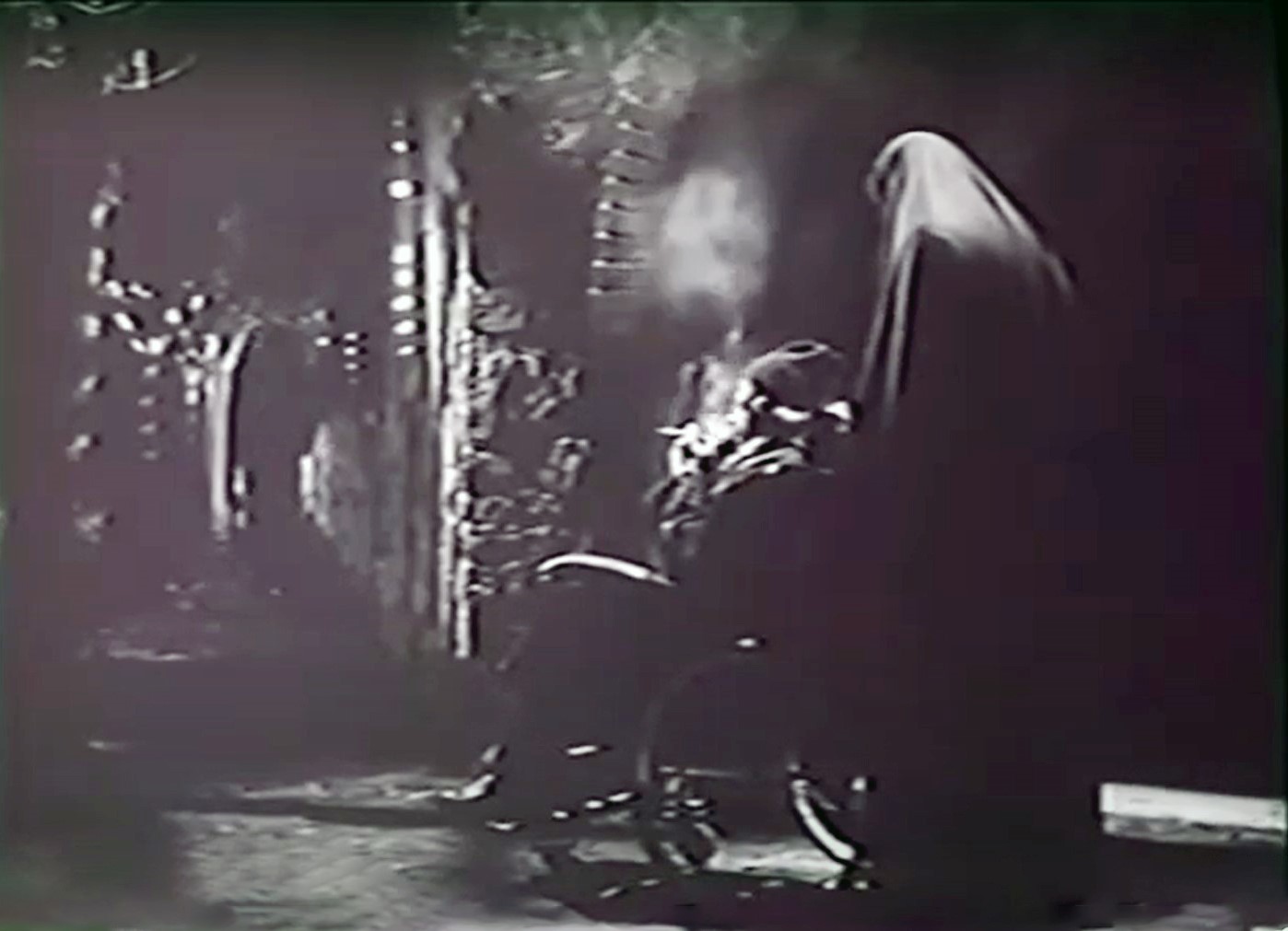
Figure 11: Shāzdah Ihtijāb meets Murād in his wheelchair pushed by his wife. A still from the film Shāzdah Ihtijāb (Prince Ihtijāb), directed by Bahman Farmānārā, 1974. Accessed via https://www.youtube.com/watch?v=LADTTtOgDO8 (00:06:07).

Figure 12: Shāzdah Ihtijāb is reminiscing about the past when he encounters Murād. A still from the film Shāzdah Ihtijāb (Prince Ihtijāb), directed by Bahman Farmānārā, 1974. Accessed via https://www.youtube.com/watch?v=LADTTtOgDO8 (00:06:07).
This short novel is puzzling to many readers because of its recurrent flashbacks, constant change of scenes, and frequent point-of-view shifts—all techniques borrowed from cinema—which produce a fragmented narrative. These elements are employed by Gulshīrī from the first pages of the novel. The novel begins with a third-person narrative, mostly in the past tense, describing Prince Ihtijāb sitting in his comfortable armchair, suffering from fever and coughing, and rejecting any assistance from his wife and maid. The second paragraph describes the Prince’s recollection of earlier that evening, when he meets Murād in his wheelchair pushed by his wife, Hasanī, and asking for money, which the Prince gives him. Then the Prince arrives home, kisses his wife Fakhr al-Nisā’ and goes upstairs to sit in his chair in the dark in the same room we find him in the opening scene. In the same paragraph, we find the maid, Fakhrī, in the kitchen; then, worried about the Prince, she goes upstairs, but is scared off by the Prince thumping the floor with his feet. She goes back to her room, and sits in front of the mirror listening for an order from her master:
“Fakhrī!”
In order for Fakhrī to get up, toss on her headscarf, tie her apron on, and set the table. When the Prince would wash his hands, dry them, and shout: “Fakhr al-Nisā’!”
She would put the headscarf in the pocket of Fakhrī’s apron, change her dress, sit down before the mirror, put on some makeup in a hurry, comb her hair, go to the dining room and sit across from the Prince, have her dinner, and once the Prince went upstairs, Fakhrī would clear the table and wash the dishes, and Fakhr al-Nisā’ would put on her makeup and go to the bedroom until the Prince would show up sometime in the middle of the night and whisper: “Are you asleep, Fakhr al-Nisā’?”28Hūshang Gulshīrī, Shāzdah Ihtijāb, 7th ed. (Tehran: Intishārāt-i Quqnūs, 1357/1978), 6. Although two English translations of this novel are available, in order for the rendition to adequately reflect my argument, I have retranslated all the quoted passages from the original novel.

Figure 13: Fakhrī sits down before the mirror, hurriedly applies some makeup, combs her hair, then goes to the dining room, sits across from the Prince, and has her dinner. A still from the film Shāzdah Ihtijāb (Prince Ihtijāb), directed by Bahman Farmānārā, 1974. Accessed via https://www.youtube.com/watch?v=LADTTtOgDO8 (00:52:42).

Figure 14: A still from the film Shāzdah Ihtijāb (Prince Ihtijāb), directed by Bahman Farmānārā, 1974. Accessed via https://www.youtube.com/watch?v=LADTTtOgDO8 (00:55:45).
Are Fakhrī and Fakhr al-Nisā’—the maid and the wife—the same person, the reader wonders? Is there a fusion of two characters? If so, which one is real and which one imaginary? Readers will later learn of the death of Fakhr al-Nisā’ sometime in the past, and also that the Prince has forced the maid to assume a double identity, to fulfill his aspirations of not only flirting with the maid, but also his desire to dominate a pretend duplicate of his wife, who was intellectually superior to him.

Figure 15: Fakhrī and Fakhr al-Nisā’. A still from the film Shāzdah Ihtijāb (Prince Ihtijāb), directed by Bahman Farmānārā, 1974. Accessed via https://www.youtube.com/watch?v=LADTTtOgDO8 (00:13:59).
The following paragraph describes a large room in which the Prince has been sitting, now almost empty because he has sold nearly all his antiques to pay his gambling debts. He is tormented by the scolding gazes of parents, grandparents, and Fakhr al-Nisā’ (we assume, from their photographs), as well as his own sense of inferiority. The third-person narrator continues:
A musty smell had filled the room. The carpet was under his feet. The Prince’s entire body only filled a corner of that ancestral chair. And the Prince felt the gravity and weight of the chair beneath his body. The chirping of the crickets was an endless thread, an entangled skein that extended to the entire expanse of the night.
Perhaps they were in the weeds in the flower garden, or… I said, “Fakhrī, close these curtains tightly. I don’t want to see any of those damn streetlights.” Fakhrī said, “Dear Prince, won’t you at least give me permission to open the window to let in some fresh air?” And the Prince shouted: “You shut up! Just do what I told you to do.”29Hūshang Gulshīrī, Shāzdah Ihtijāb, 7th ed. (Tehran: Intishārāt-i Quqnūs, 1357/1978), 7.
Whereas in the first paragraph of this segment we still have a third-person narrator, after the first sentence of the second paragraph there is a sudden shift to a first-person narrator, obviously the Prince, who reports on what he told Fakhrī and Fakhrī’s response (both placed in quotation marks). The narrative then shifts back and the third-person narrator reporting on the Prince shouting at Fakhrī and provides a description of her appearance.
While readers of Gulshīrī’s Shāzdah Ihtijāb may find the novel confusing, Bahman Farmānārā’s film is a suitable medium to help decipher the written story for such readers, even though the narrative of the film sometimes deviates from that of the novel. Although the film stands on its own artistic merits, Gulshīrī’s collaboration with Farmānārā in writing the script can be considered a way of clarifying the complex hybrid literary text and a sort of explanatory addendum. Various deceased ancestors and relatives of the Prince populate the novel and, as if their ghosts have been summoned from their photographs, they appear before the Prince, as an example of a cinematic device which Gulshīrī uses effectively in his novel. The use of this device is much more effective, however, in its natural environment of Farmānārā’s film.30The use of film adaptation of literary works, of course, cannot be extended to other adaptations of Persian literature for cinema or even Ibrāhīm Gulistān’s “novelization” of his film, Āsrār-i Ganj-e Darrah-yi Jinnī (The Secrets of the Treasure of the Haunted Valley, 1971), interestingly the only Iranian film which was made before the publication of the printed work, in this case, Gulistān’s novel by the same name, and which is a true fusion of both media. For an examination of this story, see: Paul Sprachman, “Ebrahim Golestan’s The Treasure: A Parable of Cliché and Consumption,” Iranian Studies 15, nos. 1-4 (1985):155-180.

Figure 16 (left): A photograph depicting the Prince’s deceased ancestor. A still from the film Shāzdah Ihtijāb (Prince Ihtijāb), directed by Bahman Farmānārā, 1974. Accessed via https://www.youtube.com/watch?v=LADTTtOgDO8 (00:05:34).
Figure 17 (right): The Prince’s deceased ancestor comes to life, as though his ghost has been summoned from the photograph. A still from the film Shāzdah Ihtijāb (Prince Ihtijāb), directed by Bahman Farmānārā, 1974. Accessed via https://www.youtube.com/watch?v=LADTTtOgDO8 (00:29:39).
The inevitable use of cinematic techniques in modern fiction writing has become predominant in the work of Iranian novelists and short story writers. Some of these devices, such as flashbacks and shifts in point of view, have certainly helped writers enhancing their storytelling. At the same time, however, the use of some of these techniques has limited the potential reach of their readership, and has also displeased traditional literary critics.31For the reception of such stories, see: M.R. Ghanoonparvar, “6. Literary Ambiguity” in From Prophets of Doom to Chroniclers of Gloom (Costa Mesa, CA: Mazda Publishers, 2021), 118-140. Many critics, for instance, consider point of view as an important tool that an author uses to immerse readers in a work of fiction. By focusing only on the protagonist’s viewpoint, the writer creates an experience in which readers can submit to the illusion that they are not merely reading but are involved in the story. Shifting point of view in the middle of the narrative, such critics argue, breaks this illusion and the readers’ trust in the author and their work. Perhaps one important reason for and an appealing aspect of writers’ attempts to emulate cinematic narrative technique is that in film, except when voiceovers are employed, it is often difficult if not impossible for the viewers to learn what the protagonist is thinking or feeling. After all, cinema is a better medium for shifting point of view and switching, sometimes within seconds, between various scenes. These cinematic techniques, as mentioned earlier, are familiar and therefore create suspense and appeal for movie audiences, whereas they can be disrupting and annoying to readers of written fiction.
The interrelationship of cinema and fiction has been ongoing for over a century, and will surely continue. The early cinematic adaptations of literary works resulted in many failures, such as Sipantā’s Firdawsī, and few minor successes, such as his Shīrīn and Farhād.32According to Hamid Reza Sadr, when Firdawsī was screened commercially, “it ran for a mere three nights and was a total flop.” See: Hamid Reza Sadr, Iranian Cinema: A Political History (London and New York: I.B. Tauris, 2006), 34. Even direct collaborations between fiction writers and filmmakers faced challenges. While cinema has gradually claimed more independence from the written word, it has established itself as an audio-visual medium that tells stories through sound and pictures. With cinema’s influence on the older medium of writing, the tools of which are essentially silent words printed on paper, despite its contributions, it has also taken away some of the possibilities of fiction writing and deprived both the writers and readers of the power of imagination, to some extent. It is becoming more and more difficult to read or write a story without picturing some well-known movie actor as the protagonist. The question remains: Will fiction writers in the future be able to claim some independence from cinema, as filmmakers have tried to do by distancing themselves from written fiction in the past? If we remember that the aesthetic enhancement of literary texts has traditionally been accomplished through the linguistic features and literary devices employed by writers, we can have some assurance that, despite the impact of cinema and audio-visual arts in general on all of our imaginations, many writers will still prefer to use the power of language to “tell” their stories.
