

© Cinema Iranica. ISSN: 3064-9617
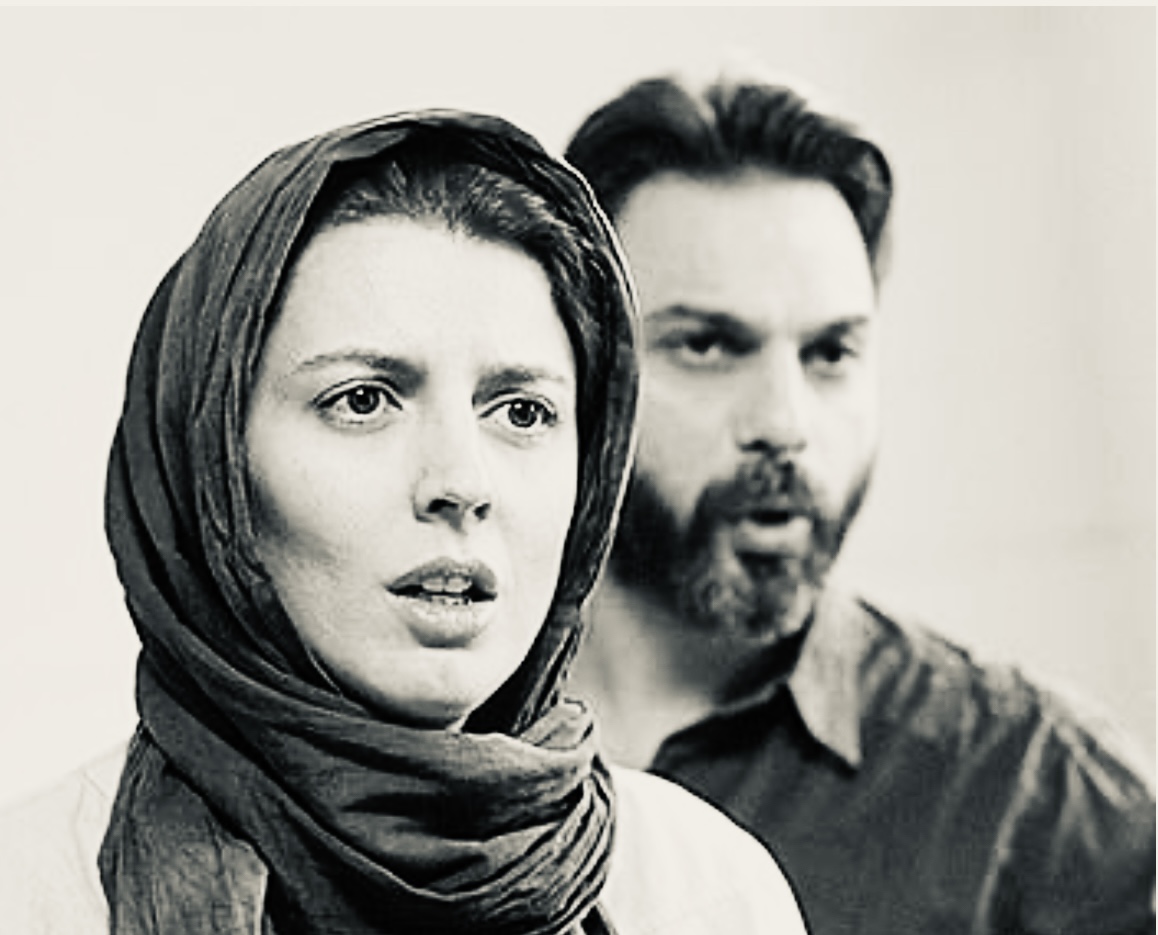

Figure 1: A screenshot from the film Judā’ī-i Nādir az Sīmīn (A Separation, 2011), directed by Asghar Farhādī.
The turbulent events that unfolded during the Green Movement in Iran—ignited by the disputed results of the 2009 presidential elections—had a lasting impact on the country’s social and political fabric. The middle class, closely associated with the movement’s ideals, notably found expression in the rise of apartment dramas in Iranian cinema from the late 2000s to the mid-2010s.
This article examines the occurrence of apartment dramas following the Green Movement, analyzing the convergence of socio-political changes, economic factors, and strategic choices made by filmmakers. This analysis delves into key factors which influenced the emergence of this cinematic trend, followed by a comprehensive examination of notable films released after the Green Movement, such as A Separation (2011),1Asghar Farhādī, dir. A Separation [Judā’ī-i Nādir az Sīmīn] (Tehran: Asghar Farhādī Productions, 2011). Felicity Land (2011),2Māzīyār Mīrī, dir. Felicity Land [Sa‛ādat Ābād], (Tehran: Humāyūn As‛adīyān, 2011). Melbourne (2014),3Nīmā Jāvīdī, dir. Melbourne (Tehran: Qāb-i Āsimān Productions, 2014). and Blind Spot (2017).4Mihdī Gulistānah, dir. Blind Spot [Nuqtah-yi Kūr], (Tehran: Mantra Film Productions, 2017). Within the context of these films, themes such as the portrayal of isolated characters, socio-economic class disparity, marital problems, and character development are scrutinized. Ultimately, the essay concludes with an analysis of the factors that have contributed to the decline in the production of apartment dramas in Iranian cinema since the mid-2010s. This exploration reveals the intricate correlation between Iranian cinema and societal shifts following the Green Movement.
What is Apartment Drama?
The production of films centered on a residential complex has a significant historical background in Iranian cinema. Some of these works have been narrated in apartments. However, this criterion alone is insufficient to classify a film as an “apartment film,” or more specifically, an “apartment drama.”
In her book titled The Apartment Plot: Urban Living in American Film and Popular Culture, Pamela Robertson Wojcik examines the characteristics of American apartment films, which can also be applied to Iranian cinema’s apartment films and dramas. Generally, an apartment film can be defined as a cinematic work in which an apartment figures as more than just a setting. What is called “the apartment plot” revolves around the central device of the apartment, which plays a vital role in shaping the narrative.5Pamela Robertson Wojcik, The Apartment Plot: Urban Living in American Film and Popular Culture, 1945 to 1975 (Durham: Duke University Press, 2010), 3, https://doi.org/10.1215/9780822392989. Apartment buildings may encompass high-rise structures with or without doormen and can be constructed in various styles.6Wojcik, The Apartment Plot, 3. An apartment is thus visually distinct from constructions such as suburban houses or communal residences.
The second characteristic of American apartment films is that apartments are generally considered as the residence of the working or middle class.7Wojcik, The Apartment Plot, 3. However, workers in Iran are generally regarded as part of the lower socio-economic class. Therefore, in Iran, when we encounter a film that combines the lives of workers and apartments, a common inference arises in the viewer that one is watching a film centered on individuals striving to attain middle-class amenities, rather than individuals who have a stable position in the middle class. In a more general sense, according to Wojcik, apartment films are differentiated by their embodiment of the ideology of urbanism.8Wojcik, The Apartment Plot, 7.
When discussing “apartment dramas,” it is necessary to consider an additional criterion beyond those generally considered for apartment films. Apartment dramas explore the daily lives of individuals from the middle class, expressing concerns and issues that numerous members of the middle class are grappling with. This genre encompasses a broad range of issues, spanning from financial crises to moral dilemmas.
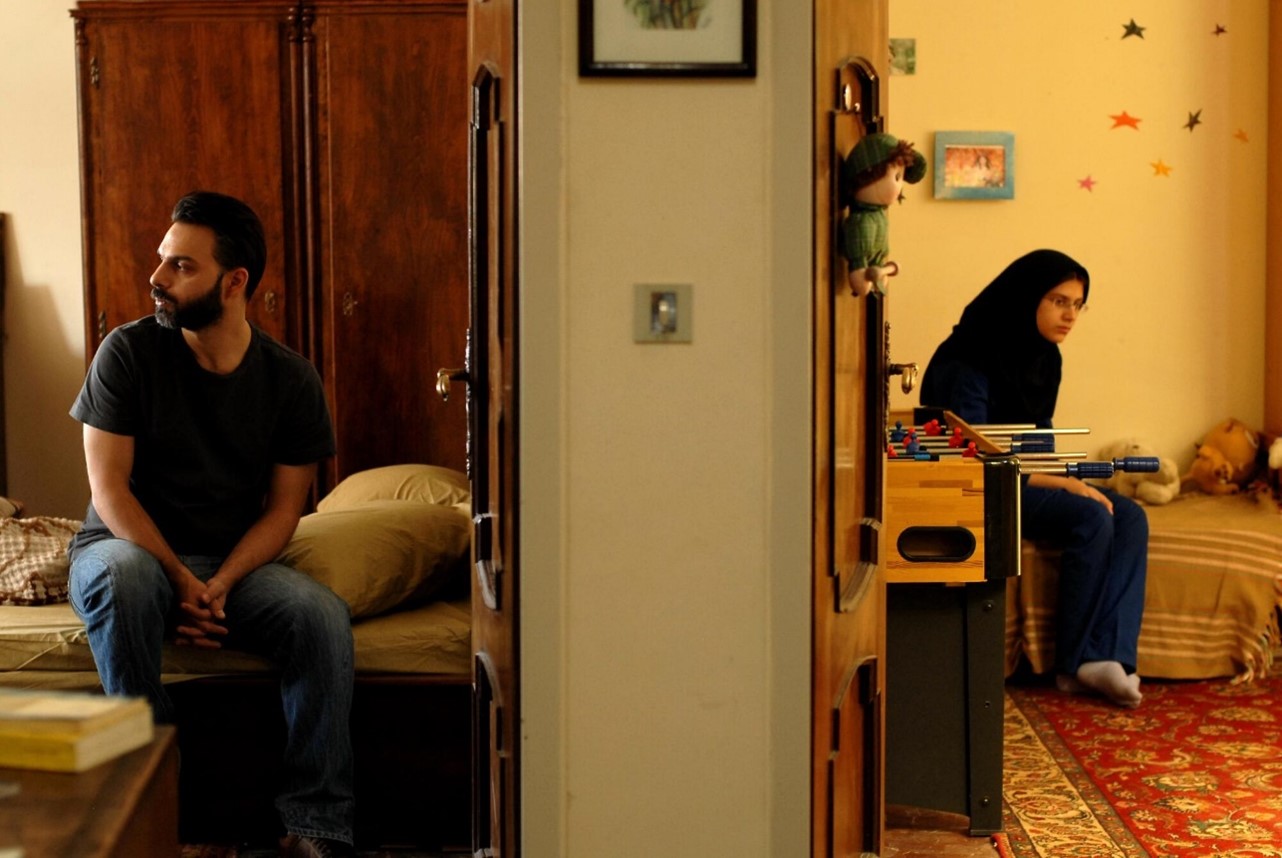
Figure 2: A screenshot from the film Judā’ī-i Nādir az Sīmīn (A Separation, 2011), directed by Asghar Farhādī.
The Middle-Class Critique in Pre-Green Movement Apartment Films
Prior to the Green Movement, apartment films were not absent from Iranian cinema. The proliferation of apartment culture in the 1980s was accompanied by the production of the film Tenants (1987; figure 3).9Dāryūsh Mihrjū’ī, dir. Tenants [Ijārah-nishīn-hā], (Tehran: Pakhshīrān Corporation, 1987). Tenants experienced considerable commercial and critical success, which led to the emergence of multiple social-themed apartment films in the latter part of the 1980s.
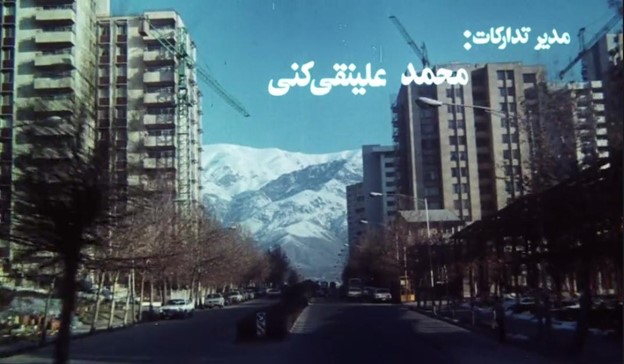
Figure 3: Mihrjū’ī repeatedly highlights apartments that have been built or are currently under construction in various areas of the city in the title sequences of Tenants, aiming to illustrate the expansion of apartment living in Tehran. Ijārah-nishīn-hā (Tenants, 1987), Dāryūsh Mihrjū’ī, accessed via https://www.youtube.com/watch?v=MEcVGVWcpEw (00:00:54).
Tenants is a comedic narrative that explores the challenges faced within a four-story apartment building situated beyond the urban boundaries of Tehran. The structural integrity of this apartment building is in a precarious state, necessitating the collective effort of all its residents for its restoration. However, the constant conflicts among these neighbors hinder the renovation of the apartment to the extent that the building eventually collapses (figure 4).
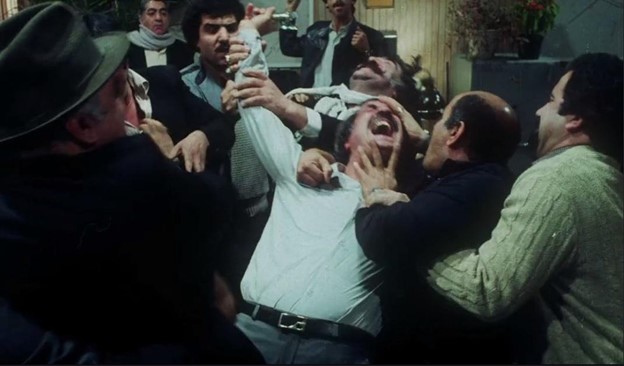
Figure 4: A recurring motif in the film Tenants is the portrayal of a large number of individuals involved in debates or conflicts. Ijārah-nishīn-hā (Tenants, 1987), Dāryūsh Mihrjū’ī, accessed via https://www.youtube.com/watch?v=MEcVGVWcpEw (00:20:18).
Mihrjū’ī directed his attention towards the incompatibility of individuals residing within this apartment complex, offering an analysis of a middle class that has lost its footing and is grappling to preserve its fragile status. The individuals within this class encounter conflicts amongst themselves in different circumstances, resorting to reconciliation solely when all other alternatives have been exhausted.10Hamidreza Sadr, Darāmadī bar Tārīkh-i Sīyāsī-yi Sīnimā-yi Īrān [An Introduction to the Political History of Iranian Cinema], (Tehran: Nay, 2006), 285-286. Mihrjū’ī thus offers a sarcastic critique of the lifestyle of the Iranian middle-class apartment dwellers in Tenants.
Subsequent apartment films, following the success of Tenants, have maintained this particular attribute. Apartment No. 13 (1990)11Yadallāh Samadī, dir. Apartment No. 13 [Āpārtimān-i Shumārah-yi 13], (Tehran: Hamrāh Film Production Group 1990). is a case in point. The storyline of this film revolves around a modest rural individual who owns an apartment in Tehran. In order to raise funds for his wedding, he heads to Tehran to sell his apartment. However, the apartment’s visual conditions are inadequate, and the residents’ behaviors hinder the success of the protagonist in selling the property. In Apartment No. 13, similar to Tenants, we encounter a community of middle-class individuals residing in an apartment complex. However, it seems that they do not possess the culture associated with middle-class apartment dwellers. Thus, in films such as Tenants and Apartment No. 13, the portrayal of chaotic relations of urban life becomes a pretext for emphasizing the shortcomings and problems of the aspiring middle class. This approach bears resemblance to that adopted in the subsequent wave of apartment dramas following the Green Movement, albeit with notable distinctions.
The Reforms, the Green Movement, and the New Wave of Apartment Dramas
As the trend for producing satirical apartment comedies diminished in the early 1990s, Iranian filmmakers gradually refrained from delving into the production of apartment films. Instead, the production of apartment-themed works in the 1990s gained more traction within television series. However, these television series can hardly be categorized as apartment dramas. Despite addressing the lives of individuals belonging to the middle class, one can rarely find explicit engagement with specific middle-class issues in these works. These series typically focused on common attributes observed across various socio-economic strata, without being restricted to the middle class.
The state of Iranian cinema during the late 1990s and early 2000s was intertwined with the broader societal changes marked by the unexpected victory of Sayyid Muhammad Khātamī, a reformist candidate, in the 1997 presidential election. This win signaled growing concerns within the urban middle class, transcending mere material issues. The formation of the reformist movement was driven by multiple factors, including urbanization, the rise of the middle and educated classes, a communications revolution, and the embrace of human rights and democratic values as cultural norms.12Akbar Ganji, “Qatl-hā-yi Zanjīrah-i, Intikhābāt, va Tahdīd-hā,” [“Chain Murders, Elections, and Threats”] in ‛Ālījināb-i Surkhpūsh va ‛Ālijinābān-i Khākistarī: Āsīb-Shināsī-i Guzār bi Dawlat-i Dimukrātīk-i Tusi‛ah-garā [The Red Eminence and the Gray Eminences: Pathology of Transition to the Developmental Democratic State], (Tehran: Tarh-i Naw, 2000), 218. These societal shifts found resonance in Iranian cinema of the period, which produced films closely aligned with middle-class concerns. However, the apartment, as a cinematic motif, did not prominently symbolize the middle-class lifestyle during this era.
However, the articulation of civil and political demands by the middle class following 1997 led to two notable social movements in 1999 and 2009, where the middle class assumed a pivotal position.13Parviz Sedaqat, “Bast va Qabz-i Tabaqah-yi Mutavasseṭ dar Īrān” [“The Expansion and Contraction of the Middle Class on Iran”], Radio Zamaneh, February 24, 2021. https://www.radiozamaneh.com/584759/ The widespread protests against the results of the presidential election in 2009 became widely recognized as the Green Movement. Shortly after the Green Movement, a new wave of apartment dramas emerged in Iranian cinema.
Catalysts Behind the Rise of Apartment Dramas
The onset of the post-Green Movement era of apartment dramas can be traced back to the year 2010. During this year, the film A Separation was made and was first screened at the twenty-ninth Fajr Film Festival for an Iranian audience. The film was instantly met with widespread critical acclaim. Shortly thereafter, the Iranian audience was inundated with a series of apartment dramas that can be characterized by their shared themes of the middle class, familial struggles, and moral dilemmas.
Besides the critical success generated by A Separation, several other factors affected the boom of apartment dramas. The first issue relates to the budget of film productions. Iranian cinema experienced an economic crisis during the late 2000s and early 2010s. Annual cinema audiences dropped significantly from over 81 million during the period spanning March 1990 to March 1991 (equivalent to the year 1369 Sh.)14Zohreh Fathi and Pante’a Khamooshi Esfahani, “Sālnāmah-yi Āmārī-yi Furūsh-i Fīlm va Sīnimā-yi Īrān Sāl-i 1369” [“Statistical Yearbook of Iranian Film and Cinema Sales in 1369”], Iranian Organization of Cinema and Audiovisual Affairs (2016): 2. https://apf.farhang.gov.ir/ershad_content/media/image/2017/09/531239_orig.pdf to less than 11 million between March 2010 and March 201115Zohreh Fathi and Pante’a Khamooshi Esfahani, “Sālnāmah-yi Āmārī-yi Furūsh-i Fīlm va Sīnimā-yi Īrān Sāl-i 1389” [“Statistical Yearbook of Iranian Film and Cinema Sales in 1389”], Iranian Organization of Cinema and Audiovisual Affairs (2018): 2. https://apf.farhang.gov.ir/ershad_content/media/image/2018/08/655213_orig.pdf. and less than 10 million between March 2013 and March 2014.16Zohreh Fathi and Pante’a Khamooshi Esfahani, “Sālnāmah-yi Āmārī-yi Furūsh-i Fīlm va Sīnimā-yi Īrān Sāl-i 1392” [“Statistical Yearbook of Iranian Film and Cinema Sales in 1392”], Iranian Organization of Cinema and Audiovisual Affairs (2018): 2. https://apf.farhang.gov.ir/ershad_content/media/image/2019/12/922290_orig.pdf. Considering the significant role of the government in the production and distribution of films in Iran, it was possible for films with government support to still be produced with facilities similar to those of the Iranian cinema boom period. However, films lacking the intervention of government institutions were unable to achieve this standard during the economic crisis.
During Muhammad Rizā Ja‛farī Jilvah’s term as Cinematic Deputy Minister of Culture and Islamic Guidance (2005-2009), the budget for Iranian cinema experienced a notable increase. However, a decision was made to allocate this budget towards the production of a few larger-scale films, deviating from the usual productions in Iranian cinema.17Babak Ghafoori Azar, “Raft-u-Āmad dar Imārat-i Khīyābān-i Kamāl-al-Mulk” [“Commuting in the Building on Kamal-ol-Molk Street”], 24 Monthly 36 (2010): 25. Given the circumstances, filmmakers who received limited government support found that restricting locations, reducing the cast, and cutting costs on equipment and facilities rental were among the few remaining strategies to minimize film production expenses.
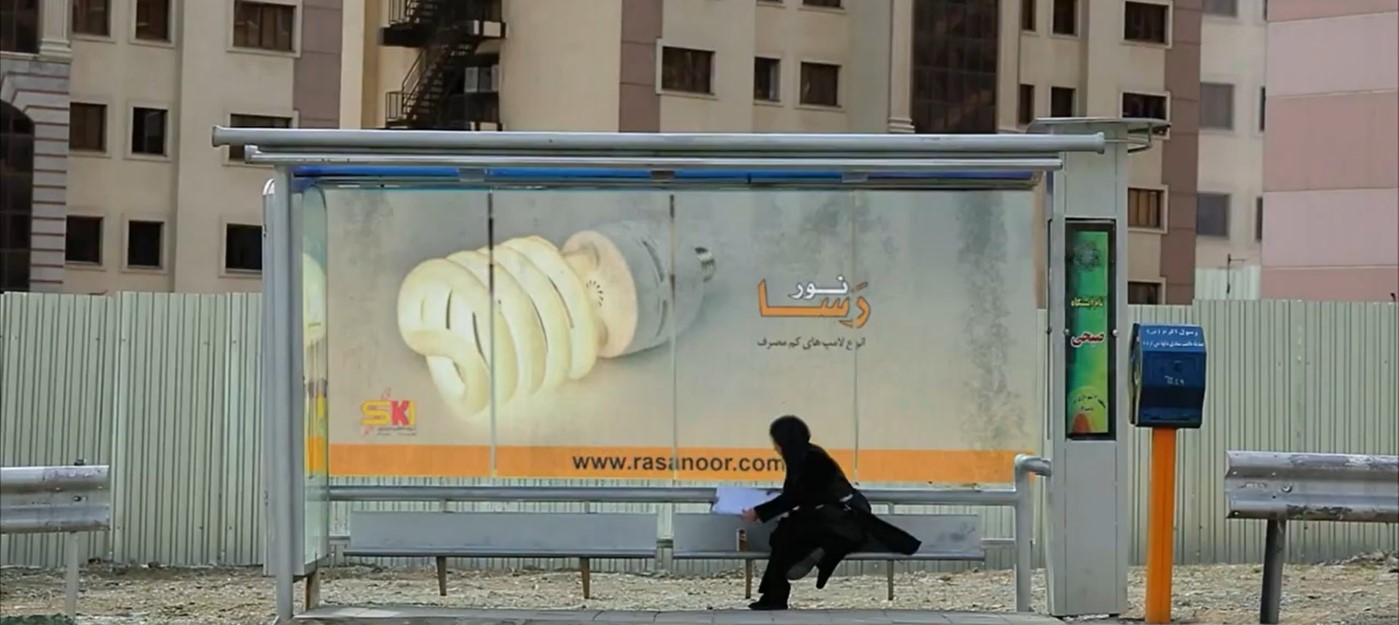
Figure 5: A screenshot from the film Judā’ī-i Nādir az Sīmīn (A Separation, 2011), directed by Asghar Farhādī.
The filmmakers also took into consideration the concerns of the middle class in Iran. The 2009 Green Movement was instrumental in driving societal shifts. It is widely believed that the movement was led by the urban middle class. As an example, Kevan Haris points out that, “while a broad cross-class coalition of individuals participated in the Green Movement at its peak, the core of the movement was located in the country’s middle classes.”18Kevan Haris, “The Growing Social Power of Iran’s Middle Class,” UC Press Blog, August 14, 2017. https://www.ucpress.edu/blog/29179/the-growing-social-power-of-irans-middle-class Mahmood Monshipouri also points to the resemblance between the Green Movement and the 1999 student protest movement: “The 1999 student protests were followed by yet another round of protests a decade later in 2009, also known as the Green Movement, both of which were led by the urban modern middle class.”19Mahmood Monshipouri, “What Is Different about These Protests in Iran?,” Center for Middle Eastern Studies: UC. Berkeley, November 9, 2022, https://cmes.berkeley.edu/what-different-about-these-protests-iran As mentioned before, the 2009 movement can be seen as one of the culminations of a path that began in 1997 with the widespread participation of the urban middle class in that year’s presidential election and the beginning of the so-called reform era.
Considering the significance of the urban middle class’s concerns during that time, the emergence of apartment dramas appears to be well-founded. The concept of an apartment implies a specific constraint on space. Consequently, despite the transformation of numerous buildings in prosperous regions of prominent Iranian cities into luxury apartment complexes in recent decades, the general perception of the audience does not associate apartment living with the upper classes. Further, when examining the architectural contrast between middle-class neighborhoods and impoverished areas in cities such as Tehran, considering that neighborhoods in impoverished areas have not developed as much as middle-class neighborhoods and primarily consist of modest homes or aging complexes with less visually striking exteriors, it becomes apparent that the prevailing perception of an apartment in Iran implies a baseline provision of essential living facilities. Given this cultural imaginary, filmmakers could easily convey the economic and social class of the characters by simply selecting an average-sized apartment.
The Solitude of Characters
The emerging trend in apartment dramas after the Green Movement involved films that exhibited substantial differences in nature compared to previous examples. During the late 1980s, Iranian apartment comedy-dramas revolved around the interactions of neighbors residing in an apartment complex. However, in apartment dramas following the Green Movement, the focus shifted towards a smaller group of individuals and families, sometimes solely highlighting the challenges faced by a couple. Rather than attempting to depict the various dimensions of the relationships between characters, the narrative revolved around one or two specific crises. Further, these crises often possessed a prominent moral dimension, with economic matters also being predominantly viewed through a moral lens.
The focus on select characters and the reduced involvement of neighboring characters in driving the narrative has led to the portrayal of individuals in post-Green Movement apartment dramas as socially isolated. The apartment comedy-dramas of the 1980s depicted members of the middle class as individuals who, despite numerous partial differences, shared significant collective concerns. However, regarding characters in apartment dramas post-2010, it seems that they reside in secluded islands, disconnected from their neighbors. These individuals have become deeply engrossed in their own spheres, and their interactions with other members of their social class appear to be restricted. While the apartment films of the 1980s were filled with bustling scenes depicting people’s engagements (figure 4), post-Green Movement apartment dramas present settings that emphasize the separation among individuals (figure 6).
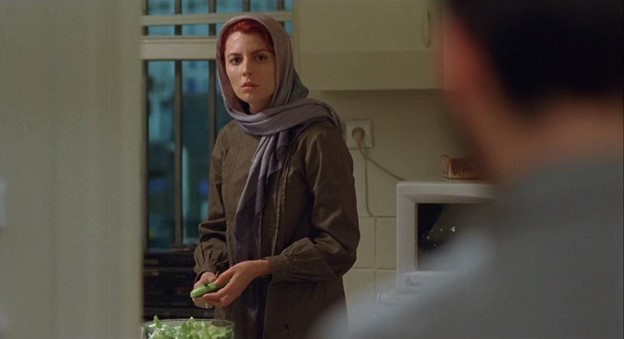
Figure 6: Asghar Farhādī repeatedly emphasizes the personal solitude of characters in A Separation through elements such as framing and the bars of windows. Judāyī-i Nādir az Sīmīn (A Separation, 2011), Asghar Farhādī, Accessed via https://www.youtube.com/watch?v=bMJ48FeaHxw&t=207s (00:47:59).
A Separation and the Ethical Concerns of the Middle Class
One common aspect found in numerous apartment dramas after 2009 is the focus on the emergence of moral dilemmas within the middle class. The film A Separation held great significance during that period as it established a paradigm for Iranian filmmakers in depicting such challenges.
It is worth noting that Asghar Farhādī had portrayed the ethical crises faced by the middle class in Iranian society in his film Chahār’shanbah-sūrī (Fireworks Wednesday, 2006) before the Green Movement. The film introduces us to the marital challenges faced by a middle-class couple named Muzhdah (Hadīyah Tihrānī) and Murtizā (Hamīd Farrukhnizhād) through the viewpoint of Rūhī (Tarānah ‛Alīdūstī), a working-class individual working as a maid in their home. However, ethical interactions between characters from the middle and lower economic classes were infrequent in Fireworks Wednesday. Rūhī’s portrayal primarily revolved around her role as an observer. Instead, Farhādī preferred to concentrate on the marital crisis of the middle-class couple.
That Farhādī briefly references Fireworks Wednesday in the opening of A Separation establishes a connection between the ethical dimensions of both films. The opening scene of A Separation depicts the act of duplicating documents from various individuals to fulfill administrative procedures such as divorce. Among these, there are images of the initial pages of the identification cards belonging to Muzhdah and Murtizā from Fireworks Wednesday. This reference may suggest that they are undergoing divorce proceedings.
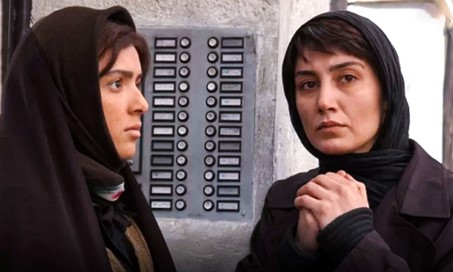
Figure 7: A screenshot from the film Chahār’shanbah-sūrī (Fireworks Wednesday, 2006), directed by Asghar Farhādī.
A Separation is an extension of Farhādī’s focus on the familial issues of the middle class. In a manner reminiscent of Fireworks Wednesday, the arrival of a working-class individual into the residence of a middle-class couple allows us to become more acquainted with the challenges of their marital life. However, the distinction lies in the fact that in A Separation, the socio-economic disparity of the main characters assumes a more crucial role in the progression of the narrative.
The film’s storyline revolves around two families. The first family, comprising Nādir (Paymān Muʿādī), Sīmīn (Laylā Hātamī), and their daughter Tirmah (Sārīnā Farhādī), belongs to the middle class, while the second family, consisting of Rāzīyah (Sārah Bayāt), Hujat (Shahāb Husaynī), and their daughter Sumayyah (Kīmīyā Husaynī), belongs to the lower class of society. Nādir and Sīmīn are experiencing a conflict with one another and seem to be on the brink of separation. Sīmīn’s departure from their home leads Nādir to hire Rāzīyah (who, due to Hujat’s unemployment, needs to seek income) in order to take care of his father (‛Alī-Asghar Shahbāzī). However, when it seems that Rāzīyah has not taken the matter seriously and her negligence has resulted in the injury of Nādir’s father, Nādir becomes entangled with her and forcefully throws her out of the house. Following this confrontation, it becomes evident that Rāzīyah has suffered a miscarriage. This incident marks the beginning of a crisis that greatly impacts the lives of all the primary characters.
As the storyline of A Separation progresses, it extends beyond the boundaries of Sīmīn and Nādir’s apartment; however, the apartment plays a crucial role in shaping the narrative and enhancing our comprehension of the characters. Therefore, A Separation can be regarded as an exemplification of an apartment drama. A significant portion of the film’s introduction takes place within Sīmīn and Nādir’s apartment. In this introduction, we observe a series of parallel events that establish the narrative framework of the film. The sequence of key events in the initial minutes of the film begins with the depiction of the conflict between Nādir and Sīmīn, and subsequently progresses with the introduction of Rāzīyah. The display of Rāzīyah’s religious concerns is a key concept of this expansion. Despite her financial need for the income, she is deeply troubled by the requirement of being alone with a strange old man in his house each day and having to physically assist him with bathing. The conflict between Nādir and Rāzīyah also stands out as another significant aspect of this development.
A Separation begins by depicting the marital crisis of a couple but gradually involves numerous other characters besides them in their own crises. This is a distinguishing feature that sets A Separation apart from Fireworks Wednesday. In Fireworks Wednesday, Rūhī essentially holds the position of an observer. However, characters like Hujat and Rāzīyah in A Separation face different crises compared to the problems of Nādir and Sīmīn. The film equally focuses on their life crises as it does on the middle-class couple. This approach allows Farhādī to perceptibly expand the initial story and address a spectrum of social problems. Several other Iranian filmmakers of apartment dramas post-2009 have utilized a similar pattern, starting with depicting a couple’s issues and then introducing new characters with their own crises to portray a diverse range of societal dilemmas within the cinematic narrative. This framework is integral to how A Separation has contributed to shaping certain patterns within Iranian apartment dramas after 2009.
Class Disparity in A Separation
A Separation transcends the mere portrayal of class issues and raises the question of class disparity. As mentioned before, of the two main couples in the film, one appears to be part of the middle class, while the other couple originates from the lower class. Not only do these two couples clash with representatives of the other class throughout the film, but they also have disagreements amongst themselves. An important aspect to consider when comparing the two couples is the disparity in the origins of their conflicts.
The fundamental conflict between Hujat and Rāzīyah throughout the film is related to financial matters. Rāzīyah is compelled to work as a housekeeper for Nādir due to a financial crisis, despite this conflicting with her religious beliefs and Hujat’s opposition. At one point in the film, Rāzīyah mentions that she cannot continue working in Nādir’s house, but the ongoing economic problems and Hujat’s unemployment force her to return. It is during this period of return that the miscarriage occurs.
Even in the final scene featuring Hujat and Rāzīyah, the emphasis is placed on the role of economic problems in their conflict. This scene is where Hujat, due to his financial circumstances, agrees to drop the complaint against Nādir in exchange for receiving some money as compensation. In the last moment, Nādir requests Rāzīyah to take an oath affirming that the miscarriage she suffered was the result of the blow delivered by Nādir. As per Nādir’s statement, if Rāzīyah were to take the oath, he would provide compensation to both her and Hujat for the damages incurred. Hujat wants Rāzīyah to compromise her beliefs and take the oath. However, Rāzīyah remains unconvinced of Nādir’s culpability and therefore refrains from swearing.
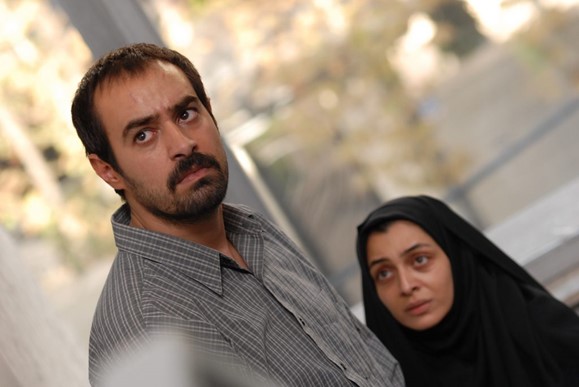
Figure 8: A screenshot from the film Judā’ī-i Nādir az Sīmīn (A Separation, 2011), directed by Asghar Farhādī.
In contrast, while representatives of the middle class are not immune from financial difficulties, non-material concerns such as conscience, morality, and reputation remain fundamental to this social group. If the financial difficulties are what pressures Rāzīyah to compromise her beliefs throughout the film, Nādir’s problems arise from non-material issues. Nādir mentions several times throughout the film that he is not unable to pay the fine, but he is reluctant to do so until he is sure of his guilt in the case. Moreover, the disagreement between Nādir and Sīmīn, unlike the final conflict between Hujat and Rāzīyah, stems not from financial considerations but from fundamentally ethical concerns. Nādir’s inability to leave his father and go abroad contrasts with Sīmīn’s decision to immigrate, driven by her concern for her child’s well-being in a chaotic environment. Farhādī himself explained this conflict by citing an example:
During Sīmīn’s initial appearance following the credits… Sīmīn comes up the stairs; we see two workers carrying a piano and blocking her way. She comes up the stairs and an argument breaks out between them over the amount of the fee for an extra floor; whether they are right or wrong, Sīmīn says, “I’ll give you this money. Open the way.” If Nādir had been in Sīmīn’s place in this scene, it was impossible that he would have given this money; and this is the difference between Nādir and Sīmīn.20Esmaeil Mihandoost, Rū-dar-rū bā Asghar Farhādī [Face-to-Face with Asghar Farhadi], (Tehran: Chatrang, 2021), 215-216. Translated by Aria Ghoreishi.
By depicting these conflicts between the two main couples in A Separation, Farhādī effectively communicates a comprehensive representation of the concerns specific to each social class, while also highlighting the individuality of each character and the differences among the members of each of these social classes.
Despite the differences between the main characters of A Separation, a recurring theme is their reliance on deception or concealment to pursue their objectives. This pattern is notably illustrated in the actions of Nādir and Rāzīyah. For instance, Nādir conceals his knowledge of Rāzīyah’s pregnancy, while Rāzīyah delays disclosing the accident until later in the film. Furthermore, Rāzīyah keeps her occupation as a maid in Nādir’s household hidden from Hodjat.
Nevertheless, the internal conflict highlighted in A Separation is between personal principles and the desire to conceal information. Despite their different social backgrounds, Nādir and Rāzīyah appear to have the closest bond among the characters in the film. They both have personal principles that they try to uphold under any circumstances. In the film, both characters deviate from those principles on occasion due to personal or family reasons. However, ultimately, both characters prioritize their moral convictions over their immediate concerns. Regarding Nādir, one aspect of this decision becomes evident when, in response to Hujat and Rāzīyah’s complaint against him, he decides to file a counter-complaint against Rāzīyah. From Nādir’s perspective, Rāzīyah’s absence from the house during working hours leads to Nādir’s father falling from the bed. Since Rāzīyah (to prevent Nādir’s father, who suffers from Alzheimer’s, from leaving the house) has tied his hands to the bed, this negligence had resulted in Nādir’s father getting injured. However, at the last moment, Nādir prevents the doctor from examining the bruises on his father’s body due to uncertainty regarding Rāzīyah’s negligence. Similarly, Rāzīyah refuses to take an oath at the film’s conclusion. Instead of making a decision for immediate undeniable benefits, both Nādir and Rāzīyah choose to take an action they deem right from their perspective, even if it leads to short-term losses for them.
Marital Turmoil and Striving for Upward Mobility
The issue of social class disparity and the combination of material and moral concerns was also seen in other apartment dramas in the late 2000s and early 2010s. For example, in the film Blind Spot,21The film Blind Spot was produced in 2015 but premiered on screen with a two-year delay in 2017. we face the story of a couple named Khusraw (Muhammad-Rizā Furūtan) and Nāhīd (Hānīyah Tavassulī). Their financial situation is unstable. Khusraw is forced to work in the demanding job of underwater welding to earn a small income to keep their lives going. Meanwhile, Nāhīd is forced to prepare a complete financial report for Khusraw every month to quell Khusraw’s constant and insane doubt and assure him that the household’s money is being spent in the right place. The combination of unstable economic conditions and Khusraw’s moral uncertainty about his wife leads to a crisis that ensues during the gathering of Khusraw and Nāhīd’s relatives in their house for a birthday party.
While Khusraw and Nāhīd live neither in an impoverished neighborhood nor on the outskirts of the city, the film’s focus on their financial challenges indicates that they are struggling to maintain a middle-class lifestyle. During the birthday celebration, we realize that the supporting characters of Blind Spot also exhibit a combination of material and moral concerns. For example, Khusraw’s sister, Parvānah (Shaqāyiq Farahānī), who has a narcissistic personality, sells her jewelry despite the financial crisis that has occurred to her family, in order to buy an expensive gift for her niece that she cannot afford and thereby to project a deceptive representation of her economic status. Conversely, Parvānah and Khusraw’s brother, Nādir (Muhsin Kīyā’ī), is initially not concerned with his social standing and has a carefree nature. However, upon discovering Parvānah’s generous gift, he becomes embarrassed and then wishes to contribute a larger sum as a birthday present. In this manner, the makers of Blind Spot try to address the problem of keeping up with the Joneses.
Like Blind Spot, the film Felicity Land is another post-2009 apartment drama that takes into account social class mobility. The film narrates the tale of a gathering where three couples are in attendance. These couples maintain a close friendship and appear to enjoy a standard of living that slightly exceeds the middle-class threshold. At the onset of the event, everything seems to be in order. Apparently, all of those individuals have established positive relations with one another, and we can perceive a sense of intimacy among them. However, gradually,long-standing disparities among them become apparent. Similar to Blind Spot, Felicity Land revolves around the integration of material challenges and ethical predicaments, portrayed through the perspective of striving for upward mobility. Additionally, a pattern is utilized in Felicity Land that we noticed in A Separation and Blind Spot. It involves starting the story by depicting the marital issues of a couple, (in this case, Muhsin, played by Hāmid Bihdād, and Yāsī, played by Laylā Hātamī), and then expanding it to include their acquaintances. Despite the absence of explicit reference to the couple’s problems in the early minutes of Felicity Land, there are indications implying suboptimal living conditions for them (figure 9).
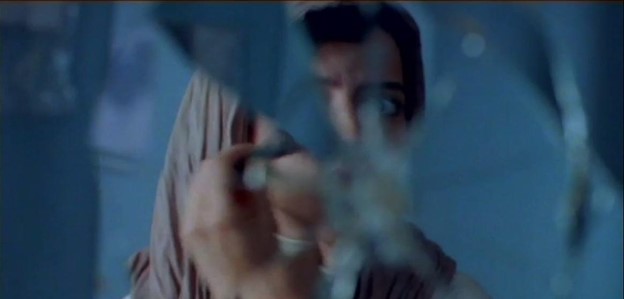
Figure 9: In the initial minutes of Felicity Land, there are indications that the marital conditions of the characters are not as desirable as they try to pretend. The broken mirror in Yāsī and Muhsin’s room subtly suggests that the two have recently had a conflict. Sa‛ādat Ābād (Felicity Land, 2011), Māzīyār Mīrī, accessed via https://www.youtube.com/watch?v=bIjeDU7nQBg (00:03:30).
Felicity Land can be regarded as a film about an emerging class that does not know its place properly. In an interview during the public screening of Felicity Land, director Māzīyār Mīrī provided a description of how the middle class is dealt with in this film:
Lying and deception are completely institutionalized in our society; and that is by the newly emerged middle class. Fifteen or twenty years ago, or much earlier, we had a middle class that was rooted, had authenticity, and it was clear where it belonged. A middle class has emerged after that that has no roots and is very dangerous, because it crushes everything, puts its foot on the shoulder of wife and children and friends and everything, and goes up, because its intention is only to go up and it does not have a concern for culture and these things either.22Nima Abbaspoor, “Man subh-i-zūdi hastam! Guft-u-gū bā Māzīyār Mīrī darbārah-yi Sa‛ādat Ābād,” [“I am an Early Riser! A conversation with Māzīyār Mīrī about Felicity Land”], Film Monthly 434 (2011): 15. Translated by Aria Ghoreishi.
The characters in Felicity Land adopt the pose of stable people, when in fact either their living conditions are not as sustainable as they pretend, or they take on ambitious financial endeavors that they cannot afford.
As Felicity Land progresses, our awareness of hidden truths about the relationships between the main characters grows. For instance, Muhsin has imported a significant quantity of goods from overseas, necessitating his borrowing a substantial sum of money from Bahrām (Husayn Yārī). Additionally, Bahrām has loaned this money despite the fact that all of his possessions are actually owned by his wife, Tahmīnah (Hingāmah Ghāzīyānī), and he has no personal savings. Also, ‛Alī (Amīr Āqā’ī) and his wife Lālah (Mahnāz Afshār) have recently moved into a new house, despite already being under financial pressure. Thus, the common point between Muhsin, Bahrām, ‛Alī, and Lālah is the difference between their real economic class and their lifestyle, and this point intensifies the dramatic conflict.
The director and screenwriter of Felicity Land, Māzīyār Mīrī and Amīr A‛rābī respectively, skillfully intertwine financial concerns with moral conflicts by creating subtle backgrounds for the characters. For example, when Lālah and Ali are on their way to the party, Lālah, in a mockery of ‛Alī’s slow driving, tells him, “Don’t go too fast. It is considered Harām,”23Māzīyār Mīrī, dir. Felicity Land [Sa‛ādat Ābād] (Tehran: Humāyūn As‛adīyān, 2011), 00:08:57. (which means it is banned in Islam). Lālah’s joke about the prohibition of speed due to the orders of Islam implicitly refers to ‛Alī’s religious roots. ‛Alī’s appearance and modern lifestyle do not provide a clear understanding of this aspect of his identity. Later we witness ‛Alī’s sometimes harsh and fossilized behavior with Lālah in the middle of the party, and as his restrictive behavior towards his wife is revealed, the recollection of Lālah’s joke in the earlier driving scene subtly signals the conservative roots of ‛Alī’s behavior.
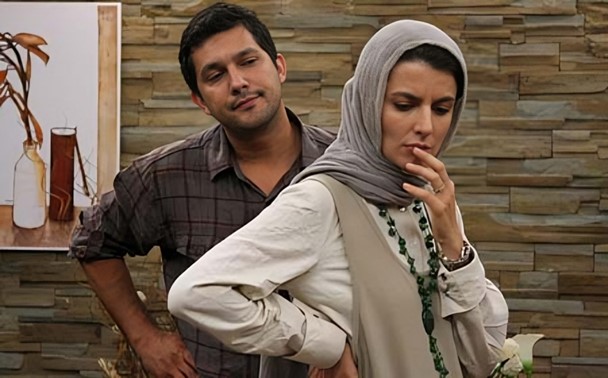
Figure 10: A screenshot from the film Sa‛ādat Ābād (Felicity Land, 2011), directed by Māzīyār Mīrī.
We are also introduced to Muhsin in a similar fashion when he jokes about the prevalence of Chinese goods. Muhsin emphasizes that purchasing Chinese goods is now the only viable option due to their global dominance. He humorously suggests that marrying a Chinese woman, who might not understand your language, could simplify life by removing complexities like dowries. According to him, one of the advantages of Chinese women is that they can be easily replaced. Muhsin’s statements shed light on two issues affecting the emerging middle class. Firstly, there is a blind conformity to external conditions—Muhsin implies that buying Chinese goods is a necessity due to their market dominance. Secondly, there is a tendency towards diversity and evasion of responsibility, as reflected in Muhsin’s comment about Chinese wives.
In the original version of Felicity Land, we discover that Muhsin has been cheating on his wife with their child’s nanny. Muhsin’s earlier comment about the benefits of having a Chinese wife, particularly the notion that she can be easily replaced, serves as a foreshadowing of his later betrayal and underscores the ethical crisis faced by the film’s characters. This conclusion was omitted from the version aired on the home video network. This scene illustrates the moral and financial challenges faced by the aspiring middle classes. We are faced with people whose pretense is significantly different from their true selves.
Consequences of Concealment
Melbourne is another important Iranian apartment drama from the 2010s that portrays an ethical dilemma within the middle class. In contrast to previous examples, the financial issue does not contribute to the progression of the story, as the focus solely lies on an ethical dilemma. The film narrates the story of a couple named Amīr (Payman Muʿādī) and Sara (Nigār Javāhirīyān) who are preparing to travel abroad for a long period. As they are preparing, they agree to take on the responsibility of babysitting one of their neighbors’ infants for a few hours. The crisis begins when the child, for unknown reasons, dies, and Amīr and Sara, with only hours to go before leaving the country, must manage this tragic situation. A significant part of the film revolves around the question of whether to always be honest or whether it is possible to resort to concealment to achieve personal goals.
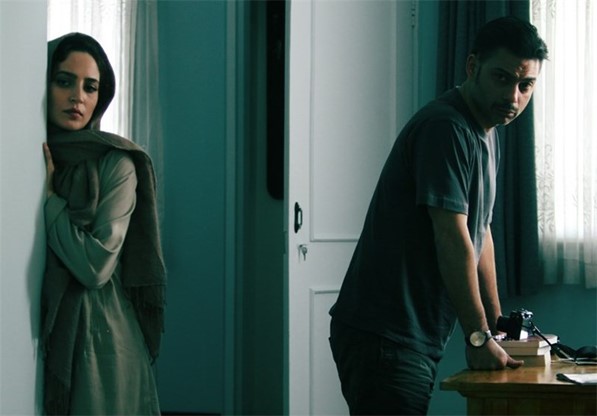
Figure 11: A screenshot from the film Melbourne (2014), directed by Nīmā Jāvīdī.
It is clear that the concept of concealment is one of the common points that connects many of the Iranian apartment dramas after 2009. However, the creators of each film have employed distinct approaches to the notion of concealment. In A Separation, the two main secretive characters (Nādir and Rāzīyah) ultimately sacrifice their short-term interests for their principles and moral beliefs. In Blind Spot, the main character’s doubt about the possibility of concealment by his wife is depicted as a kind of pathological obsession that puts their lives in crisis. In Felicity Land, the characters’ efforts to conceal their intentions, cognitive processes, and professional actions are unsuccessful and they are caught—making their efforts to conceal seem like a complete failure. However, in Melbourne, the two main characters continue to conceal to a horrific point. At the end of the film, Amīr and Sara decide to go on their important trip abroad under any circumstances, and so they entrust the child (without mentioning it’s death!) to another of their neighbors, so that the burden of the child’s death falls on the shoulders of a person who is entirely unaware of what is happening. However, it is evident that both individuals are internally broken because of the events that have happened and their ruthless decision, and they can no longer go back to being the people they were before the incident (figure 12).
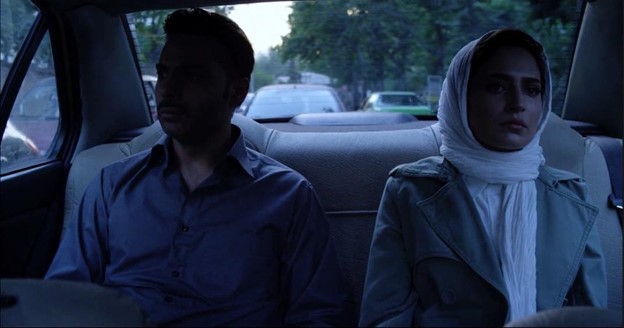
Figure 12: At the conclusion of Melbourne, Amīr and Sara have achieved their initial goal of continuing their migration journey. However, there is no longer any sign of the initial enthusiasm and excitement in them, and their faces have sunk into darkness. Melbourne (2014), Nīmā Jāvīdī, accessed via https://www.youtube.com/watch?v=M5RW3OQxzDc (01:27:16).
Personal Progression
In addition to common themes, the type of conflict generated can also be considered as a relatively prevalent structural pattern in Iranian apartment dramas after 2009. While it is natural for films set in a single location with limited characters to focus on personal conflict, such as family relationships or friendship, a location-based drama can also be centered on either extra-personal or inner conflict. That dramas centered on a specific location focus on personal conflict is not something limited to the cycle of apartment dramas produced in Iranian cinema after 2009. However, what is noteworthy about this specific cycle of apartment films is the outcome they attain by centering on this type of conflict.
As mentioned earlier, in A Separation, we are faced with the conflicts of two couples. The story of Felicity Land revolves around three couples who gather at one house for a birthday, only to gradually find themselves in disagreement. A similar family pattern is evident in Blind Spot, in which the members of a family gather for a birthday party and a crisis ensues. In Melbourne, a couple is faced with an unexpected crisis on the eve of a journey, leading to the emergence of numerous personal conflicts, both within their relationship and with others.
In such conditions, it is natural for the creators of apartment dramas to pay attention to a technique for advancing the story known as personal progression. This technique is one of the four that Robert McKee mentions when discussing progression in a story.24Robert McKee, Story: Substance, Structure, Style, and the Principles of Screenwriting (New York: Regan Books, 1997), 294-301. The focus on personal progression, which means driving actions deeply into the intimate relationships and inner lives of the characters,25Robert McKee, Story: Substance, Structure, Style, and the Principles of Screenwriting, 295. seems to be both more appropriate and less risky for apartment dramas. In this technique, the screenwriter, realizing that he cannot logically go wide, goes deep. Such a screenplay begins with a personal or inner conflict that seems solvable and gradually moves towards the underlying layers and hidden secrets of the character.
But why is the use of this technique more appropriate than other methods of showing progressive movement for most apartment dramas? The obvious reason is the limitation of space and number of characters. For example, the social progression technique (which means widening the impact of character actions into society)26Robert McKee, Story: Substance, Structure, Style, and the Principles of Screenwriting, 294. requires the gradual introduction of more affected characters, which is not that simple for an apartment drama. Also, the symbolic ascension technique (to build the symbolic charge of the story’s imagery from the particular to the universal, the specific to the archetypal)27Robert McKee, Story: Substance, Structure, Style, and the Principles of Screenwriting, 296. mainly requires the expansion of images (and places) that are also difficult to access in an apartment drama. However, the social and even symbolic aspects of apartment dramas in Iranian cinema during the 2000s and 2010s are often achieved without the need to expand images and locations, as McKee suggests is a requirement for the symbolic ascension technique. This particular feature may be more readily available in films originating from lands of small power.
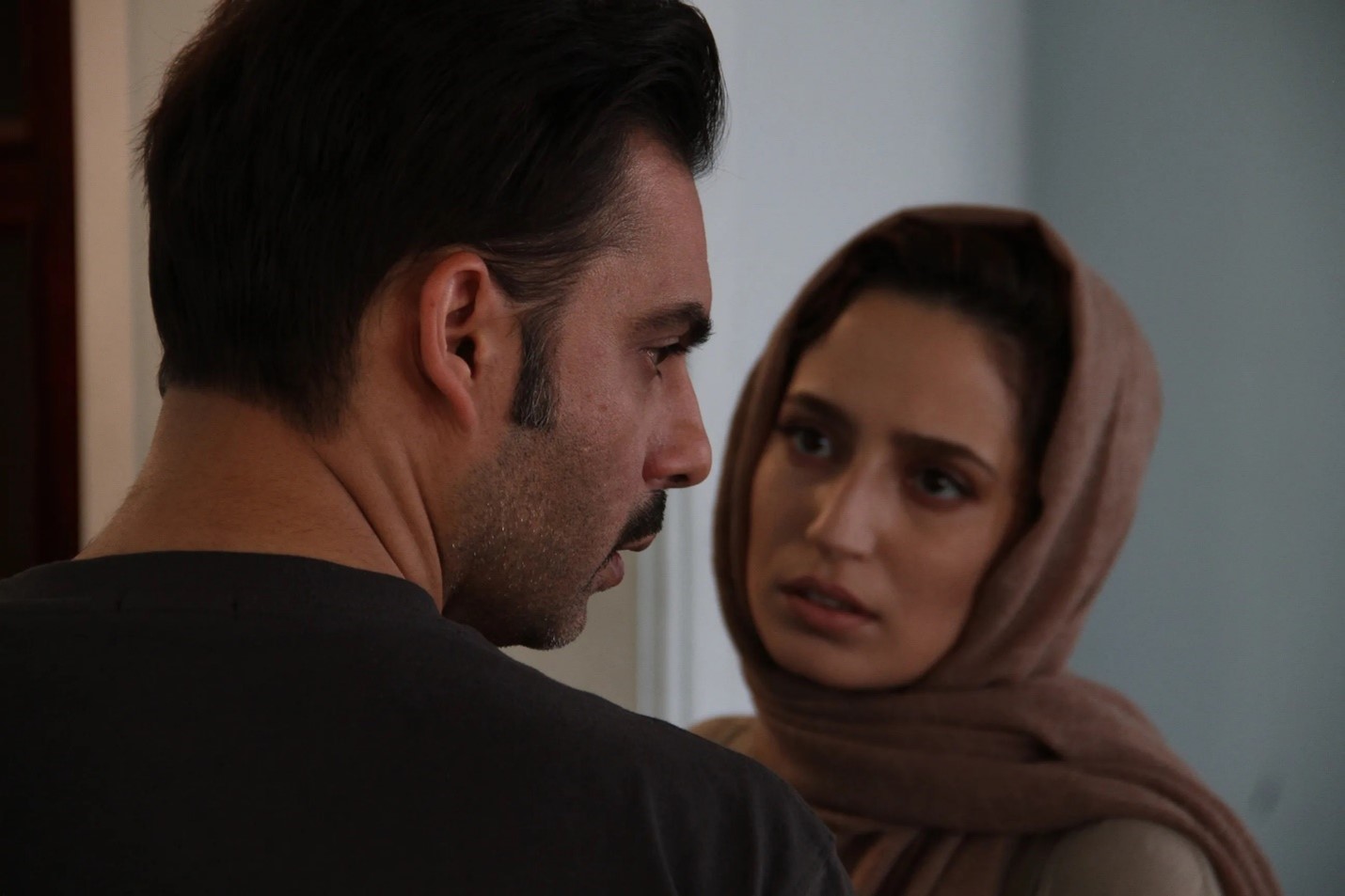
Figure 13: A screenshot from the film Melbourne (2014), directed by Nīmā Jāvīdī.
Before delving into the analysis of the symbolic aspects of characters in Iranian apartment dramas post-Green Movement, it is essential to consider a significant distinction in the definition of “lands of great power” and “lands of small power.” A great power is a state that possesses the capability to exert its will upon a smaller power. However, this relationship is not reciprocal in the sense that a small power cannot assert its will against a great power.28Christine Ingebritsen, Iver Neumann, Sieglinde Gstöhl, and Jessica Beyer, eds., Small States in International Relations (Seattle: University of Washington Press, 2006), 17. The exercise of will extends beyond matters such as deploying military force during times of war; indeed, the cultural impacts of asymmetrical power relations are significant. Events in lands of great power can affect individuals in lands of small power. The likelihood that familiarity with the lifestyle of the inhabitants of great power territories will influence the way of life and thinking of people in small power territories is considerably more pronounced than the reverse scenario. Iraj Karimi discusses the influence of the general conditions of a country in portraying stock characters in cinematic works in a way that can be helpful for understanding the impact of apartment dramas in Iranian cinema. He highlights the challenge faced by the Iranian audience in comprehending and internalizing the notion of individuality, both in daily life and when exposed to dramatic works. Moreover, he notes that even when a filmmaker creates individual characters, they tend to see them as social types and manifestations of a social class or stratum. Karimi attributes this aspect to various factors, with one of them being the general conditions prevailing on the artist and the audience.29Iraj Karimi, “Dark-i Najvā dar Hayāhū-yi Bāgh” [“Understanding the Whispering in the Bustle of the Garden”], Film Monthly 234 (1999): 68-69.
When discussing this reason, Karimi cites a quote from Friedrich Dürrenmatt quoted by George Wellwarth. According to Wellwarth (via Dürrenmatt), all the events that take place in the lands of the great powers (even the everyday lives of citizens) are important to everyone because any event that occurs in those countries automatically affects the rest of the world. However, in other countries, issues such as family life are rarely important to audiences from other countries (and even many audiences from the same country). In such conditions, filmmakers working in the lands of small power are more likely to turn to typical faces (symbolic characters).30Karimi, “Dark-i Najvā dar Hayāhū-yi Bāgh,” 69. With this explanation, it is not surprising that the creators of Iranian apartment dramas showed an interest in creating symbolic characters, and that critics have assessed apartment dramas in this frame. For example, despite Farhādī’s efforts to portray the existing differences among the characters of each economic class in A Separation, Mustafa Jalali-Fakhr, in his article about the film, implies that due to Farhādī’s greater emphasis on the social aspects of the characters, there were limited chances to delve into their inner complexities. From his perspective, in A Separation, the compulsory presence of class conflict, as one of the driving forces in the drama, places individuals within the boundaries of these relationships and social equations. This, in turn, significantly impacts their individuality under the influence of social realism clichés.31Mustafa Jalali-Fakhr, “Dar Just-u-jū-yi Elly” [“In Search of Elly”], Film Monthly 426 (2011): 20.
Similar arguments concerning the symbolic or social dimensions of Melbourne have also been raised. For instance, in his review, Peter Debruge notes that the actions of Amīr and Sara in Melbourne might carry different meanings for foreign audiences compared to Iranian viewers. An Iranian viewer might interpret Amīr and Sara’s behavior through the lens of cultural factors. This audience understands well the significance of migration to Australia for individuals of the middle class. In contrast, for a foreign viewer, Melbourne might appear as another complex thriller where if the characters simply reported the story to the authorities, the resolution could have been much simpler.32Peter Debruge, “Film Review: Melbourne,” Variety, November 18, 2014. https://variety.com/2014/film/festivals/film-review-melbourne-1201358221/ Amin Azimi, referring to Debruge’s explanation, suggests that Sara and Amīr may be regarded as representatives of the middle class in Iran at the time when the film was produced. Considering the importance of the migration issue for individuals in that social group, the Iranian audience, in its ultimate judgment about the characters, views their decision to shirk responsibility in order to preserve their chances of immigration as a fundamental external and socio-economic factor. However, for a Western audience with limited knowledge of the necessity and significance of migration to Australia, this decision will appear more psychologically complex. Nīmā Jāvīdī, the director and screenwriter of Melbourne, acknowledges that although his main objective was to create an engaging story, an Iranian viewer tends to initiate conceptualization and interpretation when faced with a film like Melbourne.33Amin Azimi, “Hamīshah bi Dāstān Īmān Dāshtah-am: Guft-u-gū bā Nīmā Jāvīdī” [“I have Always Believed in the Story: A Conversation with Nima Javidi”], Filmnegar Monthly 146 (2015): 85.
These examples suggest that despite a filmmaker’s efforts to develop unique characters, a segment of Iranian audiences and critics tend to analyze the characters as societal archetypes when they encounter works that reflect the broader concerns of the middle class.
Conclusion
During the first half of the 2010s, a significant number of apartment dramas emerged, depicting economic struggles among middle-class characters, their isolation, aspirations for upward mobility, and the heightened interpersonal conflicts within families and friend groups. Nevertheless, there has been a decline in the production of apartment dramas in recent years. There are multiple factors that can be deemed influential in this regard.
If, as mentioned, the emergence of an audience crisis in Iranian cinema in the late 2000s and the need to reduce the cost of film production are considered to be one of the factors that led to the rise of apartment dramas, the relative economic boom in Iranian cinema in the mid-2010s can also be considered to be effective in reducing the production of apartment dramas. The total number of tickets sold from March 2016 to March 2017 reached over 25 million (nearly three times the ticket sales figure between March 2013 and March 2014).34Zohreh Fathi and Pante’a Khamooshi Esfahani, “Sālnāmah-yi Āmārī-yi Furūsh-i Fīlm va Sīnimā-yi Īrān Sāl-i 1395” [“Statistical Yearbook of Iranian Film and Cinema Sales in 1395”], Iranian Organization of Cinema and Audiovisual Affairs (2018): 2. https://apf.farhang.gov.ir/ershad_content/media/image/2019/12/922299_orig.pdf. Prior to the outbreak of the COVID-19 virus and the subsequent closure of cinemas, the rate of ticket sales consistently remained above 20 million annually. Therefore, filmmakers had the opportunity to come out of the narrow confines of homes and make films with more diverse locations and characters.
The nature of the concerns that were perceptible in society also underwent a gradual transformation. The movement at the end of 2017 and the beginning of 2018 in Iran marked the first major wave of protests after the Green Movement. This movement took place during the month of Dey according to the Persian calendar, which is why it is commonly referred to as the Dey protests. While the primary spectrum of protesters in the Green Movement were middle-class individuals seeking political liberalization, the main social class involved in the Dey protests was the lower class, focusing on economic concerns and demanding social justice.35Ali Fathollah-Nejad, “The Islamic Republic of Iran Four Decades On: The 2017/18 Protests Amid a Triple Crisis,” Brookings, April 27, 2020. https://www.brookings.edu/articles/the-islamic-republic-of-iran-four-decades-on-the-2017-18-protests-amid-a-triple-crisis/. Consequently, starting from the mid-2010s, we are witnessing a shift towards the portrayal of social dramas by focusing on the experiences of the lower economic classes, rather than the concerns of the middle class.
Another factor contributing to the decrease in apartment dramas can be attributed to the gradual decline of the middle class subsequent to 2009. Although the middle class had demonstrated its influence during the Iranian Revolution of 1979—and due to this influence, was always considered a potential threat to the central government—after the rise of the Green Movement the government realized the need to eradicate the middle class.36Muhammed Al-Sulami, “Iran’s Middle Class Marginalized by Regime,” Arab News, July 12, 2021. https://arab.news/8gefb. This organized effort, coupled with the house arrest of Green Movement leaders (Mahdī Karrūbī and Mīr Husayn Mūsavī), led to a surge of disillusionment among some protesters. In addition, the onset of the economic crisis and the sharp fall in the value of the Iranian national currency in 2011 led to the decline of many former members of the middle class to lower-middle-class or even lower-class status during the 2010s. In such conditions, economic concerns gradually gained a more prominent role than non-material and moral concerns in the lives of wider groups of Iranians.
The production of the film Life and a Day (2016)37Sa‛īd Rūstā’ī, dir. Abad va Yik Rūz [Life and a Day], (Tehran: Fīlmīrān, 2016). not only depicted these societal changes but also influenced the trajectory of Iranian cinema. Life and a Day narrated the story of a family from the lower-class involved in a set of crises (unemployment, poverty, addiction, family issues, and forced marriage). The manner in which problems were presented and the socio-economic focus in this film diverged from previous social dramas. The comprehensive success of Life and a Day in Iran, both in terms of critical acclaim and box office revenue, paved the way for the emergence of a new wave of social dramas set in the impoverished areas of the country. As a result, dramas that focused on the middle class became increasingly marginalized.
Nevertheless, apartment dramas, which can be considered to have peaked between 2010 and 2015, hold great significance as a testament to the filmmakers’ perspectives on the class crisis that prominently shaped social transformations in Iran, at least from 1997 through the following two decades.
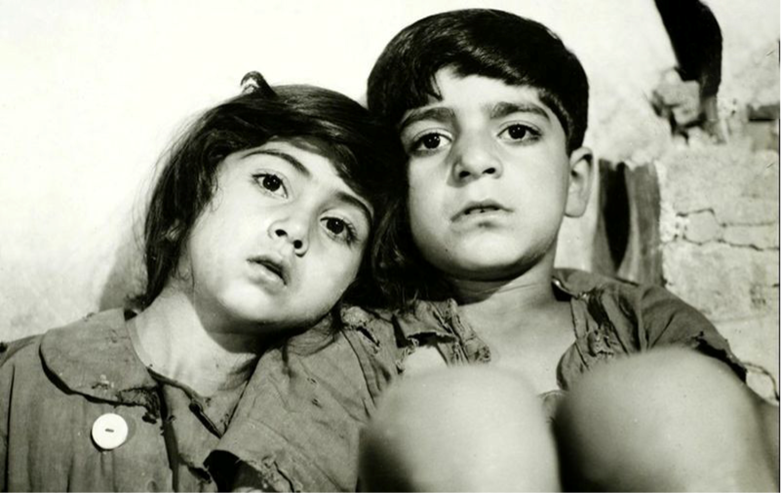
Figure 1: Still from the film Murād va Lālah (Morad and Laleh), directed by Sābir Rahbar, 1965.
Introduction
This article examines the aesthetic and social representations of the child and childhood in the period leading up to the 1979 Revolution. The research specifically focuses on feature-length narrative films aimed at children and adolescents up to the age of eighteen, which were screened in cinemas.
The relationship between childhood and cinema is interactive, rather than one-sided. Cinema does not merely reflect childhood; it also has the power to reshape and redefine societal notions of childhood, often challenging prevailing expectations. In other words, children’s cinema, or films for a general adult audience featuring children, presents an ‘ideal image of the child,’ one that both parents and children may adopt as a model to emulate. This dynamic gives rise to two distinct types of childhood: the actual and the ideal.
Throughout its 120-year history, Iranian cinema has frequently explored themes of children and childhood. However, due to the scope and limitations of this study, the focus is specifically on the emergence of artistic children’s cinema, which, from the author’s perspective, began in 1960. This research is both historical and analytical in nature, with sources gathered through library-based methods, including written documents and the analysis of over seventy extant films.
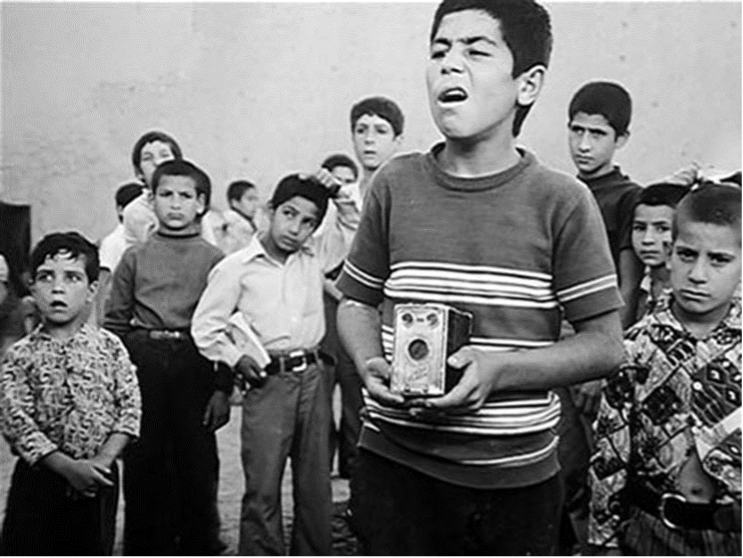
Figure 2: Still from the film Musāfir (The Traveler), directed by ʿAbbās Kiyārustamī, 1974.
General Considerations
1. Research Type
The research is historical and analytical in nature, with sources gathered through library-based methods, including written documents and the analysis of feature-length narrative films screened in Iran for children and adolescents up to the age of eighteen.
2. Research Questions
This article aims to address three key questions:
a. What is the analytical framework for Iranian children’s and adolescents’ cinema?
b. How are the produced works related to changes in social conditions?
c. In what ways have the concepts of the child and childhood been represented across different periods?
3. Significance of the Topic and its Application
In his essay “The Age of the World Picture,” Martin Heidegger highlights one of the defining characteristics of the modern era, distinguishing it from earlier periods like the Middle Ages or Antiquity: the transformation of the world into an image. He writes:
[…] world picture, when understood essentially, does not mean a picture of the world but the world conceived and grasped as picture […] the fact that the world becomes picture at all is what distinguishes the essence of the modern age [der Neuzeit].1Martin Heidegger, “The Age of the World Picture,” in Science and the Quest for Reality, ed. A. I. Tauber (London: Palgrave Macmillan, 1997), 81.
Children’s initial connection to the world is primarily mediated through vision. For young children, who have not yet developed reading skills, images serve both as a support and a vital supplement, facilitating the development of literacy. Their inherent fascination with images plays a crucial role in sparking interest in picture books and, more broadly, in cultivating a reading habit. Clearly, the earlier visual communication and literacy are fostered, the more enduring their impact will be. Children are naturally more open and responsive to their surroundings than adults, who often become desensitized through repetition.
The influence of narrative cinema exceeds that of educational media because it engages audiences through art and its various elements: beauty, creativity, innovation, imagination, emotion, and indirect expression. Cinema’s ability to evoke mental pleasure and connect with the unconscious ⸺free from the constraints of practical gain or loss⸺ highlights the importance of visual literacy and imagery.
Similarly, Heinz Werner has explored children’s capacity for ‘physiognomic perception,’ contrasting it with ‘geometric-technical perception.’ He notes that when children say the sun is happy, the tree is sad, or a cup lying on its side is tired, they are not making secondary inferences; rather, they are directly perceiving these qualities in the objects themselves.2Brady Wagoner, “The Organismic Theory of Development: Romantic Roots of a Vital Concept,” Theory & Psychology 34, no. 1 (2024): 136-37.
Ian Verstegen, in his article “The Politics of Physiognomic Perception,” argues that “Werner clearly had what could be characterized as romantic beliefs that children and ‘primitive’ peoples perceived the world in a more expressive way. He called this “physiognomic perception,” and contrasted it with the perception of ‘geometrical-technical qualities.’”3Ian Verstegen, “The Politics of Physiognomic Perception,” Gestalt Theory 44, no. 1-2 (August 2022): 187.
It is clear that a significant part of human perception of film and artistic imagery is sensory and intuitive. In this regard, children and adolescents possess abilities in this area that may have diminished or been entirely lost in adults.
4. Background and Sources
To identify and assess existing sources on the history of Iranian children’s cinema and the representation of childhood, the Cinema Iranica bibliography was consulted. The search yielded a variety of materials, including articles, interviews, reports, conference papers, and press notes, though none directly or comprehensively address the specific focus of this study. Additionally, the search also resulted in the discovery of two Persian-language books, 20 non-Persian books, 14 university theses, two tertiary sources, and six non-Persian websites, four of which are anonymous. With the exception of two books and one article, none of these sources directly engage with the core subject of this research.
The first book is Tasvīr-i Kūdak dar Sīnimā-yi Īrān (The Image of the Child in Iranian Cinema) by Dāryūsh Nawrūzī(2013). The significance of this work lies in its research-oriented structure, balanced perspective, comprehensiveness, and the importance of the sources it references. However, like any book, it has its limitations. For instance, it occasionally repeats discussions without systematic organization, does not fully address the topic of children’s literature, concludes abruptly without a proper closing section, and lacks a thorough analysis of the decline of children’s cinema.
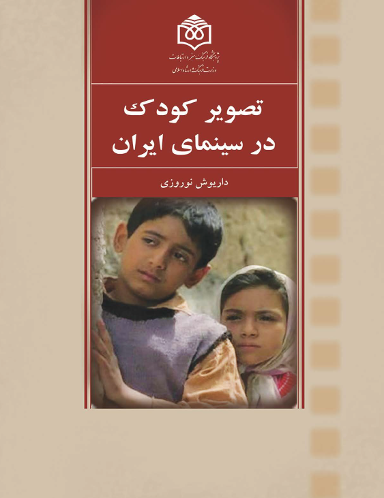
Figure 3: Book Cover of Tasvīr-i Kūdak dar Sīnimā-yi Īrān (The Image of the Child in Iranian Cinema), by Dāryūsh Nawrūzī, 2013.
The second book is Farhang-i Fīlm’hā-yi Kūdakān va Nawjavānān az Āghāz tā Sāl-i 1367 (Encyclopedia of Children’s and Adolescents’ Films from the Beginning to 1988), compiled by ‘Abbās Jahāngīriyān (1988). The author provides a concise analytical introduction to the history of children’s cinema, followed by a presentation of the films, including production details and brief plot summaries, organized alphabetically rather than chronologically. Given that the work was published in 1988—during a pivotal period in the development of children’s cinema—it inevitably omits certain key developments and information.
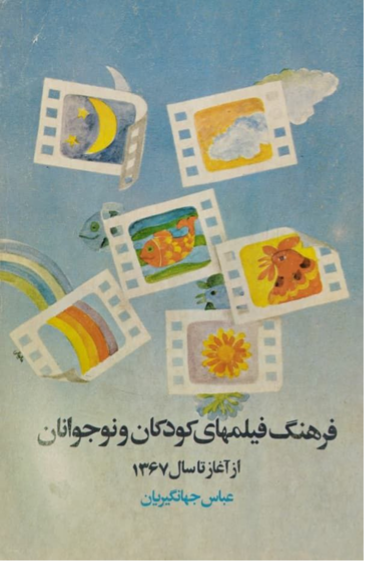
Figure 4: Book cover of Farhang-i Fīlm’hā-yi Kūdakān va Nawjavānān az Āghāz tā Sāl-i 1367 (Encyclopedia of Children’s and Adolescents’ Films from the Beginning to 1988), by ‘Abbās Jahāngīriyān, 1988.
The only article that provides a review of the history of children’s and young adult cinema in Iran is ʻAlī Dādras’s “Tārikhchah-yi Sīnimā-yi Kūdak va Nawjavān dar Īrān” (The History of Children’s and Young Adult Cinema in Iran).
In addition, there are books on Iranian cinema that contain limited and often insufficient sections on children’s cinema; these sources have been cited in the present study where applicable. However, this article explores a subject that has not been examined in such depth before.4For information regarding film awards, the comprehensive database of Iranian cinema was consulted: www.sourehcinema.com.
5. Scholarly Approaches of the Article
The central theme of this article revolves around the concepts of the ‘child’ and ‘childhood.’ A key point raised is the lack of consensus regarding the definition of the child. There is no single, unified understanding of what constitutes the child or childhood; rather, these concepts are interpreted in various ways. Childhood studies have yet to be established as a distinct academic discipline like psychology or economics. Instead, they remain part of the broader humanities, intersecting with a wide range of fields. As a result, childhood studies are inherently interdisciplinary. While they maintain a degree of autonomy, they are closely connected to other domains such as art, literature, linguistics, psychology, education, sociology, religion, and philosophy. This article places particular emphasis on the psychological and sociological perspectives within the diverse approaches to studying childhood.
5.1. The Psychological Approach
Our psychological approach draws on selected theories of Jean Piaget, Laura E. Berk, and Gareth B. Matthews. Jean Piaget demonstrated that the cognitive systems of children function independently from those of adults. He maintained close engagement with children and approached them with deep respect. Central to Piaget’s theory is the notion that children’s ways of thinking and acting are logical and meaningful within the framework of their own developing logic, rather than being measured against adult standards. His insights, along with those of his followers, significantly advanced the principles of child-centered education.
Building on and at times moving beyond Piaget’s foundational work, psychologists such as Laura E. Berk have offered more nuanced accounts of cognitive development. Berk, in particular, has advanced the view that children possess greater cognitive capacities than Piaget originally proposed.5Laura E. Berk, Development Through the Lifespan, 7th ed. (SAGE Publications, 2022), 491.
According to more recent theories advanced by scholars such as Gareth B. Matthews, a specialist in the philosophy of childhood, children engage with complex concepts—such as philosophy, ethics, death, literature, and art—to a far greater extent than traditionally acknowledged in developmental psychology. Indeed, Matthews contends that certain artistic creations by children, such as their drawings, should be regarded as genuine works of art, deserving a place alongside those of adult artists in museums, rather than being treated merely as data for psychological analysis or reflections of a child’s inner world.6Gareth B. Matthews, The Philosophy of Childhood (Harvard University Press, 1996), 39–48, 61–86, 95–117.
To outline the characteristics of adolescence, this article draws on Erik Erikson’s theory of psychosocial development. Erikson identifies adolescence as a particularly critical and formative stage of life, during which individuals confront the fundamental question of identity. Adolescents strive to define their place in the world with respect to occupation, social roles, sexuality, and interpersonal relationships. This identity-seeking process is inherently challenging and often accompanied by significant anxiety. In attempting to forge a coherent identity, adolescents frequently experiment with a range of roles, perspectives, and belief systems. Erikson refers to this period of exploration as a “moratorium.”7James E. Côté, “Identity Formation and Self-Development in Adolescence,” in Handbook of Adolescent Psychology, vol. 1, ed. Richard M. Lerner and Laurence Steinberg (New Jersey: John Wiley & Sons, 2004), 269.
Those who successfully navigate this complex developmental stage—achieving a well-integrated and stable sense of self—entering adulthood with competence, confidence, and self-assurance. In contrast, failure to establish a coherent identity may result in a prolonged identity crisis.8Fātimāh Kiyānpūr, Jamāl Haqīqī, Husayn Shikarkan, and Bahman Najārriyān, “Rābatah-yi haft marhalah-yi avval-i nazariyyah-yi rushd-i ravānī-ijtimā‘ī-i Erikson bā marhalah-yi hashtum-i ān (kamāl dar barābar-i nā’umīdī) dar sālmandān-i ustān-i Khūzistān [The Relationship of the First Seven Stages of Erikson’s Theory of Psychosocial Development to its Eighth Stage—Integrity vs. Despair—among the Elderly in Khuzestan Province],” ‘Ulūm-i Tarbiyatī va Ravān-shināsī 3, no. 9, issue 1-2 (2002): 18, 21. According to Erikson, the central developmental task of adolescence is to answer the existential questions: “Who am I?” and “What am I doing?” He emphasized that occupation and ideology play decisive roles in shaping adolescent identity. As such, Erikson viewed identity formation as encompassing group affiliation, gender, culture, religion, and ideological orientation.9James E. Côté, “Identity Formation and Self-Development in Adolescence,” in Handbook of Adolescent Psychology, vol. 1, ed. Richard M. Lerner and Laurence Steinberg (New Jersey: John Wiley & Sons, 2004), 269.
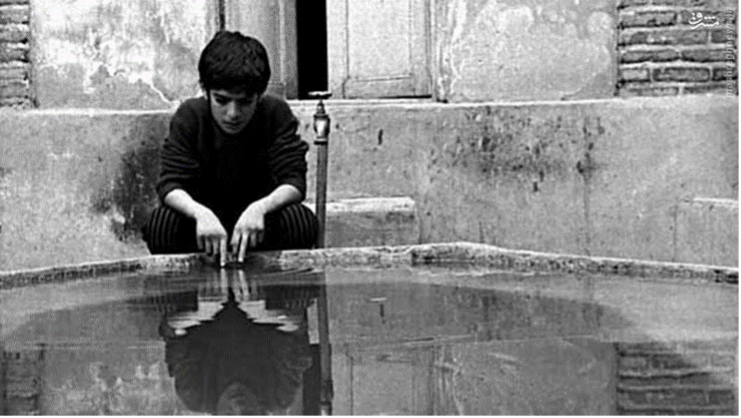
Figure 5: Still from the film Musāfir (The Traveler), directed by ʿAbbās Kiyārustamī, 1974.
Adolescent psychological disorders are closely related to the confusion or uncertainty around an individual’s sense of purpose or identity. Questions about one’s place in the world or the meaning of life become central concerns during adolescence, and it is during this stage that individuals begin to seek general answers to these questions. The formation of the ‘self’ during these years is both complex and fragile. Adolescents often feel lonely, and this feeling, along with other psychological symptoms, comes from focusing inward. Feelings of being misunderstood and occasional self-centeredness in adolescence stem from this process of development.
The stage prior to assuming employment or adult responsibilities is characterized by a persistent uncertainty regarding one’s identity. An adolescent vacillates between roles of a child and an adult. During this time, they often identify with various figures of admiration, such as athletes, friends, or teachers. Unlike in childhood play-acting, these identifications are no longer merely symbolic; the adolescent’s experiences and actions in these roles are profound and impactful. Many of these roles are experienced in extreme forms, as the adolescent attempts to explore and solidify their evolving sense of self.10Husayn Lutfābādī, Ravān-shināsī-i rushd, nawjavānī, javānī, buzurg’sālī [Developmental psychology, adolescence, youth, adulthood] (Tehran: Samt, 2005), 134.
5.2. Sociological Approach
Let’s briefly review some of the definitions proposed for the concept of a child: One definition suggests that a child is a member of society who has not yet acquired the social skills required to fulfill societal roles, and as a result, is not yet able to play an active or effective role within the social organization.11Allison James, Chris Jenks, and Alan Prout, Theorizing childhood (Teachers College Press, 1998), 7. This definition of the child has served as the basis for many studies of childhood, and it implies that children are expected to learn and internalize social skills. Article 1 of the Convention on the Rights of the Child (1989) defines a child as any individual under the age of 18.
Karin Lesnik-Oberstein, in her book Children in Culture, offers an alternative definition of childhood. She views ‘childhood’ as a constructed identity that varies across cultures, historical periods, and political ideologies.12Karin Lesnik-Oberstein, Children in Culture: Approaches to Childhood (London: Macmillan Press, 1998), 2. In classical sociology, the child was viewed as an underdeveloped being—dependent, immature, and incapable—regarded as merely a brief stage in human life. Today, however, the perception of the child has changed. The child is now understood as a member of society with distinctive characteristics, an active agent, and a subject capable of making choices.13Allison James, Chris Jenks, and Alan Prout, Theorizing childhood (Teachers College Press, 1998), 23; For further discussion, see, Mehdi Hejvani, Arkān-i Adabiyāt-i Kūdak [The Elements of Children’s Literature] (Tehran: Fātimī, 2023), chaps. 2-3.
6. Limitations of the Article
6.1. The Presence of Mediators
One essential aspect of children’s cinema is the unavoidable presence of intermediaries—namely, adults—who produce the films intended for young audiences. Adults may censor a movie, take children to see films of their own choice, or prevent them from watching certain works. Thus, children’s films invariably reach their audiences through various mediators, including screenwriters, directors, actors, producers, licensing authorities, parents, teachers, and school administrators. At times, we assume or anticipate that children have fully comprehended the message of a film, while, in reality, such judgments are made in their absence. Although some festivals employ children as jurors to select outstanding works, this method may not be entirely effective, as it is constrained by two factors: first, the number of children involved is typically small; and second, it is still adults who select children with specific characteristics to serve as judges.
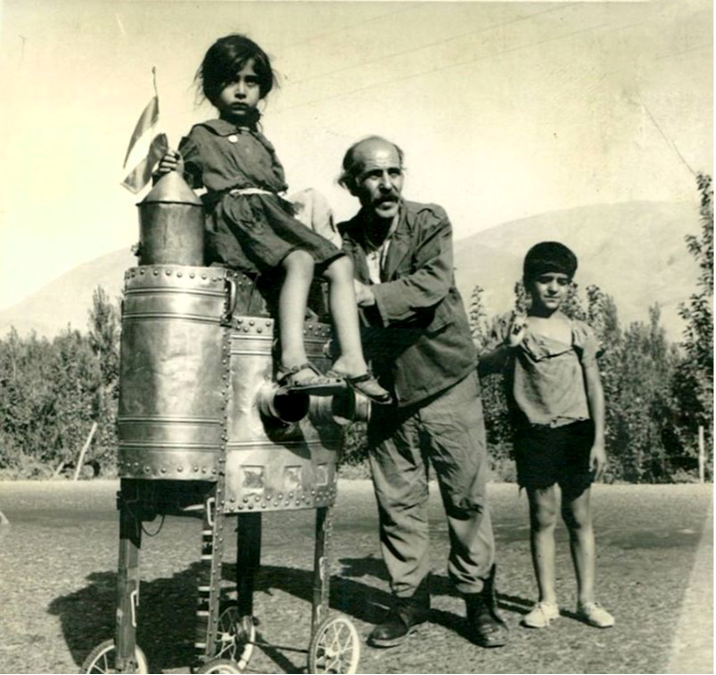
Figure 6: Still from the film Murād va Lālah (Morad and Laleh), directed by Sābir Rahbar, 1965.
6.2. Scope Limitations
The concept of the child and childhood has been a recurring theme throughout the history of Iranian cinema, a topic that merits a thorough study. Due to scope limitations, however, this article focuses exclusively on the period between 1961 and 1979, which, in the author’s view, marks the emergence of a serious and intellectual children’s cinema. This cinema, emerging from the ‘formal recognition of childhood,’ developed in contrast to the commercial and melodramatic children’s films of the time.
- Scope of the Study
The works analyzed in this article can be categorized as follows:
- Feature films, and, in exceptional cases, medium-length and short films (but not television series);
- Fiction films, though semi-documentary works are included in rare instances;
- Films made explicitly for child or adolescent audiences;
- Works produced in live-action, puppet, or animation formats;
- Films screened in cinemas.
Accordingly, purely documentary (non-fiction) works about children—which are more relevant to inquiries about childhood—may reflect aspects of the child and childhood, but do not fall within the scope of this article.
In 1973, Hādī Payām introduced the distinction between films for children and films about children in an article titled “Children’s Cinema and the Question of the Film for the Child and about the Child.”14Hādī Payām, “Sīnimā-yi Kūdak va Mas’alah-yi Fīlm barāyi Kūdak va Darbārah-yi Kūdak [Children’s Cinema and the Question of the Film for the Child and About the Child],” Farhang va Zindagī 13-14 (1973–1974): 32-36. Later scholars expanded on these categories and identified additional types. In general, the following classification can be outlined:
—Films for children: Works explicitly produced by filmmakers with children as their intended audience.
—Films about children: Works created with the intention of deepening adults’ understanding of the world from a child’s perspective, rather than being intended for children themselves. Nevertheless, children may enjoy these films, as they see their own image reflected in them.
—Films under the pretext of the child: Works in which the child assumes a symbolic or allegorical role, rather than representing an actual or conventional childhood. The filmmakers’ intent may be to provide an indirect or aesthetic expression, or to veil political or protest-oriented discourse.
—Films featuring the presence of a child: Works in which the child plays no significant role, appearing only to enhance the story’s setting and contribute to its realism.
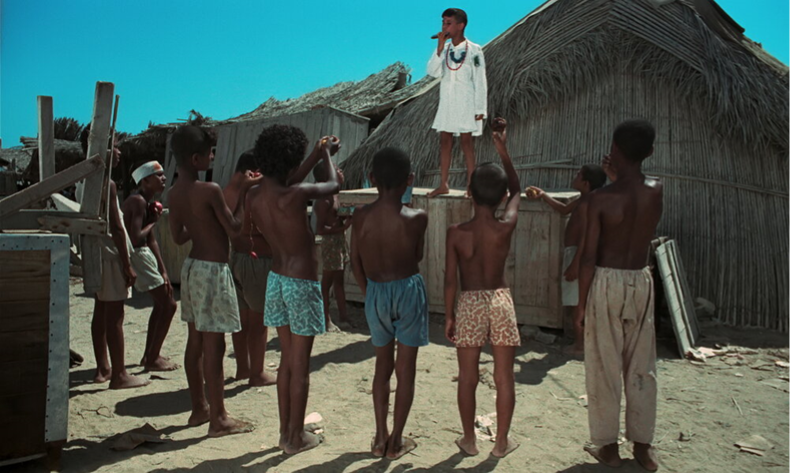
Figure 7: Still from the film Sāz’dahanī (The Harmonica), directed by Amīr Nādirī, 1973.
The author proposes a fifth category—multi-audience film: Works that do not target a specific age group, as their characters are mythological, legendary, or archetypal, with no real-world counterparts. Although the characters may appear physically adult, the mythical and adventure-driven structure of these films appeals equally to children and adolescents. Similarly, certain adaptations of classic novels—such as Les Misérables or Gulliver’s Travels— though not originally intended for young audiences, they often resonate with children due to the simplicity of their story structure, accessibility, or adventure-oriented themes.
From a different standpoint, it is important to note that the selection criteria for films in this article are based on a combination of four elements: the scholarly approaches adopted in the article, the reception of the films among children and the general public, their recognition at festivals featuring award-winning works, and the author’s own assessment.
The Representation of the Child and Childhood in Cinema
Children’s cinema in Iran, from 1961 to 1979, can be broadly divided into two distinct periods:
1. The First Period (1961–1971): The Birth of Artistic Children’s Cinema in Contrast to Commercial Cinema
1.1. The State of Iranian Society
—Economic conditions, including the sharp increase in oil revenues, the rise of welfare and consumerism, the development of assembly industries (including the cinema industry), and the growing demand for labor.
—Social conditions, such as migration to major cities, population growth—particularly the increase in the child population—and the expansion of the middle class.
—Cultural conditions, such as the spread and dominance of Western culture, particularly that of the United States; the introduction of television in Iran (1958); and the circulation of various foreign films and television series, which shaped part of childhood within the middle class; the expansion of public and private education and the press; the founding of the Children’s Book Council (1962) as Iran’s representative to IBBY, which promoted reading and selected outstanding works for children and adolescents; the establishment of the Center for the Production of Reading Materials for New Literates (Markaz-i tahiyyah-yi mavādd-i khāndanī barāyi nawsavādān) in 1964,15This center has now been renamed the Office of Educational Assistance. which launched the Paykmagazine series for different age groups; the founding of the Institute for the Intellectual Development of Children and Young Adults (Kānūn) in 1965, which became the largest state institution dedicated to the production of cultural, artistic, and literary works; and the inauguration of the International Festival of Films for Children and Young Adults by Kānūn, whose influence gradually manifested from the end of the 1960s up until the Revolution.
1.2. The Dominance of Commercial Cinema
The production of commercial and melodramatic films, which began in the 1950s, continued into the 1960s. The quantitative dominance of popular works over artistic productions is a typical pattern across time and place. Examples of commercial and melodramatic films from this period include the following: Murād va Lālah (Morad and Laleh, 1965), Yak Qadam tā Bihisht (One Step Then Heaven, 1966), ʿIshq-i Kawlī (Gypsy Love, 1969), Hasan Kachal (1970), Āftāb Mahtāb (1970), Zilzilah-yi Mahīb (Terrible Earthquake, 1970), Zībā-yi Jībʹbur (The Beautiful Pickpocket, 1970), Māh-Pīshunī (1971), Murgh-i Tukhm-talā (The Golden Egg-Laying Hen, 1972), Shahr-i Qissah (The Tale Town, 1973), and Rāndah Shudah (The Outcast, 1975).
Just as the development of modern Persian fiction began with the translation movement and was later followed by the creation of original works, the trajectory of Iranian cinema started with the importation and dubbing of foreign films, eventually leading to the production of indigenous works modeled after them. For instance, the story of the film Murād and Lālah, written and directed by Sābir Rahbar in 1965, was based on Vittorio De Sica’s Shoeshine (1946).
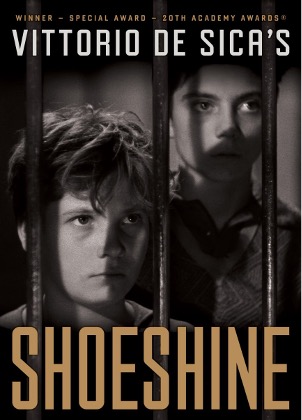
Figure 8: Film poster for Shoeshine, directed by Vittorio De Sica, 1946.
Murād va Lālah (Morad and Laleh, 1965)
Writer and Director: Sābir Rahbar
A brother and sister lose their parents in an accident and are separated. A wealthy family adopts the girl, while the boy befriends an old peddler. The old man encounters the girl and later takes the boy to see her as she prepares to leave on a journey with her adoptive parents. The old man and the boy rush to the airport, and at the last moment, the siblings are reunited. From that point on, they live together under the care of the wealthy family.
This film focuses more on children than earlier films did. In some cases, the child seems to understand more than the adults—witty, eloquent, charming, quick with responses, and seemingly all-knowing, like a wise figure. This perspective appears to be influenced by modern education; as schooling expanded, children often became more literate than their parents, which led to greater respect for them. The renowned singer Gūgūsh, for instance, had already embodied such a role in the film Bīm va Umīd (Fear and Hope, 1959), while another popular singer, Laylā Furūhar, played similar roles in Charkh u Falak (The Ferris Wheel, 1967) and Sultān-i Qalb’hā (The King of Hearts, 1968). These films suggest that the more a child acts like an adult, the better they are perceived; otherwise, they are seen as incomplete adults, becoming fully human only when they grow up.
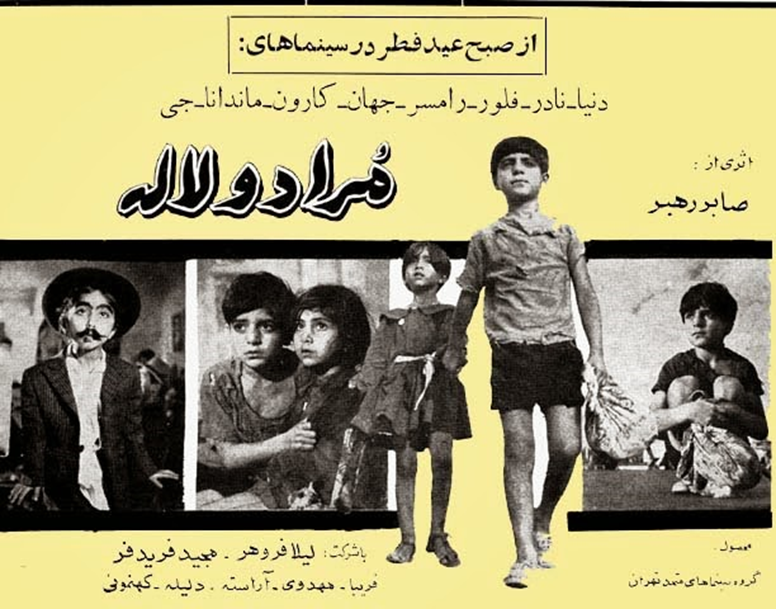
Figure 9: Film poster for Murād va Lālah (Morad and Laleh), directed by Sābir Rahbar, 1965.
1.3. A Cinema Hall Dedicated to Children
In 1966, a movie theater named Cinémonde was established in Tehran. Located at the intersection of Takht-i Jamshīd Street (now Tāliqānī) and Pahlavī Avenue (now Valī-ʿAsr), it was dedicated specifically to screening films for children and adolescents. The theater was designed with a child-friendly atmosphere and smaller seats. These initiatives reflect a growing recognition of the importance of children and childhood in society.
2. The Second Period (1971–1979): The Emergence of Artistic and Intellectual Cinema
The social, economic, and political circumstances in Iran during this decade gave rise to intellectual and religious protest movements.
2.1. The Conflict Between Artistic and Commercial Cinema

Figure 10: Logo of the Institute for the Intellectual Development of Children and Young Adults (Kānūn-i Parvarish-i Fikrī-i Kūdakān va Nawjavānān)
As mentioned earlier, following the establishment of Kānūn in 1966, the Kānūn Film Festival for Children was also founded in the same year. From 1966 to 1970, only foreign films were screened at the festival. In 1969, the Kānūn Film Center was established under the supervision of Fīrūz Shīrvānlū and ʿAbbās Kiyārustamī.
Masʿūd Mihrābī argues that the Pahlavī regime, through this initiative, aimed to create a kind of ‘showcase’ and ‘festival commodity.’ He also suggests that the government sought to distract dissatisfied intellectuals with non-political artistic projects. Regardless of the initial intent, during Kānūn’s years of cinematic activity, more than sixty films were produced, some of which are now considered among the most outstanding legacies of Iranian cinema.16Masʿūd Mihrābī, Tārikh-i Sīnimā-yi Īrān [The History of Iranian Cinema] (Tehran, 1989), 352. Evidence supports Mihrābī’s analysis
In fact, Kānūn, while in pursuit of the Pahlavī regime’s vision of Iran as the ‘Gateway to the Great Civilization,’ faced a shortage of filmmakers, writers, illustrators, and musicians specializing in works for children and adolescents. As a result, they invited artists who were unwilling to produce commercial works—and who had no prior experience in creating films for children—to work in this field. Perhaps, at that time, there was no other alternative. Therefore, artists such as ʿAbbās Kiyārustamī, Amīr Nādirī, and Bahrām Bayzā’ī engaged with children’s cinema, producing films despite their lack of prior experience in the field, primarily through experimentation. Some of their works, while rich in artistic value, also served as a reaction against the commercial, market-oriented art of the period. However, due to their experimental nature, these works sometimes diverged from the lived experiences of children and even adolescents. Moreover, their approach was occasionally instrumental: children were used as a pretext to express adult concerns, abstract ideas, frustrations, protests, or political disillusionments within works ostensibly made for young audiences. In fact, some of these productions might be better understood as films, stories, or poems ‘pretending to be for children.’
Nūraldīn Zarrīnkilk—filmmaker, illustrator at Kānūn during this period, recognized as the father of Iranian animation, and president of ASIFA International (the International Animated Film Association) from 2004 to 2006—outlined several key points, summarized as follows:
—Since filmmakers at the Kānūn Film Center were not burdened by financial concerns, they were able to indulge in creating intellectual and avant-garde subjects as a counter to Fīlmfārsī (the popular, melodramatic, commercial cinema). As a result, their films were so complex and abstract that both young and old audiences had trouble grasping them. In fact, precisely because they were unconcerned with box-office returns, they paid little attention to audience reception.
—In some cases, filmmakers addressed adults under the guise of creating films for children.
—The government aimed to produce ‘festival films’ and build a cultural showcase.17Masʿūd Mihrābī, Tārikh-i Sīnimā-yi Īrān [The History of Iranian Cinema] (Tehran, 1989), 356.

Figure 11: Postage stamp commemorating the 10th Children and Youth Film Festival organized by Kānūn.
Nevertheless, after four consecutive years in which the Kānūn Film Festival for Children and Young Adults screened only foreign productions, the establishment of the Kānūn Film Center in 1969 brought about a remarkable transformation in film production in Iran. Between 1969 and 1978, a total of 115 films were produced in three categories: fiction, animation, and educational. Among the short films produced by Kānūn, one can mention the following examples:
‘Amū Sībīlū (Uncle Mustache, 1969)
Writer and Director: Bahrām Bayzā’ī
Children play in a vacant lot next to the house of a lonely, reclusive old man, disturbing his peace. One day, the children’s ball breaks one of his windows. Fearful, the children stop visiting the lot, and a hush falls over the area. The old man suddenly becomes aware of his solitude, feels it deeply, and eventually approaches the children to reconcile with them. The story of this film is reminiscent of The Selfish Giant (1888) by Oscar Wilde, in which the giant frightens the children away, causing spring to refuse to come to his garden. In the end, he repents and befriends the children.18Oscar Wilde, “The Selfish Giant,” in The Happy Prince and Other Tales (London: David Nutt, 1888), 23–34. The central conflict and crisis in both works are fundamentally adult in nature. However, the twelve-minute film Bread and Alley presents something altogether different.
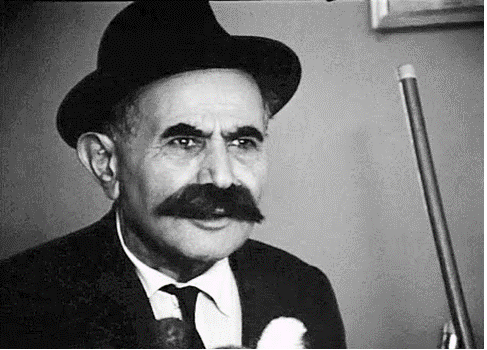 |
 |
Figure 12 (Left): Character of Uncle Mustache from the film ‘Amū Sībīlū (Uncle Mustache), directed by Bahrām Bayzā’ī, 1969.
Figure 13 (Right): Book cover of The Selfish Giant by Oscar Wilde (first published in 1888).
Nān va Kūchah (Bread and Alley, 1969)
Writer and Director: ʿAbbās Kiyārustamī
A young boy, having bought bread, returns home only to find a stray dog blocking the doorway. The dog barks, and the frightened child dares not move forward. In the deserted alley, no adult comes to his aid. At last, despairing of help, the boy tosses a piece of bread toward the dog. The animal calms down and follows him. Once the boy enters his home, the dog resumes its place outside the door. Another child then enters the alley, this time carrying a bowl of yogurt, and recoils at the dog’s barking. Now, it is his turn to resolve the dilemma. The subject of the film is entirely child-centered. Moreover, through its deliberately long takes and slow rhythm, the film conveys a sense of stark realism. Bread and Alley exerted considerable influence on many later works, even those produced after the 1979 Revolution. Kiyārustamī himself admitted that the film was experimental, confessing that he was unsure whether he had made a good film.19Jamāl Umīd, Tārikh-i Sīnimā-yi Īrān [The History of Iranian Cinema], vols. 1–2 (Tehran: 1995), 1028.
With the exception of four feature films, nearly all of the films produced by Kānūn were short films and, as such, were never screened in theaters. The four notable feature-length films are The Harmonica, The Traveler, Summer Vacation, and The Singer, which will be discussed below.
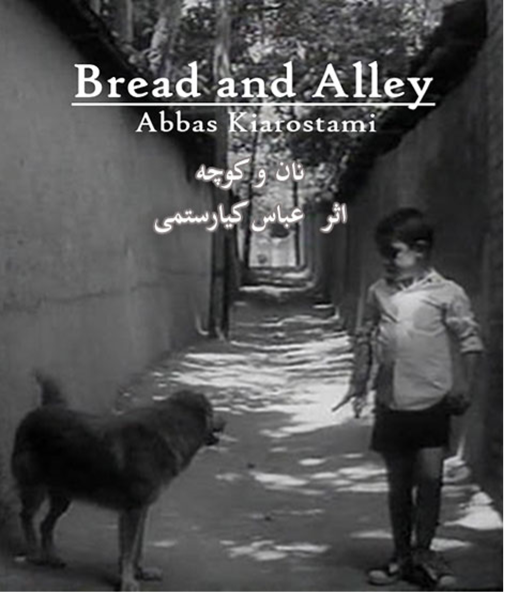
Figure 14: Film poster for Nān va Kūchah (Bread and Alley), directed by ʿAbbās Kiyārustamī, 1969.
Sāz’dahanī (The Harmonica, 1973)
Writer and Director: Amīr Nādirī
A teenage boy owns a harmonica that is coveted by the poor children in the neighborhood. For a small fee, they are allowed to play it briefly. Among them, a boy named Amīru is especially enchanted. He carries the harmonica’s owner on his shoulders so frequently that his skin becomes blistered. Amīru’s mother grows increasingly upset, and eventually, the children rise up against the harmonica’s owner. In the final scene, Amīru throws the harmonica into the sea. While The Harmonica follows a realist narrative structure, it also holds allegorical significance. On one level, it teaches children to preserve their dignity and avoid becoming anyone’s pawn. On another, it serves as a political allegory of cultural imperialism, conveying a distinctly adult-oriented message. The film thus appeals to dual audiences. The Harmonica also shares similarities with John Steinbeck’s novella The Pearl (1947).
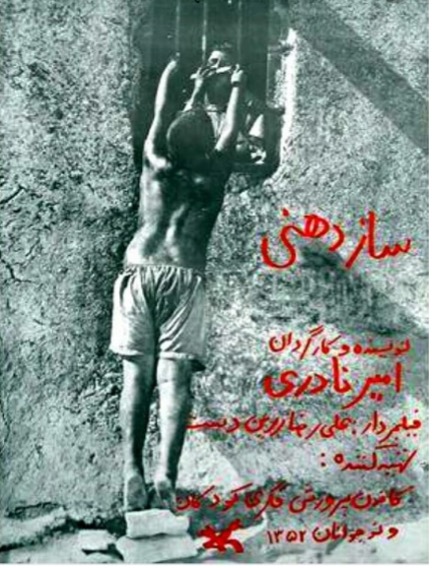 |
 |
Figure 15 (Left): Film poster for Sāz’dahanī (The Harmonica), directed by Amīr Nādirī, 1973.
Figure 16 (Right): Book cover of The Pearl by John Steinbeck (first published in 1947).
Musāfir (The Traveler)
Writer and Director: ʿAbbās Kiyārustamī (based on a story by Hasan Rafīʿī)
Winner of the Special Jury Prize and the National Iranian Television Prize at the 9th Tehran Film Festival for Children’s and Young Adults (1974).20See Comprehensive Iranian Cinema Database: www.sourehcinema.com. The film tells the story of a twelve-year-old boy obsessed with football, who resorts to trickery and petty theft to raise the money needed to travel to Tehran, the capital, in order to watch an important match. Just before the game, he buys an overpriced ticket on the black market and enters the stadium. While waiting for the match to begin, he lies down outside among a group of people resting and falls into a deep sleep from exhaustion. When he finally wakes up, the match is long over, and he finds himself in an empty stadium, surrounded by heaps of litter.
The Traveler introduces adult disillusionment into an adolescent world. However, its somber ending should not be viewed as a flaw. First, adolescence is distinct from childhood; it is a time when individuals must begin confronting life’s disappointments. Second, the boy funds his journey through theft and deceit, so, from a moral standpoint, the ending serves as a form of punishment and retribution. However, the film has a credibility issue: it seems implausible that a football-obsessed boy—who went to such lengths, even committing transgressions, to attend the match—would fall asleep amid the excitement and miss the very event he sacrificed so much to see.
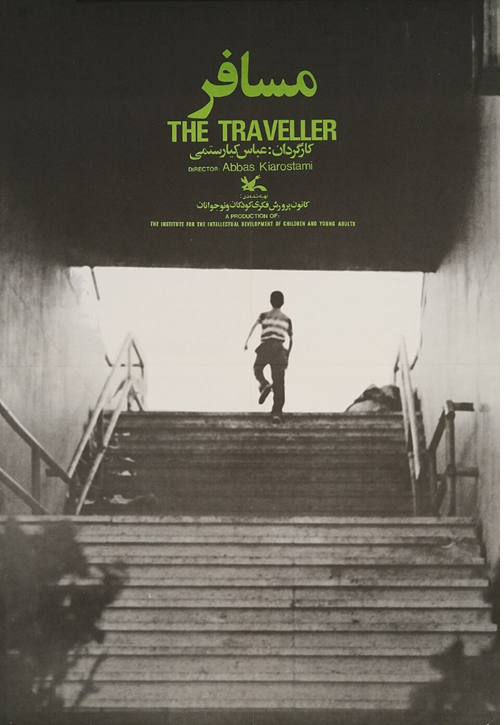
Figure 17: Film poster for Musāfir (The Traveler), directed by ʿAbbās Kiyārustamī, 1974.
Sih Māh Taʿtīlī (Summer Vacation, 1977)
Writer and Director: Shāpūr Gharīb
As summer arrives, a group of schoolchildren at a summer retreat begins their long holiday, filled with play and amusement. Gradually, however, everything becomes monotonous, and the children, seeking to relieve their idleness, each take up some form of work. Among them, one boy makes friends with a girl who’s come to the countryside with her family for the summer. When the holiday ends, so does their short-lived friendship.
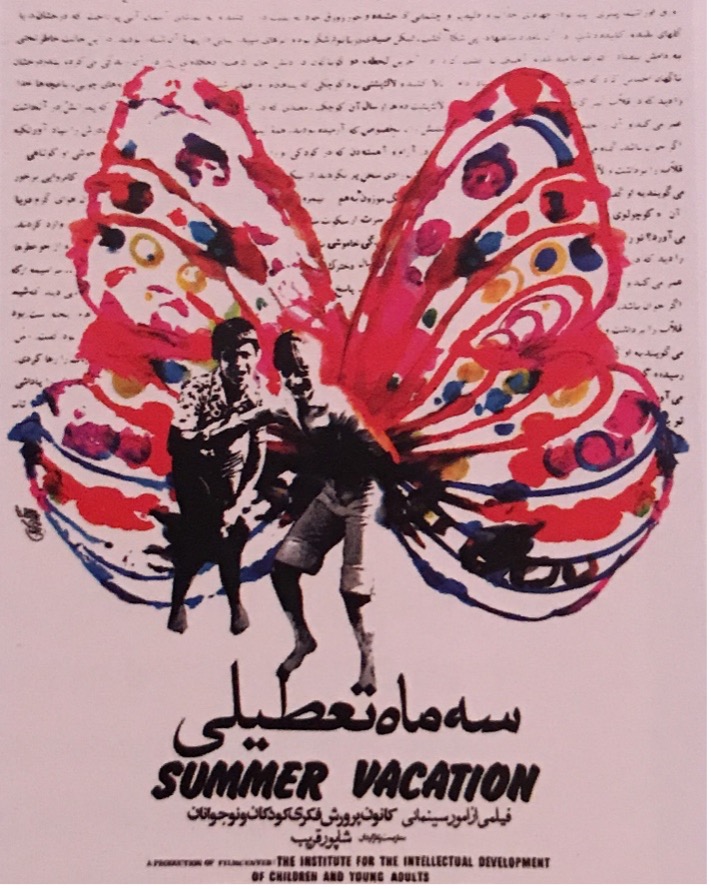
Figure 18: Film poster for Sih Māh Taʿtīlī (Summer Vacation), directed by Shāpūr Gharīb, 1977.
Āvāzah’khān (The Singer, 1979)
Director: Kayūmars Pūrahmad
Winner of the Best Professional Live Film Award at the Tehran International Film Festival for Children and Youth (1979) and the Honorary Diploma for Best Direction from the Faculty of Dramatic Arts.21See Comprehensive Iranian Cinema Database: www.sourehcinema.com. The story of the film revolves around a boy who aspires to become a singer, but his father opposes the idea, emphasizing only his son’s academic success. Eventually, despite his declining grades, the boy’s persistence and passion reveal his true talent. In the end, the father agrees to let him pursue music, on the condition that he improves his school performance.
The advantages of this film, along with the other three mentioned, can be summarized in four key points:
—Attention to the child, positioning them at the center of the film’s narrative;
—Focus on the issues and challenges faced by children;
—Involving the child in finding solutions to their own problems;
—An ethical perspective;
—Professional construction and execution of the films by accomplished filmmakers.
2.2. Nihilism
Another noteworthy film is titled A Simple Event:
Yak Ittifāq-i Sādah (A Simple Event, 1973)
Writer and Director: Suhrāb Shahīd Sālis
Winner of the International Critics’ Prize at the 2nd Tehran International Film Festival, the Interfilm Award, and the Catholic Jury Prize at the Berlin Film Festival.22See Comprehensive Iranian Cinema Database: www.sourehcinema.com. The story follows Muhammad, a schoolboy from Bandar Turkaman, who lives with a father involved in illegal fishing and a sick mother who dies during the course of the film. The film portrays the ordinariness and monotony of daily life, with the filmmaker intentionally avoiding traditional storytelling techniques to give the work a documentary-like feel.

Figure 19: Film poster for Yak Ittifāq-i Sādah (A Simple Event), directed by Suhrāb Shahīd Sālis, 1973.
Suhrāb Shahīd Sālis is a significant and influential director in Iranian cinema. He never claimed that A Simple Eventwas made specifically for children. Moreover, the film was not produced at the Institute for the Intellectual Development of Children and Young Adults, which primarily focused on producing films aimed at children and adolescents as the target audience. However, due to Muhammad’s central presence in the film, one could interpret his role either as a purely physical presence—aimed at enhancing the realistic aspects of the scenes—or as a symbolic device. Shahīd Sālis’s realism goes beyond conventional realism. The film takes on the qualities of a documentary for several reasons, including: a focus on the lives of the underprivileged and their harsh conditions; the use of long takes and slow pacing; static long shots; silences and prolonged pauses; an emphasis on ‘dead time’ and empty moments; a narrative rhythm that mirrors or approximates calendrical time; the repetition of motifs and monotonous daily routines; the use of cold and lifeless colors; the absence of music in favor of sound effects to create a distinct atmosphere and convey inner turmoil; the employment of non-professional actors; a focus on anti-narrative structures; and a deliberate distancing from melodramatic climaxes intended to manipulate the spectator’s emotions.
In this film, Muhammad is depicted as constantly running—at times appearing to have no clear direction or purpose, as if he’s not actually moving forward—reflecting the director’s bleak and despairing worldview. The author believes that Shahīd Sālis is the Sādiq Hidāyat of Iranian cinema.
2.3. Protest Films
As previously mentioned, during this decade, waves of dissent gradually gained force in the cultural milieu. Among these artistic expressions was a film produced in protest against the introduction of television to Iran, titled Wooden Pistols.
Haft’tīr’hā-yi Chūbī (Wooden Pistols, 1975)
Director: Shāpūr Gharīb
Winner of the Golden Award for Best Short Film at the First Cairo International Film Festival (1976); recipient of two first prizes from the Youth Jury and the Children’s Jury at the First Lausanne International Festival of Films for Children and Adolescents (1977); and winner of the Golden Plaque for Best Actor at the 10th Tehran International Film Festival for Children and Adolescents (1975).23See Comprehensive Iranian Cinema Database: www.sourehcinema.com.
The story takes place near a railway station, where children, living in a traditional setting, are depicted as close friends who go to school, play games together, and spend their evenings listening to their grandmothers’ tales. However, everything changes when television arrives. Families begin gathering in one house to watch action-packed Western movies. These films inspire the children to imitate the heroes they see on screen, occasionally staging mock hostage situations. Not surprisingly, such behaviors often lead to adverse outcomes.
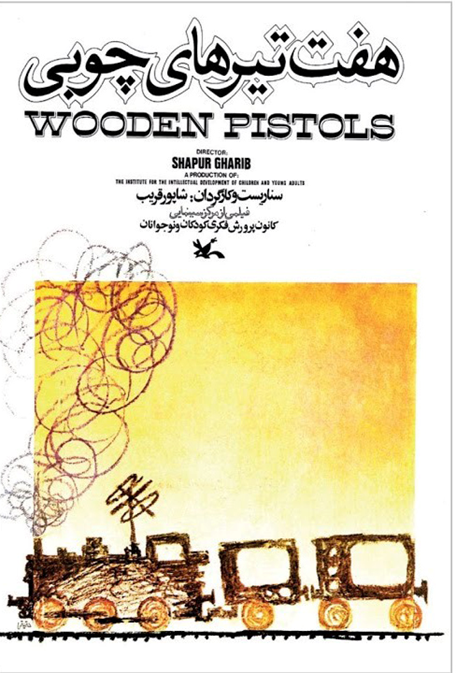
Figure 20: Film poster for Haft’tīr’hā-yi Chūbī (Wooden Pistols), directed by Shāpūr Gharīb, 1975.
2.4. Adaptations from Folk Culture
Another stream in Iranian cinema—though apparently not as prominent as its commercial or intellectual counterparts—is filmmaking based on adaptations of folk tales, such as Mullā Nasr al-Dīn (1954). Initially, these films were not made for children; however, given the growing emphasis on children in the 1960s and 1970s, certain childlike elements were incorporated, though not to the extent that the works could be considered true children’s films.
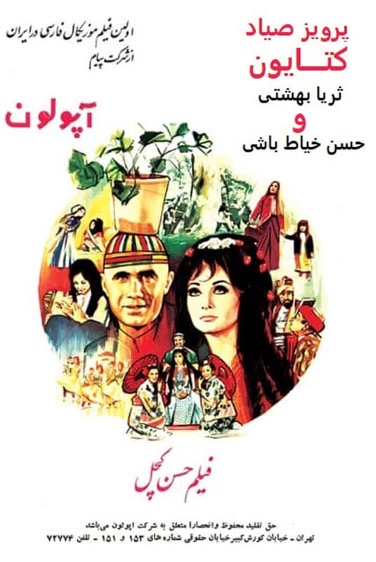
Figure 21: Film poster for Hasan Kachal (Hasan the Bald), directed by ʿAli Hātamī, 1970.
In 1970, ʿAli Hātamī directed a film titled Hasan Kachal (Hasan the Bald), based on a traditional folk and children’s tale. Film critic and sociologist Dāryūsh Nawrūzī argues that Hātamī blended a folkloric story with adult themes, noting that the long songs, which would not appeal to children, and the modifications to the story (such as Hasan Kachal falling in love) caused the film to lose its childlike charm. As a result, it is not regarded as a children’s film. Nawrūzī asserts that the era of such tales has ended, and today’s urban children no longer connect with them. Nevertheless, the film was a commercial success, yet Nawrūzī does not address why it succeeded despite these shortcomings.24Dāryūsh Nawrūzī, Tasvīr-i Kūdak dar Sīnimā-yi Īrān [The Image of the Child in Iranian Cinema] (Tehran: Pazhūhishgāh-i Farhang, Hunar, va Irtibātāt, 2013), 169–170.
The author of this article argues that, on the contrary, folk tales are appealing to both adults and children. If screenplays based on folk tales are well-written and well-directed, they can resonate with audiences, as demonstrated, to a significant extent, by Hātamī’s film. The success of Hasan Kachal can undoubtedly be attributed to the public’s enduring affection for folk stories. It seems unlikely that urbanization, whether affecting children or adults, would distance them from films rooted in folk culture. On the contrary, the monotony of urban life might lead the audience to find comfort and escape in the freshness and imagination of folk or fairy tales.
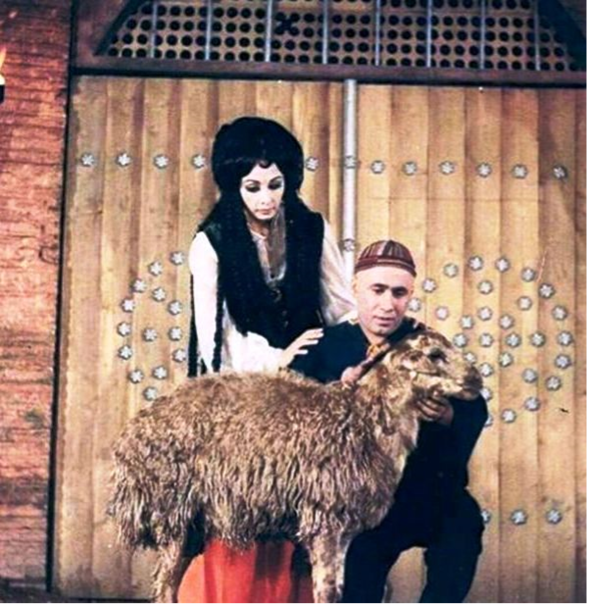
Figure 22: Still from the film Hasan Kachal (Hasan the Bald), directed by ʿAli Hātamī, 1970.
2.5. The 1979 Revolution
From a socio-political perspective, the artistic atmosphere of the 1970s was strongly shaped by the rise in political protests from Islamic, communist, and nationalist groups against the Pahlavī regime. These protests later culminated in the Islamic Revolution of 1979. Although the early years after the revolution focused on the number of productions and slogan-driven works, this open environment eventually led to the creation of original works in many areas, including children’s cinema—a subject that deserves further research.
Conclusion
This article has aimed to evaluate the representation of the child and childhood in the emergence of serious children’s cinema, considering the relevant social conditions and contexts. It has sought to address three key questions: (a) What is the analytical framework of Iranian children’s and youth cinema? (b) How are the works produced related to social changes? (c) How has the concept of the child and childhood evolved across different periods?
First, the importance of the ‘image’ was explored along the following axes: the role of images in modern life as indicators of the modern world; the impact of visual communication on child development as a primary connection to the outside world; children’s affinity for imagery; their greater susceptibility to images compared to adults; the capacity for intuitive perception in children; and the greater influence of cinema as an artistic medium compared to educational media. Subsequently, the psychological and sociological approaches outlined in the article were discussed. Based on these approaches, a relative definition of the concept of child was provided. The following section has outlined the limitations of the research, including the role of intermediaries in children’s arts, such as children’s cinema, and the influence of personal biases. Furthermore, the scope of the research and the types of films are also discussed.
Children’s cinema from approximately 1961 to 1979 can be divided into two main periods. The first period (1961-1971) saw the emergence of cultural transformations in opposition to popular and commercial cinema. During this time, a confluence of economic, social, and cultural factors shaped society, including:
—A massive influx of oil revenue, which fueled widespread consumerism and increased public affluence.
—The expansion of assembly-based industries (including film production) and their growing demand for labor.
—Accelerated rural-to-urban migration, driven by the pursuit of higher wages and better educational opportunities.
—A significant increase in the child population.
—The launch of television in Iran in 1958 (later, Iranian National Television was inaugurated in 1967) and its extensive broadcasting of numerous foreign films and series, primarily American.
—Developments within the national education system.
—A growing press sector.
—The continued popularity of and affinity for Western lifestyle.
— The founding of the Children’s Book Council (1962), which served as the Iranian national section of IBBY.
—The founding of the Center for the Production of Reading Materials for New Literates in 1964, now known as the Office of Educational Assistance.
—The establishment of the Institute for the Intellectual Development of Children and Young Adults (1965).
One of the most significant cinematic initiatives by Kānūn was the establishment of the International Film Festival for Children and Young Adults, whose influence gradually became evident by the end of the 1960s and into the following decade. From 1966 to 1970, only foreign films were screened at the festival. In 1969, the Kānūn Film Center was founded. The Pahlavī regime’s objectives behind these initiatives were to officially recognize and emphasize the importance of children and childhood, to create showcase-oriented products for festivals, and to redirect dissatisfied intellectuals toward artistic and apolitical work. Meanwhile, the production of commercial and melodramatic films, which had originated in the 1950s, persisted throughout the 1960s and 1970s.
Just as the development of fictional literature in Iran began with a wave of translations and was later accompanied by the creation of original works, the Iranian cinema industry was inaugurated through the importation and dubbing of foreign films, followed by the production of domestic films. The child of the 1960s held a more prominent role in narratives—both qualitatively and quantitatively—than the child of the 1950s. However, representations of children and childhood in the 1960s were predominantly conveyed through melodramatic works. The changes and transformations that began in the early 1960s gradually became more visible in the latter part of the decade and continued throughout the 1970s.
In the second period (1971–1979), the movement that Kānūn had initiated in the 1960s—through the establishment of the International Film Festival for Children and Young Adults and the Kānūn Film Center—fully came to fruition in the 1970s. Over several years of activity, Kānūn produced more than sixty films, some of which are considered enduring landmarks of Iranian cinema. The organization invited intellectual, often dissident artists—many of whom were unwilling to engage in commercial filmmaking and had no prior experience creating content for children—to contribute to this emerging field. It appears that, at the time, there was no viable alternative. As a result, artists such as ʿAbbās Kiyārustamī, Amīr Nādirī, and Bahrām Bayzā’ī ventured into the realm of children’s cinema, using it as a space for creative experimentation.
The works of these artists were, first and foremost, an extreme reaction against the commercial and market-driven art of the era. Secondly, because their work was experimental and not influenced by the need to make money or achieve financial success, they sometimes created films that did not closely reflect or relate to the everyday lives, experiences, or concerns of children or even adults. Thirdly, in some cases, their portrayal of children served as a pretext to introduce their own abstract, protest-driven, bitter, and political adult ideas and frustrations into works intended for children and young adults.
It seems that the unique perspective of a director like Suhrāb Shahīd Sālis—who did not work mainly in children’s cinema—or works like The Little Prince (1943) by Antoine de Saint-Exupéry—which is not really a children’s book and has mystical ideas that don’t quite fit with children’s experiences—influenced the way Iranian intellectual artists thought during that time. As a result, during the 1970s, two dominant yet conflicting and parallel currents emerged in Iranian cinema: commercial and popular cinema, and artistic, protest-driven, intellectual cinema. Ultimately, the 1960s can be regarded as the birth era of serious artistic children’s cinema—a cinema that recognized children and childhood, created various works, and continued to evolve in the subsequent years.
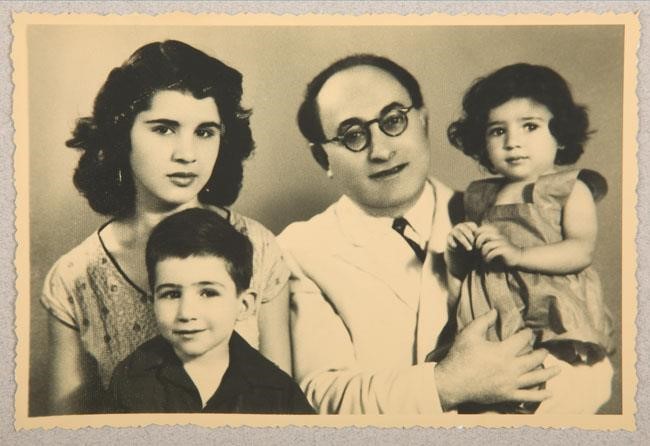

Figure 1: A portrait of Uvānis Uhānīyān.
Uvānis Uhāniyān (Ovanes Ohanian), also known as Uvānis Ugāniyāns (1896-1960), the director of the first feature film in Iranian cinema, led a mysterious life. Historians have often been puzzled by the inconsistent statements of Uhāniyān and those close to him about his place of birth, name, education, occupation, cinematic activities and political inclinations, leading to the creation of different and paradoxical narratives about his works and his past. Consequently, some historians have called Uhāniyān a storyteller and some, a charlatan. Since the day he came to Tehran, he had been telling stories about his past, none of which could have been verified.
In the 1950s, the magazine ‘Ittilā‛āt-i Haftigī (The Weekly News) wrote in a biographical sketch of Uvānis Uhāniyān that he was born in Mashhad,1“Lose No Time, Bald Men!” ‘Ittilā‛āt-i Haftigī 890 (October 10, 1958): 10. although Uhāniyān himself had mentioned in an interview with the same weekly that his birthplace was the Caucasus.2“An Iranian man has invented 24 types of jet and rocket bomber airplanes and three types of flying saucers and has named one of them Iranian Parastoo.” ‘Ittilā‛āt-i Haftigī 831 (August 16, 1957):12, 32-33. Thirty years later, a note by Uhāniyān was discovered which revealed that he believed he was born in the Caucasus in a village called Tugh in the Nagorno-Karabakh region.3 ‛Abbās Bahārlū (Ghulām Haydarī), “Documents from Iranian Cinema,” National Cinematheque Newsletter, nos. 10 and 11, 193. Khānbābā Mu‛tazidī Khānbābā Mu‛tazidī, one of the first cinematographers of the Iranian cinema and Uhāniyān’s collaborator in his first film, once said that Uhāniyān was born in Ashgabat in Turkmenistan based on what he had heard from Uhāniyān’s daughter, Zimā.4Jamāl Umīd, Uvānis Ugāniyāns: Zindigī va Sīnimā. (Tehran: Tehran Fāryāb Publications, 1984), 13. Most historians of Iranian cinema, including Hamid Naficy, believe that Uhāniyān’s birthplace is Ashgabat5Hamid Naficy, Social History of Iranian Cinema: Workshop Period, 1897 to 1940, trans. by Muhammad Shahbā (Tehran: Mīnū-yi Khirad, 2015), 264 However, since Uhāniyān was ethnically Armenian, some have also considered his family immigrants from Armenia.6‛Abbās Bahārlū (Ghulām Haydarī), “Dar fāsilah-i du kūditā (az 1299 tā 1332 sh.),” Tārīkh-i tahlīlī-i sad sāl sīnimā-yi Īrān. ed. ‛Abbās Bahārlū (Tehran: Cultural Research Institute, 2000), 35.
Uhāniyān has given two different accounts of his childhood: in one narrative, he said that after he was born, his parents immigrated from Iran to Uzbekistan and he was educated in the Trade School of Tashkent. Then, he took an interest in the arts and went to Moscow to study at a filmmaking school.7‘Ittilā‛āt-i Haftigī, no. 890, 10. In another narrative, he said that he immigrated with his mother from the Caucasus to Turkmenistan to live with his father who had a cotton factory in Ashgabat. He mentioned that he studied law and cinematic affairs in Ashgabat and was a judge at the judiciary for a period of time.8‘Ittilā‛āt-i Haftigī, no. 832, 12 He had also claimed that he was chosen as Iran’s consul in Siberia in 1921 by the Imperial Government of Iran, but he got tired of living in Russia after a while and returned home.9‘Ittilā‛āt-i Haftigī, no. 832, 32.

Figure 2: A portrait of Uvānis Uhānīyān in his youth.
The important point is his education at the Moscow Film School, where he got familiar with the principles of directing, acting, and scriptwriting.10Emily Jane O’Dell, “Iranian-Russian Cinematic Encounters,” In Iranian-Russian Encounter: Empires and Revolution since 1800, ed. Stephanie Cronin (Routledge, 2013), 330. According to Uhāniyān himself, after graduating from this school, he participated in the first Moscow Film Congress in 1928, where Sergei Eisenstein, Vsevolod Pudovkin, and Aleksandr Aleksandrov were also present. Based on this narrative, Uhāniyān was a member of the central committee of the Supporters of Soviet Cinema from 1926 to 1928 before his acceptance in the Soviet Cinema Experts Group in 1928. In the same year, he became a member of the general board of photo and film exhibition in Russia. Shortly after, he was one of the five people responsible for reviewing and censoring films. In the same year, he went back to Turkmenistan to become the founder and the president of the country’s Board of Cinema. He established the first screenwriters’ circle in Turkmenistan and even tried to establish an acting school in its capital.11National Cinematheque Newsletter, 193. These claims were never verified and the name Uhāniyān does not appear in the documents related to the establishment of cinema in Turkmenistan.
Several reasons are mentioned for Uhāniyān’s return to Iran. He himself said that he came back to his country at the request of the ambassador of Iran in the Soviet Union with a recommendation letter from him for establishing cinema in Iran.12‘Ittilā‛āt-i Haftigī, no. 831, 32. His friends, however, quote him tell another story. For example, Ahmad Gurjī, one of Uhāniyān’s students, related that before coming back to Iran, Uhāniyān had been involved with a group in Baku in the making of a film called Rāh-i ‛Alī bih Anzalī (Ali’s Way to Anzali) or Chigūnah Alī bih Khānah Murāji‛at Kard (How did Ali return home)13There is no information available about this film. There is only an advertisement published in Iran Newspaper: “This film has been made with Iranian artists and features Iranian music.” The film was apparently going to be screened in the cinemas of Iran. Iran Newspaper, January 25, 1928, 14. Uhāniyān had observed that in one scene of the film, canons were pointed toward the borders of Iran, as if the enemies of the people of Baku were the Iranians. When he had objected to the producers, he was not taken seriously, which offended him and led him to decide to return to Iran and stay.14Quoted from the radio program Fānūs-i Khiyāl (Lantern of Fantasy), produced and performed by Shāhrukh Gulistān for the BBC Persian Radio. The broadcast of this program series began on September 24, 1993 and was aired in sixteen episodes.
It seems that after his return, Uhāniyān first went to Mashhad and then, in 1929, to Tehran. There are narratives, however, testifying that he immigrated to Iran in 1925 and lived in Mashhad for about four years.15Muhammad Tahāmīnizhād, “Rishah-yābī-i ya’s dar sīnimā-yi Īrān,” Vīzhah-yi sīnimā va ti’ātr 2-3 (1972): 114. In 1925, Mūsā Khan I’tibār al-Saltanah, the chief of Mashhad’s armory, built a movie theater in that city and appointed a young Armenian called Monsieur Ughānuff as its projectionist. The identification information of Ughānuff completely matches with that of Uhāniyān.16Husayn Pūr-Husayn, Sad sāl sīnimā dar Mashhad (Mashhad: Tūs-Gustar Publications, 2010), 20; and Markaz-i Asnād-i Āstān-i Quds-i Razavī, document no. 100844.2. However, Uhāniyān never mentioned this anywhere.
For Uhāniyān himself, as for most of the historians of Iranian cinema, Uhāniyān’s artistic life begins in 1929 when he goes to Tehran with his daughter, Zimā, who was born in Ashgabat, and whose mother Lydia, had not come to Iran. Uhāniyān was employed in 1929 at the police school, where he worked as a teacher. Apparently, his documents showing his legal education and at the trade school gained him his employment. In this period, he was trying to get closer to the Iranian society and think of Iran as his homeland, against the beliefs of most Armenians who believed that they were living in diaspora. Therefore, Uhāniyān’s emphasis on “being Iranian,”, as he later asserted in his interviews, was not in agreement with the views of the Armenian community. Moreover, at that period, the majority of Armenians in Iran were against the Soviet Union and most of them were members of Iran’s Dāshnāk, the Armenian Revolutionary Federation (IRF), which fought against the Bolsheviks in various ways.17One of the important Armenian political parties that was founded in 1890 in Tbilisi. They held the government in the short period during Armenia’s independence in 1918, but left the country with the invasion of the Bolshevik forces and most of them came to Iran. Dāshnāk was and is the most important Armenian party in Iran. The suspicion toward immigrants was, more than anything else, due to the spies that came to Iran from the Soviet Union and infiltrated the political groups that were against the Soviet communist regime. It may well be the reason why Uhāniyān told yet another story to the Armenians of Iran about his return: that he escaped the Soviet Union on a carriage and got himself to Afghanistan and then, after three or four sleepless nights, came to Iran.18Karīm Nīkūnazar, Ādam-i mā dar Bālīvūd: zindigī-i pur-mājārā-yi rizhīstur-i mashhūr Uvānis Uhāniyān Ugāniyāns Rizā Muzhdah (Tehran: Chishmah Publications, 1400), 18.
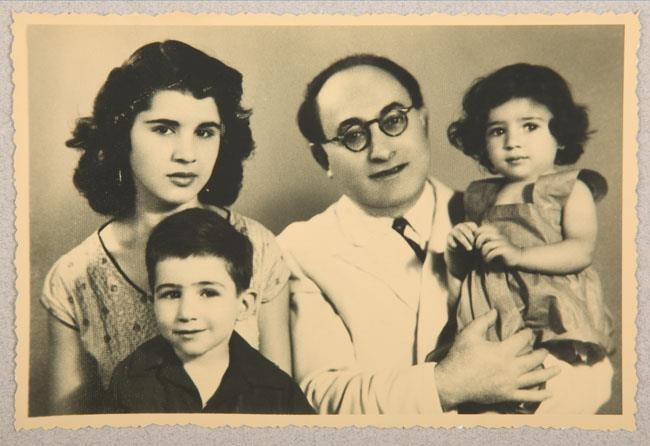
Figure 3: A picture of Uvānis Uhānīyān with his family.
In 1930, Uhāniyān was contemplating making a film, at a time when Reza Shah Pahlavi had explicitly prohibited photography and filming in the streets of Tehran due to the murder of Robert Imbrie, the Vice Consul of the United States in Tehran.19Robert Imbrie occasionally photographed for the National Geographic magazine. In those days, rumors had it that a blind person had found his eyesight after supplicating to a saqqākhānah (a drinking fountain in a holy shrine) in Tehran. Imbrie went there to take photos, but people, believing that he was of the Baha’i faith, attacked him and his guard and killed him. Also influential in this decision was the making of two documentary films, Grass: A Nation’s Battle for Life (1925) and Yellow Expedition (1934),20Grass: A Nation’s Battle for Life, was made in 1925 about the journey of the Bakhtiari nomadic tribe with the collaboration of Merian C. Cooper, Ernest B. Schoedsack, and Marguerite Harrison. The Pahlavi government banned the screening of the film because of its depiction of the poor state of the nomadic tribes and their possession of guns. The Yellow Expedition (1931-1934), directed by Léon Poirier was a documentary produced by the support of Citroën, the French automobile company. This film was banned in Iran because of its depiction of the poor people in the villages in the west of the country, the journey of the nomadic tribes, women in black chador, etc. since Reza Shah believed that Western filmmakers only intended to show the weaknesses of the country. That was the situation in which Uhāniyān intended to make a film, while he did not even have a specific story or a cast or crew to work with. First, he had to find collaborators for producing the film. Uhāniyān believed that theater actors were generally addicted to talking while in cinema, facial expressions play the main role because films were silent at the time21Fānūs-i Khiyāl, part one. He therefore decided to start an acting school and train students in the art of screen acting. Uhāniyān needed money for founding his acting school, and the person who invested in the school was Grisha Sākvālīdzah, better known as Grisha Sākāl, the Georgian owner of Sīnimā Māyāk in Tehran who had come to Iran after the Bolshevik revolution.22One of the first movie theaters in Tehran, founded in 1927 on Ittihādīyah Alley, off Lālahzār Street.
On 12 April 1930, the ‘Ittilā‛āt newspaper published the first advertisement for the acting school. The second advertisement was published the next day.23Iran Newspaper, April 13, 1930, 4. That the advertisement of the acting school invited women and girls for learning acting was an significant as in those days, acting was forbidden for Muslim women and most of the theater actors were Armenians or Zoroastrians. Unconcerned about the existing limitations in Iran, Uhāniyān invited women to register at his school, although no women signed up in the first semester.
“Madrasah-i Artīstī-’i Sīnimā” (The Screen Acting School) was Iran’s first acting school. A few schools were already established for stage acting in Iran, but no one had thought of founding a school for cinematic arts. Therefore, Uhāniyān is also credited as the founder of cinematic schools in Iran.
The first semester of the Acting School began on 10 May 1930. Three-hundred people had registered at the school and were supposed to learn the crafts of acting, photography, calisthenics, boxing, fencing, ballet, Eastern and European dance, screen acting techniques, and acrobatics. But the school’s license was revoked only a few days after classes started due to the inclusion of the word “school” in the title of this art institute. According to the Iranian law, “schools” were required to obtain their licenses from the Ministry of Education, had to follow a specific curriculum and had to use experienced teachers. The Acting School met none of those standards. Uhāniyān wrote a letter to the Ministry of Education and emphasized that he had been assigned by the Iranian government to receive cinematic education and that the police had granted him his work license.24‛Abbās Bahārlū, Tārīkh-i tahlīlī-i sad sāl sīnimā-yi Īrān, 36. He signed this letter as Uvānis Ugāniyāns.as he seems to have been better-known as “Ugānīāns Ugānīāns” in the art society. Later, Uhāniyān chose other names for himself and was seldom called with his original name in Iran.
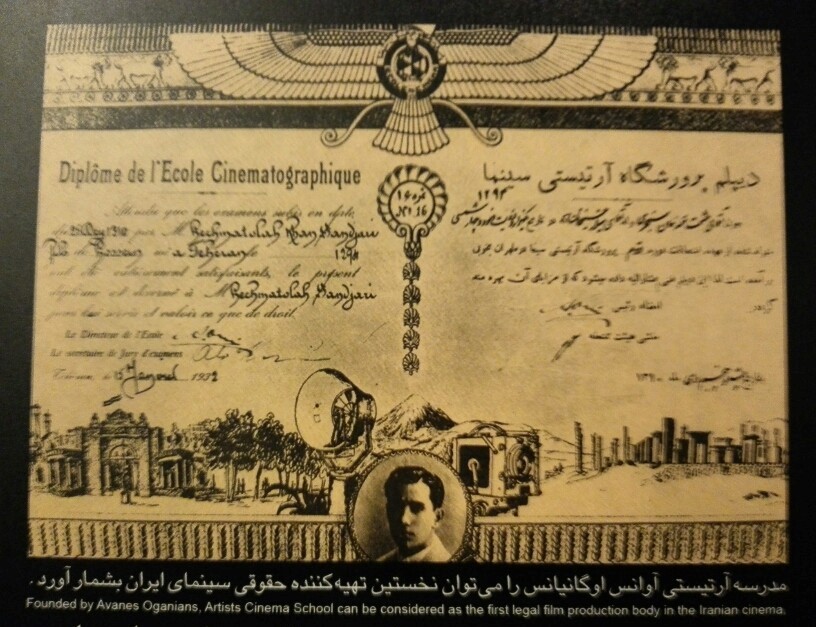
Figure 4: Diploma of Ohanian’s Artistic Cinema School.
On the other hand, Uhāniyān wrote in this letter that he had been assigned by the Iranian government to study cinema in Moscow; a claim for which he did not produce any evidence. The problem of the Acting School was solved after a month by changing the word “school” to “educational center” and Uhāniyān went on with his job.
Twelve people graduated from the first semester of the Acting School. Uhāniyān decided to make his first film with the help of those graduates. Before starting to shoot films, he founded named “Pers Film,” the first filmmaking company in Iran. “Pers” in the title was a form of “Persia,” the name given to Iran by other countries at the time.
Inspired by the films of two Danish comedians Harald Madsen and Carl Schenstrøm, who were well-known as Pat and Patachon, Uhāniyān wrote a scrip titled Ābī u Rābī (Ābī and Rābī) for a film in several acts, each with a comic or adventurous and action story.25Arbi Avanessian, theater and cinema director, said in an interview in 2002 (in Handes, the Armenian literary and artistic quarterly, no. 5) that Abi o Rabi was influenced by the Armenian director Hamo Beknazarian’s Shor and Shorshor in the first place, which was itself influenced by Pat and Patachon. Shor and Shorshor was made in 1926 and Avanessian believed that it taught Uhāniyān how to bring a story from the western world to the east and get inspired by it instead of copying it. These stories were theses written by the students of the Acting School. Uhāniyān had put them together and added just two new pieces. The title Ābī and Rābī was taken from the names of two students who were acting in the film: Muhammad Zarrābī and Ghulām-‛Alī Suhrābī. The last three letters of the name Zarrābī and the last four letters of the name Suhrābī made up the title Ābī and Rābī. Uhāniyān wrote comic stories for these two characters; for example, one of them was drinking water but the other one’s stomach was getting swollen, or one of them was run over by a heavy roller and got flattened and the other one entered the room and hit him on the head with a hammer and he got short but wide. The other acts featured other graduates of the school. The first act was about three homeless beggars who were dying of hunger and cold weather. The second act was a prison escape story, and the third act showed three thieves in action. The next two acts made a short comedy about the trial of an uneducated dentist, and the last act was composed of acrobatics and variety shows; For instance, the main actor would lift a 104-kilogram bar with one hand and hammered a nail with the other hand, he would tear up a copper tray with bare hands, he would break large cones of sugar with the strike of a finger, etc.
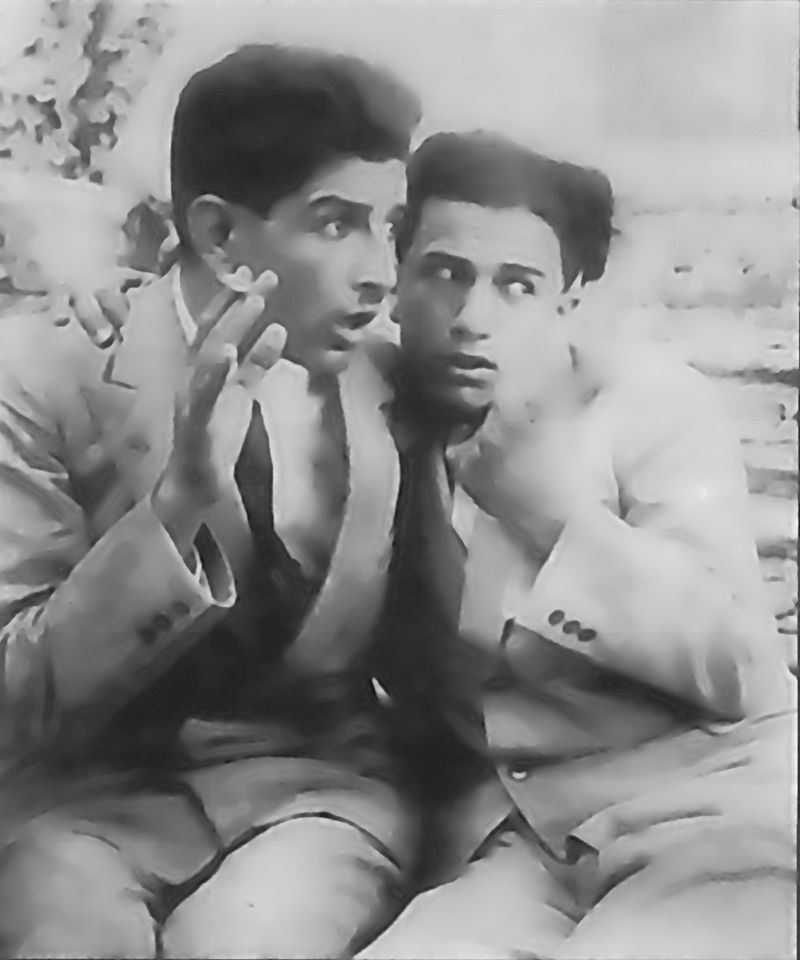
Figure 5: Muhammad Zarrābī and Ghulām-‛Alī Suhrābī in the film Ābī and Rābī, directed by Uvānis Uhānīyān, 1930.
The cinematographer of Ābī and Rābī was Khānbābā Mu‛tazidī who had worked previously at the Gaumont Studio in France. Mu‛tazidī and Uhāniyān owned twenty-five percent of the shares of the film, and Sākvālīdzah owned the other seventy-five percent. Shooting began in November 1930, although most of the negatives that reached Iran were decayed. In such circumstances, Uhāniyān showed his creativity by using positives instead of negatives, although parts of the film were of low quality because of different lighting. The film was ready for screening in December 1930.
Ābī and Rābī, the first feature film in Iranian cinema, was premiered on 2 January 1931 in Sīnimā Māyāk for journalists and government officials. The film was received warmly by journalists as most of them welcomed a feature film made in Iran by an Iranian cast and crew.26For example, Rizā Kamāl, the famous playwright, wrote using his penname, Shahrzād, in Iran Newspaper 4, January 1931: “It was good because it was Iranian. It was good because it led a group of our young fellow countrymen to an industrial and honorable and promising path, and because it can be a model for the other young people who think of no other way than office work for making their livings and do not bother to plow the ground for the fear of the exhaustion of sowing.” The only copy of Ābī and Rābī remained in the possession of Sākvālīdzah, the main investor of the film. This copy was burned in a fire accident in Sīnimā Māyāk in 1932. Today, there is nothing left of this film except for a few photos and the report of the stories of some of its acts.
Figure 6: Poster for the film Ābī and Rābī, directed by Uvānis Uhānīyān, 1930.
Nonetheless, after the success of Ābī and Rābī, Uhāniyān suddenly changed tracks. He founded an institute called Fidirāsiyun-i Bayn al-milalī-i Majāmi‛-i Tahqīqāt-i ‘Ilmī (The International Federation of Scientific Research Societies) in Tehran and announced that his aim was serving humankind by conducting research on science and art.27Umīd, Uvānis Ugāniyāns, 155. To become a member of the federation, one had to be a university graduate or have done valuable services and research in scientific fields. Uhāniyān selected famous literary and political figures as the vice deans of the Federation, and corresponded as its president with famous people such as Cecil B. DeMille, Rabindranath Tagore, and Adolph Zukor. He also granted honorary doctorates to each of them on behalf of the federation28Umīd, Uvānis Ugāniyāns, 173. In the letters that he sent to these people, he introduced himself as Professor Uvānis Uhāniyān/Ugāniyāns, but he never mentioned his field of study. In a short period of time, Uhāniyān wrote letters to Louis Lumière, Alexander Korda, Abel Gance, Frank Capra, Rouben Mamoulian, Vsevolod Pudovkin, and D. G. Phalke and announced to them that they had become honorary members of the International Federation of Scientific Research Societies, although none had made such a request.
In February 1931, Uhāniyān returned to cinema and advertised for the second term of his Acting School. Just like the first term, the advertisement invited both interested men and women to register at the school. To solve the problem of the religious ban on men teaching women, Uhāniyān hired a woman to manage the female section of the school: Fakhr al-Zamān Jabbār Vazīrī, who later acted in the film Shīrīn u Farhād (Shīrīn and Farhād) directed by ‛Abd al-Husayn Sipantā.29This talking film was shot in 1934 in Bombay and was an adaptation of the love story of Shīrīn and Farhād written by Vahshī Bāfqī, the Persian poet in the tenth century A.H. A year later, in 1931, the names of the graduates from the second term were published in ‘Ittilā‛āt newspaper and it turned out that there were no women among them.30‘Ittilā‛āt Newspaper, Year 7, no. 1702, May 21, 1932. Uhāniyān had announced the number of graduates to be thirty-three, while only the names of eighteen people were published in ‘Ittilā‛āt.
Figure 7: A portrait of Fakhr al-Zamān Jabbār Vazīrī.
In those days, most of the Islamic clerics in Iran had forbidden watching films and acting in them. They considered the screening of films and performing music and theater as “tools for spreading the forbidden and promulgating debauchery.” They had thus issued a decree of excommunication for anyone who watched films or acted in them. It was Shaykh Fazl-Allāh Nūrī who banned watching films in cinema for the first time in circa 1907.31Mas‛ūd Mihrābī, Tārīkh-i Sīnimā-yi Īrān az Āghāz tā Sāl-i 1357 (Tehran: Nazar Publications, 2016), 11-12. Since then, Muslim clerics have not had a positive attitude towards cinema. This attitude helped Uvānis Uhāniyān find the subject of his second film.
Hājī Āqā Āctur-i Sīnimā (Haji, the Cinema Actor), Uhāniyān’s second film, focuses on the issue of depicting religious men in cinema. The film is about a director who is looking for a new subject. One of his students called Parvīz tells him about an incident that happened to himself. Parvīz’s father-in-law works in the bazaar and is known as Hājī Āqā. Parvīz and his wife wish to be screen actors, but Hājī Āqā is against it. The director decides to make a film about Hājī and make him change his mind. With Parvīz’s help, he outlines a plan: Hājī’s servant is asked to steal his watch so that Hājī chases the thief, and the director follows him with his camera. At the end, they use a trick to make Hājī enter a movie theatre and he watches himself on the screen. At first, Hājī gets upset, but when the spectators find out he is present in the theater and clap for him, he is delighted and agrees that his daughter and son-in-law continue acting.
Figure 8: A still from the film Haji, the Cinema Actor, directed by Uvānis Uhānīyān, 1933.
To produce the film, Uhāniyān needed money and for the first time he put up all the shares of the film for sale. To raise the two-thousand-toman budget for the film, he divided this sum into forty shares of fifty tomans each and announced that anyone who wanted to do something good in cinema can buy a share and participate in the making of Haji, the Cinema Actor. He himself bought four shares and a police colonel named Maqāsidzādah-Furūzīn bought twelve shares. The entire budget was still not collected. Uhāniyān got creative again, and for the first time, he approached businesses and made them sponsor the film. A watch shop and a movie theater paid him to advertise for them, and he shot a part of the film for free at the newly-opened Café Pārs in Tehran.32Habīballāh Khān Murād, one of the film’s shareholders, played the role of Hājī Āqā.Habīballāh Murād (1906-1978) was one of the first actors and pioneering artists of Iranian cinema and the owner of Cinema Murād. In the 1950s, he appeared in Love Intoxication (1951), Mother (1952), Bīzhan and Manīzhah (1958) and Twins (1959). He owned Cinema Murād, too.
Selecting an actress for the leading role proved to be a problem. Uhāniyān intended to give this role to Fakhr al-Zamān Jabbār Vazīrī, but his close friends advised him against casting a Muslim woman in the film and warned him that it could spark harsh reactions from the hardliners and religious groups. As a result, he gave in and asked Āsīyā Qustāniyān, an Armenian actress who had formerly acted in a film in Egypt33Tahmāsb Sulhjū, “Bardāsht-i Avval,” Fārābī Quarterly 37 (Summer 2000): 151-172, quoted from 154. In Haji, the Cinema Actor, Uvānis Uhāniyān and Zimā, his nine-year-old daughter, also played short roles.
Figure 9: Āsīyā Qustānīyān in the film Haji, the Cinema Actor, directed by Uvānis Uhānīyān, 1933.
The cinematographer of this film was Paolo Potemkin, Khānbābā Mu‛tazidī’s assistant. The main problem in the production of the film, however, was the lack of a proper camera. The only camera that they had access to did not have an electric motor and someone needed to keep spinning the wheel on the side of the camera.
To avoid the constant spinning of the motor handle of the camera, Uhāniyān found an innovative solution. He asked a student, Kāzim Sayyār, from the Acting School who also worked as a tailor, to get him a sewing machine. He then attached the machine to the wheel of the camera to make it spin steadily and therefore solved the problem of the old camera.
But the budget shortage made the shooting of Haji, the Cinema Actor last for about two years. To provide the money, Uhāniyān turned to theater production, including a show that he called “live cinema.” On 12 September 1933, the ‘Ittilā‛āt published an ad for this show, announcing that Bachah-i Mafqūd (The Missing Child), directed by Uvānis Ugāniyāns, will be on stage for seven nights featuring forty-one artists of cinema and theater.34‘Ittilā‛āt Newspaper 1032, September 12, 1932.
Five months later, in February 1933, Haji, the Cinema Actor was ready for screening. The film premiered on 1 February 1933, for government officials and journalists at Cinema Royal.35‘Ittilā‛āt Newspaper, January 31, 1934. But the commentaries were mostly negative this time. The quality of the picture, which was either too dark or too bright, caused the most criticism.36Iran Newspaper 1341, February 5, 1934. The film was also a failure at the box office. Most historians believe that the screening of Dukhtar-i Lur (The Lur Girl), the first talking film in Iranian cinema, on 21 November 1933, was the main reason for the failure of Uhāniyān’s film since people were no longer pleased with silent movies.37Lur Girl, directed by Ardashīrkhān Īrānī, 1933, featuring ‛Abd al-Husayn Sipantā and Rūhangīz Sāmīnizhād. Uhāniyān’s second film was screened only thirteen days in Tehran. Most of the investors of the film complained to Uhāniyān for the low sales and even took the properties of the office of Pers Film Company as compensation. The only copy of the film was in the possession of Habīballāh Khān Murād, the lead actor and an investor of the film, and was not shown to anyone for years.
Uhāniyān was not disappointed by this failure. He was determined to work in cinema, and continued by developing the third term of his Acting School. But this term never took place. At the same time, in order to draw the attention of the Iranian officials to film production, he referred to the history of Iran in an article in the Iran newspaper and wrote that the best thing to do is to make films about the lives of poets and historical figures of the land, such as Firdawsī. The Firdawsī Millennial Celebrations were scheduled to be held in Tehran on those days.38Iran Newspaper, May 31, 1934. However, ‘Abd al-Husayn Sipantā, an Iranian in India, had already started making a film about Firdawsī’s life, and no one was willing to invest in Uhāniyān’s next film.39Firdawsī (1934), directed by ‘Abd al-Husayn Sipantā, Imperial Film Company of India.
For two years, Uhāniyān made several documentaries about the railway system and the Constitutional Revolution celebrations with the help of Khānbābā Mu‛tazidī and Paolo Potemkin. His family members reported that in this period, he staged a few plays, including an opera titled Parvānah (Butterfly).40Nīkūnazar, Ādam-i mā dar Bālīvūd, 82. although there are no records of the staging of this opera. It is likely that the report is only based on Uhāniyān’s words.
In 1938, Uhāniyān announced that he received an invitation from the Imperial Film Company in India to go there and make a film.41Jamāl Umīd, Tārīkh-i Sīnimā-yi Īrān 1279-1357 Sh. (Tehran: Rawzanah Publications, 1995), 53. First, he went to Ashgabat with his daughter to see his wife, Lydia. In addition to this meeting, Uhāniyān intended to start an acting school there,42Umīd, Tārīkh-i Sīnimā-yi Īrān, 53. but he was hindered by bureaucratic obstacles. Later, he claimed that he made a film called Gul va Īt Ulmāz in 1938 in Ashgabat, although, according to the archives of Turkman-Film, the Turkmenistan National Cinematheque, and the Russian Cinematheque, no such film has ever been made.
Uvānis Uhāniyān went to Calcutta, India, with his wife and daughter at the outbreak of World War II. Uhāniyān later claimed that he established an acting school in Calcutta.43Umīd, Tārīkh-i Sīnimā-yi Īrān, 53. He introduced himself as the president of the International Federation of Scientific Research Societies and granted honorary doctorates to Benoy Kumar Sarkar and Savitri Devi.44Benoy Kumar Sarkar had a Ph.D. in Economics but worked in different fields of social sciences. He was giving lectures at Calcutta University from 1925, focusing on extreme nationalism. Sarkar was trying to invite Hindu youths to fight against communists. Later, he became a proponent of the Nazis, argued that Adolph Hitler’s leading method was benevolent dictatorship, thus supporting the establishment of the Nazis in India. Savitri Devi’s original name was Maximiani Julia Portas. She had studied philosophy at the University of Lyon in France but was also engaged in political activities early on and was a member of Greek nationalist groups. She had become so interested in this group and their beliefs that she abandoned her French nationality and accepted Greek nationality. It was well-known that she had taken a trip to Palestine in her youth and upon her return, had become attracted to Nazi ideology. She was trying to make a connection between Hinduism and Nazism to attract young people to her thoughts and activities through her rhetoric. During the 1930s, Devi worked as an agent who gathered information about the English forces and gave them to the Germans. This aroused the English military’s suspicion as both figures were supporters of the Nazi ideology. The English officials assumed there was a connection between Uhāniyān and the supporters of Nazism.
Figure 10: Uvānis Uhānīyānhanians in India.
While sojourning in Calcutta, Uhāniyān took some classes in traditional medicine and claimed that he has received a medical license from the Calcutta Medicine School. Later, he said in an interview in Iran that he took some courses with Indian ascetics and mastered the properties of medicinal herbs.45‘Ittilā‛āt-i Haftigī, no. 831, 33.
But Uhāniyān wished to make a film in India and therefore went to Bombay alone. In order to draw the attention of Indian Parsis, he went to Sāzmān-i Līg-i Īrān (Iran League Organization) and presented diplomas and honorary doctorates to several members of the organization.46Iran League was one of the two organizations founded in 1922 by the Parsis of India. Its function was sending presents and financial aid to the Zoroastrians of Kerman and Yazd in Iran. Its founders were influential and wealthy Parsis living in Bombay, and the organization had an important role in building schools and hospitals in Iran. Uhāniyān made a speech at the degrees award ceremony and requested the Parsis of Bombay rescue cinema by investing in it and rivaling Hollywood.47Iran League Quarterly, October 1938. However, the Parsis of India demonstrated no interest in investing in a film by this director.
Figure 11: A poster showing Uhānīyān alongside Indian actors.
During his stay in Bombay, Uhāniyān used to introduce himself as the president of the Asian Film Academy. He also invented a device under the name Professor E. G. Uhāniyān. Called the “Uhāniyān System,” he claimed that the device made it possible to shoot a scene with twenty cameras and the sound could be synchronized in or outside the studio.48Umīd, Uvānis Ugāniyāns, 162-164.
In 1941, he was arrested and imprisoned in Bombay, India, for collaborating with the Nazis. The English authorities were suspicious of his relationship with ‘Abd al-Rahmān Sayf-Āzād, an Iranian journalist residing in Bombay, who was suspected of spying for the Nazis, and therefore arrested both Uhāniyān and Sayf-Āzād. Additionally, he was in trouble because of the honorary degrees he had presented to Sarkar and Savitri Devi. The English authorities kept him in prison for several months and released him after they realized that he was innocent. He later claimed that he had collaborated with the English authorities and invented a weapon that was the main factor in their victory over General Rommel in Africa. He said that to help the English in their war against the Nazis, he had designed a parachute to which gasoline could be injected through a pipe and explode when hitting the ground or soldiers.49‘Ittilā‛āt-i Haftigī, no. 831, 32.
Uhāniyān returned to Iran in 1951. This time, he was alone and had adopted the new name Rizā Muzhdah, claiming that he had converted to Islam. He was therefore known to different groups with different names Ugāniyāns, Uhāniyān, and Rizā Muzhdah. He opened a beauty salon in Tehran under the name Rizā Muzhdah and started treating baldness. Uhāniyān invented a medicine called “Bioherin,” which supposedly cured baldness. He also claimed to have made two other medicines, a pill called “Stomatin” which was meant for all types of gastrointestinal diseases, from stomachache to intestinal cancer, vomiting, constipation, and bloating. His other medicine was called “Romat,” which he claimed healed rheumatic fever, muscular rheumatism, arthritis, and even acne. But in 1953, several patients who had not been cured filed complaints against him at the Ministry of Health, and his license was revoked. From that time, Uhāniyān continued his work in secret and without a license.
But the thought of cinema never left him alone. In 1954, Uhāniyān announced that he was going to make a film called Savār-i Sifīd (White Rider) and published casting announcements in cinematic publications.50Sitārah-i Sīnimā (20 October 1954): 11. In order to show his determination in making this film, he even started shooting riding scenes in a desert without the main actors. The shooting stopped due to the uncertainty of the plot, the failed search for the main actor, and high production expenses. After that experience, Uhāniyān started moving away from cinema, although in 1960 he applied for financial aid from Iran’s Bureau of Radio and Advertisement to make a film called Rizā Shāh-i Kabīr (Reza Shah the Great).51Iran National Cinematheque Newsletter, no. 11-12, 192.
In the seven years after his attempt at making The White Rider, He spent most of his time treating patients. In 1957, he said in an interview that he was busy inventing various things. He claimed to have made a vertical take-off airplane called Parastū (swallow), and to have designed a bomber capable of flying nonstop for twenty-five hours at a speed of 1,500 kilometers per hour, with the ability to land on both land and sea. He also claimed to have designed a flying bus named “Autohydroplan” which would transport a large number of passengers, and stated that he was thinking about inventing flying saucers that could transport passengers at high speed.52‘Ittilā‛āt Weekly, no. 831, 33. These claims were met with different reactions. In the press, some people made fun of him and some people, including the guild of garage owners in Tehran, protested the invention of passenger flying machines as they argued it would lead to their unemployment. None of the alleged inventions came to fruition.
Until 1961, Uhāniyān was secretly practicing medicine and was engaged with his inventions. But on 23 June 1961, the Tehran Tax Office noticed that Uvānis Uhāniyān had not paid his taxes for any of his inventions, and they sent him a bill for sixty thousand tomans. Uhāniyān suffered a stroke after seeing the tax bill and died in the hospital a while later.53Umīd, Tārīkh-i Sīnimā-yi Īrān. 54.
Stories about Uhāniyān’s death are also inconsistent. Ārād, Uhāniyān’s first child from his second wife, believed that on the night of his death, his father had gone to the court to negotiate the production of his Parastū airplane, and when he returned from the court, he told him that he had been poisoned and died due to toxification.54Nīkūnazar, Ādam-i mā dar Bālīvūd, 142. However, Ashraf Karīmzādah, Uhāniyān’s second wife, believed that he had had a fight with his partner at his medical office, and had suffered the stroke as a consequence of stress.55The lack of clarity about the cause of Uhāniyān’s death led to increasing speculations of murder.Olga Kazak, “The Father of Iranian Cinema,” Armenian Cinema Museum, 2019, accessed 19/11/2024, www.armmuseum.ru/news-blog/ovanesiranfimfounder.
The inconsistent stories about Uhāniyān’s death resemble all the other aspects of his life. He lived and worked for almost sixty years under the names Uhāniyān, Ugāniyāns, and Rizā Muzhdah, and experimented with various jobs, including teaching, film and theatre directing, practicing medicine, making medications, and inventing army equipment. Ultimately, however, he is remembered in relation to cinema, as the founder of the first cinema school and the first filmmaking company, and the director of the first feature film in Iran.
Introduction
Many critics believe that there is a poetic dimension to Makhmalbāf’s cinema, especially in the third period of his works, known with films such as Time of Love, The Nights of Zāyandah-Rūd, and Nūn-u-Guldūn (Bread and Vase, more commonly known in English as A Moment of Innocence, 1996).1Muhsin Makhmalbāf, Gung-i khvāb dīdah [The Dumb Man’s Dream: Collected Articles, Interviews and Critiques from 1981 to 1991] (Nay Publication, 1996). This poeticism is manifested in both the content and the form of Makhmalbāf’s films. One can argue that, in the domain of content, characteristics such as the intertextual relations between his films with mythological and psychological texts, the tendency toward symbolism, the movement along the boundary of reality and unreality, and the significance of philosophical conflicts are the characteristics that reinforce the poetic dimension of Makhmalbāf’s films. In terms of form, characteristics such as the deliberate and symbolic use of colors, the significance of objects, resistance against continuity editing, and the least possible use of dialogue make his films imaginative and innovative.
Figure 1 (Left): Poster of the film Time of Love (1991), Muhsin Makhmalbāf.
Figure 2 (Right): Poster of the film Sex and Philosophy (2005), Muhsin Makhmalbāf.
In the present article, we have tried to uncover the poetic aspects of Makhmalbāf’s films with a look at his two romantic films, Time of Love and Sex and Philosophy. To present a general picture of poeticism in Makhmalbāf’s films, we first discuss the themes, visual and symbolic characteristics, and dramatic aspects of Time of Love. Then in Sex and Philosophy, we analyze the themes, the intertextual relationship between the elements of the film with mythological texts, and the character symbolism. In both films, love is a means for posing more essential and ontological questions. Time of Love covers subjects such as judgement, customary and civil law, possessiveness in romantic relationships, and violence. In Sex and Philosophy, love is an excuse for the modern human’s Sisyphean search for meaning. In both films, Makhmalbāf is only trying to pose questions to his audiences and refrains from giving definite answers. In these films, love is a means for Makhmalbāf to present his ideas about human beings and their fundamental concerns, to discard the dominant discourses around these concepts, and to overlay certainties with skepticism.
Time of Love
Time of Love reviews a love triangle three times. In the first and the second times, it changes the situations of the characters and gets the same results. Rather than carrying messages, these changes are meant to create questions in the minds of the audience: is the situation dominating the individual or is it vice versa? If the situation prevails, what is the role of judgement? And finally, are human beings able to dominate the environment? To pose these questions, Muhsin Makhmalbāf uses the context of love and by doing so, he also defamiliarizes love and possessive readings of it.
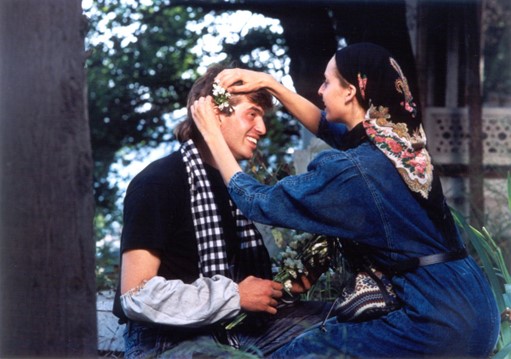
Figure 3: A still from the film, Guzal with her lover, Time of Love (1991), Muhsin Makhmalbāf.
The triangle of the woman, her lover, and her husband is recreated three times and marked with the passing of a train in front of the woman’s house. In the first situation, the woman’s husband, after becoming aware of his wife’s secret relationship, murders his rival, then surrenders himself to the court and is sentenced to death. In this situation, the husband finds his act legitimate as he has defended his nāmūs (sexual honor). In the second situation, in which the actors playing the roles of the lover and the husband have replaced one another, the husband is murdered by the lover who is later sentenced to death. In this situation, too, the lover finds his act legitimate for defending his love. In the third situation, which is an idealistic one, the husband, after finding out about his wife’s affair with another man, divorces his wife, attends their wedding and, finally, gives his taxi to them as a wedding gift and wishes them happiness. This situation portrays the individual’s will and his rebellion against traditional conventions.
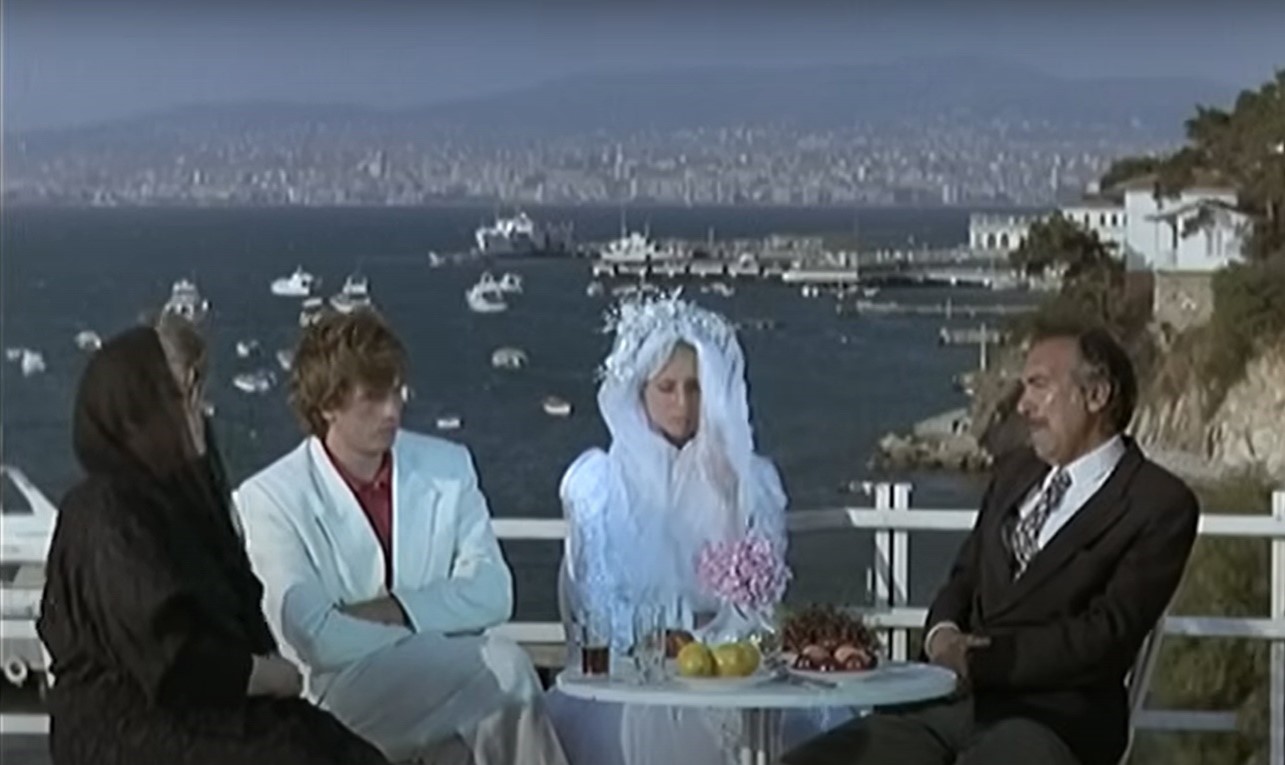
Figure 4: A still from the film, the third situation: Guzal’s husband attends the wedding, Time of Love (1991), Muhsin Makhmalbāf. Accessed via: https://www.youtube.com/watch?app=desktop&v=G0jrI_k1RaQ (1:02:31).
There is no definite ending even in the third ideal situation. In the last moment, the woman says that she misses her former husband. This suspense and uncertainty make the audience ask whether it is possible to reach a definite conclusion from these three situations. In the last scene, the woman is standing in front of a moving train that conventionally marks movement between different situations, scenarios, and points of view. This scene creates an expectation for repetition in the plot and, therefore, emphasizes the uncertainty and impossibility of a final judgement. Nevertheless, what is certain in this film is its stand against a possessive notion of love. The writer/director has employed a character to represent this notion: an old man who roams a cemetery with a cage and a tape recorder. In all three situations, it is this old man who tells the husband that his wife is having an affair. The audience never learns about the old man’s background but, in various situations, finds him trying to own and imprison beauty and keep whatever he loves to himself. For instance, he records the singing of birds on a cassette tape, keeps canaries in a cage and cats within the enclosed spaces of his house. He is also the one who admonishes the husband to control his wife and to keep her in his own possession. We encounter the old man for the first time in the cemetery while he is putting a cage in front of a gravestone that has the shape of a book. The associations between being a man, being old, the cemetery, the stone book and the cage evoke the ideas of oldness, patriarchy, possession, tradition, and law. From this perspective, when in the last scene we see the old man walking on the railway tracks into the darkness of the night, it may be safe to assume that the director is reminding us of the progression of history, the rejection of past certainties, and the need for change. This change is also reflected in the old man’s last words, in which he confesses that he, too, has been in love with the woman and the canaries and the cages are all excuses.
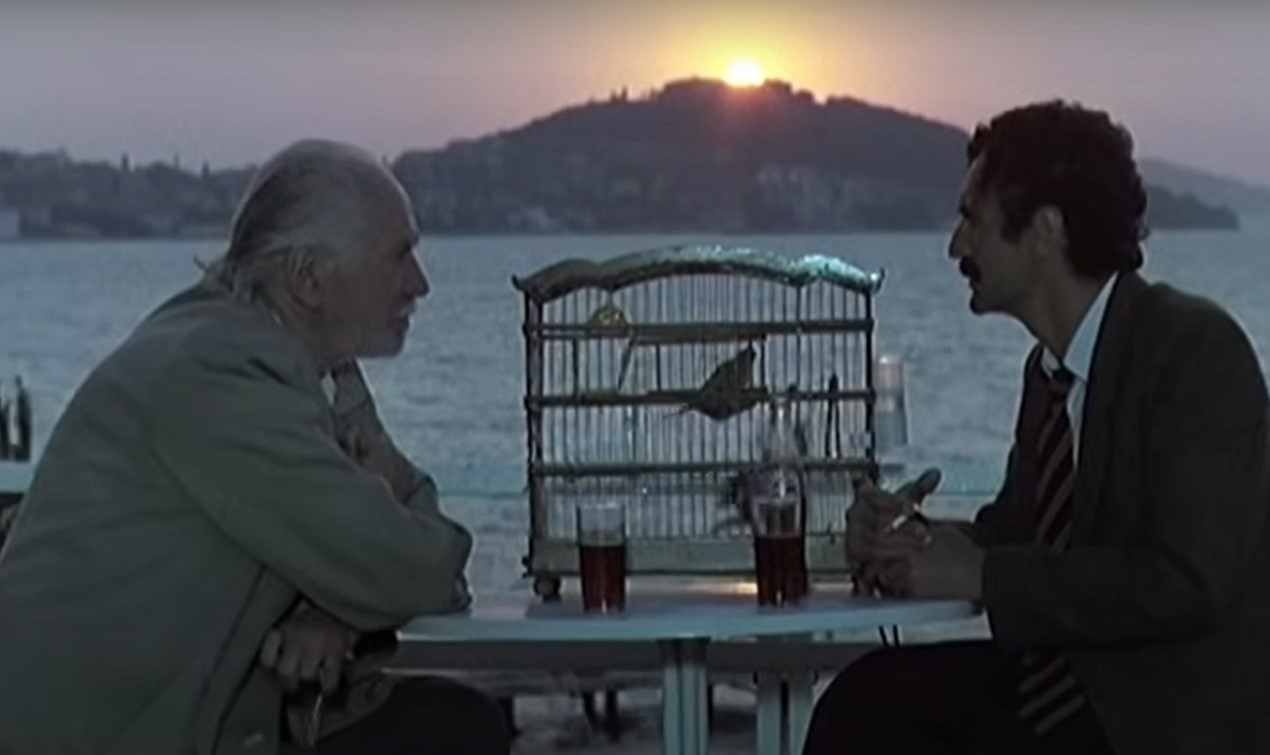
Figure 5: A still from the film, an old man with a cage, talking to Guzal’s husband, Time of Love (1991), Muhsin Makhmalbāf. Accessed via: https://www.youtube.com/watch?app=desktop&v=G0jrI_k1RaQ (1:04:44).
It seems that the director forgives the old man in the last scene because the old man too is a lover, but does not know any other way to show his love. He understands love as possession, infected with jealousy. We see in the third situation that, when the husband tells him that he has left his wife so she could follow her passion, the old man takes his hearing aid out of his ears so he would not hear, as change is difficult for him. This forgiveness, however, does not mean that there is no need for change. The train and the ship as well as movements in the carriage and the automobile can be references to the need for motion and the passage of time, a reminder for change and the idea that possessive love has no place in the new world. By putting the audience in three situations, Muhsin Makhmalbāf manages to rebel against the possessive form of love, the certainty in judgement, and the inflexible readings of reality.
Narrative in Time of Love
Time of Love is not committed to a linear narrative or a classic plot. This is indicated by the absence of a single hero, the lack of coherent events that build toward a climax, the unavailability of information about the characters’ pasts, the lack of a resolution or a definite ending, and finally, by the cyclical and repeating form of the film. As Hūshang Hisāmī, journalist, critic, and film and theater director, notes:
In a constant shift between reality and unreality, the film resists turning into the cinematic representation of a dramatic plot in its classic sense. A dramatic plot is based on exigency, whether internal or external, in scenes and characters, and each scene is born from another scene. The most significant aspect of Time of Love is that it does not have a coherent dramatic structure.2Makhmalbāf, Gung-i khvāb dīdah.
In popular and classic storytelling, it is common practice to indulge the audience in the illusion of reality and direct their attention to the flow of the narrative by evoking their sympathy with one of the characters, generally the protagonist. In the narrative of this film, however, the situations are more significant than the plot. The film refrains from creating a coherent and straightforward narrative; for example, it does not show us how the shoeshiner and the woman fall in love or how the old man and the husband are related. It seems that Makhmalbāf has used this narrative style to remind the audience of their role as spectators. Instead of delivering a message, he invites the audience to contemplation and active engagement in a dialectic relationship with the film, instead of a one-way relationship.
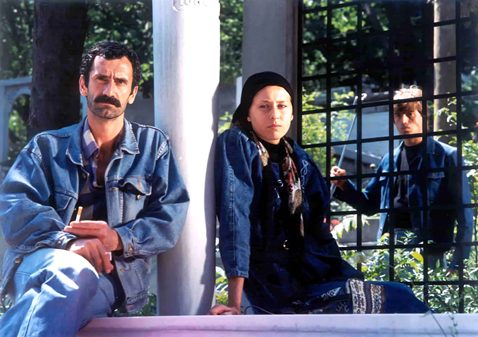
Figure 6: A still from the film, Time of Love (1991), Muhsin Makhmalbāf.
This type of narrative (distancing effect narrative) is used by avant-garde filmmakers and writers to remind their audiences that the film is not a reality and should not stop them from critical thinking. This narrative style, by disrupting a coherent story based on a rigorous causal relationship, constantly reminds the audiences that they are watching an unreal work. The use of jumping cuts, handheld shoots even on a carriage, and unusual frames accentuate this deliberate style of representation. This type of composition in cinema emphasizes the unreality of the film, in contrast to continuous editing, which aims at keeping the viewers away from the process of making the film in order to evoke their empathy and acceptance of verisimilitude. Using this style of narrative reveals that the philosophical and intellectual situation is preferred over the story by the filmmaker. Nevertheless, this is a risky style because the audience may not be able to relate to the film, which would then relegate it to the category of artistic and intellectual films. As Jonas Mekas suggests, more than 90 percent of people do not like films, they like stories.3Peter Ward, Picture Composition for Film and Television (Focal Press, 2003), 19.
Despite the emphasis on the human and the complexities of human existence, the characters remain as types and do show complex, paradoxical dimensions, except in the third ideal situation, in which the change is too extreme and black and white. The husband and his choices are typical of a prejudiced traditional man; the woman remains a victim of the situations; the woman’s mother is a simple-minded ignorant woman; the shoeshiner is portrayed as a bold and romantic lover from a nineteenth-century novel; and the old man represents absolute evil and the shadow of oppression over the lover and the beloved. All these characters remain either black or white, and their choices and behaviors are flat and predictable. Only in the third situation, when the woman starts to feel complex romantic feelings for both her husband and her lover, her character bears some resemblance to the contemporary sophisticated human. The film’s disregard for paradoxical emotions and intricate human behavior is what makes the third situation ultimately unrealizable and rather cliché.
Time of Love: The Boundary between Reality and Unreality
Conventionally, a writer of a narrative work allows the audience, at the beginning, to know what type of work they are about to encounter. Amanda Boulter argues in Writing Fiction: Creative and Critical Approaches that the beginning of a narrative work is responsible for determining the type of story from the perspectives of genre, tone, style and language.4Amanda Boulter, Writing Fiction: Creative and Critical Approaches (Bloomsbury Publishing, 2007), 119. Centuries of encounters with narratives and almost a century and half of encounters with cinematic and visual narratives have created a set of implicit agreements between the audience and the writer/director. Disregarding these agreements, whether in their visual forms or in storytelling, could create a sense of frustration in the audience. Peter Ward believes that using alternative techniques in cinema
challenges the ‘realism’ of Hollywood continuity editing and aims for uncertainty, ambiguity, and unresolved narrative. This type of randomness and irrationality may cause an audience conditioned by the language of standard film making conventions to be confused and unresponsive. The film language is simply not one to which they are accustomed.5Ward, Picture Composition, 19.
Therefore, it seems necessary for the writer/director to share with their audience in the first steps the principles of the world they have created. One of the most important elements that should be revealed in the introductory phase is the commitment of the work to reality or its verisimilitude. The audience prepares itself to perceive the type of work it is encountering, whether fantasy, surrealism, realism, black realism, or magical realism. After the audience accepts the genre and the style of work, it could get disappointed or even feel deceived if the rules are broken.
In Time of Love the boundaries between reality/unreality and symbolism/realism are not clearly defined. In some parts of the film, the filmmaker is so committed to the real world that there is no music unless there is a singer or an instrument player in the plot. This commitment to realism signals to the viewers that they are watching a film in which even the addition of music is not allowed by its director. The audience, then, is bound to feel confused when it encounters the scene in which the blond man takes a dead fish from a frying pan and throws it in the sea and the fish becomes alive, as if love has revived it.

Figure 7: A still from the film, the blond man takes a dead fish from a frying pan and throws it into the sea and the fish becomes alive, Time of Love (1991), Muhsin Makhmalbāf. Accessed via: https://www.youtube.com/watch?app=desktop&v=G0jrI_k1RaQ (00:18:59).
Nor can the audience accept the unification of the old man and the husband at the end of the film because it has seen the old man in the real world having a real life. The old man has a body and a house. He follows people and is limited to time and space, because when his shoes are stolen, he cannot continue following the lover and the beloved. The old man, therefore, is not an abstract concept appearing in critical moments and watching from a distance and going away for the audience to think of him as a concept that has been actualized. Therefore, when the film presents a new reading of his existence and connects him with the shadow of the husband, it violates its own rules.
The filmmaker is much more committed to reality in the first two scenarios than in the last scenario. The first two scenarios present earthly events with consequences that go as far as the law and society. Therefore, the film, rather than being a subjective and internal narrative of the lover and the beloved, is focused on the moral and social situations of its characters. The philosophical structure of the film is based on verisimilitude since the film has a social and, in a sense, political philosophy, not a poetic or imaginative philosophy. The audience follows the events to find answers for worldly events. Nevertheless, the film changes tracks in the third scenario and moves away from the social reality toward an ideal reality. This change is so prevailing that it makes the judge in the third scenario confess, “none of us are real characters, you know. No one believes us.” The oscillation between the real and the unreal world can be frustrating to the audience, however, it can also be argued that the filmmaker has used this oscillation intentionally to make a point. Hūshang Hisāmī writes in his analysis, “in Time of Love, Makhmalbāf tries to show the ugly and the beautiful sides of love in both its real and mythological aspects according to an accurate understanding of the oscillation between reality and unreality.”6Makhmalbāf, Gung-i khvāb dīdah.
Characteristics of Framing and Composition in Time of Love
In Time of Love, Makhmalbāf makes use of appropriate cinematography techniques to invoke various feelings. For instance, the scenes that are meant to evoke domination or threat are shot with over-the-shoulder techniques. Two examples are the scene in the cemetery when the black-haired man and Guzal are making love and the old man enters from the left corner of the picture, and in the second and the third scenarios, when the husband enters the house after he has found out about Guzal’s secret relationship. In the latter scene, Guzal is sitting by the window when her husband enters, and the threat that she feels from her husband is shown with an over-the-shoulder shot. In the third scenario, it is exactly in this scene and after evoking this threat and domination that the black-haired man pulls out his belt and attacks Guzal.
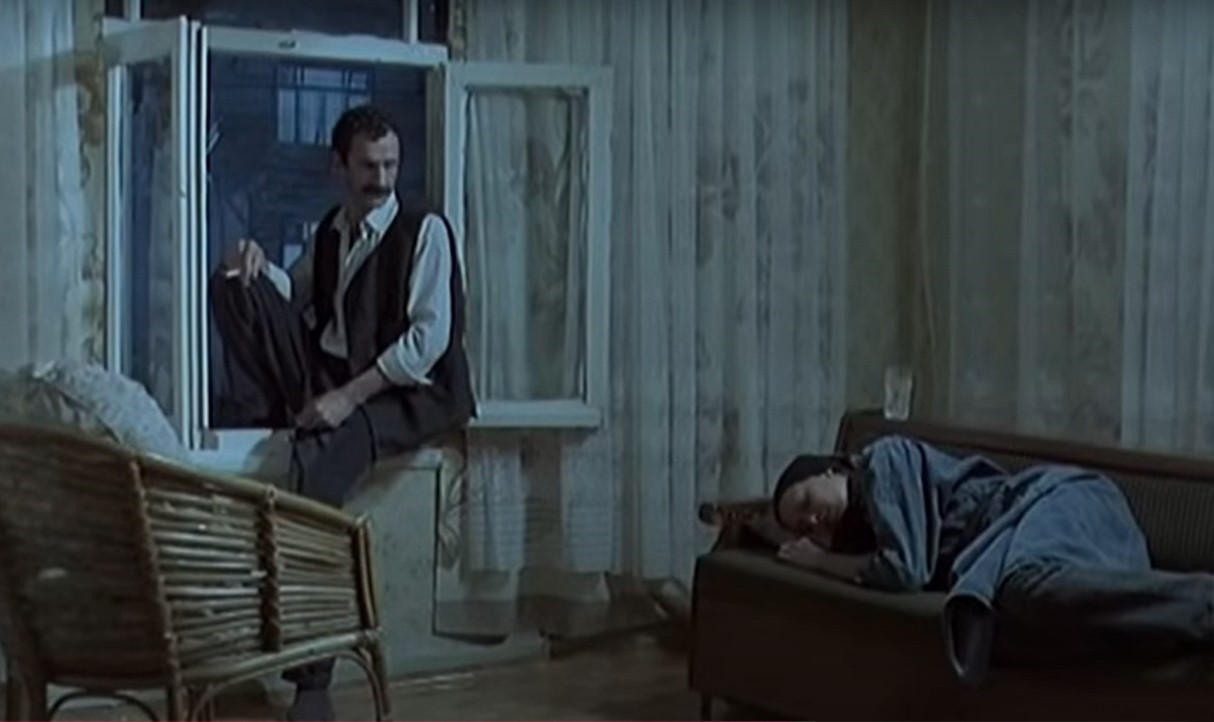
Figure 8: A still from the film, the black-haired man pulls out his belt and attacks Guzal, Time of Love (1991), Muhsin Makhmalbāf. Accessed via: https://www.youtube.com/watch?app=desktop&v=G0jrI_k1RaQ (00:53:34).
Additionally, Makhmalbāf manages to create various emotions for an event by changing the angle of the camera, which helps the audience understand the event from different viewpoints. For example, the execution of the black-haired man in the forest is once shot from a high angle, which offers an external perspective on an execution that is void of any type of heroism. The same scene in another scenario is shot from a low angle to represent a sense of courage and bravery in the black-haired man, as though to reveal his internal feelings about being a martyr of love. This contrast in the angle of the camera is also used in a scene in the first scenario, where Guzal, after taking drugs (most likely with the aim of committing suicide) gets in a carriage in which a group of children are playing music. In this scene, the children are shown from a low angle from Guzal’s perspective, which accentuates her low and fragile status, while she is shown in this scene from a high angle. The camera is also placed on the carriage without vibration reduction. The shaking transfers to the audience Guzal’s feelings of imbalance, confusion, and suspense.
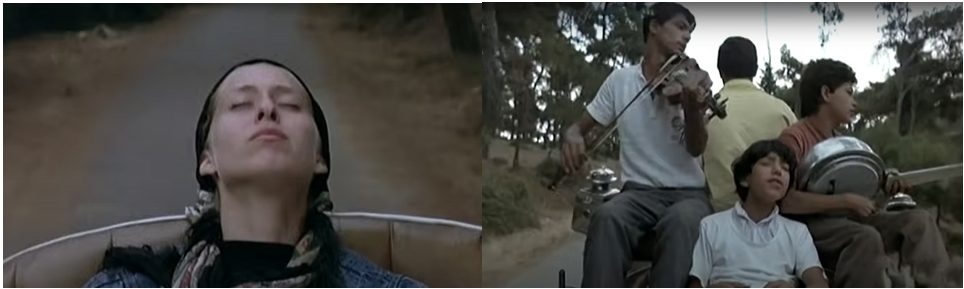
Figure 9 (Left): A still from the film, Guzal, after taking drugs (likely in a suicide attempt), sits in a carriage where children are playing music, Time of Love (1991), Muhsin Makhmalbāf. Accessed via: https://www.youtube.com/watch?app=desktop&v=G0jrI_k1RaQ (00:27:29).
Figure 10 (Right): A still from the film, Children playing music, Time of Love (1991), Muhsin Makhmalbāf. Accessed via: https://www.youtube.com/watch?app=desktop&v=G0jrI_k1RaQ (00:27:06).
In addition, Makhmalbāf has made ample use of change in shot sizes to show a specific subject from different dimensions and to give the audience the right to choose. In many scenes, we see one situation several times in long shot and again as close-up. This change in the shot size can be regarded as a means for the audience to have both an external and an internal look at the subject, i.e. from both perspectives of the characters and the external viewer.
Sex and Philosophy
Figure 11: A still from the film Sex and Philosophy (2005), Muhsin Makhmalbāf. Accessed via: https://www.youtube.com/watch?app=desktop&v=xuSOc4aaalo (00:23:39).
Sex and Philosophy is the story of a forty-year-old man who decides to revolt against himself. On his fortieth birthday, he invites his four lovers to a dance hall where he teaches dancing and confesses to them that he has been in a romantic relationship with all of them at the same time. The four women, Maryam, Farzānah, Tamīnah and Malāhat, each have their own color, dance, and symbolism (discussed further). Although it can be assumed from the title and the synopsis that Sex and Philosophy is a romantic film, it is in fact a film about the awareness of death. Love/separation, presence/absence, and birth/death are so intermingled in this film that the presence of one necessitates the presence of the other. It seems that the protagonist of Sex and Philosophy is concerned with lack of love rather than love itself. The film, then, is a journey of the hero from his denial of death and his loneliness to his acceptance of the two. Thoughts of death start with the first frame of the film, where forty candles are lit on the dashboard of the protagonist’s car as he is looking for two strolling musicians who remind him of his parents. During this search, he calls Maryam and asks her to come to the dance hall. The candles are put out and melted during this movement while he is trying to keep them lit.
The film reveals a poetic and imaginative atmosphere from the first scene. The metaphorically lit candles, the movement of the automobile, the protagonist’s attempt to keep the candles burning, and his search for people who revive the memory of his parents indicate an unstoppable instability. Time passes as the automobile moves; decay happens as the candles are put out and melt; and people look for shelter as the protagonist gives a ride to a strolling musician.

Figure 12: A still from the film, a bunch of burning candles inside the Jān’s car, Sex and Philosophy (2005), Muhsin Makhmalbāf. Accessed via: https://www.youtube.com/watch?app=desktop&v=xuSOc4aaalo (00:02:56).
In this film, love is like a shelter in which the protagonist takes refuge from this movement and decay. In each of his love experiences, weakness, decay, and death are standing in the dark and staring at him. In his first love experience, when the protagonist feels suffocated on the airplane and Maryam, the flight attendant, puts the oxygen mask on his mouth, he puts his hand on Maryam’s hand and says, “Take the air from me but not your smile!” In his second experience, he falls in love with Farzānah exactly when his poet friend tells him, “Life is too short. You should not be ashamed of keeping it.” The third time, he is lying on the hospital bed and falls in love with the doctor who has come to treat him. In the fourth experience, we do not see how the protagonist has fallen in love with Malāhat, but we see her tell him in another scene, “You taught me that love is forgetting the sufferings of existence.” It seems that in all four situations, love starts at a point when existence is in danger.

Figure 13: A still from the film, when Jān feels suffocated on the airplane and Maryam, the flight attendant, puts the oxygen mask on his mouth, he puts his hand on Maryam’s hand and says, “Take the air from me but not your smile!”, Sex and Philosophy (2005), Muhsin Makhmalbāf. Accessed via: https://www.youtube.com/watch?app=desktop&v=xuSOc4aaalo (00:26:24).
There are other elements in the film that constantly remind us of the movement toward decay and the protagonist’s attempt to regain the lost time. One of the most significant visual elements is autumn. Throughout the film, the dry leaves not only help create a homogenous atmosphere but also remind us of the last season of life, “the Fall” of man, and decay. There are no images of spring in the film, even in flashbacks, as though the film’s world is entirely a timeless autumn. We see only one green tree throughout the film in a scene in which the protagonist and Maryam are talking about love and the short life span of butterflies. However, even in that scene, when the camera tilts down, we see the ground covered with yellow leaves among which a chronometer is counting the passing of time. This downward tilt, the dry leaves and the chronometer can also be a reminder of “the Fall” of man.
Chronometer is another element that accentuates the awareness of death in the film. The protagonist has a chronometer with which he registers his happy and fruitful moments. The constant presence of the chronometer emphasizes the passage of time and shows the protagonist’s attempts to freeze time and save it. That, however, is not his only attempt to preserve things that cannot be preserved. He not only keeps time in his chronometer and lights the dead candles again but also carves the picture of everyone with whom he falls in love on dried tree trunks. There is an emphasis in this act: taking refuge in love against death, which is represented by the dry tree in the picture.

Figure 14: A still from the film Sex and Philosophy (2005), Muhsin Makhmalbāf. Accessed via: https://www.youtube.com/watch?app=desktop&v=xuSOc4aaalo (00:43:59).
Scrutinizing Jān’s Love: The Mother Complex in Dionysian Men
Somewhere in Sex and Philosophy, Maryam asks Jān: “Is this love? With four people at the same time?” And Jān answers, “This is a quest. With each of you, I found a part of my own heart.”
Figure 15: A still from the film, When Maryam asks Jān: “Is this love? With four people at the same time?” And Jān answers, “This is a quest. With each of you, I found a part of my own heart.” Sex and Philosophy (2005), Muhsin Makhmalbāf. Accessed via: https://www.youtube.com/watch?app=desktop&v=xuSOc4aaalo (00:18:32).
Maryam’s question might be the question of any spectator of the film, since Jān’s romantic passion and poetic behavior with each of his lovers on the one hand, and his unfaithfulness and lack of commitment to them on the other hand, beg the question whether he is a real lover or just a pleasure seeker pretending to be a lover. To answer this question, we can refer to the theory of “love as story” by the psychologist Robert Sternberg in his book, Love Is a Story: A New Theory of Relationships (1998). Sternberg, R. J. (1998). Love is a story: A new theory of relationships. Oxford University Press. Sternberg identifies love as a cultural phenomenon transferred by memes, rather than an instinctive phenomenon passed down by genes.7Robert Sternberg, “A triangular theory of love,” Psychological Review 93, no. 2 (1986): 119–135. We learn how to love through exposure to stories, romantic songs, and romantic movies that are aligned with our identities. Therefore, in order to understand Jān’s love style, we have to identify the Dionysian “identity script” and its psychological complexes. In psychoanalytic texts, especially in the Jungian and Bolenian approaches, the characters of Greek mythology are used to categorize personality types. When a person repeats characteristics which have been associated with one of the Greek gods or other mythological figures, that person is identified with the name of that god; for example, men who are attracted to industrial works and craftmanship are called Hephaestus men, since Hephaestus is the god of craftsmanship in Greek mythology. Likewise, Dionysian men are those who have a strong tendency for mysticism, ecstasy, love, and poetry, since Dionysius is the god of wine, ecstasy and love. Dionysius, also called Bacchus, has intertextual relations in many of his characteristics with Jesus Christ, such as being born from a mortal mother and having a godlike father and sharing the significance of wine in the Lord’s Supper. Dionysius is the son of Zeus and Semele, daughter of Cadmus and Harmonia, and is therefore from the second generation of Olympian gods, like Hermes, Apollo and Artemis.8Pierre Grimal, The Dictionary of Classical Mythology (Blackwell, 1987), 128.
In Greek mythology, Semele, pregnant with Dionysius, is one of the mortal beloveds of Zeus. Hera, Zeus’s wife, tricks her into asking Zeus to appear to her the same way he appears to Hera. When Zeus appears to Semele with his godly image, she as the mortal being is not able to withstand the grandeur of Zeus and collapses on the ground and dies. Zeus immediately takes Dionysius out of Semele’s body and stiches the fetus to his own foot so that Dionysius would be born from his father’s foot in due time. This is why the child is called Dionysius which means “born again.” Although he is Zeus’s son, Dionysius leaves Greece for a long time and travels on earth to be safe from Hera’s wrath. When at last he is accepted as one of the gods and asked to go to Mount Olympus, he rejects the invitation because he is searching the world of the dead to find his mother, Semele, to take her with him to Olympus. Dionysius is always looking for a mother he has never had, therefore, the mother complex is common among the Dionysian men. These men seek in love a mother who has a high position and sanctity, and by finding her, they can distance themselves from this world and its sufferings and attain peace in the realm of gods.
In Sex and Philosophy, it is repeatedly emphasized that Jān is a Dionysian type of man. Poetry, wine, love, dance and ecstasy are all Dionysian motifs which appear everywhere in the film. Jān’s quest is for a return to maternal security, which is reflected in his very first search, i.e. looking for a couple who remind him of his parents. The search for a mother, the ethereal love, and the separation from one’s mother can be observed in his first love experience. The beloved is called Maryam, a name which is associated with the mother of another Dionysian prophet, Jesus Christ. Love happens on an airplane in the sky, reminiscent of ethereal love. In the first encounter, Jān speaks of his mother, “When I was a child, my mother taught me not to accept two things: first, a cold look; second, a cold coffee.”

Figure 16: A still from the film, Maryam brings coffee for Jān. Sex and Philosophy (2005), Muhsin Makhmalbāf. Accessed via: https://www.youtube.com/watch?app=desktop&v=xuSOc4aaalo (00:24:42).
Also, a significant dialogue is exchanged between Maryam and Jān in the dance hall which emphasizes the motherly position of Maryam. Jān says, “You said the flight takes an hour and the passengers are served with cold and hot drinks.” And Maryam responds, “I didn’t say that. It was a recorded message.” In this dialogue, Maryam is pictured in Jān’s mind as a mother who serves. What she serves is a drink, symbolic of the milk that the baby receives from the mother. But Maryam awakens him from the dream of this fake security by reminding him it was not her but a recorded message that made that statement. Where does this recorded voice come from in the symbolic world of the film? Is it a voice deep within the character or the voice that has created life in the beginning of the world? Maryam remains an ethereal love, just like the Holy Virgin, and considers physicality in love as possession.
Like Dionysius, Jān continues his quest for a mythological love but cannot find what he has lost because love for Dionysius has such a high position that cannot be found on earth. He constantly reminds us that his relationships cannot be called love because they are based on ordinary events and causal relationships, “Maryam! All loves are the result of a few mundane events. If I didn’t fly on that plane, or if you weren’t a flight attendant on that plane, this love would have never happened at all and today, two other people were separating from one another. Wait. Listen. I was looking for an earthly love in the sky. But your love stayed heavenly even on earth.”
Character Symbolism in Sex and Philosophy
One of the important points in Sex and Philosophy is that the filmmaker makes constant references to texts outside the film. First, we can focus on the reference to the four elements (air, earth, water, and fire) and their manifestation in the four lovers.
As discussed earlier, Maryam is associated with air, wind, and the sky. Her love is heavenly and ethereal, as signified by her name, which is reminiscent of the Holy Virgin. Jān meets Maryam in the sky and the dance that represents Maryam is light and performed with the movement of hands, similar to the moving of the wings. The use of red fans in her dance is another sign of the significance of the air and the wind. On the airplane, Maryam puts an oxygen mask on Jān’s mouth and practically breathes air into him. Another symbol of air, wind, and the flight in the story of Maryam and Jān is a butterfly that flies away and makes the two lovers talk about butterflies.
In contrast to Maryam, Farzānah is associated with soil and the earth. Jān falls in love with her steps and her most distinguished feature are her shoes. Farzānah wears shoes with different colors of red and white, an indication of her contradictory character. In one scene, she shows her shoes to Jān and asks him which shoe he has come after, the red one or the white one. This contradiction is evident in her moods, too. Farzānah is fluctuates between anger and love, and earthly and heavenly love. She tells Jān that when men are on the other side of the curtain, their hearts beat fast, but when they come to this side of the curtain, their love is subdued. It seems that the curtain which is the symbol of the physical relationship is the boundary between Farzānah’s two contradictory sides. In contrast to Maryam, her love is not thoroughly heavenly. It has come to earth but also misses the sky. Makhmalbāf seems to be identifying the earth with contradiction. Farzānah is hesitant between the desires of primitive physical relationship and ethereal love. When Jān calls her and invites her to the dance hall, he asks her not to bring her dog, as though the dog is the symbol of Farzānah’s violence and primitiveness. Farzānah says about her own contradiction: “I don’t like crying because the colors on my face will melt down and make me ugly. […] I don’t like love. I don’t like men when they are with me. When they leave me, I fall in love with them.” Farzānah’s contradictory character can also be seen in a scene in which Jān and Malāhat are drinking wine. Farzānah intervenes and pushes Malāhat away with violence. Then, she immediately takes Jān in her arms. The dance that represents Farzānah shows this duality, too. In this dance, one hand is toward the sky and the other toward the earth. Also, this dance is performed by stamping the feet on the ground and constant back-and-forth movements that bring to mind the paradox of earthly beings.

Figure 17: A still from the film, Farzānah shows her shoes to Jān and asks him which shoe he has come after, the red one or the white one, Sex and Philosophy (2005), Muhsin Makhmalbāf. Accessed via: https://www.youtube.com/watch?app=desktop&v=xuSOc4aaalo (01:06:04).
While Farzānah is hesitant between earthly/heavenly and physical/ethereal love, Tahmīnah is completely earthly and physical. From the four elements, she represents fire. This is manifested in a scene in which she asks Jān to go to the past and he reminds her that she gave him thirty-nine candles for his birthday last year. Tahmīnah is always pictured with a candle in her hand and is the only woman who is kissed in the film by Jān. In the kissing scene, a flame is leaping behind the lovers and their lips come together exactly where the flame is. Tahmīnah does not perform any dance. She is shown as sitting on the ground, meditating, because she is altogether earthly. She is a physician, a healer of physical pains and illnesses. She and Jān met in the hospital while Jān had been suffering from physical pain.
Figure 18: A still from the film, Tahmīnah pictured with a candle in her hand, Sex and Philosophy (2005), Muhsin Makhmalbāf. Accessed via: https://www.youtube.com/watch?app=desktop&v=xuSOc4aaalo (01:15:27).
And finally, Malāhat is water. She brings a drink to the dance hall. She is flexible and throughout the film, while the other lovers are angry, she keeps smiling. More importantly, she is the reflection of Jān. At the end of the film, when we see that she has also been in four simultaneous relationships with four men, we realize that Malāhat is a feminine picture of Jān and like water, shows him a reflection of himself.
The presence of these four elements accentuates the idea that Jān is looking for something that is not material in these elements, since in ancient Greece, it was believed that different types of matter are made by different combinations of the four elements. Jān looks for love in water, air, earth, and fire while constantly repeating that those experiences are not love but accidents, contracts, escapes, and quests. For him, love is a lost object which he cannot find in matter.
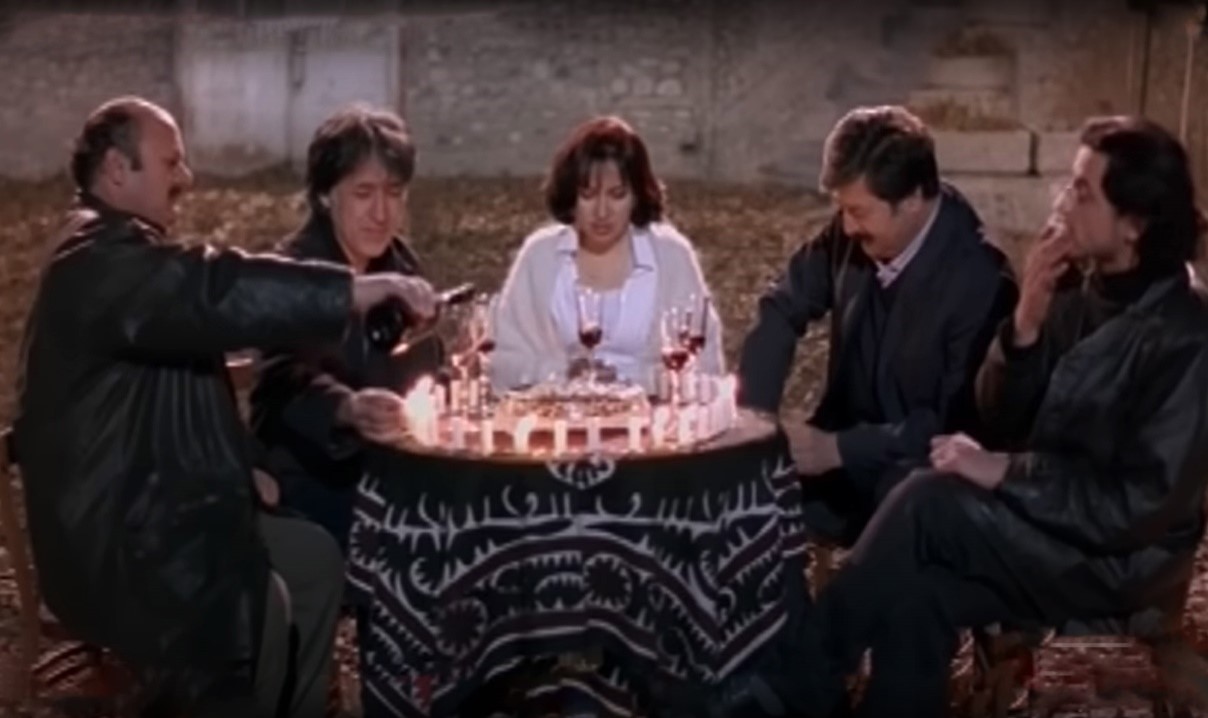
Figure 19: A still from the film, Malāhat in four simultaneous relationships with four men, Sex and Philosophy (2005), Muhsin Makhmalbāf. Accessed via: https://www.youtube.com/watch?app=desktop&v=xuSOc4aaalo (01:31:45).
Objects is Makhmalbāf’s Films
The significance of objects is one of the characteristics which renders a poetic aspect to Makhmalbāf’s cinema and separates it from mainstream popular cinema. The objects and the accessories in his pictures have a function beyond the usual stage props and tools for storytelling, as many of them represent a feeling, a message or an abstract subject; therefore, their presence is accentuated, whether in the screenplay and the dialogues or in the framing and composition of the picture. This emphasis is obvious in frames in which an object is in the middle of the picture or in close-up, such as the scene in Time of Love where a cage is put in front of a stone book, or the scene in Sex and Philosophy where a chronometer is put among leaves under a tree.
In Time of Love, Makhmalbāf pictures the joining of the lover and the beloved with the interweaving of their shawls in the wind. Immediately in the next scene, the husband appears with a steering wheel lock in his hand. This represents the contrast between the soft and flexible objects that symbolize love and the hard, metal, and sharp objects that symbolize prejudice, violence, and inflexible laws. In both courts in this film, we see these objects on the judge’s table and he emphasizes them by picking them up. Also, in the first court, after the judge signs the death sentence, he immediately breaks the pen. The director explains that it is a custom in Turkish courts to break the pen with which a death sentence is signed. While this is an extratextual explanation, in the film itself, breaking the pen might be interpreted as the judge’s uneasiness with the execution or the filmmaker’s outlook on the death sentence.

Figure 20: A still from the film, in the first court, after the judge signs the death sentence, he immediately breaks the pen, Time of Love (1991), Muhsin Makhmalbāf. Accessed via: https://www.youtube.com/watch?app=desktop&v=G0jrI_k1RaQ (00:23:40).
In Sex and Philosophy, the significance of objects is even more highlighted as certain things have a major role in creating the atmosphere of the film, including candles, keys, dried tree trunks, a chronometer, wine glasses, a bottle, roses, an umbrella, yellow leaves, a gramophone, shoes, and a newspaper. Each of these objects has an implication and a role in the film: the chronometer, the lit candles, the leaves, and the dry trees represent the shadow of death, the passage of time, and decay, while roses, shoes, the red coat, and wine emphasize the physical dimensions of love, and umbrella and handing it over by the lover to the beloved evokes feelings of intimacy and support.
There is a well-known phrase that says love means making the world as small as one person and making one person as big as the world. Using a newspaper as the beloved’s towel in a scene in Sex and Philosophy can easily bring this sentence to mind and show how an object is given a role beyond its usual use. The different aspects of a woman are also depicted with the different colors of her shoes. Moreover, the first signs of the acceptance of decay and loneliness is in the scene in the dance hall in which yellow leaves are covering a wine bottle.

Figure 21: A still from the film, Wine glasses, an object repeatedly featured throughout the film, Sex and Philosophy (2005), Muhsin Makhmalbāf. Accessed via: https://www.youtube.com/watch?app=desktop&v=xuSOc4aaalo (00:17:15).
Conclusion
There are characteristics in Makhmalbāf’s cinema that give it poetic and philosophical dimensions and separate it from mainstream popular cinema. In this article, we studied these characteristics from the perspectives of symbolism, composition, editing, storytelling, and philosophy. Arguably, the prominence of myths, unusual compositions, ambiguous uses of objects, the use of dance for showing character traits, the use of circular and episodic plot, the extratextual references, the merging of reality and unreality, the use of open ending and the preference of doubt over certainty are among the elements that separate Makhmalbāf’s cinema from the mainstream cinema in Iran. These characteristics give a poetic and imaginative quality to his films and help categorize him as an avant-garde and innovative filmmaker.

Figure 1: A still from the film Deep Breath (Nafas-i ‛Amīq, 2003) Parvīz Shahbāzī, Accessed via https://www.imvbox.com/en/movies/deep-breath-nafase-amigh (00:03:34)
Introduction
To demonstrate the inadequacy of the popular category “postrevolutionary Iranian cinema,” Blake Atwood introduced the term and genre of “Reform Cinema” to describe the significant shift in the politics of cinema in Iran influenced by the reformist discourse and movement of the 1990s.1Blake Atwood, Reform Cinema in Iran: Film and Political Change in the Islamic Republic (Columbia University Press, 2016), 4. This period, marked by a close relationship between the reformist movement and the film industry, produced films that often addressed social issues such as women’s rights and youth culture. These films reflect the broader reformist agenda of advocating for civil liberties and social justice.2Atwood, Reform Cinema in Iran, 20-21; Hamid Naficy, A Social History of Iranian Cinema. Volume 4, The Globalizing Era, 1984-2010 (Durham, N.C.: Duke University Press, 2012), 367. Despite differences in cinematic style, genre, and themes, these films share a common thread: advocating for hope and sociopolitical change.
However, Reform Cinema itself is not a monolithic category. Initially, it was imbued with a strong belief in the possibility of social and political change, marking a shift from wartime martyrdom discourse to celebrating such diverse yet important elements as the banality of everyday life, women’s agency and public presence, and youth culture. Over time, however, the genre soon began to reflect a growing sense of collective despair and discontentment. While the initial phase of Reform Cinema depicts hope, agency, and resistance, the final phase, coinciding with the last years of Muhammad Khātamī’s second presidential term (1997-2005), reveals the pervasive sense of despair and the elusive nature of hope of this era, particularly among youth and women.
This article traces this trajectory by situating Parvīz Shahbāzī’s Deep Breath (Nafas-i ‛Amīq, 2003) within the context of Reform Cinema. Deep Breath is a noir film following the lives of two young men, Kāmrān and Mansūr, as they drive around Tehran in a nihilistic manner. The film explores themes of disillusionment, social disparity, and the struggles of youth, for Kāmrān and Mansūr in particular but indeed the struggles of all youth in Iran at that time.3By “youth,” I refer to individuals approximately between the ages of eighteen and thirty. In Deep Breath, for instance, Kāmrān, Mansūr, and Āydā are all in their early twenties, Āydā and Kāmrān, specifically, are university students. On the one hand, Kāmrān, a university student, comes from a wealthy family but is emotionally detached and dissatisfied with his privileged life. Mansūr, on the other, comes from a poor background and faces numerous hardships, including an unstable family situation and a lack of financial support. Alongside this main narrative, Āydā, a university student from a middle-class background, also struggles to negotiate the tribulations of this era and shares a romance with Mansūr. As they embark on a journey in a stolen car, the film delves into their internal and external struggles, portraying a stark picture of the last years of the reform period in the early 2000s. Notably, the film’s narrative structure is circular rather than linear, depicting the vicious cycle in which youth are trapped. In what follows, I argue that Deep Breath is a poignant commentary on the transition from the initial euphoria of reform to the eventual, widespread discontentment and growing belief in the futility of reform efforts. I first offer reflections on Reform Cinema as a non-monolithic concept. I then explore youth marginalization, absentee families, and the breakdown of social dialogue in Shahbāzī’s Deep Breath, revealing the pervasive despair and frustration among the youth of this period. By outlining the genre and Shahbāzī’s expert depiction and treatment of this era, this article highlights the pressing need to better understand the causes of youth marginalization and to provide meaningful reforms to address this issue.

Figure 2: A Still from the film Deep Breath (Nafas-i ‛Amīq, 2003), Parvīz Shahbāzī.
Reflections on Reform Cinema
The reform period in postrevolutionary Iran, marked by the presidency of Muhammad Khātāmī from 1997 to 2005, began with high political hopes and promises. With the subsidence of revolutionary fervor, the end of the prolonged Iran-Iraq War in 1988, and the death of Rūhallāh Khumaynī, the first Supreme Leader of Iran, in 1989, reformist and moderate political elites began to criticize the limits of the revolutionary model of citizenship and its failure as a unifying and inclusive national narrative. Particularly in post-1997, during Khātāmī’s reformist government, political figures emphasized citizenship rights to highlight the inability of citizenship based on pious and revolutionary commitments to establish an inclusive legal and moral system.4Historians like Ervand Abrahamian even call this period Iran’s Thermidorian reaction to the 1979 Revolution. See Ervand Abrahamian, A History of Modern Iran (Cambridge: Cambridge University Press, 2008), 183. Reformist discourse stressed citizen rights—particularly those of women and youth—tolerance, democracy, inclusivity, and dialogue among civilizations, garnering widespread support across various demographics. Women’s and youth rights, suppressed by the state’s harsh modesty policy in the decade following the Revolution, were central to the reformist movement. The immediate impact of reformist discourse and policies was a significant increase in social and political participation among youth and women. NGOs focused on youth and women’s issues emerged, and women and youth showcased their public presence and modern way of life in public spaces, such as colleges, shopping malls, parks, and cultural centers.5Asef Bayat, Life as Politics: How Ordinary People Change the Middle East, 2nd edition (Stanford, California: Stanford University Press, 2013), 23.
However, it did not take long for these great hopes to turn into profound disappointments. By Khātāmī’s second term, it became evident that many of the reformists’ promises would face significant obstacles within the restrictive political framework of the Islamic Republic, leading to their eventual halt. University students’ movements were suppressed by security police, brutally cracking down on student protests in 1999. Thousands of activists—journalists, teachers, students, women, and members of labor, civil, and cultural organizations—were arrested and faced court charges or dismissed from their positions. Dozens of dailies and weeklies were shut down under the pretext of being the “fifth column of the enemy” or “threatening national security.”6Bayat, Life as Politics, 113. Due to the failure of the reformist government and parliament to uphold their promises and protect citizens’ rights, despair about the possibility of reform grew. The middle class felt betrayed by the stagnation of political reform, while the lower classes suffered from unfulfilled economic promises. This sense of disappointment was especially acute among the youth who had aspired to reclaim their very youthfulness during this era.
These vicissitudes are abundantly reflected in the cinema of the reform period. For instance, Muhsin Makhmalbāf’s Time for Love (Nubat-i Āshiqī, 1991) was a pioneer of Reform Cinema, advocating for carnal love instead of divine love and martyrdom valorized by Sacred Defense Cinema. The film openly depicts a married woman’s affair and explores shifting morality through three episodes with different endings. In the first, Güzel’s affair is discovered by her husband who kills her lover and is then sentenced to death. In the second, her lover kills her husband and is sentenced to death with the roles reversed. Güzel commits suicide in both episodes. In the third, the lover spares the husband who then recognizes their love and arranges their wedding with the judge from the previous episodes as a guest. In addition to advocating for sensual love, the film suggests that morality is circumstantial rather than universal, contrasting with the regime’s restrictive morality policies.7Atwood, Reform Cinema in Iran, 31. What is even more interesting is that Time for Love utilizes mysticism—emphasizing individual experiences of religion, morality, and ethics—to propose an alternative to the government’s stringent morality and modesty policies. The controversy and public debates over the movie alluded to the discourse of reform that would emerge more fully a few years later, marking a pivotal moment in the transition from revolution to reform, both politically and cinematically.8Atwood, Reform Cinema in Iran, 30.
Figure 3: A still from the film Time for Love (Nubat-i Āshiqī, 1991), Muhsin Makhmalbāf.
Equally in sharp contrast to the genre that preceded it, it is ‛Abbās Kīyārustamī’s cinema, specifically Taste of Cherry (Ta‛m-i Gīlās, 1997), that represents the high hopes of this period by celebrating the banality of life. During and after the Iran-Iraq War, postrevolutionary cinema was dominated by Sacred Defense Cinema. In Sacred Defense Cinema, the figures of Basījī (literally meaning self-mobilized) and Shahīd (martyr) were created as new heroes and ideal masculinities, mobilizing support for the war effort. Basījī and Shahīd, who were often humble Iranian men from lower-class backgrounds, sacrificed their lives to protect the country and the Islamic Republic.9Roxanne Varzi, “The Cinema of Iranian Sacred Defense,” in The New Iranian Cinema: Politics, Representation, and Identity, ed. Richard Tapper (New York: I. B. Tauris, 2002), 154-66. These new figures replaced the masculinity of Jāhil and Lūtī (i.e., different terms for “tough guy”) of prerevolutionary Fīlmfārsī cinema while also introducing the ideal Islamic citizens.10Kaveh Bassiri, “Masculinity in Iranian Cinema,” in Global Encyclopedia of Lesbian, Gay, Bisexual, Transgender, and Queer History, ed. Howard Chiang (Charles Scribner’s Sons, 2019), 1018-1023. For a Basījī, material life was too worthless to preserve his life for; self-sacrifice and martyrdom for transcendental ideals were his ultimate goal.11Pedram Partovi, “Martyrdom and the ‘Good Life’ in the Iranian Cinema of Sacred Defense,” Comparative Studies of South Asia, Africa, and the Middle East 28, no. 3 (2008): 513–32.
In contrast, Taste of Cherry, the story of a middle-aged man who wants to commit suicide and the several other people who variously try and eventually succeed to convince him to change his mind, depicts life as a precious gift worth living, even if only for the sake of the sour taste of a cherry or the sweet taste of a mulberry. In addition, the protagonist, Mr. Badī‛ī, is an ordinary man with no lofty ideals or pursuit of heroic deeds. His life is, in fact, filled with doubt rather than certainty, and if he contemplates death, it is out of desperation, not self-sacrifice for societal ideals.
Reform Cinema also specifically emphasized women’s issues in line with the reformist movement advocating for women’s rights. For instance, Rakhshān Banī-i‛timād’s May Lady (Bānū-yi Urdībihisht, 1998) perfectly represents the dominant discourse of this time, and both the director and the protagonist represent this optimism for the possibility of improving women’s rights. Throughout the 1980s, women were almost absent from the cinema, often relegated to off-screen roles as assistants and in minor positions. However, Banī-i‛timād emerged as a prominent director in this male-dominated field12See Naficy, A Social History of Iranian Cinema In May Lady, the protagonist is a woman whose characteristics do not match the ideals that the government has promoted for years. The protagonist, Furūgh, perhaps a reincarnated figure of Furūgh Farrukhzād, who is vailed in colorful māntu (overalls), not in a black chādur that the government promoted as part of its modesty policy, is a professional, educated divorcee, mother, and lover who struggles with a patriarchal system in life and work. This representation symbolizes the reform period, allowing the public presence of women who did not match the ideals of the government’s official ideology. While struggling to balance her traditional assumed role with her modern role, Furūgh is resilient and persistent in asserting her new identity. She pushes against traditional norms by offering a new definition of the ideal woman and mother, symbolizing the possibility of change for women’s civil rights.

Figure 4: The character of Furūgh in May Lady (Bānū-yi Urdībihisht,1998), Rakhshān Banī-i‛timād.
These are not just random examples of a few movies; they represent the trend of the time. Indeed, these films embody various elements of the reform discourse, highlighting political hope for sociopolitical change aimed at improving and empowering “citizens”—a popular term at the time reflecting the dominant discourse of reform. These movies shaped what I call the early phase of Reform Cinema, reflecting a period of high hopes for political reform.
However, during Khātāmī’s second term, as public perception grew that the reform project was at a stalemate, Reform Cinema likewise shifted toward a more pessimistic tone. This shift is evident in several of Banī-i‛timād’s films, where she moves from the optimism of Furūgh in May Lady to the cynicism of Tūbā in Under the Skin of the City (Zīr-i pūst-i shahr, 2001). Set during Khātāmī’s second-term presidential campaign, Under the Skin of the City portrays the harsh realities faced by a family headed by a woman factory worker named Tūbā and is filled with social criticism. Tūbā, the lynchpin of her family, relies on the deed to her house as a source of stability during crises. However, her disabled husband conspires with their oldest son, ‛Abbās, who works for a shady firm and dreams of finding employment in Japan, to sell the house without her knowledge. Meanwhile, Tūbā’s eldest daughter, Hamīdah, suffers abuse from her husband who is frustrated by economic hardships. Her youngest son, ‛Alī, and another daughter, Mahbūbah, are independent-minded teenagers active in the reform movement and their own struggles for individuation.13Naficy, A Social History of Iranian Cinema, 163. The film opens during a parliamentary election, with Tūbā being interviewed and looking into the documentary team’s camera, energetically and optimistically explaining the problems faced by women workers and expressing hope that the candidates will address these issues. The film ends on presidential election day, with Tūbā once again in front of the documentary team’s lens. This time, however, Tūbā appears miserable. Exhausted, heartbroken, and disillusioned at a voting center, she looks into the camera and says, “I have lost my house. My son ran away. People are filming all the time. I wish someone would video what is in here [in my heart]. Who watches these films anyway?”14Under the Skin of the City, directed by Rakhshan Banietemad (2001; Tehran, Iran: Umīd-Fīlm, 2012, IMVBOX), 01:30:02-01:31:02, https://www.imvbox.com/en/movies/under-the-skin-of-the-city-zire-pooste-shahr. All translations are mine unless indicated otherwise.
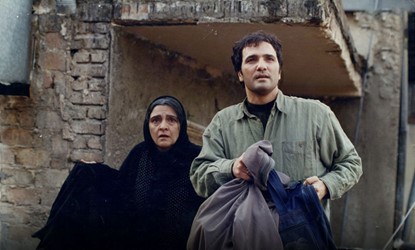
Figure 5: Tūbā with her son, Under the Skin of the City (Zīr-i pūst-i shahr, 2001), Rakhshān Banī-i‛timād.
The despair, frustration, and disillusionment experienced by Tūbā, her daughters, and her sons, reflecting the political and social conditions of many women, youth, and political and social activists, manifest in various ways and around different themes in the films of this period of Reform Cinema. Examples include Rasūl Sadr-‛Amilī’s I Am Taraneh, 15 (Man Tarānah 15 sāl dāram, 2002), Dāryūsh Mihrjū’ī’s To Stay Alive (Bimānī, 2002), Asghar Farhādī’s Beautiful City (Shahr-i Zībā, 2004), and Parvīz Shahbāzī’s Deep Breath, among many others. Among these films, Deep Breath perfectly represents this period, both cinematically and politically. The movie begins with the discovery of two bodies in a lake, setting a foreboding tone, and follows the lives of Kāmrān, Mansūr, and Āydā caught up in their grim realities, portraying a stark picture of contemporary Iran. Ultimately, Deep Breath culminates in a suspenseful and tragic finale that leaves the audience reflecting on the pervasive sense of despair among the youth.
Youth Marginalization: “Personal Troubles” vs. “Public Issues”
Since the early 1980s, the criminalization of youth culture has become a cornerstone of state policies. The prevailing discourse, particularly in official media, has portrayed youth as troublemakers and reduced their issues to personal problems. Through this discourse, particularly in the post-war period, the representation of young people as “immoral,” “deceitful,” “untrustworthy,” and “irresponsible” has been widely reproduced. Such narratives often adopt psychological, pathological, or criminal lenses, stigmatizing youth behaviors as acts of vandalism, deviance, and delinquency. However, the prevalence of “youth issues,” which will be explored in the context of the movie here, demonstrates that these issues extend beyond personal troubles. As American sociologist C. Wright Mills posits, understanding personal experiences within a broader historical and social framework allows us to uncover profound social meanings and implications behind these experiences.15Wright Mills and Todd Gitlin, The Sociological Imagination, 40th anniversary edition (Oxford: Oxford University Press, 2000).
In Deep Breath, nearly every character engages in actions that defy societal norms, symbolizing expressions of dissent and a cry for help from marginalized youth. For example, Mansūr breaks the windows of a phone booth when it swallows Kāmrān’s coin. In another scene, a motorcyclist snatches Kāmrān’s cell phone. Kāmrān and Mansūr then steal a cell phone themselves while riding a motorcycle borrowed from a mechanic without the owner’s knowledge, casually breaking the side mirrors of parked cars as they pass by. On a bus, Kāmrān smokes despite objections from the driver and other passengers. Driving a stolen car, they go the wrong way down a one-way street, skip tolls, steal gas, and pilfer a car cover to hide their vehicle. A passerby, pretending to need money for a prescription, pulls out a wad of cash and buys the stolen phone from Kāmrān and Mansūr. To save money on a shabby motel room, identical twins, Ārmīn and Ārash, seeking jobs in Tehran deceive the owner by claiming they are one person.
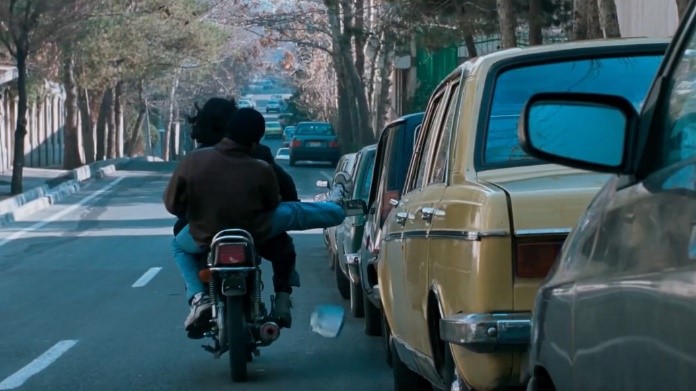
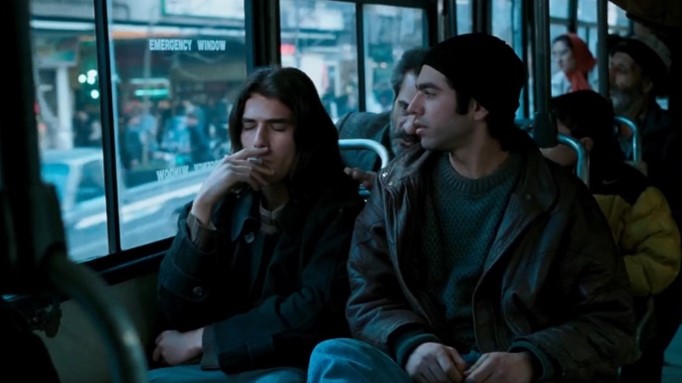
Figure 6 (top): Mansūr and Kāmrān ride a motorcycle, with Mansūr calmly knocking off the side mirrors of parked cars. Deep Breath (Nafas-i ‛Amīq, 2003), Parvīz Shahbāzī, Accessed via https://www.imvbox.com/en/movies/deep-breath-nafase-amigh (00:07:52)
Figure 6 (bottom): Kāmrān smokes on a bus, seemingly oblivious to the driver and passengers urging him to put out his cigarette. Deep Breath (Nafas-i ‛Amīq, 2003), Parvīz Shahbāzī. Accessed via https://www.imvbox.com/en/movies/deep-breath-nafase-amigh (00:06:12)
The prevalence of these behaviors across various social groups suggests that interpreting them solely through theories of vandalism, social pathology, and criminology is overly simplistic and fails to consider the deeper social causes. This situation underscores the marginalization of youth rather than highlighting youth delinquency and deviance. Kāmrān and Mansūr’s rebellious actions represent the unheard voices of a generation constrained by the political system’s ideological rigidity despite promises of reform. Their behavior reflects the collective despair and frustration of a generation whose presence and way of life were neither heard nor recognized by the government. Instead, as Shahram Khosravi demonstrates, the government and its affiliated media labeled them “without pain” (bī dard), “careless” (bī khīyāl), “without goals” (bī hadaf), “devoid of ideology” (bī ārmān), “without identity” (bī huvīyat), and “without culture” (bī farhang). In contrast, the youth self-identify as “forgotten,” “burnt,” and “fucked up,” feeling they have lost everything.16Shahram Khosravi, Precarious Lives: Waiting and Hope in Iran (Philadelphia: University of Pennsylvania Press, 2017), 64, 94. Marginalized and disillusioned, the youth in the film, much like those in Iran of the period, find themselves as the “other,” unheard by both the government and their families, grappling with their identity. Kāmrān, Mansūr, and Āydā’s expressions of dissent should thus be understood as part of a broader issue among the youth—one which eventually spread to other social groups and age brackets. In the political arena, this dissatisfaction and disillusionment among the youth manifested in the short term with the hardline president Mahmūd Ahmadīnizhād’s rise to power in the 2005 election. In the long term, as this sentiment spread to other age groups, it led to a significant decline in voter turnout in recent presidential and parliamentary elections in Iran, which have dropped to unprecedented lows of around 40 percent nationwide and less than 30 percent in Tehran.17“Low Turnout as Conservatives Dominate Iran Parliamentary Election,” Al Jazeera, March 4, 2024, accessed June 23, 2024, https://www.aljazeera.com/news/2024/3/4/voter-turnout-hits-new-low-as-conservatives-dominate-irans-parliament
Similarly, Shahbāzī’s depiction of Kāmrān’s depression reflects a broader and quite dire social issue rather than a mere individual problem. After several days of refusing to eat, Kāmrān is hospitalized and falls into a coma, leading to his presumed death. His resistance to eating resembles a hunger strike. Along this heartbreaking journey, he also stops attending college classes. He ignores his mother’s attempts to reach out, including her offer to send him to Europe and purchase him a popular Korean car (a Daewoo), a luxury beyond the reach of ordinary people and even beyond many of the middle class at the time. The reasons for Kāmrān’s departure from home, his refusal to eat, and his rejection of his affluent family’s offerings remain unknown. What is clear is that his depression transcends personal struggles; it is instead a prevalent social issue among his generation.18See Orkideh Behrouzan, Prozak Diaries: Psychiatry and Generational Memory in Iran (Stanford, California: Stanford University Press, 2016). Director Shahbāzī underscores this societal perspective on depression through various cinematic techniques and forms. The film portrays Tehran’s bleakness with a grayish filter overlaying the camera lens, capturing scenes during cold, cloudy seasons when trees are bare. Silence pervades much of the movie, with a significant portion featuring no dialogue exchanged. Kāmrān carries a palpable burden throughout, particularly evident in scenes where he and Mansūr aimlessly drive through the city in a moving car, comprising a substantial percentage of the film. In a symbolic scene, Kāmrān’s professor, who attempts to help him, offers him a book from renowned social psychologist Erich Fromm. This act suggests that Shahbāzī views Kāmrān’s problem not as purely individual and psychological, but rather as rooted in a social and political context. The professor’s choice of Fromm’s work implies that systemic factors within the political structure contribute significantly to these psychological challenges. Thus, the remedy must also be social and political, rather than solely psychological.
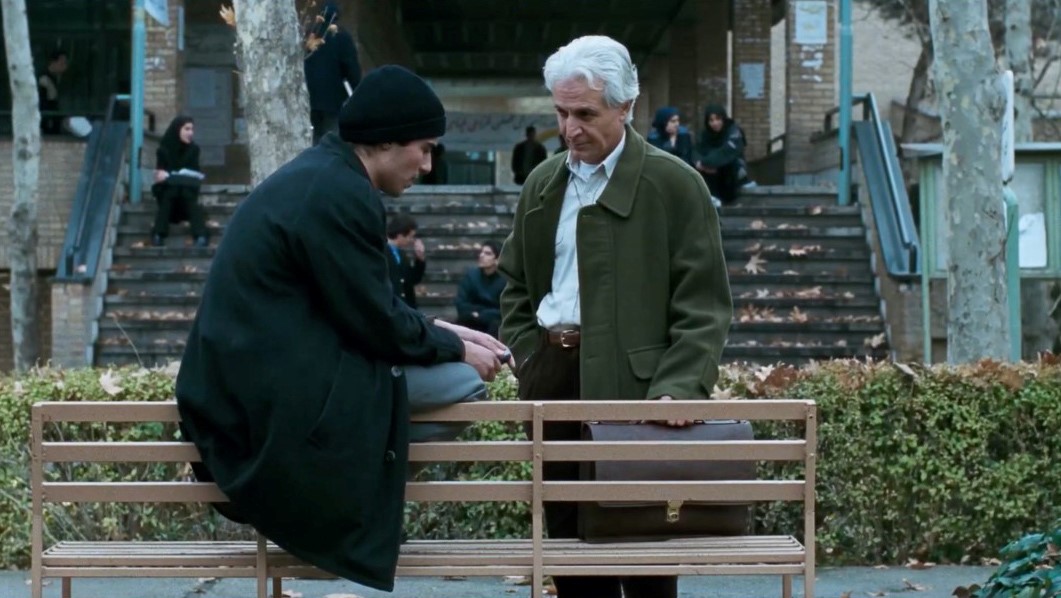
Figure 7: Kāmrān’s professor recommends a book by Erich Fromm to him. Deep Breath (Nafas-i ‛Amīq, 2003), Parvīz Shahbāzī. Accessed via https://www.imvbox.com/en/movies/deep-breath-nafase-amigh. (00:05:06)
Moreover, the movie’s title, “Deep Breath,” signifies the overwhelming pressure of social issues on the youth, framing suicide as a widespread social problem among them, not merely a psychological one. The opening sequence shows a rescue team retrieving the bodies of a young boy and possibly a girl from Karaj Dam Lake. They have succumbed to the water’s pressure, unable to hold a deep breath, leading to their deaths. This scene transitions into one where Kāmrān, holding his breath underwater in a swimming pool, resurfaces just in time, gasping for air as if escaping drowning. The motif of water and drowning metaphorically represents the various and heavy social pressures faced by the youth, making life suffocating. The entire film extends this moment of Kāmrān holding his breath by depicting the numerous challenges he and his friends face. The only suggested solution within this society seems to be holding their breath as long as possible to survive, a futile strategy for the drowned and drowning youths. Though Kāmrān manages to resurface in the pool, he eventually descends into his coma, presumably dying due to his refusal to eat. As sociologist Emil Durkheim argues, suicide is not merely an individual act of desperation or psychological distress, but a social phenomenon influenced by the structure and organization of society.19See Emile Durkheim, Suicide: A Study in Sociology, ed. George Simpson, trans. John A. Spaulding, Reissue edition (Free Press, 1997). It is not a coincidence that the rate of suicide in Iran increased almost fivefold between 1984 and 2004.20Khosravi, Precarious Lives, 85.

Figure 8: Divers recover the body of a young person from the depths of Karaj Dam Lake. Deep Breath (Nafas-i ‛Amīq, 2003), Parvīz Shahbāzī, Accessed via https://www.imvbox.com/en/movies/deep-breath-nafase-amigh (00:01:35)
Relatedly, the film’s narrative structure is circular rather than linear, depicting the vicious cycle in which the youth are trapped. The film opens with the scene of two young bodies being pulled from Karaj Dam Lake and ends with the same scene, now including Mansūr and Āydā fleeing their families in a stolen car. The final scenes show Mansūr driving recklessly on a narrow, dangerous road by the lake, implying that a collision with a truck has thrown them into the water. The sweater on the first body found matches the one Mansūr is wearing, suggesting that the bodies are theirs. However, this is not the case. In the final scene, without seeing Āydā and Mansūr, we hear their voices asking a passerby about the incident, who replies that two bodies have been found in the water. Although the bodies are not Āydā and Mansūr, they represent other young people from their generation. At the beginning of the film, the first body pulled from the water is wearing a blue sweater with a yellow stripe. Later, Kāmrān is seen wearing the same sweater, which is passed to Mansūr when Kāmrān presumably dies. Later, Mansūr wears the sweater when he arrives at the scene by the lake. The passing of the blue sweater among the youth serves as a generational object, symbolizing the pervasive bleakness faced by and linking their generation together.
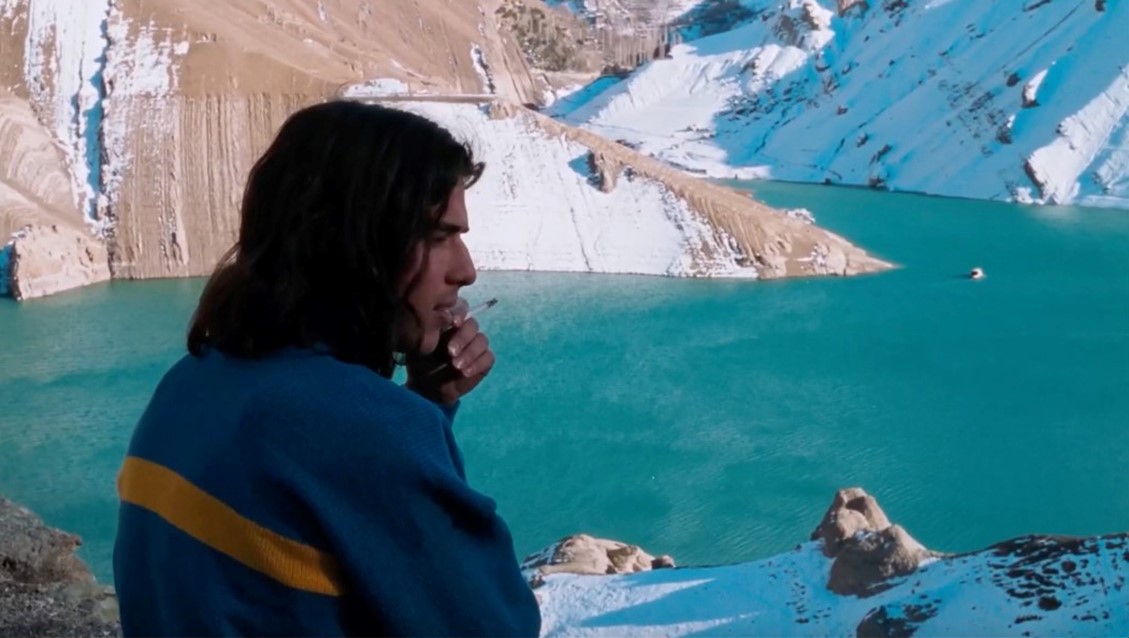
Figure 9: Kāmrān sits by Karaj Dam Lake, wearing a blue sweater with a yellow stripe—the same sweater worn by Mansūr and the body found in the lake throughout the film. Deep Breath (Nafas-i ‛Amīq, 2003), Parvīz Shahbāzī, Accessed via https://www.imvbox.com/en/movies/deep-breath-nafase-amigh (00:01:35)
Absentee Family
Deep Breath cleverly uses spatial politics to depict the uncertainty and instability in the lives of youth. Although one of the film’s main themes is family and the relationships between youth and their families, not a single scene is set inside a house. The home, traditionally a private and safe space for rest, confiding in one another, and emotional support, is categorically absent. Instead, everything occurs in public spaces such as parks, restaurants, and city streets. In three scenes, the camera approaches a house but stops at the door or in the yard, the characters and thus the audience never going inside. This spatial representation and restriction suggest the problematic nature of home and family which have lost their assumed function of providing stability and comfort.
In addition, the main characters have all fled domestic spaces for public and temporary ones. Āydā, a university student in Tehran, prefers dormitory life rather than staying with her family—a common practice in Iran until marriage—to experience more freedom. Kāmrān, from a wealthy background with all financial means at his disposal, refuses to return home. Several scenes occur outside Kāmrān’s house, but, again, the camera never goes inside. The twin brothers have left their home in another city and live in a shabby motel in Tehran, hoping to find better opportunities. Mansūr, from a lower socioeconomic background, cannot afford his small, damp basement in a poor neighborhood. As a result, his landlady denies him access to the house and retrieves the keys because of the unpaid rent. Kāmrān and Mansūr sleep in their stolen car or a tacky motel, paying for their stay there with money from their sale of the stolen cell phone.
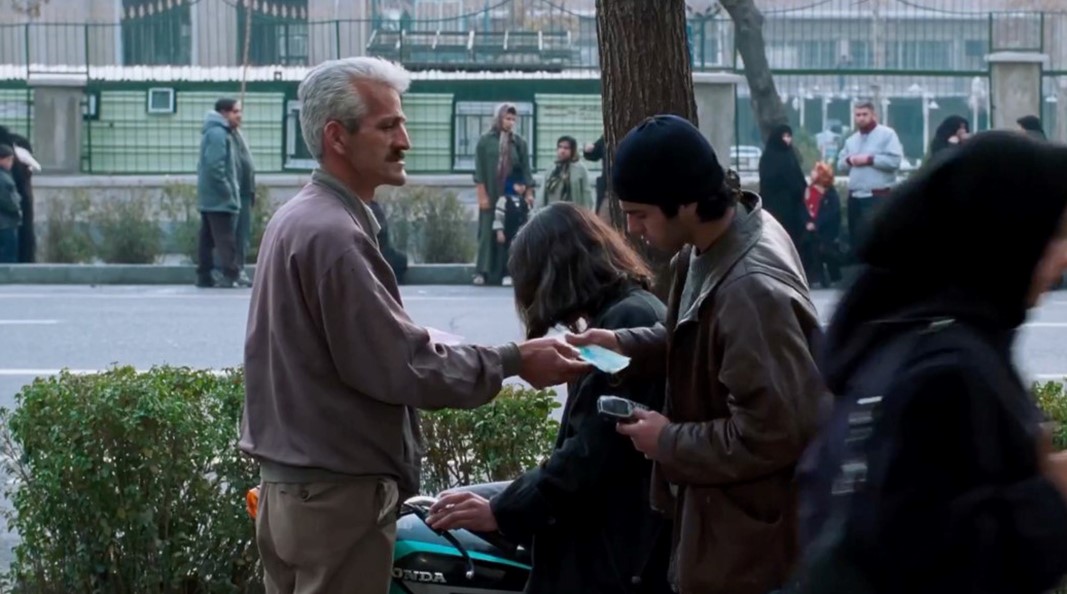
Figure 10: Kāmrān sits by Karaj Dam Lake, wearing a blue sweater with a yellow stripe—the same sweater worn by Mansūr and the body found in the lake throughout the film. Deep Breath (Nafas-i ‛Amīq, 2003), Parvīz Shahbāzī Accessed via https://www.imvbox.com/en/movies/deep-breath-nafase-amigh (00:19:08)
Thus, these young people’s living arrangements are not characterized by the stability and security typically associated with home but rather by transience and impermanence. While a home is traditionally a place of permanent residence and stability, a car serves primarily as a means of transport for movement from one place to another. Kāmrān and Mansūr spend their days and nights in a stolen vehicle, which, by its nature, lacks permanence and is intended for mobility rather than stability. Kāmrān and Mansūr also spend their nights in a rundown motel located in a bustling commercial area. Unlike a home, a motel is designed for temporary accommodation, catering for travelers passing through from one point to another, staying temporarily to rest before continuing their journey. However, Kāmrān and Mansūr futilely attempt to find permanence in these transient spaces.
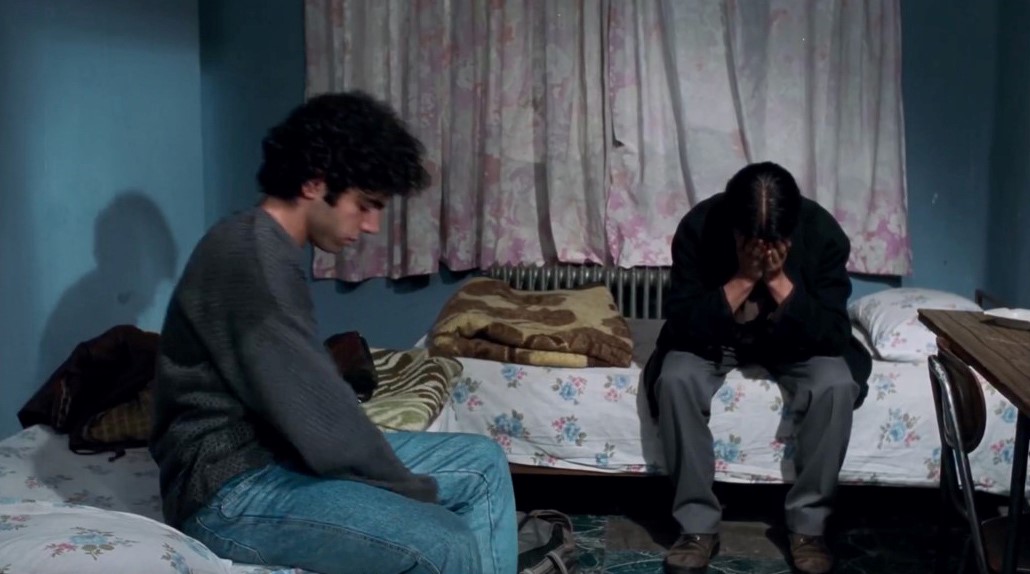
Figure 11: Kāmrān and Mansūr in a rundown motel after a long day on the streets. Deep Breath (Nafas-i ‛Amīq, 2003), Parvīz Shahbāzī, Accessed via https://www.imvbox.com/en/movies/deep-breath-nafase-amigh (00:47:08)
In the value system of the Islamic Republic, the traditional patriarchal and heterosexual family is regarded as the most important social unit, often promoted and referred to in official rhetoric as the “warm nucleus of the family.” According to the Iranian Constitution (1979; revised in 1989), the family is “the fundamental unit of society,” and the Islamic Republic of Iran uses kin-related tropes and family, both as a metaphor and a sacred entity, to promote its religious values.21See Rose Wellman, Feeding Iran: Shi‘i Families and the Making of the Islamic Republic (Oakland, California: University of California Press, 2021). However, in Deep Breath, almost all family members are absent, and the family nucleus is cold. The first sign of this is the absence of the father. The father, who is supposed to provide emotional and financial support, discipline, and role modeling for children, is entirely absent from the film, which explains in part Kāmrān and Mansūr’s lack of direction.22For the impact of a father’s absence on the lives of children, see David Blankenhorn, Fatherless America: Confronting Our Most Urgent Social Problem (Harper Perennial, 1996). They don’t know what to do or which way to go, symbolized by the vehicle that the two young men aimlessly drive along winding roads. Situating this personal issue in a larger social context, anthropologists describe it as related to a “fatherless society,” metaphorically referring to the government’s failure in its paternal role.23Mehrdad Arabestani, “The Fatherless Society: Discourse of the Hysteric in Iran,” Psychoanalysis, Culture & Society 24, no. 4 (2019): 520–36. The reformist government failed to provide even the youth’s most basic needs and civil rights and was unable to protect their lifestyle against the suppression of appointed offices such as the judicial system, the police, the paramilitary group of the Basiji, and the vigilante group Hezbollah. Throughout the film, there is only one trace of a father. In a brief dialogue in the dormitory, Āydā’s roommate informs her that her father called and left a message. This is the only instance of a father’s presence, whose voice we don’t hear, commanding Āydā to leave the dormitory and return home because the residence authorities informed him that Āydā is secretly friends with a boy (Mansūr) and often returns late. In collaboration, her biological father and the metaphorical father (i.e., the dormitory officials) deprive Āydā of her basic civil rights.
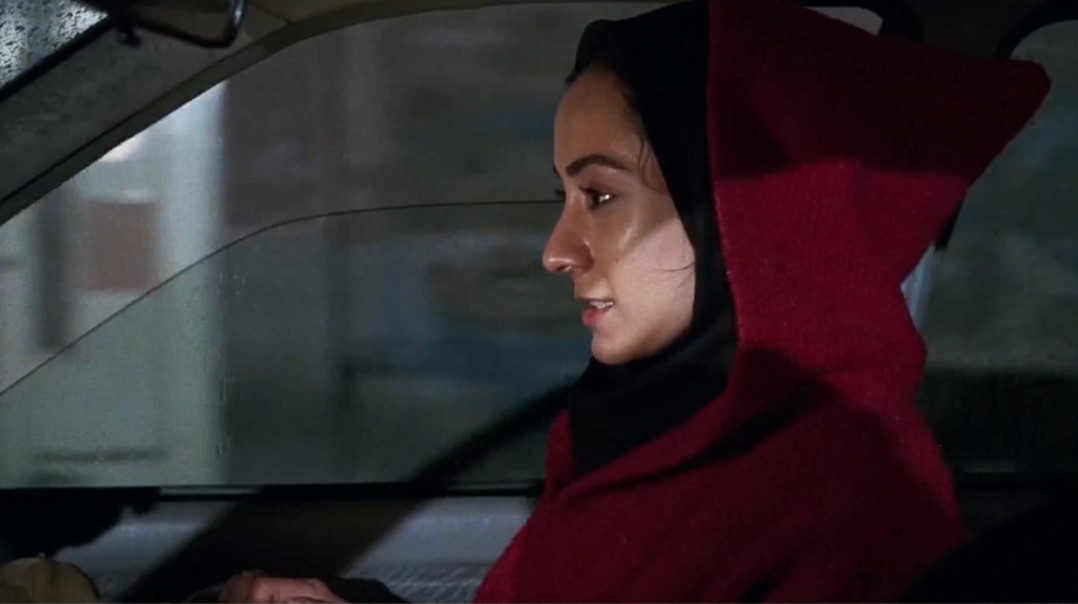
Figure 12: Āydā, wearing a red hoodie, in Mansūr’s stolen car on a rainy night, Deep Breath (Nafas-i ‛Amīq, 2003), Parvīz Shahbāzī. Accessed via https://www.imvbox.com/en/movies/deep-breath-nafase-amigh (00:29:33)
The mother’s situation is no better than the father’s; she is either powerless or chronically ill. Kāmrān’s mother, in complete desperation, repeatedly tries to contact him via his cell phone but fails. We never see her; we only hear her voice, pleading for Kāmrān to talk to her. In one instance, when Kāmrān calls her and remains silent, she faintly says, “Talk to me, my son. How long are you planning to give us the silent treatment? My son, if you want to leave university, that’s OK. You want to move out and live on your own? Fine, do that. Live separately. Do you want us to send you abroad? We’ve always told you….”24Deep Breath, directed by Parviz Shahbazi (2003; Tehran, Iran: Bih-Nigār, 2012, IMVBOX), 00:16:28-00:16:53, https://www.imvbox.com/en/movies/deep-breath-nafase-amigh. The mother’s faint, barely audible voice suggests that her efforts to bring Kāmrān home are doomed to fail. Before she can finish her sentence, the cell phone’s battery dies, symbolically indicating the failure of their communication and connection. Throughout the film, no dialogue forms between them, and even when a message gets through, it has no impact on Kāmrān.

Figure 13: Mansūr listens to one of the many messages from his mother on his mobile phone, pleading with him to come home. Deep Breath (Nafas-i ‛Amīq, 2003), Parvīz Shahbāzī, Accessed via https://www.imvbox.com/en/movies/deep-breath-nafase-amigh (00:17:32)
Mansūr’s mother is also absent, but in his case it is due to illness. In the only scene where we see her, she and Mansūr are sitting on a bench in the yard of a psychiatric hospital. The mother, silent and staring blankly, is revealed to be suffering from a severe mental illness. Unlike Kāmrān’s relationship with his mother, here it is Mansūr who tries to communicate, but his mother is unable to respond. In contemporary Iranian nationalism, Iran is represented as the “motherland” (mādar-i/mām-i vatan), and the image of a dying mother in need of immediate care frequently appears in the press to symbolize the country’s ailing condition.25See Mohamad Tavakoli-Targhi, Refashioning Iran: Orientalism, Occidentalism, and Historiography (Basingstoke: Palgrave, 2001). Thus, Mansūr’s sick mother quite easily can be seen to metaphorically represent a sick Iran in need of care and protection. In another scene, when Mansūr and his sister discuss their mother’s situation, Mansūr says, “I want to bring mom home,” to which his sister responds despairingly, “Why? Do you plan to bring her home, leave her in a corner, and then continue with your aimless wanderings?”26Deep Breath, 00:26:07-00:26:13. Overall, the portrayal of fathers and mothers in the film suggests that, whether using the masculine metaphor of the provider state or the feminine metaphor of the homeland, neither the state nor the homeland is in good condition, and neither are its children.
What is more, regardless of their social or economic backgrounds, all three characters experience despair and detachment from their homes that transcend social classes. Kāmrān comes from an upper-class, wealthy family living in a large villa in northern Tehran, enjoying the economic privileges of affluent youth. His mother purchases an expensive car for him and offers to provide him with a separate house if he desires. She even suggests sending him abroad if he wishes to drop out of college. However, Kāmrān rejects all these privileges. He refuses the car his mother bought for him and scratches its entire body with a piece of metal to damage it. He pays no attention and remains indifferent to any of his mother’s offerings. Economic and class privilege is unable to resolve his problem. In contrast, Mansūr hails from a lower-class family. His father is absent, and his mother suffers from mental illness, leaving them impoverished in a small, damp basement in a disadvantaged neighborhood of Tehran. Unable to afford rent, Mansūr becomes homeless, wandering the streets without a university degree or stable employment. Between the two young men, Āydā represents the middle class, characterized by her cultural capital and social skills. Despite her advantages, she chooses to stay in a dormitory rather than at home, reflecting a similar sense of abandonment.
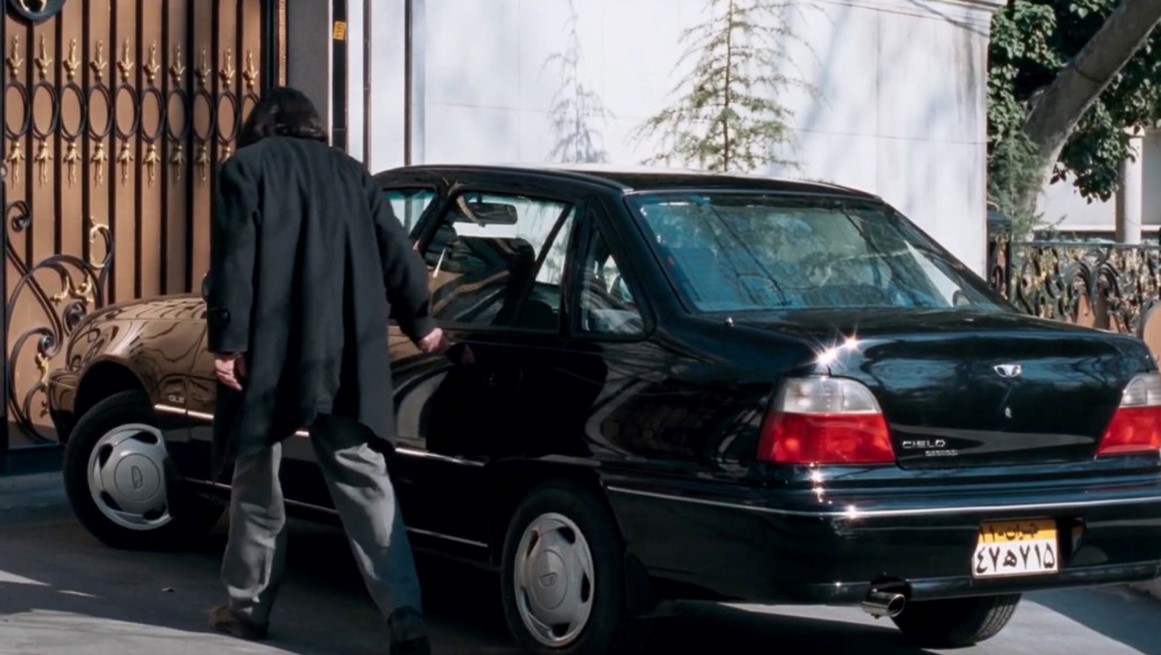
Figure 14: Kāmrān scratches the car his parents bought for him with a metal key. Deep Breath (Nafas-i ‛Amīq, 2003), Parvīz Shahbāzī, Accessed via https://www.imvbox.com/en/movies/deep-breath-nafase-amigh (00:19:53)
The Breakdown of Social Dialogue
Dialogue, tolerance, democracy, and even the dialogue between civilizations were among the key components of the reformist discourse. However, factional conflicts between reformists and conservatives, and between elected and appointed offices, escalated to such an extent that Khātāmī lamented his radical rivals in the military, intelligence, and security institutions, which were under the Supreme Leader’s supervision, creating crises for Khātāmī’s government every nine days. This failure to foster dialogue between political factions and to acknowledge one another even led to the notorious chain murders by the government of scores of dissident intellectuals.27On the chain murders, see Muhammad Sahimi, “The Chain Murders: Killing Dissidents and Intellectuals, 1988-1998,” PBS Frontline, January 5, 2011. Accessed October 11, 2024, https://www.pbs.org/wgbh/pages/frontline/tehranbureau/2011/01/the-chain-murders-killing-dissidents-and-intellectuals-1988-1998.html A dozen reformist newspapers and magazines were shut down. The dormitory of Tehran University students, who had gathered to protest the closure of the reformist newspaper Sālām, was ransacked by the police, Basījīs, and the Hizballāh vigilante group. Many political and student activists were arrested and imprisoned.
The film thus reflects the breakdown of dialogue at the macro level of the political system in the microcosm of daily life. As already mentioned, silence shapes a significant portion of the film, highlighting the inability or reluctance of characters to engage in meaningful conversation. When dialogue does occur, it tends to be brief and cryptic, with individuals struggling to express their thoughts and emotions. It is as if verbal suppression has taken hold, stifling genuine communication. Āydā stands out as an exception, openly sharing her views and feelings, but she faces consequences for this, such as expulsion from the dormitory. Mansūr, on the other hand, falters in connecting with others. Despite Āydā’s encouragement to talk about himself, his interests, and his life, he repeatedly responds, “I don’t know what to say.”28Deep Breath, 00:30:58-00:30:59. Similarly, Kāmrān remains mostly silent, burdened by deep sorrow. When prompted by Mansūr to speak, Kāmrān offers minimal responses, contributing to their strained relationship. As with his mother, attempts at communication with Kāmrān by people other than Mansūr often fail completely; he disregards pleas not to smoke on the bus, appearing disconnected from those around him. Further, instances of clear communication in the film often reveal misunderstandings or deceit rather than fostering genuine connections. For instance, a man posing as a needy beggar can suddenly afford to buy Kāmrān and Mansūr’s stolen phone at a low price, intending to resell it himself for profit. Another individual, seeking a cheaper call to Japan, uses Mansūr’s stolen phone under false pretenses.
Even communication tools like cell phones or public telephones, designed to foster connection, fail in their intended purpose. Kāmrān’s attempt to use a public phone is thwarted when it devours his coin without connecting him. Throughout the film, cell phones are either stolen, suffer from signal issues that hinder communication, or run out of credit at crucial moments. When Kāmrān’s phone is stolen, and, in return, he steals another person’s phone, he says: “You see, Mansūr. The good thing about this phone is that my relatives can’t call me anymore.”29Deep Breath, 00:09:10-00:09:13. These instances of malfunctioning technology symbolize broader societal challenges: the difficulty in establishing meaningful dialogue among individuals, the failure to listen to differing voices and opinions, and the struggle to recognize diverse perspectives.
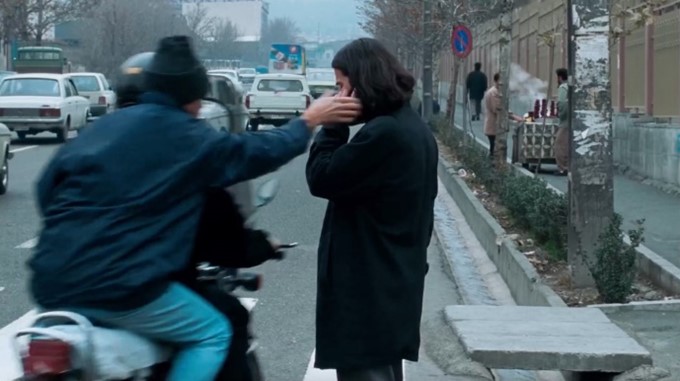
Figure 15: Two motorcyclists steal Kāmrān’s phone, interrupting his conversation with his mother. Deep Breath (Nafas-i ‛Amīq, 2003), Parvīz Shahbāzī, Accessed via https://www.imvbox.com/en/movies/deep-breath-nafase-amigh. (00:05:26)

Figure 16: Mansūr breaks the glass of the public phone kiosk after it devours Kāmrān’s coin. Deep Breath (Nafas-i ‛Amīq, 2003), Parvīz Shahbāzī, Accessed via https://www.imvbox.com/en/movies/deep-breath-nafase-amigh (00:06:53)
Conclusion
Parvīz Shahbāzī’s Deep Breath serves as a profound commentary on the pervasive sense of despair and marginalization among Iranian youth during the early 2000s. Through its circular narrative structure and the portrayal of Kāmrān and Mansūr’s aimless journey, the film encapsulates the broader social and political disillusionment that characterized the end of the reformist era in Iran. The characters’ actions, which defy societal norms, reflect their desperate attempts to assert their presence in a society that has largely ignored their struggles and aspirations.
Further, the film’s depiction of Tehran’s bleak urban landscape, coupled with the recurring motif of water and drowning, metaphorically represents the suffocating pressures faced by the youth. The symbolic passing of the blue sweater among the characters also underscores the generational continuity of this despair. Moreover, the absence of stable familial structures in the film highlights the breakdown of traditional support systems, leaving the youth to navigate their challenges in transient and precarious spaces.
Ultimately, Deep Breath not only illustrates the personal struggles of its characters but also critiques the systemic failures that contributed to the widespread sense of hopelessness of the early 2000s. By situating individual experiences within a broader social and political context, Shahbāzī’s film calls for a deeper understanding of the underlying causes of youth marginalization and the urgent need for meaningful reforms to address these issues.
