

© Cinema Iranica. ISSN: 3064-9617
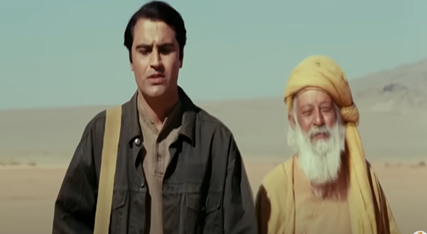

Figure 1: The first poster for the screening of Iran Is My Home (Īrān Sarā-yi Man Ast), directed by Parvīz Kīmiyāvī, 1998.
Introduction
Within the history of Iranian cinema, few films— either before or after the 1979 Revolution —have directly engaged with the complex legacy of Iranian literature or centered their narratives on Iranian poets. Parvīz Kīmiyāvī’s film, Iran Is My Home (Īrān Sarāy-i Man Ast) is a remarkable exception; the film ambitiously seeks to integrate ancient Iranian cultural symbols within the framework of modern and contemporary Iranian society. Its most distinctive feature lies in enabling medieval and premodern Iranian poets to materialize within historical settings such as caravanserais. The central narrative follows a young researcher’s struggle to publish a scholarly work on Iranian literary history, a task complicated by the constraint of state censorship. Yet, the film transcends the mere representation of the protagonist’s recurrent confrontations with the censor. His journey is a hybrid of reality and fantasy – an intellectual and existential odyssey that exposes the audience to the intricate layers of Iranian culture and the existential challenges it faces in the modern era. Kīmiyāvī masterfully constructs this cinematic world through five interwoven thematic pillars:
- Geography and environment (the desert juxtaposed with the city);
- Culture and intellectual heritage (the centrality of poetry);
- Political bureaucracy (the licensing apparatus governing publication);
- Material patrimony (architectural and archaeological heritage such as caravanserais and Persepolis, emblematic of the Iranian plateau’s physical legacy);
- Socioeconomic transformation (from pastoral traditions to nascent capitalism and global modernity, epitomized by the metro).
This deliberate synthesis of motifs underscores the film’s critical function: to serve as an aesthetic warning against the erosion of Iran’s cultural identity under the pressures of modernization and political regulation.
Produced in 1998, the film achieved significant critical recognition, receiving nominations for Best Director, Best Screenplay, and Best Production and Costume Design at the third Iran Cinema Celebration in 1999.1“Īrān sarā-yi man ast (film-i sīnimāʾī),” Wikijoo, accessed November 12, 2025, https://wikijoo.ir/index.php/ایران_سرای_من_است_(فیلم_سینمایی) The Rushd International Film Festival primarily focuses on educational and instructional films. It also won Best Film at the 30th Rushd International Film Festival in 2000. Despite this acclaim the film was never granted authorization for public theatrical release. In an interview conducted two years after the film’s completion, Kīmiyāvī described the experience as profoundly disheartening, attributing the film’s non-release to the instability of managerial positions, inconsistent decision making, and the involvement of inexperienced producers.2“Fīlmfārsī barāyi khudash yak sabk būd; Guftugū bā Parvīz Kīmiyāvī” Fasl’nāmah-yi Fārābī 37 (summer 2000): 212. The production also appears to have been plagued by financial problems. The production manager acknowledged that there had been extensive monetary problems during filming coupled with disagreements regarding the editing process between the producer, Muhammad Rizā Sarhangī, and the director.3“Mudīr tawlīd-i Īrān Sarāy-i Man Ast: Nimīkhāstīm bā Sākht-i īn fīlm bih pāyān birasīm,” ISNA, August 28, 2016, accessed November 12, 2025, https://www.isna.ir/news/Khorasan-Razavi-98627/مدیرتولید-ایران-سرای-من-است-نمی-خواستیم-با-ساخت-این-فیلم Kīmiyāvī himself later identified extensive financial disputes with the producer—in addition to his interference with the editing—as the primary reasons the film was ultimately archived at the Fārābī Cinema Foundation.4Ahmad Tālibī’nizhād, Bih Ravāyat-i Parvīz Kīmiyāvī (Tehran: Hikmat-i Sīnā, 2019), 188. Following its completion the film received invitations from international festivals. However, these screenings failed to materialize due to a lack of coordination between the producer and the director, along with other unresolved issues.5Ahmad Tālibī’nizhād, Bih Ravāyat-i Parvīz Kīmiyāvī (Tehran: Hikmat-i Sīnā, 2019), 192-193. These financial and legal disputes, compounded by the Iranian Cinema Organization’s refusal to grant a release license, resulted in an eighteen-year delay. The film was finally released on a limited basis in 2016.
The prolonged suppression of Iran Is My Home followed by its belated and restricted screening in a handful arthouse cinemas, ensured that the film neither received critical engagement at the time of its production nor appeared in scholarly discourse on Iranian cinema. It was only after these brief screenings that some critics, primarily in online platforms, introduced and reviewed it.6An example of these critiques can be found in this online article: “Nigāhī bih fīlm-i Īrān Sarāy-i Man Ast sākhtah-yi Parvīz Kīmiyāvī; Umīd-i Rastgārī Nīst,” Cinema Cinema, July 23, 2016, accessed November 12, 2025, https://cinemacinema.ir/news/نگاهی-به-فیلم-ایران-سرای-من-است،-ساخت/ Some of these critiques were notably ideological, often framed from an anti-intellectual perspective and, at times, couched in dismissive or derogatory language.7“Sar’gījah hā-yi abtar va rawshanfikrānah; Īrān Sarāy-i Man Ast: Haziyānī kih maʿlūm nīst tārīkh-i adabiyāt ast yā naqd-i sānsūr,” Fardanews, August 13, 2016, accessed November 12, 2025,https://www.fardanews.com/بخش-فرهنگ-96/553119-سرگیجه-های-ابتر-روشنفکرانه The film’s subject matter and subsequent reception suggest its alignment with an elitist strand of Iranian cinema, which helps explain its limited popular appeal. An audience survey reinforces this interpretation: the film earned an average score of just 4.2 out of 10.8“Muʻarrifī va Barrasī-i Fīlm-i Īrān Sarāy-i Man Ast,” Manzoom, accessed November 12, 2025, https://www.manzoom.ir/title/tt2906438/فیلم-سینمایی-ایران-سرای-من-است-1377 Beyond its esoteric theme, the eighteen-year delay in public release likely contributed significantly to this outcome by creating a generational gap between the film and its prospective audience.
Critics generally classify the film Iran Is My Home within the category of “experimental indigenous cinema,” a genre that demands from the viewer an active cognitive engagement rather than passive consumption. In this mode meaning emerges not from a linear narrative but through the interpretive labor of the audience, who synthesize the film’s disparate visual and conceptual elements.9Rasūl Nazar Zadāh, “Būmī’garāyī-i tajrubī, mustanad’garāyī-i zihnī; naqd-i fīlm-i Īrān Sarāy-i Man Ast,” Māh’nāmah-yi Fīlm 512 (2016): 97. After nearly two decades in storage, the film premiered in 2016 through the independent “Art and Experience” cinema initiative. This organization, despite its limited venues, aims to elevate cinematic literacy and promote non-commercial, artistically significant films in Iranian cinema.10Ahmad Tālibī’nizhād, Bih Ravāyat-i Parvīz Kīmiyāvī (Tehran: Hikmat-i Sīnā, 2019), 181.
The absence of an initial public screening, combined with internal disagreements among the crew, left the film vulnerable to criticism and deprived it of timely scholarly defense. When the film finally screened in 2016 across selected Iranian cities for review and critique, during a screening at the Huvayzah Cinema in Mashhad, Marziyah Qurayshī, the production manager, pointed out that the film was reaching audiences long after the death of some of its creators, including the producer, and many of its cast members. She also acknowledged that the filmmakers had anticipated the film’s limited commercial prospects, especially when compared with the popularity of directors like ‘Abbās Kiyārustamī, but had hoped it would resonate with intellectual circles.11“Mudīr tawlīd-i Īrān Sarāy-i Man Ast: Nimīkhāstīm bā Sākht-i īn fīlm bih pāyān birasīm,” ISNA, August 28, 2016, accessed November 12, 2025, https://www.isna.ir/news/Khorasan-Razavi-98627/مدیرتولید-ایران-سرای-من-است-نمی-خواستیم-با-ساخت-این-فیلم
Parvīz Kīmiyāvī’s return to Iran (after leaving the country following the 1979 revolution) was facilitated by political transformations in Iran, following the victory of reformists in the 1997 presidential election (Islāhāt Movement). The monotonous and ideological formulative character of Iranian cinema from the early 1980s prompted the Fārābī Cinema Foundation to initiate a program supporting innovative and diverse works. As part of this project, ten Iranian directors celebrated for their avant-garde approaches – including Kīmiyāvī, Khusraw Sīnā’ī and Muhammad Rizā Aslānī, came forward to develop new films. It was under these circumstances that Kīmiyāvī proposed Iran Is My Home, which was accepted.12Muhammad ‘Alī Razī, “Dar Sitāyish-i Farhang-i Ghanī; Naqd-i Fīlm-i Īrān Sarāy-i Man Ast,” Cinema Fārs, August 30, 2021, accessed November 12, 2025, https://cinema.gamefa.com/121029/در-ستایش-فرهنگی-غنی؛-تحلیل-فیلم-ایران-س/ Although he had visited Iran prior to this project, according to him, he had declined to produce a film due to his awareness of the severe censorship.13“Guftugū bā Parvīz Kīmiyāvī,” Naqd-i Sīnimā 8 (summer 1996): 207. According to Kīmiyāvī, the concept of integrating classical Iranian poets into a contemporary setting originated before his return from France as a means of challenging reductive European perceptions of Iranian history and civilization. In Iran Is My Home, this vision is fused with the realities of domestic censorship and the cultural anxieties of post-revolutionary Iran.14Muslim Mansūrī, Sīnimā va Adabiyāt: Musāhibah bā Dast Andar Kārān-i Sīnimā va Adabiyāt (Tehran: ‘Ilm, 1998): 142. Ahmad Tālibī’nizhād, Bih Ravāyat-i Parvīz Kīmiyāvī (Tehran: Hikmat-i Sīnā, 2019), 185. Finally, this film contains many themes and concepts, perhaps because the director thought it might be his last film in his homeland.15Ahmad Tālibī’nizhād, Bih Ravāyat-i Parvīz Kīmiyāvī (Tehran: Hikmat-i Sīnā, 2019), 183.
The Confrontation of Politics and Culture in Iranian Society
Kīmiyāvī’s film subtly and symbolically depicts the confrontation between culture and politics in post-revolutionary Iranian society. At the center of the narrative is Suhrāb Zamānī, a young researcher determined to publish his extensive research on Persian literature, who encounters a formidable obstacle: the Book Licensing Office of the Ministry of Islamic Guidance. In the 1980s following the Islamic revolution and during the war with Iraq, the government, under the pretext of fostering unity against external threats, imposed strict limitations of social and cultural freedoms, including restrictions on the publication of works deemed critical of or incompatible with official ideology. These constraints persisted for roughly a decade after the war (1988–1997) gradually easing with the rise of the Reformist government under Muhammad Khātamī. For a brief period, the publishing climate became more permissive. It was at the outset of this reformist era that Kīmiyāvī produced his film, reflecting on a recent past whose consequences remained palpable.
In Iran Is My Home Suhrāb seeks to publish his study on the intellectual legacy of major medieval Persian poets. However, the licensing officer at the Ministry of Islamic Guidance, who is effectively a censorship officer and whom we will refer to as such in this text, attempts to persuade him to alter the book’s content to align with state ideology. The film employs a distinctive narrative structure in which three temporal dimensions—historical, psychological, and contemporary—intersect fluidly. Suhrāb frequently becomes disoriented amid these overlapping timeframes during his imagined journeys, making the film’s editing central to conveying this temporal interplay.16Rasūl Nazar Zadāh, “Būmī’garāyī-i tajrubī, mustanad’garāyī-i zihnī; naqd-i fīlm-i Īrān Sarāy-i Man Ast,” Māh’nāmah-yi Fīlm 512 (2016): 96.
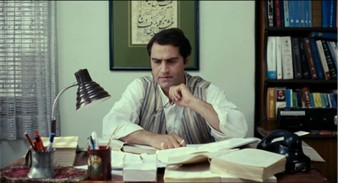
Figure 2: Suhrāb in the film Iran Is My Home (Īrān Sarā-yi Man Ast), directed by Parvīz Kīmiyāvī, 1998.
Within his imagination, rendered through surreal sequences, Suhrāb engages the censor in two major debates: the first concerning wine and the second concerning the concept of women in classical Persian poetry. These themes represent two cultural taboos targeted by the state—the prohibition of wine and the regulation of gender norms. True to the film’s central motif of spatiotemporal fluidity, these debates unfold not in the sterile setting of a government office but in an ancient caravanserai populated by actors portraying medieval poets. In one such scene, Mr. Safī, the censor’s assistant responsible for scheduling appointments, stands before the caravanserai calling out the names of poets, who then enter to recite verses relevant to the ongoing discussion. This creative device transforms an abstract literary debate into a vibrant, performative exchange, drawing the audience into a dynamic cultural dialogue rather than a purely academic discourse.
The first debate between Suhrāb and the censorship officer in the caravanserai centers on the representation of wine in Persian poetry. The censor accuses Suhrāb of neglecting the symbolic dimension of literary language, asserting—consistent with certain scholarly interpretations of the time—that references to wine by poets such as Khayyām and Hāfiz signify spiritual illumination rather than literal consumption. He supports his claim with examples from Sana’ī and Rumi, in whose works wine-drinking is portrayed as morally objectionable. Suhrāb counters with verses by Khayyām, Hāfiz, and Firdawsī, which unmistakably allude to the physical act of drinking. Their exchange, mirroring long-standing scholarly disputes, remains unresolved—yet, predictably, the censor’s interpretation prevails in practice.17For a recent, and relatively collective, discussion on this case, see: Dick Davis, Faces of Love (Hafez and the Poets of Shiraz) (New York: Penguin Books, 2013): xi-lxvi.
During Suhrāb’s second visit to the Ministry of Islamic Guidance, he encounters a young girl accompanied by her mother, seeking approval for her poetry collection. When she reads several of her poems—remarkably mature meditations on life and death—their gravity appears incongruent with her youth, and the unpolished acting lends the scene an air of artificiality. This episode may allude to the prominence of New Poetry in modern Iranian literature, though its purpose within the narrative remains ambiguous. Alternatively, it could underscore the deep-rooted cultural significance of poetry in Iranian identity, or signal the director’s thematic concern with women—a motif that emerges more explicitly in the second debate.
The second debate between Suhrāb and the censorship officer concerns Suhrāb’s chapter on women and their representation in Persian literary history. Drawing upon Firdawsī, Nāsir Khusraw, Sana’ī, Nizāmī Ganjavī, Saʿdī, and Jāmī, Suhrāb delineates the prevailing medieval perspectives on women. The censor, however, contests the claim of consistently negative portrayals, citing poems by modern poets such as Rahī Muʿayyirī and Vahīd Dastjirdī—sources outside the historical scope of Suhrāb’s study. When Suhrāb points out this anachronism, the censor remains unpersuaded, ultimately insisting on “revisions”—a euphemism for censorship—as the condition for granting publication approval.
Integrating classical cultural symbols with contemporary political phenomena
In the film Iran Is My Home, Kīmiyāvī seeks to reconstruct Iranian history, literature, and classical cultural symbols within the framework of modern Iranian society in the late 20th century. Kīmiyāvī’s intention, similar to his film The Mongols (Mughul’hā, 1973)18Javad Abbasi and Ghasem Gharib, “From Mongols to Television and Cinema,” In Cinema Iranica (Encyclopaedia Iranica Foundation, 2025), https://cinema.iranicaonline.org/article/from-mongols-to-television-and-cinema-the-mongols-mughulha-parviz-kimiyavi/, was to draw the past into the present.19Guftugū bā Parvīz Kīmiyāvī” Naqd-i Sīnimā 8 (summer 1996): 207. In this film, he redefines Iranian identity by relying on Persian poetry, incorporating the voices of five canonical Iranian poets, well-known to most Iranians. Poetry occupies a fundamental place in Iranian cultural life. Unlike the Aristotelian definition of poetry, which privileges imagination and emotion, Persian poetry functions as medium of thought, reflection and philosophical inquiry. The “Mushāʻirah” (poetry contest), staged in the film between Suhrāb and his father illustrate the centrality of poetry in Iranian cultural life at the time in which the film was made. Whether the father’s act of shaving his beard during this competition carries hidden significance remains ambiguous.
The choice of poets by the workers is both astute and in line with the views of the majority of experts on Persian literature and poetry, as well as Iranian culture and identity.20One of the most notable of these books is, Muhammad ʿAlī Islāmī Nudūshan, Chahār sukhangū-yi vijdān-i Īrān: Firdawsī, Mawlavī, Saʿdī, Hāfiz (Tehran: Qatrah, 1999). To express Suhrāb’s thoughts and ideas, Kīmiyāvī draws upon the words of Firdawsī, Khayyām, Rumi, Sa‘dī, and Hāfiz. Government censorship, however, compels him into an internal dialogue, where his memory animates the poems and personifies the poets themselves.21Rasūl Nazar Zadāh, “Būmī’garāyī-i tajrubī, mustanad’garāyī-i zihnī; naqd-i fīlm-i Īrān Sarāy-i Man Ast,” Māh’nāmah-yi Fīlm 512 (2016): 97. Alongside the five major figures, Khājū-yi Kirmānī (1290–1352), a celebrated poet from Suhrāb’s hometown, also features prominently. Additional poets appear in exchanges between Suhrāb and the censor, as reflected in the film’s distribution of citations: Saʿdī (14 poems), Hāfiz (14), Khayyām (8), Firdawsī (7), Rumi (7), Khājū (5), Sanāʾī (2), and several others—including Manūchihrī Dāmghānī, Nāsir Khusraw, Niẓāmī Ganjavī, Shaykh Mahmūd Shabistarī, ʿAbd al-Rahmān Jāmī, ʿUbayd Zākānī, Sāʾib Tabrīzī, Īraj Mīrzā, Rahī Muʿayyirī, and Vahīd Dastjirdī—represented by a single poem each.
Figure 3: Suhrāb recalls Khayyām. Still from Iran Is My Home (Īrān Sarā-yi Man Ast), directed by Parvīz Kīmiyāvī, 1998.
According to Kīmiyāvī he studied classical Persian literature for three years to write the screenplay and weave the poet’s verses into the dialogue.22Ahmad Tālibī’nizhād, Bih Ravāyat-i Parvīz Kīmiyāvī (Tehran: Hikmat-i Sīnā, 2019), 189. The film’s fluid conception of time, achieved by dissolving temporal boundaries, allows Suhrāb’s recollections of poetry to take shape as physical presences. Each time he recalls a verse, the poet materializes before him—visible only to Suhrāb. Despite its classical foundations, Iran Is My Home engages directly with contemporary issues, most notably censorship. It also alludes to more recent events, such as the Iran-Iraq War. Following the second debate between Suhrāb and the censorship official, on his way back to Kerman, he encounters the corpse of a soldier killed in the Iran-Iraq war, a moment visually reminiscent of the Karbala battlefield, the site of the dramatic martyrdom of the third Shia Imam. This fallen soldier is one of the passengers who was with Suhrāb in his car, and Suhrāb is deeply affected by the scene of his death. In this battle scene, the Iranian national flag, flags bearing the names of Imām Husayn and ʿAbbās ibn ‘Alī – two great martyrs in Shia Islam j – and a Quranic verse about jihad (“Help from Allah and victory is close”, part of verse 13 of Surah Al-Saff), which was widely used during the Iran-Iraq war. In another symbolic scene, the five poets traverse the desert, initially scattered but ultimately converging. Viewed from a distance, their movements evoke the emblem of Allah added to the Iranian flag after the Revolution, symbolizing the convergence of divergent voices into a shared cultural identity.
The film’s fluid narrative allows characters to move from one place to another without logical sequencing between scenes. For example, poets suddenly appear at Persepolis during Suhrāb’s desert wandering despite the site’s geographic distance from Kerman-Tehran route. The prominence of Persepolis as a national symbol seemingly compelled its inclusion. Yet the recited poems by Khayyām and Hāfiz emphasize impermanence and the fleeting nature of worldly power rather than grandeur and pride. Strikingly, Firdawsī, whose epic Shāhnāmah celebrates Iran’s heroic past, does not recite verses in this setting, a decision possibly linked to censorship.23“Hamah jā-yi Īrān sarā-yi man ast/chu nīk u badash az barāyi man ast.” The original poem by Firdawsī is as follows: “Kih Pūr-i Farīdūn niyā-yi man ast/hamah shahr-i Īrān sarā-yi man ast.” See Abū al-Qāsim Firdawsī, Shāhnāmah, vol. 2, ed. Jalāl Khāliqī Mutlaq (Tehran: Markaz-i Dāʾirat al-Maʿārif-i Buzurg-i Islāmī, 2012): 92. Since the director has not commented on any potential changes made to the film to obtain a license, we don’t know more about whether this or other instances of censorship or additions have existed. Similarly, in a scene where the censor’s secretary calls out the names of people who have come to the Ministry of Guidance to obtain a permit, they call out the name Hūshang Vazīrī. He was a communist figure from before the 1979 revolution and the editor-in-chief of the London-based newspaper Kayhān after the revolution.
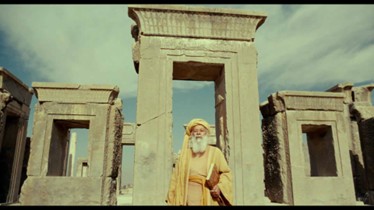
Figure 4: Khayyām represented at Persepolis. A still from Iran Is My Home (Īrān Sarā-yi Man Ast), directed by Parvīz Kīmiyāvī, 1998.
Kīmiyāvī’s intelligence in symbolism is also evident in the casting of the censorship officer. Sa‘īd Pūr-Samīmī is the most well-known actor in this film, playing the role of the censorship officer. It’s interesting to note that at the time the film was made, he was the deputy head of the House of Cinema (under Dāvūd Rashīdī), an institution that acted as a liaison between the government and filmmakers. It’s possible that Kīmiyāvī was aiming for a kind of symbolism with this fact. A key point in the censorship officer’s dialogue is that he considers himself empathetic toward Suhrāb and repeatedly says the common and clichéd phrase in Iran, “I am a subordinate, and I am excused.” In reality, Kīmiyāvī, whether intentionally or not, reminds us that the primary censors in Iran’s cultural institutions are unseen. An individual within the bureaucracy, acting on their behalf, announces the censorship cases—someone who does not believe in what they are doing. This separates most of the people from the government. Furthermore, in the literary debate at the caravanserai, the censorship officer even transforms into a literary figure who passionately delivers the responses of the invisible censors who reviewed the book. Ultimately, the film serves as a cultural odyssey, exploring the long history of cultural censorship in Iran. This deeply rooted issue has historically led to tragic consequences. For example, some of Iran’s most revered mystics and cultural figures, such as Husayn ibn Mansur al-Hallāj, were executed for openly expressing their beliefs and refusing to self-censor.24Ahmad Tālibī’nizhād, Bih Ravāyat-i Parvīz Kīmiyāvī (Tehran: Hikmat-i Sīnā, 2019), 182.
The fluidity of time and space in this film is reminiscent of the concept of “journey through horizons and souls” (sayr-i āfāq va anfus) in Iranian mysticism. This spiritual tradition emphasizes not only a physical journey to achieve enlightenment but also a profound mental and spiritual one for the growth of the human soul. The main character, Suhrāb, who is steeped in the world of Persian poetry, appears to embark on both a physical and spiritual journey. While his physical journey takes him from Kerman to Tehran to obtain a book license, he simultaneously undertakes a spiritual odyssey with great Iranian poets, engaging in a “journey of spiritual wayfaring” (sayr va sulūk) through the desert. Kīmiyāvī’s film is imbued with a sense of mystery, largely due to the skillful use of cinematography and editing that helps convey these complex ideas. For instance, in one scene, poets recite their verses among the ruins of Persepolis, while the camera moves thoughtfully over the historical carvings and crumbling structures. Another example is the camera’s movement from the depths of a Qanāt (underground water channel) toward its opening, revealing an old woman sitting with her back to the light, her veiled figure slowly being enveloped by the darkness of the Qanāt’s entrance.25Rasūl Nazar Zadāh, “Būmī’garāyī-i tajrubī, mustanad’garāyī-i zihnī; naqd-i fīlm-i Īrān Sarāy-i Man Ast,” Māh’nāmah-yi Fīlm 512 (2016): 97.
The documentary-drama style of the film aligns with Kīmiyāvī’s mode in his previous works such as P Like Pelican (P Misl-i Pilīkān, 1972) and The Garden of Stones (Bāgh-i Sangī, 1976) of which he is considered one of the first innovators in Iranian cinema. The main characteristics of docu-drama are the use of non-professional actors (ordinary people), natural outdoor locations, sunlight, and a handheld camera—features that Kīmiyāvī used in both The Mongols and Iran Is My Home. As one of the most significant figures of the Iranian New Wave, Kīmiyāvī often used non-professional actors to express his ideas and influenced famous directors like ‘Abbās Kiyarustamī. Here, as in his other works, despite the importance he places on national and local identity, Kīmiyāvī doesn’t seek to turn his actors into heroes or legends, which is why he chose non-professionals.26Rasūl Nazar Zadāh, “Būmī’garāyī-i tajrubī, mustanad’garāyī-i zihnī; naqd-i fīlm-i Īrān Sarāy-i Man Ast,” Māh’nāmah-yi Fīlm 512 (2016): 96. Kīmiyāvī, in an interview before producing Iran Is My Home, noted that all of his films except Ok Mister (1979) were documentaries.27“Guftugū bā Parvīz Kīmiyāvī” Naqd-i Sīnimā 8 (summer 1996): 200. In the middle of Iran Is My Home he further gives his film a documentary-like, docu-drama feel by bringing up the old custom related to dried-up Qanāts in Kerman.28Rasūl Nazar Zadāh, “Būmī’garāyī-i tajrubī, mustanad’garāyī-i zihnī; naqd-i fīlm-i Īrān Sarāy-i Man Ast,” Māh’nāmah-yi Fīlm 512 (2016): 97.
A further innovation is his casting of the same actors in dual roles, as both classical poets and contemporary travelers. Thus, Firdawsī, Khayyām, and Saʿdī appear simultaneously as passengers in Suhrāb’s car. The director masterfully aligns the personalities of these modern characters with the philosophical content of the poems written by their historical counterparts. This technique is highlighted when the car breaks down on Suhrāb’s return trip. The passengers react in a manner reminiscent of the poets they play. The passenger who portrays Saʻdī in other scenes scolds the driver (who plays Firdawsī), saying, “I told you to check the car before the trip, but you were negligent.” The passenger playing Khayyām calmly counters that such issues are simply a natural part of life and not worth getting worked up over. Through these dialogues the film brings the philosophies of Saʻdī, who emphasized wisdom and caution, and Khayyām, who championed a more carefree, in-the-moment approach to life, into the modern era.
Desert as a symbol of Iran and cultural complications
Kīmiyāvī’s sustained attention to natural landscapes, particularly desert, is evident throughout his films. Iran Is My Home opens in the desert, and through numerous extended sequences, remains in that environment until the film’s conclusion. In the opening scene, the protagonist Suhrāb walks across the desert while chanting verses from five canonical Persian poets, who themselves appear and recite their verses. For Kīmiyāvī, the desert functions as a symbolic space in which human endeavors are rendered futile; the characters’ disorientation within its barren expanse dramatizes this theme. He had earlier employed the same symbolic strategy in The Mongols (1973).29Javad Abbasi and Ghasem Gharib, “From Mongols to Television and Cinema,” In Cinema Iranica (Encyclopaedia Iranica Foundation, 2025), https://cinema.iranicaonline.org/article/from-mongols-to-television-and-cinema-the-mongols-mughulha-parviz-kimiyavi/ At the same time, given that deserts constitute a substantial portion of Iran’s territory, their presence in a film explicitly concerned with representing the nation seems almost inevitable. Kīmiyāvī also foregrounds drought, one of the most persistent natural challenges of the Iranian plateau. In the film, Firdawsī, reimagined as a modern taxi driver, warns that drought has historically destroyed settlements and disrupted the lives of rural and desert communities. Finally, it is not clear if there is any connection between desert and cultural wilderness in the time of production or not.
To foreground Iran’s climatic conditions, Kīmiyāvī situates Suhrāb’s hometown in Kerman, one of the country’s most arid provinces. The protagonist repeatedly travels between Kerman and Tehran in pursuit of a publication license for his book. During these journeys—filmed on desert roads in a dilapidated car with fellow passengers—Suhrāb is accompanied by medieval poets, most notably Khvāju-yi Kirmānī, who embodies the city’s cultural legacy. In one scene, Hāfiz̤ recites poetry at the Bam Citadel, acknowledging his own indebtedness to Khājū-yi Kirmānī.
Caravanserai: From Refuge to Cultural Metaphor
The caravanserai, an enduring feature of Iranian architecture and material culture, acquires special resonance in relation to the desert. Kīmiyāvī highlights this motif in Iran Is My Home just as he had in The Mongols. Their abundance across Iran, their frequent abandonment, and their preservation made caravanserais both accessible and evocative filming sites. Significantly, Kīmiyāvī reused the same caravanserai he had filmed 25 years earlier. By choosing this site to represent the Ministry of Culture and Islamic Guidance, he employs a deliberate metaphor: the caravanserai becomes a symbolic courtroom where debates unfold. More broadly, the caravanserai evokes the Iranian cultural imagination of perpetual transience—an unstable space of arrivals and departures, mirroring the precariousness of cultural life.30Hasan Anvarī, Farhang-i Kināyāt-i Sukhan, vol. 2 (Tehran: Sukhan, 2005): 1222.
Iranian Heritage: From Monuments to Qanāt Rituals
Beyond caravanserais and Persepolis, Kīmiyāvī integrates other iconic markers of Iranian civilization into the film’s geography and locations, especially those tied to Kerman. The Bam Citadel, one of Iran’s world heritage sites, provided him the opportunity to shoot some scenes. Within its walls five great Persian poets recite their poems. Iran Is My Home is one of the last films recorded at the Bam Citadel before the devastating earthquake of 2003 and its widespread destruction, which makes the film a historical document in its own right.
While depicting Suhrāb’s journey, Kīmiyāvī also gives a nod to Iranian music. On his second return journey from Tehran to Kerman, as Suhrāb becomes separated from the other passengers, an old man joins the group. He is a surnā (an ancient wind instrument) player. The surnā is played in various regions of Iran, but the instrument’s features differ from one region to another. The passengers, who have given up hope of finding Suhrāb, ask the old Kermani surnā player to play the instrument, hoping Suhrāb will hear it and appear. The old man plays the surnā, but there is no sign of Suhrāb. The surnā player gets off after a while to go to a village to perform at a wedding ceremony. From here the film takes the audience to another Iranian world heritage site, the Qanāt. It is revealed that the wedding is actually a traditional and lesser-known ceremony carried out in some parts of Iran (including Kerman and Khurāsān). It was held to bring water back to a dry Qanāts, a practice that continued until recently.31Javad Abbasi, Mīlād Parniyānī, Jamshīd Qashang, Tārīkh-i Khushk’sālī dar Khurāsān Razavī (Mashhad: Intishārāt-i Jahād-i Dānishgāhī, 2024): 396. When Suhrāb reaches the Qanāt’s well, in a sequence , local women, gathered there for the ceremony appear in main story, and explained the details to him. The sequence, ethnographically rich, could stand alone as a documentary.32Ahmad Tālibī’nizhād, Bih Ravāyat-i Parvīz Kīmiyāvī (Tehran: Hikmat-i Sīnā, 2019), 184.
Tradition and Modernity: From Qanāt to Metro
In the final stage of his wandering in the desert, Suhrāb encounters women recounting the story of Suhrāb ‘Alī, who has been living inside the Qanāt for seven years and will not come out. The women explain that Suhrāb ‘Alī is a man who was designated the “Groom of the Qanāt” in a ritual that failed to restore water, and has lived reclusively underground ever since. After hearing the story, Suhrāb decides to go into the well and help Suhrāb ‘Alī. It seems that he is manifested as Suhrāb’s doppelgänger at the bottom of the Qanāt.33Rasūl Nazar Zadāh, “Būmī’garāyī-i tajrubī, mustanad’garāyī-i zihnī; naqd-i fīlm-i Īrān Sarāy-i Man Ast,” Māh’nāmah-yi Fīlm 512 (2016): 97. However, the character of Suhrāb ‘Alī is more than just a psychotic person or a doppelgänger for the researcher; other points are hidden in his character, name, and actions. With Suhrāb ‘Alī, Kīmiyāvī attempts to both symbolize the fate of the main character and allude to Iranian mythology. The hybrid name “Suhrāb ‘Alī” fuses pre-Islamic mythology with Shi’i devotion, encapsulating Iran’s cultural contradictions.
The dried Qanāt symbolizes the decline of cultural heritage. It eventually transforms into a metro tunnel, dramatizing the erosion of tradition by modern urban life —a constant concern for Kīmiyāvī. Additionally, the drying up of the Qanāt wells may be linked to censorship, as it represents a departure from the source of ancient Iranian literature and culture.34Rasūl Nazar Zadāh, “Būmī’garāyī-i tajrubī, mustanad’garāyī-i zihnī; naqd-i fīlm-i Īrān Sarāy-i Man Ast,” Māh’nāmah-yi Fīlm 512 (2016): 97. The dried-up Qanāt, which has been converted into a metro, suddenly becomes a symbol of Iranian history and civilization, with symbols visible on the train cars. In this strange scene, the train cars are transformed into the different periods and dynasties that ruled Iran, and the Achaemenid, Safavid, Qājār, and Pahlavī train cars pass in front of Suhrāb. In these fleeting scenes, the director tries to show the audience the most important icons of each dynasty; Achaemenid with the carvings of Persepolis, Safavids with a tār (a musical instrument) and Qizilbāsh, mistakenly wore blue hat instead of red hats. The Qājār train car aims to present a picture of a dark era: Āqā Muhammad Khan Qājār, the founder of the Qājār dynasty, holds two human skulls, while a number of women in black veils (chador) weep for the dead, and other Qājār courtiers burn books and documents. On the Pahlavi train car, a person with their lips sewn shut is visible, which could be a reference to Farrukhī Yazdī and his lips being sewn shut in prison, which may refer to the prevalence of repression and censorship during this era.
The final scene of the film also reflects Kīmiyāvī’s perception of the cultural situation in Iran at the time of the film’s production. Suhrāb, en route to the Ministry of Culture and Islamic Guidance again gets into a taxi, driven by director Kīmiyāvī. As the taxi moves people on the street call out their destination street names, all of which are named after the famous Iranian poets, but the driver does not pick them up. By each street name, a related poet appears in the passenger seat of the taxi. At the same time, a radio broadcaster reporting on Tehran’s traffic announces the street names and describes the heavy traffic as a familiar problem in the city. It seems that the director suggests that, by this time, people remember only the names of historical cultural figures like Ghazzālī, Rūdakī, Abū Sa‘īd Abī al-Khayr, Manūchihrī Dāmghānī, and Khāqānī, while their teachings are largely ignored.

Figure 5: Final shot of the film Iran Is My Home (Īrān Sarā-yi Man Ast), directed by Parvīz Kīmiyāvī, 1998.
Cultural Satire and Economic Constraints
After enduring censorship Suhrāb receives a publication permit but is denied access to government-subsidized paper, forcing him toward the private marketplace. Kīmiyāvī satirizes this final obstacle—the economic barrier to cultural production—through humorous imagery such as poets pedaling on a five-seated bicycle while reciting verses on independence. A meeting with a profit-driven merchant further underscores the conflict between cultural integrity and materialist priorities. The intervention of Khāju-yi Kirmānī, whose poetry stresses divine reliance, and Saʿdī, whose Gulistān criticizes mercantile greed, deepens this critique. Ultimately, despite his efforts, Suhrāb cannot publish his life’s work, and the film concludes with images of futility and despair in the desert—his fate paralleling the tragic Suhrāb of the Shāhnāmah.35Ahmad Tālibī’nizhād, Bih Ravāyat-i Parvīz Kīmiyāvī (Tehran: Hikmat-i Sīnā, 2019), 183.
Conclusion
The central theme of Iran Is My Home is the fate of Iranian culture and civilization amidst the tension between tradition and modernity from an ideological administration. Kīmiyāvī’s cultural concerns, evident since the production of The Mongols in the 1970s, resurfaces here with sharper focus: whereas television once symbolized the encroachment of modernity, now the urban-industrial environment—exemplified by the metro, combined with censorship, threatens to obliterate traditional lifeways, from qanāts to poetry. The film thus situates itself within a larger discourse on Iranian identity, emphasizing Kīmiyāvī’s lifelong commitment to cultural preservation. Laden with layered symbolism, historical allusions, and ethnographic detail, Iran Is My Home emerges as both a cinematic meditation on Iranian identity and a summative work, perhaps conceived by the director as his final contribution to national cinema.
Introduction
On April 30, 1907, an Iranian writer, likely Mu’ayyid al-Islām Kāshānī, published in the newspaper Habl al-Matīn the question: “Is Iran ill?” and answered in the affirmative. This 44-year-old intellectual, who had spent 14 years publishing one of the most popular journals before and during the Constitutional era and played a key role in the Constitutional Revolution by writing critical articles on political despotism and advocating for freedom and the rule of law, believed that Iran was afflicted by a chronic disease.1Īraj Pārsīnizhād, “Habl al‑Matīn Matīnī,” Iran‑Namag, year 28, no. 2 (Summer 2013), accessed December 11, 2025, https://www.irannamag.com/article/حبل¬المتین-متینی/ He believed that Iran’s worsening condition was the result of a deliberate disregard by its people, himself included: “Every day, we saw Iran getting weaker… its face growing pale… yet we were too full of pride to notice.” He went on to suggest: “We need to bring the doctors to the sick mother’s bedside so that anyone who knows how to heal her can share their knowledge.”2Habl al-Matīn, April 30, 1907, 1.
The metaphor of the “mother” to describe the homeland, used in the early stages of modern Iran’s formation, coupled with the portrayal of each Iranian as a child who, through indifference, witnesses the suffering and violation of their mother, evoked a profound sense of shame. This deeply influenced the “modern Iranian psyche” and the collective emotional consciousness of Iranians at the dawn of modernity.3Mostafa Abedinifard, “Iran’s ‘Self-Deprecating Modernity’: Toward Decolonizing Collective Self-Critique,” International Journal of Middle East Studies 53, no. 3 (2021), 17. https://doi.org/10.1017/S0020743821000131. Iranian modernity fundamentally emerged from the emotional responses of various Iranian elites to the country’s military confrontations with imperialist Western powers in the early 19th century.4Firoozeh Kashani-Sabet, “Hallmarks of Humanism: Hygiene and Love of Homeland in Qajar Iran,” American Historical Review 105, no. 4 (2000): 1171. The defeats of Iran in two series of wars with Russia, followed by the humiliating treaties of Gulistān (1813) and Turkamānchāy (1828), fostered a sense of collective shame and inferiority among Iranian elites in the face of Europe’s technological and military superiority. At the same time, these events framed the West as a mocking and judgmental “Other.”5Mostafa Abedinifard, “Iran’s ‘Self-Deprecating Modernity’: Toward Decolonizing Collective Self-Critique,” International Journal of Middle East Studies 53, no. 3 (2021), 3. https://doi.org/10.1017/S0020743821000131.
In this context, the West gradually emerged as an idealized “Other” for Iranians, its reproachful gaze ever-present, while Iranians became increasingly preoccupied with the fear of being “mocked and ridiculed by the world.”6Sur-i Israfil, September 19, 1907, 5; “Iftitāh-i Majlis va Jaryān-i Intikhābāt,” Jārchī-i Millat, August 27, 1915, 2. According to Abedinifard, the fear of being ridiculed was central to the formation of modern Iranian identity, leading to the discourse of “self-deprecating modernity,” which stemmed from mid-19th-century intellectuals’ anxieties about Europe and the self-monitoring encouraged by the European gaze.7Mostafa Abedinifard, “Iran’s ‘Self-Deprecating Modernity’: Toward Decolonizing Collective Self-Critique,” International Journal of Middle East Studies 53, no. 3 (2021). https://doi.org/10.1017/S0020743821000131. Within this framework, Iranian modernists viewed the critique, reproach, and self-deprecation of Iranian practices and discourse as crucial for advancing Iran and its people toward progress and modernization.8Mohamad Tavakoli-Targhi, Refashioning Iran: Orientalism, Occidentalism and Historiography (New York: Palgrave, 2001. “Mockery based on shame” became a central theme in much of the elite and popular social satire and critique produced by modernist writers such as Muhammad ‛Alī Jamālzādah, Sādiq Hidāyat, Īraj Pizishkzād, and Ja‛far Shahrī.9Mostafa Abedinifard, “Iran’s ‘Self-Deprecating Modernity’: Toward Decolonizing Collective Self-Critique,” International Journal of Middle East Studies 53, no. 3 (2021): 17, https://doi.org/10.1017/S0020743821000131.
Over the past century and a half, the belief that social problems are rooted in individual characteristics—be they psychological, racial, personal, or identity-related—has shown itself to be a double-edged sword. On one hand, it has allowed conservative forces to dismiss the possibility of social reform by attributing societal problems to these traits. On the other hand, it has given progressive forces an opportunity to demonstrate the practicality of their ideals, even while acknowledging that these same traits could cause ruptures or stagnation in realizing those ideals. Following each setback in idealistic modernization—be it the unrealized reforms of Nāsir al-Dīn Shah (1848–96), the unfulfilled promises of the Constitutional Revolution (1905–11), the unachieved aims of the 1950s nationalist movement and the 1979 Revolution, or later reform efforts under the Islamic Republic—a renewed discourse on Iran’s national characteristics emerged. While these discourses vary in their assumptions and approaches, they all involve comparison with an idealized “Other” and evoke a sense of collective shame.10Ibrāhīm Tawfīq, Sayyid Mahdī Yūsifī, Hisām Turkamān, and Ārash Haydarī, Bar’āmadan-i zhānr-i khulqiyyāt dar Īrān (The Emergence of the Folk Characteristics Genre in Iran) (Tehran: Pazhūhishgāh‑i Farhang, Hunar va Irtibātāt, 2019), 57.
A key insight from Abedinifard, which underpins this article, is that this mocking and shame-inducing perspective, despite its historical functions, comes at the cost of “othering” or marginalizing specific identities within Iranian society—such as rural versus urban populations, non-Persian versus Persian groups, and women versus men. From this perspective, a self-deprecating literature is produced within a complex network of power relations in Iranian society and culture. Regardless of the intentions of its creators, it inevitably reinforces and regulates social norms—norms that, paradoxically, were the very impetus for the creation of these critical works.11Ibrāhīm Tawfīq, Sayyid Mahdī Yūsifī, Hisām Turkamān, and Ārash Haydarī, Bar’āmadan-i zhānr-i khulqiyyāt dar Īrān (The Emergence of the Folk Characteristics Genre in Iran) (Tehran: Pazhūhishgāh‑i Farhang, Hunar va Irtibātāt, 2019), 57. Abedinifard introduces the concept of “decolonizing collective self-criticism,” arguing that in non-colonial forms of self-reflection, there is no trace of collective shaming or self-deprecation in relation to the idealized Western Other. Instead, self-reflection serves to prevent inhumane actions and promote humane behavior.12Mostafa Abedinifard, “Iran’s ‘Self-Deprecating Modernity’: Toward Decolonizing Collective Self-Critique,” International Journal of Middle East Studies 53, no. 3 (2021): 17, https://doi.org/10.1017/S0020743821000131. This study seeks to reexamine Iranian social cinema through the lens of its role in challenging self-deprecating attitudes and fostering non-colonial self-criticism.
Research Problem and Theoretical Lens
Since the Green Movement in 2009, and especially after the November 2017 uprisings advocating equality-focused politics, Iran has experienced a significant social shift.13Ibrāhīm Tawfīq and Sayyid Mahdī Yūsifī, “Zan, Zindagī, Āzādī: Inqilāb‑i Millī yā Inqilāb‑i Mardum?” (Woman, Life, Liberty: National Revolution or People’s Revolution?), Naqd-i Iqtisād-i Siyāsī (December 21, 2022), accessed December 11, 2025, https://pecritique.com/2022/12/21/. According to Ibrāhīm Tawfīq, following these uprisings, there was an increase in self-blame and an emphasis on the negative traits and values of Iranians that hindered social change. This trajectory ultimately gave rise to a “movement against humiliation” in 2022, under the slogan Women, Life, Liberty.14Ibrāhīm Tawfīq and Sayyid Mahdī Yūsifī, “Zan, Zindagī, Āzādī: Inqilāb‑i Millī yā Inqilāb‑i Mardum?” (Woman, Life, Liberty: National Revolution or People’s Revolution?), Naqd-i Iqtisād-i Siyāsī (December 21, 2022), accessed December 11, 2025, https://pecritique.com/2022/12/21/.
The formation of a “movement against humiliation” in a society that has historically regarded self-deprecation as a means of pursuing the long-held dream of “joining the caravan of civilization” is a significant phenomenon, warranting in-depth sociological and social-psychological study. However, it is clear that this shift did not occur suddenly; rather, it emerged from the gradual actions of social forces, each representing a distinct and insightful area for research. Social cinema, as a powerful cultural and social force, has played a role in reshaping Iranians’ critical self-deprecation. From this perspective, cinema is understood as a force that, by critically reflecting on the present, reveals the fragility of the social order, promotes dialogue and the questioning of normalized values, and contributes to the formation of collective meaning while generating new ideas.
To enhance theoretical and methodological precision, this study focuses on the thirteen-year interval between the Green Movement and the Women, Life, Liberty Movement—a period marked by intermittent uprisings that provides a context for examining shifts in social attitudes. During this time, the psychological and social conditions of Iranian society gave rise to numerous films exploring themes of protest, critiques of the existing order, and challenges to long-standing social beliefs—many of them comedies with a sharply satirical tone. Focusing on social cinema and using criteria related to authorship, festival recognition, public dialogue, reflective discourse, and potential for change, four films were selected as case studies: Tales (Qissah’hā, Rakhshān Banī-i‛timād, 2011), Sofa (Kānāpah, Kiyānūsh ‛Ayyārī, 2016), A Hero (Qahramān, Asghar Farhādī, 2021), and Leila’s Brothers (Barādarān-i Laylā, Sa‛īd Rūstā’ī, 2022). These films were analyzed using an ethnographic-methodological approach to examine how they contributed to strengthening critical self-deprecation.
This approach understands every society as possessing an internal order that is produced and sustained by its members. Although this order appears stable, it is historically contingent and inherently fragile. Individuals may resist it, but such resistance is typically met with pressures aimed at restoring conformity. Over time, gradual shifts and new values emerge through the actions of “order-breakers,” who bear the social costs of challenging established norms. Social order is thus continuously and creatively reconstructed, and the ethnographic-methodological analyst demonstrates how new orders arise from the dynamic interplay between “order-breakers” and “order-pursuers.” As Harold Garfinkel argues, the sociologist’s proper object of study is the real world of everyday life: the organized, ongoing performance of coordinated activities carried out by individuals who not only know how to accomplish them routinely but do so with considerable skill and practical subtlety.15Harold Garfinkel, Studies in Ethnomethodology (Englewood Cliffs, NJ: Prentice-Hall, 1967), 3.
Drawing on Abedinifard’s distinction between “colonial self-deprecation” and “non-colonial self-criticism,” this article analyzes Tales, Sofa, A Hero, and Leila’s Brothers. “Colonial self-deprecation” refers to a form of collective shaming grounded in comparison with an idealized Other that reinforces a self-deprecating order, whereas “non-colonial self-criticism” avoids such idealized Othering while recognizing both the fragility of self-deprecation and the potential for creating new forms of order.
Tales
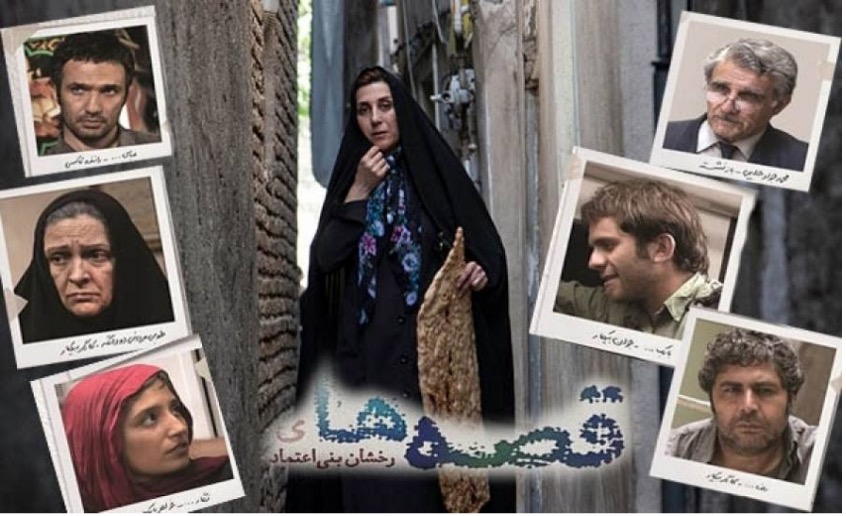
Rakhshān Banī-i‛timād’s Tales (2011) came more than a century after Mu’ayyid al-Islām lamented in his newspaper that Iran was “sick.” Two years after the suppression of the Green Movement, Banī-i‛timād turned her camera to the lives, dreams, and struggles of ordinary Iranians, revealing the enduring fragility of both the nation and its people.
Figure 1: Poster for the film Tales (Qissah’hā), directed by Rakhshān Banī-i‛timād, 2011.
Tales opens at night in the confined space of a taxi. The driver, ‛Abbās (Muhammad Rizā Furūtan), speaks to an inattentive passenger about his dream of leaving Iran to seek refuge with the “ideal Other.” Years earlier, he had sold his home and handed the proceeds to swindlers who promised him a work visa abroad—a deception that led to profound suffering for his mother, Tūbā Khānum (Gulāb Ādīnah). Yet the mother never shames him or adds to his pain. In the film, Tūbā embodies the figure of “Mother Iran” in historical memory: despite enduring numerous hardships, she remains devoted to the welfare of her children.
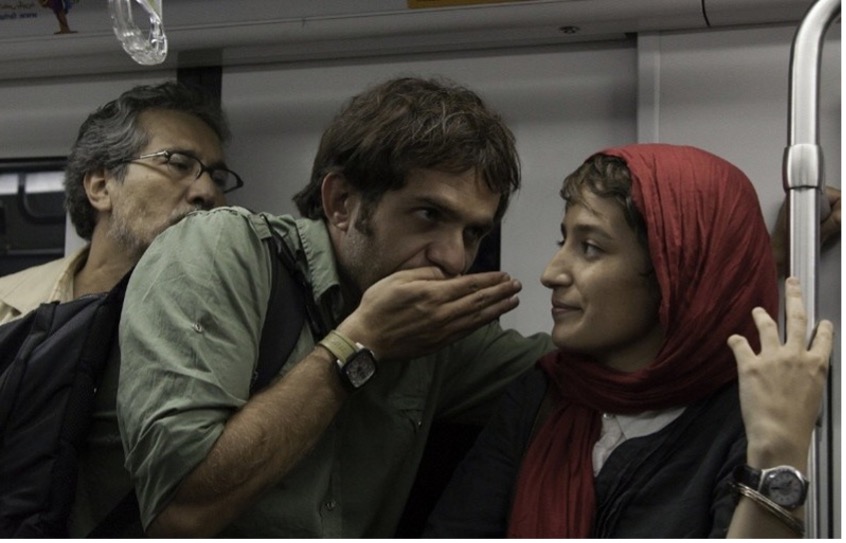
Figure 2: A still from the film Tales (Qissah’hā), directed by Rakhshān Banī-i‛timād, 2011.
Tūbā has another son who was arrested during street protests and requires a substantial bail. To raise the necessary funds, she turns to a charity for a loan. When asked what crime her son committed, she replies, “He took to the streets to make his voice heard, like other young people.”16Tales, directed by Rakhshān Banī-i‛timād (Iran, 2011), 00:41:30. The charity worker, however, tells her that she should not have allowed her son to join the protests and that the charity cannot help with the bail. Just as her son—like many young people—could not make the authorities listen, Tūbā cannot persuade the charity worker. The scene ends with her crying, coughing, and collapsing as others look on without concern.
In another scene, Tūbā tries to claim her unpaid wages but becomes lost in bureaucratic confusion. She asks a polite elderly man (Mahdī Hāshimī), who has also been waiting for hours, to help her write an administrative letter. The man begins helping her by writing the letter, but before he can finish it, through a sudden turn of events, he manages to force his way into the manager’s office—the very office he had been waiting hours to enter. The manager shirks his administrative responsibility and rudely refuses the man’s request, expelling him from the office. Frustrated, the elderly man shouts in the crowded hallway, yet none of the onlookers, including Tūbā, offers a word of support or empathy; they merely watch, worried and helpless.
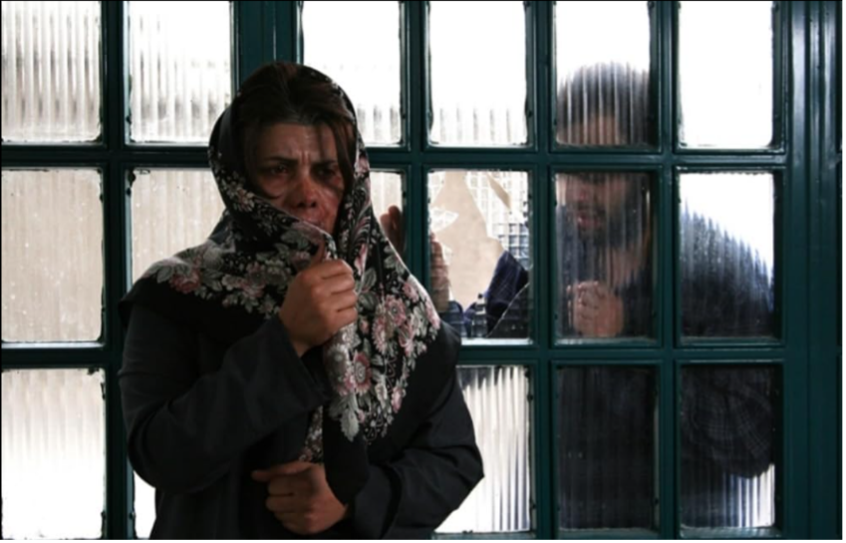
Figure 3: A still from the film Tales (Qissah’hā), directed by Rakhshān Banī-i‛timād, 2011.
The film highlights the difficulties Iranians face in conducting effective dialogue and fostering constructive communication. It portrays the loneliness and confusion of individuals who are unable either to express themselves to others or to listen attentively to others’ narratives. People—whether managers or clients, protesting workers or security personnel, couples, or parents and children—become frustrated when their words are misunderstood and attempt to compel others to listen through angry outbursts. In this context, those with greater power can ultimately impose their will, while those with less power have no recourse other than “escape” or “deception.” Over time, “cunning” emerges as a fundamental mode of communication, without which social interactions cannot function.17William O. Beeman, Language, Status, and Power in Iran (Bloomington: Indiana University Press, 1986), 54.
According to William Beeman, in Iranian culture, “cunning” is a strategy employed by those with less power to shape how others perceive a situation, thereby prompting them to act in ways that advance the cunning individual’s goals.18William O. Beeman, Language, Status, and Power in Iran (Bloomington: Indiana University Press, 1986), 54. Aware of this subtle cultural nuance, Banī-i‛timād, after depicting Tūbā’s failed dialogue in the domestic sphere and the elderly man’s unsuccessful interaction in the public sphere, presents a pivotal scene featuring a conversation between a sister (Nigār Javāhiriyān) and a brother (Bābak Hamīdiyān) on the subway. They discuss the details of their plan to extort their father by pretending that his daughter has been taken hostage. Hoping that he will pay the demanded sum out of concern for his “reputation,” they plan to use the money to settle the son’s debts and extricate him from his difficult situation.
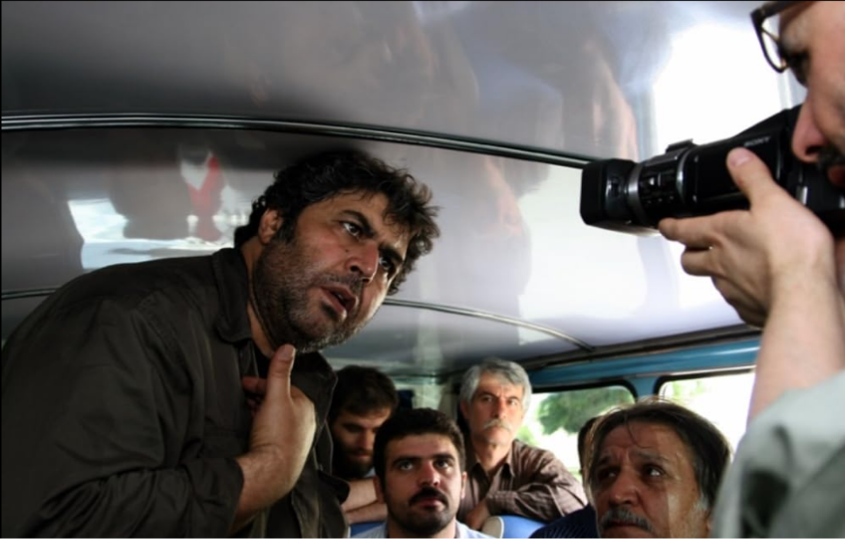
Figure 4: A still from the film Tales (Qissah’hā), directed by Rakhshān Banī-i‛timād, 2011.
An analysis of these three scenes, from an ethnographic perspective, clearly illustrates the methods and logic through which order based on cunning is established in everyday interactions among Iranians. In a context where reliance on deceptive cleverness becomes a central strategy for achieving one’s goals, trust and empathy are difficult to sustain, as individuals cannot reliably discern which narratives are genuine and which are fabricated. This, in turn, generates a vicious cycle of “powerlessness–deceptive cunning–distrust,” fostering cautious and isolated social behavior and reinforcing corrupt and ineffective social systems.
What distinguishes this film from works exploring a theme of colonial-induced self-deprecation is that it does not leave the audience feeling helpless and humiliated in the face of this tragic cycle. Instead, by depicting a conversation between Hāmid (Paymān Ma‛ādī) and Sara (Bārān Kawsarī) at the end of the film, Banī-i‛timād demonstrates that being trapped in this situation is neither inevitable nor unchangeable for Iranians. Individuals can, if they choose, break free from this cycle and create a new order in their relationships. In this key scene, Banī-i‛timād shows both the ability to move beyond othering and the personal and cultural obstacles to successful dialogue, emphasizing the individual’s capacity to overcome them.
Hāmid was a talented student who was expelled from university due to his political activities and is now forced to make a living by driving for a non-governmental center that supports vulnerable women. Sara, on the other hand, was formerly addicted but, with her family’s help, managed to recover and has now devoted her life to volunteering at the same private center, assisting women and girls struggling with addiction. In this sense, Hāmid and Sara are examples of people who, caught in a corrupt and inefficient structural system, are either “abandoned” or “punished,” and, feeling bitter and wounded, keep their distance from one another while simultaneously suffering from their tense relationship. In the final scene, Hāmid ultimately decides to attempt to change the grim situation they have both been experiencing through dialogue with Sara.
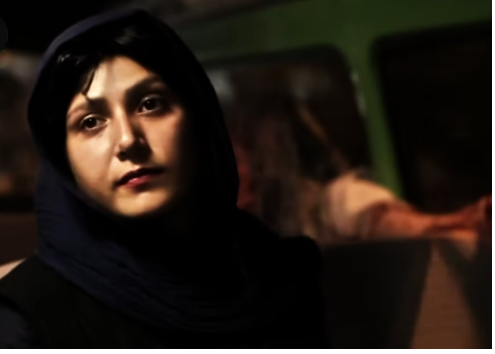 |
 |
Figures 5-6: Stills from the film Tales (Qissah’hā), directed by Rakhshān Banī-i‛timād, 2011.
In the confined space of the car at night, they engage in an emotionally tense conversation. By assigning labels to each other and belittling one another, they slip into mockery and hurtful words, eventually withdrawing into frustrated silence. Yet their shared desire to communicate pushes them to try again, and they eventually manage to recognize each other’s preconceived ideas. By creating an honest and equal space, they make genuine dialogue possible. However, this possibility is portrayed as fragile—easily lost with even a small mistake. Realizing they cannot escape their difficult situation—where their “positions are unclear”—without talking, Hāmid and Sara work together to keep their interaction honest and free of power struggles.
Both care about helping others and improving society, but they disagree on how change should be brought about. Hāmid sees Sara’s efforts as limited and superficial, while Sara accuses Hāmid of being overly ideological and out of touch with reality. In the end, Hāmid tells her: “Let me talk. You’ve built a wall around yourself; you neither look beyond it nor at yourself… just live your normal life.”19Tales, directed by Rakhshān Banī-i‛timād (Iran, 2011), 01:18:30. These words, and the way the idea of a “normal life” arises in the conversation, reveal another truth about everyday interactions among Iranians: whether focused on their own problems or trying to help others and bring about social change, they often pay little attention not only to others but also to themselves. It is only through careful attention to “the self, the other, and the relationship” that the absence of a normal life within daily routines and collective practices can be discerned. In Tales, Banī-i‛timād, alongside Sara and Hāmid, invites the audience to engage in this same attentive reflection.
Reflecting on what truly matters in life pushed Hāmid and Sara to talk about love and being loved. Sharing their feelings helped them come out of their shells, open up, and engage in an honest conversation. Hāmid told Sara that, even though he knew she was HIV-positive, he loved her and wanted to be close. By releasing the burden of keeping this secret, Sara was able to dismantle the walls she had built around herself. Breaking free from their “isolating distrust” also freed them from the fear of judgment and the “fear of losing face,” paving the way for their story to come together and for them to become active participants in a shared narrative. Though night still lingered and the space remained confined, a faint hope began to take root.
Sofa
In Iranian culture, “reputation” shapes one of the most dominant social patterns, and the fear of losing it affects not only everyday decisions but also many of life’s more fundamental choices.20Farzad Sharifian, “L1 Cultural Conceptualisations in L2 Learning: The Case of Persian‑Speaking Learners of English,” in Applied Cultural Linguistics: Implications for Second Language Learning and Intercultural Communication, ed. Farzad Sharifian and Gary B. Palmer (Amsterdam/Philadelphia: John Benjamins Publishing Company, 2007), 36, https://doi.org/10.1075/celcr.7.04sha. In this culture, the expression “keeping your face red with slaps” refers to someone who goes to great lengths to hide their illness or poverty, even slapping their own face to make it appear healthy and conceal any signs of paleness. Kiyānūsh ‛Ayyārī built his film Sofa (2016) around this idea, using it to reveal how truth is concealed and how life in Iranian culture often becomes a complex performance.
Figure 7: Poster for the film Sofa (Kānāpah), directed by Kiyānūsh ‛Ayyārī, 2016.
The film opens with Hūshang (Farhād Āyīsh), a middle-aged, well-respected man, staring at a few relatively intact couches left beside a park trash bin and pretending they belong to him. Moments later, when no one is around, he and a street cleaner carry one of the couches to his home to replace his old, worn-out one. Unable to afford a new couch, Hūshang does this because a suitor is coming to propose to his daughter, and it is important that the house appear respectable so the suitor’s family will not notice his poor financial situation.
As soon as his wife (Ātūsā Anvāriyān) sees the second-hand couch, she panics and accuses him of bringing “other people’s trash” into their home. She is distressed that even the street cleaner, who often receives food and tea from them, now knows how “poor” they are, and she believes her husband has ruined their “reputation.” Hearing her shouting, the daughters rush in, worried that someone might have seen their father carrying “other people’s trash” into the house. Vīdā (Fargul Farbakhsh), for whom her father brought the couch to impress her suitor, exclaims, “If even one neighbor saw it, we should all kill ourselves.”21Sofa, directed by Kiyānūsh ‛Ayyārī (Iran, 2016), 00:09:15. In the end, however, they agree that if they wash and clean the couch and replace the old one, it will at least look more respectable. Finally, the old couch—symbolizing all that Iranians consider shameful and spend enormous amounts of time, energy, and stress trying to hide from others—is moved to the bedroom, the “backstage” of the home.
Figure 8: A still from the film Sofa (Kānāpah), directed by Kiyānūsh ‛Ayyārī, 2016.
With an emphasis on two domains of symbolic cultural opposition that play a fundamental role in Iranian life—namely, the opposition between appearance and reality (andarūnī and bīrūnī) and the opposition between hierarchy and equality22 William O. Beeman, Language, Status, and Power in Iran (Bloomington: Indiana University Press, 1986), 35.—‛Ayyārī portrays the exhausting complexity of hidden and performative social relations. At the engagement party, the groom’s mother (Farībā Kāmrān) notices that the old couch, left next to a street trash bin, has ended up in her future daughter-in-law’s home. Until then, the bride’s family had tried to conceal their financial inferiority, and both families had pretended to be equal. But when it becomes clear that the bride’s family valued a couch the groom’s family considered trash, the balance of status between the two families is completely disrupted. The groom’s mother, at the first opportunity, indirectly made Vīdā understand what had happened, thereby turning the nightmare of disgrace into reality for Vīdā and her family. Vīdā became short of breath; in a desperate attempt to escape the situation, she tore the couch with a kitchen knife. When Vīdā’s mother realized what had happened, she said: “I want to stick this knife in my heart.”23Sofa, directed by Kiyānūsh ‛Ayyārī (Iran, 2016), 00:31:34.
Figure 9: A still from the film Sofa (Kānāpah), directed by Kiyānūsh ‛Ayyārī, 2016.

Figure 10: A still from the film Sofa (Kānāpah), directed by Kiyānūsh ‛Ayyārī, 2016.
The two families never openly discussed the couch issue and were unable to resolve the distressing situation through dialogue. Vīdā did not answer the calls of her fiancé, Mustafā (Bābak Hamīdiyān), and Mustafā was likewise unable to create a space for honest and constructive conversation about the matter. Each character in the film suffers alone from the situation, and their inability to express or share this suffering—or to work together to overcome it—manifests as aggressive anger, expressed through the violent tearing apart of couches, reckless driving, shouting, insults, and humiliation, ultimately culminating in the father’s tragic death in isolation and rejection.
The film goes beyond a humiliating portrayal of secrecy and fear of disgrace in Iranian culture, as the director not only shows the high costs of resisting the social order but also turns the making of the film itself into an act of defiance against filmmaking norms in Iran. The female actors wear wigs instead of veils, making the film a violation of the mandatory hijab law—a law that, ironically, has long been tied to preserving the honor of women, families, and the Islamic regime.
Figure 11: A still from the film Sofa (Kānāpah), directed by Kiyānūsh ‛Ayyārī, 2016.
In films produced under the Islamic Republic, women—even when portraying a wife alone at home with a man cast as her husband—are required to wear the hijab, a rule that continually reminds Iranian audiences of the staged nature of both the scene and the human relationship it depicts. In this way, ‛Ayyārī sought to ease the discomfort of performing artificial scenes imposed by social rules. Rather than requiring female actors to wear hijabs, he had them wear wigs, thereby reducing the sense of forced artificiality—much as the film’s father figure navigates social pressure to appear financially secure at minimal cost. Yet it seems that an unseen hand punished them both for not fully adhering to social constraints: the father dies alone in the film, and ‛Ayyārī’s film did not receive state permission for screening. ‛Ayyārī suggests that challenging a rigid social order—one that generates isolation, anger, exhaustion, and a profound inability to communicate or solve problems—demands an exceptionally high cost. But instead of frightening or discouraging people, leaving them helpless and humiliated before rigid social rules, he encourages the audience to persist on this path.
Figure 12: A still from the film Sofa (Kānāpah), directed by Kiyānūsh ‛Ayyārī, 2016.
After the father’s death, Vīdā moves the old couch from the bedroom to the living room. Her younger sisters try to stop her, saying, “This couch is terrible” and “This will ruin Dad’s honor,” but their mother, the protector of family honor in the film, does not resist. Mustafā’s family comes to offer condolences for the father’s death, and Vīdā asks them to sit on the old, worn, and dirty couch—the very one that had caused all the earlier trouble. In this moment, the heavy cost of concealing private matters in everyday life—so evident at the beginning of the film—suddenly seems to disappear. Mustafā’s family sits on the couch they were never meant to see; the mother watches them indifferently, and Mustafā, like an audience member, sits calmly and smiles, as if finally relieved of a great burden.
By avoiding clichéd comparisons of negative Iranian cultural patterns with an idealized superior culture and emphasizing the flexibility of rigid traditions, the film offers a successful example of non-colonial self-criticism in Iranian social cinema.
A Hero
Moral perfectionism has deep roots in Iranian culture, nourished both by the Manichean notions of right and wrong and the utopian beliefs of ancient Iran, as well as by the doctrine of infallibility (‛ismat) in Twelver Shi’ism.24Simon Theobald, “The Perils of Utopia: Between ‘Ethical Static’ and Moral Perfectionism in Iran,” Critique of Anthropology 43, no. 2 (2023): 140, https://doi.org/10.1177/0308275X231175986. Within this framework, moral perfection is regarded as a real and achievable goal rather than a distant ideal; consequently, it is not unusual to expect people’s words and actions to align in daily life and for them to act honestly and transparently in their social relationships.25Simon Theobald, “The Perils of Utopia: Between ‘Ethical Static’ and Moral Perfectionism in Iran,” Critique of Anthropology 43, no. 2 (2023): 134, https://doi.org/10.1177/0308275X231175986. In this context, contradictory behavior is seen not as a normal part of everyday ethics but as serious wrongdoing, casting doubt on a person’s honesty and warning those around them of possible deceit.26Simon Theobald, “The Perils of Utopia: Between ‘Ethical Static’ and Moral Perfectionism in Iran,” Critique of Anthropology 43, no. 2 (2023): 133, https://doi.org/10.1177/0308275X231175986.
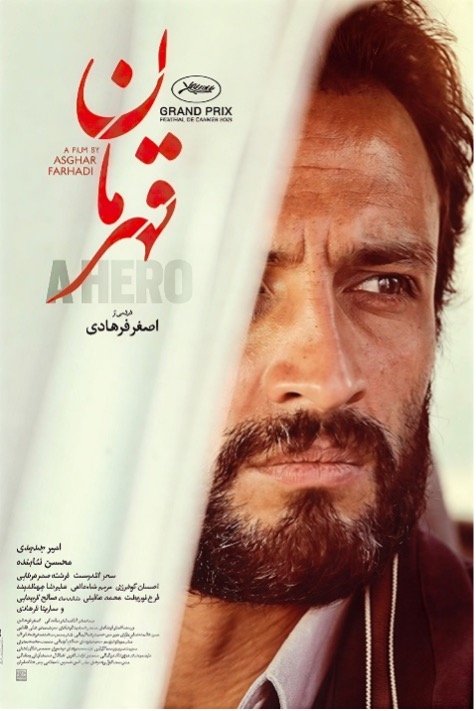
Figure 13: Poster for the film A Hero (Qahramān), directed by Asghar Farhādī, 2021.
Moral perfectionism increases distrust because, in real life, no one is as pure and honest as Siyāvash, the exemplary legendary Iranian hero who passed the test of fire unharmed. In a society that demands moral perfection, people hold heroes to unrealistically high standards. When those heroes display even minor flaws, it leads to disappointment and a loss of trust. As a result, people begin to doubt everyone’s intentions and search for selfish or manipulative motives, even behind actions that appear good or admirable. As Beeman notes, such a society can only interpret any ordinary social situation as part of a dynamic continuum rather than as a single, isolated event.27William O. Beeman, Language, Status, and Power in Iran (Bloomington: Indiana University Press, 1986), 115. Against this backdrop, Iranians tend to judge a specific behavior by looking at a person’s entire life history, their choices in other areas of life, the consequences of those choices, and more broadly, anything connected to the individual and their actions. Asghar Farhādī, focusing on “moral perfectionism” in A Hero (2021), uses this issue as a tool to critique corrupt structures and the collective reproduction of the vicious cycle of “powerlessness—cunning deception—distrust.”

Figure 14: A still from the film A Hero (Qahramān), directed by Asghar Farhādī, 2021.
A Hero begins with the release of Rahīm (Amīr Jadīdī) from prison, where he had been incarcerated due to a debt owed to his former brother-in-law, Bahrām (Muhsin Tanābandah). Rahīm has secretly befriended a woman named Farkhundah (Sahar Guldūst), who is his son’s speech therapist, and plans to marry her after his release. Farkhundah finds seventeen gold coins on the street, and the two decide to sell them and use part of the money to pay Rahīm’s debt to Bahrām. Rahīm seeks temporary leave from prison and asks his brother-in-law Husayn (‛Alīrizā Jahāndīdah) to act as an intermediary with Bahrām.
Bahrām, however, tells Husayn that he cannot trust Rahīm, believing that Rahīm has previously used cunning to deceive him and that he himself has suffered greatly from his own naïve trust. He says: “I got fooled once by his apparently innocent act and pleading look—never again.”28A Hero, directed by Asghar Farhādī (Iran, 2021), 00:13:29. Then, Husayn asks Bahrām to show lutf (favor or kindness)—a behavior typically extended by superiors to subordinates within the social hierarchy. Bahrām’s response marks the beginning of a process in which Rahīm’s actions are continuously interpreted and judged throughout the film: “He hasn’t even shown mercy to his own wife and child, so he doesn’t deserve lutf.”29A Hero, directed by Asghar Farhādī (Iran, 2021), 00:13:17. For reasons not explained in the film, Rahīm is divorced and has a son, Siyāvash (Sālah Karīmāyī), who has a speech disorder and lives with Rahīm’s sister Malīhah (Maryam Shāhdā‛ī) and her family. From Bahrām’s perspective—which seems understandable and acceptable to others—Rahīm’s inability to maintain a successful marriage suggests that he is also likely to fail professionally and be unable to repay his debt.
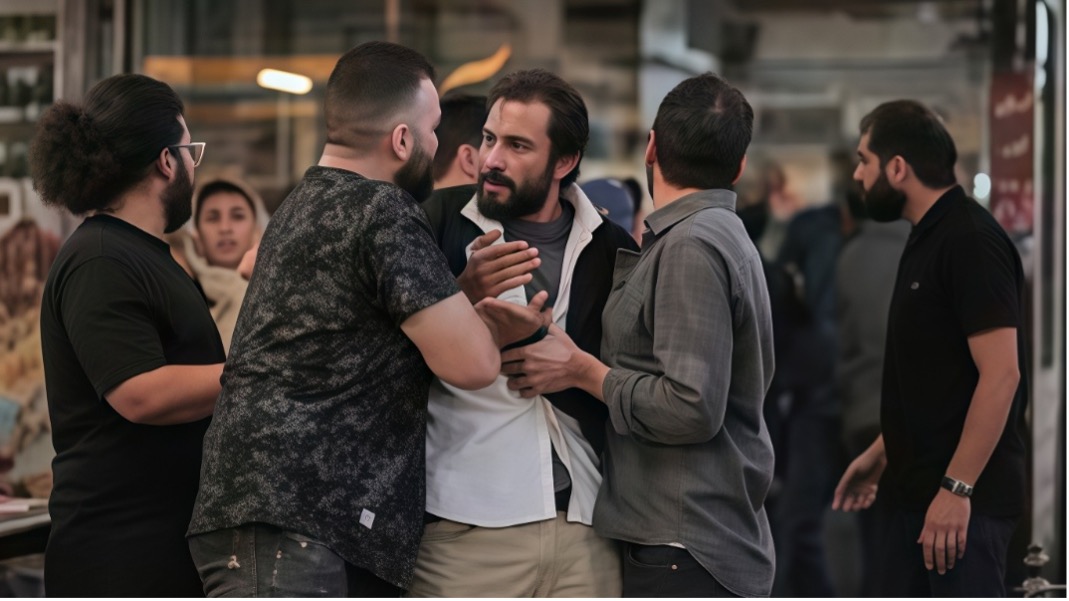 Figure 15: A still from the film A Hero (Qahramān), directed by Asghar Farhādī, 2021.
A Hero begins in a climate of suspense and distrust. This tension escalates when Rahīm and Farkhundah go to a jeweler to sell the coins and discover that coin prices have dropped, preventing them from raising the full amount promised to Bahrām. Farkhundah asks the jeweler if the coins might regain their previous value, and he replies, “Anything is possible.” The worried expressions on Rahīm and Farkhundah’s faces as they leave the shop reveal their doubts about whether their plan will succeed. Bahrām agrees to accept part of the debt only if Husayn provides a guarantee check, but Malīhah objects to issuing the check.
A Hero presents the unpredictable reality of contemporary Iranian life, with its painful sense of insecurity and distrust, which even infiltrates sibling relationships. That night, Malīhah finds the coins in Rahīm’s bag and anxiously tells him: “I hope you haven’t done anything to bring shame upon yourself or your family, so that we can still hold our heads high in the city.”30A Hero, directed by Asghar Farhādī (Iran, 2021), 00:18:44. Her fear is not that her brother has stolen, but that his actions could bring shame; as Beeman notes31William O. Beeman, Language, Status, and Power in Iran (Bloomington: Indiana University Press, 1986), 115., an individual’s behavior influences how their relatives are socially judged.
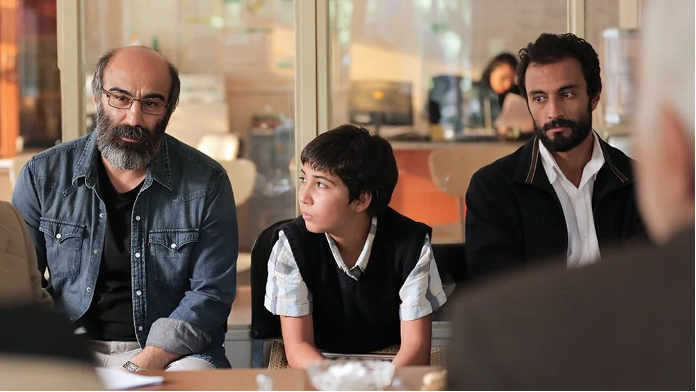
Figure 16: A still from the film A Hero (Qahramān), directed by Asghar Farhādī, 2021.
The next day, Rahīm tells Farkhundah that he does not want to sell coins that aren’t his to pay off his debt, explaining the reasons behind his decision: “Just imagine yourself in the place of that poor man who lost his bag.”32A Hero, directed by Asghar Farhādī (Iran, 2021), 00:23:15. In this scene, Rahīm encourages Farkhundah to exercise empathy and compassion toward a stranger within an unpredictable and untrustworthy social context. From an ethnographic perspective, this decision represents the initial moment in which the fragility of the film’s distrust-inducing social order is revealed. Although the decision appears to have collective approval, Farhādī’s direction highlights it as a key moment that exposes the hidden complexities of Iranian culture and the tragic transformation of a hero into an anti-hero under the pressures of moral perfectionism.
The first signs of admiration for Rahīm appear when he goes to a bank near where the bag was found, asks the staff to contact him in prison if the coins’ owner comes forward, and provides them with his prison phone number. The second sign of admiration comes from Mr. Tāhirī, the prison’s cultural deputy. A woman claiming to own the coins calls the prison. After hearing Rahīm speak on the phone, Tāhirī learns what he has done and informs the prison warden. Because Rahīm had not told anyone in the prison about the incident, others are encouraged to support his noble act. From their perspective, keeping a good deed secret is an important standard, as it reassures people that the action was neither selfish nor premeditated. This contrasts with hypocritical behavior, in which a person waits for an opportunity to reveal their actions to gain praise from others. Farhādī here highlights an important cultural issue: The fewer people who know about a good act, the less it is evaluated within the social sphere, and the smaller its social impact. Conversely, a public good deed, while more effective at creating social change, invites judgment from a wider range of people across different social backgrounds, and any deviation from moral perfection is scrutinized with greater precision and severity.
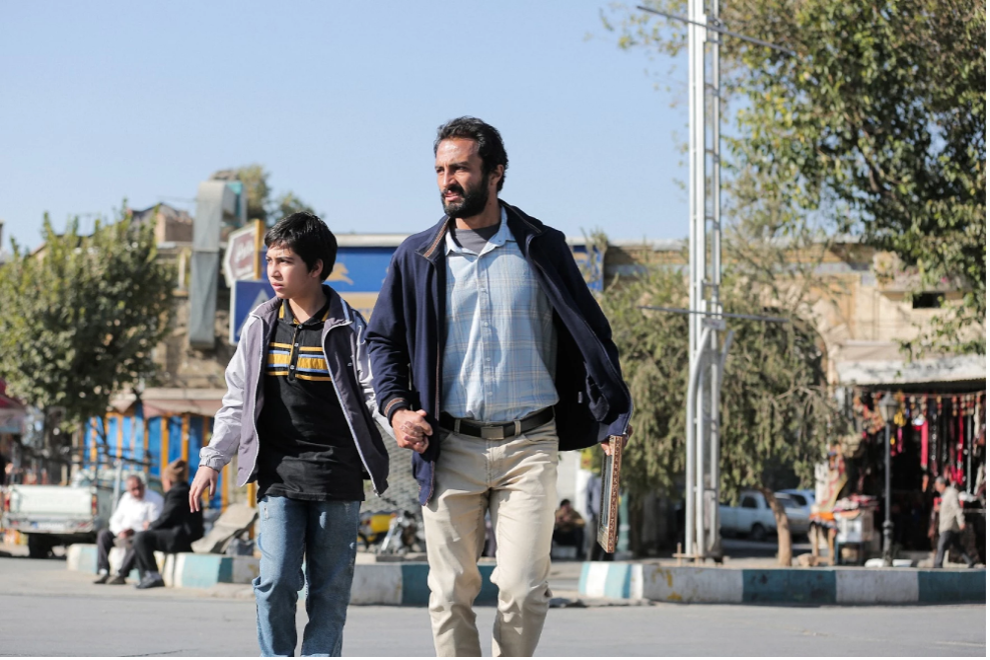
Figure 17: A still from the film A Hero (Qahramān), directed by Asghar Farhādī, 2021.
Tāhirī quickly asked others to prepare a report on Rahīm and publicize it on television and in newspapers. As a result, an act that had previously been judged by only a few people rapidly came under widespread public scrutiny, expanding to overwhelming proportions through digital media. The striking shift in societal judgment is evident in the reactions of Rahīm’s fellow inmates after watching his interview on television. Some deeply admired him and even decided to help pay his debt, while one prisoner sneered: “Well, you fooled everyone.” In his view, Rahīm had skillfully deceived others and, by publicizing his actions, helped the warden cover up the recent suicide of an inmate who had been protesting poor prison conditions, thereby benefiting from his collaboration.
From an ethnographic perspective, this sequence vividly illustrates the complex and unpredictable nature of social actions, as well as the cultural expectation that individuals consider the consequences of their actions. Those who believe Rahīm knowingly collaborated with the warden to cover up the suicide judge him as a “dishonorable trickster,” while those who believe he was unaware of the suicide and its media consequences call him “naïve and foolish.” Thus, A Hero repeatedly portrays the everyday, exhausting struggle of Iranians to escape the binary of “naïve/duped” versus “cunning/deceptive” and their desire to be recognized simply as good people—not as heroes or anti-heroes.
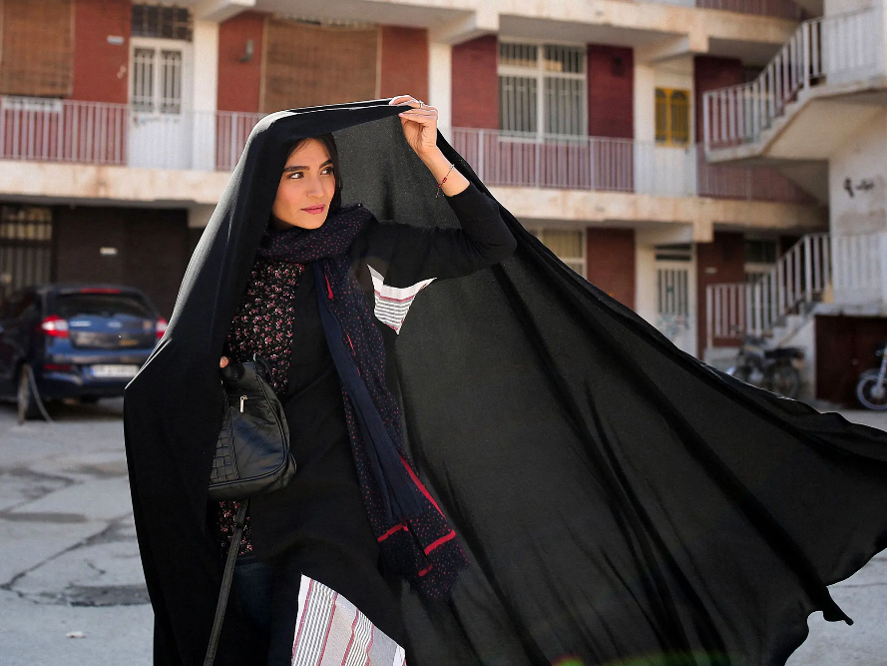
Figure 18: A still from the film A Hero (Qahramān), directed by Asghar Farhādī, 2021.
In a society constantly under scrutiny, individuals must carefully conceal their undesirable traits to avoid giving critics any reason for doubt. A Hero illustrates this cultural awareness through the seemingly well-meaning advice given to Rahīm about altering the truth, as well as his appearance and behavior. Tāhirī advises him to dress appropriately for the camera, shave, and avoid mentioning in the TV interview that his girlfriend, rather than he, found the bag. The cameraman instructs him to conceal the fact that he borrowed money from a loan shark and instead claim he took a bank loan, while Malīhah tells him not to smoke in front of others because it is “no longer good” for him. Rahīm, who receives attention and encouragement precisely because he has defied the established order, becomes obedient and receptive under the intoxicating pleasure of social approval, embracing all advice about secrecy and concealing the truth.
However, despite his obedient compliance, Rahīm soon succumbs to society’s moral perfectionism and its insatiable desire to replace the “real Rahīm” with a more believable “heroic Rahīm.” Unlike the fabricated heroic version, the real Rahīm has vulnerabilities, and exposing any of them only deepens collective distrust. The tension escalates to the point where even the prison warden begins to doubt Rahīm. This is the same warden who had previously exploited Rahīm to conceal his own corruption and whose initial doubts about Rahīm’s honesty stemmed from fears of collusion. Now, he suspects that Rahīm, by providing his prison number to help identify the bag’s owner, may have cleverly engineered a way to subtly showcase his actions and hypocritically gain the admiration and praise of others.
In his film, Farhādī portrays the prison as a microcosm of society, showing that in this distrustful and unhealthy cultural environment, everyone—even the warden—is trapped in the suffocating binary of being either “duped and naïve” or “deceptive and cunning.” Farhādī takes the audience, along with his characters, deep into the dark and unsettling world of the prison. However, instead of abandoning them in that humiliating and shameful darkness, he opens a window onto the possibility and importance of facing social expectations responsibly and consciously. In doing so, he breaks free from the “obsessive cycle of character-driven genre”33Ibrāhīm Tawfīq, Sayyid Mahdī Yūsifī, Hisām Turkamān, and Ārash Haydarī, Bar’āmadan-i zhānr-i khulqiyyāt dar Īrān (The Emergence of the Folk Characteristics Genre in Iran) (Tehran: Pazhūhishgāh‑i Farhang, Hunar va Irtibātāt, 2019), 298. and the “colonially induced self-deprecation” that tries to enforce change by shaming people and highlighting the gap between Iranians and the idealized “Other.” He thus moves toward a path of “non-colonial self-critique.”
After learning of Rahīm’s decision, the prison warden granted him ten days of commendatory leave. During this period, amid the turbulence of social tests of honesty, Rahīm experienced both the dignity of being a hero and the humiliation of being perceived as an anti-hero. On the final night of Rahīm’s temporary release from prison, Tāhirī visited him and asked him to make a video statement. In the video, Rahīm would claim that he personally requested the charity to use the money collected for his own release to help save a father from being executed. He would also assert that any delay or failure in using this money to secure his release was not related to rumors that the story about him and the charity had been fabricated.
However, Rahīm, at the end of the film, unlike the Rahīm at the beginning, firmly refuses, saying that since he did not do this, he will not make such a video online just so “people take his side again.” Disappointed with Rahīm, Tāhirī turns to his young son, Siyāvash, and asks him, despite his stammer, to talk about how sad he is that his father is going back to prison—so that anyone watching his grief “feels bad” and things tip back in Rahīm’s favor. In this scene, Farhādī brilliantly shows that stammering, along with Iranians’ difficulty in expressing their thoughts and decisions clearly and decisively, creates the very fertile ground in which authoritarian selfishness takes root.
At the end of the film, however, Rahīm stands firm and speaks without stammering before Tāhirī, saying: “I don’t want anyone to see my son like this.” Rahīm’s clear expression inevitably forces Tāhirī to step out from behind the mask of hypocritical benevolence and reveal his self-interest. He says to Rahīm: “Is it just your wish? Our reputation and honor are at stake.” Rahīm goes even further, and with unexpected courage exposes the selfish perspective embedded in society’s stammering, saying: “You want to buy your reputation and honor with my child’s stammer?” Tāhirī deletes the video but, in a threatening tone, says to Rahīm: “I’ll see you tomorrow.”34A Hero, directed by Asghar Farhādī (Iran, 2021), 01:58:15.
Rahīm must return to prison the next day, behind those tall walls where Tāhirī has the power to do whatever he wishes with him. Rahīm’s sister and brother-in-law are unsettled by the threat, but Rahīm possesses the calm of someone who has spoken clearly, chosen his actions without fear, and is ready to take responsibility for those choices. His young son, Siyāvash, watches his father with an admiring and worried gaze, seeing a man freed from fear and from the fleeting praise of an unpredictable, untrustworthy society. It is night, and the quiet sound of crying comes from the house. Everyone knows that Rahīm will pay dearly for this defiance.
The next day, Rahīm returns to prison. Sitting at the threshold of the long, dark corridor, waiting for permission to enter, he is neither hero nor dishonorable—he is simply Rahīm. Discovering this Rahīm through the journey from prison to society and back is a remarkable achievement, allowing him both to be brave and afraid, to make choices and to accept responsibility for them. In this sense, Rahīm serves as a successful example of challenging shameful self-deprecation and fostering constructive, non-colonial self-critique.
Leila’s Brothers
An old man, dressed in black and disheveled, sits in a worn-out house, smoking as he sinks into troubling thoughts and imagination. Gradually, the scene fills with the deafening noise of a busy factory. Security forces violently enter the factory and force the workers to leave quickly, without demanding their unpaid wages. ‛Alīrizā (Navīd Muhammadzādah) is in a corner of the hall, wearing large headphones and completely absorbed in his work. He hears neither the threats of the security forces nor the workers’ protests. An officer roughly yanks the headphones off his ears and shouts, “Are you deaf? The factory is closed!” For a few moments, ‛Alirizā stares at him, dazed and confused. Then, terrified, he runs away as fast as he can. While fleeing—through angry workers, shattered glass, fire, and batons—one of his coworkers says to him, “A shameless coward is someone who drops everything and leaves because he feels comfortable knowing his miserable friends will stay here and fight to get their wages.”35Leila’s Brothers, directed by Sa‛īd Rūstā’ī (Iran, 2022), 00:10:40. But ‛Alīrizā keeps running, as if he never heard the words.
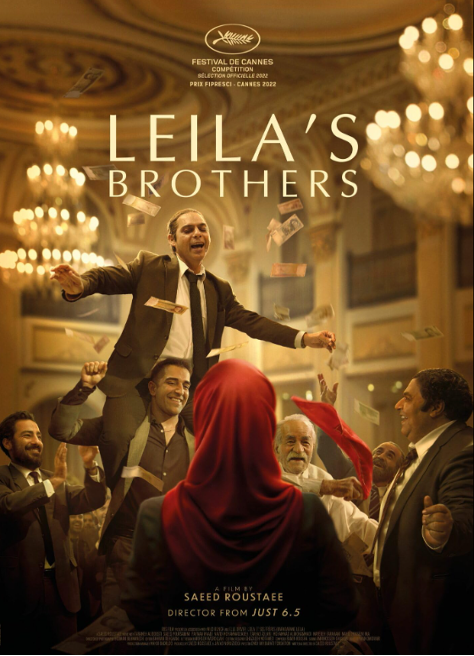
Figure 19: Poster for the film Leila’s Brothers (Barādarān-i Laylā), directed by Sa‛īd Rūstā’ī, 2022.
When Sa‛īd Rūstā’ī finished making Leila’s Brothers (2022), he screened the film at the 2022 Cannes Film Festival without waiting for an official screening permit in Iran. After that, not only was the film banned in Iran and denied a release permit to this day, but a legal case was also opened against Rūstā’ī, and he was ultimately convicted.
At first glance, Leila’s Brothers can be considered one of many intellectual works produced within the framework of the “powerful discourse of Iranian despotism,” aimed at explaining and condemning it. In this view, the mutual influence between Iranian dispositions (a character inclined to accept despotism) and despotism itself (as a label for all the crises of the present moment) forms a regressive process that traps Iranians in stagnation and an inescapable continuity. From any angle or point in time, one sees nothing but the repeated cycle of despotism–revolt–despotism.36Ibrāhīm Tawfīq, Sayyid Mahdī Yūsifī, Hisām Turkamān, and Ārash Haydarī, Bar’āmadan-i zhānr-i khulqiyyāt dar Īrān (The Emergence of the Folk Characteristics Genre in Iran) (Tehran: Pazhūhishgāh‑i Farhang, Hunar va Irtibātāt, 2019), 296.
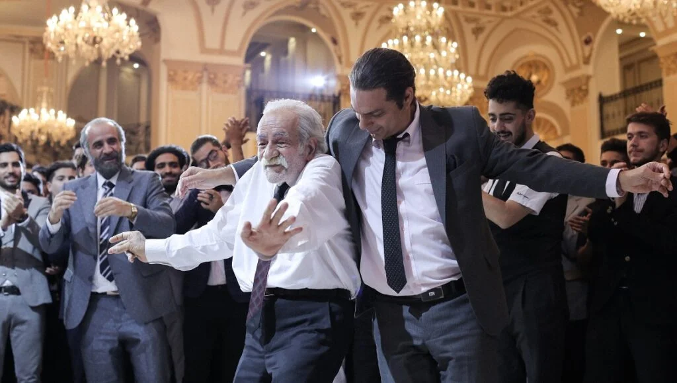
Figure 20: A still from the film Leila’s Brothers (Barādarān-i Laylā), directed by Sa‛īd Rūstā’ī, 2022.
While addressing the issue of despotism, Rūstāʾī skillfully manages to free his film from the powerful confines of clichéd repetition. By showing the logic and mechanisms through which despotic order is reproduced in the everyday lives of Iranians, he reminds us of the possibility of resisting this order and challenging it. From this perspective, Leila’s Brothers is a successful example of refusing futile self-contempt and strengthening constructive self-criticism.
In this film, Rūstāʾī, through the allegorical narrative of the family life of a poor, tyrannical, and delusional old man named Ismāʿīl Jūrāblū (Saʿīd Pūrsamīmī), depicts the complex condition of the individual caught in the grip of “his own personality and psychological traits,” “the pressure of despotism,” and “the plunder of colonialism.” He also portrays the undeniable entanglement of all three in producing Iran’s present condition.
“The Jūrāblū clan” functions as Ismāʿīl’s idealized yet humiliating Other. His obsession with gaining their approval and being accepted into their complex network of power and wealth leaves him no room to attend to the interests and well-being of his own family. He gives the land he inherited from his father—land that could have become capital for his children to build a better life—to the head of the clan as a gift. To please the latter, he becomes addicted to opium, and, in the hope that one of the Jūrāblūs will propose marriage to his daughter, he deceitfully prevents her from marrying the young man she loves.
This same humble and submissive Ismāʿīl, deferential before the head of the Jūrāblū clan, becomes a harsh and calculating father toward his own family, willing to take his children to court on various pretexts. In a key scene of the film, when Ismāʿīl discovers that his eldest son has disobeyed his order to name the newborn after the recently deceased head of the Jūrāblū clan, he humiliates him and his family by throwing them out of the house and publicly searching Parvīz’s pockets to show everyone that he has stolen two eggs and a sausage from his parental home.
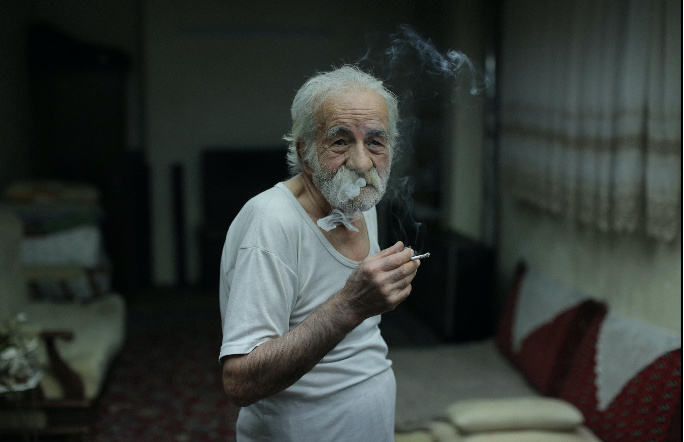
Figure 21: A still from the film Leila’s Brothers (Barādarān-i Laylā), directed by Sa‛īd Rūstā’ī, 2022.
Ismāʿīl’s poor decisions directly affect his children’s quality of life, but Rūstāʾī explains to the audience that each of them, according to their personality and psychological traits, has responded differently to the undesirable situation their father has created. However, none of their behavioral choices are aimed at weakening their father or changing the despotic relationship. Parvīz (Farhād Aslānī) turns to alcohol; Manūchihr (Payman Ma‛ādī) tries to build a comfortable life for himself through fraud; Farhād (Muhammad ‛Alī Muhammadī) spends all his time on sports and bodybuilding. These three have accepted the family’s adverse situation and neither try to improve it nor change it—they only attempt to minimize the costs of being trapped in it for themselves.
‛Alīrizā, like the others, has accepted the undesirable situation and has no motivation to change it. The difference is that, guided by individualist ethics, he feels obliged to keep a deliberate distance from his family while treating everyone kindly and respectfully, constantly reminding himself and others to respect the rights of others—from turning off running water to encouraging men’s participation in household chores. ‛Alīrizā firmly believes that one must respect the choices of others, even if those choices harm him, the family, or themselves, and he reproachfully says, “We’re a bunch of cows who never learned not to interfere in each other’s lives.”37Leila’s Brothers, directed by Sa‛īd Rūstā’ī (Iran, 2022), 00:49:18. He supports his father and all of his father’s poor decisions under the principle of “it’s his right,” while insisting on keeping his distance because he finds the family’s “angry outbursts” and “chaotic behavior” stressful. He works in a distant city and sends money to his family, thereby, in his view, both improving their situation through financial and psychological support and reducing the personal costs of being part of this family.
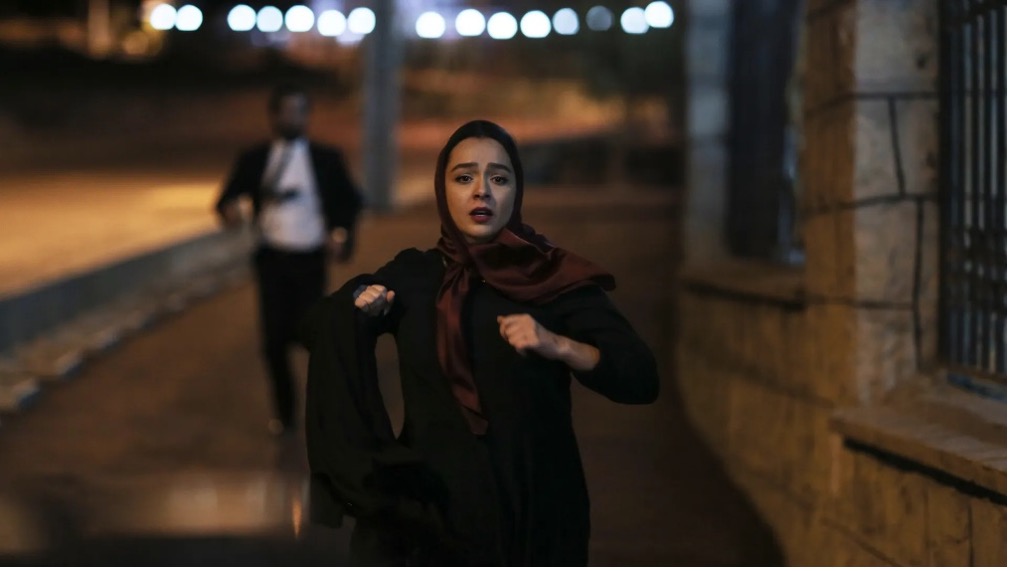
Figure 22: A still from the film Leila’s Brothers (Barādarān-i Laylā), directed by Sa‛īd Rūstā’ī, 2022.
Laylā (Tarānah ‛Alīdūstī), however, makes a very different choice: she pays no attention to protecting herself and devotes herself entirely to her family, particularly to improving the lives of her brothers. She hates her father and mother and wishes they would die, yet she is the one who takes care of them, providing their medication. Without Laylā’s care and self-sacrifice, the family would long since have collapsed under the combined weight of the father’s incompetence and cruelty and the indifference of the other members. She not only refuses to distance herself from the family but insists that others also accept their shared fate. When ‛Alīrizā says of the family, “They’ve been stuck in the same place for years,” Laylā corrects him: “Don’t say ‘they’; say ‘we.’ We’ve been stuck in the same place.”38Leila’s Brothers, directed by Sa‛īd Rūstā’ī (Iran, 2022), 00:28:15.
Laylā is wise and compassionate, and she seeks a practical solution to change their situation, eventually arriving at a clear and reasonable proposal: If all the children pool their resources, they could pre-purchase a shop in a thriving mall and change their lives. She succeeds in persuading her brothers to agree to this risky collective plan. Ismāʿīl’s children, caught between despair and hope, are busy gathering the initial capital for the shop when Bāyrām, Ismāʿīl’s cousin’s son (Mahdī Husaynīniyā), tells him that his father has stipulated in his will that, after him, Ismāʿīl may become head of the clan—provided he can give 40 gold coins as a wedding gift at Bāyrām’s son’s wedding.
Ismāʿīl, whose greatest aspiration is to gain the attention and respect of the Jūrāblūs, gratefully accepts the proposal. His children realize that their father has the financial means to pay the 40 gold coins—the exact amount they need to purchase the shop—but he chooses instead to spend the money to win the temporary, self-interested approval and respect of the Jūrāblūs (his idealized Other) rather than to build a dignified life for his own family (his true Self).
The children’s arguments and opposition cause the old man to suffer a stroke. Fearing his father’s death and guided by the ethical principle that everyone has the right to decide over their own property, ‛Alīrizā defends him against the other children. As a result, Ismāʿīl is able to attend the Jūrāblū wedding as head of the clan. However, when it comes time to present the gold coins as a gift, it is revealed that Laylā has sold them, and Ismāʿīl is humiliatingly stripped of his position.
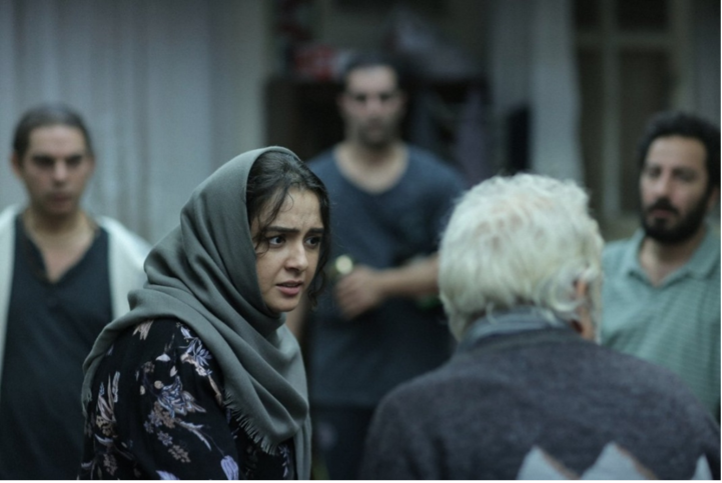
Figure 23: A still from the film Leila’s Brothers (Barādarān-i Laylā), directed by Sa‛īd Rūstā’ī, 2022.
Unlike ‛Alīrizā, Laylā interprets her father’s decision through the lens of his responsibilities to others and the “ethics of care,”39Carol Gilligan, In a Different Voice: Psychological Theory and Women’s Development (Cambridge, MA: Harvard University Press, 1982), 23-64. and so sees no reason to respect it. From her perspective, the coins are not her father’s personal property but “the children’s rightful share.” Laylā’s courage in resisting her father’s demands made it possible for them to purchase the shop. Yet, just as her efforts were bearing fruit, and despite having invested all her savings and assets in the purchase alongside her brothers, she refused to have her name listed as a partner on the title. In doing so, she voluntarily gave up her legal right to participate in future decisions regarding the shop.
Rūstāʾī depicts a subtle cultural logic here, one that can be understood through an ethnographic lens. Laylā had managed to overcome her fear of her father, yet years of living under a patriarchal system—repeatedly emphasized throughout the film—had deeply instilled in her the belief that women should prioritize caring for others over their own needs. This made it impossible for her both to assert herself and to fully claim her brothers’ rights. She was devoted to them and challenging this deeply ingrained belief required a level of courage and boldness far greater than that needed to stand up to her father.
The father stubbornly demands that his sons sell the shop and return his coins. After he suffers another stroke, the brothers gather at ‛Alīrizā’s invitation to decide what to do about selling the shop. Laylā enters without being invited. This intense scene reveals the hidden mechanisms and coordination that, from an ethnographic perspective, each member of a society employs—following unwritten agreements—to reproduce habitual order and preserve the status quo. Each brother offers a justification for supporting the sale of the shop, and within the framework of this habitual order, their reasoning appears self-evident. Laylā, however, questions each brother’s reasoning, challenging what they take for granted and surprising the audience. ‛Alīrizā says, “We have to give him back the coins. He won’t stop. He’ll keep going until he dies,” to which Laylā simply responds, “Then let him die.” Parvīz adds, “This shop carries the weight of father’s sighs; his curse won’t let it succeed,” and Laylā just gives him a knowing look, as if what he said makes no sense.
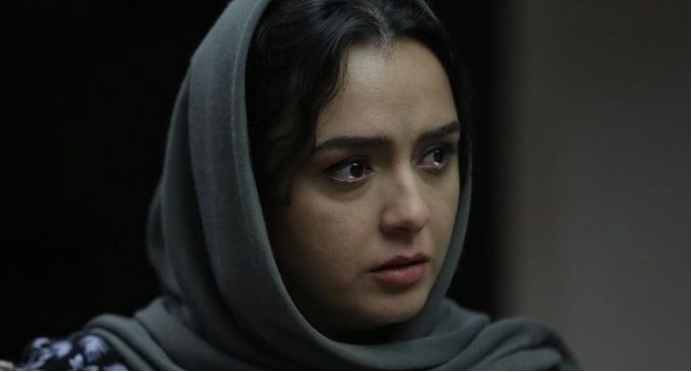
Figure 24: A still from the film Leila’s Brothers (Barādarān-i Laylā), directed by Sa‛īd Rūstā’ī, 2022.
In this scene, Rūstāʾī boldly transforms the symbolic certainty of the father’s authority—from a sacred, unquestionable status—to something contestable. This boundary-breaking reaches its peak when Laylā, in a revealing act, exposes her father’s lies and slaps him in front of her brothers. Rūstāʾī touches on a sensitive point—not only in Iranian culture but in the broader human cultural framework—and much of the discussion and controversy surrounding his film in Iran arose in response to this transgressive confrontation with the father figure. For example, the Iranian film critic Mas‛ūd Farāsatī, in a long-running series of debates, described Leila’s Brothers as “anti-family” and, in particular, “anti-father.”40Masʿūd Farāsatī, “Barādarān-i Laylā yak fīlm-i ziddah khānavādah va siyāh ast,” Fararu, December 16, 2025, https://fararu.com/fa/news/621685.
Rūstāʾī does not tell the audience that the brothers had no choice but to sell the shop and return their father’s money; rather, he shows that they selected this path from among other possible options. Similarly, Laylā, exercising her own agency, refused to have her name added to the shop’s title and, in response to her brothers’ decision, could only warn them: “You’ve started your eternal misery tonight yourselves.”41Leila’s Brothers, directed by Sa‛īd Rūstā’ī (Iran, 2022), 02:01:39.
From an ethnographic perspective, the remainder of the film constitutes a sophisticated depiction of the ways in which individuals, through their everyday life choices, generate social order while simultaneously being shaped by the actions of others, both near and distant. Within this framework, the reciprocal influence between agents and the structure of social life—with its own particular characteristics—becomes observable and analytically tractable.
At the same time that the brothers were deciding whether to sell the shop, policymakers in Iran and the United States were making decisions regarding international relations. The sale of the shop coincided with rising tensions between Iran and the United States, and after a single tweet from President Donald Trump, the Iranian currency devalued so dramatically that the brothers lost not only their father’s coins but all of their assets, leaving them in a far worse situation than before. The father asked in bewilderment, “Trump tweeted—does that mean he dropped a bomb?” ‛Alīrizā replied, “No, but even if he had, it still shouldn’t have gotten this bad.”42Leila’s Brothers, directed by Sa‛īd Rūstā’ī (Iran, 2022), 02:05:50.
Amid this profound setback, ‛Alīrizā reflected on himself and realized that his show of morality had been hiding his deep fear of making choices and taking responsibility for them. He returned to the factory, and when told he had to sign a form to receive three months’ wages as if it were for a full year, he refused to stand passively in line and shouted: “I want all my rights, in proportion to the work I’ve done!”43Leila’s Brothers, directed by Sa‛īd Rūstā’ī (Iran, 2022), 02:22:30. and defiantly broke the glass of the personnel office—a glass that had been previously shattered by another protesting worker and only recently repaired. Rūstāʾī, like Kiyānūsh ‛Ayyārī, emphasizes that real change doesn’t happen all at once—it emerges from repeated small acts that challenge established rules and norms. By continually breaking these norms, even in minor ways, the cumulative effect gradually weakens the fear and control that maintain the old order.
Conclusion
This article seeks to understand the role of Iranian social cinema in gradually transforming society’s self-deprecating mindset and in fostering what Abedinifard terms “decolonizing collective self-criticism.” Building on Tawfīq’s idea that Iranian society, after each failed attempt at idealistic reform, is flooded with reminders of its negative traits, this study focuses on the thirteen years between the Green Movement and the Women, Life, Liberty Movement. This period, marked by repeated uprisings and accumulated reformist experiences, provides a rich context for analyzing the cultural and semantic dimensions of social transformation.
Given that many analyses have characterized the 2022 movement as “a movement against humiliation,” the central question was how, within a historical context shaped over more than a century by patterns of “idealized othering of the West” and “shaming self-criticism,” the cultural and semantic conditions for such a movement emerged, and what role cinema played in this process. Accordingly, this study examines how cinema, as an active social force in the public sphere, has contributed to collective transformation and the reconfiguration of a self-deprecating mindset.
Focusing on social cinema and applying criteria such as directorial authorship, international recognition, capacity to spark public dialogue, and potential to influence critical discourse, four films—Tales, Sofa, A Hero, and Leila’s Brothers—were purposefully selected and analyzed using an ethnographic theoretical-methodological approach combined with content analysis. The ethnographic perspective, which emphasizes everyday actions and moments of reproduction or disruption of social order, provides an effective lens for understanding how negative traits are represented and potentially transformed in these films.
The analysis shows that, unlike the dominant tradition of portraying negative traits—which for decades reinforced feelings of helplessness, shame, and self-deprecation in relation to an idealized Other—these films present a more hopeful and nuanced perspective. Four recurring issues—failure to communicate, reputation anxiety, moral perfectionism, and authoritarianism—are depicted not as immutable characteristics but as fragile and changeable social norms. This shift is significant, as it moves the focus from “fixed traits” to “changeable norms,” highlighting the potential for individual and collective agency and recognizing cultural dynamism.
In all four films, the narratives emphasize moments of rupture, disobedience, creativity, and transgression—small, costly, yet meaningful acts that reveal social order as historically contingent, conventional, and fragile. These depictions encourage “constructive self-criticism,” a form of reflection that, instead of reproducing humiliation, highlights individual and collective responsibility to change inhumane behaviors and promote humanizing actions.
In sum, cinema functions not as a passive mirror but as an active force in reshaping society’s self-understanding. By showing that norms can change, emphasizing moments of individual and collective agency, and avoiding a shaming gaze toward the self in relation to the idealized Other, these films help create the cultural conditions for a shift from self-deprecation to “decolonizing collective self-criticism.” Over the past thirteen years, Iranian social cinema has thus played an influential role in shaping the collective imagination in preparation for a movement that challenged humiliation.
Finally, it should be noted that the study is limited by examining only four films, whereas Iranian cinema during this period clearly offered a broader and more diverse set of relevant examples. Moreover, cultural analysis alone cannot account for all social and political mechanisms. Future research could investigate the roles of social media, literature, music, and everyday narratives in shaping semantic transformations within Iranian society. Comparative studies of films produced after the 2022 movement with those from earlier periods could shed light on whether the observed trends have deepened constructive self-criticism or require further reassessment.
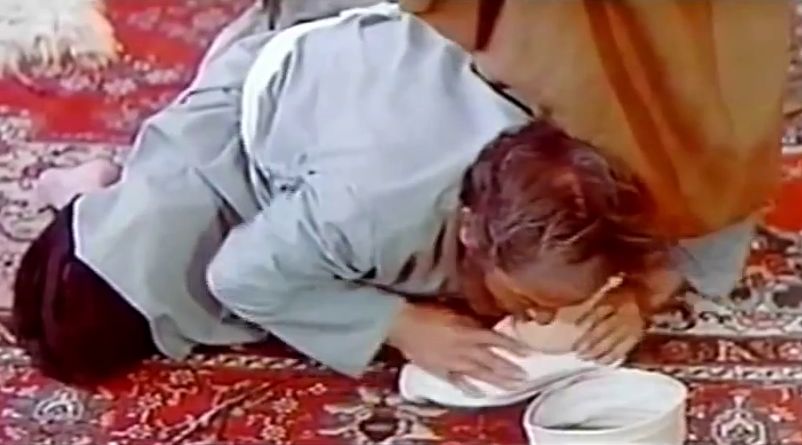
Introduction
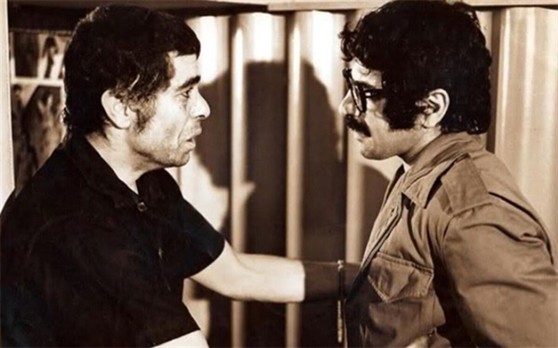
Figure 1: A still from the film Gavazn’hā (The deer), directed by Masʿūd Kīmiyā’ī, 1975.
From the mid-Qājār period in the nineteenth century, both material and immaterial aspects of the modern world began to permeate our social fabric at an accelerating rate. Meanwhile, modern thought and philosophical ideas, including new ideologies, were introduced to Iran. As Iranians became increasingly familiar with these ideologies, some were gradually drawn to them and began to promote and advocate for their adoption. Among these ideologies, Iranians embraced Marxism and nationalism more eagerly. Nationalism gained significance in the contemporary history of Iran as cultural activists from the Constitutional era and its aftermath began to contemplate the establishment of a national government. By referring to Iranian history, they sought to create national legends that could serve as reference points and provide a social glue for the unity of the country. The governments of the first and second Pahlavī eras also adopted nationalism and created the conditions necessary for its development. On the other hand, following the October Revolution of 1917 in Russia (Iran’s northern neighbor), the USSR was established on the basis of Marxist ideology and subsequently sought to export its ideology to other countries in an effort create a new world. This ideology gained widespread popularity in Iran, attracting numerous adherents and leading to the formation of several parties around it. Since ideologies generally claim to be all-encompassing systems of thought, they strive to establish a new world order based on their intellectual frameworks. Consequently, they not only seek to manage society but also propose ideas and patterns in other areas such as politics and economics. The area of culture is no exception to the influence of ideologies. Cinema is one of the most influential cultural domains in the modern world, having entered Iran during the reign of Muzaffar al-Dīn Shah Qājār. In this article, I will explore the influence of ideologies on contemporary Iranian cinema.1I wrote this article upon the suggestion of my dear friend, Dr. Yāsir Farāshāhīnizhād. I want to express my gratitude for his guidance through the writing of the article.
Thesis Statement
It is crucial to examine the imprints of ideologies in contemporary Iranian culture through the lens of the sociology of culture. This approach is particularly significant in assessing the impact these ideologies have had on Iranian culture and its cultural products, how they have shaped thoughts and ideas, the contexts they have provided for the socialization and activities of Iranians, and the direction in which they have steered social and cultural trends. Examining the impact of ideologies is an important topic in sociological research. It is crucial to determine whether these effects have emerged spontaneously from below or if they have been imposed and organized from above. It is also crucial to investigate how factors outside the cultural realm, such as political movements and governmental forces (or, as Pierre Bourdieu puts it, non-cultural fields, such as the political field),2With regard to Bourdieu’s views on how culture is shaped by political and social contexts, see Pierre Bourdieu, The field of cultural production: essays on art and literature (Columbia University Press, 1993). shape the direction of culture according to their intentions and purposes.
Artists and cultural activists have long sought the independence of the cultural sphere and the autonomy of cultural agents, especially in the modern era. On the other hand, governments and political parties have always been interested to use political forces for propaganda, to manipulate public opinion and, even further, to engage in ideological worldmaking. Political powers and especially governments in the modern era intend to control the knowledge system, shape the world’s narrative into their own advantage and deprive individuals of their cultural autonomy by means of ideological manipulations and propaganda. They prefer that people have less intellectual independence, thinking and acting within the world shaped by their own social constructs.. They are generally dissatisfied with the diversity of social and cultural sources. However, controlling public opinion depends on having pervasive power; therefore, the more the dominant power extends its influence within society, the more successful it becomes in controlling public opinion. As a result, governments aim to successfully exercise control, either directly or with the assistance of their dependent forces in other countries. The most effective means to dominate a society is to control education and socialization from within. Therefore, the more ideologies develop indirectly, through mediations and from the bottom up, the more successful and effective their proponents become. Cultural influence is the most effective means for an ideology to shape beliefs within a society. Advocates and proponents of an ideology can shape the ideological landscape through the use of cultural products. When individuals are fully immersed in an ideological framework and perceive it as their own, they are unlikely to question it. Thus, analyzing the presence and influence of ideologies in cultural products is essential, as it provides insight into the characteristics of a social world.
Ideologies shape and define historical narratives by influencing social relationships and power dynamics. Thus, it is important to understand how different ideologies have shaped contemporary Iran, how we have lived under these ideologies, and what their effects have been on our lives. Worldmaking occurs through various dimensions, each of which should be studied independently; one such dimension is the influence of ideologies on cultural products. Based on this assertion, we may inquire: How and to what extent have various ideologies manifested in Iranian cultural works and products, particularly in Iranian cinema? To what extent has cinema, as a modern medium, served to reflect various ideologies in contemporary Iran? Have these ideologies been supported solely by independent social forces, or have they also received governmental backing?
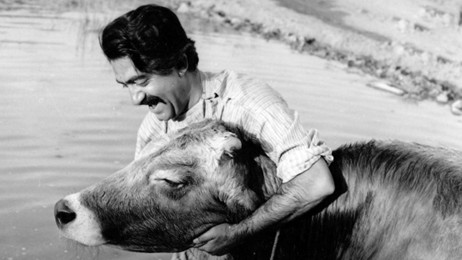
Figure 2: A still from the film Gāv (Cow), directed by Dāryūsh Mihrjū’ī’s, 1969.
Theoretical framework
Some Iranian critics display a noticeable bias in their discussions about the relationship between ideology and cinema in Iran. A number of them have sought to label many Iranian films as inherently ideological. For example, in his Sīnimā va susiyālīsm dar Īrān (Cinema and socialism in Iran),3Ahmad Zāhidī Langrūdī, Sīnimā va susiyālīsm dar Īrān [Cinema and socialism in Iran] (Tehran Nabisht, 2017). Ahmad Zāhidī Langrūdī claims to have identified socialist themes in many Iranian films. ‛Alī Asghar Kishānī identifies most films from the Pahlavī period as ideological and states: “The Pahlavī regime, influenced by the first Pahlavī’s affinity for Nazism, sought to use cinema as a tool to legitimize its governance through the ideology of nationalism.”4‛Alī Asghar Kishānī, Farāyand-i takāmul-i sīnimā-i Īrān va hukūmat-i Pahlavī [The process of interaction between Iranian cinema and Pahlavi government] 1st ed. (Tehran: Markaz-i Asnād-i Inqilāb-i Islāmī, 1386/2007), 344. Another issue in some analyses of cinema and ideology is the failure to distinguish between two types of engagement with cinematic works:
- A negative encounter that seeks to control cinema and censor cinematic works at will, eliminating anything deemed undesirable or unfavorable. There is no doubt that extensive censorship has been enforced across various domains in Iran, including cinema. As Sadr argues, from the very first years of the Pahlavī dynasty, “censorship in Iranian cinema gradually took shape and became established.”5Hamīd Rizā Sadr, Dar’āmadī bar tārīkh-i siyāsī-i sīnimā-i Īrān (1280–1380) [An introduction to the political history of Iranian cinema from 1901-2001], 1st ed. (Tehran: Nay, 2002), 27. Hamid Naficy also writes about the dominance of censorship on Iranian cinema:
During the second Pahlavi period (Mohammad Reza Shah, 1941–79), cinema flourished and became industrialized, producing at its height over ninety films a year. The state was instrumental in building the infrastructures of the cinema and television industries, and it instituted a vast apparatus of censorship and patronage. During the Second World War and its aftermath, the three major Allied powers—the United Kingdom, the United States, and the USSR—competed with each other to control what Iranians saw on movie screens. […] In the subsequent decades, two major parallel cinemas emerged: the commercial filmfarsi movies, popular with average spectators, forming the bulk of the output, and a smaller but influential cinema of dissent, the new-wave cinema.6Hamid Naficy, A Social History of Iranian Cinema, Volume 2: The Industrializing Years, 1941–1978 (Duke University Press, 2011), xxiii.
He adds that “ironically, the state both funded and censored much of the New Wave cinema, which grew bolder in its criticism and impact as Pahlavi authoritarianism consolidated.”7Hamid Naficy, A Social History of Iranian Cinema, Volume 2: The Industrializing Years, 1941–1978 (Duke University Press, 2011), xxiii. It should be noted that censorship in Iran encompasses various aspects and shapes and is not confined to the mere omission of a few scenes from a film.
- An affirmative encounter seeks to employ cinema and cinematic works to advance its own purposes and interests. This affirmative engagement with cinema can be classified into three categories:
- a) Using cinema and cinematic works for advertisement: All forms of media can serve advertising purposes, and the medium of cinema is no exception. Advertising is not necessarily ideological. Governments, like any other organization, engage in self-promotion. Hamid Naficy has brilliantly categorized the films made during the reign of Rizā Shāh with advertising purposes under the label “institutional and industrial films.”8Hamid Naficy, A Social History of Iranian Cinema, Volume 1: The Artisanal Era, 1897-1941 (Duke University Press, 2011), 178.
- b) Using cinematic works to present different values and norms: In cinematic works, as in all other cultural productions, some are regarded as favorable while others are seen as unfavorable; some are embraced and celebrated, while others are rejected and disapproved of. For example, a soldier’s sacrifice for their country might be seen as heroic and honorable. In contrast, dishonesty and infidelity toward a spouse or family might be portrayed as abhorrent, while patriarchy may be presented as prominent and favorable. Individualism may be deemed as an incorrect choice. It is based on this function of the concept of ideology that some have argued for the existence of an “ideological code system” in Iranian popular cinema during a certain period.9‛Abdul-Vahhāb Shahlībar, “Sākhtār’hā-yi rivā’ī va īdi’uluzhīk-i sīnimā-i ‛Āmmah’pasand-i Īrān (1376 –1386)” [Narrative and ideologic structures of Iranian popular cinema (1997 – 2007)], Mutāliʿāt-i farhangī va Irtibātāt [Researches in culture and communications], 7, no. 25 (Winter 2011): 12.
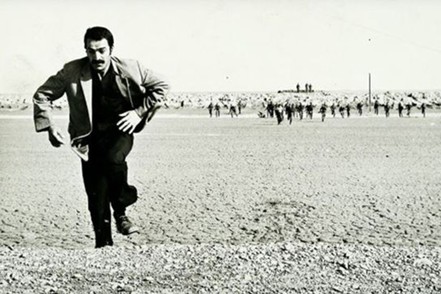
Figure 3: A still from the film Sādiq Kurdah, directed by Nāsir Taqvā’ī, 1972.
However, this view of ideology as something ubiquitous, influenced by the ideas of some Western thinkers, lacks conceptual and methodological nuances. A cinematic work cannot be identified as an ideological work solely based on a few scenes containing social and ideological values. If everything is considered ideological, then ideology must be seen as necessary, inevitable, and intrinsic to a work. This perspective grants ideology significant weight, implicitly elevating it and, in a sense, making it beyond critique. It shifts the focus of critique, directing attention toward the type of ideology and its functions, rather than its nature. Simply put, we must recognize that cinematic works have both value and normative aspects. Then, we can question whether it is reasonable to expect a type of cinema or film entirely devoid of these aspects. If cinema and cinematic works present a narrative of human and social life, can they truly be free of value and normative elements? Therefore, in this context, I use the concept of a value and normative system, rather than the broader definition of ideology found in the works of thinkers like Louis Althusser,10Louis Althusser, “Ideology and Ideological State Apparatuses (Notes towards an Investigation),” trans. Ben Brewster, in Lenin and Philosophy and Other Essays (London: New Left Press, 1971), 127–86. Roland Barthes, John Fiske and others, whose ideas have influenced many discussions of ideology and cinema.11For example, see Ihsān Āqā-Bābā’ī and Siyāmak Rafīʿī, Fīlm va īdi’uluzhī dar Īrān: dahah-yi hashtād [Film and ideology in Iran from 2001 to 2011] (Tehran: Ligā, 2023); Sayyid Murtazā Fātimī, īdi’uluzhī bih rivāyat-i sīnimā: mutāli‛ah-yi nisbat-i īdi’uluzhī va zībā’ī’shināsī dar sīnimā-yi fāshīsm va lībirālīsm [Ideology as narrated by cinema: A study of the relationship between ideology and aesthetics in fascism and liberalism cinema] (Tehran: Naqd-i Farhang, 2024). Their perspectives have contributed to viewing ideology as something ubiquitous. It is inevitable for cinematic works to express and reflect different value systems. The filmmakers and directors should not be criticized for expressing their value system in their work, whether explicitly or implicitly.
- c) Gaining credit and legitimacy through cinematic events: this is another way by which ideologies can benefit from cinema. In this case, the focus is not directly on the content of the films, but on their contribution to the cinematic event in the country, which confers legitimacy on both domestic or international scales.
- d) Ideological use of cinema and cinematic works in the true and exclusive sense of the term: in this sense, cinema and cinematic works can be considered ideological only when there is clear and strong evidence for the existence of elements and content derived from an ideological system. Only such films can be labeled as ideological works.
It seems necessary to delve into different meanings of ideology and argue about its meaning and its different definitions. There are at least three traditions in defining ideology:
- A tradition that views ideology as negative, focusing on its harmful functions, such as deception, creating complacency, maintaining existing conditions, and legitimizing the dominant and powerful class, as seen in the Marxist definition of ideology.
- An intellectual tradition that regards ideology positively, recognizing its constructive functions, such as motivating people to act and promoting social and political change, as seen in the Weberian definition of ideology.
- A tradition that seeks to use the concept of ideology in a scientific manner, without judging or labeling it with positive or negative connotations.
I intend to adopt the third approach in this article and use a definition of ideology that is free from normative connotations and serves a descriptive function. However, there is another significant issue: the ubiquitous definition of ideology. As discussed earlier, some define ideology as something that is present everywhere. According to their definition, ideology is inevitably omnipresent in social life, manifesting in various forms. John Fiske refers to Raymond Williams to discuss three main functions of ideology, with the third function being an example of ubiquitous definition of this term:
There are a number of definitions of ideology. Different writers use the term differently, and it is not easy to be sure about its use in any one context. Raymond Williams (1977) finds three main uses:12Raymond Williams, Marxism and literature (Oxford: Oxford University Press, 1977).
-
- A system of beliefs characteristic of a particular class or group.
- A system of illusory beliefs—false ideas or false consciousness—which can be contrasted with true or scientific knowledge.
- The general process of the production of meanings and ideas. These are not necessarily contradictory, and any one use of the word may quite properly involve elements from the others. But they do, nonetheless, identify different foci of meanings.13John Fiske, Introduction to communication studies, 2nd ed. (London: Routledge. 1990), 165.
Afterwards, Fisk explains each of these three definitions. Regarding the third definition, he states:
Ideology here is a term used to describe the social production of meanings. This is how Barthes uses it when he speaks of the connotators, that is the signifiers of connotation, as ‘the rhetoric of ideology’. Ideology, used in this way, is the source of the second-order meanings. Myths and connoted values are what they are because of the ideology of which they are the usable manifestations.14John Fiske, Introduction to communication studies, 2nd ed. (London: Routledge. 1990), 166.
Such a definition of ideology makes it a pervasive element in the social world. In effect, this definition, in reality, broadens its meaning, transforming ideology into an overly broad and thus unusable concept. This is why Terry Eagleton critiques certain definitions of ideology, explaining how Michel Foucault, by making power something ubiquitous and pervasive, was forced to abandon the concept of ideology and instead use the concept of “discourse”:
Such charity is a fault because it risks broadening the concept of ideology to the point where it becomes politically toothless; and this is the second problem with the ‘ideology as legitimation’ thesis, one which concerns the nature of power itself. On the view of Michel Foucault and his acolytes, power is not something confined to armies and parliaments: it is, rather, a pervasive, intangible network of force which weaves itself into our slightest gestures and most intimate utterances. On this theory, to limit the idea of power to its more obvious political manifestations would itself be an ideological move, obscuring the complex diffuseness of its operations. That we should think of power as imprinting our personal relations and routine activities is a dear political gain, as feminists, for instance, have not been slow to recognize; but it carries with it a problem for the meaning of ideology. For if there are no values and beliefs not bound up with power, then the term ideology threatens to expand to vanishing point. Any word which covers everything loses its cutting edge and dwindles to an empty sound. For a term to have meaning, it must be possible to specify what, in particular circumstances, would count as the other of it – which doesn’t necessarily mean specifying something which would be always and everywhere the other of it. If power, like the Almighty himself, is omnipresent, then the word ideology ceases to single out anything in particular and becomes wholly uninformative. […] Faithful to this logic, Foucault and his followers effectively abandon the concept of ideology altogether, replacing it with the more capacious ‘discourse’.15Terry Eagleton, Ideology: An introduction (London: Verso, 1991), 7-8.
Here, Eagleton warns against the danger of expanding the meaning of ideology, while also emphasizing the unique significance of the concept of ideology and its distinction from the concept of discourse. He argues that using discourse instead of ideology may involve relinquishing “too quickly a useful distinction. The force of the term ideology lies in its capacity to discriminate between those power struggles which are somehow central to a whole form of social life, and those which are not.”16Terry Eagleton, Ideology: An introduction (London: Verso, 1991), 8.
Therefore, while emphasizing the unique advantage of the concept of ideology and its distinction from the concept of discourse, Eagelton critique the ubiquitous definition of ideology and properly argues that “those radicals who hold that ‘everything is ideological’ or ‘everything is political’ seem not to realize that they are in danger of cutting the ground from beneath their own feet,”17Terry Eagleton, Ideology: An introduction (London: Verso, 1991), 8. because “to stretch these terms to the point where they become coextensive with everything is simply to empty them of force, which is equally congenial to the ruling order.”18Terry Eagleton, Ideology: An introduction (London: Verso, 1991), 8. Eagelton makes a valid observation that ideology should be regarded “as a discursive or semiotic phenomenon. And this at once emphasizes its materiality (since signs are material entities), and preserves the sense that it is essentially concerned with meanings. Talk of signs and discourses is inherently social and practical, whereas terms like ‘consciousness’ are residues of an idealist tradition of thought.”19Terry Eagleton, Ideology: An introduction (London: Verso, 1991), 194. Consequently, “this would need to be so for a discourse to be dubbed ideological,”20Terry Eagleton, Ideology: An introduction (London: Verso, 1991), 202. but each ideology is “primarily performative, rhetorical, pseudo-propositional discourse.”21Terry Eagleton, Ideology: An introduction (London: Verso, 1991), 221.
Based on this insight, I use in this article the term ‘ideology’ in its limited meaning as something identifiable and specific, distinguished from value and normative systems:
- Ideology is a belief system that is created in the modern era and covers three different aspects of human culture: cognitive aspect (by presenting a different outlook to human and its world), expressive aspect or emotions (by evoking motivations and emotions, having psychological effects on humans, and forming the expressive aspect of culture), and normative aspect or the field of ethics and praxis and presenting a type of life-style.22About these three aspects of human and the three fields of culture, see Charles Davis, Religion and the making of society: Essays in social theology (Cambridge, 1994), 49-51.
- Ideology is a belief system for organizing the social world. Ideologies, thus, have the potential to present a framework to organize the social world.
- Culturally, ideologies are omnivorous, drawing from diverse cultural elements, especially myths, and possessing the ability to generate new myths.
- Ideologies can be evaluated both for their internal coherence and their effectiveness. As Jean Baechler argues, “an ideology can be criticized only because of its inefficiency and its incoherence.”23Jean Baechler, Qu’est-ce que l’idéologie? (Paris: Gallimard, 1976), 61.
- Ideologies are connected to tastes and emotions, shaping identities while cultivating a sense of belonging and solidarity.24Jean Baechler, Qu’est-ce que l’idéologie? (Paris: Gallimard, 1976), 59.
Based on above definitions of ideology, they differ from one another in the forms of othering they employ. In this respect, some ideologies have the potential for extreme polarization, dividing the world into opposing extremes like virtue/vice, good/bad and self/other; while others engage in othering in a more nuanced, spectrum-based manner, acknowledging varying degrees of difference rather than absolute oppositions. Therefore, ideologies may be divided into two types of polarizing and non-polarizing. In this article, when I refer to ideologies, I specifically mean belief systems that emerged in the modern world, such as liberalism, fascism, Marxism, feminism, nationalism, and Islamism.
Nationalism in Iranian Cinema
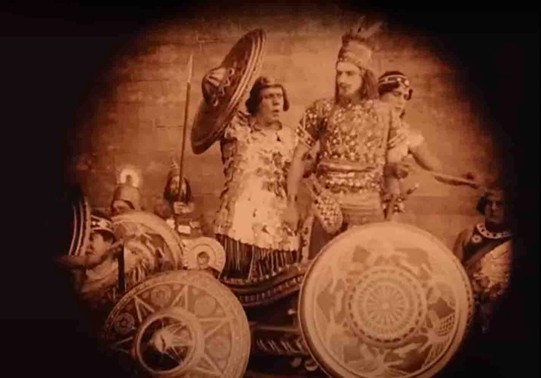
Figure 4: A still from the film Intolerance, directed by David Wark ‘D. W.’ Griffith, 1916. Accessed via https://www.youtube.com/watch?v=lv6u3d99SKk (01:29:53).
The first ideology to emerge in and influence Iranian cinema was nationalism. This was likely due to two factors, first, cinema was introduced to Iran through the royal court and nobility,25Masʿūd Mihrābī, Tārīkh-i sīnimā-i Īrān: Az āghāz tā sāl-i 1357 [History of Iranian cinema: From the beginning to the year 1979], 7th ed. (Tehran: Nazar, 1992), 15. and, second, cinema began operating publicly in Iran at a time when an outdated nationalist government was in power. However, one should not overlook the influence of nationalistic ideas of Iranian intellectuals during the Constitutional era on the dramatic arts of the period.26Muhsin Zamānī and Farhād Nādirzādah Kirmānī, “In‛ikās-i millī’garā’ī dar adabiyāt-i namāyishī-i rūzigār-i Pahlavī-i avval” [The reflection of nationalism in the dramatic literature of the first Pahlavi period], Hunar’hā-yi zībā – Hunar’hā-yi Namāyishī va Mūsīqī 42 (Fall and Winter 2010), 30. Hamid Naficy introduces the concept of “syncretic Westernization,” which simultaneously advocated promoting pre-Islamic and Zoroastrian cultural traits, modernizing the society, homogenizing the cultural, social, and political fields, and secularizing the society.27Hamid Naficy, A Social History of Iranian Cinema, Volume 1: The Artisanal Era, 1897-1941 (Duke University Press, 2011), 141-142. I find the term ‘syncretic Westernization’ inaccurate because I distinguish between modernization and Westernization. I believe one of the reasons for the downfall of the Pahlavī dynasty and its development project was its failure to make this distinction. The archaism, forced secularization, and Westernization of culture and society during the Pahlavī period all went against Islamic traditions and culture. Additionally, modernization was incomplete and did not entail political development. A combination of these factors formed resistance and ignited protests against the Pahlavī government. Nevertheless, Naficy aptly explains the process of forming an archaic nationalistic ideology and constructing the social world based on it.28Hamid Naficy, A Social History of Iranian Cinema, Volume 1: The Artisanal Era, 1897-1941 (Duke University Press, 2011), 142-147. As Sadr argues, nationalistic ideology in Iranian cinema can be traced back to the early years of the Pahlavī period:
Whenever the name Rizā Shāh was mentioned, it was accompanied by the adjective ‘patriot,’ reinforcing his chauvinistic vision of Iran. He justified his patriarchal sovereignty in the name of the nation. Throughout the Pahlavī period, statements like these were frequently spoken and written: “once again in the ancient history of Iran, an Iranian patriot rose up to protect the country from danger, and Rizā Shāh was such a man.” To justify this perspective, cinema served as a suitable medium, frequently defending the monarchy. In a country like Iran, where literacy rates were low at the beginning of Rizā Shāh’s reign, screening films functioned much like publishing books and newspapers, as they could reach even the illiterate. It was a unique tool used to reinforce the legitimacy of the new dynasty, the mighty Shah and his new regime. In November 1927, the film Cyrus the Great, the Conqueror of Babylon was screened at the Grand Cinema. Some newspapers enthusiastically linked it to the history of Iran, using it as an opportunity to celebrate the current situation: ‘…those who have read the history of Iran know the invaluable services Cyrus the Great, the founder of Achaemenid dynasty and reviver of Iran, rendered to the Iranian nation and the high status he holds in the world. Go to the Grand Cinema to see this Shah, and witness, in this film, the conquests of Cyrus the Great, the King of Babylon and the civilization of Chaldea, as well as the social life of that time.’ The film’s title and these statements functioned as advertisements for Rizā Shāh, drawing a parallel between him and Cyrus, the reviver of Persia/Iran […] However, the film screened at the Grand Cinema was actually a part of the famous film Intolerance, directed by David Wark ‘D. W.’ Griffith, in 1916. An episode of the film titled “The Ancient Babylon” depicted the battle between the peaceful prince Belshazzar of Babylon and the king of Persia (played by George Siegmann), in 539 BC, which led to Belshazzar’s defeat. In fact, the film was not about the Persian Empire, rather, it depicted the innocence being destroyed by the Persians. This plagiarism never subjected to any scrutiny.29Hamīd Rizā Sadr, Dar’āmadī bar tārīkh-i siyāsī-i sīnimā-i Īrān (1280–1380) [An introduction to the political history of Iranian cinema from 1901-2001], 1st ed. (Tehran: Nay, 2002), 26.
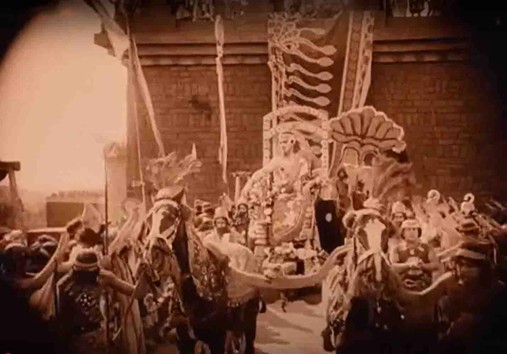
Figure 5: A still from the film Intolerance, directed by David Wark ‘D. W.’ Griffith, 1916. Accessed via https://www.youtube.com/watch?v=lv6u3d99SKk (00:21:54).
Some argue that elements of nationalistic ideology are evident even in the first sound film of Iranian cinema, directed by Ardashīr Īrānī and produced by and starring ‛Abdul-Husayn Sipantā. For instance, the film’s intertitle states: ‘Years passed. Coup d’état of February 2, 1921. The rising sun of prosperity in Iran.’30Ghulām Haydarī, Zāviyah-yi dīd dar sīnimā-yi Īrān [Point of view in Iranian cinema] (Tehran: Daftar-i Pazhūhish-hā-yi Farhangī, 1990), 18. Some have also examined how early Iranian films promoted archaic Iranism: “The earliest films of Iranian cinema indirectly conveyed the ideas of the highest office of the country. These films focused heavily on issues such as security in the country (in Dukhtar-i Lur [Lor Girl]) or the ancient values of Iran (Nādir Shāh’s conquest of Lahore in the film Firdawsī).”31‛Alī Asghar Kishānī, Farāyand-i takāmul-i sīnimā-i Īrān va hukūmat-i Pahlavī [The process of interaction between Iranian cinema and Pahlavi government] 1st ed. (Tehran: Markaz-i Asnād-i Inqilāb-i Islāmī, 1386/2007), 60. The fact that Dukhtar-i Lur has another title, Īrān-i dīrūz va Īrān-i imrūz (The Iran of yesterday and the Iran of today) testifies to the film’s intention of portraying two different Irans: Iran before Rizā Shāh and Iran after his ascension. Hamid Naficy describes this film in terms of “cinematic nationalism based on feminism and anti-Arabism” and argues,32Hamid Naficy, A Social History of Iranian Cinema, Volume 1: The Artisanal Era, 1897-1941 (Duke University Press, 2011), 274
The pair spends years in exile. Reza Shah comes to power in Iran, and a new Iranian flag is raised high, causing the exiles to consider returning. Here, the film shows a modernized Iran, one secure from banditry under the new Pahlavi regime. Under a picture of Reza Shah on the wall in Golnar’s parental home, to which she is now restored, she plays the piano happily. Personal love, love of country, and love of the Shah fuse and become triumphant. Jafar is now dressed in a Pahlavi-dictated suit and cap, while Golnar is without a veil, demonstrating the victory of Reza Shah’s sartorial reforms. As she plays the piano, he sings a patriotic song to the new ruler, whose picture, as a rising star, ends the film.33Hamid Naficy, A Social History of Iranian Cinema, Volume 1: The Artisanal Era, 1897-1941 (Duke University Press, 2011), 234.
Figure 6: A still from the film Dukhtar-i Lur (Lor Girl), directed by Ardashīr Īrānī, 1921.
Some critics talk about political propaganda as well as censorship in Iranian cinema. It seems to be a common practice for all governments to use cinema to promote their goals and agendas, a trend that can be seen in both the Pahlavī and Islamic Republic eras.34‛Alī Asghar Kishānī, Farāyand-i takāmul-i sīnimā-i Īrān va hukūmat-i Pahlavī [The process of interaction between Iranian cinema and Pahlavi government] 1st ed. (Tehran: Markaz-i Asnād-i Inqilāb-i Islāmī, 1386/2007), 61. It is argued that during the early Pahlavī period, ‘documentary films made about various military and non-military ceremonies testify to the court’s strong inclination toward documenting events through cinema.’35‛Alī Asghar Kishānī, Farāyand-i taʿāmul-i sīnimā-i Īrān va hukūmat-i Pahlavī [The process of interaction between Iranian cinema and Pahlavi government] 1st ed. (Tehran: Markaz-i Asnād-i Inqilāb-i Islāmī, 1386/2007), 61. and that “Khān’bābā Muʿtazidī’s documentary films made between 1926-1941, were all sponsored by the court.”36‛Alī Asghar Kishānī, Farāyand-i taʿāmul-i sīnimā-i Īrān va hukūmat-i Pahlavī [The process of interaction between Iranian cinema and Pahlavi government] 1st ed. (Tehran: Markaz-i Asnād-i Inqilāb-i Islāmī, 1386/2007), 67. However, this is something even Iranian do today, and the Pahlavī court cannot be blamed for having done the same. Censorship in cinema is a common practice in totalitarian regimes, though it is highly destructive to the medium, and we cannot expect anything different from such governments.37‛Alī Asghar Kishānī, Farāyand-i taʿāmul-i sīnimā-i Īrān va hukūmat-i Pahlavī [The process of interaction between Iranian cinema and Pahlavi government] 1st ed. (Tehran: Markaz-i Asnād-i Inqilāb-i Islāmī, 1386/2007), 64. The topic of censorship in Iranian cinema has been raised many times but the present article suggests a more complex approach, i.e., a cinema which is in the service of a particular ideology. Nevertheless, what is quoted from ‛Abdul-Husayn Sipantā, the film director during Rizā Shāh’s period, is catastrophic: “In the government system, nothing mattered except money and connections. Hard work, craftsmanship, and art were not valued. They expected Persian films to be produced for the government and thoroughly praise the government. The film Laylī va Majnūn was criticized for not mentioning the Shāh’s name.38”Jamāl Umīd, Tārīkh-i Sīnimā-yi Īrān 1279 – 1357 [The history of Iranian Cinema, 1900 – 1979] (Tehran: Ruzanah, 1995), 76.
Nationalism was present in Iranian cinema during the second Pahlavī period, as well. Traces of nationalism can be found in films made in the mid-twentieth century which, from a political perspective, can be considered the period of both the real and symbolic battle between two types of nationalism: Constitutionalism, which is sometimes called Musaddiqī or Madanī (civil) nationalism, and patriarchal or Pahlavī nationalism. In fact, the real battle between these two forms of nationalism in the political field led to the victory of the Pahlavī regime with a coup d’Etat against Musaddiq’s government. But this victory, in the social-political environment of that period, was interpreted as the failure of the political legitimacy. Consequently, the dominant system sought to recreate this legitimacy in one way or another, and the medium of cinema was one of its tools. Sadr describes the reappearance of patriarchal nationalism in the cinema of the 1950s, “in the age of oppression of nationalistic sensibilities,” through what he calls “making quasi-historical films,”39Hamīd Rizā Sadr, Dar’āmadī bar tārīkh-i siyāsī-i sīnimā-i Īrān (1280–1380) [An introduction to the political history of Iranian cinema from 1901- 2001], 1st ed. (Tehran: Nay, 2002), 125-126. such as Āghā Muhammad Khān Qājār (1954) and ‛Arūs-i Dajlah (Bride of Tigris, 1954) by Nusrat-Allāh Muhtasham, Shāhīn-i Tūs (The Eagle of Tūs, 1954) by Karīm Fakūr, Amīr Arsalān Nāmdār (1955) and Qizil Arsalān (1957) by Shāpūr Yāsimī, Yūsuf va Zulaykhā (1956) by Siyāmak Yāsimī, Bījan va Manīzhah (1958) by Manūchihr Zamānī, Yaʿqūb Lays Saffārī (1957) by ‛Alī Kasmā’ī.
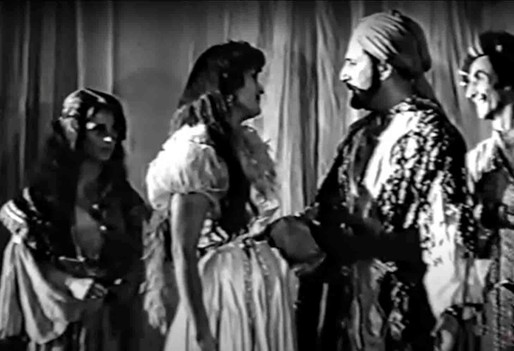
Figure 7: A still from the film Yaʿqūb Lays Saffārī, directed by ‛Alī Kasmā’ī, 1957.
What was lost in reality on the social level was meant to be compensated for on the cinema screen or through other representations. National grandeur, which had briefly appeared in the Iranian political landscape through a social movement, now seemed lost after the suppression of the oil nationalization movement. The social movement that had sparked hope and excitement among the people, for better or worse, ultimately led to a sense of failure and disillusionment. Therefore, it became necessary to reconstruct that nationalistic image for society. “In fact, the Coup shattered down everyone’s hopes for attaining political and social freedom. The government that came to power as a result of the Coup created an environment filled with fear and terror through its constant arrests, bans and executions. This situation had such a profound effect on the Iranian people that, even today, it occasionally reappears in literature.”40Asad Sayf, “Taʾsīr-i kūditā-yi Murdād bar adabiyāt-i Fārsī,” Deutsche Welle, August 19, 2021, accessed on September 6, 2024, https://www.dw.com/fa-ir…/a-58904633 In the years following the coup, state-owned media and its associated or controlled forces portrayed the grandeur and progress of Iran, which was revived under the patriarchy of the Shah. In contrast, independent cultural agents depicted failure, disillusionment, and darkness.41Anūsh Sālihī, “Bāztāb-i kūditā-yi Murdād 1332 dar adabiyāt-i dāstānī-i Īrān,” Tarikhirani, November 13, 2021, accessed on September 6, 2024, http://tarikhirani.ir/fa/news/8712/
With its unique and impactful characteristics, Iranian cinema was inevitably subject to control and censorship; therefore, it was unable to properly reflect independent thoughts and ideas through the medium of cinema. It is argued that Nāsir Taqvā’ī’s film, Ārāmish dar huzūr-i dīgarān (Tranquility in the presence of others, 1970), “the first feature film by Nāsir Taqvā’ī, after many years of being banned, was eventually screened only after 40 minutes were cut, reducing the film to an 80-minute version.”42Masʿūd Mihrābī, Tārīkh-i sīnimā-i Īrān: Az āghāz tā sāl-i 1357 [History of Iranian cinema: From the beginning to the year 1979], 7th ed. (Tehran: Nazar, 1992), 155. If a director intended to convey different and independent thoughts to the audience in their film, they had to employ a form of symbolism that would mostly be misunderstood by the people. However, these independent films needed to be decoded, as this was beyond the understanding of the average cinema-goers of the time. Asrār-i ganj-i darrah-yi jinnī (The ghost valley’s treasure mysteries, 1974), directed by Ibrāhīm Gulistān, was among the films that needed to be decoded.43Masʿūd Mihrābī, Tārīkh-i sīnimā-i Īrān: Az āghāz tā sāl-i 1357 [History of Iranian cinema: From the beginning to the year 1979], 7th ed. (Tehran: Nazar, 1992), 161-162.
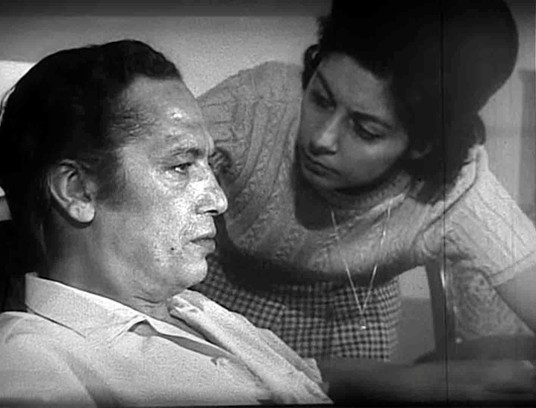
Figure 8: A still from the film Ārāmish dar huzūr-i dīgarān (Tranquility in the presence of others), directed by Nāsir Taqvā’ī, 1970.
After the coup, the media, including cinema, were more tightly controlled, and creative and productive artists faced greater limitations than before. Poetry, fiction, and independent cinema increasingly had to employ multi-layered symbolism to reflect the thoughts and emotions of their creators, as well as the social realities of the time. For instance, the audience needed to understand that “night” and “winter” symbolized the injustice and oppression of the government. However, on the other hand, in cultural products that were government-controlled or approved by the government, the condition of society was represented completely differently, almost the opposite of reality. Sadr provides a clear description of these various types of representations in quasi-historical films and reveals how patriarchal nationalistic values and symbols were presented without complex symbolism, using a simple language that was easily understandable to everyone.44Hamīd Rizā Sadr, Dar’āmadī bar tārīkh-i siyāsī-i sīnimā-i Īrān (1280–1380) [An introduction to the political history of Iranian cinema from 1901-2001], 1st ed. (Tehran: Nay, 2002), 126. It is curious, that no film about Cyrus the Great was created in this period, while “the most important subject matter of the plays of this period was the ancient history of Iran.”45Muhsin Zamānī and Farhād Nādirzādah Kirmānī, “In‛ikās-i millī’garā’ī dar adabiyāt-i namāyishī-i rūzigār-i Pahlavī-i avval” [The reflection of nationalism in the dramatic literature of the first Pahlavi period], Hunar’hā-yi zībā – Hunar’hā-yi Namāyishī va Mūsīqī 42 (Fall and Winter 2010), 31. Seemingly, a film on this subject was set to be made and even advertised; however, it was never produced.46Hamīd Rizā Sadr, Dar’āmadī bar tārīkh-i siyāsī-i sīnimā-i Īrān (1280–1380) [An introduction to the political history of Iranian cinema from 1901-2001], 1st ed. (Tehran: Nay, 2002), 131.
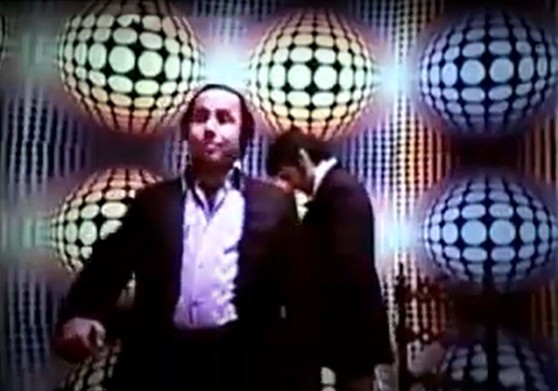
Figure 9: A still from the film Asrār-i ganj-i darrah-yi jinnī (The Ghost Valley’s Treasure Mysteries), directed by Ibrāhīm Gulistān, 1974.
Marxism in Iranian Cinema
Marxism is another ideology that had a significant influence on the society of Iran. Despite the formation of various Marxist groups in Iran, multiple factions repeatedly warned against the dangers of such an ideology, to the extent that events like the 1953 coup were justified by the perceived threat. Additionally, hundreds of cultural agents in Iran were under the influence of Marxism. Therefore, it is not unreasonable to expect the emergence of Marxist ideas in Iranian cinema. However, it is necessary to clarify here the difference between two left-wing ideologies, socialism and Marxism. Socialism emerged before Marxism, and at least three phases of it occurred: pre-Marxist socialism, Marxist socialism, and post-Marxist socialism. Zāhidī Langarūdī discusses the relationship between the two ideologies, Marxism and socialism, in Iran:
The emergence of Marxism in the second half of the nineteenth century is a catatonic shift in socialist thought, as since then, nearly all aspects of socialism have been influenced by this idea in one way or another. Since Marxism is grounded in social and historical analysis, aiming to uncover the inevitable laws of history, it is often regarded as scientific socialism. In Iran, socialist ideas emerged shortly before the Constitutional Revolution. Afterward, with the formation of the Tūdah Party, these ideas gained significant popularity. For two decades (in the 1960s and 1970s), Marxism dominated the history of Iran. However, the Marxist-communist branch of socialism, focused on revolution, had always been more popular than other branches. […] In Iran, most Communists and Marxists emphasized the lower-class masses of society and were successful in engaging with them.47Ahmad Zāhidī Langrūdī, Sīnimā va susiyālīsm dar Īrān [Cinema and socialism in Iran] (Nabisht, 2017).
It is important to distinguish between the two left-wing ideologies; however, it is also crucial to ask whether any work that focuses on the lower classes can be considered Marxist or socialist. Can we label any work that draws attention to societal inequality as Marxist or socialist? This is exactly the mistake Zāhidī Langarūdī makes in his book, Sīnimā va susiyālīsm dar Īrān (Cinema and socialism in Iran). He considers many cinematic works as socialist simply because they focus on deprived and disadvantaged people. For example, he writes about Furūgh Farrukhzād’s documentary Khānah siyāh ast (The house is black), which depicts people affected by leprosy: “the film Khānah siyāh ast was not, on the whole, a directly political-socialist film; however, this tendency was evident in many parts of the film.”48Ahmad Zāhidī Langrūdī, Sīnimā va susiyālīsm dar Īrān [Cinema and socialism in Iran] (Nabisht, 2017). He believes that Dāryūsh Mihrjū’ī’s Gāv (Cow, 1969) is also a socialist work. Zāhidī Langarūdī goes as far as calling many films made by the Institute for the Intellectual Development of Children and Young Adults [Kānūn Parvarish-i Fikrī] socialist, such as Hayūlā (Monster, 1972) by Farshīd Misqālī, Bad-badah (Bad is bad, 1968) by Muhammad Rizā Aslānī, Ānkih khiyāl bāft bā ānkih amal kard (The one who imagined and the one who worked, 1971) by Murtazā Mumayyiz, Rangīn’kamān (Rainbow, 1973) by Nafīsah Riyāhī, Sāz’dahanī (Harmonica, 1973) by Amīr Nādirī, Bahārak (1976) by Isfandiyār Munfaridzādah, and Dunyā-yi dīvānah-yi dīvānah-yi dīvānah (The mad, mad, mad, world, 1975) by Nūr al-Dīn Zarrīn’kilk.49Ahmad Zāhidī Langrūdī, Sīnimā va susiyālīsm dar Īrān [Cinema and socialism in Iran] (Nabisht, 2017).
Zāhidī Langarūdī is trapped in viewing cinematic works excessively through the lens of socialism. Hence, it is not advisable to rely on his interpretation and analysis. He also discusses “guerilla cinema in Iran,” and argues that Amīr Nādirī’s Tangsīr (Tight spot, 1973) “praises armed resistance against the ruling power.”50Ahmad Zāhidī Langrūdī, Sīnimā va susiyālīsm dar Īrān [Cinema and socialism in Iran] (Nabisht, 2017). Since Marxism is often referred to as “the science of resistance,” exploring the concept of resistance may serve as a useful key for studying the presence of Marxism in Iranian cinema. Sadr believes that Iranian cinema in the 1970s promoted resistance and “armed struggle,” as seen in films such as Balūch (1972), by Masʿūd Kīmiyā’ī, and Sādiq Kurdah (1972), by Nāsir Taqvā’ī, being notable examples that express this subject matter. A crucial point he adds is the presence of religious elements in this type of film. Can we regard the emphasis on armed resistance in some of the films of the 1970s as the result of a convergence between the two dominant ideologies of the time, Marxism and Islamism? It seems that such an interpretation is not far from truth:
Tangsīr (Amīr Nāderi, 1973) based on the well-known story by Sādiq Chūbak, drew the audience into the turbulent south, turning personal revenge into a full-scale riot, nearly a kind of revolution. The subject of the hardworking men […] who see their efforts wasted by an interconnected chain of statesmen, effectively turns Tangsīr into a political manifesto. Film viewers felt a connection to “Zār-Mammad” (played by Bihrūz Vusūqī) when he cries in the bazar, “what kind of city is this, where everyone is a thief and a liar.” They regarded it as an allusion to the current situation in Iran. The presence of religion was more prominent in Tangsīr than in the previous films. In a scene, when Zār-Mammad’s requests to reclaim his money fail, he loses his composure and suddenly adopts a stern and determined expression, saying, “If it’s going to be with force, so be it!” He stands up and enters the frame from below, now, resembling an invincible man capable of breaking down any obstacle. The film focuses equally on his praying and on him retrieving his gun from the basement. The transformation of “Zār-Mammad” (symbolizing weakness) into “Shīr-Mammad” (symbolizing strength) in everyday conversations, culminating in loud shouts and widespread clashes with government officials, turns Tangsīr into a political film that suggests armed resistance is the only path to freedom.51Hamīd Rizā Sadr, Dar’āmadī bar tārīkh-i siyāsī-i sīnimā-i Īrān (1280–1380) [An introduction to the political history of Iranian cinema from 1901-2001], 1st ed. (Tehran: Nay, 2002), 215.
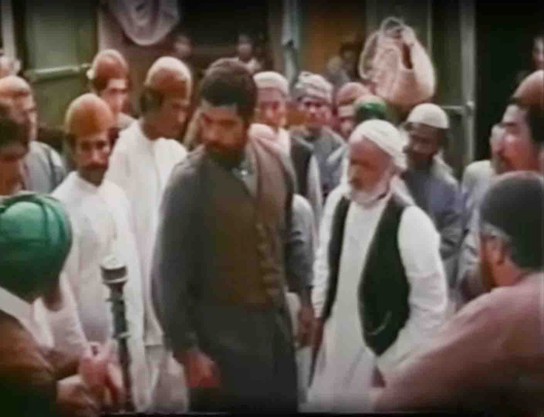
Figure 10: A still from the film Tangsīr, directed by Amīr Nāderi, 1973.
Sadr argues that Khāk (Soil, 1974), by Masʿūd Kīmiyā’ī, also “emphasizes that there is no path other than armed resistance against foreign invading forces.”52Hamīd Rizā Sadr, Dar’āmadī bar tārīkh-i siyāsī-i sīnimā-i Īrān (1280–1380) [An introduction to the political history of Iranian cinema from 1901-2001], 1st ed. (Tehran: Nay, 2002), 216. However, in Sadr’s view, “the most significant political film of the 1970s for proposing armed resistance as the only path for people” is Gavazn’hā (The deer, 1975), by Masʿūd Kīmiyā’ī.53Hamīd Rizā Sadr, Dar’āmadī bar tārīkh-i siyāsī-i sīnimā-i Īrān (1280–1380) [An introduction to the political history of Iranian cinema from 1901-2001], 1st ed. (Tehran: Nay, 2002), 216-218. He states that,
The main theme of Gavazn’hā is the close bond between two friends ⸺one an intellectual guerilla fighter and the other an ordinary man⸺ and the gradual elimination of their initial distance until they unite in the fight against the dominant system. They were portrayed as representatives of the political movements of the 1970s: the guerrilla fighter, symbolically named “Qudrat” (meaning Power), wearing a white shirt, thick moustache, and glasses—clichés of political fighters at the time, typically left-wing—and an ordinary man named “Sayyid,” referred to at one point in the film as “Sayyid Rasūl” (meaning the Prophet), symbolizing the religious beliefs of ordinary people.54Hamīd Rizā Sadr, Dar’āmadī bar tārīkh-i siyāsī-i sīnimā-i Īrān (1280–1380) [An introduction to the political history of Iranian cinema from 1901-2001], 1st ed. (Tehran: Nay, 2002), 216-218.
Can we interpret the union of these two characters in the armed fight against the dominant system in Gavazn’hā as a symbol of the convergence between Marxism and Islamism in the 1970s? Whatever the answer, it seems wiser to view the call for armed resistance in the films of the 1970s as a reflection of the social world shaped significantly by these two ideologies, rather than seeing the frequent repetition of this theme as a direct reflection of the ideologies themselves in Iranian cinema.
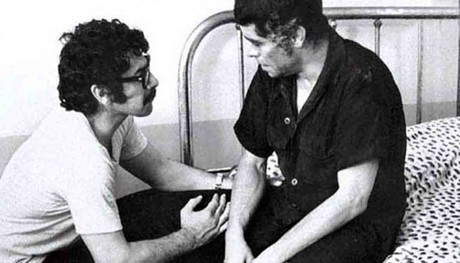
Figure 11: A still from the film Gavazn’hā (The deer), directed by Masʿūd Kīmiyā’ī, 1975.
Islamism in Iranian Cinema
The emergence of Islamic ideas and themes in Iranian cinema can be traced back to at least the 1970s. It seems that, in its early phases, the introduction of Islamism to Iranian cinema owes much to ‛Alī Sharīʿatī’s efforts. He brought theater into religious spaces with the goal of modernizing religion, but this was never accepted by traditional religious people. Sharīʿatī’s influence can be seen both directly, in the field of theater, and indirectly through his dramatic works. Perhaps one can regard two theater productions as precursors to the Islamist artistic movement: Abūzar, performed under the supervision of Sharīʿatī himself, first in Mashhad by Dāryūsh Arjmand and later at the Husayniyah Irshād in Tehran, directed by Īraj Saghīrī in 1972, and Sarbidārān, directed by Muhammad ‛Alī Najafī and performed at the Husayniyah Irshād.55“Bā Muhammad ‛Alī Najafī, khārij az gawd-i ‘Sarbidārān’,” ISNA, January 31, 2018, accessed on September 6, 2024, https://www.isna.ir/news/96111006111 As Najafī recollects,
After getting acquainted with Dr. Sharīʿatī, we decided to hold a theater and art class in the Husayniyah Irshād and I was appointed its manager (around the year 1966). In those years, I staged and directed a few plays. First, at the request of Dr. Sharīʿatī, Abūzar was staged, a play which was performed before by Dāryūsh Arjmand in Mashhad; afterwards, Hayʾat-i mutavassilīn bih shuhadā (A group devoted to martyrs) and then Sarbidārān were staged in the Husayniyah Irshād. It is said that one of the reasons the Husayniyah Irshād was closed was the staging of this latter play, which was only performed for one night. I remember that the play had a very fiery booklet that was written by Dr. Sharīʿatī himself, which was later published under the title Tashayyuʿ-i surkh (Red Shiism). In it, he wrote “Shia begins with ‛Alī’s ‘No’; which is a ‘No’ to the ruling government.” Dr. Sharīʿatī wrote much of Sarbidārān. Of course, Fakhr al-Dīn Anvār and I had written it earlier, but when Dr. Sharīʿatī saw the play’s structure, he said, “In this play, the form is stronger than the content.” He then worked on it for 48 hours, creating a version that was very modern in terms of performance. In fact, the actors entered among the spectators, and the stage was set up like a taʿziyah, with the audience seated on three sides of the scene. This play was staged for only one night and the ticket was 20 rials. Usually, tickets were not sold in religious places, but we sold tickets to maintain order and because of the limited space. Sarbidārān consisted of several acts; between them, there was a light which went off and on, through which music was played. It was for the first time that music was played in a religious space. These actions were a form of iconoclasm.56“Bā Muhammad ‛Alī Najafī, khārij az gawd-i ‘Sarbidārān’,” ISNA, January 31, 2018, accessed on September 6, 2024, https://www.isna.ir/news/96111006111
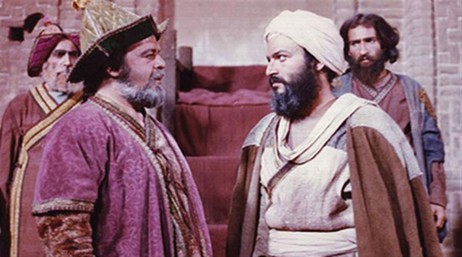
Figure 12: A still from the TV series Sarbidārān, directed by Muhammad ‛Alī Najafī, 1972.
Najafī has frequently discussed Sharīʿatī’s influential character.57Rizā Sāʾimī, “‛Alī Sharīʿatī va sīnimā / Qayar rā dūst dāsht: Guftārī mutafāvit bih bahānah-yi chihil u haftumīn sālgard-i darguzasht-i chihrah-yi farāmūsh’nashudanī,” Asriran, June 18, 2024, accessed on September 6, 2024, https://www.asriran.com/fa/news/975278/ As Sharīʿatī’s student, and with the same Islamist outlook shaped by his teacher’s influence, Najafī adapted Sarbidārān into a TV series after the Revolution. He says, “toward the end of Sarbidārān, I became someone who viewed art through an ideological lens.”58“Bā Muhammad ‛Alī Najafī, khārij az gawd-i ‘Sarbidārān’,” ISNA, January 31, 2018, accessed on September 6, 2024, https://www.isna.ir/news/96111006111 Dāvūd Mīrbāqirī and Hasan Fathī were the two other directors influenced by Sharīʿatī,59Rizā Sāʾimī, “‛Alī Sharīʿatī va sīnimā / Qayar rā dūst dāsht: Guftārī mutafāvit bih bahānah-yi chihil u haftumīn sālgard-i darguzasht-i chihrah-yi farāmūsh’nashudanī,” Asriran, June 18, 2024, accessed on September 6, 2024, https://www.asriran.com/fa/news/975278/ whose influence is evident in Mīrbāqirī’s TV series Imām ‛Alī (1996).60Mīlād Jalīlzādah, “‛Alī Sharīʿatī pusht-i dūrbīn,” Farhikhtegan, May 14, 2020, accessed on September 7, 2024, https://farhikhtegandaily.com/news/41026 Mīrbāqirī says in this regard:
The influence of Sharīʿatī on me stemmed from his new ideas about politics and society, blended with religion. I certainly never claimed that I intended to become like Sharīʿatī in my field, but I believed that the dramatic presentation of such concepts might be even more engaging than Dr. Sharīʿatī’s writings. Drama has an effective and durable impact.”61“Musāhabah-yi khāndanī bā Dāvūd Mīrbāqirī,” Afkar News, March 29, 2012, accessed on September 7, 2024, https://www.afkarnews.com/fa/tiny/news-93617
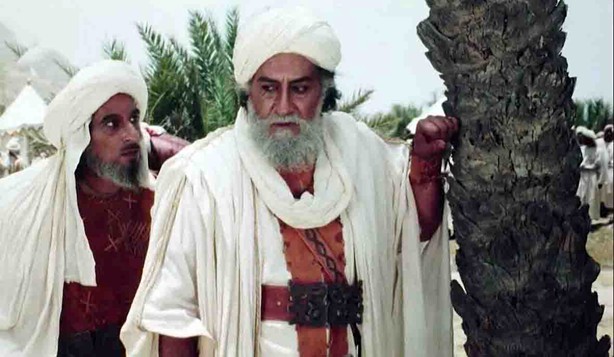
Figure 13: A still from the film Imām ‛Alī, directed by Dāvūd Mīrbāqirī, 1996.
The influence of religious figures and Islamists in cinema led to the eventual introduction of religion and Islamist ideology into the field. Muhsin Makhmalbāf, the famous director known for creating some of the best religious and Islamist works in Iranian cinema, has been greatly influenced by Sharīʿatī:
In contrast to the clerics who were completely opposed to art or unfamiliar with it, Sharīʿatī in his book, Chih bāyad kard va az kujā shurūʿ kunīm (What to do and where to begin), aimed to harness art and literature for the new movement he had initiated. (Influenced by him, we formed a theater group in Masjid-i Naw and occasionally staged plays in one of the mosques, doing so secretly. I wrote the plays and directed them. In those days, I usually went to work on weekdays and in the evenings, we rehearsed with our group in the library of the mosque).62Muhsin Makhmalbāf, Khātirāt [Memoir], 1st ed. (London: Nīkān, 2023), 129.
Nevertheless, it is necessary to distinguish between Islamic themes and Islamist ideas in cinema. The former is a religion, while the latter is a religious ideology that claims to have the potential to organize the society and to govern it in the modern era. Therefore, I distinguish between cinema that represents Islam and Islamic themes and cinema that introduces and promotes Islamism. It seems that some researchers have not given this distinction the attention it deserves.63For example, see Aʿzam Rāvadrād, Majīd Sulaymānī and Ruʾyā Hakīmī, “Tahlīl-i bāznamā’ī-i guftimān’hā-yi dīnī dar sīnimā-yi Īrān: Mutāliʿah-yi muridī-i fīlm-i Kitāb-i Qānūn” [The analysis of the representation of religious ideologies in Iranians cinema, a case study: The film Book of Law], Mutāliʿāt va tahqiqāt-i Ijtimā‛ī 1 (2012): 71-88; Muhaddisah Sādāt Mūsavī Sāmah & Farshād ‛Asgarī-kiyā, “Mutāliʿah-yi nahvah-yi bāznamā’ī-i aqalliyat’hā-yi dīnī dar sīnimā-yi Īrān baʿd az inqilāb-i Islāmī, bar asās-i ārā-yi Stewart Hall” [A study of the method of representation of religious minorities in Iranian cinema after the Islamic revolution based on Stewart Hall’s ideas], Rahpūyah-i hunar’hā-yi namāyishī 2, no. 4 (2022): 49-58. Cinema depicting Islam64I intentionally do not use the terms “Islamic cinema” and “religious cinema” because in the contemporary Iran, these terms bring different concepts to mind. Nacim Pak-Shiraz points out that “the very definition of what constituted ‘Islamic Cinema’ became fraught with disagreements across the spectrum of filmmakers, critics, religious authorities and those within the industry.” See Nacim Pak-Shiraz, “The Qur’anic Epic in Iranian Cinema,” Journal of Religion & Film 20, no. 1, (2016): 6; About the usage of the term “religious cinema” see, and Islamic themes can be seen as a modern continuation of religious performances from taʿziyah. Some scholars have used the term “religious films”65Anne Demy-Geroe, Iranian national cinema: The interaction of policy, genre, funding, and reception (London and New York: Routledge, 2020), 33. for this type of films, and have also discussed “spiritual films”66Anne Demy-Geroe, Iranian national cinema: The interaction of policy, genre, funding, and reception (London and New York: Routledge, 2020), 34. when referring to them. Films and TV series such as Rūz-i vāqiʿah (The fateful day, 1994) by Shahrām Asadī, Imām ‛Alī (1996), and Mukhtār’nāmah (2009), both by Dāvūd Mīrbāqirī, Tanhātarīn sardār (The loneliest leader, 1996), about the second Shia Imam, and Vilāyat-i Ishq (The reign of love, 2000) about the eighth Shia Imam, both directed by Mahdī Fakhīmzādah, Mulk-i Sulaymān (The Kingdom of Solomon, 2010), by Shahryār Bahrānī, Muhammad Rasūl-Allāh (2014), by Majīd Majīdī, all explore religious subjects but differ from Islamist works. One cannot draw a clear line between works with Islamic themes and Islamist works, as some of the religious works also display some aspects of Islamism. However, cinema that seeks to introduce and promote Islamism aims to present a different version of Islam for the political governance of society and for addressing various issues in our time.
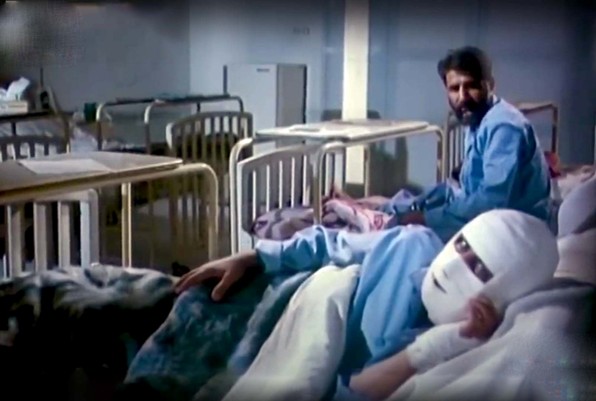
Figure 14: A still from the film Huviyat (Identity), directed by Ibrāhīm Hātamīkiyā, 1985.
Islamist ideology is fully present in some films of post-revolutionary Iranian cinema, with directors such as Ibrāhīm Hātamīkiyā, who has reflected this ideology in most of his works. For instance, some critics have discussed the opposition between the two types of Islamism in Hātamīkiyā’s Huviyat (Identity, 1985): “Islamism based on Islamic law” and “Islamism based on general good.”67‛Abdallāh Bīchirānlū, Muhammad Hasan Hāshim-Khānlū, “Bāznamā’ī-i sīnimā’ī-i bāft-i siyāsī-i Īrān: Tahlīl-i guftimān-i intiqādī-i mawridī-i fīlm-i Huviyat” [Cinematic representation of Iranian political context: A critical discourse analysis of the film Identity], Majallah-yi Jahānī-i Rasānah 13, no. 1 (2018): 184. Hātamīkiyā and directors like him were students and followers of Sayyid Murtazā (Kāmrān) Āvīnī, known for the documentary series Rivāyat-i fath (Chronicles of victory), which began in 1985 and fully embodies Āvīnī’s religious perspective. In addition to Najafī, Makhmalbāf, Āvīnī68To read about Āvīnī’s ideas and thoughts as well as his opinions about cinema, see: Karīm Nīkūnazar, “Shūrishī-i shahīd,” Mihr’nāmah 51 (2016): 220-225. and Hātamīkiyā, there are many other directors who have made Islamist works, such as Faraj-Allāh Salahshūr, Rasūl Mullāqulīpūr, Ziyā al-Dīn Durrī, Bihrūz Afkhamī, Nargis Ābyār, Parvīz Shaykh-Tādī, Amīr ‛Abbās Rabīʿī, Muhammad Mahdī ‛Asgarpūr, Javād Shamaqdarī, Masʿūd Dihnamakī and Jamāl Shūrjah. Some of them belong to a kind of cinema called “sīnimā-yi maktabī” (ideological cinema). At any rate, we can see reflections of Islamism in various works they have made. This period in Iranian cinema is marked by a division of filmmakers into two groups: insiders and outsiders; and many red lines were established for working in cinema.69Anne Demy-Geroe, Iranian national cinema: The interaction of policy, genre, funding, and reception (London and New York: Routledge, 2020), 20. In addition, the eight-year war between Iran and Iraq provided themes and potentials for the Islamic Republic to strengthen Islamist cinema and create a genre of cinema known as “Sacred defense cinema” (Sīnimā-yi Difā‛-i muqaddas).70Anne Demy-Geroe, Iranian national cinema: The interaction of policy, genre, funding, and reception (London and New York: Routledge, 2020), 24.
It is worth noting that Islamism is often depicted positively in many films and TV series after the Revolution; however, it occasionally appears with a negative portrayal as well. In the decades following the Revolution, numerous films and TV series have been created in response to political movements opposing the Islamic Republic. These films affirm Islamism in contrast to the regime’s opponents. Films such as Boycott (Makhmalbāf, 1985), Taʿqīb-i sāyah’hā (Chasing the shadows, 1990), by ‛Alī Shāh-Hātamī, Bih rang-i arghavān (In amethyst color, 2005), by Ibrahīm Hātamīkiyā, Mājarā-yi nīmrūz (Midday Adventures, 2017), by Muhammad Husayn Mahdaviyān, are just a few examples of the many films and TV series produced in recent decades in response to various opposition groups. All the aforementioned directors, who have made films with religious or Islamist themes, have received varying degrees of support from the Islamic Republic, at least for a certain period. The Fārābī Foundation, the Sūrah Cinematic Development Organization, the Awj Cinematic Organization, the Rivāyat-i Fath Foundation, the Islamic Republic of Iran Broadcasting (IRIB) and many other organizations have taken on the task of supporting these types of films and directors.
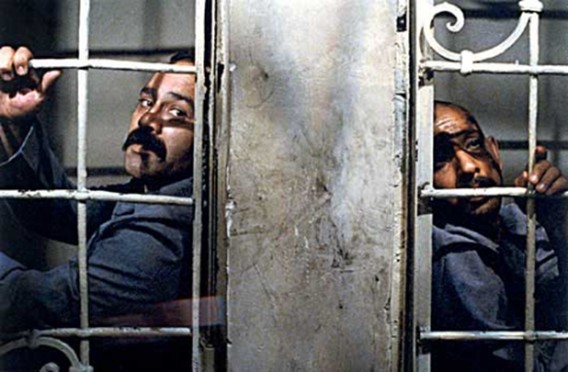
Figure 15: A still from the film Boycott (Bāykut), directed by Muhsin Makhmalbāf, 1985.
Feminism in Iranian Cinema
Another ideology that has been prominently emphasized in Iranian cinema and has sparked extensive discussion is feminism.71I am thankful of Dr. Muhammad ‛Alī Alastī, my dear colleague in Islamic Azad University, Central Tehran branch, in conversation with whom I realized the necessity to discuss this ideology. Indeed, this article would be incomplete without discussing the issues related to feminism in Iranian cinema. It is important to highlight the role of women writers and directors in reflecting this ideology through their cinematic works. Hamid Naficy argues that, from the time of Rizā Shāh, women became “cinematic objects.”72Hamid Naficy, A Social History of Iranian Cinema, Volume 1: The Artisanal Era, 1897-1941 (Duke University Press, 2011), 151. Then, he identifies feminist themes in Dukhtar-i Lur and describes it as “cinematic nationalism based on feminism and anti-Arabism.”73Hamid Naficy, A Social History of Iranian Cinema, Volume 1: The Artisanal Era, 1897-1941 (Duke University Press, 2011), 274. However, it’s important to distinguish between feminist films and those that simply portray women, women’s issues, and problems in general. In other words, not all films that feature women or address women’s issues can be considered feminist works. It seems that some critics have made this mistake by tracing feminism back to pre-revolutionary Iranian cinema or by considering the mere presence of themes related to women in any cinematic work as examples of feminism.74Rafīʿ al-Dīn Ismāʿīlī, “Jarayān’shināsī-i fimīnīsm dar sīnimā-yi Īrān” [Understanding feminist movements in Iranian cinema], Khiradvarzī 6 (2021): 17.
Feminist works refer to those that seek to transform social relations and the social world based on woman-centered ideas; therefore, facts such as the kashf-i hijab [the banning of Islamic veil] which was an imposed and mandatory act, or what Naficy refers to as the result of Rizā Shāh’s “sartorial reforms” should not be associated with feminism. The representation of women and women’s issues in cinema goes beyond the mere presence of feminist themes. Some critics have focused on the portrayal of women in Iranian cinema and have examined various aspects of it.75For example, see: Aʿzam Rāvadrād and Masʿūd Zandī, “Taghyīrāt-i naqsh-i zan dar sīnimā-yi Īrān” [The changes in the role of woman in Iranian cinema], Majallah-yi jahānī-i rasānah 1, no. 2, (2006): 23-50; Muhammad Rizā’ī and Sumayyah Afshār, “Bāznamā’ī jinsiyatī-i siriyāl’hā-yi tilivīziyun” [Gender-based representation in TV series], Pazhūhish-i zanān 1 (2010): 133-156; Ārash Hasanpūr and Bihjat Yazdkhāstī, “Prublimātīk-i zan-būdigī: Namāyish-i jinsiyat va barsākht-i klīshah’hā-yi akhlāqī-i zanānah dar sīnimā-yi Īrān” [Problematic of womanhood: Presentation of gender and construction of female moral clichés in Iranian cinema], Mutāliʿāt-i farhang – irtibātāt 16, no. 32 (2015): 33-68; Laylā Shāhrukh and Shahnāz Hāshimī, “Santiz’pazhūhī-i bāznamā’ī-i zanān dar sīnimā-yi Īrān” [A synthetic study of the representation of women in Iranian cinema], Jāmiʿah, farhang, risānah 6, no. 22 (1396/2017): 69-97; Maryam Rizā’ī, “Nigāhī bih bāznamā’ī-i chihrah-yi zan-i Īrānī dar sīnimā va tilivīziyun: Zan, sūzhigī va tasvir” [A look at the representation of the Iranian woman in cinema and television: Woman, agency and image], Radio Zamanah, February 8, 2018, accessed on September 7, 2024, https://www.radiozamaneh.com/380814
Shīvā Pazhūhish’far and Husayn Ghiyāsī, “Mafāhīm-i fimīnīstī dar dah fīlm-i purfurūsh-i sāl-i 87 sīnimā-yi Īrān va taʾsīr-i ān bar mukhātabān” [A study of the feminist concepts in ten best-selling films of Iranian cinema in 2008 and their influence on the audience], Farhang-i irtibātāt 2, no. 5, (2012), 159- 178; Sipīdah Amīrī and Fathallāh Zāriʿ Khalīlī, “Arzyābī-i nimūd-i naqsh-i ijtimā‛ī-i zan dar sīnimā-yi Īrān (Sāl’hā-yi 1390- 1396” [Evaluation of the manifestation of the social role of woman in Iranian cinema (years 2011 – 2017)], Zan dar farhang u hunar 11, no. 3 (2019): 309-324.
Another important point in this regard is the distinction between different types of feminism: feminism as a positive outlook on women and feminine life—one that respects women’s human dignity and is commonly understood by the general public in Iran;76Manīzhah Rabīʿī Rūdsarī, “Sar’anjām-i fimīnīsm dar Īrān” [The story of feminism in Iran], Zamānah 48 (2006), 3-11. feminism as a kind of life-style;77Bell Hooks, Feminism is for everybody: Passionate politics (Cambridge: South End Press, 2000). feminism as a research program and a theoretical vision (the study of the social world and human relations from a women’s perspective with a focus on feminine themes);78Ritzer, George and Stepnisky, Jeffrey, Sociological theory, 10th ed. (Los Angeles: Sage Publication. 2018), 545. feminism as a legal movement (which advocates for structural reforms and the recognition of women’s rights in society and supported by a range of social activists, often including both men and women in Muslim communities);79For an article criticizing this type of feminism, see: Zuhrah ‛Azīz-ābādī and Ārash Haydarī, “Fimīnīsm-i huqūq’garā va masʾalah-yi zan dar Īrān-i mu‛āsir” [Rights-based feminism and the issue of woman in contemporary Iran], Barrasī-i masā’il-i Ijtimāʿī-i Īrān 12, no. 2 (2021): 257-285. feminism as a social movement that calls for changes at various levels of social life;80Sarah Gamble, ed., The Routledge companion to feminism and postfeminism (London and New York: Routledge, 2006). and finally, feminism as an ideology and belief system aimed at reorganizing the social world, negating the superiority of men and the inferiority of women. When viewed as an ideology, feminism can be defined as follows:
Feminist ideology has traditionally been defined by two basic beliefs: that women are disadvantaged because of their gender; and that this disadvantage can and should be overthrown. In this way, feminists have highlighted what they see as a political relationship between the sexes, the supremacy of men and the subjection of women in most, if not all, societies.81Andrew Heywood, Political ideologies: An introduction, 7th ed. (Red Globe Press, 2021), 186.
Therefore, it is important to clarify which definition of feminism we are referring to when discussing feminism in Iranian cinema. In fact, these distinctions are often overlooked in most discussions about feminism in Iranian cinema. If we view feminism as an ideology, we can argue that feminist works in Iranian cinema have primarily emerged over the last three decades, largely as a result of the efforts of women writers and directors. It should be noted that, prior to the Revolution, some Iranian women filmmakers such as Shahlā Riyāhī (Marjān, 1333/1954), Furūgh Farrukhzād (Khānah siyāh ast, 1961) and Kubrā Saʿīdī (Maryam va Mānī, 1978) directed several films.82Rafīʿ al-Dīn Ismāʿīlī, “Jarayān’shināsī-i fimīnīsm dar sīnimā-yi Īrān” [Understanding feminist movements in Iranian cinema], Khiradvarzī 6 (2021): 14. However, after the 1979 revolution, women’s presence in Iranian cinema became more diverse and multifaceted. Some scholars claim that, prior to the Revolution, cinema was “predominantly viewed as a male-dominated medium in the Iranian artistic landscape.83”Nādiyā Maʿqūlī and ‛Alī Akbar Farhangī, “Fimīnīsm dar fīlm’hā-yi Rakhshān Banī-iʿtimād” [Feminism in Rakhshān Bani-eʿtemād’s films], Mutāliʿāt-i ijtimāʿi ravān’shinākhtī-i zanān 7, no. 2 (2009): 59-76. Following the revolution, “the first film directed by a woman was Rābitah (Relationship), made in 1985 by Pūrān Dirakhshandah.”84Rafīʿ al-Dīn Ismāʿīlī, “Jarayān’shināsī-i fimīnīsm dar sīnimā-yi Īrān” [Understanding feminist movements in Iranian cinema], Khiradvarzī 6 (2021): 15. Most notable women directors of this period were Rakhshān Banī-iʿtimād, Pūrān Dirakhshandah, Tahmīnah Mīlānī, Manīzhah Hikmat, Marziyah Burūmand, Tīnā Pākravān, Nīkī Karīmī, Āydā Panāhandah, Munā Zandī and Grānāz Mūsavī. On the other hand, some feminist films in Iranian cinema have been made by men. Barf rū-yi kāj’hā (The snow on the pines, 2011), by Paymān Muʿādī, is an example of a feminist film written and directed by a man:
Besides female directors, some of the male directors and producers of Iranian cinema have played a crucial role in shaping the representation of women, transforming their portrayal from passive and insignificant characters to powerful and significant heroines. Through their films, they have created a platform for amplifying women’s voices. By means of cinematic productions, they have defended women’s positions and critically examined the imbalanced relationship between men and women. Amid changing conditions for women, they challenged the status quo by questioning women’s identity, depicting the economic, physical, and psychological pressures they face, and exploring women’s freedom through cinematic techniques while raising profound relevant questions. Through critical representation, these filmmakers have portrayed a world of women filled with issues, experiences, emotions, thoughts, problems, concerns, and ideas about their environment, thus creating a new image of the Iranian woman. The portrayal of women in Iranian cinema has experienced many ups and downs in recent decades. With few exceptions, the history of Iranian cinema over the past three decades can be seen as a transition from the portrayal of women as silent, seductive, voiceless, and desexualized to a representation of women as critical, active, individual, and independent.85Ārash Hasanpūr, “Man īn hamah nīstam: Bāznamā’ī-i jahān-i zanānah dar fīlm-i ‘Barf rū-yi kāj’hā’” [I’m not all this: The representation of feminine world in The snow on the pines], Vista, accessed on September 7, 2024, https://vista.ir/w/a/21/7l4sk
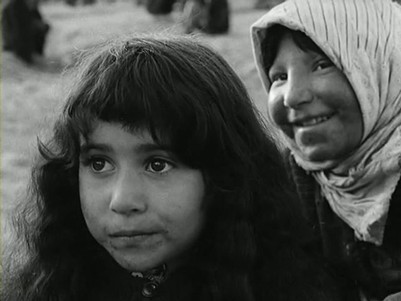
Figure 16: A still from the film Khānah siyāh ast (The House Is Black), directed by Furūgh Farrukhzād, 1961.
This type of film presents anti-patriarchal arguments, suggesting feminist themes. The portrayal of the husband’s infidelity and the wife’s response highlights a new type of relationship between man and woman, with the woman emerging as a transformative, egalitarian, and active agent. The film Zanān bidūn-i mardān (Women without men, 2009), directed by Shīrīn Nishāt and adapted from a novel by Shahrnūsh Pārsī-pūr, is considered another example of feminist filmmaking in Iranian cinema.86Ihsān Āqā-Bābā’ī and Siyāmak Rafīʿī, Fīlm va īdi’uluzhī dar Īrān: dahah-yi hashtād [Film and ideology in Iran from 2001 to 2011] (Tehran: Ligā, 2023), 124. But it is Tahmīnah Mīlānī who is more often considered a feminist filmmaker. She makes women and their issues the center of attention in many of her films. Three or more of her films are considered feminist works in that they identify the present social structure as patriarchal and oppose it:
Du zan (Two women, 1998) is the first part of Mīlānī’s feminist trilogy, which, as she herself asserts, aims to make women aware of their social conditions and lost rights. The second part of this feminine trilogy is Nīmah-yi pinhān (Hidden half, 2000), which combines a romantic subject with social and political themes. The third and last film is Vākunish-i panjum (Fifth reaction, 2001), which is a feminine reaction against the laws of the patriarchal society. Mīlānī believes that Du zan explains women’s status within the structure of traditional society, which denies any independent identity for women, and that Nīmah-yi pinhān expresses women’s thoughts, hopes and social-political activities, which ultimately result in their oppression by the patriarchal society; and in Vākunish-i panjum, women react and express their resistance to the patriarchal society.87Muhammad Shakībādil, “Trīluzhī-i fimīnīstī-i Tahmīnah Mīlānī az Shuʿār tā vāqiʿiyat” [Tahmīnah Mīlānī’s feminist trilogy, from slogan to reality], Hūrā 3 (2003). https://shorturl.at/daWH1
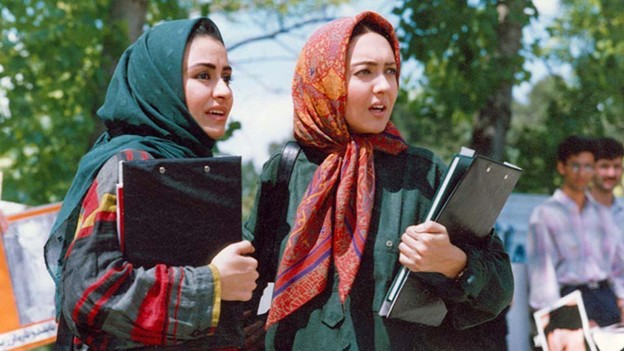
Figure 17: A still from the film Du zan (Two women), directed by Tahmīnah Mīlānī, 1998.
Some scholars believe that “Milani is very vocal in proclaiming her feminist stance and has paid the price for this.”88Anne Demy-Geroe, Iranian national cinema: The interaction of policy, genre, funding, and reception (London and New York: Routledge, 2020), 52. Mīlānī affirms that she has a feminist outlook and accepts this interpretation of her three films. She states that her ambition is to change the social structure in order to achieve a balance in decision-making between men and women: “I live in a patriarchal society, but, my father, brother and husband do not make decisions for me. Instead, other men do. People like me strive to achieve justice. If feminism means balance, then yes, I am a feminist.”89Ru’yā Karīmī Majd, “Tahmīnah Mīlānī: Balah, man fimīnīst hastam” [Yes, I am a feminist], Radio Farda, June 5, 2017, accessed on September 7, 2024, https://www.radiofarda.com/a/b7-berlin-film-festival-2017/28529699.html In these words, the worldmaking aspect of feminist ideology is clearly evident.
Rakhshān Banī-iʿtimād is another filmmaker whose films, such as Nargis (1991), Rūsarī ābī (The Blue Veiled, 1994), Bānū-yi urdībihisht (May Lady, 1998) and Zīr-i pūst-i shahr (Under the skin of the city, 2000) are considered feminist, although she herself “has expressed disagreement with her films being labeled as feminist,”90Anne Demy-Geroe, Iranian national cinema: The interaction of policy, genre, funding, and reception (London and New York: Routledge, 2020), 53. and has stated that she does not want to be called a feminist.91Anne Demy-Geroe, Iranian national cinema: The interaction of policy, genre, funding, and reception (London and New York: Routledge, 2020), 53. This assertion, in itself, shows that there is no consensus on the meaning and definition of feminism, and that everyone interprets it from a different perspective. Various critics in Iran have discussed different feminist films. For example, in Āqā-Bābā’ī and Rafīʿī’s analysis, many of the films from first decade of the twentieth century in Iran can be labeled as “matriarchal.92”Ihsān Āqā-Bābā’ī and Siyāmak Rafīʿī, Fīlm va īdi’uluzhī dar Īrān: dahah-yi hashtād [Film and ideology in Iran from 2001 to 2011] (Tehran: Ligā, 2023), 124-130.
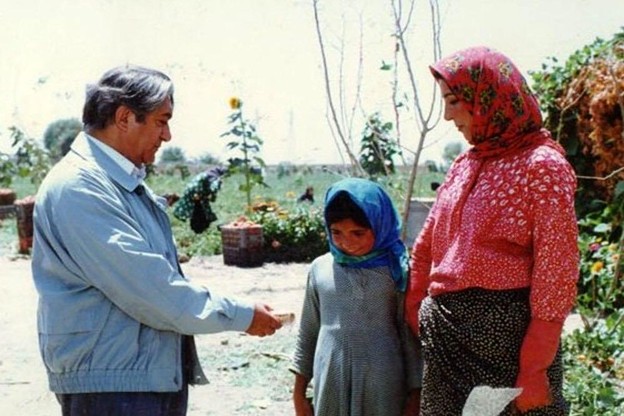
Figure 18: A still from the film Rūsarī ābī (The Blue Veiled), directed by Rakhshān Banī-iʿtimād, 1994.
Conclusion
This article reveals that four ideologies have emerged in Iranian cinema in the following chronological order: Nationalism, Marxism, Islamism and Feminism. Among them, nationalism and Marxism have been officially endorsed ideologies, enjoying government support. Both ideologies evoke a sense of romantic nostalgia, a longing to return to the past in order to shape the present, driven by those still deeply influenced by the allure of tradition.93Mohamad Tavakoli-Targhi, “Narrative identity in the works of Hedayat and his contemporaries”, in Sadeq Hedayat: His work and his wondrous world, ed. Homa Katouzian (London: Routledge, 2008), 107-123. Another aspect of the romantic ideal can also be found in Marxism’s vision of a paradise of equality, brotherhood, and a “classless society.” However, the emergence of Marxism and feminism in Iranian cinema—before and after the Revolution, respectively—has occurred from a critical stance, either by rejecting or at least expressing dissent toward the existing conditions. Feminism emerged in Iranian cinema after the Revolution, during a time when numerous women writers and directors were actively shaping the country’s art and literature. In the Pahlavī Iran, due to the influence of the USSR —Iran’s northern neighbor— and the presence of the Tūdah party acting as its proxy,94See, ‛Alīrizā Murādī, Mārksīsm va ‛ulūm-i ijtimāʿi dar Īrān va nigāhī bih barkhī az dīdgāh’hā-yi Āvātīs Sultānzadah [Marxism and social sciences in Iran and a look at Āvātis Sultānzadah’s views] (Tehran: Agar, 2022), 159; Yāsir Farāshāhī’nizhād, “Pazhūhishī dar mabānī-i fikrī-i nazariyah-yi adabī-i hizb-i Tūdah, 1310-1330” [A research in the intellectual principles of literary theory of Tūdah party, 1931-1951], Iran Nāmag 4, no. 1 (Spring 2019): 89. Marxism appeared omnipresent in the fields of culture and art,95 ‛Alīrizā Murādī, Mārksīsm va ‛ulūm-i ijtimāʿi dar Īrān va nigāhī bih barkhī az dīdgāh’hā-yi Āvātīs Sultānzadah [Marxism and social sciences in Iran and a look at Āvātis Sultānzadah’s views] (Tehran: Agar, 2022), 159. shaping the perspectives of many intellectuals and artists. However, contemporary feminism in Iran, with its multifaceted nature, is deeply connected to social changes and the recent women’s movement in Iran, making it impossible to reduce it to a mere set of imported ideas. Therefore, the emergence of feminism in Iranian cinema testifies to the process of societal modernization, where women are engaged in a continuous struggle to go beyond their socially imposed lower status. It is an accurate observation that “parallel to the transitional conditions in Iran’s social and cultural structure, films also reflect a transition from more traditional to more modern stages.”96Jalīl Karīmī, Siyāvash Qulī-pūr and Maryam Hūrī, “Tasvīr-i zan dar sīnimā: Tahlīlī bar dah fīlm-i dahah-yi 1380 sīnimā-yi Īrān” [The image of woman in cinema: An analysis of ten films of Iranian cinema from the first decade of 21th century], Zan dar farhang va hunar 13, no. 2 (2021): 248. That is to say, it marks the transition of women from an era of social exclusion to one of active participation in shaping a new social world, overcoming the barriers of Iranian-Islamic tradition.97I use the term “tradition” here in the sense that John B. Thompson uses it in his book: John B. Thompson, The media and modernity: A social theory of the media (Polity Press: 1997), 184.
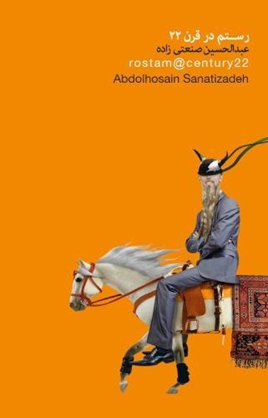
Introduction
Given the longstanding popularity of surrealism and magical realism amongst many Iranians, as well as the more recent embrace of horror movies, it is ironic that science fiction (SF) has failed to establish a firm foothold within Iranian culture. This is doubly perplexing since science fiction’s ability to imagine utopian alternatives is ideally suited for challenging totalitarian regimes. The uncharitable reader may scoff that a text about Iranian SF ought to be more succinct than the present investigation. After all, its meagre offerings have thus far failed to win any meaningful critical acclaim or popular recognition. Iranian SF is derided and demeaned as an immature form of art, incapable of articulating anything of significance. Many cultured Iranians would agree with the famed Egyptian author, Naguib Mahfouz (1911-2006), who did not mince words when dismissing the entire genre as “empty talk” that “lacked depth.”1Jӧrg Matthias Determann, Islam, Science Fiction and Extraterrestrial life: The Culture of Astrobiology in the Muslim World (London, New York, Oxford, New Delhi, Sydney: I. B. Tauris, 2023), 18. In addition Mina Talebi has argued that there are significant institutional constraints imposed on film students interested in science fiction and fantasy, “There are fewer Training Opportunities for aspiring SFF writers and filmmakers in Iran. Most film schools and creative writing programs focus on more traditional genres like drama, documentary, or realism, with little emphasis on speculative fiction.” Mina Talebi, email to the author, January 10, 2025. This is in contrast to the rather impressive international credentials of the humanist branch of Iranian cinema, exemplified by auteurs such as ‛Abbās Kiyārustamī and Bahrām Bayzā’ī. Why, then, has SF struggled to gain a foothold in Iranian culture? Why are so few Iranian writers and filmmakers drawn to the genre? Why has the mullah-bourgeoisie been so lackadaisical in building an SF legacy? And why is the SF output of neighboring countries like Russia and Turkey more advanced?
This article mounts a robust defense of SF as a genre uniquely equipped to tackle complex social issues such as class, gender, race, statecraft and religiosity. It delves into the historical and socio-political factors behind the underdevelopment of Iranian SF, such as the problem of unresolved taboo subjects and the persistence of naive realism. I link this stagnation to the particularities of Iran’s capitalist development, where premodern, modern, and postmodern elements vie for dominance. The article then goes on to describe the work of a small but dedicated group of talented novelists, translators, animators and filmmakers who have tried to enmesh science fiction with Iranian themes and legends. Seminal Iranian SF movies and animations are reviewed. The next section evaluates the strengths and limitations of the genre. US, British, Turkish and Russian SF are briefly discussed as potential models of development. This article concludes by envisioning a post-Islamic Iran, where SF can mirror social ills, and imagine new ways of being and communicating.
Figure 1: Can SF shape the future? “Tehran, sans traffic jam, sans smog, sans mullah.”
In Defense of Science Fiction
The IMDb website lists a total of 99 Iranian science fiction movies and shorts, as well as 50 titles under the fantasy genre. From the sample I have inspected, it is obvious that many items have found their way onto these lists by accident, and some have only the most tenuous connection to SF and fantasy. Frankly, one or two seem to be included as an exercise in niche marketing.
Trying to come up with a bounded definition of SF is a fool’s errand. Arthur C. Clarke has explained SF’s boundary problems in his own unique style: “Attempting to define science fiction is an undertaking almost as difficult, though not so popular, as trying to define pornography … In both pornography and SF, the problem lies in knowing exactly where to draw the line.”2Arthur C. Clarke, Greetings, Carbon-Based Bipeds! Collected Essays, 1934-1998 (New York: St Martin’s Press, 1999), 398. We will leave the debate about genres, definitions and authenticity to those critics obsessed with demarcation lines. I am not saying this conversation is unimportant, but it is time-consuming and ultimately perhaps a bit of a red herring. Instead, this article will adopt an open-minded approach to matters of conceptual definition and map out the tension between ‘dialogic SF’ and ‘spectacularized SF.’3According to Coghlan and Brydon-Miller, “Bakhtinian dialogism refers to a philosophy of language and a social theory that was developed by Mikhail Mikhailovich Bakhtin (1895–1975). Life is dialogic and a shared event; living is participating in dialogue. Meaning comes about through dialogue at whatever level that dialogue takes place.” See “Bakhtinian Dialogism,” in The Sage Encyclopedia of Action Research, ed. David Coghlan & Mary Brydon-Miller, https://methods.sagepub.com/ency/edvol/encyclopedia-of-action-research/chpt/bakhtinian-dialogism. For ‘dialogic SF’ see Robert Stam, Subversive Pleasures: Bakhtin, Cultural Criticism, and Film (Baltimore and London: The John Hopkins University Press, 1992), 12-15. The Situationist International were a group of artists and radicals who developed a revolutionary critique of capitalism. See Stewart Home, What is Situationism? A Reader (Edinburgh: AK Press). For ‘spectacularized SF’ see Anthony Paul Hayes, “Science Fiction and the Situationist International,” New Readings 19 (2023). 43-66. DOI: 10.18573/newreadings.139. The former is based on the thought provoking works of Bakhtin and exemplified by films such as Blade Runner (1982), Dune (1984) and The Matrix (1999), whilst the latter kind of SF promotes spectacularized and authoritarian forms of capitalism. Atlas Shrugged (2011) and perhaps Starship Troopers (1998) fall into this category.
I find myself in complete agreement with the British SF novelist Adam Roberts who claims, “at their worst, SF, fantasy and magic realist novels can be very bad; while at their best, they’re by far the most exciting kinds of writing being published.” According to Roberts, SF is left- or right-leaning like no other genre.4Adam Roberts, “War of the worlds: who owns the political soul of science fiction?,” The Guardian, April 8, 2013, https://www.theguardian.com/books/2013/apr/08/adam-roberts-political-soul-sf. Whilst the dialogic/spectacularized duality does not map exactly onto the left-right divide, there is a correlation of sorts. I would ask the reader to keep these tensions in mind as the story of Iranian SF unfolds.
But first, let us look at what thought-provoking SF can accomplish by looking at the popular British Series Doctor Who. A superficial reading of Doctor Who might only see a rather silly little Englander on a galactic safari with companions who are clearly age inappropriate. A little bit of saucy titillation for dad, a respite from housework chores for mom, and a bunch of amusing monsters with questionable production values for the kids. Yet, if a family-bonding exercise is all you see, then you have probably missed the central point. For Doctor Who is a serious project in nation-building (through family-bonding), promoted by the liberal wing of the British ruling elite. This project borrows cues from Michael Billig’s notion of ‘banal nationalism’ to subtly reinforce these ever-evolving national identities.5Michael Billig, Banal Nationalism (London: Sage Publications Ltd., 1995).
Doctor Who is neither dialogic nor completely monologic; it is a fake dialogue. The series is tasked with opening a limited, top-down debate about what it means to be British. Three distinct sets of values are implied throughout and merged into the pot of nationalism. These are the values of the British ruling class, middle class and working class. The first two are characteristics of the Doctor himself. He was raised as an aristocrat on Gallifrey and calls himself a Time Lord. By sensibility, however, he is the archetypal middle-class Victorian inventor. This explains his precious sonic screwdriver and the reason he is always surrounded by odd-looking mechanical gadgets. He may not possess many working-class qualities himself, but his companions usually do, and this then acts as a break on the Doctor’s barely concealed elitist adventurism.
To understand Doctor Who, therefore, is to understand Britishness in its entirety. Doctor Who has become a site of culture wars between the likes of David Tennant (the 10th and 14th incarnations of the Doctor who promotes a liberal reading), and Kemi Badenoch (the leader of the Conservative Party who dismisses the series as ‘woke’).6Jacob Stolworthy, “David Tennant fans mock Kemi Badenoch for ‘not afraid of Doctor Who’ remark,” The Independent, September 03, 2024, https://www.independent.co.uk/arts-entertainment/tv/news/doctor-who-david-tennant-kemi-badenoch-b2606193.html. A 2018 episode, Kerblam! demonstrates this tension very well. Kerblam! is a powerful critique of Jeff Bezos’s Amazon, its greed and shady workplace practices, and I would argue that it provides an analysis every bit as thorough as a scholarly book like Bit Tyrants by Rob Larson.7Rob Larson, Bit Tyrants: The Political Economy of Silicon Valley (Chicago: Haymarket Books, 2020). A class analysis helps us make sense of the fierce contestation around Doctor Who between the bourgeois liberals who produce it, and the right-wing authoritarians who detest it.

Figure 2: Dr. Who meets Cyrus the Great, with added Situationist-inspired détourned speech bubbles.
Another revered British SF comedy series, Red Dwarf, provides an even starker exposition of class antagonisms. The series begins by depicting an Earth ruled by corporate capitalism where the state has become the junior partner within the ruling elite. Red Dwarf is a mining ship running between Earth and the stars. As a result of an accident, humanity, as well as the 169 members of the crew, are annihilated, with the only survivors being a lowly technician aboard Red Dwarf called David Lister and a humanoid Cat. And all this in the first episode. In later episodes, a hologram (Rimmer) and a droid (Kryten) are added to the crew. Most viewers (and this also applies to critics) dismiss Red Dwarf as a teenage adventure of nerds and incels.
Such readings ignore the explicit references to social class sprinkled throughout Red Dwarf. The narrative arc of the series is very clear: at the start, all four crew members are objectively working class but only one of them (the curry-loving, beer guzzling Liverpudlian, David Lister) is also subjectively working class. He is comfortable in his skin. He knows who he is. The other three have no proletarian consciousness. The droid Kryten is programmed to be a slave, not a waged-slave; Cat is as self-centered and selfish as any feline; and Rimmer thinks of himself as high-born and aspires to be an officer and lord it over the rest of the crew. During the unfolding of the arc, all three are gradually altered. The first to embrace his class status is the droid whose programming is broken by Lister. Once emancipated, Kryten begins to demand rights and privileges, such as less work and more leisure time. Next, the Cat is converted until he begins to see the advantages of solidarity and camaraderie. With his selfishness ameliorated, he even displays the occasional act of friendship. Finally, the bourgeoisfied hologram Rimmer discovers his true working-class roots and ends up risking his life to save his crewmates. In one of the last episodes, Rimmer explicitly refers to himself as a “working-class hero.” The narrative arc is complete. All four are now both objectively and subjectively working class, only now they engage in labour because they want to and not because they need to sell their labour power to a capitalist master. The most subversive of messaging gets through precisely because Red Dwarf operates as SF comedy and is hence dismissed by critics as ‘low art.’

Figure 3: Low art or brilliant class analysis? From left to right: Cat, Rimmer, Kryton and Lister (Grant Naylor Productions).
The present article is not claiming that all SF is inherently progressive or imaginative. In fact, reactionary SF is an imminent and ever-increasing threat. I am suggesting, however, that SF is something of a ready-made for expanding the realms of freedom and creativity. The Welsh Marxist Raymond Williams, who excoriates George Orwell for being regressive, especially the latter’s seminal 1984, is nonetheless in agreement “with Orwell that good prose is closely connected with liberty, and with the social possibility of truth.”8Raymond Williams, Tenses of Imagination: Raymond Williams on Science Fiction, Utopia and Dystopia, ed. Andrew Miller (Peter Lang, 2010), 37.
I am arguing that although the distinction between ‘high art’ (opera, Shakespearean theatre and existentialist cinema) and ‘low art’ (vaudeville, horror and SF) is largely bogus, there is a need to distinguish ‘dialogic SF’ from ‘spectacularized SF.’ By ‘dialogic SF’ I mean a type of science fiction that liberates the audience from tradition and sedimented beliefs, gives them license to rethink social ills and come up with imaginative solutions. Spectacularized SF, in contrast, is big special effects and mindless noise, a mechanical gloss on life, a kind of art whose shelf-life is predetermined by the time it takes to finish the obligatory box of popcorn that it was served up with.
Dialogic movies are characterized by carnivalesque, the ability to turn the world upside down, at least for a precious moment during which the audience can reflect on alternatives to the status quo. The spectacular portrays capitalist social relations as permanent and inevitable images. Dialogic SF shows how “every utopia contains a dystopia, every dystopia contains a utopia.”9China Miéville, introduction to Utopia, by Thomas More (London and New York: Verso, 2016), 5. Real utopia is not a ham speech by Barack Obama about hope and optimism; rather, it is what Marx discusses in the Grundrisse, the attainment of human ‘needs,’ ‘wants’ and ‘desires.’10‘Needs’ are the essentials of life without which we could not survive. ‘Wants’ are not essential but can enhance our quality of life and exist within practical reach. ‘Desires’ are our wishes, dreams and ideals for a future world that may at present be out of reach. In the Grundrisse Marx discusses ‘needs’ more often than ‘wants’ and ‘wants’ more than ‘desires.’ See, for instance, a digital version of Grundrisse at the Internet Archive, available at https://archive.org/details/in.ernet.dli.2015.505759/mode/2up?q=desire. However, Marx’s treatment of these terms is still raw. Perhaps a better formulation of these terms is presented by David Harvey in “Use Values: The Production of Wants, Needs and Desires, Fifth Lecture in the Series: Marx and Capital: The Concept, The Book, The History,” davidharvey.org, November 28, 2016, accessed via https://davidharvey.org/2016/12/david-harvey-marx-capital-lecture-5-use-values-production-wants-needs-desires/. Market conditions in the Iranian SF industry “may inhibit the realization of value because the effective monetary demand—wants, needs, desires—may be lacking.” See David Harvey, “Value in Motion,” New Left Review 126 (2020): 113. Likewise, dystopia is not a series of hackneyed frights and jolts delivered through the marvels of the latest technology, but a depiction of how bad life is under capitalism and how it can always get worse. This explains why good accounts of utopia are always based on intelligent critiques of political economy. Thomas More’s account in Utopia, for instance, is based on a cooperative subsistence economy, whilst Francis Bacon’s New Atlantis is founded on an emerging industrial economy.11Raymond Williams, Tenses of Imagination: Raymond Williams on Science Fiction, Utopia and Dystopia, ed. Andrew Miller (Peter Lang, 2010), 99. Below, we will see how this conflict between dialogic and spectacularized SF is related to the contradictions of Iranian capitalism.
The willful underdevelopment of Iranian SF
Many of the topics that Western SF engages with pose a challenge to a puritanical ruling class. We know how themes related to the class struggle raise the ire of Islamic censors. The Islamic ummah (the imagined community of believers) has difficulty acknowledging class divisions, which is why Middle Eastern SF feels more at home discoursing on the ‘clash of civilizations.’ In this they imitate neoconservative forces in the USA.
An example of spectacularized SF which probes and reinforces the ‘clash of civilization’ thesis would be Travelers (Musāfirān). This was a seventy-episode TV series produced by Rāmbud Javān and released in 2009. The premise revolved around a group of Swedish tourists exploring Iran who turn out to be extraterrestrials. Their task is to gather information about the ethics and morality of earthlings and report back. Each episode focuses on one topic and there is a prescriptive feel to the writing.12See Kamiab Ghorbanpour, “A Brief History of Persian Sci-Fi,” Science Fiction and Fantasy Writers Association, December 06, 2022, https://www.sfwa.org/2022/12/06/a-brief-history-of-persian-sci-fi/. The low production values do not help proceedings. Occasionally, the juxtaposition of alien and Iranian cultures allows for a mild bout of self-reflexivity. One episode pokes fun at the labyrinthine bureaucracy in the service industry, and another at rote school learning. But the humor is stale, and ultimately it feels like a whitewashing of Islamic culture. Right-wing Iranian directors with a superficial understanding of the outside world are mirror images of their neoconservative rivals in the USA.13See Adam Curtis, “The Power of Nightmares,” BBC Documentary, November 3, 2004, accessed via https://www.bbc.co.uk/programmes/p088s5rv. It is hardly surprising they end up producing the same moralizing tone in their science fiction.

Figure 4: Poster for Musāfirān TV Series, directed by Rāmbud Javān, 2009.
For those Iranians touched by xenophobia, the depiction of foreigners on TV screens is disconcerting enough, but the genre becomes even more threatening when it contains an element of sexuality. The appeal of SF/horror hybrids such as Alien (1979) or The Thing (1982) or Videodrome (1983) is that they deal with body transformation, burgeoning sexuality, and desire—all taboo subjects in Iran. Movies such as V for Vendetta (2005), in which an anarchist vigilante fights against a fascist British government, would be censored due to its politics and the depiction of brief nudity. In Star Trek Beyond (2016), Sulu, played by John Cho, is portrayed as having a husband and a daughter. This is a problem for a regime that executes homosexuals. The Man Who Fell to Earth (1976) and A Clockwork Orange (1971) would both fail to gain a distribution license in Iran, due to nudity. Even Barbarella (1968), considered merely risqué in the West when it was first screened, would be denounced as pornographic by the Islamic Republic.
Sometimes censorial methods of dealing with problem-scenes are more entertaining than the movie itself. In the aforementioned Star Trek Beyond, which has been dubbed into Farsi, one scene depicts Kirk and McCoy drinking alcohol. Our cunning Islamic censors have decided to ‘censor’ this scene not by deleting it, but by leaving it undubbed. The rationale behind this move is unclear, but presumably, the censors are saying the faithful can be protected from the evil influence of Romulan Ale through linguistic incomprehension, whilst English-speaking Iranians are too corrupt to deserve saving.
Despite these petty restrictions, the enormous potential for SF can best be gauged by Iranian women’s reaction to Margaret Atwood’s seminal novel The Handmaid’s Tale, a book translated into Farsi and reprinted 11 times, despite its fierce critique of patriarchy and religious fundamentalism.14A specialist in Iranian SFF, Mina Talebi, has argued that “When it comes to which group of Iranians are into science fiction, I believe those born in the 1980s, regardless of their gender, social class, or background, certainly belong on this list.” Mina Talebi, email to the author, January 10, 2025. She also believes that “With the growing popularity of streaming platforms, people from a broader range of age groups are now exploring this genre in both cinema and television.” Mina Talebi, email to the author, January 10, 2025. Naturally, its symbolisms have become a source of defiance for women.

Figure 5: ‘The Islamic Republic of Gilead’ with a quote from Margaret Atwood’s The Handmaid’s Tale.
Nazanin Zaghari-Ratcliffe, the British-Iranian journalist who was imprisoned for six years by the theocracy, found solace in Atwood’s novel. The parallels are too obvious to need reiteration.15See Phyllis Chesler, “Gilead Resembles an Islamic Theocracy, not Trump’s America,” Middle East Forum, October 02, 2019, https://www.meforum.org/gilead-resembles-islamic-theocracy-not-america.

Figure 6: Dystopia as solace.
The problem of taboo subjects aside, we can note other obstacles in the path of Iranian SF. One factor is the strength of ‘naïve realism,’ which has left little room for alternative worldviews. In 1961, commenting on the decline of empiricism, naturalism and realism in the West, Raymond Williams argued: “The old, naïve realism is in any case dead, for it depended on a theory of natural seeing which is now impossible. When we thought that we only had to open our eyes to see a common world, we could suppose that realism was a simple recording process, from which any deviation was voluntary. We know now that we literally create the world we see … the old static realism of the passive observer is merely hardened convention.”16Raymond Williams, Tenses of Imagination: Raymond Williams on Science Fiction, Utopia and Dystopia (Peter Lang, 2010), 48. In Islamic Iran, empiricism and naturalism have not run their course, and remain the dominant paradigms of activity in both the sciences as well as the arts. Those of us living outside Iran do not always see this because our perception is filtered through museums, book and film festivals that privilege self-reflexive constructed art products. But most art products produced for domestic consumption are stamped with naïve realism, and since this naïve realism performs a valuable function for the regime, there is no need to outsource the task to science fiction.
Interestingly, both dystopian and utopian forms of SF provide challenges for the Islamic Republic. Dystopias invite too close a scrutiny of the present state of affairs, as the above example of The Handmaid’s Tale illustrates. A further example would be Yevgeny Zamyatin’s novel We. How can Farsi translators circumvent this biting satire of totalitarian state capitalism in the former USSR? How can Iranians read We’s depiction of regulated ‘sex days’ and not be reminded of Khumaynī’s Tawzīh al-Masāʾil?17Tawzīh al-Masāʾil (roughly translated as the “Clarification of Questions”) is a book of Islamic jurisprudence by Ayatollah Khumaynī that was first published in full in 1999. Zamyatin’s secretive Bureau of Guardians is a prescient description of contemporary Islamic morality police, and the ‘odes to benefactor’ are surely not just whimsy in praise of Stalin but also have Khumaynī and Khamanei in mind. And yet there is a Farsi audiobook version of it available online.

Figure 7: Was Yevgeny Zamyatin an Iranian? Was Shakespeare a Klingon?
Utopias provide additional political problems for Islamic regimes. In some of its episodes, Star Trek describes a Federation that has gone beyond the money system and impoverishment. For a religion founded upon mercantilism, this is too provocative. Likewise, Ursula K. Le Guin’s The Dispossessed describes an anarchist planet Anarres that appears ideal on the surface, but gradually and through juxtaposition with the authoritarian planet of Urras, a more complicated picture emerges. Le Guin’s ideal utopia has to be shaped imaginatively and fought for by all the people. Once proposed, such utopias begin to compete with the static and repetitious Quranic notions of paradise, in the same way that sport competes with Friday prayers. That this is not just a problem for Islam can be illustrated by reference to James Blish’s novel A Case of Conscience (1958).
Earth sends a four-man scientific team to the planet Lithia, whose inhabitants are green sentient lizards. Life on Lithia is harmonious, and it seems to be devoid of the rivalries and petty jealousies that earthlings still suffer from. They live happily without sin, crime or any conception of God. Whilst this is exciting to some of the team members, one of them, Father Ramon Ruiz-Sanchez S.J. (who is both a Jesuit and a biologist) cannot bring himself to accept that a sinless community has been created by lizards and apart from God. He sets about destroying Lithia. I would argue that too much of contemporary SF reminds right-wing Muslims of the flaws of their earthly governance and otherworldly paradise. Some of the anomie they betray towards the rest of the world has its source in Father Ruiz-Sanchez’s theological frustrations.
Ideologically, the Islamic Republic encompasses several perspectives. One faction, the technocrats, consistently pushes for a hard modernist science as a panacea for fixing problems of governance. Muslim technocrats wish to utilize SF to social engineer Iran from above in the same way NASA, Elon Musk or H. G. Welles’ The Shape of Things to Come (1936) offer technology as the solution for Earth’s problems.
The institutional embodiment of this ‘reactionary modernism’18Jeffrey Herf, “Reactionary Modernism: Some Ideological Origins of the Primacy of Politics in the Third Reich,” Theory and Society 10, no. 6 (November 1981): 805-832. is the Iranian Space Agency (ISA) (Sazmān-i Fazā’ī-i Īrān). Established in 2004, ISA is tasked with the application of science and technology in all peaceful space-related activities. The only problem is that we know from the history of NASA, or the European Space Agency or Roscosmos (The Russian State Corporation for Space Activities) that the separation between peaceful and military activities is an illusion.

Figure 8: Space, the final frontier. These are the voyages of the Starship Tas Kebab.
And why do I insist on calling ISA, an embodiment of reactionary modernism? Because it combines an almost childish enthusiasm for technological toys and scientific marvels with a fierce rejection of the sociocultural soil that enabled its achievements in Europe and the USA. Admittedly, for an agency under severe financial and trading restrictions, ISA has achieved a number of impressive milestones: the launch of sub-orbital satellites in 2008 aboard Kāvushgar-1; in 2009 Iran’s first domestically built satellite, Umīd, was successfully launched; a year later the first Iranian animals made it into space, including a rodent, two turtles, and several worms; in 2012-13 the first Iranian monkeys flew into space (their fate became the subject of intense speculation); the latest satellites launched were Khayyām (2022) and Chamrān-1 (2024).
The establishment of a network of launch sites, including at Shāhrūd, Qum, Simnān, and Chāhbahār, speaks of a committed program of space exploration. I am not able to judge to what extent these space centers have succeeded in creating nodes of capital accumulation, or to judge the promised benefits to the local economy. However, I do know that a successful space program demands more than capital and technology; it needs the public’s continuous support. And here is where spectacularized SF such as Musāfirān becomes indispensable.
Dialogic SF is reliant on three sources currently in short supply within Iran. The first is ‘imagination.’ By this I mean ‘creative imagination’ and not the mundane form of ‘mechanical imagination’ that finds expression in every reverse-engineered missile, drone and aircraft carrier. Creative imagination is a demand for the impossible. The second ingredient is genuine ‘dialogue,’ which is sadly discouraged in a society petrified of its own subjects. And finally, dialogic SF insists on a high level of ‘technological attainment’ in the film industry in order to build believable planets and galaxies. The dearth of creative imagination, dialogic interaction and advanced technology has played a role in undermining Iranian SF.
For the time being, Iranian SF remains decades behind Hollywood, Japanese and Chinese SF, and, as the discussion argues, even years behind neighboring countries such as Turkey and Russia. If Iranian SF can avoid being seduced by technological determinism, then, when it finally does burst onto the scene, its products will undoubtedly be more reflective than big, brash, noisy Hollywood spectacles. More akin to the existentialism of La Jetée (1962) and Stalker (1979), and less like Starship Troopers (1997) and Star Wars (1977). Closer to the political intrigues of Dune (2021) and Zardoz (1974), and as far from Universal Soldier (1992) and Independence Day (1996) as possible.
Iranian sci-fi novels
As Richard Barbrook has convincingly argued, we should all become more skeptical of imaginary futures.19See Richard Barbrook, Imaginary Futures: From Thinking Machines to the Global Village (London: Pluto Press, 2007). After all, imaginary futures are usually ideological constructs aimed at controlling humanity. One reason for our continued fascination is that at least some of them appear to be uncannily accurate.
Muhammad ‛Alī Furūghī (1877-1942) was a bourgeois modernizer, a prolific writer, and a futurologist. In a distinguished career, he served as parliamentarian, government minister and under the Pahlavi regime, he rose to be Prime Minister. One of his novels, Far-Fetched Ideas (Andīshah-yi dūr u dirāz), was penned in 1927 when he was ambassador to Turkey. In it, Furughī predicts electronic miniaturization, wireless telephones which will make print newspapers obsolete, distance education, and image transfer across vast distances. Some of his descriptions are harbingers of the internet and social networking platforms. Written in the form of a dialogue, Far-Fetched Ideas can be considered one of the earliest attempts to imagine a future Iran.

Figure 9: Muhammad ‛Alī Furūghī, a pioneering bourgeois futurologist, and the book cover of his Far-Fetched Ideas (Andīshah-yi dūr u dirāz, 1927).
‛Abdalhusayn San‛atīzādah Kirmānī (b. 1895 Kerman – d. 1973 Paris) is a more conventional SF writer whose novels are once again available, after decades of being out of print. He specialized in historical novels but also wrote utopian novels and science fiction. Two of his books are worth mentioning here: The Assembly of Lunatics (Majmaʿ-i dīvānagān, 1924) and Rustam in the 22nd Century (Rustam dar qarn-i bīst-u duvvum, 1934).
The Assembly of Lunatics is a work of futurology with a simple plot. A group of inmates organize a daring escape from a lunatic asylum. Once they break out, one of them, an old ‘mute,’ begins to address them. The narrator begins by denouncing society as insane in terms that prefigure R. D. Laing’s critique of psychiatry many years later: “Insanity — a perfectly rational adjustment to an insane world.”20This is a quote attributed to Laing by Larry Change. See Larry Chang, Wisdom for the Soul: Five Millennia of Prescriptions for Spiritual Healing (Washington, DC: Gnosophia Publishers, 2006), 412. The narrator reminds his fellow ‘insanes’ that Galileo too was called mad for being ahead of his times. He asks their permission to utilize his knowledge of mesmerism and hypnosis to take them on an imaginary journey. To complete this journey successfully they are required to suspend disbelief, tradition, and egocentricity and listen with an open mind. Once they accede, they enter a trance-like state and find themselves two thousand years into the future.
In this shiny utopia, crime is abolished since the city has been turned into what Bentham and Foucault would call a ‘panopticon.’21Jeremy Bentham came up with the idea of a panopticon prison around 1787. Its architecture is circular so that all prisoners can be observed at all times by the guards. Gradually regulation becomes internalized, and the prisoners end up policing themselves. In Punishment and Discipline: The Birth of the Prison (1975), Foucault demonstrates how this can lead to a society of surveillance where people who feel they are being watched by authority turn into obedient subjects. Both genders wear the same clothes, and no one wears a hat or a veil. Perhaps influenced by eugenic ideas rampant at the time, the author describes all humans as physically healthy, although mental health issues still persist. Social ills such as petty jealousy and greed, however, are a thing of the past. Marriage ceremonies have been simplified and shorn of cumbersome religious rituals. All citizens contribute voluntarily to a productive society, and menial tasks are carried out by machines and robots. Solar and waterpower are harnessed for the benefit of all, and most significantly, there is no discernible hierarchy. Houses are constructed uniformly, and humankind has gained a measure of mastery over the weather. At some point, there is an unsuccessful attempt at flirtation with a beautiful woman. There is joyous dancing in the streets, and a great deal of public discoursing evocative of ancient Greece. The political crimes of previous regimes are now exhibited in museums for educational purposes.
The story engages with both time travel and interstellar space travel. Some planets in our solar system have been colonized but there have also been setbacks, due to either the distances traversed or unsuccessful attempts at terraforming. An ambitious project plans to overcome these problems by turning whole cities into spaceships (this reminds me of an episode of Stargate Atlantis).
Admittedly, this is no Jules Verne. The drama is disjointed and uneven. There is repetitiveness, a hallmark of poor SF. There is also some self-reflexivity, but unlike Verne’s stories, here the positivist aspects of utopia overwhelm its romantic elements. The Assembly of Lunatics paints a modernist utopia where mutual aid and justice reign and where ‘needs’ and ‘wants’ have been fulfilled. In places, it is close to the anarchist ideals of Tolstoy or Kropotkin, although I cannot be certain whether this is by chance or design.22There are a number of parallels with Tolstoy and Kropotkin. On page 20 vegetarianism is championed. The inhabitants have learned how to live in harmony with nature and control the weather. Society is characterized by equality (p. 21) and its achievements are credited to mutual aid (p. 24), and reason (p. 31). Joy is encouraged but in moderation, since too much of a good thing may disturb societal equilibrium (p. 33). The pursuit of happiness is intrinsically linked to ethical considerations (p. 42).
Written ten years later, Rustam in the 22nd Century is an altogether more satisfying work. Rustam is a complex legendary paladin in Iranian culture and symbolizes chivalry and nationalism. He is the main character in the epic poem Shāh’nāmah (Book of Kings) by the prominent Persian poet, Firdawsī (940-1020). Rustam is a fusion of El Cid, Lancelot and Don Quixote.
Figure 10: The imaginative Rustam in the 22nd Century (Rustam dar qarn-i bīst-u duvvum), by ‛Abdalhusayn San‛atīzādah, 1934.
The story takes place in the province of Sīstān and Baluchistan and centers mainly around Zāhidān city. In the twenty-second century, a scientist named Jancas invents a machine that brings back the body and soul of the dead. With his first experimental attempt, Jancas reanimates Rustam, his magical horse Rakhsh, and his sidekick Zangiano. The similarities with Don Quixote, his horse Rocinante and Sancho Panza are clear. Jancas’s motivations seem to be part scientific curiosity, and part personal interest in spending time with an anointed knight from a bygone age. In both tales, much of the humor has its origins in the buffoonery of the valet, Zangiano and Sancho Panza, respectively.
The rest of the humor is generated through the clash of Rustam’s archaic values and the hyper-modern environment of the 22nd century. What Raymond Williams would have called the clash of ‘residual cultural artifacts’ with ‘dominant and emergent cultural artifacts.’23Raymond Williams, Marxism and Literature (Oxford: Oxford University Press, 1977), 121-127. Rustam and Zangiano are petrified when they first see Jancas and his students, mistaking them for demon-monkeys. Fire-crackers, motorbikes, a taxiplane are all sources of amazement and fear for our naïve ‘time travelers.’ The sophisticated people of the 22nd century openly mock Rustam and his sidekick, who are a source of entertainment for most. The French movie, Les Visiteurs (The Visitors, 1993) uses the same plot device to generate its comic effect. In response, Rustam first utilizes brawn, and when that fails to superior technology, he attempts to outsmart Jancas in order to learn his demonic ways. The perfection that Rustam sees all around him becomes a source of irritation and anger. His secret plan is to defeat the ‘demons’ by the grace of Ahura Mazda.24Zoroaster proclaimed that in the beginning “Ahura Mazda, the wholly wise, just and good, had been the one and only god.” See Norman Cohen, Cosmos, Chaos and the World to Come (New Haven and London: Yale University Press, 1993), 81. In A Case of Conscience mentioned above, James Blish creates a similar scenario, only in Blish’s book Father Ramon Ruiz-Sanchez finds the notion of an idyllic alien planet so contrary to his Catholic teachings that he sets about destroying the aliens.

Figure 11: An Islamized Rustam fighting Alien as imagined by AI. But to whom does the speech bubble belong?
The news of Jancas’s scientific breakthrough is inadvertently publicized, causing anxiety and anger amongst the inhabitants who question the ramifications of reanimating the dead. The elderly inhabitants are jubilant, as are hedonists with criminal intent. Some argue that if people can overcome death, anything becomes permissible. And some fear that humanity would lose its drive and become languid or that anomie might ensue. Others see this innovation as the overcoming of the final frontier. Rustam becomes the subject of obsession for a planet that watches his every move, using a more advanced form of contemporary CCTV. This recalls the treatment of Truman Burbank (played by Jim Carrey) in The Truman Show (1998). In this city of the future, fake news and gossiping become widespread, just like present-day internet communication.
The authorities (for in this ‘utopia’ there is a subtle power hierarchy) then panic and put Jancas, Rustam and Zangiano on trial. Twenty-second century judiciary is sketched in some detail. This can be explained by San‛atīzādah’s pro-constitutional leanings. One novel aspect is that all sitting judges are anonymized in order to reduce undue pressure and corruption. It is clear that the arbitrary workings of the law under Rizā Shah’s reign (1925-41) are being mocked. Judges are chosen from orphans who owe their allegiances to the state, not ethnic, tribal or familial connections. There is also an insistence on avoiding jargon and legalese. Every discussion has to be conducted using everyday discourse. This hints at San‛atīzādah’s attempts at modernizing Farsi as a way of combatting superstitious beliefs and fundamentalist mindsets.
Rustam in the 22nd Century is an ode to capitalist industrialization and its technological marvels. It pits individualism against traditional notions of honor, birthright and hierarchy. It is laced with the bourgeois feminism of the 1930s. This may be due to the influence of San‛atīzādah’s first wife, who came from a prominent feminist family. Rustam is disgusted by the lack of sexual segregation but lusts after every woman he comes across. His toxic masculinity is exposed as a pose. He is even more out of place in the 22nd century than Sean Connery is among the Immortals of Zardoz (1974), directed by John Boorman. The book’s nationalist discourse aims to undermine both leftist and Islamic discourses. Science fiction’s simple and eloquent linguistic style is being utilized to modernize Farsi. Nīmā Yūshīj, the great modernizer of Persian poetry, points this out in a letter to San‛atīzādah reproduced in the appendix. Perhaps Yūshīj saw parallels between what he was doing for poetry with what San‛atīzādah was doing for science fiction.
There are also elements of the book that are quite frankly discomforting. One such problem is the antisemitic tropes that appear in the discussion of the ‘Palestine Question.’ The accompanying illustrations by ‛Alī Akbar San‛atī (1916-2006), depicting Jews with stereotypical physical features, exacerbate the problem. An economic boycott of the Jews (who, in the novel, have been exiled to Palestine) is proposed as the solution to the ‘Jewish problem.’ Iranians, so often victims of racism, sometimes develop a blind spot regarding their own deeply held prejudices.
Four years after Rustam in the 22nd Century, San‛atīzādah wrote The Eternal Universe (ʿĀlam-i abadī, 1938). It recounts the story of a wealthy elite who invest in a program aimed at rewarding them with eternal life. Immortality is a subject with deep fascination for Iranians. An interesting example of the real-life pursuit of immortality is the case of Farīdūn M. Isfandiyārī.

Figure 12: Farīdūn M. Isfandiyārī, athlete, futurist and transhumanist.
Isfandiyārī is/was (it is difficult to know which tense to use as it becomes clear below) a Belgian-born Iranian-American. He was an Olympic wrestler, basketball player, writer, futurist and eventually a transhumanist.
Transhumanism believes biologically enhanced humans are not only inevitable but desirable. Transhumanism aims to extend life, eradicate disease, go beyond human limitations, colonize space, and create superintelligent machines.25Nick Bostrom, “Transhumanist Values,” Review of Contemporary Philosophy 4, nos. 1-2 (May 2005): 87-101. It claims not to fetishize technology and is fully cognizant of its pitfalls, including the possibility of technology widening social inequalities or being misused for nefarious purposes. Transhumanism also claims to oppose all forms of racism, sexism, speciesism and religious authoritarianism.
As with San‛atīzādah above, Isfandiyārī advocated progress and opposed traditionalism, so much so that he changed his name to FM-2030. In his own words, “Conventional names define a person’s past: ancestry, ethnicity, nationality, religion. I am not who I was ten years ago and certainly not who I will be in twenty years […] The name 2030 reflects my conviction that the years around 2030 will be a magical time. In 2030 we will be ageless, and everyone will have an excellent chance to live forever. 2030 is a dream and a goal.” As a staunch anti-nationalist, he believed “There are no illegal immigrants, only irrelevant borders.”26“Wikipedia, FM-2030,” Wikimedia Foundation, November 29, 2024, accessed May 1, 2025, https://en.wikipedia.org/wiki/FM-2030. He ‘died’ of pancreatic cancer in 2000 but was cryopreserved and is due to be re-animated in 2030. The indie 2030 (2018), directed by Johnny Boston, recounts his story, although its deliberate mix of fact and fiction makes analysis difficult. 2030 follows the director as he reflects on FM-2030’s decision to be cryonically preserved. Boston interviews FM-2030’s friends, colleagues and various experts. His story is somewhat similar to the novel Looking Backward, From the Year 2000, by the left-wing American writer, Mack Reynolds.
Should Isfandiyārī be successfully reanimated in the year 2030, he will be the first human to have successfully undergone the process. So far, the only success has been with Cleo, a cryo-preserved pig that was successfully brought back to life after six months. Bhalla and Robinson have warned against the dangers of techno-optimism. Most forms of transhumanism tend to be promoted by rich right-wing men with dreams of immortality —the kind of reactionary who proudly quotes from Filippo Tommaso Marinetti’s The Futurist Manifesto.27Neil Chilson, “Trolling the Intelligentsia with Optimism: Marc Andreessen’s tech manifesto seeks to galvanize the Up Wing,” City Journal, November 3, 2023, retrieved from https://www.city-journal.org/article/trolling-the-intelligentsia-with-optimism.
Nevertheless, FM-2030 seemed to have belonged to the sensibly cosmopolitan wing of the movement. I hope he is still alive, and I wish him good fortune. Regardless of the scientific and ethical merits of reanimation, one can only be impressed by his chutzpah in undertaking such a daring enterprise. 2030 ends with a quote from FM-2030: “I love free-falling into the future. It’s a wonderful trip.”

Figure 13 (left): Poster for the documentary 2030, directed by Johnny Boston, 2018.
Figure 14 (right): Book cover of Mack Reynolds’ novel Looking Backward, From the Year 2000. The book is about a sick man who is cryogenically preserved.
The writers and philosophers we have discussed thus far are mavericks. It is almost as if only daredevils manage to succeed in this challenging environment. The next figure I wish to look at is cut from the same cloth. Shahrnūsh Pārsīpūr was born in 1946 and is considered one of Iran’s earliest female novelists. Imprisoned unjustly on four separate occasions by the Islamic regime, she is best known for her Touba and the Meaning of Night (Tūbā va maʿnā-yi shab, 1989,), written in a realist style and Women Without Men (Zanān-i bidūn-i mardān, 1990), which veers toward magical realism. The latter was adapted as a movie by Shīrīn Nishāt in 2009. An interesting element of Women Without Men is the imaginary homosocial space created for its female characters. She also wrote The Story of Science (Dāstān-i Dānish), better known as Shīvā (1999). Part autobiographical and part mythological, the storyline jumps across different time zones. Pārsīpūr sees SF as a new form of mythology. The book deals with sensitive topics, including migration and sexual abuse. Even Marx makes an appearance in the book, courtesy of an angry psychic with powers to contact the dead.28An audio discussion of Shīvā is available at https://www.radiofarda.com/a/25506376.html. See also “Dāstān-I dānish “Shīvā:” Shahrnūsh Pārsīpūr – 14,” Soundcloud, accessed May 1, 2025, https://soundcloud.com/radiozamaneh/u0zjcqec2anu.
In Shīvā, the banality of everyday culture is fused with the mythical and metaphysical. In fact, this fusion of exterior and interior is one of Pārsīpūr’s most impressive literary skills. For instance, hijab is discussed in historical and sociological terms, which has the benefit of moving the discussion out of religious orbits and into a secular environment where the author can poke at it and play around with its various significations. At one stage, the discussion of hijab is tied to fundamentalist Islam and this in turn is tied to the rentier nature of the economy and the semi-industrialized state of the country. The book accuses the clergy of being anti-industrialist. Where they do foster industrialization, it is usually based on the traditional business practices of the bazaar. Crucially, water-scarcity also plays a role in sabotaging agricultural surpluses which prevents rapid urbanization. Those peasants who do migrate to the cities are not integrated into the economy, which explains the persistence of residual cultural artifacts (Raymond Williams) such as patriarchy and rural superstitions.

Figure 15: Book cover of Shīvā by Shahrnūsh Pārsīpūr.
All this may seem digressionary, but it makes the book authentically Iranian and confirms the description of Iran given by Jeffrey Herf as a ‘reactionary modernist’ society. It is also reminiscent of some of the political discussions in Ursula K. Le Guin’s The Dispossessed. At a time when wealth disparity is reaching unprecedented levels, Pārsīpūr believes the task of literature is to address poverty and seek solutions for it. The relative failure of Shīvā she puts down to the lack of an SF heritage in Iranian culture. Nevertheless, her outlook swings from despair to optimism when she reminds us that nowadays there are some 400 female novelists inside Iran as well as those living abroad. Together they are creating a unique vernacular.29Shahrnūsh Pārsīpūr, interview by Nazila Kivi, August 2019, in connection with the Louisiana Literature Festival at the Louisiana Museum of Modern Art in Humlebæk, Denmark, “Shahrnush Parsipur: Developing Literature in Iran is Difficult,” Louisiana Channel, August 2019, retrieved from https://channel.louisiana.dk/video/shahrnush-parsipur-developing-literature-in-iran-is-difficult. Her work has been unjustly criticized for being escapist.30Sīrūs ‛Alīnizhād, “Farār az haqīqat, hamvarah farār az haqīqat,” BBC Persian, November 17, 2004, retrieved from https://www.bbc.com/persian/arts/story/2004/11/041117_la-cy-parssipour. For philistines, every move toward historical narratives, metaphysics and fantasy is considered suspicious. Science fiction, in particular, has had its share of naysayers who have dismissed it as a form of escapism.

Figure 16: A typically self-effacing quote by Shahrnūsh Pārsīpūr.
Rebels such as Pārsīpūr paved the way for the next generation of non-conformist female authors, exemplified by Zuhā Kāzimī, who is considered Iran’s most widely published SF writer. Kāzimī grew up reading Arthur C. Clarke, Isaac Asimov, Ray Bradbury, Philip K. Dick, Jorge Luis Borges and the dark fantasy writer Bihzād Qadīmī. Pine Dead (Kāj-zadigī, 2017,) was a foretelling of the Covid pandemic. Her path toward SF writing is a familiar one: starting with realistic novels such as Beginning of the Cold Season (Āghāz-i fasl-i sard, 2012) and moving to magical realist works like Year of the Tree (Sāl-i Dirakht, 2020). Some of her work utilizes stream of consciousness as a method. This is a very popular style of writing amongst Iranians due to novelists such as Albert Camus, James Joyce and to a lesser extent William S. Burroughs. Kāzimī tries to construct her worldbuilding with Iranian settings, “for example, The Juliet Syndrome (Sandrum-i Zhūliyit, 2023) takes place in a future Tehran and it’s about a dystopian society where people can’t fall in love anymore and they have to ‘buy love’ from big companies that are ruling them.”31Emad El-Din Aysha, “Zoha Kazemi on the Cybernetic Ties That Bind Iranian and Arab Science Fiction,” Liberum, September 18, 2022, https://theliberum.com/zoha-kazemi-on-the-cybernetic-ties-that-bind-iranian-and-arab-science-fiction/.
One of her central themes is modernity in conflict with tradition, which is extended in some novels into a discussion of the rift between secularism and religiosity. “I have seen many religious people change as they get older,” says Kāzimī.32Emad El-Din Aysha, “Zoha Kazemi on the Cybernetic Ties That Bind Iranian and Arab Science Fiction,” Liberum, September 18, 2022, https://theliberum.com/zoha-kazemi-on-the-cybernetic-ties-that-bind-iranian-and-arab-science-fiction/. These discussions are effectively interlaced in Rain Born (Bārānzād, 2023,), a post-apocalyptic story of global warming, in a world drowning under massive floods where an ocean culture is slowly emerging. The story may not be completely original (think Kevin Costner’s expensive Waterworld, 1995), but it is told with verve and imagination. What I admire in Kāzimī’s work is the scientific and technological attention to detail in her worldbuilding. Coming from an engineering background helps her to construct solid structures upon which human relationships can flourish. For The Juliet Syndrome she claims to have read fifteen textbooks on biochemistry.33“A Conversation with Speculative Fiction Writer Zoha Kazemi,” Baladi Magazine. January 23, 2023, https://baladimagazine.com/a-conversation-with-speculative-fiction-writer-zoha-kazemi/
In addition, Kāzimī seems to have developed a knack for combining romantic encounters sometimes with tragedy and at other times with irony. Irony is a distanciation mechanism allowing the reader to read the text reflexively and experiment with various viewpoints. In a society established on the basis of absolutism, irony can be a powerful counterpunch and SF writers like Kāzimī ought to be commended for opening up alternative landscapes of imagination. She also plays a pivotal role in maintaining a viable Iranian SF community by holding Instagram live events and in-person interviews with writers and translators at her bookshop, Rama.

Figure 17: Book cover of Time Traveler (Zamān-savār), by Zuhā Kāzimī, 2021.
Iranian SF animations and films
In this section, I will highlight key contributions of the Iranian SF industry. Some are works produced with direct financial support from the government. Others are private ventures but greenlighted by censors due to their suitable moral content. Some were banned for long periods before being screened. I have largely ignored products aimed at the children’s market or made in the style of old Chinese Kung Fu fantasies or sitcoms filmed in front of a non-demanding studio audience, although one or two exemplars have been mentioned by way of contrast. I have also decided to ignore video games for the sake of brevity. Ultimately, I am continuing with my general theme of distinguishing between creative, dialogic SF and the more common monologic, Islamic spectacles. The latter reinforce authoritarianism by monopolizing every interpretation of the past and the present. The Shia version of the spectacle also attempts to predetermine future chronotopes with the story of the ultimate time travelling invisible man, the Hidden Imam.34Chronotope (literally ‘time-space’) is a Bakhtinian concept which refers to the way time and space interact with each other in order to shape the narrative. Bakhtin borrowed this term from Albert Einstein’s Theory of Relativity.
The animation industry has pioneered many novel ideas and styles of expression. Early Iranian animators had plenty of space for experimentation during the 1970s. One example is Association of Ideas (Tadāʿī, 1973), a 3-minute short by Nūraldīn Zarrīn Kilk. The visual style is Pythonesque, and it utilizes a combination of stream-of-consciousness and associationism to create an interesting juxtaposition of images. The Rook (Rukh, 1974), directed by ‘Alī Akbar Sādiqī, is a more ambitious short about chess, reminiscent of the iconic wizard chess in Harry Potter and The Sorcerer’s Stone (2001).35See ‘Alī Akbar Sādiqī, dir., The Rook (Iran, Kānūn, animation, short, 1974). https://cinema.iranicaonline.org/film/رخ/. The graphics may look dated, but the humor is still very fresh after all these years. At the close only the two kings remain. Instead of dueling to the death, they decide to settle their differences through a game of chess, a game within a game, so to speak.
These early shorts laid the foundation for more contemporary works. The animation film Tehran 2121 AD (2012), directed by Bahrām ‘Azīmī, is an imagining of Tehran in the year 2121.36Bahrām ‘Azīmī, dir., Tehran 2121 AD (Iran: Nās, animation, 2012). https://www.aparat.com/v/j425dah. It has a lowly 4.6/10 IMDb rating. The story revolves around a rich old man who is approaching 160. In a nod to Logan’s Run (1972), the government has decreed that this is the maximum age to which citizens can live, and he is preparing for his final journey.
Given severe budgetary constraints, its production values are reasonably robust. The street scenes have a Blade Runner feel about them, only brighter. However, the dialogue, mannerisms and outfits of the characters do not seem to have evolved much. A century from now, discourse is still indirect, and meaning is hidden behind a fog of metaphors and decorum. Even mechanical female robots are veiled, although according to the director these were additions imposed on the filmmakers by censors.37“Tehran 1500,” Wikipedia, October 31, 2024, accessed May 1, 2025, https://fa.wikipedia.org/wiki/%D8%AA%D9%87%D8%B1%D8%A7%D9%86_%DB%B1%DB%B5%DB%B0%DB%B0 Nevertheless, the film has its moments: in one scene a robot and a taxi driver argue over the appropriate amount of tipping; spaceships from outer colonies arrive with unacceptable delays; traffic in Tehran is as chock-a-block as ever; effeminate men salivate over macho men; there is heterosexual love across class divides with clumsy attempts at flirtation; robots demand bribes in order to provide crucial services; and there is an underground rave with a digital Elvis-impersonator and fawning teenage girls.

Figure 18: Poster for Tehran 2121, directed by Bahrām ‘Azīmī, 2012.
The story is stilted in places and, as if to acknowledge this shortcoming, an authoritative voice-over is used to clarify the plotline. In one dreadful scene, a female robot whose beauty has caused tension between two male robots is advised to cover up her metallic legs. The fact that the ‘moral guide’ is another woman makes the sexism harder to stomach. In future Tehran, even female robots will be taught to internalize Islamic shame. The dialogue throughout is incessant. There is no time to breathe or reflect. This and the disjointed editing make the plot difficult to follow. The imagination remains mechanical, and the narrative does not deviate from a traditional moral tale of good versus evil. The 4.6 IMDb rating seems entirely appropriate.
Inspired by Bradbury’s Fahrenheit 451, The Sprayer (Sampāsh, 2022), directed by Farnūsh ‛Abidī, by is a brilliant 8-minute animation that has garnered numerous awards worldwide. The stop-motion visuals are stunningly textured, with a 3D feel about them. It is the story of a dystopian Earth where sprayer armies seek out flowers and plants to poison them. The brutality of these assaults on nature (and those protecting it) forces one recruit to question his role, just like the awakening of the original Guy Montag character in Truffaut’s 1966 adaptation of Fahrenheit 451. The rebel becomes convinced of the need to change after reading Bradbury’s novel. He begins by saving one plant and in the process comes to know an underground community of environmentalists. Soon, green shoots of recovery are sprouting up everywhere.

Figure 19: A still from The Sprayer (Sampāsh), directed by Farnūsh ‛Abidī, 2022. The film offers a highly satisfying viewing experience.
Another interesting experimental film worth mentioning is Vilāyatnāmah (2022), directed by Farīd Shams-Dihkurdī and Brandon Fenning, a mix of computer graphics and real actors. The filmmakers are connected to the website Tehran Bureau (https://tehranbureau.com), which used to be hosted by The Guardian newspaper and is now receiving support from Frontline. Built on a shoestring budget, it comes in at around 35 minutes and consists of five segments, showcasing five future eras, each with a different presiding supreme leader.38Tehran Bureau, “Velayatnameh,” YouTube video, 35:27, February 18, 2023, https://www.youtube.com/watch?v=0cyPkoCIE64.
Vilāyatnāmah is irreverent, with a dark sense of humor that Iranian viewers will find refreshing. The first tale is about corruption, with a deeply depressed supreme leader recording a confession about how he tried to save the Republic from corrupt Islamic corporations (e.g. Bunyād). Alas, he now realizes he has failed, and his conscience compels him to end it all. He then stops the recording and throws himself off a high-rise only to wake up in a lab with a technician working on him. Gradually, we discover that the supreme leader is a malfunctioning cybernetic android. An error in his coding caused a pang of conscience that led to the attempted suicide. Despite his vociferous objections, the droid is unceremoniously switched off, the way Data on Star Trek can be turned off.

Figure 20: Supreme Leader or Borg Queen as malfunctioning cybernetic android.
The second tale relies on the tried and tested SF trope of the accidental mind swap. This time the supreme leader and a laboratory cat are switched by mistake. The cat escapes and the government then tries to capture it so as to return the Ayatollah to his own body. When the news breaks, many citizens claim their cat to be the real supreme leader. A twisted version of the Turing Test fails to discover the Leader.

Figure 21: Don’t press the red button you idiot. The Feline Ayatollah.
The third tale begins with “in the name of Allah, the gracious, the digital.” It has a devout Islamic robot named Ghulām who never misses his prayers and a frightened supreme leader who is planning to use a portal to escape to a parallel universe where the mullah-bourgeoisie never captured power. Ghulām is programmed not to harm humans, but as anyone familiar with Isaac Asimov’s robot series would know, dramatic license requires ways around the “Three Laws of Robotics.” Without spoiling the fun, let me just say that Ghulām finds a deliciously sadistic way of torturing the Supreme Leader.

Figure 22: Morning prayers to a digital God.
The fourth tale is inspired by Fyodor Dostoevsky’s The Grand Inquisitor. Instead of Jesus coming back, it is the Shia’s twelfth Imam who returns. Far from making the mullahs jubilant, this causes consternation amongst the ruling elite who arrest the Imam and throw him in jail. Just like Jesus, the Imam remains silent during the inquisitor’s condemnatory speech. Having challenged the rule of the clergy, the Imam’s ending is somewhat predictable.
The fifth tale opens on the 200th anniversary of the Islamic ‘revolution’ with food riots on the streets and water shortages at critical levels. As a last resort, the elite decide to initiate program Poisoned Chalice. A terminator is sent back in time to assassinate Ayatollah Khumaynī in 1978 at Neauphle-le-Château, where he was holed up following exile from Iran. The idea is not novel, of course. Many historical figures, including Hitler and John F. Kennedy, have had to contend with time travelling assassins. The earliest relevant SF example that I am familiar with dates back to 1958 and is a story from The Magazine of Fantasy & Science Fiction by Alfred Bester, entitled “The Man Who Murdered Mohammad.”

Figure 23: Will the Terminator pull the trigger?
The postscript works as a ‘What if?’ quandary. What if the Persians were not defeated by the Arabs in 636 AD at the Battle of Qādisiyyah? What if instead of Persians converting to Islam, it was the Arabs who had converted to Zoroastrianism? An interesting premise. I would argue the ‘What if?’ question is a crucial moment of rupture with monologic cultures.
Beyond animations we have movies interlaced with SF themes. All Alone (Tanhā-i Tanhā-i Tanhā, 2013), directed by Ihsān ‛Abdīpūr, falls into this category. It is the story of a boy, Rangero, who lives near the Bushehr nuclear plant and ekes out a living through street-peddling. Despite language barriers, he becomes friendly with Oleg, a Russian boy whose father is an engineer at the plant. Rangero has an overactive imagination: one night he dreams of shooting down an enemy fighter jet, and the next evening he sees a UFO taking environmental samples from Earth and leaving behind an ET-like alien, which transforms into a turtle. Naturally, no one believes him, except for the Russian boy who has had his own encounter with a crystalline flying saucer.
Rangero is warned not to hang around with ‘dirty leftists’ lest he becomes a ‘communist jerk’ himself, but he retorts that his friend’s father is a worker, and the working class has no country. Gradually, he becomes a Russophile which draws the ire of his teacher and, in the process, exposes provincial Persian chauvinism. Once Oleg’s family leaves Bushehr, Rangero becomes obsessed with travelling to the United Nations in order to convey to them a message of peace. The paradigm shift, from friendship built around chasing flying saucers to a child’s crusade to the UN, is handled inelegantly. I wish the filmmakers had come up with a more satisfying ending.

Figure 24: Poster for All Alone (Tanhā-i Tanhā-i Tanhā), directed by Ihsān ‛Abdīpūr 2013. The film starts brightly, then fades into moralism.
Continuing with the theme of children exploring space, the documentary Sepideh: Reaching for the Stars (2013), directed by Berit Madsen, charts a young girl’s obsession with becoming an astronaut. We follow her from the age of sixteen to twenty-one. Throughout, she keeps a diary written in the form of letters addressed to Albert Einstein. Even her more down-to-earth passion for studying astronomy runs against traditional norms and the financial realities of being dirt-poor. Lack of funding for bigger and better telescopes, for instance, hinders her stargazing. Sipīdah became interested in space after watching the first female Iranian astronaut, Anousheh Ansari, aboard a Soyuz spacecraft in 2006. One of the most poignant scenes of the film sees her receiving a long-distance phone call from Ansari. This scene and the support she receives from her physics teacher, Mr. Kabīrī, suggest that patriarchy is not monolithic.
A 2021 follow up interview entitled Sepideh Hooshyar – Still Reaching for the Stars, finds her married with a child.39To watch the film, see Explore Scientific, “Sepideh Hooshyar – Still Reaching for the Stars – Explore Now – Explore Alliance,” YouTube video, 1:00:26, December 1, 2021, https://www.youtube.com/watch?v=EWS_PmONsLo. She is studying at a local university and still dreaming of becoming an astronaut.

Figures 25 and 26: Sipīdah (in the poster for Sepideh: Reaching for the Stars, directed by Berit Madsen, 2013) (left), and Anousheh Ansari (right). Two faces of feminism.
With Have You Another Apple? (Bāz ham sīb dārī’? 2006) directed by Bāyrām Fazlī, we enter the realm of political allegory. The opening scene hints at a cross between the desolation of Mad Max (1979) and the savagery of Zardoz (1974), but the mood quickly settles on something akin to Alejandro Jodorowsky’s El Topo (1970) and The Holy Mountain (1973). The film’s chronotope is universal and timeless, its landscape surreal. As its director has suggested, it should be read as a critique of all ‘third world’ societies.40“Nishast-i fīlm-i ‘Bāz ham sīb dārī?’ dar Mehr: Namī-tavān munkar-i ta‘ābīr-ī siyāsī-i fīlm-i ‘Bāz ham sīb dārī?’ shud,” Mehr News, October 23, 2015, https://www.mehrnews.com/news/2951340/نمی-توان-منکر-تعابیر-سیاسی-فیلم-باز-هم-سیب-داری-شد. A cunning and tyrannical tribe of ‘sickle bearers’ (Dāsdārān, perhaps a play on Pāsdārān, the military Guardians of the Islamic regime) has enslaved the people of a fictional land. Since time and space are both portrayed imaginatively, it is difficult to know whether we are witnessing an ancient or a distant land. In this harsh environment, the only inhabitants not buried alive are those who can pretend to be ‘sleepers,’ ‘beggars’ or ‘mourners.’ Fazlī sketches his philosophical ideas with a heavy brush, as, to be fair, did Jodorowsky.

Figure 27: Have You Another Apple? takes risks and is all the better for it.
The nameless central character is based on the legend of Hasan the Bald (Hasan Kachal, 1970), directed by ‛Alī Hātamī, and represents pure libidinal instinct. At the beginning, he may be nothing more than a country bumpkin, but he has a disruptive influence on everyone he meets. He refuses to let the sleepers doze off whilst his belly is empty. Then he falls in love with a woman and when she is arrested by the sickle bearers, he sets off to rescue her. In what amounts to a cerebral jump-cut, he suddenly becomes a rebel, urging people to fight back against their oppressors. Even more surprisingly, they heed his call and prepare to defend their village. The defensive battlements are built with the dedication of Mexican villagers being drilled by The Magnificent Seven (1960). All is set for a final showdown. Sadly, when push comes to shove, their courage deserts them and most are slaughtered by the sickle bearers. The rest are arrested, and the hero has to win a life and death bet to save them. The ending is ambiguous, suggesting that any act of rebelliousness will be either punished or recuperated.

Figure 28: Have You Another Apple? (Bāz ham sīb dārī’?), directed by Bāyrām Fazlī, 2006. The film contains some memorable visuals.
Have You Another Apple? is different. Its epistemology and ontology dare to skew the expected for the sake of something fresh. Its paradigm has been described as “intentional insanity.”41Sugul Niyāzmand, “Fīlmhāyī manand-i ‘Bāz ham sīb dārī’ ghanīmat ast,” Asr-i Iran News Agency, January 21, 2016, https://www.asriran.com/fa/news/446745/منتقد-سینما-فیلم%E2%80%8Eهایی-مانند-بازهم-سیب-داری-غنیمت-است. The filmmakers are openly influenced by postmodernism, and I would venture that they adhere to the pessimistic wing of postmodernism. This viewpoint explains the comical ineptitude of the ‘resistance’ and its grotesque defeat by the sickle bearers.42Sugul Niyāzmand, “Fīlmhāyī manand-i ‘Bāz ham sīb dārī’ ghanīmat ast,” Asr-i Iran News Agency, January 21, 2016, https://www.asriran.com/fa/news/446745/منتقد-سینما-فیلم%E2%80%8Eهایی-مانند-بازهم-سیب-داری-غنیمت-است. Banned for a decade, Have You Another Apple? is intelligent filmmaking, and precisely the type of dialogic SF Iranian filmmakers should be aiming for.

Figure 29: A still from Have you Another Apple? (Bāz ham sīb dārī’?), directed by Bāyrām Fazlī, 2006. Desolate yet iconic scenery.
The discerning reader might have picked up on commonalities between Have You Another Apple? and The Ballad of Tara (Charīkah-yi Tārā, 1979), directed by Bahrām Bayzā’ī. Although, strictly speaking, The Ballad of Tara is a work of fantasy rather than science fiction, it has had a lingering influence on the Iranian SF community. Its surreal landscapes and mix of real and historical figures are a common motif of many SF imaginings.43See Ballad of Tara (Charīkah-yi Tārā), dir. Bahrām Bayzā’ī (Iran, 1979). https://cinema.iranicaonline.org/film/چریکه-تارا/.
Taboor (Tābūr, 2012), directed by Vahīd Vakīlīfar, is another unusual movie that divides critics. The title may be a reference to Mount Tabor which is the site where, according to Christian mythology, the transfiguration of Christ took place.44“Mount Tabor,” in Encyclopedia of the Bible, https://www.biblegateway.com/resources/encyclopedia-of-the-bible/Mount-Tabor. In any case, I get the impression the utopian significance is meant to be taken ironically. The film’s minimalism can be experienced as sensory deprivation, and its heavy symbolism is at times opaque. The postmodern narrative places the onus of meaning-making squarely on the audience and allows for a multiplicity of viewpoints.

Figure 30: Poster for Taboor (Tābūr), directed by Vahīd Vakīlīfar, 2012. A tinfoil existence.
Set in a near future Tehran, this speculative SF has garnered more relevance since the Covid crisis. The central character is an indefatigable pest-controller who lives in an aluminum foiled room which he hopes shields him from harmful electromagnetic waves. It does not, and soon we discover he is dying. He drives to work on an old motorcycle sidecar. There is very little dialogue which is pleasantly surprising for an Iranian movie. The few spoken words are as impactful as the only moving images in Chris Marker’s La Jetée (1962). The city is almost empty of traffic and everyone, rich or poor, lives behind closed doors. Long takes, fixed camera positions and slow descriptions of the minutiae of everyday banality give the film an eerie quality, somewhat imitative of Tarkovsky and Kubrick.

Figure 31: A great deal of thought has been expended on the mise en scène.
The constant night sky suggests a global atmospheric catastrophe. Technology is constantly breaking down; cars and elevators prove unreliable. His only friend dies of smoking, or is it a poisoned atmosphere or just melancholy? He is taken away by ambulance workers silently, almost perfunctorily. This is pandemic capitalism on its last legs. Life has been suspended and made purposeless. It reminds me of Viktor Frankl’s description of life in concentration camps in his classic Man’s Search for Meaning (1946). One of his richer customers pays him for the pleasure of shooting at him with an air rifle. The customer then disinfects the pellet wounds. It feels as if they have performed the sadomasochistic ritual many times before.
His only form of entertainment seems to be playing immersive video games. The 5D simulator he plays in is one of few reminders that the plot is taking place in the future. In the 42nd minute of the film, we are treated to a philosophical discussion about cockroaches. An authoritative voice-over informs us that, despite their unhygienic environment, cockroaches are very clean. The exact opposite of humans. Five minutes later and the first background music is introduced. The last scene sees him sleeping in a fetal position on a bed in the open air, perched on a hill above Tehran. One assumes it is his long farewell to a city that both nurtured and ultimately killed him.

Figure 32: Final scene from Taboor (Tābūr), directed by Vahīd Vakīlīfar, 2012.
I liked this movie without necessarily enjoying it. It is creative and daring, and these are qualities that Iranian SF desperately needs. But, as Amber Wilkinson has argued, it is also somewhat of an ‘endurance test’ and contains a great deal of ‘extraneous padding.’45See Amber Wilkinson, “Taboor,” Eye for Film, April 19, 2013, retrieved from https://www.eyeforfilm.co.uk/review/taboor-2012-film-review-by-amber-wilkinson. It is hard to argue with Wilkinson on this point, and yet there is also an endearing quality about the film’s iconic moments that stay with you long after the final curtain.
I would like to end this section with a movie that, strictly speaking, cannot be considered a work of science fiction, although it is promoted as such. Even the IMDb tags Critical Zone (Mantaqah-yi Buhrānī, 2023), directed by ‛Alī Ahmadzādah, as both ‘drama’ and ‘sci-fi.’ Admittedly, it contains elements that, when generously interpreted, can pass for sci-fi, but overall, it is a dramatic work of horror and mystery. It reminds me of Adrian Lynn’s Jacob’s Ladder (1990), where Tim Robbins plays a Vietnam vet who begins to hallucinate. The waking dreams become more and more realistic until he begins to question his own sanity. Amīr, the central character of Critical Zone experiences the same dissociative feelings.
Figure 33: Is it SF, drama, or horror?
Critical Zone is a professionally made independent movie, and in Iran, to be independent is to be underground, although even its underground credentials have been challenged. The main female lead, Shīrīn ‛Ābidīnī-Rād, claims they began filming the movie the very evening she flew into Tehran.46Bābak Gafūrī Āzār, “Guft-u-gū bā Shīrīn ‛Ābidīnī-Rād, bāzīgar-i fīlm-i ‘Mantaqah-yi Buhrānī’,” Radio Farda, July 23, 2023, retrieved from https://www.radiofarda.com/a/32553889.html. Once the director became better acquainted with her and understood the inner strength of her lead character, he altered the script to reflect that. Kiyārustamī would use the same tactics to get the best performance out of his actors.
Although tightly scripted, the movie feels unstructured, perhaps even documentary style in certain places. We see Tehran mostly at night and from the perspective of Amīr, a drug seller who roams the streets like a non-judgmental version of Travis Bickle in Taxi Driver (1976). Unlike Bickle, he does not deride but heals the souls he encounters, although his empathy has its limits, and he does get angry with his junkies from time to time. Amīr is safe within his car, reminding us of the strong bond between a man’s automobile and his individuality, especially in societies where one cannot express individuality any other way. One feels he does not just drive purposefully based on GPS instructions in search of buyers but also drifts psychogeographically, as the Situationists might have said. As he drifts, we are introduced to varying moods in the urban landscape of the capital. One government billboard advises, “Live adventurously,” not realizing that this is precisely the slogan motivating Amīr and the Tehran underground. There are also deliberate intertextual references to Tarantino’s Jackie Brown (1997) and Jeff Bridges in The Big Lebowski (1998) that would delight any cinephile and add to the movie’s many mood swings.

Figure 34: Poster for Critical Zone (Mantaqah-yi Buhrānī), directed by ‛Alī Ahmadzādah, 2023. But is the ‘scream’ John Holloway’s?
The taboo-breaking aspect of the film (the presence of unveiled women; gender fluidity; prostitution, drug taking) is admirable, but the narrative thread is not always clear. The film is what Mikhail Bakhtin would have called “unfinalizable.”47Bakhtin opposed absolutism. His concept of unfinalizability is yet another way of insisting that events, individuals and texts can never be fully understood or closed off. There is always room for another interpretation. The cinema goer who needs a neat resolution or easy explanations would be disappointed.
He cooks his drugs less meticulously than Mr. White in Breaking Bad but gets the job done. There is no blue meth, but plenty of weed and hash. He uses enough stuff to not wake up when his horny bulldog (Mr. Fred) uses his leg for ‘companionship.’ He has a girlfriend of sorts but cannot satisfy her sexually. He even delivers to an old people’s care home where his hash brownies go down a treat. The sequence reminds us that the Islamic Republic does not merely destroy the aspirations of the youth but constantly undermines the dignity of the elderly. The junkies and sex workers he sells to kiss his hand in gratitude.

Figure 35: Pusher as messiah.
This investigation could have benefited from reviewing a number of other movies and animations, such as A Time in Eternity (Zamānī dar Abadiyat, 2022), directed by Mahdī Nawrūziyān, and Killing the Eunuch Khan (Kushtan-i Khājah, 2021), directed by ‛Abid Ābist, as well as animations by the talented graphic artist, ‛Alī Pūrahmad. I wish I had the time and resources to do them all justice. Sadly, I have to bring this section to a close. In the section below, I will wrap up my analysis of the Iranian SF landscape.
Discussion: Development, under-development and false-development
This article has demonstrated that SF has established long, albeit fragile, roots in Iranian soil. Its origins can be traced to upper-class futurologists such as Muhammad ‛Alī Furūghī in the 1920s, and middle-class authors such as ‛Abdalhusayn San‛atīzādah who produced hard SF throughout the 1930s and 1940s. Both sought to modernize Iranian culture and help it transcend tradition and superstition.
The trail then goes cold until the golden age of translators and film distributors in the 1960s-70s. During this period, the monarchy’s obsession with emulating the West opened up opportunities for SF. Translations of works by Isaac Asimov, Arthur C. Clarke and Ray Bradbury created new imaginings, while TV series such as Star Trek (TOS) and the Star Wars franchise gained fandoms.

Figure 36: Star Wars depicted as Ottoman miniature art by Turkish artist Murat Palta.
The defeat of the Iranian uprising in 1978-79 by the mullah-bourgeoisie brought with it a restrictive cultural life and a temporary end to the import of SF from the “Great Satan.” Ironically, these prohibitions allowed feminists such as Shahrnūsh Pārsīpūr to showcase their talents. While her most famous SF contribution, Shīvā, may not have been a great critical success, it paved the way for a younger generation of writers who brought new vim and vigor to the SF landscape.

Figure 37: The SF publishing business is gradually establishing itself with new names and novel topics.
Books written in Farsi and translations of J. K. Rowling’s Harry Potter series as well as J. R. R. Tolkien’s Lord of the Rings have created a steady pool of resources for the SF community to discuss and analyze. From time to time, this community organizes itself around a website (such as The Fantasy Academy) or a bookshop (such as the abovementioned Rama bookshop), which is then tasked with promoting SF.48Emad El-Din Aysha, “SF in Iran: An Interview,” Samovar, February 09, 2019. http://samovar.strangehorizons.com/2019/02/09/sf-in-iran-interview/.
All this SF enthusiasm must contend with a combination of ‘cultural apathy’ and ‘entrenched institutional hostility.’ I have suggested this cultural apathy is partly due to the continued hold of ‘residual cultural artefacts’ (Williams) such as patriarchy and hierarchy. Moreover, Iran is a society where the essential ‘needs’ of the populace are not always met, let alone their ‘wants’ and ‘desires’ (Marx). SF cannot flourish unless wants and desires are allowed to express themselves.
But what of ‘entrenched institutional hostility’ towards SF? Where does that come from? Why can’t the institutions of the Islamic Republic make their peace with SF the way they made their peace with football and humanistic cinema? I believe fear plays a part in this process, fear of a film genre that like the proverbial genie cannot be bottled, once its powers of imagination are unleashed. Fear of dialogic interaction superseding divine monologue. Fear of a popular film genre undermining society’s taboos. Fear of the working classes falling in love with SF. The Islamic Republic created a society, after all, where the protestant work ethic never took off and where Catholic guilt ethic is waning rapidly. In other words, the mullah-bourgeoisie can neither force people to work harder, nor make them feel guilty for desiring a better life. And SF is a constant reminder that there is something better out there, and all we have to do is reach out and embrace it. An example of not exactly a utopia, but a better life is depicted in the science fiction novel, Life (Zindagī, 2010), written by the Australian author Greg Egan, which depicts a near-future Iran on the cusp of democratization.

Figure 38: Mullah-bourgeoisie made its peace with football years ago. Why can’t it do the same with SF?
It stands to reason, therefore, that under the Islamic Republic only spectacularized SF will be encouraged. An example of this trend would be Monster Hunter (Shikār-i Hayūlā, 2020). Written by Muhammad Sarshār, this is propaganda aimed at young adults. It recounts the story of the capture of a US spy drone in 2011. The article in the pro-regime Tehran Times explicitly refers to this and similar books as attempts to counter “foreign books such as The Lord of the Rings.”49“Persian Sci-Fi Monster Hunt on Capture of U.S. RQ-170 Spy Drone by Iran Published,” Tehran Times, May 31, 2020, retrieved from https://www.tehrantimes.com/news/448415/Persian-sci-fi-Monster-Hunt-on-capture-of-U-S-RQ-170-spy-drone.
Spectacularized SF aims to cement the military-industrial complex with monologic divine discourse. Its goals are limited to the maintenance of reactionary modernism. However, as the section below argues, these attempts at stifling dialogic SF cannot hold out forever.
Is Iranian SF ready for liftoff?
When I look at the Iranian SF landscape (and I include the exiled community in this category), I am impressed by the talent on display. All the elements for a successful takeoff seem to be present. There are bloggers and film reviewers with a focus on sci-fi, such as Rama bookshop; there are impressive theoreticians including the likes of Mihrān ‛Alī Alhisābī and Nidā Shaykh, who utilize SF for improving urbanism; actresses like Gulshīftah Farahānī with memorable performances in Invasion, and Shohreh Aghdashloo who steals every scene in The Expanse (2015) and Star Trek Beyond (2016), and Nazanin Boniadi with a great turn in The Lord of the Rings: The Rings of Power (2022); there is the iconic cinematographer, Dāryūsh Khunjī (Alien: Resurrection); as well as the film composer Rāmīn Javādī (Game of Thrones). There are also independent filmmakers such as Naysān Subhānī, who had to travel all the way to China to make Guidance, and the Irish-Iranian SF experimental filmmaker Rūzbah Rashīdī.
Just as important as these experts, there are Iranians who are becoming healthily obsessed with space exploration. We have had an opportunity to briefly look at a few of them in this article: the little girl Sipīdah Hūshyār, who loved astronomy and grew up without giving up on her dreams; her idol, Anousheh Ansari, who has already achieved the goal of travelling into space; and the researcher Shahrām Qandaharīzādah, who is working on something that will enhance the quality of all our lives, an immersive Star Trek holodeck technology. Let us not forget Farīdūn M. Isfandiyārī who may still surprise us all and come back from the other side with fascinating tales.
Marx’s dictum about forces and relations of production has never been more pertinent. As the man said:
At a certain stage of development, the material productive forces of society come into conflict with the existing relations of production or – this merely expresses the same thing in legal terms – with the property relations within the framework of which they have operated hitherto. From forms of development of the productive forces these relations turn into their fetters. Then begins an era of social revolution. The changes in the economic foundation lead sooner or later to the transformation of the whole immense superstructure.50Karl Marx, A Contribution to the Critique of Political Economy (Moscow, Progress Publishers, 1977, with some notes by R. Rojas), retrieved from https://www.marxists.org/archive/marx/works/1859/critique-pol-economy/preface.htm.
Science fiction, as the vanguard of subversive thought and imagination, feels the fetters restricting its development more than most. Its productive forces are bursting with energy, and sooner or later, they will overcome the cultural, political and economic relations of production. The question, therefore, becomes not if, not even when, but in which direction should development lead us, once the fetters are broken.
Which route to take: USA, Britain, Turkey or Russia?
The US science fiction industry seems a million light-years from its Iranian counterpart. I do not think the latter should even think of emulating mainstream, big budget, spectacles such as Star Wars or Dune. There is little point in that. But there is a great deal to be learned from independent and low budget US movies. I am thinking here of brilliant movies such as Sam Rockwell’s Moon (2009), which deals with clone technology and worker exploitation, or the unappreciated Robot & Frank (2012), starring Frank Langella, which is a highly intelligent treatment of AI and its potential for humanity. What makes these movies iconic is a combination of good scriptwriting and good acting, not mega-budgets and fancy special effects. In this regard, I would like to see more Iranian low-budget SF similar to Katatonia (Hāmid Islāmī, 2015). This is a simple movie that punches above its weight. It deals with a young psychiatrist’s discovery that some of his catatonic patients can talk to each other telepathically.

Figure 39: Poster for Katatonia, directed by Hāmid Islāmī, 2015. Not bad on a $50,000 budget (or so I am told).
We have already discussed the irresistible mix of criticality and self-deprecating humor that distinguishes British low budget SF. Doctor Who and Red Dwarf fulfill their task with a minimum of fuss and pretentiousness. Similar results are obtained through a more somber tone in Children of Men (2006), which deals with the threat of extinction and the rise of authoritarianism. As if this is not sufficient, there is also intelligent commentary on racism and migration. There are no outlandish ideas here, only the worst aspects of the present expanded onto a near-future dystopia. Under the Skin (2013) brought out layers of depth to Scarlett Johansson’s performance that I was not aware of. It deals with an alien gorging herself on unsuspecting young men in order to survive, and at the same time gazing upon the countless shortcomings of humanity. Kubrick’s A Clockwork Orange (1971) and John Hurt and Richard Burton’s version of 1984 are concept movies built on intelligent takes on politics and history, not laser-fights in sterile, hyper-modern studios. All these movies have enriched us by initiating dialogues around tough subjects. It is this ability, and not cinematic trickery, that gives them longevity.
Some readers may object that such comparisons are unreasonable. After all, Britain and the USA are beneficiaries of the Renaissance and Enlightenment. Iran, by contrast, has experienced a halted renaissance and an aborted enlightenment. Maybe so, but this still does not explain why Iranian SF falls so short compared to the output of neighboring Turkey and Russia.
Turkey outshines Iran in most key economic and cultural indicators by just enough to incite the type of envy Freud had in mind when he talked of “narcissism in respect of minor differences.”51Sigmund Freud, Civilization and its Discontents, trans. Joan Riviere (London: Leonard & Virginia Woolf, 1930), 90. Turkey had a GDP of $2.936 trillion in 2023 and was ranked 12th in the world. The corresponding figures for Iran are $1.44 trillion which put the country in 22nd position. The Real GDP per capita (a better indicator of interest in SF) is around $34,400 for Turkey, nearly twice as much as that of Iran ($16,200).52See “Turkey (Turkiye),” The World Factbook, accessed May 1, 2025, https://www.cia.gov/the-world-factbook/countries/turkey-turkiye/#economy. Most telling of all the number of open atheists in Turkey is slightly higher than in Iran. The diagram below shows the differences between the two countries in terms of ‘tradition vs. secular values’ and ‘survival vs. self-expression.’ The most secular societies display the highest levels of self-expression, with the most traditional societies usually being concerned with mere survival. This map chimes very well with our earlier discussion around needs, wants and desires.

It stands to reason, therefore, that Turkey’s SF output should also outshine Iran’s, and this indeed is the case, both in terms of number of films produced and the quality of the finished product. Admittedly, some of these are spoofs of Western counterparts and rely on the audience’s familiarity with Superman, Frankenstein and Star Trek. However, there are honorable exceptions. One of the better contributions is the post-apocalyptic Grain (Buğday, 2017), the story of corporate greed, resistance and the conflict between city and countryside. Grain is marred by its didactic element and at times feels like a promotional for Sufi Islam, but nevertheless, it is worthy of attention. Another dystopian contribution is the short film The Hut with the White Flag (Beyaz Bayraklı Kulübe, 2017). An extremely successful science fiction TV mini-series is Hot Skull (Sicak Kafa, 2022), which is export quality SF.
Finally, what of the Russian model of making SF? According to several reliable sources, the Iranian military-industrial complex has been shipping suicide drones and missiles to the Russians throughout the conflict with Ukraine. This is ironic since the Russian military-industrial complex and its appendage, the Russian space program, are a great deal more advanced. Yuri Gagarin became the first person to go into space in 1961. The mullah-bourgeoisie still seems incapable of sending the same monkey to outer space and returning it to Earth.53See Rob Williams, “The Mystery of the Iran Space Monkey Is Solved – the Pictures Showed the Wrong Animal, Say Iranian Officials,” The Independent, February 04, 2013, retrieved from https://www.independent.co.uk/news/world/middle-east/the-mystery-of-the-iran-space-monkey-is-solved-the-pictures-showed-the-wrong-animal-say-iranian-officials-8479403.html.

Figure 40: Images Iran claims are of the same monkey: after the launch (right) and before (left) (Getty Images; AP).
The Soviet-era SF certainly has provided us with a number of gems. In Yakov Protazanov’s Aelita, Queen of Mars (Aėlita – koroleva Marsa, 1924) the hero (a Soviet radio engineer, of course) fantasizes about a revolt against the totalitarian Martian empire, and the freeing of the enslaved proletariat. This is three years after the Bolsheviks had drowned the Kronstadt rebellion in blood. The film’s constructivist style was apparently an influence on Fritz Lang’s subsequent Metropolis (1927). In the same way that Pavel Klushantsev’s Road to the Stars (Doroga k zvëzdam, 1957) predates Stanley Kubrick’s 2001: A Space Odyssey (1968) “in its realistic depictions of weightlessness, glowing planets and rotating model space stations.”54James Blackford, “Red Skies: Soviet Science Fiction,” BFI, June 6, 2012, retrieved from http://old.bfi.org.uk/sightandsound/feature/49760.
From the 1960s to the 1980s the pessimistic and self-reflexive SF of Andrei Tarkovsky was more prominent. Gagarin’s victory had given way to a mood of resignation after defeat in the race to the Moon, which the Americans decidedly won with their 1969 Apollo landing. Tarkovsky’s Solaris (Soli͡aris,1972) and Stalker (1979) are emblematic of this period of Soviet SF.
Konstantin Lopushansky’s Letters from a Dead Man (Pis’ma mërtvogo cheloveka, 1986) is an apocalyptic vision of life after a nuclear holocaust, depicting the despair of survivors confined within an underground shelter in a similar vein to the TV series Silo. Letters from a Dead Man came out in the same year as the Chernobyl nuclear disaster. In yet another moment of synchronicity, Karen Shakhnazarov’s surrealist critique of bureaucracy, Zero City (Gorod Zero) was screened as the final curtain on the USSR was coming down (1989). The post-Soviet era has seen a flourishing of SF movies with Hard to be a God (Trudno byt’ bogom, 2013) and Sputnik (2020) garnering international acclaim. The former, with its accomplished black and white cinematography and interesting moral dilemmas, is particularly satisfying.
To conclude this section, let me just say that Iranian SF can learn a great deal from the technical brilliance of American SF, the self-deprecating humor of British SF, the existentialist reflections of Russian SF, and the commercial acumen of Turkish SF. Ultimately, however, the main lodestar ought to be not any national model, but the kind of dialogic filmmaking I have attempted to expound in this article. To avoid spectacularized SF and aim for the dialogic: this ought to be our motto.

Figure 41: Envisioning a post-Islamic Iran. Picard and cadet on an encounter of the fifth kind.
Encounters of the fifth kind
We circle round to the title of the piece. Why encounters of the fifth kind? There is a classificatory system which is sometimes used to describe alien encounters. According to J. Alan Hynek, a US Air Force advisor, the First Kind refers to encountering something vague in the sky which leaves no trace. Encounters of the Second Kind involve a UFO that leaves some sort of evidence (burns on the ground or broken branches). In the Third Kind, you might come into contact with some alien pilot aboard a UFO. This is where Stephen Spielberg’s E.T. comes in. A close encounter of the Fourth Kind is more prolonged and may involve abduction by aliens. And finally, the Fifth Kind of encounter involves regular conversations with aliens.55Jim Loboy, “Close Encounters of the 1st, 2nd, and 3rd Kind,” WYTV, October 7, 2021. https://www.wytv.com/home/close-encounters-of-the-1st-2nd-and-3rd-kind/.
Most secular Iranians I know have had a relationship with the mullah-bourgeoisie akin to the classification offered above. We first became aware of a vague feeling that something other may be lurking in our midst in the 1970s. Soon, through evidence (speeches, tape recordings, attacks on cinemas, underground press, etc.), we became convinced that a mysterious force was making visitations. That was encounters of the Second Kind. The Third Kind of encounter saw us coming face-to-face with these strange creatures whose worldview was otherworldly. Whilst some of us possessed the self-confidence to retain our distance, many were seduced and allowed themselves to be abducted in the Fourth Kind of encounter. Their minds were probed, sometimes sucked out by aliens curious to know what makes secularists tick. Those who survived the encounters have now witnessed the aliens presiding over us, diminishing in power and stature. Soon, the aliens will fall, as rapidly as extra-terrestrials fell in H. G. Welles’ War of the Worlds. But the question is, what comes next?
Well, I like to think science fiction will play a small role in what comes next. My analysis leads me to believe that SF is not just a genre but, at the same time, a radical future-forming activity. Through expanding language and imagination, it allows us to envision alternative futures to the one predetermined for us. SF is also a siren against all future tyrants and schemers, since it provides the people with the knowledge to gain and retain freedoms.
There is one final service that SF can offer Iranians. SF can help us overcome the stupor and ennui of life under Islamic capitalism. If only for a chance at imagining utopia, Iranians desperately need a vibrant, subversive and superintelligent SF community. Who knows, after the successful overthrow of the Islamic Republic, SF may even help us communicate with our alien enemies through encounters of the Fifth Kind.

Figure 42: But what if the mullah ET refuses to go Qum!? Ay, there’s the rub.
Acknowledgments
I wish to extend my thanks to Sophia Farokhi, Mohamad Tavakoli-Targhi and Shabnam Rahimi Golkhandan who invited me to write an article for Cinema Iranica. Their open-mindedness has benefited the present work. Shaftolu Gulamadov carried out an outstanding editing job on the draft version of this article and I am extremely grateful for his patient explanation of the mysteries of The Chicago Manual of Style. Finally, I would like to thank Mina Talebi for sharing her knowledge of the Iranian SF scene with me.
