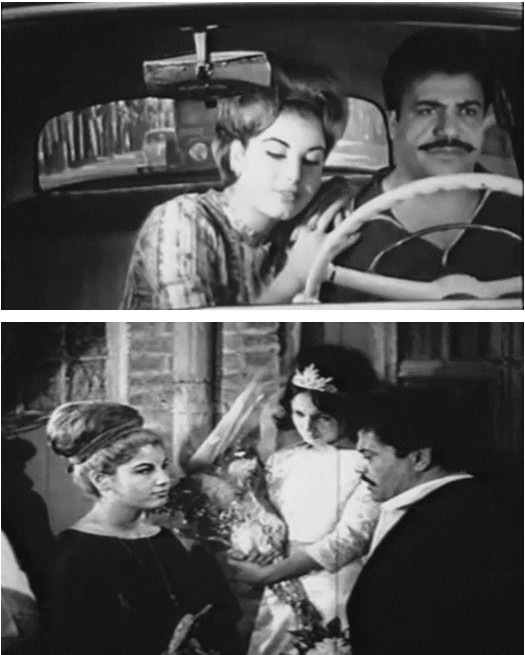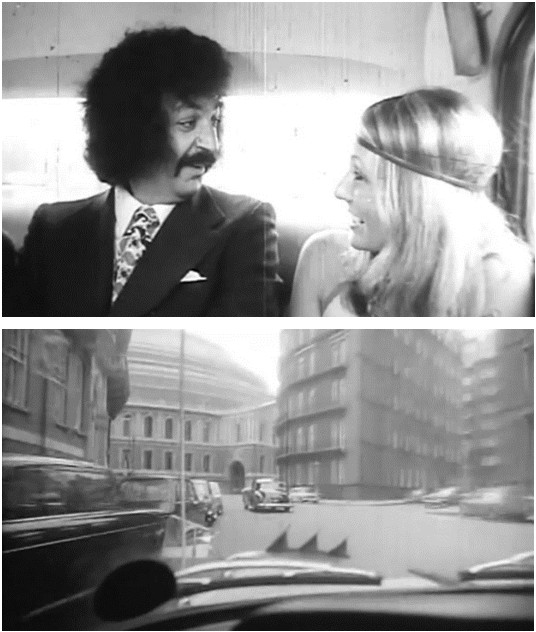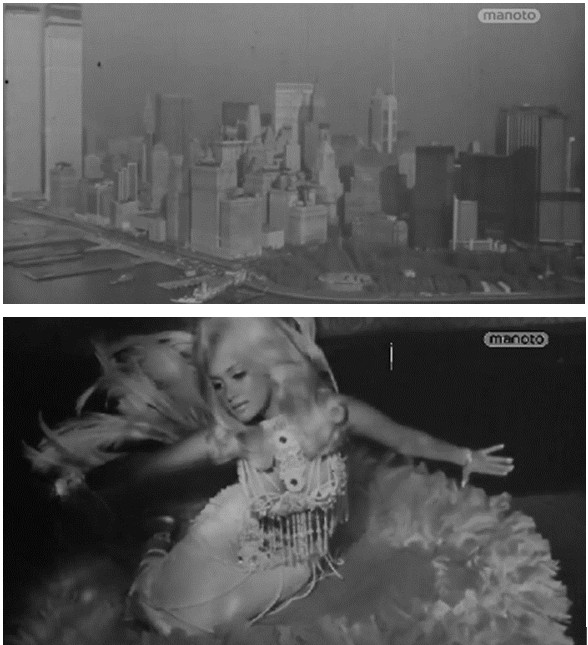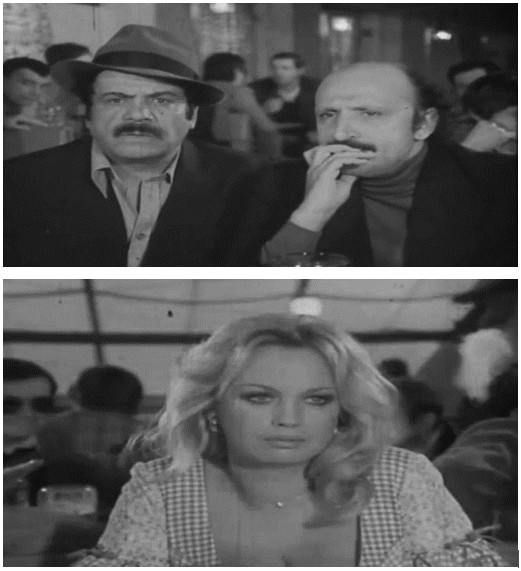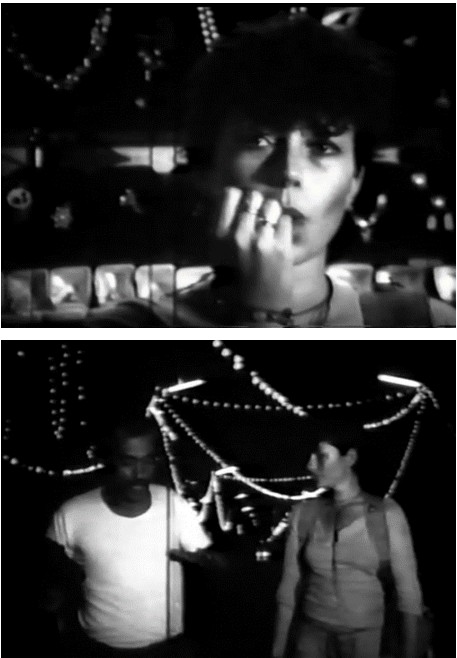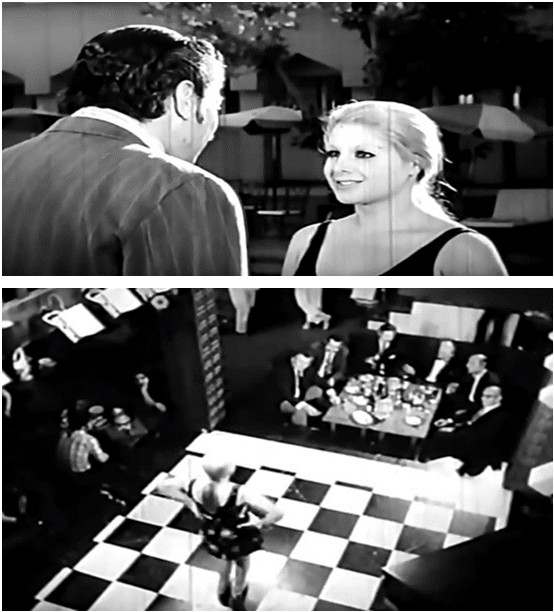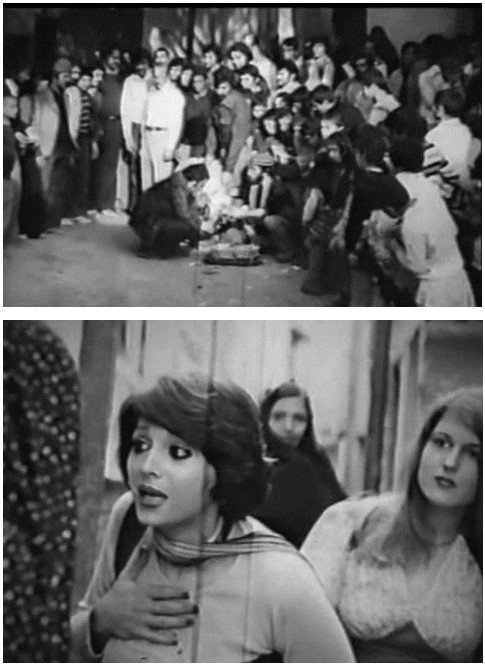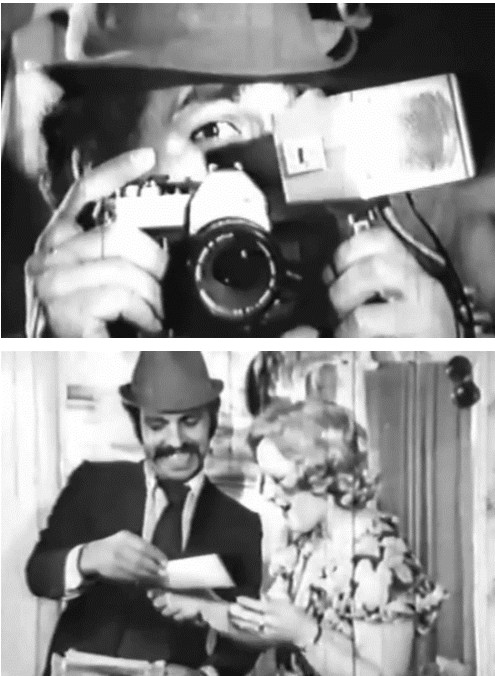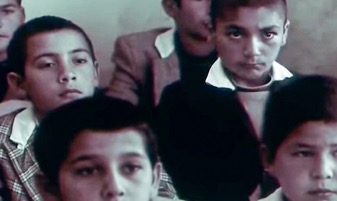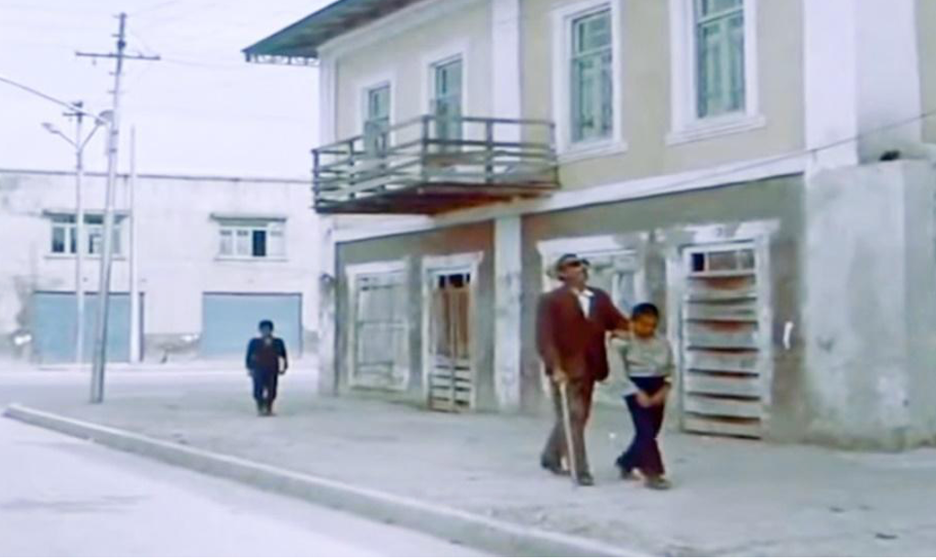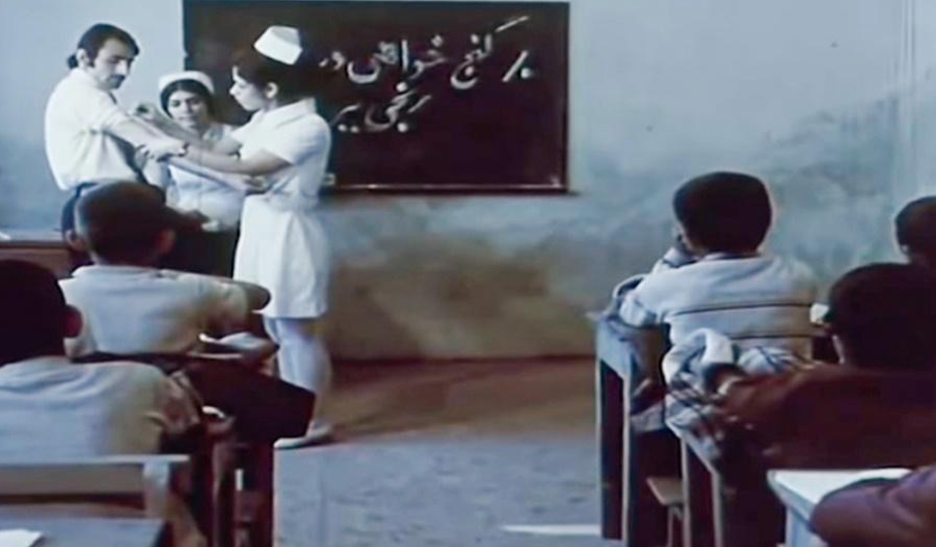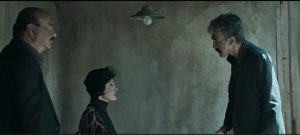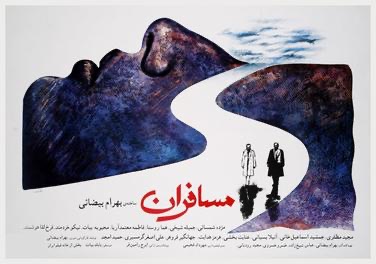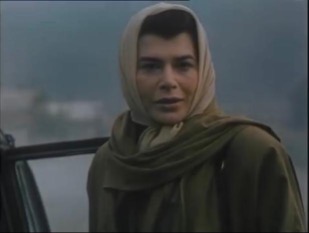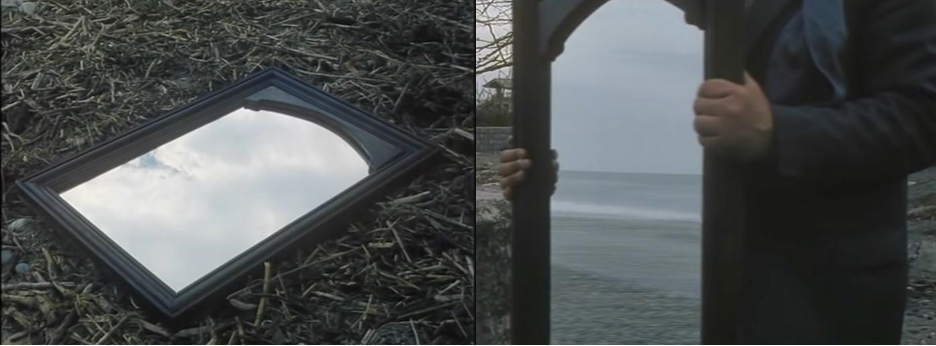
The Aesthetic of Reality: The Poetry of Cinema in Muhammad Rizā Aslānī’s Films

By

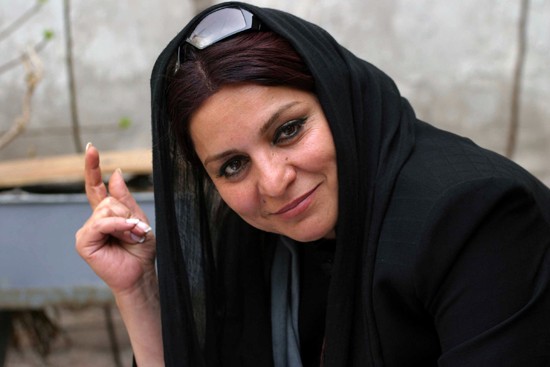
Figure 1: Portrait of Muhammad Rizā Aslānī

Introduction

Muhammad Rizā Aslānī is a prominent Iranian filmmaker whose work holds a unique place in Iranian documentary and fiction cinema. He exhibits a sensitivity to history and traditions but with a specific perception about these two issues (history and traditions). In the Iranian cinema community, he is best known for his documentary films. However, he has emphasized that being labeled a documentary filmmaker is a “cliché and a misperception.”1Muhammad Rizā Aslānī, interview by Nematollah Fazeli and Mani Kalani in Chashm-andāzhā-yi farhang-i mu‛āsir-i Īrān, vol. 3 (Tehran: Pazhūhishgāh-i Farhang, Hunar va Irtibātāt, 2020), 178-179. Vice versa, he has, in fact,  made more fictional films than documentaries, including television series such as Samak the ‛Ayyār (Samak-i ‛Ayyār, 1974) and Dust of light (Ghubār-i Nūr, 1996), as well as short films such as Badbadah: The Story of the Boy Who Asks (Badbadah: Dāstān-i pisarī kih mī-pursad, 1969), produced with the support of the Institute for the Intellectual Development of Children and Young Adults (Kānūn-i Parvarish-i Fikrī-i Kūdakān va Nawjavānān). His notable feature films, The Green Fire (Ātash-i Sabz, 2007) and Chess of the Wind (Shatranj-i Bād, 1976), stand out among his non-documentary works.2Muhammad Rizā Aslānī, interview by Nematollah Fazeli and Mani Kalani in Chashm-andāzhā-yi farhang-i mu‛āsir-i Īrān, vol. 3 (Tehran: Pazhūhishgāh-i Farhang, Hunar va Irtibātāt, 2020), 178-179.

Although Aslānī distinguishes between his documentary and fictional films, he does not recognize a clear boundary between the two genres, at least not in the conventional sense.3Muhammad Rizā Aslānī, interview by Nematollah Fazeli and Mani Kalani in Chashm-andāzhā-yi farhang-i mu‛āsir-i Īrān, vol. 3 (Tehran: Pazhūhishgāh-i Farhang, Hunar va Irtibātāt, 2020), 178. Aslānī states, “what matters is creating a film, and through it, communicating and expressing something meaningful.”4Muhammad Rizā Aslānī, interview by Nematollah Fazeli and Mani Kalani in Chashm-andāzhā-yi farhang-i mu‛āsir-i Īrān, vol. 3 (Tehran: Pazhūhishgāh-i Farhang, Hunar va Irtibātāt, 2020), 179. The question is, given Aslānī’s sensitivity to Iran history, what is this “something ” that he is trying to convey through his films? He has, in fact, directly responded to this question:

[As a response] the documenting of the collective memory […] I do not seek to guide anyone, as no one [in Iran] is helpless or in despair in this regard. I establish my own version of documentation, meaning that at least one person—myself—can assert that this country and its people should not be manipulated or misrepresented. These Documentations [show] the sagacity of the people. I am not here to guide or assist, as I am neither a preacher, teacher, nor prophet. Instead, I walk alongside the people, acting as a keenly observant, moving and illustrated witness. I depict the lives of the people of this land, but they are neither passive nor unintelligent. For this reason, unlike most Iranian films, you will never find an unintelligent character in mine.5Muhammad Rizā Aslānī, interview by Nematollah Fazeli and Mani Kalani in Chashm-andāzhā-yi farhang-i mu‛āsir-i Īrān, vol. 3 (Tehran: Pazhūhishgāh-i Farhang, Hunar va Irtibātāt, 2020), 197-198.

Thus, in his films, whether they are considered documentaries or fiction, Aslānī portrays the intellectual capacity, wisdom, and thoughtful nature of the Iranian people. The unique forms of historical representation that Aslānī creates do not adhere to traditional historical records, such as those concerning the life of Safavīd Shah ‛Abbās I, or documents on Iranian customs, rituals, and festivals.6Muhammad Rizā Aslānī, interview by Nematollah Fazeli and Mani Kalani in Chashm-andāzhā-yi farhang-i mu‛āsir-i Īrān, vol. 3 (Tehran: Pazhūhishgāh-i Farhang, Hunar va Irtibātāt, 2020), 204. Instead, they are artistic and intellectual portrayals that provide deeper insights into the Iranian people. Aslānī refers to these types of documents in his films as “bayn-al-asnād” (between the documents), arguing that:

We must read between the lines of historical documents, recognizing that some remain unread or have been destroyed, and we must work to read everything lost or plundered. What has reached us may not be an authentic document. We have no genuine documents. Even a document indicating the time and place of a person passing by us during our conversation is not a true document, but a false one. For example, I need to read a document that captures their thoughts on what they have lost while wandering in the space between their home and the place of our conversation, in that very gap. My aim is not to present or validate a document, as is often done in some documentary films. There are documentary films that provide documents, and they are invaluable; I have no doubt about their significance, as they are useful and contribute to further analyses of the relevant topic. However, that is not my approach. I do not provide or discover documents […] Actually, in a society where authentic documentation has been lost and its collective wisdom and experiences distorted, we actively document ourselves as the past events and experiences, emphasizing their continuity in the present. Our collective memory as Iranians essentially becomes, in essence, a document, open to renewed readability, its readability is possible through my own perspective. For this reason, through my films, I appear, and I bring forth the collective memory of my land in the contemporary world.7Muhammad Rizā Aslānī, interview by Nematollah Fazeli and Mani Kalani in Chashm-andāzhā-yi farhang-i mu‛āsir-i Īrān, vol. 3 (Tehran: Pazhūhishgāh-i Farhang, Hunar va Irtibātāt, 2020), 204-205.

1.1. Aslānī’s Cinema about Iranian Stories: A Dramatic Documentary Cinema

Aslānī is a storyteller, sharing stories of the wisdom and experiences of Iranians throughout history. He achieves this in both his fictional films and those regarded as documentaries by film professionals, critics, and the public—a distinction he sees as blurred. When Aslānī says that creating a document means, “I use my films as a means to bring the shared history, experiences, and identity of my people into the present,” he is outlining his approach to documentary filmmaking. He believes that “documentary cinema will evolve towards storytelling, and we may no longer see mere documentaries […] that simply capture images of walls and doors.” This genre of documentary cinema, which Aslānī refers to as “dramatic documentary,” has notable examples such as Arba‛īn (1970) by Nāsir Taqvā’ī, an epic dramatic documentary.8Muhammad Rizā Aslānī, “Rāh-i nijāt-i sīnimā-yi Īrān rujū‛ bih mustanad ast,” Sharq Daily, December 6, 2016. Accessed March 22, 2025. https://www.magiran.com/article/3476232.
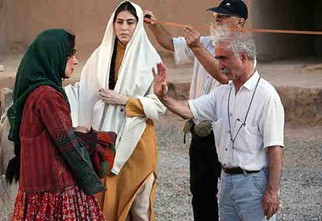
Figure 2: Muhammad Rizā Aslānī behind the scenes of The Green Fire (Ātash-i Sabz), 2008.

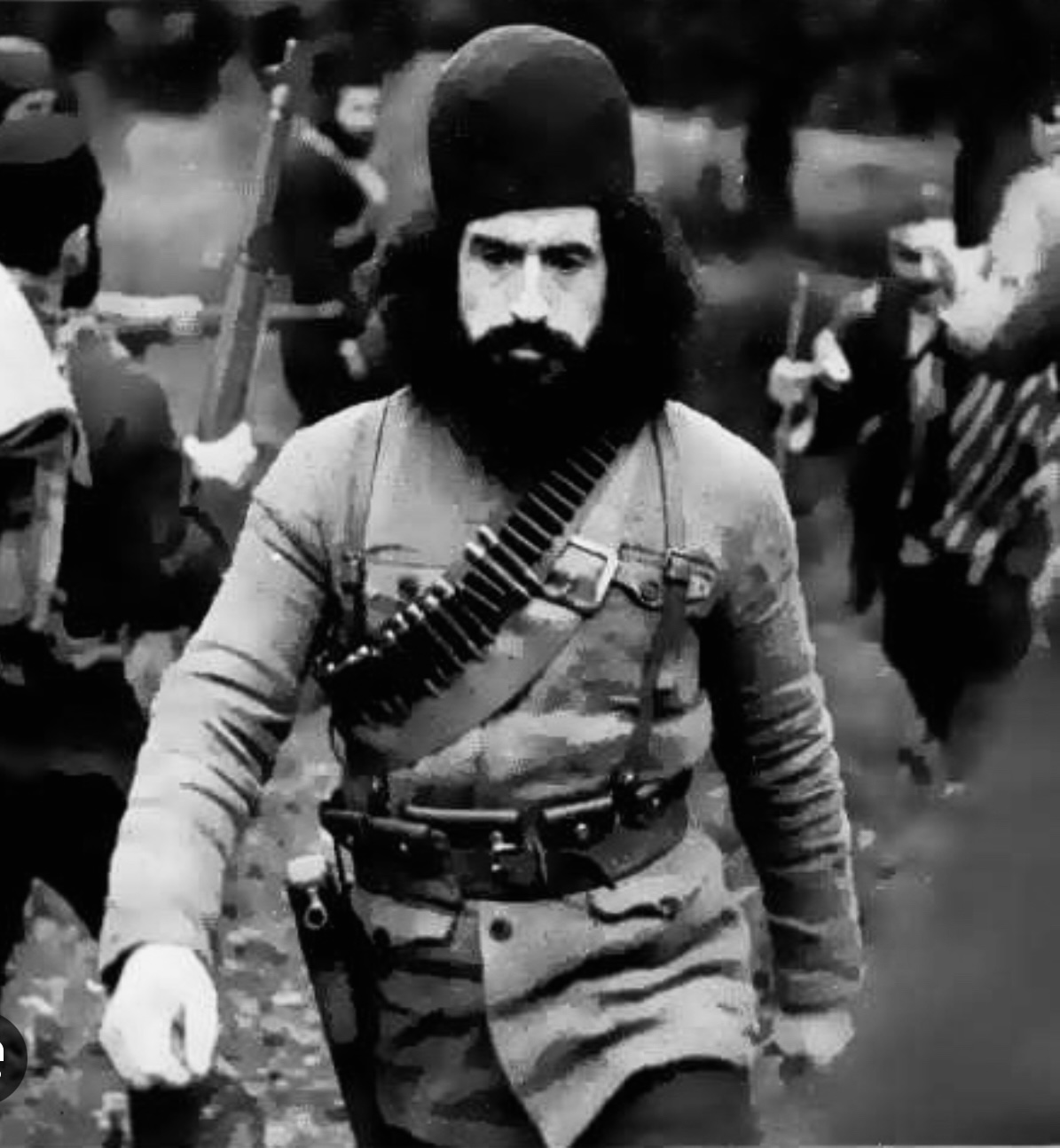
Some of Aslānī’s fictional films also reflect the unique storytelling and narrative-driven approach he uses in his documentaries. Take, for example, The Green Fire, which tells historical and documentary stories from the city of Kerman, beginning with its founding and including the story of the blinding of the young men of Kerman by the founder of the Qājār dynasty, Āqā Muhammad Khan Qājār, in 1794-95.9J. R. Perry, “Āḡā Moḥammad Khān Qājār,” Encyclopaedia Iranica Online, https://iranicaonline.org/articles/aga-mohammad-khan. These historical events serve as the backdrop for a love story between Nārdānah and Bahrām, whose struggle to stay together – throughout the historical eras of pre-Islamic and post-Islamic periods – is told up to the present day. Ultimately, by chance, they continue their passionate bond far from the historical setting of Kerman, fictionally (beyond a linear narrative) in a family court in contemporary Tehran.10The Green Fire, dir. Muhammad Rizā Aslānī (Iran: Kerman & Tehran, 2007), 00:83:30. It means that Aslānī’s films are not like Albert Lamorisse’s documentaries such as The Lovers’ Wind (1968). Aslānī believes that such documentaries “lack a proper dramatic perception when everything [the people, buildings, and nature] is viewed from above [by a helicopter].” No matter how beautiful, lively, and poetic those films are, or how much educational value they offer in terms of documentary film structure, to Aslānī they lack dramatic depth.11Muhammad Rizā Aslānī, “Rāh-i nijāt-i sīnimā-yi Īrān rujū‛ bih mustanad ast.” Sharq Daily, December 6, 2016. Accessed March 22, 2025. https://www.magiran.com/article/3476232.
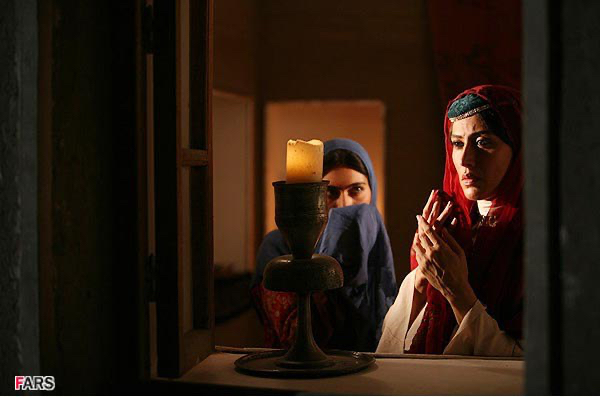
Figure 3: A still from the film The Green Fire (Ātash-i Sabz), directed by Muhammad Rizā Aslānī, 2008.

Aslānī asserts that the term “poetic cinema” is a misnomer, advocating instead for the concept of “the poetry of cinema.” This poetry, he argues, is not conveyed through verbal expression—such as recited verse or narrated poetry in documentaries such as The Lovers’ Wind—but rather through “images [drawn from reality, a reality] that inherently manifests its poetic essence.” According to Aslānī, cinema—and by extension, his own films—have the potential to “discover the poetry of the world” through poetic imagery rather than poetic language.12Muhammad Rizā Aslānī, “Sīnimā’ī kih shi‛r-i-jahān rā kashf mīkunad.” Mehr News Agency, January 17, 2024. Accessed March 22, 2025. https://www.mehrnews.com/news/5997319.

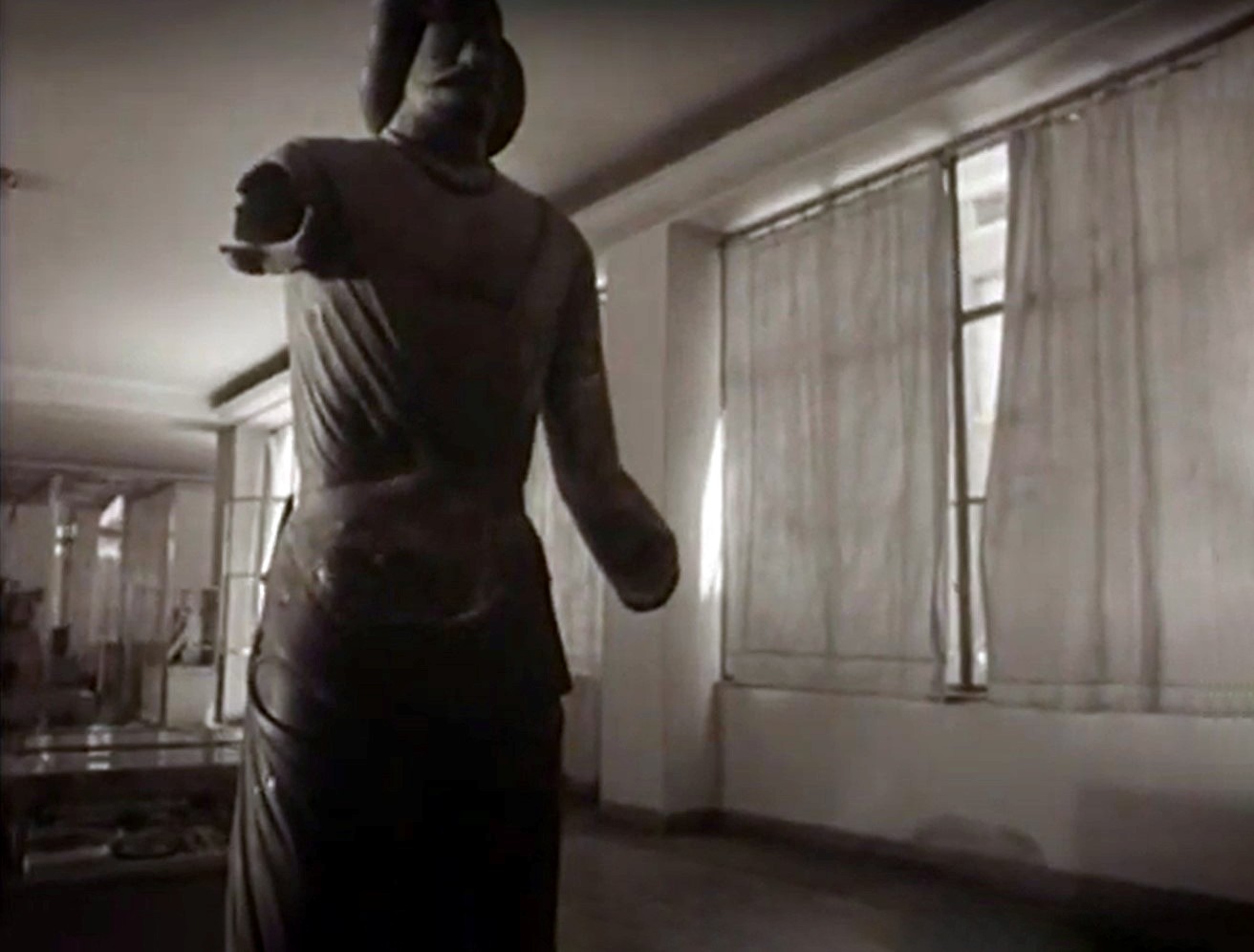
In tracking reality through poetic imagery, his films set in cities such as Kerman, Hamedan, and Tehran allow audiences to grasp the essence of these urban spaces through Aslānī’s cinematic lens. For instance, in the film Tehran: Conceptual Art (Tehran: Hunar-i Mafhūmī, 2012), the reality of Tehran becomes a subject of artistic exploration through the poetic images reflected on the glass of boutiques and car windows, capturing the city’s essence.

Figure 4: Poster for the film Child and Exploitation (Kūdak va Istismār), directed by Muhammad Rizā Aslānī, 1982.

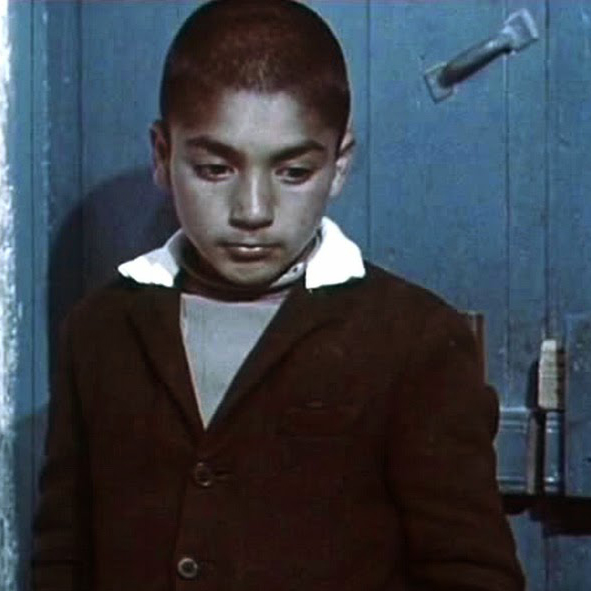
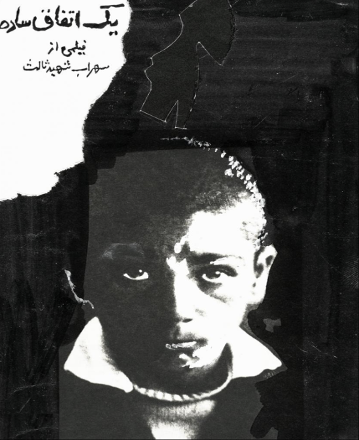
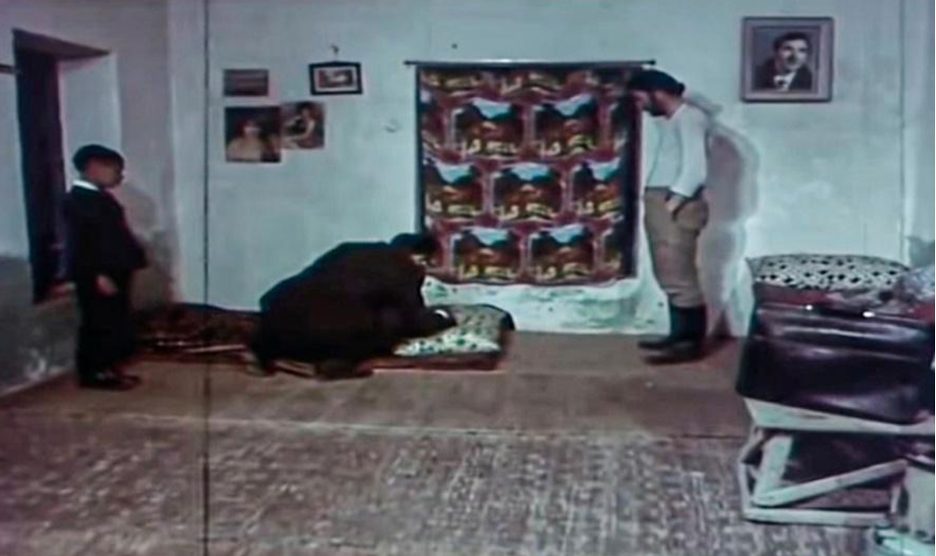
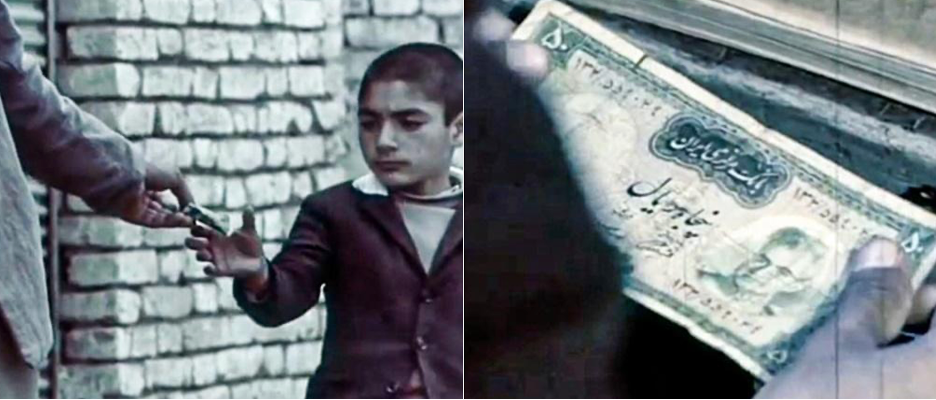
Also, the tragic/heroic reality of motifs, engraved on the Hasanlū Cup is explored in the short film Hassanlou Cup: The Tale of the One Who Asks (Jām-i Hasanlū, 1964). Similarly, poetic imagery is employed to depict the harsh or sorrowful realities of children subjected to oppression and violence in films such as Badbadah: The Story of the Boy Who Asks, and Child and Exploitation (Kūdak va Istismār, 1982). Poetic imagery is also used to depict the realities of issues and challenges that have persisted since the establishment of Bank Millī of Iran, as seen in the film Memoirs of a 75-Year-Old Man (Khātirāt-i yak 75 sālah, 2007). One such image features a female employee at Bank Millī, wearing a pūshīyah—the traditional full-face veil worn by Iranian women in the late Qājār era—sitting behind a computer in one of the bank’s modern branches, working diligently. She represents the women Aslānī references in other scenes: those who, after the Constitutional Revolution, helped provide the initial capital for Bank Millī by selling their jewelry.13Memoirs of a 75-Year-Old Man, dir. Muhammad Rizā Aslānī (Iran: Tehran, 2007), 00:15:11.
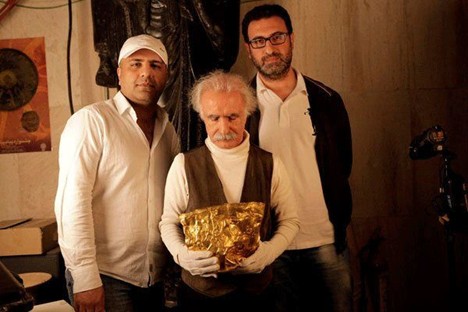
Figure 5: Muhammad Rizā Aslānī with the Hasanlū Cup in 2016, fifty years after creating Hassanlou Cup: The Tale of the One Who Asks (Jām-i Hasanlū), 1966.

Therefore, through various storytelling techniques in his films, Aslānī offers a unique approach to exploring historical phenomena that may not be directly tied to contemporary world issues. In some of his works, he examines the origins of old cities, ethnic rituals, or ancient artifacts. For example, in the films The Green Fire (2008) and The Hands of Hegmataneh (Dast-hā-yi Higmatānah, 2010-12), Aslānī narrates many events that have shaped Kerman and Hamedan from their beginnings to the present day. However, rather than following a linear progression from past to present, he adopts a cyclical approach, moving between past and future in a way that surprises the audience. The audience will be surprised, as they may expect a documentary-style historical narrative based on research that traces the key events that have shaped these cities over time. Instead, it is at times difficult to determine whether the stories about these cities are entirely factual. The audience can encounter Aslānī’s creative imagination, which is reflected in how he:

  • either speaks about these cities and his feelings toward the hardships and suffering endured by their people,
  • or addresses the cultural heritage passed down from previous generations to the contemporary audience of his films,

by incorporating poetic verses or lyrical statements woven into the film’s background narration, featuring poetic reflections on the cultural heritage and handicrafts of Hamedan, such the pottery made in the city of Lalahjīn.

So, to clearly illustrate how Aslānī, through the narrator’s voice, simultaneously presents:

  • Both reality and his imagination regarding the hardships endured by the people of these lands,
  • Both the past and the future of these cities, and
  • Both the tradition of cultural heritage and its process of modernizing.

It is necessary to include an excerpt from Aslānī’s narration in the film The Hands of Hegmataneh to further illustrate this point:

These Kassite ancestors, from northern Khurāsān to Higmatānah, they live still, even now, in the hands of mine, [the potter]; I am gripped by a terrible, sleepless fear—how carry this delicate heir—born of generations of artistry—into a present too blind to the future it might shape. […] This is no mere craft; it is a trust. […] My hands press into the clay, grasping every pattern, feeling every texture. I sense them and hear the echoes of centuries. I see them moving—century by century—backward into the past and forward into the future, until they stand beside me. They murmur to me—echoing their hopes, despairs, and joys—yearning to break free, to be remembered, to step into the light from the depths of isolation and obscurity.14Hands of Hegmataneh, dir. Muhammad Rizā Aslānī (Iran: Hamedan & Tehran, 2010–12), 00:43:30.
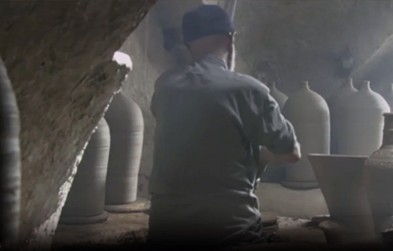
Figure 6: A still from the film The Hands of Hegmataneh (Dast-hā-yi Higmatānah), directed by Muhammad Rizā Aslānī, 2010-2012.

At the end of this section, it is once again emphasized that Aslānī’s documentary cinema does not focus on describing verifiably historical events related to objects, people, cities, or social and historical institutions. With this perspective on dramatic documentary cinema, Aslānī selects the themes and concepts for both his fiction and nonfiction films to further his innovative explorations of cities, ancient artifacts, and administrative institutions.

1.2. Conceptual structure of article

Despite Aslānī’s enduring approach over more than half a century of filmmaking—one that blends storytelling with historical and documentary elements—his cinematic works exhibit a dynamic creative process in both form and content. This process allows his films to be classified into three configurations:

  1. a) Archaicism,
  2. b) Formalist Critique,
  3. c) Harsh Realism.

In the years leading up to the 1979 Revolution, Aslānī explored a stark and unflinching realism in depicting human suffering and deprivation, particularly in his feature film Chess of the Wind and the short film Badbadah: The Story of the Boy Who Asks. At the same time, in the short documentary-style film Hassanlou Cup: The Tale of the One Who Asks and the television series Samak the ‛Ayyār and Abū Rayhān Bīrūnī (1975), the question of tradition and its reproduction (following a historic sensibility) became a central theme in his cinematic vision. This intellectual and cinematic inquiry continued in the years following the revolution.

While Aslānī’s work often features formalist critique, artistic freedom, and avant-garde imagery, these elements take on a distinct and independent form—from the other configurations of historicity and realism—in Tehran: Conceptual Art. This artistic approach sets the film apart as a significant and singular piece within Aslānī’s body of work. This work will be discussed in the second section of the article, where Aslānī’s techniques and perspective on reality—captured through his camera—will be examined to create a framework for explaining his ideas. Therefore, before examining the main themes of Aslānī’s cinema and his approach to dramatic documentary filmmaking, it is important to first explore his core principles and ideas. So, in the second part of the article, we examine Aslānī’s filmmaking ideas through a theoretical analysis of Tehran: Conceptual Art. Then, using his theoretical framework, we refer to Aslānī’s understanding of Ferdinand de Saussure’s semiotic theories to explain how reality is presented in his films.

The methodology section (Part Three) examines a key theme in Aslānī’s cinema, “universal intelligence,” which represents the core thesis of his filmmaking.15See the dialogue between Nārdānah and Kanīzak (Servant) in The Green Fire, dir. Muhammad Rizā Aslānī (Iran: Kerman & Tehran, 2007), 00:95:00. Part Four then explores its antithesis, “mournful, and murderous modernity.”16Muhammad Rizā Aslānī, Dīgarkhānī-i Sīnimā-yi Mustanad (Tehran: The Documentary and Experimental Film Center, 2015), 59. By selecting these two films, The Green Fire and Chess of the Wind, we highlight the two main stylistic approaches in Aslānī’s cinema: A synthesis of historical tradition and a revitalized tradition in The Green Fire, reflecting the theme of “universal intelligence,” and a harsh, horrified and unsettling realism that drives the cinematic narrative of Chess of the Wind. The two mentioned films, besides Tehran: A Conceptual Art analyzed in detail below, fall under the category of dramatic documentary cinema.

In Part Five of this article, the synthesis of these two theses will be examined—considering how the filmmaker’s contrasting perspectives before and after the 1979 Revolution can be brought into balance. How can these two contrasting approaches in Aslānī’s engagement with reality—explored in detail in Parts Three and Four—be reconciled into a balanced form? This contradiction can be resolved if audiences and critics of Aslānī’s films try to “discover beauty” in understanding his works, as he himself puts it.17‛Alī Ranjī Pūr, “Az pīchīdagī-i jahān bih zībā’ī-shināsī-i Tihrān: Guftugū bā Muhammad Rizā Aslānī,” Insān-shināsī va Farhang, January 3, 2014, http://bit.ly/49oz04b. As a result, three of Aslānī’s signature films, Tehran: Conceptual Art, The Green Fire, and Chess of the Wind, are examined in detail in this article.

  1. A theoretical framework for analyzing Aslānī’s cinema; A case study of Tehran: Conceptual Art

Aslānī, through the strategies of “shifting position” and “repositioning”18Muhammad Rizā Aslānī, Dīgarkhānī-i Sīnimā-yi Mustanad (Tehran: The Documentary and Experimental Film Center, 2015), 23. the subjects of his films—ranging from Bank Millī and Tarbīyat-i Mudarris University to the Hasanlū Cup and the city of Tehran—by challenging conventional perceptions, invites his audience to reengage with realities of Tehran, Bank Millī, and the Hasanlū Cup. He presents Tehran, Hasanlū Cup, and a particular aspect of Bank Millī as something entirely different from what we have previously known.

From Aslānī’s point of view, reality is constituted through “becoming” and “movement.”19Regarding “movement,” Aslānī writes: “Reality, or the real, unfolds through movement—it takes place, happens, and becomes real in the moment of its actuality.” See Muhammad Rizā Aslānī, Dīgarkhānī-i Sīnimā-yi Mustanad (Tehran: The Documentary and Experimental Film Center, 2015), 30. Accordingly, as the camera moves, the audience’s perception of reality—such as that of a street in Tehran—undergoes a transformation. Aslānī uses filmmaking techniques that are fundamental to cinema, particularly by making the camera move in a way that simulates how people naturally shift their look in everyday life. This reflects how individuals constantly change their sight when looking at buildings, people, objects, and even their bodies in an urban setting. Through this approach, he aims to portray urban reality as fluid and ever-changing, challenging any fixed perception about the reality of city.

In the case of Tehran, he depicts the city as inherently unstable and in a constant state of flux. In other words, the camera’s movement, along with recitations of poetry (that do not directly explain the reality of Tehran), invites the audience into a state of imagination, showing that imagining something is, in itself, part of the reality of something. In this sense, Aslānī’s depiction of Tehran emerges through the reflections of its streets, buildings, cars, and citizens on glass surfaces, such as the windows of boutiques, cars, and buses.20For the shots of boutiques, cars, and bus windows, see Tehran: A Conceptual Art, dir. Muhammad Rizā Aslānī (Iran: Tehran, 2012), 00:13:48, 00:19:30, 00:23:19, 00:03:04, 00:04:06, 00:23:19. By creating such conditions, the audience may, intentionally or unintentionally, be prompted to question what Tehran’s reality would be in the absence of its streets: is it the poems recited by the narrator in the film, or the voice of Rūshanak (1935-2012) in the Gulhā program on Radio Iran? Or is it nostalgic images of old Tehran and its Tūpkhānah Square? Or the ancient artifacts in the National Museum of Iran (mūzah-yi millī-i Īrān)? Or is it the modern art sculptures installed in the outdoor area of the Tehran Museum of Contemporary Art (mūzah-yi hunarhā-yi mu‛āsir-i Tihrān)?21For all the shots and scenes depicting the aforementioned elements, see Tehran: A Conceptual Art, dir. Muhammad Rizā Aslānī (Iran: Tehran, 2012), 00:03:04, 00:04:06, 00:07:52, 00:08:29, 00:18:05, 00:19:30, 00:22:06, 00:23:19, 00:24:10, 00:26:00, 00:29:37, 00:31:09, 00:31:20, 00:32:48, 00:38:19, 00:43:23, 00:49:26, 00:64:31. The last two are filmed directly, without reflecting historical objects on glass surfaces. Therefore, imagining what Tehran was in the past or what the realities of this city would become in the future are also part of Tehran’s reality, especially since, from Aslānī’s perspective, “reality = becoming, not being.”22Muhammad Rizā Aslānī, Dīgarkhānī-i Sīnimā-yi Mustanad (Tehran: The Documentary and Experimental Film Center, 2015), 29.

In summary, it can be noted that based on this understanding of reality, Aslānī presents Tehran’s reality to be as dynamic, diverse, and multifaceted in the film Tehran: Conceptual Art. This depiction about the reality of Tehran can include poems about the city, imaging its buildings and urban facades as ruins (because seen as distorted images caused by reflections on glass), and the recreation of that charming solitude of old Tehran. In other words, Aslānī seeks to express reality in a way that breaks from fixed reality through his films such as Chīgh (1996), and others depicting Bank Millī, Hasanlū Cup, Tehran, Hamedan Kerman, and Tarbīyat-i Mudarris University; by “freeing”23Muhammad Rizā Aslānī, Dīgarkhānī-i Sīnimā-yi Mustanad (Tehran: The Documentary and Experimental Film Center, 2015), 97-98. Tehran, Hamedan, and Hasanlū Cup from the singular true reality imposed upon them.

Figure 7: A still from the film Chīgh, directed by Muhammad Rizā Aslānī, 1996.

With this understanding of reality in Aslānī’s works, we can now gain a clearer insight into how he visualizes his central theme, “universal intelligence,” in one of his most prominent films, The Green Fire, and the cinematic techniques he employs to represent it. This raises the question of how he creates the images that represent this theme in his works. In addressing this methodological question, particularly in relation to the film The Green Fire, one could argue that if the cosmos—or the world itself—possesses intelligence, then, by extension, cities such as Kerman, Tehran, and Hamedan also embody a distinct form of intelligence and insight. This suggests that the very fabric of these cities, much like that of the universe, is interwoven with an inherent consciousness embedded within them, waiting to be recognized and understood.

  1. Analysis of the theme of “universal intelligence” (as a thesis) in The Green Fire

The supposed engaged audiences understand “universal intelligence” when they experience Tehran’s reality presented in different forms—such as poetry, ancient artifacts, and old images of the city—and recognize its transformation. They connect with certain elements of the film, such as the reflections of Tehran on bus windows, while feeling less emotionally or intellectually engaged with other aspects, such as the recited poems, which seem more distant or harder to relate to. Aslānī explains this dynamic of proximity and distance between the audience and the realities of Tehran using the semiotic concepts of signifier and signified. Simply put, when the audience derives profound pleasure from Rūshanak’s voice, it signifies the union of the lover and the beloved.24Muhammad Rizā Aslānī, Dīgarkhānī-i Sīnimā-yi Mustanad (Tehran: The Documentary and Experimental Film Center, 2015), 57. Conversely, when the film becomes tiresome or boring, it reflects a state of estrangement between them—Tehran, in this case, being the beloved.

Similarly, focusing on Aslānī’s The Green Fire in a semiotic analysis, Kerman’s transformation parallels the lovers’ separation—Nārdānah and Bahrām as Laylī and Majnūn—symbolizing the city’s reality. In this state of distance and parting, Aslānī expands upon Saussure’s notion of signifier and signified. There is no separation between “Majnūn [Bahrām] = signifier” and “Laylī [Nārdānah] = signified,” much like “the two sides of a single sheet of paper.”25Muhammad Rizā Aslānī, Dīgarkhānī-i Sīnimā-yi Mustanad (Tehran: The Documentary and Experimental Film Center, 2015), 57. Thus, the reality of Kerman, across various historical periods, undergoes a transformation towards the unification of “the self and the non-self,” embodied by Bahrām and Nārdānah.26Muhammad Rizā Aslānī, Dīgarkhānī-i Sīnimā-yi Mustanad (Tehran: The Documentary and Experimental Film Center, 2015), 198. However, this union is disrupted before the film’s conclusion due to the betrayal of a maid, a rival to Nārdānah’s faithful love for Bahrām. Despite receiving food and water from Nārdānah, she betrays her out of vileness and disloyalty. The story unfolds as Nārdānah encounters Bahrām, who has been struck by seven arrows and perished. Each day, she must remove one arrow from his body so that he may come back to life and ultimately reunite with her. After Nārdānah has removed six arrows, the maid takes the final one, knowing that whoever removes the last arrow will awaken Bahrām and become his wife. As a result, the once-poor servant girl rises to a position of wealth and status in Bahrām’s noble household.27The Green Fire, dir. Muhammad Rizā Aslānī (Iran: Tehran, Kerman, 2007), 00:14:00, 00:77:30.
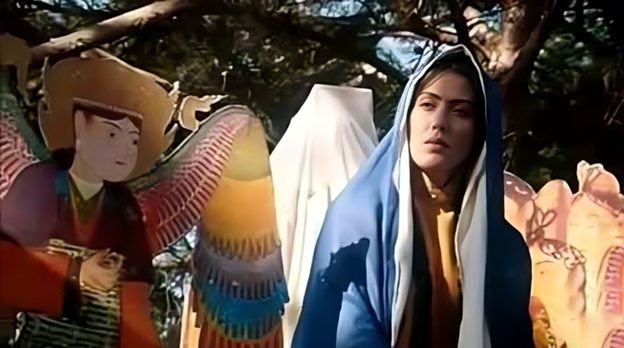
Figure 8: A still from the film The Green Fire (Ātash-i Sabz), directed by Muhammad Rizā Aslānī, 2008.

On this basis, among the themes of the film The Green Fire, the masculine signifiers of Bahrām’s embodiment who ultimately does not reach his beloved Nārdānah—though he gradually moves toward union with her—include the following elements:

Lutf-’Alī Khan Zand, who was besieged in the city of Kerman and blinded by Āqā Muhammad Khan Qājār, and Mushtāq-‛Alī Shah, who sang the Quran to the tune of a sitār and was stoned to death by the city’s religious fanatics, are both signifiers of the city of Kerman’s failure, reflecting Bahrām’s ultimate failure to reach his beloved Nārdānah.28The Green Fire, dir. Muhammad Rizā Aslānī (Iran: Tehran, Kerman, 2007), 00:56:00. Another case is the maid’s desire, which, as noted by Aslānī, symbolizes Nārdānah’s “base desire.”29Alī Rizā Hasanzādah, “Guftugū bā Muhammadrizā Aslānī: Afsānah-hā-yi Īrānī va sīnimā-yi mustanad va ā’īnī,” Vista. Accessed March 22, 2025. https://vista.ir/w/a/21/7ax5v. Her failure to fulfill her romantic duty of caring for Bahrām ultimately results in her separation from him. Thus, all these signifiers are the signifiers of separation, distance, and absence, which unfold within the context of the reality of the city of Kerman, as narrated by Aslānī. However, this drifting apart does not embody “universal intelligence,” which is another facet of the reality of Kerman that is “reality = becoming, not being.”30Muhammad Rizā Aslānī, Dīgarkhānī-i Sīnimā-yi Mustanad (Tehran: The Documentary and Experimental Film Center, 2015), 29. “Universal intelligence” is that signified of “love and union,” which, beneath all signifiers of alienation and separation, remains “silent”, yet “flows” in motion.31For more on the theme of love and union: The Green Fire, dir. Muhammad Rizā Aslānī (Iran: Tehran, Kerman, 2007), 00:84:00. Love is fluid, a constant “becoming,” drawing Bahrām and Nārdānah toward one another, particularly when Bahrām defends the legitimacy of his marriage to Nārdānah in a contemporary Tehran civil court, stating:

“[…] Neither death is a tale, nor life. When union occurs, the beloved is reached, love is present, and in that moment, we exist. We are all here.”32The Green Fire, dir. Muhammad Rizā Aslānī (Iran: Tehran, Kerman, 2007), 00:84:00.

Thus, anyone who challenges the “universal intelligence,” the union between the beloved and the becoming of humanity toward dignity, will be humbled by this intelligence and falter—much like the people of Kerman, who, due to their silence or complicity, failed during the stoning of Mushtāq ‘Alī Shah in 1791, just three years before Kerman fell to the forces of Āqā Muhammad Khan Qājār. The passivity or complicity in the crime erodes their collective spirit of unity and mutual support, leaving them vulnerable to collapse following the conquest of Kerman by Āqā Muhammad Khan, who blinded the city’s inhabitants.33The Green Fire, dir. Muhammad Rizā Aslānī (Iran: Tehran, Kerman, 2007), 00:98:00. Nārdānah’s parents, too, were brought down by “universal intelligence,” for they failed to comprehend Nārdānah’s love for Bahrām, so, in their legal complaint at court, no ruling was made in their favor.34The Green Fire, dir. Muhammad Rizā Aslānī (Iran: Tehran, Kerman, 2007), 00:68:30. Similarly, the maid sees herself in a distorted, grotesque form in the mirror that Bahrām bought for her, and in the final scene of the film, she falls from grace.35The Green Fire, dir. Muhammad Rizā Aslānī (Iran: Tehran, Kerman, 2007), 00:98:00. In the scene before her descent, Nārdānah warns her, and the following conversation ensues:

Maid: I might have made a mistake in my choice [choosing Bahrām and removing the last arrow from his body], and indeed, I did surely, [but a mistake like] this should not end in such torment.

Nārdānah: This is not torment; it is a trial, an experience. Perhaps a deeper experience. A vast circle exists, drawing you and me into its fold, compelling us to carry [the world with us.] […] It is our fragile hands that bear the world’s trust. This is both suffering and joy, both fulfillment and the price it demands.

Maid: No! I am not of this world. Why should the world not bear my burden? Why should the world condemn me to experience? […] Why shouldn’t I subject the world to experience myself? To a trial?

Nārdānah: This is perilous for both of us. To undertake such a thing, one must be elsewhere, endowed with a different kind of intelligence.

Maid: What kind of intelligence? Another kind? The intelligence to know the entire world? For what purpose? Why? No! I will not trade my own intelligence for a universal intelligence, one that is not mine.

Nārdānah: This is your choice—to battle against universal intelligence. And so, you will fall. You will be subjected to…

Maid: To what?

Nārdānah: To confession.36The Green Fire, dir. Muhammad Rizā Aslānī (Iran: Tehran, Kerman, 2007), 00:92:30.

Thus, the maid who betrays Nārdānah and covets Bahrām’s possessions falls into conflict with the “universal intelligence.” The very notion of being a maid and servant while simultaneously being the wealthy Bahrām’s wife had already been explored in Aslānī’s cinema years before The Green Fire, in his film Chess of the Wind. In that film, too, a maid and an aristocratic lady, who is paralyzed and confined to a wheelchair, in a manor house in Tehran, are driven to confess to the murders, including that of the lady’s tyrannical stepfather, with the complicity of the men involved in their crime. They witness the consequences of their actions and descend into depravity one by one. On the women’s side of the murder, the aristocratic lady’s fall from her wheelchair serves as an allegory for her moral descent into confession. Symbolically, she dies both before and after killing her stepfather.37Chess of the Wind, dir. Muhammad Rizā Aslānī (Iran: Tehran, 1976), 00:82:19. Moreover, these women killing the traditionalist stepfather serves as a metaphor for modernity’s massacre of tradition. While in The Green Fire, the “universal intelligence” holds a determining position as the main thesis and key axis of the work, in Chess of the Wind, modernity and human intelligence, which ensnares Tehran and Iran, serve as an antithesis.

Years after Chess of the Wind, Aslānī introduced a conceptual expression he called “the killer modernity” in his book Rereading Documentary Cinema (Digarkhānī-i Sīnimā-yi Mustanad, 2015).38Muhammad Rizā Aslānī, Dīgarkhānī-i Sīnimā-yi Mustanad (Tehran: The Documentary and Experimental Film Center, 2015), 59. After the re-release of Chess of the Wind on the international stage and its reception by critics at the 2020 Cannes Film Festival, an Iranian anthropologist and a film scholar of Aslānī’s works, Nāsir Fakūhī, employs phrases similar to “killer modernity” when describing a sorrowful, melancholic modernity imbued with a sense of hatred and vengeance. He analyzes the manifestations of this vengeful ‘killer modernity’ in the film Chess of the Wind.

From Fakūhī’s perspective, the antithesis of “universal intelligence,”—modernity in Iran—manifests as a form of desire to modernity that unleashes a destructive energy, allowing the oppressed and tormented women to take blind revenge on men. The maid in The Green Fire does not possess such power and confesses her wrongdoing, but the maid and the aristocratic lady in Chess of the Wind seem to represent “a vengeful modernity that is alive yet melancholic, perhaps leaving [these women] with nothing of modernity except feelings of hatred and revenge.” In Aslani’s narration of Iranian modernity, “he does not question whether modernity is legitimate, whether it should be accepted, or which social class or group benefits from it [women or men.] Instead, he seeks to give modernity a visual-cinematic, and material embodiment—such as womanhood, disability, and a wheelchair.”39Nāsir Fakūhī, “Tūfān-i sunnat va taʿlīq-i mudirnītah,” Insān-shināsī va farhang, February 8, 2021. Accessed March 22, 2025. https://bit.ly/3Tf5yHB.
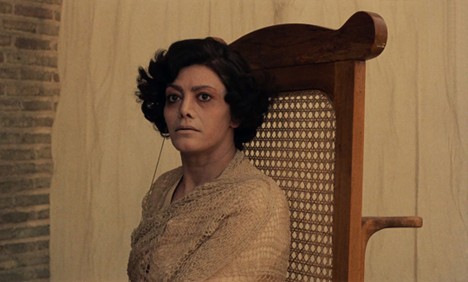
Figure 9: Khānūm Kūchak (Fakhrī Khurvash), a paralyzed woman in a wheelchair inside a manor house in Tehran. A still from the film Chess of the Wind (Shatranj-i Bād), directed by Muhammad Rizā Aslānī, 1976.

Since Aslānī’s intention is not to propose or expand theoretical ideas about modernity and its legitimacy, our article, similarly, does not aim to provide a theoretical understanding of modernity. Rather, the focus is solely on analyzing the instances of “killer modernity”—a modernity imbued with feelings of vengeance and hatred—which serves as the antithesis to the theme of “universal intelligence,” as portrayed in the film Chess of the Wind.

Therefore, before turning to section 5 of this article, in which I will examine the confrontation, interaction, and clash of the thesis and antithesis—namely, “universal intelligence” and “killer modernity” (or vengeful and melancholic modernity), in the next section it is important to note that we will analyze Aslānī’s portrayal of the theme of “killer modernity” as it is depicted in the film Chess of the Wind, rather than as the concept of modernity experienced in Iran.

  1. Analysis of the theme of “killer modernity” (as an antithesis) in Chess of the Wind

In his later films, Aslānī portrays the world—including cities and romantic relationships—as dynamic and ever-evolving aspects of his exploration of reality. This is exemplified by Bahrām and Nārdānah on their path towards union, as well as by the shapeless, multifaceted city of Tehran. In contrast, his earlier works—particularly Chess of the Wind—portray a world that resists this “becoming” and dynamic evolution and, in doing so leads to catastrophe.

Chess of the Wind can be classified as a crime genre film, engaging the audience with excitement and anxiety. But especially, following the discovery of its lost original version—restored in high quality by the Film Foundation’s World Cinema Project and Cineteca di Bologna at L’Image Retrouvée laboratory (Paris)—and its positive reception at the 2020 Cannes Film Festival, this continued interest and public acclaim, even after half a century, indicate that the film contains deeper conceptual layers beyond a mere crime story. These layers reflect a depiction of an insecure and unstable world, a consequence of the failed reforms of the Constitutional Revolution and the thwarted revisionism of Iranian intellectual. The film portrays this insecure world through a narrative set in the final years of the Qājār dynasty. This unstable world came to an end during the first and second Pahlavī periods, amidst Iran’s modernization and industrialization, which upended the country’s traditional order. It is portrayed by a dramatic focus on the character of Khānūm Kūchak:

A paralyzed aristocratic woman conspires with her maid—who is also her companion and lover40Chess of the Wind, dir. Muhammad Rizā Aslānī (Iran: Tehran, 1976), 00:61:00. —to murder her stepfather, Atābak. Khānūm Kūchak ultimately dies as part of the maid’s plot, who shares the plan to murder Atābak with her.41Chess of the Wind, dir. Muhammad Rizā Aslānī (Iran: Tehran, 1976), 00:35:40. Despite this relationship, the maid’s ultimate goal, in collaboration with one of Atābak’s nephews, was to murder Khānūm Kūchak and seize her maternal inheritance because Atābak, a man of the bazaar who appears religious and traditional but is, in fact, foul-mouthed and lustful in sexual desire to maid, had secretly transferred the estate of Khānūm Kūchak’s deceased mother into his own name.42Chess of the Wind, dir. Muhammad Rizā Aslānī (Iran: Tehran, 1976), 00:04:35. Meanwhile, Atābak’s nephew, Sha‛bān, a nouveau riche and pretentious intellectual figure, was in league with the maid. Having promised her marriage, he intended to kill both his uncle and Khānūm Kūchak in order to use the wealth from her mother’s estate to establish factories, thereby reviving their aristocratic lineage under the guise of industrialism and capitalism.43Chess of the Wind, dir. Muhammad Rizā Aslānī (Iran: Tehran, 1976), 00:91:00. The other nephew, on the other hand, sought to marry Khānūm Kūchak and, after his uncle’s murder, attempted to rent out their manor house to the English for speculative and unproductive activities, in a bid to generate effortless income by renting out the property.

While in many of Aslānī’s films we encounter a dreamy world, a reality that is evolving and transforming, and a journey towards unity, connection, and love, the other side of Aslānī’s cinematic universe is harsh, overly realistic, and based on events that he had read about or personally experienced—mainly from the 1950s to the 1970s. This side is ultimately reflected in Chess of the Wind.
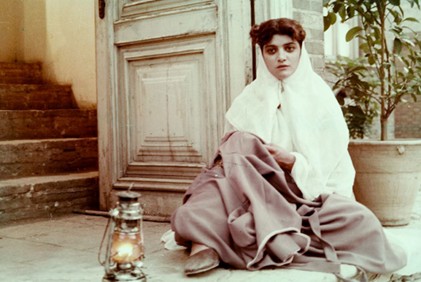
Figure 10: Shuhrah Āghdāshlū, as the maid, in a still from the film Chess of the Wind (Shatranj-i Bād), directed by Muhammad Rizā Aslānī, 1976.

Throughout his half-century career in filmmaking following Chess of the Wind, Aslānī rarely portrayed the harsh, tragic, and dramatic fate of modernism and the process of modernization in Iran during the late Qājār and Pahlavī eras with such intensity again. He framed the game of Chess of the Wind with feminine and masculine-coded winds: winds with white and black pieces on a chessboard. The chessboard was set in Khānūm Kūchak’s house, with pieces representing white-clad women who are modern yet frail, weak, sick, lesbian sensuality, loveless, and murderous, as well as black-clad, traditionalist men who are also traditional, lustful and murderous; this is a chess game between the world of traditionalists and that of modernists.

Aslānī soon distanced himself from Chess of the Wind and transitioned into a new phase of filmmaking, one that delved into themes such as “universal intelligence,” existence, union, and love. Over the subsequent fifty years of his professional career, he refrained from revisiting the themes of Chess of the Wind, as he believed the film had already encapsulated everything the industrial world could lead to at its endpoint. From his point of view “in modernity, the signs [of these masculine and feminine-coded winds] were massacred;”44Muhammad Rizā Aslānī, Dīgarkhānī-i Sīnimā-yi Mustanad (Tehran: The Documentary and Experimental Film Center, 2015), 59. figures such as the maid, Atābak, and Khānūm Kūchak. In this film, the idea that “those who sow the wind reap the storm” is central, suggesting that anyone who repeats such actions in the modern world will inevitably face the same destructive consequences. The film dismantles the false chess game between pieces of traditionalism and modernism, and the ideas representing both sides were finally eradicated. By moving beyond the repetitive themes of tradition versus modernity, Aslānī shifted his focus towards exploring the concept of “universal intelligence.”

Due to its criminal themes, mysteries, and the sense of fear it evokes in the audience—such as through Atābak, who, despite appearing to be killed by Khānūm Kūchak, is later shown to be alive and engaging in lustful acts with the maid in the bathhouse45Chess of the Wind, dir. Muhammad Rizā Aslānī (Iran: Tehran, 1976), 00:85:23.Chess of the Wind can also be classified as a film with a suspenseful and horror-driven narrative. However, it is not that simple. In the final scene—after the deaths of Khānūm Kūchak, Atābak, and the nephew (Sha‛bān)—the maid frees herself from this game of chess and decides to leave the house, which is filled with crime and fear, especially after her own failed murder plot. From the graceful figure of a charming, heart-stealing girl, she emerges—draping a chador over her head—and as the melodious call to morning prayer fills the air, she steps out of the house, taking the path through the beautiful garden-lined alley across the street.46Chess of the Wind, dir. Muhammad Rizā Aslānī (Iran: Tehran, 1976), 00:96:28.
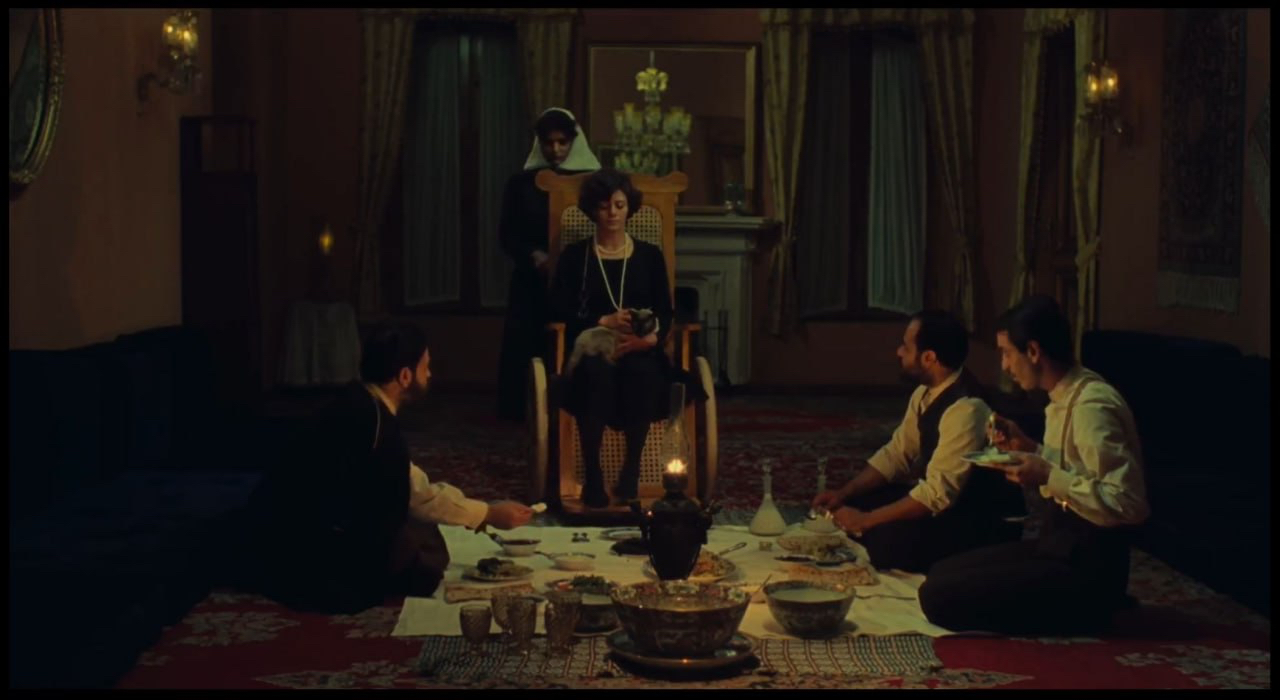
Figure 11: A still from the film Chess of the Wind (Shatranj-i Bād), directed by Muhammad Rizā Aslānī, 1976.
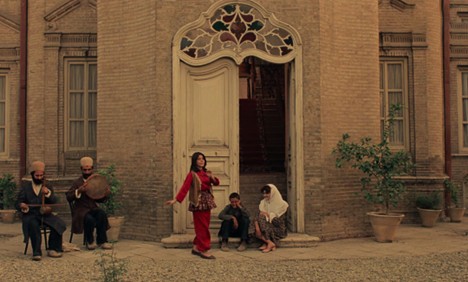
Figure 12: A still from the film Chess of the Wind (Shatranj-i Bād), directed by Muhammad Rizā Aslānī, 1976.

In a paradoxical manner, despite the chador’s dark hue and the prevailing sense of alienation in the urban landscape, the maid’s liberation from the manor house, allowing her to walk freely in the city, coupled with the beauty and greenery of the alley, anticipates a vision of the future for many traditional women in the years following the 1979 Revolution. Women, in a paradoxical manner, submitted to all the restrictions imposed upon them following the revolution, while simultaneously finding opportunities for progress, employment, and education outside the home.

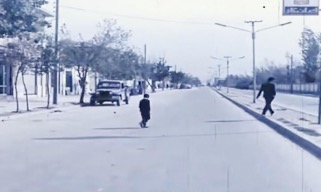
This sense of freedom becomes increasingly evident as the camera gradually distances itself from the veiled maid and the manor house of the late Qājār era, ascending to greater heights. Through its movement and cinematographic focus on the Plasco Building—a symbol of mid-Pahlavī modernist architecture—it articulates the trajectory of Tehran’s urbanization and transformation. This emphasis becomes even more pronounced when the camera comes to a halt in front of the Sāmān Twin Towers and the former Ministry of Agriculture building—modern structures from the late Pahlavī era—further reinforcing the narrative of Tehran’s transformation.47Chess of the Wind, dir. Muhammad Rizā Aslānī (Iran: Tehran, 1976), 00:99:00. Thus, the film concludes with shots that depict the telos of modernization at the time as the expansion of Tehran towards the northern part of the city. The call to dawn prayer, too, gets lost in the clamor of car engines. It seems that, at the end of the film, following all the violence, Aslānī elegantly captures a sense of void, weightlessness and flight; Beauties that evoke alternate realities that might exist within this city.

 In other words, in the final sequence of Chess of the Wind, the architecture of the urban space around Lālahzār Street and Firdawsī Square—featuring old yet beautiful buildings from the late Qājār and early Pahlavī periods—the beauty of the call to prayer, the flight of pigeons around the swamp coolers on the gabled roofs, and the tranquil solitude of early morning Tehran all merge to create a distinct atmosphere. This moment signals Aslānī’s vision of his future work, namely the film Tehran: Conceptual Art.

The contradictions of Tehran for the maid are revealed in this final scene of the film, which shows that this ostensibly beautiful and serene city is, in fact, constructed upon the suffering and pain of women. Through the departure from the house laden with violence and the tower crane camera shots, Aslānī endeavors to emancipate the maid, and symbolically all women, from their hardships at the dawn of a new, modernized city. This is where the recitation of Surah Al-Takāsur at the beginning of the film becomes meaningful:

It busied you with waging war against one another in multitudes,
until you counted the dead in their graves.

No, it must not be — no, never — to be distracted from the path of deliverance.

No, no, no — indeed, awaken, and be aware!48The film uses the Persian translation of the Surah Al-Takāsur by Abu al-Fazl Rashīd al-Dīn Maybudī, a 12th century Persian scholar, theologian, and commentator on the Quran. See Chess of the Wind, dir. Muhammad Rizā Aslānī (Iran: Tehran, 1976), 00:03:36.

The path to salvation here is the very reality of the city of Tehran and its beauties, which Aslānī later explores in Tehran: Conceptual Art.

  1. In quest of beauty; The synthesis of peace and wisdom (thesis) and hatred and anger (antithesis) as the aesthetic pursuit

The audience’s engagement with Aslānī’s cinema is deeply creative. This means that, based on the discussions outlined in the introduction and his three main filmmaking approaches (archaicism, formalist critique, and harsh realism), viewers—especially of his later works, such as Tehran: Conceptual Art and The Green Fire—have more freedom to interpret the films in their own ways, in betweenness of peace and wisdom (thesis) and bitterness and realism (antithesis). But how do viewers gain such freedom? The answer lies in Aslānī’s innovations in form, which continually engage the audience by maintaining a sense of suspense. He skillfully avoids an overemphasis on traditional Iranian customs, while simultaneously allowing viewers to retain a sense of optimism towards the beauty of the world, despite the bitterness and disillusionment present in contemporary global realities. Aslānī calls on us to liberate ourselves from the terrifying game of chess by seeking and discovering beauty in the world, thereby becoming conscious of the unending wars and the pervasive exploitation and oppression in the contemporary world. He writes:

Releasing more than six billion codes—thirsty codes, yearning to reveal their infinite poetic potential amid poverty, oppression, invisibility, absence, and the humiliation imposed by  chains that bind them—[to express] their boundless capacity for freedom, a potential that resides in the mind of God […].49Muhammad Rizā Aslānī, Dīgarkhānī-i Sīnimā-yi Mustanad (Tehran: The Documentary and Experimental Film Center, 2015), 59, 97. [Yet] in modernity, the signs of [this poetic nature and desire for liberation] were obliterated.50Muhammad Rizā Aslānī, Dīgarkhānī-i Sīnimā-yi Mustanad (Tehran: The Documentary and Experimental Film Center, 2015), 59.

Humans, from the maid to Nārdānah and Bahrām, possess the capacity to find beauty, a beauty that belongs to God. Or more precisely, it could be said that beauty is “universal intelligence,” as previously mentioned. Beauty, in this context, is “a reality = becoming.” From Aslānī’s perspective, beauty is an inherent potential or quality that exists within the mind of God; beauty is “universal intelligence,” or a reality embodied in cities like Tehran or Kerman, which transforms into a thousand different forms. The ultimate manifestation of this multifaceted beauty, and the ultimate purpose of this ever-evolving reality, is becoming—a becoming that aims toward the union of Nārdānah and Bahrām. The telos of becoming is also the connection of the city’s inhabitants with “public spaces” and providing them the opportunity to pause in the city’s “sidewalks” and “squares” in order “to find and see each other.” To this end, at the conclusion of Chess of the Wind, the camera optimistically focuses on the city’s newer buildings. Aslānī later invites his audience to encounter one another and explore the beauties of the National Museum of Iran or the Museum of Contemporary Art in Tehran—public spaces of the city.

Thus, “universal intelligence” helps Aslānī’s audience, who are in search of beauty, to attain freedom. By portraying beauty as “aesthetic rapture,” Aslānī aims to empower his audience to transition from the “reality [of Tehran] to its metaphorical image [like reflection on glass and the poetry describing the city].”51‛Alī Ranjī Pūr, “Az pīchīdagī-i jahān bih zībā’ī-shināsī-i Tihrān: Guftugū bā Muhammad Rizā Aslānī,” Insān-shināsī va Farhang, January 3, 2014. Accessed March 22, 2025. http://bit.ly/49oz04b. Thus, he liberates his audience’s imagination, allowing them to explore other potentials of the city. This constitutes a form of freedom through aesthetic experience, enabling them to uncover a beauty that has been concealed from them. Aslānī aims to free his audience from the harsh realities of the cities they live in and the institutions that negatively affect their lives and trap them. He seeks to rescue his audience from a killer modernity in cities such as Tehran, Hamedan, Kerman, and even at institutions such as Tarbīyat-i Mudarris University and Bank Millī. He believes they can be saved if they are able to perceive beauty in an alternate reality of Tehran—whether in the reflections of the city on its glass facades, the tranquility of its early morning, or in the romantic beauty of Nārdānah and Bahrām’s struggle to unite. Aslānī’s cinema is aesthetically profound, inviting us to uncover distinct forms of aesthetics that go beyond the conventional and ordinary beauty.
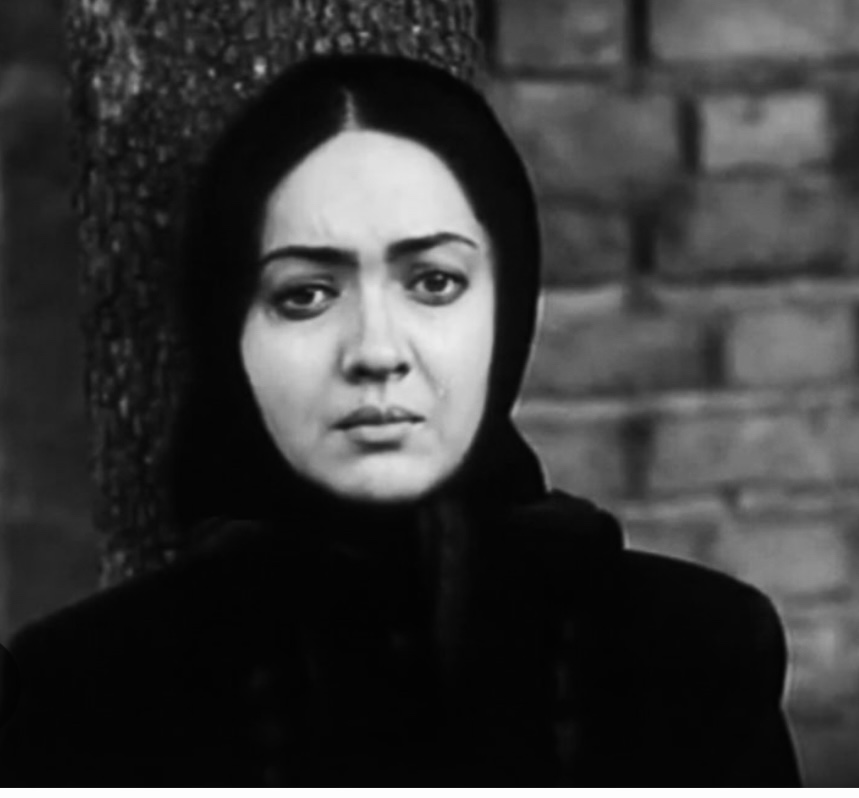
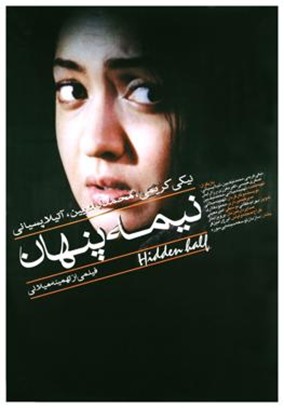
Tahmīnah Mīlānī’s The Hidden Half: The Art of Archetypes and Flashbacks

By

A sad little fairy dies at night from a kiss

And at dawn is re-born with a kiss

Reborn (Tavalludī Dīgar) by Furūgh Farrukhzād

Figure 1: Poster of the film The Hidden Half (Nīmah-yi Pinhān), directed by Tahmīnah Mīlānī, 2000.

In Tahmīnah Mīlānī’s film The Hidden Half (Nīmah-yi Pinhān, 2000), the narrative unfolds as a fictional account of a female activist’s personal history, encompassing the political upheaval of the 1979 Iranian Revolution, her romantic experiences, and her encounters with everyday life. The central plot focuses on a judge’s journey to Shiraz to visit a political prisoner facing execution. Concurrently, the judge discovers a hidden facet of his wife Farīshtah’s (Angel) past, as she recounts her own activist experiences through voice-over narration and diary flashbacks.

The judge, an American-educated envoy appointed by the reformist government’s newly elected president, is tasked with addressing the social injustices of the previous two decades by listening to grievances brought before the judiciary and potentially enacting reforms. Unbeknownst to him, his wife’s activism mirrors the struggles of the woman he is investigating—an ironic revelation only uncovered through her letters. Externally, the couple appears to lead a peaceful, middle-class life with their two children, yet their seemingly idyllic existence conceals Farīshtah’s hidden past as a member of a guerilla organization, kept for over two decades from the public and even her loving husband.

Tahmīnah Mīlānī faced charges of treason and threatening national security following her groundbreaking attempt to address the sensitive topic of leftist groups’ roles in early revolutionary uprisings. Her bold narrative approach, which challenged prevailing historiographies, quickly drew the ire of the government. Even two decades after the revolution, Mīlānī’s exploration of such contentious themes continued to provoke strong reactions, underscoring the enduring tension surrounding these historical and political subjects.

To a significant degree, The Hidden Half serves as a semiautobiographical reflection of its filmmaker, Tahmīnah Mīlānī. Like Farīshtah, Mīlānī began her journey as a political activist during her college years, when she too faced persecution for her beliefs.

Farīshtah’s youthful involvement with a guerrilla faction is portrayed with both naiveté and fervor, embodying a passionate idealism that may sound simplistic in her midlife. It is this idealism that contributed to her allure, including her appeal to the older gentleman she once loved, Rūzbah Jāvīd. Echoing elements of Makhmalbāf’s A Moment of Innocence (Nūn u Guldūn, 1996) The Hidden Half encourages a critical reevaluation of the idealistic past. Through its narrative, it critiques the repression that followed the revolution while also giving voice to histories and stories that had been silenced.

Following its release, The Hidden Half was swiftly labeled as seditious and subsequently banned. Tahmīnah Mīlānī faced severe repercussions, with Iran’s judiciary arresting and imprisoning her on charges of “abusing arts as a tool for actions to suit the taste of the counterrevolutionary and muhārib [those who fight God] grouplets.”1ADD CITATION Mīlānī’s empathetic portrayal of dissident organizations and political prisoners was interpreted as an endorsement of their oppositional stance, sparking strong condemnation from authorities. Her film’s reception underscores the fraught tension between artistic expression and political censorship in postrevolutionary Iran.2Hamīd Mazra‛ah, Farīshtah-hā-yi Sūkhtah: Naqd va Barrasī-i Fīlm-hā-yi Tāhmīnah Milānī (Tehran: Varjāvand, 2001), PAGE NUMBER?

Tahmīnah Mīlānī was fully aware of the potential political sensitivity surrounding The Hidden Half. In an interview with the World Socialist Website (WSWS), she acknowledged the risks, stating, “With The Hidden Half, I understood that it could lead to my arrest and imprisonment, but I was an established director and felt it was my duty to make this film. I had to do it for all those who had been exiled or killed.”3See Richard Phillips, “Iranian Filmmaker Faces Death Penalty in Upcoming Trial: Iranian Director Tahmineh Milani Speaks with WSWS,” World Socialist Web Site, September 29, 2006, accessed April 29, 2025, http://www.wsws.org/articles/2006/sep2006/mila-s29.shtml. After prominent international filmmakers, including Francis Ford Coppola and Oliver Stone, advocated for Tahmīnah Mīlānī by writing letters on her behalf, she was released from her week-long incommunicado detention. Her family endured several months of legal uncertainty and tension before the charges against her were ultimately dropped, bringing a resolution to her ordeal.4Richard Phillips, “Iranian Filmmaker Faces Death Penalty in Upcoming Trial: Iranian Director Tahmineh Milani Speaks with WSWS,” World Socialist Web Site, September 29, 2006, accessed April 29, 2025, http://www.wsws.org/articles/2006/sep2006/mila-s29.shtml.

Figure 2: Portrait of Tahmīnah Mīlānī, Iranian director.

Through her cinematic storytelling, Mīlānī reconstructed the lives of Farīshtah, the judge, and the imprisoned woman, prompting a critical reevaluation of the past. Her work engaged with the role of women in the revolutionary era and interrogated the complexities of female subjectivity in the sociopolitical context of revolutionary Iran through the use of cinematic storytelling techniques like flashbacks and creating archetypal characters.

Mirrors and Flashbacks

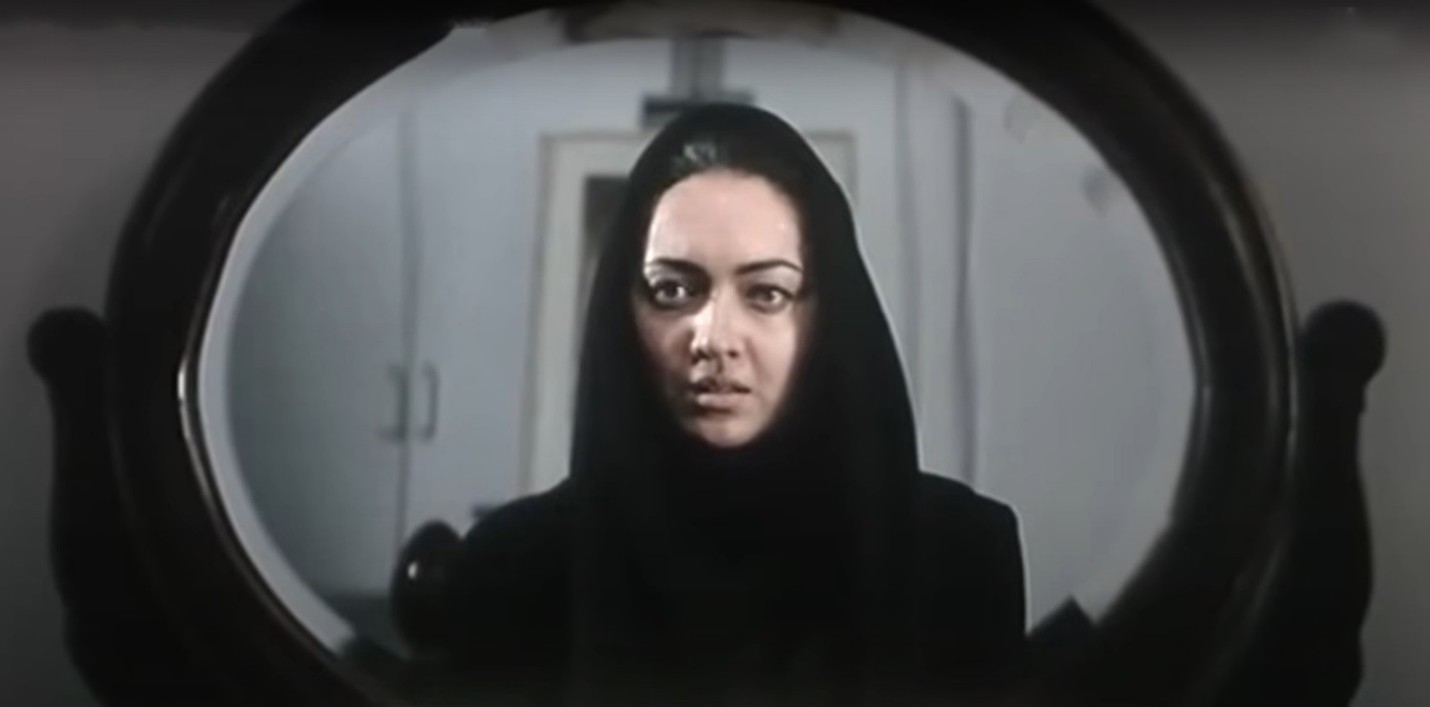
In The Hidden Half, the recurring use of mirrors as a visual precursor to the flashbacks is a deliberate and powerful storytelling device. The mirrors are employed not only to frame Farīshtah in moments of deep contemplation but also to signify her fragmented identity and the duality existing in her life. By reflecting her image, the mirror creates a meditative ambiance, allowing the audience to perceive Farīshtah as both a subject of the present and a vessel carrying memories of the past.

The coupling of mirrors and flashback technique serves an introspective purpose, urging the viewer to delve into the psychological layers of Farīshtah’s character. At the same time, it evokes an unsettling atmosphere, suggesting that her seemingly idyllic, present-day existence conceals a far more complex and untold reality. The mirror’s reflection becomes a metaphor for the hidden dimension of her life, inviting further investigation into her activist past and the secrets she has kept even from those closest to her.
Figure 3: The reflection of Farīshtah in the mirror. A still from the film The Hidden Half (Nīmah-yi Pinhān), directed by Tahmīnah Mīlānī, 2000. Accessed via https://www.youtube.com/watch?v=5gxPphnn_pQ (00:02:02).

Mīlānī’s use of mirrors emphasizes the act of looking inward while also creating an emotional dissonance, drawing attention to the tension between Farīshtah’s external appearance and her inner world. By intertwining this visual motif with the flashbacks, the film not only enhances its narrative depth but also challenges the audience to question the nature of identity, memory, and the stories that remain untold of the tumultuous past.

The film situates itself within the socio-political context of Muhammad Khātamī’s reformist government (1997–2005), a period marked by aspirations for civil liberties and inclusivity in Iran.5See Blake Atwood, Reform cinema in Iran: film and political change in the Islamic Republic, Columbia University Press, 2016, PAGE NUMBER This backdrop imbues the narrative with a deeper political resonance, as the crimes and injustices of the past are reinterpreted through the lens of the reformist agenda. The judge, portrayed by the late Ātīlā Pisiyānī, embodies this reformist ethos. As a conscientious envoy of the government, his role in addressing the appeal of a female prisoner on death row symbolizes the administration’s commitment to rectifying historical wrongs.

However, the irony lies in the convergence of the judge’s professional mission and his personal life. The prisoner’s case, emblematic of the unresolved injustices of the past, mirrors the hidden dimensions of his own wife Farīshtah’s activist history. This intertwining of the personal and political underscores the enduring impact of the past on the present, revealing how the silent histories of individuals resurface to challenge contemporary efforts at justice and reform. Through this narrative, the film critiques the complexities of addressing systemic injustices while navigating the personal and political entanglements that define them.
In her autobiographical letter, Farīshtah appeals to her husband not simply as a compassionate judge, but as a representative of justice in a reformist government—a government that professes ideals of moral integrity and pluralism. Her plea transcends the immediate case and calls for understanding and compassion devoid of biases and prejudices, emphasizing the importance of acting judiciously and conscientiously. Farīshtah’s act of revealing the shared experiences between herself and the political prisoner serves to humanize the prisoner’s plight, illustrating the denied possibility of redemption and the value of a second chance.

As Fakhreddin Azimi insightfully notes, Farīshtah’s intervention on behalf of the condemned woman “rekindles her submerged political commitment,” demonstrating that the struggles and sacrifices of the past—be it through love, activism, or risk-taking—can gain new meaning if they contribute to saving a life now threatened by rigid and ethically indifferent systems.6Fakhreddin Azimi, “The Hidden Half (Tahmineh Milani): Love, Idealism, and Politics,” in Film in the Middle East and North Africa: Creative Dissidence, ed. Josef Gugler (Austin: University of Texas Press, 2011), 72. By urging her husband to carefully examine the situation, she challenges him to uphold the principles of justice and reform that his government represents, and to transcend the bureaucratic banalities that have perpetuated harm in the past. Through this appeal, Farīshtah highlights the reformist judge’s responsibility not only to listen attentively but to act decisively with humanity and integrity, making her letter a powerful commentary on justice, morality, and the enduring legacy of personal and political commitments.

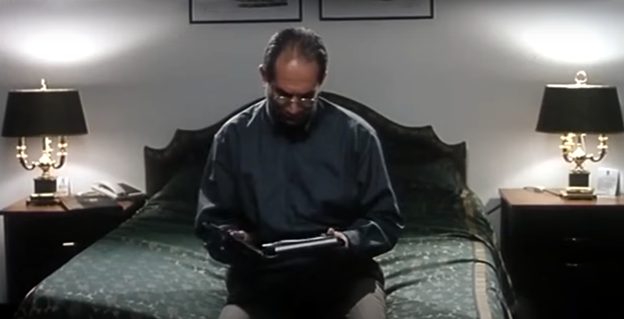
Farīshtah’s husband learns of her story not directly from her but in the silent process of reading her diary in a hotel room far from home, in the filmic form of a voice-over and multiple flashback scenes. It is Farīshtah’s voice from within the isolated hotel room, along with images, that narrates her past life, and the events that not only affected her “self” but impacted revolutionary Iran. The diary narration shows how she managed to overcome the odds, despite all political hurdles, and find refuge in an older woman’s house—a woman who would later become her mother-in-law—whereas the rest of her classmates met much worse fates: some were arrested, some fled into exile, some were sentenced to death by revolutionary courts, and some were executed. From the very outset, the juxtaposition of the imprisoned woman’s life seeking justice in the present day with that of the free Farīshtah leaves room for reflection, reassessment, and reevaluation of the historical events that led to the events.

Figure 4: Khusraw (played by Ātīlā Pisiyānī) reads Farīshtah’s diary. A still from the film The Hidden Half (Nīmah-yi Pinhān), directed by Tahmīnah Mīlānī, 2000. Accessed via https://www.youtube.com/watch?v=5gxPphnn_pQ (00:10:31).

In this vein, The Hidden Half juxtaposes present dilemmas with past political events, revisiting the revolutionary years when leftist factions were suppressed by the Islamic state. Farīshtah’s attire—a trench coat and wide pants—suggests her possible involvement with guerrilla movements, distributing pamphlets or preparing for armed resistance. These connections highlight the personal toll of political activism and the enduring impact of revolutionary struggles on individuals, urging a reconsideration of the view on historical injustices and to acknowledge their lasting echoes.

Archetypal Characters

The Hidden Half prompts a critical reassessment of an idealized past by employing archetypal characters. Among them is Mr. Rastigār (Salvation), the primary antagonist to Farīshtah during her academic years, who epitomizes the Islamic radical ideologues that spearheaded the “cultural revolution” in Iran between 1981 and 1984. During this period, universities were closed, and individuals like Rastigār—whose name ironically translates to “salvation”—emerged as figures of authority. Their unwavering commitment to a puritanical Islamic ideology led to the systematic Islamization of higher education, targeting faculty, students, and curriculum in the humanities and social sciences. The ideological purge aimed to eliminate individuals whose loyalty to revolutionary ideals was deemed suspect. Mr. Rastigār symbolizes the mechanisms of this Islamizing apparatus, overseeing the preservation of the dominant religious and ideological framework within academic institutions.

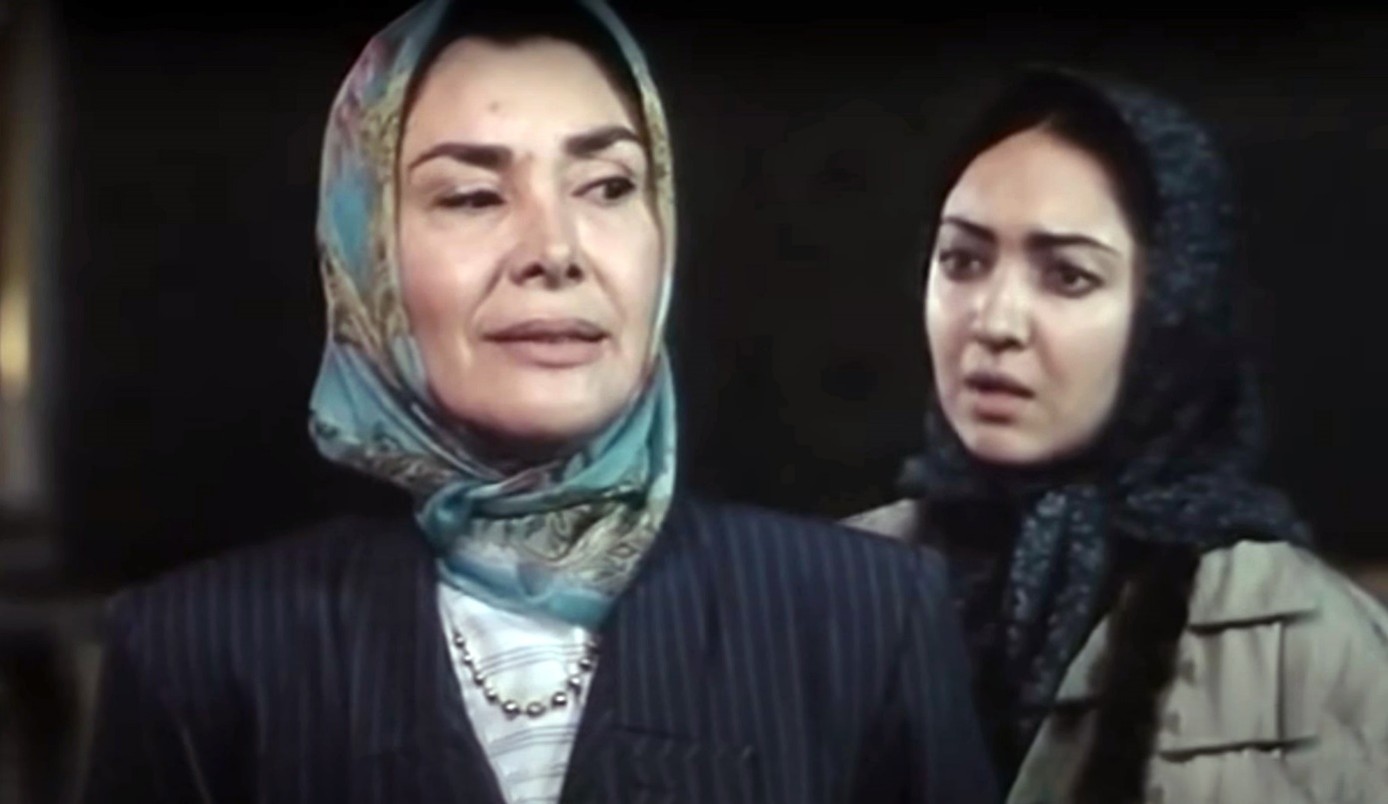
Figure 5: Mr. Rastigār with Farīshtah in the classroom. A still from the film The Hidden Half (Nīmah-yi Pinhān), directed by Tahmīnah Mīlānī, 2000. Accessed via https://www.youtube.com/watch?v=5gxPphnn_pQ (01:31:15).

Mīlānī portrays the reformist judge as an archetypal character embodying openness to change and progress, still within the dominant Islamic framework but with some more leniency. The judge’s gradual transformation is evident as he reads his wife’s diary, challenging his initial assumptions. Early in the film, he shares a collegial dynamic with Rastigār, but this shifts notably when Rastigār attempts to present his version of events, prompting the judge to continue engaging with his wife’s narrative instead. By the conclusion, the judge dismisses Rastigār during an interaction with the female political prisoner, signifying his evolving stance. This development reflects the reformist era’s ethos of reexamining past revolutionary decisions and embracing change.


Jāvīd (Eternity)

Rūzbah Jāvīd is another archetypal figure introduced through flashbacks that reveal his earlier love affair with the younger Farīshtah and his involvement in Iranian political activism. Azimi describes Jāvīd as enigmatic, exuding confidence, elegance, and gravitas, amplified by his reassuring demeanor. The film leaves Jāvīd’s origins and wealth ambiguous, aligning with his own critique of such values during a revolutionary speech. His ties to the Tūdah party are hinted at through the account of a woman claiming to be his wife, though his silence on this activism adds to his mystique. As editor of Science and Industry, Jāvīd’s connection with scholars and intellectuals underscores his significant role within cultural circles.

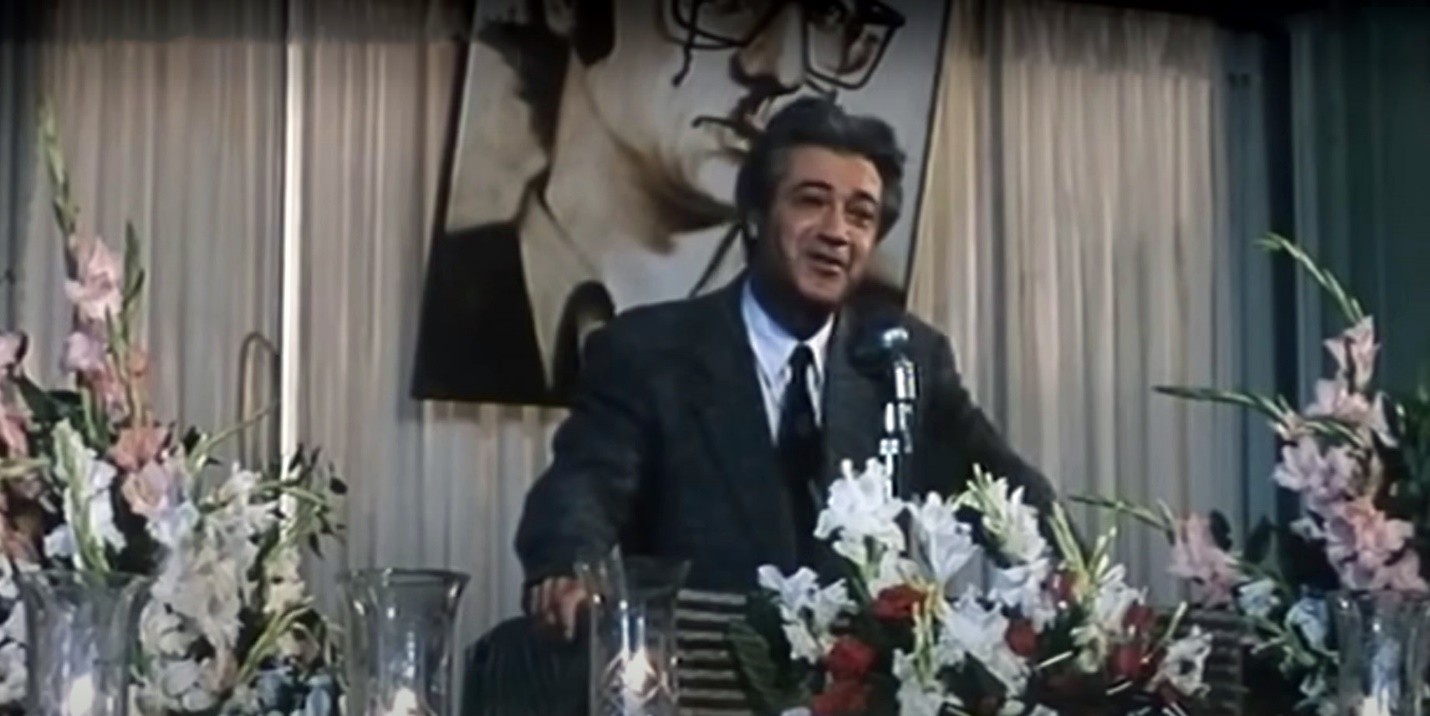
Figure 6: Rūzbah Jāvīd delivering a speech at a party. A still from the film The Hidden Half (Nīmah-yi Pinhān), directed by Tahmīnah Mīlānī, 2000. Accessed via https://www.youtube.com/watch?v=5gxPphnn_pQ (00:21:28).

Rūzbah Jāvīd actively establishes a link between the aristocracy and the everyday working and middle classes. This connection becomes evident when he proposes taking Farīshtah to England to live together in an egalitarian society. The narrative further enriches his role through the discovery of his marriage to a physically impaired wife (or ex-wife), symbolizing the fading aristocracy, and his earlier commitment to leftist activism, which adds depth to his bridging of social divisions.

Farīshtah’s love story unfolds within a hauntingly uncanny love triangle. She appears to be mistaken for Jāvīd’s first love, Māhmunīr—a woman who bears an extraordinary resemblance to Farīshtah and who vanished during the tumultuous events of the 1953 social movement. This resemblance not only deepens the psychological complexity of the narrative but also intertwines personal relationships with the larger political backdrop, highlighting the echoes of the past in the present. And presenting Farīshtah’s character as an archetypal one throughout history as well.

One of the most striking aspects of Rūzbah Jāvīd’s character is his agelessness, which reinforces his archetypal trait. When he reappears after two decades, his unchanged appearance creates a symbolic continuity across Iran’s social and political movements, from 1953 to 1979 and later to 1999. His mere presence serves as a bridge not only between these pivotal historical moments but also between the aristocratic elite and the everyday working and middle classes.

The director portrays Jāvīd as an archetypal figure representative of a generation of Iranians whose experiences and ideals set them apart from the other characters in The Hidden Half, each of whom embodies a distinct generational perspective within Iran’s political history. Jāvīd’s static composure and enduring presence evoke the collective memory of the 1953 coup and its aftermath—the overthrow of a prime minister who symbolized Iran’s national aspirations on the global stage. In doing so, Jāvīd becomes a living connection to this shared historical trauma, anchoring the past within the film’s contemporary narrative.

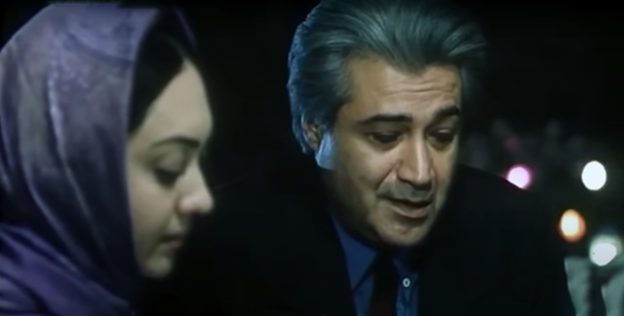
Figure 7: Rūzbah Jāvīd and Farīshtah talking at a party. A still from the film The Hidden Half (Nīmah-yi Pinhān), directed by Tahmīnah Mīlānī, 2000. Accessed via https://www.youtube.com/watch?v=5gxPphnn_pQ (00:52:09).

In a flashback, the young Farīshtah is shown rushing into Rūzbah Jāvīd’s Range Rover—a symbol of wealth and prestige in the early revolutionary period—upon encountering revolutionary guards at her doorstep. This scene vividly captures the profound fear she experiences, as the guards, presumed to be there to arrest her, embodying a dogmatic system that viewed even an eighteen-year-old student as a threat. This regime not only detained its youthful dissenters but sentenced many to death, exemplified by the imprisoned woman in Shiraz.

As mentioned earlier Mr. Rastigār, an early Hizballāhī, epitomizes fear and radical dogmatism, relentlessly shadowing Farīshtah from her college years to her married life. As an archetype of the uncompromising zealotry of early Islamic revolutionaries, his character underscores the film’s critique of their extremist pursuits. Although Mr. Rastigār ultimately fails to arrest Farīshtah or derail her academic pursuits, the recurring presence of his character across various scenes and historical periods accentuates his representation of pervasive fear.

In The Hidden Half, alongside Rastigār, a range of fear-inducing characters emerge, embodying the radicalism of the early revolutionary period. Among these is the infamous Zahrā Khānum, a real-life vigilante who initiated a witch-hunt campaign on Tehran University’s campus after the Islamic Revolution. Known for her rudimentary tactics of opposition, such as using sticks and fists against politically active students, Zahrā Khānum is portrayed in the film for the first time in a postrevolutionary context with depth and nuance, shifting her from a caricatured radical to a figure of serious contemplation.

In her scenes, Zahrā Khānum is accompanied by revolutionary guards, or komitehis, notorious for their suppression of dissenting voices. These guards would disrupt peaceful student gatherings, target activists distributing political flyers, and ultimately detain individuals with affiliations to leftist groups. Together, Zahrā Khānum and the kumītahis create an archetype of oppressive forces that stifled intellectual and political freedom, evoking the pervasive atmosphere of fear in the early years of the revolution. Zahrā Khānum, in particular, becomes a symbol of the threat faced by students navigating these turbulent times.

Figure 8: Zahrā Khānum, accompanied by the revolutionary guards known for suppressing dissent and targeting activists. A still from the film The Hidden Half (Nīmah-yi Pinhān), directed by Tahmīnah Mīlānī, 2000. Accessed via https://www.youtube.com/watch?v=5gxPphnn_pQ (00:52:38).

The archetypal characters in The Hidden Half are indeed crafted not to confine the narrative to simplified tropes but to widen the lens to encompass a more comprehensive sociopolitical landscape. By embodying broader dynamics—fear, radicalism, and social divisions—these figures serve as conduits for exploring the complexities of revolutionary Iran and its multifaceted history. Their presence encourages viewers to engage with the layers of political, cultural, and personal tensions throughout Iran’s postrevolutionary history rather than reducing them to singular, isolated events. It is a thoughtful narrative approach that adds depth and resonance to the film.

Farīshtah, like the other characters in The Hidden Half, embodies an archetype—specifically, that of a politically active woman with a distinct worldview. The revelation of her past ideological leanings exposes her political stance. However, the reformist government offers a glimmer of hope for societal progress, and it is this optimism that compels Farīshtah to share her story. She urges her husband to move beyond ideological stereotypes and rigid judgments, advocating instead for an evaluation grounded in facts and personal life trajectories that reflect her own experiences.

The narration of past events in The Hidden Half is delivered through Farīshtah’s voice-over, which goes beyond being merely her personal voice. It becomes emblematic of revolutionary Iran and connects her directly to the female prisoner in Shiraz. The film establishes this parallel by having the faceless, chador-clad woman begin her plea to the judge with the same opening words and the same dramatic tone as Farīshtah’s voice-over. This deliberate mirroring underscores their shared struggles and highlights the broader sociopolitical themes interwoven into their stories.

By drawing a deliberate connection between the female protagonist and the imprisoned woman, Mīlānī critiques the justice system’s treatment of early revolutionaries, particularly the prolonged incarceration and life sentences imposed on young activists. Beyond institutional critique, the film delves into the broader, more universal flaw of humanity’s tendency toward judgment without full understanding.

This theme culminates in the chance reunion of Farīshtah and Jāvīd, where Jāvīd admonishes Farīshtah for forming judgments before uncovering all the facts. Yet, the film deliberately leaves unresolved questions: Was Jāvīd’s ex-wife (or wife?) deceitful in her account of his past, or did she simply present an alternative version of the truth? Could undisclosed details have altered Farīshtah’s fateful decision to decline Jāvīd’s invitation to London? Similarly, the fate of the female prisoner remains unknown. Did Farīshtah’s diary influence the judge’s decision? Was the life sentence upheld, or did it offer a chance for redemption? These lingering ambiguities ensure that the narrative remains open-ended, encouraging reflection on concepts of judgment, truth, and justice across individual and societal dimensions.

Figure 9: Farīshtah meets Jāvīd’s wife. A still from the film The Hidden Half (Nīmah-yi Pinhān), directed by Tahmīnah Mīlānī, 2000. Accessed via https://www.youtube.com/watch?v=5gxPphnn_pQ (01:09:29).

The unresolved conclusion of The Hidden Half, leaving the impact of Farīshtah’s revelations on the female prisoner uncertain, creates a deliberate space for introspection. These lingering ambiguities invite the audience to contemplate profound themes such as justice, the act of judging, and the pervasive tendency toward being judgmental. By emphasizing the open-ended nature of the story, the film prompts reflection on the essential responsibilities and moral complexities faced by judges in contemporary Iran, and anyone else who needs to judge a situation. This intentional lack of closure transforms the narrative into a broader critique of societal and judicial systems while challenging the viewer to examine these concepts more deeply.

Conclusion

“Ah…

This is my share,

This is my share,

my share is the sky that a hanging veil takes it away from me,

my share is descending isolated stairwells,

and to be dispatched to exile and ruin,

my share is a tragic leisurely walk in the garden of memories,

and transpiring in the sadness of a voice that says,

I love your hands.”

Reborn (Tavalludī Dīgar) by Furūgh Farrukhzād

The ambiguous ending of The Hidden Half, along with its intricate layers of meaning, invites diverse, dynamic interpretations that challenge the established order and emphasize fragmented subjectivity. While the questions raised in The Hidden Half are vital for understanding the complexities of the historical period, its critique—particularly the suggestion that early revolutionary purges may have been flawed—presented a narrative that the revolutionary Ministry of Culture and Islamic Guidance (MCIG), and some other institutions, found intolerable. This opposition underscores the film’s audacious challenge to dominant historical interpretations, highlighting its subversive approach in addressing sensitive and often suppressed aspects of revolutionary history.7See Fakhreddin Azimi, “The Hidden Half (Tahmineh Milani): Love, Idealism, and Politics,” in Film in the Middle East and North Africa: Creative Dissidence, ed. Josef Gugler (Austin: University of Texas Press, 2011), 63–73.

Through its narrative, The Hidden Half unveils a history that had remained untold, offering others an insight into the struggles of women in post-revolutionary Iran as they navigated multiple identities—often at the expense of personal, social, and political aspirations. This struggle is depicted poignantly as women grapple with their desires within the constraints of societal norms. As Ziba Mir-Hosseini articulates, the film reflects “younger voices demanding personal freedom and questioning the whole notion of feqh-based gender relations.”8Ziba Mir-Hosseini, “Iranian Cinema: Art, Society and the State,” Middle East Report 229 (Summer 2001): 26–29.

Much like Farīshtah, numerous Iranian women navigate the intricate and often contradictory realities of urban life, where their identities are shaped by their ability to confront and overcome the social, political, and cultural hurdles of their daily existence. These identities emerge as multifaceted constructs, crafted both by societal expectations and the women’s own understandings of what is deemed acceptable. However, this identity formation is not static; it involves a continuous process of negotiation, driven by societal transformations that largely unfold independently of their agency rather than in collaboration with them.

In The Hidden Half, the process of reassessing one’s past transcends the personal and individual realm, becoming a societal and judicial imperative. The film presents the act of feminine reevaluation as a profound tool capable of informing judgment, even to the extent of overturning a life sentence. By shedding light on a feminine past—a narrative often overlooked yet integral to Iran’s historical and cultural fabric—the film highlights its continuing influence on the present. As a result, The Hidden Half not only critiques the mechanisms of justice but also emphasizes the essential role of women’s experiences and histories in shaping collective understanding and progress, making it a vital work of both cultural and cinematic significance.

Farīdūn Rahnamā’s Filmic Utopia in Iran’s Son Is Unaware of His Mother

By


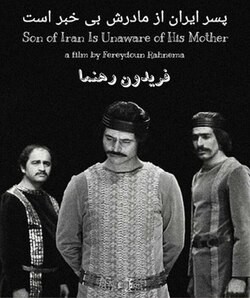
Figure 1: Poster for the film Pisar-i Īrān az Mādarash Bī-ittilāʿ Ast (Iran’s Son Is Unaware of His Mother), directed by Farīdūn Rahnamā, 1976.

Introduction

Farīdūn Rahnamā’s Pisar-i Īrān az Mādarash Bī-ittilāʿ Ast (Iran’s Son Is Unaware of His Mother, 1976) stands as a vital, if underexplored, artifact of Iranian modernist cinema. In this ambitious and highly symbolic work, Rahnamā interrogates the fractured relationship between contemporary Iranian identity and the country’s mytho-historical past. The film follows a young playwright and director who struggles to finance and stage a new theatrical production—a historical drama set during Iran’s Ashkānid (Parthian) period, which lasted from approximately 247 BC to 224 AD. As he attempts to bring his vision to life, he encounters resistance on several fronts: financial constraints, ideological disagreements, and personal tensions.

This film, Rahnamā’s second and final feature before his untimely death at the age of forty-five in 1975, continues the thematic exploration initiated in his earlier works, including the poetic documentary Takht-i Jamshīd (Persepolis, 1960) and the experimental feature Siyāvash dar Takht-i Jamshīd (Siyavash in Persepolis, 1965). In all three, Rahnamā is less concerned with narrative cohesion than with evoking a certain spiritual and philosophical crisis—namely, the loss of historical continuity and the fragmentation of Iranian identity in the face of modernization.

In Iran’s Son Is Unaware of His Mother, a young director writes a play about faith during the Parthian (Ashkānid) era, with the intention of staging it in collaboration with a theater troupe. His thirst for exploring the fabric of history creates a conflicted situation for him. His girlfriend and fellow theater collaborator believes that one cannot pursue such a quest without abandoning personal attachments. The young man puts all his effort into staging the play, but the troupe members, protesting his authoritarian behavior as a director, write a letter demanding that the play be made more populist and stripped of its aristocratic elements. After parting ways with the troupe, he and his girlfriend decide to stage the play on their own.

Figure 2: A still from the film Pisar-i Īrān az Mādarash Bī-ittilāʿ Ast (Iran’s Son Is Unaware of His Mother), directed by Farīdūn Rahnamā, 1976.

A poet, thinker, and one of the seminal figures of the Iranian New Wave, Rahnamā’s work is distinguished by its rejection of strict boundaries between myth, history, and the present. In Iran’s Son Is Unaware of His Mother, this refusal to draw clean lines manifests formally and thematically. Mythology and history are not merely evoked as subject matter; they are integrated into the very fabric of the film’s narrative structure and visual symbolism. The result is a dense, reflexive meditation on the impossibility of staging history in the modern world and on the alienation of the Iranian artist from both past and present. As in his earlier film Siyavash in Persepolis, the layering of ancient mythology onto contemporary settings suggests that these myths remain active, even if not always visible, in the modern psyche.

Filming began in 1969, but it took nearly five years to complete, with the film ready for release in 1974. It was first screened in June 1975 at the Cinémathèque in Paris, introduced by Henri Langlois—the director of the Cinémathèque and a prominent French film critic—and then later that July at the Tūs Festival in Iran.

Narrative Structure in Iran’s Son Is Unaware of His Mother

In Iran’s Son Is Unaware of His Mother, Farīdūn Rahnamā constructs a dual-layered narrative that unfolds across two interwoven planes. One layer focuses on the rehearsal of a historical stage play about the Parthians, following the actors’ performances and their engagement with the mythic past. The second, more intimate layer traces the personal life and artistic struggles of the director—an alter ego for Rahnamā himself—as he attempts to realize his ambitious theatrical vision amid growing resistance from his collaborators. The actors, objecting to what they perceive as the aristocratic tone and elitist themes of the play, push for a more accessible and commercially oriented production. Unwilling to compromise his artistic principles, the director refuses these demands, ultimately allowing them to leave the project.

Figure 3: Sādiq Muqaddasī and Rizā Zhiyān in a scene from the film Pisar-i Īrān az Mādarash Bī-ittilāʿ Ast (Iran’s Son Is Unaware of His Mother), directed by Farīdūn Rahnamā, 1976.

The film shifts fluidly between these two dimensions: between performance and reality, myth and modernity, history and the present. To mark these distinctions, Rahnamā uses a striking formal device: color. In a deliberate inversion of cinematic convention, the rehearsal scenes, representing the imagined or mythologized past, are presented in color, while the director’s everyday life, shot in grainy black and white, reflects the somber texture of contemporary existence. This use of color inversion emphasizes how the past, feels more vivid, alive, and aspirational than the fragmented and disenchanted present.

This approach contrasts with Rahnamā’s earlier film Siyavash in Persepolis, where color and black-and-white footage serve a more conceptually layered function. There, color enters only through the lens of German documentarians filming the ruins of Persepolis, signifying an exoticizing, external gaze, while Rahnamā’s own footage, representing an internal, indigenous perspective, remains in black and white. In Iran’s Son Is Unaware of His Mother, however, color is used more literally to mark shifts in narrative mode rather than in perspective or ideology.

At the heart of the film lies a series of tensions: between the artist’s elevated historical imagination and the political or emotional demands of the present; between intellectual idealism and the pragmatic expectations of his audience; and between the desire to preserve cultural memory and the difficulty of making it resonate in a contemporary context. These tensions manifest through interpersonal conflicts: the cast and crew challenge the director’s aristocratic treatment of history and push for a more accessible, populist version of the play. His girlfriend and theatrical partner, Rushanak, expresses skepticism about the relevance of his historical fixation, questioning whether one can truly pursue liberty or meaning through the distant past while ignoring the emotional urgencies of the present.

Rather than culminating in a completed theatrical performance, the film ends with fragmentary images and symbolic gestures. In one of the final scenes, Rushanak appears alone onstage, delivering a poetic monologue about their collective struggle for liberty ⸺ a moment that blurs the boundary between political theater and personal testimony.1Iran’s Son Is Unaware of His Mother, dir. Farīdūn Rahnamā (Iran, 1976), 01:04:21-01:05:48.

Figure 4: Āhū Khiradmand as Rushanak in a scene from the film Pisar-i Īrān az Mādarash Bī-ittilāʿ Ast (Iran’s Son Is Unaware of His Mother), directed by Farīdūn Rahnamā, 1976.

The audience’s reaction is notably ambivalent: while some applaud her speech, others rise from their seats and exit the hall in protest, voicing disapproval or disengagement. This mixed response becomes a mirror of the divided reception Rahnamā himself anticipated or experienced between admiration and rejection, resonance and resistance. Meanwhile, the director, dressed in ashk or the Parthian commander’s costume, is seen in a phone booth receiving a long-distance call about his play. These closing moments deny any narrative closure. The play is neither fully staged nor entirely abandoned. Instead, the viewer is left with echoes, symbols, and unresolved gestures. The telephone call, possibly from abroad, adds a layer of irony, suggesting the external validation the director never receives at home. The boundary between performance and reality, between myth and mundane life, remains porous and unsettled.

Figure 5: A still from the film Pisar-i Īrān az Mādarash Bī-ittilāʿ Ast (Iran’s Son Is Unaware of His Mother), directed by Farīdūn Rahnamā, 1976. Accessed via https://www.youtube.com/watch?v=0zoNXukBHk0 (01:06:59).

Thus, Rahnamā’s narrative structure resists linear resolution. It is composed of ruptures, disjunctions, and reflexive folds. The director does not triumph or fail in any conventional sense. Rather, he remains suspended between a vanished past and an ungraspable present. The mythic aspirations of his play contrast starkly with the banal struggles of production, mirroring the broader condition of Iranian intellectuals caught between nationalism, nostalgia for cultural grandeur and the alienation of modern life. This dynamic is explored in Ali Mirsepassi’s Intellectual Discourse and the Politics of Modernization (2000), where he examines the intellectual’s role in negotiating between mythic national narratives and the socio-political realities of contemporary Iran. Mirsepassi notes the deep nostalgia among Iranian intellectuals for the “lost world of the past” and a yearning for retribution against those perceived to have destroyed it. He writes: “The anti-Western nostalgia among Iranian intellectuals was symbolized through the concept of Gharbzadegi (Westoxication). The romanticism of the Islamic and Iranian traditions induced a very hostile reaction against modernization as a Western-centered project. The romanticism of the Gharbzadegi discourse embodied an image of modernity that could only be realized in the context of Iranian national settings.”2Ali Mirsepassi, Intellectual Discourse and the Politics of Modernization (Cambridge University Press, 2000), 77.

Similarly, Mehrzad Boroujerdi, in Iranian Intellectuals and the West (1996), analyzes how modern Iranian thinkers constructed a nativist vision of an idealized, uncorrupted culture free from Western influence. According to him, “The knowledge of self was attained through a noncritical, nostalgic appropriation of one’s own historic past. Whereas some took refuge in the glory of pre-Islamic Persia, others idolized the country’s religious and mystical traditions.”3Mehrzad Boroujerdi, Iranian Intellectuals and the West (Syracuse University Press, 1996), 135. In his assessment, “Its nostalgia for the past, attachment to things native, idealization of identity, and ethical-romantic rejection of modernity are all problematical.”4Mehrzad Boroujerdi, “Gharbzadegi: The Dominant Intellectual Discourse of Pre- and Post-Revolutionary Iran,” In Iran: Political Culture in the Islamic Republic, ed. Samih K. Farsoun and Mehrdad Mashayekhi (Routledge, 2005), 35.

These frameworks help situate the film’s inner conflict within a larger cultural discourse on artistic and ideological dislocation.

Identity Crisis and Alienation

Iran’s Son Is Unaware of His Mother delves deeply into the crisis of identity in modern Iranian society, positioning this existential disorientation in direct relation to the nation’s fragmented relationship with its mytho-historical past. Farīdūn Rahnamā’s approach is neither nostalgic nor didactic; instead, it is self-consciously reflective, often blurring the lines between history and myth, fiction and documentary, performance and reality. His protagonist, the young playwright, emerges not only as an individual artist but as a symbolic figure, a proxy for the modern Iranian intellectual seeking coherence in a disjointed cultural landscape.

The title Pisar-i Īrān az Mādarash Bī-ittilāʿ Ast (Iran’s Son Is Unaware of His Mother) is an evocative allegory drawn from a real newspaper headline: a woman searching for her lost son, or perhaps vice versa. In Rahnamā’s poetic recontextualization, this literal headline becomes a metaphor for the fractured relationship between modern Iranians and their cultural and historical roots. The mother becomes the motherland, Iran, and the son who has no news of his mother stands in for modern Iranians who, estranged from the maternal figure of their cultural origins, wander in search of a history that no longer speaks to them. This disconnection is the emotional and philosophical core of the film. Rahnamā explores the alienation of the Iranian intellectual in a society that no longer recognizes its own history, let alone its mythic consciousness. In this sense, Iran’s Son Is Unaware of His Mother serves as a sequel or spiritual continuation of his earlier film Siyavash in Persepolis. In both, the central figure is a disillusioned artist-intellectual, a stranger to his own culture, misunderstood by his peers, and tragically out of step with a society that has lost the ability to remember.

By depicting rock-and-roll music, Western fashion, and a generation immersed in foreign habits, Rahnamā dramatizes the dissonance between past and present. His critique is not moralistic but mournful, a recognition that history has become a museum artifact, removed from the living memory of the people. Museums and theater stages are now the only places where Iran’s myths and epics continue to exist.

Figure 6: Sādiq Muqaddasī, Rizā Zhiyān, and Āhū Khiradmand in a scene from the film Pisar-i Īrān az Mādarash Bī-ittilāʿ Ast (Iran’s Son Is Unaware of His Mother), directed by Farīdūn Rahnamā, 1976.

One of the central themes of the film is the dissonance between national memory and lived experience. The playwright’s desire to stage a grand historical drama from the Ashkānid period represents a longing to reclaim a pure, heroic past. However, this desire is met with skepticism by those around him. His partner’s reminder that one cannot sever ties with daily interpersonal realities when engaging with the past gestures toward a larger philosophical argument: history is not an abstract entity to be resurrected at will, but a living, contested domain entangled with contemporary ethics and relationships.

Rahnamā’s Utopian Vision and Historical Longing

The opening sequence of Iran’s Son Is Unaware of His Mother immediately situates the film within a utopian and historiographical framework that was characteristic of many Iranian New Wave filmmakers during the 1960s and 1970s. The film begins with a static shot accompanied by the sound of a typewriter. A hand (presumably Rahnamā’s) places photographs of ancient Iranian monuments such as Persepolis on a desk, followed by images of contemporary rural villagers. This sequence visually bridges Iran’s mythic past with its present, signaling the film’s underlying concern with historical continuity and rupture.

Figure 7: A still from the film Pisar-i Īrān az Mādarash Bī-ittilāʿ Ast (Iran’s Son Is Unaware of His Mother), directed by Farīdūn Rahnamā, 1976. Accessed via https://www.youtube.com/watch?v=0zoNXukBHk0 (00:00:46).

Layered over these images is a voiceover conversation between two unidentified men. One voice, likely Rahnamā’s, expresses a curiosity about Iran’s fate after its defeat by Alexander the Great. The other voice replies with resigned insistence: “It’s all the same. I’ve been saying for years, it’s all the same.” This dialogue encapsulates Rahnamā’s melancholic view of Iran’s historical destiny: a cycle of repeated invasions, cultural fragmentation, and the lingering ruins of a once-glorious civilization.

Shortly afterward, Rahnamā’s hand enters the frame again to write a quotation from René Grousset: “Iran is the threshold of the West and also the threshold of the East, a bridge between East and West.”5Iran’s Son Is Unaware of His Mother, dir. Farīdūn Rahnamā (Iran, 1976), 00:02:18-00:02:40. This statement captures Rahnamā’s utopian imagination of Iran as a civilizational mediator, a lost cultural fulcrum positioned between two worlds. The gesture reflects a nostalgic idealism about Iran’s historical role and signals the broader intellectual mood among Iranian New Wave filmmakers, who frequently sought a “lost object” in the nation’s past, a utopian essence that could inspire a cultural and political future. This outlook extended beyond cinema, resonating with the historical consciousness of many Iranian intellectuals during the Pahlavī era who desired to reconnect with a pre-Islamic grandeur while simultaneously modernizing the nation.

Figure 8: A shot of Farīdūn Rahnamā’s hand as he writes notes representing the filmmaker’s presence within the narrative. Pisar-i Īrān az Mādarash Bī-ittilāʿ Ast (Iran’s Son Is Unaware of His Mother), directed by Farīdūn Rahnamā, 1976.

However, while Rahnamā’s vision intersects with the Pahlavī state’s own efforts to revive the glory of ancient Persia, exemplified by the 2500-year celebration of the monarchy, it remains distinct in tone and intent. Unlike the regime’s often chauvinistic and instrumental use of history, Rahnamā’s engagement with the past is more reflective and existential. His approach mourns a fractured identity and critiques both Western hegemony and local loss of agency.

Notably, Rahnamā universalizes this identity crisis. Within the play that unfolds inside the film, a Greek general confesses to his Persian counterpart that the Greeks are also facing decline. Their cultural dominion is being displaced by the “uncivilized” and rising Romans. Here, Rahnamā expands the theme of civilizational decline beyond Iran, suggesting that imperial decay and historical displacement are universal conditions rather than uniquely Iranian. This mirrors the anxieties of a postcolonial world grappling with fractured identities and the specter of lost empires.

Nativism, Otherness, and the Search for Self

The historical play that the director intends to perform is not coincidental. It marks a symbolic moment of cultural confrontation: the first major point at which Iranian and Western civilizations met in conflict and negotiation. The Greeks in the play represent the West; the Parthians stand for a struggling Iranian identity attempting not merely to resist but to comprehend the “other” in order to understand itself. In this framework, history is not treated as a distant object of curiosity, but as a living metaphor for the dilemmas of the present. In one pivotal moment, a Greek commander addresses the Parthian leader with biting clarity: “You are defending the people who see you as a stranger and they obey us. You are defending an imaginary freedom.”6Iran’s Son Is Unaware of His Mother, dir. Farīdūn Rahnamā (Iran, 1976), 00:43:53-00:44:23. This line crystallizes Rahnamā’s diagnosis of the modern Iranian condition: a citizen cut off from their own culture, who neither resists foreign domination nor recognizes the worth of native traditions. The protagonist identifies deeply with his historical character, much like Siyāvash in Siyavash in Persepolis and, disturbingly, feels more affinity with the foreign commanders than with his own people. In another striking line, a Greek character warns, “The rule in this land has been and is based on dictatorship, and this is why this land is going to be destroyed; don’t you ever forget it.” These moments of inter-historical dialogue transcend period authenticity, functioning as philosophical meditations on Iran’s cyclical political failures and cultural amnesia.

Figure 9: Sādiq Muqaddasī in a scene from the film Pisar-i Īrān az Mādarash Bī-ittilāʿ Ast (Iran’s Son Is Unaware of His Mother), directed by Farīdūn Rahnamā, 1976.

Crucially, Rahnamā’s engagement with history is never chauvinistic. Though passionately committed to the preservation of Iranian cultural identity, he resists any essentialist or exclusionary nationalism. He was no xenophobe; he spent years in Europe, wrote and published in French, and maintained a philosophical openness to the West.7Farīdūn Rahnamā’s intellectual orientation reflected a rare synthesis of Iranian cultural consciousness and Western philosophical inquiry. In addition to his filmmaking, Rahnamā wrote and published poetry in French, including Ode a la Perse (1951), Ode au monde (1955), Poèmes anciens (1959) and Chant de délivrance (1968), works that reveal both his literary ambition and his engagement with broader intellectual currents. Unlike many intellectuals of the 1960s, who adopted a resolutely anti-Western stance, Rahnamā was not anti-Western; rather, he believed in the possibility of coexistence and dialogue between Iranian and Western intellectual traditions, a theme that runs throughout his cinematic work. While deeply concerned about the erosion of Iranian historical and cultural identity, Rahnamā sought to raise critical questions about national memory and belonging. Rahnamā, though sympathetic to critiques of superficial Westernization, avoided the essentialist dichotomies espoused by figures such as Jalāl Āl-i Ahmad. Like Āl-i Ahmad, he was troubled by the disorienting effects of unrooted Western influence on Iranian society, yet his response was more philosophically measured. His engagement with the West did not signal an uncritical embrace but rather a dialogical openness grounded in introspection and cultural self-awareness. As Henri Corbin observed, Rahnamā’s position was complex: he remained firmly anchored in the metaphysical and spiritual traditions of Iran while remaining intellectually receptive to Western thought, seeking synthesis rather than rejection.8See “Chihil sāl pas az khāmūshī-i Farīdūn Rahnamā,” Iranian Studies, 19 March 2016, accessed August 09, 2025, https://iranianstudies.org/fa/1394/12/29/. In one poignant moment in the film, the protagonist asks: “In this land, I saw oblivion that covered everything. Where is Iran? What is Iran?” These are not rhetorical questions; they are existential ones. Through such inquiries, Rahnamā underscores the dangers of historical amnesia and the neglect of cultural identity. In this sense, Rahnamā is more of an “archaeological” thinker than a nationalist. He digs into layers of historical sediment not to glorify them but to understand what has been lost, what has been forgotten, and what might still be recovered through art. His cinema is a form of intellectual excavation. His characters, alienated and misunderstood, embody a deeper social malaise: the estrangement of a society from its own historical consciousness.

Figure 10: Sādiq Muqaddasī as the director in a scene from the film Pisar-i Īrān az Mādarash Bī-ittilāʿ Ast (Iran’s Son Is Unaware of His Mother), directed by Farīdūn Rahnamā, 1976.

Rahnamā’s Meta-Cinematic Approach and Self-Reflexivity

The protagonist of Iran’s Son Is Unaware of His Mother, a young playwright and director, serves as a surrogate for Farīdūn Rahnamā himself. Fascinated by the Ashkānid (Parthian) period, he is determined to stage a historical drama about the conflict between the Parthians and the Greeks. Rahnamā’s treatment of this material is deeply meta-cinematic: the film continually collapses the boundary between fiction and reality, performance and process, history and the present. The viewer sees the protagonist develop, rehearse, and attempt to stage a play, while the world around him echoes and critiques the very themes of the performance.

This layering of theatricality and everyday life constructs a self-reflexive narrative framework. It becomes a conversation between fact and fiction, between past and present, between history and the routines of contemporary life. What emerges is not only an intellectual exploration of history but a psychological portrait of an artist struggling with his environment, his collaborators, and himself. Rahnamā inserts himself into the film in multiple, deliberate ways. His physical hand appears writing quotations and poetic fragments. Rahmana himself dubs the voice of the protagonist. The protagonist’s room is Rahnamā’s actual room. These self-insertions function not just as metafictional gestures, but as personal confessions. They reflect his vulnerability and isolation as a filmmaker whose experimental methods and historical themes stood in opposition to both commercial cinema and the dominant ideological currents of the time. In the context of 1960s Iran, these dominant currents were shaped by a growing anti-Western sentiment, most prominently articulated by intellectual figures such as Jalāl Āl-i Ahmad and ‛Alī Sharī‛atī. Āl-i Ahmad’s concept of “Gharbzadigī” (Westoxification) critiqued Iran’s cultural and political dependency on the West, calling for a return to indigenous values.9See Jalāl Āl-i Ahmad, Occidentosis: A Plague from the West, trans. by R. Campbell (Berkeley: Mizan Press, 1984). Similarly, Sharī‛atī’s writings promoted a radical Islam that rejected both Western liberalism and Marxist materialism in favour of an ideologically authentic Iranian-Islamic identity. These prevailing discourses, which emphasized cultural authenticity and political resistance to Western influence, are explored in depth by Mehrzad Boroujerdi in Iranian Intellectuals and the West (1996), and by Ali Mirsepassi in Intellectual Discourse and the Politics of Modernization (2000). In this intellectual climate, Rahnamā’s formally avant-garde and historically reflective cinema, rooted neither in nationalist nostalgia nor in religious revivalism, found itself at odds with the prevailing discourses.

Rahnamā’s self-awareness extends beyond stylistic devices and becomes a critical dialogue with his own society. Throughout the film, members of the theater troupe, including actors and producers, voice their dissatisfaction with the director’s approach, criticizing his lofty treatment of historical material, the aristocratic tone of the play, and his disconnection from ordinary people. These characters effectively voice the potential criticisms that Rahnamā anticipated from his contemporary audience. For instance, Rizā Zhiyān, who plays the Iranian general in the play, openly objects to the elitist tone of the script, exclaiming, “You know what? This play is about aristocracy, the same aristocracy that’s crushed the people.”10Iran’s Son Is Unaware of His Mother, dir. Farīdūn Rahnamā (Iran, 1976), 00:54:40-00:54:50. In protest, he storms off stage. In another scene, the theater’s producer and other members of the crew attempt to oust the director, arguing that the play must be reworked into something more populist and hopeful. They want the aristocratic hero to be rewritten as a representative of the working class. The director responds with biting irony: “A coup against the director to make the play more populist. That’s democracy for you.”

Figure 11: Rizā Zhiyān objects to the elitist tone of the script. Still from the film Pisar-i Īrān az Mādarash Bī-ittilāʿ Ast (Iran’s Son Is Unaware of His Mother), directed by Farīdūn Rahnamā, 1976. Accessed via https://www.youtube.com/watch?v=0zoNXukBHk0 (00:38:55).

These moments exemplify Rahnamā’s acute self-consciousness. He turns his own artistic dilemma into the subject of his film: an internal dialogue dramatized onscreen. This not only critiques the superficial populism of some leftist intellectual trends in 1960s–70s Iran, but also takes aim at the commodification and vulgarization of art under the guise of “relevance” or accessibility.

In another striking scene, a carpenter and friend of the director questions why he does not choose to stage a more contemporary play, something less expensive and more relatable. The director responds that the struggles of the Parthians are, in fact, deeply relevant to today’s Iran:

“What did the Parthians want? They wanted to improve the country.”

But the carpenter remains skeptical:

“That may be true, but no one listens. People today are too busy with their own problems.”

To which the director insists:

“It was the same back then. But the Parthians managed to make people understand.”

The carpenter challenges him:

“They were aristocrats, weren’t they?”

“So what?” the director replies.

“It matters. They didn’t know the people’s pain.” the carpenter says.

“And how do you know who understands the people’s pain?” the director counters.11Iran’s Son Is Unaware of His Mother, dir. Farīdūn Rahnamā (Iran, 1976), 00:59:36-00:60:04.

Figure 12: The carpenter, acting as the director’s friend, poses a few questions to him. Still from the film Pisar-i Īrān az Mādarash Bī-ittilāʿ Ast (Iran’s Son Is Unaware of His Mother), directed by Farīdūn Rahnamā, 1976. Accessed via https://www.youtube.com/watch?v=0zoNXukBHk0 (01:02:21).

This exchange encapsulates Rahnamā’s critique of binary thinking and political reductionism. The film refuses to simplify complex cultural and historical issues into easily digestible ideologies. Instead, it foregrounds the contradictions and ambiguities inherent in artistic expression, historical interpretation, and collective identity. Despite opposition and alienation, the protagonist stages his play in solitude, unadorned, unrecognized, yet uncompromised. This mirrors Rahnamā’s own fate. Though he completed Iran’s Son Is Unaware of His Mother, it was never widely screened during his lifetime. Its unfinished premiere at the Cinémathèque Française, organized by Henri Langlois (the pioneer of film preservation and the founder and director of the Cinémathèque Française, remains a poetic metaphor for Rahnamā’s marginalized position in both Iranian and global cinema—a visionary whose self-reflexive voice was too complex, too layered, and too ahead of its time to be fully recognized during his life.

Stylistic and Visual Strategies

Iran’s Son Is Unaware of His Mother marks a significant technical and stylistic evolution in Rahnamā’s filmmaking practice. Compared to his earlier experimental works such as Siyavash in Persepolis, this film demonstrates a more deliberate command of cinematic language, both in terms of visual composition and narrative architecture. While still deeply experimental and nonlinear, Iran’s Son Is Unaware of His Mother reveals a more refined integration of form and content. It transforms into a film-essay, personal, discursive, and intertextual, evoking comparisons to the cinema of Jean-Luc Godard and Chris Marker. Like their works, Rahnamā’s film resists classical storytelling and instead builds meaning through collage, reflection, and juxtaposition.

One of the most compelling examples of Rahnamā’s symbolic visual design is the extended sequence set inside the National Museum of Iran. Here, the camera becomes almost anthropological, curious, searching, and restless. It lingers on ancient artifacts and statues, treating them not merely as historical objects but as signs waiting to be reinterpreted. The most poignant moment arrives when the camera pauses in front of the statue of a Parthian commander (ashk), majestic, silent, and missing a hand. This mutilated figure becomes a metaphor for a lost generation, a severed historical continuity. Yet, in a quiet cinematic counterpoint, the film persistently shows a hand (Rahnamā’s own) writing reflections throughout the narrative. This juxtaposition, the absent hand of history and the present, poetic hand of the filmmaker, suggests that others will take up the task left unfinished by the past. If history has faltered, then art, and perhaps cinema, may restore its gesture.

Figure 13: Statue of a Parthian commander (ashk), National Museum of Iran. Still from the film Pisar-i Īrān az Mādarash Bī-ittilāʿ Ast (Iran’s Son Is Unaware of His Mother), directed by Farīdūn Rahnamā, 1976. Accessed via https://www.youtube.com/watch?v=0zoNXukBHk0 (00:05:40).

Rahnamā frequently employs long takes, static framing, and spatial fragmentation to create a mood of alienation and introspection. The theatrical scenes within the film, a play within a play, further enhance the meta-cinematic quality of the narrative. These inner performances, often stripped of elaborate sets and relying heavily on declamatory dialogue and stylized gesture, evoke a sense of ritual rather than conventional drama. They are not reconstructions of history but meditations on the impossibility of such reconstructions. Rahnamā’s camera is not merely observational; it is ontological. It asks questions by the way it frames space, by the rhythms of its edits, and by its insistence on detouring from expected narrative paths. He allows the camera to wander through physical and conceptual ruins alike. Interiors are filled with fragments of memory: old books, half-finished props, statues, and scripts, all symbols of a decaying or forgotten tradition. The modern world intrudes as noise and rupture: rock music, casual dancing, indifferent dialogue. This opposition between ruin and spectacle, between silence and noise, past and present, gives the film a uniquely essayistic texture.

The film’s self-conscious use of images, still photographs, documents, handwritten texts, and rehearsals extends Rahnamā’s investigation of history into a layered visual archive. These elements are not merely inserted for exposition but serve as interruptions and provocations. Rahnamā understands that history is never linear, and so his film reflects that epistemological uncertainty. The film intercuts moments from the play’s rehearsal with the protagonist’s solitary writing, the group’s chaotic interactions, and abstract images of ruins or museum objects. These intercut layers work against chronological cohesion, creating instead a spiral structure where every new image recalls a forgotten one, and every forward movement evokes a prior absence. Such nonlinearity, which might be considered disruptive in conventional cinema, here serves as a deliberate mode of inquiry. The film meditates on how memory works: it is fragmented, non-continuous, and full of gaps, and it models its narrative on that very structure. This was highly innovative in Iranian cinema at the time. Rahnamā was among the first Iranian filmmakers to engage history not just as subject matter, but as a formal problem. He constructs a space where the past is always returning, not as clarity, but as enigma.

Figure 14: A still from the film Pisar-i Īrān az Mādarash Bī-ittilāʿ Ast (Iran’s Son Is Unaware of His Mother), directed by Farīdūn Rahnamā, 1976.

The film’s tone has often been described as preachy or overly didactic. Indeed, Rahnamā’s voice and the protagonist’s monologues contain direct philosophical commentary and rhetorical questioning. Yet this tone finds its proper place within the framework of the film-essay. The digressive, meditative narration (sometimes poetic, sometimes melancholic) functions not as exposition but as emotional argument. The self-referential narration, the poetry-like fragments written onscreen, and the direct address to themes of loss, identity, and national oblivion all contribute to the film’s internal consistency as a reflective, first-person cinema of ideas.

What also sets this film apart stylistically is its use of multi-modal audio-visual strategies. Rahnamā blends sound and image in complex ways, often layering ambient noise over still images or muting scenes of dialogue to let voiceover commentary take precedence. Historical documents are presented not to inform, but to disrupt. Photographs appear like ghosts. Theater props become relics. These juxtapositions resist linear storytelling, serving instead as prompts for reflection. In this way, Rahnamā expands the expressive possibilities of cinema in Iran at a time when such formal experimentation was rare. His attention to visual rhythm, sound design, and spatial composition reveals his maturity as a cinematic thinker by the time he made Iran’s Son Is Unaware of His Mother. The editing, looser and more contemplative than in his previous films, creates space for philosophical detours and associative thinking. His lighting and framing also become more disciplined; there is a stark, almost sculptural quality to some of the interior shots, in which the protagonist is surrounded by piles of books, costume pieces, or ancient objects. These visuals further emphasize his position as both archivist and artist, caught between two worlds.

Rahnamā’s use of space also reflects his thematic concerns. Interiors are often claustrophobic, emphasizing the protagonist’s isolation. Exteriors, when they appear, are rarely idyllic. Instead, they are sparse and abstracted, functioning less as real environments than as symbolic extensions of the characters’ inner states. In this sense, space in Rahnamā’s cinema operates much like myth itself: displaced from time, charged with metaphoric resonance, and ultimately resistant to resolution. The stylistic accomplishments of the film lie in Rahnamā’s ability to synthesize personal experience, philosophical inquiry, and visual poetics. He develops a cinematic voice that is both introspective and outward-looking, deeply Iranian yet globally resonant. While his earlier films were more raw and tentative in their formal experimentation, Iran’s Son Is Unaware of His Mother feels assured in its hybridity, fully embracing cinema as an intellectual and emotional language.

Conclusion

Based on his writings and interviews, Rahnamā seems to have regarded cinema as a profoundly meaningful and potentially transformative art form, an understanding that, in my view, reflects a deep intellectual and aesthetic commitment to its possibilities. Though his films may fall short in technical polish compared to the landmarks of global modernist cinema, they remain undeniably avant-garde and formally radical within the context of Iranian film history. Even today, works like Iran’s Son Is Unaware of His Mother stand as bold and unconventional examples of cinematic experimentation. For Rahnamā, reality was never a fixed or singular construct. Like many modernist filmmakers, he viewed it as transient, layered, and elusive, always shaped by the filmmaker’s subjectivity. In his book Realism in Film, he challenges the idea of objective truth in cinema, arguing that each filmmaker, in pursuing realism, constructs a personal and unique reality, often divergent from dominant conventions.12Farīdūn Rahnamā, Vāqi‛īyyat-garā’ī-i fīlm [Realism in Film] (Tehran: Murvārīd Publication, 1972), 8. This philosophical stance is matched by his stylistic choices. For example, Rahnamā films the conversation between the young director and a carpenter friend in a single static long take, resisting classical editing or camera movement. This minimalist, contemplative mise-en-scène recalls the influence of Robert Bresson and Carl Theodor Dreyer, placing Rahnamā among the most radical auteurs of his time. Like Jean-Marie Straub or Pasolini, he treated cinema as a crossroad where theater, literature, poetry, and history converge.

Figure 15: Cover of Rahnamā’s book, Vāqi‛īyyat-garā’ī-i fīlm (Realism in Film).

According to Rahnamā, rather than allowing ideas to remain self-referential or purely theoretical, film serves as a medium through which thought becomes active and consequential in the real world. In Realism in Film, Rahnamā asserts that “film compels thought to truly come into being, to be born, and to enter the world—rather than revolve around itself or remain trapped in a futile cycle.”13Farīdūn Rahnamā, Vāqi‛īyyat-garā’ī-i fīlm [Realism in Film] (Tehran: Murvārīd Publication, 1972), 124. So, for Rahnamā, cinema has a unique ability to externalize abstract thought, transforming it into a tangible and socially engaged form.

Rahnamā’s work is deeply intertextual. His adaptations of historical and literary material are far from faithful reproductions. Rather, they are critical engagements that reframe these texts through a contemporary and often philosophical lens. This is evident in both Siyavash in Persepolis and Iran’s Son Is Unaware of His Mother, where he integrates photographs, archival documents, and historical objects into the narrative, creating a fractured, modernist meditation on history, memory, and national identity. His films take the shape of cinematic essays, akin to works such as Jean-Luc Godard’s Masculin Féminin (1966) or Chris Marker’s Sans Soleil (1983). The didactic tone, while occasionally grating, aligns with the essayistic nature of his cinema.

Admittedly, Rahnamā’s films suffer from certain weaknesses, most notably exaggerated and at times artificial performances, poorly dubbed dialogue, and uneven pacing. These flaws can detract from the emotional immediacy and overall believability of his narratives. Yet, they should not overshadow the intellectual ambition and formal daring of his cinematic vision.

Rahnamā’s cinema may not offer polished narratives or widely accessible storytelling, but it embodies a rare courage to challenge the conventions of form, narration, and ideology. His refusal to conform to dominant cinematic codes and his commitment to poetic and philosophical inquiry make his work foundational to both Iranian New Wave cinema and the broader landscape of experimental filmmaking. Iran’s Son Is Unaware of His Mother is not only a historically significant artifact but also a living, breathing document of avant-garde resistance, an experimental film that remains unmatched in its ambition and singularity within Iranian cinema.

The Iranian Occidentalist Gaze: Eroticizing Western Modernity and Patriarchal Reactions in Late Pahlavī Era Cinema

By

Introduction

Iranian cinema of the late Pahlavī era vividly portrays the encounter between Iranian men and the Western world, often through the figure of Western women who embody modernization and allure.1Parviz Ejlali, Digar-gūnī-i ijtimāʿī va fīlm-hā-yi sīnimāʾī dar Īrān [Social transformation and cinematic films in Iran] (Tehran: Nashr-i Āgah, 2017), 300-301. By the 1970s, increased international travel opportunities and a growing presence of Western tourists in Iran made these encounters familiar motifs in popular films. These narratives generally follow two tropes: an Iranian man navigating life in the West, or a Western woman arriving in Iran. Both tropes sexualize and exoticize Western culture, focusing on Western women as symbols of modern progress and desire.2Hamid Naficy, A Social History of Iranian Cinema, Volume 1: The Artisanal Era, 1897–1941 (Durham: Duke University Press, 2011), 241-244; Parviz Ejlali, Digar-gūnī-i ijtimāʿī va fīlm-hā-yi sīnimāʾī dar Īrān [Social transformation and cinematic films in Iran] (Tehran: Nashr-i Āgah, 2017), 301-305. These films emphasize the West’s allure as well as its perceived dangers by implicitly contrasting Western freedom with Iranian tradition.

This article argues that these cinematic encounters reflect an Occidentalist gaze—a mode of representation in which Iranians construct images of the West that both admire and critique it—that simultaneously eroticizes Western modernity and provokes patriarchal reactions in Iranian society. The Western female characters in these films are portrayed as both objects of desire and sources of moral testing. Through their outcomes—typically a return to Iranian values or a reaffirmation of traditional gender roles—the films highlight what in Iranian culture is to be retained or rejected in the face of Western influence.

To illustrate this argument, we examine a selection of key films from the 1970s, each portraying an Iranian man’s encounter with the West (often symbolized by a Western woman or a Westernized Iranian woman). Mr. Naïve (Āqā-yi Hālū, 1970), directed by Dāryūsh Mihrjūyī, follows a naive villager, Hālū, who moves to Tehran seeking a modern wife but becomes disillusioned by the city’s Westernized sexual culture and returns to his village. An Isfahani in New York (Yak Isfahānī dar Nīyu Yurk, 1972), directed by Māshā’Allāh Nāziriyān, tells of Ahmad (Nusratallāh Vahdat), an Iranian who travels to New York to help his brother recover stolen money; with the help of his brother’s fiancée Susan (Rota Panz), Ahmad retrieves the money and returns to Iran with Susan, highlighting both the allure of Western freedom and the comforts of home.

In another instance, Mehdi in Black and Hot Mini Pants (Mahdī Mishkī va Shalvārak-i Dāgh, 1972), directed by Nizām Fātimī, a rural cattle farmer Mahdī (Nāsir Malik-Mutī‛ī) falls in love with Christine (Christian Patterson), a Dutch agricultural expert. Christine ultimately converts to Islam and marries Mahdī, blending Western modernity with Iranian tradition. Rizā Safā’ī’s Iranian Woman Is to Die For (Qurbūn-i Zan-i Īrūnī, 1973) follows Ahmad Bā-Muruvat (Mansūr Sipihrniyā), who, during a trip to London, falls for a Western woman (Maria, played by Carol Weiler). After Maria betrays him, Ahmad realizes his mistake and returns to his wife and family in Iran. In Khusraw Parvīzī’s Akbar Dīlmāj (1973), telephone operator Akbar (Rizā Arhām Sadr) becomes involved with Catherine Farmer (Shūrangīz Tabātabā’ī), a European tourist visiting Tehran, causing conflict at home; ultimately, Akbar reaffirms his commitment to his Iranian wife, Malīhah (Irene), underscoring the primacy of traditional marital values.

Other films from the period continue this theme. Farīdūn Gulah’s Under the Skin of Night (Zīr-i Pūst-i Shab, 1974) features Qāsim (Murtazā ‛Aghīlī), a drifter who spends a long night walking with a foreign woman in Tehran; their encounter ends without fulfillment or lasting change. Shāpūr Qarīb’s Eastern Man and Western Woman (Mard-i Sharqī va Zan-i Farangī, 1975) follows ‛Alī (also played by Murtazā ‛Aghīlī), a photographer who neglects his fiancée after meeting Barbara (Justine), a Western cabaret dancer; his infatuation leads to family turmoil and tragedy. Finally, ‛Abbās Jalīlvand’s Charlotte Comes to the Market (Shārlūt bih Bāzārchah Mī-āyad, 1977) portrays Akram (Nūrī Kasrā’ī), an Iranian woman nicknamed Charlotte after years abroad, who returns to her southern hometown with Western companions; their presence sparks cultural clashes that culminate in her brother Akbar’s death and societal chaos.

In each of these films, however, the narrative resolution tends to reaffirm traditional Iranian values. The protagonist’s dalliance with the West is usually portrayed as a temporary temptation: Hālū renounces his search for a Westernized wife and returns to village life in Mr. Naïve, Ahmad goes back to his Iranian family in Iranian Woman Is to Die For, Akbar chooses his wife in Akbar Dīlmāj, and ‛Alī faces tragic consequences in Eastern Man and Western Woman. Even Mahdī’s marriage to a Western woman endures only after she assimilates by adopting Iranian norms. These outcomes suggest that, while Western women are eroticized on screen, they ultimately reinforce Iran’s patriarchal social order by guiding men back to the security of their own culture.

By focusing on a set of influential films from the 1970s, this article seeks to reveal how these works construct Occidentalism: how they engage with Western modernity by eroticizing Western women through a sexualized gaze, how they embody the simultaneous attraction to and fear of the West, how they negotiate the tensions between tradition and modernity, and how they envision cultural change while ultimately reaffirming patriarchal boundaries.

Since this study focuses on a small number of films to conduct a nuanced examination of their representations of Occidentalism and individual characteristics and distinctions, it does not aim to create a broad categorization of Iranian films depicting encounters with the West. Instead, it analyzes the Occidentalism present in these films to assemble an image highlighting both their differing perspectives and commonalities. This analysis contributes to a broader understanding of how Occidentalism was represented in Iranian cinema during a period when public encounters with the West were becoming increasingly visible in everyday life.

Literature Review

Over the past few decades, the term Occidentalism has gained prominence in both academic and popular discourse. The term Occidentalism refers to the ways non-Western societies perceive and represent the West.3James G. Carrier, “Introduction,” in Occidentalism: Images of the West, ed. James G. Carrier (Oxford: Oxford University Press, 1995), 3. It is often framed as a counterpoint to Edward Said’s Orientalism, which critiques Western portrayals of the East. Occidentalism, in contrast, examines how the West is perceived by non-Western observers, alongside the frameworks, stereotypes, and ideologies they employ to depict, critique, and valorize it.4James G. Carrier, “Introduction,” in Occidentalism: Images of the West, ed. James G. Carrier (Oxford: Oxford University Press, 1995), 4. Occidentalist discourse frequently internalizes Western narratives of progress and power, casting the West as a model civilization and the non-West as backward or in need of reform. In Iranian intellectual thought, Western societies were often seen as technologically advanced yet morally compromised. Iranian reformers and writers typically admired Western advances in science and culture while warning against Western vices (such as materialism, colonialism, or moral decay).5Zhand Shakibi, Pahlavi Iran and the Politics of Occidentalism (London and New York: I.B. Tauris, 2020), 16. This framework shaped modern Iranian self-awareness, as thinkers debated which Western elements to adopt and which traditional values to preserve.

In his pivotal examination of Iranian Occidentalism, Refashioning Iran: Orientalism, Occidentalism and Historiography, Mohammad Tavakoli-Targhi explores such an Occidenatilism regarding the Western Other in the perspectives of early Iranian European travelers and modernists. He posits that these individuals “gazed and returned the gaze and, in the process of ‘cultural looking,’ they, like their European counterparts, exoticized and eroticized the Other.”6Mohammad Tavakoli-Targhi, Refashioning Iran: Orientalism, Occidentalism and Historiography (New York: Palgrave Macmillan, 2001), 36. Through his analysis of historical accounts by travelers, merchants, and political figures who visited the West or engaged with it indirectly through its narratives, Tavakoli-Targhi introduces the concept of the “voy(ag)eur” to characterize these figures’ preoccupation with the West. A notable and recurring trait among these voyagers is their erotic gaze directed at the European Woman (zan-i farangī), who, as Tavakoli-Targhi notes, became “the locus of gaze and erotic fantasy.”7Mohammad Tavakoli-Targhi, Refashioning Iran: Orientalism, Occidentalism and Historiography (New York: Palgrave Macmillan, 2001), 54. He writes:

The travelers’ recounting of their self-experience provided the material for the formation of competing discourses on women of Europe. With the political hegemony of Europe, a woman’s body served as an important marker of identity and difference and as a terrain of cultural and political contestations. The eroticized depiction of European women by male travelers engendered a desire for that “heaven on earth” and its uninhibited and fairy-like residents who displayed their beauty and mingled with men. The attraction of Europe and European women figured into political contestations and conditioned the formation of new political discourses and identities.8Mohammad Tavakoli-Targhi, Refashioning Iran: Orientalism, Occidentalism and Historiography (New York: Palgrave Macmillan, 2001), 53.

The image of the modern European woman thus became a symbol of Western allure and advancement in Iranian Occidentalism, highlighting what was perceived as lacking in Iranian society, which was in turn symbolized through the “traditional Iranian woman.”9Camron Michael Amin, The Making of the Modern Iranian Woman: Gender, State Policy, and Popular Culture, 1865–1946 (Gainesville: University of Florida Press, 2002), 48. Conversely, this depiction in Iranian Occidentalism, also underscored aspects in which the homeland was perceived to surpass the West, such as adherence to traditional gender roles characterized by “modesty” and “decency” in women and “honor” in men. These values were perceived to have been lost in the West, where men no longer upheld their roles as guardians.10Mohammad Tavakoli-Targhi, Refashioning Iran: Orientalism, Occidentalism and Historiography (New York: Palgrave Macmillan, 2001), 65-70. Therefore, the sexualized gaze of Iranian modernists and travelers, often marking their initial encounter with the West, played a significant role in delineating what needed to be changed, retained, or rejected in various discourses of Iranian modernity and their visions for the nation’s modernization.11Afsaneh Najmabadi, “Hazards of Modernity and Morality: Women, State and Ideology in Contemporary Iran,” in Women, Islam and the State, ed. Deniz Kandiyoti (London: Palgrave Macmillan, 1991), 54-83.

By the mid-twentieth century, this form of Occidentalism and the encounter with the West had spread among a broader range of metropolitan groups. Following the Allied invasion of Iran during the Second World War and the subsequent proliferation of modern mass media such as newspapers, radio, cinema, and television, encounters with the West expanded beyond the elite and upper classes. This shift was especially pronounced after the 1950s, with the rise of consumerism and its associated visual culture in urban centers, which facilitated broader exposure to Western culture. Subsequently, the middle and lower urban classes’ interaction with the West was often framed through an erotic and sexualized lens. A similar gaze was directed toward the modern Iranian woman, who, by adopting European fashion, makeup, and public presence, was derogatorily labeled as a “Western doll” (ʿarūsak-i farangī).12Hamid Naficy, A Social History of Iranian Cinema, Volume 2: The Industrializing Years, 1941–1978 (Durham, NC: Duke University Press, 2011), 50. Such erotic gaze and subsequent depictions simultaneously provoked attraction and desire, as well as repulsion and fear toward Western women. As symbols of the West, these figures embodied the dual response that exemplified Iranian ambivalence toward modernization and Western influence.13Parviz Ejlali, Digar-gūnī-i ijtimāʿī va fīlm-hā-yi sīnimāʾī dar Īrān [Social transformation and cinematic films in Iran] (Tehran: Nashr-i Āgah, 2017), 354-357. Consequently, such encounters retained a central role in discourses surrounding Iranian modernity.

One of the most illustrative cultural mediums that captured Iranians’ encounter with the West and the ensuing sexualized and fetishistic gaze was Iranian cinema.  Film scholars such as Hamid Naficy, Parviz Ejlali, and Golbarg Rekabtalaei have noted this trend in late Pahlavī cinema, and have linked these cultural motifs to specific film genres.14Hamid Naficy, A Social History of Iranian Cinema, Volume 2: The Industrializing Years, 1941–1978 (Durham, NC: Duke University Press, 2011), chap. 4; Parviz Ejlali, Digar-gūnī-i ijtimāʿī va fīlm-hā-yi sīnimāʾī dar Īrān [Social transformation and cinematic films in Iran] (Tehran: Nashr-i Āgah, 2017), 300-307; Golbarg Rekabtalaei, Iranian Cosmopolitanism: A Cinematic History (Cambridge: Cambridge University Press, 2019), 223-228. This type of films form a prominent genre in 1960s–70s films and have often been characterized as “Western bride” genre, named after a seminal film directed by Nusratallāh Vahdat in 1964, in which an Iranian man’s marriage to a Western woman carries a moral lesson.15Golbarg Rekabtalaei, Iranian Cosmopolitanism: A Cinematic History (Cambridge: Cambridge University Press, 2019), 223. They argue that these films dramatize the clash between tradition and modernity, and emphasize how such films carry moral lessons—often ending with the Iranian protagonist rejecting the Western influence or assimilating it on Iranian terms (for example, by reaffirming the traditional family or homeland).

Figures 1 & 2: Most analyses broadly group themes across films, focusing mainly on “Western bride” narratives about Iranian men marrying Western women, as seen in ‛Arūs Farangī (Western bride), directed by Nusratallāh Vahdat. 1964.

However, most existing analyses take a broad view of the genre, aggregating motifs across many films. They have not fully explored how the Occidentalist gaze operates differently in each story, nor considered encounters with the West outside of the marriage framework. This research builds on their work by examining selected films individually, thereby revealing how each film’s portrayal of the West varies. By analyzing a focused set of films, we uncover both the common anxieties about modernization and the unique perspectives each story offers on East–West encounters.

Occidentalism as Erotic Spectacle

Western modernity is repeatedly personified as a sexualized feminine presence in these films, portrayed through the image of Western women who become objects of an intense male gaze. Across the examples, the West is symbolically equated with eroticized female bodies, suggesting that the allure of Western progress and culture is inseparable from the sight of liberated, unveiled women. This pattern – framing the West as an enticing yet morally suspect female figure – provides a unifying argument for the section. The filmmakers present Western women in a way echoing historical impressions of Europe as a “paradise on Earth” populated by “angels” (houris, sg. hūrī), for Iranian male onlookers, even as this paradise is tinged with fear and admonition.16Afsaneh Najmabadi, Women with Mustaches and Men without Beards: Gender and Sexual Anxieties of Iranian Modernity (Berkeley and Los Angeles: University of California Press, 2005), 46-47. In what follows, close readings of key scenes will illustrate how this trope is constructed formally (through camerawork, editing, and performance) and narratively, before connecting these cinematic depictions to broader historical and theoretical contexts.

Iranian Woman Is to Die For provides a clear starting point. In this comedy, the protagonist Ahmad’s first experience of London is filtered entirely through a voyeuristic fascination with Western women. On the drive from the airport, he spots a group of young women and is so mesmerized that he asks the driver to stop so he can watch them. Upon arriving in the city, Ahmad remains fixated on one beautiful woman, Maria, whose modern, unveiled appearance immediately captivates him. As he rides through London’s bustling streets – passing modern buildings and busy traffic – the camera aligns with Ahmad’s perspective, showing that his gaze is locked onto Maria rather than the skyline. The effect is to fetishize Maria as the embodiment of the West’s allure. To this provincial visitor, the true marvel of modern London is not its technology or infrastructure, but the sight of liberated Western women moving freely in public, appearing almost like the houris of a worldly paradise. Ahmad’s enchanted reaction implies that, for him, Europe itself is this feminine paradise – an earthly Eden defined by the unveiled beauty of its women.

Figures 3 & 4: Ahmad’s gaze blends desire for Maria with the pulse of the modern western city. Stills from Iranian Woman Is to Die For (Qurbūn-i Zan-i Īrūnī), directed by Rizā Safā’ī, 1973.

This theme of equating Western modernity with sexualized femininity recurs in An Isfahani in New York. The film’s opening montage introduces the United States through iconic images of New York City’s modernity – towering skyscrapers, neon-lit streets, bustling crowds. Yet this celebration of the Western city immediately gives way to a dance hall scene, where the camera pointedly lingers on a semi-clad female performer on stage. By fixating on a blonde showgirl amid the master shots of Manhattan, the film symbolically links the West’s urban and technological advancement to the image of the Western woman’s revealed body. When the Iranian protagonist (also named Ahmad) arrives in New York, his encounters with the city remain dominated by a voyeuristic gaze at women.

Figures 5 & 6: The film unveils New York’s modernity, linking Western urban grandeur with Western women’s allure, seen through Ahmad’s fascinated gaze. Stills from An Isfahani in New York (Yak Isfahānī dar Nīyu Yurk), directed by Māshā’Allāh Nāziriyān. 1972.

He is fascinated and unsettled by the fashions and freedom of the women he sees – their short skirts, public intimacy with men, and casual socializing in mixed company. These sights echo the unfamiliar sexual dynamics that early Iranian travelers had described upon visiting Europe, where women’s public visibility and interactions with men felt astonishing and exotic. In An Isfahani in New York, the West comes into focus primarily as a spectacle of female sexuality that both entrances Ahmad and leaves him culturally disoriented.

An Isfahani in the Land of Hitler (Yak Isfahānī dar Sarzamīn-i Hītlir) amplifies this voyeuristic dynamic even further in its depiction of an Iranian man’s adventures in Germany. From the outset, the film presents Western space as explicitly sexualized. The opening title sequence pairs images of Europe’s attractions with shots of attractive blonde women, conflating Western landmarks with feminine allure. As the protagonist Mirza Bāqir travels by train toward Germany, his initiation into the “land of Hitler” begins with an intense, silent fixation on a Western woman in his compartment – an encounter conveyed entirely through his captivated gaze at her. Upon his arrival, Mirza Bāqir’s experiences revolve around overtly erotic settings like cabarets and nightclubs, which the film showcases as emblematic Western spaces. On stage, female performers execute striptease acts that become the focal point of the narrative, suggesting that for this Iranian traveler, the essence of Germany lies in its permissive sexual entertainment. Notably, the only Western character with whom Mirza Bāqir directly converses is an eccentric German widow – and she immediately attempts to draw him into a bizarre sadomasochistic role-play, mistaking him for her deceased husband. This comic-subplot underscores the film’s exaggerated portrayal of Western women as sexually aggressive and transgressive. Through such episodes, An Isfahani in the Land of Hitler mirrors and intensifies the same conceit seen in the earlier films: the West is a tantalizing realm of sexual freedom and deviance, observed with a mix of desire and alarm through the eyes of an Eastern voyeur.

Figures 7 & 8: Mirza Bāqir’s journey reveals Germany’s seductive allure, culminating in a tense encounter with a mysterious German widow. Stills from An Isfahani in the Land of Hitler (Yak Isfahānī dar Sarzamīn-i Hītlir), directed by Nusratallāh Vahdat, 1976.

A similar critique of Westernization as a corrupting, sexualized force appears in Iranian films set on home soil. In Mr. Naïve (1970), the protagonist’s first foray into the big city (Tehran) is accompanied by an overwhelming visual assault of Western-style sexual imagery. The film pointedly equates the Western with commodified sexuality at every turn. Billboards and shop windows display scantily-clad women advertising products; magazine covers at newsstands feature provocative images of European pin-ups; and cinema posters show intimate scenes from foreign films. Modern buildings, factories, and urban bustle form only the backdrop to these seductive images. The wide-eyed country bumpkin, Mr. Naïve, pauses repeatedly to gaze at the posters and advertisements, intoxicating himself on this eroticized visual culture. Enjoying the anonymity of the city crowd, he indulges in looking without restraint, effectively becoming a voyeur of Western decadence in his own country. These shocks and visual stimuli of the Westernized modern city leave their impact on Mr. Naïve’s mind and psyche, and at night, he dreams of a blonde Western woman in the hotel. Tellingly, after this first day in the city, the West even invades his subconscious: that night Mr. Naïve dreams of a blonde, overtly sexual Western woman, who beckons to him as the embodiment of his desires. This dream sequence makes explicit what the urban imagery suggested – that to Mr. Naïve (and, by extension, the film’s viewpoint), “the West” is synonymous with an alluring female sexuality, a temptation that is both exciting and morally suspect.

Figures 9 & 10: Mr. Naïve’s urban journey reveals a city saturated with Western sexualized imagery, which dominates his experience and haunts his dreams. Stills from Mr. Naïve (Āqā-yi Hālū), directed by Dāryūsh Mihrjūyī, 1970.

Under the Skin of Night pushes this idea further by making the male gaze itself the subject of critique through formal techniques. In this film, the Westernized city is once again portrayed as a sexualized landscape saturated with images of women’s bodies, but the cinematic style goes to great lengths to articulate the protagonist Qāsim’s erotic gaze. In one striking sequence, Qāsim stops in front of a newspaper kiosk displaying European magazines. The camera alternates between shots of Qāsim and point-of-view shots of the magazine covers, scanning across rows of half-naked women in glossy photos. The lens finally lingers on one particularly suggestive cover before cutting to a close-up of Qāsim’s face – his eyes wide, lips parted in delight. The correspondence of these shots makes clear that we are looking with Qāsim; the display of scantily clad Western women exists purely for his (and the viewer’s) scopophilic pleasure. Qāsim’s body language then cheekily externalizes his arousal: he raises a finger to his mouth and sucks on it, an infantile gesture of longing that the film uses repeatedly to signify his titillation. In a later scene, outside a cinema showing a foreign movie, Qāsim becomes transfixed by a poster depicting nude lovers in an embrace. As he stares, he unconsciously grips a nearby metal traffic sign and begins to shake it back and forth rhythmically – an unmistakable visual metaphor for masturbation. Through such details, Under the Skin of Night lays bare the normally invisible mechanism of the “determining male gaze” in cinema.17Laura Mulvey, “Visual Pleasure and Narrative Cinema,” in Feminist Film Theory, ed. Sue Thornham (Edinburgh: Edinburgh University Press, 1999), 62. The Western woman here is not only an object of desire but also a structural device: her image connotes to-be-looked-at-ness in the purest sense, organizing the city’s visual space around Qāsim’s voyeuristic pleasure.18Laura Mulvey, “Visual Pleasure and Narrative Cinema,” in Feminist Film Theory, ed. Sue Thornham (Edinburgh: Edinburgh University Press, 1999), 63. By overtly encoding the protagonist’s erotic gaze into camera movements and actor gestures, the film both indulges in and critiques the act of viewing Western female sexuality as the ultimate spectacle.

Figures 11 & 12: Through Qāsim’s eyes, the Westernized city becomes a stream of sexual commodities, culminating in fixation on a lone female tourist. Stills from Under the Skin of Night (Zīr-i Pūst-i Shab), directed by Farīdūn Gulah, 1974.

When Western women physically enter Iranian spaces in these films, they are introduced as erotic spectacles in ways that fragment and objectify them from the very first shot. In Akbar Dīlmāj, for example, the European tourist Catherine arrives at a Tehran hotel poolside and is immediately established as a cinematic object of desire. The camera’s first glimpse of her is stylized and symbolic: it pans slowly across the shimmering water of the pool, where the building’s reflection ripples upside-down, until the movement reveals Catherine sunbathing in a bikini. She is splayed out at the pool’s edge, her whole body presented in the frame, while two men – Akbar and his friend Ja‛far – wander into the shot. Significantly, at first only the men’s lower bodies are visible on camera, literally reducing them to anonymous pairs of legs positioned across the pool from Catherine. This compositional choice emphasizes that, from Catherine’s point of view, she is being watched, and from the men’s point of view, only her sexualized form truly fills the screen. Ja‛far cannot help but voice what the visuals already convey: “Look, Akbar… my eyes can’t help but wander,” he says, openly acknowledging their voyeurism.19Akbar Dīlmāj, dir. Khusraw Parvīzī (Iran, 1973), 00:13:16-00:13:20. Noticing their presence, Catherine begins to perform subtle erotic gestures for her spectators: she slowly stretches and dips one leg into the pool, then rises languidly to a standing position, allowing the camera (and the men) to take in her full form. As the camera zooms back to accommodate Akbar and Ja‛far’s reactions, we see them frozen in awe – mouths agape, staring unabashedly. Catherine then approaches to inspect Akbar, walking in a circle around him playfully. Akbar quips, “Perhaps I should circle around you instead, so you don’t get dizzy,” a flirtatious remark laden with sexual innuendo. Throughout this exchange, Ja‛far remains silent, his eyes hidden behind dark sunglasses as he openly ogles Catherine’s body from head to toe. Once Catherine decides to hire Akbar as her local guide, the film cuts to the front of the hotel where Akbar waits with a horse carriage. As Catherine emerges, Akbar and Ja‛far engage in an exaggerated pantomime of male appreciation – winking at each other, adjusting their postures, and practically salivating as she walks by. In these moments, Akbar Dīlmāj leaves no doubt that Catherine is not characterized by any personal depth or agency; rather, she operates as a living fetish of Western femininity. The director’s use of slow pans, zooms, and fragmented framing (showing only parts of bodies) emphasizes the act of looking at her, while the overtly sexual dialogue and gestures from the men confirm that Catherine’s role is to embody a Western fantasy figure. She exists on screen less as a character than as a “cinematic surface” for male projection – the fetishized embodiment of Western modernity in female form.

Figures 13 & 14: Akbar’s life changes when he meets Catherine, a Western tourist depicted as a sexualized commodity, sparking desire and fascination around her. Stills from Akbar Dīlmāj, directed by Khusraw Parvīzī, 1973.

Charlotte Comes to the Market offers a variation on this scenario by placing a Western (or Westernized) woman into a traditional Iranian small-town setting – only to have her met with the same collective male gaze of astonishment and lust. In the film, a group of visitors arrives in a conservative neighborhood: among them are European guests and an Iranian woman named Akram who has returned from Europe having transformed herself into “Charlotte.” Initially, the community greets these visitors with formal hospitality and religious rituals, a gesture of cultural respect. However, as soon as the initial courtesies pass, the film pointedly shifts focus to the visual impact of the outsiders’ presence – especially the unveiled, fashionably dressed women (both the European woman and the Iran-born Charlotte, who is now indistinguishable from a Westerner in style). The camera pointedly shows close-ups of the women’s feet and legs stepping into the scene, highlighting modern high heels and revealing clothes. These shots are rapidly intercut with reaction shots of local men’s faces, wide-eyed and gawking. The implication is clear: to the Iranian male onlookers, the arrival of Western women (and Westernized women) is first and foremost a sexual event. This dynamic persists throughout the film. In one sequence, Charlotte (Akram) attempts to sunbathe in the privacy of a walled courtyard, only for a throng of neighborhood men to secretly climb onto rooftops and balconies to leer at her in her swimsuit – a tableau that mirrors Catherine’s poolside introduction in Akbar Dīlmāj. By saturating these moments with the perspective of peeping men, Charlotte Comes to the Market pointedly critiques the cultural clash in terms of sexual morality and temptation. The Western influence in the village is boiled down to an erotic disturbance: Charlotte’s modern, skimpy attire and behavior scandalize the local elders, even as they enthrall the younger men. This Occidentalist gaze reduces both the foreign woman and the Westernized Iranian woman to the same level of exotic spectacle, implying that in the eyes of tradition-bound Iranian men, the West is essentially a woman who is glamorous, scantily-clad, and dangerously free. The film thus uses overt sexualization to symbolize the West’s disruptive intrusion into the Iranian heartland, echoing the other films’ portrayal of the West as nothing more (or less) than an enticing female body.

Figures 15 & 16: The film exposes how Western women, including the Westernized Akram, become sexualized objects under Iranian male gazes, highlighting cultural clashes. Stills from Charlotte Comes to the Market (Shārlūt bih Bāzārchah Mī-āyad), directed by ‛Abbās Jalīlvand, 1977.

The motif of the Western woman as a seductive disruptor of Iranian life is further apparent in films like The Eastern Man and the Western Woman (Mard-i sharqī, zan-i farangī, 1976) and Mehdi in Black and Hot Mini Pants. In The Eastern Man and the Western Woman, a European woman named Barbara abruptly enters the life of an Iranian man (‛Alī) and is immediately framed as a provocative threat to his moral and social order. The opening scene pointedly has ‛Alī acting as a photographer, taking pictures of Barbara as she poses in scanty clothing. From the first frames, she is presented through the photographer’s lens – literally defined by her sexualized image. Barbara’s flirtatious posing and ‛Alī’s intent focus on capturing her suggest that Westernization, as personified by Barbara, is something that appeals to the eyes yet endangers the equilibrium of ‛Alī’s traditional world. Likewise, in Mehdi in Black and Hot Mini-Pants, the supposed benefits of Western expertise are undermined by the way the Western female expert is depicted. In the story, a young European woman arrives in a rural Iranian community to help the titular character, Mahdī, modernize his cattle farming. Yet the film pointedly reduces her role to that of a sexual object from the moment she appears. Mahdī (and the camera) cannot look past the fact that this woman wears “hot pants” – short shorts – as well as other revealing Western fashions. The point-of-view shots repeatedly cut to her bare legs and mini-skirt, conveying Mahdī’s distracted perspective whenever she is explaining her professional plans. The comedy in these scenes arises from Mahdī’s flustered inability to concentrate on anything but her exposed skin. In effect, her managerial authority and technical knowledge are completely eclipsed by her sexualized presence. She represents Western modernity only inasmuch as she represents sexual liberation and immodesty. Both films, in their titles and content, explicitly pit the “Eastern man” against the “Western woman,” using the woman’s sexuality as the shorthand for all that the West offers and all that it threatens. These Western female characters have agency on paper (Barbara as a bold newcomer, Mahdī’s advisor as an educated expert), but the movies position them chiefly as agents of temptation – exotic interlopers whose feminine wiles throw the orderly, patriarchal norms of Iranian men into comic disarray.

Figures 17 & 18: Barbara’s seductive presence disrupts ‛Alī’s world, symbolizing Westernization’s challenge to Iranian tradition and order. Stills from The Eastern Man and the Western Woman (Mard-i sharqī, zan-i farangī), directed by Shāpūr Qarīb, 1976.

Figures 19 & 20: The Western woman’s mix of competence and sexual allure highlights the clash between modernity and objectification in Mahdī’s world. Stills from Mehdi in Black and Hot Mini Pants (Mahdī Mishkī va Shalvārak-i Dāgh), directed by Nizām Fātimī, 1972.

Taken together, these examples demonstrate a consistent strategy in Iranian cinema of portraying the West via an eroticized female image, inviting the audience to both partake in and critique the male gaze directed at Western women. This cinematic trope is deeply rooted in historical Iranian perceptions of Europe. As historian Mohamad Tavakoli-Targhi observes, many 18th- and 19th-century Persian travelers were astonished by the public visibility of European women. The “appearance of unveiled women in public parks, playhouses, operas, dances, and masquerades” – scenes entirely unfamiliar in their home culture – left these travelers captivated.20Mohammad Tavakoli-Targhi, Refashioning Iran: Orientalism, Occidentalism and Historiography (New York: Palgrave Macmillan, 2001), 55. They described Europe in rapturous terms as a “paradise on Earth,” likening it to the Islamic vision of heaven precisely because of its beautiful, freely mingling women. In their accounts, “desires for Europe were displaced desires for European women,” a telling formulation that highlights how female beauty became the very proxy for Europe’s appeal.21Tavakoli-Targhi references numerous accounts detailing the sexualized gaze of Iranian modernist travelers, highlighting the fascination and intrigue directed towards European women. See Mohammad Tavakoli-Targhi, Refashioning Iran: Orientalism, Occidentalism and Historiography (New York: Palgrave Macmillan, 2001), chap. 4, 62. The travelogues of that era are filled with eroticized depictions of European women – women who appeared “fairy-like” and uninhibited – which in turn engendered a desire for that heaven on earth in the imaginations of Iranian readers back home.22Mohammad Tavakoli-Targhi, Refashioning Iran: Orientalism, Occidentalism and Historiography (New York: Palgrave Macmillan, 2001), 54. Importantly, Tavakoli-Targhi notes that this voyeuristic awe was not universally admiring; it also sparked anxiety. For some observers, the spectacle of European women’s social freedom served as the “precursor of a Europhobic political imagination” – a fearful mindset that sought to protect Iran from Western moral influence.23Mohammad Tavakoli-Targhi, Refashioning Iran: Orientalism, Occidentalism and Historiography (New York: Palgrave Macmillan, 2001), 65. In these reactionary circles, unveiled Western women became symbols of cultural invasion: their sexual allure was thought to portend a “feminization of power” that could weaken Iran’s patriarchal order and invite foreign domination.24Mohammad Tavakoli-Targhi, Refashioning Iran: Orientalism, Occidentalism and Historiography (New York: Palgrave Macmillan, 2001), 65. We can see echoes of these historical attitudes in the films discussed. The filmmakers simultaneously indulge in showing the West as a land of tantalizing feminine charm and warn of its destabilizing effects on Iranian men and society.

The Seductive Dangers of the West

Tavakoli-Targhi’s analysis of the Occidental gaze among Iranian travelers highlights a shift in perception, where the “houris” of one day were later “denigrated as witches” upon closer scrutiny.25Mohammad Tavakoli-Targhi, Refashioning Iran: Orientalism, Occidentalism and Historiography (New York: Palgrave Macmillan, 2001), 58. Both Europhilic and Europhobic accounts of the West caution against traits perceived as detrimental to Iranian values, such as immodesty and a disregard for chastity and honor. Even the most ardent admirers of the West express concerns about uncritical imitation, fearing it could lead to the erosion of distinct gender and religious identities.26Mohammad Tavakoli-Targhi, Refashioning Iran: Orientalism, Occidentalism and Historiography (New York: Palgrave Macmillan, 2001), 72.

One prominent cautionary narrative from early Iranian travelers is Mirza Fattāh Garmrūdī’s account. In 1839, as part of a political delegation to Europe, Mirza Fattāh provided an overtly sexualized description of the West. His narratives, often bordering on the pornographic, highlight the seductive dangers associated with Western attractions.27See Mirza Fattāh Khan Garmrūdī, Safar-nāmah-yi Mīrzā Fattāh Ḵhan Garmrūdī bih Urūpā [Mirza Fattāh Khan Garmrūdī’s travelogue to Europe during Muhammad Shah Qājār’s reign] (Tehran: Bānk-i Bāzargānī-i Īrān, 1969). He emerges as an early proponent of a Europhobic and anti-Western modernist discourse, deeply embedded in sexualized Occidentalism. In this framework, the political threat posed by Europe is linked to the perceived moral and sexual degradation symbolized by European women.28Mohammad Tavakoli-Targhi, Refashioning Iran: Orientalism, Occidentalism and Historiography (New York: Palgrave Macmillan, 2001), 70. This discourse portrays Western women as emblematic of the imperialist traps into which Iranians might fall, adopting European behaviors, assemblies, and customs, thereby turning away from Islamic traditions and values.29Mangol Bayat, Mysticism and Dissent: Socioreligious Thought in Qajar Iran (Syracuse: Syracuse University Press, 1982), 388-389.

Building on these early warnings against the seductive allure of the West, Jalāl Āl-i Ahmad’s concept of “Westoxication” or “Occidentosis” (gharb’zadigī) gained prominence in the 1960s and 1970s. In his seminal work Gharbzadigī, Āl-i Ahmad critiques the pervasive influence of Western culture on non-Western societies, particularly Iran, describing it as a form of cultural and economic dependency that erodes indigenous traditions and autonomy. He likens this phenomenon to a social and individual disease that undermines Iran’s cultural identity and self-reliance.30For information on Āl-i Ahmad’s “Occidentosis,” see Farzin Vahdat, “4. Islamic Revolutionary Thought: The Self as Media ted Subjectivity,” in God and Juggernaut: Iran’s Intellectual Encounter with Modernity (Syracuse: Syracuse University Press, 2002), 131-181; and Ali Mirsepassi, “4. Islam as a modernizing ideology: Al-e Ahmad and Shari’ati,” in Intellectual Discourse and the Politics of Modernization: Negotiating Modernity in Iran (Cambridge: Cambridge University Press, 2004). Extending from 19th-century critiques, this discourse uses the Occidental gaze to examine the West’s seductive attractions and their potential to ensnare Iranians, often symbolized by Western or Westernized Iranian women. These figures represent the hollow and perilous allure that threatens to destabilize “authentic” Iranian-Islamic values.31Afsaneh Najmabadi, “Hazards of Modernity and Morality: Women, State and Ideology in Contemporary Iran,” in Women, Islam and the State, ed. Deniz Kandiyoti (London: Palgrave Macmillan, 1991), 65-67. As a significant popular discourse, “Westoxication” influenced Iranian cinema from the 1960s onward, and features prominently in several case studies analyzed here.32Hamid Naficy, A Social History of Iranian Cinema, Volume 2: The Industrializing Years, 1941–1978 (Durham, NC: Duke University Press, 2011), 303-304.

In Iranian Woman Is to Die For, the protagonist Ahmad experiences a profound intoxication driven by the sexualized allure of the West. This intoxication is vividly depicted in a scene where Ahmad, sitting in the bathtub after arriving at his hotel, recalls his encounters with Maria. Presented through his point of view, the memory sequence begins with a shot from inside a car, focusing on Maria’s legs, chest, and face. As the bathroom fills with steam, the scene shifts to Ahmad’s perspective in the bathtub. Through the mist, Maria’s naked form gradually materializes, approaching Ahmad and kissing him. This imagined manifestation of Maria as an exotic and erotic Western figure symbolizes the seductive “spell” consuming Ahmad’s psyche.

Maria’s dominance over Ahmad’s mind becomes increasingly evident as her image intrudes into his professional life. During a business meeting, while Ahmad listens to an elderly woman delivering a speech, he envisions Maria, semi-naked, replacing the speaker. His gaze transforms the room, seeing Maria’s naked body occupying every corner, reflecting the extent to which the Western woman has taken over his thoughts. When his friend Hossein confronts him about his obsession, reminding him of his wife and child in Iran, Ahmad dismisses the reminder, ridiculing his wife’s appearance: “What wife? Every time I saw her, she had stuck skewers and tripods in her hair. She always smeared her face with paste. Look at this woman… she’s like a ripe fruit ready to slide down your throat.”33Iranian Woman Is to Die For, dir. Rizā Safā’ī (Iran, 1973), 01:06:46-01:06:55. Ahmad’s infatuation with Maria leads him to abandon his family, values, and the virtues for which he was once respected.

The film then portrays the inevitable disillusionment that follows Ahmad’s state of “Westoxication.” Although he begins a relationship with Maria, she soon betrays him. This serves as an allegory for Iranian skepticism toward the West rooted in historical experiences of betrayal such as Russian and British imperialism and the 1953 U.S.-orchestrated coup.34Ali Mirsepassi, Intellectual Discourse and the Politics of Modernization: Negotiating Modernity in Iran (Cambridge: Cambridge University Press, 2004), 77-79. Disillusioned by the reality behind the Western allure, Ahmad finds himself spiritually adrift—a state identified by Al-e Ahmad as characteristic of the Westoxicated individual.35Zhand Shakibi, Pahlavi Iran and the Politics of Occidentalism (London and New York: I.B. Tauris, 2020), 158-159. Stripped of his integrity, family, and identity, Ahmad succumbs to despair and ultimately attempts to take his own life.

In Akbar Dīlmāj, a similar narrative of intoxication unfolds, showcasing the protagonist’s descent into obsession with a Western woman and the ensuing personal and cultural consequences. After his initial encounter with the Western woman, Akbar returns home to his wife, Malīhah, but remains mentally consumed by memories of the day. During dinner, Malīhah’s clumsy and unrefined eating contrasts sharply with Akbar’s distant demeanor, as his mind is preoccupied with flashbacks of his experiences. The first memory shown is his encounter with the Western woman by the pool, where her naked body underscores her sexual allure and Akbar’s growing fixation. Subsequent flashbacks detail their interactions throughout the day, emphasizing the extent to which she occupies his thoughts. Akbar neglects Malīhah, who sits nearby, unnoticed and rendered irrelevant.

This preoccupation culminates in a moment of unconscious delight when Akbar mutters, “You’re so beautiful,” lost in his memories.36Akbar Dīlmāj, dir. Khusraw Parvīzī (Iran, 1973), 00:22:01-00:22:05. Malīhah, misinterpreting his words as directed toward her, approaches him romantically. However, Akbar coldly rejects her, signaling the emotional and relational distance created by the Western woman’s intrusion into his life. This marks the onset of his estrangement from his wife and the erosion of his familial bonds.

Figures 21 & 22: Akbar’s growing obsession with the Western woman consumes his thoughts, alienating him emotionally from his wife Malīhah. Stills from Akbar Dīlmāj, directed by Khusraw Parvīzī, 1973.

Catherine, the Western woman, further manipulates Akbar, employing calculated seduction to achieve her goal. She invites him to her hotel room, where she appears semi-naked, wrapped in a towel that barely conceals her body. Her motive—to secure a permanent Iranian visa through marriage—reflects a recurring Iranian perception of Western opportunism, wherein personal relationships are exploited for self-serving goals. Catherine’s actions parallel historical anxieties, portraying the West as outwardly seductive but ultimately exploitative.

Catherine ultimately succeeds, becoming Akbar’s second wife. This union symbolizes the catastrophic consequences of succumbing to Western allure. Her “unchaste” behavior disrupts the moral and cultural values central to Akbar’s identity, tarnishing his honor within the local community. Her presence destabilizes the domestic sphere, bringing Akbar’s household to the brink of collapse.

Figures 23 & 24: Catherine’s arrival as Akbar’s second wife shatters his honor, disrupting tradition and destabilizing his family life. Stills from Akbar Dīlmāj, directed by Khusraw Parvīzī, 1973.

The film encapsulates the perceived dangers of Western enchantment, portraying it as a force that corrupts familial and societal structures, undermines traditional values, and leaves the protagonist bereft of stability and honor. Through Akbar’s downfall, the narrative reinforces the theme of cultural betrayal and the destructive outcomes of abandoning one’s roots for the illusory promises of the West.

Building on the theme of familial disruption, An Isfahani in New York portrays the West’s perilous attractions as a corrupting force that derails Ahmad’s brother, Hūshang, during his studies abroad. Falling victim to these temptations, Hūshang abandons his academic purpose, prompting Ahmad’s mission to bring him back home. Upon arriving in New York, Ahmad confronts the forces that have derailed his brother. However, the narrative extends beyond Hūshang to include a particularly vivid scene involving Hājī Mutallib, Hūshang and Ahmad’s father, a devout elder in Isfahan who experiences the West only through Ahmad’s letters. Even secondhand accounts of the West intoxicate him, reflecting the pervasive and disruptive nature of its allure.

In this scene, Hājī Mutallib reads aloud a letter from Ahmad, recounting that he found Hūshang not studying as expected, but instead in bed with a naked woman who was not his wife. While lying beside his own wife, Hājī Mutallib becomes visibly agitated. When she urges him to let the matter rest and go to sleep, he retorts angrily: “Yes, I should sleep… My good-for-nothing son sleeps with a naked, fair-haired woman in America every night, and I…”37An Isfahani in New York, dir. Māshā’Allāh Nāziriyān (Iran, 1972), 00:52:48-00:52:55. As the scene progresses, Hājī Mutallib’s agitation transforms into jealousy, revealing an inner conflict. As he falls asleep, he dreams of a semi-nude, blonde Western woman provocatively reclining in his wife’s place. Aroused, he moves to embrace her, only to realize it is his wife he is holding. Horrified, he recoils and refuses further intimacy. Delivered with a comic tone, this sequence underscores the disruptive power of Western allure, which not only arouses jealousy and inappropriate desires in a traditionally respectable man but also disturbs his domestic relationships.

Figures 25 & 26: Jealousy grips Hājī Mutallib, whose dream of a seductive blonde disrupts his honor and strains his marital bond. An Isfahani in New York (Yak Isfahānī dar Nīyu Yurk), directed by Māshā’Allāh Nāziriyān, 1972.

The theme of the Western figure threatening and destabilizing the foundation of the family recurs in Eastern Man and Western Woman, where Barbara is depicted as a deliberate seductress who consciously lures ‛Alī, despite his engagement. She poses provocatively for his camera and lies naked in her bathtub, calling out to him. The film juxtaposes the turmoil in Ahmad’s household—stemming from ‛Alī’s rejection of an arranged marriage to his cousin—with moments of Barbara’s seductive behavior, to emphasize the destructive influence she exerts.

The narrative attempts to rationalize ‛Alī’s betrayal by framing Barbara as a powerful “evil” force determined to disrupt his life and family. In one striking scene, ‛Alī brings Barbara to his family, where her seductive dancing captivates everyone, underscoring the irresistible allure of the West. These depictions critique the Western influence as a destructive force that undermines core Iranian values such as familial cohesion and loyalty.

Similarly, Mr. Naïve portrays the Western consumerist lifestyle associated with urban modernity as inherently at odds with Iranian cultural values. The protagonist, Mr. Naïve, arrives in the city in search of a wife but discovers that this sacred institution cannot thrive in a materialistic society that sexualizes commodities and commodifies sexuality. The urban environment, saturated with consumerism and commodification of sexuality, is depicted as fundamentally incompatible with the moral and cultural values underpinning the traditional Iranian family.

The perceived dangers of Western allure are shown to have a particularly corrosive impact on the family, the most sacred and foundational institution in Iranian society.38Parviz Ejlali, Digar-gūnī-i ijtimāʿī va fīlm-hā-yi sīnimāʾī dar Īrān [Social transformation and cinematic films in Iran] (Tehran: Nashr-i Āgah, 2017), 243-244. These films portray the primary threat of Westoxification as the destabilization of the family structure. Across all the films, the West is depicted as an omnipresent and insidious force that compromises the sanctity of the Iranian family, highlighting the cultural and moral perils associated with Western influence. The threat of Western allure to the family was not merely a cinematic trope, but echoed genuine cultural anxieties in 20th-century Iran. Iranian intellectuals and clerics alike warned that Western-inspired changes – especially those affecting women’s roles – could unravel the traditional family structure. Ever since the early Pahlavī era, advocates of modernization had assured the public that new freedoms for women (education, unveiling, employment) would not erode the sanctity of home and hierarchy; women, it was promised, would still remain devoted wives and mothers even as they gained a public presence.39Janet Afary, Sexual Politics in Modern Iran (Cambridge: Cambridge University Press, 2009), 11. Yet beneath these assurances lay a deep unease. As Afsaneh Najmabadi notes, even a relatively progressive writer like Tālibuf (writing in 1906) praised European advances in women’s education while balking at adopting them in Iran – precisely because he viewed European women’s unveiled socializing (dancing, makeup, low-cut dresses) with “disdain and disapproval,” a moral anxiety that Western freedoms would corrupt Iranian women, and through her, Iranian family.40Afsaneh Najmabadi, Women with Mustaches and Men without Beards: Gender and Sexual Anxieties of Iranian Modernity (Berkeley and Los Angeles: University of California Press, 2005), 192. By the 1960s–70s this anxiety had intensified: many viewed the Westoxification of Iranian culture as a “plague” eating away at indigenous values, especially, the shallow feminine consumerism of the West, sneering that under Western influence Iranians had only given women “the right to parade themselves in public… every day to freshen up and try on a new style.”41Āl-i Ahmad quoted in Shirin S. Deylami, “In the Face of the Machine: Westoxification, Cultural Globalization, and the Making of an Alternative Global Modernity,” Polity 43, no. 2 (2011): 257. Such critiques reveal a fear that Western individualism and sexual openness would destabilize the family – long idealized as the sacred core of Iranian society. In these films, therefore, the West’s omnipresent seduction is portrayed as an insidious force undermining parental authority, marital fidelity, and filial piety. The consistent message is that Westoxification attacks Iran at its moral roots – the family – producing wayward children, immodest women, and disloyal husbands. By dramatically exaggerating broken homes and lost virtues, the films underscore how Westernization was perceived not just as a political or economic threat, but as a cultural poison striking at Iran’s most cherished institution

However, in contrast to the familial themes in previous films, An Isfahani in the Land of Hitler presents a more exaggerated and grotesque portrayal of Western immorality, amplifying its critique of cultural corruption. The film portrays the West in an exaggeratedly sinful and pornographic light, echoing Mirza Fattāh Garmrūdī’s portrayal of the West in his 1842 book, Nocturnal Letter (Shab’nāmah). Mirza Fattāh characterizes Western women as “addicted to pleasure and play” with an “extreme desire for sexual intercourse,” while lacking the fortitude to maintain their “honor.”42Quoted in Mohammad Tavakoli-Targhi, Refashioning Iran: Orientalism, Occidentalism and Historiography (New York: Palgrave Macmillan, 2001), 66. Similarly, Western men are portrayed as sexually impotent and incapable of maintaining authority over their wives.43Janet Afary, Sexual Politics in Modern Iran (Cambridge: Cambridge University Press, 2009), 112. This critique permeates the film, wherein the immoral lifestyles of Western women lead Iranian men into debauchery.

A particularly striking scene epitomizes this exaggerated portrayal: Maria, a German widow, initiates a sadomasochistic encounter with Mirza Bāqir, involving leather whips and mistress-submissive role-play. While the scene denounces Western immorality, it simultaneously hints at repressed desires and enjoyment on the part of the Iranian participant, much like Hājī Mutallib in An Isfahani in New York. As Iranian critic Hassan Hosseini observes, this tension reflects underlying sexual repression.44Hassan Hosseini, “Yak Isfahānī dar Sarzamīn-i Hītlir” [An Isfahani in the land of Hitler], in Rāhnamā-yi fīlm-i sīnimā-yi Īrān: jild-i avval (1309–1361) [A companion to Iranian cinema, part one: 1930–1982], ed. Hassan Hosseini (Tehran: Rūzanah Kār, 2020), 727. In alignment with Garmrūdī’s portrayal of Western women as “daring and exquisite” in fulfilling their partners’ desires,45Quoted in Mohammad Tavakoli-Targhi, Refashioning Iran: Orientalism, Occidentalism and Historiography (New York: Palgrave Macmillan, 2001), 66. Mirza Bāqir, portrayed as a savvy and masculine Iranian man, exploits the situation. However, he rationalizes his actions through religious justification by entering into a temporary marriage (sīghah) with Maria before engaging in the act. Both narratives illuminate the dual nature of the Iranian response to the West, simultaneously critiquing its perceived moral corruption and acknowledging the allure of its forbidden pleasures.

Figures 27 & 28: In a provocative scene, Mirza Bāqir engages in S&M with Maria, a German widow, blending moral critique with hints of repressed Iranian desire. Stills from An Isfahani in the Land of Hitler (Yak Isfahānī dar Sarzamīn-i Hītlir), directed by Nusratallāh Vahdat, 1976.

Iranization of Western Modernity

The portrayal of the West as a threat does not necessarily imply opposition to change or modernization. Instead, the negative depiction, accompanied by a fascinated gaze, can serve as a framework for assessing the extent and nature of change. Zhand Shakibi notes that advocates of change in Iran have always sought to balance the “advantages” and “disadvantages” of Western influence. They advocated adopting aspects of Western modernity deemed beneficial—such as technological, economic, and health advancements—while integrating these with the “virtues” of Iranian-Islamic culture, including honor, family values, chastity, and spirituality.46Zhand Shakibi, Pahlavi Iran and the Politics of Occidentalism (London and New York: I.B. Tauris, 2020), 175-177. Farzin Vahdat identifies these elements as positivist facets of Western modernity,47Farzin Vahdat, God and Juggernaut: Iran’s Intellectual Encounter with Modernity (Syracuse: Syracuse University Press, 2002), chap. 2. while Hamid Naficy describes this integrative approach as a “syncretic” view of modernization.48Hamid Naficy, A Social History of Iranian Cinema, Volume 1: The Artisanal Era, 1897–1941 (Durham: Duke University Press, 2011), 185. This perspective, which emphasized selectively adopting elements of Western modernity thought to contribute to Western “progress” while preserving Iranian-Islamic traditions, has characterized Iranian modernity across various discourses.49Zhand Shakibi, Pahlavi Iran and the Politics of Occidentalism (London and New York: I.B. Tauris, 2020), 172-173. Differences between these discourses often revolved around the degree and specifics of such adaptations and preservations.

The syncretic approach became more pronounced and ideologically entrenched during the calls for a “return to the roots” advocated by figures like Āl-i Ahmad and ‛Alī Sharī‛atī.50Ali Mirsepassi, Intellectual Discourse and the Politics of Modernization: Negotiating Modernity in Iran (Cambridge: Cambridge University Press, 2004), chap. 4. Despite differing views on what constituted authenticity and how it should be reclaimed, these thinkers converged on the rejection of cultural subjugation and the necessity of prioritizing cultural and religious authenticity.51Ervand Abrahamian, Iran between Two Revolutions (Princeton, NJ: Princeton University Press, 1982), 466-467. Both called for change and revolution, promoting certain aspects of Western modernity conducive to national progress, while resisting the homogenizing effects of Western imperialism. They warned that unchecked Westernization could lead to moral and social decay as well as the kind of alienation they believed afflicted the Western societies. Instead, they posited that Iran’s Islamic heritage provided a robust moral and spiritual foundation for safeguarding its modernization efforts.

A critical site of this discourse, as previously discussed, has been the feminine body, which played a central role in the “political imagination” of Iranian modernists.52Mohammad Tavakoli-Targhi, Refashioning Iran: Orientalism, Occidentalism and Historiography (New York: Palgrave Macmillan, 2001), 61. The Occidental gaze cast upon Western women inspired a desire to adopt the “best of both worlds” for Iranian women. Exposure to Western consumer culture and changing sexual norms led Iranian modernists to advocate changes in women’s appearance, fashion, demeanor, and speech. Western women’s perceived transformation into houri-like figures was linked to the West’s progress.53Mohammad Tavakoli-Targhi, Refashioning Iran: Orientalism, Occidentalism and Historiography (New York: Palgrave Macmillan, 2001), 62. Yet, this admiration was accompanied by critique, with the Western moral and societal problems projected onto women. Consequently, syncretic modernization required redefining traditional Iranian women—seen as “mired in superstition and ignorance”—into modern figures who could counteract the perceived shortcomings of their predecessors.54Camron Michael Amin, The Making of the Modern Iranian Woman: Gender, State Policy, and Popular Culture, 1865–1946 (Gainesville: University of Florida Press, 2002), 48. These modern women, constructed within patriarchal frameworks, were envisioned as vital companions to men in the pursuit of Iran’s moral and material renewal. Although they were expected to adopt surface-level changes, they remained bound to traditional roles, maintaining values such as honor, chastity, and familial devotion.55Janet Afary, Sexual Politics in Modern Iran (Cambridge: Cambridge University Press, 2009), chap. 7. Thus, sexual Occidentalism facilitated a patriarchal vision of modernity. Just as the modern West was symbolized by its women, modern Iran similarly projected its aspirations and anxieties onto the feminine body, with various ideologies—from statist-Pahlavīst to Marxist-leftist and Islamist—adopting this symbolic construct.56For the projection of fears, anxieties and aspirations onto feminine body by various discourses, see Afsaneh Najmabadi, “Hazards of Modernity and Morality: Women, State and Ideology in Contemporary Iran,” in Women, Islam and the State, ed. Deniz Kandiyoti (London: Palgrave Macmillan, 1991). See also chapters 2 and 3 in Kamran Talattof, Modernity, Sexuality, and Ideology in Iran: The Life and Legacy of a Popular Female Artist (Syracuse: Syracuse University Press, 2011); and chapter 7 in Janet Afary, Sexual Politics in Modern Iran (Cambridge: Cambridge University Press, 2009). This symbolic view of modernization, reflected in the feminine body and debates over what to adopt or reject, is also evident in Akbar Dīlmāj and Iranian Woman is to Die For.

In Akbar Dīlmāj, Akbar represents the ideal modern man within Muhammad Rizā Pahlavī’s bureaucratic system, embodying the urban middle class central to Pahlavī-era modernization. This class, defined by literate, bureaucratic men who adopted Western attire, consumerism, and urban pleasures, considered having a modernized wife essential. By the 1960s and 1970s, this ideal was realized among the upper classes, but most middle- and lower-class women remained unaffected by these changes.57Nafiseh Sharifi, Female Bodies and Sexuality in Iran and the Search for Defiance (London: Palgrave Macmillan, 2018), 132.

The film functions as a cautionary tale, urging women to modernize in order to preserve their marriages, ensure family stability, and support national progress. At the beginning of the film, Akbar’s wife, Malīhah, epitomizes the “traditional woman” through unrefined habits—eating from a pot, licking her fingers, and wearing disheveled clothes—that render her undesirable in Akbar’s eyes. In contrast, Catherine embodies modernity: she is attractive and progressive but unwilling to adopt traditional domestic roles, frustrating Akbar with her autonomy and independence.

Malīhah embarks on a transformation, adopting Western-style clothing, makeup, and behavior while retaining traditional values. Guided by Akbar’s sister, she shops for modern outfits, visits a salon, and refines her appearance. Akbar initially fails to recognize her but becomes captivated by her new look and demeanor. Presented with a choice between Catherine’s independence and Malīhah’s modernized obedience, Akbar predictably chooses the latter.

Their reconciliation, with Malīhah now as “attractive” as Catherine but still embodying the values of a “good” and “responsible” wife, takes place in a bedroom with traditional Iranian décor. This setting symbolizes Occidentalist ideal of integrating Western modernity within an Iranian cultural framework. Malīhah’s transformation culminates in her pregnancy, defining her as the “modern-yet-modest” ideal of the modern Iranian woman.58Afsaneh Najmabadi, “Hazards of Modernity and Morality: Women, State and Ideology in Contemporary Iran,” in Women, Islam and the State, ed. Deniz Kandiyoti (London: Palgrave Macmillan, 1991), 70.

Her ability to bear a healthy male heir underscores the patriarchal notion that women’s modernization should ultimately serve familial and national agendas, securing Iran’s “progress.”59Afsaneh Najmabadi, “Hazards of Modernity and Morality: Women, State and Ideology in Contemporary Iran,” in Women, Islam and the State, ed. Deniz Kandiyoti (London: Palgrave Macmillan, 1991), 49.

Figures 29 & 30: Stills from Akbar Dīlmāj, directed by Khusraw Parvīzī, 1973. The film portrays women’s modernization as essential for keeping their husbands, strengthening family ties, and advancing the nation—blending tradition with Western influence.

In Iranian Woman Is to Die For, Ahmad, like Akbar in Akbar Dīlmāj, holds a bureaucratic position but remains unmodernized, as reflected in his colleagues’ remarks and his traditional habits, such as eating on the floor despite owning a dining table. His wife, Sakīnah, similarly embodies a traditional lifestyle in her speech and appearance. Ahmad’s journey to the West initiates his transformation through exposure to European women, particularly Maria, whose allure reshapes his aesthetics and expectations. However, the narrative rejects Westoxification, advocating instead a modernized “return to the self,” achievable only through Sakīnah’s transformation.

After rescuing Ahmad from despair and multiple suicide attempts, Sakīnah assumes responsibility for her marital “shortcomings,” confessing her neglect of Ahmad’s physical and emotional needs:

I thought merely taking care of the house and children was fulfilling my duty… While in reality, I had forgotten about you… Perhaps if I had known my duties, you would never have pursued lust, and you wouldn’t be on the edge of this cliff now. Yes, Ahmad, my sin is no less than yours.60Iranian Woman Is to Die For, dir. Rizā Safā’ī (Iran, 1973), 01:30:20-01:30:45.

Following this admission, the couple returns to Tehran, where Sakīnah undergoes a visible transformation in appearance, behavior, and speech. She now combines the aesthetic appeal associated with Western women and the moral integrity of Iranian tradition, rekindling intimacy with Ahmad. The film concludes with a symbolic pilgrimage to Mashhad, Iran’s religious center, via the modern means of air travel. In public spaces, Sakīnah wears a chador, representing the retention of traditional values despite changes in appearance, behavior and speech.

Figures 31 & 32: Ahmad’s encounter with the West triggers change, yet real transformation happens when Sakīnah adapts, merging tradition and modernity to heal their marriage and faith. Stills from Iranian Woman Is to Die For (Qurbūn-i Zan-i Īrūnī), directed by Rizā Safā’ī, 1973.

As such, both Iranian Woman Is to Die For and Akbar Dīlmāj use the Occidental gaze to explore Iranian modernity, emphasizing the pivotal role of the “woman question” in shaping it.61Afsaneh Najmabadi, “Hazards of Modernity and Morality: Women, State and Ideology in Contemporary Iran,” in Women, Islam and the State, ed. Deniz Kandiyoti (London: Palgrave Macmillan, 1991), 67. These films envision progress as the selective integration of Western elements into Iranian traditions, embodying a culturally authentic “return to the self.”

It should be noted that there is a stark contrast in how these narratives handle female sexuality – Western women are hyper-sexualized “temptresses,” while Iranian women even in their changed, modern state, are virtually desexualized in anywhere except public spaces. This dichotomy is no accident; it reflects a broader patriarchal discourse from the Pahlavī era that cast Iranian women as symbols of chastity, to be protected and kept morally pure. Men assumed the role of protectors and women the protected, with the home idealized as a sanctified inner realm of virtue.62Minoo Moallem, Between Warrior Brother and Veiled Sister: Islamic Fundamentalism and the Politics of Patriarchy in Iran (Berkeley: University of California Press, 2005), 44-46. Womanhood was equated with motherhood and wifely respectability – in official rhetoric Iran was the “motherland” and women’s highest duty was nurturing the next generations.63Minoo Moallem, Between Warrior Brother and Veiled Sister: Islamic Fundamentalism and the Politics of Patriarchy in Iran (Berkeley: University of California Press, 2005), 72. Within this framework, any open expression of female sexuality was seen as a direct threat to the family and by extension the nation. Tellingly, the Pahlavī state’s own policies reinforced this desexualization. For instance, while Rizā Shah’s regime unveiled respectable women as a sign of modernity, it simultaneously ordered that prostitute (women who embodied transgressive sexuality) remain veiled and out of sight – effectively marking them as outside the respectable social body until they married and became “legitimate.”64Minoo Moallem, Between Warrior Brother and Veiled Sister: Islamic Fundamentalism and the Politics of Patriarchy in Iran (Berkeley: University of California Press, 2005), 73. In popular culture and film, therefore, the ideal modern Iranian woman, although adapting the erotic allure of Western woman at domestic spaces, is virtuous, modest, and subordinated to family roles, and consequently desexualized in society and public spaces. Any illicit erotic indulgence is displaced onto Western female characters, who are demonized for their “sins” even as the films voyeuristically revel in them. This narrative strategy has a sinister undertone: it preserves the illusion of Iranian women’s chastity by erasing their sexual agency, all the while projecting repressed desires onto the figure of the Western femme fatale.

The Iranization of Western modernity is also evident in An Isfahani in New York and Mehdi in Black and Hot Mini Pants, though this time it is achieved through the narrative transformation of Western female characters. In An Isfahani in New York, Susan, Hūshang’s fiancée, becomes disillusioned with the vice and immorality of her homeland, which has led to her fiancé’s moral straying. After Ahmad completes his mission in New York, rescuing his brother and returning to Iran, Susan joins them. Her adoption of the hijab symbolizes her Iranization. This plot development is noteworthy: while Hūshang’s original journey to the West aimed to acquire scientific knowledge for Iran’s benefit, such a mission is depicted as both hazardous and unnecessary. Instead, the narrative implies that it is now the West that must learn from Iran.

This theme aligns with the cultural self-assurance of the “return to the roots” discourse, which exalted an Iranian-Islamic lifestyle and values while rejecting the perceived immorality of the Western “other.” This perspective gained momentum in the late 1960s, reinforced by the state’s adoption of the discourse, which reflected both a strategic political alignment with popular sentiment and an authentic concern about Western cultural influence and moral decline.65Ali Ansari, Modern Iran (London and New York: Routledge, 2007), 222-224; Zhand Shakibi, Pahlavi Iran and the Politics of Occidentalism (London and New York: I.B. Tauris, 2020), 172–174. During this period, as Zhand Shakibi notes, “the shah and members of the Pahlavī elite were… becoming increasingly skeptical of fundamental cultural and moral elements of Western civilization, concerned about the loss of Iranian authenticity, as defined by the state, and confident about Iran’s future.”66Zhand Shakibi, Pahlavi Iran and the Politics of Occidentalism (London and New York: I.B. Tauris, 2020), 187. This confidence manifested in state propaganda, publications, official speeches, and grandiose events such as the inauguration of Shahyād Tower, the coronation ceremony, and the 2,500th-anniversary celebrations of the Achaemenid Empire.67Homa Katouzian, The Political Economy of Modern Iran (London and New York: Macmillan and New York University Press, 1981), 338; Ali Ansari, Modern Iran (London and New York: Routledge, 2007), 235-237.

This vision of national progress was supported by economic, scientific, and technological development, coupled with a belief in moral and spiritual superiority. As part of this vision, the Shah famously stated:

We can very firmly and with absolute certainty say that Iran will not only become an industrial nation but in my assessment in 12 years’ time enter what we say is the era of the Great Civilization… This welfare state doesn’t mean that society will be completely undisciplined. It doesn’t mean that our society will also sink into all the degradation that we can see in some places.68Quoted in Ali Ansari, Modern Iran (London and New York: Routledge, 2007), 219.

This sentiment, led to his aspiration for Iran to be a “model country” for other societies, including the West.69Ali Ansari, Modern Iran (London and New York: Routledge, 2007), 176.

In Mehdi in Black and Hot Mini Pants, this vision is even more pronounced. Mahdī Mishkī interacts confidently with Christine, reducing her professional identity to a sexualized object while introducing her to Iran’s cultural and modern achievements. He guides her through significant landmarks such as the tomb of Hāfiz (Hāfiziyah), Āryāmihr Stadium, Shahyād Tower, and sites related to the 2,500th-anniversary celebrations, linking Iran’s historical legacy with its modernizing aspirations. As Iranian critic Ali Papoli Yazdi notes, “Miss [Christine] Richard has entered a country where the jāhilī [the quintessential patriarchal archetype of the Iranian man] merges with monarchical pride to construct a vision of a new world. The presence of the Shah’s portrait in Mahdī’s office likely serves as a reference to the alignment and collaboration between these cultural and political forces.”70Ali Papoli Yazdi, “Mahdī Mishkī va Shalvārak-i Dāgh” [Mehdi in Black and Hot Mini Pants], in in Rāhnamā-yi fīlm-i sīnimā-yi Īrān: jild-i avval (1309–1361) [A companion to Iranian cinema, part one: 1930–1982], ed. Hassan Hosseini (Tehran: Rūzanah Kār, 2020), 523. Ultimately, Christine’s transformation—her conversion to Islam, adoption of the hijab, and marriage to Mahdī—serves as a metaphor for the Iranization of the Western “other.”

Figures 33 & 34: Christine conversion, hijab, and marriage symbolize the Iranization of the Western other, reflecting jāhilī masculinity fused with monarchical pride. Stills from Mehdi in Black and Hot Mini Pants (Mahdī Mishkī va Shalvārak-i Dāgh), directed by Nizām Fātimī, 1972.

The Occidentalism in these films underscores an assertion of Iranian cultural and moral superiority over the West.

Criticizing Pahlavī Modernization

The Occidental gaze, in some cases, critiques domestic governance and societal issues rather than the West itself. This is evident in Under the Skin of Night, where the director, Farīdūn Gulah, employs such criticism. Gulah does not focus on the adverse effects of the prevalence of Western influences or the Westernization of his homeland. Instead, his critique centers on the exclusion of the protagonist, Qāsim, from participation in this new social order. Qāsim is denied access to the promises and privileges of the Westernized city, positioning him as an outsider. This serves as a critique of the economic and social inequalities within metropolises like Tehran, where consumerist opportunities were restricted to a minority of the urban upper and modern middle classes.71Homa Katouzian, The Political Economy of Modern Iran (London and New York: Macmillan and New York University Press, 1981), 207-209. Meanwhile, the urban lower classes, living in the same environment, were drawn to the city’s glamorous attractions but relegated to mere spectatorship, limited to “window-shopping” rather than actual participation.

The film narrates Qāsim’s disillusionment and eventual rejection of this reality. Initially, he is captivated by the Western attractions embedded in the urban visual culture, believing the city and its streets to be his home, a space where he can share in its opportunities. His encounter with a foreign woman—symbolizing the West—reveals the illusion underlying this belief. At first, Qāsim assumes that securing a “home” is inconsequential since the city itself seems to belong to him. However, as the day transitions into night, the city’s true nature emerges. The dazzling allure of shop displays and Qāsim’s positioning in relation to them exposes a stark reality. The shift reflects a form of “class consciousness,” wherein the city delineates those who live “behind” the display windows—those in possession of its goods—from those confined to remain “in front,” unable to attain what they see.72Janet Ward, Weimar Surfaces (Berkeley: University of California Press, 2001), 227. Qāsim, firmly situated in the latter category, embodies the frustration of those excluded from the consumerist order. Gulah poignantly illustrates this separation through the couple’s shared frustration at their exclusion from the privileges symbolized by the display window.

The recurring theme of exclusion—seduced by Western influences yet denied access to them—dominates the narrative. Qāsim realizes that the Westernized city excludes individuals like himself, who lack the economic means to participate in its offerings.

In Charlotte Comes to the Market, sexual Occidentalism is also not deployed as a critique of the West itself, but rather as an exploration of the profound tensions and catastrophic outcomes arising from the abrupt and poorly managed imposition of Western values and practices onto Iranian society. The film does not challenge Charlotte’s decision to pursue education in the West, portraying it in a positive light. Instead, it focuses sharply on the cultural dissonance and disastrous consequences that occur when Iran’s traditional boundaries are violated.

The narrative highlights the West’s seductive allure, framed as inherently “immoral” within Iran’s traditional, sexually segregated society. While this allure may be natural within its own cultural order, it is depicted as destructive to communities such as Akram’s family’s traditional neighborhood. This tension is poignantly expressed in a confrontation between Charlotte and her father. When her attire and behavior, along with those of her friends, bring shame upon the neighborhood, her father chastises her. Charlotte defends herself by asserting that such customs are normal where she was educated. Her father’s anguished response captures the cultural and societal strain produced by abrupt change:

What am I supposed to say to them… to this bazaar and its people… people who have lived differently for years and aren’t accustomed to this way of socializing and interacting? What should I say to them…?73Charlotte Comes to the Market, dir. ‛Abbās Jalīlvand (Iran, 1977), 00:20:19-00:20:30.

The film reaches its tragic climax when Charlotte’s presence triggers a violent confrontation, including an attempted assault on her, culminating in the deaths of both her brother and, later, her father.

Charlotte and her friends embody values and behaviors that starkly contrast with the norms of traditional Iranian society. The film critiques the sudden and enforced introduction of Western modernity, which parallels broader opposition to the state-led modernization programs during the Pahlavī era. Critics have often described this period of modernization as a form of enforced Westernization, affecting both economic and cultural domains.74Ervand Abrahamian, Iran between Two Revolutions (Princeton, NJ: Princeton University Press, 1982), 472–473; Ramin Jahanbegloo, ed. Iran: Between Tradition and Modernity (New York: Lexington Books, 2004), xiv–xv. These policies have been criticized for their imposition without adequate consideration for Iran’s historical, cultural, and economic contexts. For instance, rapid economic reforms,75Farrokh Hessamian, “Shahr-nishīnī-i marhalah-yi guz̲ār” [The transitional phase of urbanization], in Shahr-nishīnī dar Īrān [Urbanization in Iran], ed. Farrokh Hessamian, Ghiti Etemad, and Mohammad Reza Hayeri (Tehran: Nashr-i Āgah, 1984), 56-57. and the imposition of Western dress codes, entertainment norms, and lifestyles clashed with long-standing Iranian traditions and values.76Hamid Naficy, A Social History of Iranian Cinema, Volume 2: The Industrializing Years, 1941–1978 (Durham, NC: Duke University Press, 2011), 262–263; Zhand Shakibi, Pahlavi Iran and the Politics of Occidentalism (London and New York: I.B. Tauris, 2020), 124. Kamran Talattof further explores how the unmediated introduction of Western consumer culture, fashion, entertainment, and imagery intensified sexual tensions and deepened contradictions between values and practices.77Kamran Talattof, Modernity, Sexuality, and Ideology in Iran: The Life and Legacy of a Popular Female Artist (Syracuse: Syracuse University Press, 2011), 81–84.

Charlotte Comes to the Market reflects these critiques by focusing on the social and personal conflicts stemming from sudden exposure to the West’s perceived sexualized and materialist ethos. The film underscores the tensions this exposure creates within a society rooted in traditional and Islamic values.

Conclusion

Tavakoli-Targhi’s Occidentalist framework, which emphasizes the sexualization of the Western “Other,” is vividly illustrated in the Iranian films analyzed here. Across these case studies, the West is consistently portrayed as an enticing yet dangerous force, embodied in the figure of the Western or Westernized woman. Notably, many of these films self-reflexively reveal the imagined and constructed nature of the Western woman, portraying her as a projection of Iranian male fantasies rather than an objective depiction of reality. This self-exposure is evident in Mr. Naïve, where the sexualized West appears as an apparition, and similarly, in Iranian Woman Is to Die For, where the character Maria manifests as a product of imagination. Another example arises in An Isfahani in New York, where Mirza Mutallib, envisioning the West through his son’s letter, imagines alluring Western women supplanting his wife in his bed. These instances highlight the imaginary nature of such depictions, which reflect Iranian men’s desires and perceived deficiencies. However, the films frame these dreamlike images as symptoms of Westoxification rather than acknowledging their imaginative origins.

Despite the shared Occidentalist gaze, the films diverge in their responses to it. Films like Iranian Woman Is to Die For, Akbar Dīlmāj, An Isfahani in New York, An Isfahani in the Land of Hitler, Eastern Man and Western Woman, and Mr. Naïve focus exclusively on the destructive consequences of the sexualized West. These narratives present the West as a moral and cultural hazard, with its seductive allure leading Iranian men astray—aligning with the discourse of Westoxification. Iranian Woman Is to Die For and Akbar Dīlmāj go on to advocate for cultural modernization rooted in Iranian traditions after portraying the West’s perils, suggesting the selective adoption of certain Western elements within patriarchal frameworks that reinforce traditional gender norms. Conversely, An Isfahani in New York and Mehdi in Black and Hot Mini Pants emphasize a return to authentic Iranian roots, asserting moral superiority over Western superficialities. These films suggest that the West, symbolized by its women, should be “Iranized” rather than Iranian men succumbing to Westoxification.

On the other hand, Under the Skin of Night and Charlotte Comes to the Market critique state-led modernization policies. The latter condemns the inequities of the perceived Westernization of Iran, which has marginalized significant portions of Iranian society, while the former critiques the social and cultural fractures caused by the unmediated and enforced imposition of Western values on Iran.

A unifying theme across these films is their patriarchal perspective, which informs both their sexualization of the West and their proposed solutions to the challenges of Westernization. The Western “Other,” reduced to a sexualized object, is framed as a threat to the patriarchal social order. This framing elicits either a total rejection of the West or an attempt to reform Iranian women into “modern-yet-modest” figures constrained by traditional patriarchal values. Such portrayals reflect a male-centered vision of modernization that aims to preserve male authority while selectively appropriating elements of Western modernity.

The analysis of these films offers significant insights for postcolonial studies and the inversion of Orientalist paradigms within Iranian national cinema. By reversing the gaze to depict the West as the object of fetishization, these films participate in discourses of vernacular modernisms, simultaneously critiquing Western modernity and reflecting Iran’s active engagement with modernization. The interplay of attraction, repulsion, and cultural negotiation illuminate Occidentalism’s dynamics, offering a nuanced understanding of Iranian perceptions of the “Other” and themselves. These films explore efforts to navigate modernity and tradition, articulating distinct vernacular discourses that define Iranian modernity.

A Simple Event (1973)

By

Introduction

This article offers an analysis of Suhrāb Shahīd Sālis’s debut film, A Simple Event (Yik Ittifāq-i Sādah, 1973)1All copyrighted material (movie posters and stills) belongs to their respective producers and/or distributors.2A Simple Event (Yik Ittifāq-i Sādah), directed by Suhrāb Shahīd Sālis (Central Film Office of the Iranian Ministry of Culture, 1973). , by exploring the complex themes of silence, duration (la durée), and minimalism, which contribute to the film’s narrative depth. The article also draws comparisons between recurring motifs in A Simple Event, such as daily routines and the theme of repetition, and the works of Albert Camus, specifically his essay “The Myth of Sisyphus” (1942) and his novel The Stranger (1942). Furthermore, the article provides a concise exploration of the historical context surrounding the film’s production, and Shahīd Sālis’s background.

Figure 1: Poster for the film Yik Ittifāq-i Sādah (A Simple Event, 1973)

A Simple Event displays life during the early 1970s in a depressing town nestled along the northern coast of Iran, where a ten-year-old boy named Muhammad lives alongside his helpless parents—an ill mother and a father who poaches and smuggles fish to make ends meet. Despite falling behind his school responsibilities, Muhammad assists his jaded father in his clandestine trade of forbidden fishing expeditions. Additionally, he assists his mother in their humble home—a single rectangular room (see figure 2)—by running errands and fetching water from a nearby well. Upon returning home from school each day, the boy’s diet of bread and kashk3Kashk is a traditional Persian food that is made from fermented dairy products. It is typically made from the whey of yogurt or cheese, which is strained and then dried to form a powder or a thick paste. Kashk has a tangy and slightly sour flavor. In Persian cuisine, kashk is used as a versatile ingredient in various dishes. It is commonly used as a topping or garnish for soups and stews. Kashk is also used as a base for sauces and dips, such as Kashk-i Bādimjān (eggplant and kashk dip). In Sālis’s film kashk signals the lack of variety in Muhammad’s family’s food and their poverty. soup remains simple and monotonous. One night, Muhammad’s mother dies. His father displays a little more concern for him after his mother’s demise. Determined to express his affection, the father tries to buy a coat for Muhammad, but when the deal does not go through, the father leaves the store, and Muhammad follows him along the street. This simple storyline and the technical simplicity of Shahīd Sālis’s debut film belies its humanistic complexity.

Figure 2: Muhammad’s single rectangular house. Yik Ittifāq-i Sādah (A Simple Event, 1973), Suhrāb Shahīd Sālis, accessed via https://www.youtube.com/watch?v=X_h_txuEsvw (00:58:20)

Complexities of Simplicity

Suhrāb Shahīd Sālis’s A Simple Event is a carefully planned and directed film of Iranian New Wave cinema that deviates from conventional cinematic techniques by usually placing the camera in a fixed corner assuming the role of an observer, thus allowing the viewer to witness the unfolding events solely from the camera’s perspective. Shahīd Sālis’s own account of his filmmaking style is enlightening: “I make my films from the point of view of an observer and in this way, I allow my audience to judge for themselves.”4Tara Ostad-Agha, “Yik Ittifāq-i Sādah, a film by Suhrāb Shahīd Sālis” NetNevesht, September 13, 2019, accessed 10/18/2023, https://netnevesht.com/a-simple-event-review/ [Translated by the author]. In this manner, A Simple Event represents the situation of a family in northern Iran in the 1970s that is involved in mundane daily fixed actions. The only dramatic incident of the film is the death of the mother, and even this death is shown simply and devoid of emotional provocations. The main character of A Simple Event is the child Muhammad, whose life is intricately woven with the challenges of caring for his ailing mother and supporting his weary fisherman father. It seems that Muhammad is already old in his childhood. He is always on the run; he goes back home from the morning shift at school, buys bread and candies for his sick mother who is either in bed or sitting to wash dishes, eats simple foods, drinks tea and speaks a few words (see figure 3). Then he goes to a beach where his father fishes illicitly, smuggles the fish to a vegetable shop, takes the vendor’s money, goes to a tavern patronized by the same daily customers, and gives the money to his father. Then he goes back to school and comes home again. The only dialogue between the son and mother is when the mother coldly commands him to “go fetch water.”5A Simple Event, (00:22:32). The mother is usually asleep facing the wall. With her back turned to the home, she is unaware of and indifferent to her son’s life and education.

The film subtly portrays a predominantly masculine atmosphere, particularly through scenes set in a somber bar frequented by Muhammad’s father and many other tired-looking men. Notably, the portrayal of female characters in the film is quite sparse. With the exception of two nurses from the Ministry of Health who administer vaccinations to the students, the only female character focused on in the film is Muhammad’s mother who is predominantly shown involved in mundane activities like washing dishes, stirring the kashk soup, eating meals, or exhibiting signs of exhaustion.

Figure 3: Muhammad’s mother prepares their repetitive meal of kashk soup. Yik Ittifāq-i Sādah (A Simple Event, 1973), Suhrāb Shahīd Sālis, accessed via https://www.youtube.com/watch?v=X_h_txuEsvw (00:21:14)

Although usually physically absent, Muhammad’s father urges his son to study when he returns home tired and drunk.6A Simple Event, (00:24:39). This concern from the father, though minimal (and probably sarcastic), creates a closer bond between him and his son. However, when the mother is called to school due to her son’s lack of studying, she dismisses the issue, showing no care for her only child’s education or future by saying to them: “Do whatever you think is right!”7A Simple Event, (00:39:29). It seems that her son’s educational status is not a concern for her and it doesn’t matter what fate her only child is facing.

Amidst the monotonous routine of Muhammad’s life, a simple-yet-could-be-tragic event occurs. Muhammad’s mother passes away quietly and the doctor casually announces her passing: “She’s already dead”8A Simple Event, (00:53:44). (see figure 4). But no tragedy strikes as they already have been living it and their dull lives continue to move forward. Muhammad’s daily life remains unaffected: he continues to wear his school uniform, and the father too wears his fishing clothes, showing their detachment from the mourning ritual of wearing black. The teacher’s response to Muhammad’s loss only amplifies the absurdity of the situation. “It’s alright, everyone eventually dies. It was God’s will. It’s alright.” he declares, attempting to provide solace!9A Simple Event, (01:01:16).

Figure 4: The doctor checking Muhammad’s mother who had already passed away. Yik Ittifāq-i Sādah (A Simple Event, 1973), Suhrāb Shahīd Sālis, accessed via https://www.youtube.com/watch?v=X_h_txuEsvw (00:53:24)

While Muhammad had tirelessly assisted his mother with household chores while she was alive, her death pushed him to follow his father and share his life. His father, a living embodiment of the sociopolitical production of a corrupt and unequal governing system, becomes his role model. It seems that the father’s feelings towards his son grow a little stronger after the demise of the mother. He gives him a fifty rial note (see figure 5), as a gesture of consolation, to “go to school and have lunch”;10A Simple Event, (00:57:11). Later Muhammad seems to indulge in the simple pleasure of a sandwich and a soft drink, all the while with the same expressionless face.

Figure 5: Muhammad’s father gives him a fifty rial note, as a gesture of consolation after the demise of his mother. Yik Ittifāq-i Sādah (A Simple Event, 1973), Suhrāb Shahīd Sālis, accessed via https://www.youtube.com/watch?v=X_h_txuEsvw (00:57:11)

Even in the final scene, as Muhammad accompanies his father to go to a store to purchase a new suit, his lack of enthusiasm and anticipation remains palpable. However, the film poignantly portrays the harsh reality of their economic situation, as the price of the suit shocks Muhammad’s father to the extent that he abruptly changes his mind and exits the store.

The film’s empty and cold ambiance mirrors the emptiness that permeated Muhammad’s family members’ lives even before the mother’s passing. It appears that her demise only further dissolves into the void that already engulfs their existence. The film thus addresses the struggles faced by countless individuals who, like Muhammad, find themselves caught in the relentless cycle of poverty in the Second Pahlavi era (1925-1979) in Iran.

“But as soon as there are habits, the days become easy.”11Albert Camus, The Plague, trans. Stuart Gilbert (New York: Vintage-Random House, 1991), 7.

The essence of the essay “The Myth of Sisyphus”12Albert Camus, The Myth of Sisyphus and Other Essays (New York: Alfred A. Knopf, 1955). by French author Albert Camus (1954-1962)  can be interpreted as the exploration of the absurdity of human existence and the importance of finding meaning and purpose in the face of an indifferent and chaotic universe. Camus uses the Greek myth of Sisyphus, who is condemned to endlessly roll a boulder up a hill, only to have it roll back down, as a metaphor for the human condition—a meaningless task whose mere accomplishment gives meaning to Sisyphus’s life and makes him happy! Instead of succumbing to despair or nihilism, Camus proposes that individuals can rebel against the absurd by embracing their freedom and creating their own meaning.

Similarly, in a seemingly mundane sequence of events, Muhammad remains unchanged, repeating the same actions over and over again, however, we do not see any impression of satisfaction on his face. As described above, his days are grounded in repetition: He hurries to school and then rushes to the shore to collect his father’s catch, which he subsequently sells at a vegetable store. With money in hand, he runs to a bar with a hazy atmosphere to the place where his father is usually standing for a drink to drown his despair in silence. Perhaps Muhammad and his family are, in a Camuesque way, plagued by time and the only medicines to sustain it are the habits of eating, going to school, drinking, sleeping, and their repetition. Shahīd Sālis beautifully displays this function of habits through different elements of setting, for example, the father’s repetitive visit to the tavern where he stands in a fixed place; the repeated presence of depressive customers in the tavern; the shot of the window at which Muhammad eats his meals of bread and kashk soup (see figure 6); and even the repeated frames in which Muhammad is shown running home or carrying the smuggled fish. This repetitive pattern starts and grows all through the film by the metaphorical presence of railroads and the sound of trains throughout the film.

Figure 6: One of the repetitive elements in the film is when Muhammad sits at the same window to eat his regular meal of kashk soup. Yik Ittifāq-i Sādah (A Simple Event, 1973), Suhrāb Shahīd Sālis, accessed via https://www.youtube.com/watch?v=X_h_txuEsvw (00:09:56)

The first shot of the film shows Muhammad walking leisurely on the railway. He starts running away when the old railroad security guard shouts at him “go away!”13A Simple Event, (00:02:50). However, in this scene, he seems to be running on the spot without going forward. Shahīd Sālis’s choice of lens and cinematography engage us with the very theme of the film: A ten-year boy in a distant harbor in northern Iran with a problematic father who just runs but never moves forward (see figure 7). Shahīd Sālis’s own account of this scene is worth mentioning in full:

I took the child who is walking next to the rail with a telephoto lens. As a result, it seems that the child is walking in place on the railroad, and in fact, he is walking in place all his life. It is like this now, and it will be like this later. In a standing position, he is walking in a direction and he does not even know which direction it is, and in my opinion, it will be the same in his adulthood.14Ostad-Agha, “Yik Ittifāq-i Sādah,” (2019).

Figure 7: Muhammad walking on railway tracks at the beginning of the film which seems as if he is walking but never moving forward. Yik Ittifāq-i Sādah  (A Simple Event, 1973), Suhrāb Shahīd Sālis , accessed via https://www.youtube.com/watch?v=X_h_txuEsvw (00:02:18)

Similarly, in a later scene Shahīd Sālis shows the father navigating a boat (see figure 8). Muhammad is on the shore waiting for his father to come. From a distance, the boat appears to be a stationary object, while the waters beneath it flow in harmony with the wind. The father propels the boat forward by roaring the oars always in the same direction. This sequence serves as a poignant critique of a system within which the father is merely a passive figure without any future, without going forward. The son is left watching and waiting for his father in whose footsteps he will follow.

Figure 8: Muhammad’s father navigates his boat which seems as if it is not moving forward. Yik Ittifāq-i Sādah (A Simple Event, 1973), Suhrāb Shahīd Sālis, accessed via https://www.youtube.com/watch?v=X_h_txuEsvw (01:08:56)

In Shahīd Sālis’s bleak film, the exploration of a young schoolboy’s alienation following the death of his mother goes beyond Meursault’s stark opening to The Stranger, “Māmān died today.” Shahīd Sālis deeply explores the boy’s coming-of-age journey, showcasing his detachment through a consistent facial expression devoid of empathy, but filled with scorn and anger, as we the audience are led to assume. Shahīd Sālis highlights the passive nature of his characters, who find themselves pitted against a cruel and unequal system that has emotionally paralyzed them to the point of numbness and indifference. By minimizing dialogue among the characters, and conveying a lack of empathy and emotions among them, Shahīd Sālis underscores Muhammad’s alienation against the backdrop of a dry and often desolate setting. Muhammad is reminiscent of a protagonist in another work by Camus, the novel The Stranger. Camus’s novel criticized the existential absurdity of life at the time of World War II in Europe. Shahīd Sālis engages with the existential absurdity of a ten-year-old boy on the northern coast of Iran who lacks parental love and empathy, and whose family struggles with poverty. The Stranger follows the story of Meursault, a detached protagonist who is indifferent to societal norms. His inability to conform makes him an outsider, or stranger, in society. The novel challenges conventional notions of morality and justice, highlighting the meaninglessness of existence by raising questions about the nature of human existence and the search for personal authenticity in an indifferent world. Furthermore, similar to the Sisyphus addressed in Camus’s essay “The Myth of Sisyphus,” Muhammad is engaged in unremarkable habits and unemotional affects through which his life is reduced to a meaningless routine.

In a mesmerizing fusion of repetition, passivity, and silence reminiscent of some of Camus and Chekhov, Shahīd Sālis masterfully crafts a cinematic experience that explores the essence of human existence and its disaffection.

“Silence is the most perfect expression of scorn.”15George Bernard Shaw, Back to Methuselah: A Metabiological Pentateuch (New York: Brentano’s, 1921), 255.

Philosophers of language such as Ludwig Josef Johann Wittgenstein (1889-1951) and Martin Heidegger (1889-1976) have employed and discussed silence and its implications, whether mystical, literal, or political. In his seminal book Tractatus (1922), Wittgenstein attempts to formalize an approach to describing the ineffable, mystical (das Mystische) nature of language and what can and cannot be said: “What can be said at all can be said clearly, and what we cannot talk about we must pass over in silence.”16Wittgenstein cited in Louis S. Berger, Language and the Ineffable: A Developmental Perspective and its Applications (Lanham, MD: Lexington Books, 2011), 23. The scholar of English literature Gerald Bruns refers to the late Heidegger’s thinking about language in which Heidegger “consistently and frequently gives listening and silence a strange priority over speaking: The unspoken is the true source of what is said… Stillness is something you can hear if you listen for it….. Language speaks as the peal of stillness… The peal of stillness is not anything human.”17Berger, Language and the Ineffable, 40. [Emphasis in original].

Notably, the contemporary implications of silence, especially in Western and Eastern literary texts go beyond mere unreadability and address more complicated themes such as psychoanalysis, history, and political thought. The scholar of comparative literature Jason Bahbak Mohaghegh discusses the relationship between these themes and silence and offers a comparative study of silence in the East—specifically in the work of modern Iranian authors such as Ahmad Shāmlū, Sādiq Hidāyat, and Furūgh Farrukhzād—and theories of the philosophers and literary scholars of the West such as Gilles Deleuze, Maurice Blanchot, and Gaston Bachelard.18Jason Bahbak Mohaghegh, Silence in Middle Eastern and Western Thought: The Radical Unspoken (New York: Routledge, 2013), xiv-xv. Mohaghegh argues that Deleuze’s philosophical interests often suggested the imperative of a “becoming-silence,” namely, a final threshold at which Being is dragged into flux and therefore has no recourse but to convey itself through indistinct articulations (nonsense, the stutter, the refrain). This becoming-silence can only execute its vitality in writing by forsaking the concept of the author, and thus opening the doors to a post-subjective orbit that privileges both multiplicity and singularity. It is at this stage, moreover, that literature seeks the instantiation of its own limit—a supra-linguistic juncture wherein the tyranny of expression ceases and the reign of the unspeakable begins.

One may argue, therefore, that silence is an element that refers to both the inability of human language in articulating the ineffable and to the display of its uncanny profoundness. Similarly, filmmakers may employ silence in film to enhance the visual storytelling and allow for a deeper engagement with the narrative and the psychology of the characters. Temporal silence is the most basic component that formally defines Shahīd Sālis’s film. For Muhammad, silence seems to be an expression of fear, disdain, and wordless rage echoing George Bernard Shaw’s understanding of silence as “the most perfect expression of scorn.” Muhammad’s face remains stoic, unaffected by any emotion, even in the face of the heart-wrenching loss of his mother. This unwavering facial impression is further exemplified as Muhammad maintains an apparently impassive expression when his father slapped him upon discovering that Muhammad had lost some smuggled fish during an encounter with Coast Guards.19A Simple Event, (00:34:08).

Suhrāb Shahīd Sālis’s meditative film can be described as a kind of cinema that eliminates the unnecessary and keeps the basics. This elimination extends to the use of silence as an (un)dramatic motif instead of the use of words and language. Added to this silence are the minimalized uses of numerous natural and mechanical sounds such as the barking of dogs and the continuous whistle of a passing train.

In Shahīd Sālis’s film, it is this concerted silence that pervades the small harbor throughout the movie, creating the impression of a sad, dull, and distant place reminiscent of films by several acclaimed filmmakers who also utilized silence as a thematic element to convey characters’ challenges with life. The Japanese filmmaker Yasujirō Ozu utilized minimal dialogue and silence in Tokyo Story (1953) to convey emotional depth; the Belgian filmmaker Chantal Akerman in Jeanne Dielman, 23 Quai du Commerce, 1080 Bruxelles (1975) is known for employing deliberate pacing and the use of silence to convey the monotony and isolation of the protagonist’s life; the Russian filmmaker Andrei Tarkovsky in Stalker (1979) and Solaris (1972) utilized silence to allow the audience to immerse themselves in the atmospheric and philosophical themes; and the Italian filmmaker Michelangelo Antonioni in L’Avventura (1960) used silence to heighten the tension and ambiguity of the narrative.

However, due to significant resemblance, it seems that Shahīd Sālis’s was inspired by one of his favorite filmmakers, the French filmmaker Robert Bresson (1901-1999), who employed a notable style of minimal dialogue. Bresson is known for his minimalist style and intense focus on the psychological aspects of existentialism. With its slow visual rhythm, desolate scenery, simplistic visuals, and sparing conversations, Shahīd Sālis’s film bears a striking resemblance to Bresson’s film A Man Escaped (1956).20In Bresson’s film A man condemned to death has escaped or The wind blows where it wants (“Un condamné à mort s’est échappé ou Le vent souffle où il veut”) is based on the true story of André Devigny, a French Resistance fighter imprisoned by the Nazis during World War II. The story follows Devigny’s meticulous and determined efforts to plan and execute his escape from the seemingly impenetrable prison. Bresson’s film focuses on the psychological and physical challenges faced by Devigny, highlighting his resourcefulness, resilience, and unwavering determination to regain his freedom. A Man Escaped is known for its minimalist style, precise storytelling, and intense portrayal of the human spirit’s struggle against oppression. Similarly, Shahīd Sālis’s unique blend of minimalism, lack of long dialogues, existentialism, and attention to detail in A Simple Event makes it contemplative, deeply humanistic, and for some, boring.

Furthermore, A Simple Event shares striking resemblances with the works of the Hungarian filmmaker Béla Tarr (1955-), particularly his masterpiece The Turin Horse (A torinói ló, 2011). Tarr is renowned for his distinctively slow approach to filmmaking, characterized by existential silences, extended shots, and minimalistic narrative. In The Turin Horse, Tarr portrays the monotonous and desolate existence of a rural father and daughter living in an isolated farmhouse alongside their horse. The horse serves as their sole means of survival and Tarr displays, in the course of six days, the gradual deterioration of the horse’s cooperation which threatens their very survival. Similar to Shahīd Sālis’s film, Tarr’s The Turin Horse employs atmospheric cinematography and deliberate pacing to convey the mundane routines of the father and daughter whose daily lives revolve around simple tasks, such as consuming potatoes as their primary food. Tarr’s film proceeds in full silence while A Simple Event excludes unnecessary dialogue and music to magnify the significance of the lack of human communication particularly between a mother and child living under the same roof. Throughout the entire movie, the conversations are incredibly sparse, consisting of brief sentences that often carry a sense of order and urgency. This is evident right from the start, when the old train station security guard coldly instructs Muhammad to “go away” as if society has abandoned him. Likewise, his parents’ constant commands to “turn off the light,”21A Simple Event, (00:09:23). “fetch water,”22A Simple Event, (00:22:32). “study,”23A Simple Event, (00:24:38). “close that door,”24A Simple Event, (00:25:34). “hey you, stand,”25A Simple Event, (00:31:13). “come closer,”26A Simple Event, (00:34:12). “Go and fetch the doctor,”27A Simple Event, (00:48:06). “wear this,”28A Simple Event, (01:15:16). and “take it off,”29A Simple Event, (01:16:41). have alienated him to such an extent that more meaningful communication through words becomes impossible.

Each shot of both films is carefully crafted, often utilizing static camera positions and precise framing to create a visual harmony and a distinct internal pacing complemented by deliberate editing to sustain the slow flow. This technique creates a sense of immersion and allows the audience to experience the passage of time in a more realistic and contemplative manner. In addition to silence and minimal dialogue, the recurring motif in Tarr’s and Shahīd Sālis’s films is the depiction of bleak and desolate landscapes which mirror the inner turmoil and despair of the characters, emphasizing their isolation and the harshness of their existence. However, what truly binds these two films together is their shared exploration of existentialism and human suffering and their intertwinement of the mundane and disenchanted rituals of things like daily meals. Further, both films centrally employ silence and lack of empathy, as well as the immersive duration that is experienced by both characters and audience.

Although Shahīd Sālis’s focus is more on the power of silent impressions, there are also captivating visual elements at play. In particular, intense gazes are shared among the characters that hold deep significance, especially within Muhammad’s family, between Muhammad and his teacher, and even between his father and the tavern’s customers. Through these silent exchanges of gazes, a series of hidden emotions such as fear, passivity, and anger are magnified, deepening the complexity of the characters’ feelings (see figures 9, 10, 11).

Figure 9-10: The exchange of silent gazes between Muhammad and his father in the tavern where his father for the first time in the film buys him food after the demise of his mother. Yik Ittifāq-i Sādah (A Simple Event, 1973), Suhrāb Shahīd Sālis, accessed via https://www.youtube.com/watch?v=X_h_txuEsvw (01:13:33-01:13:38)

Figure 11: Muhammad’s silent gaze when an educational representative asks him a question but he does not know the answer and stays silent. Yik Ittifāq-i Sādah (A Simple Event, 1973), Suhrāb Shahīd Sālis, accessed via https://www.youtube.com/watch?v=X_h_txuEsvw (00:31:13)

Minimalism: Less Is More

In his minimalism, by casting non-professional actors, Shahīd Sālis injects a raw and authentic quality into his films, aiming for a subdued and naturalistic acting style. Rather than relying solely on visuals or dialogue, Shahīd Sālis employs sound in a subtle and minimal manner to convey emotions and meaning, often incorporating off-screen sounds and ambient noises to enhance the realism and emotional impact of a scene. For example, the gentle Turkman lullaby over the opening credits delicately weaves its way into the narrative, by setting the stage and addressing the significance of motherly love in a child’s flourishing. Ironically, this poignant melody seems to serve as a reminder of what Muhammad’s life lacks. The film’s soundtrack is made of sporadic dissonant piano notes, each struck by Shahīd Sālis to vent his anger by striking a piano key at the Ministry of Culture and Arts. Omid Rouhani remembers that these nondiegetic piano notes were recorded to be used later as the film’s soundtrack.30“Omid Rouhani’s memories of his friendship with Shahīd Sālis – How “A Simple Event” was made” Farhīkhtagān Newspaper, September 12, 2022. https://farhikhtegandaily.com/news/74272/«یک-اتفاق-ساده»-چگونه-ساخته-شد؟/ [Translated by the author]. The September 10, 2022 meeting of “Pine Art House Saturdays” was dedicated to showcasing and analyzing Suhrāb Shahīd Sālis’s film A Simple Event. Omid Rouhani, an Iranian film critic and actor who collaborated with Suhrāb Shahīd as one of the script writers, was invited to share the experience of their collaboration. Rouhani provided insights into the making of the film and the intellectual climate of that era. Notably, although Shahīd Sālis explores the mundane and melancholic aspects of a certain kind of life, with “everyday routine” being a central theme, the film’s minimalism and universal humanistic theme transcends the specificity of his protagonists and offers a broader reflection on the human condition. According to Golbarg Rekabtalaie, “In the words of A. H. Weiler (1975), an editor and critic from the New York Times, ‘the documentary-like authenticity’ of the film portrayed the global ‘tragedy of isolation, poverty, and hopelessness’ localized in ‘the daily life of a [ten year old] boy’ in an Iranian hinterland.”31Golbarg Rekabtalaie, “Cinematic Modernity: Cosmopolitan Imaginaries in Twentieth Century Iran” PhD diss. (University of Toronto, 2015), 218. accessed July 3, 2023, https://tspace.library.utoronto.ca/bitstream/1807/69444/3/Rekabtalaei_Golbarg_201506_PhD_thesis.pdf

In Senses of Cinema Peter Hourigan equally praises the universalism of the theme of Shahīd Sālis’s film: “This ‘simple’ life is observed with a quiet, dispassionate gaze that at the same time is saying this is a life worth observing, because it simply is a life. There is also a degree to which this quiet observation is saying so much more about life and society in Iran, and by extension the whole world, than any polemical piece of filmmaking.”32Peter Hourigan, “Memories and Confessions of a Visit to Il Cinema Ritrovato,” Senses of Cinema, September 14, 2015, https://www.sensesofcinema.com/2015/festival-reports/memories-and-confessions-of-a-visit-to-il-cinema-ritrovato/

The minimalist and contemplative approach to filmmaking by Shahīd Sālis inspired and influenced the renowned Iranian filmmaker Abbas Kīyārustamī. However, Kīyārustamī’s cinema was fortunate enough to garner attention, analysis, and admiration from a wider international audience, thanks to its exceptional reception at foreign film festivals, notably the Cannes Film Festival in 1997 which granted Kīyārustamī the Palme d’Or (Golden Palm) award for his remarkable film Taste of Cherry (1997).

Influence on Kīyārustamī

Although ‛Abbās Kīyārustamī’s documentary-like style of filmmaking was influenced by Shahīd Sālis’s cinema of slow rhythm with minimalist aesthetics, the comparison between Kīyārustamī’s and Shahīd Sālis’s styles misses an elusive difference. Kīyārustamī’s visual lyricism and subtle humor makes his cinema less alienating and more humanistic. Both Kīyārustamī’s films and Shahīd Sālis’s films often allow viewers to immerse themselves in the characters’ internal struggles and existential dilemmas. In Shahīd Sālis’s particular cinema of minimalism and elimination, the setting feels apocalyptic. This marks a difference from the lingering and attachment to remnants present in Kīyārustamī’s contemplative style which subtly sanctifies everyday life, as well as the timeless beauty of nature. In Shahīd Sālis’s case, particularly in A Simple Event, it also showcases the vulgarity that exists within everyday life (addressed by repetitive display of the acts of drinking, eating, and sleeping). In Muhammad’s village, contrary to the expectations of contemporary audiences who are used to the blissful pastoral image of Iran in Kīyārustamī’s films (sometimes amidst a human tragedy like an earthquake), there is a severe lack of intimacy and communication among the villagers especially among Muhammad’s family at the center of the film.

La Durée

Robert Bresson’s minimalist and highly controlled style often emphasized the concept of “la durée” or duration (literally, the subjective experience of time) that the French philosopher Henri Bergson (1859-1941) termed as such. Accordingly, the duration of a shot is crucial in conveying the essence of a scene or character. Bresson usually aimed to capture the essence of reality by allowing the audience to experience time in a more authentic and contemplative manner.

Shahīd Sālis’s film is similarly an example of “duration,” which highlights the separation between humans and their environment encapsulated in sequences of film. In A Simple Event and his second film Still Life (1974), Shahīd Sālis uses long takes and extended durations of shots as a common technique. Shahīd Sālis prolongs the duration of a shot to allow the audience to immerse themselves in the scene, to observe the characters and their actions more closely, and to reflect on the emotions and meanings conveyed. This deliberate pacing and duration also creates a sense of tension and anticipation, as the audience is forced to wait for the resolution or outcome of a particular scene.33For example, in Bresson’s film Au Hasard Balthazar (1966), the duration of shots is often extended to capture the mundane and repetitive aspects of life. This approach allows the audience to empathize with the characters and their struggles, as they experience the passage of time alongside them. The extended duration also serves to heighten the emotional impact of certain scenes, such as the suffering of the titular donkey, Balthazar. See Robert Bresson, dir. Au Hasard Balthazar (Argos Films. Athos Films. Parc Film, 1966).

Shahīd Sālis’s emphasis on duration is also created through his use of non-professional actors who were not trained in traditional acting techniques. The extended duration of shots allowed these non-professional actors to authentically inhabit their characters more fully, as they were given the time and space to express themselves naturally.

Consequently, Shahīd Sālis’s decoupage is extremely static, with shots and angles that remain consistent without intending to follow the characters. The camera assumes the role of an unobtrusive observer, capturing the mundane events and lackluster human connections within the family. Usually, these shots are notably long, stretching time and avoiding fast cuts, as the director aims to convey a sense of stretched lagging moments, manipulating the viewer’s perception of time.34Henri Bergson’s concept of “duration” (or la durée in French) is a central idea in his philosophy. Explained in his book Time and Free Will (1889), duration refers to the subjective experience of time, distinct from objective, measurable time. In his thesis Creative Evolution (1907) included in Henri Bergson: Key Writings (2014) Bergson writes, “Duration is the continuous progress of the past which gnaws into the future and which swells as it advances” (211). He emphasizes that duration cannot be fully grasped through rational analysis or scientific measurement, as it is a deeply subjective and intuitive experience, which challenges the traditional view of time as a linear sequence of moments, highlighting the importance of lived experience and the fluidity of time. Understanding duration offers insight into human consciousness and reality. See Henri Bergson, “Creative Evolution,” in Henri Bergson: Key Writings, eds. Keith Ansell Pearson and John Ó Maoilearca (London and New York: Bloomsbury Publishing, 2014), 211. Through this decoupage, the audience is able to grasp the distant and detached nature of the relationships between the characters, particularly within Muhammad’s familial context.

This static decoupage is seen in various scenes throughout the film. For instance, when the son dutifully brings water to the house, the fixed dinner meals, the father’s daily routine of fishing, and visiting the tavern. These repetitive and predictable actions can serve as a harsh critique, highlighting the profound impact of societal and economic stagnation on individuals’ progress and their daily lives.

Historical Context

Although Shahīd Sālis joined Iran’s Marxist party Hizb-i Tūdah in 197835Ali Amini Najafi, “Sāl-gard-i Shahīd Sālis, Shūrishī-yi Numīd [“Shahīd Sālis’s Anniversary, A Desperate Rebel,”] BBC PERSIAN, July 30, 2008, retrieved 04/09/2024, https://www.bbc.com/persian/arts/story/2008/07/printable/080703_la-rm-aa-shahid-saaless (one year before the 1979 Revolution), A Simple Event, which was made in 1973, has certain strong sociopolitical implications in defense of marginalized workers that must be addressed.36Hizb-i Tūdah, also known as the Tudeh Party of Iran, is a political party in Iran founded in 1941. Tūdah was a prominent force during the early years of Iran’s post-revolutionary period. The party initially gained popularity by advocating for workers’ rights, social justice, and nationalization of industries. Backed by the Soviet Union during the era, Hizb-i Tūdah emerged as a formidable adversary against the encroaching dominance of US imperialism in Iran. Hizb-i Tūdah played a significant role in the nationalization of Iran’s oil industry in the early 1950s, supporting Prime Minister Muhammad Musaddiq’s efforts to assert Iranian control over the country’s oil resources. However, after the 1953 coup d’état orchestrated by the United States and the United Kingdom, which overthrew Mossadegh and reinstated the Shah’s regime, Hizb-i Tūdah faced severe repression. During the rule of Mohammad Reza Shah Pahlavi, Hizb-i Tūdah was banned, and its members were subjected to persecution, imprisonment, and torture. Despite this, the party continued to operate underground and played a role in organizing protests and resistance against the Shah’s regime. During the 1979 Iranian Revolution, Hizb-i Tūdah initially supported the revolutionaries and hoped for a democratic and socialist Iran. However, as the Islamic Republic under Ayatollah Khomeini consolidated power, Hizb-i Tūdah faced increasing repression once again. Many of its members were arrested, and the party was severely marginalized by 1982. In recent years, Hizb-i Tūdah has become virtually non-existent. Nevertheless, within Iran’s political sphere, there are still a few political activists and marginalized factions leaning towards the left, striving to reclaim their significance through engagement in political endeavors and protests. Their primary objective is to champion democratic reforms, social justice, and the rights of workers. However, these individuals often encounter formidable obstacles as a result of government constraints and oppressive measures. See Maziar Behrooz, “The Tudeh Party in Iran: A Historical Analysis,” Iranian Studies 34, no. 3/4 (Summer-Fall 2001): 265-288. Shahīd Sālis made A Simple Event during the period of the second Shah of the Pahlavi dynasty, Muhammad Reza Shah (1941 to 1979) at a time when the Shah planned large-scale technological modernization which I call prosthetic modernization. The Shah started investing mainly in economic and technological progress rather than improving sociocultural infrastructures. The concept of prosthetic modernization addresses a situation where a society focuses primarily on modernizing its technological systems without adequately addressing or developing the cultural, sociopolitical, and human aspects of that society such as promoting democracy and diversity of political parties. In this context, prosthetic can be understood as an artificial or external addition that is meant to enhance or replace a natural function. The concept implies that the technological advancements are being treated as a substitute or quick fix for societal progress, without considering the broader sociopolitical implications and democratic needs of the community. The shah’s neglect of these aspects led to imbalances, inequalities, and a lack of sustainable development that would extend beyond the large cities and include smaller rural areas too. For example, a contemporary society that focuses solely on building advanced infrastructure, such as high-speed internet or transportation systems, without investing in democracy, equity, education, healthcare, or social welfare programs, may experience a disconnect between the technological advancements and the well-being of its citizens which can result in a digital divide, social unrest, or cultural erosion.

In 1971, two years before the production of A Simple Event, the boastful shah had already started celebrating the 2,500-year anniversary of Iranian Empire with a flashy expensive historical gesture while many marginalized populations of Iranians were struggling with poverty and lack of development.37In 1971, Muhammad Reza Shah, who proudly declared himself the “king of kings,” commemorated the remarkable 2,500-year legacy of the Persian monarchy by orchestrating an unparalleled celebration, destined to become arguably the grandest festivity ever witnessed in history. The event was known as the “2,500 Year Celebration of the Persian Empire” or the “Persepolis Celebrations,” a grand and elaborate festival held in Persepolis, in Shiraz, an ancient city in the southwest of the remains of Persepolis which was once the ceremonial capital of the Achaemenid Empire. The festival aimed to commemorate the long history and cultural heritage of Iran, particularly the Persian Empire, which was founded by Cyrus the Great in 550 BCE. The Shah intended to showcase Iran’s rich history and position the country as a modern and progressive nation. The celebrations included various events and performances, such as parades, theatrical productions, traditional music and dance performances, and exhibitions of historical artifacts. The Shah invited numerous foreign dignitaries and heads of state to attend the festivities, which lasted for several days. Although the 2,500 Year Celebration of the Persian Empire can be seen as a significant event in Iran’s history, it also faced criticism for its extravagant nature and the shah’s attempt to associate himself with the glory of ancient Persian kings. The festival took place a few years before the Iranian Revolution of 1979, which led to the overthrow of the shah’s regime and the establishment of the Islamic Republic of Iran. For more information on this topic, see: “Decadence and Downfall in Iran: The Greatest Party in History” Real Stories, November 1, 2020, retrieved 04/09/2024, https://www.youtube.com/watch?v=dWxwtILhfvE; Ali Rahnema, The Rise of Modern Despotism in Iran: The Shah, the Opposition, and the US, 1953–1968 (London: Oneworld Academic, 2021). Meanwhile, during the second Pahlavi period, Iran was grappling with the forces of global capitalism, leading to a reshaping of the class system within Iranian society. Rather than reacting to this influx of modernity in a reactionary manner, Shahīd Sālis, as a critical filmmaker, explores the intended and unintended consequences of this transformation. He focuses on the marginalized individuals who were rejected and stripped of their dignity within these new societal structures. While the Shah’s regime proudly flaunted the 2,500-year legacy of Persian monarchy and showcased the wealth generated from oil money exported to the West, Shahīd Sālis exposes the dark underbelly of social and political developments that unfold within the silent classes of society.

Within this context, Shahīd Sālis’s focus on the ordinary lives of everyday people, particularly those on the margins of society, adds a layer of authenticity and social commentary to his work. Shahīd Sālis brings attention to the often-overlooked aspects of society and provides both a display of, and a voice for, those who are marginalized. Accordingly, his film offers a form of social criticism, specifically targeting the expensive impositions of shallow prosthetic modernization. A Simple Event is a subtle critique of the political and economic situation in Iran during the second Pahlavi period. For example, Shahīd Sālis’s subtle cynicism about the nature of the corrupt system is evident when the educational representatives visit Muhammad’s classroom to assess the students and teachers. In one instance, the teacher instructs a student to recite a heartfelt piece about Iran and its rich culture38A Simple Event, (00:29:47). despite the Iranian audience knowing that it may not be entirely truthful. This hypocrisy is further highlighted in another scene, where a child exchanges a cigarette with Muhammad to mimic the act of smoking. Suddenly, the child’s father emerges from the corner and reprimands him for his wrongdoing. Within seconds, the father wears dark sunglasses and walks with a cane, pretending to be blind, while abusing his child as a prop to beg for money (see figure 12).

Figure 12: After beating his son for smoking a cigarette, the father of Muhammad’s friend pretends to be blind, manipulating his child as a prop to beg for money. Yik Ittifāq-i Sādah (A Simple Event, 1973), Suhrāb Shahīd Sālis, accessed via https://www.youtube.com/watch?v=X_h_txuEsvw (00:11:00)

In another classroom setting, two nurses from the Ministry of Health paid a visit to Muhammad’s class with the purpose of vaccinating both the students and their teacher. As they carried out their vaccination duties, another cynical scene unfolds, we see a famous line from Persian poetry: “Ganj Khvāhī dar talab, ranjī bibar” (If you seek treasure, you need to afford suffering).39A Simple Event, (01:08:10). is written on the blackboard echoing Shahīd Sālis’s ironic tone against the educational system (see figure 13). This verse serves as a rallying cry for prosperity achieved through hard work, akin to the well-known English adage: “No Pain, No Gain.” However, the bitter irony becomes apparent when we realize that it is the ordinary people of Iran who bear the brunt of suffering, while a corrupt system shamelessly reaps all the treasures!

Figure 13: Students’ vaccination session and the line of Persian poetry on the blackboard that cynically addresses the significance of suffering for any achievement. Yik Ittifāq-i Sādah (A Simple Event, 1973), Suhrāb Shahīd Sālis, accessed via https://www.youtube.com/watch?v=X_h_txuEsvw (01:18:04)

The theme of subtle social critique is visually induced in another scene in which Muhammad and his father walked back home from visiting the mother’s tomb. The father and son pass through the cemetery’s open gates that stand tall, similar to prison bars, yet in a wide-open space (see figure 14). This sequence serves as a visual metaphor, symbolizing Muhammad’s journey alongside his father, as they traverse a seemingly open prison. In a beautifully monotonous style, the film explores the idea that individuals are powerless in the face of societal expectations, something that runs against the grain of the commercial films of the time.

Figure 14: Muhammad and his father pass through the cemetery’s open gates that resemble prison bars. Yik Ittifāq-i Sādah (A Simple Event, 1973), Suhrāb Shahīd Sālis, accessed via https://www.youtube.com/watch?v=X_h_txuEsvw (00:55:49)

Shahīd Sālis’s cynicism permeates his mise-en-scene again as the film concludes, depicting Muhammad trailing behind his father as they traverse a desolate, sprawling boulevard adorned with the emblem of Iran Gas (see figure 15), symbolizing the paradoxical state of Iran and its inhabitants—the stark contrast between the nation’s abundant oil and gas reserves and the lack of progress, well-being, and equity in its rural regions.

While the regime focused on materialistic and economic advancement as the key elements of modernization, Shahīd Sālis took a different approach and dipped into the aftermath of these rapid developments, shedding light on the horrors and paralyzing consequences they brought about. In an apparently undramatic way, Shahīd Sālis portrayed the struggles of those who were marginalized and overlooked amidst this dislocated modernization, individuals who were unprepared for such grandiose changes. Through his seemingly unassuming and apparently undramatic style, Shahīd Sālis challenged the narrow and partial image of progress projected by the shah’s regime and explored and displayed the realities of everyday life for many Iranians, particularly those living in rural areas and small towns.

Figure 15: In the closing scene of the film, Muhammad trails behind his father along a desolate boulevard with the emblem of Iran Gas looming overhead which can be read as a stark symbol of blunt contrast between the impoverished masses of Iran and the country’s abundant gas resources. Yik Ittifāq-i Sādah (A Simple Event, 1973), Suhrāb Shahīd Sālis, accessed via https://www.youtube.com/watch?v=X_h_txuEsvw (01:17:18)

Shahīd Sālis’s Background

It is likely that Shahīd Sālis’s exploration of existential themes was influenced by his own sense of alienation during his upbringing outside of Iran in Europe. As the Iranian critic, actor, and Shahīd Sālis’s cowriter Omid Rouhani remembers, “Suhrāb grew up in an unstable family.”40“Omid Rouhani’s memories of his friendship with Shahīd Sālis – How “A Simple Event” was made.” Suhrāb Shahīd Sālis was born in 1944 in Iran. His passion for filmmaking led him to pursue formal training at the School of Film and Television in Vienna, which he later completed at Institut des hautes études cinématographiques (IDHEC) in Paris. Prior to his 1973 debut feature film, A Simple Event, Shahīd Sālis had already established himself as a talented filmmaker through the making of over twenty shorts and documentaries in Iran which were disliked by the government due to their sociopolitical criticism.

A Simple Event, shot in a mere ten days with a very modest budget, exceeded all expectations by winning the esteemed Grand Prize at the Second Tehran Film Festival.41In following years, Shahīd Sālis’s film won the Interfilm Award and the Prize of the Ecumenical Jury at Berlin International Film Festival (1974). It has been screened in several other film festivals such as the Locarno International Film Festival (1974 & 1988); International Film festival Rotterdam (1975); and Yamagata International Documentary Film Festival (2019). This recognition solidified Shahīd Sālis’s position as one of the prominent figures in New Wave Iranian Cinema of the early 1970s. His second Iranian feature, Still Life (1974), has since become a revered classic and has been showcased multiple times at international festivals and venues such as Pacific Film Archive.

According to the Iranian film critic, actor, and cowriter of A Simple Event, Omid Rouhani, upon completing his studies in Europe, Shahīd Sālis ventured to Iran in 1969 and found employment in the Ministry of Culture and Arts. Over the course of four years, he dedicated himself to creating short cultural documentaries in the northeastern cities of Iran. However, it wasn’t until 1973 that he was granted the opportunity to bring his own script to life in a twenty-minute film. Accompanied by the Ministry of Culture team and armed with approximately one hundred minutes of negative at his disposal, Shahīd Sālis set off for Bandar Turkaman, the location of A Simple Event. Rouhani adds, “The script was written in just two nights, as it contained minimal dialogue that was conveyed to the actors on set.”42“Omid Rouhani’s memories of his friendship with Shahīd Sālis – How “A Simple Event” was made.” As Rouhani’s accounts of his friendship and collaboration with Suhrāb Shahīd Sālis shed light on the conditions of the film’s production, it is worth quoting his report of this event at length. Rouhani continues, “Suhrāb had a clear preference for non-professional actors, believing that they portrayed reality better than professional actors who performed under ideal circumstances. Suhrāb cast Muhammad’s parents, teachers, manager, school attendant, store man, and others from the local community who willingly participated without any expectation of payment… We engaged in constant brainstorming sessions, sometimes leading to disagreements. On the last day of March 1973, a group of eight individuals traveled to Bandar Turkaman to bring this film to life, completing the entire production within two weeks. The film embraced a harsh and dreamless realism, deliberately maintaining a slow pace. We never intended for this movie to be purely entertaining, fully aware that it would provoke strong reactions from audiences. All the actors in the film were locals, and it was one of the few works of that period to feature on-set sound recording, as we opposed dubbing. We aimed to strip away any unnecessary cinematic elements, such as makeup, lighting, design, and even dramatization, in order to create an entirely dry film, even in its execution and budget. It was an extremely minimalistic movie, at a time when minimal cinema was not yet a prominent concept. Our objective was to explore the extent to which the gap between cinema and reality could be bridged.” Rouhani concluded by discussing the prevailing intellectual climate of the time, stating, “During those years, all intellectuals were opposed to the government, and discussions about the left were not common. The focus was on challenging the status quo. We aimed to revolutionize the world of art, presenting this dry reality in the most bitter manner possible, juxtaposed against a fake and hypocritical world.” He also touched upon the failed collaboration between Kīyārustamī and Shahīd Sālis, revealing, “Kīyārustamī had a script about a love affair in Berlin and sought an Iranian actor fluent in German. He asked me to portray Shahīd Sālis in that film, but I advised him to abandon the idea, as their collaboration would not have been fruitful.” Despite being given the resources to shoot five takes of each scene, Shahīd Sālis chose to defy convention and managed to save enough negative to make a feature film.

In 1975 Shahīd Sālis decided to relocate his filmmaking endeavors to Berlin where he crafted Far from Home (In Der Fremde, 1975). In the following years he made 12 films in Germany, some of which were successful in international festivals and won awards: Time of Maturing (Reifezeit, 1976), and Diary of a Lover (Tagebuch Eines Liebenden, 1977), a feature-length documentary film about Anton Chekhov (Shahīd Sālis’s favorite writer), titled Anton P. Checkov: A life (1981), as well as Utopia (1982) and Red Flowers for Africa (1991). Each of these films garnered critical acclaim and were featured prominently at numerous international festivals, further establishing Shahīd Sālis as a filmmaker of great talent and vision.43For a more detailed biography of Suhrāb Shahīd Sālis, see: Paradis Minuchehr, “Shahīd Sālis, Suhrāb,” in Encyclopædia Iranica, online edition, 2023. accessed July 11, 2023, https://www.iranicaonline.org/articles/shahid-saless-sohrab Shahīd Sālis left Germany to join his family in the United States in 1992. On July 1, 1998, Shahīd Sālis’s life journey was tragically terminated by a chronic liver illness that he had suffered throughout his life.44Suhrāb Shahīd Sālis’s later films often reflect his own personal experiences of exile, as he himself was forced to leave his homeland and navigate the challenges of living in a foreign land. Through his unique perspective, Shahīd Sālis captures the essence of this exilic journey, portraying the profound sense of displacement, longing, and alienation that accompanies such an experience. To gain a comprehensive understanding of Shahīd Sālis’s filmmaking and his journey both as an existentially exilic filmmaker and a displaced subject/filmmaker, see: Hamid Naficy, “Cosmopolitan Accented Cinema,” A Social History of Iranian Cinema, Volume 2: The Industrializing Years, 1941-1978 (Durham, NC: Duke University Press, 2012): 500-512.

Conclusion

This article briefly explored how the themes of silence, duration, and minimalism contributed to the narrative depth of Suhrāb Shahīd Sālis’s debut film, A Simple Event. By drawing comparisons between recurring motifs in A Simple Event, such as daily routines and repetition, and their similarity in the works of Albert Camus, Robert Bresson, and Béla Tarr the article also highlighted the existential underpinnings of the film. The existential theme in A Simple Event and the works of the above-mentioned authors and filmmakers allows these authors and filmmakers to explore questions of grief, fear, anger and alienation. In addition, Shahīd Sālis’s precision and rhythm, his meticulous attention to detail and precise compositions cultivate this theme. Like his European ancestor Robert Bresson, rather than focusing solely on the action itself, Shahīd Sālis places emphasis on the process or duration of an action to further show and emphasize the characters’ conditions. Consequently, the characters’ performances highlight the significance of small gestures, gazes, movements, and details that unveil the inner thoughts and emotions of these characters. Finally, to better analyze, perceive and appreciate Shahīd Sālis’s directorial debut, this article provided the historical context surrounding the film’s production and Shahīd Sālis’s background as foundations that need to be considered.

From Mongols to Television and Cinema

By

Introduction

The Mongols (Mughulhā, 1973) despite its name, is not a historical film. Instead, it symbolically portrays the difficult psychological state of a director and, more broadly, addresses television and cinema in the 1970s Iran, the obstacles to their expansion, and the harms resulting from their development by applying history. In other words, the main issue of the film is about art itself, cinema, media, their representational nature, and their role in Iranian society. It blends the past, present, and future metaphorically, to construct and critique the status quo.1Shahīn Muhammadī Zarghān, “Sāyah-yi Bād; Nigāhī bih Fīlm-i Mughulhā,” Filmpan, December 15, 2021, accessed 22/04/2025, https://filmpan.ir/?p=4320 Film is one of the innovative (avant-garde) and unique films in the realm of Iranian cinema of its time. Unlike the films called Fīlmfārsī of the era, The Mongols is devoid of romantic and sexual themes and its concept seemed idealistic at the time of its creation.

It is evident that this inclination and selection are connected to the director’s (Parvīz Kīmiyāvī) education and occupation in France and possibly his familiarity with French New Wave cinema and Surrealism. Kīmiyāvī’s cinema, even due to many of its inherent elements such as ambiguity, uncertainty, narrative rupture and breaking of time, reference to cinema and its satire, distancing the viewer from the world of film and being open to interpretation, is also recognized as postmodern cinema.2Parviz Jahed, “Sīnimā-yi Utupiyāyī-i Parvīz Kīmiyāvī,” cine-eye.net, April 2020, accessed 22/04/2025, https://cine-eye.net/featured/سینمای-اتوپیایی-پرویز-کیمیاوی Film meets most characteristics which Naficy categorized for Italian neorealism including using long takes, extended shots, filming in outdoor and natural locations and inclusion of non-professional actors alongside.3Hamid Naficy, A Social History of Iranian Cinema, Vol. 2: The Industrializing Years 1941–1978 (Durham: Duck University Press, 2011), 351; For characteristics of Iranian cinema including the influence of Soviet Social Realism and New German Cinema and French New Wave see Hamid Dabashi, Masters and Masterpieces of Iranian Cinema (Mage Publishers, 2007).

Meanwhile, The Mongols is the first film within the Iranian New Wave cinema prior to the Islamic Revolution that can be categorized under the genre of meta-cinema. The most prominent feature of meta-cinema—also referred to as reflective cinema—is its effort to demystify the constructed reality presented by dominant or mainstream cinema.4Robert Stam, Reflexivity in Film and Literature: From Don Quixote to Jean-Luc Godard (Ann Arbor, Mich.: UMI Research Press, 1985), 14. Meta-cinema represents a form of engagement with and critique of modernity, as cinema itself is a central institution of modernity; hence, any discourse on the role of cinema within society inherently reflects a broader debate surrounding modernity. Critique functions as one of the core conceptual elements of meta-cinema, capable of targeting society at large, the cinematic industry, its creators, and even its audience.5Lisa Konrat, Metafilm: Forms and Functions of Self-Reflexivity in Postmodern Film (Riga: VDM Publishing, 2010), 55.

The foundational narrative of The Mongols revolves around a critique of television as a modern phenomenon within the context of a developing Iranian society, thereby positioning the film as one of the pioneering works of Iranian meta-cinema. Within this cinematic mode, the director seeks to expose the backstage processes of filmmaking and its techniques to the viewer. In The Mongols, Kamrān Shīrdil advances this approach by unveiling the true identity of the “Mongols” depicted in the film—Turkmen inhabitants of Gurgān. Moreover, Kīmiyāvī introduces visual effects techniques used to alter the appearance of actors through the explanations of a television presenter—portrayed by Bahman Farmānārā—thus further engaging the audience in a reflexive cinematic experience.

The meta-cinematic tradition initiated by Kīmiyāvī prior to the revolution was later continued in post-revolutionary Iranian cinema through films such as Close-Up (1990) by ʿAbbās Kiyārustamī, in which Kiyārustamī endeavors to present certain behind-the-scenes realities of cinema in a quasi-documentary format. Similarly, Hello Cinema (Salām Sīnimā, 1995), directed by Muhsin Makhmalbāf, is another significant example of meta-cinema in the post-revolutionary era, where the filmmaker explores the public’s desire for stardom and uses this theme to reflect upon both cinema and society. An additional dimension of The Mongols’ influence on Iranian cinema after the revolution is evident in the recurring portrayal of directors in lead roles. Bahman Farmānārā—who, notably, also appears in The Mongols—plays the role of a film director within the film in his own post-revolutionary work, Smell of Camphor, Fragrance of Jasmine (yi Kāfur, ‛Atr-i Yās).

The film won the Special Jury Prize at the Tehran International Film Festival in 1973. Among Kīmiyāvī’s featured films, The Mongols was the only one to be released to the public. However, Marxist critics in Iran viewed modernist films like this as a form of formalist intellectualism devoid of social ideals and “the masses” and were hostile to them.6For example, see: Mahdī Malikī and Rāmīn ‛Alāyī, “Mālīkhūliyā dar Sīnimā-yi Āvāngārd-i Parvīz Kīmiyāvī,” Sikafilm, June 04, 2024, accessed 22/04/2025, https://kadusava.ir/981-2/ The Mongols was released for a few weeks at the Capri Cinema — the closest cinema to the University of Tehran, now called Bahman Cinema — and during this limited time, it faced widespread protests from students, mostly influenced by Marxist thought.7Behzād ‛Ishqī, “Kīmiyāvī va bīnī-i Kli’upātrā,” Naqd-i Sīnimā 8 (summer 1994): 185.

The Mongols stands out as a pioneering film of its time for its focus on Iranian ethnic groups and its departure from the typical portrayal of the capital city’s culture. The film’s opening credits begin with a song performed by a Turkmen folk singer and end with the same melody. The Turkmen people, possibly from Gurgān, wear their traditional and local attire and speak in their own dialect. Similarly, the villagers wear their local clothing and speak in their own dialect, which may not be easily comprehensible to Persian-speaking viewers. Sufi and Āqā Sayyid ‛Alī Mīrzā, two central characters of the film, also wear their own distinctive and possibly authentic attire. When the Turkmen people in the film transform into Mongols, their clothing resembles that of Buddhist monks.

Figure 1: Poster for The Mongols (Mughulhā), directed by Parvīz Kīmiyāvī, 1973.

Story and Characters

Kīmiyāvī appears in this film in his real-life role as a director, while also playing the role of a television employee who must travel to Zāhidān, in far east Iran, to expand the communication network between the capital and the provinces. Kīmiyāvī was the first to use the innovative idea of playing his own real-life role, later adopted by ʿAbbās Kiyārustamī in Close-Up (1990) and Muhsin Makhmalbāf Hello Cinema (1995).

Following a conversation with his wife, the director devises a clever plan to achieve two goals in a single action. During his one-year mission in Zāhidān, he intends to create his favorite film. The film’s theme aligns with his wife’s thesis on the Mongol invasion of Iran. As the director’s wife immerses herself in writing her thesis on the Mongol invasion, Kīmiyāvī’s mind is overrun by the Turkmen extras whom he has cast as Mongolian warriors, disrupting his mental tranquility. This turmoil even manifests in the film’s sole brief intimate moment, representing the couple’s marital relationship. The haunting imagery of the Mongol invasion once again intrudes, hindering the director’s ability to engage in intimacy. In an earlier scene, the director’s wife outlines her reasons for opposing their trip to Zāhidān, mentioning the deterioration of her marital relationship with the director as one of them. Kīmiyāvī seems to suggest that the proliferation of television—featuring programs reminiscent of its own era—contributes to the erosion of emotional connections among family members and even a decline in intimate relationships.8Behzād ‛Ishqī, “Kīmiyāvī va bīnī-i Kli’upātrā,” Naqd-i Sīnimā 8 (summer 1994): 185.

The director accompanies a crew on a mission to install a big aerial tower in Zāhidān, but instead finds himself running aimlessly through the desert in various shots. After installing the big aerial, the exhausted and disoriented director stumbles upon a film reel buried beneath the sand, possibly representing the film he had intended to make. He unearths the reel and follows it until he reaches the base of the big aerial, where he is ambushed and captured by Mongols who brandish the antenna as a flag. The director, with his hands and feet bound, is placed beneath the aerial tower, with a guillotine-like television poised above his head.

In the opening scenes of the film, Kīmiyāvī reveals the identity of the Mongols to the audience. The Mongols in this film are actually Turkmen nomads who are cast by the director at the beginning of the film and are instructed to act as Mongols in the film, but not to tell anyone else that they are Turkmen. Kīmiyāvī appears to be suggesting that television and cinema have a non-real identity, and that what is presented in them is an output of the imagination and does not correspond to the reality of society. It is from this perspective that some have considered Mongol’s invasion as kind of prediction for the state of Iranian cinema thereafter.9Sa‛īd Jamshīdīpūr: “Gūl-i Sīnimā ru Khurdīm! Naqd-i Fīlm-i Mughulhā,” honarist.com, accessed 22/04/2025, https://www.honarist.com/2019/12/02/the-mongols-movie

Revealing filmmaking tricks to the audience, or, metaphorically, breaking the fourth wall in cinema, is a type of style that can be seen in the films of French director Jean-Luc Godard. Kīmiyāvī is a pioneer of this style in Iranian cinema, and at the beginning of The Mongols, he informs the audience that the Mongols in the film are Turkmen nomads.

Figure 2: A still from The Mongols (Mughulhā), directed by Parvīz Kīmiyāvī, 1973. Accessed via https://www.youtube.com/watch?v=xWdRTyegTao (00:00:18).

To explore the reality of how the Turkmen are transformed into Mongols, Kīmiyāvī narrates a segment of cinema history through the voice of a television presenter, Bahman Farmānārā, and explains the process of using cinematic techniques to portray characters in the way that filmmakers want. Kīmiyāvī uses images of the Turkmen at the beginning of the film and the process of their transformation into the Middle Ages Mongols who will go on to play in his film to illustrate these artistic techniques.

For Iranian audiences, Mongols are generally associated with nomadic life and the plundering of primitive tribes, and at the same time, they are the subject of research by the director’s wife. As it happens, this image and perception are closely linked to the natural conditions and way of life in Sīstān and Balūchistān province, where Kīmiyāvī has been sent on to install a television station. Through this, the desert becomes a common ground for the Mongols’ roaming, the thesis of the director’s wife, and his own mission. The desert has become a symbol for the director to express the futility of his efforts. On the other hand, wandering in the waterless desert is indicative of the disorientation that reveals itself in the form of the director’s confused and jumbled thoughts. From the middle of the film, the Turkmen chosen by the director to play the Mongols act as actors in television expansion, carrying television antennas as their flag and invading the surrounding areas.

At the outset of the film, the Turkmen are passive individuals who are ordered by the director on how to behave. In the course of the film, they terrorize the local population by invading them. Nonetheless, after some time, they grow suspicious of the nature of their work. Trapped behind a closed door in the vast desert, they demand to open it and begin to engage in discussions with one another about the essence of cinema and its inherent deceits. Towards the end of Kīmiyāvī’s film, the Mongols express regret at accepting their roles. Sitting in the desert, they lament that they have been wandering for three months, far from their families, and want to return to Gurgān. Meanwhile, the director, losing his mind, sits on his hotel bed, as if the Turkmans’ words also describe his own state of mind.

For the director’s wife, the Mongols have a real meaning, while for the director and on the silver screen, they take a symbolic significance, representing the developers of television networks in Iran during the 1970s. The director’s wife is opposed to his mission to Zāhidān because she has only two more weeks to complete her thesis. The prospect of staying in remote areas for a year is also unbearable for her. She does not sympathize with her husband’s fantasies and bluntly states, “You can’t even communicate properly with me at home, so how do you expect to communicate between Tehran and Zāhidān?” It seems that the couple, tired of each other, are trying to connect through their shared interest in history. History acts like a toy to keep two children together for a play.10Shahīn Muhammadī Zarghān, “Sāyah-yi Bād; Nigāhī bih Fīlm-i Mughulhā,” Filmpan, December 15, 2021, accessed 22/04/2025, https://filmpan.ir/?p=4320

Figure 3: A still from The Mongols (Mughulhā), directed by Parvīz Kīmiyāvī, 1973. Accessed via https://www.youtube.com/watch?v=xWdRTyegTao (00:12:50).

History of the Mongols in the Mirror of the Present

As far as history is concerned, the brief report of the director’s wife, while she is typing her thesis, can be considered the most relevant part of the film to the reporting of history. The film opens with the director going about his business, while his wife is typing her research on the Mongols. The director’s wife’s comments begin with a statement of the Mongols (Tatars) and their divisions, and continue with an explanation of Mongol rule in Iran. Her account is more or less a brief, well-known report of the Mongols that, given the time the film was made (in the 1970s), does not correlate with the latest research findings on the Mongols, which mostly came about after the 1980s. Findings in which the Mongols appear as more than a destructive war machine.

The film references the Yassa and the Bilik, the Mongol laws and regulations, and goes on to explain the military units of the Mongol army and the fear they instilled in the people. As part of the report by the director’s wife on the Mongols, the Turkmen group selected in the film is brought into the scene by the director to play the role of the Mongols. It is difficult to say whether the reference to Mongol laws and the strictness of their enforcement, as well as the power of the military, has any connection to the conditions of the time. Later in the film, Genghis Khan’s first policy to resolve matters through negotiation, and only resorting to force and bloodshed if that failed, is correctly pointed out.

The director’s wife introduces her sources during her explanations, and it becomes clear that her report is based on primary historical sources of the Ilkhanate era, such as the works of ‛Atā-Malik Juvaynī and Rashīd al-Dīn Hamadānī. She mentions two famous reports from the history of the Mongol invasion that are very familiar to Iranians. The first concerns the only man who managed to escape the massacre of Bukhara, and when asked what the Mongols had done in the city, he replied, “They came and dug and burned and killed and took, then left.” The second is a quote from Imam Jalāl al-Dīn – one of the Sufi sheikhs of the time – who, when asked why the Mongols had invaded, replied, “Be quiet, this is the wind of God’s needlessness that is blowing; it is not time to speak!”

As alluded earlier, in The Mongols, Kīmiyāvī masterfully weaves together the momentous historical event of the Mongol invasion of Iran with the parallel development and expansion of television and cinema in Iranian society during the 20th century. Through his depiction of historical accounts and scenes of Mongol behavior, Kīmiyāvī appears to subtly convey the message that modern media11A sudden increase in the television budget in the 1970s led media executives to focus on attracting audiences at any cost, targeting the same consumers of popular art, mass-market publications, and commercial films. See ‛Alī Qulīpūr, Parvarish-i Zuq-i ‘Āmmah dar ‛Asr-i Pahlavī (Tehran: Nazar, 2018), 155., like the Mongols, are invasive forces that will soon or later permeate every aspect of life.

Kīmiyāvī’s choice of the Mongols as a symbol for the development of cinema and television stems from his unique perspective on the nature of media. In Iranian culture, the name Mongol evokes fear and trepidation, a sentiment that Kīmiyāvī equates with the impact of television and cinema. This analogy is particularly evident in the scene where Kīmiyāvī approaches a towering television antenna while Mongols jump and down around it, throwing dirt on their heads. The director appears to suggest that cinematic violence can be subdued through artistic techniques. This is illustrated by the abrupt transition from the terrifying scene with the Mongols to the soothing sound of waves, followed by soft music and a noticeable calmness in the Mongols’ behavior.

Despite this, in one critique of the film, Kīmiyāvī’s critical view of the expansion of television in the country and its contradiction with the progress of cinema and the creative ideas of filmmakers has been called contradictory.12The film was made during a period when Rizā Qutbī, the first director-general of Iran’s National Radio and Television, was strongly committed to expanding television transmitters to remote cities and even villages. See Jamshīd Akramī, Pīrāmūn-i Sākht va Naqsh-i Risānah-hā: Hamāyish-i Shīrāz (Tehran. Surūsh. 1977), 21-22. Qulīpūr believes that Mughulhā was an attempt to critique the unregulated expansion of television and its programs which was concern even for some executers and producers in television sector ‛Alī Qulīpūr, Parvarish-i Zuq-i ‘Āmmah dar ‛Asr-i Pahlavī (Tehran: Nazar, 2018), 155. This question has been raised that if television is an exotic and strange for villagers and is incompatible with their pure and simple culture, how cinema can be considered an indigenous phenomenon that is threatened by television?13Robert, Sāfāriyān, “Moghūlhā: Anbāshtah az Nishānah-hā,” Naqd-i Sīnimā 8 (summer 1996): 191. It seems that what has been hidden from the critic’s point of view is the contradiction of two specific groups with television and cinema; Some of the villagers are probably traditionalists and also followers of Sufi storytellers who are alien to television, but the opponents of the director and the cinematic idea are not the villagers, but the Mongols who have become members of the television network development team and are not giving them the opportunity to make films. It seems that Kīmiyāvī sees the opponents of television among the masses and the censors of cinema among the development officials.

In The Mongols, the indigenous people of Sīstān—those who are about to receive a television antenna—symbolize the traditional Iranian society of the 1970s. At first, they are seen illegally excavating the ancient artifacts of their ancestors and finding valuable pots. The director’s voice, in conversation with one of them, expresses disapproval of their actions. He says, “Your shovels and picks are also antiques, provided that these walls collapse on you, and you will be found in a hundred years. If everyone were to steal their father’s pots, there would be nothing left for you!” Then, one of the villagers finds an old pot. At first, it is thought to be a Bāyazīdī pot, but another person says it is Mongolian. And just then, the Turkmen—the Mongols of Kīmiyāvī’s film –arrive. The villagers think that the Mongols are government agents and have come to punish them. Apparently, Kīmiyāvī intended this scene to reflect the view of a segment of the population towards the expansion of mass media—in this case, television—which they saw as serving the government’s interests. The villagers flee from the Mongols, and two of them take the Mongols to the village. On the way, the villagers realize that this group is not a government inspector but rather wants to bring television to their village.

After the Mongols enter the village, the villagers go with kerosene lamps on their folk hats in search of a dervish to ask him about the history and identity of the Mongols. They go to the dervish’s resting place early in the morning. Apparently, these kerosene lamps are placed on their heads as a sign of wonder, because when they sit on the ground to talk to the dervish, smoke comes out of these kerosene lamps and the dervish tells if he narrates the story of the Mongols, “the smoke will rise from their heads. (a Persian idiom that is used to express the peak of surprise). The dervish is a symbol of Iranian culture and traditions, and when he enters the caravanserai, the Mongols not only do not harm him, but are somewhat afraid of him. At night, while the Mongols are in the caravanserai, the dervish recites poems in praise of Imam ‛Alī -the first Shi’ite Imam and the charismatic personality of the Sufis- and enters there with a lantern in his hand and lies down in the middle of the courtyard. The Mongols are completely motionless on the platform, as if they are afraid of the dervish. Their fear of dervishes and Sufis is historical reality, as they are reported to have believed in the magic of shamanism and were afraid of those who were connected to supernatural forces. The dervish/Sufi tells the villagers about the Mongols as shadows in the wind of history, who are no longer there, but their destruction remains. The constant presence of wind and wave sounds in these scenes serves as a reminder of the director’s focus on the lasting negative effects of the expanding media. This significance increases when we recognize that the sounds of wind and waves are two important and pervasive elements in the film, continually present throughout.14Shahīn Muhammadī Zarghān, “Sāyah-yi Bād; Nigāhī bih Fīlm-i Mughulhā,” Filmpan, December 15, 2021, accessed 22/04/2025, https://filmpan.ir/?p=4320

When the villagers do not reach a conclusion from talking to the dervish and the issue of television remains unresolved for them, they hold a consultative meeting to talk about television and the Mongols. Apparently, from the director’s point of view, their talks reveal truths about the Iranian’s view of television at the time of making the film; Most of them believe antennas are useless and if the Mongols had planted trees instead of them, it would have been more useful and productive. One says the Mongols (media managers) think that whatever is good for themselves (in the capital city of the country), should be good for others too. On the other hand, a young man who is in favor of television replies: we are capable of planting trees, but we cannot create a television antenna, and also, we could learn from television how to plant trees, and furthermore, its programs help us to feel relax after daily work.

Afterward, the villagers pass by the cemetery with a carnival of joy, carrying the television and its antenna, and arrive at the village, where they join a crowd gathered to watch a traditional Sufi play. The Sufi remains indifferent to the jubilant crowd and continues his mourning. With subtlety, whenever the Sufi mentions the armies of ‛Umar ibn Sa‛d, the commander of Yazīd’s army in Karbala, the camera cuts to a shot of the crowd of television supporters. This sequence refers to a belief held by certain extremist religious groups in the 1970s Iran, who viewed television antenna as the “Yazīd’s flag.”

Figure 4: A still from The Mongols (Mughulhā), directed by Parvīz Kīmiyāvī, 1973. Accessed via https://www.youtube.com/watch?v=xWdRTyegTao (01:10:37).

In the next episode, television’s arrival in the village coincides with the Sufi’s performance of a traditional play, reenacting the ancient and familiar story of the martyrs of Karbala for the Iranian audience. This juxtaposition highlights the clash between traditional culture and modern media. Notably, the television enthusiasts pass by the Sufi’s audience, who remain engrossed in the shadow play, and do not pay attention to the television crowd. The villagers’ initial encounter with television is met with joy, but their enthusiasm quickly fades away when a Mongol appears on the screen, prompting them and putting their heads down. This is one of the most meaningful sequences of the film, in which the director tried to emphasize the end of tradition in competition with modern media.

Figure 5: A scene from The Mongols (Mughulhā), directed by Parvīz Kīmiyāvī, 1973. Accessed via https://cine-eye.net/featured/سینمای-اتوپیایی-پرویز-کیمیاوی

Āqā Sayyid ‛Alī Mīrzā is a real person who lives in the Arg of Tabas and the director has made a documentary called P Like Pelican (P Misl-i Pilīkān, 1972) about him. He appears in The Mongols in his real-life role and play like the director himself. Like a fortune teller he tells the future by looking in the mirror. When the Sufi, who is wandering from the expansion of television and its supporters, goes to him and asks about the Mongols, Āqā Sayyid ‛Alī Mīrzā looks in the mirror and replies that he has not seen the Mongols himself, but has heard their history from older people. The Sufi, who apparently does not find the answer to his question, asks about Āqā Sayyid ‛Alī Mīrzā’s dreams and he describes a dream in which he saw a savior and finally runs after the savior with excitement, but sits down after getting tired. When Sufi follows him, Āqā Sayyid ‛Alī Mīrzā claims that he doesn’t know anything more and that people don’t ask him questions. Instead, they watch television, and perhaps the Savior will watch as well. Film ends with a saying from Āqā Sayyid ‛Alī Mīrzā, who says to the Sufi that the Mongols have conquered everything, and you must go with them. This scene coincides with the time when the director also has to go to Zāhidān.

Kīmiyāvī’s intention in The Mongols is not difficult to understand for historians and critics of television and cinema. However, it appears that the general audience has struggled to grasp the underlying concepts, which are often obscured by the back-and-forth narrative between the past and present. This complexity has sometimes led to tiresome conditions.15Yazdān Salahshūr writes: “I don’t quite recall whether it was 1975 or 1976, but I think it was 1975. One evening, my cousin came to our house and said that a truly exceptional Iranian film would be airing on Channel 2 that night, calling it a masterpiece and creating a lot of hype. He claimed that the film’s audience are intellectuals, not common people… Kīmiyāvī had made this film in response to the onslaught of television on popular culture; a film that even within the framework of Iran’s New Wave cinema seemed very alien, ‘tiresome’, and ‘European’… Neither the film’s plot, nor its narrative style, nor its tone, nor even its explicit and implicit messages were understandable to even the New Wave audience. [The next day, my cousin admitted, ‘I didn’t understand it either!’].” see Yazdān Salahshūr, “«Mughulhā»; Fīlmī kih mīshud bā ān khvābīd yā bā ān bīdār shud!/ Nigāhī bih fīlm-i «Mughulhā»,” Cinema Cinema, June 30, 2019, accessed 22/04/2025, https://cinemacinema.ir/news/مغول

To sum up, The Mongols can be seen as a critique of modernity, in which one of the symbols of modernity, namely television, is critiqued through the lens of a historical memory of destruction, the Mongol invasion and rule in Iran. In his other film titled O.K. Mister (Ukay Mīstir, 1979), Kīmiyāvī explicitly criticizes Western colonialism;16Parviz Jahed, “Sīnimā-yi Utupiyāyī-i Parvīz Kīmiyāvī,” cine-eye.net, April 2020, accessed 22/04/2025, https://cine-eye.net/featured/سینمای-اتوپیایی-پرویز-کیمیاوی this time, however, without resorting to metaphor, he highlights the consequences of modernism on traditional societies. This Meta-cinematic approach is driven from a local perspective, influenced by certain thinkers from the 1970s in Iran, who regarded Western culture and its symbols as intruders to the values of Asian countries. This approach encompassed two spectra: while some considered political structure to be relevant to this invasion, others merely focused on critiquing the symbols of Western modernity, ignoring the political power.17Parviz Jahed argues that, beyond their individual and subjective aspects, Kīmiyāvī’s films convey a critical approach to modernity from a social lens and are closely tied to the indigenous, nativist, and politically conscious discourse of the 1960s in Iran and critique Western modernity, much like intellectuals such as Jalāl Āl-i-Ahmad and ‛Alī Sharī‛atī. In Kīmiyāvī’s films, particularly in The Mongols and O.K. Mister, one can perceive the suffocating absurdity and meaninglessness of a society undergoing transformation and modernization, bolding the critique of Westoxification (Gharbzadigī) by Jalāl Āl-i Ahmad. We also see the filmmaker as a modern intellectual, trapped in the predicament of modern life, much like the protagonist of The Mongols, whom he played himself. However, unlike Jalāl Āl-i Ahmad’s or ‛Alī Sharī‛atī’s critiques, Kīmiyāvī’s criticism does not become radical or politicized, as he does not confront the government or political power structures, but rather, like intellectuals such as Dāryūsh Shāyigān or Ihsān Narāqī, focuses only on the negative impacts and roles of modernity and Western culture on Iranian society, without engaging with the power dynamics and structures of Iran’s political landscape. See Parviz Jahed, “Sīnimā-yi Utupiyāyī-i Parvīz Kīmiyāvī,” cine-eye.net, April 2020, accessed 22/04/2025, https://cine-eye.net/featured/سینمای-اتوپیایی-پرویز-کیمیاوی Kīmiyāvī can be placed in the second group by concentrating on criticizing a modern phenomenon without addressing political structures and power.18For a reflection on the world of Parvīz Kīmiyāvī’s films see, “Ta’ammulī dar jahān-i fīlm-hā-yi Parvīz Kīmiyāvī az Mughulhā tā Ukay Mīstir,” Café Catharsis, accessed June 04, 2024, https://cafecatharsis.ir/20615/

Gilan and the Jangal Movement: On Amir Ghavidel’s Sardar-e Jangal (1983)

By


Figure 1: Poster for the film Sardār-i-Jangal (1983), directed by Amīr Qavīdil.

Introduction

The Jangal movement is one of the important historical events of the twentieth century Iran, which had a significant impact on the intellectual and social currents of the country, both during its time and afterward. The movement has attracted both support and opposition. However, the Jangal movement should be examined within the context of its time, particularly from the perspective of why it occurred, in order to identify its causes. Iranian Intellectual class of the past century, in the aftermath of this movement, have expressed different perspectives on their approach to it. The Islamic Republic and leftists have viewed the movement positively, adapting its historical developments to align with their own principles, and using it to support their cultural productions. On the other hand, the Pahlavi regime and its supporters, both in the past and today, have depicted the Jangal movement as separatist, retrogressive and dependent on external forces. This perspective is evident in the works of those who supported the Pahlavi era and its advocates. However, from a historical perspective, the Jangal movement was neither a dependent nor a retrograde current, nor an ideological and revolutionary one in the modern sense of the word. The Jangal movement and its leader, Mīrzā Kūchak Khān, were political activists who, after the failure of the Constitutional Revolution—particularly the dissolution of the Second Majlis (Parliament) by the Russians—gathered in Gīlān with the support of the Democrats in Tehran to expel the Russians. They continued on the right path until 1919; however, the movement became entangled in the upheaval of World War I and the emergence of Bolshevism. Although the Jangal movement did not lean towards the Ottomans or Bolsheviks, it did provide an opportunity for the latter. Due to the central government’s weakness and the lack of an agreement with the Bolsheviks, the latter were willing to remain in Iran. However, based on historical documents and sources, it appears that the Jangal movement is better described as a national movement rather than an ideological one. Throughout the various challenges, this movement and most of its leaders, particularly Mīrzā Kūchak Khān, showed a stronger commitment to the principles of nationalism and Iranian identity than to any other ideology.

Figure 2: A photo of Mīrzā Kūchak Khān with his companions.

Following the Islamic Revolution, the Jangal movement emerged as a symbol of revolution and opposition to the Pahlavi regime. Two films were subsequently made as a result: Amīr Qavīdil’s Sardār-i-Jangal and Bihrūz Afkhamī’s television series Mīrzā Kūchak Khān. Qavīdil’s film covers the events of the Jangal movement between May 18, 1920 and December 2, 1921, including the Bolsheviks’ entry into Gīlān, the British retreat from Anzalī and Gīlān, the establishment of the provisional Revolutionary Government, the Red coup against Kūchak Khān, and the betrayal of Ihsānallāh Khān Dūstdār and Khālū Qurbān, as well as Haydar Khān ‛Amū-ughlī’s joining the Jangal movement, the Mullāsarā incident, the entry of Cossacks led by Rizā Khān into Gīlān and the confrontation between government forces and the Jangalīs, Haydar Khān’s execution, the movement’s breakdown and Kūchak Khān’s death from freezing in the Tālish mountains (Gīlvān).1Ibrāhīm Fakhrā’ī, Sardār-i Jangal, 11th ed. (Tehran: Jāvīdān, 1987).


The Background of the Study

Because of the subject’s historical significance, numerous books, articles, and lectures about the Jangal movement have been written and presented in Persian, Russian, English, and even Arabic. The movement’s primary sources and relevant studies are broadly classified into two time periods: prior to and following the Islamic Revolution. The majority of works were censored by the Pahlavi government prior to the revolution, and the topic was hardly ever discussed. This did not, however, prevent books about the Jangal movement from being published. It was during this period that some of the most significant memoirs and histories of the movement were published. Additionally, several memoirs of Jangalī fighters were written and published in well-known magazines during that time. However, until 1979, there were fewer books and articles about it that took an analytical approach. It goes without saying that some intellectuals and political leaders of the Pahlavi period, including Malak al-Shu‛arā Bahār, Sayyid Zīyā’ al-Dīn Tabātabā’ī, Mukhbir al-Saltanah Hidāyat, had a negative opinion of the movement and believed it was against Iran’s national interests, as evidenced by their memoirs and writings.2For Iranian figures’ view on the Jungle movement, see: Sadr al-Dīn Ilahī, Sayyid Zīyā’ al-Dīn, Sayyid Zīyā’, ‛Āmil-i Kūdatā (Tehran: Sālis, 2023), 418-422; Malik al-Shu‛ārā Bahār, Ahzāb Sīyāsī dar Īrān, vol. 1 (Tehrān: Amīr Kabīr, 1992), 159-177; Mahdī Farrukh, Khātirāt Sīyāsī-i Farrukh (Mu‛tasim al-Saltanah): Shāmil-i Tārīkh-i Panjāh Sālah-yi Mu‛āṣir (Tehran: Jāvīdān, 1969), 12-40; Mahdī Qulī Hidāyat (Mukhbīr al-Saltanah), Khātirāt va Khatarāt: Tūshah-ī az Tārīkh-i Shish Pādshāh va Gūshah-ī az Dawrah-yi Zindigī-yi Man, (Tehran: Zavvār, 1996), 318-321. Of course, some non-governmental opponents of the Jangal movement, like the well-known scholar Bahr al-‛Ulūm Qazvīnī, denounced the Jangal movement and Kūchak Khān, whom he described as a rebel with no purpose but to plunder.3Sayyid Muhammad Bahr al-‘Ulūm Qazvīnī, Mahdī Nūr Muhammadī, Tārīkhchah-yi Mīrzā Kūchak Khān: Ravāyatī Naw va Mutafāvit az Qīyām-i Jangal (Tehran: Nāmak, 2017), 45-75. However, following the revolution, the new regime’s emphasis on the Jangal movement and its new interpretation resulted in the release of a large number of written works about it, particularly in well-known magazines.4‛Abbās Panāhī, Ma’khaz Shināsī-i Tahlīlī-i Junbish Jangal (Rasht: Dānishgāh-i Gīlān, 2017), 15-19. Of course, many of these works are poor and superficial, written solely to glorify and promote the Jangal movement.

Figure 3: The cover of Ibrāhīm Fakhrā’ī’s Sardār-i-Jangal (1965).

The most famous book that made the Jangal movement well-known in Iran during the Pahlavi era and even after the revolution is Sardār-i-Jangal by Ibrāhīm Fakhrā’ī, which was written in the early 1960s, and was later adapted by Amīr Qavīdil for the screenplay of his film. Fakhrā’ī presents a story-like account of the historical events of the Jangal movement for his audience, using a captivating approach to praise the hero of his work, Mīrzā Kūchak Khān. He attempts to portray Kūchak Khān as a flawless and charismatic leader, without critiquing his behavior, actions, or military and political stances. Another major work that addresses the Jangal movement in the form of memoirs, yet with a modern historical approach, is Shawravī va junbish-i jangal (The Soviet Union and the Jangal movement) written by Grīgur Yaqīkīyān. It explores the developments during the final seventeen months of the Jangal movement, which coincided with the arrival of the Bolsheviks in Gīlān.5Grīgur Yaqīkīyān, Tārīkh-i Inqilāb-i Jangal bih Ravāyat-i Yak Shāhid-i ‘Aynī, ed. Burzūyah Dihgān (Tehran: Nuvīn, 1984). Also, Muhammad ‛Alī Gīlak’s Tārīkh-i Inqilāb-i Jangal (The History of the Jangalī Revolution) is an accurate and reliable account of the Jangal movement.6Muhammad-‘Alī Gīlak, Tārīkh-i Inqilāb-i Jangal (Rasht: Gīlakān, 1992). Among other works, Qīyām-i Jangal (The Jangal Uprising), the memoirs of Isma‛īl Jangalī, also contains valuable insights into the Jangal movement.7Ismā‛īl Jangalī, Qīyām-i Jangal, (Tehran: Jāvīdān, 1979). In addition, numerous scholarly works have been published in recent years regarding the Jangal movement. Khosrow Shakeri’s The Soviet Socialist Republic of Iran, 1920-1921: Birth of the Trauma offers a research-based account of the rise and decline of the Jangal movement.8Khosrow Shakeri, The Soviet Socialist Republic of Iran, 1920-1921: Birth of the Trauma (Pitt Series in Russian and East European Studies 21, Pittsburgh, 1995). In his article “The Populists of Rasht: Pan-Islamism and the role of the Central Powers in World War I Iran,” Pezhman Dailami provides significant analysis of the involvement of Bolsheviks, Ottomans, and Iranian and foreign agents in the Jangal movement. Drawing on important archival documents from various countries, Dailami presents a comprehensive and nuanced account that offers the reader a clear understanding of the role and function of the Jangal movement in modern history.9Pezhman Dailami, “The Populists of Rasht: Pan-Islamism and the role of the Central Powers in World War I Iran,” in Iran and the First World War: Battleground of the Great Powers, ed. Touraj Atabaki (London/New York, 2006), 137-62.


Sardār-i Jangal: A Synopsis

The film begins with the arrival of Bolshevik military and naval fleet at the port of Anzalī on May 18, 1920. The Red Army launched an assault on Anzalī with the objective of apprehending General Anton Denikin and neutralizing the White Russian forces aligned with the Tsarist regime. At the same time, a British army lookout tower is shown, where, despite the bombardment from the Bolshevik flotilla, no response is made, and the British forces ultimately decide to retreat. The Russian ships, however, do not target the British military barracks; instead focusing on destroying the villagers’ homes and other local locations. Subsequently, representatives of the Jangal movement welcome Admiral Raskolnikov and Sergo Ordzhonikidze. Kūchak Khān holds a meeting with them aboard the Kursk ship. During the negotiations, a nine-point agreement is reached, leading to the establishment of a provisional revolutionary republic in Gīlān.10Fakhrā’ī, Sardār-i Jangal, 243; Fakhrā’ī states that Mirza insisted on avoiding Marxist propaganda for some time, and believed that everyone should manage their own affairs independently.

Figure 4: A British army lookout tower from the film Sardār-i-Jangal (1983), directed by Amīr Qavīdil. Accessed via https://www.youtube.com/watch?app=desktop&v=DVZyozh0VXs (00:03:15).

Figure 5: Arrival of Bolshevik military and naval fleet at the port of Anzalī on May 18, 1920. Screenshot from the film Sardār-i-Jangal (1983), directed by Amīr Qavīdil. Accessed via https://www.youtube.com/watch?app=desktop&v=DVZyozh0VXs (00:12:15).

Later on, following the Red Coup against Mīrzā Kūchak Khān, he and his followers retreat to the forest. Prior to this, Mīrzā sends two of his associates, Mīrsālah Muzaffarzādah and Gauk the German, to Moscow to brief Soviet leaders on the situation in Gīlān. After the failure of the coup, Haydar Khān ‛Amū-ughlī, who was a member of the Iranian Communist Party, is sent to Gīlān to supervise the situation and assist the Jangalīs, and a new committee is formed.11For the eventful life of Haydar Khān and his role in the Jangal movement, see: Nāsir al-Dīn Hasanzādah, ed., Khāṭirāt-i Ḥaydar Khān ‛Amū-ughlī, bih khatt-i ‛Alī Akbar Dāvar (Tehran: Nāmak, 2019); Ismā‛īl Rā’īn, Haydar Khān ‛Amū-ughlī (Tehran: Badraqah-i Jāvīdān, 2023). However, Ihsānallāh Khān, a close ally of Kūchak Khān, is not involved in this matter. Khālū Qurbān, who had previously cooperated with the movement, turns against Kūchak Khān, marking the beginning of a period of conflict and fratricide.

One of the film’s most dramatic scenes centers around the Mullāsarā incident.12The village of Mullāsarā is currently a part of the central district of Shaft County and is located on the road from Rasht to Fūman. The film portrays that, due to Haydar Khān’s unilateral actions and his attempts to turn the commanders against Kūchak Khān, a meeting is held in Mullāsarā. Attended by Haydar Khān, Khālū Qurbān, and several others from the Jangalī forces, the meeting is soon interrupted when Mīrzā’s followers surround the house and set it on fire. Although the film does not directly mention Kūchak Khān’s involvement, the presence of his close associates among the besieging forces indicates that the attack was likely carried out at his behest. Fakhrā’ī also touches on this point in his book.13Fakhrā’ī, Sardār-i Jangal, 365. Ultimately, Haydar Khān is captured, while Khālū Qurbān is able to escape. This marks the end of the turbulent rise and fall of the Jangal movement. With internal divisions weakening the movement, the Cossack army, commanded by Rizā Khān, enters Gīlān to suppress the uprising. One of the final scenes of the film features Haydar Khān talking about the weapons he had brought with him to Iran. Upon hearing the sound of these weapons, he acknowledges that it was the sound of the guns he had brought from Russia to Iran. This moment highlights the Bolsheviks’ alliance with government forces and their betrayal of the Jangal movement. The final scene of the film depicts Kūchak Khān’s farewell to the Jangalī forces and the end of the Jangal movement. Kūchak Khān and a few of his associates head towards Khalkhāl to seek assistance from the leaders of the Shāhsavan tribe. The guide, Mu‛īn al-Ru‛āyā, surrenders to the government forces, and at the end of the journey, first Gauk and then Kūchak Khān succumb to the snowstorm, blizzards, and extreme cold. After the lifeless body of Kūchak Khān is found, Rizā Skistānī, under the orders of Amīr Muqtadir of Tālish, decapitates his body and first sends it to Rasht and then to Tehran.

Figure 6: Kūchak Khān in the snowstorm, blizzards, and extreme cold. Screenshot from the film Sardār-i-Jangal (1983), directed by Amīr Qavīdil. Accessed via https://www.youtube.com/watch?app=desktop&v=DVZyozh0VXs (01:13:55).

Depiction of the Jangal Movement and Its Leader, Kūchak Khān

The Jangal movement emerged as a movement aimed at resisting foreign influence and seeking independence in response to the turmoil caused by Russia’s ultimatum to Iran and Russian control over northern Iran, especially Gīlān. It was also a response to the disorder caused by World War I in Iran.14Afshīn Partaw, Gīlān va Khīzish-i Jangal (Rasht: Farhang-i Īlyā, 2012), 91-93. From an artistic perspective, the movement contains all the essential elements for creating and producing cinematic works. Moreover, in terms of narrative, the events that unfolded at each stage of the Jangal movement possess the potential to inspire the production of multiple films. Typically, the narrative of such historical films should be grounded in historical facts to some extent.

After the Islamic Revolution, the Jangal movement was deemed as a revolutionary movement, whose leadership and struggles were endorsed by the ruling power.15The leaders of the Islamic Republic have frequently referred to the Jangal movement as an anti-foreign movement in their speeches over the past four decades. In fact, they have made efforts to link their political, military, and ideological principles with the Jangal movement, while attempting to associate the historical roots of the Islamic movement in Iran with the Jangal movement, thereby creating a sense of ideological continuity. See “Nihzat-i Jangal: Yak Vāhid-i Mīnīyātūrī az Jumhūrī-yi Islāmī,” ISNA, 4/12/2023, accessed 23/12/2024, https://www.isna.ir/news/1402091308947/ Especially since the final months of Kūchak Khān’s life and the Jangal movement were tied to Rizā Khān’s actions in Gīlān, this issue became a significant and compelling matter for the Islamic regime, which opposed the Pahlavis. Furthermore, following the outbreak of the Iran-Iraq War and the escalating turmoil in the country, the need to strengthen the heroic spirit and patriotic fervor among the people and soldiers became more urgent than ever. Therefore, the depiction of national movements and resistance became one of the key themes in 1980s cinema, with the Jangal movement receiving significant attention. As a result, in the early 1980s, Amīr Qavīdil decided to make a film based on Sardār-i Jangal, focusing on Kūchak Khān’s character and the Jangal movement. The film was shot in Gīlān in 1983, depicting the second phase of the movement’s struggles, particularly its final months, from the arrival of the Bolsheviks in Gīlān to the ultimate fate of Kūchak Khān.


Sardār-i Jangal and the Question of Historical Authenticity

One of the key aspects of historical films is the degree of historical authenticity and the fidelity of the film’s script to actual historical events. In historical film projects, “the director’s role in visualizing and portraying events and individuals is much more significant than in other types of films; because the audience has not lived through or directly encountered the historical context or environment being depicted in the film.”16‛Alī Akbar Razmjū and ‛Alī Pāpī Sādiqī, “Bāznamā’ī-i Qīyām-i Tavvābīn dar ‘Majmū‛ah-i Tilivīzīyunī-i Mukhtār-nāmah’,” Faslnāmah-i Rādīyu Tilivīzīyun 22 (1393): 157-196. In the film Sardār-i Jangal, the filmmaker has made an effort to portray the historical events of the movement in a way that closely aligns with reality. However, the historical events depicted in the film are, of course, selective, and the director seeks to portray Kūchak Khān as a charismatic leader, attributing all his failures to the betrayal of other commanders in the Jangal movement. In certain crucial scenes of the film, Qavīdil deliberately avoids focusing on the key causes or individuals who played a role in the events. Instead, he opts to present the events in a more theatrical manner, emphasizing drama over historical accuracy.17One of the ongoing debates regarding the Jangal movement concerns the Mullāsarā incident and the underlying reasons for this event, as examined by opponents/supporters of the movement and scholars alike. Qavīdil despite depicting the event does not provide the motives behind this unrest. For further information on the Mullāsarā incident, see: Gīlak, Tārīkh-i Inqilāb-i Jangal, 493-499. If the director had included more thoughtful or well-developed dialogue in the scenes he focused on, it would have resulted in a more accurate representation of the movement.

In one of the opening scenes of the film, where Kūchak Khān arrives in Rasht, flags are seen waving among the crowd. While the three-colored flag featuring the Lion and Sun emblem was used throughout the movement, in this scene, the flag is shown without any emblem or insignia. Respect for the flag and Iran’s territorial integrity was consistently one of the fundamental principles of the Jangal movement.18Hādī Mīrzā Nizhād, ed., Rūznāmah-yi Jangal (Rasht: Farhang-i Īlyā, 1997), 2-3, 22, 28. One of the major weaknesses of the film is its failure to address some of the pivotal events that took place during the final seventeen months of the Jangal movement. These events include the activities of the Communists in Gīlān, particularly in Rasht, as well as the actions of the ‛Idālat Party against Kūchak Khān and the events that led to the Red Coup, the British conspiracies against the Jangal movement, Rizā Khān’s meetings with the Jangalī representatives, his correspondence with Kūchak Khān, inviting him to cooperate and unify the Jangal forces with the government’s military. The interaction between the Jangalī representatives and Rizā Khān could have constituted one of the key dialogues in the film, a meeting of which Muhammad ‛Alī Gīlak provides an interesting description in his book.19Gīlak, Tārīkh-i Inqilāb-i Jangal, 499. Gīlak refers to Rizā Khān as a strong and respected figure. This image may not have been favorable to the Islamic Republic, given the revolutionary context of the early 1980s in Iran; thus, the director deliberately avoided shooting this scene. In these discussions, Rizā Khān commends the actions of Kūchak Khān and underscores that the efforts of the Jangalī forces were aligned with national interests.20Gīlak was one of the two representatives of Kūchak Khān, who went to the Russian Consulate near Pul-i Īrāq, Rasht, to deliver Mirza’s letter to Rizā Khān. He writes about Rizā Khān’s response to Mīrzā: “Although there were rumors that Rizā Khān used offensive language toward people, no trace of such behavior was observed in his speech or actions. He even instructed his secretary to write the response to Mirza’s letter with a sense of respect and courtesy.” The reply was: “I, personally and on behalf of the Iranian government, affirm that all actions of the revolutionary forces of the Jangal movement have been in the interest of Iran and its people. You have provided valuable support during difficult times, protecting Iranians in your territories and safeguarding their lives and property from foreign interference. While you deserved to take control of the central government, the administration has now been entrusted to me, and I continue the same sacred movement. Therefore, it is necessary for you to transfer your responsibilities to me from this point onward.” See Gīlak, Tārīkh-i Inqilāb-i Jangal, 500-501. Rizā Khān and Kūchak Khān were on the path to a final agreement; however, the attack by the false Jangalī forces on the Cossack troops in Tulim, coupled with the discovery of a forged note from Kūchak Khān, bearing his seal and signature and allegedly intended to assassinate Rizā Khān, shifted the course of negotiations from reconciliation with the Jangalī forces to conflict and their eventual destruction.21Gīlak believes that spies carried out this action using Mīrzā’s seal and signature, seeking a confrontation between the government forces and the Jangalīs. See Gīlak, Tārīkh-i Inqilāb-i Jangal, 501. The film does not address any of these points.

Figure 7: Kūchak Khān arrives in Rasht. Screenshot from the film Sardār-i-Jangal (1983), directed by Amīr Qavīdil. Accessed via https://www.youtube.com/watch?app=desktop&v=DVZyozh0VXs (01:14:28).

In general, the film Sardār-i Jangal does not seem to meet the expectations of a historical film about a resistance movement and its leadership. While the director acknowledges some historical facts, he refrains from offering detailed insights into the political context, as well as the conditions and dynamics of the Jangal movement. Instead, the film adopts a narrative-driven, almost slogan-like view on the historical events surrounding the movement. This lack of attention to detail is also evident in the characterization of several key figures. The failure to fully develop the crucial characters of the movement prevents the audience from gaining a proper understanding of those characters’ roles, significance, and the unfolding of events.

Among these key and influential figures are Haydar Khān ‛Amū-ughlī and Gauk. The director provides little information about Haydar Khān’s political views and revolutionary background, which leads to this character being poorly understood by the audience. Gauk, on the other hand, suddenly appears in the story, despite his significant role as the last companion of Kūchak Khān during the march that led to his death. The film fails to establish the necessary context for Gauk’s introduction, and his relationship with Kūchak Khān is hastily conveyed through a brief dialogue, leading to Kūchak Khān’s sudden trust in him. The director’s portrayal of Gauk contradicts historical accounts and reflects Kūchak Khān’s naïve trust in him, whereas, in reality, Gauk is a highly complex character, and Kūchak Khān historically did not place much trust in him.22‛Abbās Panāhī, Rūykard-hā-yi Qudrat-hā-yi Buzurg bih Junbish-i Jangal (Rasht, Sipīdrūd, 2021), 65-67; Fakhrā’ī holds an admiring view of Gauk and refers to him as the close companion of Kūchak Khān. See Fakhrā’ī, Sardār-i Jangal, 386. There is no explanation or evidence for how he ultimately became Kūchak Khān’s loyal companion in the final days of the movement.

One of the key figures of the Jangal movement during its second phase is Mu‛īn al-Ru‛āyā (Hasan Khān Ālīyānī).23For more on the character of Mu‛īn al-Ru‛āyā Ālīyānī, see Shāhpūr Ālīyānī, Nihzat-i Jangal va Mu‛īn al-Ru‛āyā (Hasan Khān Ālīyānī) (Tehran: Farshīd, 2007). The significance of this person is comparable to that of Hāj Ahmad Kasmā’ī in the early years of the movement. Hasan Khān played a crucial role in the rise and fall of the movement, overseeing its logistics, securing financial resources, recruiting fighters, and ensuring other necessary supplies for the movement. The village of Zīdah in Fūmanāt, which was a part of Hasan Khān’s territory, played a significant role in securing financial and logistical resources for the movement during this period. Hasan Khān may have been involved in some of the unresolved issues surrounding the movement, such as the Mullāsarā incident, the murder of Haydar Khān, and other events in the final months, although there is little evidence to support these hypotheses. Anyway, aside from a few brief references to Hasan Khān, the film pays little attention to his character and his influence on the movement. In the film’s final scene, Qavīdil aims to influence the audience’s perspective, encouraging them to sympathize with his opinion. In this section, he explicitly attributes the failure of the movement to the negative actions of individuals such as Hāj Ahmad Kasmā’ī, Khālū Qurbān, Ihsānallāh Khān Dūstdār, and Mu‛īn al-Ru‛āyā. The director compares the decapitated head of Kūchak Khān to that of Imam Husayn, equating a highly revered religious figure in Shia Islam with a contemporary warrior and political leader. This comparison would introduce potential heresies into the religious beliefs of Shia Muslims. Despite the director’s attempt to portray the charismatic persona of Kūchak Khān, he consistently alludes to his mistakes throughout the film. Nevertheless, the story generally continues to move forward in praise of the leader of the movement. The final judgment of the film, along with the evaluation of the main characters—whose roles and actions are well-documented in historical records the director could have drawn from—is another flaw.

Figure 8: The moment when the Khān orders Kūchak Khān’s head to be cut off. Screenshot from the film Sardār-i-Jangal (1983), directed by Amīr Qavīdil. Accessed via https://www.youtube.com/watch?app=desktop&v=DVZyozh0VXs (01:25:12).

Artistic Aspects of the Film

A significant part of the appeal of spectacular cinematic projects, especially historical films featuring battle scenes, lies in the reconstruction of the battlefields. In Sardār-i Jangal, such scenes are all recreated using special effects. Qavīdil attempts to create a vivid and convincing portrayal of the environment for the audience through special effects or artistic techniques. Artistic effects hold a special place in the film industry and play a pivotal role in establishing the connection between the film and its audience. They present events and occurrences in a more realistic and meaningful way to moviegoers. The spectacular sequences in the film, which may include explosions, gunfire, fires, and other action scenes, as well as atmospheric effects like wind, rain, fog, and snow, form the foundation of the film’s visual narrative. These scenes are mainly executed by stunt performers, artists, cameramen, technical specialists, and model-makers.

Figure 9: Intense battle scenes. Screenshot from the film Sardār-i-Jangal (1983), directed by Amīr Qavīdil. Accessed via https://www.youtube.com/watch?app=desktop&v=DVZyozh0VXs (00:38:50).

Figure 10: Intense battle scene. Screenshot from the film Sardār-i-Jangal, (1983), directed by Amīr Qavīdil. Accessed via https://www.youtube.com/watch?app=desktop&v=DVZyozh0VXs (00:40:51).

However, the recreation of these scenes does not feel entirely natural or realistic, and in some scenes, viewers encounter weak depictions of war and conflict. This exposes a flaw in Sardār-i Jangal’s special effects, making it difficult for the scenes to fully engage viewers in the story. The natural landscapes in the film are a standout feature, offering a glimpse of the untouched nature and geography of 1980s Gīlān, which, in terms of its surroundings, architecture, and culture, closely resemble the period of the Jangal movement. At the time of shooting, the rural areas of Gīlān had not yet undergone significant changes in terms of architecture, culture, and economy, nor had urban developments expanded. The director, with a limited budget, was able to effectively utilize this geographical and architectural backdrop to produce the film.


Interactions Between the Jangal Movement and Ittihād-i-Islām (The Islamic Union)

One of the key intellectual pillars of the Jangal movement was the Ittihād-i-Islām Committee, which played a significant role in the movement’s intellectual circle. During the first phase of the Jangal movement (during World War I) and prior to Kūchak Khān’s agreement with the Bolsheviks and the establishment of the provisional revolutionary republic of Gīlān, the Ittihād-i-Islām Union, which later changed its name to the Ittihād-i-Islām Committee, was the central force and the mastermind behind the Jangal movement.24Fakhrā’ī, Sardār-i Jangal, 96. Although the Ittihād-i-Islām Committee was dissolved with the arrival of the Bolsheviks, it remained influential within the conservative faction of the Jangal movement and continued to shape part of its leadership. Therefore, since Sardār-i Jangal covers the period from the Bolshevik entry into Gīlān to the end of Kūchak Khān’s struggle, it does not address the interactions and relations between the Jangal movement and the Ittihād-i-Islām Union.25For Ittihād-i-Islām, see Dailami, “The Populists of Rasht,” 144-146, 160-162. Addressing this topic in certain scenes of the film could have highlighted the central role of individuals with this ideological orientation and their impact on the movement’s processes.


Confrontation Between the Jangal movement and British and Government Forces

Given the historical period depicted in the film, three forces were in confrontation with the Jangalī forces: The British, the Cossacks, and the Bolsheviks. The opening scene shows the arrival of the Bolsheviks and their confrontation with the British in the port of Anzalī. However, the film does not explore the British role, either militarily or politically, in much detail. During this period, the British formed a group known as Kumītah-yi Āhan (Iron Committee) with the aim of influencing Iran’s political affairs. This mysterious faction also established a group in Gīlān known as the “False Bolsheviks,” with the goal of discrediting the Jangalī forces and associating their actions with Marxist propaganda.26The Iron Committee (Zargandah Committee) was formed with British support in Tehran, after the dismissal of the 1919 agreement. Sayyid Zīyā’ al-Dīn Tabātabā’ī was its chairman, and its important members included: Mīrzā Mahmūd Khān Mudīr al-Mulk (Mahmūd Jam), Manūchihr Khān Tabīb, Mīrzā Mūsā Khān Ra’īs-i Khālisajāt, Mas‛ūd Kayhān. Malik al-Shu‛arā Bahār, Mīrzā Karīm Khān Rashtī, Mu’addab al-Dawlah, Sayyid Muhammad Tādayyun, Gaspar Īpikīyān. For more information, see Yahyā Dawlatābādī, Hayāt-i Yahyā, vol. 3 (Tehran, 1983), 143-150; Cyrus Ghani, Iran and the Rise of the Reza Shah: From Qajar Collapse to Pahlavi Power (London, 1998), 262-264; Husayn Makkī, Tārīkh-i Bīst-Sālah-yi Īrān, vol. 1 (Tehran, 1980), 81-83, 130-132, 250,295, 419, 498-537. The British actions played a key role in fueling public dissatisfaction with the Jangalī forces. However, in Sardār-i Jangal, this important issue is absent from the story, except in a scene where Mahdī Sarkhush, a commissioner of the Republic of Gīlān, briefly mentions it to Haydar Khān ‛Amū-ughlī.27Fakhrā’ī, Sardār-i Jangal, 332-334; Yahyā Dawlatābādī, Hayāt-i Yahyā, vol. 4 (Tehran, 1983), 152-154, 223-224; ‛Abdallāh Shahbāzī, Zuhūr va Suqūt-i Saltanat-i Pahlavī: Justārhā’ī az Tārīkh-i Mu‛āsir-i Īrān (Tehran: Ittilā‛āt, 2007), 75-85.

The confrontation between the Jangalīs and the government in the film is depicted from the moment Rizā Khān arrives in Gīlān. Consequently, tensions and conflicts between the Jangalīs, Kurds, and Russians reached their peak, and Rasht, along with its surrounding areas, fell into insecurity and chaos. This situation provided Rizā Khān and the government forces with the perfect opportunity to suppress the Jangal movement, which was now at its weakest. Khālū Qurbān, having witnessed the movement’s endless struggles and growing weakness, surrendered to Rizā Khān, along with Husayn Judat and the Kurds under his command.28Khālū Qurbān, along with Hājī Muhammad-Ja‛far Kangāvarī, went to Rizā Khān. See Fakhrā’ī, Sardār-i Jangal, 372. A significant portion of Rizā Khān’s efforts to prevent the outbreak of war is not portrayed in the film, despite being explicitly detailed by Fakhrā’ī in his book.

Additionally, the director does not address the meetings and negotiations between the Jangalī representatives and Rizā Khān, his correspondence with Kūchak Khān, in which he invited him to form an alliance between the Jangli forces and the Cossack troops to capture Tehran and stage a coup against Ahmad Shah Qājār, the 48-hour ceasefire agreement, the confrontation between the government forces and the Jangli forces in Māsūlah during the ceasefire, or, subsequently, Rizā Khān’s order for a large-scale offensive against the Jangalīs.29Fakhrā’ī, Sardār-i Jangal, 375-381.

Figure 11: The confrontation between the Jangalīs and the British and Iranian government forces. Screenshot from the film Sardār-i-Jangal (1983), directed by Amīr Qavīdil. Accessed via https://www.youtube.com/watch?app=desktop&v=DVZyozh0VXs (00:44:13).

Jangalī Forces and Their Interactions with the Bolsheviks

By watching the film, we can conclude that it is essentially based on the relationship between Kūchak Khān and the Bolsheviks. The nature and details of his interaction with the newly established Soviet government, namely the Bolsheviks, form an important part of the film’s structure. With the arrival of the Red Army in Anzalī on May 18, 1920, and Russian attack on British installations, the British forces withdrew without any resistance.30Gīlak, Tārīkh-i Inqilāb-i Jangal, 267. The Bolsheviks justified their invasion as a response to the presence of the anti-revolutionary forces of General Denikin. However, the British had sent Denikin to Baghdad to avoid Bolshevik attacks, and the Bolsheviks were well aware of this. In fact, this claim was merely a pretext to justify their invasion and occupation of Gīlān.31Nāsir ‛Azīmī, Ravāyatī Naw az Junbish va Inqilāb-i Jangal (Tehran: Zharf, 2015), 75-77; After the Bolsheviks occupied Gīlān, they justified their continued occupation of the region by blaming the ongoing British presence in Gīlān. They left Gīlān only after the British withdrew and when the central government suppressed the Jangalīs. See Ghulām-Husayn Mīrzā Sālaḥ, Junbish-i Mīrzā Kūchak Khān banā-bar Guzārish-hā-yi Sifārat-i Ingilīs (Tehran: Tārīkh-i Īrān, 1990), 2. The actions of the Bolsheviks, especially the Iranian Bolsheviks in the coup against Kūchak Khān, show that they had come to establish themselves there. This indicates that the Bolsheviks, sharing the same goal of global expansion that the Tsars had pursued in Iran, had set their sights on the country. However, this time, circumstances were not in favor of the Russian Bolsheviks. Following the arrival of the Bolshevik forces in Gīlān, Kūchak Khān was informed that the commander of the Red Army in Anzalī had requested a meeting with him in order to secure his approval for cooperation against British influence in Iran.32Aḥmad-‘Alī Sipihr, Īrān dar Jang-i Buzurg (Tehran: Pizhvāk-i Kayvān, 2016), 235. Despite Kūchak Khān’s opposition to the presence of any foreign political or military forces in Iran, he had no choice, as he was faced with a fait accompli. The unwelcome guests had already entered Gīlān by force. Meanwhile, the ‛Idālat Party (the Communist Party of Iran) in Rasht was actively promoting communist ideology.33Partaw, Gīlān va Khīzish-i Jangal, 287-291. Therefore, Kūchak Khān decided to take advantage of this situation for his own goals and benefit from the support of the Bolsheviks against the British and the Cossack forces. Thus, he went to Anzalī and negotiated with the Red Army commanders aboard the Kursk ship. During the negotiations, one of his conditions was the Russian guarantee of Iran’s independence and the Bolsheviks’ commitment to refrain from propagating communist ideology in Iran. The Bolsheviks seemingly accepted his conditions, but in practice, they continued with their own policies. Kūchak Khān’s approach is evident in all the scenes of the film. However, the Bolsheviks’ disregard for Kūchak Khān’s demands, as well as for the Jangalī forces, along with Russian operations to promote Bolshevik ideology in Gīlān, highlights the Jangalīs’ weakness in the face of the Bolsheviks.34Moisi Aronovich Persitis, Jibhah-yi Īrānī-Inqilāb-ī Jahānī (Asnādī darbārah-yi Tajāvuz va Tahājum-i Shawravī bih Gīlān, 1920-1921), transl. Muhammad Nāyib-Pūr, (Tehran: Nigāristān-i Andīshah, 2023), 166. Russian archival documents indicate that Kūchak Khān had significant reservations about collaborating with the Bolsheviks and approached them with caution.

Figure 12: The meeting between the Red Army commander and Kūchak Khān in Anzalī. Screenshot from the film Sardār-i-Jangal, (1983), directed by Amīr Qavīdil. Accessed via https://www.youtube.com/watch?app=desktop&v=DVZyozh0VXs (00:16:35).

On June 24, 1920, the Revolutionary Committee (REVKOM), composed of Iranian and Russian members, was established in Rasht, and the revolutionary government began its work.35After the initial cooperation between the Jangalī leaders and the Bolsheviks, a delegation with both Iranian and Russian members, called REVKOM (short for Revolyutsionnyy Komitet, meaning Revolutionary Committee), took leadership of the movement in Rasht. In this group, Kūchak Khān held the positions of Sub-commissioner and Commissar of War. See Gīlak, Tārīkh-i Inqilāb-i Jangal, 276-289. After the establishment of the provisional republic in Gīlān, betrayals and conspiracies against Kūchak Khān commenced shortly thereafter. On August 1, 1920, Iranian communists, led and supported by the Soviet Cheka, opposed Kūchak Khān’s views and ideologies, launching a coup against him to take control of the government. Kūchak Khān, who had previously been informed of the plot by his own people, returned to the forests of Fūman after sending two of his representatives to Moscow to meet Vladimir Lenin, in order to voice his protest and inform him of the events that had unfolded in Gīlān. However, his envoys were unable to meet with Lenin. Moreover, all the Bolsheviks who had supported Kūchak Khān, including Kazanov, Ordzhonikidze, Palaev, and Raskolnikov, were recalled. The coup plotters arrested some of Kūchak Khān’s allies and executed others, but their attempts to capture him were unsuccessful. In this part of the film, we witness Kūchak Khān’s passive response to the betrayal by the Bolsheviks, the Iranian communists, and his own companions and close associates.36Gīlak, Tārīkh-i Inqilāb-i Jangal, 307-309.

When the coup plotters’ efforts to arrest or kill Kūchak Khān proved unsuccessful, they changed their strategy. Representatives from the Caucasus and Moscow went to the forest to meet with him. While seeking his opinion on the future of the revolution, they raised the issue of Haydar Khān ‛Amū-ughlī joining the Jangal movement. Kūchak Khān agreed to let Haydar Khān come to Gīlān to resolve the internal conflicts of the movement. The news of Haydar Khān’s arrival scared Ihsānallāh Khān and Khālū Qurbān because they view him as a threat to their positions; therefore, they sought reconciliation with Kūchak Khān and expressed regret and remorse for their past actions. Haydar Khān entered Gīlān with 500 soldiers and a ship full of weapons, and was welcomed by Kūchak Khān. As a result, a new revolutionary committee, with the presence of Haydar Khān, held a meeting, and on June 22, 1921, the first declaration of the Revolutionary Council introduced its members as follows: Kūchak Khān, Haydar Khān, Ihsānallāh Khān, Khālū Qurbān, and Mīrzā Muhammadī Inshā’ī.

However, in the second declaration of the council, published on August 14, the name of Ihsānallāh Khān was removed from the Revolutionary Committee and replaced by Mahdī Sarkhush. Haydar Khān, a staunch communist, raised the issue of the abolition of private property in one of his meetings with Kūchak Khān, who strongly opposed it. The former believed that the abolition of private property would bring them closer to Communist Russia, and that such alignment would require bearing arms and engaging in armed resistance. Dissatisfied and frustrated with Kūchak Khān’s views and decisions, Haydar Khān secretly began promoting his own communist ideology, managing to rally several of the Jangalī commanders to his cause. The news of Haydar Khān’s conspiracy, which risked aligning the Gīlān revolution with the communist world, prompted a reaction from Kūchak Khān and led to the Mullāsarā incident, resulting in Haydar Khān’s arrest and ultimately his death. The director makes no mention of Ihsānallāh Khān’s attempt to invade Tehran in order to capture the capital after his removal from the committee, despite this being one of the significant and decisive incidents in the Jangal Movement, influencing its final days.37Fakhrā’ī, Sardār-i Jangal, 339.

Figure 13: Representatives from the Caucasus and Moscow met with Kuchak Khan in the forest to discuss the future of the revolution and Haydar Khān’s cooperation with the Jangal movement. Screenshot from the film Sardār-i-Jangal (1983), directed by Amīr Qavīdil. Accessed via https://www.youtube.com/watch?app=desktop&v=DVZyozh0VXs (00:25:22).

The divisions and internal conflicts within the Jangal movement coincided with the policies of the Soviet Union and Britain, both aiming to end the activities of the Jangalīs in Gīlān. On May 26, 1920, Leonid Krasin, the representative of the Soviet government, traveled to London to negotiate an economic agreement with the British government. Following the Anglo-Soviet trade agreement, the two sides agreed that the Bolsheviks would withdraw their support for the Jangalīs, effectively bringing the matter to a close. Theodore Rothstein, the Soviet ambassador to Iran in 1921, sent a letter to Kūchak Khān, urging the disarmament of the Jangalīs and their surrender to the government forces.38Rothstein was tasked with extinguishing the flame of the Gīlān revolution without damaging the reputation or the freedom-loving image of the Bolsheviks. See Fakhrā’ī, Sardār-i Jangal, 364. Following the withdrawal of Bolshevik support for the Jangalīs, Rizā Khān was dispatched to Gīlān to put an end to the movement. Khālū Qurbān surrendered, and Ihsānallāh Khān, along with several other Bolshevik supporters, fled to the Soviet Union.39Gīlak, Tārīkh-i Inqilāb-i Jangal, 515-517. Nevertheless, Kūchak Khān continued to resist and ultimately died from the cold in the mountains of Tālish. The image of the Bolsheviks portrayed by the director in Sardār-i Jangal depicts them as cruel, treacherous, and unreliable allies who spared no opportunity to harm Kūchak Khān and the Jangal movement, and, at critical historical moments, abandoned the movement to the mercy of the government forces. Of course, this characterization of the Russians is not incorrect, as there is no doubt that throughout their five-hundred-year history of relations with Iran, particularly since the Qājār period, the Russians have consistently threatened Iran’s territorial integrity and national interests, while securing their own.


Conclusion

The film Sardār-i Jangal is produced in the historical genre. Amīr Qavīdil created this work in the atmosphere of post-revolutionary Iran on one hand, and the escalation of the war with Iraq and the need to highlight a historical figure on the other hand. The film was created with an anti-foreign perspective that was fully supported by the ruling regime. It seems that the director’s primary goal was to present a charismatic and mythical figure of Kūchak Khān to an audience of the time with limited knowledge of the Jangal movement. In terms of artistic elements, the film has succeeded in portraying a convincing image of Kūchak Khān. The makeup and portrayal of his facial features give the impression of him as a gentle, compassionate, and honorable leader.

However, by closely examining Kūchak Khān’s behavior, the director unintentionally portrays him as a weak and passive leader who, when faced with difficulties, resorts solely to inaction. The filmmaker’s focus is on the character of Kūchak Khān. As the main hero of the film, Kūchak Khān is portrayed as a patriotic individual, religiously devoted and committed to religious rituals, peaceful, emotional, and idealistic. However, the audience perceives a sense of inaction and leadership weakness, as Kūchak Khān is repeatedly deceived by Khālū Qurbān and Ihsānallāh Khān. Although Kūchak Khān is friendly and open to everyone who wants to join his cause, he struggles to enforce a consistent strategy or approach when it comes to dealing with his opponents. The film does not explore the reasons for the movement’s failure, but Kūchak Khān’s own approach becomes the Achilles’ heel of the movement, ultimately leading to his defeat.

Despite Qavīdil’s effort to present a charismatic character of Kūchak Khān, the image portrayed in the film differs. Perhaps the only impactful depiction of Kūchak Khān is during his speech on the deck of the Kursk battleship, where he expresses his views to the Bolsheviks. Of course, this dramatic scene does not align closely with historical facts. There is no historical record or evidence suggesting that he presented the Jangal movement manifesto to the Bolsheviks. This part of the film was likely included to emphasize Kūchak Khān’s anti-Bolshevik stance. Although Kūchak Khān insisted on opposing Marxist propaganda in his joint meeting with Raskolnikov, there is no historical record—nor even in Fakhrā’ī’s book—that mentions such a speech on the deck of the Russian battleship.

In addition, many other historical events addressed by Qavīdil in his film do not align with the historical realities described by other participants in the Jangal movement who were directly involved in those events. The main issue, of course, lies with the historical source of the film, which is Fakhrā’ī’s Sardār-i Jangal. This book is not a reliable source compared to other relevant works. The accounts provided by Yaqīkīyān and Gīlak regarding the final months of the movement are far more trustworthy than the narrative by Fakhrā’ī, which Qavīdil relies on in his film. Yaqīkīyān and Gīlak played active roles in many of the key events of the Jangal movement, while Fakhrā’ī, not being directly involved in much of the movement—particularly in its final months—relied on intermediary accounts to recount many of these incidents. Overall, in terms of both narrative and historical accuracy, Sardār-i Jangal not only suffers from significant weaknesses in its storytelling, but also fails to help the audience fully grasp a movement that had a profound impact on the intellectual and social transformations of contemporary Iran. Instead, it may, to some extent, lead to a misinterpretation of this major historical event.

The Cycle of Violence as a Path to Justice in the Film Bī hamah chīz

By


Figure 1: Poster of the film Bī hamah chīz, directed by Muhsin Qarā’ī, 2021.

Introduction

Violence has consistently served as one of humanity’s primordial responses to the challenges of engaging with the external world. Violence is a key part of human existence, shaping history and playing a major role in human development throughout time. The origin of all forms of violence is anthropogenic. Throughout history, humans have repeatedly turned to violence in their pursuit of what they see as the highest state of human existence. Violence has traditionally been viewed negatively and condemned in cultural discussions. Given the ever-evolving nature of global conditions, various motivations for vengeance and violence have historically emerged among human beings. Acts of vengeance and violence are shaped by the time, place, and prevailing beliefs of each era, influencing how individuals perceive their responsibilities within social and political contexts. It is possible that, in certain instances, violence may be used as a means of pursuing justice; consequently, in today’s world, not all acts of violence are categorically criticized or condemned as inherently reprehensible. However, thinkers, such as Slavoj Žižek, have strongly criticized the ideological legitimization of violence, arguing that such narratives allow individuals to excuse violent actions under the pretense of pursuing justice—even when such violence does not establish or uphold the law. 1Slavoj Žižek, Violence: Six Sideways Reflections (New York: Picador, 2008), 1–3.

Violence can manifest in various forms, whether overt or covert, and can occur through different means, such as verbal, emotional, or physical methods. All humans inevitably experience violence, whether personal or societal, as a threat or a form of power, ranging from symbolic violence to murder and conflict. People react to violence in different ways, but a common response is ignoring their own needs to prioritize other concerns in violent situations.

For numerous philosophers, ranging from Plato and Spinoza to Freud, Nietzsche, Wittgenstein, Derrida, Levinas, and Aron, violence is regarded as an inseparable aspect of human existence. Numerous works have been dedicated to the study of violence, with some thinkers arguing that revolutionary violence represents its highest form. They argue that this form of violence is not an impulsive reaction to a threat, but rather a calculated, strategic response.2For an examination of Philosophical perspectives on violence, see Richard Bernstein, Violence: Thinking Without Banisters (Cambridge: Polity, 2013), chap. 4, 90-130; James Dodd, Violence and Phenomenology (London: Routledge, 2009), chap. 3 & 4, 120-180; Wolfgang Sofsky, Violence: Terrorism, Genocide, War (London: Granta, 2003), 45-70; Slavoj Žižek, Violence: Six Sideways Reflections (New York: Picador, 2008), 30-60; Friedrich Nietzsche, On the Genealogy of Morals, trans. Walter Kaufmann (New York: Vintage, 1989), Essay II, §§ 11-12, 65-70; Raymond Aron, Peace and War: A Theory of International Relations (New York: Doubleday, 1966), 150-160; Emmanuel Levinas, Totality an Infinity, trans. Alphonso Lingis (Pittsburgh: Duquesne University Press, 1969), 21-30; Jacques Derrida, Of Grammatology, trans. Gayatri Spivak (Baltimore: Johns Hopkins University Press, 1997), 112-120; Ludwig Wittgenstein, Philosophical Investigations, trans. G. E. M. Anscombe (Oxford: Blackwell, 2001), §19 & § 23; Sigmund Freud, Civilization and Its Discontents, trans. James Strachey (New York: Norton, 2010), 58-65; Walter Burkert, Greek Religion (Cambridge: Harvard University Press, 1985), 62-65; Edwin Curley, Ethics (London: Penguin, 1996), 155-160; Frantz Fanon, The Wretched of the Earth (New York: Grove Press, 2004), 50. Michel Foucault views violence as an inherent aspect of human existence, embedded within mechanisms of control; Mario Vargas Llosa regards violence as a tool for extending power; and Manes Sperber interprets the rise of tyranny as a product of specific social conditions.3Michel Foucault, Discipline and Punish: The Birth of the Prison, trans. Alan Sheridan (New York: Vintage Books, 1995), 195-210; Mario Vargas LIosa, The Time of the Hero, trans. Lysander Kemp (New York: Grove Press, 1966), 120-150; Manes Sperber, The Psychology of Power, trans. Joachim Neugroschel (New York: W. W. Norton & Company, 1988), 50-70. Karl Popper argues that violence suppresses both individual and social freedoms, and that in an open society, reforms should be implemented through dialogue, with the ultimate goal being the achievement of justice.4Karl Popper, The Open Society and Its Enemies: Volume 1: The Spell of Plato. 5th ed. (London: Routledge, 1966), 157-158. Hannah Arendt argues that “violence can be justifiable, but it never will be legitimate.”5Hannah Arendt, On Violence (New York: Harcourt, 1970), 52. Niccolò Machiavelli views violence as a necessary tool for political change, particularly in establishing or maintaining power, while Jean-Paul Sartre, in his existentialist philosophy, identifies the “Other” as a source of alienation—a notion that underpins the justification of revolutionary violence.6Niccolò Machiavelli, The Prince, trans. Harvey C. Mansfield, 2nd ed. (Chicago: University of Chicago Press, 1998), 66-70; Jean-Paul Sartre, Being and Nothingness, trans. Hazel E. Barnes (New York: Washington Square Press, 1992), 340-345. Philosophical discourse on violence often leads to its rejection rather than its endorsement.

Violence plays a significant role in representing societal realities, consistently serving as a dramatic and striking element in Iranian cinema, often depicted through social, familial, and political conflicts. The portrayal of violence in Iranian cinema reflects the realities of Iranian society and serves as a lens through which certain aspects of it can be analyzed. In pre-revolutionary cinema of the 1960s and 1970s, violence was primarily physical, often used to attract audiences and create excitement, such as in street fights. In post-revolutionary cinema, shaped by various developments, violence was more commonly depicted through political, religious, social, and class conflicts. In recent decades, Iranian cinema has moved toward a more realistic representation of violence; therefore, violence is not necessarily physical but sometimes manifests in the internal and external conflicts of characters, or as psychological and emotional violence within familial and social relationships. In Iranian cinema, violence is sometimes used to critique social and political issues, while at other times, it highlights deeper struggles related to morals, culture, and identity within society.

The element of violence in the film Bī hamah chīz (Without Anything, 2021) manifests as a deep-seated revenge disguised as justice. Justice is defined as equality, fairness, and the just distribution of resources and opportunities in a society. As one of the fundamental concepts in philosophy and psychology, Justice has always been discussed and examined as a moral and social principle. Philosophers such as John Rawls, Friedrich Nietzsche, and Plato have offered various interpretations of justice. Plato defines it as harmony between society’s classes, where each person fulfills their rightful role and duties.7John Rawls, A Theory of Justice, rev. ed. (Cambridge, MA: Harvard University Press, 1999), 10-15; Friedrich Nietzsche, On the Genealogy of Morality, trans. Maudemarie Clark and Alan J. Swensen (Indianapolis: Hackett Publishing, 1998), 65-70; Plato, The Republic, trans. Allan Bloom, 2nd ed. (New York: Basic Books, 1991), 433a-435b. This concept plays a crucial role not only in political and social spheres but also in individual life and interpersonal relationships. When neglected, it can result in negative emotional states, including anger, dissatisfaction, despair, and anxiety.

From a psychological standpoint, justice is regarded as one of the fundamental human needs. Humans possess an inherent inclination towards equality and fairness because injustice has the potential to undermine the sense of security within society and foster psychological distress. Social psychologists, such as Melvin Lerner, with his “Just-World Hypothesis,” have demonstrated that individuals tend to believe in the inherent justice of the world, assuming that people receive what they deserve.8Melvin J. Lerner, The Belief in a Just World: A Fundamental Delusion (Springer, 1980), 34-60. This belief gives individuals a sense of control over their lives. As a result, justice is not only a social construct but also a vital psychological necessity, both on an individual and collective level. John Locke argued that the role of justice is to protect fundamental natural rights, including life, liberty, and property.9Steven Forde, “John Locke and the Natural Law and Natural Rights Tradition,” National Leadership Resource and Curriculum, accessed May 27, 2025, https://www.nlnrac.org/earlymodern/locke.html. In today’s societies, achieving justice requires continuous efforts in legal reform, reducing discrimination, and raising public awareness. Justice is integral not only to societal stability and progress but also to the establishment of peaceful coexistence and the fulfillment of human rights.

The film Bī hamah chīz (2021), directed by Muhsin Qarā’ī and loosely based on Friedrich Dürrenmatt’s play Der Besuch der alten Dame (The Visit), is set in a rural context. The film examines whether violence in the form of revenge can serve as an ethical response and a means of achieving justice, or if it is inherently incompatible with justice. In other words, can violence serve as an appropriate means of achieving justice? Does Līlī, the female protagonist, achieve justice through revenge, or does she become a symbol of a new injustice?

Figure 2: Amīr Khan, standing on the execution platform, tells Ahad—a young boy who raised his hand in protest against Amīr Khan’s execution—that he is content with his death. Still from the film Bī hamah chīz, directed by Muhsin Qarā’ī, 2021. Accessed via https://youtu.be/wxFcJ8eXVho?si=l3v-DzgfRTnoWeSi (01:50:11).

By raising questions about the legitimacy of violence and whether it can be seen as a just or morally right act, the film prompts the audience to reflect on these concepts. The audience will then examine the concept of justice through the lens of violence. This article will analyze the film Bī hamah chīz through the lens of one of the most significant concepts—violence—using an interdisciplinary approach and drawing on a combination of philosophical and sociological theories.

Film Synopsis

In a village before the 1979 Revolution, under the feudal system and long trapped in poverty, losing its former prosperity, a landowner, named Amīr Khan, worked as the local judge and head of the local House of Justice. Because of his good reputation, the people trusted him completely and, in a way, were indebted to him, with many of the village’s important tasks falling under his responsibility. Together with his wife Nasrīn, he ran a grocery store. His daughter Āsiyah was a schoolteacher and was in love with Mr. Sultānī, another teacher at the school.

One of the villagers, named Līlī, who had been driven out of the village years ago because of an accusation of prostitution, returns as a wealthy woman. At the request of the village headman, she arrives back to the village. Believing that she has come to save them from their misfortune, the villagers place their hopes on her. Upon her arrival, Līlī was warmly greeted by the villagers. To exact revenge on Amīr Khan, the man she once loved, she assures the villagers that, in exchange for Amīr Khan’s death, she promises the villagers a big fortune, locust-free fields, and the reopening of the ancient mine. It doesn’t take long for the villagers’ attitude toward Amīr to change. Līlī’s tempting offer stirs their greed, and they turn against him. Aware of Līlī’s intentions, Amīr initially denies everything and tries to warn the villagers about the plot. In the meantime, horrifying secrets from both Līlī’s and Amīr’s pasts are revealed, completely altering the fate of both the villagers and themselves.

Figure 3: Līlī arrives at the train station amidst the villagers’ celebrations, invited to resolve the village’s problems. Still from Bī hamah chīz, directed by Muhsin Qarā’ī, 2021. Accessed via https://youtu.be/wxFcJ8eXVho?si=l3v-DzgfRTnoWeSi (00:17:38).

A young man named Farrukh, who is with Līlī, turns out to be her and Amīr’s illegitimate son, unaware that Līlī is his real mother. Years ago, Amīr had denied responsibility for Līlī’s pregnancy and, following the Khan’s orders—who was a figure of traditional authority—he married the village chief’s daughter. The villagers are now seeking help from someone they had expelled years ago for being pregnant with Amīr’s illegitimate son. Now that she has become very wealthy, the village headman writes a letter, forging Amīr’s signature, allowing her to return and save her hometown from its miseries. Now, Līlī represents the upper class—a wealthy and educated woman who was once oppressed by the lower class. She uses her wealth as a tool for violence, revenge, and the reclamation of her repressed rights. Within three days, the famished villagers who had earlier sworn allegiance to Amīr Khan would consent to his murder in return for cash and assistance, defending their acts as the application of justice that had been denied.

However, the villagers do not act spontaneously. The village leaders, including the headman, the district officer Ustuvār Dashtakī, Dr. Adhamī, and even Qāsim, Amīr’s brother, who owes him his life after a mining accident, each encourage the villagers to kill Amīr for their own personal benefits. Līlī intends to settle scores not only with Amīr but with the entire village, making them all complicit in his bloodshed. The villagers, in turn, believe that by carrying out this so-called justice, they can rebuild their ancestral village.

As the film progresses to the scene of Amīr’s execution, all the villagers, except for a disabled boy named Ahad, support the execution. Meanwhile, Āsiyah leaves her hometown forever, taking a train, and Mr. Sultānī, who has been driven away by the villagers, remains in his classroom. In this scene, the village headman gathers the people to sign an execution warrant to avoid any future controversy, asking everyone to sign it. After the villagers sign the warrant, Amīr is led to the gallows, passing among those who signed it, their tears falling as he walks towards his fate. However, when Līlī’s car arrives at the execution scene, the villagers cheer for her arrival. This implies that they are not ignorant, but rather choose to act in this manner deliberately and selfishly. In the end, the only person who wants to spare Amīr’s life is Līlī. She orders Amīr to be taken down from the gallows, but Amīr appears to be at peace with himself as he quietly knocks the stool off under his feet and ends his life. This is where Sophocles ironically says: “Count no man happy till he dies, free of pain at last.”10Sophocles, Oedipus The King, trans. Robert Fagles (London: Allen Lane, 1982), 327.

Figure 4: From the gallows, Amīr Khan casts a final glance at Līlī, who is leaving the village by car. Still from Bī hamah chīz, directed by Muhsin Qarā’ī, 2021. Accessed via https://youtu.be/wxFcJ8eXVho?si=l3v-DzgfRTnoWeSi (01:54:27).

The Nature of Violence

Violence, in its diverse manifestations, is depicted in this film in a starkly realistic and grim way, emerging both overtly and covertly through various forms—verbal, psychological, and physical—carried out by different agents. This kind of violence degrades the human side of the film characters; personal revenge turns into collective punishment, showing how quickly violence can spread through society.

The film opens with a scene in a barn housing a black cow, while a grasshopper perches on the barn window. The cow, which has a newborn calf, is slaughtered that very day—just like the fate awaiting Amīr Khan. The image of the cow is shown from a high angle shot, which makes the subject appear increasingly weak and vulnerable. Apparently, for several years, the village’s fields have been plagued by locusts, which have ravaged all the crops.

Figure 5: Villagers fight locusts destroying their crops as Amīr Khan arrives to protest against Līlī with the village head. Still from the film Bī hamah chīz, directed by Muhsin Qarā’ī, 2021. Accessed via https://youtu.be/wxFcJ8eXVho?si=l3v-DzgfRTnoWeSi (00:43:48).

In this film, the locusts symbolize the relentless collective violence and the destructive, indifferent, and complacent behavior of a morally weak community. Without considering the consequences of their actions, this community makes irreversible decisions based solely on short-term interests, resulting in social violence. These locusts serve a similar function to the flies in Jean-Paul Sartre’s play The Flies (Les Mouches) in the city of Argos, symbolizing the pervasive guilt and torment of the people who must atone for their past sins. In the film, the remote village can be seen as a symbol of Iranian society, grappling with economic hardship, corruption, and injustice, where moral values are shaken, and public trust has diminished. According to political philosopher John Elster, a crisis-ridden society easily gravitates towards violence because its members seek a quick fix to restore balance, thus leading to the weakening of collective ethics.11Jon Elster, The Cement of Society: A Study of Social Order (Cambridge: Cambridge University Press, 1989), 123-125.

In the film Bī hamah chīz, it appears that Amīr Khan, the village’s Nietzschean Übermensch, was the first to have committed violence against Līlī years ago. Fearing the wrath of the Khan, he gave up the possibility of living with Līlī and their unborn child. By refusing to admit he was the father, he is responsible for her expulsion from the village and the profound emotional harm she endured. This injustice—caused by the Khan and his nephew Amīr—led the villagers to treat Līlī violently and drive her out. In this way, violence grows out of rebellion and injustice.

At first, the audience perceives Līlī’s revenge as a rightful claim, seeing her as Nemesis—the goddess of retribution and vengeance—returning to her hometown. After being kicked out of her village because of Amīr’s betrayal, she became rich and famous and seems justified in getting revenge on those who hurt her. Yet, the film skillfully shifts the viewer’s perception of revenge and justice away from lawful frameworks and instead insists on their assertion through violence.

In the scene of Amīr Khan’s execution, the village headman asks if anyone doubts his guilt. When no one responds, he urges those who signed the execution warrant to raise their ink-stained fingers. Here, poverty and famine fuel the people’s violence, compelling them to raise their inked fingers and, despite tearful eyes, consent to Amīr Khan’s unlawful execution.

Figure 6: The village head confronts the people who signed in favor of Amīr Khan’s execution, yet they cry for him. He is angered by their contradictory behavior. Still from the film Bī hamah chīz, directed by Muhsin Qarā’ī, 2021. Accessed via https://youtu.be/wxFcJ8eXVho?si=l3v-DzgfRTnoWeSi (01:48:09).

It is as though we are faced with a dark comedy, akin to Wild Tales (2014), directed by Damián Szifron, which depicts people trapped and suspended on the brink between civilization and savagery. The climax of violence in the film occurs during the execution scene, where collective brutality is portrayed as an expression of primal instincts. In this situation, the villagers’ greed and dishonesty lead them to execute Amīr Khan. Without any sense of right or wrong, they have already forced an innocent girl out of the village as a prostitute because the Khan told them to. The next day, under the orders of the same innocent girl—now wealthy—they decide to hang the penniless nephew of that very Khan. The final scene of the film echoes Friedrich Nietzsche’s view that many, cloaked in the guise of judges, wield the concept of “justice” as a weaponized rhetoric, using it against those who resist societal norms and remain unaffected by prevailing power structures.12Friedrich Nietzsche, Zur Genealogie der Moral (Berlin, New York: Walter de Gruyter, 1988), 369.

At the film’s climax, where the vote turns entirely against Amīr Khan, it becomes evident how, in a corrupt and decaying society, the concept of justice can be manipulated to destroy a life, transforming a once-heroic figure into a powerless individual through mechanisms of violence and deceit. On the other hand, the injustice Amīr committed in the past established a precedent for violence as normalized behavior among the villagers, and his actions are now bearing consequences for him. The night before Amīr’s execution, as he sits alone in a cell, ants swarm a grasshopper, likely symbolizing the people who once attacked Līlī on Amīr’s behalf. Now, in a changed situation, they are attacking Amīr on Līlī’s behalf.

Figure 7: A scene of ants attacking a locust inside Amīr Khan’s cell, where he was held the night before his execution. Still from the film Bī hamah chīz, directed by Muhsin Qarā’ī, 2021. Accessed via https://youtu.be/wxFcJ8eXVho?si=l3v-DzgfRTnoWeSi (01:43:28).

Only a disabled boy among them dares to oppose the injustice, symbolizing the silent voice marginalized and ignored in a brutal and corrupt society. The presence of this disabled child—resembling a Gandhi-like figure in the village—within the corrupt adult community illustrates how deeply rooted violence among people obstructs the expression of humanity, freedom, and progress.

Figure 8: Ahad, a disabled boy in the village, is the only one to protest Amīr Khan’s execution by raising his hand. Still from the film Bī hamah chīz, directed by Muhsin Qarā’ī, 2021. Accessed via https://youtu.be/wxFcJ8eXVho?si=l3v-DzgfRTnoWeSi (01:50:04).

Violence can be seen as a necessary tool in a world ruled by force, but only if it serves the goal of achieving lasting nonviolence. Simone Weil believed that a society can only last if it meets people’s deep human needs—like justice, order, and love—and if it solves conflicts through understanding and shared responsibility, not by using force.13Simone Weil, The Need for Roots: Prelude to a Declaration of Duties Towards Mankind (London: Routledge, 2002), 43-47. In this village, however, everyone is filled with concealed anger and resentment, making them estranged and hostile towards each other. Their violence resembles what Friedrich Engels described as a means of achieving economic gain.14Friedrich Engels, The Origin of the Family, Private Property and the State (New York: International Publishers, 1972), 71-73.

At the very moment Amīr Khan tries to defend himself against violence, he ends up committing further injustice. He uses his daughter as a bargaining chip to save his own life. As the film’s main character confronts injustice, he transforms into someone who is the complete opposite of his true nature. It is as though all the ideals and values he once upheld are undermined by the pervasive influence of violence, leading him to even estrange himself even from his own family. Amīr’s struggle becomes a violent fight for survival rather than an effort to atone for the injustice he caused Līlī—whom he never truly regarded as a decent human being. “There are always the men with whom I am or can be in communication, and with them what is for me authentic being stands firm.”15Harold John Blackham, Six Existentialist Thinkers (UK: Routledge & Kegan Paul, 1952), 57-58.

Figure 9: Āsiyah and her mother, shocked as they witness Amīr Khan attempting to flee the village with Asad’s help. Still from the film Bī hamah chīz, directed by Muhsin Qarā’ī, 2021. Accessed via https://youtu.be/wxFcJ8eXVho?si=l3v-DzgfRTnoWeSi (01:31:19).

Līlī, as the ruling class, resembles Hegel’s concept of the master, in that she is dependent on the servant or the lower class for the recognition of her identity. However, she is also wounded by the actions of all the villagers. From this perspective, the villagers cannot stand on their own without her financial support, and she, in turn, cannot take revenge on Amīr Khan without their violent actions. Thus, the master and servant are caught in a conflict where neither can achieve their goal without the other, yet both are each other’s worst enemies.16Alexandre Kojève, Introduction to the Reading of Hegel: Lectures on the Phenomenology of Spirit, ed. Allan Bloom, trans. James H. Nichols Jr. (Ithaca, NY: Cornell University Press, 1980), 16–19.

In various scenes of the film, we witness different forms of violence. The day after Līlī arrives in the village, a woman named Nūrī creates a scene in front of Amīr Khan’s house, dragging the neighbors out and claiming her cow was killed. She verbally attacks Amīr Khan, trying to ruin his reputation, even though he is innocent in the matter.

Figure 10: Nūrī, angry about the killing of her ox at the train station, comes to Amīr Khan’s house the day after Līlī’s arrival in the village, intending to disgrace him in front of the neighbors. Still from the film Bī hamah chīz, directed by Muhsin Qarā’ī, 2021. Accessed via https://youtu.be/wxFcJ8eXVho?si=l3v-DzgfRTnoWeSi (01:50:11).

The violence depicted here ranges from physical acts, like throwing stones and injuring Amīr Khan, to verbal abuse, shown through threatening messages written on the wall across from his house. A form of symbolic violence in the film occurs when Asad, Āsiyah’s former and rejected suitor, demands her from Amīr Khan in exchange for sparing Amīr’s life, as Amīr tries to flee the village. He even demands a written agreement from Amīr Khan, fully aware that Āsiyah neither reciprocates his feelings nor is aware of his abusive demands. Additionally, other forms of violence include the forced taking of goods on credit, the looting of Amīr Khan’s shop, and coercing villagers to sign petitions to reopen the out-of-operation mine. Following Līlī’s request and in collaboration with Ustuvār Dashtakī, the villagers prevent Amīr Khan and his family from leaving the village. Amīr Khan’s daughter is beaten at school by two of the other students’ mothers, and while being physically assaulted, she is subjected to harsh verbal abuse, being labeled a “slut”—the same label that was once placed on Līlī many years ago.

Figure 11: With Līlī’s arrival in the village, the mothers of the schoolchildren begin insulting Āsiyah—Amīr Khan’s daughter and the schoolteacher—and physically assault her at the school. Still from the film Bī hamah chīz, directed by Muhsin Qarā’ī, 2021. Accessed via https://youtu.be/wxFcJ8eXVho?si=l3v-DzgfRTnoWeSi (01:20:29).

The threats and insecurity experienced by the village’s most trusted individual and his family exemplify psychological and emotional violence in a society that stagnates both spiritually—towards God—and introspectively—towards enhancing the lives of its people. Instead, this society strives to fulfill its existence through money and financial gain. As a representative of a different social class, Līlī presents a form of structural violence through which individuals must face the ethical consequences of their choices—similar to the concepts described by Nietzsche, who argued that “the elite were entirely right to be selfish, to sweep aside the weak and unable and simply seize for themselves whatever they wanted.”17Bryan Magee, The Great Philosophers: An Introduction to Western Philosophy (UK: Oxford University Press, 2000), 242.

In such a closed and violent society, it is unsurprising that balanced individuals are marginalized, a consequence of pervasive social violence. Mr. Sultanī, the only seemingly enlightened member of the local House of Justice, is beaten and rejected by the people after he tells the members in a meeting: “You are like locusts, going wherever the wind blows.”18Bī hamah chīz, dir. Muhsin Qarā’ī (Iran, 2021), 1:16:18.

Figure 12: The villagers beat Mr. Sultānī, the village teacher, after he asks Līlī to leave and voices his opposition to Amīr Khan’s execution. Still from the film Bī hamah chīz, directed by Muhsin Qarā’ī, 2021. Accessed via https://youtu.be/wxFcJ8eXVho?si=l3v-DzgfRTnoWeSi (01:18:53).

On the other hand, Amīr Khan, without any fair trial, is sent to the gallows simply based on the inked fingers and the consent of ungrateful people. This represents a blatant violation of human rights and a form of social violence—not imposed by the government on the people, but by the people on one another. In this case, it is the starving people who betray someone to whom they once paid allegiance.

The Interconnection of Justice and Violence

The film Bī hamah chīz explores the concepts of justice and violence through symbolism, complex character development, and thought-provoking dialogue. It delves into profound themes such as morality, judgment, and the influence of power and wealth on human decision-making. In Plato’s philosophy, justice is conceived as a state of harmony both within the individual—among the tripartite elements of the soul (reason, spirit, and desire)—and within society—among its distinct classes; consequently, personal revenge is seen as a potential disruptor of this equilibrium.Plato, Republic, trans. G.M.A. Grube (Indianapolis: Hackett Publishing, 1992), 441d-442a. Aristotle regards justice as involving proportional retribution in cases of wrongdoing, emphasizing that such responses must be guided by rational and ethical principles rather than personal vengeance.19Aristotle, Nicomachean Ethics, trans. Terence Irwin (Indianapolis: Hackett Publishing, 2019), 1132a-1132b. Emphasizing the primacy of law and reason, Immanuel Kant conceives of punishment not as an act of revenge, but as a rational response aimed at restoring the moral and legal order, as well as deterring future violations.20Immanuel Kant, The Metaphysics of Morals, trans. Mary Gregor (Cambridge: Cambridge University Press, 1996), 331-333.

Līlī symbolizes revenge, power, and wealth—a woman who was wrongly accused years ago and has now returned to turn her personal revenge into a public act and to satisfy her desire for justice. Once seen as a victim, she now assumes the role of a judge, attempting to purchase justice with money. But is justice truly for sale? Are there things that should never be sold? Are there things money can buy, but morally shouldn’t? American philosopher Michael Sandel argues that in societies marked by inequality and weakened moral boundaries, market values can extend into all areas of life, leading to the commodification of goods and social practices that should not be for sale.21Michael J. Sandel, What Money Can’t Buy: The Moral Limits of Markets (New York: Farrar, Straus and Giroux, 2012), 85-90. Līlī does not see her actions as revenge or violence, but as a way of reclaiming her rights. She expresses the depth of her pain in this sentence, addressed to Amīr Khan while they are in the mine: “My pain is that my child doesn’t call me mom, he calls me Līlī Khānum.”22Bī hamah chīz, dir. Muhsin Qarā’ī (Iran, 2021), 0: 54: 55. Nietzsche warns that when justice is driven by resentment, it risks becoming a justification for revenge, perpetuating violence rather than bringing it to an end.23Friedrich Nietzsche, On the Genealogy of Morality, trans. Walter Kaufmann and R. J. Hollingdale (New York: Vintage Books, 1967), 45.

Figure 13: In the mine, Līlī tells Amīr Khan that Farrukh is his son. Shocked, Amīr Khan asks if Farrukh knows, and Līlī replies that he does not. Still from Bī hamah chīz, directed by Muhsin Qarā’ī, 2021. Accessed via https://youtu.be/wxFcJ8eXVho?si=l3v-DzgfRTnoWeSi (00:53:34).

When Līlī arrives at the village, tension is unavoidable. The music builds as she walks from the train station towards the village elders, making the moment feel suspenseful and full of uncertainty. As the camera cuts to a close-up of her face, the music reaches an ominous crescendo—sharply contrasting with Līlī’s faint smile. The irregular rhythms of the soundtrack reflect the arrival of a character who embodies both power and vulnerability. As soon as she arrives at the station, a cow is brought forward in her presence. Despite assurances made to Nūrī, its owner, that the cow would not be sacrificed, it is brutally slaughtered as a qurbānī nonetheless. This occurs in front of another woman who, like Līlī, has just arrived—and whom the villagers mistakenly take for Līlī. People have always seemed to misunderstand events, see things the wrong way, and stay caught between guilt, violence, and their conscience. We are faced with a society lacking reflection and balance—a society where Nūrī’s brother is accidentally killed at the village checkpoint, and her cow is mistakenly slaughtered at the train station for the wrong woman. Līlī walks over the blood of the cow, entering a space where violence and injustice are deeply intertwined, arriving as a harbinger of both.

Figure 14: Upon arriving in the village, Līlī steps over the blood of Nūrī’s ox, mistakenly slaughtered instead of being returned to its owner. Still from the film Bī hamah chīz, directed by Muhsin Qarā’ī, 2021. Accessed via https://youtu.be/wxFcJ8eXVho?si=l3v-DzgfRTnoWeSi (00:18:55).

Although Amīr Khan is supposed to represent law and justice, he is in fact responsible for the injustice Līlī suffered in the past. Formerly the village judge, he now faces a challenge upon Līlī’s return: Should he stop Līlī’s personal revenge and stand by the law he once believed in, or go along with what the people want? The village stands as a metaphor for a traditional society grappling with shifting values, and Līlī’s proposal shakes the entire village like an earthquake, confronting its inhabitants with a moral dilemma between the temptations of financial gain and the imperatives of ethical integrity.

American philosopher John Rawls argues that justice should be structured to ensure that social and economic arrangements provide the greatest benefit to the least advantaged members of society.24John Rawls, A Theory of Justice (Cambridge, MA: Harvard University Press, 1971), 75. Yet in this film, justice is shown in the opposite way. Instead of truly seeking justice, Līlī leads the villagers further into moral wrongdoing. Even Amīr Khan’s brother signs the petition to have him executed and plots against him.

In just three days, the villagers are convinced to kill their own hero, Amīr. The people Līlī was once afraid of are now the ones Amīr fears. When characters act self-righteously and are determined to deliver justice, they often resort to the harshest words and actions. At a pivotal moment in the film, the village headman confronts Amīr Khan, hands him a gun, and urges him to commit suicide—so that he may be remembered as a hero by the villagers. Amīr Khan refuses the request, and his confused look at the village headman—whom he himself had appointed—meets no shame, exposing the village’s deep drift from justice and honor.

Figure 15: Amīr Khan looks shocked as the village head brings him a weapon and suggests he commit suicide. Still from the film Bī hamah chīz, directed by Muhsin Qarā’ī, 2021. Accessed via https://youtu.be/wxFcJ8eXVho?si=l3v-DzgfRTnoWeSi (01:25:46).

In a society where violence is common, verbal violence—disguised as goodwill and friendship—flows freely from people’s mouths. Before Līlī’s train arrives, the village chief confesses to Amīr Khan that, after receiving no response, he forged Amīr Khan’s signature on the final letter to convince Līlī to come. When Amīr Khan reacts with anger, the chief dismissively responds, “You’ve given the people so much—add this to the list.”25Bī hamah chīz, dir. Muhsin Qarā’ī (Iran, 2021), 0: 15: 05. Now, that same man suggests that Amīr Khan’s suicide could appease the villagers. In this context, Hannah Arendt’s words come to mind: “If this were true, revenge would be the cure-all for most of our ills.”26Hannah Arendt, On Violence (New York: Harcourt, 1970), 20. The so-called moral logic is flawed and self-defeating; its contradictions reveal its fundamental irrationality.

In another scene, when Āsiyah, Amīr Khan’s daughter, prepares to leave the village for good, her mother weeps and begs her to stay, insisting she had no part in Līlī’s expulsion years earlier. Āsiyah, however, confronts her with quiet clarity: “You married him—you put your name on the mistakes he made.”27Bī hamah chīz, dir. Muhsin Qarā’ī (Iran, 2021), 1: 35: 52. Āsiyah’s departure scene, like Līlī’s arrival in the village, unfolds in slow motion, as if she is also stepping into danger, destined to share Līlī’s fate: exiled by the very people of her hometown—a reflection of the recurring cycle of disgrace and rejection.

Figure 16: After being beaten by her students’ mothers and her father’s escape plan is exposed, Āsiyah confronts her mother and leaves the village permanently. Still from the film Bī hamah chīz, directed by Muhsin Qarā’ī, 2021. Accessed via https://youtu.be/wxFcJ8eXVho?si=l3v-DzgfRTnoWeSi (01:35:18).

On the night before Amīr Khan’s execution, the village elders gather around a fire in the nearby mountains to decide how he should be killed. Each one tries to pass the responsibility onto someone else. The doctor tells the officer to shoot him and make it look like an accident. The officer responds that the doctor should give him a painless lethal drug instead. They even ask his own brother to kill him. In the end, everyone finds a way to avoid the burden of taking his life—a portrait of a society unwilling to face responsibility through conscious choice and action. It fails to realize that bearing responsibility is, in and of itself, an exceptional privilege—what Nietzsche calls a “rare and exceptional freedom” (seltene Freiheit). Finally, the village headman proposes, “We should do it collectively—so no single person is held accountable.”28Bī hamah chīz, dir. Muhsin Qarā’ī (Iran, 2021), 1: 38: 17. The community agrees to use violence together, claiming it’s for everyone’s benefit. This happens in a society that fails to truly see or respect people as individuals, especially because it doesn’t experience or acknowledge important human feelings like shame that help us recognize and care about others.

Figure 17: The night before Amīr Khan’s execution, the village elders gather in the mountains to discuss the best way to execute him, and Nūrī volunteers to knock the stool out from under his feet. Still from the film Bī hamah chīz, directed by Muhsin Qarā’ī, 2021. Accessed via https://youtu.be/wxFcJ8eXVho?si=l3v-DzgfRTnoWeSi (01:40:08).

Nūrī, the owner of the sacrificed cow who declares at the beginning of the film, “We would even give our lives to Amīr Khan,” also attends the elders’ gathering.29Bī hamah chīz, dir. Muhsin Qarā’ī (Iran, 2021), 0: 03: 03. She says she is willing to pull the stool away from under Amīr Khan’s feet, ensuring he hangs. This terrible moment shows a facet of human nature, where claims to moral entitlement are eventually linked to economic concerns.

The Protagonist’s Suicide and the Cycle of Violence

Līlī draws the vulnerable villagers into conflict for two reasons: to atone for her own painful past and to punish the villagers who oppressed and harshly judged her years earlier. Therefore, she forces them to face responsibility for their past actions while also humiliating them, undermining their human dignity. In fact, “it is the subjects who make the tyrant; they enable him to see no human being anymore, surrounded as he is by nothing but subjects.”30“Die Untertanen aber machen den Tyrannen, sie setzen ihn instand, vor lauter Untertanen keinen Menschen mehr zu sehen.” see Manès Sperber, Wie eine Träne im Ozean, vol. 1 (Frankfurt am Main: Fischer Verlag, 1955), 134. Thus, the subjects—who are themselves victims of the system—bear equal responsibility for this heinous act alongside Līlī. In the face of violence, neither silence nor withdrawal offer protection from its moral stain.

Figure 18: At noon prayer, the villagers gather in the square for Amīr Khan’s execution. Still from the film Bī hamah chīz, directed by Muhsin Qarā’ī, 2021. Accessed via https://youtu.be/wxFcJ8eXVho?si=l3v-DzgfRTnoWeSi (01:45:25).

Amīr Khan is so heavily affected by what others think of him that he lacks insight into the underlying complexities of life and society until he faces death. In this context, “Hume’s point is that when life has become a burden that cannot be borne, one is justified in taking it.”31Simon Critchley, “Notes on Suicide,” Naked Punch, accessed May 15, 2025, https://nakedpunch.com/notes-on-suicide/. According to David Hume, a person will not end their life unless they perceive it as no longer worth living.32Simon Critchley, “Notes on Suicide,” Naked Punch, accessed May 15, 2025, https://nakedpunch.com/notes-on-suicide/. Also see ‌ Simon Critchley, Notes on Suicide (London: Fitzcarraldo Editions, 2015), 25-30. For Amīr Khan, suicide becomes inevitable, and his calm demeanor at the execution—walking steadily through the crowd—reflects his submission to this systemic injustice. The shock of being separated from a treacherous community has already transformed him into a dead man, making any attempt at dialogue futile. At the beginning of the film, in the cemetery scene, Līlī extended an opportunity for dialogue to Amīr, but he perceived that it was already too late for conversation to resolve the matter: “Don’t you want to tell me something?”33Bī hamah chīz, dir. Muhsin Qarā’ī (Iran, 2021), 0: 22: 20. Amīr avoids it: “No.”34Bī hamah chīz, dir. Muhsin Qarā’ī (Iran, 2021), 0: 22: 28. Līlī offered him another chance when Amīr came to the old mine (once their secret meeting spot) to voice his complaints about the villagers’ harshness. There, Līlī tells him that Farrukh is his son and asks him: “Go tell the people you were wrong, tell them I wasn’t a prostitute. Tell them that child is yours…”35Bī hamah chīz, dir. Muhsin Qarā’ī (Iran, 2021), 0: 51: 03. But Amīr refuses: “You were sleeping with ten men… who knows what happened back then?”36Bī hamah chīz, dir. Muhsin Qarā’ī (Iran, 2021), 0: 51: 50.

Figure 19: In the mine, Līlī asks Amīr Khan to publicly acknowledge Farrukh as his son to spare his life, but Amīr Khan denies it and refuses to claim Farrukh as his son. Still from the film Bī hamah chīz, directed by Muhsin Qarā’ī, 2021. Accessed via https://youtu.be/wxFcJ8eXVho?si=l3v-DzgfRTnoWeSi (00:51:23).

Once again, Amīr Khan loses the opportunity to correct the past. The villagers make him the “scapegoat” to ease their collective guilt. René Girard argues that this kind of justice is only an illusion, turning violence into a repeating cycle shared by both the crowd and the scapegoat.37René Girard, Violence and the Sacred (Baltimore: Johns Hopkins University Press, 1977), 79-85. Amīr Khan’s suicide does not redeem the villagers from their collective guilt. He refuses to bear the sins of others in a Christ-like fashion. In committing suicide, he places a heavy burden of guilt on the villagers. His suicide will neither save him nor cleanse the community, offering no salvation for either him or the villagers. His voluntary death appears to be driven more by pressure from the people than by his own past or determination. Thus, it unleashes violence upon himself and others. Amīr Khan’s suicide deepens the cycle of violence instead of ending it. It deepens the village’s social divisions, preventing the villagers from achieving unity, peace, and resolving their problems. This is how a society moves towards destruction, as Rawls argues: “Any society which explains itself in terms of mutual egoism is heading for certain destruction.”38John Rawls, A Brief Inquiry into Meaning of Sin and Faith (Cambridge, MA: Harvard University Press, 2009), 14, 189.

Amīr Khan’s death redefines moral concepts and acts as a wake-up call for a corrupt society, making the villagers realize that scapegoating and revenge only perpetuate a cycle of violence and hostility. His approach to justice, aimed at exposing the villagers’ evils, culminates in his suicide. He refuses to accept the fate his enemy has chosen for him, either execution or release. While standing on the execution platform, he asks the people, “Was I the only one who made a mistake? Did none of you make any mistakes?”39Bī hamah chīz, dir. Muhsin Qarā’ī (Iran, 2021), 1: 51: 32. Regarding social justice, Rawls argues that “the way to think about justice is to ask what principles we would agree to in an initial situation of equality.”40John Rawls, “The Case for Equality,” in Justice: What’s the Right Thing to Do? edited by Michael J. Sandel (New York: Macmillan, 2009), 140. He suggests that the fairest way to think about justice is to imagine a scenario in which people begin from a state of equality.

Figure 20: Standing on the execution platform, Amīr Khan’s last words reveal that Līlī came to the village because of his signature on the letter requesting help from her. Still from the film Bī hamah chīz, directed by Muhsin Qarā’ī, 2021. Accessed via https://youtu.be/wxFcJ8eXVho?si=l3v-DzgfRTnoWeSi (01:51:24).

Amīr Khan’s execution scene features a simple set design, emphasizing the harshness and starkness of rural life. Framed at the center, Amīr is portrayed as a victim of a profoundly unjust system. Gray and blue tones in the background highlight the villagers’ emotional detachment. In the execution scene, Līlī appears calm and emotionally distant and is sitting separately from the rest of the villagers, as if she doesn’t want to be part of what is happening. At the last moment, she risks herself helping Amīr Khan. She asks the village headman to bring him down from the gallows. The headman replies that everyone has approved the execution, and if it doesn’t take place, chaos will erupt in the village. He continues, “Why did you do this to us? How will we face Amīr tomorrow?”41Bī hamah chīz, dir. Muhsin Qarā’ī (Iran, 2021), 1: 53: 39. Līlī responds, “The same way you looked me in the eyes now.”42Bī hamah chīz, dir. Muhsin Qarā’ī (Iran, 2021), 1: 53: 50. However, constantly contemplating an evil act, as Līlī did, even without carrying it out, can deeply corrupt a person’s character or soul. As Simone Weil believes, “to go on for a long time contemplating the possibility of doing evil without doing it effects a kind of transubstantiation.”43Simone Weil, Gravity and Grace, trans. Arthur Wills (Lincoln: University of Nebraska Press,1952), 95. Amīr Khan’s closest friends, and even his own brother, are already dressed in black mourning clothes, ready to witness his death. Even Līlī wears mostly black in this scene, a color that symbolizes anger and revenge.

Figure 21: Līlī tells the village head to take Amīr Khan down from the gallows, having decided to spare him. The village head protests her unexpected decision. Still from the film Bī hamah chīz, directed by Muhsin Qarā’ī, 2021. Accessed via https://youtu.be/wxFcJ8eXVho?si=l3v-DzgfRTnoWeSi (01:53:19).

In the final scene of the film, Āsiyah’s train enters a dark tunnel, and the film ends while her mother stands stunned at the station, and her father’s head is seen hanging on the gallows. Amīr’s suicide, driven by social pressure and revenge, marks the continuation of the cycle of violence. In the slow-motion scene of Amīr’s suicide, where the camera angle moves from the gallows to Līlī’s shocked face and then to others’, the viewers might wonder if anyone will rush to save him. Immediately after, the scene shifts to Līlī leaving the village, her face showing no sign of power or satisfaction from Amīr’s death or the fulfillment of her revenge. This is followed by Āsiyah’s departure on a train entering a tunnel. Just as Amīr commits suicide single-mindedly and out of revenge, Āsiyah also leaves with a single purpose—turning her back on her parents, seemingly driven by revenge. The tunnel symbolizes the illness of “tunnel vision” that all these people suffer from—that is, a narrow, linear way of seeing issues without awareness of the wider context or other perspectives. Even Amīr seems only to see the tunnel’s end, which is death. This vision symbolizes a society that favors violence and avoids responsibility.

Figure 22: While Līlī, having decided to spare Amīr Khan, gets into a car to leave the village, Amīr Khan voluntarily knocks the execution platform from under his feet. Still from the film Bī hamah chīz, directed by Muhsin Qarā’ī, 2021. Accessed via https://youtu.be/wxFcJ8eXVho?si=l3v-DzgfRTnoWeSi (01:54:40).

The soundtrack, a blend of classical and modern music, begins just before Amīr’s suicide and continues until the end of the film, when Līlī and Āsiyah depart. The music is dramatic, tragic, and suspenseful, accompanying Līlī’s, Amīr’s, and Āsiyah’s acts of revenge against the villagers, each in their own way. During Amīr’s suicide, the music acts as a silent narrator, its rhythm synchronized with the editing to convey a sense of collective guilt and the accelerating moral decline of the community.

Conclusion

A comprehensive understanding of the various forms of violence can help answer numerous questions regarding its origins and inherent nature. Violence is not only a product of a specific social condition but is also a part of human nature. Violence is an inhumane act rooted in an inner deficiency that causes individuals to perceive “evil” in the Other. By depicting the blurred boundary between justice and violence, the film Bī hamah chīz raises the question of whether violence can ever be justified as a means of achieving justice. Many philosophers, including Friedrich Nietzsche, would answer negatively. When Līlī uses her wealth to compel the villagers to confront their past and pursue revenge against them all, that revenge ultimately results in greater injustice, plunging an already unjust society deeper into a cycle of violence and moral decay.

The film shows that while revenge may sometimes be viewed as a form of justice, it is often accompanied by violence and injustice, which can destabilize society. Administering justice based on personal judgment turns ordinary people into morally corrupt beings, leading them towards moral decay. In this moral decay, the people accept Līlī’s proposal and turn justice into a commodity that can be bought and sold. In a society where the economy determines moral principles, justice becomes purchasable as well. The film illustrates how, in a fragile and morally decaying society, guilt is magnified and the line between violence and justice blurs.

What unites these people in killing Amīr Khan is not a social contract, but violence rooted in what Nietzsche calls “slave morality” —a moral system where the weak advocate for equality and justice, yet are primarily driven by jealousy, hatred, and resentment towards their masters. This hatred becomes the Achilles’ heel of justice. The villagers in this film are those who, by silence and acceptance of rumors, condemned Līlī to a bitter fate in the past and are now drawn into a new test by her proposal. Such people have the potential to repeatedly sacrifice morality.

Līlī’s proposal to share her wealth with the villagers in exchange for killing Amīr symbolizes a clear form of inverted justice—that is, justice at the cost of morality, reflecting the collapse of ethical principles under pressure. American philosopher Martha Nussbaum argues that anger and revenge are human emotions that, if uncontrolled, can lead to more injustice.44Martha C. Nussbaum, Anger and Forgiveness: Resentment, Generosity, Justice (New York: Oxford University Press, 2016), 45-50. The film Bī hamah chīz shows how Līlī’s anger ultimately leads to a cycle of violence and forces people to face moral contradictions, bringing neither balance nor harmony to the small community. Amīr’s death may not fulfill Līlī’s sense of revenge, but it will certainly force the villagers to confront the consequences of their actions and inflict new wounds on this troubled society.

Figure 23: Līlī arrives at Amīr Khan’s execution ceremony, where the crowd greets her with joy. Still from the film Bī hamah chīz, directed by Muhsin Qarā’ī, 2021. Accessed via https://youtu.be/wxFcJ8eXVho?si=l3v-DzgfRTnoWeSi (01:46:56).

Punishing individuals in a society requires structural legal reforms and human rights-based discussions to replace violent approaches. Justice must be pursued in ways that ensure fairness, stop the cycle of violence, and help build a more just society. Historically and socially, in Iran, relying on legitimized violence and staged trials as means of justice has neither been effective in the short term nor sustainable in the long run. Such instability erodes moral values and drives society towards social collapse.

Travelers (1991)

By

Musāfirān (Travelers, 1991)

Travelers is a film about fertility, which may be what all my films are about: creation, fertility, and rebirth.”1Nooshabeh Amiri, Jedāl Bā Jahl [Fight Against Ignorance: A Conversation with Bahrām Bayzāʼī] (Tehran: Sālis Publication, 2013), 95. This and other quotations from the film and Bayzāʼī’s interviews with Zavon Ghokasian, published in Ghokasian’s book Darbārah-i musāfirān (About Travelers, 1992), are translated by the author unless otherwise noted.

Figure 1: Poster for the film Musāfirān (Travelers, 1991). Poster designed by Ali Khosravi

Mahtāb, with her husband and two young sons, travels from northern Iran to Tehran in a rented car to bring the Dāvarān family’s heirloom mirror to her younger sister Māhrukh’s wedding. On their way, Zarrīn-kulāh, a village woman, joins them. Less than four minutes into the film, Mahtāb directly addresses the audience: “We’re going to Tehran for my younger sister’s wedding. We won’t get to Tehran. We’ll all die” (00:3:35).2All the images employed in this text are screenshots (under fair use) taken from different moments throughout the film on YouTube. All the rights of these visual elements belong exclusively to the film’s owner/creator/producer. Bahrām Bayzāʼī, Musāfirān (Travelers), 1991, YouTube, November 20, 2018, accessed 02/21/2023, https://www.youtube.com/watch?v=PCAUArjuGto&t=1732s

Figure 2: Mahtāb directly addressing the audience that they will all die in a car accident. Musāfirān (Travelers, 1991). Bahrām Bayzāʼī (00:3:35)

A few minutes later, they all do indeed perish in an accident with an oil tanker truck. When the news reaches the family, in a house that has been renovated and painted in preparation for the wedding, white curtains are replaced with black ones. While nearly all of the family members have accepted the death of the travelers, the grandmother (Khānum Buzurg) does not give up hope in mourning and refuses to believe that her daughter and family are dead. Although the police reports confirm the accident and the death of the passengers, there is no sign of the antique mirror.

Figure 3 (left): The antique mirror that Mahtāb was to take with them to her sister’s wedding, inserted in the opening credits. Musāfirān (Travelers, 1991). Bahrām Bayzāʼī (00:01:35)
Figure 4 (right): A still from Musāfirān (Travelers, 1991). Bahrām Bayzāʼī (00:02:04)

Her hope seems delusional to others and the family members decide to hold the funeral. Along with the dead’s relatives, the tanker truck driver, his apprentice, and the officers participate. The grandmother still insists on her belief and waits for Mahtāb’s arrival. To the various and surprising reactions of those present, Mahtāb and the five other recently deceased suddenly arrive with Mahtāb holding the mirror in front of her. At that moment, the light in the mirror is reflected on everyone’s faces. Mahtāb hands over the mirror to Māhrukh, and the wedding begins.

Figure 5-6: As the groom joyfully tosses a bouquet of vibrant flowers into the air which the bride happily takes, they eagerly share their excitement by exchanging heartfelt words, brimming with happiness, as they anticipate the arrival of the bride’s beloved sister and her family to their momentous wedding celebration. Musāfirān (Travelers, 1991). Bahrām Bayzāʼī (00:02:04)

Bahrām Bayzāʼī’s eighth film Musāfirān (Travelers, 1991) is a modern allegory of hope and rebirth drawn from the heart of helplessness. The film is also inspired by elements adopted from Iranian ritualistic passion plays (ta‛zīyah) and mystical ʻālam al-misāl, or what Henry Corbin (1930-1978) coined the “Imaginal World.” Bayzāʼī’s work can hardly be separated from mythology, and his engagement, interest, and expertise in mythology and rituals (as the hypothetical origin of the performing arts) is reflected in almost all of his creative and scholarly works.3See Bahrām Bayzāʼī, Namāyish dar Zhāpun (Theatre in Japan) (Tehran, Roshangaran Publication [1964] 2021); Namāyish dar Īrān (Theatre in Iran) (Tehran: Nashr-i Nivīsandah, 1965); Namāyish dar Chīn (Theatre in China) (Tehran: Roshangaran Publication, [1969] 2003). Of all such tropes, rebirth is the primordial inspiration for the constitution of a significant part of many human mythologies. In Travelers, Bayzāʼī elaborately engages with and appropriates not only myths of Rebirth but also of Death. The result, I argue, is the construction of a contemporary myth of rebirth that the grandmother and her wishful thinking symbolize in a situation darkened by the shadow of death.

Further, I argue that in Travelers, Bayzāʼī provides a version of a progressive gender politics in contemporary Iran. By using the film’s symbolic and mystical themes, he encourages this progressive gender politics which he has developed in almost all of his films and plays. Bayzāʼī’s treatment of female protagonists with strong, decisive, and independent personalities is evident in films such as Ragbār (Downpour, 1972), Gharībah va mih (The Stranger and the Fog, 1974), Kalāgh (The Crow, 1977), Chirīkah-yi Tārā (Ballad of Tara, 1979), Shāyad vaqt-i dı̄gar (Maybe Some Other Time, 1988), Bāshū: gharībah-yi kūchak (Bashu, the Little Stranger, 1989), Sag kushī (Killing Mad Dogs, 2001), Vaqtī hamah khvābīm (When We Are All Asleep, 2009) as well as scripts such as Haqāyiq darbārah-yi Laylā dukhtar-i Idrīs (Facts about Leila, the Daughter of Idris, 1975) and Shab-i samūr (Night of Sable, 1980).

In Travelers, the celebration of female characters is reflected in the young bride’s joyful presence and the life-affirming insights of the grandmother as an archetypal figure of hope and life. In a film culture in which the hero and savior is usually a male protagonist, it is notable that the main characters of Travelers are two women from two generations: Māhrukh (played by Muzhdah Shamsā’ī) and the grandmother (played by Jamīlah Shaykhī), who generate hope and life against death. The grandmother in particular symbolically addresses matriarchy’s life-saving insights. This theme, in turn, helps Bayzāʼī to structure his film both formally and conceptually.

For instance, the female characters in Travelers create the dramatic dynamism of the progression of the plot and subplots. At the beginning of Travelers, when her husband Hishmat (played by Hurmuz Hidāyat) worries about being late, Mahtāb (played by Humā Rūstā) offers a response that addresses Bayzāʼī’s alternative gender politics: “I am on time according to my watch. Does the world revolve around your watch?” (00:2:32). Similarly, the village woman who joins them to visit a doctor in Tehran is clearly independent, going against her husband’s will who suggested that she should not travel to the city. Thus, the representation of women in Bayzāʼī’s film challenges the conventional image constructed in most Iranian movies, especially mainstream movies of the time. Instead of censoring women and their affective presence, Bayzāʼī attempts to provide a dramatic context that reveals their empowered identity.

In an interview with Zavon Ghokasian, published in Ghokasian’s book Darbārah-i musāfirān (About Travelers, 1992), Bayzāʼī emphasizes the fact that even in Iranian traditional and patriarchal families, women frequently are the “center of the household” even though men “apparently” are seen as the ones who make decisions. Bayzāʼī further discusses how men’s decisions are guided by “an emotional way” that cannot be seen, and it is women’s art not to show this centrality. This centrality is invisible except when it is filmed.4Zavon Ghokasian, Darbārah-yi Musāfirān (On Travelers) (Roshangarān and Motaleat-e zanan Publication, 1992), 192. Furthermore, Bayzāʼī challenges patriarchy in the introduction to his book Namāyish dar Īrān (Performance in Iran, 1965) by claiming that “patriarchy” is equivalent to “despotism.”5Bahrām Bayzāʼī, Namāyish dar Īrān (Theatre in Iran) (The writer, and later Roshangaran Publication, 1965), 4.

Jamileh Sheykhi’s solemn yet powerful presence in her role as the grandmother adds to this powerful “centrality.” Her performance is a delicate and powerful portrayal that amplifies the conflicting emotions she feels and subsequently evokes in the audience. However, her presence also ignites a surge of self-empowering hope, nurtured by years of experience and resilience in the face of life’s trials and tribulations. On the other hand, she embodies more than just a motherly figure; she is a warrior, tirelessly striving to turn hope into reality despite the obstacles that occasionally drain her strength such as the moments when doubt creeps in, so intense that she staggers into her room, closes the door, and puts the photograph of Mahtāb and her grandchildren upside down (00:53:12). Similarly, after the burial, she finds herself standing alone in the falling snow, her heart heavy with sorrow and the weight of responsibility. She pleads silently to Mahtāb, urging her to appear, for without her presence, the life of “this kid”—Mahtāb—will be shattered (00:58:38). One may go further and argue that the grandmother is a contemporary rendering of Shahrzād (شهرزاد) from One Thousand and One Nights, who similarly defies death through her hope-inducing stories. Consequently, the grandmother can also be seen as a reference to the myth of creation, rebirth, and fertility set against death and infertility, which is embodied by the film’s theme and another character: Zarrīn-kulāh Subhānī, the village woman.

For instance, as Hikmat, the husband of Mahtāb’s other sister Hamdam, discusses the idea of demolishing the house to build new apartments, Khānum Buzurg, engrossed in her sewing, interjects, “Don’t talk about the destruction” (00:21:02; see Figure 7). And then later while every family member is impacted by the news of the death of Mahtāb and her family, the grandmother repeatedly says “She promised that the mirror will be here on time. She is on her way” (00:51:36). At times the grandmother even addresses the presence of the travelers despite the news of their death: “They died but didn’t finish” (01:06:11). Khānum Buzurg, a genuine embodiment of life-affirming wisdom, possesses the remarkable ability to perceive the intricacies of life’s challenges and transform them into a realm of unwavering hope. When sorrow and spiritual anguish permeate the family’s reality, Khānum Buzurg stands as a beacon of resilience and patience, breathing hope into the situation and reminding us that suffering can be overcome through holding on to and working towards hope.

Figure 7: Khānum Buzurg engrossed in her sewing, stopping Hekmat from talking about destruction. Musāfirān (Travelers, 1991). Bahrām Bayzāʼī (00:21:02)

Despite the harsh reality staring her in the face and the family members and guests offering their condolences to Khānum Buzurg, she adamantly clings to hope, employing the transformative power of “active imagination” (see below and footnote 6) to create a magical realm where Mahtāb and her family will undoubtedly attend the wedding.

Figure 8: After the burial, Khānum Buzurg pleads silently to Mahtāb, urging her to appear, for without her arrival, the life of “this kid” will be shattered. Musāfirān (Travelers, 1991). Bahrām Bayzāʼī (00:58:38)

Alongside these progressive gendered politics, in Travelers infertility is portrayed as a symbolic representation of death, effectively hindering the natural cycle of life. For instance, the theme of barrenness as death emerges through the character Zarrīn-kulāh Subhānī, the village woman, who accompanies Mahtāb’s family on their journey to Tehran specifically to seek medical treatment for her infertility. Tragically, Zarrīn-kulāh meets her demise in the car accident, thereby intensifying the motif of death in the narrative. Similarly, within the Dāvarān family, the other sister Hamdam (played by Mahbubah Bayāt), faces a daunting predicament. If she decides to conceive of carrying on the Dāvarān family lineage and name, she confronts a fifty percent chance of death.

Amid these various hauntings by death and infertility, the grandmother’s speculative, wishful, and self-fulfilling hope can be interpreted as what Henry Corbin (1997) coined the “active imagination”—a mystical faculty that brings ideas and thoughts to life. Although in Islamic mysticism, this vision can work as a mediator for understanding the image and presence of God through creating specific forms and images, Bayzāʼī subtly appropriates active imagination as a force that creates forms that address the very concept of “presence,” despite the material/physical absence of the recently deceased characters. Inspired by Ibn al-ʿArabī’s teachings, Corbin further writes: “The active imagination guides, anticipates, molds sense perception; that is why it transmutes sensory data into symbols (in the ‘ʻālam al-misāl’).”6Henry Corbin. Alone with the Alone: Creative Imagination in the Sufism of Ibn ‘Arabi (New Jersey: Princeton University Press, 1969), 80. In the realm of active imagination, the encounter between the invisible and the visible takes place.

Referring to the Persian Illuminationist philosopher Suhravardī’s (1154–1191) unique vocabulary, the scholar of mysticism Mehdi Amin-Razavi explains that according to him, this “imaginal domain” is seen as “the ontological origin of the corporeal world.” The imaginal forms that are suspended in the in-between world of the imaginal are not fixed entities like those in the world of Plato’s Ideas. The Sufi imaginal forms suspend between the material world and the spiritual world. Suhravardī identifies this “city of the soul” (shahristān-i jān) as the eighth domain (iqlīm-i hashtum). Corbin refers to this domain as mundus imaginalis or the Archetypal World and considers it to be a level of reality that has no external existence and yet is real; in fact, it is more real than the external world, the seemingly real. This real world therefore is the “imaginal” as opposed to “imaginary” which implies both non-real and non-existence.7Mehdi Amin Razavi, Suhrawardi and the School of Illumination (Surrey: Curzon Press, 1997), 87.

Notably, the ending of Travelers is inspired by mystical, archetypal forms of what Corbin termed the “Imaginal World” (‘ʻālam al-misāl,’ which has been mistranslated as an equivalent to Nā-kuj-Ābād, the “land of No-where”), forms that are the products of an “active-mystical imagination.” In this way, Bayzāʼī elaborately displays how the power of belief and hope can yield an affirmation of life vis-à-vis death. The ending materializes the imaginal generated by the mirror as a mediator between the two worlds: the real and the imagined. In a fascinating mise-en-scène, the mirror moves adjacent to the astonished and mourning participants, reflecting their images next to their true presence as if this imaginal world is a double of the real. Similarly, referencing ta‛zīyah in her book Displaced Allegories: Post-Revolutionary Iranian Cinema (2008), the Iranian-American scholar and film theorist Negar Mottahedeh relates the “imaginal (a word that combines image and original) . . . through which the articulation of national (identity) is desired.”8Negar Mottahedeh, Displaced Allegories: Post-Revolutionary Iranian Cinema (Durham NC: Duke University Press, 2008), 14; Mottahedeh considersʻālam al-misāl as “a timeless nowhere land (nā-kujā-ābād)” (14), which according to Corbin’s discussion of the term is not an appropriate equivalent. Corbin writes “Na-koja-Abad is a strange term. It does not occur in any Persian dictionary, and it was coined, as far as I know, by Sohravardi himself, from the resources of the purest Persian language. Literally, ( … ) , it signifies the city, the country or land (abad) of No-where (Na-koja) That is why we are here in the presence of a term that, at first sight, may appear to us as the exact equivalent of the term ou-topia, which, for its part, does not occur in the classical Greek dictionaries, and was coined by Thomas More as an abstract noun to designate the absence of any localization, of any given situs in a space that is discoverable and verifiable by the experience of our senses. Etymologically and literally, it would perhaps be exact to translate Na-koja-Abad by outopia, utopia, and yet with regard to the concept, the intention, and the true meaning, I believe that we would be guilty of mistranslation. It seems to me, therefore, that it is of fundamental importance to try, at least, to determine why this would be a mistranslation.” Corbin further explains thatʻālam al-misāl is s Spiritual Sphere, a visionary perception that is not a physical place, a where and “It is the ‘where’ that is in it. Or, rather, it is itself the ‘where’ of all things”; a spiritual sphere. See: Henri Corbin, “Mundus Imaginalis, or the Imaginary and the Imaginal,” Hermetic Library, retrieved 21/04/2023, https://hermetic.com/moorish/mundus-imaginalis

On the other hand, if we extend our interpretation, the ending can also attend to the second coming and reappearance of the Savior in Abrahamic religions. In his interview with Ghokasian while discussing the ending of Travelers, Bayzāʼī directly refers to the wish for the return of the dead from the underworld in Mesopotamian, Greek, and Christian mythologies: “Basically, every kind of thought of resurrection and coming alive after death is related to this wish.”9Zavon Ghokasian, Darbārah-yi Musāfirān (On Travelers) (Rushangarān Publication, 1992), 94.

Bayzāʼī’s skillful and contemporary treatment of motifs and archetypes of hope and life in Travelers ensured that it was a well-received and intellectually influential film of the period, even though it only relied on Iranian motifs without referencing any Western philosophies. Interestingly, even the so-called “Brechtian” instantiation technique at the beginning of Travelers originated in Islamicate ritualistic passion plays (ta‛zīyah) and other Eastern performance traditions such as those of Indian and Chinese ritualistic plays, long before the German poet and theatre theorist Bertolt Brecht (1898-1956) theorized and coined the technique.

Indeed, in the vast region of Iran and its neighboring areas, since approximately 700 BCE, a rich tapestry of ancient plays came to life in various forms with fertility as their original inspiration. Among these, ta‛zīyah, Islamicate passion plays, emerged as a timeless art. As a reimagined interpretation of these ancient plays, ta‛zīyah becomes a potent and evocative element in Bayzā’ī’s cinematic and theatrical creations.

In Travellers, Bayzā’ī ingeniously extracts ta‛zīyah from its traditional religious roots, transforming it into a captivating artistic expression within the realm of dramatic performance. These performances, whether they be fertility rituals or tragic and elegiac dramatic pieces like Sūg-i Sīyāvash (Mourning for Siavash) and ta‛zīyah commonly referred to as passion plays, leave an indelible mark on the hearts and minds of the audience. They stir deep emotions through their engaging performances and provoke profound thoughts through their self-reflexive and distancing style of performance and direction by addressing the fictionality of the events.

Zeroing in on these Iranian motifs, Hamid Naficy astutely discusses Bayzā’ī’s ta‛zīyah-inspired self-reflexivity and circular stage aesthetics in the making of Travelers:

As in taziyeh, the acting in the film is often declamatory, and some of the main characters being mourned are missing. The elaborate wedding ceremony in opulent circular hallways and a stairwell resembles a taziyeh in which guests, bride, and groom mourn the death of their loved ones in the accident. Circularity, an important principle of taziyeh staging, is emphasized not only by the film’s circular setting but also by the circular traveling of the camera as it covers the action and by the characters’ circular movements, particularly the bride as she spins around herself often.10Hamid Naficy, A Social History of Iranian Cinema. Vol. 4, The Globalizing Era, 1984-2010 (Durham, N.C.: Duke University Press, 2012), 195-96.

Figure 9 (left): The ta‛zīyah aesthetics can be seen in the way the two drivers are surrounded by Mahtāb’s family members and the mourners. Musāfirān (Travelers, 1991). Bahrām Bayzāʼī (01:23:30)
Figure 10 (right): A still from Musāfirān (Travelers, 1991). Bahrām Bayzāʼī (01:25:51)

Such ta‛zīyah aesthetics are extended in the scene in which the relatives of Zarrīn-kulāh attack the driver and his assistant in the center of the hall. The driver’s wife Effat (played by Mahtāb Nasīrpūr) stands up and helplessly begs the attackers while holding her infant: “Please have mercy on this innocent infant” (01:22:04; see figure 11). This scene symbolically refers to similar scenes usually performed in ta‛zīyah which are reminiscent of the innocence of Imam Husayn’s son, ‛Alī Asghar, who was only six months old when martyred in Karbala.

Figure 11: Another symbolic reference to ta‛zīyah and the martyrdom of Imam Husayn’s son, ‛Alī Asghar in Karbala. Musāfirān (Travelers, 1991). Bahrām Bayzāʼī (01:22:04)

The unique rendition of ta‛zīyah by Bayzāʼī is mixed with Mihrdād Fakhīmī’s distinctive cinematography. Bayzāʼī’s directing style blends passion play traditions with cinematic realism. His distinct visual style presents a fictionalized version of reality that is impressionistic and at times expressionistic, reminiscent of the visually captivating scenes crafted by cinema by renowned modern European filmmakers like Andrei Tarkovsky (1932-1986), Krzysztof Kieślowski (1941-1996), Ingmar Bergman (1918-2007), and Federico Fellini (1920-1993).

The skillful use of meditative and intricately designed visuals in Travelers masterfully engages the audience, provoking introspection on questions about life, death, hope, and the essence of existence itself. In this way, his cinematic style serves as a catalyst for the audience’s contemplation through distancing performances that urge them to navigate the world without succumbing to sorrow, regret, or fear. In this fusion of ancient tradition and contemporary cinematic artistry, Bayzāʼī’s rendering of ta‛zīyah captivates the senses and stimulates the intellect—a testament to the enduring power of the performing arts to transcend time and cultural boundaries, leaving a lasting impact on those fortunate enough to witness its magic.

Through the build-up of all of these aesthetic and stylistic elements, Bayzāʼī’s account of the believability of the film’s final scene is worth mentioning:

No one needs to believe the final scene. It is enough to love it and sympathize with the desire hidden in it—which is an ancient human desire. The idea that even the dead advise us to live is more important than asking whether the dead would come alive.11Ghokasian, Darbārah-yi Musāfirān (On Travelers), 117.

. . . Many of us live with those we have lost, and they are present in our lives, even if they are not visible. Khānum Buzurg [the grandmother] displays that. It is easy to understand it, especially for a nation that lives with its past culture and its dead. In the final scene, they come and hand over the mirror. They come to praise life and celebrate it for the new generation.12Ghokasian, Darbārah-yi Musāfirān (On Travelers), 167.

Indeed, among all the symbolic elements in Travelers, the mirror has the most powerful implications of clarity, vitality, and, more importantly, the authentic historical identity of a nation—the archival memory of it—in addition to the abstract symbol of lucid mythological truth associated with life. “The mirror in Persian [āʼīnah] has the implication of āʼīn [rite]. In addition, āʼīn is a rite/custom with which an individual or a group of people identify.”13Omid Behbahani, “Vāzhah-i Sughdī-yi βδ¦en¦e va rābitah-i ān bā ā‛īn va ā‛īnah,” Nāmah-yi Farhangistān 6, no. 1 (2003), 189-90. As preparations for Mahtāb’s family’s arrival and the commencement of the wedding ceremony are underway, the grandmother takes a moment to reflect on the profound significance of the mirror within their family’s history:

Grandmother: “Mastān, you saw the mirror at your wedding ceremony. It was at the wedding ceremony of each of us several generations ago. Each of us gave it to the new bride in the subsequent marriage. It was lost at the last wedding. Mahtāb searched a lot until she found it. We agreed that she would keep it.” (00:22:33)

This intergenerational connection strengthens the ritualistic symbolism of the mirror at the beginning and the end of the film. After stating that the film has two structural textures—the documentary-like and the ritualistic one—Bayzāʼī argues that it is the “ritualistic level of Travelers that allows Mahtāb to speak through images . . . by bringing in the mirror at the end.”14Ghokasian, Darbārah-yi Musāfirān (On Travelers), 120.

Mirrors have significant embodied symbolism in several of Bayzāʼī’s films, such as Ragbār, Chirīkah-yi Tārā, and Shāyad vaqt-i dīgar. Bayzāʼī himself directly refers to the mirror in Travelers as “a symbol of everything good; light; purity; culture; hope; creativity; fertility; happiness and life. This special mirror is a sign of continuity and fortune in Ma‛ārifīs’ [the grandmother’s ancestral surname] household.”15Ghokasian, Darbārah-yi Musāfirān (On Travelers), 167. Most importantly, a mirror as a symbol of Iranian cultural values and identity can be seen in the grandmother’s concerns about finding the mirror after the spread of the news of the death of Mahtāb’s family in the car accident. She occasionally asks about the mirror and relates it to the characters’ lives. In this way, the grandmother’s denial of the news of their deaths is indelibly linked to the fact that the mirror is not found; therefore, the travelers must still be alive. As she asks:

Grandmother: “Have you found a mirror?”

Traffic officer: “Not at all.”

Grandmother: “Even a fragmented one?” (00:50:25).

The mirror also reflects the memory of the past that creates both hope and identity, which is echoed in both Mastān’s husband Māhū and the grandmother’s accounts:

Grandmother: “We are each other’s dream.” (00:24:04).

Maho: “They continue in us in the form of memories and their effects.” (01:03:41)

As can be clearly seen through the film itself and his reflections about it, Bayzāʼī considers the past and its legacy to be alive in the present. For him, the in-between world of the imaginal can be more authentic than the real world (which is always a copy of the imaginal). In other words, the authenticity of a memory of the past finds itself in the present and becomes an element of identity. An element that not only determines what the past was but also determines what the following generations will develop as a vision of the future. Further and in relation to the mirror itself, according to the Moein Online Farsi DictionaryA’īnah-yi Bakht (the mirror of fortune), is a mirror that is placed in front of the bride at the wedding ceremony,” i.e., the bride sees the reflection of her happiness when she looks at herself in it.16Muhammad Mu‛īn, “ آیینه بخت [A’īnah-yi Bakht, the mirror of fortune],” Mu‛īn Farsi Dictionary Vajehyab. accessed 02/22/2023, https://www.vajehyab.com/moein/آیینة+بخت

In this way, it seems that an individual or a nation is nothing without an image to hold onto, which keeps its culture and legacy alive. In his seminal book, But’hā-yi zihnī va khātirah-i azalī (Idols of the Mind and Eternal Memories, 1977), the cultural theorist and philosopher Dariush Shayegan (1935-2018) considers the Persian Garden as the archetypal image of Iranian culture and anthropology. However, in Travelers, Bayzāʼī offers instead an image of the mirror that reflects speculative truth: reality is not but the reflection of what we think/make of it. Bayzāʼī draws for us here a contemporary myth of an enlightening hope from the depth of the Shiʿi mythology of mourning/martyrdom—a myth which has occupied the Iranian psyche for fourteen centuries.

Figure 12 (left): When Mahtāb arrives with the mirror, the light in the mirror is reflected on everyone’s faces. Musāfirān (Travelers, 1991). Bahrām Bayzāʼī (1:30:43)
Figure 13 (right): A still from Musāfirān (Travelers, 1991). Bahrām Bayzāʼī (01:32:12)

The grandmother’s insistence on finding the mirror as a sign that would have confirmed the car crash further highlights the mythic dimension of the mirror. Death is the lack of life, and the mirror is the reflection of a nation’s life, without which the nation’s culture and legacy will fade away. To be in time and sustain it in life, there must be a continuation, and the mirror carries a trace/continuation of the past/heritage for future generations. Finally, the bride takes the bouquet from the bridegroom and the image of the bride falls in the mirror (see figure 14). To which the grandmother exclaims, “They came! I told you they are on their way. She promised me. Happy wedding, dear girl!” (01:32:43).

Figure 14 (left): Mahtāb and the five other recently deceased suddenly arrive with Mahtāb holding the mirror in front. Musāfirān (Travelers, 1991). Bahrām Bayzāʼī (01:29:17)
Figure 15 (right): The bride takes the bouquet from the bridegroom and the image of the bride falls in the mirror. Musāfirān (Travelers, 1991), Bahrām Bayzāʼī (01:33:41)

Travelers is thus conceptually acted out between the two powerful images of the mirror: the mirror in the film’s opening scene, which reflects the real world outside (i.e., the car, the sky, and the sea complemented by the diegetic sound of seagulls and sea waves), while the mirror at the end illuminates what was still not in sight—the imaginal space made of material life and effervescent creation.

In addition to the dominant significance of the mirror in Musāfirān, the enigmatic theme of “twins” in Bayzāʼī’s film has been usually missed in film criticism. However, in Musāfirān, twins serve as a deliberate and significant element that explores the duality of life. Although we cannot ascertain it with absolute certainty, Mahtāb’s two sons’ and Hamdam’s two daughters’ identical outfits and playful demeanors strongly suggest that they might be twins. The use of twins in Travelers (see figures 16 & 17) is not mere coincidence as it also appears in his other film, Maybe Some Other Time (Original title: Shāyad Vaghtī Dīgar, 1988), too. The most accessible example of the symbolic representation of twins in cinema is Stanley Kubrick’s film The Shining (1980), in which the twin sisters, known as the Grady twins, are seen as ghostly and malevolent apparitions who haunt the hotel and lead the isolated writer to death at the end. Contrary to Kubrick’s depiction, the twins in Travelers symbolize a fleeting yet joyful and vibrant force that resonates with the film’s theme of life. Mahtāb, accompanied by her twin boys at the beginning and end of Travelers, in addition to Hamdam’s twin girls, highlight this vital significance in the narrative. At the end, Mahtāb and the other travelers appear with Mahtāb’s two sons who look like twins on either side of the mirror, perhaps suggesting a parallel existence and the intricate complexities of life’s identity, encompassing both positive affirmations and negative denials. This theme is encouraged by the fleeting appearance of Hamdam’s daughters who look like twins, too. While the twin sisters in The Shining serve as an evil symbol contributing to the film’s themes of madness, death, and the supernatural, the twins in Travelers are represented as the embodiment of life’s vitality, reinforcing the film’s themes of hope, fertility, and rejuvenation.

Figure 16 (left): Mahtāb’s twin boys. Musāfirān (Travelers, 1991). Bahrām Bayzāʼī (00:02:16)
Figure 17 (right): Hamdam’s twin girls. Musāfirān (Travelers, 1991), Bahrām Bayzāʼī (00:45:52)

In Travelers, the stunning visual aesthetics are not the only impressive aspect of the film. The musical sound effects, which are sometimes digenic, add another layer of effectiveness. For example, when Māhrukh playfully moves around the house, she creates her own tunes with her mouth, adding a playful and joyful atmosphere. The music composer Bābak Bayāt’s music imitates these joyful mouth tunes extending them to the rest of the film, especially the ending. However, in stark contrast, as the mournful and tragic scenes unfold from the news of the death of Mahtāb’s family, the sound effects take on a digenic quality, resonating with the raw emotions. The echoes of wood striking a rug or the eerie cawing of crows intertwine, intensifying and imbuing these moments with a touchingly vivid emotional palette.

In the context of a wider history, it is notable that Travelers was made three years after the Iran-Iraq War (September 1980 to August 1988). During this time, Iranian society was experiencing the post-traumatic effects of a devastating conflict and, as a result, was longing for hope and confidence to rise from a depressive situation immersed in mourning for thousands of casualties of war. Although Travelers won six awards at the Fajr International Film Festival (1991) and held the record of fourteen nominations, Bayzāʼī was not able to make his next film, Sag-kushī (Killing Mad Dogs), for ten years.

As an “A-list director” who was not usually obliged to send their films’ screenplays for prior approval by the Islamic Cultural authorities, Bayzā’ī was still challenged by the authorities for the making of Travelers when he submitted the completed film for an exhibition permit to the MCIG (Ministry of Culture and Islamic Guidance). MCIG asked him to cut certain joyful scenes which made him so disappointed that he wrote a complaint letter to the ministry. As Naficy explains, after “protracted negotiations” and the revisions Bayzā’ī made to the film, “the official public screening of Travelers was still delayed by three years.”17Hamid Naficy, A Social History of Iranian Cinema, 38.

It is (perhaps cynically) surprising that despite Bayzā’ī’s success and celebrated fame among intellectuals and educated circles in Iran, and despite the frequent success among viewers of whatever he produced whether films or theatrical plays, both the Pahlavi regime and the post-1979 Revolution Islamic government often caused him difficulties whenever he decided to produce his films or plays. It becomes even more ironic when we know that Bayzā’ī’s themes and the language of his works are authentically Iranian.

However, apart from the many obstacles against his creative and cultural activities, Iranian New Wave Cinema has been continually graced by Bayzā’ī’s films. An important intellectual and cultural figure with a singular vision underpinned by hard work, research, and unparalleled knowledge of mythology and ritual performances, Bayzāʼī’s name and works are tied to the use of purified and original language and authentic intellectualism that has always proved necessary during the upheavals of Iranian society and its unstable politics. In a film culture dominated by Fīlmfārsī (pre-1979 revolutionary Iranian films with low quality and poor, vulgar plots) on one side and neorealism on the other, Bayzā’ī dedicated his wit and intellectual inquiries to a particular formalism in filmmaking that often is informed by its subject matter—the question of women’s identity, their impact, and their empowerment in the course of their lives amid a dominantly patriarchal society. Bayzā’ī adopts Eastern techniques of visual storytelling and takes them to an exceptionally high level by internalizing them and deploying them in his cinematic craftsmanship—a style that has become his epic signature.

Bahrām Bayzā’ī (born in 1937 in Tehran) emigrated to the United States in 2010 and has taught at Stanford University as the Bita Daryabari Lecturer of Persian Studies. He currently teaches courses on Iranian theater and cinema at Stanford.

Unsuccessful Efforts Historical Assessment of Iranian Animation

By

Introduction

Animation has emerged as a significant cultural and economic force in contemporary society. Renowned for its ability to captivate audiences of all ages, animation plays a pivotal role in the entertainment industry, education, and even political commentary. Powerful countries such as the United States and Japan have established themselves as powerhouses in the animation industry, producing a vast array of content that is consumed globally. The global animation market is a multi-billion-dollar industry, continually expanding as technology advances and the demand for diverse and high-quality animated content grows across genres and demographics.

Although the first attempts to produce animation in Iran date back to the 1950s, it has neither achieved mainstream status nor developed in parallel with Fīlmfārsī or the Iranian New Wave—two dominant trends in Iranian cinema. Unlike other artistic movements in Iran that have garnered significant attention and audience, animation remains marginalized. Foreign animation dominates the attention of Iranian animation enthusiasts, overshadowing local productions. This lack of recognition and production raises critical questions about the factors contributing to the underdevelopment of animation in Iran.

This study aims to undertake a historical assessment of Iranian animation, scrutinizing both internal and external factors contributing to its relative lack of success. By examining the technical shortcomings of Iranian animation production and the socio-cultural context within which it operates, this study seeks to identify and analyze the barriers impeding the growth of the animation industry in Iran. Through a comprehensive analysis of various elements such as government and private sector support, animation styles, audience demographics, and technological capabilities, this study aspires to illuminate the challenges facing Iranian animation and propose avenues for its future development.

From Magic Lanterns to Global Screens: A Historical Survey of Animation

The journey of animation began in the late nineteenth century, with the advent of devices such as the magic lantern and the phenakistoscope, which created the illusion of movement. The first recorded instance of an animated film is Pauvre Pierrot, created by the French inventor Charles-Émile Reynaud in 1892 using his Théâtre Optique.1Charles Solomon, Enchanted Drawings: The History of Animation (Knopf, 1989), 54 However, it was not until 1908 that the first fully animated film, Fantasmagorie, was produced by artist Émile Cohl, establishing France as a pioneer in animation. Animation in the United States soon followed, with Winsor McCay’s Gertie the Dinosaur (1914) heralding a new era for the medium. McCay’s work was revolutionary, demonstrating character animation and emotional expressiveness that captivated audiences. Concurrently, in Europe, Lotte Reiniger’s silhouette animation, The Adventures of Prince Achmed (1926), marked a significant milestone as the first feature-length animated film, showcasing the medium’s potential for intricate storytelling and artistic expression.2Charles Solomon, Enchanted Drawings: The History of Animation (Knopf, 1989), 54-56.

The historical trajectory of animation saw a significant shift with the establishment of major studios such as Walt Disney Productions, Warner Bros., and Fleischer Studios in the United States during the 1920s and 1930s. Walt Disney’s Steamboat Willie (1928) introduced the world to Mickey Mouse, who became an instant cultural icon and pioneering synchronized sound in animation. This period, known as the Golden Age of Animation, was characterized by rapid technological advancements and the creation of enduring classics like Snow White and the Seven Dwarfs (1937), the first full-length cel-animated feature, which solidified Disney’s dominance.3Michael Barrier, Hollywood Cartoons: American Animation in Its Golden Age (Oxford University Press, 1999), 78.

Globally, animation began to flourish in various forms. In Japan, Osamu Tezuka’s Astro Boy (1963) laid the foundation for the anime industry, which would grow to become a significant cultural export. Similarly, Soviet animation, with works such as Yuri Norstein’s Hedgehog in the Fog (1975), gained international acclaim for its artistic and narrative depth.4Dani Cavallaro, The Animé Art of Hayao Miyazaki (McFarland, 2006), 45.

Today, the United States, Japan, and South Korea stand at the forefront of animation production. The United States, home to industry giants like Pixar, DreamWorks, and Disney, continues to dominate with groundbreaking films such as Toy Story (1995) and Frozen (2013), which have set new benchmarks in animation technology and storytelling.5Paul Wells, Animation: Genre and Authorship (Wallflower Press, 2002), 132. Japan’s anime industry, with studios such as Studio Ghibli and Toei Animation, produces a vast array of content ranging from television series to feature films. Hayao Miyazaki’s Spirited Away (2001) exemplifies the global appeal and artistic excellence of Japanese animation, winning an Academy Award for Best Animated Feature.6Susan Napier, Anime from Akira to Howl’s Moving Castle: Experiencing Contemporary Japanese Animation (Palgrave Macmillan, 2005), 89. South Korea, often serving as a key outsourcing partner for Western studios, has also developed its own thriving animation industry, producing notable works such as Leafie, A Hen into the Wild (2011).

The appeal of animation transcends cultural and linguistic barriers, making it a unique and powerful medium of storytelling. Animated films consistently perform well at the global box office, with franchises like Shrek, Despicable Me, and Kung Fu Panda enjoying widespread popularity. According to the Motion Picture Association (2020), animated films account for a significant share of global box office revenue.7“Motion Picture Association,” 2020 Theme Report, 2020, accessed 23/04/2025, https://www.motionpictures.org/research-docs/2020-theme-report/ Moreover, streaming platforms such as Netflix and Crunchyroll have expanded access to diverse animated content, further enhancing the global reach of the medium. These platforms have enabled audiences to explore a wide range of animated works from different cultures.

The Evolution of Iranian Animation

The development of animation in Iran, disrupted by frequent social and political upheavals, has rarely progressed in a stylistically or thematically coherent manner aligned with a particular school or movement. Despite the scarcity of discourse, the 70-year history of animation production in Iran cannot be regarded as entirely devoid of structure or timelines. Generally, the production trends during this period can be divided into two distinct phases:

The First Epoch: Short and Artistic Animation (1956-1995)

The history of Iranian animation begins in the mid-1950s with the establishment of the first animation production center within the Ministry of Culture and Arts in 1956. This period, which extended until the early 1990s, was marked by the creation of several other animation centers, including the Institute for the Intellectual Development of Children and Young Adults (Kānūn-i Parvarish-i Fikrī-i Kūdakān va Nujavānān) in 1969 and the Center for the Development of Documentary and Experimental Cinema in 1985.

During this era, the intellectual climate of Iranian society, heavily influenced by leftist social movements, fostered an increasing inclination toward elite or festival-oriented animation. Non-commercial animation schools—such as the Zagreb School and UPA—as well as distinctive styles from Canada and Eastern Europe, became important sources of inspiration for Iranian filmmakers.

Figure 1: Some stills from the short animation The Rook (Rukh), directed by ʿAlī-Akbar Sādiqī, 1974.

Zagreb School of Animation: The Zagreb School, originating from Croatia, emphasized minimalism and experimentation. It became renowned for its unique approach, often focusing on abstract and satirical content, which diverged from the traditional narrative-driven animation seen in the West.8Ronald Holloway, “The Short Film in Eastern Europe: Art and Politics of Cartoons and Puppets,” In Politics, Art and Commitment in the East European Cinema, ed. D.W. Paul (Palgrave Macmillan, London, 1983), 225-251. Iranian animators admired the Zagreb School’s innovative techniques and narrative styles, which aligned well with the intellectual and artistic aspirations of the time.

United Productions of America (UPA): UPA, an American animation studio, revolutionized the industry with its distinctive modernist style. UPA rejected the detailed realism of Disney in favor of simple, bold designs and limited animation techniques. This approach not only reduced production costs but also allowed for more creative storytelling. Iranian animators found UPA’s techniques appealing as they aligned with the country’s nascent animation industry’s resource constraints and artistic ambitions.  This influence is particularly evident in the early works of Nūr al-Dīn Zarrīn-Kilk and ʿAlī-Akbar Sādiqī, whose films such as A Playground for Baboush (1971) and The Rook (1974) reflect UPA’s emphasis on stylization over realism and storytelling through symbolic imagery rather than detailed motion.

Canadian Animation: Canadian animation, particularly through the National Film Board of Canada (NFB), became a beacon of creative freedom and experimentation. The NFB supported diverse and innovative animation projects, often with a strong emphasis on personal expression and social commentary.9Karen Mazurkewich, Cartoon Capers: The History of Canadian Animators (McArthur & Company Publishing, 1999), 32-33. Iranian filmmakers were drawn to the NFB’s commitment to artistic integrity and its role in promoting socially relevant content.

Eastern European Schools: Eastern European animation, known for its artistic depth and experimental nature, also influenced Iranian animators. Countries such as Poland and the Czech Republic produced animation that was often introspective, politically charged, and visually distinctive. These films resonated with Iranian artists seeking to explore complex themes and innovative visual styles within their own cultural and political contexts.

This era in Iranian animation history is characterized by a focus on short films and artistic expression. Animators experimented with different styles and narratives, often producing works that were critically acclaimed at international festivals but had limited commercial appeal at home.

The Second Epoch: Feature Films and Commercial Animation (1995-Present)

The second epoch of Iranian animation began in 1995 with the establishment of the Sabā Cultural and Artistic Center. This institutional support, coupled with the rise of private studios, significantly boosted the animation industry’s output. This period marked significant social, cultural, and media transformations at a macro level, accompanied by the growth of the urban middle class and the emergence of low-cost production and distribution tools. These changes accelerated the mechanisms of commercial and mass production in Iranian animation. During this era, Iranian filmmakers shifted towards a more commercial approach, drawing inspiration from the successful models of Japanese anime and Disney.

Japanese Animation (Anime): Japanese anime, renowned for its diverse genres, intricate storylines, and unique aesthetic, became a major influence on Iranian animators in the late twentieth century. Anime’s success in creating serialized content and building extensive fan bases provided a template for Iranian filmmakers aiming to produce commercially viable works. The focus on character development, emotional depth, and engaging narratives resonated with Iranian audiences, leading to an increased production of series and feature-length animated films that emulated the anime style.

Disney Animation: Disney’s influence on Iranian animation during this period cannot be overstated. Disney’s mastery of storytelling, character development, and high production values set a benchmark for commercial success. Iranian animators adopted Disney’s techniques, focusing on creating emotionally engaging characters and universally appealing storylines that could attract a broad audience.

A Journey Through Artistic Expression and Commercial Ventures

The history of Iranian animation reflects a dynamic interplay between artistic expression and commercial ambitions. The initial period, characterized by intellectual and artistic exploration, laid a strong foundation for innovation and creativity. The subsequent shift towards commercial animation, inspired by successful international models, enabled the industry to expand its reach and influence.

As Iranian animation continues to evolve, it stands at a crossroads—seeking to build upon its modest but artistically ambitious foundations while embracing the commercial opportunities offered by new technologies and global markets. The challenge for contemporary Iranian animators lies in striking a balance between honoring these early creative efforts and adapting to the demands of wider audience engagement and international competition.

Whispers of Shadows and Light: An Artistic Exploration of Iranian Animation (1956-1995)

Animation production in Iran began with the establishment of a department in the Office of Fine Arts (later the Ministry of Culture and Arts) in 1956.10Mahīn Javāhiriyān, Tārīkhchah-yi Anīmayshin dar Īrān. 1st ed. (Tehran: Daftar-i Pazhūhishhā-yi Farhangī, 2007), 27. This department, which began with a team of only five staff, produced a series of short animated films in the first few years using various techniques, primarily based on trial and error.11Mahīn Javāhiriyān, Tārīkhchah-yi Anīmayshin dar Īrān. 1st ed. (Tehran: Daftar-i Pazhūhishhā-yi Farhangī, 2007), 43. While the office was established to contribute to the government’s modernization programs and promote national cohesion through artistic development, in practice, its early efforts were largely exploratory. The animators, driven by curiosity and artistic ambition, spent much of their time experimenting with the new medium rather than strictly adhering to state cultural directives. The review of works produced in this center over its first ten years shows that its filmmakers had indeed come close to understanding what John Kricfalusi calls “real animation.”12Cited in Mahdī Furūdgāhī, Ruyāhā-yi Bīdārī, Majmūʿa-yi Guftāh-hā va Nivishtah-hā Darbārah-yi Sīnimā-yi Anīmayshin, 1st ed. (Tehran: Muʿāvinat-i Pazhūhishī-i Kānūn, 1998), 353. For example, in Mullā Nasr-al-Dīn (Molla Nasreddin, 1957), Mūsh va Gurbah (The Mouse and the Cat, 1963), Qamar-i Masnūʿī (Artificial Satellite, 1962), and Urdak-i Jasūr (Brave Duck, 1963) (all four by Isfandiyār Ahmadīyah). In addition to effective character creation, animation, and comic timing, these films pay special attention to storytelling techniques that rely on visual exaggeration—such as oversized gestures, stylized movement, and caricatured expressions—used to heighten emotion and humor. For example, in Mouse and Cat (1963) and Brave Duck (1963), characters move with hyperbolic speed and dramatic body language, reminiscent of early American cartoons, to emphasize conflict and comedy.

Technical Weaknesses of Iranian Animation (1956-1995)

The initial decades of Iranian animation were marked by significant technical challenges. Unlike the established animation industries in countries such as the United States and Japan, Iranian animators had limited access to advanced technologies and equipment.

In the 1950s and 1960s, American studios such as Walt Disney and Warner Bros. were already mastering techniques such as cel animation and synchronized sound. Disney’s Cinderella (1950), Sleeping Beauty (1959) and 101 Dalmatians (1961) showcase fluid animation, intricate backgrounds, and sophisticated character design. These animated films set a high technical benchmark that Iranian animators struggled to meet due to limited resources and training. Similarly, Japan’s Toei Animation studio, established in 1956, was making strides with full-length feature films and television series, leveraging both traditional and innovative animation techniques. The Japanese focus on detailed backgrounds, dynamic character movements, and serialized storytelling provided a stark contrast to the simpler, more experimental approaches in Iranian animation.

Iranian animation in this period often relied heavily on rotoscoping, a technique that involved tracing over live-action footage, which, while useful, did not allow for the same fluidity and expressiveness seen in Western and Japanese animation. The lack of advanced equipment and training meant that Iranian animators had to innovate within their constraints, often leading to a distinctive yet technically limited animation style.

Content and Genre Diversity in Iranian Animation (1956-1995)

During this same period, Iranian animation primarily focused on short, artistic pieces rather than commercial ventures. The content often drew heavily from Iranian folklore, literature, and traditional arts. This focus on indigenous stories and styles was partly a reaction to the cultural policies of the time, which aimed to reinforce national identity through the arts.

While this approach resulted in rich, culturally resonant works, the range of genres was relatively narrow compared to the diversity seen in other animation powerhouses worldwide. For instance, American animation covered a wide spectrum, from the fantasy and adventure of Disney to the slapstick comedy of Warner Bros.’ Looney Tunes. Japanese anime, meanwhile, explored everything from sci-fi and horror to romance and historical drama, appealing to a broad demographic. In Iran, however, the emphasis was on short films with artistic and educational themes. For example, the animated films produced by the Institute for the Intellectual Development of Children and Young Adults (Kānūn-i Parvarish-i Fikrī-i Kūdakān va Nujavānān) in the 1960s and 1970s were often didactic, aiming to impart moral lessons or cultural values.

Figure 2: A Playground for Baboush, produced in Kānūn, directed by Nūr al-Dīn Zarrīn-Kilk, 1971.

Despite this focus, the experimental nature of these works allowed for creative storytelling and visual innovation. Artists such as Murtazā Mumayyiz employed simple graphic elements and minimalist designs to construct compelling narratives. This is evident in Shahr-i Dāstān-hā (The City of Tales, 1971), where abstract forms and symbolic visuals are used to critique urban alienation and societal conformity.

Challenges in Distribution, Exhibition, and Audience Reception

One of the significant hurdles for Iranian animation during this period was distribution and exhibition. Unlike the robust infrastructure in place for live-action films, the distribution networks for animation were underdeveloped. This made it difficult for animated films to reach a broad audience, both domestically and internationally.

In the United States, animated features enjoyed widespread theatrical releases and television syndication, which helped build a strong fan base. Japanese anime benefited from a similar model, with many series being broadcast on national television and later distributed internationally. In contrast, Iranian animation was often limited to screenings at film festivals or educational settings. The Kānūn, for instance, produced several notable animated films that were well-received at international festivals but saw limited commercial distribution. Films like Yak Qaṭrah Khūn, Yak Qaṭrah Naft (One Drop of Blood, One Drop of Oil, 1979), directed by Farshīd Misqālī, and Az Ṭihrān tā Ṭihrān (From Tehran to Tehran, 1987), directed by Riyāhī and Āgāh, had strong artistic merit but lacked the platforms needed for wider exhibition.

The audience reception was also shaped by the niche nature of these works. Their complex, often abstract narratives and highly stylized visuals were typically more accessible to educated, elite audiences than to the general public. For example, Haft Shahr-i ʿIshq (Seven Cities of Love, 1972), the first animation broadcast by the Kānūn and directed by ʿAlī-Akbar Sādiqī, employed symbolic imagery, fragmented narrative structures, and metaphysical themes inspired by Persian mystical poetry. These artistic choices made the film so abstract that even adult viewers—let alone children—struggled to understand its meaning.13Nūr al-Dīn Zarrīn-Kilk, Āsīb-shināsī-i sīnimā-yi anīmayshin-i Īrān, (Nashriyah-yi Kitāb-i Māh-i Hunar, no. 93-94, 2006), 8. Interestingly, although produced under an institution focused on children’s intellectual development, the film was not crafted with child audiences in mind. Rather, it reflected the director’s personal artistic vision and a broader ambition to elevate animation to the status of fine art.

Support Institutions for Animation Production

Despite these challenges in both content and in distribution, several institutions played crucial roles in supporting animation production in Iran. The Office of Fine Arts, later the Ministry of Culture and Arts, provided the initial impetus for animation production. The establishment of the Kānūn in 1969 was another significant milestone. This institution became a hub for creative and experimental animation, offering resources and a platform for many pioneering animators. The Center for the Development of Documentary and Experimental Cinema, established in 1985, further bolstered the animation industry by providing support for documentary and experimental works.

These institutions, while fostering creativity and innovation, often operated within the constraints of government policies and limited funding. Their support was pivotal but not without its limitations. The emphasis on artistic and educational content, while culturally enriching, did not always align with commercial interests. This created a dichotomy where the animation produced had high artistic value but limited market appeal.

The Influence of Traditional Iranian Visual Arts on Animation

One of the unique aspects of Iranian animation during the second half of the twentieth century was the stylistic influence of traditional Iranian visual arts. Artists often drew inspiration from Persian miniature paintings, calligraphy, and other traditional forms. This influence is evident in works like Man ānam kih … (I Am the One Who…, 1973(, directed by ʿAlī-Akbar Ṣādiqī, which, despite its extensive use of miniatures, struggled to achieve “true animation”. By “true animation,” we refer to the absence of frame-by-frame movement and lifelike motion typically associated with conventional animation. In this work, motion was simulated primarily through camera techniques—such as pans, zooms, and dissolves applied to static images—rather than through the sequential drawing and dynamic movement of animated characters. As a result, although visually rich and culturally significant, the film lacks the technical qualities that define fully animated works, such as fluid motion, character-driven action, and the illusion of life.

Figure 3: Some stills from Man ānam kih…, directed by ʿAlī-Akbar Sādiqī, 1973.

Sādiqī’s other works, such as Dar Mulk-i Khurshīd (In the Land of the Sun, 1975) and Zāl va Sīmurgh (Zal and Simorgh, 1977), similarly showcased a dominant visual style rooted in detailed illustration and traditional aesthetics. However, the emphasis on static imagery and graphic design often came at the expense of fluid animation and dynamic motion. These films were essentially illustrations brought to life through camera movements, dissolves, and zooms, rather than through frame-by-frame character animation or kinetic storytelling.

The emphasis on visual richness over animation quality was a recurring theme in this period. Animators such as Murtazā Mumayyiz and ‛Abdallāh ʿAlī-Murād produced works that were visually striking but lacked the dynamic animation seen in their Western and Japanese counterparts. This was partly due to the artists’ backgrounds in graphic design and painting, which influenced their approach to animation.

The legacy of this era

The period from 1956 to 1995 remains a testament to the resilience and creativity of Iranian animators. Despite technical limitations, narrow genre diversity, and distribution challenges, they produced works of significant artistic and cultural value. The support from institutions like the Kānūn and the Ministry of Culture and Arts played a crucial role, even as these organizations navigated the complexities of government policies and limited resources. The influence of traditional Iranian visual arts added a unique aesthetic element to these animated films, setting them apart from global trends. However, this focus on artistic expression often came at the expense of commercial viability and broader audience appeal.

Echoes of Modernity: The Evolution of Iranian Animation Post-1995

The second epoch of Iranian animation, spanning from 1995 to the present, marks a significant shift towards commercial animation with influences of Japanese and Disney styles. With the Islamic Revolution, one might have expected a profound change in the approach of artists and cultural officials toward animation as a medium of expression and education. The evidence seen in animation, however, does not indicate a dramatic shift. Most scholars agree that post-revolution cinema is a continuation of pre-revolution cinema.14Parvīz Ijlālī, Digargūnī-i Ijtimāʿī va Fīlm-hā-yi Sīnimāʾī dar Īrān, 1st ed. (Tehran: Farhang va Andīshah, 2008), 56. The key difference, however, is that the animation produced became more ideologically driven, emphasizing propaganda and moral themes while reducing the elements of fantasy and imagination that are central to the essence of animation.15Shahrām Ashraf Abyānah, “Hamrāh-i Malik Khurshīd; Nīmnigāhī bih rūdarrūʾī-i vāqiʿiyat va khiyāl dar qissah-hā-yi sīnimā-yi kūdakānah-yi Īrān,” Faslnāmah-yi Fārābī, 10th year, no. 56 (2005): 101.

In such an environment, while institutions such as Kānūn and other animation centers continued to strive to produce high-quality artistic works, a wave of commercial Japanese animation was about to change the tastes of the general public in Iran. In the 1980s, a plethora of Japanese animation series and programs were broadcasted on state television networks. These works, truly “commercial” in nature and largely produced using limited animation—a cost-effective technique that reduces the number of frames per second and reuses static images to minimize labor—often focused on melodramatic narratives with distinctive visual styles. They had a strong impact on the tastes and perspectives of Iranians of all ages, to the extent that even today many equate cartoons and animation with television series featuring Japanese-inspired visuals and storytelling formats.

Such changes in the tastes and needs of the Iranian audience gradually prompted filmmakers and animation officials to reconsider the form and content of their productions. For example, in the early 1980s, the first animation series was produced by Channel One of IRIB. Despite significant technical and artistic weaknesses, these works received considerable attention from children, teenagers, and their families. Kār va Andīshah (Work and Thought, 1985) directed by Abu al-Fazl Rāzānī, was one of the earliest examples of these productions and was immediately well-received. It became so popular that the theme music was commonly hummed by children and youth. Other works produced by this center that were well-received include ʿAlī Kūchūlū (Little ‛Alī, 1985, group work) and Vaqtī Bābā Kūchak Būd (When Dad Was Little, 1986), directed by Bihrūz Yaghmā’iyān.

Technical Weaknesses in Iranian Animation (Post-1995)

Despite the surge in animation production, Iranian animation still faced significant technical challenges compared to their counterparts in major animation-producing countries. While American studios like Pixar and DreamWorks were pushing the boundaries of computer-generated imagery (CGI) and achieving new levels of visual realism and storytelling sophistication, Iranian animation often lagged behind in terms of technical prowess.

For instance, Pixar’s Toy Story (1995) revolutionized the industry with its groundbreaking use of CGI, setting new standards for animation quality. Similarly, Japan continued to produce high-quality anime with intricate designs and fluid motion, evident in works such as Studio Ghibli’s Spirited Away (2001). South Korea also emerged as a major player, providing high-quality animation services to Western studios and developing its own successful projects such as Leafie, A Hen into the Wild (2011).

In contrast, Iranian animation of the same period often relied on more traditional and less sophisticated techniques. The animation produced by centers such as the Sabā Cultural and Artistic Center, established in 1995, were often limited in their use of CGI and other advanced animation technologies. While these productions were significant in terms of quantity, the quality often fell short when compared to international standards. For example, while works like Khurshīd-i Misr (Sun of Egypt, 2003) and Jamshīd va Khurshīd (Jamshid and the Sun, 2005) by Yaghmā’iyān, Āshūrā’iyān (The Ashura Devotees, 2007), directed by Nāhīd Samadī-Amīn, made strides in storytelling and character development, their graphic quality and animation fluidity were often criticized. The reliance on television animation techniques rather than cinematic-quality standards limited their visual impact. These productions often employed limited animation, flat compositions, and repetitive background designs, all optimized for speed and low cost on small screens. In contrast, cinematic animation typically features higher frame rates, dynamic camera angles, detailed textures, and complex lighting—elements that were largely absent from these Iranian works, resulting in a less immersive and visually compelling experience.

Figure 4: Some stills from Khurshīd-i Misr, directed by Bihrūz Yaghmā’iyān, 2003,

Content and Genre Diversity in Iranian Animation (Post-1995)

The content and genre diversity of Iranian animation post-1995 saw significant growth, although it remained relatively narrow compared to the extensive variety seen in the United States and Japan. The influence of Japanese anime and Disney-style animation became more pronounced, leading to a shift towards more commercial and serialized content.

In the United States, animation spanned a wide array of genres, from the adventurous tales of Pixar to the comedic exploits of DreamWorks. Japanese anime covered genres ranging from fantasy and sci-fi to slice-of-life and horror, appealing to a broad demographic spectrum. Iranian animation, influenced by these trends, began to explore a wider range of themes and genres—such as historical epics (Khurshīd-i Misr, 2003), religious narratives (Āshūrā’iyān, 2007), and futuristic urban tales (Tehran 1500, 2008). While the overall diversity remained limited, these examples marked a shift away from purely educational or folkloric content toward more varied and audience-oriented storytelling. However, the focus often remained on educational and moral stories, reflecting the contemporary cultural and political environment. Productions such as The Sun of Egypt aimed to blend historical narratives with fantasy, while Little ‛Alī and When Dad Was Little targeted younger audiences with relatable, everyday stories.

Despite this growth, the diversity in content and genres was still limited. The commercial success of Japanese anime series broadcasted on Iranian television influenced local producers to adopt similar styles and themes. However, the transition from artistic, short-format animation to longer, serialized content brought new challenges in terms of sustaining audience interest and maintaining production quality.

Challenges in Distribution, Exhibition, and Audience Reception

The challenges in distributing and exhibiting Iranian animation continue to be a significant barrier to its success. Unlike Western and Japanese animation, which benefit from robust distribution networks and international reach, Iranian animation struggles to find a foothold both domestically and abroad.

In the United States, animation was supported by extensive marketing campaigns and wide theatrical releases, followed by home video and digital streaming platforms. Japanese anime benefited from a similar multi-platform distribution strategy, ensuring a broad and diverse audience.

Iranian animation, on the other hand, often faced obstacles in securing widespread distribution. The domestic market was limited, with few channels dedicated to airing animated content. While television remained a primary medium for animation distribution, the lack of variety in programming and the dominance of foreign animation made it difficult for local productions to gain traction. Moreover, obtaining production and screening licenses posed additional challenges. Bureaucratic hurdles and stringent content regulations often delayed or prevented the release of animated works. For example, animation produced by the Sabā Center, despite the cultural and educational value of the films, often faced delays in approval and limited screening opportunities.

The audience reception was also mixed. While there was a growing appreciation in this era for local animation, especially among younger viewers, the competition with high-quality foreign content made it difficult for Iranian animation to capture a significant market share. The rise of personal computers, the internet, and digital media in the late 1990s and early 2000s further complicated this landscape, as audiences gained access to a vast array of international content.

Supporting Institutions for Animation Production

Despite these challenges, several institutions played crucial roles in supporting animation production in Iran. The establishment of the Sabā Cultural and Artistic Center in 1995 was a significant milestone, providing a dedicated platform for animation production. This center, along with the continued efforts of Kānūn, contributed to the increase in animation output.

The government’s efforts to promote cultural products, coupled with the rise of private animation studios, led to a surge in production. For instance, between 1998 and 2003, animation production in Iran grew steadily—rising from approximately 120 minutes per year in 1998 to nearly 5,000 minutes annually by 2003.16Alīrizā Gulpāyigānī, “Anīmayshin: Yak mahsūl-i bayn-al-milalī,” Kitāb-i Māh-i Hunar 59 (2003): 20. The support mechanisms often fell short, however, in addressing the commercial viability and international competitiveness of Iranian animation. While institutions such as the Sabā Center focused on cultural and educational content, there was a lack of strategic initiatives to develop commercially successful animation that could compete globally.

The process of obtaining production licenses and screening permits was also cumbersome. Filmmakers had to navigate a complex bureaucratic system, often leading to delays and limited distribution opportunities. The need for more streamlined processes and better support for commercial ventures became increasingly apparent as the industry evolved.

Legacy of Previous Animation Styles and Foreign Influence

The legacy of the previous generation of Iranian animators continued to influence contemporary works in the later years of the twentieth century. The emphasis on artistic and educational content, as seen in the earlier works of Kānūn, persisted. However, the influence of foreign styles, particularly Japanese anime and Disney, began to reshape the landscape. The commercial success of Japanese anime and the storytelling prowess of Disney provided new templates for Iranian animators. Productions like Qalb-i Sīmurgh (Heart of Simorgh, 2018), directed by Vahīd Nasīriyān, and Tehran 1500 (2008), directed by Bahrām ‛Azīmī, showcased a blend of local narratives with global animation styles. These works aimed to balance artistic expression with commercial appeal, reflecting the evolving tastes of the Iranian audience.

Figure 5: Tehran 1500, directed by Bahrām Azīmī, 2008,

Despite these influences, the challenge remained in achieving technical excellence and broad market reach. The reliance on traditional animation techniques and the limited use of advanced CGI hampered the ability of Iranian animation to compete against international counterparts.

Nurturing Talent: The Evolution of Animation Education in Iran

The education of animation in Iran has evolved significantly since its inception, reflecting the broader trends and challenges within the industry. Both formal academic programs within universities and informal training outside traditional academic settings have played crucial roles in nurturing animation talent in the country.

Early Beginnings and Informal Training

The earliest efforts to train animators in Iran were largely informal, driven by a handful of pioneering individuals and institutions. In the 1950s and 1960s, as the animation industry began to take shape, most training was on-the-job, with experienced animators mentoring newcomers. Institutions such as the Institute for the Intellectual Development of Children and Young Adults (Kānūn-i Parvarish-i Fikrī-i Kūdakān va Nujavānān), established in 1969, became key centers for animation training. Kānūn offered workshops and practical training sessions that allowed aspiring animators to learn through hands-on experience, often working on short films and educational animation.

Notable animators such as Isfandiyār Ahmadiyah and Murtizā Mumayyiz, who were influential in the early days of Iranian animation, played a significant role in mentoring the next generation of animators. Their work at Kānūn and other cultural institutions provided foundational skills to many who would later become prominent figures in the industry.

Establishment of University Programs

The formalization of animation education in Iran began in the late 1980s and early 1990s, with the establishment of dedicated animation programs within universities. The University of Tehran was among the first to recognize the importance of animation as an academic discipline. Its Faculty of Fine Arts introduced courses in animation as part of its broader curriculum in visual arts. These courses covered the fundamentals of animation, including character design, storyboarding, and animation techniques.

In the 1990s, the Tehran University of Art established a more specialized program, offering a Bachelor of Arts in Animation. This program was designed to provide a comprehensive education in both the artistic and technical aspects of animation. Students were taught traditional animation techniques, as well as emerging digital technologies, preparing them for careers in both the domestic and international markets. Other universities, such as Sūrah University and the Islamic Azad University, followed suit, developing their own animation programs. These institutions focused on a blend of theoretical knowledge and practical skills, ensuring that graduates were well-equipped to meet the demands of the industry.

Recent Developments and Continuing Education

In recent years, the landscape of animation education in Iran has continued to evolve. The advent of digital technologies and the increasing accessibility of online learning resources have expanded opportunities for aspiring animators. Many universities have updated their curricula to include courses on computer-generated imagery (CGI), 3D modeling, and digital animation techniques.

Outside the traditional university setting, numerous private institutions and workshops have emerged, offering specialized training in various aspects of animation. These programs often cater to specific needs, such as character animation, visual effects, and game design. They provide flexible learning options for professionals looking to upgrade their skills or for individuals seeking a more focused education in animation.

Challenges and Future Directions

Despite these advancements, the education of animators in Iran faces several challenges. Limited access to the latest technologies and software, insufficient funding, and a shortage of experienced faculty are significant barriers. Additionally, the industry’s focus on traditional animation techniques sometimes hinders the adoption of newer digital methods. To address these challenges, there is a need for increased investment in animation education, both within universities and in the broader educational ecosystem.

As the global animation industry continues to grow, Iran’s animation education system must adapt to meet the evolving demands. By fostering innovation, embracing new technologies, and nurturing creative talent, Iran can ensure that its animators are well-prepared to compete on the world stage and contribute to the rich tapestry of global animated storytelling. Partnerships with international institutions, industry collaborations, and government support can play a crucial role in enhancing the quality and scope of animation training in Iran.

Conclusion

The history of Iranian animation, spanning from 1956 to the present day, is a narrative of resilience, creativity, and gradual evolution. This journey, marked by both artistic brilliance and technical limitations, reveals the complexities and unique characteristics that define Iranian animation.

The initial phase of Iranian animation, beginning in 1956 with the establishment of a department in the Office of Fine Arts, was characterized by experimentation and limited resources. Compared to the advanced animation industries in the United States and Japan, Iranian animators faced considerable technical hurdles. Animated films produced during this era, such as Isfandiyār Ahmadīyah’s Mullā Nasr-al-Dīn (Molla Nasreddin, 1957) and Mūsh va Gurbah (The Mice and the Cat, 1963), demonstrated remarkable creativity but were constrained by technical limitations. The lack of advanced equipment and formal training programs hindered the development of fluid and dynamic animation, placing Iranian works at a disadvantage compared to their international counterparts.

The content and genre diversity of Iranian animation has always been significantly influenced by cultural policies and the socio-political environment. During the 1960s and 1970s, animation produced by institutions such as Kānūn-i Parvarish-i Fikrī-i Kūdakān va Nujavānān focused on educational and moral themes, drawing heavily from Iranian folklore and literature. This emphasis on culturally resonant stories, while enriching, limited the range of genres explored. In contrast, international animation industries covered a wide spectrum of genres, from fantasy and adventure to sci-fi and horror. This diversity allowed them to appeal to a broad audience, whereas Iranian animations often targeted a niche, more intellectual demographic. Despite this, the experimental nature of works by artists such as Murtazā Mumayyiz introduced innovative storytelling techniques that left a lasting impact on the artistic landscape.

Distribution and exhibition posed significant challenges for Iranian animated films. Unlike the robust networks supporting Western and Japanese animation, Iranian works struggled to find widespread platforms for screening. The domestic market was limited, and the dominance of foreign content on television further marginalized local productions. To help counter this, institutions such as the Kānūn and the Ministry of Culture and Arts played crucial roles in supporting animation production. The establishment of the Sabā Cultural and Artistic Center in 1995 marked a significant milestone, providing a dedicated platform for animation. These institutions fostered a creative environment and facilitated the production of high-quality, culturally rich animations.

The influence of traditional Iranian visual arts added a unique dimension to animated works. Animators often drew inspiration from Persian miniature paintings, calligraphy, and other traditional forms, creating films that were visually distinctive. However, this focus on visual aesthetics sometimes came at the expense of animation fluidity and technical sophistication.

The second epoch of Iranian animation, post-1995, witnessed a shift towards more commercial animation influenced by Japanese anime and Disney. This period saw an increase in production and a gradual improvement in technical quality. However, Iranian animation continued to face challenges in achieving the same level of commercial success and technical excellence as its international counterparts. The legacy of the early years continues to influence contemporary Iranian animation. The challenge for modern animators is to balance the rich artistic heritage with the demands of global markets and new technologies. By learning from the past and embracing innovation, Iranian animation has the potential to carve out a distinctive niche on the global stage.

Figure 6: Some stills from Gulbārān, directed by ʿAlī-Akbar Sādiqī, 1973.

Research on Iranian animation remains limited, and this article marks only the beginning. The historical context, technical challenges, and cultural influences discussed here provide a foundation for future studies. As Iranian animation continues to evolve, it stands at a crossroads. The path forward lies in honoring its unique cultural identity while striving for technical and commercial success in an increasingly competitive global market. The future of Iranian animation is bright, with opportunities to build on its rich artistic traditions and embrace the possibilities offered by new technologies. By fostering innovation and supporting creative talent, Iran can ensure that its animation industry not only survives but thrives, contributing to the global tapestry of animated storytelling.

Remarkably, as this article was being completed, Iranian animation experienced an unprecedented and wholly unexpected recognition on the world stage: the short-animated film Dar Sāyah-yi Sarv (In the Shadow of the Cypress, 2024), directed by Husayn Mulāyimī and Shīrīn Suhānī, won the Academy Award for Best Animated Short Film at the 2025 Oscars. This surprise victory marked a watershed moment for Iranian animation, which has long remained under-recognized both domestically and internationally. Stylistically, the film echoes the graphic refinement, allegorical storytelling, and cultural symbolism characteristic of the experimental era of the 1970s, particularly the works of Sādiqī and Zarrīn-Kilk. At the same time, its polished animation techniques, nuanced sound design, and emotional accessibility exemplify the technical maturation and narrative ambition of Iran’s contemporary animation scene. This achievement stands as a rare convergence of heritage and innovation—signaling both the culmination of decades of artistic exploration and the beginning of a new global presence for Iranian animation.