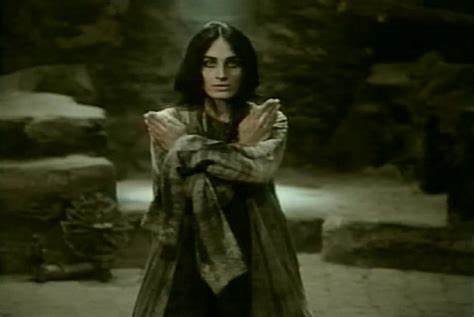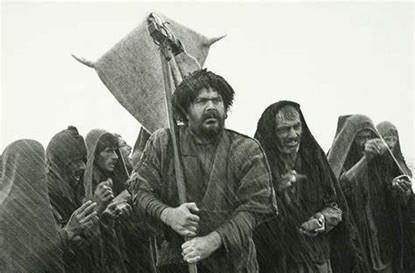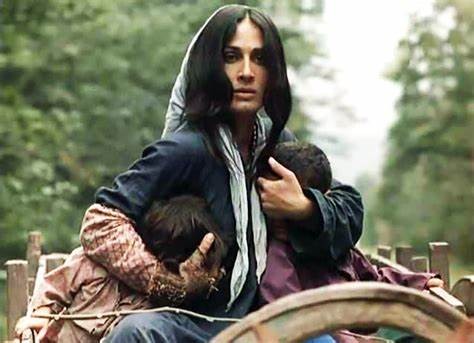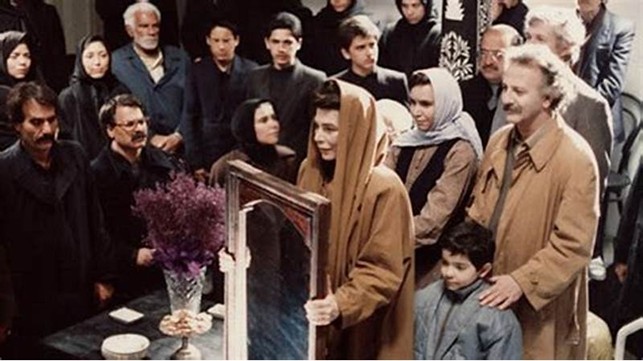
The Empathic Female Look: Resistance and Dialogue in the Patriarchal Spaces of Fīlmfārsī Melodrama

By

Introduction

The patriarchal norms of Pahlavī-era Iranian cinema, particularly in the popular genre of Fīlmfārsī melodrama, have long been scrutinized for their objectification of women through the male gaze, their relegation of female characters to domestic roles, and their punitive narratives for women who transgress societal expectations.1For more detail on the patriarchal representation of women in Pahlavī-era cinema, see: Hamid Naficy, A Social History of Iranian Cinema, Volume 2: The Industrializing Years, 1941–1978 (Durham, NC: Duke University Press, 2011), chap. 5. While there has been extensive scholarly work on how these films catered to male spectatorship, less attention has been paid to how female audiences engaged with such narratives.

This scholarly neglect stems from the predominance of two reductive frameworks of female spectatorship, best summarized and proposed by Mary Ann Doane and Laura Mulvey.2Mary Ann Doane, “Film and the Masquerade: Theorizing the Female Spectator,” Screen 23, no. 3–4 (September/October 1982): 74–87; and Laura Mulvey, “Visual Pleasure and Narrative Cinema,” Screen 16, no. 3 (Autumn 1975): 6–18. According to these models, a female viewer either over-identifies with the on-screen woman—typical of masochistic dramas within the “woman’s film”—thereby losing herself in the image by treating the character as a narcissistic object of desire, or she temporarily adopts the position of the male voyeur. In this latter case, the female viewer directs a controlling gaze upon the woman on screen, maintaining emotional distance and emphasizing their difference, a process Mulvey refers to as becoming a temporary transvestite.3Laura Mulvey, “4. Afterthoughts on ‘Visual Pleasure and Narrative Cinema’ inspired by King Vidor’s Duel in the Sun (1946),” in Visual and Other Pleasures (London: Palgrave Macmillan, 1989), 29–38. In both scenarios, the female spectator is seen as losing her subjectivity. By negating the possibility of alternative modes of female spectatorship, these models effectively dismiss the potential for female representation in a cinema shaped by patriarchal considerations or produced within a patriarchal reality, such as Fīlmfārsī.4Claire Johnston, “Women’s Cinema as Counter-Cinema,” in Feminist Film Theory: A Reader, ed. Sue Thornham (Edinburgh: Edinburgh University Press, 1999), 26.

Linda Williams, however, challenges this binary framework by emphasizing the distinctiveness of female subject formation through a psychoanalytic lens. Drawing on classic psychoanalytic theory, Williams in her article “‘Something Else Besides a Mother’: ‘Stella Dallas’ and the Maternal Melodrama,” notes that scopophilic pleasure—the act of taking women as objects of a controlling gaze—arises within a male subjectivity shaped by a fundamental break with the maternal bond. Boys, in their development, must separate from their primary identification with their mothers to adopt a male identity.5Linda Williams, “‘Something Else Besides a Mother’: ‘Stella Dallas’ and the Maternal Melodrama.” Cinema Journal 24, no. 1 (Autumn 1984): 8. This process, which hinges on the recognition of sexual difference and the symbolic role of the phallus as a marker of patriarchal privilege, involves the boy defining himself negatively, through differentiation from his mother, and aligning with his father to achieve autonomy and masculine identity. It is noteworthy that this cultural framework produces narratives that actively repress the figure of lack, thereby reinforcing difference and suppressing the fear of castration. Such repression ensures that women are consistently reduced to objects of the erotic male gaze, a dynamic that reflects the patriarchal structuring of film form.6Johnston, “Women’s Cinema as Counter-Cinema,” 31-40.

However, in contrast to boys, girls experience a continuity of the pre-Oedipal symbiotic bond with their mothers. As Williams explains, girls “take on their identity as a woman in a positive process of becoming like, rather than different from, their mother,” preserving the original maternal bond in ways that boys do not.7Williams, “‘Something Else besides a Mother,’” 8. Because male identity formation is predicated on repression and differentiation, male vision becomes constrained by an “Oedipal destiny,” unable to fully perceive women except through the lens of absence—defined by the lack of male genitalia rather than the presence of female identity. By contrast, female identity is inherently more fluid, capable of, and reinforced by shifting among multiple positions and simultaneous identification, without the rigid scopic distance or over-identification imposed by the phallocentric masculine symbolic order.8Nancy Chodorow, The Reproduction of Mothering: Psychoanalysis and the Sociology of Gender (Berkeley: University of California Press, 1999), 188.

This fundamental difference allows female spectatorship beyond the aforementioned reductive binary, offering a more complex and fluid engagement with filmic representation. Williams argues that “rather than adopting either the distance and mastery of the masculine voyeur or the over-identification of Doane’s woman who loses herself in the image, the female spectator is in a constant state of juggling all positions at once.”9Williams, “‘Something Else besides a Mother,’” 19. This multiplicity of engagement allows women to navigate and reinterpret cinematic representations in ways that transcend both the limitations of the male gaze and the passive absorption of patriarchal narratives that has been assumed for female spectators.

Williams further suggests that this fluid identification opens the possibility for “a theoretical and practical recognition of the ways in which women actually do speak to one another within patriarchy.”10Williams, “‘Something Else besides a Mother,’” 7. Rather than advocating for the outright dismantling of cinematic codes that position women as objects of spectacle—a goal central to Mulvey or Doane’s vision of avant-garde filmmaking—Williams offers an alternative path. Mulvey’s approach, which seeks to “free the look of the camera into its materiality in space and time” and transform the audience’s gaze into a form of “dialectics, passionate detachment,” aiming to break with traditional narrative cinema.11Mulvey, “Visual Pleasure and Narrative Cinema,” 7, 18. However, Williams sees greater potential in working within these existing frameworks. She argues this to be:

… a more fruitful avenue of approach, not only as a means of identifying what pleasure there is for women spectators within the classical narrative cinema, but also as a means of developing new representationalist strategies that will more fully speak to women audiences. For such speech must begin in a language that, however circumscribed within patriarchal ideology, will be recognized and understood by women. In this way, new feminist films can learn to build upon the pleasures of recognition that exist within filmic modes already familiar to women.12Williams, “‘Something Else besides a Mother,’” 6-7.

Melodrama emerges as the ideal venue for exploring this form of female identification and dialogue. This cinematic mode, “associated with the dramas of domesticity, woman, love, and sexuality,” is often labeled “women’s cinema” due to its ability to elicit pathos and foster a strong emotional connection with female audiences.13Laura Mulvey, “8. Melodrama Inside and Outside the Home,” in Visual and Other Pleasures (London: Palgrave Macmillan, 1989), 63-64; and Linda Williams, “Melodrama Revised,” in Refiguring American Film Genres: Theory and History, ed. Nick Browne (Berkeley: University of California Press, 1998), 42. Traditionally, this identification with suffering characters has been dismissed as evidence of the female spectator’s inability to maintain critical distance, while male viewers are seen as more capable of adopting a detached, critical perspective.14Critics and thinkers discussing cinema, as early as Siegfried Kracauer, have criticized women for their supposed “naïveté” and childish sentimentality, accusing them of believing in the “lie” and deception presented on screen. For further discussion, see Patrice Petro, “Perceptions of Difference: Woman as Spectator and Spectacle,” in Women in the Metropolis: Gender and Modernity in Weimar Culture, ed. Katharina von Ankum (Berkeley: University of California Press, 1997), 56–58. In Williams’ proposed framework, however, this identification appears as a crucial aspect of melodrama’s unique ability to facilitate female dialogue within patriarchal structures.

Through the genre’s portrayal of women’s tensions, desires, actions, and struggles, and despite its patriarchal intentions, melodrama reflects the lived emotional experiences of women. The genre often imposes sexual and social masks on its female characters, relegating them to prescribed roles and domestic spaces;15Laura Mulvey, “2. Social Hieroglyphics: Reflections on Two Films by Douglas Sirk,” In Fetishism and Curiosity: Cinema and the Mind’s Eye (London: Bloomsbury Publishing, 2019), 29-30. at the same time, however, it reveals the contradictions and pressures inherent in these roles.16Thomas Schatz, “The Family Melodrama,” in Imitations of Life: A Reader on Film and Television Melodrama, ed. Marcia Landy (Detroit: Wayne State University Press, 1991), 152. These portrayals of presumed deception, deviation from societal norms, and eventual atonement resonate with female viewers, offering a form of recognition and solidarity.

As such, the messages embedded in melodrama do not necessarily align with the intentions of its (often male) creators or the interpretations of male spectators. The female spectator’s capacity for multiple and fluid identifications allows her to simultaneously connect with various characters and narratives, recognizing both her own subjectivity and the shared struggles of other women within patriarchy. This dynamic engagement transforms melodrama into a site of nuanced dialogue, where women’s voices and experiences can emerge and find resonance, even within a cinematic framework shaped by patriarchal norms.

The seminal work of Williams, and her proposed model of female spectatorship, prompted us to re-examine Fīlmfārsī melodramas with female protagonists.

Fīlmfārsī Melodramas of 1950s

While melodrama in Iranian cinema can be traced back to the 1950s, a notable shift occurred with Raqqasah-yi Shahr (Dancer of the City, Shāpūr Gharīb, 1970).17Husayn Husaynī, Rāhnamā-yi Fīlm-i Sīnimā-yi Īrān, Jild-i avval (1309-1361) [A Companion to Iranian Cinema, Part One: 1930–1982] (Tehran: Ruzanah Kār, 2020), 376. This film marked the rise of melodramas featuring independent female leads who operate outside of the shadow of male counterparts and are not confined to traditional roles as mothers or wives.18This change could be attributed to the increase of female urban audience from the 1960s, which necessitated making films that would attract more female, or family audience. See: Parvīz Ijlālī, Digar-gūnī-i Ijtimā‛ī va Fīlm-hā-yi Sīnimā’ī dar Irān: Jāmi‛ah-shināsī-i Fīlm-hā-yi ‛Āmmah-pasand-i Īrānī (1357–1309) [Social Changes and Iranian Cinema: Sociological Study of Iranian Popular Cinema (1930–1978)] (Tehran: Agah, 2016), 131-137; Naficy, Social History of Iranian Cinema, Vol. 2, 161-165. However, these characters often have to endure sacrificial or redemptive resolutions to atone for their perceived transgressions—a hallmark of “women’s films” defined by their intent to instruct middle-class female audiences on socially acceptable behavior.19Ann Kaplan, “The Missing Mother: Maternal Issues in Vidor’s Stella Dallas,” In Issues in Feminist Film Criticism, ed. Patricia Erens (Bloomington: Indiana University Press, 1991), Accessed online: https://publish.iupress.indiana.edu/read/issues-in-feminist-film-criticism/section/625c6c58-5da9-41ac-9b6c-ca2c7263fe54

Popular films of this era showcase thematic patterns characteristic of typical melodramas and “women’s films.” These include intense, impassioned love stories, the dichotomy between masculine outer/public spaces and feminine interior/domestic spaces, and the contrasting archetypes of the Madonna (the virtuous, traditional wife/mother) and the whore (the transgressive, modern, disobedient woman). Female protagonists navigate this binary, challenge societal norms, and ultimately face self-sacrifice.20These include films such as Dancer of the City, Badnām (Infamous, Shāpūr Gharīb, 1970), Mīkhak-i Sifīd (The White Clove, Rizā Safā’ī, 1972), Sāhirah (The Witch, Kāmrān Qadakchiyān, 1972), Āqā-yi Jāhil (Mr. Jāhil, Rizā Mīrluhī, 1973), Ḥusayn Āzhdān (Rizā Safā’ī, 1974), Ālūdah (Contaminated, Ismā‛īl Pūrsa‛īd, 1975), Faqat Āqā Mahdī Mī-tūnah (Only Mr. Mahdī Can, Rizā Safā’ī, 1977), Pusht u Khanjar (Back and Dagger, Īraj Qādirī, 1977), Parastū-hā-yi ʿĀshiq (Swallows in Love, Farīdūn Riyāhī, 1977). From a significant corpus of works, we have selected Dancer of the City, Mr. Jāhil (Āqā-yi Jāhil, 1973), Only Mr. Mahdī Can (Faqat Āqā Mahdī Mī-tūnah, 1977), and Back and Dagger (Pusht u Khanjar, 1977) for closer analysis; these films, which we provide brief plot synopses of below, stand out for the nuances in their resolutions and the emotional depth of their female protagonists’ sacrifices.

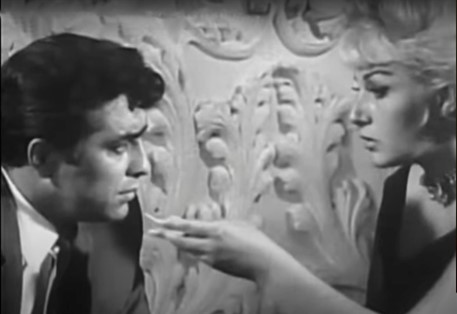
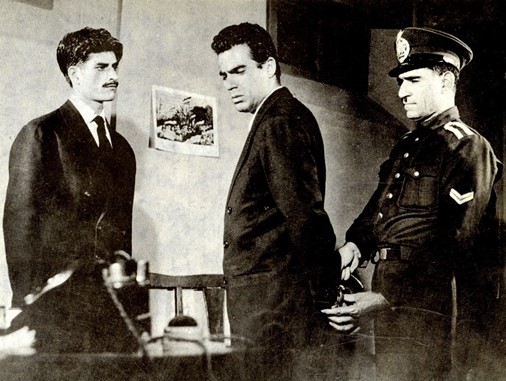
In Dancer of the City, Ghulām (Rizā Malik Mutī‛ī), a woodworker discontent with her marriage to Ashraf Sādāt (Sīmīn ‛Alī-zādah), becomes obsessed with Parī (Furūzān), a cabaret dancer. They flee after Ghulām injures Parī’s boss, but Mahīn (Farangīs Furūhar), Parī’s colleague, falsely claims Ghulām was executed. Devastated, Parī returns to cabaret work. When Taqī (Muhammad Taqī Kahnamū’ī) informs Ghulām of Parī’s relapse after his prison release, Ghulām stabs her in rage. Parī forgives him, leading to his freedom. Later, Parī visits Ghulām but leaves after seeing him with Ashraf and their children.
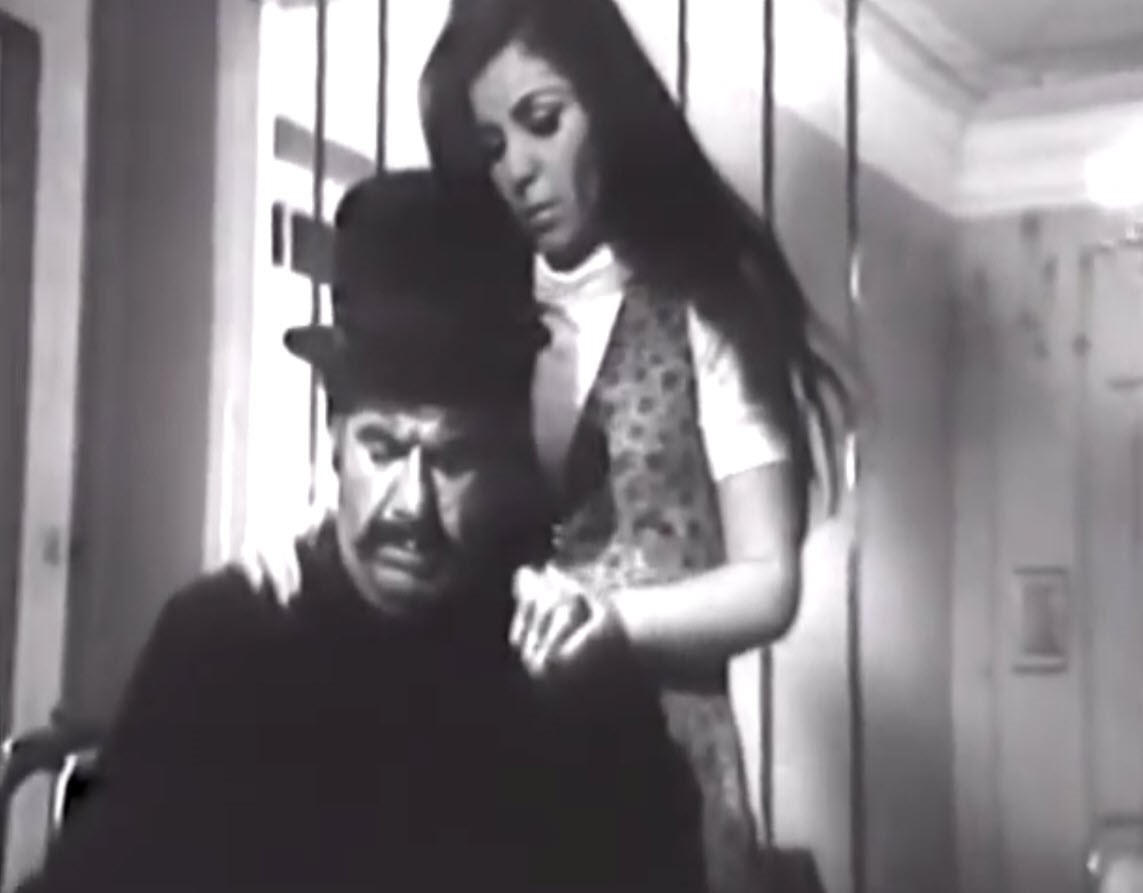
Figure 1: Ghulām and Parī in Dancer of the City

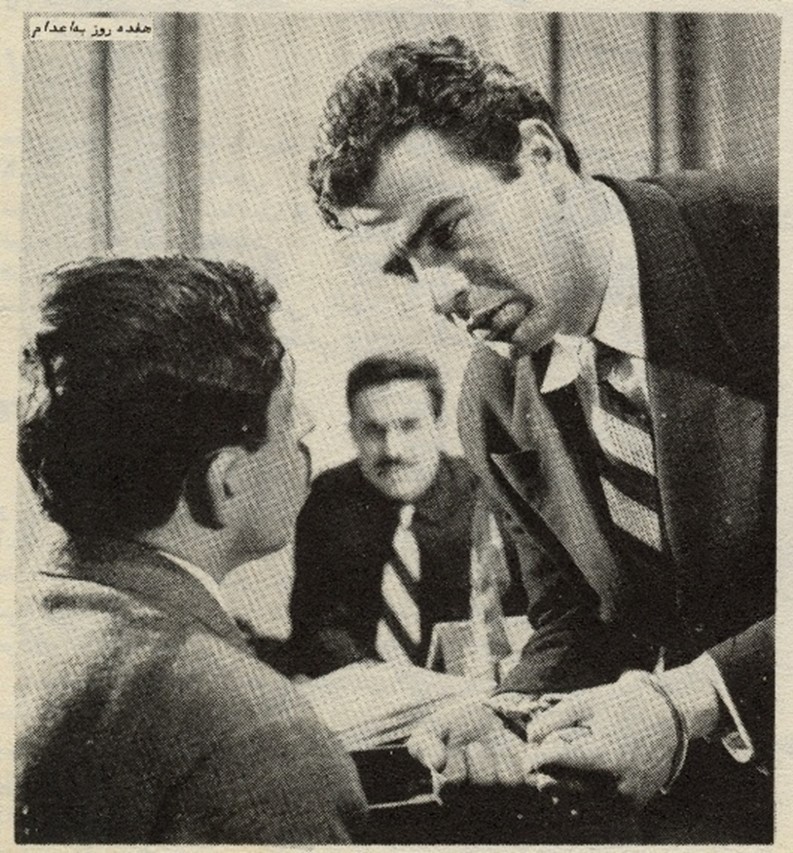
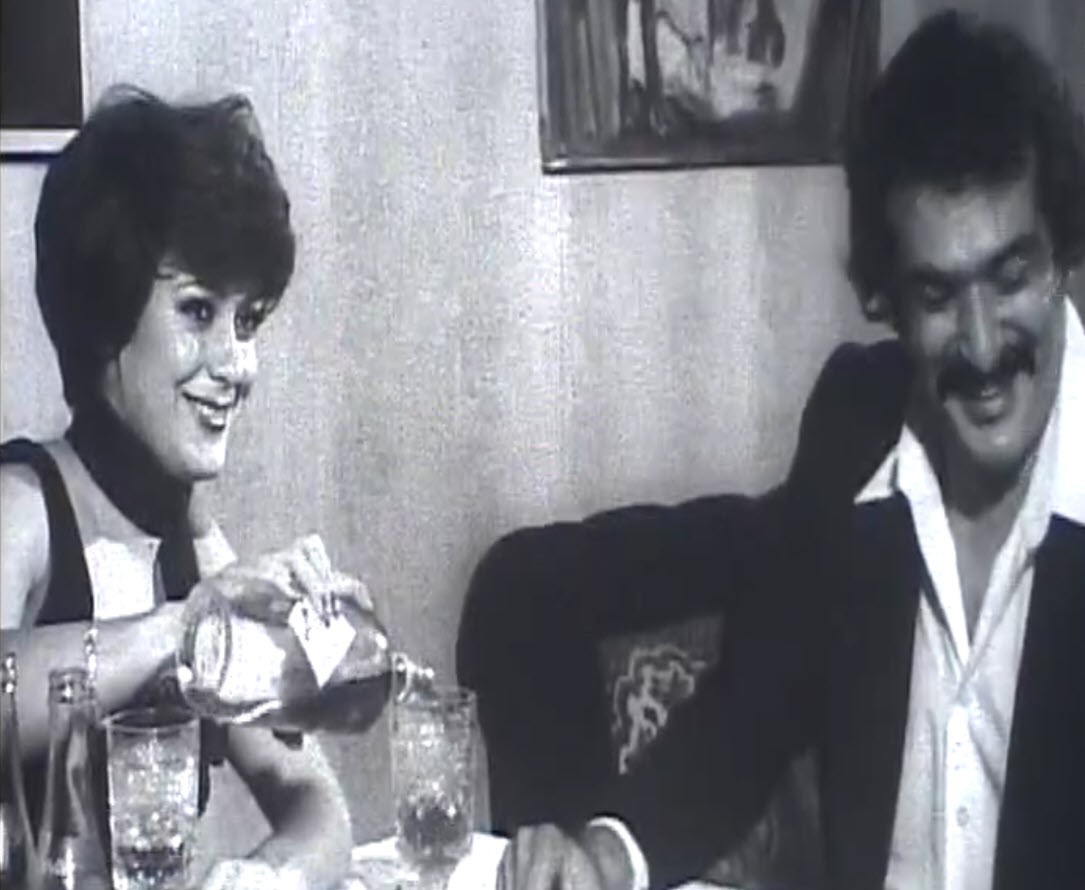
In Mr Jāhil, Zarī (Ārām), a gambling-addicted wife, neglects her husband Muhsin (Humāyūn) and their daughter. Muhsin falls for Nāzī (Hālah), a singer controlled by blackmailer Taqī Khurūs (Bahrām Vatan Parast). After Qudrat (Nimatallāh Gurjī), Muhsin’s friend, reveals Muhsin’s family struggles, Nāzī pretends to love Taqī Khurūs to push Muhsin back to Zarī, who has since repented.
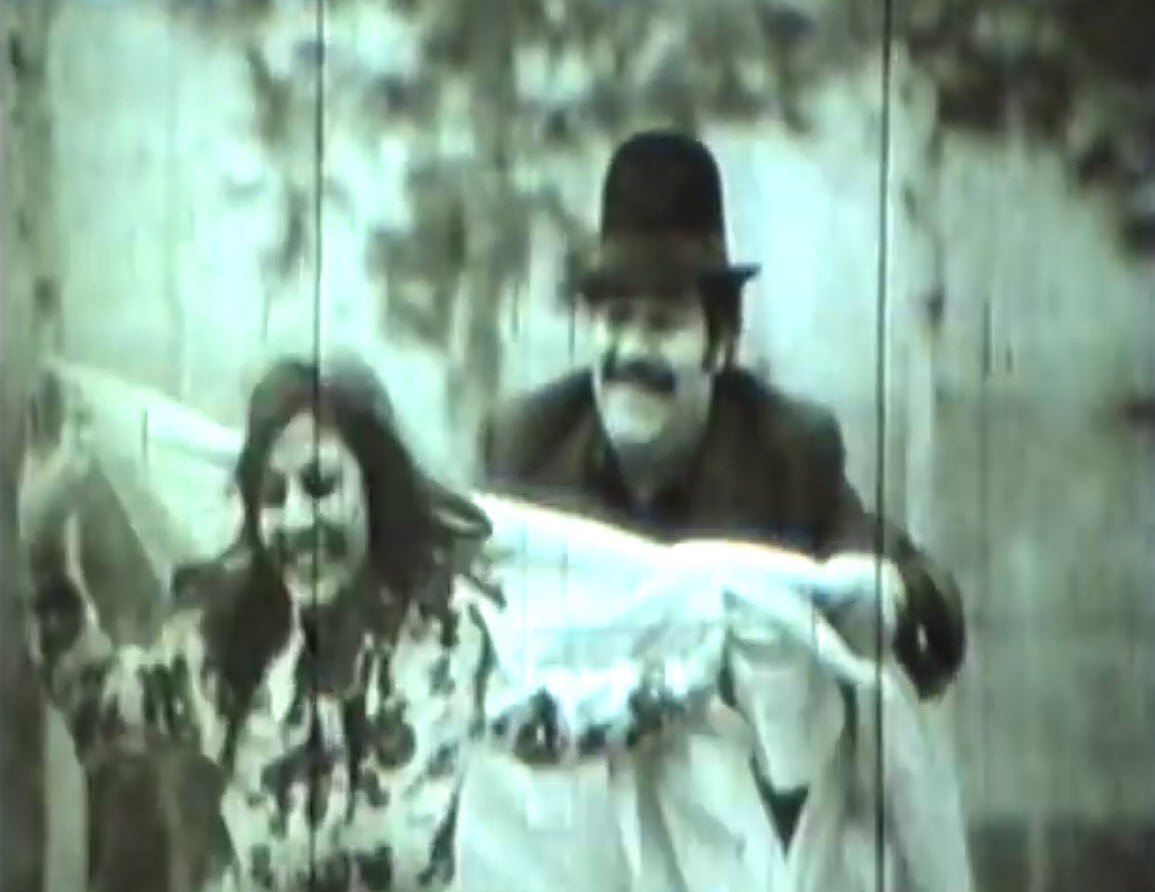
Figure 2: Muhsin and Nāzī in Mr Jāhil

In Only Mr. Mahdī Can Do It, Mahdī (Yad’allāh Shīrandāmī) rescues Parī (Shahlā Yūsufī) and Mahīn (Ra‛nā Safavī) from harassment staged by Jalāl (Jalāl Mūsavī), who seeks revenge for Mahdī exposing his corruption. Mahdī (unhappy with his infertile wife Farishtah (Shahlā Qahramānī), and his friend Ni‛mat (‛Alī Mīrī) who is also unhappy with his marriage, develop feelings for Parī and Mahīn. After Farishtah’s reveals her pregnancy, Parī fakes affection for Jalāl to protect Mahdī. Mahdī reunites with Farishtah, while Parī watches silently.

Figure 3: Parī and Mahdī in Only Mr. Mahdī Can Do It

In Back and Dagger, Parī (Furūzān), a dancer, dates Hishmat (‛Alī Pārsā), but later, his married father Ghulām (Īraj Qādirī) becomes infatuated with her, and the couple fall in love. Parī’s boss addicts Ghulām to drugs, but she helps him recover. When the boss targets Hishmat, Ghulām and Parī intervene. Parī later leaves Ghulām, who reunites with his wife and his son.
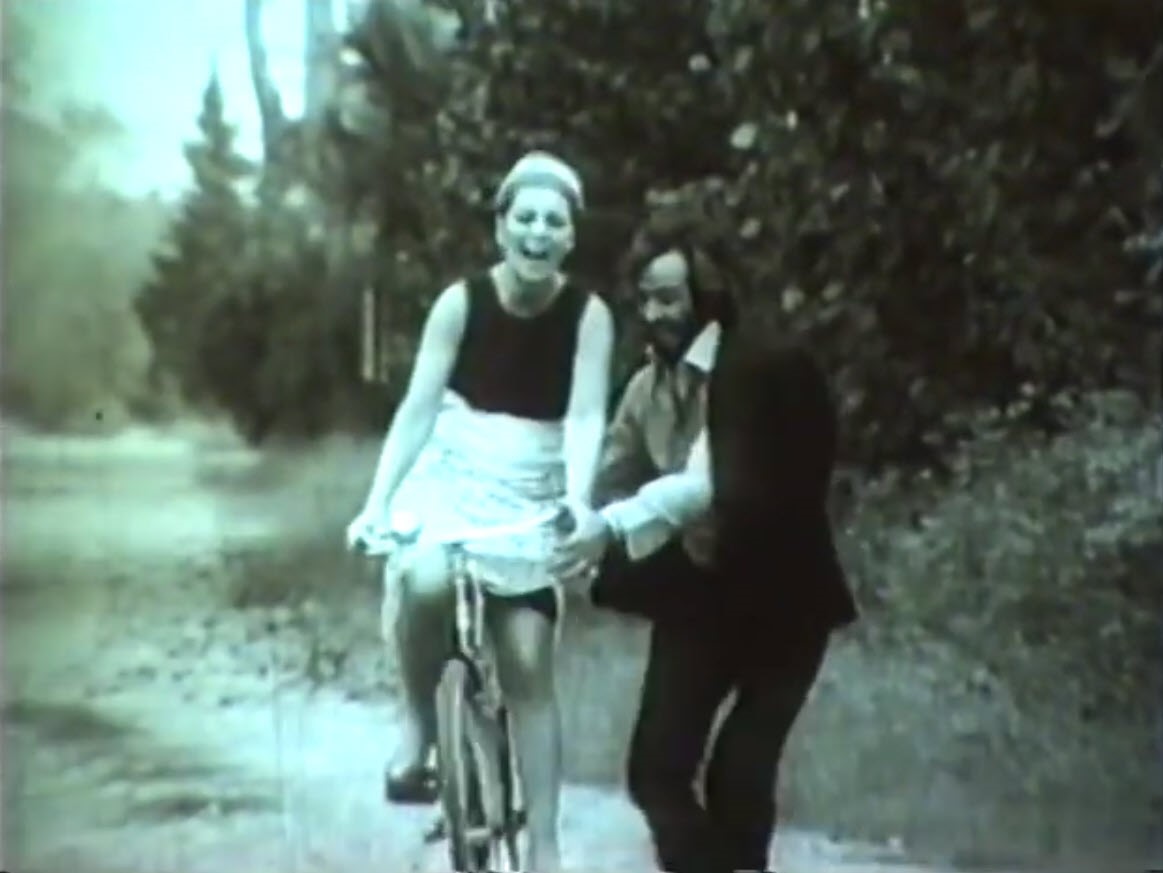
Figure 4: Parī and Ghulām in Back and Dagger

In the upcoming sections, we will examine the roles of female protagonists who—as cabaret performers, gamblers and independent figures—are ostensibly framed as “fallen women.” We will argue that these characters defy and respond to the patriarchal realism inherent in the films’ narratives, particularly through acts of sacrifice and identification with other female characters—actions that in similar cases, have been interpreted by critics as the films’ chastisement of their transgressions.

These female leads assert their independent subjectivity through resistance and solidarity, often assuming active and decisive roles that may even challenge the dominance of the male gaze by presenting an empathic “female look.” Furthermore, we propose that the audience’s identification and empathy with these characters—whose struggles, identification with other women, and decisions mirror their own lived experiences—fostered an alternative and much overlooked feminine public sphere in Iranian cinema.

Women as Objectified Subjects

It is essential to first examine how these films depict their lead modern women. These women exist outside of domestic spaces, which are traditionally regarded as the respectable domains for a “good” woman—spaces where she can fulfill the roles of dutiful daughter, mother, or wife. In the urban context of modern Iran, women’s presence in public spaces was expected to be limited, often contingent upon male guardianship. When unaccompanied, their presence had to be temporary and justified, typically for activities such as commuting to school, attending a socially acceptable job, or shopping.21 Somaiyeh Falahat, “Excavating Urban Imaginaries in Tehran,” in Being Urban, ed. Simon Goldhill (Abingdon: Routledge, 2020), 242-245. However, the female protagonists—Parī in Dancer of the City, Zarī and Nāzī in Mr. Jāhil, Parī in Only Mr. Mahdī Can Do It, and Parī in Back and Dagger—are defined by their public presence. These women live and work in the urban spaces where their interactions with the male leads, who eventually fall in love with them, occur. These spaces are depicted as inherently masculine, inhabited by violent men with an overtly sexualizing gaze. Consequently, the films portray these women as being out of place—removed from where society believes they should be.

Notably, in all cases, the female leads are cabaret dancers and singers—professions that were deeply stigmatized in Iranian society and cinema, and often equated with prostitution.22Kamran Talattof, Modernity, Sexuality, and Ideology in Iran: The Life and Legacy of a Popular Female Artist (Syracuse: Syracuse University Press, 2011), 102-105; and Golbarg Rekabtalei talks about the reception of these artists and their portrayal in cinema. See: Rekabtalei Iranian Cosmopolitanism: A Cinematic History (Cambridge: Cambridge University Press, 2019), 193-194. The films, along with their male protagonists, freely objectify these women, treating them as sexual objects due to their perceived loss of respectability.23Naficy, Social History of Iranian Cinema, Vol. 2, 298-301. It is noteworthy that this voyeurism and objectification extended beyond cabaret performers, encompassing any woman exhibiting independence, a prominent social presence (particularly without male guardianship), or wearing attire deemed “too revealing.” Hamīd Rizā Sadr considers cabaret performers to be the ultimate symbol of such woman “transgressing” the moralities of patriarchy. See: Sadr, Dar’āmadī bar tārīkh-i siyāsī-i sīnimā-i Īrān (1280–1380) [An introduction to the political history of Iranian cinema from 1901- 2001] (Tehran: Nay, 2002), 146-152. In fact, cabaret performers were a recurring presence in Fīlmfārsī, regardless of narrative necessity, as they provided opportunities for voyeuristic shots that appealed to male audiences and boosted box office sales.24Naficy, Social History of Iranian Cinema, Vol. 2, 209-212.

The initial encounters of male characters with female leads in these representative melodramas involve a process of male infatuation with cabaret performers, characterized by fetishized, subjective camera shots during the women’s performances.25Only Mr. Mahdī Can Do It depicts Mahdī’s encounter with Parī while not performing. However, the film does fetishize Parī and Mahīn in capturing their beauty and seductiveness. Furthermore, whenever these women defy the male characters’ desires or beliefs during dramatic moments, the plots escalate to scenes of harsh verbal or physical abuse, including acts of extreme violence, such as stabbing with intent to kill. In Mr. Jāhil, for instance, when Nāzī fabricates a scene of self-sacrifice by pretending to engage in a romantic encounter with Taqī to push Muhsin away, Muhsin responds by attacking her and calling her a “whore.”26Mr. Jāhil, dir. Rizā Mīrluhī (Tehran: Mihrigān Film, 1973), 01:45:51. Similarly, in Only Mr. Mahdī Can Do It, Mahdī violently assaults Parī in a similar scenario, where she pretends to love Jalāl, Mahdī’s rival. In Dancer of the City, Ghulām goes even further, stabbing Parī merely because he thinks she has betrayed him by returning to cabaret. It is crucial to note that these male characters are depicted in the worlds of the films as good men—popular protagonists embodying a socially celebrated form of ghayrat (jealousy) toward their lovers.27Talattof, Modernity, Sexuality, and Ideology in Iran, 114-116.
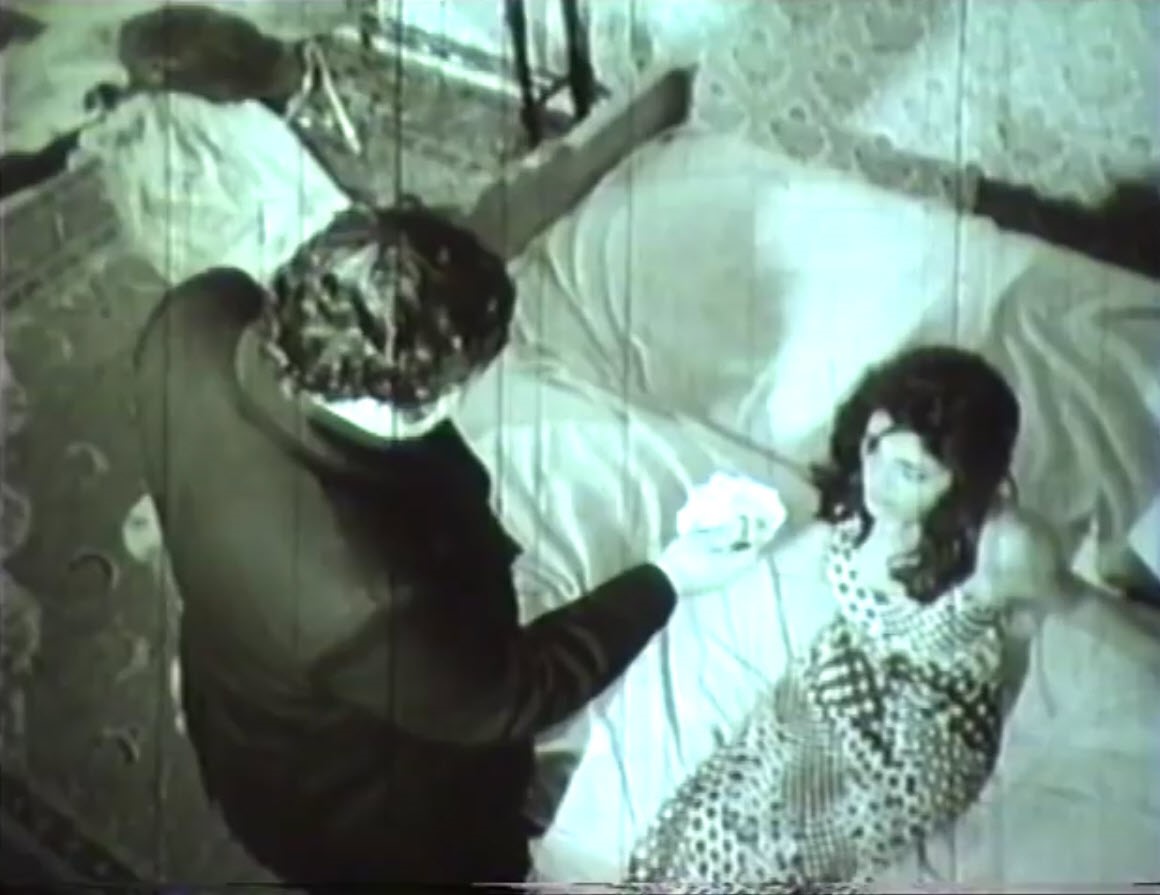
Figure 5: Muhsin chastises Nāzī in Mr Jāhil
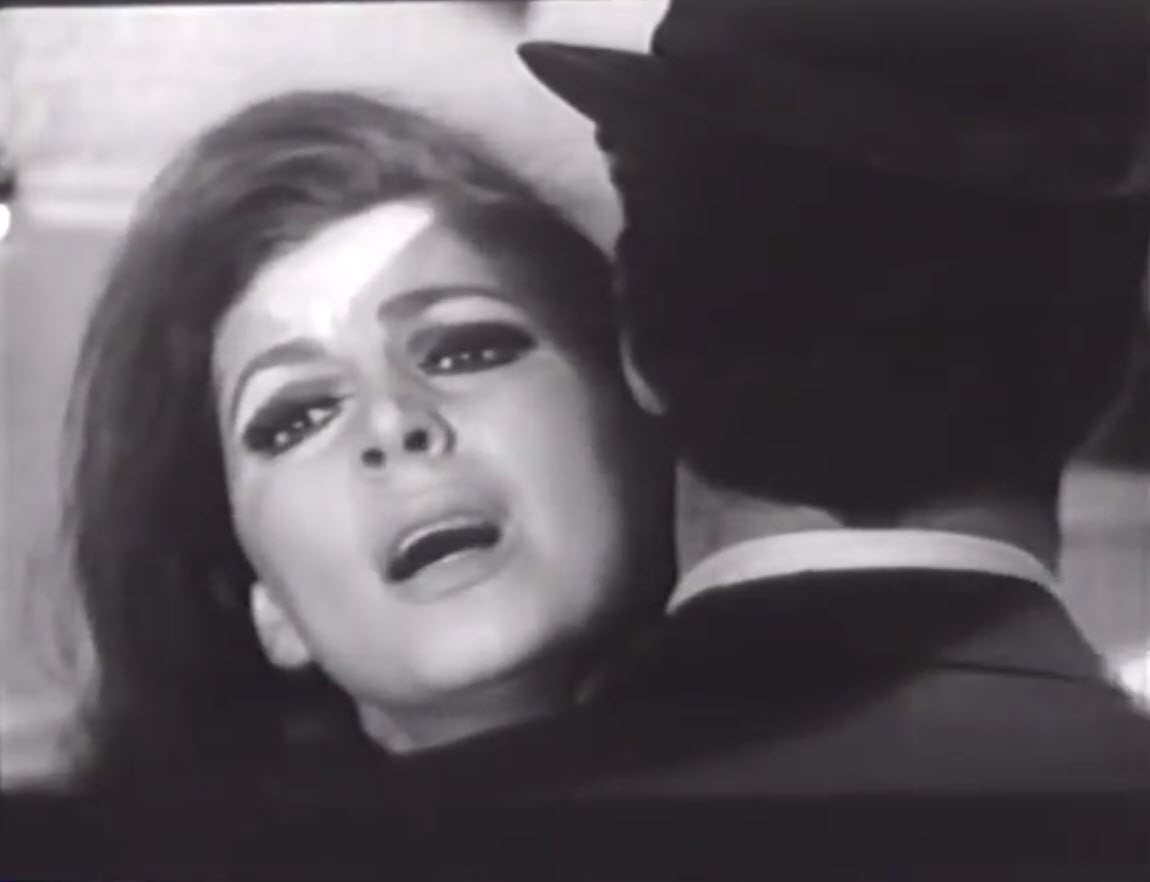
Figure 6: Ghulām of Dancer of the City, stabs Parī believing she’s cheated on him.

The films argue that these women require a responsible man to rescue them from the streets and the cabaret lifestyle, perpetuating a common trope in Fīlmfārsī cinema. In this narrative tradition, the so-called fallen woman, often portrayed as a cabaret performer or someone who has been victimized by men due to her naivety, is redeemed by a male savior.28Ijlālī, Digar-gūnī-i Ijtimā‛ī va Fīlm-hā-yi Sīnimā’ī dar Irān, 221-223. While the case studies examined here share this trope—depicting fallen women being introduced to a semblance of normal life through the presence of what the films’ present as virtuous men—the films’ narratives allow for alternative interpretations when analyzed from the perspectives of the female characters. Two specific aspects emerge: the social activity of these women and the question of who truly saves whom.

Examining women’s social activity reveals that in both Dancer of the City and Back and Dagger, the character Parī (played by Furūzān) is portrayed as a strong, independent woman. Parī, unconcerned with male objectification, skillfully leverages male infatuation to secure economic independence and power. Although the films aim to depict such women negatively and subject them to moral critique, Parī’s character, embodied by the popular star Furūzān, exudes undeniable agency and power. Her defiance of societal judgment about her profession challenges the films’ authorial intentions. As critics have long observed, Furūzān’s performances imbue these characters with remarkable independence. For instance, Husayn Husaynī notes, “the effect of her presence in forming this new presentation of women [powerful and independent] couldn’t slide away from the eyes of the contemporary critics.”29Husaynī, Rāhnamā-yi Fīlm-i Sīnimā-yi Īrān, 376.

Figure 7 and 8: Furūzān’s characters in Dancer of the City (left) and Back and Dagger (right), radiates undeniable power and agency.

The films also create a dichotomy between these cabaret performers and the mother/wife figures confined to domestic spaces in the male protagonists’ lives (with the exception of Mr. Jāhil, where Zarī also breaks out of domestic confinement, becoming a fallen woman). However, this dichotomy unintentionally highlights the vibrancy and vitality of the female leads compared to the more subdued good or proper women. For example, in Dancer of the City, Ashraf Sādāt is depicted as utterly dedicated to her domestic duties, but her character appears mundane and lifeless, whereas Parī’s character radiates electrifying energy. Similarly, in Only Mr. Mahdī Can Do It, Farishtah and Malāhat are portrayed as resigned to monotonous lives of household chores, while Parī and Mahīn lead dynamic, adventurous lives that captivate Mahdī and Ni‛mat. Even if these traits are presented to enhance the characters’ sexual appeal, they underscore the spirit and liveliness of the so-called deviant women in contrast to the stasis of domestic figures.
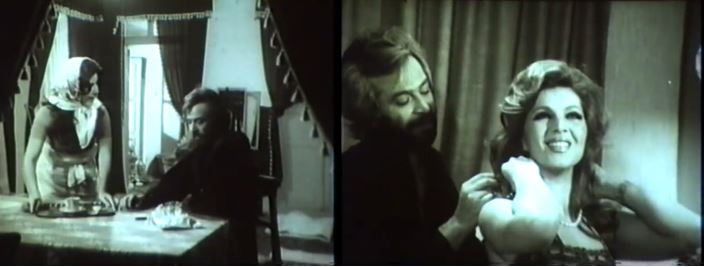
Figure 9 and 10: Iffat, the dedicated housewife of Ghulam in Back and Dagger, is contrasted with the free-spirited Pari.

In both Mr. Jāhil and Only Mr. Mahdī Can Do It, women are compelled to endure harsh and exploitative working conditions where they are subjected to objectification and violence by their male counterparts, primarily due to financial necessity. Nāzī, in Mr. Jāhil, is burdened by debt and constrained by her obligation to Taqī, forcing her to work for him until the debt is repaid. Similarly, in Only Mr. Mahdī Can Do It, Jalāl holds legal documents that establish Parī’s financial indebtedness to him, granting him leverage to imprison her unless she complies with his demands. As Katharina von Ankum observes, in pathologizing women’s participation in jobs deemed inappropriate and chastising them for such involvement, men frequently disregard “the actual social situation of the women in question.” The majority of such women, von Ankum notes, “were recruited from the ranks of women who worked as servant girls, waitresses, sales clerks, and seasonal workers,” many of whom had migrated from rural areas to urban centers in search of work. The proliferation of prostitution or similarly stigmatized jobs, therefore, emerged as a direct consequence of forced industrialization and urbanization.30Katharina von Ankum, “Gendered Urban Spaces in Irmgard Keun’s Das kunstseidene Mädchen,” in Women in the Metropolis: Gender and Modernity in Weimar Culture, ed. Katharina von Ankum (Berkeley: University of California Press, 1997), 165.

Given this context, it is plausible that urban female audiences of these films, many of whom faced comparable economic constraints requiring them to work—at least until marriage—and the much harsher asymmetry (compared to Von Ankum’s Weimar Germany) in accessing socially respectable and well-paying employment opportunities, would empathize with these female characters, who are similarly bound by financial obligations to men.

Before addressing the question of who ultimately saves whom, it is worth briefly examining the encounters from the perspective of the female protagonists, as opposed to the male perspective, which is often defined by sexual objectification. Notably, in all the films discussed, the female leads develop romantic feelings for the male protagonists. Romantic love, particularly on a widespread and mass-cultural scale, was a modern concept in Iran. Traditionally, relationships between men and women were governed by marriage, which itself was shaped by economic, religious, and tribal considerations, often excluding the consent of the individuals involved—particularly women. With the introduction of the concept of romantic love in the 19th century via encounters with West, primarily through its literature, these traditional marriage norms began to face significant challenges, and this tension was represented across various cultural media. Despite the societal changes that unfolded during the Pahlavī era, the institution of marriage remained largely defined by limited participation and consent on the part of women. Even if a man fell in love and identified a specific woman as a prospective partner, it was typically the woman’s paternal guardian who made the decision regarding the marriage.31For a more detailed account of romantic love in Iran, and its asymmetries up to the end of the Pahlavī era, see: Ijlālī, Digar-gūnī-i Ijtimā‛ī va Fīlm-hā-yi Sīnimā’ī dar Irān, 280-285. Consequently, the portrayal of independent and active female leads, who exercise the freedom to choose whom they love, would likely resonate with urban female audiences. These audiences, sharing similar aspirations for autonomy and romantic agency, would find these characters relatable and inspiring in their ability to assert their right to love freely.

Addressing the question of who truly saves whom, even though the films—and the broader cinematic ethos—position women as needing to be rescued by responsible men, these narratives also implicitly hold women accountable for leading married men astray.32Women’s “inappropriate” public presence is framed as a source of temptation that diverts men from their familial dedicstion. For more information, see: Afasneh Najmabadi, “Hazards of Modernity and Morality: Women, State and Ideology in Contemporary Iran,” in Women, Islam and the State, ed. D. Kandiyoti (Basingstoke: Palgrave Macmillan, 1991), 69-70 and Naficy, Social History of Iranian Cinema, Vol. 2, 233-234. It is crucial to recognize that it is the female leads who take the initiative to resolve the crises at hand—often a family on the verge of collapse—while the male leads, incapacitated by their forbidden desires, remain paralyzed and passive. The male protagonist, whose gaze actively sexualizes the female lead, is strikingly ineffective in resolving the turmoil in his own life. By contrast, the female lead, guided by an empathetic perspective that acknowledges the struggles of her lover’s wife and family, assumes the responsibility of making difficult yet morally sound decisions. She acts decisively, while the male lead is blinded by lust and passion.

In Dancer of the City, Parī forgives Ghulām for wrongfully stabbing her, helping him secure his release from prison. It is she who ultimately decides to step aside, allowing Ghulām to return to his family and children. Similarly, in Mr. Jāhil, it is Nāzī who is capable of preventing the disintegration of a family. Qudrat, Muhsin’s friend, pleads with her to step away for the sake of Muhsin’s wife and child. Nāzī stages an elaborate ruse, pretending to love and engage with Muhsin’s rival—whom she personally despises—to drive Muhsin back to his family. The same dynamic is evident in Only Mr. Mahdī Can Do It. Parī, deeply in love with Mahdī, learns that his wife is pregnant. In response, she feigns affection for Mahdī’s rival to repel Mahdī and ensure he remains committed to his wife and unborn child. In Back and Dagger, the male protagonist, Ghulām, is unable to restore his life on his own. Struggling with addiction, he becomes incapable of reconciling with his family. It is only through Parī’s initiative—helping him overcome his addiction and ultimately sending him back to his family—that Ghulām is able to recover. Through her efforts, Ghulām reconciles with his son and regains stability. In all these narratives, it is the female leads who take the decisive actions to resolve the crises, ultimately saving the male protagonists.
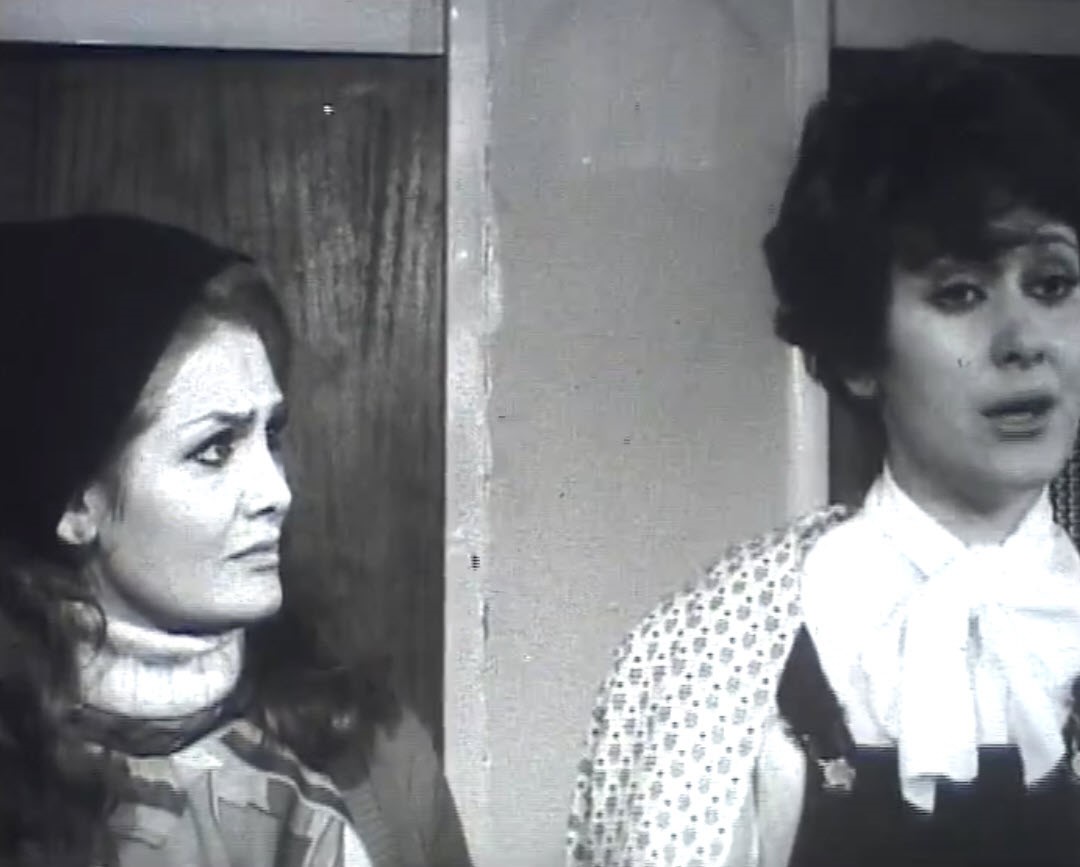
Figure 11: Parī identifies with the plight of Fereshteh, Mahdī’s wife, in Only Mr. Mahdi Can Do It, and decides to sacrifice her love so that Fereshteh can reunite with her family.
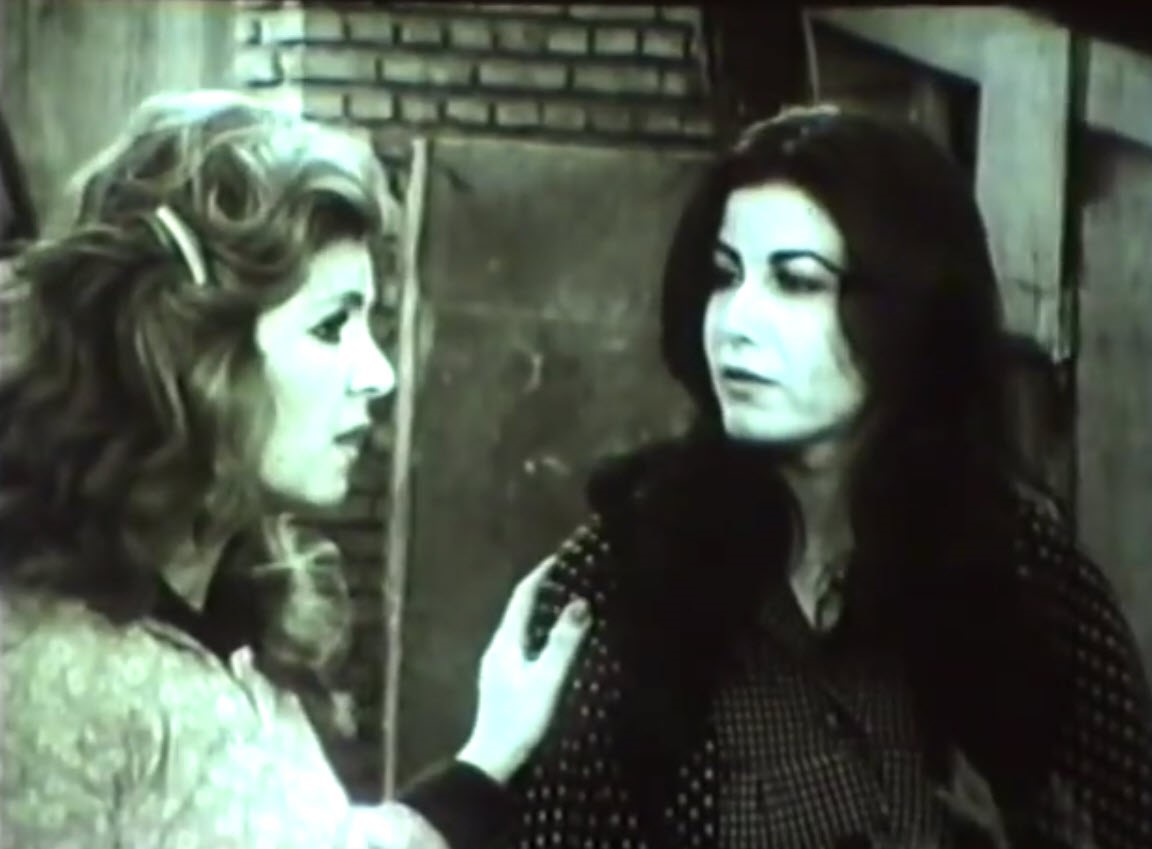
Figure 12: In a dialogue with Iffat, Parī of Back and Dagger, decides to help her and make Ghulām overcome his addiction.

A Feminine Empathic “Look”

As mentioned above, female leads resolving narrative tension through acts of self-sacrifice often emerge as a central theme in melodramatic women’s films. Such portrayals have frequently been read as reinforcing patriarchal morality, with the female protagonist’s self-sacrifice interpreted as a necessary atonement for her perceived transgressions against societal norms—particularly her refusal to conform to traditional gender roles. These narratives suggest that a woman who dares to live authentically, in defiance of patriarchal expectations, must ultimately submit to these norms through an act of renunciation.33Parvīz Ijlālī, analyzing Fīlmfārsī melodramas with female leads, makes such a conclusion of the lead’s self-sacrifice. See: Ijlālī, Digar-gūnī-i Ijtimā‛ī va Fīlm-hā-yi Sīnimā’ī dar Irān, 184-186. Before challenging this interpretation through our case studies, it is essential to consider the influential analysis of the American filmmaker King Vidor’s Stella Dallas (1937) and its protagonist’s ultimate act of self-sacrifice, as examined by Ann Kaplan34Kaplan, “The Missing Mother.” and Linda Williams.35Williams, “Something Else besides a Mother,” 2–27.

Stella Dallas tells the story of Stella Martin, a working-class woman who marries the wealthy Stephen Dallas. Despite having a daughter, Laurel, their marriage falters due to Stella’s inability to meet the standards of upper-class respectability, manifested through the idealized wife/mother figure of the film, Helen, and Stephen’s disapproval of Stella’s behavior. Following their separation, Stella devotes herself to ensuring a better future for Laurel. Convinced that her working-class identity and lifestyle might impede Laurel’s social advancement, Stella resolves to distance herself from her daughter. This decision culminates in an iconic scene where Stella, standing outside in the rain, secretly observes Laurel’s wedding—a moment of bittersweet satisfaction as she reassures herself that her sacrifice has secured her daughter’s happiness.

In “The Case of the Missing Mother: Maternal Issues in Vidor’s Stella Dallas,” Kaplan critiques the film’s reinforcement of patriarchal ideals. She argues that Stella’s sacrifice exemplifies the idealized maternal figure within a patriarchal framework, reducing women to self-sacrificing mothers whose personal fulfillment is subordinated to their children’s needs. Kaplan asserts that Stella’s transformation—from resisting societal norms to conforming to them—

“‘teaches’ Stella her ‘correct’ position, bringing her from resistance to conformity with the dominant, desired myth,” and “in so doing, teach[ing] the female audience the dangers of stepping out of the given position.”36Kaplan, “The Missing Mother.”

Williams, however, offers an alternative reading of Stella Dallas, focusing on the film’s complex portrayal of motherhood and female identity. She argues that the film presents a nuanced depiction of the challenges women face within a patriarchal society, emphasizing the protagonist’s internal conflicts and desires that extend beyond traditional maternal expectations. Williams also examines the film’s use of melodramatic elements to express Stella’s sacrifices and the layered emotions they evoke. She observes that the film conveys “mixed messages—of joy in pain, of pleasure in sacrifice—that typically resolve the melodramatic conflicts in ‘The Woman’s film.’”37Williams, “Something Else besides a Mother,” 2. This perspective emerges from what Williams describes as a complex and empathetic “female look,” capable of recognizing the struggles and needs of other women within a patriarchal framework. In Stella’s case, this empathy centers on her daughter, whose future Stella prioritizes by making the courageous choice to distance herself. This decision allows Laurel to achieve upward social mobility, a challenge Stella herself had encountered as a middle-class woman.38Williams, “Something Else besides a Mother,” 19-21. By actively choosing to step away, Stella’s sacrifice transcends the traditional expectations of motherhood. Williams reads it as an act of profound agency and empathy. Rather than reducing Stella’s choice to mere conformity, this interpretation highlights the film’s potential to reflect women’s resilience and their mutual understanding of each other’s plights, within the confines of patriarchal structures of society, and of cinema.

A similar framework applies to the acts of self-sacrifice performed by the female leads in the filmic case studies our article discusses. In each example, the female leads, empathizing with the struggles of the male protagonists’ wives and children, choose to forgo relationships with the men they deeply love—men who, as seen in Mr. Jāhil and Only Mr. Mahdī Can Do It, could also potentially serve as a means of upward social mobility. Their sacrifices could be understood as expressions of feminine solidarity and identification with the pathos of others restrained in patriarchal structures—namely, women and children. By relinquishing their own desires to prevent the destruction of other lives, these women redefine the narrative of self-sacrifice, shifting it from an act of mere conformity to one of profound empathy and moral consciousness.

Let us examine the dynamics of sacrifice and its nuanced representation in each film, beginning with Dancer of the City. Parī, under the guise of having injured herself with a knife, secures Ghulām’s release from prison, initially with the hope of a reunion. In the climactic final scene, Parī approaches Ghulām while holding a bouquet of flowers. Spotting him from afar, she runs toward him but stops abruptly when she sees Ghulām embracing his children outside his carpentry workshop. She pauses, silently observing from behind the glass of an unoccupied kiosk, as if deliberately distancing herself from the familial scene unfolding before her. She understands that any interference on her part would lead Ghulām to leave his family for her sake.

Through a sequence of alternating shots, the camera oscillates between Parī and her point of view, which captures Ghulām, his children, and later his wife. The progression moves from a long shot of Parī to a medium shot, and finally a close-up. All her point-of-view shots of Ghulām and his family, however, remain in long shots, reinforcing her emotional and physical distance from the scene. In each close-up, Parī’s tear-filled look remains fixed on Ghulām and his family as they draw closer together, emphasizing her emotional turmoil. Overcome, she abruptly averts her look, pulling her veil over her face. The camera then transitions to a wide shot of Ghulām and his family, emphasizing their closeness, before returning to a medium shot of Parī, who withdraws further behind the kiosk, continuing to observe in silence. Meanwhile, a friend of the united family holds a Quran above their heads in a symbolic gesture of blessing as they walk away (Figures 1 and 2).

Parī’s tear-streaked face is reflected on the glass—a striking visual metaphor that highlights her subjective agency despite her separation from the scene she observes. Finally, the camera captures her point of view as Ghulām and his family drive away, before transitioning to a shot of Parī from behind, obscured by the kiosk, as she silently watches their car disappear into the distance.
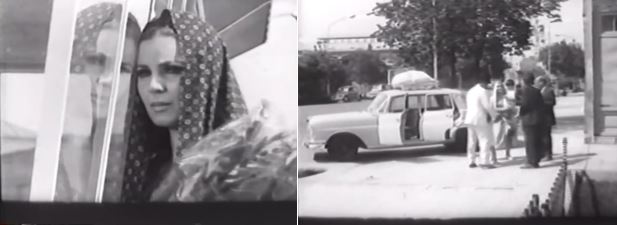
Figures 13 and 14: Parī watches the family that has reunited as a result of her sacrifice.

Parī’s selfless restraint, refraining from revealing herself to Ghulām, ensures that the family’s reunion remains undisturbed. Her tearful eyes reveal the depth of her sacrifice as she relinquishes her personal desires for the happiness of Ghulām’s family. The close-up shots of Parī underscore her noble and compassionate demeanor, thereby enhancing the emotional impact of her act.

This profoundly moving sequence is further enhanced by Isfandiyār Munfaridzādah’s evocative score, which magnifies the grandeur of Parī’s sacrifice, mirroring her profound pathos—a sentiment born of her magnanimity and compassion. The dreamlike quality of the scene, particularly through Parī’s perspective, evokes the family life she once envisioned with Ghulām, now unfolding without her. Yet, through her empathy, Parī grants permission for this vision to materialize, even at the cost of her own happiness.

The dynamics of sacrifice, particularly as they relate to the female protagonists’ moral agency, is similarly explored in Mr. Jāhil, offering poignant parallels to the themes in Dancer of the City. In Mr. Jāhil, Nāzī’s ultimate act of self-sacrifice arises from her discovery of Muhsin’s familial obligations through Qudrat, who shows her a photograph of Muhsin with his wife and child. Qudrat’s words, “Look closely at them. Both are waiting… for the man of the house,” compel Nāzī to prioritize their happiness over her love for Muhsin.39Mr. Jāhil, dir. Rizā Mīrluhī (Tehran: Mihrigān Film, 1973), 01:39:25. Although devastated, Nāzī resolves to sever ties with him by orchestrating a scene that will push him away and reunite him with his family.

In the climactic sequence, freshly released from prison, Muhsin rushes past his welcoming family to Nāzī’s home, only to overhear her laughter with Taqī behind a curtain. The camera assumes Muhsin’s perspective as he discovers the staged scene of infidelity. His fury ignites a violent confrontation, during which he berates Nāzī and throws her onto the bed. The scene culminates in a devastating exchange of accusations: Nāzī bitterly confronts Muhsin’s expectations of loyalty despite his absence, while Muhsin retaliates with insults, casting her aside with both verbal and physical abuse. In a high-angle shot, Muhsin tosses money at her, declaring it payment for their time together. The scattered bills and Nāzī’s tearful collapse on the bed visually encapsulate her humiliation, which she has deliberately endured to ensure Muhsin’s departure.

Nāzī’s decision to degrade herself reflects her profound empathy for Muhsin’s wife and child, whose familial bond she protects at the cost of her own dignity. This emotional climax, underscored by the swelling score, positions Nāzī as both victim and moral victor. Like Parī in Dancer of the City, Nāzī becomes a silent observer of the family’s reunion in the film’s final sequence, watching from a distance and above as she recalls her intimate moments with Muhsin. With tearful yet resolute triumph, she reflects on her sacrifice, embodying both grief and moral fortitude (Figures 3 and 4). The film alternates between Nāzī’s point of view, her flashbacks with Muhsin, and her sorrowful yet bittersweet look upon the reunited couple, reinforcing the depth of her sacrifice that made their reunion possible.
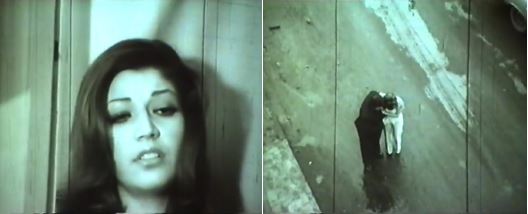
Figures 15 and 16: Nāzī looks down upon the reunited couple from above.

Similarly, in Only Mr. Mahdī Can Do It, Parī confronts her guilt upon discovering that Farishtah is pregnant and has suffered humiliation due to Mahdī’s infidelity. Farishtah’s harsh remarks evoke Parī’s remorse, prompting her to promise Farishtah that she will step aside and restore Farishtah’s family. Parī stages an elaborate scene of betrayal in order to alienate Mahdī. In the decisive moment, Mahdī arrives at Parī’s house to find her in Jalāl’s embrace. Overcome with rage, Mahdī confronts Parī, who coldly declares her love for Jalāl and her hatred for Mahdī. The tension escalates as Mahdī strikes Jalāl, only to be interrupted by news of his wife’s hospitalization. Without hesitation, Mahdī rushes to the hospital, abandoning Parī.

As Mahdī departs, the camera lingers on a close-up of Parī, her tear-streaked face laying bare her emotional turmoil. She dismisses Jalāl, admitting that she merely used him to manipulate Mahdī into returning to his family. In the film’s final moments, Mahdī, his wife and the newborn child are shown leaving the hospital. Concealed within a car, Parī silently watches their reunion, her expression imbued with bittersweet satisfaction (Figures 5 and 6). The film alternates between the joyful reunited family and Parī, underscoring that this moment of happiness is ultimately the result of her sacrifice. The score heightens the emotional impact of this moment, emphasizing Parī’s grief, resolve, and selfless love. Her carefully designed plan has ensured that Mahdī reunites with his family and embraces his responsibilities.
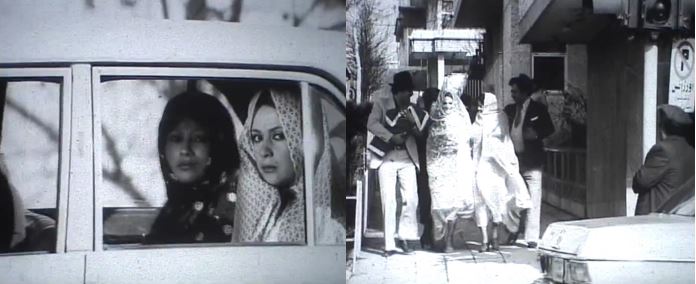
Figures 17 and 18: Parī’s bittersweet look and her POV showing Farishtah, Mahdī and their newborn.

In Back and Dagger, Parī’s self-sacrifice carries on the motif of female protagonists relinquishing their personal happiness for the preservation of another’s familial bonds. After Parī’s tireless efforts to help Ghulām overcome his addiction, even imprisoning him in a basement to force his recovery, Ghulām seeks her out with the intention of embracing her. Yet, Parī, recognizing the larger stakes, gently rejects him with the poignant words, “There are many waiting outside that door—your wife, your son. My time is over.”40Kaplan, “The Missing Mother.” In this moment, she relinquishes her desires, demonstrating profound empathy and selflessness.

At the film’s emotionally charged conclusion, filmed through a long shot, Ghulām, along with his son and a group of friends, moves toward his home and wife in the background. In the foreground, the trunk of a tree is visible. From the left side of the frame (off-screen), Parī enters the frame with her back to the camera and, standing behind the tree, watches Ghulām and his companions. As we see several shots of Ghulām approaching his wife and his wife waiting for him, the camera cuts to a close-up of Parī, who, standing behind the tree, looks at them with tearful eyes. With a smile of contentment, she observes their reunion.

As the couple embraces, the camera pulls back, revealing Parī behind the tree, hiding her face with her veil while watching them. (Parī is positioned in the foreground on the left, while the tree divides the frame, with the couple in the background on the right). As the couple and their companions exit the frame, the camera moves forward, capturing a close-up of Parī. The image dissolves into another shot of Parī, still watching their departure with sorrowful eyes and a bitter smile (Figures 7 and 8). Slowly, she leans against the tree and sits down. The scene dissolves again into another shot of Parī as the camera zooms in on her face. At first, she buries her tearful eyes in her veil, then looks outward. The closing shot—a close-up of Parī looking off-screen, tears brimming in her eyes as “The End” overlays her image—solidifies her role as the architect of this reconciliation. Parī’s expression encapsulates her sacrifice, empathy, and forgiveness; it was her decision to push Ghulām away that enabled this familial reunion. Her active agency shapes the final mise-en-scène, positioning her as the silent yet central figure directing the conclusion.
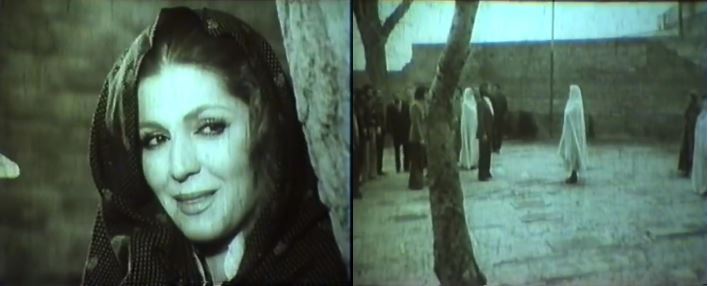
Figures 19 and 20: Parī watches the family with a bittersweet smile on her face.

Across these films—Dancer of the City, Mr. Jāhil, Only Mr. Mahdī Can Do It, and Back and Dagger—the notion of the female protagonist as a mere spectator, who, as Kaplan puts it, is  “relinquishing the central place” is subverted.41Kaplan, “The Missing Mother.” As opposed to Kaplan’s reading of Stella Dallas, where the female lead’s position is “limited to that of spectator,” and absence is the ultimate and moral role prescribed to her, the act of spectating here is one of active agency, directed from a position of moral authority and emotional identification.42Kaplan, “The Missing Mother.” The female leads are not silenced or erased through their absence; rather, their absence is purposeful and decisive, functioning as a profound articulation of their subjectivity.

In each narrative, the female look marks the conclusion, shaping the portrayal of familial reconciliation. These reunions are not depicted through the objectifying masculine gaze but through the empathetic, subjective point of view of the female lead. This look, directed at others without being reciprocated, acts as an alternative to the dominating gaze of the patriarchal surveillance vantage point. Instead of reinforcing differentiation, it is a look of identification and empathy, one that affirms the centrality of the female protagonists even in their withdrawal. By crafting the conditions for these reconciliations and directing the visual and emotional closure of each film, the female leads maintain their agency, ultimately challenging the dynamics of passivity typically associated with such narratives.

Female Identification and an Alternative Public Sphere

Kaplan argues that by the time Stella has made her ultimate sacrifice and become a mere spectator of her daughter’s success, her joy in her daughter “teaches” its female spectators the appropriate role of the mother, what is expected of her, and what is deemed beneficial for her (becoming a spectator and wife/mother like Helen), thereby framing the resolution of “women’s films” for their female audience.43Kaplan, “The Missing Mother.”

Williams responds, consistent with the argument previously discussed, that “the woman’s sense of self is based upon a continuity of relationship that ultimately prepares her for the empathic, identifying role of the mother … the woman’s ability to identify with a variety of different subject positions makes her a very different kind of spectator.”44Williams, “Something Else besides a Mother,” 18. Accordingly, “the female spectator is identified with a variety of conflicting points of view.” She may see Stella as aspiring to be both a mother and a free woman—a Stella who aligns with her daughter’s needs yet erases herself to enable her daughter’s upward social mobility. Similarly, she might identify with Helen, who is bound by societal rules and becomes a model of self-restraint, while simultaneously empathizing with Helen’s recognition of Stella’s resistance and her desire to assist her. The female spectator would thus connect with women struggling and resisting within a patriarchal framework—one that never implicates Stephen, who is “characteristically oblivious to the suffering of others,” nor expects him to address others’ suffering.45Williams, “Something Else besides a Mother,” 18. In this way, the female spectator sees her own struggles reflected on screen, and in broader discourses designed for and about women. These create “spaces in which women, out of their socially constructed differences as women, can and do resist,”46Christine Gledhill, “Developments in Feminist Film Criticism,” in Revision: Essays in Feminist Film Criticism, ed. Mary Ann Doane, Patricia Mellencamp, and Linda Williams (Los Angeles: American Film Institute Monograph Series, 1983), 42. as well as “spaces where women speak to one another in languages that grow out of their specific social roles—as mothers, housekeepers, caretakers of all sorts.”47Williams, “Something Else besides a Mother,” 7.

This dynamic can be extended to female spectators of Iranian “women’s films,” including those examined in our case studies. Urban, middle-class, and educated women—negotiating the tensions between tradition and modernity, expected to be modern yet modest, economically active but not independent, devoted wives and mothers who simultaneously embody a Euro-American modern aesthetic—would likely identify with female protagonists who, despite acting in the best interests of other women, are chastised, assaulted, or even stabbed.48For details on expectations from urban middle-class Iranian woman during the Pahlavī era, see: Najmabadi, “Hazards of modernity and morality,” 58-76; Camron Michael Amin, The Making of the Modern Iranian Woman: Gender, State Policy, and Popular Culture, 1865–1946 (Gainesville, FL: University of Florida Press, 2002). They would have witnessed wives who conformed to their husbands’ traditional expectations and were confined to the domestic sphere only to be abandoned for more modern or transgressive women. They would also have known women who were punished for adopting behaviors traditionally associated with men, such as socializing outside the home or gambling, as seen in the case of Zarī from Mr. Jāhil. Indeed, they could have experienced such outcomes themselves.

These spectators would observe female characters sacrificing aspirations of social mobility through marriage—or even romantic love—for the sake of other women, often in contexts where men remain unaccountable, leaving women with no choice but to take action for themselves. Just as the female leads in these films become silent-yet-active observers of the reunions unfolding before them, female viewers likewise become identifying and empathizing spectators of these on-screen narratives.

Consequently, this perspective offers an alternative framework for understanding the female spectator, particularly the Iranian female spectator. Rather than over-identifying and losing herself or masochistically adopting a transvestite stance, she participates in a collective sphere of women—both on screen and in the audience. This creates a female public sphere, allowing women to connect and communicate from within a patriarchal society. Such a sphere aligns with Miriam Hansen’s concept of an alternative public sphere for marginalized groups, such as women and immigrants, where cinema fosters social community, engagement with modernity, and the negotiation of identities outside traditional societal constraints.49Miriam Hansen, Babel and Babylon: Spectatorship in American Silent Film (Cambridge, MA: Harvard University Press, 1991), Chap. 3. Despite being overlooked in Iranian studies, this social dimension of cinema, as scholars such as Golbarg Rekabtalei highlight, was significant during the Pahlavī era.50Rekabtalaei, Iranian Cosmopolitanism, 69-71. Cinemas offered women a space to escape the confines of the domestic sphere, form communities, engage socially, and converse with one another.

Conclusion

The patriarchal realities of Fīlmfārsī melodramas reveal the tensions and struggles faced by women navigating a society that confined their identities to restrictive roles. These films, particularly those crafted for female audiences, inadvertently expose not only the hardships of women living under patriarchal constraints but also their resistance, aspirations for social agency, and empathy toward one another. Through nuanced portrayals of female protagonists challenged by patriarchal reality, these films present opportunities for identification and dialogue among female spectators.

This study examined four Fīlmfārsī melodramas, offering an alternative to Laura Mulvey and Mary Ann Doane’s frameworks of analyzing patriarchal cinema and female spectatorship. While prior approaches have focused on the dominating and objectifying male gaze, this research, influenced by Linda Williams’ insights on melodrama, highlights how female characters and spectators disrupt that gaze through an empathic “female look.” Female protagonists in these films reinforce their subjectivity, not through conformity or passivity, but through acts of identification and solidarity with other women. Their sacrifices, while situated within patriarchal narratives, are imbued with agency and empathy.

Furthermore, the female spectators of these melodramas form a connection to the struggles and decisions of the on-screen women, fostering a feminine public sphere that has been overlooked in analyses of both Pahlavī-era and post-revolutionary Iranian cinema. This public sphere serves as a space for shared reflection, dialogue, and resistance within the confines of patriarchal structures. As such, empathic bonds forged between female spectators and protagonists transcend the films’ patriarchal intent, allowing women to recognize their collective struggles and aspirations.

These dynamics, though historically marginalized accounts, can be understood as precursors to the more acknowledged and established female public sphere in contemporary Iranian society. By examining these films through the lens of female identification and spectatorship, this research underscores the potential of cinema to create spaces where women can speak to and for one another, challenging the patriarchal frameworks that sought to silence them. Through the empathic “female look,” Fīlmfārsī melodramas offer a powerful lens into the resilience, solidarity, and subjectivity of women, both on screen and off.
A Historical Wound: The Role of Ta‘ziyah as a Theater-Ritual in Iranian Cinema

By

In the collective memory of Iranian society, the events of Karbala are not merely remembered as a historical tragedy; they emerge again and again as a living, affective force, a wound that speaks, a site where resistance, sacrifice, and mourning converge. At the heart of this emotional landscape lies the ta‘ziyah.

Ta‘ziyah is not merely a theatrical reenactment, but also a ritualized performance that transforms grief into presence, absence into community, and history into immediacy. For centuries, ta‘ziyah has not only been a devotional act but a performative system—a sensory and semiotic field through which culture explores its identity between loss and endurance, rupture and continuity. As a ritual theatre embedded in Shi’i collective memory, it articulates a symbolic language of grief and justice that not only reflects but also responds to social and political tensions. The ethical structure of ta‘ziyah—rooted in witnessing, sacrifice, and resistance—offers a framework through which communities negotiate historical trauma, challenge hegemonic narratives, and shape collective aspirations. It unites body and voice, performer and spectator, memory and politics into a shared space of ritualized becoming —a transitional zone in which participants collectively enact and transform grief, identity, and historical consciousness through embodied repetition and symbolic performance.

This article investigates how the dramatic and symbolic system of taʿziyah has shaped Iranian cinema from the 1960s onwards—a period marked by political rupture, artistic experimentation, and the negotiation of cultural identity under the pressures of modernization and Western influence. In response to state censorship and the suppression of direct political expression, filmmakers turned to indigenous, emotionally charged forms such as taʿziyah. They drew upon it not only as a cultural archive of resistance, but also as a performative and affective matrix—a structure in which memory, ritual, and embodied experience generate cinematic meaning. The stylized gestures, heightened moral intensities, and spatial poetics of taʿziyah constitute what I describe as a “grammar of witnessing”: a mode of aesthetic testimony that resists Western cinematic conventions and reclaims narrative, voice, and subjectivity on locally situated terms.

By engaging with performance theory and ritual studies, this article situates taʿziyah not merely as a historical referent but as an active structure of feeling—a living aesthetic and ethical system that continues to shape Iranian cinematic expression. Through close readings of selected films by directors such as Bahrām Bayzā’ī and ‛Abbās Kiyārustamī, the study demonstrates how the aesthetics and ethics of taʿziyah animate recurring themes of martyrdom, memory, and resistance in Iran’s modern cinematic landscape. In doing so, the essay provides a deeper understanding of how ritualized performance sustains cultural memory—functioning as both a mirror and a mechanism of reflection, resilience, and subversion in Iranian film.

Theoretical Framework: The Evolution of Ta‘ziyah and Its Role in Iranian Cinema

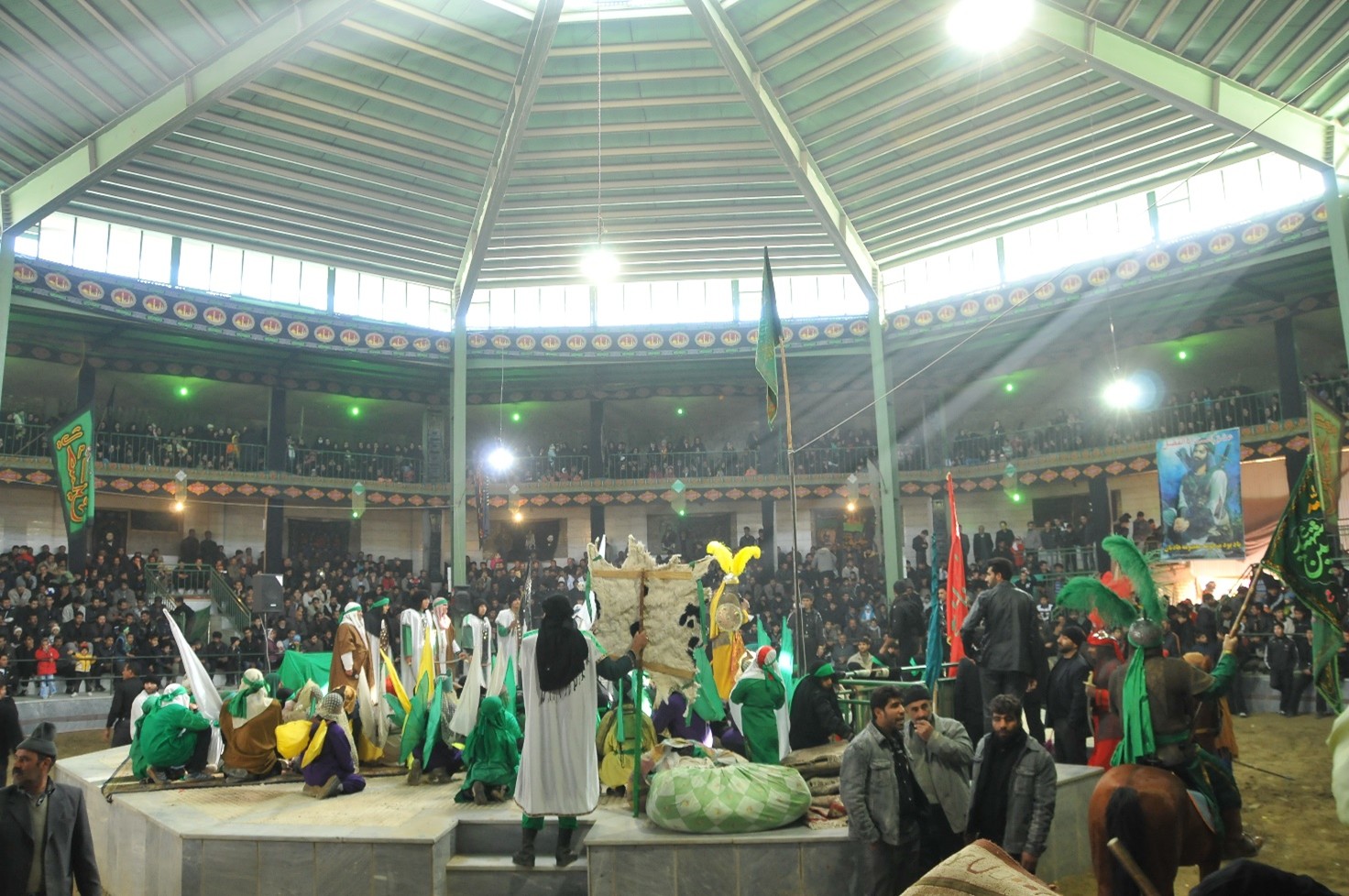
Figure 1: Hur-Ta‘ziyah, Isfahan, 2011.

Taʿziyah, a ritual deeply embedded in Iran’s cultural and religious fabric, has been interpreted through multiple lenses over the centuries. Its trajectory — from a fragmented symbolic practice to a powerful collective narrative resonating across religious and political spheres — parallels the broader evolution of Iranian cinema. To trace the history of Taʿziyah is, in many ways, to trace the evolving cultural, social, and political consciousness of Iran itself.
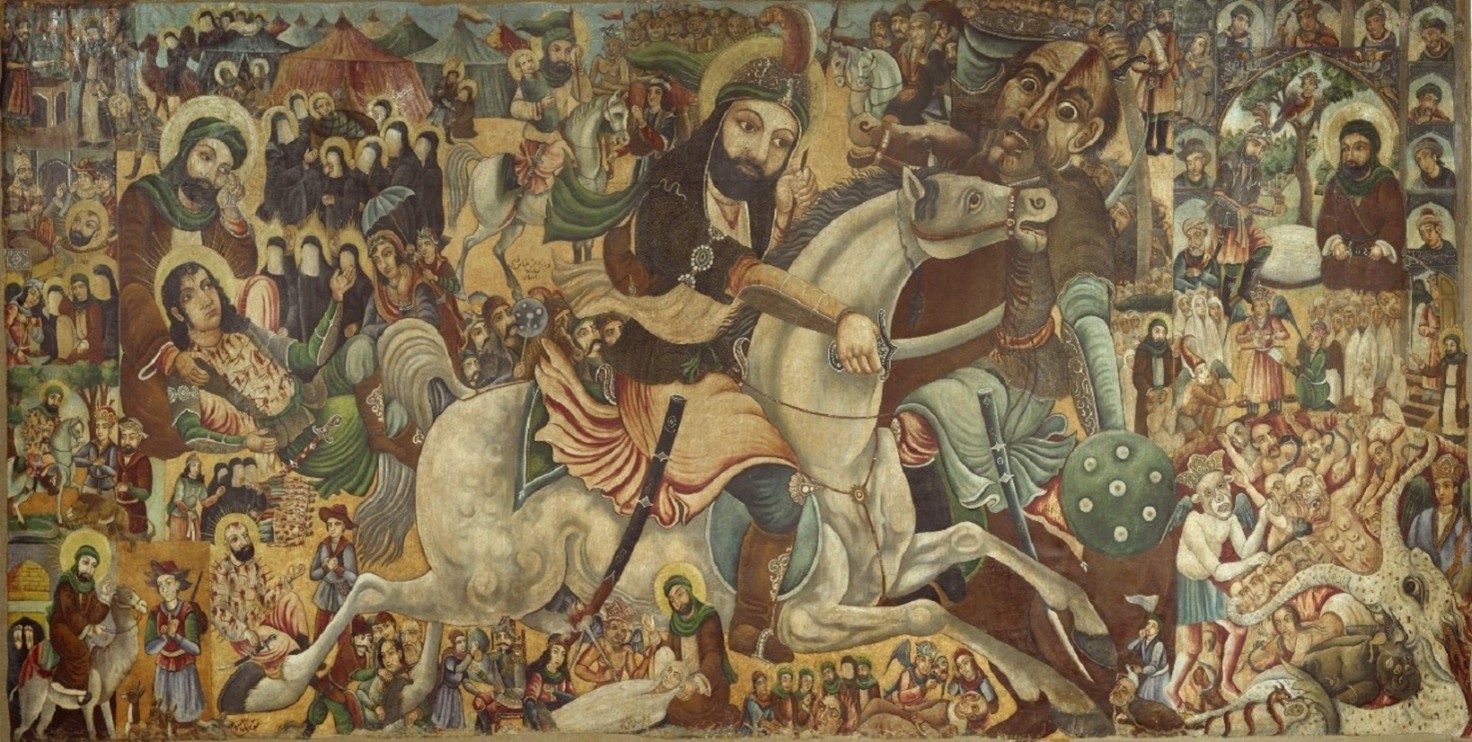
Historically, Western scholars often described taʿziyah in fragmentary and reductive terms—isolated performances tied to religious festivals, detached from their broader cultural and political contexts. Such readings were shaped not only by orientalist paradigms, but also by the historical conditions of taʿziyah itself, which only began to cohere into an institutionalized form with the consolidation of Shi’ite rule under the Safavīds (1501–1722). During this period, taʿziyah evolved into a dynamic medium of collective expression, as the entanglement of religion and politics intensified and Shi’ism was installed as the state’s ideological foundation. This transformation laid the groundwork for taʿziyah to emerge as a cultural and aesthetic system—ritual, performance, and politics becoming mutually constitutive.1Kathryn Babayan, Mystics, Monarchs, and Messiahs: Cultural Landscapes of Early Modern Iran (Cambridge, MA: Harvard University Press, 2002), ch. 5–6. She argues that Western scholarship historically described taʿziyah in fragmentary terms and that the ritual cohered into a cohesive institutional form with the Safavīd consolidation of Shi‘ite rule.
The first major Western account of taʿziyah appears in Die heutige Historie und Geographie oder der Gegenwärtige Staat vom Königreich Persien (1737) by Salmons and Van Goch. In this text, the authors describe the “Passion of the Saint and his followers” staged on grand, theatrically adorned chariots—an early observation of symbolic performance in which antagonists are faceless, representing abstract forces rather than individualized figures. Although lacking in ethnographic detail, this account reveals that early Western observers recognized the ritualistic and allegorical dimensions of taʿziyah.

As Parvīz Mamnūn notes, such accounts challenge dominant scholarly assumptions by suggesting that the roots of Persian Passion Plays may predate their formal institutionalization by over half a century. This early recognition affirms taʿziyah not merely as a liturgical custom but as an emergent performative structure—already shaped by symbolic abstraction and public ritualization—long before it became codified under Safavīd state ideology.2Parvīz Mamnūn, Ta‘ziyah dar Īrān [Ta‘ziyah in Iran] (Tehran: Nashr-i Markaz, 1991), 154-166.

Carsten Niebuhr’s Reisebeschreibungen nach Arabien und Anderen umliegenden Ländern (1765–1766) further advanced Western understanding by documenting a taʿziyah performance on Khārk Island in the Persian Gulf. In contrast to earlier symbolic modes, Niebuhr’s account describes a ritual in which formerly allegorical antagonists like Yazīd and Shimr appear as dramatized characters with distinctive traits and recognizable identities. This shift—from abstract embodiment to narrative individuation—marks a significant transformation in the performative structure of taʿziyah.

The transition reflects a broader socio-political dynamic: as public rituals increasingly served to articulate communal identity under Safavīd and post-Safavīd rule, taʿziyah developed into a theater of historical presence. It no longer merely referenced sacred events symbolically; it staged them with psychological and dramatic immediacy, giving political charge and moral depth to its protagonists. In this way, the ritual began to echo contemporary anxieties, social ruptures, and the lived experience of authority and martyrdom.

The development of taʿziyah during the Safavīd and Qājār periods reflects a gradual transformation from modest processions into complex theatrical performances. Under Safavīd rule, particularly during the 17th century, processional mourning rituals began to incorporate performative and spatial elements, eventually evolving into fully staged spectacles. This evolution culminated in the architectural emergence of Takiyahs—dedicated venues designed for ritual drama.

By the mid-19th century, during the reign of Nāsir al-Dīn Shah, Tehran alone hosted between 40 and 45 such structures, with the Takiyah Dawlat serving as a central space for court-sponsored taʿziyah. These spaces were not only physical sites but symbolic centers where religious devotion, political spectacle, and cultural aesthetics converged. As taʿziyah performances grew in scale and complexity, the antagonists (like Yazīd or Shimr) began to receive dramatic attention nearly equal to that of the protagonists—a shift already noted by 18th- and 19th-century observers such as William Franklin.3‛Ināyatallāh Shahīdī, Pazhūhish-i dar taʿziyah va taʿziyah-khvānī: az āghāz tā pāyān-i dawrah-yi Qājār dar Tihrān [A Study on Taʿziyah and Taʿziyah Performance: From the Beginning to the End of the Qājār Period in Tehran] (Tehran: Institute for Humanities and Cultural Studies, 2002), 172.

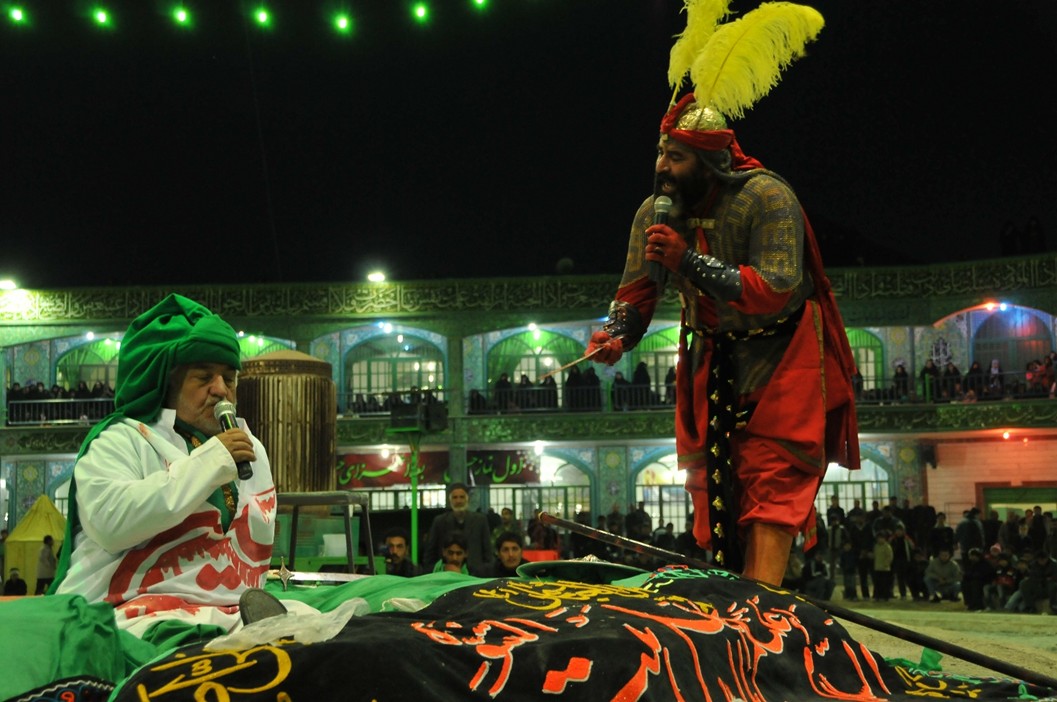
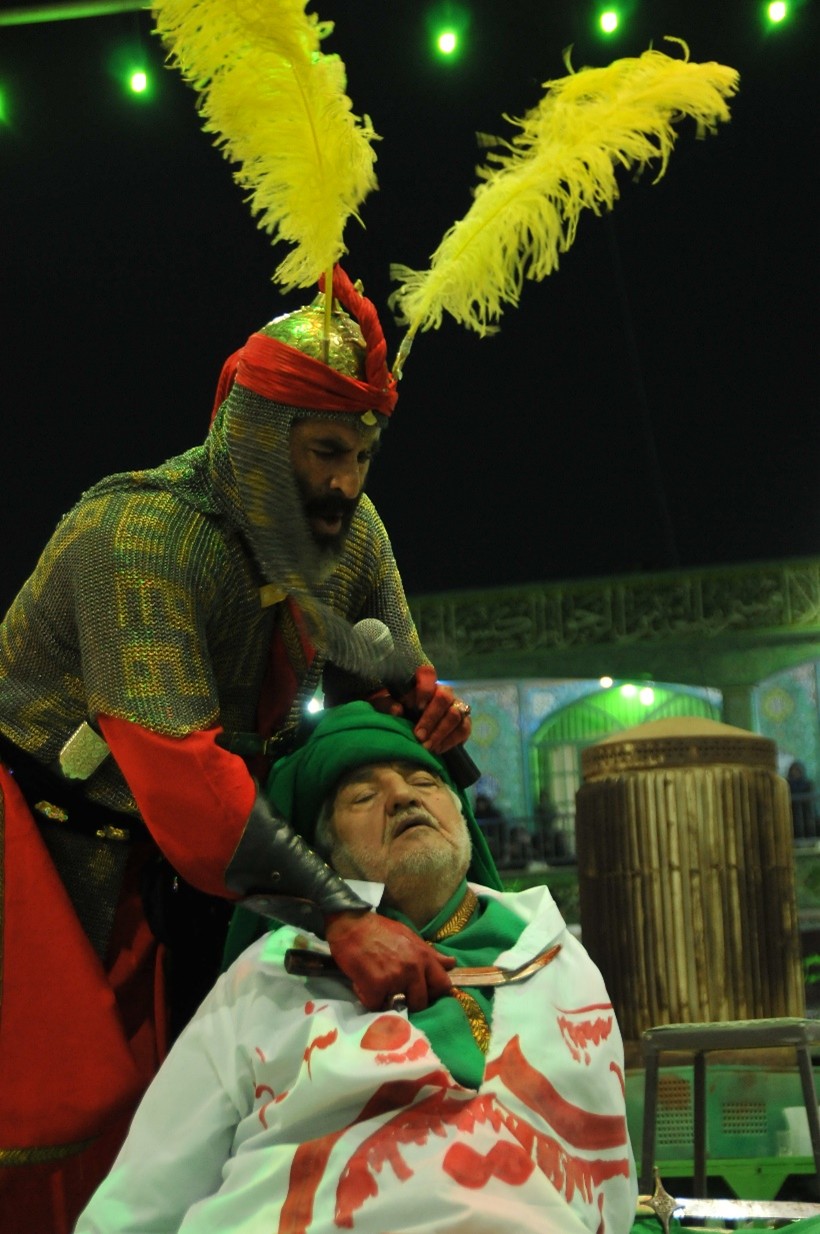
Figure 2: Husayn and Shimr, representing the protagonist and antagonist roles.

Figure 3 (right): The figure of Husayn, the protagonist.
Figure 4 (left): The figure of Shimr, the antagonist.

Figure 5: Shimr killing Husayn.

Figure 6: Shimr standing over the body of the slain Husayn.

In this article, I draw on Sigrid Weigel’s notion of figuration to explain how martyrdom and sacrifice function not merely as narrative elements but as culturally coded, affective forms. In Weigel’s use, figuration refers to a mode of representation that binds visual, textual, and ritual expressions to culturally embedded structures of meaning—particularly those surrounding violence, memory, and the sacred.4Sigrid Weigel, Märtyrer-Porträts: Figurationen des Opfers (Munich: Wilhelm Fink, 2008), ch. 3. This transformation of Taʿziyah’s performative nature—from a localized ritual act to a complex, semi-public theatrical practice—coincided with Iran’s broader cultural and political shifts. During the Qājār period (1785–1925), new socio-political dynamics, such as the rise of urban centers and encounters with modernizing forces, profoundly shaped Iranian cultural production. As a consequence of urbanization and modernization, traditional and modern forms of expression began to merge. This fusion paved the way for a cinematic grammar in which the depiction of martyrdom, sacrifice, and the figure of the hero-as-sacrifice—a character whose ethical stance is defined through voluntary suffering or death for a collective cause—reveals the aesthetic and ethical dimensions of Taʿziyah. In such representations, resistance and memory are not only thematized but cinematically enacted.

Historical Foundation and Internal Iranian Context

The evolution of taʿziyah is not simply a matter of linear historical continuity; it is also a dynamic process of aesthetic and formal transformation embedded in shifting religious and political structures. While its early instances during the Būyid dynasty (930–1062) manifest as communal processions and ritual lamentations, taʿziyah had not yet crystallized into a structured, codified form of performance. These early practices, as documented in sources such as Ahsan al-qisas by Ahmad ibn Abū al-Fath, reveal the emergence of key elements—public grief (collective mourning enacted in communal space), embodied memory (ritual actions that encode historical suffering in physical gestures),5Erika Fischer-Lichte, The Transformative Power of Performance: A New Aesthetics, trans. Saskya Iris Jain (London: Routledge, 2008), esp. 143–70. and symbolic acts (such as the carrying of water vessels to signify Husayn’s thirst). However, they lack the formalized dramaturgy, spatial arrangements, and character configurations that would later define taʿziyah as a theatrical ritual—a process explored in more depth in the following sections.6Ahmad ibn Abū al-Fath, Ahsan al-Qisas, as cited in Bahrām Bayzā‘ī, Namāyish dar Īrān [A Study on Iranian Theatre] (Tehran: Rushangarān, 1991), 115.

Under the Safavīds (1501–1722), taʿziyah evolved from disparate communal practices into a consolidated performance system, anchored in the state’s adoption of Shi’ism as both religious doctrine and political identity. This transformation affected not only the scale and institutionalization of taʿziyah but also its internal form. That is, the ritual developed into a structured theatre-ritual, encompassing defined roles—protagonists (muvāfiq-khvān), antagonists (mukhālif-khvān), and witnesses—choreographed spatial settings (takiyah), and a dramaturgy grounded in moral contrasts and emotional intensification. The Safavīd era thus marks the moment when taʿziyah shifted from processional movement to staged embodiment, from symbolic circulation to performative figuration.

The Qājār period (1785–1925) marked a significant expansion in the formal and narrative complexity of taʿziyah. With the construction of dedicated Takiyahs, ritual spaces were architecturally designed to intensify the emotional and aesthetic impact of the performances. Beyond its traditional focus on the events of Karbala, taʿziyah began to incorporate non-Islamic stories, thereby broadening its repertoire and challenging established boundaries of ritual tradition. This expansion not only diversified the thematic content but also tested the limits of what could be considered part of the ritual framework.

Concurrently, the formal grammar of taʿziyah — characterized by the use of doubling, direct address to the audience, stylized gestures, and non-linear temporality — became increasingly sophisticated, producing a distinctive theatrical vocabulary that blurred the lines between sacred ritual and public spectacle. Crucially, these formal developments were not isolated aesthetic innovations; they were shaped by — and responded to — shifting political and social pressures. The form of Taʿziyah evolved not only because artists sought new expressive techniques, but because taʿziyah’s very function within Iranian society changed from state-affirming ritual to a site of communal reflection, cultural negotiation, and at times, subversive political commentary.

Political History of Taʿziyah in the 20th Century: From the Constitutional Revolution to the Islamic Republic

The 20th century intensified these dynamics. The Constitutional Revolution (1905–1911) reframed Taʿziyah’s dramaturgy of martyrdom and resistance, aligning it with contemporary political struggles. The ritual’s moral binaries became were invested with new meanings, mapping onto real-world conflicts over justice, tyranny, and reform. Under Rizā Shah (1925–1941), Taʿziyah faced suppression. However, its formal elements survived, migrating into unofficial, provincial, or underground performances, where they assumed a more oppositional, even dissident function.

The early 20th century brought significant political upheaval to Iran, and with it, new interpretations and functions of taʿziyah. The Constitutional Revolution of 1905–1911, which sought to establish a parliamentary democracy, marked a pivotal moment in Iran’s modern history. Although ultimately suppressed by military force, the revolution’s ideals — justice, freedom, and resistance against tyranny — found symbolic resonance in the evolving dramaturgy of taʿziyah. Its moral binaries — the struggle between right and wrong, justice and oppression — were reactivated within the context of modern political discourse. The figure of the martyr, traditionally associated with Husayn of Karbala, came to represent broader national aspirations and political sacrifice — embodying not only religious virtue but also civic resistance and the quest for reform.7On the transformation of the martyr figure as a cultural and political construct, see Sigrid Weigel, Märtyrer-Porträts: Figurationen des Opfers (Munich: Wilhelm Fink, 2008), esp. ch. 1. Weigel describes the martyr not merely as a religious figure, but as a culturally coded embodiment of suffering, agency, and symbolic power within collective memory.

Under the Pahlavī dynasty, particularly during the reign of Rizā Shah (1925–1941), taʿziyah faced systematic suppression as part of the state’s top-down modernization and secularization policies. Rizā Shah’s government sought to curtail the influence of the Shi’i clergy, diminish public expressions of religious devotion, and recast Iran as a modern, centralized nation-state grounded in secular ideals. In this context, taʿziyah — a ritual theater deeply embedded in Shi’i religious memory and collective mourning — was perceived as incompatible with the new national image. Its performative structure, based on emotional intensity, historical lamentation, and mass participation, conflicted with the regime’s drive for order, discipline, and cultural Westernization.

As a result, taʿziyah performances were prohibited in urban areas, especially in Tehran, and gradually pushed to the margins — to provincial towns and villages, where they continued unofficially, often with reduced visibility and under threat of censorship. This marked a critical transformation in taʿziyah’s cultural function: from a state-affirming ritual with institutional backing, it became a form of subcultural resistance. Even under suppression, its formal strategies — symbolic abstraction, ritual repetition, and embodied memory — endured. These elements provided a persistent performative language through which the tensions of forced modernization, loss of religious identity, and political authoritarianism could be encoded and enacted.

The 1953 CIA-backed coup, which reinstalled Muhammad Rizā Shah, intensified this dynamic. In a political environment marked by censorship, surveillance, and repression, taʿziyah assumed renewed significance as a vehicle for both symbolic and political expression. The ritual’s core themes—martyrdom, sacrifice, and moral confrontation—resonated deeply with oppositional movements and intellectuals, connecting taʿziyah’s semiotic language to a broader cultural discourse of resistance and dissent. By the 1960s and 1970s, as Iranian cinema emerged as a major arena of aesthetic innovation and political reflection, the formal legacy of taʿziyah found new life on screen. Filmmakers such as Bahrām Bayzā’ī, Nāsir Taqvāʾī, and ʿAlī Hātamī did not merely draw on its thematic motifs—martyrdom, resistance, justice—but engaged directly with its performative structures. They appropriated taʿziyah’s non-linear temporality, stylized repetition, symbolic doubling, and direct audience address as cinematic strategies, translating its theatrical grammar into a visual idiom. This transposition underscores that the enduring power of taʿziyah lies not only in its religious or historical content, but in its formal plasticity—its capacity to migrate, transform, and regenerate across media while preserving its affective and ethical resonance. In these films, the moral and aesthetic tensions of taʿziyah were not archived as cultural relics, but reanimated as dynamic frameworks for reimagining national history, political trauma, and collective identity.8See Negar Mottahedeh, Representing the Unpresentable: Historical Images of National Reform from the Qajars to the Islamic Republic of Iran (Syracuse, NY: Syracuse University Press, 2008), ch. 4.

The Islamic Revolution of 1979 marked the moment when taʿziyah ’s formal and symbolic logics were once again reinscribed into the national political imagination, not as a frozen religious artifact but as a living, adaptable performative grammar — that is, a set of embodied expressive conventions and symbolic forms shaping how meaning is enacted in performance. Revolutionary discourse drew deeply on the language of martyrdom, sacrifice, and righteous struggle, infusing political mobilization with the ethical significance of taʿziyah. Post-revolutionary Iranian cinema, shaped by both the upheavals of the revolution and the enduring legacies of taʿziyah, inherited not only the latter’s themes but also its performative strategies: the layering of presence and absence, the tension between historical memory and contemporary urgency, and the continual refiguration of sacrifice as both loss and agency. The cinema that arose from this period continues to explore questions of justice, resistance, and martyrdom identity. These themes resonate not only with Iran’s current political situation but also with the timeless ethical and affective power embedded in the taʿziyah tradition.

Political Change and Taʿziyah: Reception in the Pre- and Post-Revolutionary Era (1979)

In the later Pahlavī era, specifically in 1976, the Shiraz Arts Festival emerged as a significant platform for reviving both scholarly and artistic interest in taʿziyah by showcasing it as a vibrant, living cultural form. Although the festival was initially conceived to celebrate the heritage and artistic achievements of the pre-Islamic Persian Empire, it unexpectedly became a site for renewed engagement with Islamic ritual performance. This paradoxical focus brought together theater practitioners, scholars, and diverse audiences in a shared exploration of taʿziyah ’s performative and cultural significance. Iranian filmmaker and cultural organizer Farrukh Ghaffārī played a pivotal role by organizing a dedicated symposium on taʿziyah within the festival framework, during which prominent taʿziyah troupes presented fourteen performances that attracted international scholars and local spectators alike.

This moment of cultural discovery, however, was marked by significant misunderstandings. Much of the early Western academic engagement with taʿziyah relied heavily on comparative frameworks that failed to capture its unique formal and cultural complexity. Scholars often likened it to European Medieval Passion Plays or interpreted its emotional impact through the lens of Aristotelian concepts such as “catharsis.”9Richard Schechner, Performance Theory (London: Routledge, 1988), esp. on comparative models; Peter J. Chelkowski, Ta‘ziyeh: Ritual and Drama in Iran (New York: New York University Press, 1979), Introduction. However, these comparisons were rarely based on rigorous structural analysis or situated within the broader context of Persian artistic and literary traditions. Rather, they reflected superficial analogies driven by a tendency to fit the unfamiliar into familiar Western categories and hierarchies.

What was systematically overlooked was the multi-layered artistic nature of taʿziyah. In other words, early interpretations failed to recognize taʿziyah ’s integration of poetic forms, musical systems (dastgāh), performative codes, visual aesthetics, and philosophical dimensions—all of which are deeply woven into Persian cultural life.10Maryam Palizban, Performativität des Mordes: Aufführung des Märtyrertums in Ta‘ziya als ein schiitisches Theater-Ritual (Berlin: Kadmos, 2022), ch. 3. Understanding taʿziyah requires not only knowledge of Shi’a religious ritual or theater history but also familiarity with Persian literary intertextuality, miniature painting traditions, calligraphic symbolism, and the emotional registers of mourning (sūg, mātam) that permeate Iranian cultural expression. Without this integrated perspective, many interpretations reduce taʿziyah to an “exotic” religious spectacle or a primitive precursor to European dramatic forms. In doing so, they overlook its sophisticated synthesis of artistic, social, and spiritual elements.11Maryam Palizban, Performativität des Mordes: Aufführung des Märtyrertums in Ta‘ziya als ein schiitisches Theater-Ritual (Berlin: Kadmos, 2022), ch. 4, on the interweaving of music, poetry, and visual culture.

As I have argued elsewhere12Maryam Palizban, Performativität des Mordes: Aufführung des Märtyrertums in Ta‘ziya als ein schiitisches Theater-Ritual (Berlin: Kadmos, 2022), ch. 5, on the critique of epistemic asymmetries in Western reception., this interpretive negligence led to a form of epistemic reduction: taʿziyah was persistently framed through the lens of Western comparative aesthetics, without being understood as a living, internally coherent system of meaning embedded in Iranian cultural life. This distortion did more than flatten taʿziyah ’s complexity — it reproduced the deeper structural hierarchies of cultural authority, in which non-Western artistic forms were not only misread but systematically positioned as derivative, incomplete, or primitive in relation to an unmarked Western norm.

After the 1979 revolution and the establishment of the Islamic Republic (confirmed through a referendum in 1980), Shi’a Islam was not only reaffirmed as the state religion — it became the symbolic foundation of the nation’s reconfigured identity. This transformation unfolded most visibly during the eight-year Iran–Iraq War (1980–1988), which provided a historical and ideological stage on which the figures and narratives of Shi’a history were reactivated and repurposed. Although the conflict unfolded within the geopolitical tensions of the Cold War, its internal narration in Iran assumed a different register: it was framed as a defensive and existential war — not merely a matter of territorial integrity, but of spiritual survival. This framing was not without external corroboration. A United Nations report from December 9, 1991 (S/23273) explicitly identified Iraq as the initial aggressor, citing violations of international peace and security.13United Nations Security Council, “Report on the Situation between Iraq and Iran,” S/23273, December 9, 1991. Similarly, The Economist published on May 30, 1987 detailed the stark imbalance in military capacity between the two nations, indirectly reinforcing the perception of Iran’s isolation and victimhood.14The Economist, September 19–25, 1987. These documents, though politically neutral, lent unintended legitimacy to the Islamic Republic’s narrative: a nation under siege, resisting annihilation.

Within this framework, the war was not simply a military confrontation — it was sacralized, absorbed into the dramaturgy of Taʿziyah. Soldiers were no longer combatants in a conventional sense; they were cast as innocent martyrs, enacting a contemporary Karbala. The battlefield became a ritual space, and the fallen were transfigured into aesthetic-political figures of redemption. This cultural transformation — the transposition of sacred history into modern war — will be further explored in the next section.

Although the Islamic Republic defines its national and religious identity through Shi’a history and symbolism, the position of taʿziyah within this framework has remained paradoxical. Clerical and political authorities have repeatedly criticized or marginalized the ritual as an emotionally excessive and theatrically embellished distortion of Shi’a history. ‛Ināyatallāh Shahīdī, in his Taʿziyah va Taʿziyah-Khvānī, briefly acknowledges this tension, though it is not the central concern of his research.15‛Ināyatallāh Shahīdī, Pazhūhish-i dar taʿziyah va taʿziyah-khvānī: az āghāz tā pāyān-i dawrah-yi Qājār dar Tihrān (Tehran: Institute for Humanities and Cultural Studies, 2002), 63-69, 120-123. The stance of any political system toward a mass-moving performance practice is inherently fraught, and the Islamic Republic is no exception. While taʿziyah’s deep-rooted connection to revered Shi’a figures prevents its outright suppression, its imaginative and affectively charged reframing of sacred narratives continues to provoke ambivalence. It is precisely this capacity—to move between commemoration and reinterpretation, between devotion and theatricality—that renders taʿziyah a powerful but contested cultural form in post-revolutionary Iran.

Far from disappearing, taʿziyah continues to thrive in spaces beyond the gaze of state institutions and cultural authorities. Although it has been increasingly relegated to smaller towns and rural provinces, its social vitality remains unmistakable. When I visited a village near Isfahan in 2011, I encountered a newly built open-air arena dedicated exclusively to taʿziyah — a space with the capacity of a sports stadium. This encounter, striking in its scale and intentionality, revealed how taʿziyah endures not merely as a relic of the past but as a living cultural form that continues to shape communal identity, religious emotion, and aesthetic practice. It reminded my research team and me that taʿziyah persists not through official endorsement, but through grassroots devotion and affective memory — often in spaces that remain peripheral to the centralized cultural imaginary of the Islamic Republic.

Taʿziyah as Performance Practice16Here, “performance practice” refers to the collective, ritualized enactment of taʿziyah as a living tradition that integrates historical narrative, religious meaning, and social engagement.

At its core, taʿziyah stages the departure, resistance, and uprising of marginalized communities—key motifs deeply rooted in Shi’a history. The “departure” signifies exile or forced displacement, a rupture that initiates ongoing struggles for justice and recognition. These themes are not mere abstractions but lived experiences that shape collective memory and identity.

Approaching taʿziyah as a performance means engaging with it not simply as historical content but as a dynamic, communal practice. As Rainer Forst argues in The Right to Justification, human practices are inseparable from the justifications their participants make—to themselves and others—for their actions, whether explicitly stated or implicitly felt.17Rainer Forst, Das Recht auf Rechtfertigung (Berlin: Suhrkamp, 2007), 9. Each taʿziyah enactment thus functions as a communal assertion of legitimacy, embedding itself within a continuous chain of political, cultural, and religious contexts extending from early Shi’a Islam to the present day.

Building on earlier research, my analysis demonstrates that the moment of performance is a crucial space where history, ritual, and social practice intersect and interact. This intersection is not static but an evolving process through which collective identity and memory are continuously reinterpreted and reaffirmed. Understanding taʿziyah in this way moves beyond seeing it as a fixed religious or theatrical relic; instead, it reveals a living tradition that negotiates questions of power, justice, and belonging within the contemporary Iranian socio-political landscape.

Conceptual Framework on Taʿziyah

The concept of Taʿziyah presents fundamental challenges to theater studies. Since the 1960s, scholars have grappled with how to categorize it. On one hand, the absence of dramatic illusion combined with the intense audience engagement in taʿziyah has led to comparisons with the Brechtian Verfremdungseffekt and the Greek notion of catharsis; on the other hand, its deep ritual roots complicate these alignments and resist straightforward theatrical classification.18Parviz Mamnoun, “Ta‘ziyeh from the Viewpoint of the Western Theatre,” in Ta‘ziyeh: Ritual and Drama in Iran, ed. Peter J. Chelkowski (New York: New York University Press, 1979), 154–166; M. J. Mahjub, “The Effect of European Theatre and the Influence of Its Theatrical Methods upon Ta‘ziyeh,” in Ta‘ziyeh: Ritual and Drama in Iran, ed. Peter J. Chelkowski (New York: New York University Press, 1979), 137–153. Persian-language scholarship has likewise struggled with the terminology, oscillating between namāyish (“presentation,” “performance”) and broader concepts like āyīn-i namāyish (“ritual performance”), as used by figures like Bahrām Bayzā’ī and ʿInāyatallāh Shahīdī.19‛Ināyatallāh Shahīdī, Pazhūhish-i dar taʿziyah va taʿziyah-khvānī: az āghāz tā pāyān-i dawrah-yi Qājār dar Tihrān (Tehran: Institute for Humanities and Cultural Studies, 2002), 27.

The interdisciplinary nature of Taʿziyah—encompassing religious practice, literature, anthropology, and performance studies—makes it resistant to reductive definitions. Scholars such as Peter Chelkowski and Richard Schechner have emphasized its hybrid status, highlighting how Taʿziyah blurs the boundaries between ritual and theater. Complementing this view, Jalāl Sattārī argues that Shi’ism uniquely developed a form where ritual transforms into theater, coining the term “national drama.”20Jalāl Sattārī, Zamīnah-yi ijtimā‛ī-i ta‛ziyah va ti’ātr dar Īrān [The Background of Ta‘zieh and Theatre in Iran], (Tehran: Nashr-e Markaz 2008), 89. However, earlier Eurocentric frameworks often failed to grasp its embeddedness in Persian poetic, musical, and visual traditions, misreading it either as a primitive counterpart to Christian Passion Plays or isolating it as an “exotic” form of theater.21Maryam Palizban, Performativität des Mordes: Aufführung des Märtyrertums in Ta‛ziya als ein schiitisches Theater-Ritual (Berlin: Kadmos, 2019), 41–63.

To address these conceptual tensions, this article draws on ritual theory, particularly the work of Catherine Bell, and performance studies as discussed in Matthias Warstat’s works, to understand Taʿziyah not merely as a belief system materialized in performance, but as a cultural system in its own right; that is, as a processual, dynamic space where aesthetic, political, and ethical dimensions converge.22Catherine Bell, “Ritualkonstruktion,” in Ritualtheorien: Ein einführendes Handbuch, ed. Andréa Belliger and David J. Krieger (Wiesbaden: VS Verlag für Sozialwissenschaften, 2008), 37; Matthias Warstat, “Beitrag zu Ritual,” in Metzler Lexikon Theatertheorie, ed. Erika Fischer-Lichte, Doris Kolesch, and Matthias Warstat (Stuttgart/Weimar: J. B. Metzler, 2005), 275. Rather than focusing on distinctions between “ritual” and “theater,” I argue that Taʿziyah operates precisely at their intersection, where belief, embodiment, and historical memory are performatively woven together.

The historical roots of Shi’ism are central to understanding Taʿziyah. Arising from disputes over succession after the death of the Prophet Muhammad, Shi’ite identity was profoundly shaped by the martyrdom of Husayn at Karbala in 680 CE — a foundational narrative of resistance against illegitimate power. From the early schisms to the formulation of the doctrine of the Twelve Imams and the long-standing marginalization of Shi’ite communities, the Karbala paradigm crystallized into both a spiritual and political template.23Moojan Momen, An Introduction to Shi‘i Islam: The History and Doctrines of Twelver Shi‘ism (New Haven: Yale University Press, 1985); Julius Wellhausen, Die religiös-politischen Oppositionsparteien im alten Islam (Berlin: Weidmann, 1901); Navid Kermani, “Martyrdom as a Trope of Political Self-Representation in Iran,” in Figurative Politics: On the Performance of Power in Modern Society, ed. Hans-Georg Soeffner and Dirk Tänzler (Opladen: Leske +Budrich, 2002), 89–100. It is within this framework that Taʿziyah emerged — not simply as a commemorative ritual, but as a reiterated act of embodied memory and protest, a theater-ritual whose aesthetic intensity remains inseparable from the historical wound it continually reinscribes.

The Aftermath of Karbala and the Ritualization of History as Political-Theological Paradigm

The aftermath of the Battle of Karbala in 680 CE marks a pivotal moment not only in Islamic political history but also in the formation of Shi’ite religious identity and ritual expression. After the brutal killing of Husayn ibn ʿAlī — the Prophet’s grandson — and his companions on the plains of Karbala, the surviving members of his camp, mostly women and children, were taken captive.24Farhad Daftary, The Ismāʿīlīs: Their History and Doctrines (Cambridge: Cambridge University Press, 1990), 101–110. They were paraded through the streets of Kufa and Damascus, the seat of the Umayyad Caliphate, in a deliberate display of imperial power. This coerced procession, intended as a performative assertion of Umayyad hegemony, was later reappropriated within Shi’ite ritual culture as a symbol of resistance — reenacted in passion plays and mourning ceremonies that transform defeat into defiance.

Among the captives, Zaynab, the sister of Husayn, emerged as a central figure of spiritual and political resistance. Her defiant speech in Yazīd’s court — delivered not with submission but with moral authority — has since been canonized as a founding moment of Shi’ite political theology.25Moojan Momen, An Introduction to Shiʿi Islam: The History and Doctrines of Twelver Shiʿism (New Haven: Yale University Press, 1985), 132–145. In this oration, she directly confronted tyranny and articulated a vision of justice rooted in the memory of Karbala, initiating a performative tradition in which speech, grief, and protest are inextricably linked.

The historical event of Karbala was gradually re-inscribed in Shi’ite collective memory as a mythic and sacred narrative, transforming a political and military defeat into a timeless paradigm of moral struggle. What had initially been a violent episode of suppression — the killing of Husayn and his followers by the forces of the Umayyad caliph Yazīd — was ritualized through oral transmission, poetic lamentation (mars̱iyah), and dramatized reenactments. Through these performative acts, Karbala was embedded into a sacred temporality that transcended historical contingency and became a cornerstone of Shi’ite communal identity.

The communalization of grief — that is, the transformation of personal mourning into a shared ritual practice — began in private settings but gradually evolved into public expressions of remembrance and protest. These developments were shaped by broader political conditions: the ʿĀshūrā commemorations gained increased visibility particularly during periods of relative tolerance or support for Shi’ism — for example, under the Abbasids in the eighth century and especially during the rule of the Būyid dynasty (tenth–eleventh centuries), which actively patronized Shi’ite institutions. Nevertheless, such commemorations remained deeply entangled in political tensions and power dynamics, often subjected to control, appropriation, or suppression by reigning authorities.

The institutionalization and aesthetic elaboration of taʿziyah reached its apogee during the Safavīd dynasty (1501–1722), when Shi’ism was enshrined as the official religion of Iran. In the process of consolidating political power and forging a unified Shi’ite identity, the Safavīd rulers strategically co-opted the narrative of Karbala as a legitimizing and mobilizing tool. Amidst the complex sectarian and geopolitical landscape of the early modern Middle East, the ritual culture of taʿziyah—encompassing mosque sermons, public processions, and dramatized commemorations—became central to both statecraft and religious life. The figure of the suffering Husayn, who resists unjust authority, was elevated as an archetype embodying moral-political resistance and spiritual sovereignty. This symbolic mobilization served not only to reinforce the divine right of the Safavīd rulers but also to embed a collective ethos of resistance and communal solidarity among Shi’ite subjects, thereby shaping a distinct socio-political consciousness.

Within Shi’ite theological discourse, Husayn’s martyrdom is not understood as a mere defeat, but as a deliberate, redemptive act of self-sacrifice in defense of divine justice (haqq). This refiguration casts martyrdom as an active ethical praxis—an existential stand that undergirds Shi’ite notions of cosmic order and moral agency. The ritual remembrance of Karbala during the month of Muharram, and especially on the tenth day—ʿĀshūrā, which is dedicated to Husayn’s martyrdom—serves as a performative re-enactment in which historical time collapses into ritual time. Unlike other days of mourning, which commemorate additional martyrs of the Karbala narrative, ʿĀshūrā is marked by the full dramatic rendering of Husayn’s final stand. In this commemorative frame, a liminal temporality emerges: a charged in-between space where the historical and the sacred interpenetrate, allowing participants to embody the events not as distant memory, but as present, living truth.26Mahmoud Ayoub, Redemptive Suffering in Islam: A Study of the Devotional Aspects of  Ashura in Twelver Shiʿism (The Hague: Mouton, 1978), especially 142–153. See also Victor Turner, From Ritual to Theatre: The Human Seriousness of Play (New York: PAJ Publications, 1982), for his theorization of liminality in performance contexts.

This temporal and performative collapse is among the most distinctive features of taʿziyah, enabling an embodied and affective mimesis that differs fundamentally from Western theatrical paradigms. As Peter Chelkowski observes, the ritual does not merely represent historical events; it actualizes them. The stage becomes the space of Karbala itself, and the performers are not actors in the conventional sense but vessels through which the Imams and martyrs become present.27Peter Chelkowski, “Taʿziyeh: Indigenous Avant-Garde Theatre of Iran,” in Taʿziyeh: Ritual and Drama in Iran, ed. Peter Chelkowski (New York: New York University Press, 1979), 1–11. This form of sacred performance emphasizes presence over illusion, and spiritual immediacy over aesthetic distance, allowing the spectators to engage in a mode of witnessing that is both emotional and participatory.

Erika Fischer-Lichte’s concept of the “autopoietic feedback loop” is particularly germane here: through the dynamic interaction between performers and audience, taʿziyah generates a heightened, co-created reality in which ritual identification fosters profound communal and religious experience. This reciprocity effectuates a dissolution of conventional spectator-performer dichotomies and engenders a collective effervescence that reinforces Shi’ite communal bonds and sustains the socio-political paradigms encoded in the martyrdom narrative.28Erika Fischer-Lichte, The Transformative Power of Performance: A New Aesthetics (New York: Routledge, 2008), 83–90. While conventional performance theory often builds on binary oppositions such as performer/spectator or presence/representation, taʿziya challenges these categories by generating a ritual space in which such distinctions are suspended or transgressed. Rather than organizing the analysis around fixed dichotomies, this article seeks to reflect the fluid, affective, and co-constitutive logic of taʿziya itself.

Theatrical Structure and Ritual Function of Taʿziyah

Taʿziyah refers to a highly developed Iranian theater-ritual centered on the events of Karbala, with the figure of Husayn at its focal point. Over centuries, taʿziyah has evolved not merely as an extension of Shi’ite religious mourning but as a unique Iranian cultural form, intertwining epic storytelling (naqqālī), religious recitation (rawzah-khvānī), visual symbolism, and traditional musical forms. I use the term “theater-ritual”29Maryam Palizban, Performativität des Mordes: Aufführung des Märtyrertums in Ta‛ziya als ein schiitisches Theater-Ritual (Berlin: Kadmos, 2019), 29–33. here not in a generalized anthropological sense but to signal a hybrid form that fuses aesthetic performance and religious enactment—one that both stages and sacralizes. Taʿziyah thus stands apart from broad categories such as “Islamic performative practices,” which often fail to account for its specifically Iranian aesthetic, ritual lineage, and historical situatedness.

Figure 7: Battle of Karbala, by ‛Abbās al-Mūsavī (19th century). Brooklyn Museum, New York.

Unlike Western or Aristotelian dramatic forms, taʿziyah unfolds within a cyclical, ritual structure. The events of Karbala are not presented as a closed past but are ritually summoned into an ever-recurring now. This temporal reactivation collapses historical distance, drawing both actors and spectators into a participatory field where memory becomes affective encounter. The performance engenders a shared experiential space—not merely through representation, but through embodied witnessing—where the ethical stakes of Husayn’s stand against tyranny are collectively reinhabited. The outcome—the death of Husayn—is foreknown, yet its repetition intensifies, rather than diminishes, the emotional and spiritual charge: historical memory is not recited, it is relived as presence.

A notable dimension of taʿziyah is its moral structure: Husayn and his companions represent truth and justice, while Yazīd’s forces embody oppression and betrayal. This polarity is articulated not only narratively but also through a system of codified visual and sonic signs: the figures of righteousness appear in white or green, accompanied by lamenting melodies; the antagonists wear red or black, underscored by harsh, discordant sounds and exaggerated, violent gestures. These aesthetic elements function not as neutral theatrical devices but as carriers of ethical meaning, enacting a sensory grammar of virtue and transgression that is immediately legible to the community of spectators. In taʿziyah, form is never separate from ethical force—performance becomes an embodied ethics.

Women occupy a central symbolic position within taʿziyah, despite being traditionally portrayed by male actors (zan-pūsh). These portrayals are not attempts at imitation, but rather deliberate stagings that transform female figures—especially mothers and sisters—into ethical and affective icons. Characters such as Zaynab, Husayn’s sister, emerge as powerful voices of remembrance and resistance after the events of Karbala, embodying moral testimony rather than gendered realism. Their presence marks a sacralized and desexualized space, shaped by gestures of mourning, veiling, and ritualized speech. This symbolic order, often reinforced by the presence of children and animals on stage, reflects a broader “aestheticization of the real,” wherein family structures and social taboos—particularly around incest and martyrdom—are transfigured into theatrical and ethical forms.30Maryam Palizban, Performativität des Mordes: Aufführung des Märtyrertums in Taʿziya als ein schiitisches Theater-Ritual (Berlin: Kadmos, 2022), 68–75.

Figure 8: The figure of Zaynab, Husayn’s sister, featured in a ta‛ziyah performance.

Figure 9: Children participating in a taʿziyah commemorating the martyrdom of Husayn.

What makes taʿziyah particularly distinctive is its capacity to integrate a wide array of stories and historical settings while remaining anchored in the Karbala paradigm. Even when narratives unfold in other temporal or geographic contexts, the Karbala story is invoked and woven into the fabric of the performance. This demonstrates the integrative and adaptive power of taʿziyah, allowing it to respond to contemporary social or political concerns without ever relinquishing its foundational symbolic structure centered on martyrdom, sacrifice, and moral struggle. While these concerns are relevant, they should be addressed in other studies, as they fall outside the scope of the present article.

The spatial configuration of taʿziyah performances plays a crucial role in shaping the ritual experience. Traditionally performed in open, circular spaces (maydān), often in public squares or courtyards, the stage is surrounded on all sides by the audience. There is no separation between stage and spectator, no proscenium arch, no darkened auditorium. Spectators are free to move, to change their position, or even to leave the space during the performance. This openness creates a fluid and participatory atmosphere, where the audience is not passively seated in fixed rows but is dynamically engaged, both physically and emotionally, in the unfolding of the ritual drama. The absence of spatial separation amplifies the collective dimensions of grief and ethical reflection, reinforcing the shared nature of the experience.

This article asserts that taʿziyah should not be understood merely as a passion play or a fixed religious theater form, but rather as a dynamic, evolving ritual-theatrical system. It mobilizes multiple layers of Iranian cultural expression—poetic, musical, visual, and embodied—and inscribes them into a space of communal ethical encounter. By “communal ethical encounter,” I refer to the performative creation of a shared realm in which spectators and performers alike engage in mourning, remembrance, and moral reflection. Through its formal flexibility, profound moral resonance, and intimate spatial dynamics, taʿziyah functions as a potent medium for transmitting collective memory, shaping communal identity, and articulating political and ethical concerns across generations.

One of the most profound dimensions of taʿziyah lies in its ritual manipulation of time. The events of Karbala are not staged as distant historical occurrences, but as events unfolding in the immediate present. Within the performative logic of taʿziyah, the past is not represented but re-enacted, re-lived. For the spectators, this is not a symbolic remembrance of something that has passed, but a direct encounter with a recurring, lived present. This ritual presentism collapses historical distance and transforms the audience into witnesses rather than mere observers—a shift that is not only emotional but also epistemological, as it produces embodied historical knowledge.

Such a temporal structure carries far-reaching implications. It produces a cyclical vision of history, in which martyrdom is not framed as final defeat, but as a constantly renewed testimony to divine justice. Each year, Husayn’s death is not merely commemorated, but ritually re-lived—an act through which the longing for a just world is once again collectively affirmed. In this way, taʿziyah operates both as an open wound and as a healing gesture: it keeps the trauma alive, but precisely in doing so, it turns the wound into a source of communal resilience and spiritual endurance.

Crucially, taʿziyah achieves this not only through ritual temporality but also through the way it frames the sacred figures: as a family. The saints are not remote icons but fathers, mothers, sons, daughters, brothers, whose bonds mirror those of the spectators. This familial framing deepens the emotional connection between stage and audience, collapsing not just historical, but existential distance. It is here, in this intimate proximity, that we can begin to trace the resonances between taʿziyah and cinema — between ritual theater and filmic representation — and ask how both forms build their power on the dynamic interplay of memory, affect, and embodiment.

Between Ritual and Screen: Taʿziyah and the Question of Cinema

What becomes of taʿziyah’s capacity to transform historical trauma into a living, cyclical presence when it enters the medium of cinema? How can a ritual-theatrical form—rooted in bodily co-presence, collective mourning, and temporal repetition—be translated into a cinematic language shaped by framing, montage, and mediated time?

At first glance, ritual performance and cinema might appear as opposing modes of expression: one grounded in immediacy and shared space, the other unfolding in the dislocated temporality of recorded images. Yet they are united by a deeper logic of affect and spectatorship. Both activate the body of the viewer, both mobilize memory through form, and both draw their power from transforming spectators into witnesses.

In taʿziyah, the portrayal of the sacred as familial—not as distant religious abstraction, but as embodied figures of fathers, mothers, and children—creates an intimate relational field. It binds the audience emotionally and ethically to the suffering enacted before them. The spectators are not merely watching; they are drawn into the drama as mourners and co-witnesses. This affective logic reverberates in Iranian cinema, where the influence of taʿziyah can be traced in the ways films construct familial and historical relationships, inviting the viewer into a space of shared remembrance and emotional re-experiencing.

This section will explore how the structures of taʿziyah — its ritual temporality, its affective force, and its emphasis on familial connection — have shaped the aesthetics and narrative strategies of Iranian cinema. By examining specific films, we will ask: How does cinema inherit, transform, or even betray the ritual logic of taʿziyah? And how does this ongoing negotiation reveal deeper tensions between tradition and modernity, between collective memory and individual spectatorship?

Among the filmmakers most deeply engaged in the project of aesthetic de-westernization, Bahrām Bayzā’ī stands out as a central figure. As both playwright and filmmaker, Bayzā’ī developed a highly distinctive style that draws on pre-Islamic myth, Persian epic traditions, and indigenous performance forms—particularly naqqāli (storytelling) and taʿziyah. For Bayzā’ī, these elements are not cultural quotations, but formal reservoirs: they offer alternative dramaturgies, temporalities, and modes of spectatorship that resist dominant cinematic conventions.

His film Marg-i Yazdgird (Death of Yazdgerd, 1982) exemplifies this approach. While set in the pre-Islamic Sasanian era and revolving around the mysterious murder of the last Sasanian king, the film eschews linear historical reconstruction. Instead, it unfolds as a ritualized investigation: a courtroom of memory, composed of testimonies, re-enactments, and ever-shifting versions of the same event. The circular structure destabilizes chronology and draws the viewer into a temporality of repetition and uncertainty. This is where the resonance with taʿziyah becomes palpable—not because the content mirrors Karbala, but because the film enacts a similar dramaturgy of collective witnessing, ethical interrogation, and the endless re-staging of a trauma that refuses closure.

Figure 10: Still from Marg-i Yazdgird (Death of Yazdgerd), directed by Bahrām Bayzā’ī, 1982.

These strategies are already present in Bayzā’ī’s earlier works. In Qarībah va Mih (The Stranger and the Fog, 1974), the arrival of a nameless stranger in a fog-shrouded village triggers a series of symbolic confrontations between past and present, community and outsider, memory and forgetting. The film’s slow, ritualized pacing and its charged visual atmosphere recall the processional quality of taʿziyah, where every gesture and movement acquires symbolic weight.

Figure 11: Still from Qarībah va Mih (The Stranger and the Fog), directed by Bahrām Bayzā’ī, 1974.

In Kalāq (The Crow, 1976), Bayzā’ī stages an allegorical narrative in which the figure of the crow functions as both omen and witness—echoing the doubling of roles and the symbolic condensation characteristic of ritual theater. The story follows a woman whose fiancé has disappeared under mysterious circumstances; her search for the truth is interwoven with dreamlike sequences in which the crow appears repeatedly, blurring the line between memory, hallucination, and fate. The crow, as an ambiguous figure, serves both as a harbinger of loss and a silent observer of unfolding events, embodying a presence that is both external and internal to the characters’ psyche. Here, too, Bayzā’ī resists Western narrative closure, opting instead for an open-ended, mythic structure that invites reflection rather than resolution.

Finally, Charikah-yi Tārā (Ballad of Tara, 1979) weaves together historical legend and contemporary rural life, focusing on a woman who inherits a sword from an ancient warrior. As Tara navigates between the everyday and the mythic, the film a space where past and present, legend and lived experience, ritual and realism constantly intersect — again recalling the temporal layering of taʿziyah, where the Karbala events are not confined to history but enacted anew in each performance.

Near the end of Charikah-yi Tārā, a striking moment crystallizes this intertwining of history, myth, and emotional wound. An army of the dead rises from the sea, and among them is the fallen hero with whom Tara has fallen in love. Yet instead of fulfilling the promise of union or resolution, the warrior disappears, leaving Tara alone — wounded not just by personal abandonment, but by the deeper historical betrayal embodied in the figure of the dead soldier. This moment transforms the mythical encounter into an allegory of historical rupture: Tara’s wound is not merely romantic, but becomes a symbol of the unhealed, cyclical wounds that run through Iranian history, where the past continually returns, yet never offers closure.

Figure 12: Still from Charikah-yi Tārā (Ballad of Tara), directed by Bahrām Bayzā’ī, 1979.

Here, the emotional landscape of the film converges with what I call the performative logic of taʿziyah—that is, the way in which ritual repetition, embodied affect, and present-tense enactment allow historical wounds to be relived rather than resolved. The dead are not gone, the past is not past, and every attempt at reconciliation reopens the trauma. The viewer is drawn into a space where the private and the collective, the intimate and the historical, become indistinguishable — echoing the way taʿziyah binds individual grief to communal mourning, personal loss to the cosmic drama of injustice.

Perhaps the most haunting of Bayzā’ī’s meditations on time, death, and narrative is Musāfirān (The Travelers, 1991), a film that opens with a family preparing for a wedding celebration. What they do not know — and what the viewer gradually comes to understand — is that the expected guests have already died in a car accident on their way to the ceremony. The house fills with anticipation, ritual gestures of hospitality and joy, while the specter of death quietly occupies the frame, never fully seen, yet always present.

What makes Musāfirān so powerful is not merely its tragic premise, but its intricate layering of temporal and emotional registers. The dead and the living coexist in the same cinematic space; moments of celebration are shadowed by mourning. The viewer, knowing what the characters do not, becomes a kind of ritual witness, drawn into a liminal temporality where catastrophe unfolds not once, but continually. This slow, ceremonial pacing echoes the temporal logic of taʿziyah, where the death of Husayn is not a singular historical moment, but a recurring enactment — a wound re-entered through each performance. In Musāfirān, the characters seem to drift through a world suspended between awareness and unknowing, their movements shaped less by narrative cause and effect than by the gravity of mourning itself.

Figure 13: Still from Musāfirān (The Travelers), directed by Bahrām Bayzā’ī, 1991.

With Musāfirān, Bayzā’ī brings his earlier engagements with myth and historical memory into a sparse, ritualized cinematic language. This is not a cinema of resolution, but of deferral — where storytelling itself becomes a gesture of remembrance, and loss is performed rather than narrated. Across these films, Bayzā’ī’s work might be described as a form of ritual modernism: a cinematic practice that draws less from Western avant-garde aesthetics than from the embodied traditions of Iranian performance. By working with repetition, symbolic condensation, and cyclical time, Bayzā’ī constructs a cinematic space that resonates deeply with the structures of taʿziyah, even when the films themselves are not explicitly religious.

While Bayzā’ī’s cinema draws its strength from overt invocations of myth, epic, and theatrical ritual — weaving dense symbolic tapestries that directly confront cultural memory — ‛Abbās Kiyārustamī approaches the question of ritual from another angle. His minimalism, observational precision, and the porous boundary between fiction and documentary might seem far removed from the heightened theatricality of taʿziyah or its allegorical forms in Bayzā’ī’s films. Yet Kiyārustamī, too, is deeply invested in similar questions: How do we witness suffering? How does repetition, reenactment, or even the smallest performative gesture shape our perception of reality? And how might cinema — like taʿziyah — call upon its audience not simply to watch, but to become ethically and emotionally involved?

Where Bayzā’ī reactivates historical and mythical trauma through spectacle and symbolic condensation, Kiyārustamī stages a quieter kind of ritual: one built on minimal variation, careful repetition, and a continual unsettling of the line between performance and life. In both bodies of work, however, we encounter a cinema that resists linear resolution and clear closure — a cinema that invites the viewer to participate in the very unfolding of the experience. This active engagement with the artwork — the insistence that viewing is never neutral — is what both filmmakers inherit, in different registers, from the structure of taʿziyah. The audience is not a mere observer, but an emotionally implicated witness.

At first glance, minimalism and ritual may appear to stand at odds: the one strips away ornamentation, paring down to essentials; the other is often associated with symbolic excess, repetition, and heightened affect. And yet, the two converge in their temporal and attentional structures. Ritual is not only a matter of spectacle — it is a disciplined form, grounded in repetition, embodied rhythm, and the slow unfolding of meaning over time. In this light, minimalism can be understood as a ritual of reduction: a practice that hones perception, calibrates attention to subtle shifts, and invites the viewer into a durational experience where meaning is never given all at once, but emerges through sustained engagement.

In cinema, minimalism often foregrounds slowness, silence, and open-endedness, drawing the viewer into a meditative state that parallels the reflective space of ritual. The sparse aesthetic is not a withdrawal from meaning, but an invitation to participate more actively — to become attuned to subtle shifts, to fill in gaps, to confront the uncertainties that underlie the visible world. Like ritual, minimalist cinema creates a heightened awareness of presence and absence, of what is shown and what is withheld, and thus positions the viewer not as a passive recipient but as a co-creator of meaning.

Among Kiyārustamī’s mature works, Close-Up (1990) stands as perhaps the most direct cinematic parallel to taʿziyah’s ritual logic. The film restages the real-life trial of Husayn Sabziyān — a man who impersonated filmmaker Muhsin Makhmalbāf, was taken in by a middle-class family, and later arrested. Yet instead of documenting the case as a linear narrative, Kiyārustamī invites those involved — Sabziyān, the family, the judge — to re-enter their own memories and re-enact their roles on screen. In doing so, Close-Up transforms testimony into performance, history into ritual: the trial is not only recounted but re-lived, not to determine guilt, but to probe the emotional and ethical ambiguities beneath the surface of truth. This gesture — of returning to a wound, of embodying memory — echoes the structure of taʿziyah, where the past becomes present not through representation, but through its affective repetition.

Figure 14: Still from Close-Up, directed by ‛Abbās Kiyārustamī, 1990.

Here, the resonance with taʿziyah becomes unmistakable: Close-Up collapses historical distance, turning the viewer into a witness of a moral and existential drama that is both lived and staged, present and past. As in a taʿziyah performance — where the trauma of Karbala is not narrated but re-experienced — ‛Abbās Kiyārustamī’s film does not depict a closed episode of deception and humiliation, but reopens it, charges it with immediacy, and transforms it into a shared emotional space. Re-enactment here is not simply a formal strategy, but an ethical gesture: a refusal of closure, a way of holding open the wound so that it may be witnessed rather than silenced. In this gesture lies the film’s quiet radicalism — its insistence that cinema, like ritual, can carry memory not through explanation, but through affective presence.

This ritual dimension deepens in Ta‛m-i Gīlās (Taste of Cherry, 1997), a spare, meditative film about a man, Mr. Badī‛ī, who drives through the dry hills outside Tehran, searching for someone willing to bury him after his planned suicide. The film unfolds like a pilgrimage stripped to its essentials — not towards redemption, but toward silence. Along the way, Badī‛ī meets a series of men — a soldier, a seminarian, a taxidermist — each encounter echoing the previous one, each response subtly shifting the emotional register of the film. These repetitions do not build toward a conventional climax, but accumulate into a rhythm of listening and refusal, of presence and withdrawal. When the final man accepts Badī‛ī’s request, the moment brings not resolution but a fragile, suspended openness — a gesture that neither affirms nor negates the will to die, but holds both possibilities in tension.

Here, too, Kiyārustamī constructs a kind of secular taʿziyah: a ritual journey centered on death, loss, and the search for meaning, where the audience is invited not to judge or resolve, but to accompany, to witness, to inhabit the space of uncertainty. The minimalism of the film, its long takes and silences, functions like a meditative frame, opening up a contemplative space akin to the ritual temporality of taʿziyah, where what matters is not the plot, but the emotional and ethical weight carried by each moment, each repetition, each encounter.

Figure 15: Still from Ta‛m-i Gīlās (Taste of Cherry), directed by ‛Abbās Kiyārustamī, 1997.

In both Close-Up and Taste of Cherry, Kiyārustamī crafts a cinema of active witnessing, where the viewer is drawn into an unfolding drama that resists closure and demands ethical engagement — much like the spectator in a taʿziyah performance, who is not merely watching, but sharing in the collective re-experiencing of human vulnerability, moral failure, and the ever-repeating question of redemption. Kiyārustamī’s cinema, particularly from the late 1980s onward, marks one of the most radical shifts in Iranian narrative tradition, bringing minimalism and reflexivity to the center. While his films may, at first glance, seem worlds apart from the ceremonial intensity of taʿziyah, they are guided by similar structural and temporal logics: repetition, the dissolution of boundaries between fiction and reality, and the transformation of spectatorship into a form of participatory witnessing.

Figure 16: Film poster for Khānah-yi dūst kujāst (Where Is the Friend’s House?), directed by ‛Abbās Kiyārustamī, 1987.

Figure 17: Still from Zīr-i dirakhtān-i zaytūn (Through the Olive Trees), directed by ‛Abbās Kiyārustamī, 1994.

In Khānah-yi dūst kujāst (Where Is the Friend’s House? 1987), Zindagī va dīgar hīch (Life, and Nothing More, 1992), and Zīr-i dirakhtān-i Zaytūn (Through the Olive Trees, 1994), ‛Abbās Kiyārustamī constructs a loose trilogy that returns again and again to the same village, the same earthquake-stricken landscape, the same constellation of human encounters. Rather than providing narrative closure, each film reopens the questions posed by the previous one. The trilogy functions less as a linear sequence than as a layered ritual: it circles back over sites of loss, gestures of survival, and the fragile continuity of life in the wake of disaster. This structure parallels the cyclical temporality of taʿziyah performances, which do not “resolve” historical trauma but continually re-enact it, keeping its emotional and ethical stakes alive. In both cases, repetition is not redundancy but a mode of ethical presence — a way of insisting that certain wounds cannot be closed, only carried forward. Kiyārustamī’s self-reflexive cinematic strategies — his frequent acknowledgment of the camera, the porous boundary between actors and non-actors, and the visible presence of the filmmaking process itself — resonate with the meta-theatricality of taʿziyah. Just as performers in taʿziyah oscillate between sacred role and embodied presence, so too do Kiyārustamī’s films continually remind the viewer that they are watching an act of staging, of re-presentation. The viewer is thus not a passive observer but an implicated witness.

Kiyārustamī’s minimalism, far from being an aesthetic of absence, becomes a ritual practice of attention. By paring down cinematic elements to their essentials — gesture, gaze, landscape, silence — he sharpens the viewer’s awareness of repetition, variation, and affective resonance. The everyday becomes saturated with historical weight. In this light, Kiyārustamī’s cinema transforms the act of looking into a ritual of witnessing. Like the taʿziyah stage, where every gesture and every disruption of illusion bears the imprint of collective memory, his films invite the audience into a space where the visible world becomes charged with invisible histories — a sacred dramaturgy of the ordinary.

Yet ritual and theatricality in Iranian cinema take many forms — not all of them follow the path of minimalist reflection or mythic gravity. Farrukh Ghaffārī’s Zanbūrak (The Falconet, 1975), for instance, engages with historical and performative traditions in a radically different register. Where Kiyārustamī distills narrative into meditative slowness, Ghaffārī amplifies artifice: his mode is one of exaggeration, irony, and farce. Zanbūrak stands out precisely because it draws not only on historical legend but also on the popular aesthetics of theatrical play. Characters shift allegiances with puppet-theater-like abruptness; battles unfold in grotesquely stylized rhythms; and the titular zanbūrak — a small falconet cannon — functions less as a weapon of war than as a theatrical prop, unleashing narrative chaos instead of heroic resolution. This dramaturgy echoes forms such as shadow play and traditional puppet theater (khaymah shab bāzī), where exaggeration, playfulness, and artificiality are not only accepted but celebrated — and where moral or historical reflection is inseparable from stylized, performative excess.

Unlike Kiyārustamī, Ghaffārī does not seek ritual solemnity or ethical minimalism. Instead, he stages history as grotesque farce — revealing the absurd machinery of power, corruption, and betrayal. And yet, even in this satirical mode, Zanbūrak retains a logic of theatrical self-awareness that resonates with taʿziyah.31Michelle Langford, Allegory in Iranian Cinema: The Aesthetics of Poetry and Resistance (London: Bloomsbury, 2019), 45–60. Like taʿziyah, it foregrounds the act of performance itself: spectators are reminded that what they watch is a constructed spectacle, not a transparent window onto the past. Performance here becomes a reflexive space, in which the theatrical representation of history — even through parody — invites ethical reflection and collective awareness.

Beyond the experimental works of Bayzā’ī, Kiyārustamī, or Ghaffarī, another crucial strand of post-revolutionary Iranian cinema engages with taʿziyah not through its formal or ritual structure, but through narrative thematics. With the outbreak of the Iran–Iraq War (1980–1988), a new cinematic genre emerged — the so-called “Sacred Defense Cinema” (sīnimā-yi difāʿ-i muqaddas) — which reactivated the martyrdom narratives at the core of Shi’i religious imagination. In these films, themes of sacrifice, loyalty, and resistance are transposed directly onto the contemporary battlefield: soldiers become modern-day shuhadāʾ (martyrs), their deaths reverberating with the echo of Husayn and his companions at Karbala. Yet unlike the formal, performative logic of taʿziyah-inflected art cinema, this reference remains largely textual and allegorical — used to frame present-day events within a sacralized narrative of loss and redemption. These films, often state-sponsored or ideologically aligned, functioned as instruments of wartime propaganda: reaffirming religious ideals, national identity, and the sanctity of the ongoing conflict.

Figure 18: Still from “the Sacred Defense” film Ufuq (Horizon), directed by Rasūl Mullāqulīpūr, 1989.

Figure 19: Still from “the Sacred Defense” film Safar bih Chazzābah (Journey to Chazabeh), directed by Rasūl Mullāqulīpūr, 1996.

And yet, beyond their ideological function, these films contributed to an ongoing process of actualization: the continuous re-embedding of the Karbala paradigm into the lived and dying bodies of a new generation. In this sense, the war films of the 1980s and beyond extended the reach of taʿziyah’s martyr narratives, transforming them into cinematic myths that speak not only of historical grief, but of immediate, contemporary sacrifice. These war films, then, operate almost like taʿziyah performed on a sealed stage — oriented in one direction, filmed for the camera rather than enacted for a living community. Crucially, they forgo one of taʿziyah’s most vital theatrical principles: the dialectic of “playing” and “letting play,” the spatial openness that invites the spectator into the unfolding ritual. In their unidirectional form, they lose the carnivalesque disorder and archaic multiplicity that animate the ritual. What remains is no longer taʿziyah, but a fixed cinematic allegory — one that severs the performative core of the theater-ritual and replaces it with monumental myth.

What, then, does taʿziyah offer to the cinema — and why has its echo endured so persistently across decades of Iranian filmmaking?

At its heart, taʿziyah is not merely a story of martyrdom; it is the ritual reopening of a historical wound. Each performance does not close the wound of Karbala but insists on keeping it raw, exposed, and unresolved. It transforms grief into an active, public practice — turning private loss into a space of communal endurance and shared affect. Taʿziyah does not mourn in solitude; it collectivizes pain, brings familial intimacy into the realm of the political, and turns memory into motion.

In Iranian cinema, this ritual impulse has taken many forms. Filmmakers like Bayzā’ī and Kiyārustamī have explored it as a formal tension: how can the screen carry the weight of suspended time, of layered histories, of masks and echoes and the silent presence of the spectator? Others, especially in the Sacred Defense films, channel the wound more directly into national allegory, where the Karbala paradigm is mobilized to sanctify contemporary violence — transforming religious grief into state ideology. Yet even this binary — between formalist abstraction and ideological instrumentalization — proves unstable. In recent decades, a younger generation of filmmakers has approached taʿziyah not as a structure or doctrine, but as a dispersed aesthetic force: a grammar of doubling, absence, symbolic fracture.32Max Bledstein, “Allegories of Passion: Taʿziyeh and the Allegorical Moment in Shahram Mokri’s Fish and Cat,” Monstrum 4 (2021): 104–21; Khatereh Sheibani, The Poetics of Iranian Cinema: Aesthetics, Modernity and Film after the Revolution (London: I.B. Tauris, 2011), 85–106. In their work, the ritual does not appear as direct citation but as spectral trace — in broken timelines, haunted domestic spaces, suspended endings. Taʿziyah survives here less as iconography than as atmosphere, less as representation than as performative residue.

What emerges across these varied expressions is a cinematic landscape shaped by a deep, often unhealed memory — a historical wound that cinema, like taʿziyah, cannot resolve, but can re-enact, make visible, and keep alive. Here, the theater-ritual becomes not a fixed form, but a restless force, shaping how Iranian cinema imagines time, community, and the fragile line between remembering and reliving.

But taʿziyah is, ultimately, also a performance — and like any performance, it can succeed or fail. There are strong ensembles and weak ones; powerful stagings and hollow ones. The ritual’s transformative potential only unfolds when all elements — gesture, music, voice, atmosphere, and presence — converge into a living totality.33Peter Chelkowski and Hamid Dabashi, Staging a Revolution: The Art of Persuasion in the Islamic Republic of Iran (New York: New York University Press, 1999), 42–53. It is precisely this fragility, this dependency on the moment of enactment, that ties taʿziyah so intimately to the theater — and that marks its most fertile legacy for cinema. For both are time-based arts that depend on the balance between form and fracture, between intention and event. Taʿziyah reminds us that not all rituals function, but when they do, they produce something more than narrative: they become happening.34ichard Schechner, Performance Theory (New York: Routledge, 2003), 123–150. See also Erika Fischer-Lichte, The Transformative Power of Performance: A New Aesthetics (London: Routledge, 2008), esp. on the concept of the “happening” as an emergent, communal event.

This logic of repetition resists finality. Just as taʿziyah insists on mourning again and again — never the same, always re-entered through loss — so too does Iranian cinema return to its dead not to resolve the past, but to remain proximate to what has been extinguished. The cinematic afterlife of taʿziyah is thus not simply historical reference, but ontological stance: a way of inhabiting time, of confronting unfinished histories, of holding space for what cannot be closed. Ultimately, taʿziyah lives on in Iranian cinema not merely as a thematic residue, but as a mode of perception — a structure of feeling that binds the present to a wound that refuses to fade. This is its deepest cinematic gift: not catharsis, not redemption, but the insistence that some losses must be carried — through performance, through gesture, through repetition — until the very act of bearing becomes its own kind of resistance.

Mahdī Ivanov (Rūsī Khan): The Enigmatic Pioneer of Iranian Cinema

By

Mahdī (Rūsī Khan) Ivanov was born in Tehran on 15 October 1875 of Russian Tatar and British parentage, although historians have provided contradictory accounts of his parents’ nationality.1Some scholars have claimed that his father was Russian Tatar and his mother was British, while others have asserted the opposite. Hamid Naficy has attended to his disputed genealogy in A Social History of Iranian Cinema: The Artisanal Era, 1897-1941 (Durham, NC: Duke University Press, 2011), 63. Yahyā Zukāʾ has also cast doubt on his first name, Mahdī, claiming that fellow historian Farrukh Ghaffārī had wrongly attributed it to him with others in turn following Ghaffārī’s example.2Zukāʾ has suggested that Ghaffārī had mistakenly attributed to Ivanov the first name of Ivanov’s photography studio partner, Mahdī Mirza Musavvar al-Mulk. See Zukāʾ, Tārīkh-i ʿakkāsī va ʿakkāsān-i pīshgām dar Īrān (Tehran: Shirkat-i Intishārāt-i ʿIlmī va Farhangī, 1997), 146. Iranian cinephiles have, in any case, best remembered Ivanov by the laqab or title that Muhammad ʿAlī Shah Qājār (r. 1907-1909) had given him, presumably in reference to his familial and social ties to Russia: Rusī Khan.3Sayyid Kāzim Mūsavī, Farīdūn Jayrānī, and Farrukh Ghaffārī, Asnādī barā-yi tārīkh-i sīnimā-yi Īrān: Guftigū bā Farrukh Ghaffārī, ed. Saʿid Mustaqasi (Tehran: Āgāh Sāzān, 2009), 80n12. Ivanov stamped this title on the back of his photographs. See Zukā’, Tārīkh-i ʿakkāsī va ʿakkāsān-i pīshgām dar Īrān, 146.

Figure 1: Portrait of Mahdī Ivanov (Rūsī Khan)

Like cinema pioneers Mirza Ibrāhīm Sahhāfbāshī Tihrānī (1858-1921 or 2) and Mirza Ibrāhīm Rahmānī ʿAkkāsbāshī (1874-1915), Ivanov first came to film-making and exhibition via photography. Their knowledge of this earlier and closely associated technology was itself a product of their connections to Qājār court personalities or institutions like the government-run Dār al-Funūn (‘House of Arts and Sciences’) polytechnic. Photography in Iran at the turn of the century had retained strong associations with the Qājār elite. Perhaps unsurprisingly, the royal court would also play a pivotal role in cinema’s arrival and cultivation. There was little in the way of an indigenous middle class that could support a domestic film industry or exhibition infrastructure of any scale. Consequently, early cinema and cinema-going was the nearly exclusive preserve of the Qajar aristocracy and foreign expatriates. Muzaffar al-Dīn Shah (r. 1897-1907) had ordered ʿAkkāsbāshī as his court photographer to purchase a Gaumont motion picture camera during his first trip to Europe in 1900.4Farrokh Ghaffary, “Cinema, i. History of Cinema in Persia,” Encyclopedia Iranica, https://www.iranicaonline.org/articles/cinema-i Sahhāfbāshī Tihrānī had likewise received the Shah’s permission to import a film projector from France and, in May 1897, he hosted the first public screenings in the courtyard of his antique shop on Tehran’s Lālihzār Street before opening Iran’s first cinema hall on Chirāgh Gāz (now Amīr Kabīr) Street a few years later in November 1904.5Farrokh Gaffary, “Coup d’œil sur les 35 premières années du cinema en Iran,” in Entre l’Iran et l’Occident: adaptation et assimilation des idées et techniques occidentales en Iran, ed. Yann Richard (Paris: Fondation de la Maison des sciences de l’homme, 1989), 227. Chahryar Adle has disputed this opening date and argued that Sahhāfbāshī Tihrānī’s cinema could have opened no earlier than 1905 and no later than 1908. See Chahryar Adle, “Acquaintance with Cinema and the First Steps of Filming and Filmmaking in Iran,” trans. Claude Karbassi, Tavoos Quarterly 5 & 6 (Autumn 2000-Winter 2001): 184. Sahhāfbāshī Tihrānī’s cinema remained open for only a month, with historians variously attributing the closing to clerical objections to cinema-going (notably Shaykh Fazl-Allāh Nūrī’s famous edict against the cinema), the court’s heavy-handed reaction to Sahhāfbāshī Tihrānī’s support for the constitutionalist movement, as well as more mundane economic troubles.6Jamāl Umīd invokes all three reasons for Sahhāfbāshī’s failure in Tārīkh-i sīnimā-yi Īrān, 1279-1357 (Tehran: Intishārāt-i Rawzanah, 1998), 23. However, Tehran did not remain without a cinema hall for long, with court allies like Ivanov stepping into the fray. Historians have even speculated that Ivanov may have concluded from Sahhāfbāshī Tihrānī’s ill-fated venture that the only way to succeed in the film exhibition business at this time was to cultivate the royal court’s favor.7See, for example, ʿAbbās Bahārlū, Sad chihrih-ʾi sīnimā-yi Īrān (Tehran: Nashr-i Qatrah, 2002), 13. 

Ivanov had as a youth become an apprentice to ʿAbd-Allāh Mirza Qājār (1850-1908 or 9), a cousin (once removed) of Nāsir al-Dīn Shah (r. 1848-1896), who served the monarch and his successor Muzaffar al-Dīn Shah in a variety of capacities but mainly as a photographer.8Zukāʾ, Tārīkh-i ʿakkāsī va ʿakkāsān-i pīshgām dar Īrān, 146. Ivanov eventually graduated from darkroom technician to become a court photographer. In early January 1907, Muhammad ʿAlī Shah ascended to the throne and, under the protection of the Cossack Brigade and Russia, sought to undo the recently ratified constitution and re-assert monarchical power. When ʿAbd-Allāh Mirza received the title of ʿAkkāsbāshī from Muhammad ʿAlī Shah, Ivanov soon thereafter struck out on his own and opened a photography studio on Tehran’s ʿAlāʾ al-Dawlah (subsequently Firdawsī) Street.9Umīd has provided an opening date of after the Persian New Year in March 1907 in Tārīkh-i sīnimā-yi Īrān, 1279-1357, 25. Concurrently, and presumably with court approval, he began dabbling in film exhibition. At a ceremony that winter in honor of the crown prince Ahmad Mirza, two unknown Russians had held a two-hour screening of two films (most likely a concatenated series of silent shorts) with gramophone accompaniment at Tehran’s Gulistān Palace.10Umīd, Tārīkh-i sīnimā-yi Īrān, 1279-1357, 25. Naficy has written that Ivanov and Mirza Mahdī Khan Musavvar al-Mulk, also a court photographer and artist, were responsible for the screening held in honor of the crown prince at Gulistān Palace. See Naficy, A Social History of Iranian Cinema: The Artisanal Era, 64; However, the source (Yahyā Zukāʾ) that Naficy has cited for his information does not appear to endorse this claim. The audience gave the screening an enthusiastic reception which inspired Ivanov to purchase a Pathé projector and 15 reels of second-hand films—a mix of comic shorts, actualities, travelogues, and newsreels.11Naficy, A Social History of Iranian Cinema: The Artisanal Era, 65. Historians have disagreed about where Ivanov sourced his equipment and reels from, with Ghaffārī claiming Paris and Adle speculating that Russian ports like Odessa and Rostov were more likely points of origin given Ivanov’s connections to Russia.12Adle has detailed his disagreement with Ghaffārī in “Acquaintance with Cinema and the First Steps of Filming and Filmmaking in Iran,” 184.

Figure 2: Rūsī Khan photography studio

These early film reels were likely French productions and Zukāʾ has even identified some of them as Pathé comedies starring Max Linder and Charles Prince (Rigadin).13Zukāʾ, Tārīkh-i ʿakkāsī va ʿakkāsān-i pīshgām dar Īrān, 150. However, Ivanov could well have purchased them second-hand from Russian dealers. In fact, Humā Jāvdānī has reported that Ivanov made multiple trips to Russia during his three-year career as a cinema hall operator, returning with a trunk-full of film reels from at least one of them.14Jāvdānī, Sālshumār-i tārīkh-i sīnimā-yi Īrān: Tīr 1279-Shahrīvar 1379 (Tehran: Nashr-i Qatrah, 2002), 19. By February 1907, Ivanov was screening films for the palace household and then in the homes of Tehran’s elite.15Umīd, Tārīkh-i sīnimā-yi Īrān, 1279-1357, 25. Naficy has speculated that these kinds of private screenings at high society events also included gramophone accompaniment. See Naficy, A Social History of Iranian Cinema: The Artisanal Era, 49. Ivanov’s ‘traveling show’ also included a cinematic precursor: the magic lantern, shahr-i farang in Persian, where guests could watch slides of world landmarks, everyday scenes, and fictional narratives through a peep hole.16Umīd, Tārīkh-i sīnimā-yi Īrān, 1279-1357, 36n34. This mixed media program may well have been in imitation of Sahhāfbāshī Tihrānī’s shows of film shorts and magic lantern color plates at his defunct theater.17Adle, “Acquaintance with Cinema and the First Steps of Filming and Filmmaking in Iran,” 187.

Spurred by the success of these private showings, Ivanov purchased additional projection equipment and began in October 1907 (coinciding with the Islamic lunar month of Ramadan) to hold public film screenings every Monday and Friday night at his photography studio.18Bahārlū, Sad chihrih-ʾi sīnimā-yi Īrān, 13. The studio was in an area housing several European diplomatic missions, Qājār nobility, and wealthy merchants and his neighbors came to comprise the bulk of Ivanov’s audience. It was not long before he rented the courtyard next to his studio and installed benches there for screenings, with seating for two hundred (male) patrons.19Scholars have differed on the location of Ivanov’s first public screenings. Ghaffārī has written that the courtyard next to his studio was where he hosted his first audiences in October 1907. See Gaffary, “Coup d’œil sur les 35 premières années du cinema en Iran,” 228; Ghaffārī elsewhere and earlier has also claimed that Ivanov did not have any public film showings until 1908. See Gaffary, Le cinèma en Iran (Tehran: Le conseil superieur de la Culture et des Arts, Centre d’études et de la coordination Culturelles, 1973), 3; However, Umīd has provided evidence of two advertisements in the Habl al-matīn newspaper from October and November 1907, in which Ivanov invited readers to attend screenings in his studio. See Umīd, Tārīkh-i sīnimā-yi Īrān, 1279-1357, 25.

The hour-long courtyard screenings were held nightly. Ivanov also advertised the acquisition of new films, including a Russian propaganda reel on the Russo-Japanese war (1904-5), which Bahārlū has reported had the subtitle “Long Live Russia!”20Bahārlū, Sad chihrah-ʾi sīnimā-yi Īrān, 14. Scholars have argued that Ivanov favored (or came to favor) Russian or pro-Russian films in his cinema programming, with this documentary short presented as prime evidence. His Russian Tatar background and close relationship with Colonel Vladimir Liakhov, Russian commander of the Shah’s Cossack Brigade and frequent patron of his screenings, have also figured into discussions of Ivanov’s preference for Russian fare.21E.g., Gīsū Faghfūrī, Sarguzasht-i sīnimā dar Īrān (Tehran: Nashr-i Ufuq, 2012), 20. However, a lack of Russian productions at the time would have severely limited Ivanov’s ability to put together such a program even if, as scholars have argued, it was his intention. According to Naficy, Ivanov was the first cinema operator to give titles to his film programs in newspaper advertisements.22Naficy, A Social History of Iranian Cinema: The Artisanal Era, 64-65. Bahārlū has even provided some of the program titles but they give the reader no hint of the films’ country or countries of origin.23Bahārlū, Sad chihrih-ʾi sīnimā-yi Īrān, 14. It is likely that Ivanov continued to buy the same kinds of films with which he had already enjoyed success and were plentiful in the resale market—French comedies, newsreels, and documentary shorts. His screening of the Russian propaganda reel could even be explained by his need to shepherd his fledgling business through (or, to put it less charitably, take advantage of) the turbulent politics of the time: the period of the ‘lesser tyranny’ (istibdād-i saghīr), in which the monarch was seeking to overturn the gains of the constitutionalists with Russian backing. In fact, Bahārlū has written that fellow cinema hall owner and Ivanov’s bitter rival, the Caucasian émigré Āqāyuf, had also shown at this time the same pro-Russian film to his Cossack and royalist patrons.24Bahārlū, Sad chihrih-ʾi sīnimā-yi Īrān, 14

Figure 3: Excursion en aéroplan (Travel by plane).

According to Umīd, Ivanov’s competition with Āqāyuf would encourage him during the first half of 1908 to convert the courtyard of Dār al-Funūn’s assembly hall into an open-air cinema. He installed a canopy and benches with space for 150 to 200 people.25Umīd, Tārīkh-i sīnimā-yi Īrān, 1279-1357, 25-6. Umīd has written that Ivanov traveled to Russia in the summer of 1908 after establishing the Dār al-Funūn cinema. Thus, it can be surmised that he carried out the courtyard conversion during the first half of the year. Undoubtedly his close relations with the court and Liakhov smoothed the way for the expansion of his cinema business. Naficy has written that Liakhov even saved Ivanov from paying taxes as well as from police punishment for “other transgressions.”26Naficy, A Social History of Iranian Cinema: The Artisanal Era, 66. When the rivalry between Ivanov and Āqāyuf turned violent, Ivanov called on Liakhov to arrest and imprison Āqāyuf in the Russian embassy. Ironically, Āqāyuf’s counter-complaint briefly landed Ivanov in the same prison!27Umīd, Tārīkh-i sīnimā-yi Īrān, 1279-1357, 26. Despite this hiccup, Ivanov’s business prospects continued to improve. In the second half of 1908, in an unlikely partnership with radical constitutionalist Haydar ‛Amū Uqlī, he rented out the second floor of the Fārūs publishing house on Lālihzār street and converted it into a cinema hall with seating for as many as 600 patrons.28Nasir Habībīyān and Mahyā ‛Āqā Husaynī, Tamāshākhānah-hā-yi Tihrān: Az 1247 tā 1389 (Tehran: Intishārāt-i Afrāz, 2011), 67. According to Naficy, Ivanov introduced a number of film exhibition practices in Iran that outlived his career as a cinema hall operator. Fierce competition with Āqāyuf for a limited customer base likely fueled these innovations.29Naficy, A Social History of Iranian Cinema: The Artisanal Era, 64-5. As previously mentioned, he was the first to place newspaper advertisements with descriptions of his nightly programs, which he changed regularly. Screenings included musical accompaniment, both live and recorded.30Jāvdānī has written that Ivanov hired a pianist and violinist to perform during film showings at the Dar al-Funun cinema. See Humā Jāvdānī, Salshumār-i tārīkh-i sīnimā-yi Īrān: Tīr 1279-Shahrīvar 1379, 19. He would ultimately make musical accompaniment a standard feature in all of his cinema programs. See Umīd, Tārīkh-i sīnimā-yi Īrān, 1279-1357, 25. One film historian has suggested that Ivanov was also the first cinema operator to employ what came to be known as a dilmaj, or screen translator, to aid audiences’ comprehension of his films.31Faghfūrī, Sarguzasht-i sīnimā dar Īrān, 20 He equipped his Fārūs theater, which opened in October or November 1908, with arc light projection, a power generator, fan, and a restaurant-bar where his high-powered patrons, including British and Russian diplomats and members of the Cossack Brigade, supposedly drank alcoholic beverages well into the night.32Umīd, Tārīkh-i sīnimā-yi Īrān, 1279-1357, 26 and 37n41. However, he also came to offer discounted tickets to students,33Naficy, A Social History of Iranian Cinema: The Artisanal Era, 65.  perhaps betraying his longer-term understanding of cinema-going as a leisure activity for the masses and especially the youth.

In line with a long-term vision of the cinema as a popular art form, Ivanov also sought to overcome the objections of religious authorities to the medium according to film scholars. After disassociating himself from the Dār al-Funūn cinema in late 1908, he opened a new theater near Darvāzah Qazvin in Tehran’s popular Sangalaj neighborhood. In an interview with Ghaffārī during his final years, Ivanov claimed that he invited Sahhāfbāshī Tihrānī’s one-time bête noire Shaykh Fazl-Allāh Nūrī there to attend a screening, to which the cleric agreed and ultimately ruled the cinema to be permissible.34Gaffary, Le cinèma en Iran, 4. Naficy has written more circumspectly about Nūrī’s reaction. See Naficy, A Social History of Iranian Cinema: The Artisanal Era, 66; Film scholar Muhammad Tahāmī Nizhād has claimed, based on his reading of Ghaffārī’s interview, that Ivanov even accused Nuri of seeking to extort money from him in exchange for his cooperation in advancing the public’s acceptance of the cinema and cinema-going. Adle has referenced Tahāmī Nizhād’s conjecture in “Acquaintance with Cinema and the First Steps of Filming and Filmmaking in Iran,” 210n41. Such examples of friendly engagement with potential political and religious enemies (unlike Ivanov’s treatment of professional rivals) would seem to bring into question an oft-repeated anecdote about armed constitutionalists forcibly taking over his Fārūs cinema to watch and discuss films,35See, for example, Naficy, A Social History of Iranian Cinema: The Artisanal Era, 66. especially when considering the fact that one such radical revolutionary (‛Amū Uqlī) was his business partner there. Indeed, Ghaffārī has written that radical mujahidin militants fighting for the constitution, in the wake of their victory in 1909, became regular attendees at his Fārūs theater.36Gaffary, Le cinèma en Iran, 4. Whatever feelings he may have had for his patrons, Ivanov (knowingly or unknowingly) had taken important steps towards democratizing the cinema.

Figure 4: Fārūs publishing house on Lālihzār street

After constitutionalists on 16 July 1909 deposed Muhammad ʿAlī Shah, who took temporary refuge in the Russian embassy, Ivanov closed his Darvāzah Qazvin cinema.37Bahārlū, Sad chihrah-ʾi sīnimā-yi Īrān, 14. Umīd has written that he made some changes to his Fārūs theater at this time but does not provide specifics. See Umīd, Tārīkh-i sīnimā-yi Īrān, 1279-1357, 26). Historians have speculated that his close relationship with the Qājār royal household, whose future was very much in question with the eleven-year-old Ahmad (r. 1909-25) now ascending to the throne, had prompted Ivanov to scale down his cinema business. He had only recently received the title of ʿAkkāsbāshī as the official court photographer and perhaps felt especially vulnerable to constitutionalists’ retribution against court officials and allies.38Bahārlū has written that Ivanov received this title earlier and after Mirza Ibrāhīm Rahmānī ʿAkkāsbāshī. See Bahārlū, Sad chihrih-ʾi sīnimā-yi Īrān, 13; but his dating conflicts with Umīd’s claim of ‛Abd-Allāh Mirza’s appointment as ʿAkkāsbāshī in 1907. See Umīd, Tārīkh-i sīnimā-yi Īrān, 1279-1357, 25; It is more likely that Ivanov received this title only after his mentor’s passing in 1908 or 9. His role as a royal documentarian may have motivated him on 1 February, 1909 to take up a film camera during the Tehran mourning ceremonies for the third Shia Imam, Husayn.39Adle has suggested that Ivanov had intended for the commercial exploitation of the film rather than making it for the private use of the court. See Adle, “Acquaintance with Cinema and the First Steps of Filming and Filmmaking in Iran,” 200; However, his recent appointment as official court photographer and the film’s subject matter, which had previously been the topic of a court-commissioned film, casts some doubt on his conclusion. In doing so, Ivanov became the second person to make films in Iran after Mirza Ibrāhīm Rahmānī ʿAkkāsbāshī, who had also filmed the Tehran Muharram processions in 1901 (and likely with the very camera that Ivanov used eight years later).40Adle, relying on Ghaffārī’s published account of his interviews with Ivanov, has written that Mirza Ibrāhīm Rahmānī ʿAkkāsbāshī had sold his camera to Ivanov after the death of his patron Muzaffar al-Din Shah. See Adle, “Acquaintance with Cinema and the First Steps of Filming and Filmmaking in Iran,” 200; For details on Mirza Ibrāhīm Rahmānī ʿAkkāsbāshī’s 1901 Muharram documentary film, also see Adle, “Acquaintance with Cinema and the First Steps of Filming and Filmmaking in Iran,” 202.         The film he shot, roughly 80 meters in length and known to film historians by the title ʿĀshūrā, was sent to Russia to be developed and received a screening there but deteriorating political conditions made any public showing in Iran impossible.41Umīd, Tārīkh-i sīnimā-yi Īrān, 1279-1357, 26. The chaos of the interregnum would ultimately bring an end to Ivanov’s career in film exhibition and film-making. On the same day as Muhammad ‛Alī Shah’s deposal, constitutionalists had looted Ivanov’s ʿAlāʾ al-Dawlah studio, with his photography equipment, photographs, and thousands of meters of films (including the ʿĀshūrā documentary) destroyed or stolen.42While only the existence of Ivanov’s documentary of the Muharram ceremonies has been confirmed, Ghaffārī has claimed that Ivanov revealed in their interviews that there were two thousand meters or more of film reels in the studio (presumably shot by Ivanov) when it was plundered. See Adle, “Acquaintance with Cinema and the First Steps of Filming and Filmmaking in Iran,” 200, 212n125; Zukāʾ has written that Ivanov’s partner Mahdī Musavvar al-Mulk reopened the studio after the looting and continued to operate it through 1910, when illness forced him to close it for good. See Zukāʾ, Tārīkh-i ʿakkāsī va ʿakkāsān-i pīshgām dar Īrān, 150n6. His royal patron’s departure for Odessa in September 1909 likely put Ivanov’s future in Iran on even shakier ground. By early 1910, he had divested himself of the Fārūs cinema, after supposedly growing tired of mujahidin attendees disrupting his programs with their personal disputes. Umīd has written that Mirza Ismā‛īl Qafqāzī (also known as George Ismā‛īluf), a War Ministry (Vizārat-i Jang) employee, took over the Fārūs theater and bought Ivanov’s projector. In 1911, Ivanov cut his remaining links to the cinema business by selling a second projector and 30 to 40 reels of films to an iron dealer named Amir Khan, who later organized a traveling show in the provinces.43Umīd, Tārīkh-i sīnimā-yi Īrān, 1279-1357, 26. Unfortunately, there is a lack of clarity in the histories about the fate of Ivanov’s assets. Bahārlū, for example, has suggested that Ivanov sold his projection equipment and films in 1910 to Ismāʿīluf and Amīr Khan, who as partners undertook a provincial screening tour. See Bahārlū, Sad chihrih-ʾi sīnimā-yi Īrān, 14; Muhammad Tahāmi-Nizhād has also claimed that an Amir Khan opened a cinema on what is today Bāb-i Humāyūn Street, just south of Ivanov’s photography studio after July 1909 and the end of the ‘lesser tyranny’. See Tahāmi-Nizhād, Sīnimā-yi Īrān (Tehran: Daftar-i Pazhūhish-hā-yi Farhangī, 2001), 20; However, he does not indicate whether this Amir Khan is the same individual who bought Ivanov’s equipment and films.  One year later, Ivanov left for Paris in service of the deposed Shah’s wife and remained there until his death on March 15, 1968.44Gaffary, Le cinèma en Iran, 4.

Figure 5: Portrait of Mahdī Ivanov in military uniform (1916)

In summary, Ivanov’s engagements with the cinematic medium were short-lived but eventful. Film historians have generally portrayed Ivanov negatively as a reactionary, with pointed reference to the personal relationships he had cultivated with the Qājār court and the Cossack royal guard. Their hostile profiles of Ivanov have (perhaps unintentionally) underplayed his early and meaningful contributions to cinema in Iran. However, a closer examination of his career would seem to indicate an individual capable of extending himself socially and professionally and even adjusting his political perspectives to secure his interests during a troubled time in modern Iranian history. As Hamid Naficy has written: 

Like most secular modernists of the era with roots in traditional and religious cultures, Ivanov had divided loyalties and multiple identities. His mixed background could account for his political conservatism . . . as well as for his professional radicalism . . . That he set up his Farus Cinema with the aid of a revolutionary fighter despite his loyalty to the Shah and to the reactionary Russian forces; that he placed ads for his film programs in both politically radical and pro-constitution papers; and that he attempted to appease clerical leaders gives evidence more of his political flexibility and pragmatism than of his reactionary politics.45Naficy, A Social History of Iranian Cinema: The Artisanal Era, 67.

The benefit of this more charitable reading of Ivanov is that it at least ascribes a logic to his professional trajectory that other histories have lacked.

Marvā Nabīlī’s The Sealed Soil as Slow Cinema

By


Figure 1: Still from The Sealed Soil (Khāk-i sar bih muhr), directed by Marvā Nabīlī, 1977.

Figure 1: Still from The Sealed Soil (Khāk-i sar bih muhr), directed by Marvā Nabīlī, 1977.

Introduction

In the 1970s, when Iranian cinema was largely dominated by male filmmakers and women played a marginal role behind the camera, Marvā Nabīlī (b. 1941) made the film The Sealed Soil (Khāk-i sar bih muhr, 1977). Nabīlī shot this film over six days, with a small crew, in the village of Qal‛ah Nūr-‛Asgar in southwest Iran. After finishing, she left Iran, and the work was never screened inside the country.1Hamid Naficy, A Social History of Iranian Cinema. Volume 2: The Industrializing Years, 1941–1978 (Duke University Press, 2011), 374-375.

This film holds a special place in the Iranian New Wave. With it, Nabīlī not only emerged as a female director but also brought a female character to the center of the narrative—a rare subject for that period—while simultaneously embracing formal experimentation and moving away from classical narrative structures. This experimental approach is evident in her adoption of Slow Cinema’s characteristics, a style that enabled her to develop a new cinematic language.

Slow Cinema is a stylistic current within experimental cinema that contrasts with the fast-paced rhythm and quick tempo of mainstream cinema.2The term “cinema of slowness” was first used by the French film critic Michel Ciment in 2003. He identified filmmakers such as Béla Tarr, Tsai Ming-liang, and ʿAbbās Kiyārustamī as prominent examples of this movement. The term was later discussed theoretically by Matthew Flanagan in 2008, gaining broader recognition in film studies. This mode of narration emphasizes stillness and contemplation and has become more prevalent in the works of filmmakers in recent decades, with a familiar set of shared formal features: Long takes, simple narratives, and a focus on silence and everyday life. Matthew Flanagan, one of the first scholars to study Slow Cinema, regards slowness as a key feature that shapes a unique aesthetic through the repetition of these stylistic elements. From his perspective, Slow Cinema provides a visual experience that disconnects the viewer from fast-paced culture, refreshes narrative expectations, and aligns the body and senses with a slower rhythm. In the absence of rapid images and sudden stimuli, which dominate much of commercial cinema, the viewing experience becomes akin to a calm and panoramic reception. Long takes allow the viewer to move freely within the frame, making it possible to observe details that, in faster-paced narratives, are often overlooked or conveyed only implicitly.3Matthew Flanagan, “Towards an Aesthetic of Slow in Contemporary Cinema,” 16:9, no. 29 (November 2008), accessed August 29, 2025, www.16-9.dk/2008-11/side11_inenglish.htm.

Flanagan’s definition of Slow Cinema and the aesthetic features he describes form the basis of this article. However, to develop and complete our argument, we will also incorporate the views of others—those who move beyond aesthetics. This article argues that The Sealed Soil fits within Slow Cinema and uses its features to offer a unique experience of narration and time. By downplaying classical narrative tools like dialogue, dramatic acting, and close-up shots, the film diminishes linear and causal storytelling. Instead, by focusing on long takes and the detailed depiction of the main character’s daily life as a rural woman, it highlights moments that are often seen as trivial and overlooked. By shifting attention from dramatic elements to non-dramatic shots, the spectator is able to experience the life and struggles of the main character from a fresh perspective.


Figure 2: Marvā Nabīlī (director) and Filurā Shabāvīz (actress portraying Rūy’bakhayr) during the production of The Sealed Soil(Khāk-i Sar bih Muhr), 1977.

Figure 2: Marvā Nabīlī (director) and Filurā Shabāvīz (actress portraying Rūy’bakhayr) during the production of The Sealed Soil (Khāk-i Sar bih Muhr), 1977.

The Sealed Soil and Slow Cinema (in the Iranian New Wave)

In the 1970s, a group of directors from the Iranian New Wave began experimenting with a distinct style and approach, which can be identified within the framework of Slow Cinema. This style distinguishes itself from the dominant current of commercial cinema, as well as from other works of the New Wave, through features such as a slow rhythm close to real time, the use of long and often static shots, an emphasis on ordinary moments and details of everyday life, the reduction or removal of dialogue and complex or suspenseful narratives. Among the directors of this style are Suhrāb Shahīd-Sālis and ʿAbbās Kiyārustamī, each of whom played an important role in expanding it. As this article argues, Marvā Nabīlī, with her film The Sealed Soil, also stands among the filmmakers of Slow Cinema.

According to Hamid Naficy, Suhrāb Shahīd-Sālis’s forced exile, his long, dark, and dystopian films, his strict personality and working style, and the Eurocentrism in film studies during the 1980s and 1990s, all prevented him from being recognized as one of the pioneers of Slow Cinema today. Nevertheless, he includes Shahīd-Sālis in the large group of filmmakers associated with this style.4Hamid Naficy, “Slow, Closed, Recessive, Formalist and Dark: The Cinema of Sohrab Shahid Saless,” in ReFocus: The Films of Sohrab Shahid Saless – Exile, Displacement and the Stateless Moving Image, ed. Azadeh Fatehrad (Edinburgh: Edinburgh University Press, 2020), 8-9. Shahīd-Sālis’s films often display features typical of Slow Cinema: a slow rhythm, a static camera with long takes and wide shots, and a focus on everyday lives of ordinary people. The setting or environment feels limited or confined, and time seems to move very slowly or feel stagnant. His first feature film, A Simple Event (Yak ittifāq-i sādah, 1973), explores the daily life of a schoolchild in Bandar Shah, with early signs of his realist-minimalist and slow style. In his next film, Still Life (Tabīʿat-i bījān, 1974), this style becomes more pronounced and is evident through a precise focus on the details of an old switchman’s life and that of his family. Time unfolds at a slow pace, with minimal dialogue and modest set design, complemented by repetitive shots, collectively establishing the filmmaker’s distinctive style. Extended and meticulously crafted scenes, such as the nine-minute sequence depicting the daily life of the elderly couple—including actions like eating, drinking tea, smoking, clearing the table, spreading bedding, turning off the lamp, and going to sleep—encapsulate all the defining features of this style. The same style can also be observed in Shahīd-Sālis’s films from his exile period, although in a darker atmosphere. For example, in Far from Home (Dar qurbat, 1975), the film focuses on the daily life of a Turkish migrant worker in Germany, showing ordinary activities like working in a factory and living in a shared house. With limited dialogue and a simple story, it creates a minimalist and calm mood. The long takes and slow rhythm of the film reveal distinctive features of Iranian Slow Cinema.


Figure 3: Still from the film Still Life (Tabīʿat-i bījān), directed by Suhrāb Shahīd-Sālis, 1974.

Figure 3: Still from the film Still Life (Tabīʿat-i bījān), directed by Suhrāb Shahīd-Sālis, 1974.

Although Shahīd-Sālis never attained the fame and recognition he deserved, his filmmaking style influenced a new generation of filmmakers such as ʿAbbās Kiyārustamī. He paved the way for notable global examples of slow cinema, several of which Kiyārustamī later produced. In Kiyārustamī’s view, the significance of this type of cinema, which stretches time, is that it encourages the viewer to actively engage with the film. Kiyārustamī states: “I believe in a cinema which gives more possibilities and more time to its viewer; half-fabricated cinema, an unfinished cinema that is completed by the creative spirit of the viewer, [so that] all of a sudden we have a hundred films.”5Mehrnaz Saeed-Vafa and Jonathan Rosenbaum. Abbas Kiarostami: Expanded Second Edition (Urbana: University of Illinois Press, 2018), 28-29. Therefore, rather than focusing on dramatic events, Kiyārustamī creates a space where the audience can pause and observe details.

The traces of this tendency can be seen in his 1970s films, such as The Passenger (Musāfir, 1974), with its focus on everyday life and the use of non-professional actors. This approach gradually matured, manifesting in long, non-dramatic shots and a reduction in narrative action, as seen in Taste of Cherry (Taʿm-i gīlās, 1997), where the characters’ movement and the narrative are slow and limited. The main character is seen mostly driving or sitting still, and there are only few dramatic movements or external actions. Life and Nothing More (Zindagī va dīgar hīch, 1992) also focuses on daily life in a region damaged by the earthquake and displays it through long takes and a slow rhythm. One of the most striking examples of Slow Cinema in Kiyārustamī’s work is Five Dedicated to Ozu (Panj bardāsht-i buland taqdīm bih Ozu, 2003), which consists of five long, static takes, each lasting several minutes. In these shots there is no linear narration, no character development or dialogue, and the main focus is on the direct experience of space and time. The takes show simple and everyday images of a natural environment and the shores of the Caspian Sea: the film begins with a shot of a piece of wood that the waves carry away and eventually break, and ends with the reflection of the moon in the water and the sound of frogs and rain. In this world, all elements—sea, wood, dogs, ducks, and even humans—stand on an equal level, and humans appear only in passing, without a superior position compared to other creatures. A key feature of these takes is the absence of cuts, which in turn reduces the filmmaker’s direct intervention. Each take, with its length and pause, provides an opportunity for the viewer to observe and experience the details of the environment and the calm flow of the shots.

Figure 4: Still from Five Dedicated to Ozu (Panj bardāsht-i buland taqdīm bih Ozu), directed by ʿAbbās Kiyārustamī, 2003.

Figure 4: Still from Five Dedicated to Ozu (Panj bardāsht-i buland taqdīm bih Ozu), directed by ʿAbbās Kiyārustamī, 2003.

It is worth noting that some argue films from the late 1970s marked a shift in the New Wave towards symbolism, distancing themselves from social issues and creating a gap between the film and its audience, as discussed in an article in Farābī Film Magazine about the films of this period:

“…The New Wave represents a period of artistic maturity in Iranian cinema, quickly gaining cultural credibility over five to six years. It moved towards more contemplative aspects, distancing itself from the mainstream of Iranian cinema… With a shift towards symbolism, these filmmakers replaced the explicitness of the earlier period with more introspective approaches. Some works from the later years, such as Still Life (Tabīʿat-i bījān), The Stranger and The Fog (Gharībah va mih), and The Mongols (Mughūlhā), despite their artistic value, lose their audiences due to their sense of distanciation and allegorical treatment. The primary audience for these films consisted of critics and festival goers…”6Rizā Durustkār, “Mawj-hā va Jariyān-hā-yi Aslī-yi Sīnimā-yi Haftād-Sālah-yi Īrān [The Waves and Main Currents of Seventy Years of Iranian Cinema],” Fārābī Magazine 37 (Summer 2000): 28-29.

Such criticisms overlook the fact that filmmakers of Slow Cinema observe local and global issues with obsessive precision, but never offer simple, ready-made, and formulaic interpretations. Instead, they patiently and attentively observe everything—whether important or trivial. This slow style challenges not only established cultural values—what is worth showing and how much—but also asks what deserves our attention and patience as spectators and humans, and what our time and how we spend it truly mean.7Tiago de Luca, and Nuno Barradas Jorge, “Introduction: From Slow Cinema to Slow Cinemas,” in Slow Cinema, ed. Tiago de Luca and Nuno Barradas Jorge (Edinburgh: Edinburgh University Press, 2016), 14. 

At its core, Slow Cinema redefines what should be shown, how it should be shown, and for how long. This redefinition is evident in the films’ focus on marginalized individuals and themes: by bringing them to the center of the frame and employing long takes with meticulous detail, the films invite the viewer to engage with the images through sustained attention and patience. As Flanagan argues, the unique style of Slow Cinema often emerges from places impacted by globalization, or from those that have not kept pace with its rapid changes. These filmmakers’ works mostly focus on marginalized people living in remote or overlooked places. According to Flanagan, these films emphasize aspects of life and activities that have been overlooked or suppressed as a consequence of significant economic and societal changes.8Matthew Flanagan, “‘Slow Cinema’: Temporality and Style in Contemporary Art and Experimental Film” (PhD diss., University of Exeter, 2012), 118. One might analyze the portrayal of migrants and villagers in Shahīd-Sālis’s works, nature in Kiyārustamī’s films, and, following the same logic, rural women and domestic activities in Marvā Nabīlī’s The Sealed Soil. In these works, individuals and objects are depicted as having remained outside the major currents of modernization. In Slow Cinema, characters who are often overlooked or deemed insignificant in commercial and classical films are brought to the forefront, presented with precision and over extended periods of time.


1. Decentralization of Narrative

The film tells the story of Rūy’bakhayr, an eighteen-year-old girl from a village called Qal‛ah Nūr-ʿAsgar. The time of her marriage has come, and though suitors arrive, she refuses to accept them. At the same time, the village faces change as an agricultural company plans to buy the villagers’ homes, forcing them to sell their livestock and relocate to a newly built township. Rūy’bakhayr’s sister and other children of the village go to school in the township, and their lifestyle has changed. Rūy’bakhayr faces increasing pressure from her family and the villagers to get married soon and accept the new way of life. Under pressure, Rūy’bakhayr is overwhelmed and reaches the breaking point. The villagers, thinking she is possessed, hold an exorcism ceremony for her. In the end, Rūy’bakhayr yields to the wishes of the villagers.

The film begins after Rūy’bakhayr has already rejected her suitors, and this is widely known. Through brief dialogues, past events are revealed, gradually unfolding the plot, which can be summarized as follows. In the opening shots, we see Rūy’bakhayr at home, surrounded by her family, which helps the viewer understand both her character and her environment. The focus then shifts to her relationship with her younger sister, Gulābatūn, and the modern lifestyle that has entered her life through education. We also learn about Rūy’bakhayr and the issue surrounding her marriage. Although marriage is expected at this stage of her life, she refuses to conform to this expectation, turning down the men who propose to her. In the following scenes, as the kadkhudā arrives in the village, we learn more about the events that begin to unfold. Along with the villagers, we learn that an agricultural company plans to purchase their homes and that modernization is sweeping through the village. We also witness Rūy’bakhayr’s resistance to these changes. As the story unfolds, the pressure on her marriage intensifies, and her withdrawal from the community culminates in a nervous breakdown and tears, ultimately leading to an exorcism ceremony. In the final stage of the film, Rūy’bakhayr, together with the women of the village, burns her former clothes in the tanūr (furnace). This act marks the end of her personal rebellion against the village’s traditions, after which she submits both to her suitor and to the modernizing forces sweeping through the village.

This film presents a duality. On one hand, the official narrative follows a deterministic causal framework, where Rūy’bakhayr’s resistance falters, and her suppressions lead to the expected outcomes. On the other hand, as we will explore, the film shifts focus away from the central narrative and its triumphant characters, directing the camera instead to scenes featuring Rūy’bakhayr that are stripped of dramatic weight. It is through these scenes that her character gains significance, overshadowing both her failure and her doomed fate.

At the level of the plot, therefore, the suppressors are powerful: they exert pressure on Rūy’bakhayr, succeed within the narrative, and ultimately break her resistance. But on a visual level, they seem almost insignificant. Nabīlī doesn’t grant them real presence—meaning continuous visibility, sensory weight within the shots, or any notable attention from the camera. The villagers, like secondary characters in the plot, pass through the frame, but they are not central to the film’s cinematic experience.

To achieve this, Nabīlī employs the techniques of Slow Cinema. First, the centrality of the narrative—comprising two key elements: social pressures for marriage and the compulsion to embrace a modern lifestyle—is diminished, reducing their influence on the film. This is achieved first through the use of long and full shots, as well as by obscuring the characters’ faces. Second, the exaggerated, emotional acting typical of narrative-driven films is eliminated. Dialogue, which typically conveys the plot alongside acting, is also significantly reduced, allowing the audience to focus more on the visual experience and the mise-en-scène.

In scenes with multiple characters, the film uses group shots, avoiding close-ups and shot/reverse shots.9These are all characteristics of Slow Cinema: editing or cuts are typically minimal in these films, reducing temporal and spatial disruptions, while long shots often take precedence over close-ups. See Ira Jaffe, Slow Movies: Countering the Cinema of Action (New York: Wallflower, 2014), 3; Flanagan, “‘Slow Cinema’: Temporality and Style in Contemporary Art and Experimental Film” (PhD diss., University of Exeter, 2012), 63. As a result, not all characters are clearly visible. In classical cinema, all characters are typically in focus, with their faces clearly visible to convey the story’s details and relationships. In contrast, this film obscures many characters’ faces, disrupting the conventional approach to character presentation. Moreover, despite living in a shared space, Rūy’bakhayr remains distinct from the others, who are portrayed as secondary figures with minimal cinematic presence.

An example of this approach is seen in a wide shot where Rūy’Bakhīr and three village women are washing dishes in the river, discussing how Rūy’Bakhīr’s time for marriage has passed. Three women are grouped together in the background, dressed in identical dark red clothing, the uniformity of which diminishes their presence. Their role is more that of background figures than active characters with cinematic presence. Rūy’bakhayr, on the other hand, is placed in the foreground, positioned on the left side of the frame, separate from the group. Her position gives her a stronger cinematic presence (Figure 5).


Figure 5: Rūy’bakhayr and the village women washing dishes in the river. Still from The Sealed Soil (Khāk-i sar bih muhr), directed by Marvā Nabīlī, 1977.

Figure 5: Rūy’bakhayr and the village women washing dishes in the river. Still from The Sealed Soil (Khāk-i sar bih muhr), directed by Marvā Nabīlī, 1977.

In another shot, the kadkhudā arrives at the parents’ request to pressure Rūy’bakhayr into marriage. Although these characters hold power or authority within the story, their visual presence on screen—through how they are placed, framed, or shown in the mise-en-scène—does not emphasize that power. Their faces are either turned away from the camera or shown in profile or three-quarters, with low visual clarity. Visually, they appear almost insubstantial. In contrast, Rūy’bakhayr takes center stage in the frame, with the cinematic focus shifting to her. The parents, dressed in light and earth-toned clothing, blend into the clay-colored background of the house, while the kadkhudā, in his white shirt and dark trousers, sits at the edge of the frame. Their colors neither contrast with nor stand out against the background. Rūy’bakhayr, however, is positioned at the center of the frame, her red scarf contrasting sharply with both the background and the others’ clothing. This distinction, coupled with the relative clarity of her face, allows her visual presence to dominate the scene (Figure 6). Therefore, in the story, those who collectively oppose Rūy’bakhayr occupy a distinctively lower position at the visual level.

In addition to the pressures of marriage, she is also under pressure to follow a modern lifestyle. This pressure is also evident in the story itself, driving the plot and shaping her struggles. However, in the film’s visual presentation they are portrayed in a restrained, distanced, or understated manner, rather than being forcefully thrust into the viewer’s eyes. The long shots of the school and the township convey this logic. In the story, the establishment of the school and the township, along with the arrival of the teacher, marks a turning point, illustrating how state-backed modernity enters the village and ushers in social and gender changes. Yet, on the visual level, the film deliberately suppresses the dramatic potential of this event. The camera maintains its distance: children rushing toward or returning from the school in the township are captured in static, long shots that withhold any narrative intensity. These frames are set against a simple, carefully controlled backdrop: a small structure resembling a guardhouse or official gateway, a barrier demarcating the township’s boundary, a handful of concrete buildings in plain modernist style, and electricity poles strung with wires—all signs of state and industrial infrastructure placed in the heart of the village. The camera’s perspective is restricted, never showing beyond the boundary of the township. Rūy’bakhayr’s movements are consistently directed away from the township, toward the forest. Even at the end, when she finally heads towards the township, the camera remains behind, preventing the viewer from witnessing her entry. Choosing the forest path represents a deliberate escape from the chaos of modern life, highlighting a space that feels calmer and less influenced by its rush and distractions.

Moreover, the performances, instead of merely advancing the narrative, take on a different function, serving to diminish the narrative’s centrality. The actors avoid dramatic performances, with their faces and bodies often displaying minimal expression.10This is also a characteristic of Slow Cinema: the main characters are typically emotionally restrained, or at least limited in terms of expression and movement. See Ira Jaffe, Slow Movies: Countering the Cinema of Action (New York: Wallflower, 2014), 3; Matthew Flanagan, “‘Slow Cinema’: Temporality and Style in Contemporary Art and Experimental Film” (PhD diss., University of Exeter, 2012), 63. As a result, the audience experiences the scene through silences, the surroundings, and the unfolding of long takes, rather than through the characters’ emotions or dramatic reactions. The actors’ performances emphasize the spatial and compositional design of the scene—through camera placement, movement, and the use of the environment. These cinematic and spatial elements become the audience’s primary focus, shifting attention away from the characters’ inner emotions or dramatic actions. This neutral and understated style of acting, in contrast to the passionate and energetic performances typical of conventional cinema, makes the portrayal feel distant and controlled, lending the scene a cooler, more measured tone. Nabīlī uses non-professional or inexperienced actors (with the exception of Filurā Shabāvīz) to capitalize on “the naturalness” of their gestures and behaviors, reducing the artificiality often present in professional acting. For example, in the shot of the kadkhudā speaking, the audience can clearly see that the teacup is empty as he lifts it to his lips.

Figure 6: Kadkhudā urging Rūy’bakhayr to marry. Still from The Sealed Soil (Khāk-i sar bih muhr), directed by Marvā Nabīlī, 1977.

Figure 6: Kadkhudā urging Rūy’bakhayr to marry. Still from The Sealed Soil (Khāk-i sar bih muhr), directed by Marvā Nabīlī, 1977.

It is clear that Nabīlī was influenced by Robert Bresson, a pioneer of slow cinema, who avoided exaggerated emotions, theatrical looks, and flashy effects in his films.11From an interview with Marvā Nabīlī by Yaldā Ibtihāj, published in Cahiers du féminisme.

Instead of relying on extended shots, Robert Bresson employs editing and short takes. The slowness in his films thus emerges not from shot duration, but from rhythm, silence, stillness, and the actors’ restrained performances. This means that quantitative measures like the average shot length (ASL) cannot explain the slowness in Bresson’s cinema; his slowness is a qualitative aspect shaped by the visual style and the structure of the film. See Tiago de Luca, and Nuno Barradas Jorge, “Introduction: From Slow Cinema to Slow Cinemas,” in Slow Cinema, ed. Tiago de Luca and Nuno Barradas Jorge (Edinburgh: Edinburgh University Press, 2016), 6.
The conventional acting style, in which performers rely on exaggerated emotions to “become” a character, is deliberately set aside. Instead, non-professional actors are employed, simply living the scene rather than performing theatrically. By removing exaggerated gestures and artificial acting, the film aims for authenticity and simplicity, so the characters appear natural on camera rather than performing for an audience. As a result, this type of cinema gradually distances itself from classical narrative storytelling: “No actors. (No directing of actors). No parts. (No learning of parts). No staging. But the use of working models, taken from life. BEING (models) instead of SEEMING (actors). HUMAN MODELS.”12Robert Bresson, Notes on the Cinematograph, trans. Jonathan Griffin (New York: Urizen Books, 1977), 1-2.

Dialogue, which in classical cinema is an important tool for conveying the narrative and revealing relationships and motivations, is marginalized in this film. The characters’ speech is severely limited or entirely omitted, so that narrative information is conveyed less through conversation. With less dialogue, the audience shifts focus from the story to the images themselves—such as the film’s atmosphere, camera movement, silence, and the details of the scene. The film’s power doesn’t primarily stem from dialogue or narration. Instead, it arises from the duration of scenes (time) and how characters and their surroundings are portrayed within the space (spatial presence). In other words, the viewer experiences the story more through visual and spatial elements than through words or direct storytelling.

In one scene, Rūy’bakhayr and her mother are seated in the yard, engaged in daily chores. The mother then gets up and goes inside. In the subsequent medium shot, the father and mother appear together, yet neither of their faces is visible: the father looks down while smoking a cigarette, and the mother turns toward him with her back to the camera. The way these characters are presented—slouched and with their faces hidden—makes it difficult for the audience to connect with them directly. Nevertheless, their body language and the scene itself convey that a serious conversation is taking place. The mother closes the door, and Rūy’bakhayr, working outside, seems to realize that the conversation is about her. We understand this as well, but remain outside with her, unable to hear what the parents are saying. Like many other scenes, the film keeps conversations brief and minimal.

In this section, we have primarily discussed the film’s negative aspects. On a more positive note, we see that, instead of relying on engaging dialogue or a linear narrative, long, non-dramatic shots take center stage. Just as Rūy’bakhayr opts for the quiet forest path over the town, Nabīlī, deliberately eschews speed and haste in her filmmaking. In contrast to films structured around the fast pace of modern life, she embraces slow time, a temporality freed from the pressures of modernity. This creates an experience that resists the conventional urge to rapidly follow the unfolding narrative. The film isn’t about hurrying through events or rushing the story forward. Instead, it’s about experiencing and appreciating time itself. The long, serene shots of Rūy’bakhayr clearly illustrate this: rather than emphasizing movement or dramatic action, the film makes time the central focus, allowing the audience to feel its passage and presence.


2. Long Non-Dramatic Shots

As previously noted, the film’s narrative is diluted through the marginalization of classical acting and staging, the reduction of dialogue, and the de-emphasis of characters who ultimately “succeed” in the story. One of the key reasons the film deviates from a traditional, story-driven approach is its use of long shots depicting Rūy’bakhayr engaging in everyday tasks. These shots don’t push the plot forward, so the audience’s attention shifts from following the narrative to observing daily life and the visual composition of the scene. This situation can be understood through the concept of “undramaticness.”

The idea of “undramaticness” comes from André Bazin’s analysis of Vittorio De Sica’s Umberto D. (1952). According to Bazin, the film’s story isn’t built around events or characters, but through a series of everyday moments. None of these moments is more important than the others, and this equal treatment weakens traditional drama: “The narrative unit is not the episode, the event, the sudden turn of events, or the character of its protagonists; it is the succession of concrete instants of life, no one of which can be said to be more important than another, for their ontological equality destroys drama at its very basis.”13André Bazin, What is Cinema? volume II, trans. Hugh Gray (Berkeley: University of California Press, 2005), 81.

Flanagan highlights Bazin’s concept of “undramaticness” in slow cinema. According to Flanagan, when dramatic storytelling is pushed aside, things like careful observation, showing everyday life, and creating a sense of time take its place. Classical drama, which focuses on key moments and cause-and-effect stories, is set aside, and cinema shifts to showing everyday life and real-time experiences; moments that gain meaning not from dramatic events, but through their immediate presence and the act of sustained observation.14Matthew Flanagan, “‘Slow Cinema’: Temporality and Style in Contemporary Art and Experimental Film” (PhD diss., University of Exeter, 2012), 99-104.

In The Sealed Soil, many shots extend beyond the narrative framework. While the storyline conveys the events, these shots reveal the nature of the world Rūy’bakhayr inhabits and her existence within it. In these scenes, time feels elongated, and the space in which the action unfolds becomes more perceptible, because long shots capture non-narrative actions or events from beginning to end. By avoiding repeated cuts, these shots allow viewers to observe the full progression of ordinary situations, emphasizing temporality and process over narrative development. This approach breaks events down into smaller sub-events—even micro-events—thereby fully engaging the audience’s perception of real time.

This process begins with the very first shot of the film, which lasts approximately two minutes. In this shot, Rūy’bakhayr awakens and performs a series of routine actions—combing her hair, wrapping a scarf around her head and forehead, putting on her shoes, and leaving the room—all captured in a single, stationary shot. Each of these actions is further subdivided: the movement of the hands through the hair, repeatedly wrapping the scarf around the forehead, and other small details. This layered subdivision allows the viewer to experience each part independently and in real time, transforming the scene from a mere narration of the story into a tangible experience of presence and the passage of time. In this shot, and in similar ones, the film operates in contrast to the “art of ellipsis” in classical cinema,15For the art of ellipsis, see André Bazin, What is Cinema? volume II, trans. Hugh Gray (Berkeley: University of California Press, 2005), 81. where portions of narrative or event time deemed “unnecessary” or “repetitive” are cut or omitted, leaving only the key moments essential for advancing the story. The Sealed Soil, as a film within the slow cinema tradition, dwells on moments that are often omitted in other films. The film repeatedly captures Rūy’bakhayr’s walks as she performs her daily tasks through the use of long takes.16Flanagan has termed films that emphasize ordinary moments—particularly the walking of characters—rather than classic plot complication and resolution, as “walking films” (Cinema of Walking). This approach represents a form of slow cinema and de-dramatization rooted in European modernism of the 1950s and 1960s. In such films, the extended duration devoted to the simple movement of characters disrupts the traditional dramatic structure and directs the viewer’s attention to the experience of time and space. Long takes that accompany characters, capturing subtle changes in their bodies, lighting, and environment, transform time into a central element of the narrative, creating a sensory and contemplative experience. See Matthew Flanagan, Matthew Flanagan, “Towards an Aesthetic of Slow in Contemporary Cinema,” 16:9, no. 29 (November 2008), accessed August 29, 2025, www.16-9.dk/2008-11/side11_inenglish.htm.

In a five-minute scene, she leaves a room, and the camera—which remains mostly stationary throughout the film—follows her with a pan. She moves from one room to another within the courtyard, carries rice, and sits in the yard to prepare it for cooking. Then, she rises and balances a tray on her head as she walks towards the village gate. In the next shot, the camera is positioned outside the village gate, and Rūy’bakhayr slowly approaches from a distance and passes through it. The use of long takes and minimal cuts in these shots—and similar ones—creates a slow rhythm and continuity of real time, compelling the viewer to pay attention to small details in her movements, sounds, and environmental changes (Figures 7-8).

Figure 7 (left): Rūy’bakhayr sitting in the yard, preparing rice for cooking. Still from The Sealed Soil (Khāk-i sar bih muhr), directed by Marvā Nabīlī, 1977.

Figure 7: Rūy’bakhayr sitting in the yard, preparing rice for cooking. Still from The Sealed Soil (Khāk-i sar bih muhr), directed by Marvā Nabīlī, 1977.

Figure 8 (right): Rūy’bakhayr passing through the village gate with a tray on her head. Still from The Sealed Soil (Khāk-i sar bih muhr), directed by Marvā Nabīlī, 1977.

Figure 8: Rūy’bakhayr passing through the village gate with a tray on her head. Still from The Sealed Soil (Khāk-i sar bih muhr), directed by Marvā Nabīlī, 1977.

Her path after leaving the gate takes her to the forest on the edge of the village, where she collects branches and leaves. In this space, the film introduces moments that don’t necessarily advance the narrative but are among the most striking. These scenes transform the long shot into a sensory and contemplative experience, drawing the viewer into the atmosphere. She returns repeatedly to the forest by the river to gather branches and leaves, and with each visit, the film offers a chance to observe the subtle details and the natural passage of time and life.

The first time, she is working, but along the way, she loosens her head scarf, sits briefly, and takes a short moment of reflection—a minor pause in the regular rhythm of her actions. She then carries the leaves on her shoulder, walking past vehicles along the roadside, before returning to the village in a long take, passing through the gate once more. (minutes 31–35).

After becoming aware of a new suitor, she angrily ties her scarf around her waist and leaves the village again to gather branches and leaves. Her departure from the house is captured in a long take. Upon reaching the forest, she removes her headscarf (Figure 9) and tosses it aside, letting her hair fall free. This moment marks a clear rupture in her daily rhythm, becoming more pronounced (minutes 42–45).


Figure 9: While working in the forest, Rūy’bakhayr removes her headscarf, letting her hair fall free. Still from The Sealed Soil(Khāk-i sar bih muhr), directed by Marvā Nabīlī, 1977.

Figure 9: While working in the forest, Rūy’bakhayr removes her headscarf, letting her hair fall free. Still from The Sealed Soil (Khāk-i sar bih muhr), directed by Marvā Nabīlī, 1977.

The climax of these ruptures comes when the pressures of marriage intensify. Rūy’bakhayr lies in nature, feeling the rain. She raises her hands, removes her scarf, and lets her hair fall free. She takes off her long, heavy dress, becomes bare, and moves her body gently under the rain (minutes 53–57). Up to this point, Rūy’bakhayr has always been seen in long, loose clothing that conceals the shape of her body. The cinematography, maintaining distance, highlights this sense of coverage. In the scene where she removes her clothes, however, we are confronted with a moment starkly different from anything we have seen before (Figure 10). In this shot, Rūy’bakhayr’s body becomes part of the environment, blending with the rain and the forest. These elements are not just background; they shape how she exists in the space and the feelings she expresses. She sits with her back to the camera, and her body no longer acts as an object of desire, but blends into the image itself. The lack of dramatization makes this effect clear: the long duration and stillness of the shot, where “nothing happens,” separates the body from its role in driving the drama and shifts the focus from the body as a central, active part of the narrative to something that’s simply observed in the moment. The camera neither moves closer nor fragments her body; instead, it keeps its distance and stillness, placing her within time and space.

Figure 10: As the rain begins, Rūy’bakhayr removes her dress. Still from The Sealed Soil (Khāk-i sar bih muhr), directed by Marvā Nabīlī, 1977.

Figure 10: As the rain begins, Rūy’bakhayr removes her dress. Still from The Sealed Soil (Khāk-i sar bih muhr), directed by Marvā Nabīlī, 1977.

3. Poetic Justice of the Mise-en-scène17The term is derived from Jacques Rancière’s analysis of Béla Tarr’s cinema. He believes that the poetic justice of the mise-en-scène means that even when, at the level of the story, power and victory belong to the schemers, the mise-en-scène and visual language of the film reverse this equation: the schemers appear insignificant and hollow, while the victims and marginalized characters—such as Valuska and Eszter in Werckmeister Harmonies (2000)—become the center of attention, powerful, and dignified. In this way, the film, through its imagery and rhythm, grants new value and stature to those who have been defeated or pushed to the margins in the narrative, and allows the viewer to feel their dignity and potential. See Jacques Rancière, “Béla Tarr: The Poetics and the Politics of Fiction,” in Slow Cinema, ed. Tiago de Luca and Nuno Barradas Jorge (Edinburgh: Edinburgh University Press, 2016), 245–260.

Throughout the film, we see the pressure from the villagers on Rūy’bakhayr to marry and accept modern life gradually increase. In the end, she gives in to these pressures, which is clearly shown in the final scene: Rūy’bakhayr sets aside the branches and leaves she has collected, enters the kitchen in the yard, brings a tray and a pot, and begins preparing the rice. Her mother sits beside her, kneading dough, and talks about the suitor who is expected to arrive. Rūy’bakhayr responds that she has no objection. She then puts the rice in the pot, adds water, and continues with similar tasks. Finally, she places the pot on her head and, in a long take, walks toward the gate; the camera, positioned outside, follows her. This time, however, she is heading not towards the forest, but towards the township she had previously avoided. The static camera watches her from behind as the film ends. In this way, her submission to the pressures of the villagers and the modern way of life is unveiled through the seemingly ordinary moments of her daily routine.

The story concludes with her submission, yet the film’s form—through the establishment of a kind of poetic justice—transforms the meaning of her defeat. Poetic justice is a concept in literary criticism where the outcome of a story brings a moral balance, with characters receiving rewards or punishments that match their actions. However, there is another kind of justice in cinema, which can be called the poetic justice of the mise-en-scène.18Here, mise-en-scène refers to the deliberate organization of visual, spatial, and temporal elements in a film, which conveys meaning, impact, and the agency of characters beyond the narrative. This includes the arrangement of characters, objects, and settings; the rhythm and duration of actions; and the precise composition of movement within the frame. Jacques Rancière, “Béla Tarr: The Poetics and the Politics of Fiction,” in Slow Cinema, ed. Tiago de Luca and Nuno Barradas Jorge (Edinburgh: Edinburgh University Press, 2016), 258–260. Unlike traditional narrative justice, this concept refers to using visual and cinematic elements to convey reward or punishment for characters, regardless of the linear storyline. Even when the story shows the oppressors victorious and the victims defeated, which could be called apparent or logical narrative justice, power is redistributed through the mise-en-scène. Even though the victimized characters fail in the story, they stand out through their presence and the meaning of the scenes. By emphasizing their movements, reactions, and experiences, the film enables the audience to perceive their capacities and be affected in a tangible, meaningful way.

As discussed earlier, The Sealed Soil creates a duality between the narrative plot and the lived world of the character Rūy’bakhayr. On one hand, the story is deterministic and exerts intense pressures on her, so that, despite her resistance, she eventually loses her power to act and influence. On the cinematic level, however, she is allowed to affect the frame, time, space, and environment, revealing her ability to move beyond and diverge from the linear narrative and chronological time. Here, time plays a key role in shaping Rūy’bakhayr’s agency. The length of time allows her the opportunity to not merely follow the predetermined plot of the story. This is particularly evident in extended sequences of walking or engaging in everyday tasks, where Rūy’bakhayr is able to step outside the predetermined trajectory of the narrative and forge a new course. From this perspective, time serves as a tool for Rūy’bakhayr to redefine freedom and agency. Within this extended temporal space, she is able to explore alternative ways of being and acting. Even in a story whose conclusion is marked by defeat and submission, she is afforded the opportunity to assert her agency, with justice emerging at the level of cinematic experience.


Conclusion

The Sealed Soil is regarded as a prominent example of Iranian slow cinema. In producing this film, Marvā Nabīlī deliberately set aside many traditional dramatic elements typically associated with classical cinema, such as heavy dialogue, close-ups, and frequent cuts. At the same time, she foregrounded numerous long takes that capture ordinary, everyday moments in the main character’s life, despite the fact that these shots do not directly advance the narrative.

When we view the film as part of slow cinema, we can address critiques of Nabīlī’s stylistic choices, which argue that her “approach may alienate the very audiences whose problems are dealt with in the film. By refusing to communicate with them in a more conventional cinematic language, the film becomes an inaccessible visual experience for an average audience.”19Jamsheed Akrami, “The Blighted Spring: Iranian Cinema and Politics in the 1970s,” in Film & Politics in the Third World, ed. John D. H. Downing (New York: Autonomedia, 1987), 143. However, the significance of this stylistic choice lies in its ability to compel the viewer to engage in a different mode of seeing. In contrast to classical cinema, where audiences passively await incidents or narrative progression, this approach urges them to adopt a new mindset: patience, attention to small details, and an active engagement through sustained observation. The shift in the viewer’s role—from a passive consumer of events to a careful, patient observer—fills the film’s slowness with meaning. Slowness becomes a tool for transforming the act of viewing, and this transformation is only fully realized when the viewer alters how they watch movies. It also opens new avenues for future research, including the question of whether slowness in cinema can serve a political function.20To examine the political potential of slow cinema (specifically the works of Antonioni), see: Roland Barthes, “Dear Antonioni…,” trans. G. Nowell-Smith in his L’avventura (London: British Film Institute, 1997), 67-68; Karl Schoonover, “Wastrels of Time: Slow Cinema’s Labouring Body, the Political Spectator and the Queer,” in Slow Cinema, ed. Tiago de Luca and Nuno Barradas Jorge (Edinburgh: Edinburgh University Press, 2016), 161.

Society typically dictates the duration and manner in which we attend to objects, people, or events. In other words, the length and type of our attention are regulated by unwritten rules of behavior, forming a part of the social order. When someone focuses on something longer than usual, particularly something socially or aesthetically marginalized, it can challenge established social orders. When attention is prolonged beyond customary social norms, the usual controls over how we observe and perceive can be temporarily suspended, disrupting habitual modes of perception. Slow cinema filmmakers slow down the rhythm of the film and extend shots to encourage this sustained attention. Through slowness, they not only slow the narrative but also challenge social norms and how we typically engage with what we see.

Seventeen Days to Execution (1956)

By


Figure 1: Poster of the film 17 Days to Execution (Hifdah Rūz bi I‛dām), Hūshang Kāvūsī, 1956

A milestone feature directed by an influential film critic, Hifdah Rūz bi I‛dām (17 Days to Execution, 1956) stands among the most notable unseen films of mid-century Iranian cinema.1I use the numerical form of the film title, instead of spelling out “seventeen” because this matches the original film posters and publicity material. It is a noteworthy change from the novel. Woolrich’s chapter titles count down the days before the execution using words instead of numerals. Also all translations are by the author unless otherwise noted. The relentless and fatalistic plot was adapted from Phantom Lady (1942), a novel written by Cornell Woolrich under the pen name William Irish. The setup is the same in both versions. After quarreling with his wife, a man spends an aimless evening with a woman he meets in a café. The two attend a cabaret show together but never exchange names. He returns home to find the police in his home, and a detective reveals to him that his wife has just been murdered. The phantom lady from the café becomes his alibi, but no one with whom they interacted that night seems to remember either of them accurately. The film provoked strong opinions immediately after its release and has continued to do so in the years since—even while it has remained largely inaccessible to viewers.

Amīr Hūshang Kāvūsī, a critic who prided himself on his cultivated taste (evident in his coinage of the pejorative term “fīlmfārsī”), touted this debut feature film as the first true policier made in Iran.2Transliteration of Persian text follows the publication’s standard scheme. Transliteration of names, including “Houshang Kavousi,” follows the person’s own preference wherever possible. He preferred to use the French term for a film based on a police novel. This invited comparison of the film—hinting at superiority—to other examples of crime thrillers or film noir from this period in Iran. Prominent among them was the commercially successful Faryād-i Nīmah Shab (Midnight Cry) directed by his rival, Samuel Khāchīkīyān in 1961. To understand the stakes of this comparison, and the critical controversy that it entailed, it is helpful to consider the institutional life of the crime film during Kāvūsī’s early career. 17 Days, and the genre to which it belonged, linked the critical establishment with the film industry in Iran in the 1950s and 1960s. The film may not have had a blockbuster run or a warm reception by critics, but it illustrates how film noir thrived globally (both commercially and intellectually) due to the way its modernist style was able to cross geographies and construct an imagined cinematic elsewhere.

Figure 2: Jamshid Kāvūsī and Hūshang Kāvūsī, along with Naser Malek Motiee and several other actors of the film 17 Days to Execution, 1956

The origin story of 17 Days reflects, in many ways, the transformations in global film education in the decades after WWII. University film education had existed in various forms since the 1910s, but at the time Kāvūsī sought education in France, film schools were beginning to take shape according to postwar internationalist values. They emphasized recruitment of international students and developed a curriculum that continues to influence standards in university film programs. In Italy, the postwar reshaping of the Centro Sperimentale di Cinematographia provided training for filmmakers from around the world. In France, the main film school from 1944 through its restructuring in 1985 was IDHEC, or the Institut des hautes études cinématographiques, and was renamed La Fémis after 1985. Kāvūsī went to France to study law but quickly switched his concentration and joined IDHEC in its early years when the French film director Marcel L’Herbier was working to establish it as a major player in the education of filmmakers from around the world. Kāvūsī was the first Iranian student at the school, and he complemented this specialization with studies of French literature in Paris. Since this time, the school has provided training, and the archive of La Fémis/IDHEC has provided researchers with source material from filmmakers around the world. In the case of 17 Days, the only digital preservation that has been conducted came from material deposited by La Fémis at the Centre national du cinéma et de l’image animée (CNC). The institute provided training for Kāvūsī then. Now, it provides us with access, albeit fragmented, to about a third of the scenes from his film.

Figure 3: Jamshid Kāvūsī and Hūshang Kāvūsī, along with Naser Malek Motiee, Sussan, Vartan, and Gohari, and several other actors of the film. 17 Days to Execution, 1956

Upon completing his education, Kāvūsī set forth as a prolific writer of film criticism and as a filmmaker in Iran in an environment of newly forming film studios and magazines. Not only were film magazines an emergent form at this time, respected intellectual journals were steadily, if sometimes reluctantly, opening space for the discussion of cinema. Kāvūsī, a confident writer with a French education in literature and cinema, helped to temper some of this reluctance. An initial discussion of his connection to early studios in Tehran, a lesser known part of his career, can be found in a feature article on Studio Diana Film in Sitārah-yi Sīnimā. The article discusses the outlay of capital by Sānāsār Khāchātūrīyān, owner of Cinema Diana and Studio Diana, for professional equipment as well as the assembly of personnel involved in the first experimental features of the studio. Worthy of note is the discussion of multi-ethnic and international composition of professionals in directing, editing, cinematography, and makeup coming from Iran, Armenia, Eastern Europe, and South Asia. Kāvūsī’s contribution to the progress of Mājarā-yi Zindigī (Life’s Adventure, 1955) is discussed alongside Samuel Khāchīkīyān’s work on Āyishah, which would eventually become Dukhtarī az Shīrāz (The Girl from Shiraz, 1954). The article highlights Kāvūsī’s expertise, due to his recent education in France, as a bellwether of quality film production. It also promotes Sardar Sager, who had recently moved to Tehran from Bombay where he had worked as a film music director. Sager’s melodrama of young love, Murād (1954), brought a form of filmmaking expertise from Bombay to the fledgling Tehran studio. Overall, the article provides a portrait of three filmmakers at work with the new facilities made available by Khāchātūrīyān.3“Estudio Diana Film: Mujahhazṯarīn Istūdīyu’ī ki ḥanūz yak fīlm-i khūb natavānistah ast tāhīyyah kunad (Studio Diana Film: The Best-equipped Studio Has Yet to Produce a Good Film)” Sitārah-yi Sīnimā 3 (26 Bahman, 1332 [February 15, 1954]): 20-21. These three would go on to establish some of the key parameters of the cinematic output of the coming fifteen years.

Figure 4: Hūshang Kāvūsī speech at the Faculty of Dramatic Arts Hall, Tehran, 1970

At this time in the early 1950s, the crime thriller was among the most adaptable genres for expanding global markets for films and other forms of mass-media entertainment. Crime and detective films spanned popular fiction, radio plays, and other films just as they spanned long distances, seeming to draw energy from crossing the borders of a given medium just as much as they drew energy from crossing national borders. Neil Verma points out how the golden age of American radio drama and film noir overlapped and programs that incorporated noir tropes represented half of American evening radio drama by the 1950’s.4Neil Verma, “Radio, Film Noir, and the Aesthetics of Auditory Spectacle,” in Kiss the Blood Off My Hands: On Classic Film Noir, ed. Robert Miklitsch (Urbana, University of Illinois Press, 2014). Neil Verma, Theater of the Mind: Imagination, Aesthetics, and American Radio Drama (Chicago: University of Chicago Press, 2012), 91–114, 181–202. In Iran, there was an increasing amount of crime fiction available in the 1950s and 1960s in translation, some of it translated in film magazines such as Sitārah-yi Sīnimā. In particular, the late 1950s and early 1960s in Iranian filmmaking marked a heyday for the crime thriller. According to Mas‛ūd Mihrābī, over half of the local film productions deployed crime film conventions.5Mas‛ūd Mihrābī, Tārīkh-i Sīnimā-yi Īrān az Āghāz tā 1357 (History of Cinema in Iran Until 1357 [1978]), 11th printing (Tehran: Nazar, 2016), 111. This included urban thrillers by Khāchīkīyān as well as smuggling films such as Sudāgarān-i Marg (Merchants of Death, directed by Nāsir Malik-Mutī‛ī, 1962), and Mū Talā’ī-i Shahr-i Mā (The Blonde from Our City, directed by ‛Abbās Shabāvīz, 1965). Broadcast networks also contributed to this popularity. Radio detective programs such as Johnny Dollar (a translated version of Yours Truly, Johnny Dollar, 1949-1962) were household names in Iran, and the television networks complemented cinema screenings by replaying dubbed versions of police and detective films in weekly programming.

Figure 5-6: Left: Magazine advertisement for Mū Talā’ī-i Shahr-i Mā (The Blonde from Our City(, directed by ‛Abbās Shabāvīz, 1965. Right: Magazine advertisement for Sudāgarān-i Marg (Merchants of Death), directed by Nāsir Malik-Mutī‛ī, 1962

Figure 7: A Screenshot from the film Mū Talā’ī-i Shahr-i Mā (The Blonde from Our City(, ‛Abbās Shabāvīz, 1965

This phenomenon has a particular life in Iran, but it is important to note the crime film’s global currency. For instance, the industry in Egypt had its share of policiers with Atef Salem as a standout director in the genre, and the Navketan production company in India produced several important crime films starring studio co-founder Dev Anand. Navketan films became staples in cinemas across large parts of Asia and Africa. One particularly interesting overlap is the fusion of the crime thriller with the cabaret dancer plot, which features prominently in popular Iranian cinema as well as mid-century Mexican cabaretera (dance hall) films.6On the cabaretera see Joanne Hershfield, Mexican Cinema/Mexican Woman, 1940-1950 (Tempe: University of Arizona Press, 1996).

Alfred Hitchcock was a household name in many of these local fan cultures as he certainly was in Iran, and many of these directors were compared in their local press, often to their dismay, as the “Hitchcock of ___.” Samuel Khāchīkīyān was the director in Iran for whom this (largely unwanted) association with Hitchcock stuck. He brought an element of Expressionism and gothic horror to the crime genre that propelled him to become one of the most commercially and critically successful directors of the early 1960s. In 1961, Khāchīkīyān made both the number one and the number two box office hits in Iran: Faryād-i Nīmah Shab (Midnight Cry) and Yak qadam tā marg (One Step to Death), both representing the most recognizably film noir productions of his career. It was this combination of popularity and recognizability that fueled the feud between Khāchīkīyān and Kāvūsī, but more on that shortly. For now, it is important to note that 17 Days to Execution came into being in this environment of rich possibility for the crime film.

Figure 8: Poster of the film Faryād-i Nīmah Shab (Midnight Cry), Samuel Khāchīkīy, 1961

Kāvūsī drew source material for the film from two of the most prominent figures in the global circulation of film noir at the time: Cornell Woolrich and the German film director Robert Siodmak. The appeal of Woolrich’s Phantom Lady (1942) makes good sense for a critic aspiring to make the first film noir or policier in Iran. Woolrich was one of the most widely adapted writers of hard-boiled fiction globally. His biographer notes, for instance, the translatability of his work in Argentina, the USSR, Japan, France, and Germany.7Frances Nevins, Cornell Woolrich: First You Dream, Then You Die (New York, The Mysterious Press, 1988), 569-575. His presence in Iran thus fits within the context of this broader adaptation of his work into films around the world. At the time that Kāvūsī was working on 17 Days, the most famous film adaptation of Woolrich’s work, Hitchcock’s Rear Window, was making best-of lists in journals including Cahiers du Cinéma and Movie, which were read by critics in Iran. Woolrich’s writing was not always credited in publicity material, but Paramount’s posters and the full-page advertisement that circulated in film magazines in the late summer of 1954 in Iran featured the author’s name.8Examples of journal publications of the poster mentioning Woolrich include Modern Screen, September, 1954, p. 5. and Photoplay, December 1954, p. 5. Sitārah-yi Sīnimā itself published a five-page translated summary of the film in the summer of 1955 and credited Woolrich with the story in the title material for that piece.9“Panjarah rū bi hayāt (The Window Facing the Garden)” trans. Bahrām. Sitārah-yi Sīnimā, 34 (31 Khurdād, 1334 [June 22, 1955]): 34-38.

In addition to the novelist’s undeniable influence in Iran, Woolrich’s novel had been adapted ten years before Kāvūsī by Robert Siodmak and the screen writer and film producer, Joan Harrison. Siodmak’s career in Hollywood helped to define the now well-known narrative of exiled German filmmakers bringing their talents to B-films in 1940s Hollywood. His adaptation of Phantom Lady marked a shift into the full-form film noir style for which he would become known, and it is worth noting that his work was often compared to Hitchcock’s. Harrison, by the time she produced Phantom Lady, had an established career working with Hitchcock, contributing to several of the most successful screenplays that established Hitchcock’s global brand. They proved formidable collaborators, and, thus, the timing was perfect for the young Kāvūsī to take notice of their adaptation of Phantom Lady. He began film school at IDHEC /La Fémis in 1947, the year of the film’s release in France, and was in fact living there, not only during Phantom Lady’s long theatrical run, but indeed during the early French critical discussions of film noir.10See James Naremore, More than Night: Film Noir in its Contexts (Oakland, University of California Press, 2008).

17 Days’ style aligns with iconic scenes from cinephiles’ favorite crime films. It gestures to the famous Austrian-American director Fritz Lang with its iconography of fate on the face of a clock. Its detective is more hard-boiled than Woolrich’s. Its staging recalls Siodmak’s nervous approach to space: both films’ cameras craned around witnesses and challenged continuity norms with eccentric positioning of actors’ heads. The scenes from 17 Days are layered with references to literary and film noir that the director would have known from his education in Paris and his work as a film critic. The film’s interest in not only the unreliability of its witnesses but in their vulnerability is very Woolrichian, and its final sequence in an automobile after we learn the killer’s identity follows Siodmak’s staging of suspense.

Figure 9: A Screenshot from the film 17 Days to Execution (Hifdah Rūz bi I‛dām), Hūshang Kāvūsī, 1956

Woolrich’s stories may have been exciting to adapt, but the specific plot of Phantom Lady presented problems for an adaptation in Iran because the novel flips the usual process of detection and conviction. The courtroom scene ends, with a death sentence, by the end of what would become the screenplay’s first act. Kāvūsī’s title thus references the fatalistic plotting in which each of the novel’s chapter titles counts down to the day of Scott’s scheduled execution (he is named Nāsir in the film and is played by Nāsir Malik-Mutī‛ī). A second detection plot is initiated in the novel by Scott’s paramour, Carol, whose relationship with him was the cause of Scott’s marital spat and subsequently provided the prosecutor with a motive for the murder. The novel thus combines a wrong-man plot with a gaslight plot, with its typical climactic scenes presented out of order. A fan of hard-boiled fiction might find its reversals and restructurings of detection plots inventive, but without such context it is an odd text even before being translated. The negative review of 17 Days in Sitārah-yi Sīnimā mentions specifically that this aspect of the plot pushes the limits of suspension of disbelief.11“Intiqād bar Fīlm-hā-yi Haftah: Hifdah Rūz bi I‛dām (Critique of Films of the Week: Seventeen Days to Execution)” Sitārah-yi Sīnimā 94 (9 Day 1335 [December 30, 1956]): 8-9. Even Siodmak’s Hollywood version had changed the story so that Carol was Scott’s secretary who pined for him but only formed a couple with him after clearing his name. The Hollywood version streamlined many of the coincidences and multiple voices, whereas Kāvūsī chose a more faithful adaptation. As a result, the critics of 17 Days questioned the romantic relationships in the film, struggling to make sense of how Nāsir managed relations with three women simultaneously: his wife, the stranger at the café, and the woman who seeks to clear his name. These relationships were implausible to reviewers, especially considering that the story was meant to portray the main character as a vulnerable and precarious investigator. The circumstances of the protagonist thus misaligned with forms of masculinity that would soon become the norm in popular genre films made in Iran.

Figure 9: A Screenshot from the film 17 Days to Execution (Hifdah Rūz bi I‛dām), Hūshang Kāvūsī, 1956

17 Days might have been more effective had it emphasized the story’s sense of dread and vulnerability, but this adaptation tended to favor the clean precision of a procedural format. The film was a kind of demonstration of mastery, but that did not save it. On the contrary, it was precisely these purist citations, these demonstrations of expertise, that critics targeted. They called the film “just a series of moving theories of filmmaking,” and questioned Kāvūsī’s cavalier use of unusual camera angles and pacing.12“Intiqād bar Fīlm-hā-yi Haftah,” 9. These images created in the film are layered with references to film noir. Knowledgeable as they were, the citations failed to land with Kāvūsī’s fellow critics or with audiences and were thoroughly critiqued when the film was released. Notably, in some reviews the author’s identity is not listed, including the particularly harsh one in Sitārah-yi Sīnimā. According to film historian Ahmad Amīnī, Kāvūsī believed that this article was written by Hazhīr Dāryūsh who wrote a regular column for the magazine.13For a discussion of these various theories, see Ahmad Amīnī, Sad Fīlm-i Tārīkh-i Sīnimā-yi Īrān (A Hundred Selected Films of the Iranian Cinema) (Tehran: Shaydā, 1993), 38. One final point of speculation about this feud: one of the essays strongest terms of criticism, “ideological spasm” (sikti-hā-yi īdi’uluzhīk), was an unusual term that Khāchīkīyān used in his own writing. It is not impossible that he had a hand in writing the essay or at least was in conversation with those who did. For Khāchīkīyān’s use of “ideological spasm,” see Sitārah-yi Sīnimā 29 (23 Farvardīn, 1334 [April 13, 1955]): 6. Even if this cannot be ascertained, Dāryūsh wrote a negative review of the film in the journal Umīd-i Īrān. Other accounts suggest that the article was written collectively by the editorial staff at the magazine and possibly by the editor-in-chief at the time, Robert Ekhart, which may have led to an act of retaliation in which Ekhart’s name was removed from the magazine’s credits on a technicality.14The credit, for more than eighty issues, did not include a name and instead said “in cooperation with our colleague.” Robert Ekhart discussed running into trouble over the fact that someone had reported his disqualifying age to the Ministry of the Interior in “The Story So Far,” Sitārah-yi Sīnimā 101 (28 Bahman, 1335 [February 17, 1957]). Kāvūsī was only one possible suspect, since others were feuding with the magazine’s leadership at the time. The collaborative explanation makes sense given the patchwork structure of the long article, its use of the first-person plural, and the regretful tone at the outset when the author(s) explain the awkwardness of taking Kāvūsī, their fellow critic, to task. Further, Kāvūsī’s own reputation for publishing hot takes in reviews of Iranian films did not do him any favors when it came time to release his own feature. The criticism of his film also clearly illustrates the charged internal politics that characterized the feud-heavy scene of Iran’s film intellectuals at the time.

Figure 10: A Screenshot from the film 17 Days to Execution (Hifdah Rūz bi I‛dām), Hūshang Kāvūsī, 1956

There was something about this genre that seemed to fuel enthusiasm as well as animated disagreement. To see how the crime film functioned for these recurring disputes, let me return to one of the most dramatic points of tension: the public feud between Khāchīkīyān and Kāvūsī. Kāvūsī’s assessments of Khāchīkīyān’s work are summed up in the title of his review for Khāchīkīyān’s Midnight Cry in which he labelled it “a counterfeit film,” attacking the work because it “exudes a foreign smell in the movie theaters.”15These comments are compiled from a series of earlier interviews with the director in Ghulām Haydarī, “Hālā Dīgār Dastam Mīlarzad… Samuel Khāchīkīyān, Nukhustīn, Sābitgadamtarīn, va Mubtakirtarīn Kārgardān-i Fīlm-i Jinā’ī [Now My Hands Are Shaking… Samuel Khachikian first, most steadfast, and most inventive director of Crime Films],” Māhnāmah-ye Sīnimā’ī-i Fīlm 278, no. 19 (November 2001): 40- 42. There were well-worn satires in the press at the time that called out fakers and dandies who were into a modernist style but merely as flashy appropriation, and Kāvūsī’s takedown of Midnight Cry recalls some of that.16For an extensive exploration of the 1950s dandy satirical type, see Jamshīd Vahīdī, Jīgulu: Khāṭarāt-i Mamūsh Pushitīyān [Gigolo: A Memoir of Mamoosh Pochettian, Famous Gigolo of Islambol Street] (Tehran: Intishārāt-i Sipīd va Sīyāh, 1957), 126. Most of Khāchīkīyān’s films from this period included some form of cynical brutality, gramophone jazz, a criminal underworld, femme fatale plots, and location shooting of Tehran at night, and Midnight Cry is saturated with all of these. I did not find an export record for the similarly titled but distinct A Cry in the Night (directed by Frank Tuttle, 1956) in the Middle East distribution records in the Warner Bros. archive, but the film played in Tehran at the Warner-affiliated Cinema Rex in October of 1958. It was billed as a new release in Sitārah-yi Sīnimā, “the latest production about crime and passion by the Warner Bros. Company.”17Advertisement for A Cry in the Night, Setare-ye Cinema 180, 13 Mehr, 1337 (October 5, 1958), 37. Its translated title, Faryād-i Nīmah Shab, was identical.18The plot of A Cry in the Night bears some relation, not to Khachikian’s film of the same translated name, but to Storm in Our City (also directed by Khāchīkīyān, 1956) which was released later that year and plays on a similar terror of a mentally ill and violent man menacing a young woman in a remote building. Midnight Cry’s score is a collage of fragments from mambo albums and Nicholas Ray melodramas (the director of Rebel Without a Cause released the year before in 1955). Khāchīkīyān’s score even borrows music from an LP presented by Alfred Hitchcock titled “music to be murdered by.”19Jeff Alexander, Alfred Hitchcock Presents: Music to be Murdered By, Imperial, 1958. As a film full of allusions, and the top grossing Tehran production of the year, it made for a large target. In addition, Midnight Cry’s characters and its mise-en-scène bear strong similarities to Gilda (Charles Vidor, 1946). The plot’s two triangles each feature the character Zhīlā, a name too close to Gilda to be an accident, who is married to a crime boss (a counterfeiter of US currency himself). These love triangles, and the grand staircase on which they play out, seem to welcome comparisons to Gilda even if the director publicly disavowed them.

Figure 9: Screenshots from the film Faryād-i Nīmah Shab (Midnight Cry), Samuel Khāchīkīy, 1961

It is not just the fact of Gilda being adapted that was the problem, however. It was an issue with Gilda’s provenance that featured in the dispute. After all, Kāvūsī’s film was just as enmeshed in the fabric of crime-film citation and he was taken to task by his own colleagues for this very reason. In his review of Khāchīkīyān’s Midnight Cry, Kāvūsī told his readers that he learned by accident that the producer Mahdī Mīsāqīyyah had the only Tehran print of Gilda, presumably to copy it in detail, in the months during which Midnight Cry was in pre-production and production. Kāvūsī had wanted to program the film for a repertory screening.

About a year ago I visited the owners of the print of Gilda to inquire about showing it in a program at the ciné club. They told me that it was with Mīsāqīyyah. When I asked if it would be possible to show it the following week, they said no, for now it stays there. . . They did not want simply to steal the scenario of Gilda, but to copy directly from the print itself.20Hūshang Kāvūsī [Review of Midnight Cry] in Hunar va Sīnimā 12 (5 Shahrivar, 1340 [August 27, 1961]). Reprinted in Jamāl Umīd, Tārīkh-i Sīnimā-yi Īrān 1289-1375 (Tehran: Intishārāt-i Rawzanah, 1374/1995), 334.

Even decades later, Khāchīkīyān appears to have been sensitive about the accusations of imitating Gilda and other crime films, claiming that his screenwriter had seen Gilda at that time, but he himself had not. But rather than taking a purely defensive posture in this response, he noted these affinities as evidence of his success as a stylist. “I take pride in the fact that the shots of my films are likened to others. . . My shot selection and camera angles were so successful that critics thought they must have been copied from other films.”21Haydarī, “Now My Hands Are Shaking…,” 41. The dispute was about who had a right to a close examination of the reissued print of Gilda: the Ciné Club or the Studio? One form of study was deemed appropriate and the other less so.

Figure 11: Khāchīkīyān behind the scenes of one of his films

The rivalry between Kāvūsī and Khāchīkīyān in the press occasionally took on an almost playful dimension that one hopes to find in a good public feud. In 1958, the investor Sa‛īd Nayvandī attempted to create a forum in which they might settle their grievances in a kind of filmmaking battle. They would each make a short film, which would be placed in competition and judged by a panel of experts. The press around this battle took on an almost comic dimension, with Khāchīkīyān immediately agreeing to the terms of the competition. In contrast, Kāvūsī treaded carefully and wrote a series of lengthy conditions to his participation. He first dismissed the competition and Khāchīkīyān’s status as an intellectual. “As we know in athletic competitions . . . the opponents usually do not face each other unless they are in the same weight class, and so it would be better for Mr. Khāchīkīyān to find a competitor at his level of taste and knowledge.”22“Sa‛īd Nayvandī barāyi tahīyyah-yi yak fīlm-i 5 daqīqah-yi az Khāchīkīyān va Duktur Kāvūsī d‛avat mikunad (Said Nayvandī invites Khāchīkīyān and Dr. Kāvūsī to each create a five-minute film)” Sitārah-yi Sīnimā 166 (1 Tīr, 1337 [June 22, 1958]): 5. Not wanting to be the one to run from the challenge, however, he accepted it provided that he would only be judged on the merits of 17 Days (not a new short, “I do not have this kind of time to waste”), and that the panel must be composed of film critics in France (not Iran).23“Sa‛īd Nayvandī,” 5. He agreed to serve as translator for this enterprise, highlighting his French language skills, but declined to pay the costs. When Khāchīkīyān casually agreed to accept the costs of transporting their prints to France and back, Kāvūsī decided that Khāchīkīyān should also pay for the costs of a new print of 17 Days from the camera negatives. This new condition finally made the competition impossible, and the matter was dropped.24“Dur-u-bar-i Istūdīyu-hā-yi Irān [Around the Iranian Studios]” Sitārah-yi Sīnimā 169 (23 Tīr 1337 [July 14, 1958]): 7. Kāvūsī suggested that the cold reception of his film would be redeemed by French film critics’ ability to distinguish true film noir from mere fīlmfārsī. The saga of this competition, observable over several issues of the publication, dramatizes the magazine’s familiar anxieties and contentious debates about creative origins. Both directors appeared to understand that managing an audience’s ability to see and understand creative work in a film is just as important as the creative choices made during the making of a film.

I close with the story of this feud because it highlights a tension unlike the ones that came later between art films and popular genre films.25See, for instance, Golbarg Rekabtalaei, “Alternative Cinema: A Cinematic Revolution Before The 1979 Revolution,” in Cinema Iranica (Encyclopaedia Iranica Foundation, 2024), retrieved September 11, 2024, https://cinema.iranicaonline.org/article/alternative-cinema-a-cinematic-revolution-before-the-1979-revolution/ This tension was between a purist mode and a collage mode: one leaning toward curation and festival institution building and the other toward an author-centered modernist approach to popular genre films. This contested area of expertise reshaped itself in the waves of the late 1960s and 1970s, but its configuration during this early period of films with festival ambitions helps to make sense of a media ecology that includes such a range of film styles. In the late 1950s and early 1960s, the crime thriller offered a way to consider new possibilities for recently established institutions of film publishing, distribution, and production in Iran. Even when there was little consensus, this stylized genre helped its proponents to imagine the film industry’s place in a kind of modernist cinema, defined not by global art films but rather by global golden ages.

And in fact, this very feud offers a clue to the provenance of the fragments of 17 Days that Ihsān Khushbakht and I worked to preserve in Paris in 2023. The assumption at the archive where the material is housed was that the print was at the school because it was standard for IDHEC/La Fémis graduates to deposit copies of their thesis films—but that can’t be the full story because Kāvūsī made the film after returning to Iran. The fragments that exist at the CNC are from a first-generation exhibition print with signs of having been projected, and it is on film stock imported from the UK and the US. The competition announcement and Kāvūsī’s description of how he would like the print to be evaluated abroad offers a plausible hypothesis for an intention behind the deposit now at the CNC. The hope may have been that future researchers and critics would discover this artifact of expertise and consider it in relation to other crime thrillers made during this period of world popularity. That is happening now. As preservation efforts continue, films like this one may indeed turn out to have been misunderstood.

The Middle-Class Poor in Iranian Cinema: Shattered Lives, Fading Horizons in At the End of the Night (2024)

By

She washes chicken pieces with care, sautés herbs for ghormeh sabzi, fries eggplants one by one, slices sangak bread, and neatly packs them all into freezer bundles, performing each task in silence, while simultaneously, and with quiet anxiety, packing her suitcase. This woman, Mahrokh (or Mahi, as she is more commonly called), is not preparing for a trip, but for a final departure—not a vacation, but a separation. The next morning she will leave behind her home, her young son Dara, her husband Behnam, and a life once built on love. And yet, the silence of the kitchen, despite the noise of Dara’s video game in the background, in the opening scene of At the End of the Night speaks to something far deeper than a personal rupture. It is not only the future that is being prepared, but the past that is being carefully sealed and stored—in memory’s freezer.

Before the title credits roll, the camera captures Mahi and Behnam lying side by side on their bed, shoulder to shoulder, motionless, enveloped in wordless sorrow. The mise-en-scène—the bedroom, the shared bed, their parallel bodies—suggests an intimacy that no longer exists. The camera underscores this absence with precision: it moves from medium close-ups of their torsos to close-ups of their faces, only to freeze them into separate, isolated frames. The viewer is left staring at two people who were once in love, now confined to neighboring yet solitary emotional cells.

Figure 1: Opening scene from At the End of the Night (Dar Intihā-yi Shab), directed by Āydā Panāhandah, 2024.

As the series unfolds, this rupture is not pathologized through the language of psychology or reduced to a personal failing. Instead, it is situated within a broader social and economic landscape. This is not simply the story of a collapsing marriage; it is the intimate expression of a larger societal crisis: a slow-moving economic collapse whose shockwaves have dismantled the everyday architecture of life for an educated young middle-class couple, pushing them not only to the edge of the city, but to the margins of meaning, dignity, and belonging.

***

For over a century, Iran’s modern middle class has served as a vital artery of modern transformation, running through the core of the nation’s major historical upheavals—from the Constitutional Revolution and Reza Shah’s modernization campaigns, to the oil nationalization movement under Mosaddegh, the industrial expansion of the late Pahlavi era, the 1979 Revolution, and the reform movement of the late 1990s.1Cyrus Schayegh, Who Is Knowledgeable Is Strong: Science, Class, and the Formation of Modern Iranian Society, 1900-1950 (University of California Press, 2009). And yet, in Iranian cinema, the lived experiences, aspirations, and inner conflicts of this class remained strikingly underrepresented until recent decades—a marginalization that sharply contrasts with its central role in the nation’s modern history.

Pre-revolutionary commercial cinema, known as filmfarsi, largely excluded the modern middle class from serious representation, whether in its “stewpot” melodrama or the “tough-guy” action films. The former, consolidated with Siamak Yasami’s Qarun’s Treasure (1965), centered on stories of love, betrayal, and sacrifice, often saturated with sentimentality, song-and-dance sequences, and overt moralizing. The latter, modeled by Majid Mohseni’s The Generous Tough (1958), focused on hypermasculine figures—typically from Tehran’s working-class neighborhoods—who upheld an informal code of justice, defended honor, and navigated the city’s criminal underworld.2Hamid Naficy, A Social History of Iranian Cinema, Volume 2: The Industrializing Years, 1941–1978 (Durham, NC: Duke University Press Books, 2011), 154. In both genres the life of the modern middle class remained in the shadows, while the films drew massive audiences, particularly young working-class men eager to see their desires, fantasies, and frustrations reflected on screen.3Hamid Naficy, A Social History of Iranian Cinema, Volume 2: The Industrializing Years, 1941–1978 (Duke University Press Books, 2011), 305; Filmfarsi, Documentary, directed by Ehsan Khoshbakht, 2019, Online, 84 minutes, https://www.imdb.com/title/tt9304470/.

The Iranian New Wave, or what some scholars described “alter-cinema” of the 1960s and 1970s, broke from filmfarsi’s formulaic aesthetics but remained primarily focused on the lives of marginalized groups (peasants, migrants, and workers), or on disoriented anti-heroes such as those in Dariush Mehrjui’s The Cow (1969) or Mas‘ud Kimiai’s Qeysar (1969). However, part of this movement foregrounded the dilemmas of the growing urban middle class, shaped by the expansion of higher education, the growth of white-collar employment, and the Shah’s modernization projects. For example, Mehrjui’s The Postman (1971), Nasser Taqva’i’s Tranquility in the Presence of Others (1969), and Bahram Beyza’i’s Downpour (1971) powerfully portray the identity struggles, disillusionments, and existential crises of the new middle-class.4Golbarg Rekabtalaei, “Cinematic Revolution: Cosmopolitan Alter-Cinema of Pre-Revolutionary Iran,” Iranian Studies 48, no. 4 (2015): 575-8.   Perhaps the most striking example, produced in the twilight of the Pahlavi monarchy, is Abbas Kiarostami’s lesser-known film The Report (1977). The film offers an unflinching portrait of the moral and psychological collapse of a young middle-class couple. The husband, an employee of the tax office, despite holding a stable job and social position, suffers from alienation and a deep sense of meaninglessness under mounting economic pressures. His wife, unable to endure the disintegration of their family life, attempts suicide.5Parviz Jahed, The New Wave Cinema in Iran: A Critical Study (Bloomsbury Academic, 2022), 195. The film crystallizes a central motif in much of the New Wave’s engagement with the new middle class: possessing a position without possessing a horizon.

In the decade following the 1979 Revolution, cinema was initially reshaped by a state-sponsored Islamic ideology that regarded modern, secular middle-class values with deep suspicion. Representations of the cultural bourgeoisie were frequently seen as ideologically subversive and were either sanitized, marginalized, or eliminated altogether. The dominance of Sacred Defense cinema throughout the 1980s further entrenched this erasure. Despite their stark ideological differences, both pre-revolutionary commercial films and post-revolutionary Islamic cinema shared a common blind spot: the modern middle class was consistently sidelined or reduced to caricature—as weak, indecisive, emotionally unstable, or ineffectual. It remained structurally disenfranchised, culturally discredited, and narratively underdeveloped.6Kaveh Bassiri, “Masculinity in Iranian Cinema,” in Global Encyclopedia of Lesbian, Gay, Bisexual, Transgender, and Queer History (2019), 1022.

It was not until the Reform era (1997–2005) that Iranian cinema decisively shifted its gaze toward the middle class. Reform Cinema—emerging as a distinct cultural and political mode during the presidency of Mohammad Khatami—foregrounded the everyday experiences of urban middle-class life: family tensions, generational divides, ethical dilemmas, and the fragile balance between aspiration and constraint. This shift reflected broader socio-political dynamics: the expansion of the middle class in the postwar period, the relaxation of cultural restrictions, and the Reform Movement’s emphasis on civil society, citizen rights, and pluralism.7Blake Atwood, Reform Cinema in Iran: Film and Political Change in the Islamic Republic (Columbia University Press, 2016), 20-22.

Dariush Mehrjui was central to this transformation. Having earlier depicted the struggles of the lower classes, in the post-revolutionary period he turned his focus to the crises of the middle class. Films such as Hamoun (1989), Sara (1993), Leila (1996), and The Lady (1998) captured its existential dilemmas with a precision and urgency that helped define Reformist Cinema. Hamoun in particular became a touchstone, delivering what remains perhaps the most iconic cinematic exploration of middle-class existential crisis. The film traces the mental fragmentation of a man caught between revolutionary moralism, post-war fatigue, and the absurdities of modern intellectual life. Hamoun was not merely a character study; it was a cinematic diagnosis of a class that had become alienated from the system externally and eroded internally. Beyond their formal and aesthetic achievements, these films stand as cultural documents: records of a class whose fragility and inner contradictions mirror the wider dislocations of modern Iranian society. Far from marginal, the modern middle class in these films emerges as a pressure point—an affective register of Iran’s turbulent modernity.

The influence of this turn was not limited to auteur cinema. Commercial films of the late 1990s and early 2000s—such as Tahmineh Milani’s Two Women (1999), The Fifth Reaction (2003), and Ceasefire (2006), Fereydoun Jeyrani’s Red (1999), and Behrouz Afkhami’s Hemlock (1999)—likewise placed middle-class life at the center of their narratives. As William Brown has argued, these films reflected a broader cultural moment in which the middle class became the principal site for imagining social change.8William Brown, “Cease Fire: Rethinking Iranian Cinema through Its Mainstream,” Third Text 25, no. 3 (2011): 335–41, https://doi.org/10.1080/09528822.2011.573320.

This legacy extends to the present. Aida Panahi’s recent mini-series At the End of the Night (2024), independently produced and distributed through Iran’s home-video network, revisits the middle class not through philosophical allegory of auteur cinema but through intimate social storytelling. With a minimalist yet evocative style, it traces the slow erosion of middle-class life under the weight of economic collapse, institutional corruption, sanctions, and pervasive stagnation. This article argues that At the End of the Night dramatizes the emergence of Iran’s “middle-class poor,” a group defined by downward mobility amid socioeconomic precarity. Unlike earlier films that depicted explosive crises of revolution or war, the series renders the slow suffocation of daily life under inflation, housing insecurity, forced peripheralization, and emotional exhaustion. It is a portrait of decline told through silence—of a class fading not with a bang, but beneath the weight of unrelenting, invisible pressure.

The series serves as a narrative case study that makes this new dynamic visible. Its protagonists, Behnam and Mahi, are an educated young couple struggling to preserve their cultural identity and social standing under growing economic stress. They cut expenses, relocate to a satellite town outside Tehran, sell their books and paintings, and embark upon bureaucratic jobs far below their standing—all in a final bid to preserve a semblance of middle-class life. Yet, these efforts ultimately prove futile, and the family begins to unravel. At the End of the Night thus offers a tragic reflection on the fate of Iran’s middle class and the affective price of downward mobility, especially among its lower strata.

In what follows, we situate the recent socio-economic dynamics that have precipitated the impoverishment of Iran’s middle class, and examine this condition across three interlocking dimensions. First, we analyze the spatial displacement of the middle class from the city center to precarious peripheries, where geography itself becomes a marker of dispossession. Second, we trace how this displacement corrodes the moral fabric and sense of self that once anchored middle-class life. Finally, we turn to the dynamics of alienation and exclusion, showing how institutional structures and cultural norms converge to immobilize this class and deny it recognition.9While this article engages visual motifs and aspects of mise-en-scène, it does not pursue a formalist film or media studies analysis of cinematography, editing, or framing. Its focus is on plot and thematic content, examined through a sociological lens concerned with class, identity, and everyday life rather than formal aesthetics. Taken together, these sections reveal how At the End of the Night illuminates not only the everyday struggles of its protagonists, but also the structural unmaking of Iran’s modern middle class.

Figure 2: Māhī alone in bed. Still from At the End of the Night (Dar Intihā-yi Shab), directed by Āydā Panāhandah, 2024.

Contemporary Economic Crisis: The Emergence of the Middle-Class Poor

In the past decade, Iran has seen one of the most dramatic economic crises in its modern history. While the economy has long strained due to endemic issues—U.S. sanctions, systemic corruption, and structural inefficiencies—the crisis took a new and more dire course after the imposition of sweeping sanctions by the Obama administration in 2011 and the Trump administration’s 2018 withdrawal from the JCPOA (Joint Comprehensive Plan of Action), which reinstated maximum pressure policies.10Narges Bajoghli et al., How Sanctions Work: Iran and the Impact of Economic Warfare (Stanford University Press, 2024); Djavad Salehi-Isfahani, “Iran’s Economy 40 Years after the Islamic Revolution,” Belfer Center for Science and International Affairs, March 14, 2019, https://www.belfercenter.org/publication/irans-economy-40-years-after-islamic-revolution. These developments halted foreign investment, triggered massive capital flight—both domestic and foreign—plunged the value of the national currency, and pushed inflation toward a staggering 40%.11“Iran Inflation Rate,” accessed May 29, 2025, https://tradingeconomics.com/iran/inflation-cpi. In the past decade, these conditions have had impacts far deeper than material deprivation: they have dramatically disturbed the ethical, psychological, and identity foundations upon which everyday life rests.12Djavad Salehi-Isfahani, “Poverty and Income Inequality in the Islamic Republic of Iran,” Revue Internationale Des Études Du Développement, no. 229 (2017): 113–36.

Among the groups most deeply impacted by Iran’s ongoing economic crisis is the modern middle class. According to recent estimates, since 2012, its size has declined by an estimated 11 percent annually.13Mohammad Reza Farzanegan and Nader Habibi, “The Effect of International Sanctions on the Size of the Middle Class in Iran,” CESifo, July 3, 2024, 14-15. By “modern middle class,”14By “modern middle class” in Iran, we refer to a social group that is distinct from the “traditional middle class” or “propertied middle class” in terms of education, lifestyle, sources of income, and cultural orientation. The traditional or propertied middle class—often associated with the bazaar—has historically derived its wealth from commerce and trade, typically maintains lower levels of formal education, and has played an influential role in both the economic and political spheres of modern Iranian history, particularly in alliance with religious institutions. In contrast, the modern middle class is predominantly composed of university-educated professionals employed in white-collar occupations such as education, healthcare, bureaucracy, and the arts. See H. E. Chehabi, “The Rise of the Middle Class in Iran before the Second World War,” in The Global Bourgeoisie: The Rise of the Middle Classes in the Age of Empire, ed. Christof Dejung et al. (Princeton University Press, 2019); Ervand Abrahamian, Iran between Two Revolutions (Princeton University Press, 1982), 421. we refer not simply to an income bracket, but to a sociocultural formation characterized by higher education, relative autonomy in lifestyle, and a cultural identity rooted in symbolic distinction—particularly from the working poor. While members of this class may possess only moderate economic capital, they typically exhibit significant cultural capital in their tastes, aspirations, and everyday practices, aspiring toward a Europeanized or globalized bourgeois sensibility. Their identity is anchored less in material wealth than in markers of refinement, consumption, and cultural orientation.15Pierre Bourdieu, Distinction: A Social Critique of the Judgement of Taste (Harvard University Press, 1984), 6-7, 172-175. By contrast, the working classes are generally defined by limited access to economic resources, constrained cultural capital, and a daily life oriented around subsistence and survival. While the material hardships endured by lower classes are acute and deserve attention, this article focuses instead on the psychological, social, and symbolic consequences of economic decline as they manifest within the modern middle class.

This class has emerged as one of the central casualties of Iran’s long-term economic downturn. Its dependence on fixed-income white-collar jobs—largely in the public sector, education, healthcare, and specialized services—has made its living most vulnerable to state economic policy. The state’s wage structures, often rigid and not sensitive enough to price shocks from inflation, have left salaried professionals far more vulnerable than their counterparts in the private sector.16For more information on the history of Iranian middle class’s economic ups and downs see: Sohrab Behdad, Class and Labor in Iran: Did the Revolution Matter? (Syracuse University Press, 2006). Meanwhile, economic recession, austerity measures, failed privatization, and labor market volatility have eroded stable employment and produced waves of layoffs, short-term contracts, and informal labor. One of the most significant effects of this decline has been the collapse of purchasing power, particularly devastating for a class whose identity is tightly bound to lifestyle distinction and cultural engagement. The gradual elimination of expenditures on education, leisure, and cultural goods has triggered a crisis of identity, striking at the very core of middle-class subjectivity. Recent data suggest that this loss now extends beyond cultural life to basic needs such as healthcare and housing.17Farzanegan and Habibi, “The Effect of International Sanctions on the Size of the Middle Class in Iran,” 19-20.

Because of its intermediate status and symbolic self-perception, the modern middle class is particularly susceptible to downward mobility. In recent years, austerity has worn away its more precarious layers, pushing many into lower socioeconomic brackets. As Asef Bayat noted, we are witnessing the rise of the “middle-class poor” in the neoliberal world—a group that retains the cultural memory and symbolic habitus of the middle class, but has lost its material footing.18Asef Bayat, Life as Politics: How Ordinary People Change the Middle East, 2 edition (Stanford University Press, 2013), 34. Once distinguished by distinctive consumption patterns, cultural capital, and a sense of upward mobility, this group is now economically indistinguishable from the working poor. What is more alarming is the inverse demographic trend: while the global middle class diminishes in numbers, its impoverished segment continues to expand.19Ibid., 265; Asef Bayat, “The Fire That Fueled the Iran Protests,” The Atlantic, January 27, 2018, https://www.theatlantic.com/international/archive/2018/01/iran-protest-mashaad-green-class-labor-economy/551690/.

Crucially, this phenomenon cannot be understood through the narrow lens of “lack of money.” Financial hardship—conventionally framed as a temporary, episodic condition triggered by job loss or unexpected expenses—presumes the backdrop of an otherwise functioning economy.20Jonathan Morduch and Rachel Schneider, The Financial Diaries: How American Families Cope in a World of Uncertainty (Princeton University Press, 2017), 4. But the downward slide of Iran’s middle class is not episodic. It is a slow-motion collapse, a long-term, structural pattern that displaces individuals from their former class status not through personal misfortune, but through the cumulative effects of a protracted, decade-long economic crisis.

Nor does the middle-class poor fit within conventional definitions of the working class. Although their material conditions increasingly resemble those of the economically disadvantaged, a clear symbolic distance remains—evident in their consumption habits, linguistic registers, social networks, and aspirational self-perceptions. What sets them apart is not their material standing, but their continued attachment to the cultural identity of the modern middle class. They continue to perform its values and aesthetics—albeit in pared-down or improvised forms. While they no longer meet the economic criteria associated with middle-class status, they remain psychologically and symbolically rooted in its worldview.

This tension of declining material conditions and persistent cultural membership is one of the defining features of their experience. The tension between dwindling resources and persistent middle-class signifiers creates a structural contradiction that shapes their everyday experience. They cannot easily sustain their membership with a middle-class ideology and refuse complete integration among the working poor. In this sense they live in a liminal state: neither solidly middle-class anymore, and not fully integrated into the subordinate classes. Understanding this in-between state is key to grasping the fluid shape of the impoverished middle class in Iran today—a condition that At the End of the Night dramatizes with striking clarity through Behnam and Mahi’s lives. Their story exemplifies how downward mobility unfolds across spatial displacement to precarious peripheries, moral erosion within the intimate sphere, and political alienation produced by institutional exclusion. These are not simply personal struggles, but structural forces shaping the everyday realities of Iran’s middle-class.

Figure 3: Pardīs town. Still from At the End of the Night (Dar Intihā-yi Shab), directed by Āydā Panāhandah, 2024.

From the City to the Non-Place: Spatial Displacement and Everyday Precarity

The first sign of the couple’s downward spiral is their departure from Tehran, less a choice than a forced migration. Their former residence in Jolfa—a historic and affluent neighborhood in northeast Tehran—offered more than economic comfort.21The neighborhood takes its name from Armenian migrants who relocated from the Jolfa district of Isfahan to Tehran in the early 20th century—a cultural lineage still evident in the area’s character today. It embodied cultural density: tree-lined streets, bookstores, galleries, reputable schools, and a sense of visibility and belonging. It was a lifeworld where daily rhythms sustained both identity and community.

Under the pressure of inflation and mounting living costs, Behnam and Mahi are pushed to leave this world behind for Pardis, a satellite town on the mountainous outskirts of Tehran. Composed of monotonous high-rises from the Ahmadinejad-era Mehr Housing Project, Pardis lacks the basic foundations of urban life: walkable streets, public amenities, and spaces of sociability.  Their move is not simply geographic but symbolic: a descent from center to margin, from meaning to anonymity. Ownership here is stripped of dignity, reduced to a bare apartment in a failed housing scheme. Pardis resembles a dormitory settlement rather than a city: a place to rest, not to live.

In Jolfa their home was embedded in networks of cultural and intellectual life. In Pardis it becomes a container for fatigue. Each day they travel into Tehran for work and school, returning at night to a periphery emptied of memory and future horizons. In an early episode, Behnam lashes out in a monologue summarizing the pressures of his new reality:

I have to wake up three hours earlier every morning. In the evening, I drag that kid through three hours of traffic—crowded buses, packed metros. By the time I get home, it’s already seven. If I try to read a single page or sketch a design, it’s midnight. And then I lie awake thinking about this goddamn apartment’s mortgage. I haven’t slept like a human being in five months.22t the End of the Night, Episode 1, 00:32:36-00:33:04.

Life in the periphery has stripped him of the place, energy, and community necessary for creative work. As anthropologist Setha Low argues, space becomes “place” only through social relations.23Setha Low, Spatializing Culture (Routledge, 2017), 32. From this vantage point, to be pushed to the periphery is thus to endure not only economic precarity but cultural erasure. It is to live without connection, recognition, or promise.

This negation is intensified inside the home. In Pardis, the home ceases to be a sanctuary and becomes a prison. With exterior life absent, the weight of despair and inertia collapses inward. Marc Augé calls such places non-place,” sites stripped of history, identity, and relation.24Marc Auge, Non-Places: An Introduction to Supermodernity, trans. John Howe (Verso, 2008), 77-78. Pardis, in this sense, is not an extension of the city but its opposite: a concrete landscape of de-socialization, where existence is reduced to endurance. In this vacuum the home becomes a pressure chamber, overburdened with the emotional labor of replacing a vanished public sphere. Sleeplessness, resentment, and existential fatigue replace intimacy and rest. Behnam’s insomnia, his disorientation, and Mahi’s weary pragmatism all register the psychic toll of life in a non-place.

The series visualizes this collapse through its mise-en-scène. Across the nine episodes only a handful of scenes take place in “living” urban space. In Pardis, exterior life is marked by friction or futility—Behnam’s mistaken detention on a shuttle bus, a quarrel with a neighbor, a scuffle in a barren field. The narrative is largely confined indoors, where windows open onto barren cliffs, walls press in suffocatingly, and conversations dissolve into silence. The grinding of coffee beans each morning becomes a sonic motif for the grinding-down of bodies and relationships. When Behnam hurls the grinder out the window, the act reads not as mere frustration but as expulsion—an attempt to cast off accumulated futility and class rage.

Figure 4: Bihnām grinding breakfast coffee. Still from At the End of the Night (Dar Intihā-yi Shab), directed by Āydā Panāhandah, 2024.

In contrast, Tehran retains a spectral aura of possibility. Work, school, and fleeting moments of pleasure remain tethered to the city. In one of the series’ most revealing confrontations, Behnam, desperate and disoriented, pleads with Mahi: “Our life is headed somewhere awful. Let’s sell this place and move back to Jolfa. This place isn’t for us. These mountains, these highways—they’re driving me crazy. I’m sick of myself. I’m sick of my life.”25At the End of the Night, Episode 1, 00:46:14-00:46:53. His words are not just a cry for change; they are an elegy for the failure of “home” without “city,” for the middle class’s vanishing ability to make space meaningful. The mountains and highways of Pardis, stripped of texture or memory, stand as monuments to the anti-urban. It is the condition Milan Kundera famously described as the “unbearable lightness of being,” the very novel that recurs throughout the series as a visual and thematic touchstone. Or, as Behnam bitterly names it, “this godforsaken wilderness” (in barr-e biabun-e la’nati).26At the End of the Night, Episode 1, 00:46:55-00:46:55. Their conflict—on the surface, about whether to stay or leave—is, at its core, a struggle between two competing survival strategies. For Mahi, homeownership, even in a dystopia, is a bulwark against inflation;27At the End of the Night, Episode 1, 00:46:23-00:46:27. for Behnam, it is despair itself. Their dispute crystallizes the dilemma of the middle-class poor: whether to prioritize fragile economic security or to reclaim cultural identity in the city.

The move from center to periphery, then, is more than geographic, it is existential. As urban life contracts, pressure turns inward, corroding the moral fabric and destabilizing the sense of self that once anchored the modern middle class. The following section turns to this inner unraveling, tracing how economic strain and spatial displacement crystallize into moral erosion.

Moral Erosion: The Fragility of the Middle-Class Self

The economic collapse of Iran’s modern middle class in recent years has not been confined to income, livelihood, or forced relocation to peripheral satellite towns. Its reverberations extend deep into the very conditions that sustain social networks. As Pierre Bourdieu argues, the reproduction of social capital—“the aggregate of the actual or potential resources linked to possession of a durable network of more or less institutionalized relationships of mutual acquaintance and recognition”—is inseparable from both economic and cultural capital.28Pierre Bourdieu, “The Forms of Capital,” in The Sociology of Economic Life, ed. Mark Granovetter and Richard Swedberg (Routledge, 2011), 84. When the material foundations of capital are undermined by inflation, job insecurity, and prolonged stagnation, the capacity to invest in and maintain networks of kinship, friendship, and civic association is correspondingly diminished. What deteriorates under such conditions is not merely participation in formal organizations, but the resources and practices that make durable social ties possible—trust, reciprocity, and shared norms—thereby constraining the collective benefits these networks once generated.29Scholars have shown that neoliberal policies—such as job insecurity, deregulation, declining real wages, and growing economic inequality—have played a decisive role in the erosion of trust, collective solidarity, and social cohesion. See, for example, David Harvey, A Brief History of Neoliberalism (Oxford University Press, 2020); Richard Sennett, ed., The Culture of the New Capitalism (Yale University Press, 2007).

At the End of the Night captures these dynamics on an intimate scale. From its opening episodes, the erosion of communal trust and solidarity is visible in the unraveling relationship between Behnam and Mahi. What begins as low-level domestic tension escalates into a broader disintegration of the social fabric around them. In episode two, for instance, an argument erupts over Mahi’s frugality—taking buses instead of taxis and limiting food purchases to stay afloat financially. To Behnam these “austerity measures” distort the natural rhythm of their shared life, hollowing out its texture.30At the End of the Night, Episode 1, 00:47:42-00:47:43.

This conflict soon spills over into Behnam’s relationship with their son, Dara. In several scenes Behnam loses patience over Dara’s schoolwork, yelling with such intensity that the child retreats in fear and hurt. The radius of dysfunction expands. Behnam’s previously respectful rapport with Mahi’s family collapses. In a jarring moment, Mahi’s father assaults Behnam with a steering wheel lock in front of Dara’s school—an act of symbolic and literal violence under the watchful gaze of other children and parents. Mahi’s own relationship with her father begins to fracture. In a fit of rage, he slaps her across the face, an unprecedented act that betrays the affectionate, dignified image he had cultivated as a single father. Even Mahi’s close relationship with her sister begins to unravel under the pressure of financial disputes and emotional fatigue.

These fractures are not simply the product of personal failings. They are structural responses to prolonged, grinding crisis. The economic strain has become so pervasive that it has normalized aggression and destabilized moral restraint. Characters behave in ways alien to their prior selves, later bewildered by the very actions they performed. Introspection brings little clarity, because the behaviors in question are not rooted in individual pathology, but in systemic exhaustion. The line between morality and survival begins to blur.

Figure 5: Interrogation of Bihnām. Still from At the End of the Night (Dar Intihā-yi Shab), directed by Āydā Panāhandah, 2024.

This moral breakdown reaches its peak in moments when characters abandon the ethical boundaries they once upheld. In one storyline Behnam plots to strip Mahi of her maternal rights by conspiring with a friend to fabricate evidence for a custody battle. Though morally conflicted he eventually goes through with it. In another plot narrative he begins a sexual and emotional relationship with Soraya, a divorced neighbor. He knows the affair is emotionally unsustainable and socially asymmetrical—he is emotionally fragile, and she is vulnerable and positioned on a lower rung of the class hierarchy. Yet he continues the relationship, less out of desire than to fill the void left by Mahi. These entanglements are not simply personal failures; they are symptoms of a larger moral exhaustion, born from years of economic and social degradation. What social psychologists describe as “the erosion of self-regulation,” “increased aggression,” and “moral disengagement” is here rendered in compelling narrative form. Human relationships in At the End of the Night become mirrors of a society in which social capital is eroding and moral frameworks are fraying at the seams.

Figure 6: Safā, Bihnām and the Gulag painting. Still from At the End of the Night (Dar Intihā-yi Shab), directed by Āydā Panāhandah, 2024.

Perhaps the most dramatic illustration of this collapse occurs in episode four, in a scene that distills the moral stakes of the entire series. Behnam, Mahi, and Safa—a family friend and a renowned painter recently returned from Europe—become embroiled in a dispute over a painting. Once gifted by Safa as a gesture of friendship, the artwork is now treated as property, a survival asset. All three are in financial distress, and each now claims ownership. What once functioned as a symbolic expression of cultural and moral generosity has been stripped of its meaning and reduced to an object of transaction. Safa, at first hesitant, awkwardly asks for the painting back: “I know I gave it to you as a gift, but I’ve come regretfully to reclaim it.”31At the End of the Night, Episode 3, 00:47:19-00:47:26. When Behnam and Mahi resist, he becomes more forceful: “I gave it to you, and now I want it back. Among artists, this is normal.”32At the End of the Night, Episode 3, 00:53:45-00:53:51. Their refusal is less about principle than about necessity. They plan to sell the painting to alleviate their worsening financial situation. Safa, stung, exclaims: “I gave you that painting to hang in your home, not to sell. Doesn’t it feel parasitic to turn my pain into your bandage?” Behnam replies coldly: “No, it doesn’t. It’s mine. It’s payment for all the work I did for you to hold your first gallery in Iran.”33At the End of the Night, Episode 3, 00:52:41-00:52:54. This moment even shocks Mahi. The Behnam she once knew—principled, sensitive, morally grounded—has become transactional, detached, unrecognizable. She pleads: “Give it back. It’s beneath us to beg like this.” Behnam responds: “Maybe it is for you, but not for me. I’ve been humiliated more in these past months than in my whole life. This is just one more.”34At the End of the Night, Episode 3, 00:49:57-00:50:08.

Figure 7 (left): The Gulag Painting. Still from At the End of the Night (Dar Intihā-yi Shab), directed by Āydā Panāhandah, 2024.

Figure 8 (right): Safā and Bihnām looking at the Gulag painting. Still from At the End of the Night (Dar Intihā-yi Shab), directed by Āydā Panāhandah, 2024.

The irony of the scene lies in the painting itself: The Gulag Archipelago, named after Aleksandr Isaevich Solzhenitsyn’s harrowing account of moral disintegration in the Soviet labor camps. In the original book, not only the state but the prisoners themselves betray each other for survival, illustrating how prolonged crisis degrades human dignity.35Aleksandr Isaevich Solzhenitsyn, The Gulag Archipelago, 1918-1956: An Experiment in Literary Investigation, trans. Thomas P. Whitney (Harper & Row, 1974). Here, the artwork becomes the battleground for a similar moral unraveling. The scene reaches its climax when Safa and Behnam stand side by side, facing the painting. The camera adopts the painting’s point of view, positioning the two men in a confrontational medium close-up. Safa, solemn and theatrical, quotes a line from Solzhenitsyn:

The same hands that once chained ours now reach out in reconciliation, saying: ‘No! The past should not be unearthed!’ Anyone who brings up the past should lose one eye. But as the saying goes: ‘those who forget the past should lose both.’36At the End of the Night, Episode 3, 00:50:20-00:50:49.

Safa invokes the quote to justify reclaiming the painting and reiterates the symbolic meaning of his earlier act of generosity. But Behnam remains unimpressed and retorts: “I agree. Both eyes should go.”37At the End of the Night, Episode 3, 00:50:50-00:50:53. The reply is biting and laced with cold irony. While seemingly endorsing Safa’s moral lesson, Behnam reverses the script and insinuates that Safa’s appeal to morality is simplistic and irrelevant in the situation.

This dispute over art, morality, and ownership stands as a compressed allegory of a greater crisis. This is how symbolic capital—the accumulation of honor, prestige, and social recognition—becomes null in economic stress, how generosity becomes transactional, and how dignity succumbs to survival. The viewer is not merely compelled to witness the erosion in morals of the characters but to grasp the underlying system that drives their erosion. What we are being presented with is not a crisis in consumption or standard of living downturn. This is a breakdown that shrinks horizons in care, trust, and possibility. A class that once mediated between state and society, particularly during the reform era, is now compelled to watch from the sidelines. The modern middle class that once drove dialogue, critique, and imagination is increasingly fettered—trapped in material poverty and yet in moral fatigue. This is perhaps one of the most profound and least visible consequences of Iran’s ongoing economic crisis.

This internal unraveling does not occur in isolation. The moral fragility of the middle class is reinforced by external pressures of political marginalization and social exclusion, forces that strip it of recognition and constrict the space for agency. The following section turns to these dynamics, examining how the state’s disciplinary apparatus and society’s cultural codes together entrench the precarious condition of the middle class.

Alienation and Exclusion: The Politics of the Middle Class

Iran’s modern middle class occupies a precarious position in the country’s sociopolitical landscape. Under the Islamic Republic, this class is traditionally viewed as representative of a secular way of life and a tendency for Western values, all characteristics that are fundamentally at odds with the regime’s religious-revolutionary hegemony. As such the modern middle class has been cast as an ideological “other”—a group in need of discipline, surveillance, and, when necessary, exclusion. This suspicion manifests in various forms: lifestyle and dress policing, restrictions on cultural expression, and systematic barriers to meaningful institutional participation. Over time these pressures marginalized the modern middle class across both bureaucratic structures and public discourse. In the unwritten grammar of the government, ideological loyalty consistently takes precedence over professional competence—what the regime valorizes as ta’ahhod (commitment) over takhassos (expertise). Those failing in this regard are not merely overlooked; they are stalled, sidelined, or purged from the machinery of state power.

In At the End of the Night Behnam stands as a paradigmatic figure of institutional marginalization. Once a respected artist and university lecturer, he now has the absurd title “urban waste specialist” (karshenas-e zava’ed-e shahri) in Tehran Municipality’s Beautification Office—a title that literally captures his professional relegation. For years Behnam has awaited a promotion, but his requests are either ignored or indefinitely deferred. A revealing scene with his boss—a younger, ideologically aligned, and religiously observant manager—lays bare the internal logic of the system. Behnam is not evaluated based on his expertise or creative contributions, but rather on his ideological conformity and personal life. After learning that Behnam is divorced, the manager insists Behnam remarry and explains that marital status is a prerequisite for promotion. “Having a family [meaning being married],” he states, “is one of the conditions for becoming a model boss” (modir-e taraz).38At the End of the Night, Episode 4, 00:29:20-00:29:23. The absurdity is telling. Competence and innovation are not the criteria for professional advancement, but rather conformity with the moral and ideological expectations of the state.

The Beautification Office, which exists to promote urban aesthetics, is rendered in the series as a stifling, bureaucratic apparatus—one that demands obedience over innovation and aesthetic conformity over artistic exploration. In one pivotal scene, Behnam gets into a physical confrontation with a shopkeeper who refuses to remove his family’s handcrafted storefront sign. The municipality wants to replace all signage with state-approved templates, enforcing a visual order in harmony with an abstract, top-down ideal of uniformity. The clash dramatizes a deeper tension between citizen-centered aesthetics—rooted in memory, craftsmanship, and autonomy—and the homogenizing, ideological vision of state-sponsored “beauty.”

Mahi’s experience mirrors Behnam’s. A young woman with leadership skills and a long-standing background in art, she is confined to a low-level position at the Niavaran Cultural Center. Frustrated, she tells her supervisor: “I’m rotting in this basement. I have to leave. I’ve been doing a job I hate for ten years. My life is slipping away.”39At the End of the Night, Episode 4, 00:27:30-00:27:55. Once an aspiring student of art with dreams of studying in France, Mahi now coordinates exhibition schedules for others. The space offers neither creative freedom nor professional autonomy; it functions instead as a filtration mechanism—an administrative checkpoint for legitimizing content that aligns with the regime’s cultural code.

For women like Mahi, the pressure to conform is doubly intensified. Mahi’s attire visibly shifts across spaces. At work she wears a black manteau and headdress (maqna’eh). Outside, she switches to a lighter shawl. This change is not simply sartorial; it is a symbolic act of resistance, a brief gesture of reclaiming autonomy in the face of institutional discipline. The contrast suggests a deeper tension: women like Mahi, who comply out of necessity rather than conviction, are barred from advancement. The vetting system—designed to enforce ideological conformity—either filters such individuals out during hiring or immobilizes them within the lower echelons of bureaucracy.

Figure 9: Māhī at her workplace. Still from At the End of the Night (Dar Intihā-yi Shab), directed by Āydā Panāhandah, 2024.

The cultural center where Mahi works—like the Beautification Office where Behnam is employed—stands in stark contradiction to its mission. One is tasked with nurturing art but reduces it to state-approved spectacle; the other is charged with enhancing the city’s beauty but enforces an antiseptic, controlled aesthetic devoid of local expression. In both institutions professionals are not empowered agents of creativity, but passive functionaries, entrapped in bureaucratic repetition. Promotions are tokens for ideological loyalty rather than rewards for skill.

In this reading bureaucratic alienation is not merely an individual misfortune; it is a structural mechanism. A system designed to suppress or marginalize those deemed culturally alien or politically suspect. The result is a double alienation: the state sees the modern middle class as a threat to its ideological order, while the modern middle class, confronted by institutional stagnation, economic mismanagement, and cultural censorship, comes to see the state as the architect of its disempowerment. What emerges is a chronic condition of mistrust—a structural disconnect that erodes the social contract and jeopardizes national cohesion. The professional experiences of Behnam and Mahi reflect more than workplace frustration. They register an existential condition—a world in which expertise is subordinated to obedience, and those who once shaped public life are now managed by the ideologically trustworthy. This alienation is not confined to the office; it spreads across the landscape of social life, becoming part of the emotional architecture of everyday life.

In addition to the political alienation imposed by the state, Iran’s modern middle class has long been subject to a parallel form of social exclusion from below. This marginalization does not primarily stem from economic difference, but rather from perceived distinctions in lifestyle, worldview, and appearance. Since its emergence in the late nineteenth century, the modern middle class—comprised of artists, intellectuals, writers, students, and academics—has been cast as a social outlier by traditionalist segments of Iranian society. It has repeatedly appeared as the “rejected other,” marked by symbolic violence: through pejorative terms like zhigol, fokoli, and soosool (dandy, pretty boy, softie), and through belittling representations in literature, cinema, and public discourse.40Hamid Naficy traces the development of the zhigol, fokoli, and soosool character types in pre-revolutionary filmfarsi as emblematic of Iran’s cultural anxieties about modernity and masculinity. These figures—often portrayed as effeminate, Westernized, and morally suspect—served as foils to the hypermasculine jahel or lat characters who defended traditional codes of honor and authenticity. The fokoli in particular, usually dressed in European clothing and fluent in foreign languages, symbolized a class perceived as culturally alienated and socially pretentious. Through these caricatures, filmfarsi reinforced popular suspicion of the modern middle class and reflected broader social tensions between tradition and modernity. Naficy, A Social History of Iranian Cinema, Volume 2, 261–87. The result is a condition of cultural marginalization—a position in which the modern middle class is not only politically constrained but also denied full cultural legitimacy. In such a landscape, cultural actors from this class experience double estrangement: from the top-down repression of the state, and from the bottom-up ridicule of traditional society. Caught between institutional repression and symbolic denigration, the modern middle class occupies a profoundly unstable and embattled social position.

At the End of the Night renders this condition tangible through the figure of Behnam, who is repeatedly subjected to acts of social humiliation and moral judgment. A particularly visceral instance occurs when Soraya’s ex-husband, upon discovering Behnam’s relationship with her, spray-paints the word “dishonorable” (bi-sharaf) in bold red across his living room wall.41At the End of the Night, Episode 6, 00:27:02-00:27:22. The act, saturated with patriarchal notions of namus (honor), is not just an expression of jealousy; it is an assertion of traditionalist moral authority against a man whose lifestyle violates its codes.

But instead of erasing the insult, Behnam transforms it. He picks up his paintbrush—not to conceal, but to sublimate. He scribbles over the slur and builds a dark background around it, turning the wall into a site of expression. The result is not a conventional artwork, but a furious composition: a deformed, wounded face with sunken eyes, executed in violent strokes of red, blue, and black. It is an abstract expressionist outcry—a psychically saturated self-portrait of collapse. The wall itself becomes canvas, confession, and an aesthetic defiance, transforming trauma and humiliation into a gesture of creation. Behnam’s brushwork, echoing the disfigured subjects of Egon Schiele,42In episode four of the series, Reza—Mahi’s former classmate—accuses Behnam of imitating Egon Schiele, the acclaimed early 20th-century Austrian painter. Indeed, Behnam’s mural bears certain affinities with Schiele’s distinctive style. Known for his expressionistic intensity and psychological rawness, Schiele’s work is characterized by agitated lines, contorted bodies, and emotionally unstable figures. His paintings—particularly his stark depictions of the nude—offer a harsh, vulnerable, and often disoriented vision of the human form, serving as a critique of the conservative, moralistic hypocrisy of fin-de-siècle Austrian bourgeois culture. By confronting official aesthetics and rendering the body with unflinching attention to decay, mortality, and inner turmoil, Schiele challenged the idealized human image promoted by academic art. His oeuvre emerges as a deeply personal articulation of identity crisis and the fragmentation of modern values. challenges both the aesthetic ideals of official culture and the moralism of patriarchal society. It performs a quiet rebellion against the normative image of the strong, dignified, self-controlled Iranian man. Here, vulnerability is not hidden but exposed; woundedness elevated into form.

Figure 10: Slur written on the wall of Bihnām’s apartment. Still from At the End of the Night (Dar Intihā-yi Shab), directed by Āydā Panāhandah, 2024.

Figure 11: Bihnām painting over the slur. Still from At the End of the Night (Dar Intihā-yi Shab), directed by Āydā Panāhandah, 2024.

The mural is more than a symbolic act of resistance. It is an indictment. A confrontation with all those who have diminished him: the wife who abandoned him, the supervisor who humiliated him with menial assignments, the former student turned into romantic rival, and the man who literally branded him as dishonorable. The painting becomes a visual condensation of all that Behnam has endured—a compression of shame, rage, and unspoken grief.

Even Mahi’s father—himself a retired worker from the film industry and familiar with art—views Behnam with barely veiled contempt. He describes him in ridicule as “a tired Paul Newman with a dead battery”43At the End of the Night, Episode 1, 00:28:06-00:28:17.—a once-charming intellectual now seen as useless and drained. This disdain is echoed by Behnam’s subordinates, who regard him not with respect, but with pity—an overeducated man unable to navigate the practical demands of daily life. Even his encounter with the shopkeeper, who resists Behnam’s municipal directive to replace a traditional signboard, reflects this social dynamic. To the shopkeeper, Behnam is not a bearer of refined aesthetics, but a disconnected bureaucrat, a symbol of superficial modernity out of touch with vernacular tradition.

What Behnam suffers is not simply the bitterness of a failed career or broken relationships. It is the long historical wound of a class whose cultural and symbolic authority has been steadily eroded. His marginalization is not merely psychological; it is structural. He is not only a character, but a vessel of collective memory, a condensation of the traumas, contradictions, and exclusions that have haunted Iran’s modern middle class for generations.

Figure 12: Bihnām and his supervisor. Still from At the End of the Night (Dar Intihā-yi Shab), directed by Āydā Panāhandah, 2024.

Conclusion: Shattered Lives, Fading Horizons

Beneath the surface of domestic drama, At the End of the Night offers a layered commentary on the unraveling of Iran’s modern middle class. Through narrative structure, character development, and visual composition, it charts the erosion of stability once secured by prosperity, civic participation, and cultural production. What emerges is not only the intimate story of Behnam and Mahi, but a broader portrait of a class marked by downward mobility, forced precarity, and the exhaustion of daily survival.

As this article has argued, the series crystallizes the paradox of Iran’s “middle-class poor”: a group slipping into economic decline while still clinging to the cultural identity and aspirations of the middle class. It depicts with rare sensitivity the fragility of this condition—its contradictions, deferred dreams, and fading horizons.

In this sense, At the End of the Night stands as more than a tale of personal despair. It is a cinematic elegy for a class that once imagined itself the engine of national progress, and now finds itself estranged from the state, displaced from the cultural mainstream, and depleted by the daily labor of survival. It no longer dreams of the future; it clings to the remnants of the present. And in that quiet endurance, it becomes a witness to its own fading past. Beyond its immediate story, the series compels us to reconsider the place of the middle class in contemporary Iranian cinema and to recognize how cultural forms register not only political upheaval but the quieter, more corrosive collapse of everyday life.

Iranian Cinema Through the Eyes of the Press: 1950s–1990s (Case Study: Khurāsān Newspaper)

By

Introduction

From its early beginnings to the present, Iranian cinema has continually experienced major shifts, and the press has chronicled every turn. In the three decades between 1950 and 1980, leading up to the 1979 Revolution, the industry moved through three defining phases: identity formation, diversification, and thematic and stylistic deepening. In the decades that followed, it underwent further transformations, including periods of stagnation, revolutionary reorientation, and continued efforts at recovery and renewal. During this period, silent film shifted to sound film, and commercial popular cinema emerged. Fīlm-fārsī developed its own identity, and film criticism appeared and gradually became more serious. The Iranian New Wave also took shape and influenced film criticism. Over time, intellectual critiques replaced moral critiques, and cinema shifted from popular entertainment to a medium for social and artistic expression.

On the eve of the Islamic Revolution, criticism returned to moral concerns. After the Revolution, Iranian cinema first entered a period of stagnation, and at the same time a new cinematic discourse with a religious–revolutionary character (committed cinema) was formed. With the decline of the revolutionary atmosphere in the second half of the 1980s, a movement emerged among Iranian filmmakers that transformed Iranian cinema, but it soon faced government intervention and once again fell into stagnation. During the Reform period (dawrah-yi islāhāt) in the mid-1990s, limited openings emerged in Iranian filmmaking.

In this context, the media in general, and newspapers in particular, played not only an informational role but also promotional, supportive, and even guiding roles. Accordingly, Khurāsān newspaper, as the oldest continuously published newspaper in one of Iran’s most populous and culturally diverse cities—Mashhad—served as an important source for reflecting these transformations. Therefore, this article examines the trajectory of Iranian cinema over a forty-year period as reflected in Khurāsān newspaper.

Given the nature of the subject, this study adopts a primarily descriptive approach, with the data set derived from systematic searches of the indexed archive of Khurāsān newspaper using the keywords “film” and “cinema.” On this basis, no subjective selection criteria were applied. At the same time, it is acknowledged that the newspaper’s coverage itself was shaped by the prominence of filmmakers and the historical significance of particular films within Iranian cinema. Nevertheless, every effort has been made to present as comprehensive a picture as possible.


The 1950s

In the 1950s, Iran’s commercial popular cinema flourished, a trend that later came to be known as Fīlm-fārsī cinema. At the same time, film criticism began to appear more regularly in newspapers. Earlier examples were limited but notable: the newspaper Ittilā‛āt published a review in 1931 of the first Persian sound film, Dukhtar-i Lur; Īrān newspaper reviewed the same film in 1933, as well as Hājī Āqā Aktur-i Sīnimā; and in 1948, Kayhān printed a review of Tūfān-i Zindagī.1“Tārīkhchah-yi Naqd-i Fīlm‑nivīsī dar Īrān” [The History of Film Criticism in Iran], Khurāsān, no. 11361, October 17, 1988, 6.

Khurāsān newspaper began its dedicated cinema section in 1954. One of the first films covered was Mīhan’parast (The Patriot), produced with the army’s budget and recognized as the first action and war film in Iranian cinema. The film was directed by Major Muhammad Diram-Bakhsh, a military officer, who employed ten thousand members of the Iranian army in its production. In August 1954, the film premiered in Mashhad in the presence of Mustafā Qulī Rām, Governor of Khurāsān, and Lieutenant General ʿAbd al-Rizā Afkham, Commander of the Khurāsān Division; the event was reported in Khurāsān newspaper.2“Namāyish-i Fīlm-i Mīhān’parast” [Screening of the film Patriot], Khurāsān, no. 1469, August 3, 1954, 4.

Six months after this report, the first film critique appeared in Khurāsān newspaper. A writer using the pen name “Nāzim” published a note on the state of Iranian cinema, which can be considered the newspaper’s first film critique.3Nāzim, “Bahs-i Sīnimāʾī / Az Fīlm’hā-yi Dirām-i Fārsī tā Fīlm’hā-yi Tārīkhī” [Cinema Discussion: From Persian Drama Films to Historical Films], Khurāsān, no. 1623, February 12, 1955, 3. In this note, the author criticized Western cinema’s influence on Persian films, called on filmmakers to address the real issues of Iranian life and history, and judged the only historical film of the period, Khāb’hā-yi Talā’ī (Golden Dreams), to be weak.4The film Khāb’hā-yi Talāʾī [Golden Dreams] is one of the early works of Iranian cinema, produced in 1951, by Muʿiz’dīvān Fikrī (GhulāmʿAlī Fikrī Arshād). Its story follows a young boy who, in a dream, travels to the court of Shah ʿAbbās of the Safavid dynasty and experiences a series of imaginative and historical adventures.

Two weeks later, in the same column (Cinema Discussion), another critic, ‛Abbās Mustawfī, praised Nusratallāh Muhtasham’s first film, Āqā Muhammad Khān Qājār (1954), as well as his own performance in the lead role, recognizing Muhtasham as a skilled artist in his field.5ʿAbbās Mustawfī, “Bahs-i Sīnimāʾī / Āqā Muhammad Khān” [Cinema Discussion: Āqā Muhammad Khān], Khurāsān, no. 1635, February 27, 1955, 4. The film, which depicted the life of Āqā Muhammad Khan, the founder of the Qājār dynasty, from before his accession to the throne until his assassination in Georgia, continued to be screened in Iranian cinemas for up to a decade afterward.

Figure 1: Advertisement published in Khurāsān newspaper (November 29, 1963) promoting the film Āqā Muhammad Khān Qājār, directed by Nusratallāh Muhtasham, 1954.

Figure 1: Advertisement published in Khurāsān newspaper (November 29, 1963) promoting the film Āqā Muhammad Khān Qājār, directed by Nusratallāh Muhtasham, 1954.

From that point on, the column “Bahs-i Sīnimāʾī” (Cinema Discussion) continued as a weekly feature in the newspaper Khurāsān. In 1955, a person using the pen name Shahrzād wrote an article titled “Cinema Is a School of Education,” addressing the philosophy of cinema for the first time in Khurāsān.6Shahrzād, “Sīnimā Maktab-i Tarbiyat Ast” [Cinema Is a School of Education], Khurāsān, no. 1818, October 20, 1955, 3. In this piece, the author criticized vulgar films and the public’s enthusiastic reception of them. From that point forward, the issue of vulgarity in Iranian cinema sparked daily debates for the following two decades, particularly in the years preceding the Revolution.

In 1955, the first Iranian film festival was held, and Khurāsān’s expanded “Cinematic Discussion” column on page 2 published a report titled “A Reportage from the First Iranian Film Festival.”7“Bahs-i Sīnimāʾī / Ripurtāzhī az Avvalīn Fistīvāl-i Sīnimāʾī-i Īrān” [Cinema Discussion: A Report from the First Iranian Film Festival], Khurāsān, no. 1829, November 6, 1955, 2. After introducing the guests, the report briefly presented the festival films. About two weeks later, another report referred to the closing ceremony of the festival and to the selection of the films Chahār’rāh-i Havādis (Crossroads of Accidents), directed by Samuel Khāchīkiyān, and Pāyān-i Ranj’hā (The End of Sufferings), written and directed by Mahdī Raʾīs-Fīrūz.8“Bahs-i Sīnimāʾī / Barandigān-i javāʾiz-i buzurg-i avvalīn fistīvāl-i fīlm’hā-yi fārsī” [Cinematic Discussion / Winners of the Major Prizes of the First Persian Film Festival], Khurāsān, no. 1840, November 18, 1955, 1.

In the following year, the “Cinematic Discussion” column focused more on Western cinema, introducing it along with Western cinematic figures and concepts, and provided information about film dubbing and the history of the formation of the Oscar award, as well as cinema industry in other countries. In 1956, a critique by a certain Īraj condemned movie theater owners for neglecting their social responsibility and ignoring artistic and intellectual films.9Īraj, “Bahs-i Sīnimāʾī / Būsah bar dast’hā-yi khūnīn” [Cinematic Discussion / A Kiss upon Bloody Hands], Khurāsān, no. 2011, June 18, 1956, 2. That same year, additional reviews appeared for films such as Zindagī Shīrīn Ast (Life Is Sweet) by Majīd Muhsinī and Yūsuf va Zulaykhā (Joseph and Zulaykha) by Siyāmāk Yāsamī.10“Bahs-i Sīnimāʾī / Zindagī shīrīn ast” [Cinematic Discussion / Life Is Sweet], Khurāsān, no. 2140, November 26 1956, 1–2; “Bahs-i Sīnimāʾī” [Cinematic Discussion], Khurāsān, no. 2204, February 10, 1957, 2.

In 1957, the film Bulbul-i Mazraʿah (The Farm Nightingale) was reviewed in the newspaper Khurāsān. An anonymous critic criticized the director, Majīd Muhsinī, for technical flaws but still described the film as a national work because it drew on Iranian folklore and culture and avoided vulgarity.11“Bahs-i sīnimāʾī /” [Cinematic Discussion / The Nightingale of the Farm], Khurāsān, no. 2320, July 7, 1957, 20. In October 1958, the film Bulbul-i mazraʿah was screened at a Soviet film festival. This was the first Iranian film to be dubbed in the Soviet Union. Majīd Muhsinī, the film’s director and lead actor, was also invited, not only to attend the ceremonies but additionally to visit cultural and social circles in the Soviet Union. See “Fīlm-i Bulbul-i mazraʿah rūsī dūblah shud” [The Film the Nightingale of the Farm Was Dubbed into Russian], Khurāsān, no. 2683, October 14, 1958, 1.

Another film praised by the newspaper was Tūfān dar Shahr-i Mā (Storm in Our City), made by Samuel Khāchīkiyān, which was screened in two cinemas in Mashhad in 1957. The Khurāsān columnist, writing under the name Farīdūn, attributed part of the film’s success to Āzhīr Studio, which he regarded as one of Iran’s well-equipped studios, established by a group of Tehran notables and, despite high costs, distinguished by avoiding vulgar and populist productions—something he considered a source of pride.12Farīdūn, “Bahs-i sīnimāʾī / Tūfān dar shahr-i mā” [Cinematic Discussion / A Storm in Our City], Khurāsān, no. 2578, June 2, 1958, 2.

Although Khurāsān newspaper tried to guide public taste by criticizing purely entertaining films and praising noble and national works, changing popular preferences was not easy. At the same time, Indian films became a serious rival to Iranian cinema, and Khurāsān’s critics sometimes—even ironically—presented certain Indian films as models for Iranian filmmakers. Thus, in 1957, an anonymous critic in Khurāsān praised the Indian film Boot Polish (1954), by Raj Kapoor, and stressed the importance of paying critical attention to the lives of ordinary people in filmmaking.13The use of pseudonyms and anonymity became widespread after the 1953 coup in order to prevent the identification of left-leaning journalists and writers who claimed to seek moral and social reform. Writers of such pieces sought to express their ideas indirectly by publishing analytical, cultural, or literary articles in more general, non-partisan outlets. The anonymous critics of Khurāsān newspaper cannot, however, be definitively linked to any specific political current. Yet, since Khurāsān at times adopted positions sympathetic to the Left, such speculation cannot be entirely dismissed. This practice eventually became an established convention at the newspaper and continued into the 1990s; “Bahs-i sīnimāʾī / Vāksī” [Cinematic Discussion / Boot Polish], Khurāsān, no. 2382, September 27, 1957, 2. At the same time, Khurāsān also noted the public reception of Italian films in Mashhad cinemas, describing them as “artistic and moral” works.14“Bahs-i sīnimāʾī / Gurg-i shahr” [Cinematic Discussion / The City Wolf], Khurāsān, no. 2437, December 5, 1957, 1; Italian cinema was so influential that the Iranian film Bāzgasht bih Zindagī, directed by ʿAtāʾ Allāh Zāhid, opened with scenes of Italy. This annoyed a critic in Khurāsān newspaper, who called it irrelevant. At the same time, the critic was pleased that in the film, “Mahvash” danced in a more dignified way. See “Bahs-i sīnimāʾī / Bāzgasht bih zindagī” [Cinematic Discussion / Return to Life], Khurāsān, no. 2455, December 27, 1957, 4.

In 1958, Khurāsān reviewed the film Nardibān-i Taraqqī, (Ladder of Progress, 1957), directed by Parvīz Khatībī. Although the review criticized the complexity of the story and screenplay, it ultimately judged the film positively, describing it as instructive and humorously engaging, and noting that audiences left the cinema satisfied.15“Bahs-i sīnimāʾī / Nardibān-i taraqqī” [Cinematic Discussion / The Ladder of Progress], Khurāsān, no. 2682, October 13, 1958, 5.

By the late 1950s, the first generation of Iranian cinema celebrities had emerged, and as cinema expanded in Iran—including in Mashhad—popular figures occasionally traveled to the city. In 1959, several Iranian actors visited Mashhad. In June, Majīd Muhsinī, a director and accomplished actor, traveled to the city for the opening of the film Lāt-i Javānmard.16“Hunarpīshah-yi sīnimā-yi Īrān dar Mashhad” [Iranian Film Actor in Mashhad], Khurāsān, no. 2880, April 5, 1959, 8. In September, Mashhad hosted another actor from the same film, Taqī Zuhūrī, whom Khurāsānintroduced as “the father of Persian films.”17“Pidar-i fīlm’hā-yi Fārsī dar Mashhad” [Father of Persian Films in Mashhad], Khurāsān, no. 2939, June 19, 1959, 2.

Figure 2: Taqī Zuhūrī with his two daughters in Mashhad.[18]

Figure 2: Taqī Zuhūrī with his two daughters in Mashhad.

18“Pidar-i fīlm’hā-yi Fārsī dar Mashhad” [Father of Persian Films in Mashhad], Khurāsān, no. 2939, June 19, 1959, 2.

During these trips, reporters from Khurāsān conducted interviews with cinema professionals about the state of Iranian cinema, sometimes adopting a critical tone. For example, in one such interview, Taqī Zuhūrī offered the following critique:

As long as producers and actors have different tastes, the situation will not change, and Iranian cinema will not make real progress. At present, there are more than fifty large and small studios in Tehran, each producing films every year. Because most of these studios lack proper technical equipment, they face many problems, and their films have little artistic value. If studio owners were to cooperate and share their equipment, Iranian films could compete with foreign productions.19“Dard-u-dil-i Zuhūrī, hunarpīshah-yi fīlm’hā-yi Fārsī” [Interview with Zuhūrī, Persian Film Actor], Khurāsān, no. 3219, August 17, 1960, 4.

In April 1960, the well-known comedian Nusratallāh Vahdat visited Mashhad for the opening of his film Āsmūn’jul, which received strong public attention.20“Bahs-i hunarī / Bā Vahdat, hunarmand-i arzandah-yi sīnimā va t’ātr-i Īrān, āshnā shavīd” [Artistic Discussion / Get to Know Vahdat, Esteemed Artist of Iranian Cinema and Theatre], Khurāsān, no. 3116, April 14, 1960, 6. Despite this, Khurāsān’s cinema critic complained about the general lack of audience interest in Persian-language films. In May of the same year, the anonymous critic interviewed ʿAtāʾallāh Zāhid, a director visiting Mashhad, asking why the public paid more attention to Western films and showed little interest in Persian cinema. In response, Zāhid compared making a good film in Iran to raising a whale in a household pond and said:

Another reason for the success of cinema in European countries is that reading newspapers and watching films are not seen just as entertainment, but as part of everyday life. As a result, directors and filmmakers are encouraged to create works that reflect people’s lives.21“Yak Musāhibah-yi Jālib bā Kārgardān-i Sīnimā-yi Fārsī” [An Interesting Interview with a Persian Cinema Director], Khurāsān, no. 3141, May 13, 1960, 4.

Zāhed then addressed moral issues in Iranian cinema, which seemed to be a main concern for Khurāsān’s critics. In articles such as “A Few Words about Iranian Films,” “The Role of Film in the Morale of Youth,” and other cinema discussions in 1960, topics like morality in cinema, protecting young audiences, and purifying Iranian films from corruption were repeatedly debated.22“Sukhanī Chand Darbārah-yi Fīlm’hā-yi Īrānī” [A Few Words about Iranian Films], Khurāsān, no. 3257, October 3, 1960, 2; “Naqsh-i Fīlm Dar Rūhiyah-yi Javānān” [The Role of Film in the Morale of Youth], Khurāsān, no. 3287, November 10, 1960, 7.

Figure 3: Pictorial report in Khurāsān of the closing ceremony of the inaugural Persian Film Festival, attended by Empress Farah Pahlavī, held at Rūdakī Hall, 1970.23“Marāsim-i pāyān-i nakhustīn jashnvārah-yi fīlm’hā-yi Fārsī dar pīshgāh-i hazrat-i Shahbānū dar Tālar-i Rūdakī barguzār shud va dar pāyān ʿAlā-hazrat Shahbānū javāyiz-i barandigān rā iʿtāʾ farmūdand,” [The Closing Ceremony of the First Persian Film Festival Was Held before Her Imperial Highness the Empress at Rūdakī Hall, and at the end Her Imperial Highness Presented the Winners’ Awards], Khurāsān, no. 6055, May 1, 1970, 1.


The 1960s

In the 1960s, the column “Cinematic Discussion” was discontinued, and Khurāsān published film reviews only occasionally. During this decade, new filmmakers and ideas emerged, and the Iranian New Wave began to take shape. Cinema criticism in Khurāsān became more in-depth, but moral concerns remained the main focus in the first half of the decade.

The 1960s began with several cinema restrictions. In September 1961, Khurāsān reported that the governor of Khurāsān, Shams al-Dīn Jazāyirī, had ordered cinema owners to censor immoral parts of films.24“Az Namāyish-i Fīlm’hā-yi Munāfī-i ‘Iffat Jilawgīrī Mī’shavad” [The Screening of Films Contrary to Public Morals Is Prevented], Khurāsān, no. 3520, September 4, 1961, 2. In October of the same year, the newspaper published an article titled “Cinema Is Highly Effective in the Progress of Culture and the Moral Refinement of the People.”25“Sīnimā Dar Pīshraft-i Farhang va Tahzīb-i Akhlāq-i Mardum Bisiyār Muʾassir Ast” [Cinema Is Highly Effective in the Advancement of Culture and the Moral Refinement of the People], Khurāsān, no. 3552, October 11, 1961, 7. One month later, a nationwide regulation was issued, showing that these concerns were not limited to Mashhad but were being addressed across the country. According to this regulation, it was forbidden to screen films that opposed religion, the constitutional monarchy, or national traditions, promoted illegal ideologies, encouraged rebellion or prison uprisings, or incited workers, students, farmers, and other social groups.26“According to the New Cinema Regulations, the Screening of Films Opposed to Religion, the Constitutional Monarchy, and National Traditions, and the Promotion of Illegal Ideologies, Riot and Revolution in Prisons, and the Incitement of Workers, Students, Farmers, and Other Social Classes Is Prohibited.” See Khurāsān, no. 3586, November 21, 1961, 4.

Figure 4: New cinema regulations published in Khurāsān newspaper (1961).

Figure 4: New cinema regulations published in Khurāsān newspaper (1961).

From the 1960s onward, government involvement in cinema became increasingly visible, reflecting the consolidation of the Shah’s regime following the 1953 coup.

In 1962, Prime Minister ‛Alī Amīnī and several cabinet members attended a gathering of Persian film producers and actors, stating: “The government will fully support this profession because, with leadership and supervision over film production, we can use it to benefit the people.”27“Dr. Amini, the Prime Minister, and Several Members of the Cabinet attended a gathering of producers and actors of Persian films and delivered remarks.” See Khurāsān, no. 3701, April 20, 1962, 3; In 1963, the Ministry of Culture issued a directive for the classification of films according to age groups. See “Fīlm’hā Tabaqah’bandī Mī’shavad: Afrādī kih sinnishān kamtar az hijdah sāl bāshad hamah-yi fīlm’hā rā nabāyad bibīnand” [Films Are to Be Classified: Persons under Eighteen Years of Age Should Not Watch All Films], Khurāsān, no. 4225, February 8, 1964, 8.

At the same time, moral and social issues in cinema continued to draw attention. For example, a German magazine article was translated into Persian, emphasizing that in every film, good should lead to good consequences and evil to evil; otherwise, the film would be deemed unsuitable.28“Mardūd būdan-i fīlm’hāyī kih fāqid-i natāyij-i āmūzandah mī’bāshand” [The Rejection of Films That Lack Educational Outcomes], Khurāsān, no. 4179, December 11, 1963, 4.

In February 1964, Khurāsān published a positive review. A writer using the name F. Shuʿlah, reviewing the film Parastū’hā bih Lānah Bar’mī’gardand (The Swallows Return to their Nest), directed by Majīd Muhsinī, noted the lack of development in Iran’s film industry. The reviewer described the film as a hopeful work compared to earlier Fīlm-fārsī productions and as a humane effort that honored human dignity.29F. Shuʿlah, “Dar hāshiyah-yi Fīlm-i Parastū’hā bih Lānah Bar’mī’gardand” [On the Margins of the Film The Swallows Return to Their Nest], Khurāsān, no. 4234, February 21, 1964, 5. Nevertheless, it appears that audiences still preferred entertaining films. For example, one week after this review, when the actors of the film Talāq (Divorce), directed by Gurjī ʿIbādiyā, traveled to Mashhad, they were warmly welcomed by the public.30“Hunarpīshahgān-i fīlm-i Talāq vārid-i Mashhad shudand,” [Actors of the Film Divorce Arrived in Mashhad], Khurāsān, no. 4241, February 29, 1964, 2.

In 1964, Khurāsān generally took a passive stance toward Iranian cinema. However, in April 1965, the newspaper published a harsh critique of Āqā-yi Qarn-i Bīstum (Mr. Twentieth Century) and Qahramān-i Qahramānān (The Champion of Champions), both directed by Siyāmak Yāsamī. Writing under the name “Prince,” the critic emphasized the importance of authentic art and suitable Iranian stories, while condemning the films’ promotion of alcohol, bullying, and moral laxity.31Prince, “Sīnimā / Qahramān-i Qahramānān” [Cinema / The Champion of Champions], Khurāsān, no. 4558, February 11, 1965, 15. Even at the time, such one-sided critiques were being questioned. In May of the same year, Khurāsān’s film critic admitted that earlier reviews were more personal opinions than true criticism. These opinions had sparked opposition and even hostility, while the real goal should have been to cultivate an understanding of cinema. He also emphasized that Iranian cinema was in a seriously problematic state.32“Intiqād-i fīlm / sīnimā,” [Film / Cinema Criticism], Khurāsān, no. 4574, March 2, 1965, 14.

Pessimism toward Iranian cinema reached a peak in 1966, when a Khurāsān critic, writing under the name M. Gulistān, disregarded professional journalistic standards and personally attacked female actors. Among those targeted were Parvīn Khayrbakhsh, known as Furūzān, and Surayyā Bakiyāsā, known as Suhaylā.33M. Gulistān, “Īn sīnimā-yi nifrīn’shudah,” [This Accursed Cinema], Khurāsān, no. 4857, April 24, 1966, 5.

Another harsh critique by Manūchihr Jān’nisārī in 1966 targeted the film Hāshim Khān, directed by Muhammad Zarrīndast. He not only accused the film of moral vulgarity but also criticized it politically, calling its exploitation of the abolition of the landlord–peasant system a “betrayal of the Shah and the nation.”34Manūchihr Jān’nisārī, “Hāshim Khān: yak fīlm-i kasīf,” [Hashim Khan: A Dirty Film], Khurāsān, no. 5010, October 25, 1966, 4. This was despite the fact that Hāshim Khān was primarily a commercial, entertaining film, and any political content actually opposed the landlord–peasant system rather than supporting it.35The film Hāshim Khān is in fact made as a critique of the landlord–peasant (feudal) system and presents a negative image of it. In this film, Hāshim Khān is portrayed as a powerful and oppressive khan (played by Nāsir Malak’mutīʿī) who collaborates with foreign powers (outsiders) to sell Iran’s oil secrets to them and uses coercion and oppression against the local people to maintain his power. This narrative, shaped under the influence of the Land Reform and the White Revolution (1963–1979), presents the khan as a symbol of corruption, treason, and oppression of the peasantry, and emphasizes the contrast between good (the state and the people) and evil (the feudal khan). It in no way justifies the traditional khan-based system. See: Mahnāz Muhammadī and Farīshtah Sādāt Ittifāqfar, “Bāztāb-i tahavvul-i nizām-i arbāb va raʿyatī dar partaw-i inqilāb-i sifīd dar sīnimā-yi Īrān (1341–1357)” [The Transformation of the Feudal System in the Context of the White Revolution as reflected in Iranian Cinema (1962–1978)], Siyāsat-i Jahānī, no. 39 (Spring 2022): 207–27. Such criticism was itself questioned within Khurāsān:

“Film criticism in our press is in a pathological state, where the purpose of criticism is no longer evaluation. Instead, because of personal friendships or rivalries with the film’s producer or the movie theater showing it—or for other reasons—criticism becomes either uncritical praise or outright insult, neither supported by proper reasoning.”36Prince, “Yaddāsht-i kūtāh pīrāmūn-i naqd-i fīlm” [A Short Note on Film Criticism], Khurāsān, no. 5039, December 2, 1966, 8.

Nonetheless, in early February 1967, a review similar to earlier critiques was published about the film Gidāyān-i Tihrān(The Beggars of Tehran), directed by Muhammad-ʿAlī Fardīn. Writing under the name Mīm Jīm Shitāb, the critic described the film as lacking value.37Mīm Jīm Shitāb, “Bāz ham sīnimā va masā’il-i mubtalā-yi bih ān dar shahr-i mā” [Cinema Again and Its Related Issues in Our City], Khurāsān, no. 5089, February 4, 1967, 4.

Figure 5: Advertisement for the film Sultān-i Ghalb’hā (King of the Hearts), directed by Muhammad ‛Alī Fardīn, 1968.38“Āz fardā subh hamzamān bā Tihrān va sāyir-i shahristān’hā-yi Īrān sīnimā’hā-yi Firdawsī va Humā, bi munāsibat-i āghāz-i fasl-i sīnimāʾī-I, ākharīn asar-i chihrah-yi mahbūb-i sīnimā-yi Īrān (Fardīn) rā namāyish mī’dahand,” [From Tomorrow Morning, simultaneously in Tehran and Other Cities, the Ferdowsi and Homa Cinemas Will Screen the Latest Film of Iran’s Beloved Cinema Star (Fardīn)], Khurāsān, no. 5541, August 27, 1968, 11.

These critiques often approached Iranian cinema from an intellectualist perspective, failing to consider the larger segment of society that did not share this viewpoint. They overlooked the fact that methods for conveying moral and human messages differ for non-elite audiences, and that Fīlm-fārsī could instead serve as an effective tool for doing so.39Ādil Tabrīzī (director) believes that “Persian films were unfairly criticized, because as we looked further, we realized what an influence Muhammad‑ʿAlī Fardīn had on Iranian cinema, and even in his films — where themes like justice‑seeking, chivalry, masculinity, love for family, respect for one’s mother, respect for one’s beloved, and positive social values can be observed.” (Source: cinemapress.ir). For a case study on the intellectual attitude toward cinema, see Āshūbī et al., “Tahlīl-i guftimān-i rushanfikrī dar sīnimā-yi Īrān (Mutāla‘ah-yi murdī-i fīlm-i Bānū)” [Analysis of Intellectual Discourse in Iranian Cinema: A Case Study of the Film Bānū], Jāmi‘ah, Farhang va Rasānah, no. 52, Fall 2024, 171–202.

In 1968, Khurāsān, under the headline “Outstanding Iranian Cinematic Works to Be Screened at the Central Youth Palace,” highlighted two films by Nusratallāh Karīmī: Dil-i Mūsh, Pūst-i Palang (the first Iranian puppet film) and the animated film Malik Jamshīd (the first Iranian animated film). At the end of its report, the newspaper wrote: “By organizing a film week, the Central Palace seeks to introduce outstanding works of Iranian cinema and to carry out examinations of the value of cinematic art.”40Khurāsān, “Āsār-i barjastah-yi sīnimā-yi Īrān dar Kākh-i Markazī-i Javānān namāyish dādah mīshavad” [Outstanding Iranian Cinematic Works to Be Shown at the Central Youth Palace], Khurāsān, no. 5376, February 1, 1968, 12.

Throughout the years that the newspaper Khurāsān criticized Fīlm-fārsī, educational and documentary films were consistently praised. Khurāsān published numerous reports on the screening of these documentaries across Iran, particularly for children and rural communities, and this coverage continued until 1979.

Figure 6: Gossip on Iranian cinema in Khurāsān.41“Arghavān, hunar’pīshah-yi fīlm’hā-yi Fārsī rā sangsār kardand,” [Arghavān, a fīlm-fārsī Actress, was stoned], Khurāsān, no. 6638, May 24, 1972, 8.

In 1968, continuing the earlier harsh critiques, a new critic named Akbarī (Sāghar) published a piece titled “Nonsense Called Fīlm-Fārsī,” in which he fiercely attacked the Fīlm-fārsī genre, using terms such as “lower-body display” and “filthy.”42Akbarī (Sāghar), “Bahsī dar zamīnah-yi sīnimā-yi millī / khuzaʿbalātī binām-i fīlmfārsī” [A Discussion on National Cinema / Nonsense Called fīlmfārsī], Khurāsān, no. 5492, June 29, 1968, 5.

Later in the same year, Khurāsān published a report on the burning of movie theaters in the capital. From the beginning of the year, within less than two weeks, three cinemas in Tehran were set on fire. The report did not address the causes of these incidents; however, the paper’s harsh critiques of the vulgarity of fīlm-fārsī may have provided extremist groups with a pretext for such acts. The trend culminated in the burning of Cinema Rex in Ābādān on August 19, 1978. Khurāsān asked: “What has happened that recently a kind of ‘cinema burning,’ occurring at such short and ever-shorter intervals, has become prevalent?”43“Sīnimā’sūzī” [Cinema Burning], Khurāsān, no. 5728, April 19, 1969, 10. Concern over this issue rose to such a level that, beginning in October 1968, authorities stationed fire department personnel in Mashhad’s cinemas and required the General Office of Labor and Social Affairs, together with the Mashhad Fire Department, to inspect and monitor workshops and shops surrounding the cinemas.44“Mā’mūrān-i ātash’nishānī dar sīnimā’hā” [Firefighters in Cinemas], Khurāsān, no. 5871, October 5, 1969, 2.

These events coincided with the implementation of censorship policies in the production of Iranian films by supervisory authorities. Accordingly, in April 1969, Khurāsān published an article titled “The Issue of Oversight in the Production of Iranian Films Has Received Increased Attention.”45“Mas’alah-yi murāqibat dar tahiyyah-yi fīlm’hā-yi Īrānī bish az pīsh murid-i tavajjuh vāqi‘ shudah” [The Issue of Supervision in the Production of Iranian Films Has Gained Increased Attention], Khurāsān, no. 5725, April 16, 1969, 1.

The year 1969 was also significant from another perspective: it marked the release of two films that became landmarks in the history of Iranian cinema—Gāv (The Cow), directed by Dāryūsh Mihrjūyī, and Qaysar, directed by Masʿūd Kīmiyāʾī. Both films are widely regarded as initiators of the Iranian New Wave, and together they shaped this cinematic movement. Qaysar, with its emphasis on popular culture and the construction of heroic figures, resonated more strongly with general audiences, whereas Gāv offered a more intellectual and artistically oriented approach. Accordingly, the Iranian New Wave is often seen as beginning with both films, though Gāv is commonly regarded as its more official starting point due to its artistic depth.

Figure 7: Newspaper advertisement announcing the screening of art films at the Farah Pahlavī Sports Hall, November 1968.46“Namāyish-i fīlm’hā-yi hunarī” [Screening of Art Films], Khurāsān, no. 5597, November 4, 1968, 2.

In the same year, Khurāsān published an article titled “A Review of Iranian Cinema in the Year 48,” in which Mahmūd Ahmadmīrī criticized Qaysar and praised Gāv. A noteworthy aspect of this critique is that, whereas earlier complaints had focused on vulgarity in Iranian cinema, Ahmadmīrī now reacted negatively to the newly introduced censorship, which the government had implemented in part for political reasons. He used expressions such as “being torn to pieces” to describe the films and observed that, as a result of this policy, the number of films produced had fallen from seventy-seven in 1968 to thirty-nine in 1969.47Mahmūd Ahmadmīrī, “Barrisi-yi sīnimā-yi Īrān dar sāl-i 1348” [A Review of Iranian Cinema in the Year 1348], Khurāsān, no. 6006, April 2, 1970, 5.

Figure 8: Satirical commentary on fīlm-fārsī and the cinemas of Mashhad, as featured in Khurāsān, 1969.48“Barnāmah-yi sīnimā’hā” [Cinema Listings], Khurāsān, no. 5864, September 28, 1969, 6.

Nevertheless, alongside the aforementioned critiques, the newspaper also conveyed more hopeful news about Iranian cinema. Among these reports was the opening of the House of Cinema Artists (Khānah-yi hunarmandān-i sīnimā) in 1970, which was attended by Empress Farah Pahlavī, along with the publication of excerpts from her remarks delivered at the ceremony.49Farah Pahlavī, “Khānah-yi hunarmandān-i sīnimā gushāyish yāft” [The House of Cinema Artists Opened], Khurāsān, no. 6180, October 30, 1970, 4.

Overall, by the end of the 1960s, critiques expressing a negative view of Iranian cinema had gained the upper hand. In 1970, Khurāsān published remarks by the film actress Āzar Shīvā, in which she described the “deceptive nature of Iranian cinema,” along with the subsequent responses to her statements.50Āzar Shīvā, “Vizārat-i Farhang va Hunar bih i‘tirāz-i Āzar Shīvā risīdigī mī’kunad — Āzar Shīvā dar jalasah-ī kih bā huzūr-i fīlm’sāzān va hunar’pīshigān-i sīnimā-yi Īrān bih hamīn manzūr tashkil mī-gardad, harf’hā-yi tāzah-ī irāʾah khāhad dād” [The Ministry of Culture and Art Will Address Āzar Shīvā’s claim—Āzar Shīvā Will Present New Statements at a Meeting Convened for This Purpose with the Presence of Iranian Filmmakers and Cinema Performers], Khurāsān, no. 6213, December 11, 1970, 8.

A critic named Rāmīn Āzarmihr, citing Āzar Shīvā’s remarks, once again criticized Iranian cinema for issues such as sex, violence, and imitation. He argued that Iranian filmmakers did not even deserve to produce a proper imitation of Indian films and claimed that actors such as Muhammad-ʿAlī Fardīn and Manūchihr Vusūq relied more on their physical appearance than on their talent. At the same time, he praised films such as Qaysar and Rizā Muturī (both directed by Masʿūd Kīmiyāʾī), Gāv and Āqāy-i Hālū (directed by Dāryūsh Mihrjūyī), and Hasan Kachal (directed by ʿAlī Hātamī).51Rāmīn Āzarmihr, “Harf’hā-ī darbārah-yi fīlm-i fārsī va … janjāl-i sīnimāʾī” [Remarks on Film-e Fārsi and … a Cinematic Controversy], Khurāsān, no. 6222, December 22, 1970, 4.

Figure 9: Gossip on Iranian cinema in Khurāsān.52“Bayn-i Manūchihr Vusūq va yak tamāshāchī dar jariyān-i fīlm’bardārī mushājirah-ī rūy dād,” [An Argument Occurred between Manūchihr Vusūq and a film viewer during filming], Khurāsān, no. 6973, July 15, 1973, 2.


In a later review, Āzarmihr gave a class-based reading of Rizā Muturī, arguing that Iranian society was completely divided by class and that trying to rise above one’s social class was similar to death.53Rāmīn Āzarmihr, “Naqd-i fīlm-i Rizā Muturī: āmīzah-ī az tazād’hā va tanāquz’hā” [Review of the Film Rizā Muturī: A Mixture of Contradictions and Paradoxes], Khurāsān, no. 6212, December 10, 1970, 5. In another article, he directed his criticism toward the critics of Qaysar themselves. He described the critics of Qaysar—including some of his own colleagues at Khurāsān—as insincere and corrupt. Regarding the film’s sexual scene and the character of Suhaylā, a cabaret dancer, he did not offer a moral critique; rather, he viewed it as the result of crafting a character type that, unlike other dancers in Iranian cinema, was not merely intended to attract audiences.54Rāmīn Āzarmihr, “Dukkān-ī binām-i naqd-i sīnimāʾī” [A Shop Called a Cinematic Review], Khurāsān, no. 6224, December 24, 1970, 5.

By this time, Āzarmihr had become the newspaper’s main film critic, praising some films while dismissing others as worthless. For example, he described Hasan Kachal (directed by ʿAlī Hātamī) as “a return to traditions and history,” but labeled Mard-i Jangalī (directed by Kamāl Dānish) as “garbage, vulgar, and repulsive.”55Rāmīn Āzarmihr, “Naqd-i fīlm-i Hasan Kachal: bāzgasht-ī bih sunnat’hā va tārīkh” [Review of the Film Hasan Kachal: A Return to Traditions and History], Khurāsān, no. 6213, December 11, 1970, 5. He described certain Iranian filmmakers as “money-worshipping, ugly, thuggish, and worthless,” asserting that the production of such films was unsurprising given the absence of competent oversight in the system.56Rāmīn Āzarmihr, “Naqd-i fīlm-i Mard-i Jangal: nawzād-i nāqis al-khilqah-yi sīnimā-yi fārsī” [Review of the Film Mard-i Jangal: The Malformed Infant of Persian Cinema], Khurāsān, no. 6276, February 27, 1971, 5. The last film he praised was Khānah-yi Kinār-i Daryā (A House by the Sea), directed by Hūshang Kāvūsī, which he regarded as an Iranian film that embodied human values.57Rāmīn Āzarmihr, “Naqd-i fīlm-i Khānah-ī dar Kinār-i Daryā” [Review of the Film A House by the Sea]. Khurāsān, no. 6265, February 12, 1971, 4.

Figure 10: Cinema programs in Mashhad, September 1961.58“Barnāmah-yi sīnimā’hā-yi imshab” [Tonight’s Cinema Listings], Khurāsān, no. 3520, September 4, 1961, 2.
The 1970s

The 1970s began with encouraging news for Iranian cinema, which was also reflected in Khurāsān. In September 1971, the film Gāv won the award of the International Federation of Film Critics at the 32nd Venice International Film Festival. In November 1971, ʿIzzatallāh Intizāmī received the first international acting award in the history of Iranian cinema for his leading performance in this film.59“Mujassamah-yi Murghābī-i Nuqrah-ī barāyi Hunar’pīshah-yi Avval-i Fīlm-i Gāv” [Silver Duck Statue for the Leading Actor of the Film Gāv], Khurāsān, no. 6490, November 19, 1971, 4.

Figure 11: International award coverage for the film Gāv (The Cow), directed by Dāryūsh Mihrjūyī, 1968.60“Mujassamah-yi Murghābī-i Nuqrah-ī barāyi Hunar’pīshah-yi Avval-i Fīlm-i Gāv” [Silver Duck Statue for the Leading Actor of the Film Gāv], Khurāsān, no. 6490, November 19, 1971, 4.

The second news item concerned the Venice Film Festival award received by the short film Rahāʾī (1971), directed by Nāsir Taqvā’ī, produced by the Institute for the Intellectual Development of Children and Young Adults (Kānūn-i Parvarish-i Fikrī-i Kudakān va Nawjavānān).61The foremost patron of the Institute for Children, Young Adults, and Children’s Cinema was Empress Farah Pahlavī. The institute not only produced books and educational materials for children but was also active in creating feature films and animations, producing lasting works for this age group. Taqvā’ī won first prize at the 13th edition of the festival. According to Khurāsān, the film was deemed worthy of this distinction because of its noble human emotions and poetic tone.62“Fīlm-i Īrānī jāʾizah-yi avval rā rubūd” [An Iranian Film Took First Prize], Khurāsān, no. 6612, April 24, 1972, 8.

A few months later, in 1972, Nāsir Taqvāʾī also received the Best First Work award at the Venice Film Festival for his film Ārāmish dar Huzūr-i Dīgarān (Tranquility in the Presence of Others), marking another honor for Iranian cinema.63“Fīlm-i Īrānī dar Festivāl-i Vinīz yak luh-ī zarrīn girift” [An Iranian Film Received a Golden Plaque at the Venice Festival], Khurāsān, no. 6804, December 14, 1972, 8.

In addition to Nāsir Taqvāʾī, another young filmmaker, Bahrām Bayzāʾī, entered the Iranian New Wave in 1971. In January 1973, Khurāsān published a laudatory review of Bayzāʾī’s film Ragbār (Downpour), praising both its form and content.64Majīd Qavāmzādah, “Tafsīr-i fīlm: Ragbār” [Film Analysis: Downpour], Khurāsān, no. 6826, January 11, 1973, 3. The newspaper’s new critic, Majīd Qavāmzādah, expressed hope that Bayzāʾī would soon create another masterpiece. This prediction proved accurate, and one year later Bayzāʾī stood out at the 9th Chicago International Film Festival, where his film Safar (Journey), produced by the Kānūn, won first prize in the short film section.65“Fīlm-i Īrānī barandah shud” [An Iranian Film Won], Khurāsān, no. 7091, December 6, 1973, 8.

After a few years, Iranian children’s and youth cinema was able to participate in international festivals and win awards. For example, the film Tars dar kūchah, directed by Parvīz Mahdavī, won a prize at the 10th Milan International Short Film Festival for Children and Youth in 1972. Three hundred films from around the world competed at this festival.66“Pīrūzī-i fīlm-i Īrānī” [Victory of an Iranian Film], Khurāsān, no. 6794, September 30, 1972, 1.

Another notable achievement was the film Dār, produced by the Kānūn and directed by Rizā ʿAllāmahzādah. The film that won first prize at the 12th International Film Festival in Spain is set in a village in northern Iran, and its music is based on local melodies.67“Fīlm-i Dār barandah-yi jāʾizah-yi avval dar Ispāniyā” [The Film Dār Won First Prize in Spain], Khurāsān, no. 7029, September 21, 1973, 5.

Figure 12: Opening of the 6th International Children’s and Youth Film Festival in Mashhad, attended by Empress Farah Pahlavī.68“Dar huzūr-i ‘Uliyāh-hazrat Farah Pahlavī, shahbānū-yi Īrān, marāsim-i iftitāh-i shishumīn fistivāl-i bayn-al-Milalī-i fīlm’hā-yi kūdakān va nawjavānān dar kākh-i ikhtisāsī-i shahr barguzār shud” [In the Presence of Her Imperial Highness Farah Pahlavī, Empress of Iran, the Opening Ceremony of the Sixth International Festival of Children’s and Youth Films Was Held at the City’s Private Palace], Khurāsān, no. 6497, November 30, 1971, 1.

While children’s and youth cinema had received much praise in the early 1970s, films considered “vulgar” continued to face criticism. By the end of 1973, this issue had once again drawn attention in Khurāsān newspaper. At the same time, Italian Westerns—called “bankrupt European films” by one critic—were also criticized by an anonymous critic in the newspaper: “According to the newspaper, the officials of the Union of Cinemas of the Holy City of Mashhad, by screening vulgar and warehouse-stock films, have normalized every form of indecency. This is not cinema; it is blatant vulgarity and propaganda promoting the corruptions affecting our young generation.”69“Yaddāsht: Sīnimā va Ibtizāl!” [Note: Cinema and Vulgarity!], Khurāsān, no. 6875, March 12, 1973, 1, 5.

Such critiques continued throughout the 1970s and up to the revolution of 1978–1979. In May 1973, a review entitled “Is This What Cinema Means?” appeared in Khurāsān, opening with the statement: “For a long time, the screening of vulgar and superficial films has exhausted cinema lovers in Mashhad.” The review went on to criticize theater owners, arguing that “they have accustomed audiences to watching vulgar films to such an extent that a good film no longer has any meaning for them.”70“Bahs-ī dar zamīnah-yi fīlm va sīnimā / Sīnimā yaʿnī hamīn?!” [A Discussion on Film and Cinema / Is This What Cinema Means?!], Khurāsān, no. 6926, May 21, 1973, 6.

In December of the same year, a critic named Mahdī Ghafūrī published a review titled “A Discussion on Film and Cinema, the Agents and Transmitters of Spiritual and Moral Cancer in Society,” in which he discouraged audiences from watching sexualized films while praising Dāryūsh Mihrjūyī’s films, such as Gāv, Pustchī (The Postman), and Āqā-yi Hālū, as exemplary works of national cinema.71Mahdī Ghafūrī, “Bahs-ī dar zamīnah-yi fīlm va sīnimā / ‘Āmilīn va nāqilīn-i saratān’hā-yi rūhī va akhlāqī-i jāmiʿah” [A Discussion on Film and Cinema / Perpetrators and Carriers of the Spiritual and Moral Cancers of Society], Khurāsān, no. 7088, December 8, 1973, 3.

Figure 13: A page of film criticism from Khurāsān, featuring an image from Dāyirah-yi Mīnā (The Cycle), directed by Dāryūsh Mihrjūyī, 1974.72“Nigāh-ī kūtāh bih rikurd-i sīnimā-yi Fārsī dar yak sāl-i ākhar / Kishtī-i sīnimā-yi Fārsī bih gil nishastah ast, chirā?” [A Brief Look at the Record of Persian Cinema in the Past Year / Why Has the Ship of Persian Cinema Run Aground?], Khurāsān, no. 8434, June 29, 1978, 9.

These critiques were not limited to Khurāsān or to the city of Mashhad; newspapers in other cities also addressed similar issues to varying degrees. The pressure generated by such criticism grew to the point that, in 1973, the Union of Iranian Film Producers imposed a two-year ban on the production of “vulgar” films—a measure that a columnist in Khurāsān regarded as a step toward the moral improvement of Iranian cinema.73“Du sāl mahrūmiyat barāyi fīlm’sāzān-i mubtazal’sāz” [Two-Year Ban for Vulgar Filmmakers], Khurāsān, no. 7105, December 22, 1973, 4.

While moral criticism persisted, Iranian cinema in the early 1970s experienced notable innovations and transformations—developments that were likewise reflected in Khurāsān. In 1973, two notable auteur films were produced:74Auteur cinema refers to a type of filmmaking in which the director plays the central role in creating the work, and the film reflects the director’s personal vision, style, and worldview. In this form of cinema, the director not only creates the scenes but often also participates directly in screenwriting, casting, editing, and even the visual design of the film. See: “Mu’allif kīst? Āshināʾī bā ti’urī-i mu’allif” [Who Is the Author? An Introduction to Auteur Theory], Sīnimā Schools, published April 23, 2022 (https://CinemaSchools.ir/مولف-کیست؟-آشنایی-با-تئوری-مولف/). Yak Ittifāq-i Sādah (A Simple Event), directed by Suhrāb Shahīd-Sālis, and Mughūl’hā (The Mongols), directed by Parvīz Kīmiyāvī. These films formed part of the continuation of Iranian auteur cinema, which had begun in the 1950s with Farrukh Ghafārī’s Junūb-i Shahr (South of the City) and continued in the 1960s with Dāryūsh Mihrjūyī’s Gāv.Khurāsān published a laudatory review of Mughūl’hā, describing the film as innovative.75“Hunar va Sīnimā / Bāzgasht-i Mughūl’hā” [Art and Cinema / The Return of the Mongols], Khurāsān, no. 7022, September 11, 1973, 5. For information and analysis of this film, see: Javad Abbasi and Ghasem Gharib, “From Mongols to Television and Cinema,” Cinema Iranica(Encyclopaedia Iranica Foundation, 2025), https://cinema.iranicaonline.org/article/from-mongols-to-television-and-cinema-the-mongols-mughulha-parviz-kimiyavi/?utm_source=chatgpt.com.

It appears that, despite sustained criticism, Iranian cinema was flourishing overall and had begun to attract attention beyond Iran’s borders. In this context, the “Iran Film Week in Moscow” in 1974 also received coverage in Khurāsān, which reported on the screening of a documentary about the 2,500-year celebration of the Persian Empire, held in Persepolis in 1971.76“Haftah-yi Fīlm-i Īrān dar Muskū” [Iran Film Week in Moscow], Khurāsān, no. 7403, January 3, 1975, 8. In 1973, Shiraz witnessed the first Young Filmmakers Festival, attended by representatives from various countries.

Figure 14: The first Young Filmmakers Festival in 1973, held in Shiraz, with participation from representatives of various countries.77“Avvalīn Jashn’vārah-yi Fīlm’sāzān-i Javān” [The First Young Filmmakers Festival], Khurāsān, no. 6972, July 23, 1973, 5.

In 1975, Khurāsān devoted little attention to cinema. The following year, it published a review of Ghazal (1975), directed by Masʿūd Kīmiyāʾī. An anonymous critic, writing under the title “A Sad and Regrettable Voice,” praised the film’s formal qualities but argued that its content reflected the same vulgar perspective. The critic employed terms such as “prostitute” and “brothel” to express disapproval.78“Naqd-i Fīlm-i Ghazal / Āvāʾī Ghamnāk va Ta’assuf’zā!!” [Review of the Film Ghazal: A Sad and Regrettable Voice!], Khurāsān, no. 7876, August 14, 1976, 4.

Although the new generation of film critics also paid attention to form and content—for example in a 1976 review by a critic named Musāfir of the film Shīr-i Khuftah (The Sleeping Lion, 1976), directed by Mahmūd Kūshān79“Naqd-i Fīlm-i Shīr-i Khuftah” [Review of the Film The Sleeping Lion], Khurāsān, no. 8043, March 7, 1977, 4.—moral criticism was still very important. As noted earlier, this form of criticism became increasingly prominent in the years leading up to the 1979 Revolution. During this period, a critic named Mahdī Ahmadī published an article entitled “Where Is Our National Cinema Going?”, in which he argued that from the outset of cinema in Iran, filmmaking lacked a clear plan, institutional structure, and solid foundation. He further criticized the limited number of Iranian films achieving success at international festivals and maintained that appropriate institutional structures should have been created to foster and support national films with the capacity for global recognition.80Mahdī Ahmadī Naqdī, “Sīnimā-yi millī-i mā bih kujā mīravad?” [Where Is Our National Cinema Going?], Khurāsān, no. 8083, April 29, 1977, 5.

One month later, Ahmadī wrote about Parvīz Kīmiyāvī’s film The Mongols, clearly describing what he believed to be an ideal film. He saw The Mongols as both a continuation of the French New Wave and, at the same time, a truly national film.81Mahdī Ahmadī Naqdī, “Dar Hāshiyah-yi Fīlm-i Mughūl’hā” [On the Margins of the Film The Mongols], Khurāsān, no. 8113, June 4, 1977, 5.

In March 1978, two reviews of ʿAlī Hātamī’s film Sūtah Dilān (Burnt Hearts, 1977) were published ten days apart in the newspaper Khūrāsān. Both reviews adopted a laudatory tone. In the first, Musāfir wrote that all the film’s dialogue was inspired by Iranian traditions.82Musāfir, “Dar Hāshiyah-yi Fīlm-i Sūtah Dilān / Qissah-yi Ān’hā-ī Kih Hamīshah Dir Mī’risand” [On the Margins of the Film Burnt Hearts/ The Story of Those Who Are Always Late], Khurāsān, no. 8330, February 24, 1978, 7. A newly appointed critic at the newspaper, ʿAlī ʿArab, identified rhythm as the defining characteristic of Hātamī’s films and described each of his works as a brief yet profound pause in the past.83ʿAlī ʿArab, “Naqd-i Fīlm-i Sūtah Dilān” [Review of the Film Burnt Hearts], Khurāsān, no. 8338, March 5, 1978, 4.

In 1977, Masʿūd Kīmiyā’ī made Safar-i Sang (The Journey of the Stone, 1977). Later, some commentators argued that the film anticipated the 1979 Revolution, citing its strong symbolic structure: it depicts a conflict between a landlord and peasants that culminates in an uprising against the landlord and was produced at a moment when revolutionary tensions were already intensifying in Iran.84The Journey of the Stone (1977) can be considered the most important pre-Revolution film about the Revolution, notable for its prophetic tone and its direct depiction of a religious uprising—remarkable for a film made before the Revolution took place. See “Safar-i Sang; Arbāb Raftanī Ast!” [The Journey of the Stone; The Master Is Leaving!], Hamshahri online, February 8, 2015, https://hamshahrionline.ir/x4srx. ʿAlī ʿArab wrote an article in Khurāsān entitled “In Memory of Men Who Carry the Weight of the Earth,” in which he argued that Kīmiyā’ī’s heroes create a hopeful space for cooperation and collective action leading to victory.85ʿAlī ʿArab, “Naqd-i Fīlm-i Safar-i Sang / Yādī az Sharāfat-i Mardān-ī Kih Bar Gurdah-yi Zamīn Sangīnī Mī’kunand” [Review of the Film The Journey of the Stone / In Memory of Men Who Carry the Weight of the Earth], Khurāsān, no. 8451, July 10, 1978, 9. The newspaper regarded the film as sufficiently significant to warrant the publication of an additional review by Hasan Zahīrī, which reflected leftist ideals.86Hasan Zahīrī, “Yāddāshtī Bar Safar-i Sang / Jahishī Bisū-yi Qalamru-yi Ānsū-yi Vāqiʿiyyat” [A Note on The Journey of the Stone / A Leap into the Realm Beyond Reality], Khurāsān, no. 8451, July 10, 1978, 9.

Three years earlier in 1974, Kīmiyā’ī had already generated considerable controversy with his film Gavazn’hā (The Deer, 1974). The publication of a renewed review of the film in Khurāsān in 1977 was thus significant. In this review, ʿAlī ʿArab characterized the film as a record of the lives of a specific social group during a particular historical period and portrayed Kīmiyā’ī as a filmmaker who utilized cinema as a serious and effective medium for engaging with the public.87ʿAlī ʿArab, “Sīnimā / Gavazn’hā” [Cinema / The Deer], Khurāsān, no. 8224, October 13, 1977, 4. At the same time, ʿAlī ʿArab criticized films such as Bū-yi Gandum (Scent of Wheat, 1977), by Amīr Mujāhid, and Yārān (Companions, 1974), by Farzān Diljū, subjecting them to mockery and censure.88ʿAlī ʿArab, “Hāmī-i Nasl-i Javān Yāʿnī Īn? Sīnimā-yi Mutiʿahhid Yāʿnī Īn?!” [Supporting the Young Generation—Is This What It Means? Committed Cinema—Is This What It Means?!], Khurāsān, no. 8434, July 19, 1978, 9.

Figure 15: Excerpts from ʿAlī ʿArab’s revolutionary reviews in Khurāsān.

Figure 15: Excerpts from ʿAlī ʿArab’s revolutionary reviews in Khurāsān.

In 1978, Khurāsān published a note titled “It Was Not Meant to Support a Vulgar Film,” criticizing Parvīz Sayyād’s Dar Imtidād-i Shab (Along the Night, 1977). An anonymous critic noted that although rules governing morality in cinema had been established, they were not enforced, and described the film as follows: “It cunningly presents sexual content under the guise of an apparently human story to the public.”89“Qarār Nabūd Kih Az Fīlm-i Mubtazal Himāyat Shavad” [It Was Not Meant to Support a Vulgar Film], Khurāsān, no. 8368, April 15, 1978, 8. In the months leading up to the 1979 Revolution, moral criticism against the perceived vulgarity in cinemas grew increasingly intense, and revolutionary fervor began to outweigh critical judgment. Amid this climate, the Āryā Cinema was set on fire by extremist groups, resulting in the deaths of three workers and further heightening tensions. A newspaper described the incident as an act of “sabotage.”90“Mashhad: dar ātash’sūzī-i mahīb-i Sīnimā Āryā sih javān kushtah shudand” [Mashhad: Three Young Men Were Killed in a Massive Fire at the Arya Cinema], Khurāsān, no. 8475, August 19, 1978, 1. This event occurred just one day before the Cinema Rex tragedy in Abadan, where 377 people lost their lives. Coverage of the incident, along with a separate arson attack at the Paramount Cinema in Shiraz, was reported by Khurāsān newspaper.91“Millat az khūn-i ʿazīzān-i khud āsān nakhāhad guzasht / 377 insān-i bī’khabar va bī’gunāh dar Sīnimā Riks-i Ābādān kushtah shudand” [The Nation Will Not Easily Forgive the Blood of Its Loved Ones / 377 unsuspecting and Innocent People Were Killed at the Rex Cinema in Abadan], Khurāsān, no. 8476, August 20, 1978, 1.

Figure 16: Report in Khurāsān newspaper on the arson of the Āryā Cinema in 1978.92“Mashhad: dar ātash’sūzī-i mahīb-i Sīnimā Āryā sih javān kushtah shudand” [Mashhad: Three Young Men Were Killed in a Massive Fire at the Arya Cinema], Khurāsān, no. 8475, August 19, 1978, 1.
Following the Revolution, efforts aimed at revolutionary reform and combating vulgarity escalated, with authorities implementing more tangible measures. Sādiq Husaynī Shīrāzī, one of the city’s prominent religious leaders, stated in a meeting with the Governor of Khorasan that cinema must observe sharia requirements and be fully Islamic, in line with the foundations of the faith. He emphasized that cinema and other media must abandon their former, colonial form and instead promote religious truths and Islamic morality.93Sādiq Husaynī Shīrāzī, “Dar Mulāqāt-i Ustāndār-i Khurāsān bā Āyatallāh al-ʿUzmā Shīrāzī: Lāzim Ast Rādiyu va Tilivīziyun va Sīnimā Jahāt-i Sharʿī rā Murāʿāt Nimūdah, bih Sūrat-ī Kāmilan Islāmī va Muntabiq bā Mabānī-i Mazhab Bāshad” [In a Meeting of the Governor of Khurāsān with Ayatollah al-ʿUzmā Shīrāzī: Radio, Television, and Cinema Must Observe Sharia, Be Fully Islamic, and Align with the Principles of the Faith], Khurāsān, no. 8615, April 7, 1979, 8. On April 30, 1979, the Deputy for Culture and Arts, Parvīz Varjāvand, said the following in an interview:

We have established a provisional Film and Cinema Council made up of reputable figures with recognized expertise in technical fields and cultural affairs. We hope that, with resources secured from the Plan and Budget Organization, we can create the conditions for cinema—one of society’s most significant instruments of cultural communication—to fulfill its proper cultural role. Our objective is to empower cinema while preventing the resurgence of a vulgar form of filmmaking.94Parvīz Varjāvand, “Qāʾim Maqām-i Farhang va Hunar dar Musāhabah-ʾī Izhār Dāsht: Talāsh-i Mā bar Īn Ast Kih bih Sīnimā Tavān Bakhshīm va az Pā’giriftan-i Yak Sīnimā-yi Mubtazal Jilugīrī Kunīm” [The Deputy of Culture and Arts Stated in an Interview: Our Effort Is to Empower Cinema and Prevent the Rise of a Vulgar Cinema], Khurāsān, no. 8635, April 30, 1979, 4.

On May 8, 1979, Muhammad ‛Alī Najafī, head of the Office for Film Supervision and Exhibition, stated:

Cinema must gradually become nationalized so that it can genuinely reflect the role of the people in shaping this culture. We do not practice censorship in a general sense, but we take a firm stand against vulgarity. What censorship means in this context is that we evaluate directors and screenplays from a cultural and popular perspective. We cannot allow just anyone who wishes to become a director to do so. 95Muhammad ʿAlī Najafī, “Faʿāliyyat-i Sīnimā-yi Īrān dar Barnamah-yi Jadīd-i Farhang va Hunar bi’sūrat-i Nīmah Millī dar Khāhad Āmad” [Iranian Cinema’s Activity in the New Culture and Arts Program Will Become Semi-National], Khurāsān, no. 8640, May 8, 1979, 2.

Due to the new circumstances, film criticism in the Khurāsān newspaper slowed down for a while. Only in July 1979 was an article published under the headline “The Disordered State of Cinema in Mashhad: mass-produced Karate Films and Old Testament Movies Have Taken Over Mashhad’s Screens!”, in which criticism of vulgar films gave way to criticism of karate (martial arts) films. According to an anonymous critic, “preventing the screening of karate films should be regarded as one of the most important measures toward the advancement of film exhibition in Iran.”96“Vazʿ-i Bī Sarusāmān-i Sīnimā dar Mashhad / Fīlm’hā-yi Kīlūyī-i Kārātah va ʿAhd-i ʿAtīq Ikrān-i Sīnimā’hā-yi Mashhad rā Fath Kardah’and!” [The Disordered State of Cinema in Mashhad: mass-produced Karate Films and Old Testament Movies Have Taken Over Mashhad’s Screens!], Khurāsān, no. 8700, July 18, 1979, 4.

In August 1979, the newspaper’s film critic, ‛Abdalsamad Kāzirūnī, reflected on his pre-revolutionary cinema visits in a memoir recounting his viewing of the film Ganj-i Qārūn (Qarun’s Treasure, 1965). Adopting a revolutionary perspective and drawing on the ideas of ‛Alī Shari‛atī, he concluded that the film’s ultimate message was discouraging for the underprivileged.97ʿAbdalsamad Kāzirūnī, “Risālat-i Yak Sīnimāgar” [The Mission of a Filmmaker], Khurāsān, no. 8712, July 31, 1979, 4. In fact, Ganj-i Qārūn, directed by Siyāmak Yāsamī, showed the poor as having higher moral values than the rich and ultimately showed the rich being attracted to them.98In a column titled “Tārīkh bih Ravāyat-i Ganj-i Qārūn” [History as Told by Ganj-i Qārūn], written by Muhsin Āzmūdah, Iʿtimādnewspaper uses the term “class understanding” (tafhīm-i tabaqātī) to describe the film Ganj-i Qārūn. See Muhsni Āzmūdah, “Tārīkh bih Ravāyat-i Ganj-i Qārūn” [History as Told by Ganj-i Qārūn], Iʿtimād, no. 4991, August 3, 2021. Shahrigān Online also uses the term “class reconciliation” (āshtī-i tabaqāt) to describe the content of the film. See Muhsin Khaymahdūz, “Āyandah, Sāzandah-yi Guzashtah: Nigāhī Tahlīlī bih Fīlm-i Guzashtah,” [The Future as the Maker of the Past: An Analytical Look at the Film Gozashteh], Shahrigān Online, March 26, 2014. https://shahrgon.com/2014/25731/.

As revolutionary measures were gradually implemented, by April 1980 several actors, including Rizā Karam Rizāʾī, Masʿūd Asadallāhī, Zhālah ʿUluv, ʿAlī Tābish, Asghar Simsārzādah, and Farīshtah Jinābī, had been summoned to court.99“19 Hunarpīshah-yi Rādiyu va Sīnimā bih Dādgāh-i Inqilāb ihzār shudand” [19 Radio and Cinema Actors Were Summoned to the Revolutionary Court], Khurāsān, no. 8906, April 19, 1980, 8. In June of the same year, ‛Alī ‛Arab resumed writing film criticism in Khurāsān newspaper. In his first post-revolution column, he highlighted a few revolutionary films he considered satisfactory but criticized the Film Supervision Committee’s actions as insufficient, since they were limited to removing certain scenes.100ʿAlī ʿArab, “Sīnimā va Farhang / Kārnāmah-yi Sīnimā’hā baʿd az Inqilāb” [Cinema and Culture / The Record of Cinemas After the Revolution], Khurāsān, no. 8953, June 17, 1980, 3.

The 1970s concluded with the closure of the country’s cinemas, which remained shut until a dedicated organization for overseeing film and cinema was established on June 22, 1980.101“Tā taʾyīn-i yak sāzmān-i mushakhkhas barāyi kuntrul-i fīlm va sīnimā, kull-i sīnimā’hā-yi kishvar taʿtīl shud!” [All the Country’s Cinemas Were Closed Until a Specific Organization for Controlling Film and Cinema Was Established], Khurāsān, no. 8958, June 23, 1980, 1.


The 1980s

Figure 17: The logo of Khurāsān newspaper after its confiscation by the Bunyād-i Mustazʿafān.

Figure 17: The logo of Khurāsān newspaper after its confiscation by the Bunyād-i Mustazʿafān.

After the Islamic Revolution, Khurāsān newspaper, like many other institutions, was also confiscated by the Bunyād-i Mustazʿafān (the Foundation of the Oppressed).

In June 1981, a review titled “An Analysis of the Film Dānah’hā-yi Gandum: The Story of the Village Uprising Against the Lord’s Oppression” was published by the Cinema Affairs of the Foundation of the Oppressed (Umūr-i Sīnimāʾī-i Bunyād-i Mustazʿafān), emphasizing the greater importance of content over technique in revolutionary cinema.102Umūr-i Sīnimāʾī-i Bunyād-i Mustazʿafān, “Tahlīlī bar Fīlm-i Dānah’hā-yi Gandum: Rivāyat-i Qiyām-i Rūstā bar ʿAlāyh-i Zulm-i Arbāb” [An Analysis of the Film Dānah’hā-yi Gandum: The Story of the Village Uprising Against the Lord’s Oppression], Khurāsān, no. 9244, June 23, 1981, 5. The film Dānah’hā-yi Gandum (1980), directed by Hasan Rafīʿī, tells the story of a young villager who revolts against the local lord and is subsequently imprisoned. According to the critic’s analysis, the protagonist symbolizes the struggles of the people during the pre-revolutionary years. He then kills a police officer, takes his weapon, engages in armed resistance, and, as the critic notes, confronts the tyrannical feudal lord of his village, delivers him to the villagers, and opens the grain storage to them.103Umūr-i Sīnimāʾī-i Bunyād-i Mustazʿafān, “Tahlīlī bar Fīlm-i Dānah’hā-yi Gandum: Rivāyat-i Qiyām-i Rūstā bar ʿAlāyh-i Zulm-i Arbāb” [An Analysis of the Film Dānah’hā-yi Gandum: The Story of the Village Uprising Against the Lord’s Oppression], Khurāsān, no. 9244, June 23, 1981, 5.

Other similar films were also produced, and their reviews by the Cinema Affairs of the Bunyād-i Mustazʿafān appeared in Khurāsān newspaper. However, these films apparently did not gain much popular support, and in a column in Khurāsān, the Cinema Affairs criticized the public’s “Tāghūt-influenced” culture in response to criticisms regarding the quality of these cinematic productions.104Umūr-i Sīnimāʾī-i Bunyād-i Mustazʿafān, “Sukhan-i Rūz / Kambūd-i Fīlm-i Khūb… Mushkil-i Dīrūz, Imrūz?!” [Daily Word / The Shortage of Good Films… Yesterday’s Problem, today?], Khurāsān, no. 9246, June 25, 1981, 1–2.

Figure 18: Film critique column in Khurāsān newspaper on post-Revolutionary cinema.105Umūr-i Sīnimāʾī-i Bunyād-i Mustazʿafān, “Guzārish-i Rūz / Sīnimā va Mardum” [Daily Report / Cinema and the People], Khurāsān, no. 9675, December 22, 1982, 5.
In 1983, it was announced that “Cinema Jihad” would be implemented in the Bunyād-i Mustazʿafān centers across the country’s provinces. Khurāsān newspaper reported that this Jihad aimed at full alignment with the “line of the Supreme Leader.”106“Dar Marākiz-i Bunyād-i Mustazʿafān-i Ustān’hā-yi Kishvar Jihād-i Sīnimāʾī Ījād Khāhad Shud” [Cinema Jihad Will Be Established in the Foundation of the Oppressed Centers across the Country’s Provinces], Khurāsān, no. 9689, January 9, 1983, 8. On February 28, 1983, the Friday Imam of Mashhad, during a meeting with a group of cinema staff from Khorasan’s Bunyād-i Mustazʿafān, stated: “When a country’s cinema is aligned with Islamic and human values, it is clear that the culture of that society is alive.” In this meeting, the head of the cinema department of the Foundation referred to pre-revolutionary films such as Muhallil (by Nusrat Karīmī) and Khar-i Dajjāl (by Kamāl Dānish) as works intended to distort the religion of Islam and the beliefs of Muslims. He also described pre-revolutionary cinema as a plot by imperialism to exploit and deceive the oppressed masses.107Abū’l-Hasan Shīrāzī, “Imām-i Jumʿah-yi Mashhad dar Dīdār bā Gurūhī az Kārkunān-i Umūr-i Sīnimāʾī-i Bunyād-i Mustazʿafān-i Inqilāb-i Islāmī-i Khurāsān: ‘Vaqtī Sīnimā-yi Yak Kishvar dar Khatt-i Islāmī va Insānī Bāshad, Mushakhkhas Ast Kih Farhang-i Ān Jāmiʿah Zindah Ast’” [The Friday Imam of Mashhad in a Meeting with a Group of Cinema Staff from the Foundation of the Oppressed of Khorasan: “When a Country’s Cinema Is in Line with Islamic and Human Values, It Is Clear That Its Culture Is Alive”], Khurāsān, no. 9733, March 1, 1983, 8.

On April 20, 1983, with the publication of a review in the newspaper Khurāsān entitled “The Film Tawbah-yi Nasūh: The Beginning of a Committed and Islamic Cinema,” focusing on a single film. The newspaper’s new critic, Hamīdrizā Suhaylī, in his review, adopted a tone close to a manifesto than a conventional review, first attacking several post-revolutionary films—among them Barzakhī-hā (Īraj Qādirī), Sarbāz-i Islām (Amān Mantiqī), and ʿUsyāngarān (Jahāngīr Jahāngīrī)—which he dismissed as vulgar. He then turned to praise Tawbah-yi Nasūh, directed by Muhsin Makhmalbāf, describing it as a forceful slap in the face of those who, through employing “tāghūtī” actors, sought to undermine the art of cinema in the eyes of hizballāhī audiences.108Hamīdrizā Suhaylī, “Fīlm-i Tawbah-yi Nasūh: Sarāghāzī bar sīnimā-yi mutiʿahhid va islāmī” [The Film Tawbah-yi Nasūh: The Beginning of a Committed and Islamic Cinema], Khurāsān, no. 9770, April 21, 1983, 4.

In the later years of the 1980s, filmmaking focused on the early history of Islam began to gain prominence. Safīr(1982), directed by Farīburz Sālih, is widely regarded as the starting point of this trend. The film received a favorable review in the newspaper Khurāsān, where it was described as a work that “gives off the scent of a new approach.”109“Naqd-i Fīlm: ‘Safīr, Yak Harakat’” [Film Review: Safīr, A Move], Khurāsān, no. 9765, April 15, 1983, 7. Safīr was also the first film produced by the Cultural Department of the Bunyād-i Mustazʿafān. The foundation’s second production, Parvandah (The Case, 1983) continued the cycle of films centered on themes of lordship and peasantry—depictions of oppressors and the oppressed—and was warmly received by Khurāsān’s revolutionary critic, Hamīdrizā Suhaylī.110Hamīdrizā Suhaylī, “Naqdī bar Fīlm-i Parvandah” [A Review of the Film Parvandah], Khurāsān, no. 9941, November 18, 1983, 5.

In the 1980s, revolutionary and anti-Pahlavī film reviews continued to shape the Iranian cinema landscape. Films such as Mīrzā Kūchak Khān (Amīr Qavīdil) and Shīlāt (Rizā Mīrlawhī) received praise in Khurāsān, though explicitly anti-Pahlavi works like Sinātur (Mahdī Sabbāghzādah) were judged negatively.111“Naqd-i film-i Sinātur” [Film Review of Sinātur], Khurāsān, no. 10276, January 16, 1985, 3.

As filmmakers such as Sīrūs Alvand and Rasūl Sadrʿāmilī entered the scene with socially themed films, critics began paying closer attention to their work. In 1985, the newspaper’s new critic, Hūshang Jāvīd, reviewed Gulhā-yi Dāvūdī(Rasūl Sadrʿāmilī), noting that while it partially filled the gap left by Indian films, it lacked substance and a clear message.112Hūshang Jāvīd, “Naqd-i film-i Gul’hā-yi Dāvūdī: fīlmī kih sar tā pāyash rā āb girifteah ast” [Film Review of Gul’hā-yi Dāvūdī: A Film Drenched from Head to Toe], Khurāsān, no. 10491, October 14, 1985, 3.

The release of Davandah (The Runner, 1984), directed by Amīr Nādirī, which evoked the pre-revolutionary New Wave, prompted positive coverage in Khurāsān. In December 1985, film critic Amīr Kumaylī described the film as “breaking the barrier of repetition,” praising its vitality and depiction of real life, while reviewing Nādirī’s artistic career.113Amīr Kumaylī, “Naqd-i fīlm (Davandah): Dar’ham’shikanandah-yi hisār-i takrār” [Film Review (Davandah): Breaking the Barrier of Repetition], Khurāsān, no. 10524, November 27, 1985, 3. Before the Revolution, Amīr Nādirī won critical praise for films such as Tangnā,Sāz’dahānī, Tang’sīr, and Intizār, and after the Revolution he made Just-u-Jū, but these films received little attention in Khurāsān. Davandah’s first-prize win at the 1985 Nantes Film Festival, among 60 films from Asia, Latin America, and Africa, also drew attention from the newspaper.114“Fīlm-i Īrānī-yi Davandah barandah-yi jāyizah-yi avval-i fistīvāl-i Nānt shud” [The Iranian Film Davandah Won First Prize at the Nantes Festival], Khurāsān, no. 10531, December 6, 1985, 7.

Despite these developments, concerns over vulgarity in Iranian cinema persisted. In 1987, a review of Samandar(Muhammad Kūshān) labeled the director “an elder of vulgarity” and a founder of “a cinema without identity and impartiality.”115“Naqd-i fīlm-i Samandar: Ihyā-yi sīnimā-yi khunsā va bī’huviyyat” [Film Review of Samandar: The Revival of an Impartial and Identity-less Cinema], Khurāsān, no. 11020, July 11, 1987, 6.

The decade also saw the rise of films centered on the Iran-Iraq War (the Sacred Defense Cinema). The first in this genre, Marz (The Border, 1980), directed by Jamshīd Haydarī, premiered in 1981, and over the following six years more than 20 similar films were produced. In a two-part note in 1987, Khurāsān examined Iranian war cinema, criticizing works that focused solely on action while emphasizing that the front was not only about killing, but also about elevating spirituality.

An anonymous critic described Diyār-i ʿĀshiqān, directed by Hasan Kārbakhsh, as the best Iranian war film produced up to that point (1987).116“Sīnimā-yi Īrān va Jang-i Tahmīlī” [Iranian Cinema and the Imposed War], Khurāsān, no. 11047, September 13, 1987, 3. In 1990, Khurāsān published another review of war cinema, this time focusing on Parvāz dar Shab (Rasūl Mullāqulīpūr), noting that the director had reached a high standing in the genre by making everything fit together naturally and maintaining a steady rhythm, achieving what the review called “an inward exploration of war.”117“Nīm’nigāhī bih film-i Parvāz dar Shab va sīnimā-yi jang” [A Look at the Film Parvāz dar Shab and War Cinema], Khurāsān, no. 11863, July 16, 1990, 3. From the perspective of Khurāsān’s critic Muhammadrizā Sabbāgh, such an inward exploration reached its peak with Muhājir (Ibrāhīm Hātamīkiyā), where, in his view, the film’s subject ultimately took precedence over its form.118Muhammadrizā Sabbāgh, “Naqd-i fīlm / Muhājir: Safīr-i Safar-i Vasl” [Film Review / Muhājir: The Ambassador of the Journey of Union], Khurāsān, no. 11932, October 10, 1990, 6.

In the 1980s, veteran filmmakers gradually stepped back from Iranian cinema. Though some continued making films after the Revolution, their work largely went unnoticed. New restrictions and rising pessimism took their toll on these directors. Even Samuel Khāchīkiyān, who directed the well-known war film ‛Uqāb’hā (The Eagles, 1984) about the Iran-Iraq War, failed to draw critical attention, though the film achieved popular success.119“Sīnimā-yi Īrān va Jang-i Tahmīlī” [Iranian Cinema and the Imposed War], Khurāsān, no. 11047, September 13, 1987, 3. Khāchīkiyān’s son told a Tasnim reporter that his father made ‛Uqāb’hā for the Mazīnānī brothers, whom he considered like his own children. He gained nothing from the film except its popular success and the public’s appreciation. His main achievement was that the film remained the most widely viewed film in the history of Iranian cinema. Shāhpūr Gharīb also continued making socially themed films, but Khurāsān’s critic dismissed him as a “Fīlm-Fārsī maker of the old days,” producing work aimed solely at general audiences.120“Sāyah’hā-yi Gham / Fīlm-i Hindī-i Sīnimā-yi Fārsī” [Shadows of Sorrow / The Indian Film in Fīlm-Fārsī Cinema], Khurāsān, no. 12066, March 29, 1991, 3.

Among the pre-Revolution New Wave filmmakers, the situation was largely the same. For example, Bāshū, Gharībah-yi Kūchak (Bahram Bayzā’ī) was banned for four years. This repression led to the decline of New Wave cinema in Iran. The most notable filmmaker to experience a steady fall in the years immediately following the Revolution was Mas‛ūd Kīmiyā’ī. In 1987, Khurāsān characterized Kīmīyā’ī’s film Tīgh va Abrīsham (The Blade and the Silk, 1987) as comparatively less cohesive than his pre-Revolution works, such as Qaysar and Dāsh Ākal.121Ahmad Chītgarān, “Naqd va Barrasī-i Fīlm (Na Tīgh, Na Abrīsham), Sākhtah-yi Masʿūd Kīmiyā’ī” [Review of the Film (No Blade, No Silk), Directed by Masʿūd Kīmiyā’ī], Khurāsān, no. 10991, July 5, 1987, 3. Nevertheless, most New Wave filmmakers sought to remain creatively vibrant despite the prevailing restrictions. In 1988, Nākhudā Khurshīd (Nāsir Taghvā’ī) won an award at the Swiss International Film Festival.122“Nākhudā Khurshīd Barandah-yi Jāyizah-yi Jashnvārah-yi Bayn al-Millalī-yi Fīlm-i Sū’īs Shud” [Nākhudā Khurshīd Wins Award at the Swiss International Film Festival], Khurāsān, no. 11312, August 14, 1988, 1. Dāryūsh Mihrjūyī’s Hāmūnreceived the Bronze Prize at the Houston International Film Festival, and Hājī Vāshīngtun (ʿAlī Hātamī) was both well received and positively reviewed.123Hāmūn Barandah-yi Jāyizah-yi Birunz-i Jashnvārah-yi Bayn al-Millalī-i Fīlm-i Hūstun [Hāmūn Wins Bronze Prize at the Houston International Film Festival], Khurāsān, no. 12129, June 19, 1991, 7; Muhammad-Taqī Farahmandniyā, “Naqd-i Fīlm / Naqd-i Khānandigān: Nigāhī bih Fīlm-i Hājī Vāshīngtun” [Film Review / Readers’ Reviews: A Look at the Film Haji Washington], Khurāsān, no. 11971, November 27, 1990, 9.

Meanwhile, the Revolution ushered in a wave of new filmmakers who approached cinema ideologically, seeking to dominate the New Wave and establish a new cinema aimed at shaping the ideal human. In 1987, an interview with Muhsin Makhmalbāf in Khurāsān highlighted a new generation of filmmakers—aligned with the Islamic regime and, in some cases, even more radical, a trait the newspaper’s critic called “genius” (Figure 19).

Figure 19: Interview with Muhsin Makhmalbāf in Khurāsān (1987) with a painted portrait.124Muhsin Makhmalbāf, “Musāhibah (Makhmalbāf), Fīlm’sāzī dar Masīr-i Nubūgh” [Interview (Makhmalbāf): Filmmaking on the Path of Genius], Khurāsān, no. 11014, August 3, 1987, 3. In the introduction to this interview, Libération is cited, noting that Makhmalbāf is the only filmmaker of the Islamic Republic.
In 1988, the newspaper Khurāsān, in a review of the film Dastfurūsh (The Peddler), directed by Muhsin Makhmalbāf, praised the work and focused on its philosophical dimensions.125“Naqd-i Fīlm: Dastfurūsh, Fīlmī Bi’yād Māndanī va Bartar” [Film Review: Dastfurūsh, a Memorable and Superior Film], Khurāsān, no. 11385, November 15, 1988, 7. Another critic, identified as M–S, likewise described the film as one of the most symbolic and allegorical works in Iranian cinema.126M–S, “Naqd-i Fīlm / Dīdgāhī Tahlīlī bar Fīlm: Dastfurūsh” [Film Review / An Analytical Perspective on the Film: Dastfurūsh], Khurāsān, no. 11410, December 14, 1988, 6.

Another event reported in Khurāsān during the same year was a protest by the Khorasan nursing community against the screening of Parastār-i Shab (The Night Nurse), directed by Muhammad-ʿAlī Najafī. The nurses described the film—whose plot centers on a patient falling in love with his nurse—as deviant. In a petition, they wrote that the production of such films should involve consultation with professionals in the field; otherwise, the films would lack credibility.127“Iʿtirāz-i Shadīd-i Jāmiʿah-yi Parastārī-i Khurāsān bih Namāyish-i Fīlm-i Parastār-i Shab” [Strong Protest by the Khorasan Nursing Community Against the Screening of the Film The Night Nurse], Khurāsān, no. 11411, December 15, 1988, 6.

Another cinematic milestone covered by Khurāsān in 1989 was the long-anticipated opening of the Mashhad Film House (Khānah-yi Fīlm-i Mashhad), an event preceded by months of public expectation. The ceremony, held at Quds Cinema in Mashhad and attended by members of the Film House alongside invited guests, concluded with a screening of Bāysīkil’rān (The Cyclist), directed by Muhsin Makhmalbāf. The film was warmly received by the audience, and the event continued with a critical discussion and review of the screening.128S–L, “Muʿarrafī-i Fīlm: Bāysīkil’rān” [Introducing the Film: The Cyclist], Khurāsān, no. 11585, July 28, 1989, 7.

In September 1989, Khurāsān published an interview with one of the few female directors working in Iran at the time. In this conversation, Rakhshān Banī-iʿtimād—then regarded as a novice filmmaker—addressed the role of women in Iranian cinema, observing that “the women we see on the screen are a reflection of the dominant current’s perception of female character in cinema—a portrayal that shows women not as they are, but as they are thought to be better.”129“Musāhibah / Guftugū bā Rakhshān Banī-iʿtimād, Kārgar-i Fīlm’hā-yi Khārij az Mahdūdah and Zard-i Qanārī” [Interview / Conversation with Rakhshān Banī-iʿtimād, Director of the Films Khārij az Mahdūdah and Zard-i Qanārī], Khurāsān, no. 11615, September 4, 1989, 3.

Figure 20: An image of Rakhshān Banī-iʿtimād published in Khurāsān (1989).

Figure 20: An image of Rakhshān Banī-iʿtimād published in Khurāsān (1989).

In the late 1980s, Iranian cinema witnessed the emergence of another defining phenomenon: ʿAbbās Kiyārustamī. Having begun his artistic career in 1970 with the short film Nān va Kūchah (Bread and Alley) and having produced nearly all his works—apart from the feature-length Guzārish (The Report, 1977)—within the Institute for the Intellectual Development of Children and Young Adults (Kānūn-i Parvārish-i Fikrī-i Kūdakān va Nawjavānān), Kiyārustamī was by this time entering the broader public sphere of Iranian cinema. In 1989, Khurāsān, in its review of Khānah-yi Dūst Kujāst? (Where Is the Friend’s House?, 1987), published a report on Kiyārustamī’s career, characterizing him as an auteur filmmaker and a realist.130“Muʿarrifī-i Fīlm: Khānah-yi Dūst Kujāst? dar Khānah-yi Fīlm-i Mashhad” [Introducing the Film Where Is the Friend’s House? at the Mashhad Film House], Khurāsān, no. 11627, September 18, 1989, 1, 7.

Figure 21: Muhammad-Rizā Niʿmatzādah, played by Bābak Ahmadpūr, in Khānah-yi Dūst Kujāst? (Where Is the Friend’s House?), directed by ʿAbbās Kiyārustamī, 1987. The film was screened at the Mashhad Film House in 1989.

Figure 21: Muhammad-Rizā Niʿmatzādah, played by Bābak Ahmadpūr, in Khānah-yi Dūst Kujāst? (Where Is the Friend’s House?), directed by ʿAbbās Kiyārustamī, 1987. The film was screened at the Mashhad Film House in 1989.

The international successes of Iranian films in the late 1980s also drew the attention of Khurāsān. Khānah-yi Dūst Kujāst? won third prize at the 42nd Locarno Film Festival (1989) and, in late 1990, received an award at the Cannes Film Festival in France.131“Muʿarrifī-i Fīlm: Khānah-yi Dūst Kujāst? dar Khānah-yi Fīlm-i Mashhad” [Introducing the Film Where Is the Friend’s House? at the Mashhad Film House], Khurāsān, no. 11627, September 18, 1989, 1; “Fīlm-i Khānah-yi Dūst Kujāst?) bih Daryāft-i Jāyizah az Jashnvārah-yi Kan, Farānsah Nāʾil Shud” [The Film Where Is the Friend’s House? Succeeds in Receiving an Award from the Cannes Film Festival in France], Khurāsān, no. 11760, January 31, 1990, 7. In the same period, Nār va Nay (Pomegranate and Cane, 1988), directed by Saʿīd Ibrāhīmīfar, won second prize at the Mannheim Festival in West Germany and, in 1990, was awarded the Golden Tulip at the Istanbul Film Festival.132“Fīlm-i Īrānī (Nār va Nay) Barandah-yi Duvvumīn Jāyizah-yi Jashnvārah-yi Manhāym, Ālmān-i Gharbī, Shud” [The Iranian Film (Pomegranate and Cane) Wins Second Prize at the Mannheim Festival in West Germany], Khurāsān, no. 11644, October 9, 1989, 7; “Jāyizah-yi Lālah-yi Talāʾī-i Jashnvārah-yi Fīlm-i Istānbul bih Fīlm-i Īrānī-i Nār va Nay Ikhtisās Yāft” [The Golden Tulip Award of the Istanbul Film Festival Awarded to the Iranian Film Pomegranate and Cane], Khurāsān, no. 11792, April 17, 1990, 2.

Despite their international achievements, these films were not well received by revolutionary filmmakers and critics. For example, actor and director Majīd Majīdī, in an interview with Khurāsān in 1990, stressed in reference to Nār va Nay that art must serve the people, the revolution, and the values and ideals of society.133“Musāhibah / Pāy-i Suhbat bā Majīd Majīdī, Bāzīgar-i Sīnimā” [Interview / In Conversation with Majīd Majīdī, Cinema Actor], Khurāsān, no. 11875, July 30, 1990, 8. This divergence between domestic and international reception can be seen as a prelude to the increasing international visibility of Iranian cinema—a development that would later foster the flourishing of Iranian cinema in exile.134Amīr Nādirī, a prominent figure of the Iranian New Wave, left Iran for the United States in 1990 after several of his films were banned. His departure, along with those of other filmmakers, inspired the creation of the Exile Film Festival, which was initially dedicated to Iranian filmmakers abroad and, from 1993, expanded to include all exiled filmmakers or films addressing exile. See Bahrām Rahmānī, Dunyā: Khānah-yi Man Ast [The World Is My Home], sapidadam, https://sapidadam.com/posts/jahan/9019.

In 1990, Close-Up by ʿAbbās Kiyārostamī once again drew international attention, winning an award at the Montreal Film Festival. The film, which blended documentary and narrative forms, received critical acclaim for dissolving the boundary between reality and fiction.135Fīlm-i Close-Up barandah-yi jāyizah-yi jashnvārah-yi sīnimā-yi Muntriāl shud [Close-Up Wins Award at the Montreal Film Festival],Khurāsān, no. 11949, October 31, 1990, 7. In the same year, Parandah-yi Kūchak-i Khushbakhtī (The Little Bird of Happiness), directed by Pūrān Dirakhshandah, won a Golden Award at the North Korean Film Festival, as reported in Khurāsān. This festival was the second gathering of Non-Aligned and developing countries, and its awards were presented by the Prime Minister of North Korea.136“Yak fīlm-i Īrānī barandah-yi jāyizah-yi talā’ī-i fistīvāl-i Kurah-yi Shumālī [An Iranian Film Wins Gold Award at the North Korean Festival], Khurāsān, no. 11915, September 18, 1990, 9.

Overall, the final two years of the 1980s, following the end of the war with Iraq, proved productive for Iranian cinema. Nevertheless, many films screened in Iran during this period drew sharp criticism from Khurāsān’s reviewers. Kafsh’hā-yi Mīrzā Nawrūz (Mirza Norooz’s Shoes), directed by Muhammad Mutavassilānī, was dismissed as a shallow and discredited work.137“Naqd-i Fīlm-i Kafsh’hā-yi Mīrzā Nawrūz, Sathī va Bī’iʿtibār [Review of Mirzā Nawrūz’s Shoes as Shallow and Discredited], Khurāsān, no. 11775, March 18, 1990, 3. In a review of Grand Cinema (1989), directed by Hasan Hidāyat, critics lamented, “What a waste of the subject, and what a waste of the talent of ʿIzzatallāh Intizāmī,”138“Naqd-i Fīlm-i Grand Cinema / Hayf az Sūzhah va Ḥayf az ‘Izzatallāh Intizāmī [Review of Grand Cinema: What a Waste of the Subject and What a Waste of the talent of ʿIzzatallāh Intizāmī], Khurāsān, no. 11665, November 6, 1989, 3. while Duzd-i ʿArūsak’hā (Thief of Dolls, 1990), directed by Muhammad-Rizā Hunarmand, was condemned as a pickpocket of its audience.139“Naqd-i Fīlm-i Duzd-i ʿArūsak’hā yā Duzd-i Jīb’hā-yi Tamāshāgarān [Review of Thief of Dolls or the Pickpocket of Its Audience], Khurāsān, no. 11965, November 19, 1990, 3.

The dynamism of Iranian cinema and efforts to move beyond a strictly revolutionary outlook at the end of the 1980s also sparked controversy. In 1990, the head of the cultural division of the Fārābī Cinema Foundation spoke of the possibility of exploring freedom of hijab in Iranian cinema—a statement that raised a response from Khurāsān, as illustrated in the image below.

Figure 22: Immature Cinema / A Discussion on Hijab in Iranian Cinema.140“Taʾammul! Sīnimā-yi Nā’bāligh [Contemplate! Immature Cinema], Khurāsān, no. 12000, December 31, 1990, 7.
 

The 1990s

In 1991, Khurāsān published an interview with screenwriter Farīdūn Jayrānī, in which post-revolutionary cinema was praised as ethical and idealistic. He urged young people not to be swayed by the false attractions of cinema and, at the conclusion of the interview, commended filmmakers such as Sīrūs Taslīmī and Kiyānūsh ʿAyyārī for creating Parandah-yi Kūchak-i Khushbakhtī (The Little Bird of Happiness) and Ānsū-yi Ātash (Beyond the Fire).141Farīdūn Jayrānī, “Musāhabah / Guftugū bā Farīdūn Jayrānī, Fīlmnāmah’nivīs [Interview / Conversation with Farīdūn Jayrānī, Screenwriter], Khurāsān, no. 12109, May 26, 1991, 3.

Nevertheless, alternative perspectives also emerged. In 1992, Khurāsān published an interview with actor Bihrūz Baqāʾī, in which he reflected on other dimensions of Iranian cinema. He emphasized the direct relationship between art and culture and the economic, political, and social conditions of the country. Baqāʾī described the state of Iranian cinema in these terms as rudimentary—an environment that encouraged “easygoing” tendencies and “simplistic” thinking in filmmaking.142Bihrūz Baqāʾī, “Musāhabah: Sīnimā-yi Irān, Sīnimā-yi ‘Ganj-i Qārūn’ Ast [Interview: Iranian Cinema Is the Cinema of Ganj-i Qārūn], Khurāsān, no. 12368, April 21, 1992, 3. Existing evidence in Khurāsān points to a stagnation in Iranian cinema at the beginning of the 1990s. In 1992, the newspaper published a full-page report titled “Noticeable Stagnation in Cinema,” directly addressing this issue.

Figure 23: Statement by the President of the University of Art, Tehran, in 1992 on the Stagnation of Iranian Cinema.143“Rukūd-i Mahsūs-i Sīnimā [Noticeable Stagnation in Cinema], Khurāsān, no. 12378, May 02, 1992, 3.

Despite the circumstances, Khurāsān’s cinema column continued to flourish. In August 1992, the paper interviewed the actor Ahmad Najafī, who had played in Mas‛ūd Kīmiyā’ī’s film Gurūhbān (The Sergeant, 1992). Najafī criticized the film’s censorship, noting that “this was not our gurūhbān,” and revealed that 17 minutes of key scenes had been cut. When asked about the future of Iranian cinema, he simply replied: “None.”144“Musāhabah: Guftugū bā Ahmad Najafī, Bāzīgar-i Naqsh-i “Gurūhbān” dar Fīlm-i Kīmiyā’ī [Interview: Ahmad Najafī, Actor in Mas‛ūd Kīmiyā’ī’s Gurūhbān], Khurāsān, no. 12456, August 5, 1992, 5. Later that year, in December, Khurāsān published a review referencing Khānah-yi Dūst Kujāst, arguing that a film’s screening at festivals does not justify its broadcast on the Islamic Republic’s television.145“Khānah-yi Dūst Kujāst Fīlmī Mardumī Nabūd” [Where Is the Friend’s House? Was Not a Popular Film], Khurāsān, no. 12546, November 24, 1992, 3.

Figure 24: Support for filmmakers promoting Islamic values (1992).146“Az Fīlm’sāzān-i Muta‘ahhid Himāyat Khāhad Shud” [Filmmakers Committed to Islamic Values Will Be Supported], Khurāsān, no. 12546, November 24, 1992, 3.
In January 1993, Abu’lfazl Āhanchiyān, a screenwriter from Mashhad, said: “The problem of cinema in Iran is weak screenwriting.”147Abu’lfazl Āhanchiyān, “Musāhabah: Mushkil-i Sīnimā dar Īrān az Za‘f-i Fīlm’nāmah Ast” [Interview: The Problem of Cinema in Iran Is Weak Screenwriting], Khurāsān, no. 12593, January 19, 1993, 3. In February 1993, Rakhshān Banī-iʿtimād, in an interview with Khurāsān about the film Nargis, noted: “Nargis is the result of all the films that were never made and the screenplays that were rejected one after another.”148Rakhshān Banī-iʿtimād, “Musāhabah: ‘Nargis’ dar Khānah-yi Fīlm-i Mashhad” [Interview: Nargis at the Film House of Mashhad], Khurāsān, no. 12614, February 17, 1993, 4. Finally, in March 1993, the headline “Chaotic Economy in the Film Industry Reduces Art to Vulgarity,” quoting Ghulāmrīzā Mūsavī, head of the Central Council of the Iranian Film Producers and Distributors Association, drew attention in Khurāsān. The article criticized the neglect of specialized producers.149Ghulāmrizā Mūsavī, “Iqtisād-i Āshuftah dar Sanʿat-i Sīnimā Hunar-i Fīlm rā bih Ibtizāl Mi’kishānad” [Chaotic Economy in the Film Industry Reduces Art to Vulgarity], Khurāsān, no. 12626, March 1, 1993, 5.

In 1993, the film Sārā (Dāryūsh Mihrjūyī), while receiving generally positive reviews from Khurāsān critic Bihrūz Tāhirniyā, was simultaneously considered inferior to Mihrjūyī’s previous works.150Bihrūz Tāhirniyā, “ʿIshq-i Tijāratī / Naqdī bar Fīlm-i (Sārā)” [Commercial Love: A Review of the Film Sara], Khurāsān, no. 12775, September 12, 1993, 4. At the same time, Khurāsānreported on the film receiving the Golden Shell (Concha de Oro) award at the San Sebastián International Film Festival in Spain. However, the reporter expressed dissatisfaction with the way some Spanish media outlets covered the film, concluding: “The differing positions of Spanish media on this matter demonstrate how even the artistic success of the Islamic Republic is painful and indigestible for Western audiences.”151“Fīlm-i Sārā Sayyād-i Jashnvārah-yi Jahānī-i San Sibāstiyan” [The Film Sara winner at the San Sebastián International Festival], Khurāsān, no. 12799, October 10, 1993, 4. In reality, the Islamic Republic’s policy has been to impose restrictions on filmmakers and their works at home, while appropriating their achievements abroad under its own name.152For example, the state’s response to ʿAbbās Kiyārustamī was ambivalent: it promoted him in official media as a symbol of national pride while simultaneously imposing restrictions and, in some cases, confiscating his works.

In 1993, an article titled “Types of Film Criticism in Iranian Cinema” addressed the subject of film criticism, categorizing different types of reviews and highlighting the fundamental problem of criticism and analysis in Iran.153“Gūnah’hā-yi Naqd-i Fīlm dar Sīnimā-yi Īrān” [Types of Film Criticism in Iranian Cinema], Khurāsān, no. 12840, November 29, 1993, 1. This can be seen as confirming the earlier claim that film criticism was regarded as having its own ups and downs alongside the film production itself. Nevertheless, this did not imply a lack of serious criticism in Khurāsān. For example, in 1994, a review titled “A Look at Bahrām Bayzā’ī’s Dramatic Works in Iranian Cinema” was published, in which the author, identified as A. Rūhpūr, offered a detailed analysis of Bayzā’ī’s works and discussed the constraints on filmmaking in Iran and their role in undermining the status of filmmakers.

Figure 25: Excerpts from Khurāsān critics’ views on the works of Bahrām Bayzā’ī.154A. Rūhpūr, “Naqd-i Yak Fīlm’sāz / Nigāhī bih Āsār-i Namāyishī-i Bahrām Bayzā’ī dar Ravand-i Sīnimā-yi Īrān” [Critique of a Filmmaker: A Look at Bahrām Bayzā’ī’s Dramatic Works in Iranian Cinema], Khurāsān, no. 12930, March 15, 1994, 10.
In 1994 Khurāsān devoted an entire page to celebrating the works of Mas‘ūd Kīmiyā’ī, reflecting his own complaints.155“Zindagī yak tīgh-i kāmil ast” [Life is a Perfect Blade], Khurāsān, no. 13116, November 09, 1994, 5. In 1996, Khurāsān’s cinema column published a note by Bīzhan Ashtarī on Kīmiyā’ī’s film Ziyāfat (The Feast, 1995), which echoed the director’s own viewpoint:

“Life held a grudge against me
I smiled at life
The earth was my enemy
I lay upon the earth”156Bīzhan Ashtarī, “Yaddāshtī bar Fīlm ‘Ziyāfat’ Sākhtah-yi Masʿūd Kīmiyā’ī va Man Sitārah’am rā Yāftam…” [A Note on the Film ‘The Feast’ by Masʿūd Kīmiyā’ī and I Found My Star…], Khurāsān, no. 13515, April 5, 1996, 12.

Figure 26: Mas‘ūd Kīmiyā’ī (center) on a dedicated page of Khurāsān, behind the scenes of Radd-i’pā-yi Gurg (The Wolf’s Trail, 1994).157“Zindagī yak tīgh-i kāmil ast” [Life is a Perfect Blade], Khurāsān, no. 13116, November 09, 1994, 5.

In January 1995, during a meeting with artists and cultural officials, ʿAlī Khāmanah’ī, the Supreme Leader of the Islamic Republic, characterized film and cinema as a powerful medium for “presenting the truth of religion,” a session that Khurāsān reported in full.158“Maqām-i Mu‘azzam-i Rahbarī dar Dīdār-i Hunarmandān va Dast’andarkārān-i Umūr-i Farhangī: Fīlm va Sīnimā Vasīlah-ī Balīgh barā-yi Irā’ah-yi Haqīqat-i Dīn Bi’shumār Mī’ravad” [The Supreme Leader in a Meeting with Artists and Cultural Figures: Film and Cinema as a Persuasive Means to Convey Religious Truth], Khurāsān, no. 13179, January 25, 1995, 10. Three weeks after this speech, the newspaper wrote: “Our cinema follows a wave / We have not yet reached ideal cinema.”159“Sīnimā-yi Mā Tābi‘-i Yak Mawj Ast / Hanūz bih Sīnimā-yi Ārmānī Dast Nayāftah’īm” [Our Cinema Follows a Wave / We Have Not Yet Reached Ideal Cinema], Khurāsān, no. 13198, February 18, 1995, 5. The goal of cinema in the Islamic Republic, like that of the revolution itself, was to shape an ideal human being—an ideal that increasingly seemed out of reach. The article featured several interviews, including one with actress Afsānah Bāyigān, who discussed both the uncertainty surrounding Iranian cinema’s future and the need to reduce censorship, giving the “children of the revolution” greater freedom in creative initiative.160“Guzārish-i Khurāsān az Sizdahumīn Jashnvārah-yi Fīlm-i Fajr va Guftugū bā Hunarmandān” [Khurāsān Report on the 13th Fajr Film Festival and Interviews with Artists], Khurāsān, no. 13198, February 18, 1995, 5.

Figure 27: A page from the cinema section of Khurāsān (1993).161“Sīnimā-yi Inqilāb, Sīnimā-yi Jang, Sīnimā-yi Zindagī” [Revolution Cinema, War Cinema, Life Cinema], Khurāsān, no. 12818, November 3, 1993, 9.

Khurāsān reported several achievements in Iranian cinema in 1994, including ʿAbbās Kiyārustamī’s first prize at the Valladolid International Film Festival in Spain for Zīr‑i Dirakhtān‑i Zaytūn (Through the Olive Trees) and Ibrāhīm Furūzish’s Grand Prix at the Ciné Junior Festival in France for Khumrah (The Jar). That year also saw the emergence of a new figure in Iranian cinema: Ja‛far Panāhī, who won first prize at the Tokyo International Film Festival in 1995 for his film Bādkunak‑i Sifīd (The White Balloon).162“Kiyārustamī Jāyizah-yi Avval-i Jashnvārah-yi Fīlm-i Ispāniyā rā Bi’dast Āvard” [Kiyārustamī Wins First Prize at Spanish Film Festival], Khurāsān, no. 3520, October 31, 1994, 2; “Rūydād’hā-yi Farhangī, Hunarī / Fīlm-i Īrānī-i ‘Khumrah’ Barandah-yi Jāyizah-yi Buzurg-i Jashnvārah-yi Farānsah Shud” [Cultural and Artistic Events: Iranian Film ‘The Jar’ Wins Grand Prize at French Festival], Khurāsān, no. 13142, December 9, 1994, 10; “Yak fīlm-i Irānī barandah-yi jāyizah-yi avval-i Jashnvārah-yi Baynalmilalī Zhāpun shud” [An Iranian film won first prize at the Japan International Festival], Khurāsān, no. 13384, October 17, 1995, 2. That same year, this film won the Caméra d’Or at the Cannes Film Festival in France. Khurāsān republished the news, citing Le Monde: “The White Balloon is one of those compelling, understated films that transforms a child’s tale into a story both real and universal.”163“Akhbār-i Farhangī, Hunarī va Adabī / Dirakhshish-i Fīlm-i Bādkunak-i Sifid dar Farānsah” [Cultural, Artistic, and Literary News / The White Balloon Shines in France], Khurāsān, no. 13430, December 13, 1995, 4.

Coverage in Khurāsān and other outlets at the time reveals two distinct cinematic currents in Iran during the 1990s. One current operated without government backing and found its primary recognition at international festivals. The other, despite enjoying official support, attracted less enthusiasm at home and abroad. In 1995, Khurāsān ran a report headlined “The Dominant Atmosphere in Iranian Cinema Is Not a Cultural One,” featuring comments by the revolutionary filmmaker Farajallāh Salahshūr. He argued that contemporary audiences had grown accustomed to formulaic, superficial, commercial, and action-driven films, showing little interest in war films and value-oriented cinema. He called for a state-led effort, supported by revolutionary forces, to reshape public taste.164Farajallāh Salahshūr, “Dar Guftugū bā Du Tan az Sīnimā’garān-i ‘Sīnimā-yi Difā‘-i Muqaddas’: Fāzā-yi Ḥākim bar Sīnimā-yi Īrān Yak Fāzā-yi Farhangī Nīst!” [In an Interview with Two ‘Sacred Defense Cinema’ Filmmakers: The Atmosphere in Iranian Cinema Is Not Cultural!], Khurāsān, no. 13235, April 18, 1995, 5.

In July 1995, another article appeared under the title “The Crisis of Cinema Lies in Behind-the-Scenes Games.” Quoting the war documentarian Murtazā Āvīnī, it stated: “Cinema is not particularly ‘Islamizable,’ but it can be placed in the service of Islam.” The unnamed critic went on to lament the state of Iranian cinema, attacking commercial, popular, and action genres and denouncing nepotism among actors and artists as a sign of ongoing vulgarity.165“Buhrān-i Sīnimā dar Bāzī’hā-yi Pusht-i Pardah Ast!” [The Crisis of Cinema Lies in Behind-the-Scenes Games], Khurāsān, no. 13296, July 2, 1995, 5.

On the same page, in an interview with filmmaker Kayūmars Pūrahmad described contemporary Iranian cinema as little more than the old Fīlm-Fārsī—minus its sexual content. Another filmmaker, Ahmad Ṭālibī-Nizhād, remarked: “In our country, cinema is treated less as a cultural instrument than as a form of entertainment, a way to fill leisure time.” Director Muhammad-ʿAlī Najafī added: “Until 1990, our cinema followed an astonishing and unparalleled trajectory. After that, however, the economy and its impact on cultural outlooks became somewhat troubling. At present, we are at a midpoint—it could move toward decline or toward progress.” Production manager Habīballāh Kāsah’sāz concluded: “If policymaking undergoes transformation, then one can say cinema has undergone transformation.”166Kayūmars Pūrahmad, Muhammad-‘Alī Najafī, Ahmad Tālibī Nizhād, Habīballāh Kāsah’sāz, “Sīnimā-yi Sīnimā’garān / Bā Hirfah’ī’hā-yi Sīnimā-yi Diyār-i’mān” [Cinema of the Filmmakers / With the Professionals of Our Local Cinema], Khurāsān, no. 13296, July 2, 1995, 5.

While some commentators focused on what they viewed as a stagnant, state-backed cinema and criticized popular films, others continued making socially focused works based on artistic standards, largely ignoring these attacks—and gained recognition at international festivals. In 1995, Rakhshān Banī-iʿtimād won the Bronze Leopard at the Locarno Festival for Rūsarī-i Ābī (The Blue Veil). Reporting extensively on the festival, Khurāsān concluded: “We can discern a clear line and policy in the selection of Iranian films. A film that seriously expresses the nature of the system and the Revolution, and that stands in defense of its values, does not make its way into such festivals.”167“Dirakhshish-i Sīnimā-yi Īrān dar Jahān az Zabān-i Mudīr-i Jashnvārah-yi Lukārnaw” [Iranian Cinema Shines Abroad, according to the Director of the Locarno Festival], Khurāsān, no. 13334, August 20, 1995, 4.

Figure 28: Conceptual depiction of cinema as an art form in Khurāsān, 1995.168“Sīnimāʾ-yi Sīnimā’garān / Bā hirfahʾ-ī’hā-yi sīnimā-yi diyār-i’mān,” [“Cinema” of “Filmmakers” / With the Professionals of Our Country’s Cinema], Khurāsān, no. 13296, June 2, 1995, 5.

Official frustration soon escalated. Early the following year, the Iranian government announced a boycott of the Academy Awards. According to Khurāsān, the Deputy for Cinematic Affairs at the Ministry of Culture and Islamic Guidance, ‛Izzatallāh Zarghāmī, condemned the U.S. Congress’s approval of a $20 million budget bill against Iran and declared: “In light of this action by America, the Islamic Republic of Iran will boycott the Academy Awards film festival.” The announcement came even as festival organizers had selected, from among 45 non-American films, Jaʿfar Panāhī’s The White Balloon for Oscar consideration.169‛Izzatallāh Zarghāmī, “Īrān Jashnvārah-yi Sīnamā’ī-i Uskār rā Tahrīm Kard” [Iran Boycotts the Academy Awards], Khurāsān, no. 13446, January 3, 1996, 4. The film was ultimately barred from participation, despite ranking seventh among the highest-grossing films in London cinemas that year, according to Khurāsān, and being widely considered a strong contender for the award.170“Akhbār-i Farhangī, Hunarī va Adabī / Bādkunak-i Sifīd dar Rutbah-yi Haftum-i Pur’furūsh’tarīn Fīlm’hā-yi Sīnimā’ī-i Landan Qarār Girift” [Cultural, Artistic, and Literary News / The White Balloon Ranks Seventh Among the Top-Grossing Films in London], Khurāsān, no. 13457, January 17, 1996, 4.

In 1996, another significant cinematic controversy dominated the pages of Khurāsān. Īraj Qādirī—an actor before the Revolution who later turned to directing—had secured a production permit for his film Āvā-yi Kūhistān (Sound of the Mountain). Production, however, was abruptly suspended after authorities invoked a rule barring director from making more than one film per year. Khurāsān called the decision unprecedented, emphasizing that once a production permit had been granted, it was ordinarily considered irrevocable.171“Īraj Qādirī: Faqat Yak Fīlm dar Har Sāl” [Īraj Qādirī: Only One Film Per Year], Khurāsān, no. 13709, December 31, 1996, 15. This episode, along with growing revolutionary criticism of the film industry, highlighted the rising influence of hardliners in Iranian cinema. Cultural figures from before the Revolution continued to face unofficial restrictions.172This situation persisted even during the Reform Period. In 1999, when Īraj Qādirī’s Tūtiyā became the most popular—and in fact the highest-grossing—film of the spring season, rumors circulated that the awards ceremony for the season’s top films might be canceled. Majallah-yi Fīlm wrote: “For many, it was hard to believe that Īraj Qādirī and his film could receive a recognition award at an official and serious ceremony from the cinema authorities. These skeptics argue that the greatest favor the Ministry of Culture and Islamic Guidance can—and indeed has—done for Īraj Qādirī is simply to allow him to continue making films.” See Māh’nāmah-yi Sīnimā’ī-i Fīlm, no 238 (1999): 25. One of the most prominent was Muhammad-ʿAlī Fardīn, a major star of pre-Revolution cinema. In 1996, a source at the Ministry of Culture and Islamic Guidance said that Fardīn had not submitted a formal request to return to acting.173“Shāyi‘ah-yi Bāzīgarī-i Fardīn Takzīb Shud” [Rumors of Fardīn Acting Denied], Khurāsān, no. 13697, November 15, 1996, 4.

Two years later, amid early policy shifts following the election of moderate President Muhammad Khātamī, Khurāsānreported that Fardīn had sought permission to appear on screen one final time.174“Fardīn: Bugzārīd Faqat Yak Bār Dīgar Jilu-yi Dūrbīn Zāhir Shavam!!!” [Fardīn: Let Me Appear Before the Camera Just One More Time!!!], Khurāsān, no. 14300, December 21, 1998, 8. The request was denied. Sixteen months later, he died. News of his death appeared not in the arts section but on the sports page of Khurāsān, under the headline: “Fardīn, former national team wrestler, dies.”175“Fardīn, Kushtī’gīr-i Sābiq-i Tīm-i Millī-i Īrān Dar’guzasht” [Fardīn, Former National Team Wrestler, Dies], Khurāsān, no. 14667, April 10, 2000, 14. Only two days later—on April 10, 2000—did coverage of his funeral describe him as both a former national team wrestler and a film actor. The newspaper reported that the ceremony drew officials from the Physical Education Organization—the state body overseeing sports—as well as veteran wrestlers and coaches, athletes, artists, and large crowds of mourners.176“Guzārishī az Marāsim-i Tashyī‘-janāzah-yi Muhammad-‘Alī Fardīn, Kushtī’gīr-i Asbāq-i Tīm-i Millī va Hunar’pīshah-yi Sīnimā-yi Īrān” [Report on the Funeral of Muhammad-‘Alī Fardīn, Former National Team Wrestler and Iranian Cinema Actor], Khurāsān, no. 14669, April 12, 2000, 15.

In June of that year, the Deputy Minister of Culture for Cinematic Affairs, Sayfallāh Dād, effectively closed the door on a broader return of pre-Revolution stars. “A system based on star-centered filmmaking, or a type of film that connected only with the lower strata of society, is not viable under current conditions,” he said.177Sayfallāh Dād, “Mu‘āvin-i Sīnimā’ī-i Vazīr-i Irshād: Bāzgasht-i Bāzīgarān-i Qadīmī bih ‘Arsah-yi Sīnimā Muntafī Ast” [Deputy for Cinema, Ministry of Culture and Islamic Guidance: Return of Veteran Actors to Cinema Is Out of the Question], Khurāsān, no. 14720, June 13, 2000, 15.

By August 1997, shortly before the reformist government of Muhammad Khātamī took office, Iran’s cinematic climate had grown markedly restrictive, and calls for meaningful change were intensifying. Screenwriters felt the pressure of censorship and oversight more than others in the film production process, and filmmakers openly acknowledged this. In 1997, Khurāsān published a piece titled “Cinema in 1996 and the Decline in Film Quality,” attributing the downturn primarily to supervision and evaluation policies, as well as weak scripts.178“Sīnimā-yi Sāl-i 75 va Uft-i Kayfī-i Fīlm’hā” [Cinema in 1996 and the Decline in Film Quality], Khurāsān, no. 13776, February 23, 1997, 13. Just a week later, however, in its coverage of the Fajr Film Festival, the newspaper quoted the Director General of Supervision and Evaluation at the Cinematic Affairs office as asserting: “Iranian cinema moves toward value-based films.”179“Guzārishī az Jashnvārah-yi Fīlm-i Fajr / Sīnimā-yi Īrān bih Samt-i Arzishī Shudan Pīsh Mī’ravad” [Report on the Fajr Film Festival / Iranian Cinema Moves Toward Value-Based Films], Khurāsān, no. 13782, February 28, 1997, 3.

The surprise election of Muhammad Khātamī—himself a former Minister of Culture and Islamic Guidance—as president in 1997 defied the expectations of the political establishment’s hardline factions and signaled broad public demand for change across multiple spheres, including culture and the arts. Many believed that this shift would inevitably be reflected in the country’s cinema as well.

It was under these circumstances that some films were granted permission for screening. Among them was Ādam Barfī (The Snowman, 1995), directed by Dāvūd Mīrbāqirī, which was released in 1997 after three years of being banned. At the same time, however, there were still films that did not receive screening permits. Muhsin Makhmalbāf’s Nawbat-i ʿĀshiqī (A Moment of Innocence, 1990) and Shab’hā-yi Zāyandah Rūd (Zāyandeh Rūd Nights, 1990) were among them.

In January 1998, the newspaper Khurāsān published the following statement by Makhmalbāf:

If these two films receive screening permits, that would be very good. But one must wait and see how much sensitivity remains. Lifting the ban on these films, as in the case of The Snowman, would mark a positive development in the country’s cinematic community. That said, the Minister of Culture and Islamic Guidance has criticized my film A Moment of Innocence in two published articles.180Muhsin Makhmalbāf, “Makhmalbāf dar Intizār-i Raf‘-i Tawqīf-i Du Fīlm-i Khud Ast” [Makhmalbāf Awaits the Lifting of the Ban on Two of His Films], Khurāsān, no. 14042, January 24, 1998, 13.

These two films never received screening permits. In 1999, director Abu’lfazl Jalīlī told Khurāsān that despite making eight feature films, only two had been cleared for release.181Abu’lfazl Jalīlī, “Kāsh Baqiyyah-yi Fīlm’hā’yam Ham Ijāzah-yi Ikrān Yāband” [I Wish My Other Films Could Also Be Released], Khurāsān, no. 14331, January 28, 1999, 7. Ultimately, none of Jalīlī’s works obtained official approval.

As a result, the reputation of Iranian cinema continued to rest largely on independent artistic filmmakers, whose work was being recognized and awarded at international festivals. In 1999, Khurāsān published a translated report by international film critic Laura Mulvey, describing President Muhammad Khātamī’s tenure as a “spring of Iranian cinema” compared with previous years. The report opened by praising ‛Abbās Kiyārustamī’s Taʻm-i gīlās (Taste of Cherry, 1997), which had won the Palme d’Or at the 1997 Cannes Film Festival.182“Laura Mulvey az Muntaghidān-i Sīnimā-yi Jahān / Bahār-i Sīnimā-yi Īrān dar ‘Asr-i Khātamī” [Laura Mulvey, International Film Critic / The Spring of Iranian Cinema in the Khātamī Era], translated by Ahmad Sabriyān, Khurāsān, no. 14404, May 10, 1999, 12.

Despite ongoing restrictions, the global recognition of Iranian cinema often overshadowed these limitations, with some even citing them as a factor that spurred creativity in the country’s film industry.183“Mahdūdiyat’hā dar Sīnimā-yi Īrān Khallāqiyat bih Dunbāl Dāshtah Ast” [Restrictions in Iranian Cinema Have Fostered Creativity], Khurāsān, no. 14474, August 3, 1999, 1. At the same time, hardline factions expressed dissatisfaction with the state of Iranian cinema. In an interview with Khurāsān, director Javād Shamaqdarī complained that the film industry’s economic engine did not revolve around “value-based” films.184Javād Shamaqdarī, “Charkh-i Iqtisādī-i Sīnimā bar Mihvar-i Fīlm’hā-yi Arzishī Nimī’charkhad” [The Economic Engine of Cinema Does Not revolve Around Value-Based Films], Khurāsān, no. 14491, August 23, 1999, 1.

Beginning in 1998 with Farīdūn Jayrānī’s film Qirmiz (Red), discussions of women’s rights in Iranian cinema gained momentum, frequently highlighted in Khurāsān through interviews with female actors and filmmakers. In October 1999, the newspaper featured an interview with actress Āzītā Hājiyān, who, when asked about the role of women in Iranian cinema, said: “Human rights—and the concept of the human being in their entirety—have not yet been fully and definitively addressed in our cinema… Our filmmakers do not have the courage to depict women’s rights.”185Āzītā Hājiyān, “Fīlm’sāzān-i Mā Shahāmat-i Bih Tasvīr Kishīdan-i Ḥuqūq-i Zanān Rā Nadārand” [Our Filmmakers Do Not Have the Courage to Depict Women’s Rights], Khurāsān, no. 14529, October 8, 1999, 10. A month later, in November 1999, screenwriter and actress Mīnū Farshchī added: “Women in Iranian cinema remain trapped by stereotypes.” 186Mīnū Farshchī, “Dar Guftugū bā Mīnū Farshchī Fīlm’nāmah’nivīs va Bāzīgar-i Sīnimā Matrah Shud: Fīlm’nāmah’nivīsī, Hunar Yā Tijārat? / Zan dar Sīnimā-yi Īrān Asīr-i Nigāh’hā-yi Kilīshah’ī Ast” [Interview with Mīnū Farshchī, Screenwriter and Actress: Screenwriting, Art or Commerce? / Women in Iranian Cinema Remain Trapped by Stereotypes], Khurāsān, no. 14563, November 21, 1999, 10.

At the same time, debates over hijab emerged as a point of tension between hardline and reformist factions. In 2000, at the “Women and Cinema” (Zan va Sīnimā) conference, a religious scholar warned that “filmmakers should not depict the private sphere of the family.”187“Yak Pazhūhish’gar: Sīnimā’garān Nabāyad Ḥarīm-i Khusūsī-i Khānavādah Rā bih Tasvīr Bi’kishand” [A Scholar: Filmmakers Should Not Depict the Private Sphere of the Family], Khurāsān, no. 14610, January 20, 2000, 15. At the same event, the Deputy for Cinema and Audiovisual Affairs at the Ministry of Culture and Islamic Guidance emphasized that the conference “is not limited to issues such as hijab.”188“Dād: Hamāyish-i ‘Zan va Sīnimā’ Munhasir bih Maqūlah’hā’ī Chun Ḥijāb Nīst” [Dād: ‘Women and Cinema’ Conference Is Not Limited to Issues Such as Hijab], Khurāsān, no. 14610, January 20, 2000, 15. Later that year, director Pūrān Dirakhshandah added: “We have not had the courage to address the fundamental challenges faced by women.”189Pūrān Dirakhshandah, “Sīn misl-i Sīnimā / Bih Bahānah-yi Yak’sadumīn Sālgard-i Tavallud-i Sīnimā-yi Īrān / Sīmā-yi Zan dar Sīnimā-yi Mu‘āsir-i Īrān / Jur’at-i Pardākhtan bih Mushkilāt-i Asāsī-i Zanān Rā Nadārīm” [C is for Cinema / On the Occasion of the 100th Anniversary of Iranian Cinema / The Image of Women in Contemporary Iranian Cinema / We have not had the courage to address the fundamental challenges faced by women], Khurāsān, no. 14784, August 28, 2000, 10.

In September 2000, Khurāsān republished portions of a Financial Times report on the success of Iranian cinema at the Venice Film Festival. Alongside praise for Jaʿfar Panāhī’s Dāyirah (The Circle, 2000), the report acclaimed Iranian cinema as a whole and posed the question: “Do we need any more evidence to consider Iran among the most exciting film-producing countries in the world today?”190Fāynanshāl Tāyms Muvaffaqiyat-i Sīnimā-yi Īrān dar Jashnvārah-yi Vinīz Rā Tahsīn Kard” [Financial Times Praises the Success of Iranian Cinema at the Venice Festival], Khurāsān, no. 14796, September 12, 2000, 15.

In 2000, Iranian cinema saw the emergence of a new figure, Bahman Qubādī, whose film Zamānī barāyi mastī-i asb’hā(A Time for Drunken Horses) attracted significant attention both domestically and internationally. In November 2000, Khurāsān published a report from a Greek newspaper titled “Iranian Cinema Is Not Limited to Kiyārustamī,” which praised Qubādī’s film and, more broadly, Iranian cinema (Figure 29).191“Sīnimā-yi Īrān Munhasir bih Kiyārustamī Nīst” [Iranian Cinema Is Not Limited to Kiyārustamī], Khurāsān, no. 14849, November 17, 2000, 10.

Figure 29: Report on Iranian films in the Greek newspaper Ta Nea.

Figure 29: Report on Iranian films in the Greek newspaper Ta Nea.

In 2000, the debate over vulgarity in Iranian cinema was reignited by director Majīd Majīdī, prompting responses from fellow filmmakers. Abu’lfazl Jalīlī countered, saying: “The only goal that can be attributed to these films is making money; otherwise, if they aim to address the challenges facing the younger generation and the future of society, they are not vulgar at all—in fact, they are commendable.”192Abū’lfazl Jalīlī, “Vākunish-i Mihrjūyī, Alvand va Jalīlī bih Izhārāt-i Majīdī / Ibtizāl dar Sīnimā-yi Īrān Ārī yā Nah?” [Response of Mihrjūyī, Alvand, and Jalīlī to Majīdī’s Remarks / Vulgarity in Iranian Cinema: Yes, or No?], Khurāsān, no. 14847, November 15, 2000, 10.

Khurāsān closed the 1990s with a report titled “Cinema, one ‘sīn’ of the Haft-Sīn,”193In Persian tradition, Haft-Sīn is a Nawrūz display of seven symbolic items, each beginning with “sīn” in Persian and representing renewal and prosperity. By calling it “Cinema, one ‘sīn’ of the Haft-Sīn,” the newspaper wittily suggested that Iranian cinema was a noticeable element of a hopeful cultural decade. reflecting on the film community over the past decade. Director Dāryūsh Mihrjūyī remarked: “I hope the new year [1380 SH] will bring a revival for Iranian cinema—a cinema that, over these long years, has seldom experienced a true spring of vitality. The spring of cinema lies in its economic growth and flourishing.”194“Sīnimā-yi Īrān dar Sāl-i 2001 az Nigāh-i Dāryūsh Mihrjūyī, Dāvūd Rashīdī, Sīrūs Taslīmī, Abū’lfazl Jalīlī, Īraj Rād, Farīmāh Farjāmī va Pūrān Dirakhshandah / Sīnimā Yak Sīn az Haft-Sīn” [Iranian Cinema in 2001 from the Perspective of Dāryūsh Mihrjūyī, Dāvūd Rashīdī, Sīrūs Taslīmī, Abū’lfazl Jalīlī, Īraj Rād, Farīmāh Farjāmī, and Pūrān Dirakhshandah / Cinema, One Sin of the Haft-Sin], Khurāsān, no. 14946, March 18, 2001, 10. Director Pūrān Dirakhshandah added: “Undoubtedly, the new year can begin with the portrayal of the real face of women in Iranian cinema… Hopefully, in 2001, all the promises of officials, policymakers, and those involved in Iranian cinema will be fulfilled, rather than remaining mere slogans.”195“Sīnimā-yi Īrān dar Sāl-i 2001 az Nigāh-i Dāryūsh Mihrjūyī, Dāvūd Rashīdī, Sīrūs Taslīmī, Abū’lfazl Jalīlī, Īraj Rād, Farīmāh Farjāmī va Pūrān Dirakhshandah / Sīnimā Yak Sīn az Haft-Sīn” [Iranian Cinema in 2001 from the Perspective of Dāryūsh Mihrjūyī, Dāvūd Rashīdī, Sīrūs Taslīmī, Abū’lfazl Jalīlī, Īraj Rād, Farīmāh Farjāmī, and Pūrān Dirakhshandah / Cinema, One Sin of the Haft-Sin], Khurāsān, no. 14946, March 18, 2001, 10.

Word Frequency Chart

Word Frequency Chart


Conclusion

As the most significant local media outlet in eastern Iran, the Khurāsān newspaper covered Iranian cinema from the 1950s to the 1990s, actively shaping public perceptions. During this period, the newspaper addressed cinematic transformations through news coverage, moral-social critique, and cultural analysis. In the 1950s, coinciding with the rise of popular Fīlm-fārsī productions, Khurāsān engaged with cinema through technical and moral critiques, often condemning Western imitation and vulgarity while praising nationally and ethically grounded works. The philosophy of cinema and its role in public education also formed part of its early agenda.

During the 1960s, the critiques became more profound. With the emergence of the Iranian New Wave, the newspaper shifted its focus from overt moral concerns toward more intellectual and artistic criticism. Although critics continued to denounce the vulgarity of mainstream commercial films, altering popular taste proved challenging. Coverage of film festivals, the introduction of Western cinema, and recognition of artistically significant films remained consistent editorial priorities. By the 1970s, intellectual discourse had increasingly permeated Iranian cinema, transforming it from a form of entertainment into a medium for articulating social and artistic concerns. In response, Khurāsān evolved into a platform for debate and for cultivating a more informed audience, although some critiques reflected partisan motivations and political agendas. In the years leading up to the 1979 Revolution, moral criticism intensified once again, influenced by the broader revolutionary climate.

According to the newspaper, Iranian cinema underwent a period of stagnation in the 1980s, coinciding with the ascendancy of revolutionary discourse. Following the revolution, the Islamic regime confiscated the newspaper and redirected it toward the promotion of state-oriented cinema. Several journalists were dismissed, and filmmakers were compelled to alter their professional trajectories. Despite censorship and government control, the late 1980s saw a group of filmmakers trying to change Iranian cinema. However, continued government interference prevented the movement from lasting long. During this period, Khurāsān attempted to reflect diverse viewpoints. During the Reform Era of Muhammad Khātamī in the 1990s, the cultural climate became relatively more open, granting filmmakers greater creative latitude. During this period, Khurāsān sought to examine the causes of both stagnation and growth in Iranian cinema through a series of interviews with filmmakers. Nevertheless, Iranian cinema once again entered a period of decline due to renewed political restrictions, technical limitations, and censorship.

Gendered Space in Abbas Kiarostami’s Early Cinema

By

Introduction

This article examines the early cinematographic works of ‛Abbās Kīyārustamī (1940-2016), spotlighting the intricate nexus between childhood, education, and spatial dynamics in the context of 1970s pre-revolutionary Iran. Through a detailed analysis of three seminal films—The Experience (1973), The Traveler (1974), and A Wedding Suit (1976)—we employ Henri Lefebvre’s and Robert Tally’s spatial theories to dissect the multifaceted spatio-temporal dimensions Kīyārustamī navigates. Initially, we explore The Significance of Kīyārustamī’s Early Trilogy, highlighting how these works not only reflect but also critique the societal and urban transformations of the era, particularly through the lens of marginal childhoods and inter-provincial migration experience. Subsequently, our discussion pivots to the Theoretical Framework: Cinematic Cartography and the Production of (Urban) Space, setting the conceptual groundwork for interpreting Kīyārustamī’s spatial representations. Analyses of individual films then follow, beginning with The Experience (a deep dive into urban repression, the body, and sexuality), moving to The Traveler (which examines institutional influences on the individual, specifically through nuclear family and education systems), and concluding with A Wedding Suit (which focuses on child labor as an embodiment of socioeconomic strife). The conclusion synthesizes these insights, emphasizing Kīyārustamī’s critique of everyday life and the persistent relevance of his films in illuminating the gendered, class, and spatial dimensions of Iranian society during a pivotal historical juncture. Through this examination, Kīyārustamī’s trilogy emerges not only as a cinematic exploration of space and identity but also as a poignant commentary on the evolving socio-political landscape of Iran.

Figure 1 (from left): Poster for the film Musāfir (The Traveler, 1974), Libāsī barāyi ‛arūsī (A Wedding Suit, 1976), and Tajrubah (The Experience, 1973), directed by ‛Abbās Kiyārustamī.

The Significance of Kīyārustamī’s Early Trilogy: The Experience, The Traveler, and A Wedding Suit

‛Abbās Kīyārustamī, an Iranian filmmaker, screenwriter, editor, photographer, graphic designer, and painter, made a significant impact in the realm of cinema, actively engaging in filmmaking since the 1970s.1This text is an adapted version of a manuscript presented by the authors at a virtual conference held in May 2021 at Texas State University conducted online under the auspices of Robert T. Tally Jr. Farideh Shahriari and Aidin Torkameh. “Production of Gendered/Racial/Class Space: Abbas Kiarostami’s Cinema in 1970s Iran” in The Spatial Imagination in the Humanities, Section: Spaces of a World System, Texas State University, May 21, 2021. His prolific career includes a diverse repertoire of over forty films, encompassing both feature-length works and short films, as well as documentaries. Internationally recognized as the most prominent Iranian filmmaker, Kīyārustamī is closely associated with renowned works such as Close-Up (1990) and The Koker Trilogy (1994-1996) within the Iranian context, while his global audience predominantly acknowledges his later films, including Dah (Ten, 2002), Ta‛m-i Gīlās (Taste of Cherry, 1997), Shīrīn (2008), Certified Copy (2010), and Like Someone in Love (2012). Despite this, Kīyārustamī’s early cinema remains largely overlooked and underexplored. Paradoxically, the filmmaker himself attested to the profound influence of his documentary works and early films on shaping the sophisticated narrative framework that characterizes his later cinematic achievements.

In particular, Kīyārustamī highlighted the seminal importance of his debut film, the short feature Nān va Kūchah (Bread and Alley, 1969), which served as a cornerstone for his subsequent artistic endeavors.2“Abbas Kiarostami in Conversation with TIFF Director & CEO Piers Handling,” YouTube, March 10, 2016, accessed 04/09/2024, https://www.youtube.com/watch?v=-1CCPg5UY-E. Moreover, his early films explicitly addressed numerous social, political, and economic issues, reflecting a deep engagement with the prevailing concerns of the time. Towards the end of the 1960s, Kīyārustamī was commissioned by the Institute for the Intellectual Development of Children and Young Adults to create educational documentaries specifically tailored for a younger audience. These formative works introduced and explored key thematic elements that would become integral to his future filmography, including childhood, masculinity, education, bodies, and, notably, space and urbanization. Despite the significance of these themes, the intricate relationship between space and urbanization in Kīyārustamī’s early cinema has regrettably received limited scholarly attention.

In Kīyārustamī’s early films, there is a notable emphasis on children, education, and urban space. This thematic engagement persists in his subsequent works, where glimpses of the problem of education and children can still be observed. For instance, one could interpret the impetus behind the production of Hamshahrī (Fellow Citizen, 1983) as rooted in the matter of childhood education, which had previously been visualized in works such as Bi tartīb yā bidūn-i tartīb (The Orderly or Disorderly, 1982) and Hamsurāyān (The Chorus, 1982). In other words, it appears that one of Kīyārustamī’s approaches is to explore how school education can potentially lead to a tragedy on a city-wide scale, as depicted in Fellow Citizen. Consequently, Kīyārustamī himself emphasizes, “I don’t consider myself in any way as a director who makes films for children. I’ve only shot one film for children; all the rest are about children.”3Alberto Elena, The Cinema of Abbas Kiarostami (London: Saqi, 2005), 33. Emphasis added.

This article aims to provide a spatial reading of Kīyārustamī’s three early films. Kīyārustamī was one of the few filmmakers who actively engaged with the intertwined issues of childhood, education, and space during the 1970s. By examining his early experimental films, namely Tajribah (The Experience), Musāfir (The Traveler), and Libāsī barāyi ‛arūsī (A Wedding Suit), this article seeks to explore and highlight some of the fundamental social mechanisms in the spatial organization of Iran through planetary urbanization on the eve of the Islamic Revolution in 1979. Planetary urbanization challenges the traditional notion of urban studies, which differentiated between urban and non-urban spaces. The concept suggests that the form of urbanization has dramatically evolved, rendering these distinctions obsolete and highlighting that even areas far removed from conventional urban centers are part of a global urban fabric.4See Henri Lefebvre and Robert Bononno, The Urban Revolution (Minneapolis: University of Minnesota Press, 2003) and Neil Brenner, Implosions/Explosions: Towards a Study of Planetary Urbanization (Berlin: JOVIS, 2014).

In analyzing the cinematic progression of Kīyārustamī, a compelling argument can be made that his three early films collectively form an early trilogy, distinguished for their thematic concentration on urban experience. Contrasting this early trilogy with The Koker Trilogy (Kīyārustamī’s later, well-known trilogy), reveals a significant alteration in Kīyārustamī’s directorial focus and narrative style. The early films serve as a foundational trilogy, laying the groundwork for Kīyārustamī ’s exploration of urban landscapes and issues, which contrasts with the rural backdrop and themes prevalent in The Koker Trilogy. This comparison highlights the refocusing of Kīyārustamī’s filmography, showcasing his versatility in addressing diverse settings and societal issues through a cinematic lens.  The Koker Trilogy and the director’s earlier films present contrasting thematic explorations, yet both are deeply rooted in the socio-cultural fabric of Iran.

The Koker Trilogy primarily delves into the experiences of young men in rural settings, emphasizing a spiritual journey that intertwines the director’s artistic vision with his characters’ search for self-definition. These narratives are introspective, focusing on personal and spiritual growth within rural landscapes. In contrast, the director’s early films pivot to the urban experience, confronting more tangible socio-economic challenges. These three films address critical issues such as child labor, sexual repression, the complexities of migration, and the overarching influence of internationalized capitalism on daily life. This shift from urban to rural, and from concrete socio-economic struggles to spiritual narratives, marks a significant thematic transition in the director’s work. The three earlier films, when viewed collectively, offer a spatial perspective on child labor as a consequence of rapid urbanization in 1970s Iran. This period, under the rule of Muhammad Reza Pahlavi, was marked by significant transformations including the dramatic increase in oil revenues and the subsequent state investment in urban development, particularly in the real estate sector. The films reflect the impact of these changes on the lives of children and the working class.

This article argues that this urban perspective (particularly when juxtaposed with the rural focus of The Koker Trilogy), presents a comprehensive cinematic exploration of Iran’s evolving landscape during this era. In this context, we argue that Kīyārustamī’s films offer insights into how planetary urbanization influenced Iranian socio-spatial dynamics, blurring the lines between urban and non-urban spaces and reflecting a worldwide urban condition where political and economic relations are deeply intertwined.

Theoretical Framework: Cinematic Cartography and the Production of (Urban) Space

This article follows Robert Tally’s insights on literary cartography to read Kīyārustamī’s films as literary works that represent a specific space within a cinematic cartography. As Tally suggests in an interview with Amanda Myer,  literary cartography helps us see how an author (auteur) produces something akin to a literary map.5Amanda Meyer, “A Place You Can Give a Name To: An Interview with Dr. Robert T. Tally Jr.,” Newfound: An Inquiry of Place 4 (Winter 2012), https://newfound.org/archives/volume-4/issue-1/interview-robert-tally/. According to Tally,

Narrative itself is a form of mapping, organizing the data of life into recognizable patterns with it understood that the result is a fiction, a mere representation of space and place, whose function is to help the viewer or mapmaker, like the reader or writer, make sense of the world. In Maps of the Imagination, Peter Turchi asserts that all writing is in one way or another cartographic, but that storytelling is an essential form of mapping, of orienting oneself and one’s readers in space.6Robert T. Tally, Spatiality (London: Routledge, 2013), 46.

Furthermore, drawing on Henri Lefebvre’s ideas of the production of space, planetary urbanization, and critique of everyday life, we aim to explore the key spatio-temporalities of Iran, particularly Tehran, during the 1970s as manifested in everyday life. Kīyārustamī’s films are here explored as a representation of the everyday lives of working-class male child laborers—some who have migrated from the provincial peripheries—who live in the outskirts of Tehran. Our argument is that Kīyārustamī’s cinema maps the class and gendered nature of the production of space as experienced by the main male adolescent characters in his films. All three protagonists endure the same forms of oppression and marginalization that simultaneously have conceptual and physical dimensions.

Thus, this article posits the cinematic and spatial representation of Tehran in Kīyārustamī’s cinema as a geocritical cartography. Kīyārustamī precisely positions his camera at the liminal space and time where the systematic mechanisms of producing suppressed and tamed bodies are situated within the broader context of urbanizing Iran during the 1970s. More specifically, Kīyārustamī’s camera was able to highlight events and structures that were unfolding during a crucial period in contemporary history. It can be argued that a spectrum of multi-scalar and multi-rhythmic spatio-temporalities was emerging in Iran during that era, and this spectrum is either explicitly reflected in Kīyārustamī’s films or implicitly present in the background. These spatio-temporalities include the imposed destruction of peasant and non-capitalist agricultural modes of life, proletarianization, and subsequently, rural-to-urban migration and the emergence of informal settlements and precarity.

One of the key contributions of Lefebvre to Marxism and radical geography is the concept of the production of space as a triadic dialectical process encompassing social, physical, and conceptual moments. Social production of space entails both the social production of nature/environment and the representation of space. However, the crucial point in the dialectics of spatial production is that neither nature/environment nor mentality/conception should be considered as the starting point of analysis, rather, it is the social that should be considered as the starting point. Through the concept of the production of space, Lefebvre was able to transcend both crude materialism (which posits nature and physical environment as the starting point of analysis) and transcendental idealism (which places idea as the basis). Furthermore, as can be inferred from Lefebvre’s notion of the production of space, the state in its integral/extended sense emerges as the primary force of the production of space. The production of space, in this sense, is largely caused by state intervention aimed at organizing and destructing social life through the production of “abstract space”—the specialized/elite representations of space by the state—as the condition for the reproduction of the state itself. Therefore, one can say that this state-centric mode of production of space results in an abstract space that disrupts everyday life and alienates individuals. This article conceives urban space as a fusion of multiple social forms that interact with each other. In the following discussion, some of these fundamental social forms, such as center-periphery relationships, homelessness, and child labor are examined in ‛Abbās Kīyārustamī’s cinema.

The Experience (1973): Urban Experience as the Repression of the Body and Sexuality

The multidimensional narrative of The Experience revolves around the everyday life of Mamad, a young teenager, who, when unable to sleep at his workplace as an errand boy, is practically forced to live on the streets.7‛Abbās Kīyārustamī, dir. The Experience [Tajribah] (Tehran, Iran: Kānūn Parvarish-i Fikrī, 1973). Kīyārustamī endeavors to use his camera to capture different hidden corners of Tehran, shedding a clearer light on the life of child laborers in 1970s Iran. The Experience signifies a personal and fundamentally urban experience of the workspace. This film provides us with a framework through which we can examine the Iranian experience of urban capitalist modernity. The Experience portrays the new urban form of alienation, evident in the absolute emotional indifference of Mamad’s employer towards him combined with torturous and threatening behavior. Moreover, the dwelling here is nothing more than a miserable refuge within the workspace (figure 2). Consequently, the urban experience for Mamad turns out to be an experience of being erased from social space, where he is essentially invisible and unheard. His plight is further compounded by lack of education.

Figure 2: A still from Tajribah (The Experience, 1973). ‛Abbās Kīyārustamī, accessed via https://www.dailymotion.com/video/x3pg2gy (00:00:03)

The film also represents a new form of sexual experience that has arisen alongside the emerging form of urbanization. In his initial forays into urban environments, Mamad, embodying the typical yearnings of adolescence, exhibits a pronounced interest in the opposite sex. This is evident in the way he attentively observes and subtly follows girls, utilizing both visual attention and physical movement, as he navigates the streets. This new space has provided him with new possibilities for sexual pleasure. In another scene, Mamad is expelled from the shop where he works for sticking a picture of a girl he likes onto the face of a cardboard cut-out of a model (figure 3). Consequently, it appears that any bodily experience for Mamad is accompanied by punishment or torture. Perhaps for this reason, Kīyārustamī often portrays Mamad in tight, confined, and dark frames, with broken and opaque mirrors, symbolizing a form of enforced bodily confinement (figures 4-7). The urban space, which was seemingly supposed to offer new possibilities for bodily pleasures and diverse experiences, has become a restrictive and oppressive space.

Figure 3: A still from Tajribah (The Experience, 1973). ‛Abbās Kīyārustamī, accessed via https://www.dailymotion.com/video/x3pg2gy (00:00:05)

Figure 4: A still from Tajribah (The Experience, 1973). ‛Abbās Kīyārustamī, accessed via https://www.dailymotion.com/video/x3pg2gy (00:18:10)

Figure 5: A still from Tajribah (The Experience, 1973). ‛Abbās Kīyārustamī, accessed via https://www.dailymotion.com/video/x3pg2gy (00:41:38)

Figure 6: A still from Tajribah (The Experience, 1973). ‛Abbās Kīyārustamī, accessed via https://www.dailymotion.com/video/x3pg2gy (00:19:42)

Figure 7: A still from Tajribah (The Experience, 1973). ‛Abbās Kīyārustamī, accessed via https://www.dailymotion.com/video/x3pg2gy (00:41:32)

Mamad’s brother’s house also serves as a key location within the film where another aspect of sexual repression is manifested. The house is essentially nothing more than a small room. As such, when a third person (Mamad) is present, the cramped domestic space does not allow Mamad’s brother and his wife to engage in sexual relations.  The film illustrates this skillfully, thus subtly showing how spatial limitations can contribute to the reproduction of sexually repressed/docile bodies.

Additionally, The Experience poignantly addresses urbanized class contradictions. A striking visual motif throughout the film is the juxtaposition of Mamad—engaged in assigned responsibilities such as shining shoes—beside affluent figures, exemplified in one scene by a well-dressed, middle-aged man absorbed in his newspaper. Here, we see that Mamad’s socks and shoes are worn out and tattered (figure 8), and instead of being engaged in studying or playing at his age, he roams around aimlessly, striving only to survive. However, survival for him is only possible by submitting himself entirely to the intense exploitation and suppression by the employer, his family (brother), and the broader urban environment.

Figure 8: A still from Tajribah (The Experience, 1973). ‛Abbās Kīyārustamī, accessed via https://www.dailymotion.com/video/x3pg2gy (00:44:38)

Mamad is not the only child laborer in this film. Kīyārustamī repeatedly explores the interactions of child laborers and how they seemingly exist in a realm disconnected from the real world. This representation of an increasingly pervasive market economy in Iranian experience—evident in the living and working spaces, and the relationships between them—implicitly supports what Lefebvre conceptualizes as planetary urbanization, a new condition permeating all geographical scales. The class confrontation scene—during the shoe-shining episode in which Mamad sits beside a wealthy old man, clad in lavish suit and shoes, his own clothes threadbare and torn—reveals the hierarchical nature of planetary urbanization, which was gradually emerging in 1970s Iran. Kīyārustamī’s film, at a deeper level, confronts us with the interlinked rhythms of wage labor and the expropriation of space. This process signifies a new experience of space-time that is partly the result of the imposition of broader structural forces, such as proletarianization, within the context of planetary urbanization. These structural forces tend to destroy or internalize non-capitalist forms of production. In 1970s Iran that included a range of subsistent modes of life such as traditional agriculture, animal husbandry, and other local industries.

Kīyārustamī’s cinematic narrative techniques, as seen through the lens of geocriticism and the insights of Robert Tally in his book Spatiality, offer a profound exploration of the spatial dynamics shaping our contemporary world.8Robert T. Tally, Spatiality (London: Routledge/Taylor & Francis Group, 2013), 113. Kīyārustamī’s portrayal of urban spaces, particularly within the class-structured and patriarchal context of Iranian society, resonates deeply with the geocentered approach of geocriticism, as defined by Bertrand Westphal.9Bertrand Westphal, Geocriticism: Real and Fictional Spaces, trans. Robert T. Tally (New York: Palgrave Macmillan, 2011), x, 6, 112, 113. This approach emphasizes the intricate interplay between literature, or in this case, film, and the real world, with a specific emphasis on the significance of place and space. Tally’s insights further illuminate this approach, suggesting that geocriticism encompasses both aesthetics and politics, serving as a tool for understanding the complex spatial relationships that define our contemporary world. He argues that a key task of geocriticism is to analyze, explore, and theorize new cartographies that help make sense of our places and spaces. These cartographies include not only geographical mapping but also the production of knowledge through various disciplines which can be used for both repressive and liberatory purposes.

The centrality of the urban experience in these films is also evident in the way Kīyārustamī focuses on urban rhythms and specifically the sound of the urban environment as a narrative technique. In Kīyārustamī ’s early cinema, particularly evident in The Experience, the absence of music is a deliberate choice to immerse the audience in an authentic urban soundscape. This approach aligns with Westphal’s concept of polysensoriality in geocriticism, extending the sensory experience of space beyond the visual to the auditory. Kīyārustamī utilizes diegetic sound, encompassing the voices of actors, ambient urban noises like car sounds, and the general auditory milieu of the city, to craft a distinctive narrative feature. The Experience, noted for its minimal dialogue, allows the diegetic sound to take precedence, effectively placing the urban space at the forefront of the storytelling. This technique shifts the narrative focus from the human characters to the spaces they inhabit, essentially narrating the places themselves. This cinematic strategy resonates with R. Murray Schafer’s influential work on soundscapes, which underscores the importance of sound in shaping our perception of space, thereby contributing to a richer geography of the senses.10Raymond Murray Schafer, The Tuning of the World: Toward a Theory of Soundscape Design (New York: Random House, 1977), 53. John Douglas Porteous’s notion of an allscape encapsulates this multisensory world, suggesting that our interaction with, and comprehension of, space results from a complex interplay of sensory inputs.11John Douglas Porteous, Landscapes of the Mind: Worlds of Sense and Metaphor (Toronto: University of Toronto Press, 1990), 6. Kīyārustamī’s films, through their focus on the auditory elements of urban environments, exemplify this polysensorial approach. They demonstrate how sound, alongside other senses, plays a crucial role in constructing our spatial understanding and experiences, thus offering a multisensory experience of the world.12Bertrand Westphal, Geocriticism: Real and Fictional Spaces, 133.

The transformation of Mamad’s character in Kīyārustamī’s film exemplifies a geocritical perspective. Initially, Mamad is shown in conditions of darkness and fragmentation, enduring humiliation for the sake of shelter. This journey from darkness to light is not just a narrative arc but a socio-spatial process, reflecting the reciprocal creation of space that is central to geocriticism. Kīyārustamī’s film, therefore, presents a collective representation of urban life, informed by diverse perspectives. This aligns with Tally’s view of geocriticism as a means to uncover hidden power relations in spaces. By focusing on the spatial aspects of Kīyārustamī’s narratives, one can appreciate that he offers a nuanced understanding of urban environments, revealing the complex interplay of social, political, and spatial factors that shape the individual and collective experiences of youth during the 1970s.

The Traveler (1974): The Nuclear Family and the School System as the Torturers of Bodies

The film The Traveler begins with a scene in which children are playing football in a dead-end alley (figure 9).13‛Abbās Kīyārustamī, dir. The Traveler [Mussāfir] (Malāyir, Iran: Kānūn Parvarish-i Fikrī, 1974. The alley is the only space where lower-class children and adolescents can spend their leisure time playing together. The main character of the film is Qāsim, a 12-year-old boy passionate about football, who lives in the small town of Malāyir,14A city and capital of Malāyir County in Hamadan Province, Iran. a peripheralized space by virture of its distance from the urban center of Tehran. The notion of peripheralized spaces draws on Lefebvre’s conception of colonization which is not limited to a convential understanding of the term. Stefan Kipfer and Kanishka Goonewardena analyze how Lefebvre’s concept of colonization evolved from his critique of everyday life to his work on the state. According to Kipfer and Goonewardena, Lefebvre views colonization as multi-scalar strategies for organizing territorial relations of domination.15Stefan Kipfer and Kanishka Goonewardena, “Urban Marxism and the Post-colonial Question: Henri Lefebvre and ‘Colonisation’,” Historical Materialism 21, no. 2 (2013): 1-41. He defines it as a state-specific method of organizing hierarchical territorial relations or as a state strategy for producing space. Critiquing Rosa Luxemburg, Lefebvre argues that she overlooks the center-periphery relationship in both capitalist and non-capitalist regions, focusing only on non-capitalist peripheries. Lefebvre insists on including internal colonization, which is a domination relationship between a center and a periphery, in analyses of colonization. He posits that colonization occurs when political power ties a territory and its productive activities or functions to a subordinate social group, thereby organizing both domination and production. According to Lefebvre, colonization is an integral part of the state’s role in reproducing relations of production and domination.

Figure 9: A still from Musāfir (The Traveler, 1974). ‛Abbās Kīyārustamī, accessed via https://www.youtube.com/watch?v=pDImZ5Q8Bfo (00:03:00)

Qāsim’s urban experience here is not confined to the colonial relationship between his hometown and Tehran. This coloniality intersects with another hierarichal spatial relation as embodied in the nuclear family space. The familial space is embued with gendered relations as well. This is manfested in a scene where Qāsim strives to skip school in order to play football. This space of play ultimately gives way to the disciplinary, intimidating, and militaristic space of education. In an intermediate scene between the space of play and the space of education, we observe the nuclear family space, which seemingly appears as a monotonous feminine space due to the physical absence of the father. However, Kīyārustamī’s lens implicitly shows that this femininity is nothing more than the Other of masculinity, and therefore does not reflect any traces of an alternative femininity as a radical difference from masculinity.16Gillian Rose, Feminism and Geography: The Limits of Geographical Knowledge (Cambridge: Polity Press, 1993), 126, 142, 147, 243-244, 268, 272. This can be seen in the confrontation between the mother and the son when the son steals money from his mother and despite her pleas, the father won’t punish the son, possibly due to being tired, addicted, or other issues. This leads the mother to take on the traditional role of the father herself and perpetuate the disciplinary and oppressive function within the family.

Qāsim is subjected to a multiplicity of state-imposed spatial mechanisms, across the school and home, aimed at producing docile bodies through disciplinary procedures. Qāsim’s sleeping space in his home is more akin to a prison cell than a bedroom. His illiterate mother constantly belittles him, and Qāsim is transformed into a skilled and organic liar in such an environment. Interestingly, in all Kīyārustamī’s films from the early decade of his filmmaking career (and in his experimental films in particular), the figure of the mother is portrayed as an abhorrent and malevolent character. In one scene of The Traveler, we witness the mother engaged in a dialogue with Qāsim’s grandmother as she struggles to handle Qāsim and his mischievous games. The mother informs the grandmother that Qāsim is not focusing on his studies. Consequently, the grandmother firmly suggests that Qāsim should be withdrawn from school to start working instead. It is as if the alternative to studying in such an environment is simply being transformed into a child laborer—a common denominator in Kīyārustamī’s early trilogy. In this scene, the frustrated mother, due to Qāsim’s playfulness, conspires with the grandmother to report Qāsim’s misconduct to a male authority figure, namely the school principal (and thus the state), in order to consider appropriate punishment for him. In another related scene, we also see the image of Mohammad Reza Shah on the cover of a textbook, which serves as a reflection of the omnipresence of the state, enabled by a homogenized, centralized, monolingual, and nationalistic educational system.

In another scene set in Qāsim’s school, one sees as the teacher, in a rather sneaky manner, tries to snatch the magazine that Qāsim is reading (figure 10). With cunning movements and maneuvers from behind, the teacher surprises him by swiftly reaching over the desks. The teacher then sits behind his own desk, content with his recent hunt, and starts to enjoy reading the magazine instead of teaching.  In an environment where nothing happens except physical punishment, humiliation, snitching, and profanity, the educational space hardly differs from a prison.

Figure 10: A still from Musāfir (The Traveler, 1974). ‛Abbās Kīyārustamī, accessed via https://www.youtube.com/watch?v=pDImZ5Q8Bfo (00:06:50)

In another scene, we witness Qāsim calculating the amount of money he needs for a trip to Tehran and to watch a football match at a stadium there. Meanwhile, the teacher, who himself is a wage laborer, is shown in class, calculating the installments he must pay at the end of the month. Symbolically, this depicts how both generations are indebted and living under a lot of financial pressure. When Qāsim steals money from his home to acquire a bus ticket for his trip to Tehran, his mother decides to report him to the school principal. In a particularly intense scene, the mother, driven by a desire for discipline and retribution, visits the school to report Qāsim for stealing money from her. She demands that the principal not only reprimand him but also physically punish and torture him to extract a confession. As this harrowing scenario unfolds, the mother positions herself in the corner of the office, observing the events with a cold-hearted detachment (figure 11). She waits, almost expectantly, for the confession to be coerced out of Qāsim under duress. The mother not only asks the principal to punish Qāsim but also becomes a spectator. The school principal represents the centralized state authority, a state that is the primary apparatus of oppression and the main agent in producing docile and tamed bodies. Furthermore, the principal himself is also a wage laborer. This scene starkly illustrates the intersection of personal grievances and institutional/state authority. The school principal, representing centralized state power, becomes an active agent in the production of submissive and controlled bodies, reflecting the broader societal mechanisms of oppression. The mother’s demand for punishment and her detached presence during the torture underscore the complexities and contradictions of familial and societal dynamics in disciplining and shaping individual behavior.

Figure 11: A still from Musāfir (The Traveler, 1974). ‛Abbās Kīyārustamī, accessed via https://www.youtube.com/watch?v=pDImZ5Q8Bfo (00:19:48)

The film poignantly illustrates Qāsim’s arduous journey to Tehran, a journey that not only covers a physical distance of approximately 400 kilometers but also encapsulates the complex dynamics of the center-periphery relationship and the commodification of space in contemporary society. After enduring much suffering and hardship, Qāsim finally manages to reach Tehran—the center—in order to closely watch his favorite football match. What stands out here is the issue of the center-periphery relationship and the commodification of space. As the film depicts, the movement from small peripheralized towns to Tehran, which enables the experience of a relatively new spatio-temporal dimension (namely, intercity travel using public transportation), is costly. The problem is that not everyone can afford such an experience, and class inequalities become a major barrier to movement/mobility and the experience of new spacetimes. Consequently, the internally colonial relationship between the center and the periphery results in some individuals remaining physically and socially confined to previous spatio-temporal regimes, despite the existence of new spatio-temporalities.

In the final scenes of The Traveler, Kīyārustamī’s camera captures Qāsim as he searches for a ticket to the football match. After standing in line for a long time and failing to secure a ticket, he resorts to the black market, ultimately purchasing a ticket at a much higher price than he had anticipated. Now it is unclear how Qāsim will return to Malāyir as he no longer has any money for the return journey. Upon finding a place to sit in the stadium, he becomes so enthralled by the new spacetime that he quickly gets up to explore and wander around.

Qāsim’s movement within space here represents another aspect of urban experience portrayed in The Traveler, reminiscent of urban experience in The Experience. Qāsim, captivated and enthralled by the urban environment, becomes so immersed in his new environment that he eventually falls asleep in a corner, exhausted. What captivates Qāsim above all else is the possibilities that the urban centrality of Tehran affords him. It is this centrality that enables him to have new experiences, a centrality that signifies a qualitatively different spacetime from that of Malāyir. As becomes evident, it is not merely watching the football match that holds the greatest appeal for Qāsim. Instead, it is the experience of urban centrality in its entirety that has seized his attention and senses. His sleep is so deep that when he awakens, the football match has already ended. Moreover, even in his dreams, he is confronted with all the torture he has endured, illustrating how physical torture can negatively and perhaps permanently affect the mind.

Perhaps the most striking scene in Kīyārustamī’s experimental cinema is the final scene in The Traveler, where Qāsim is faced with a horrifying and dystopian image of a vast and empty stadium (figure 12). In this cinematic experience, the character is still standing amidst the ambiguity of light and darkness, representing the conflict between a space of subjugation and exploitation and a differential space. In The Traveler, Qāsim is lost in the empty space of the stadium, suspended between the allure of the centralized spacetime of Tehran and the suppression of the peripheralized spacetime of Malāyir. It is due to this thematic focus on urbanization and spacetime described at the beginning of the article that the three works The Experience, The Traveler, and A Wedding Suit form Kīyārustamī’s early trilogy. In other words, these three films all revolve around a central theme: urban experience.

Figure 12: A still from Musāfir (The Traveler, 1974). ‛Abbās Kīyārustamī, accessed via https://www.youtube.com/watch?v=pDImZ5Q8Bfo (01:13:33)

A Wedding Suit (1976): Child Laborers as Embodiments of Socioeconomic Contradictions

Urban space and child labor form the common theme across all three works in Kīyārustamī’s early trilogy. It can be argued that in the process of capitalist urbanization and the unprecedented expansion of the wage labor form, employers in the 1970s strove to cover up some of the sudden difficulties arising from the onslaught of capitalist monetary relationships and surplus labor resulting from proletarianization by exploiting children. The final part of Kīyārustamī’s early trilogy, A Wedding Suit, depicts the story of three working teenagers who labor in various shops on different floors of a shopping center, or passage, in Tehran’s Grand Bazar.17‛Abbās Kīyārustamī, dir. A Wedding Suit [Libāsī Barāyi ‛Arūsī] (Tehran, Iran: Kānūn Parvarish-i Fikrī, 1976). The story revolves around three main characters named Mammad, ‛Alī, and Husayn. They are all adolescent boys whose bodies are systematically suppressed and made docile. In urban space they appear submissive and fearful in the presence of their employers and take revenge on each other for the hardships of daily life. The film begins with an opening scene featuring a large number of child laborers and their dark sleeping quarters. Each of these children has their own narrative, but they all share the experience of being child laborers.

Kīyārustamī’s depiction of Tehran in A Wedding Suit is a place both chaotic and vibrant, reflecting the tumultuous lives the characters lead. One particularly evocative scene shows three individuals on a three-wheeled motorcycle, their limbs jutting out, encapsulating the tumultuous energy of the city. The camera captures the urban landscape from diverse perspectives, reflecting the complexity of the environment these young men inhabit (figures 13-15). This urban environment functions as an unprecedented medium through which these young male labourers are able to experience bodily sensations. In A Wedding Suit, Kīyārustamī presents a striking shift in focus. This film centers on three male laborers who, unlike the characters in the first two films of his early trilogy, are not merely subjugated laborers of the system—they also emerge as rebels. These protagonists challenge the traditional power dynamics, opposing the adults who previously dominated them physically, emotionally, and mentally. They are portrayed as essential to the functioning of the capitalist system, which now appears to falter without their participation. These young men, displaying maladaptive adult behavior, navigate adult responsibilities and social norms. They engage in activities like dating, potentially active sexual relationships, and even resort to theft and blackmail, showcasing their resilience even when faced with violence.

Figure 13 (upper left): A still from Libāsī Barāyi ‛Arūsī (A Wedding Suit, 1976). ‛Abbās Kīyārustamī, accessed via https://www.youtube.com/watch?v=vJc_MU9sJvg (: 00:00:34)
Figure 14 (lower left): A still from Libāsī Barāyi ‛Arūsī (A Wedding Suit, 1976). ‛Abbās Kīyārustamī, accessed via https://www.youtube.com/watch?v=vJc_MU9sJvg (00:59:39)
Figure 15 (right): A still from Libāsī Barāyi ‛Arūsī (A Wedding Suit, 1976). ‛Abbās Kīyārustamī, accessed via https://www.youtube.com/watch?v=vJc_MU9sJvg (00:02:14)

In their pursuit of masculine identities within a space marked by various forms of violence, the characters in the film exhibit behaviors that instill fear in others, embodying a systematic reproduction of masculinism. A significant narrative thread follows Mammad’s engagement in karate, symbolizing his aspiration for dominance and competitiveness. This is illustrated in his interactions with Ali, a tailor shop worker, and Husayn, both of whom are overpowered by Mammad’s intimidating presence and violent masculinity. This hierarchical dynamic reflects the trilogy’s overarching theme. Kīyārustamī draws a clear contrast between earlier representations of youth oppression and their later portrayal as assertive and independent. This shift marks a significant evolution in how young people and their place in Tehran’s socio-economic structure are depicted.

Although each of the three characters has their own story, Kīyārustamī’s camera focuses on Husayn and his bodily experiences. He showcases Husayn’s bodily exploitation in several different scenes, ranging from carrying heavy loads to performing delicate sewing stitches. When his employer attempts to shirk responsibility for paying him, Husayn only dares to make a request for payment once, and even then, he receives a violent verbal response from his employer filled with hostility. All child laborers are positioned as submissive servants and subjects under their employers, yet they exhibit rebellious behavior in various forms, often manifesting through acts of violence directed towards each other and their environment. It is likely that this surplus labor has played a key role in shaping Tehran’s market economy.18This article claims that the surplus labor present in Tehran has significantly influenced the shaping of the city’s market economy. However, there is a notable absence of concrete data to substantiate this assertion. Consequently, the authors identify the acquisition of empirical evidence in this area as a priority for future research endeavors.

In another meticulously crafted scene, the cinematic lens artfully captures the nuances of Husayn’s physical and sexual repression, intertwined with his covert infatuation for a girl. This complex sexual landscape is conveyed through a sequence of four distinct frames, each employing varying degrees of obstruction and concealment to illustrate the subtleties of Husayn’s unspoken desire and internal conflict. The scene opens with a wide shot, subtly hiding the details of Husayn’s vascular physique, hinting at his physical restraint. This is followed by a perspective shot from a window, where the girl is seen being asked out on a date, encapsulating the sexual nature of Husayn’s approach. The third frame captures stolen glances exchanged between Husayn and the girl amidst the backdrop of their workplace, a visual metaphor for their covert attraction and the barriers of their social environment. Finally, the scene culminates with Husayn’s renewed plea for a date, underscoring his persistent yet restrained pursuit (figures 16-19). The careful framing and shot composition not only enhance the narrative but also provide a deeper understanding of the characters’ rebellious tendencies and desires within the constraints of their social milieu.

Figure 16 (upper left): A still from Libāsī Barāyi ‛Arūsī (A Wedding Suit, 1976). ‛Abbās Kīyārustamī, accessed via https://www.youtube.com/watch?v=vJc_MU9sJvg (: 00:14:06)
Figure 17 (upper right): A still from Libāsī Barāyi ‛Arūsī (A Wedding Suit, 1976). ‛Abbās Kīyārustamī, accessed via https://www.youtube.com/watch?v=vJc_MU9sJvg (00:16:33)
Figure 18 (lower left): A stills from Libāsī Barāyi ‛Arūsī (A Wedding Suit, 1976). ‛Abbās Kīyārustamī, accessed via https://www.youtube.com/watch?v=vJc_MU9sJvg (00:16:48)
Figure 19 (lower right): A still from Libāsī Barāyi ‛Arūsī (A Wedding Suit, 1976). ‛Abbās Kīyārustamī, accessed via https://www.youtube.com/watch?v=vJc_MU9sJvg (00:17:03)

Furthermore, in the final image, Kīyārustamī attempts to highlight the distance and elusiveness between Husayn and his beloved girl using a distant and partially obscured view. This distance shapes a fundamental aspect of the characters’ connection insomuch as it must be expressed through largely hidden gestures to avoid drawing the attention of the observer’s gaze. As a result, essential elements of communication, such as physical proximity and verbal conversation, are withheld from both parties.

The story focuses on a suit being tailored for a customer by ‛Alī’s employer, which becomes the center of conflict when both Husayn and Mammad wish to borrow it for a night. This desire sparks a series of dramatic and complex events. After successfully convincing ‛Alī to lend him his suit, Husayn is caught under the stairs by Mammad. Here, Mammad is the embodiment of all the violence of which he himself is a product: from attempting to grope the girl accompanying Husayn, to bullying Husayn, taking off the suit and stealing his money. Employing a distant shot that captures the action beneath the stairs, Kīyārustamī ’s camera technique skillfully conveys a palpable sense of fear and uncertainty to the viewer about the potential outcomes in this confined space. This cinematographic choice not only heightens the tension but also underscores the transformation of these adolescents throughout the film. They evolve into figures who pose a threat not only to their immediate circle but also to the broader societal fabric, embodying roles of villains and rebels engaged in conflict with each other.

After Mammad departs from his peers to go see a film and a magic show. Meanwhile, Husayn and ‛Alī traverse the dark alleys of the market in search of Mammad to retrieve the suit. The camera fundamentally descends into darkness at moments, a technique that Kīyārustamī repeatedly employed in The Experience and The Traveler by alternating dark and bright frames. This sense of anxiety from searching and not finding, going and not reaching, is a recurring theme in all three films.

In a visually striking sequence, Husayn and ‛Alī meander through the labyrinthine expanse of Tehran’s bazaar, their journey taking them from one end to the other under the cloak of night. The scene culminates as they find themselves back at their workplace, a passage nestled within the bazaar’s intricate network. The film’s narrative then seamlessly transitions from the shrouded mysteries of the night to the stark realities of daylight. The audience is presented with a bird’s-eye view of the now deserted passage, a cinematic technique that not only provides a comprehensive visual perspective but also metaphorically elevates the viewers, positioning them as omniscient observers. This vantage point invites contemplation, posing the lingering question of whether Mammad will ever return (Figures 20-23). The answer is swiftly unveiled in a subsequent scene. Mammad’s re-entry into the passage marks a crucial narrative turn. He encounters his older brother, an unnamed proprietor of a nondescript store, and is promptly subjected to a physical reprimand. This moment of familial violence is emblematic of a perpetual cycle of masculine aggression. The physical punishment meted out by his brother mirrors the same brand of violent masculinity that Mammad himself had earlier imposed on Husayn and ‛Alī. This cyclical nature of violent masculinity, perpetuated from fathers to sons and from sons to their peers, is a critical thematic element. It underscores the deeply ingrained patterns of behavior that transcend individual actions, becoming a systemic issue. The film, through these sequences, not only narrates a story of interpersonal dynamics but also delves into a deeper societal commentary on the propagation of aggressive masculine norms.

In the tradition of The Experience and The Traveler, A Wedding Suit offers a profound exploration into the cultivation of docile beings, unveiling the intricate, hierarchical layers of subjugation through the poignant interplay among ‛Alī, Husayn, and Mammad. This cinematic journey reveals a stark transformation: the oppressed morph into oppressors, perpetuating a cyclical saga of repression. In this narrative, the once victimized emerge as architects of domination, illustrating the relentless cycle of subjection. A Wedding Suit not only captures the essence of human conflict but also serves as a powerful metaphor for the ceaseless production of subdued entities, where the line between victim and perpetrator blurs, and the cycle of oppression perpetuates ad infinitum.

Figure 20 (upper left): A still from Libāsī Barāyi ‛Arūsī (A Wedding Suit, 1976). ‛Abbās Kīyārustamī, accessed via https://www.youtube.com/watch?v=vJc_MU9sJvg (00:36:18)
Figure 21 (upper right): A still from Libāsī Barāyi ‛Arūsī (A Wedding Suit, 1976). ‛Abbās Kīyārustamī, accessed via https://www.youtube.com/watch?v=vJc_MU9sJvg (00:46:41)
Figure 22 (lower right): A still from Libāsī Barāyi ‛Arūsī (A Wedding Suit, 1976). ‛Abbās Kīyārustamī, accessed via https://www.youtube.com/watch?v=vJc_MU9sJvg (00:47:46)
Figure 23 (lower left): A still from Libāsī Barāyi ‛Arūsī (A Wedding Suit, 1976). ‛Abbās Kīyārustamī, accessed via https://www.youtube.com/watch?v=vJc_MU9sJvg (00:48:11)

Conclusion

All the main characters in the analyzed films in this essay live in their workplace. In fact, there is no mention of a separate residential place. The marketplace serves as both a workspace and a living space, and as a result, the concept of home is almost absent in these three films. Parents and other family members are also less present in the images, as if they never had a significant presence in the lives of these adolescents. This all suggests that structurally, during that era in Iran, “inhabiting” space in a Lefebvrean sense was fundamentally impossible for this class.19Mark Purcell, “Excavating Lefebvre: The Right to the City and its Urban Politics of the Inhabitants,” Geojournal 58 (2002): 99-108. To be more precise, these working children did not have the opportunity to use space. Their everyday lives were confined to the realm of monetary exchange. Lefebvre’s concept of the right to the city shifts the focus from traditional liberal-democratic enfranchisement to empowering inhabitants to directly influence all decisions related to the production of urban space. Central to this is the right to appropriation, which encompasses the inhabitants’ ability to access, occupy, and utilize urban space, thereby prioritizing their physical presence in city spaces. This right extends beyond merely occupying pre-existing spaces; it includes the right of inhabitants, regardless of nationality, to shape urban spaces according to their needs. Lefebvre envisions a paradigm where inhabitants, rather than capital or state elites, become the primary decision-makers in the production of urban space, ensuring their central and direct participation in shaping their living environments.20Mark Purcell, “Excavating Lefebvre,” 99-108.

Thus, Kīyārustamī’s cinematic oeuvre, particularly exemplified in three films from the 1970s, embodies what Lefebvre terms the critique of everyday life, by portraying the living spaces of children in specific Iranian locales. This narrative approach, recurring in works like Fellow Citizen (1983), serves as a vehicle for a Marxist critique of everyday life, highlighting the mundane yet significant aspects of human existence. One interesting aspect of Kīyārustamī’s works is that they remain highly relevant even after approximately five decades. The educational environment, the structure of the nuclear family, and, most importantly, the national state form has not undergone significant changes since the early 1970s. In a sense, they have been strengthened and consolidated. Therefore, Kīyārustamī’s cinematic narratives still resonate with our present condition.

Further, there are significant similarities in these three films that lie in the centrality of urban space. All the main characters in these three films, beyond their literal frames, exist within symbolic and metaphorical frames of broken windows, murky mirrors, and small and distorted confined spaces. In all these scenes, the viewer can perceive an image that is faded, shattered, and disillusioned within these frames. Thus, these limited, broken, and ambiguous frames can be seen as a representation of the repressive spatio-temporal regimes of Iranian society in the 1970s. Everyday life in Kīyārustamī’s films is the space of tamed and docile bodies.

Finally, Kīyārustamī’s distinct emphasis on masculinity underscores a notable omission: the absence of feminine and/or homosexual spaces. This portrayal of a monosexual, monovalent, homogeneous, and flat space serves as a prominent reflection of the masculine landscape in Iran during both the Pahlavi era and the Islamic Republic. This characteristic, prevalent in Kīyārustamī’s works, highlights the gendered dimension of space in these historical contexts (figures 24-26). Kīyārustamī’s films provide a profound understanding of the impact of planetary urbanization on Iranian socio-spatial dynamics. These films effectively blur the distinction between urban and non-urban spaces, mirroring a planetary urban condition wherein political and economic relations are intricately interwoven.

Figure 24 (left): Husayn’s close-up. Libāsī Barāyi ‛Arūsī (A Wedding Suit, 1976), ‛Abbās Kīyārustamī, accessed via https://www.youtube.com/watch?v=vJc_MU9sJvg (00:32:38)
Figure 25 (upper right): Qāsim holding the camera. Musāfir (The Traveler, 1974), ‛Abbās Kīyārustamī, accessed via https://www.youtube.com/watch?v=pDImZ5Q8Bfo (00:41:38)
Figure 26 (lower right): Mamad’s close-up in the mirror. Tajribah (The Experience, 1973). ‛Abbās Kīyārustamī, accessed via https://www.dailymotion.com/video/x3pg2gy (00:33:03)


The Cinematic and Cultural Legacy of Farokh Ghafari

By

Introduction

This article focuses on the life and professional career of Farrukh Ghaffārī (1922-2006), an outstanding cinematic and cultural figure in Iran. By covering various aspects of Ghaffārī’s life, including his early years and diverse roles such as a film critic, founder of the National Iranian Film Centre, film director, actor, Cultural Deputy of National Iranian Radio and Television (NIRT), and key organizer of Jashn-i Hunar-i Shīrāz (Shiraz Arts Festival), this article aims to provide readers with a comprehensive examination of his contributions and enduring legacy.

Figure 1: Farrukh Ghaffārī. photo by Parviz Jahed. August 2005.

Ghaffārī was a multifaceted figure in the history of Iranian cinema and distinguished himself as a leading filmmaker, film historian, film critic, and actor. His impactful roles extended beyond the screen as he assumed directorship at NIRT between 1966 and 1978, and organized Jashn-i Hunar-i Shīrāz (Shiraz Arts Festival) from 1966 to 1977. He was the visionary founder of Iran’s National Film Archive (Fīlmkhānah-i Millī-i Īrān) and stands as a luminary figure deeply connected to the cultural roots that grew into Iran’s New Wave Cinema movement.

Ghaffārī ’s enduring influence on the landscape of Iranian cinema holds paramount significance, yet it remains regrettably underappreciated. The true resonance of his cinematic works was stifled by the oppressive censorship imposed by the shah’s regime, and his contributions were unfortunately marginalised by contemporary Iranian film critics when his films were initially screened. As a profoundly influential figure, Ghaffārī played a pivotal role in shaping the film industry and cinematic culture, a contribution that extended far beyond his relatively limited filmography.

Ghaffārī’s Early Life

Farrukh Ghaffārī was born in Tehran on 26 February 1922. At the age of 11, he went to Belgium with his father, Hasan-‘Alī Khān Mu‘āvin al-Dawlah (1886–1976), also known as Hasan-‘Alī Ghaffārī, a high-ranking officer in the Ministry of Foreign Affairs during the Qājār and Pahlavi periods, and plenipotentiary minister (vazīr-i mukhtār) at the Iranian embassy in Belgium in the early twentieth century. He finished high school and began studying accounting in Belgium but did not complete his studies. Ghaffārī moved to France where he graduated in literature at the University of Grenoble in 1945. At that time, he was infatuated with cinema and started to write about films for local magazines and newspapers.1Parviz Jahed, Az Sīnimātik-i Pārīs tā Kānūn-i Fīlm-i Tihrān [From Paris Cinémathèque to Tehran Film Club, Interview with Farrokh Ghaffari] (Tehran: Nay Publication, 2014), 10. This and all further translations are by the author.

Figure 2: The young Farrukh Ghaffārī with his father Hasan-‘Alī Khān Mu‘āvin al-Dawlah. 1933.

Figure 3: The young Farrukh Ghaffārī at the age of 11 when he was studying in Belgium. 1933.

Ghaffārī as a Film Critic

In France, young Ghaffārī’s love for cinema flourished, leading him to delve into the realm of film criticism. He contributed insightful articles to various local magazines and newspapers as part of his cinematic exploration. Ghaffārī’s written reflections on the world of film found their way into the pages of prestigious French publications such as Positif, Jean Define, Variété, and Le Monde. His sojourn in Paris, as a devoted cinephile and frequent visitor to La Cinémathèque Française, deepened his passion for film culture and the rich tapestry of cinematic history. These experiences ignited within him the aspiration to establish a film club in Iran upon his eventual return.

In a November 1983 interview with Akbar I‛timād, Ghaffārī revealed that he had been a member of the French Communist Party until his return to Iran in 1949. In Iran, Ghaffārī was initially not affiliated with the Hizb-i Tūdah (literally “the masses party,” commonly known as the Tudeh Party). In the beginning, he had no knowledge of the Party, but he was later introduced to it by a friend:

Upon my return to Iran in 1949, a friend who was a Tudeh Party member approached me, mentioning that he heard about my affiliation with the French Communist Party. Confirming this, he urged me to fulfill my duty, explaining that the Tudeh Party was Iran’s communist party. Consequently, I readily joined the organization and became a member of the Tudeh Party of Iran.2Farrukh Ghaffārī, “Guftugū bā Akbar I‛timād [Interview with Akbar Etemad],” Oral History Program, Foundation for Iranian Studies, (November 1983 and July 1984), 5, https://fis-iran.org/fa/oral-history/ghaffari-farrokh/.

Despite this declaration, Ghaffārī made a contradictory statement in a later interview with me when he was suffering from cognitive decline. He claimed he was never a communist party member in France or Iran.3Jahed, Az Sīnimātik-i Pārīs, 46. Therefore, it makes sense to consider his initial claims more reliable, although I was unable to verify his involvement through documentation. Ghaffārī stated that after 1950, leftist intellectuals supported him and asked him to write film reviews in the Tudeh Party’s publications. He brought over whatever he had learned in France, referencing Georges Sadoul (1904-1967) and André Bazin. When he came to Iran, he gave his writings to a friend, who published his work in a political newspaper. Unaware that the newspaper was a Tudeh Party publication, Ghaffārī  used a nom de plume, Mubārak, for security reasons.4Jahed, Az Sīnimātik-i Pārīs, 46.

Figure 4: Farrukh Ghaffārī and Parviz Jahed at Ghaffārī’s residence in Montparnasse. Paris. August 2005.

Ghaffārī began publishing articles on cinema and film criticism. At that time, due to his Marxist leanings and his political engagement with the Tudeh Party, his articles were only published in the Tudeh Party’s leftist journals such as Kabūtar-i Sulh (Peace dove) and Sitārah-i Sulh (Peace star). In that period of time, the Tudeh Party’s activity had become secret and therefore its members were operating under pseudonyms. Therefore, the editors of party publications asked Ghaffārī to follow suit.

Ghaffārī maintained his support for the Tudeh Party and leftism until he heard First Secretary Nikita Khrushchev’s speech at the Twentieth Congress of the Communist Party of the Soviet Union (25 February 1956) which exposed Stalin’s crimes. It was at this point that he decided to part ways with the party:

I had retained my left-wing creed until after 1953 when Stalin died, and at the [Twentieth] Congress of the Communist Party Khrushchev stood behind a podium and exposed what a murderer Stalin was, and when I learnt that Stalin had spilt more blood than Hitler had in all his years in power, I cut myself off from all of it.5Jahed, Az Sīnimātik-i Pārīs, 47.

Having a political view towards cinema and film criticism, Ghaffārī started to challenge the predominant approach to film criticism in Iran: “A film critic should find fault with works of art, based on a particular social philosophy. Impartiality while judging and not getting any results from this judgment is a futile act.”6Farrukh Ghaffārī, Sīnimā va Mardum [Cinema and the people] (Tehran: self-published, 1950), 51. Ghaffārī asserted that a film critic should adopt a specific social philosophy when assessing works of art. He also emphasized the need to align with a philosophy that seeks to suppress these negative elements in art. This stance reflects Ghaffārī’s belief in the intertwined relationship between art, politics, and society, shaping his distinctive approach to film criticism.

In 1950, Ghaffārī published a book entitled Sīnimā va Mardum (Cinema and the people), comprising his writings on cinema in Iran. The influence of French leftist film critics and historians like Sadoul is unmistakable in this work and his other critical writings on film. Sadoul was a French film critic and film historian who advocated for social and political cinema. Instead of focusing primarily on the intricacies of cinematic language, Sadoul believed in prioritizing the economic aspects of film. His emphasis lay in highlighting the socio-political influence of a film’s content, along with its ideological and moral dimensions. In a 2014 interview, Ghaffārī shared insights into his connection with Sadoul and their close relationship: “My friendship with Georges Sadoul developed post-World War II. While I knew of his pre-war cinema writings, I truly got to know him afterward. His perspectives on cinema were quite unique.”7Jahed, Az Sīnimātik-i Pārīs, 88.

Figure 5:  Ghaffārī’s book Sīnimā va Mardum (Cinema and the People) published under the pseudonym M. Mubārak in 1950.

Ghaffārī’s friendship with Sadoul had a meaningful impact on his approach to film criticism and writing about cinema. Ghaffārī’s acknowledgment of Sadoul’s unique perspectives also indicates that this influence wasn’t merely about imitation but about appreciating and internalizing a distinctive way of thinking about cinema. Upon his return to Iran, the prevailing cinematic landscape was dominated by shallow, low-quality Fīlmfārsī productions, largely imitating Egyptian or Indian popular cinema, replete with musical and dance sequences. Ghaffārī observed that those involved in the prevalent Fīlmfārsī industry lacked a deep understanding of film and remained oblivious to the artistic dimensions of cinema in Europe and worldwide.

Similar to Sadoul, Ghaffārī focused his critiques of popular films primarily through a socio-political leftist lens, delving into their ideological and moral dimensions rather than conducting aesthetic analyses. However, in time, he grew disenchanted with these staunch leftist perspectives and voiced strong criticism of Sadoul for his pro-Soviet stance in film criticism, particularly in light of the revealed atrocities:

When I found out that my mentor Georges Sadoul showed great support for the Soviet Union and for their substandard films, I made an ideological departure from Sadoul very early on, and I adopted a different approach towards understanding the history of cinema from Sadoul’s ideological approach relating to the Soviet Union.8Jahed, Az Sīnimātik-i Pārīs, 47.

Subsequently, Ghaffārī commenced the publication of his film critiques in journals dedicated to film and culture, including Saddaf, Āshinā, Fīlm va Zindigī, and Sītārah-i Sīnimā. In his appraisals of Iranian mainstream cinema, Ghaffārī vehemently criticized the feeble narratives, one-dimensional characters, and superficiality that permeated the realm of commercial Iranian cinema. His intention was to improve the technical and aesthetic standards of Iranian cinema, fostering a more refined film culture and deeper cinematic knowledge among both filmmakers and the general audience in Iran. Disappointed by the vulgarity and incompetence of Fīlmfārsī, he sought to create a dignified cinema that would represent Iran’s national culture.

Despite his eagerness to contribute to Iran’s film industry, Ghaffārī faced disheartening conditions. The Iranian producer and director Ismā‛īl Kūshān offered him an opportunity to direct a film, but Ghaffārī realized he would not have creative control. In his review of Kūshān’s Sharmsār (The Ashamed, 1950), Ghaffārī criticized the film’s clichés and weak elements, highlighting its reliance on conventions used in low-grade foreign romances aimed at teenage girls who idolized Hollywood stars.9Farrukh Ghaffārī, “Naqd-i fīlm-i Sharmsār [A review of Ashamed],” Sitārah-i Sulh, no. 5 (August 1951): 46.

Ghaffārī coined the derogatory term “band-i tunbānī,” which literally means “girdle” in Persian, to depict the deficiencies in Fīlmfārsī. He believed that Fīlmfārsī’s fundamental shortcoming lay in its failure to confront genuine societal issues. He stood among the pioneering figures in the collection of historical documents related to Iranian cinema. In 1950, with the assistance of The Commission on Historical Research, he documented this archival endeavor in Iran, with certain portions subsequently entrusted to the International Federation of Film Archives (FIAF) and the United Nations Educational, Scientific and Cultural Organization (UNESCO). Although he aspired to compile his research into a book, he was unable to do so. Only select chapters found their way into the pages of the magazine ‛Ilm u Hunar (Science and art) in September 1951, while another segment appeared in volume five of Fīlm va Zindigī (Film and life) under the editorial guidance of Farīdūn Rahnamā. Regrettably, Ghaffārī’s involvement in the executive aspects of cinema and film production prevented him from pursuing his endeavors in film criticism. This also hindered his efforts to collect and analyze historical documents related to Iranian cinema for a comprehensive historical book on the subject.

The Establishment of the National Iranian Film Center

With the aim of enhancing the language of film and fostering cinematic culture in Iran, Ghaffārī made the significant decision to establish a film center similar to La Cinémathèque Française. In 1949, he founded the inaugural Iranian film club Kānūn-i Millī-i Fīlm-i Īrān (The National Iranian Film Center). In his article titled “San‛at-i Sīnimā dar Īrān” (The cinema industry in Iran), he voiced his apprehensions about the state of Iran’s film industry:

In our country, with a population of twelve million there are about sixty cinemas. This number is really disappointing . . . there should be many cinemas built in Iran. The country has the capacity for five hundred cinemas. These theatres will serve as a place for airing the artistic and cultural thoughts of people.10Farrukh Ghaffārī, “San‛at-i Sīnimā dar Īrān [The cinema industry in Iran],” Sitārah-i Sulh, no. 1 (September 1950): 11.

The main objective of the National Iranian Film Center was to cultivate a film culture among Iranian audiences by presenting artistic and culturally significant films, as well as showcasing world cinema masterpieces. To achieve this goal, the center conducted its inaugural British film season in 1950, an event resembling a festival, in collaboration with The British Film Council. In a bulletin published for this occasion, Ghaffārī criticized the commercial cinema imported to Iran, describing it as a dangerous tool in the hands of merchants interested only in profit, which was detrimental to Iranian audiences. He emphasized the need for intellectuals to combat these vulgar and misleading films and hoped that Kānūn-i Millī-i Fīlm would propagate and defend the real art of cinema, paving the way for the creation of an artistic cinema in Iran.11Jamal Omid, Tārīkh-i Sīnimā-yi Īrān, 1279-1357 [The History of Iranian Cinema, 1900-1978] (Tehran: Intishārat-i Rawzanah, 1995), 948-949.

Right from the outset, Ghaffārī embarked on the mission of nurturing Iranian film culture within the practical limitations of the time. During the British film season, he showcased films by renowned British filmmakers such as Michael Powell, Emeric Pressburger, Carol Reed, and also some British documentary films. The program’s objective was to acquaint Iranian audiences with the diverse genres and styles prevalent in British cinema. A parallel endeavor was undertaken with a French film season. The bulletin for this event explicitly conveyed Ghaffārī’s aspiration to foster artistic perspectives amongst general audiences.

The initial phase of The National Iranian Film Center concluded in July 1951 when Ghaffārī returned to Paris where he worked as an assistant to Henri Langlois at La Cinémathèque Française. Farīdūn Rahnamā (1930–1975), a distinguished Iranian filmmaker and another pioneer of modernist cinema in Iran, expressed his sorrow at the shuttering of the National Iranian Film Center: “The closure of the first Iranian film club was brought about by Mr. Ghaffārī ’s relocation to Paris. When the club first opened, genuine cinema enthusiasts were a scarce few, but the landscape has since changed.”12Omid, Tārīkh-i Sīnimā-yi Īrān, 955.

Ghaffārī later recounted his collaboration with Langlois and its influence on the formation of The National Iranian Film Center. He noted that he founded Kānūn-i Millī-i Fīlm in 1949 at Langlois’s suggestion, but it closed after twenty weeks due to his return to Europe. In 1951, at Langlois’s demand, Ghaffārī accepted the position of executive manager at the International Federation of Film Archives (FIAF), which he held for five years from 1952 to 1957. According to Ghaffārī, during this time, he learned a lot from Langlois, “who was full of love, enthusiasm, and excitement towards cinema and had exceptional taste in choosing films.”13Jahed, Az Sīnimātik-i Pārīs, 45.

Upon Ghaffārī’s return to Tehran from Paris in 1957, the Film Center resumed its operations, but this time with a more deliberate and expansive approach. The Center was officially relaunched in November 1959 with the screening of Robert Flaherty’s documentary Louisiana Story (1948). Upon its revival, The National Iranian Film Center quickly became a beloved hub for Iranian cinephiles and individuals with an appreciation for art films. With the collaboration of Ibrāhīm Gulistān (1922-2023), Ghaffārī successfully screened masterpieces from European and American cinema, featuring films by masters such as Ingmar Bergman, Orson Welles, and representatives of modernist French cinema.

In 1973, the National Film Center underwent a name change, becoming the Fīlm-Khānah-i Millī-i Īrān (National Film House of Iran), and it remained under the administration of the Ministry of Culture and Art until the Islamic Revolution in 1979. Presently, it operates as a film department affiliated with the Ministry of Culture and Islamic Guidance. The National Film Center played an outstanding role in promoting film culture amongst Iranian filmmakers. Many of the key figures in the New Wave of Iranian cinema, including Bahrām Bayzā’ī (1938-), Farīdūn Rahnamā (1930-1975), Dāryūsh Mihrjū’ī (1939-2023), Nāsir Taqvā’ī (1941-), Muhammad Rizā Aslānī (1943-), Kāmrān Shīrdil (1939-), and Bahman Farmān-Ārā (1942-), were members of the Film Center. It was through their affiliation that they were introduced, often for the first time, to significant film movements from around the world, such as Italian neorealism and the French New Wave. Hence, the National Film Center deserves recognition as an internal factor in the formation of New Wave Cinema in Iran.

Ghaffārī as a Film Director

Aside from his contributions to film criticism and the establishment of a film center aimed at promoting cinema culture in Iran, Ghaffārī is considered one of the forerunners of modern cinema in Iran. Although he was not a prolific filmmaker, he played a significant role, along with Ibrāhīm Gulistān and Farīdūn Rahnamā, in laying the foundations of modern cinema and paving the way for the emergence of Iranian New Wave Cinema. Upon his initial return from France to Iran in 1949, he made an unsuccessful foray into filmmaking, attempting to create an educational documentary on tuberculosis prevention intended to be titled B.C.G. for the Pasteur Institute in Tehran in 1950. However, this project remained incomplete as he later returned to Paris.

Figure 6: Farrukh Ghaffārī with Ibrāhīm Gulistān and his wife Fakhrī Gulistān in a restaurant in Paris.

Following the end of his collaboration with Langlois at La Cinémathèque Française in 1956, Ghaffārī embarked on his journey in filmmaking again. During his stay in France, he made a short film called Impasse (released in English as Cul-de-Sac, 1957) with the help of Claude-Jean Bonnardot (1923-1981) and Fereydoun Hoveyda (1924-2006), an Iranian diplomat who was also a member of the editorial board of Cahiers du Cinéma. The film revolves around a criminal incident unfolding within the confines of an apartment located in a secluded, dead-end alley. Subsequently, he ventured into the role of an assistant director, collaborating with renowned filmmakers such as Luis Buñuel and Jean Renoir. After returning to Iran in 1957, he was involved in making documentary films for various state organizations such as the National Iranian Oil Company, the Ministry of Industries and Mines, the Ministry of Health, and the Ministry of Culture and Art.

Ghaffārī made eight short documentary films about the oil industry in the 1960s, all of which were commissioned by the National Iranian Oil Company. In 1961 he made Raghā-yi Sīyāh (Black veins) about the oil pipeline extending from southern Iran to Tehran. One of his notable documentary films in this series was Zindigī-yi Naft (The life of oil, 1963), an industrial reportage that delves into the origins of oil, its extraction, and consumption. This film bears the influence of Ibrāhīm Gulistān’s style in industrial documentaries on oil. However, it distinguishes itself by its more didactic approach, characterized by a cold and matter-of-fact narration, in contrast to Gulistān’s documentaries which are known for their poetic tone and rhythm.

Ghaffārī’s Nūr-i Zamān (The light of the era, 1962), also centered on the significance of oil, however, its humorous storyline didn’t align with the expectations of the oil company’s management, and the film was not ultimately accepted. In 1962, at the behest of the French Committee of Anthropological Films in Paris, led by Jean Roche, Ghaffārī made a documentary film titled Qālīshūr-hā (Carpet cleaners). The film shed light on the lives of carpet cleaners and was later donated to the Museum of Anthropology in Paris.

Ghaffārī places the harsh socio-political circumstances of the nation, especially those faced by the underprivileged, at the forefront of his films. During a period when intellectuals generally displayed apathy, if not outright disdain, toward mainstream Iranian cinema, Ghaffārī’s aim was to strike a balance between the trends in cinema intended for mass audiences and a more artistically demanding form of filmmaking, closely aligned with the European arthouse style. He undertook the creation of his initial two films through self-financing, borrowing funds from his family, and even selling a portion of his mother’s estate.14Jahed, Az Sīnimātik-i Pārīs, 56.

Ghaffārī drew distinct inspiration from Italian neorealism and the French Nouvelle Vague. His filmography includes just four feature-length films: Junūb-i Shahr (South of the City, 1958), ‛Arūs Kudūmah? (Which One Is the Bride?, 1960), Shab-i Qūzī (Night of the Hunchback, 1964), and Zanbūrak (The Falconet, 1975). The first was considered the pioneering example of realist cinema in Iran, however, it was banned due to its harsh critical content. Night of the Hunchback also played a pivotal role in paving the way for the creation of artistic cinema in Iran, with the film serving as a foundational element of the Iranian New Wave movement.

In 1957, Ghaffārī established his film studio, Iran Nama, and embarked on creating his debut feature film, Junūb-i Shahr (South of the City). This film, depicting the impoverished areas of Tehran and the dire economic conditions endured by Iran’s underprivileged classes, was screened for just five nights in Tehran before being banned. The censorship board destroyed copies of the film, disapproving of its unflinching portrayal of these harsh realities. The narrative follows a young woman who works as a waitress in a café in southern Tehran to sustain herself and her child after her husband’s death. She attracts the attention of two tough guys with a longstanding rivalry, which intensifies as they vie for her affections.

South of the City was the first Iranian film to employ a neorealist approach in exploring the lives of marginalized members of society. A heavily censored and retitled version, Riqābat dar Shahr (Rivalry in the city), was released in 1962, conspicuously omitting Ghaffārī’s directorial credit. Ghaffārī explained his motivation for infusing the original film with cutting-edge realism. He and Jalāl Muqaddam, a filmmaker and scriptwriter, wrote the screenplay based on the lives of lower-class people. They explored the lower quarters of Tehran to find locations and saw the real lives of people that had never been captured in Iranian cinema, prompting them to revise the script to create realistic characters.

I felt that there are differences between the way characters spoke in the script and the real people that I saw in the street. So we changed the script and created realistic people instead of superficial characters. The main character of the film was a cowardly macho man who had delusions of being a champion. We also added a hoodlum and a prostitute.15Jahed, Az Sīnimātik-i Pārīs, 69.

Figure 7: Ibrāhīm Bāqirī and ‛Abdul-‛Alī Humāyūn in a scene from Ghaffārī’s South of the City. 1958.

The censorship and subsequent destruction of the original version of South of the City by SAVAK (the secret police and intelligence service in Iran during Mohammad Reza Pahlavi’s reign) were disheartening for Ghaffārī. He aimed to instigate a shift in mainstream and popular cinema in Iran, an endeavor prematurely stifled. Ghaffārī’s efforts differed from the elitist and intellectual approaches of directors like Farīdūn Rahnamā and Ibrāhīm Gulistān. He emphasized the need for national cinema to be rooted in Iranian culture and literature, authentically depicting the lives of ordinary people. He believed that good films, whether commercial or intellectual, should promote general understanding and knowledge among the audience:

Our filmmakers were in touch with what was happening around the world. They know that modern cinema has existed in the world for fifteen years. They got to know of the movements in Brazil, England, Japan, France and Ingmar Bergman’s film tendencies in Sweden and America. And in turn, they tried to create a movement in Iranian cinema.16Farrukh Ghaffārī, “Guftugū bā Farrukh Ghaffārī [Interview with Farrokh Ghaffari],” Farhang va Zindigī 2 (June 1970): 156.

Ghaffārī emphasized the need to bridge the significant gap between commercial films and art films, stating, “Steps need to be taken to fill the huge gap between the commercial films and art films.”17Ghaffārī, “Guftugū bā Farrukh Ghaffārī,” 156. He noted that films such as Farīdūn Rahnamā’s Sīyāvash dar Takht-i Jamshīd (Siavash in Persepolis, 1965), Ibrāhīm Gulistān’s Khisht u Āyinah (Brick and Mirror, 1964), and his own works South of the City and Night of the Hunchback were instrumental in establishing Iranian modern cinema.18Ghaffārī, “Guftugū bā Farrukh Ghaffārī,” 156. This new movement was visible not only among intellectual filmmakers but also within the commercial filmmaking sphere. However, Ghaffārī remained unwavering in his criticism of Fīlmfārsī and its catering to the most basic and vulgar tastes of the public. In his discourse regarding the duty of Iranian filmmakers, he articulated:

Any knowledgeable filmgoer can understand how the Iranian filmmakers are just copying the most vulgar and worthless cultural products to make their so-called populist films. I would say it is OK for filmmakers to make films to match the interests of people in order to make money, but they also have a responsibility to promote the level of general understanding and knowledge of the audience, otherwise we have no choice but to get closer to the tastes of the ignorant.19Ghaffārī, “Guftugū bā Farrukh Ghaffārī,” 161.

In South of the City, Ghaffārī made earnest efforts to combine elements of both artistic and commercial cinema. However, it failed to strike the desired balance, and the wider audience it aimed to enlighten did not turn out in large numbers. Additionally, the film faced disparaging critiques from eminent Iranian film critics of the era, such as veteran filmmaker and critic Hūshang Kāvūsī. Ghaffārī had criticised Kāvūsī’s film Hifdah Rūz bi I‛dām (17 Days to Execution, 1956), for what he deemed as its shallowness. It’s possible that Kāvūsī saw the debut of South of the City as an opportunity for reprisal and thus decided to hammer the film: “[South of the City] consists of a few scattered and ordinary scenes, and the only thing that has connected them together is the tape splicer of the editing, not cinematic thought.”20Hūshang Kāvūsī, “Naqdī bar Junūb-i Shahr [A review of South of the City],” Firdawsī 372 (25 November 1958): 43-45.

After the low box office turnout and poor critical reception of his second film, the comedy ‛Arūs Kudūmah? (Which One Is the Bride? in 1960), Ghaffārī made his third film, Night of the Hunchback in 1964. Night of the Hunchback was a modern satirical adaptation of one of the stories from Hizār u Yak Shab (commonly translated as either A Thousand and One Nights, or Arabian Nights). The original story is set during the time of Caliph Harun al-Rashid (r. 786-809), but Ghaffārī brought forward the setting to modern Tehran in another gritty portrayal of 1960s society. The film is a dark comedy about smugglers who try to hide the body of a dead hunchback who is left on their doorstep. Starting with a performance by a popular theatre troupe, Night of the Hunchback traces the unexpected demise of a comedian named Asghar Qūzī, the eponymous hunchback. In a farcical mishap, Asghar the hunchback becomes the unintended victim of a misguided practical joke instigated by his bumbling friends while having dinner together after their performance. Subsequently, his lifeless body assumes a central role in the darkly humorous film, passing from one individual to another.

Figure 8: A scene from Ghaffārī’s The Night of the Hunchback. 1964.

Much like a Hitchcockian MacGuffin (i.e., a plot trigger), reminiscent of Harry’s body in Alfred Hitchcock’s The Trouble with Harry (1955), Asghar’s corpse in Night of the Hunchback serves as a catalyst, revealing the corruption, hypocrisy, and underlying fear in a society held captive by an almost subconscious dread and despotism. The hunchback’s cadaver descends upon a group of unscrupulous individuals entangled in a transgression (i.e., a smuggling ring), disrupting their tranquility like an unforeseen calamity from the heavens. This unexpected turn of events lays bare their genuine natures as they grapple with panic and hurried self-preservation efforts. The characters can be categorized into four bands: the naive and the simple-minded (such as the members of the troupe); smugglers and gangsters (the landlady and the owner of the barbershop); the drunken and oblivious; and the authorities that want to control society (the police force). The casting of prominent stage actors from that era, such as Parī Sabirī, Muhammad ‛Alī Kishāvarz, and Khusraw Sahāmī, reflects Ghaffārī’s distinct and artistic inclination.

Figure 9: Muhammad-‛Alī Kishāvarz in a scene from The Night of the Hunchback. 1964.

In Night of the Hunchback, Ghaffārī allegorically deals with the notion of fear within Iranian society after the 1953 coup d’état against Muhammad Musaddiq in the form of an attractive and joyful Iranian satire. A challenging and controversial film with a socio-realistic approach and an innovative narrative structure, the style of this film was totally new and shocking to the sensibilities of its day. It was unlikely to be welcomed by the ordinary people of society that the film was trying to address, particularly when public taste had been shaped by the simplicity of narrative and naive themes of Fīlmfārsī productions. As Ghaffārī indicates:

I wanted to somehow talk about the concept of fear not only in Iran, but within the Eastern mentality in my film, a fear of unknown origins. That is why I chose this particular story from Hizār-u Yak Shab [A Thousand and One Nights, also known as Arabian Nights] and worked on it for three years with Jalāl Muqaddam. Iranian audiences did not like the film because I heard that people [did] not like to see the corpse being dragged from one place to another, but it was the main element that led to the success of this film abroad. In my original draft, the hunchback would come alive in the end and for some reason we were forced to forgo his resuscitation. So, the difference between Junūb-i Shahr [South of the City] and Shab-i Qūzī [Night of the Hunchback] was that the first was related to the language and culture of ordinary people and the latter had a more personal aspect and gauged specific issues.21Jahed, Az Sīnimātik-i Pārīs, 109.

Ghaffārī’s exploration of fear and the challenges faced in aligning artistic vision with audience preferences adds depth to the narrative surrounding his cinematic endeavors. Night of the Hunchback garnered positive acclaim from international audiences when it was showcased at renowned film festivals like the Cannes, Karlovy Vary, and Locarno film festivals and was welcomed by Western film critics and historians like George Sadoul.

Despite some of its technical and narrative shortcomings, Night of the Hunchback has a unique place in the history of Iranian cinema. However, its reception among domestic viewers was predominantly unfavorable, although a few film critics, including Hazhīr Dāryūsh, held the film in high regard. Dāryūsh went so far as to proclaim that the film marked the birth of “real Iranian cinema.”22Hazhīr Dāryūsh, “Naqdī bar Shab-i Qūzī [Review of Night of the Hunchback],” Hunar va Sīnimā 7 (February 2, 1964): 17. With its darkly jubilant, dissonant, and satirical ambiance, Night of the Hunchback delved into critical societal issues within Iran. In his review of the film, Dāryūsh put forth the notion that:

Shab-i Qūzī addresses the current problems of society and intellectually criticises the different classes of people. But, the ingenuity of the filmmaker is to the extent that when in the last scene the police officer says: “The death of the hunchback unveiled many issues” it makes you contemplate and you do not have the peace of mind you had before seeing the film. But if you are not intelligent enough you cannot correctly find the reason for your discomfort. Something has been said, a fundamental statement about you and people like you, belonging to this time and this place. But a curtain of ambiguity has deliberately covered this utterance. In short, it is a film that will not mesmerise the stupid.23Dāryūsh, “Naqdī bar Shab-i Qūzī,” 17.

According to Ghaffārī, while his film was shown in six cinemas in Tehran, it was not well received by spectators. Despite its straightforward narrative, Night of the Hunchback failed to resonate with moviegoers due to its departure from the conventional appeal found in popular commercial Iranian films of the time. Ghaffārī believed that his film was “too modern” for audiences accustomed to the “Egyptian and Indian junk films” popular at the time.24Jahed, Az Sīnimātik-i Pārīs, 64. The comedic tone of the film was influenced by the French comedies of the 1950s, especially the films of Jacques Tati, but Ghaffārī gives it an Iranian flavor by relying on Persian traditional performing arts. It is also notable that Ghaffārī takes a critical and satirical approach towards upper class Iranians in this film.

Figure10: Ghaffārī in a scene from The Night of the Hunchback.

Coming from an aristocratic family himself, Ghaffārī was well aware of cultural preferences and behaviors of wealthy Iranians and was, therefore, able to convey this in a very effective manner by juxtaposing rock ‘n’ roll and Western forms of revelry with traditional attitudes. Ghaffārī’s profound knowledge of Iran’s traditional and ritual performing arts, such as ta‛zīyah and sīyāh-bāzī theater, enabled him to creatively use some of these attractive theatrical elements in his film.25Ta‛zīyah commonly refers to passion plays about the Battle of Karbala and the tragic death of Imam Husayn and his companions. Sīyāh-bāzī is a type of Iranian folk performing art that features a blackface, mischievous, and forthright harlequin that does improvisations to stir laughter. The whole story occurs within one night—one of the A Thousand and One Nights—happening in modern Tehran in the 1960s. Thanks to the narrative structure of A Thousand and One Nights and the appealing theatrical features of Iranian traditional comedy plays, Ghaffārī’s film successfully managed to create a balance between the grotesque, the mysterious, and a realistically critical and modern approach towards Iranian society.

The failure of Night of the Hunchback at the box office, coupled with the lukewarm response from Iranian film critics, left Ghaffārī discouraged. In response to these setbacks, he chose to shift gears, transitioning to roles in cultural management at NIRT and later the Shiraz Arts Festival, opting to step away from filmmaking. Despite this change in direction, Ghaffārī’s passion for filmmaking endured. A decade after the disappointment of Night of the Hunchback, he decided to rekindle his cinematic pursuits and made a comeback to the industry with a new film titled Zanbūrak (The Falconet, 1975).

Ghaffārī’s fourth and last film, The Falconet was a farcical comedy inspired by Iranian folktales. The story occurs in the eighteenth century in central Iran and is about a soldier who gets lost in the middle of a war and is stranded from his squad following the disastrous defeat of their army. He is in charge of a zanbūrak, the film’s Persian namesake, a small swivel gun (i.e., a falconet) mounted on and fired from camels, which was a real technology used in Iran from the Safavīd Dynasty period to the end of the nineteenth century. The narrative structure of the film was inspired by the structure and style of medieval chivalric and picaresque literature such as Don Quixote, as well as Pier Paolo Pasolini’s filmic adaptations of The Decameron (1971) and The Canterbury Tales (1972).

Following the style of European and Persian picaresque literature, The Falconet consists of disconnected stories taking place in different settings with little exploration of the life of its main character. Similar to picaresque novels, the main character in The Falconet is a picaro who embarks on a lengthy, adventurous journey. Ghaffārī skillfully integrated elements of Persian classical literature into a comedic and humorous narrative featuring farcical characters and captivating events. Simultaneously, this narrative provided a critical examination of Iran’s history during the Qājār era, showcasing his profound mastery of Iranian culture and literature. He takes the structure from the picaresque genre in literature and cinema to depict a classical Persian story in a modernist way, which he had also used a decade earlier in his masterpiece Night of the Hunchback. The Falconet is a unique film in the history of Iranian cinema in terms of narrative, and, moreover, it produces a brilliant visual effect influenced by the artistic style of Persian miniatures.

Figure11: Farrukh Ghaffārī acting in a scene from his feature film The Night of the Hunchback. 1964.

Ghaffārī and the Shiraz Arts Festival

Ghaffārī served in an administrative role in Iranian state radio and television before the victory of the Islamic Revolution in 1979. In 1966, Ghaffārī was appointed the Cultural Deputy to Rizā Qutbī, head of NIRT. Being in this position allowed Ghaffārī to implement some of his innovative ideas in producing artistic films. As Muhammad ‛Alī Īssārī points out, “in 1969 NIRT established Telefilm, an affiliated company, to produce feature films as a commercial venture as well as for later release on television.”26Muhammad ‛Alī Īssārī, Cinema in Iran, 1900-1979 (Metuchen: The Scarecrow Press, 1989), 215. Ghaffārī’s contributions in this role significantly influenced the artistic direction of Iranian cinema during this period.

According to Īssārī, a number of young and foreign-trained filmmakers who had criticized the local film industry for its materialistic attitude took advantage of this offer and made several films in collaboration with Telefilm.27Īssārī, Cinema in Iran, 215. Ghaffārī thus made it possible for some young New Wave filmmakers such as Farīdūn Rahnamā, Parvīz Kīmīyāvī, Nāsir Taqvā’ī, Hazhīr Dāryūsh, and Muhammad Rizā Aslānī to realize their artistic visions with the funds provided by Telefilm. Ghaffārī then became the main organizer of Jashn-i Hunar-i Shīrāz (Shiraz Arts Festival), an annual culture and arts event sponsored by NIRT that was founded on the suggestion of Farah Pahlavi, the former Queen of Iran, in 1967 and ran for eleven years until 1977. The event unfolded as a grand celebration of both traditional and modern theater, music, film, and dance, set amidst the ancient ruins of Persepolis. It served as an exceptional rendezvous point for artists hailing from both the East and the West, a vision that Ghaffārī had ardently cherished throughout his life.28See Jahed, Az Sīnimātik-i Pārīs.

Over the course of eleven years, distinguished artists from the realms of theater, music, and cinema, both from Iran and across the globe, took part in the Shiraz Arts Festival including Peter Brook, Tadeusz Kantor, Maurice Béjart, Karlheinz Stockhausen, Ravi Shankar, Bismillah Khan, Yehudi Menuhin, John Cage, Jerzy Grotowski, Robert Wilson, Shoji Trayama, Parvīz Sayyād, Arbi Ovanesian, Bīzhan Mufīd, Ismā‛īl Khalāj, ʿAbbās Nā‛lbandīyān, Muhammad Rizā Shajarīyān, Muhammad Rizā Lutfī, Parīsā, Husayn ‛Alīzādah, Parvīz Mishkātīyān, Farāmarz Pāyvar, Ahmad ‛Ibādī, ‛Alī-Asghar Bahārī, Hasan Kasā’ī and Majīd Kīyānī.

Figure 12: Shiraz Arts Festival, 1970, from left: Nāsir Farhangfar, Muhammad Rizā Lutfī, Muhammad Rizā Shajarīyān.

The Shiraz Arts Festival performed a pivotal role in introducing some of the world’s modernist trends in art and cinema to Iranians, shaping the artistic and cinematic sensibilities of a generation. Nonetheless, the festival encountered resistance from religious and traditional groups, particularly from mullahs and certain leftist intellectuals who opposed the shah’s regime. Mullahs and radical religious factions could not embrace the festival’s modernist and avant-garde approach to the performing arts at times. Their resistance against modern art did not stem from a lack of comprehension of these works. Instead, their objection primarily centered around the inclusion of nudity and what they perceived as the imprudence in depicting sexual content. According to them, such elements were considered morally corrupt and haram (forbidden or unlawful) and led the Muslim youths astray.

Meanwhile, Marxist and revolutionary intellectuals, while rejecting the traditional and ritual elements of the festival like ta‛zīyah, also opposed avant-garde and experimental theater performances by figures such as Arbi Ovanesian, and the works of Jerzy Grotowski and Peter Brook. They viewed the festival’s programs as “reactionary” and considered them to be aligned with the shah’s top-down modernization project financed by oil revenues. Additionally, Ghaffārī noted that traditional and regressive elements within the shah’s court, like Asadullāh ‛Alam (then minister of Royal Court and previously the thirty-fifth Prime Minister of Iran), consistently opposed the modernist artistic orientations and approaches championed by Farah Pahlavi and Rizā Qutbī, the festival’s director.

The controversial staging of the Hungarian play Pig, Child, Fire! (1977, Squat Theatre Group) during the eleventh edition of the festival in 1977 incited the ire of Ayatollah Ruhallāh Khumaynī (1902-1989) and other religious authorities, sparking protests against the shah and his progressive cultural and artistic policies. The provocative performance of the Hungarian Squat Theater group, which unfolded in the streets of Shiraz, provided religious authorities with ammunition to denounce the shah for promoting “obscenity and depravity” in society. Regarding the selection of this show for performance, Ghaffārī explained:

I hadn’t personally seen the show before its selection. Some individuals described it as the boldest and most avant-garde performance in Europe and suggested we bring it to Shiraz. We were cautioned about its explicit content and deemed it too provocative. Even Farah Pahlavi inquired about its nature from Qutbī, who initially deemed it risky and advised against its performance. Later, we realized the version presented in Shiraz was relatively ordinary. Despite the initial hype, the theatrical merit of the show was not particularly significant.29Jahed, Az Sīnimātik-i Pārīs, 127.

However, despite all the controversy and opposition it faced, the Shiraz Arts Festival not only played a vital role in shaping avant-garde and modern trends in Iranian theater and cinema but also facilitated the revival of some overlooked traditional Iranian performing arts, including ta‛zīyah, naqqālī, rū-hawzī, and sīyāh-bāzī.30For ta‛zīyah and sīyāh-bāzī see footnote 25. Naqqālī can be roughly described as publicly performed dramatic storytelling. Rū-hawzī is a comic form of traditional folk musical drama.

Figure 13: Farrukh Ghaffārī in his office where he was organizing the Shiraz Arts Festival.

Ghaffārī’s Acting Roles

Ghaffārī was also interested in the craft of acting. Nonetheless, his acting career, much like his work in film directing, was not prolific and encompassed only a handful of films. This included a role in his own film, Night of the Hunchback, where he took on the character of a woman hairdresser attempting to smuggle an antique out of Iran. Ghaffārī also performed a role in Parvīz Sayyād’s comedy film Samad and the Steel Armored Ogre (Samad va Fulād Zirrah-yi Dīv, 1972). His final acting role was portraying William Knox d’Arcy, the English oil explorer and a key figure in founding Iran’s oil and petrochemical industry in 1901, in Parvīz Kīmīyāvī’s surrealist postcolonial satire, O.K. Mister (1979). In this fictional narrative, a historical character arrives in a remote village in Iran with the intention of exploiting the land’s natural resources.

Figure14: Parvīz Sayyād in a scene from Ghaffārī’s Zanbūrak (The Falconet, 1975).

Ghaffārī’s Life in Exile and Death and Concluding Thoughts

The cultural and artistic journey of Ghaffārī came to an end with the advent of the Islamic Revolution in 1979. Following the Revolution, he was compelled to leave Iran and take up residence in France. Due to his association with the shah’s regime, he was denounced by the new Islamic government, rendering him unable to return to Iran, and he spent the rest of his life in exile in Paris. He married the renowned Iranian writer Mahshīd Amīrshāhī but they divorced after a few years. From this marriage, Ghaffārī has a daughter named Maryam. Ghaffārī passed away on 17 December 2006, succumbing to heart and kidney complications.

Figure 15: Ghaffārī with his daughter Maryam Ghaffārī.

By tracing Farrukh Ghaffārī’s journey from his early life to his significant roles in film, culture, and festival organization, this article aimed to illuminate the profound impact of this cinematic luminary on Iranian cultural history. In essence, this examination of Ghaffārī’s life and contributions serves as more than a historical account; it reveals his cinematic and cultural legacy and his artistic passion. By focusing on the various aspects of Ghaffārī’s life, the article invites readers to contemplate the profound impact of an individual who not only shaped the landscape of Iranian cinema but also left an indelible mark on the cultural heritage of the nation. Beyond the chronicle of his achievements, it is an ode to an enduring legacy that resonates far beyond the frames of a film reel or the echoes of a festival, underscoring Ghaffārī’s lasting influence and enriching our understanding of the dynamic interplay between cinema, culture, and the human spirit.